St Mary’s Church, Ealing: Open Day

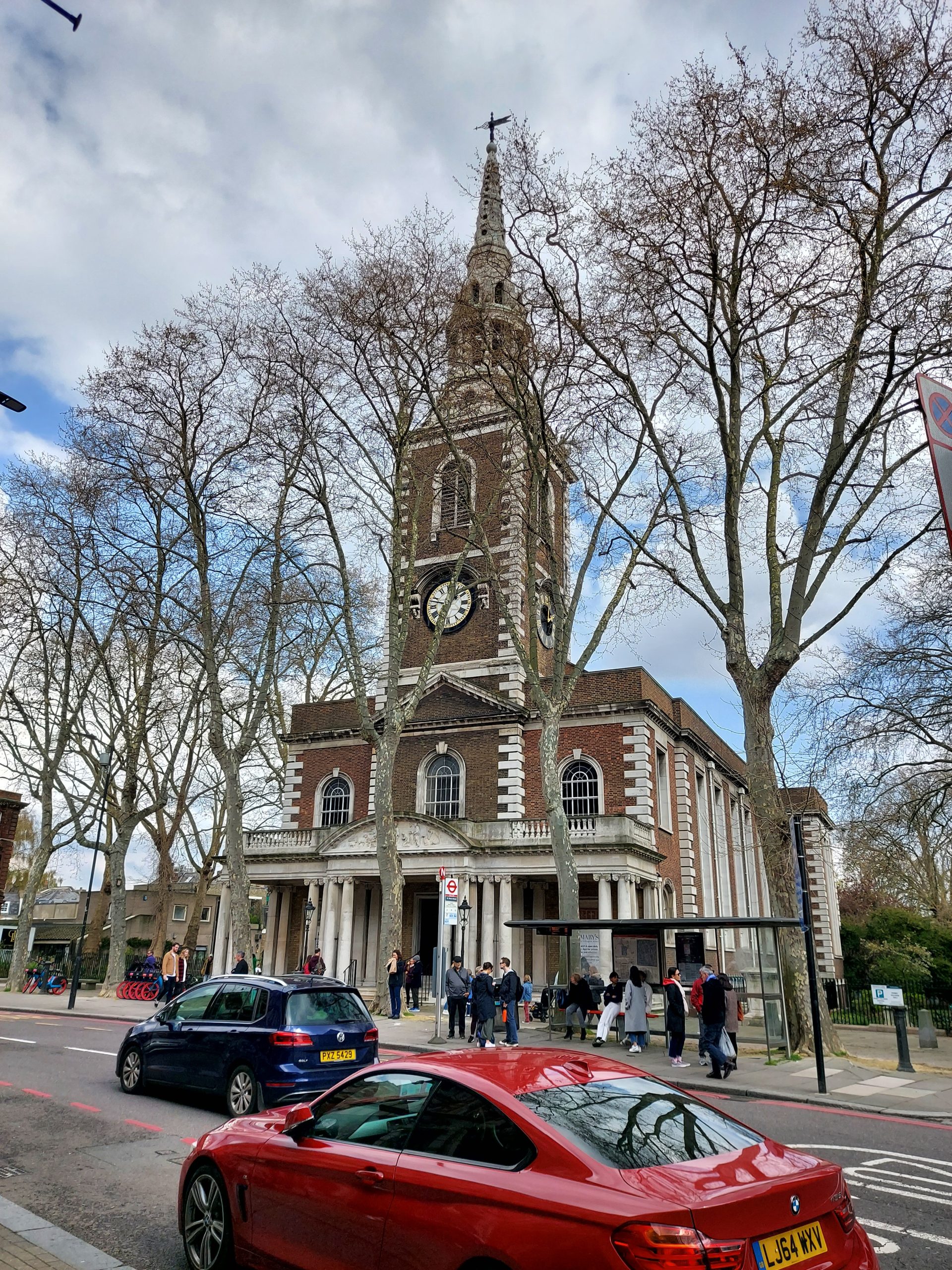
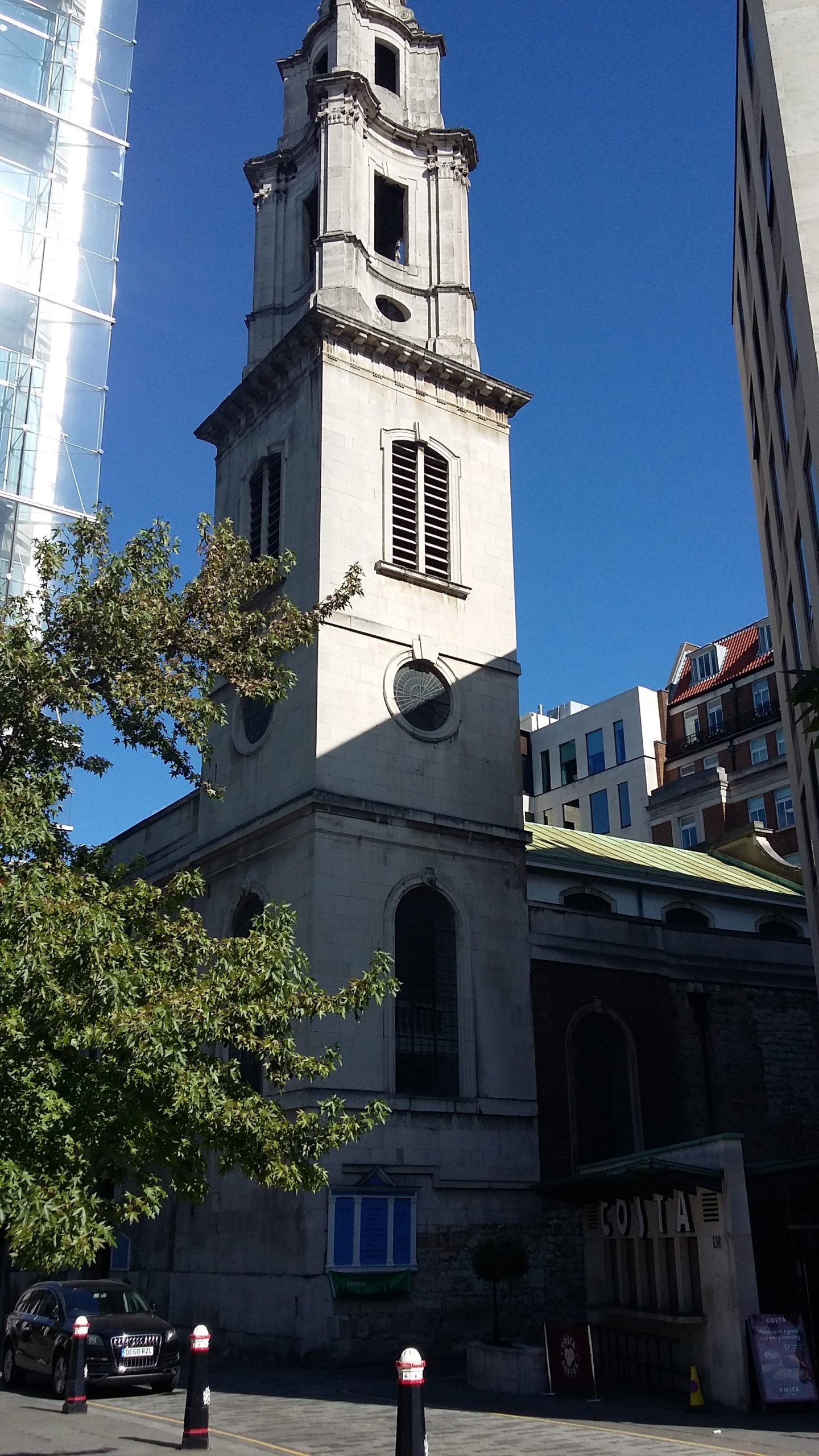
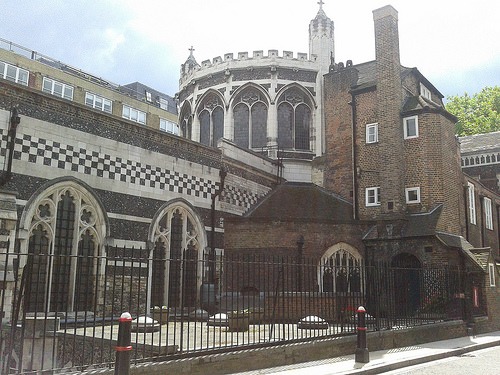
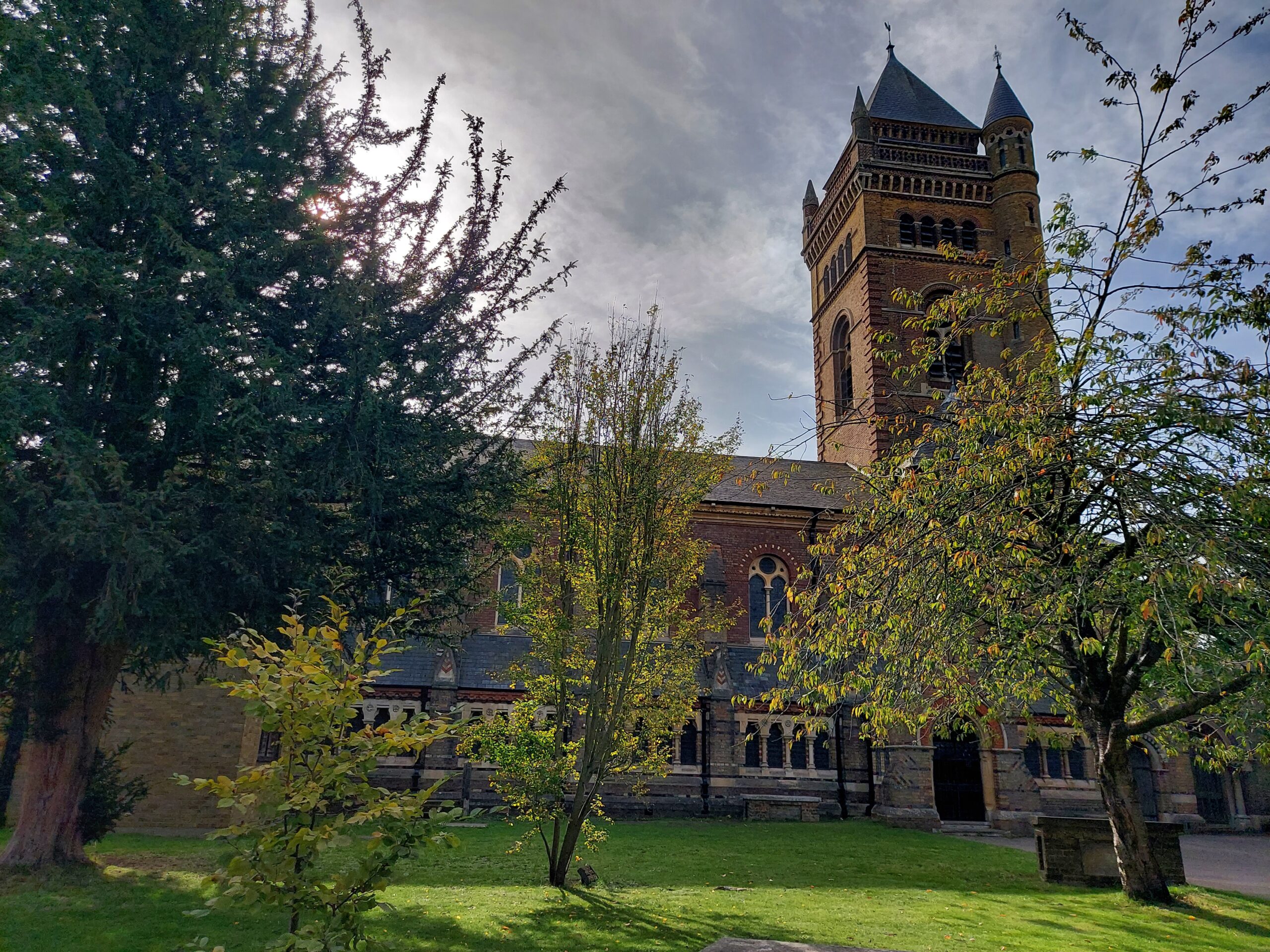
St Mary's Church seen from the side

I’m not religious at all, but I find churches interesting from a historical point of view, so when my local church, St Mary’s Ealing, had an open day recently I made sure to go.

There has been a church on the site for almost a millennium. Located on St Mary’s Road on the way from Ealing Broadway to South Ealing, the Grade II listed church originally marked the centre of Ealing. As the only church in a large parish stretching from Brentford towards Wembley, it was a key landmark in the area. Richard Smart, the vicar at the end of the sixteenth century, compiled a census recording a total of 427 inhabitants in the area. The only two roads from London to the West passed through the parish, and travellers often stopped to rest at the parsonage.
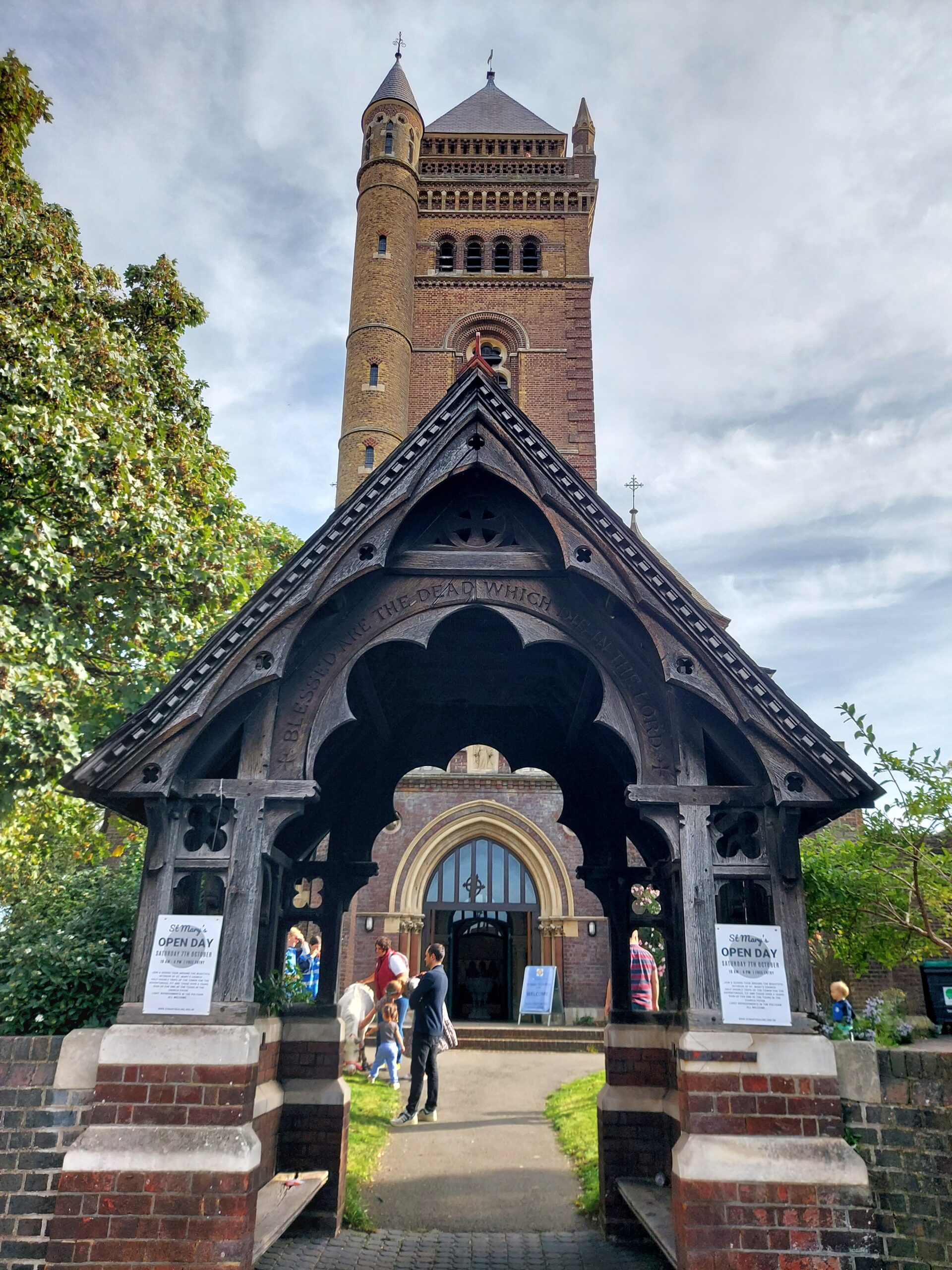
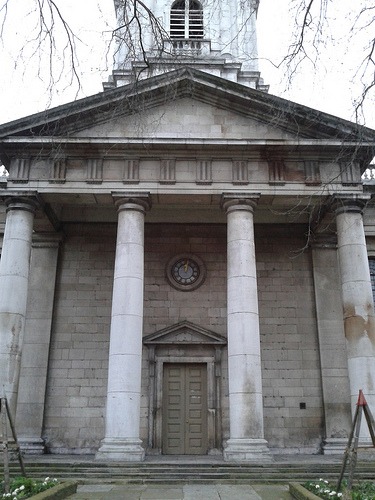
St Mary's Church seen from the front

In 1642, during the English Civil War, the church was severely damaged by Cromwell’s troops. In 1650, a parliamentary survey described St Mary’s as “ruinated and lying open since the plundering”. The Plague, which followed soon after, did not help, as many parishioners died. The original medieval church – now neglected and of which, sadly, no pictures survive – was demolished in 1720, to be replaced by James Horne’s design in 1740.
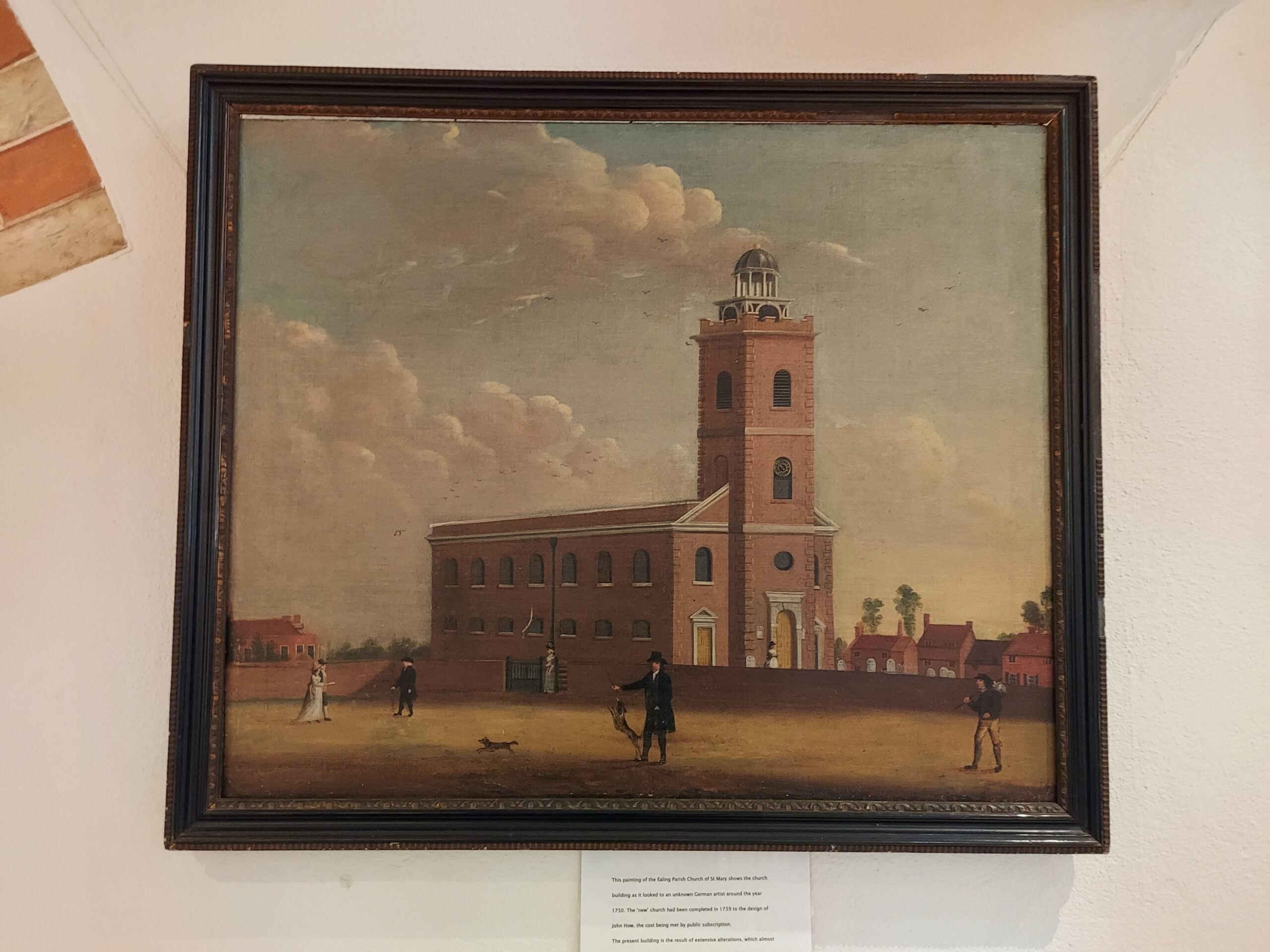
An eighteenth-century painting of the churchThe church as it looked in around 1750

Once the railway reached Ealing in 1838, the area’s population began to grow rapidly, and the centre began to shift towards what is now Ealing Broadway.

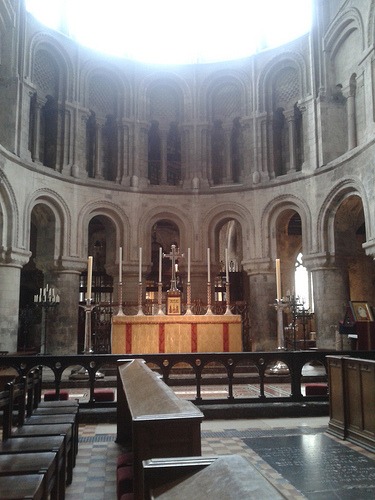
Between 1865 and 1873, S. S. Teulon adapted and enlarged the Georgian church, so that it resembled a Greek Byzantine basilica. A vestry was added in 1887 and the organ enlarged in 1927, while further redecoration took place in the 1950s and the ‘Polygon’ building – used as a community space – was built in 1978. The church was restored in 2003.
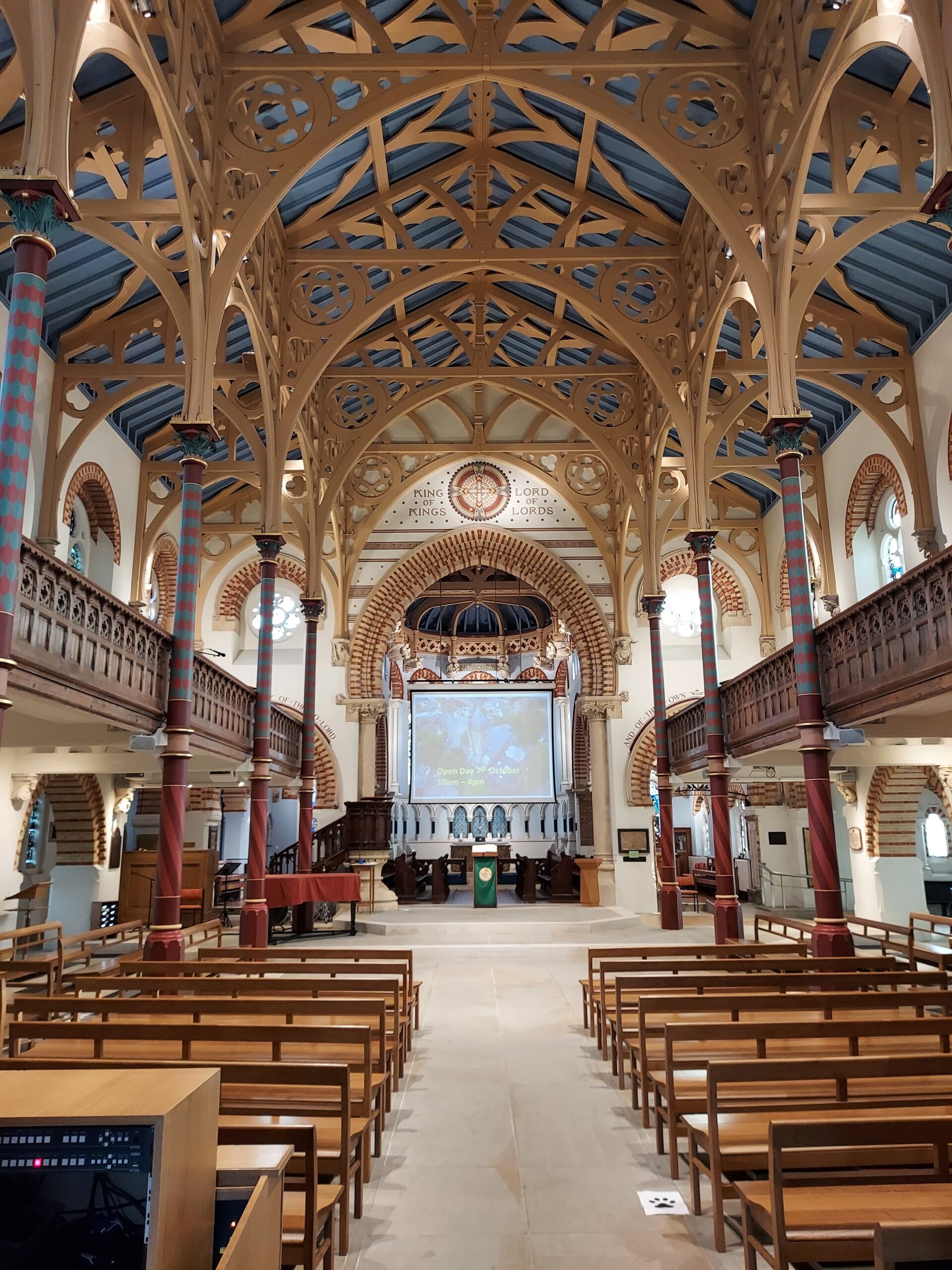
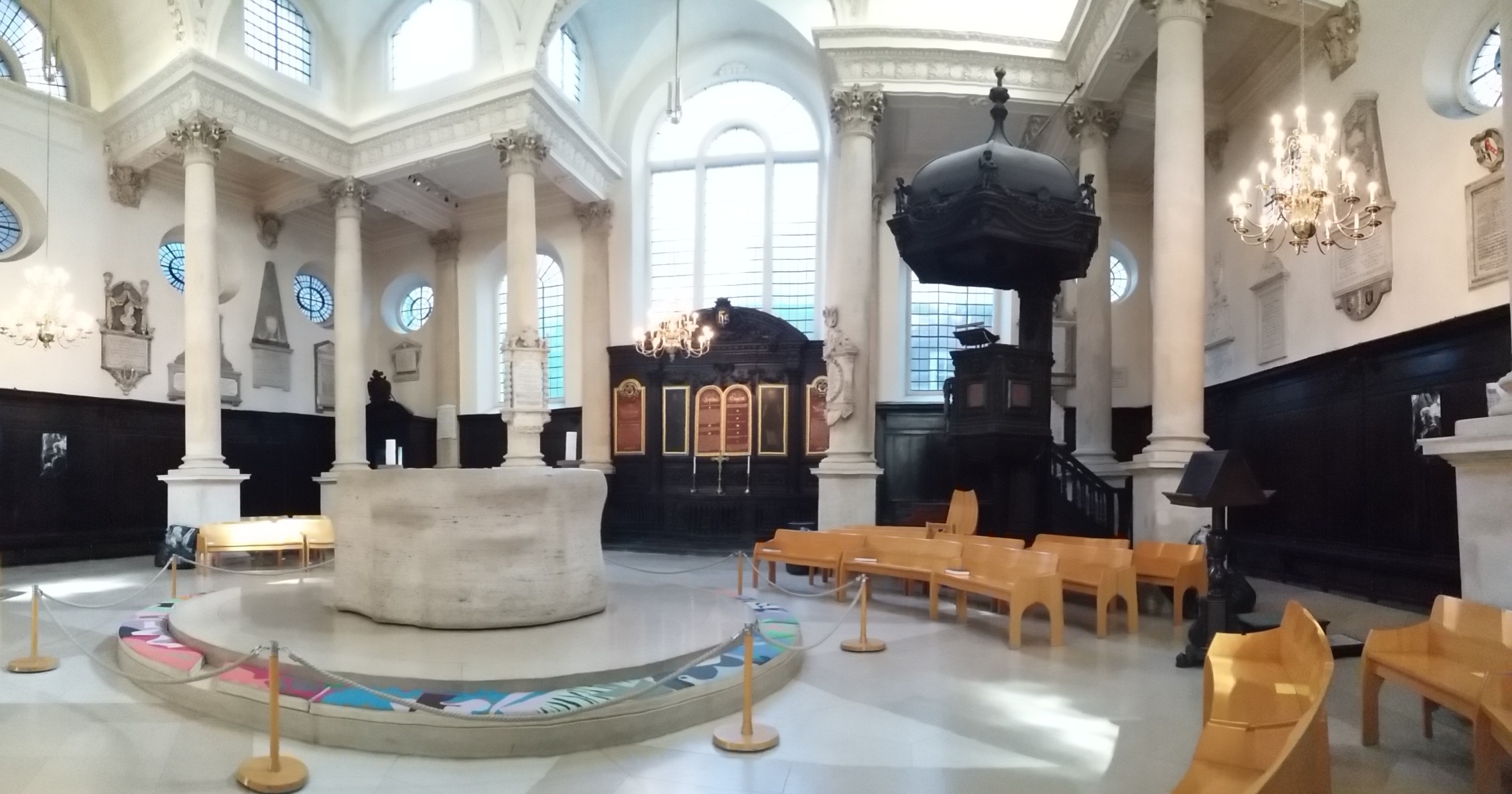
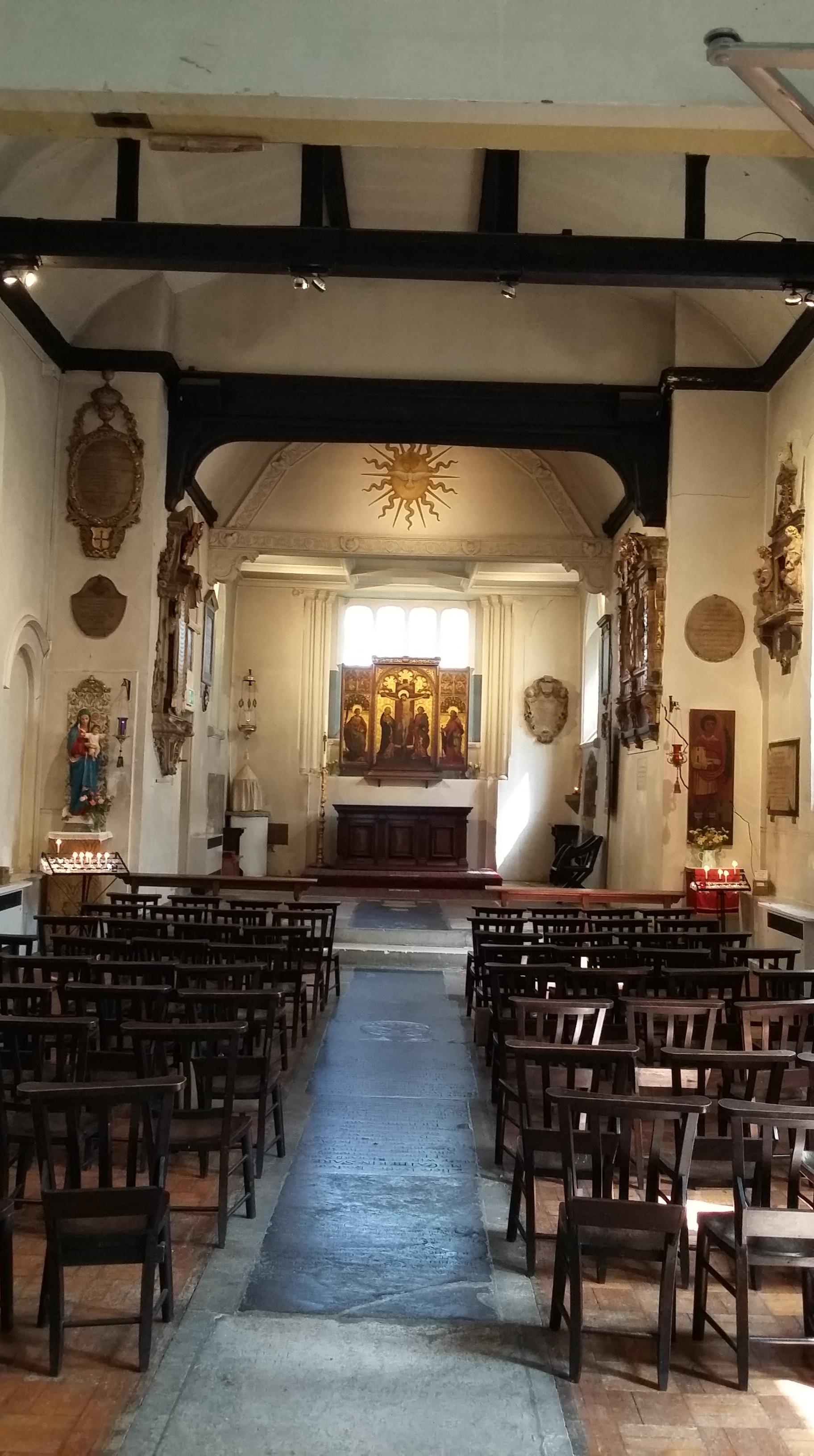
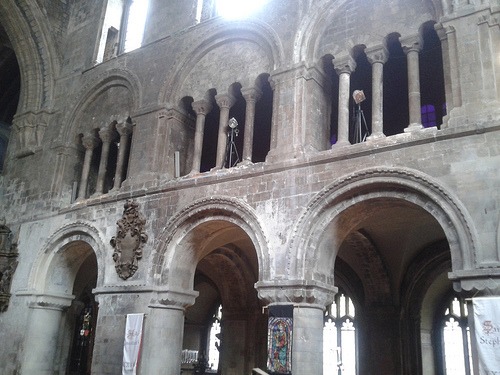
The inside of St Mary's Church

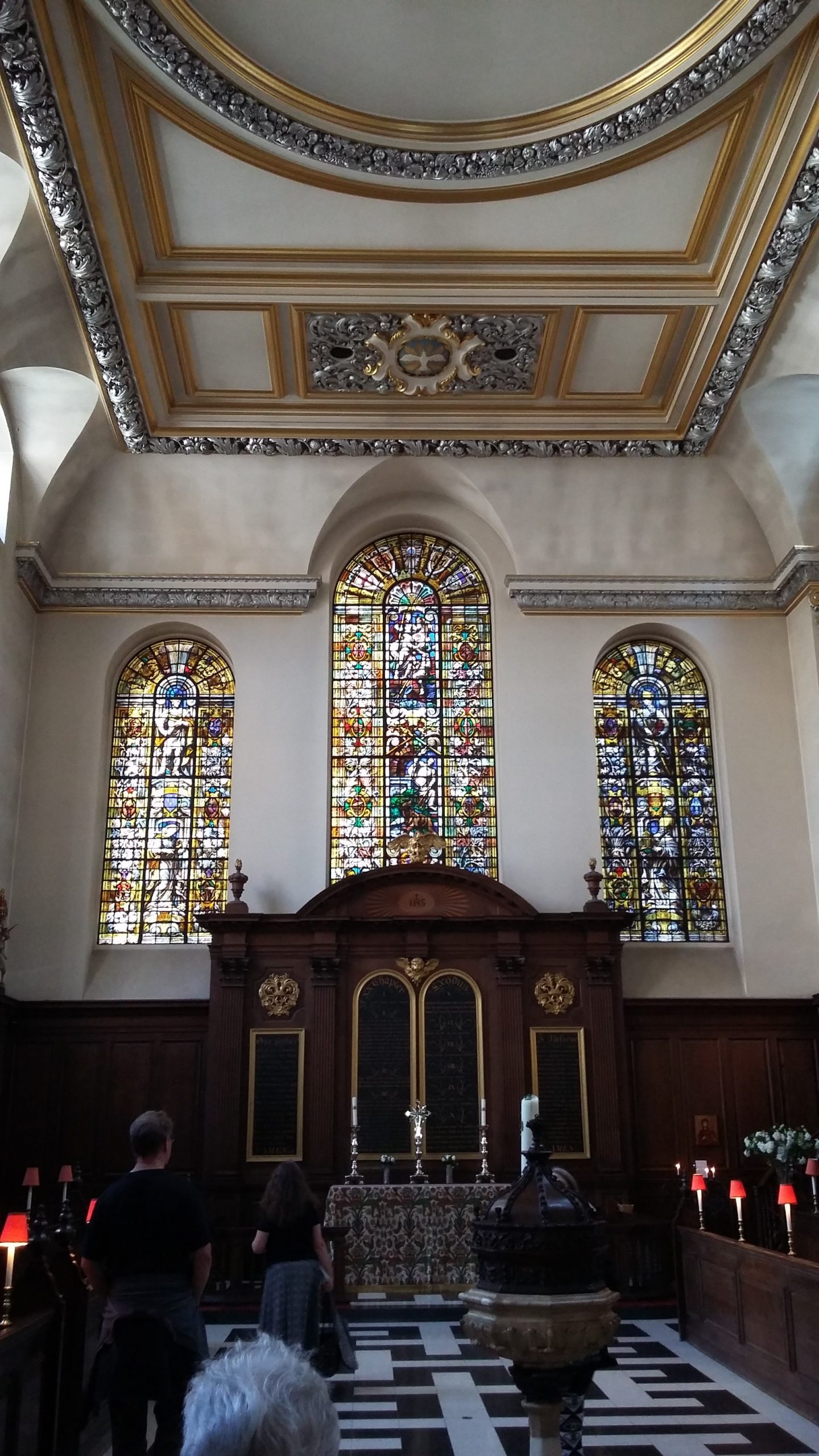
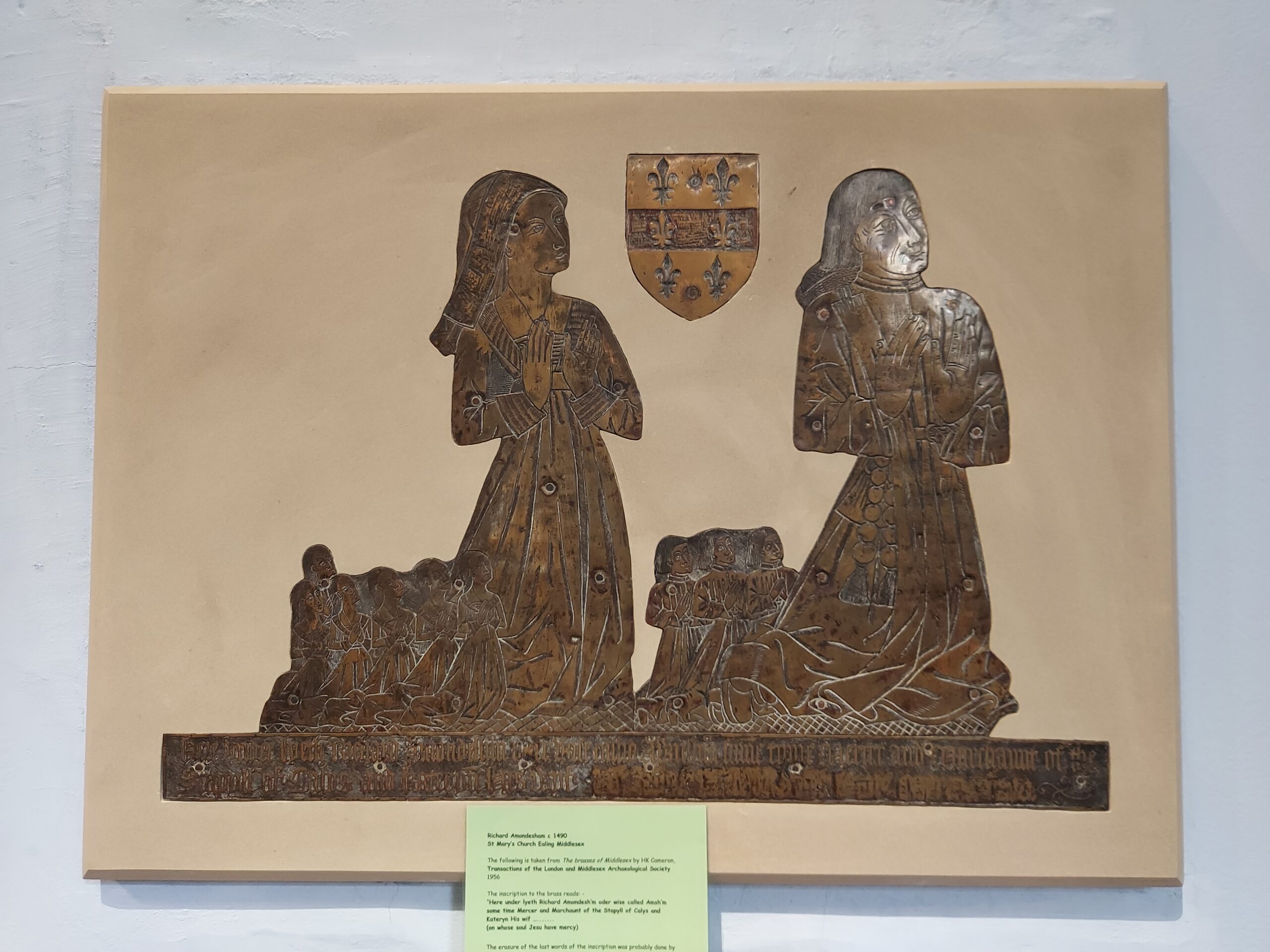
Victorian stained glass windows were commissioned by Thomas Boddington, who lived at Gunnersbury Lodge. From the old church, wall tablets and a medieval brass to Richard and Kateryn Amondesham (around 1490) were retained.
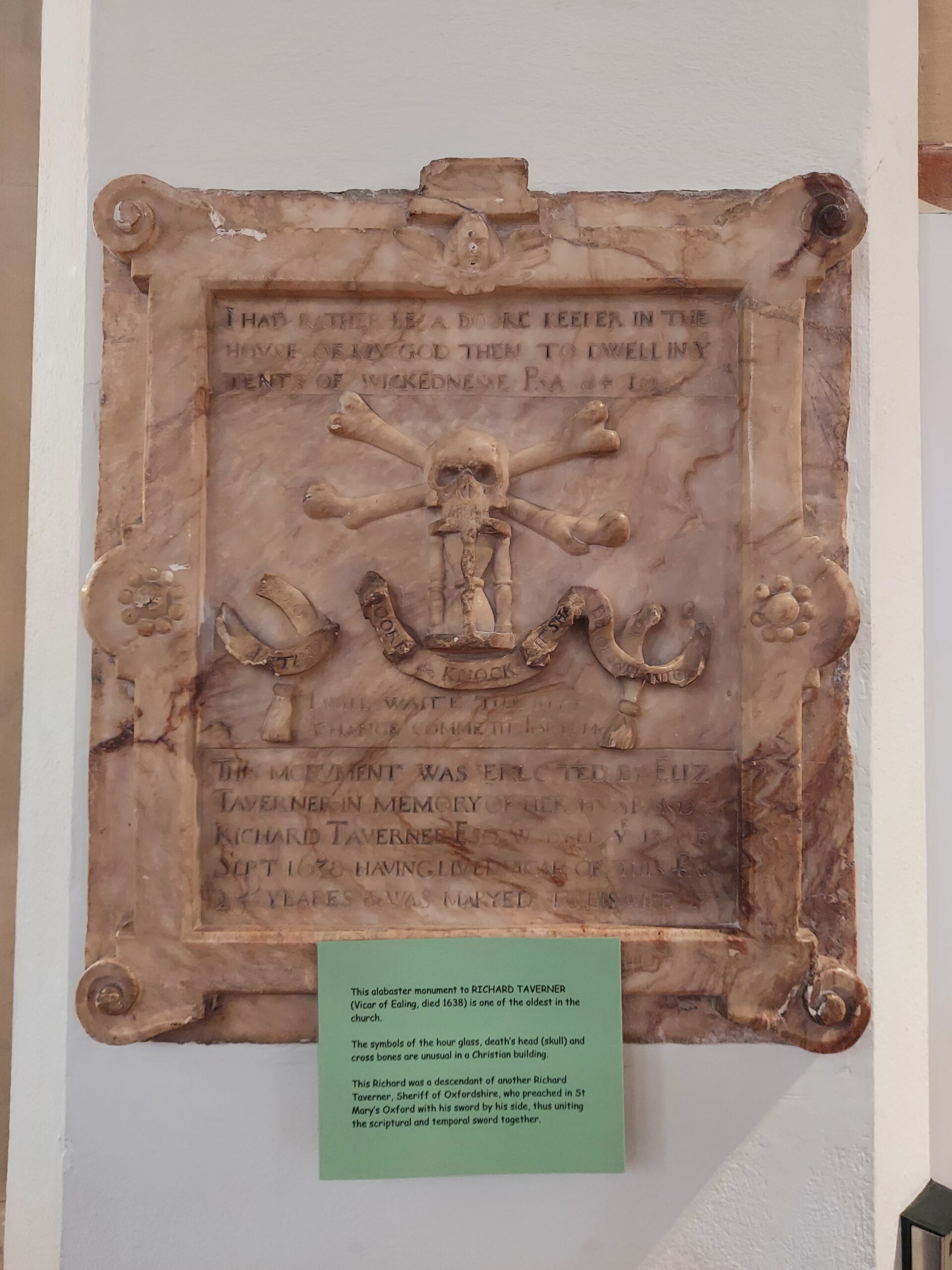
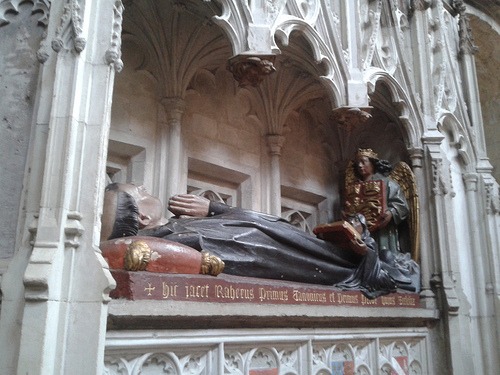
Alabaster monument to Richard Taverner

medieval brass to Richard and Kateryn Amondesham

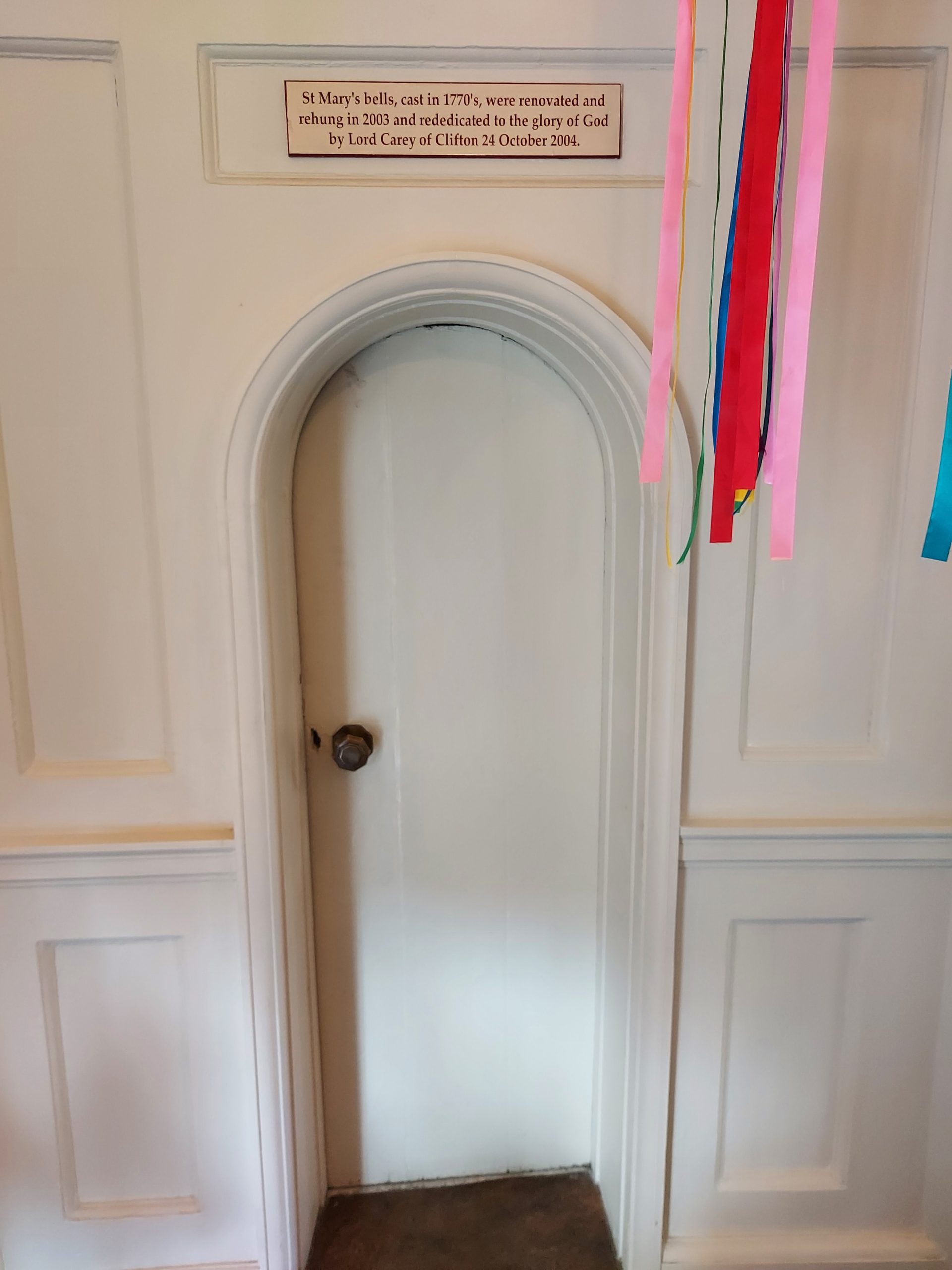
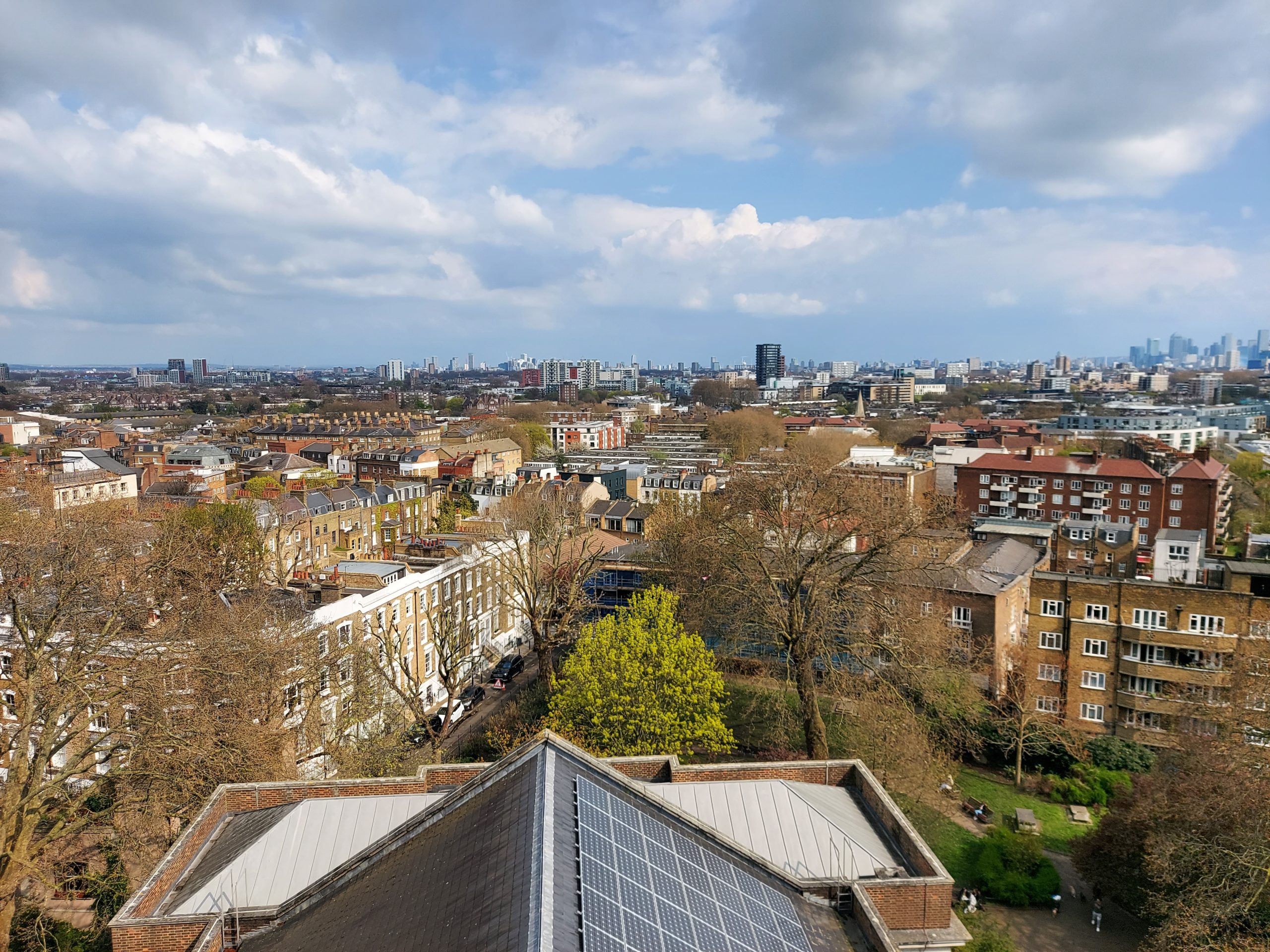
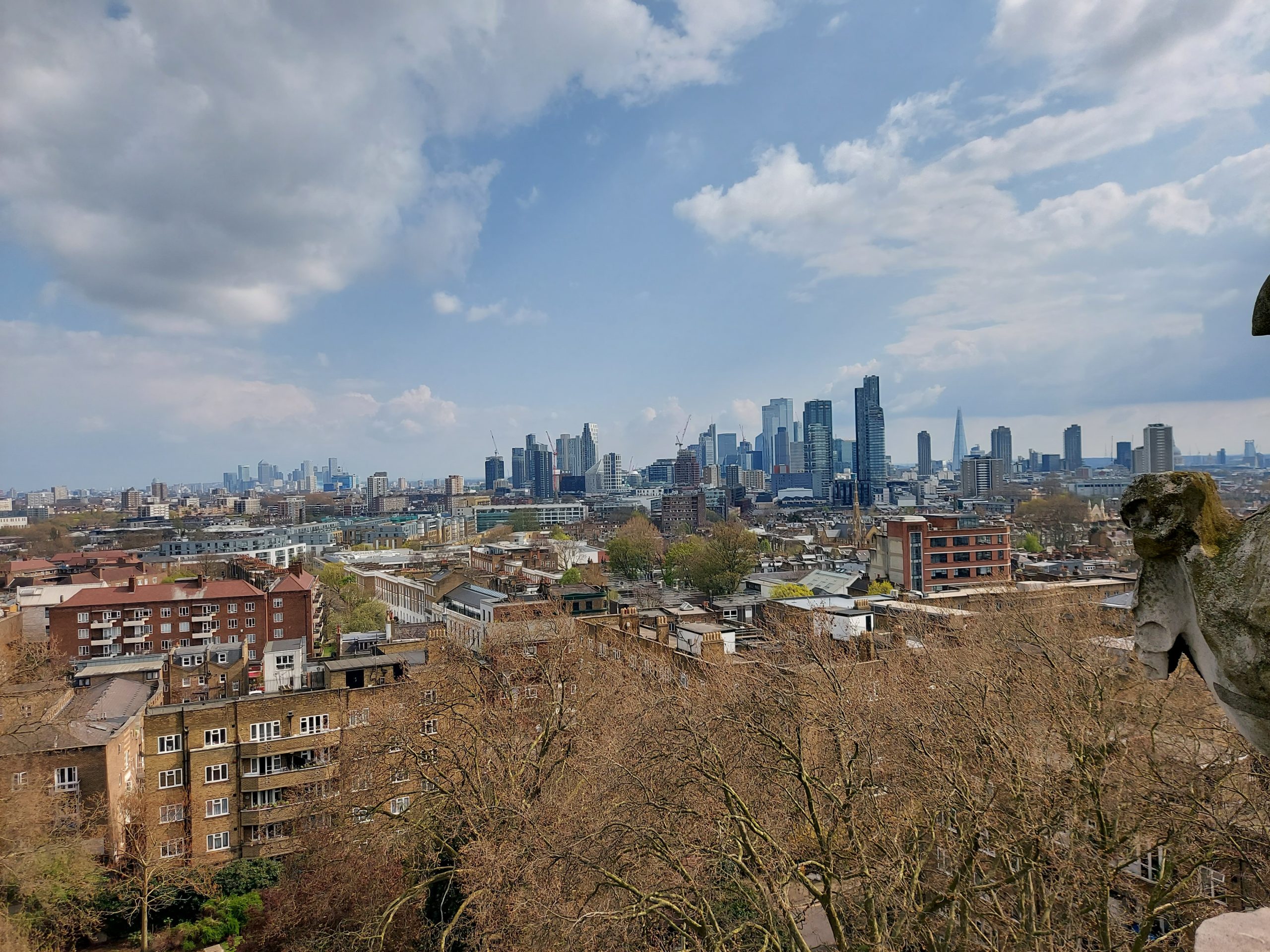
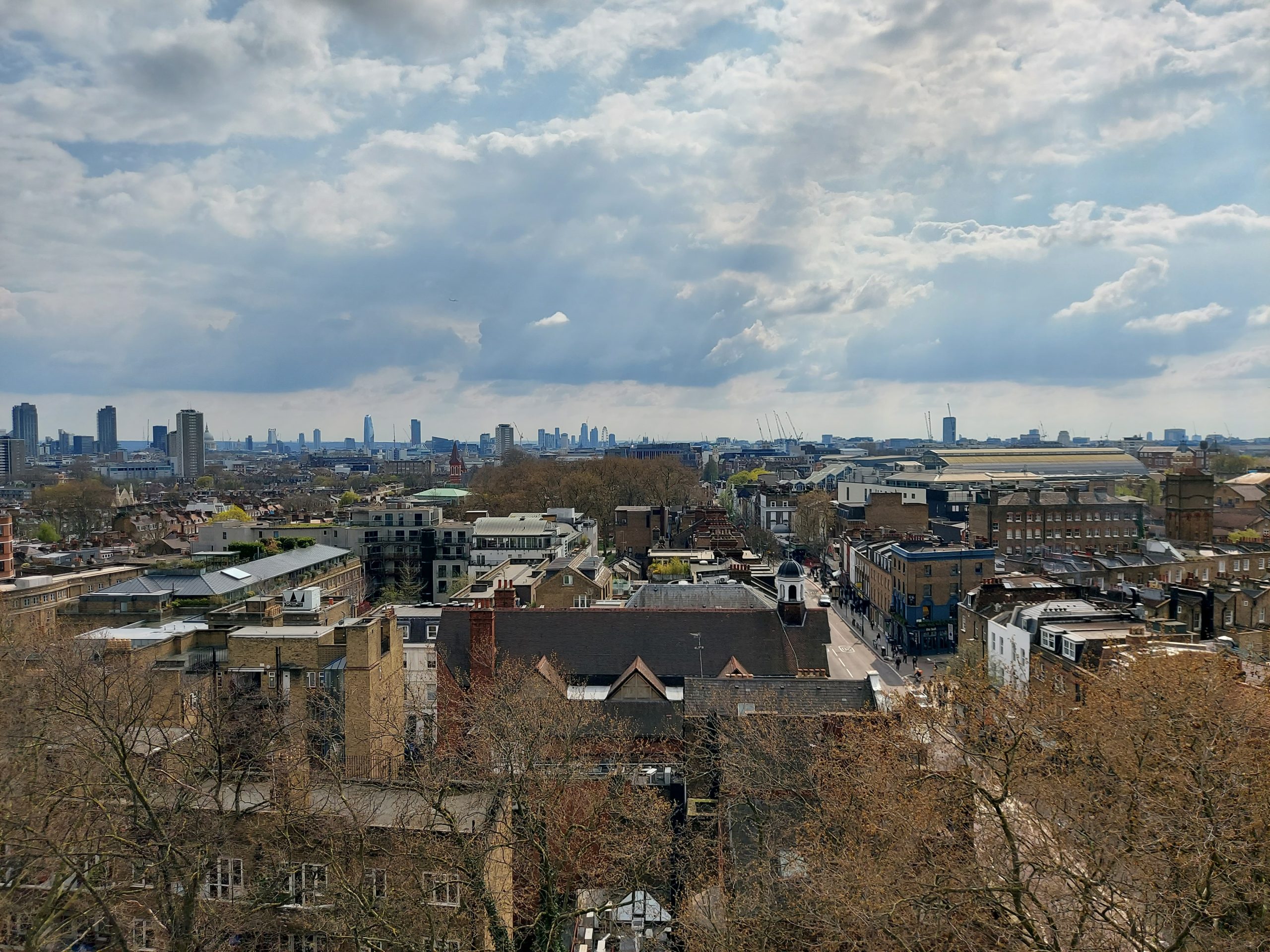
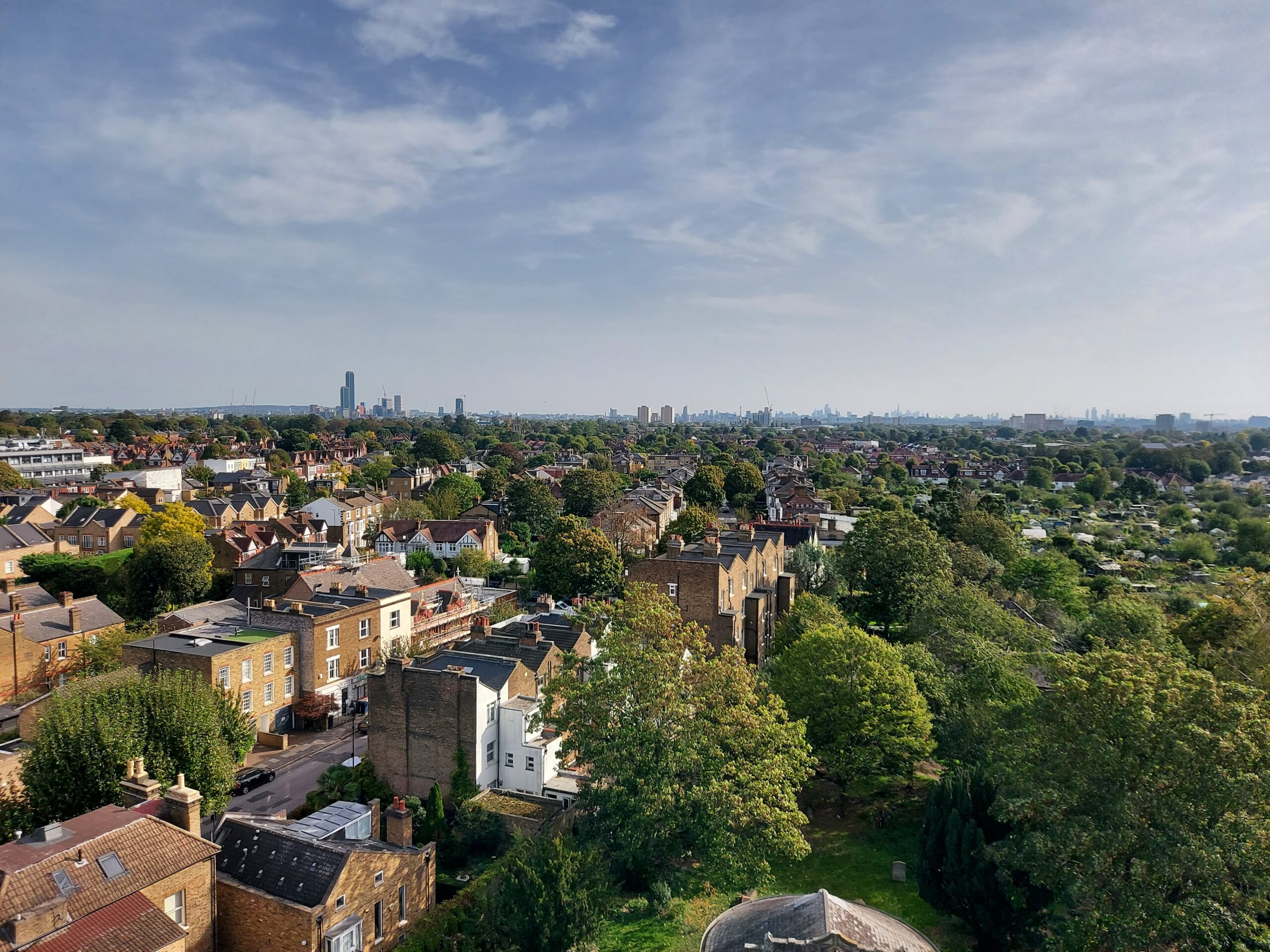
Members of the Church were on hand to take groups of lucky visitors up the tower. It was a hard climb but the beautiful views were worth it.
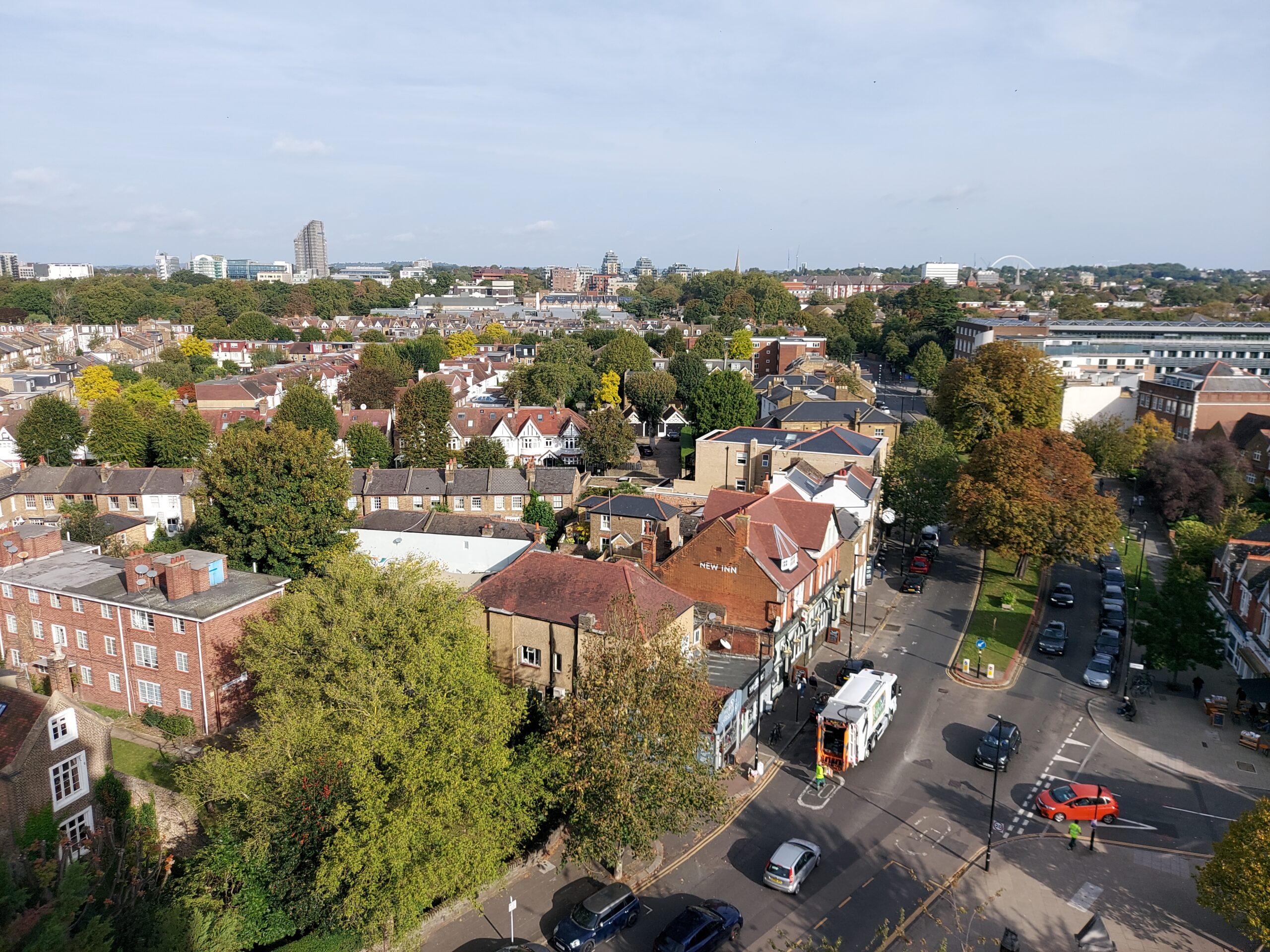
South Ealing Road, looking north, with Wembley Stadium visible in the distance

Looking east towards London

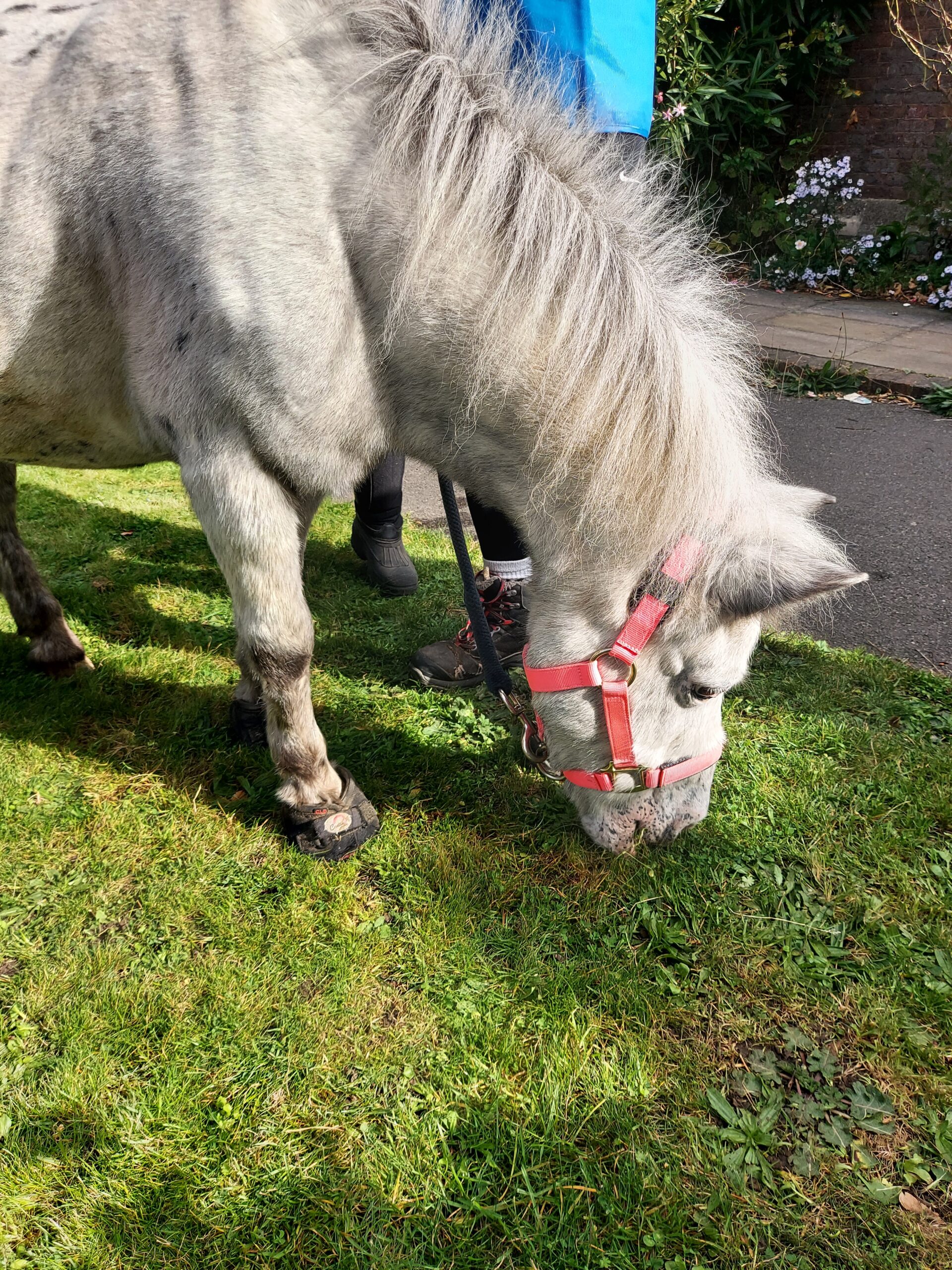
Finally, as part of the open day some gorgeous ponies had been brought over for a visit from a nearby riding school!
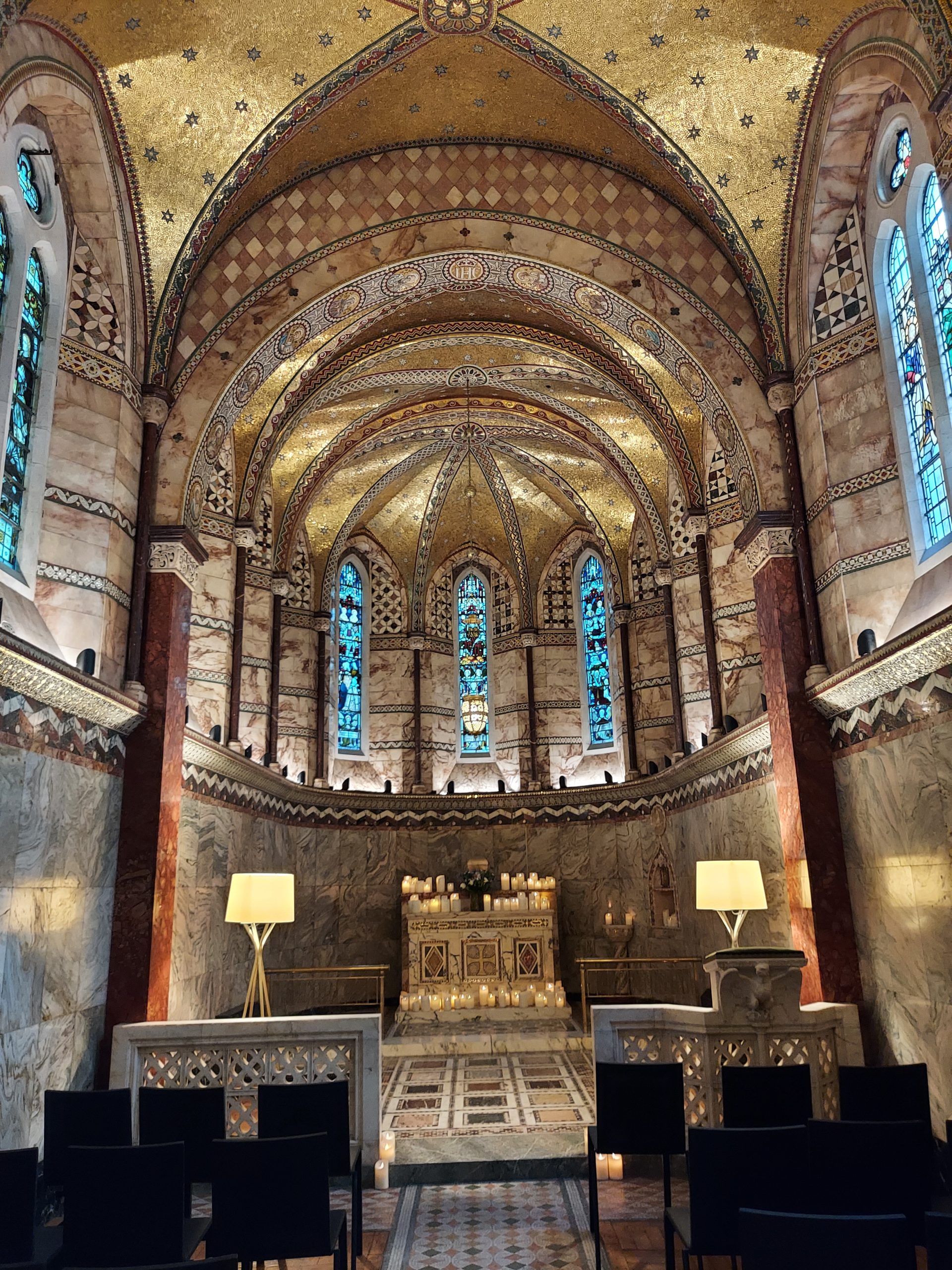
Fitzrovia Chapel – Open House London

Chapel

I normally do my Open House London visits at the weekend, but if a venue is open late during the week I might try and visit it after work, and that’s what I did with Fitzrovia Chapel.

The chapel is located in the pedestrianised Pearson Square, which is off Mortimer Street on the site of the old Middlesex Hospital. I walked there from my office in Bloomsbury; the nearest Tube stations are Goodge Street, Warren Street and Oxford Circus.

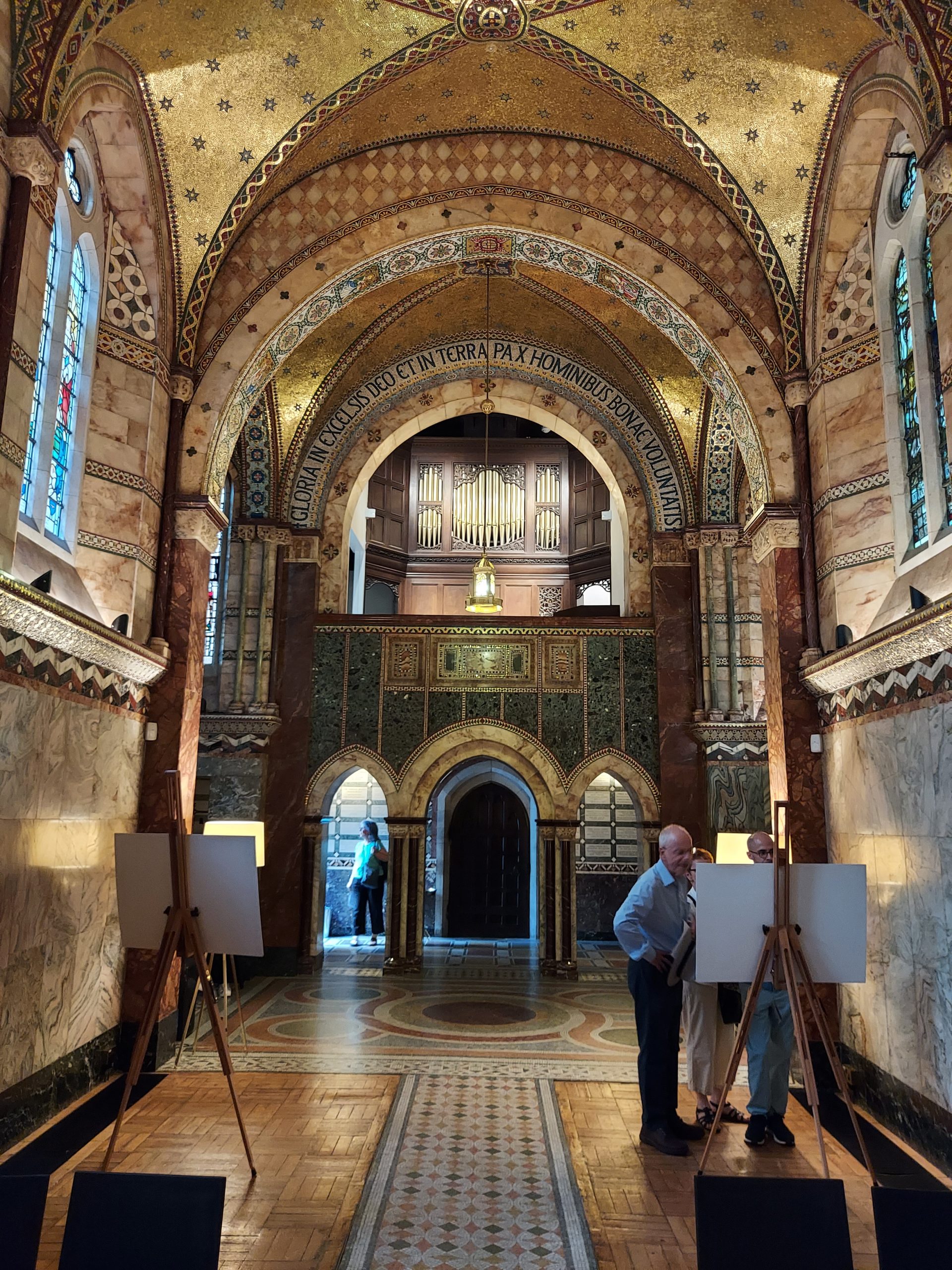
Ante-chapel

The chapel was originally built for staff and patients of the Middlesex Hospital (demolished in 2006). It was designed by John Loughborough Pearson (1817-1897), a leading Victorian architect, and was funded by donations and fundraising. Work began in 1891, but the chapel was not fully completed for almost forty years, as it was ensured that no money should be spent on the chapel that had been raised for patient care. After the death of the elder Pearson, his son, Frank Loughborough Pearson, completed the work.

Iniside Fitzrovia Chapel

The first ever service was held in the completed structure on Christmas Day in 1891, and it was formally opened in 1892 by the Bishop of London. The chapel was never fully consecrated, as it has hosted services by chaplains and other faith leaders. It is now Grade II* listed and holds regular open days for the public, as well as concerts, exhibitions and other cultural events.

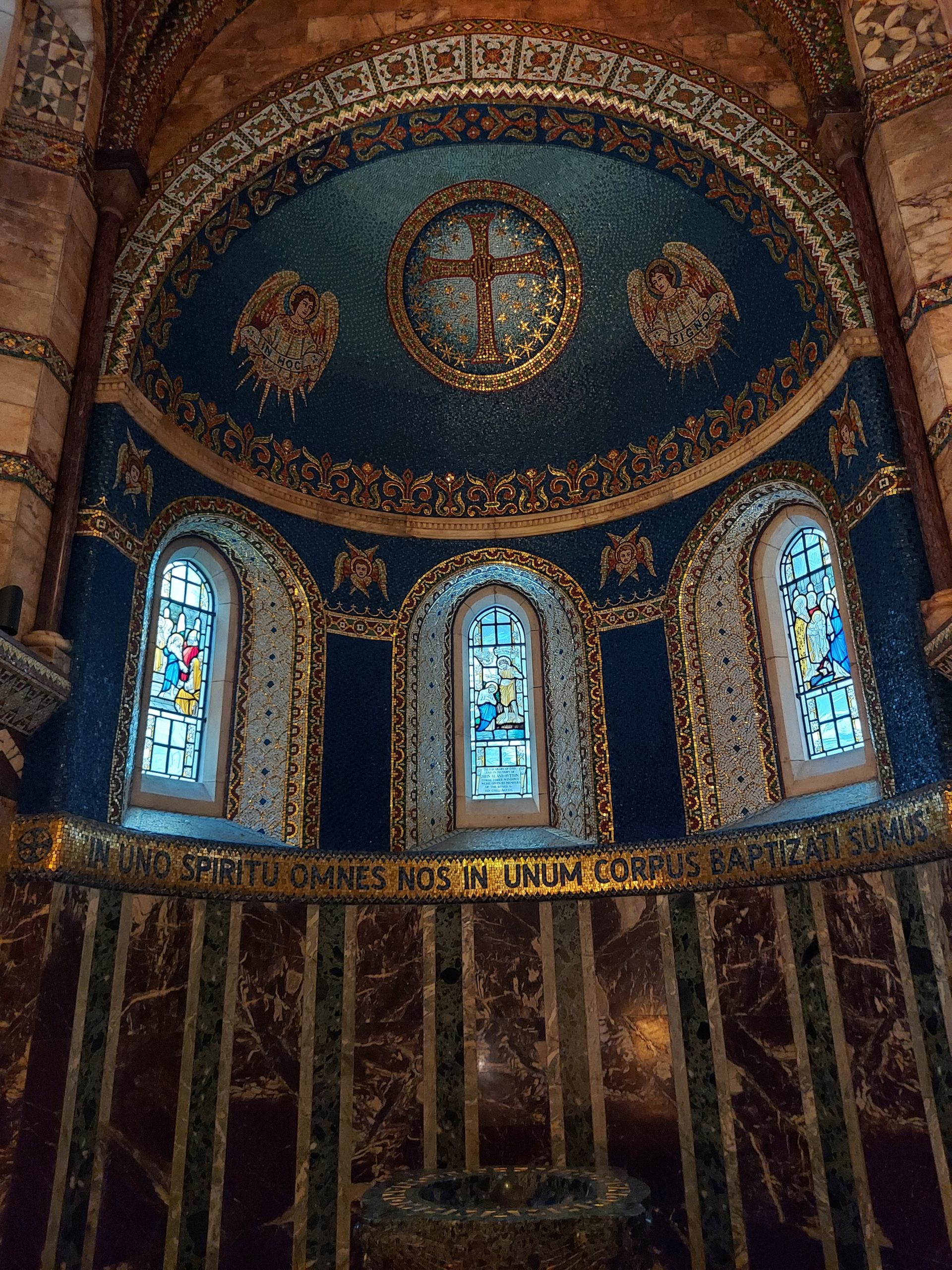
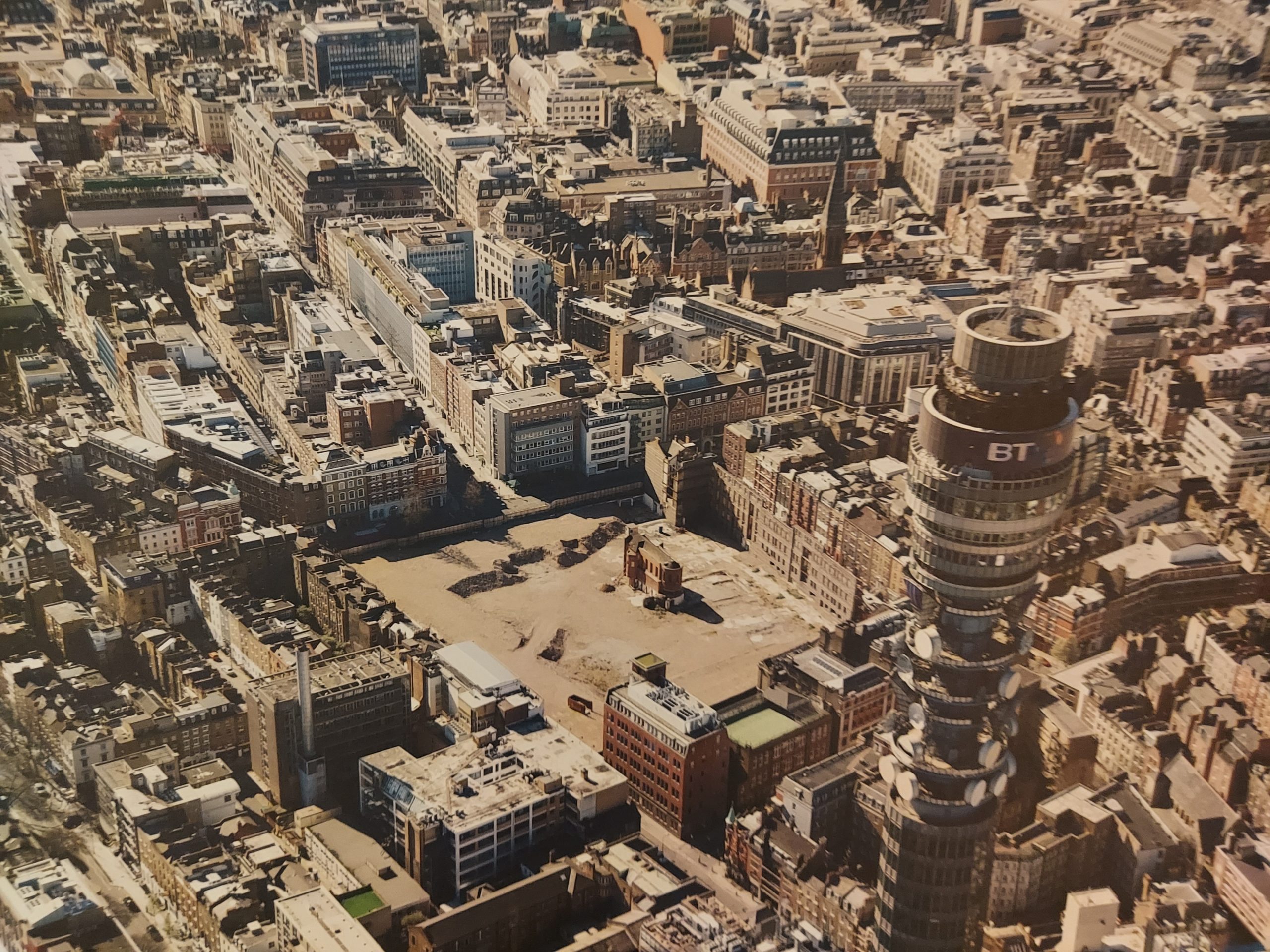
I found the chapel beautiful – I am so glad it was not demolished along with the rest of the hospital. Some photographs are on display showing the chapel in the middle of an empty building site, before work on the surrounding area was completed. It is a peaceful oasis in the middle of London, and beautifully decorated. The chancel over the altar is covered in golden mosaics and stars, while golden mosaics cover the entire ceiling. The ante-chapel contains tablets of white marble featuring inscriptions to hospital figures from all professions. The ceiling vaults contain roundels depicting the apostles.

Photograph of Fitzrovia Chapel after the hospital had been demolished around it

St Mary’s Church, Islington: A Guided Tour

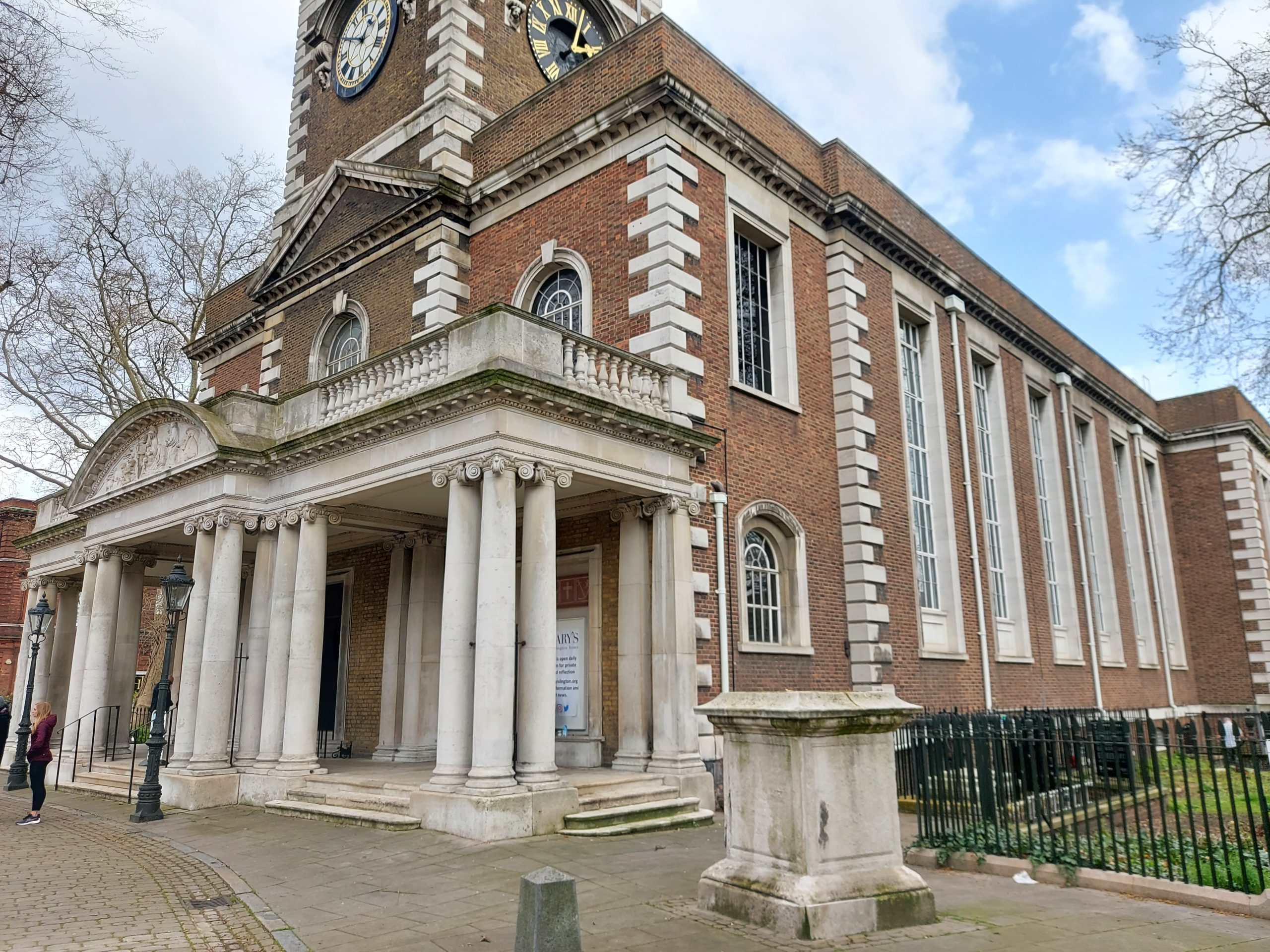
St Mary's Church, Islington

I’ve spent quite a bit of time in Islington – the Almedia and Little Angel theatres are there, plus a couple of pub theatres – and I’ve often walked past St Mary’s Church. I was pleased to get the chance to sign up to a guided tour of the church, organised by Islington Guided Walks.

St Mary's Church, Islington

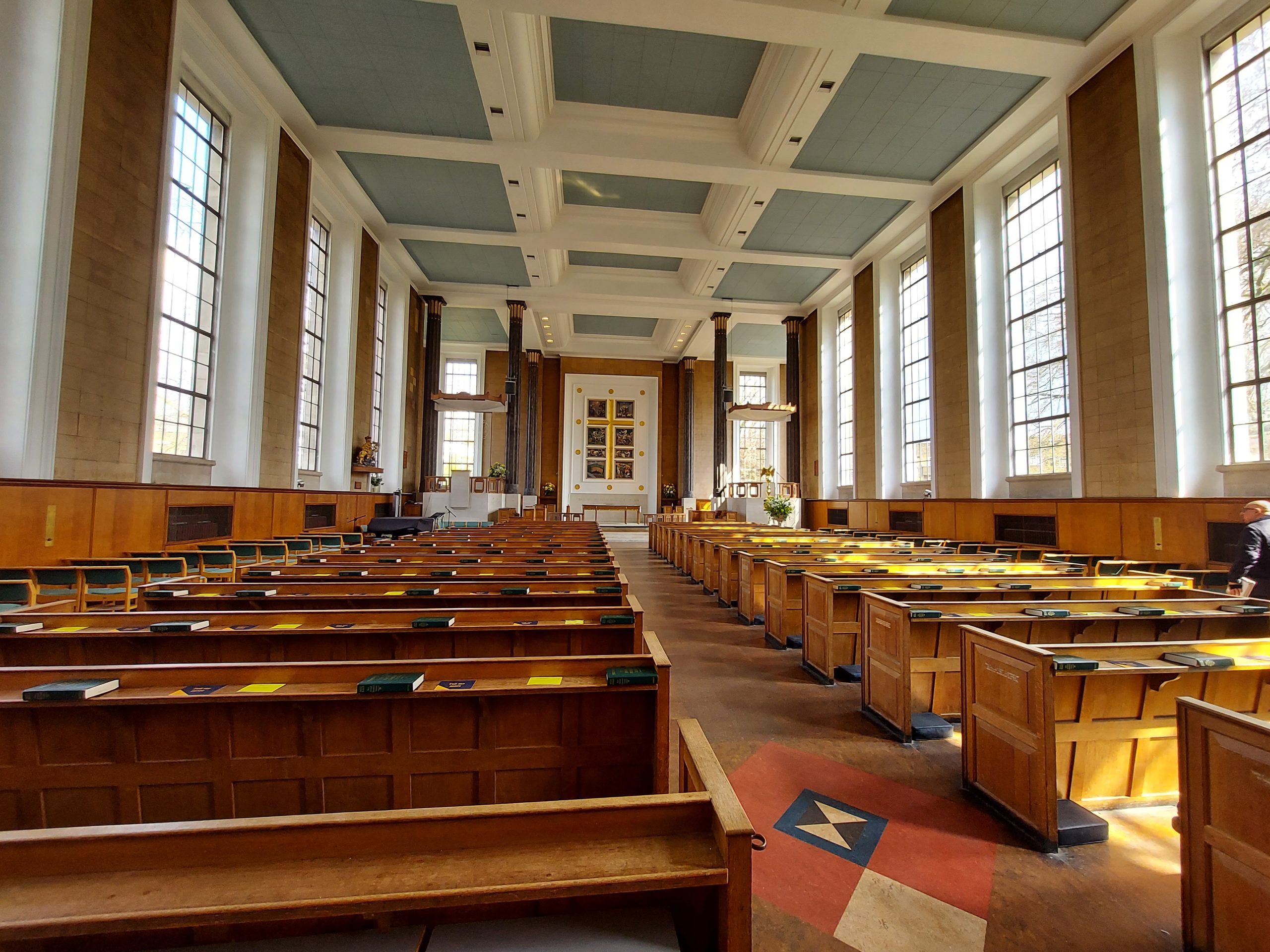
There has been a church on this site since the twelfth century, replaced by a new building in the fifteenth century and again in the 1750s. Maps show the church was at the centre of the parish, even while it was small and surrounded by fields. On the 9th of September 1940, the church was hit by a bomb, destroying everything except the tower and portico. I was surprised when I saw inside: from the outside the church certainly looks like a Georgian creation, and while the rebuilt church in the 1950s resembles a Georgian church in many ways, it is also distinctly modern.

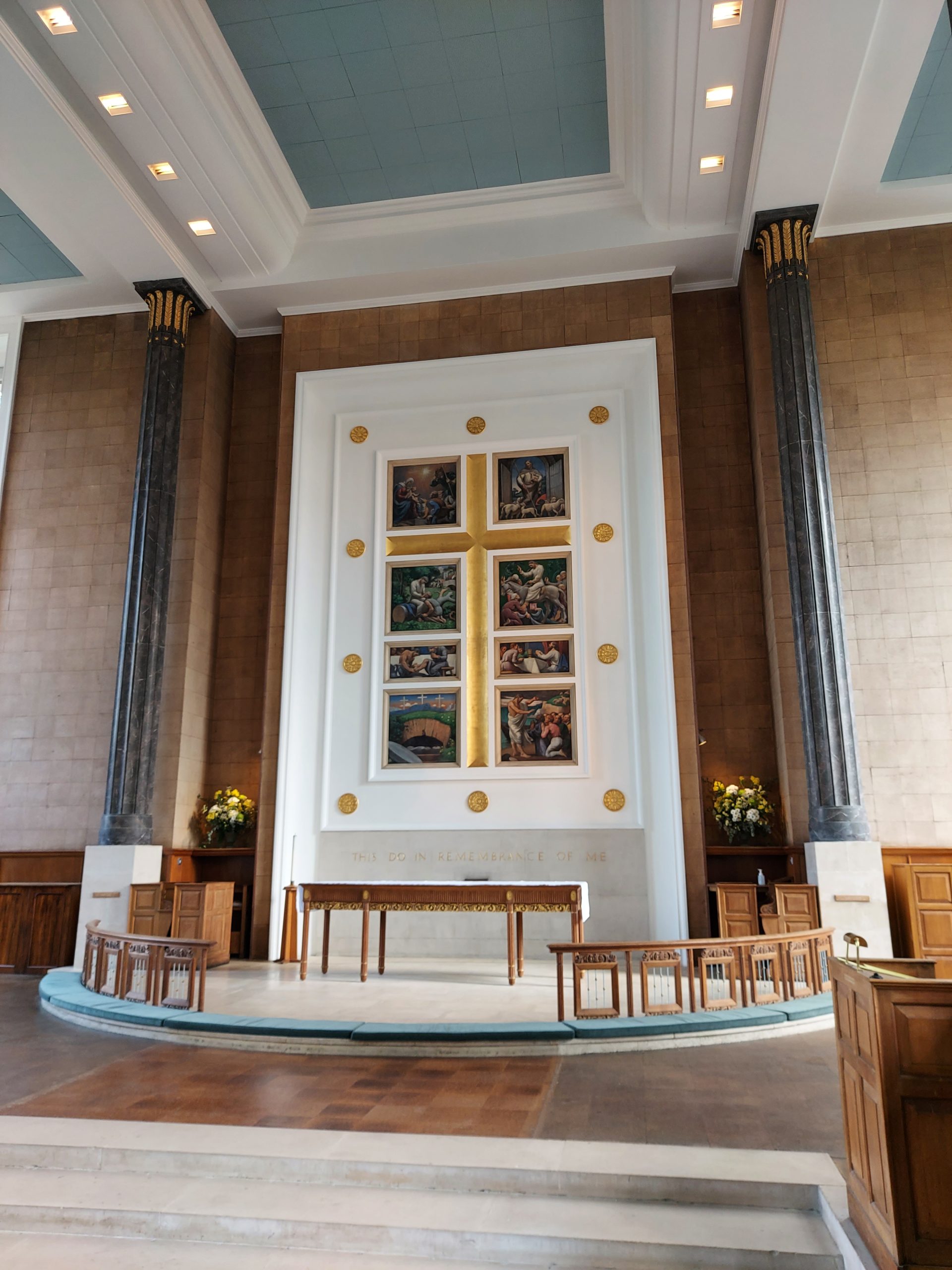
Interior of St Mary's Church, Islington

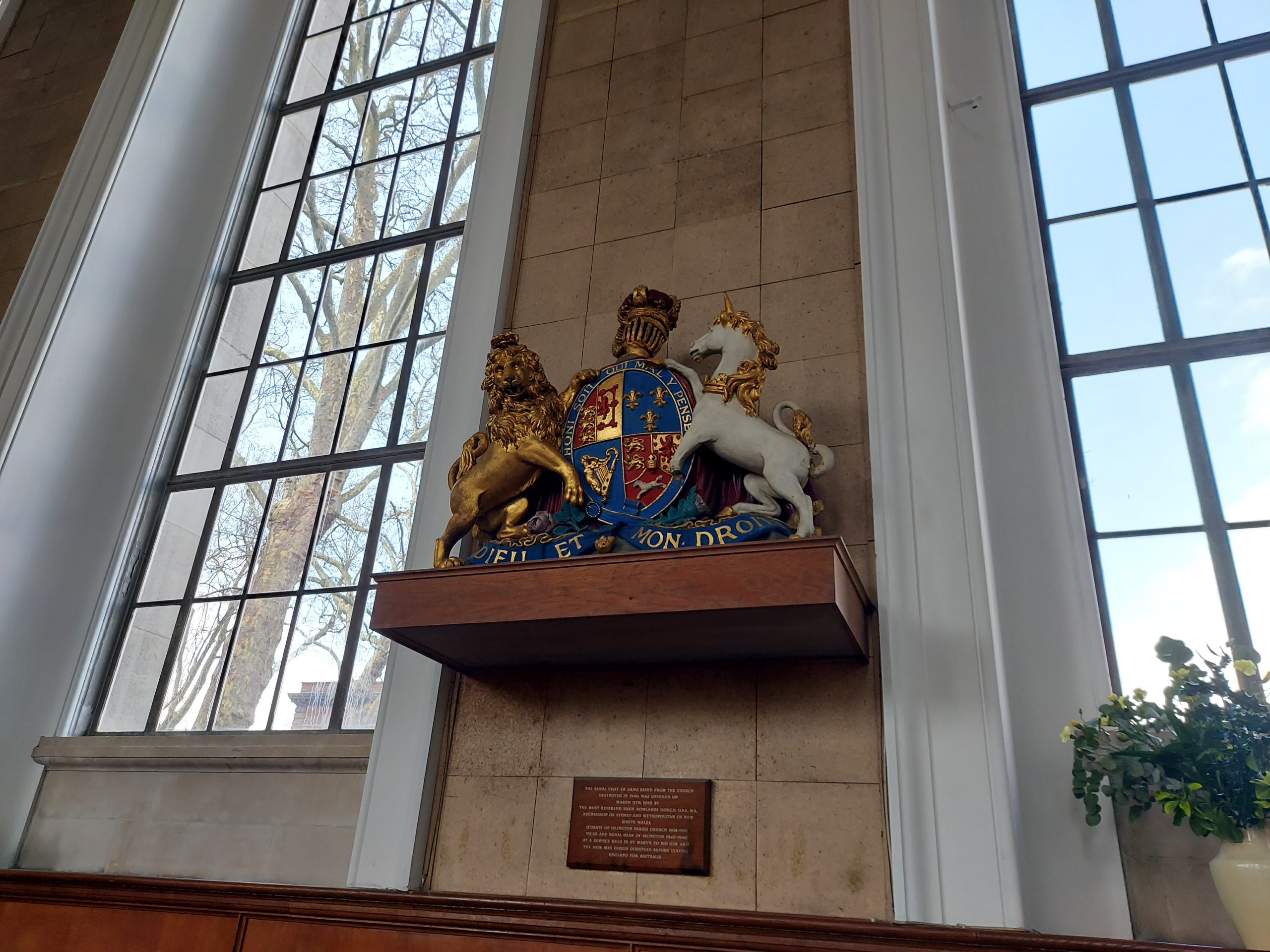
The murals at the east end of the church were painted by Brian Thomas and depict events in Jesus’ life. Pews were donated by various local individuals and groups, including the Arsenal football team. The marble font is the original one from 1754, but the organ pipes decorating the west end came from a church at Berkeley Square. The Royal Arms which hang on the wall of the church are the arms of George II: he was king when the 1754 church was opened. At that time, it was a statutory requirement that all churches displayed the Royal Arms. Miraculously, they survived the World War II bombing.

Front of St Mary's Church, Islington

A small chapel to the right as you enter the church, the Prayer Chapel, contains brasses dating from 1540, originally present in the medieval church. They represent Robert and Alice Fowler and Henry and Margaret Saville (née Fowler), the Fowlers being an influential local family.

Royal Arms inside St Mary's Church, Islington

The crypt, today a rather bland space used for community events, actually dates back to the very first church on the site: one skirting stone has been identified as dating from the twelfth century.

The tower is all that remains of Launcelot Dowbiggin’s eighteenth century church. Inside the winding staircase is an original ship’s mast. The staircase takes you first to the bell chamber, containing bells from the Georgian church.

Entrance to the tower in St Mary's Church, Islington

Finally, we arrived at the top of the tower, and enjoyed stunning views over Islington and London as a whole. We could see right down Upper Street.

View from the top of the tower
View down Upper Street

St Pancras New Church – Open House London

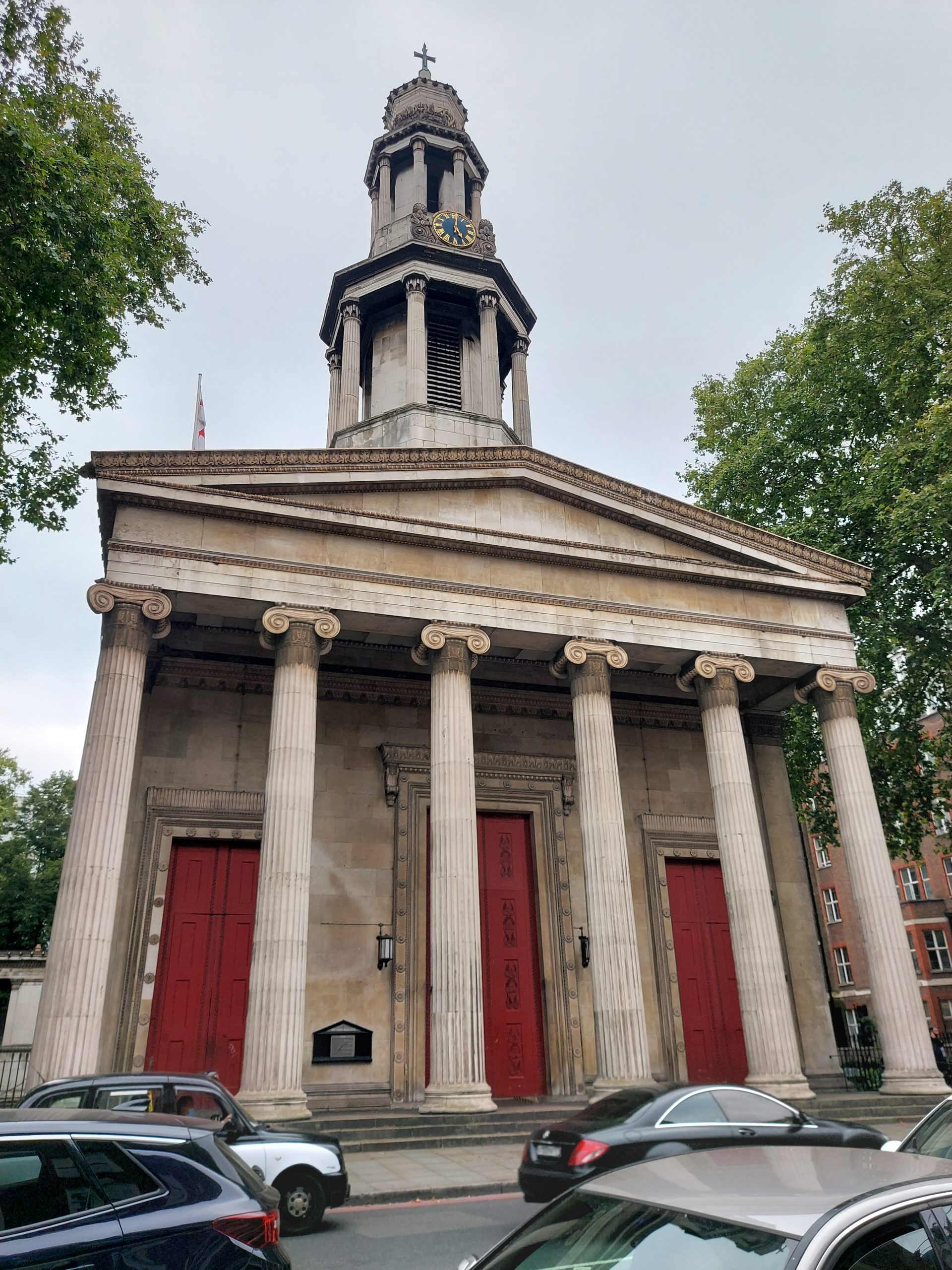
St Pancras new church
St Pancras New Church

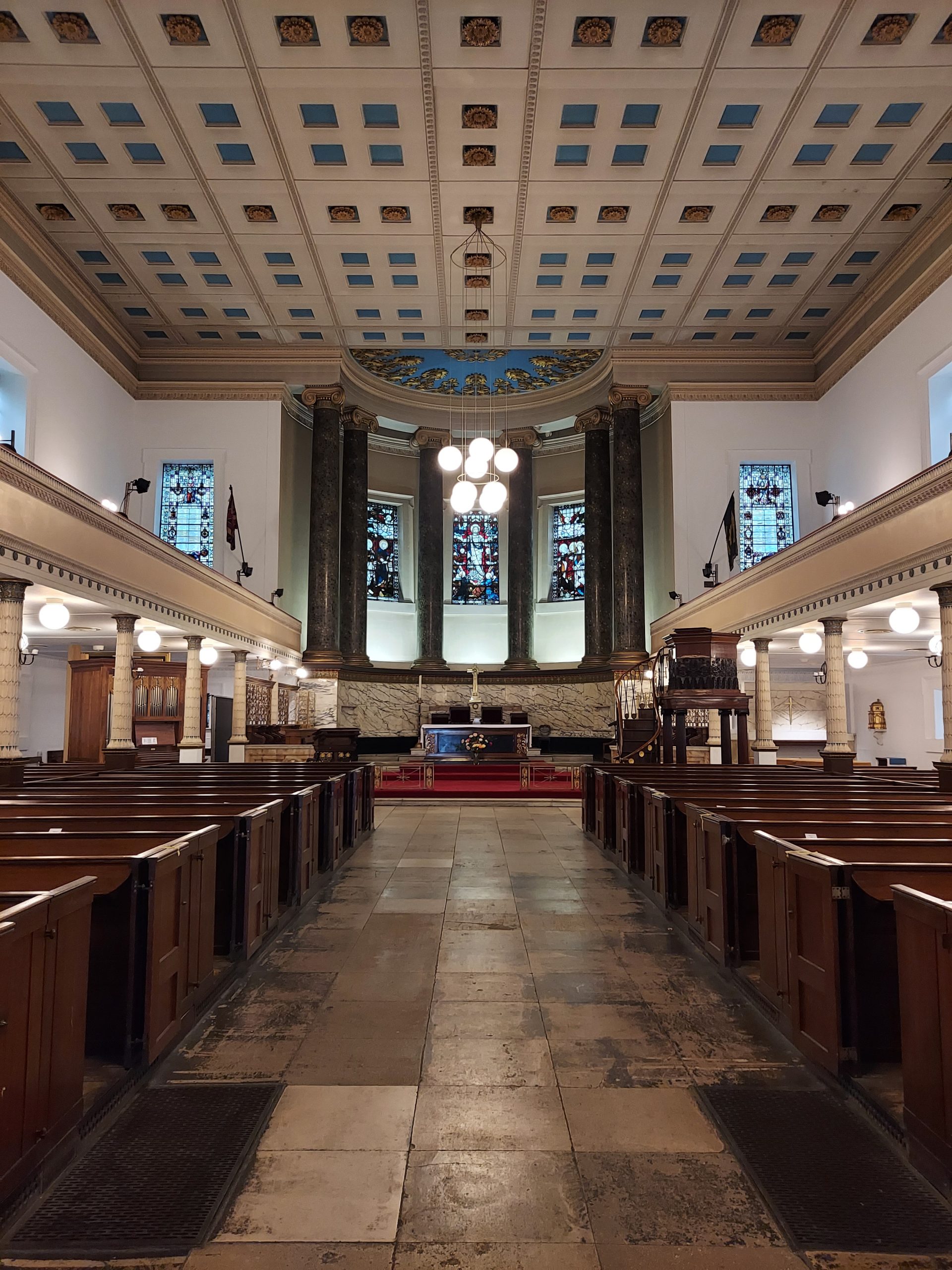
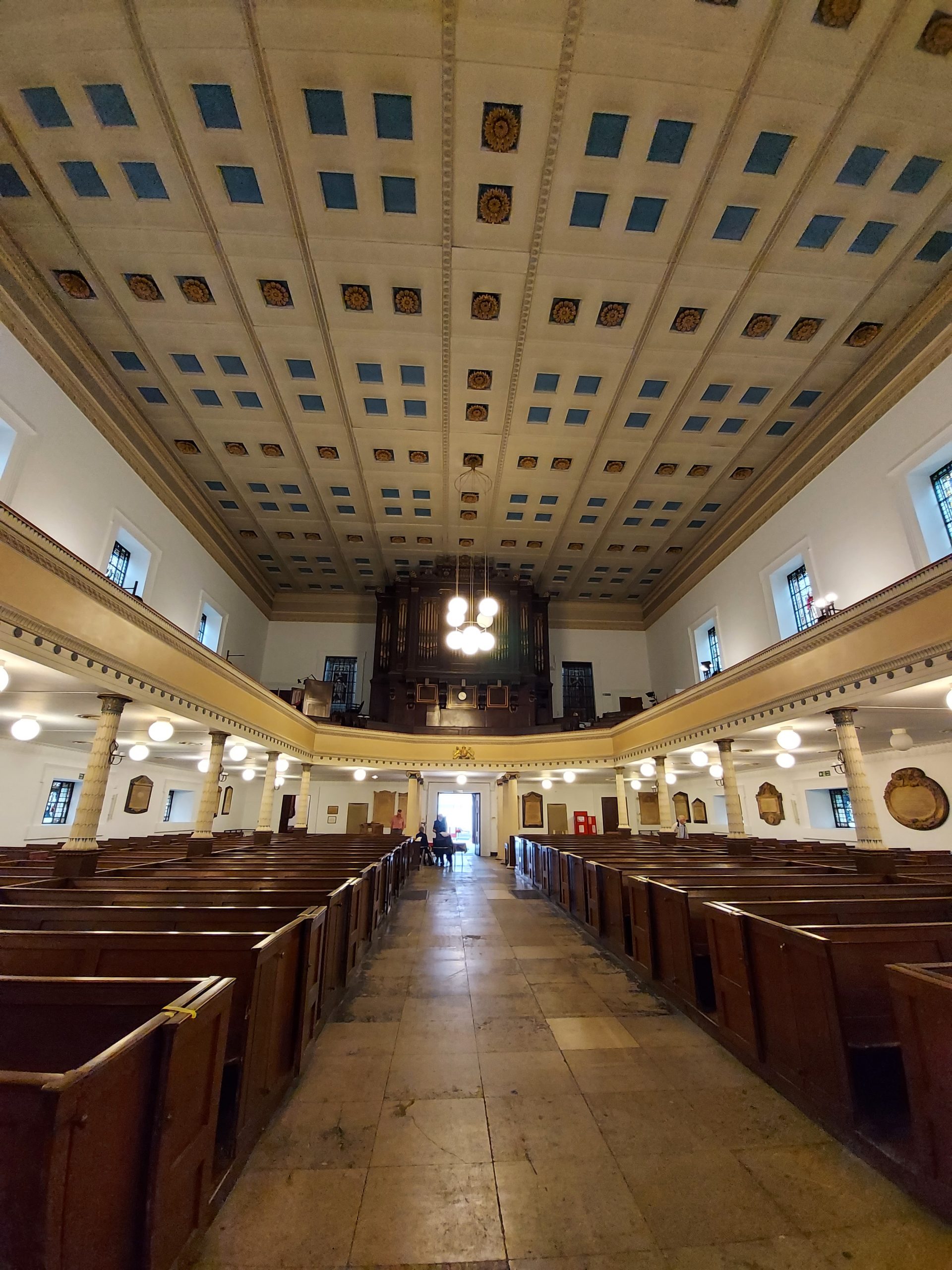
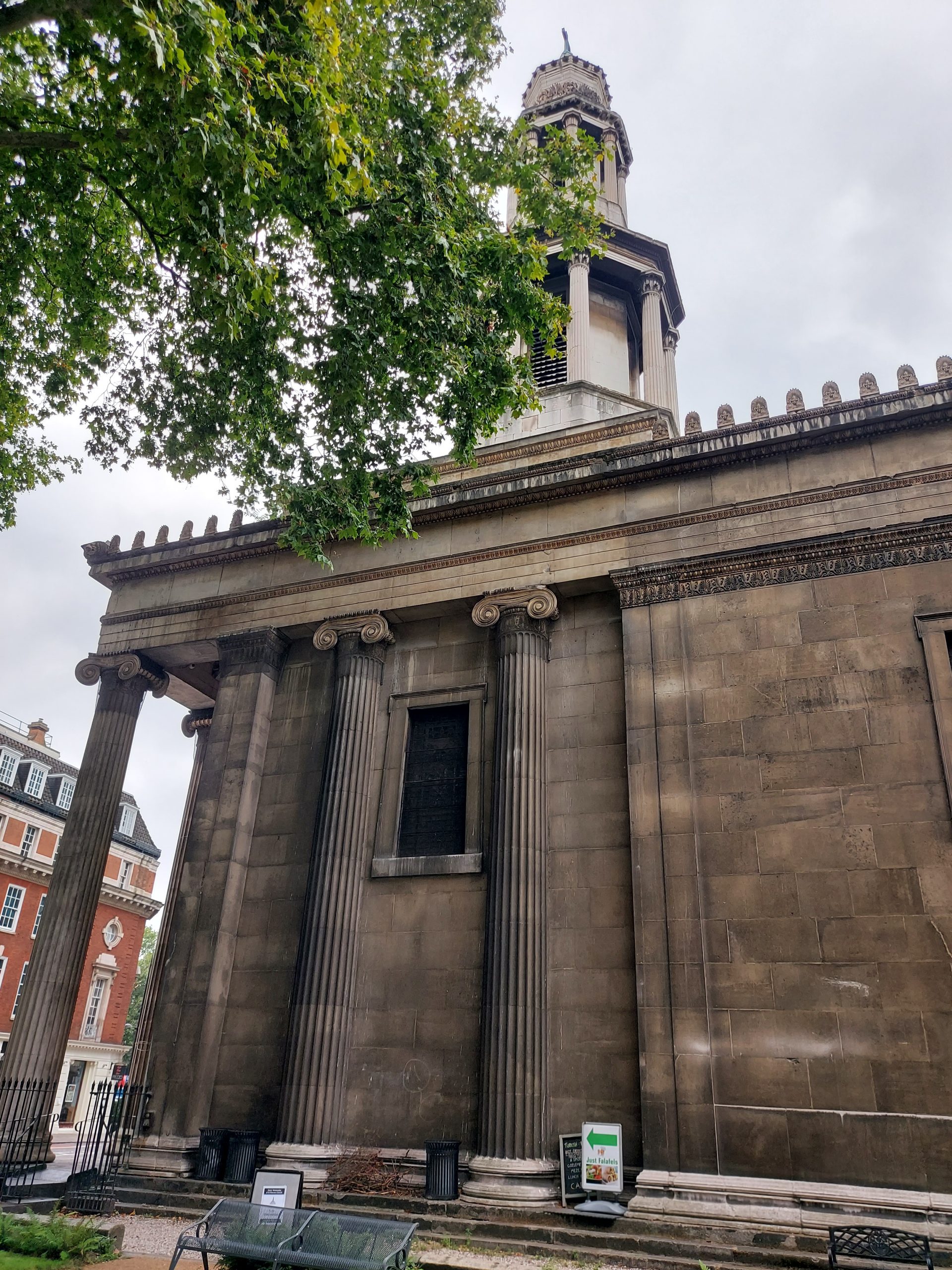
I’ve visited St Pancras Old Church before, but despite walking past it on numerous occasions I’d never been inside St Pancras New Church, built in 1822 to accommodate the increasing population of the area. Designed by architect William Inwood, with help from his son Henry William, it is a fine example of Georgian architecture, taking inspiration from Greek design and boasting an elegant simplicity. Ionic columns can be seen outside and inside the church, and the walls are a light white colour (the Victorians painted them dark red, and also installed the stained glass windows – the windows originally contained plain glass).

the church
Eastward view of the church’s interior

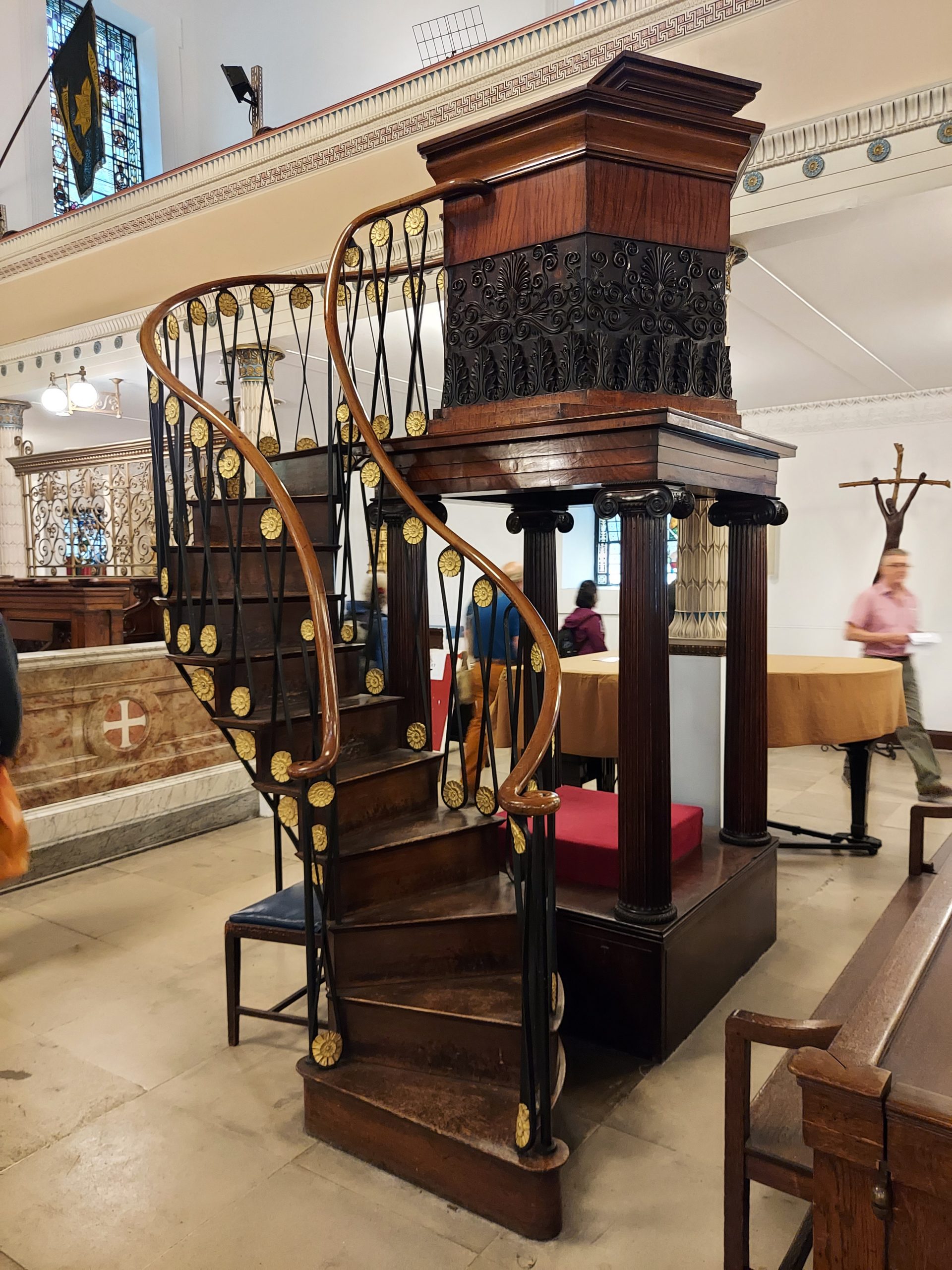
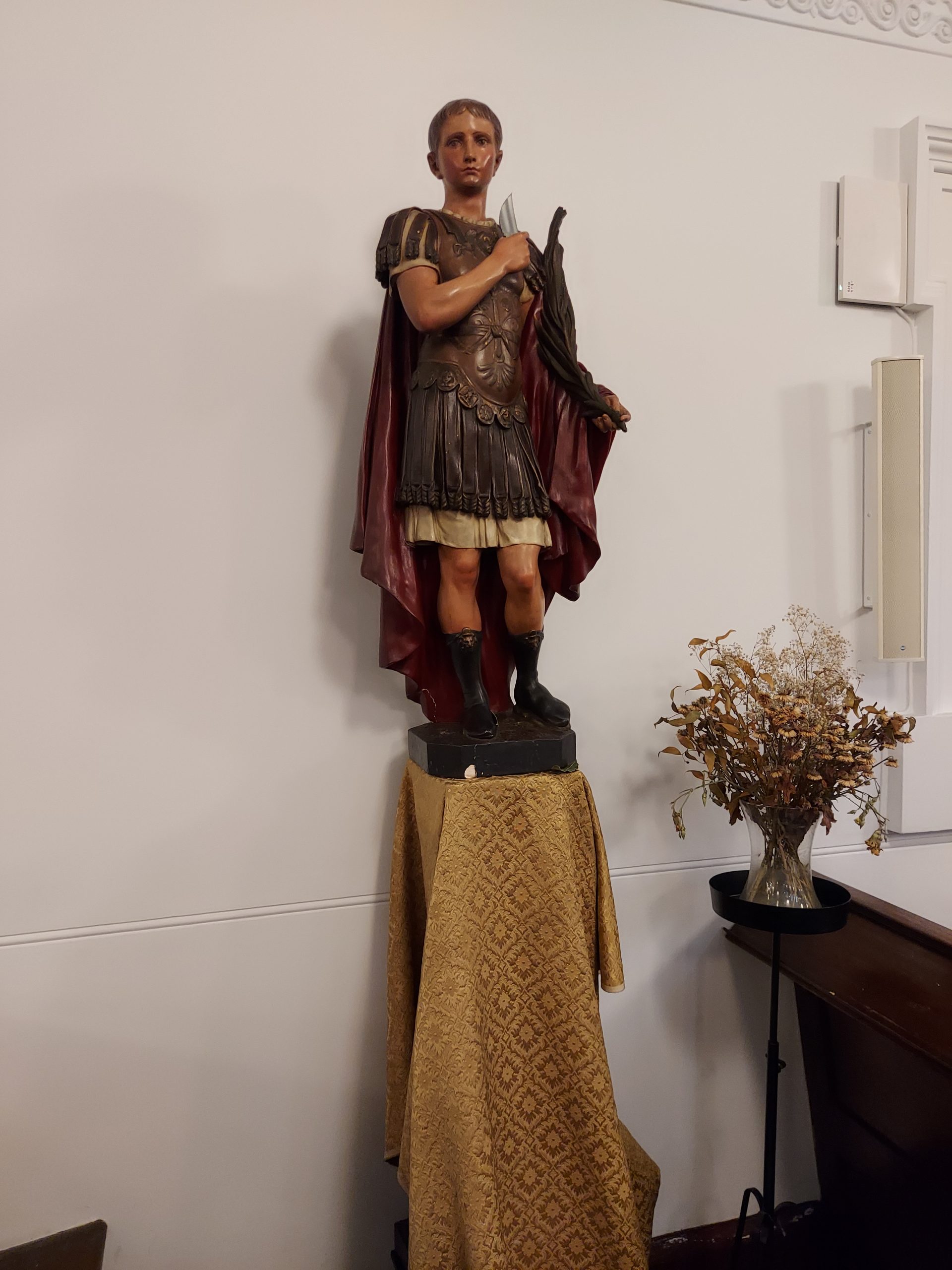
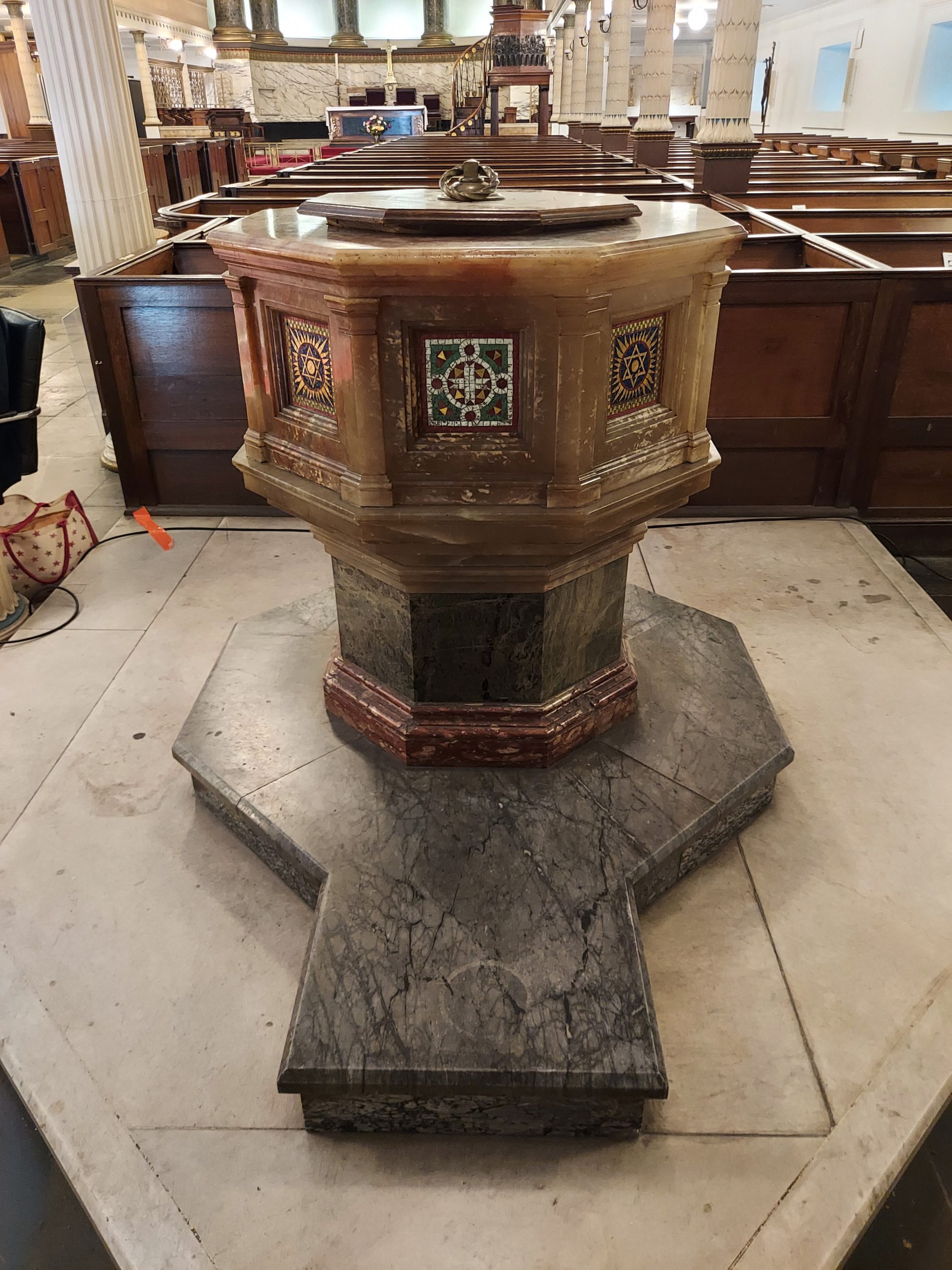
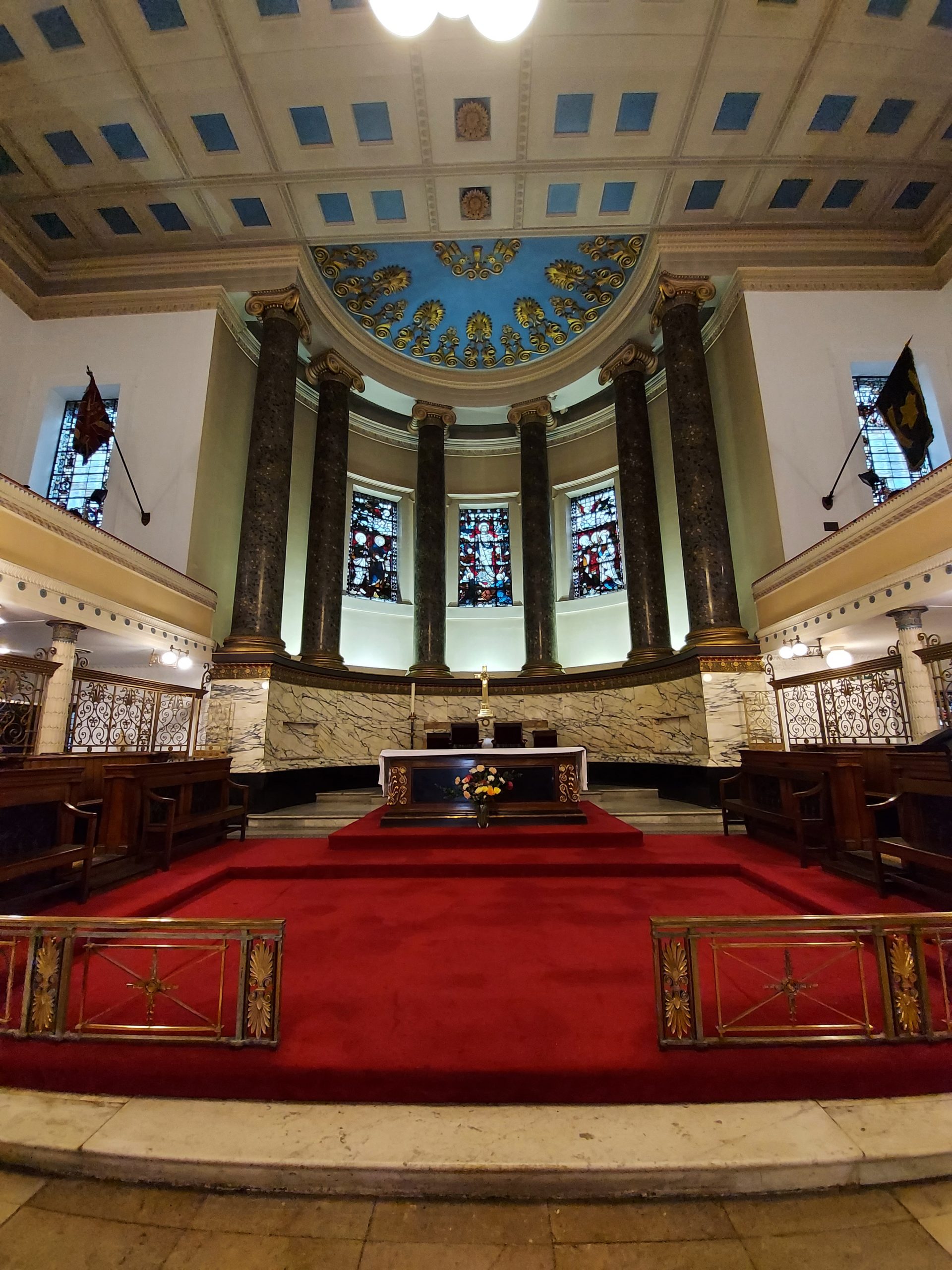
A statue of St Pancras, a Roman boy who converted to Christianity and was beheaded in 304AD for refusing to recant, stands on the left hand side of the church, surrounded by plaques dedicated to the good and the great of the parish. The font stands at the west end of the church – the base is of marble, the top of alabaster, and it dates from 1887, although the bowl inside is original. The pulpit, made from the Fairlop Oak from Hainault Forest, was originally taller, to alllow those sitting on the balcony to see and hear the speaker; it has since been shortened.If the high altar along the back wall looks familiar and rather modern, that is because it is by Charles Holden, who also designed Senate House and numerous Underground stations. It dates from 1914. The organ on the balcony at the back of the church was installed in 1864, and came from a music hall in Birmingham.

view of the church interior
View of the church interior westwards, including the organ
high altar
Charles Holden’s high altar

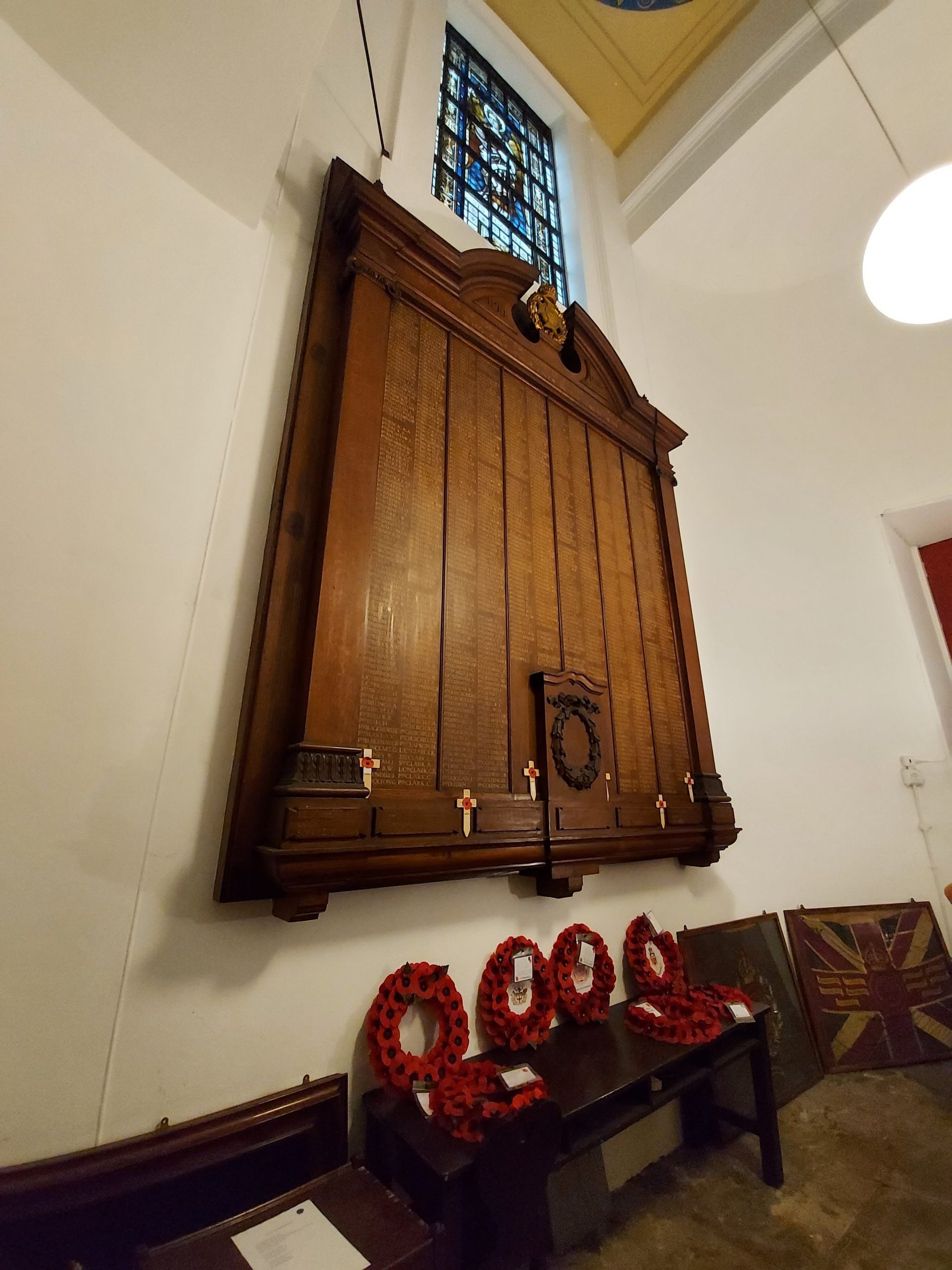
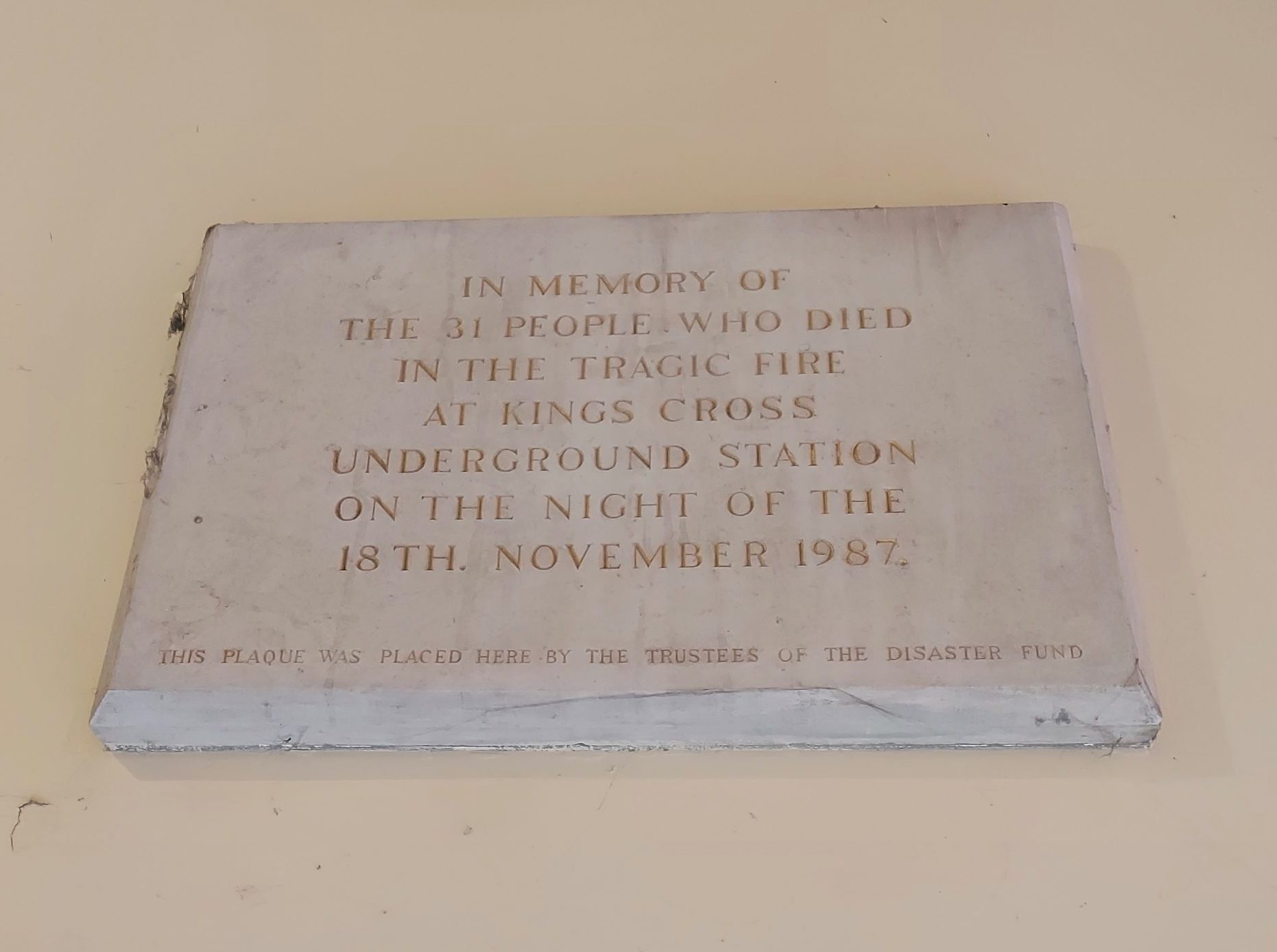
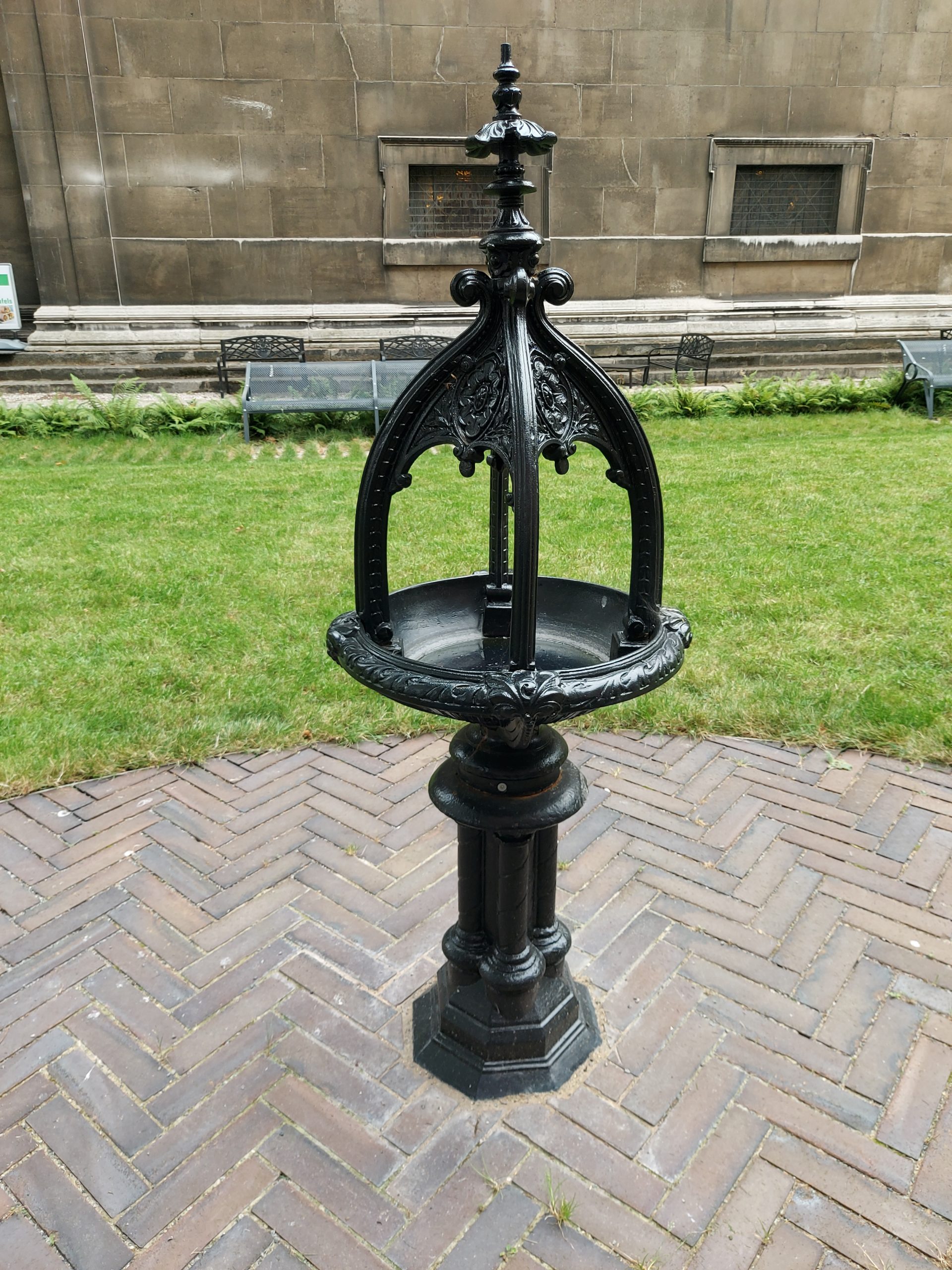
The south vestibule contains a huge memorial to the members of the St Pancras Regiment, dating from World War I. The entrance to the church contains more plaques, including one to those who died in the King’s Cross fire of 1987.There is a lovely peaceful garden at the side of the church, behind the busy main road. It contains a Victorian drinking fountain, dating from the 1880s, which was originally in St James’s Gardens, a space west of Euston station and now lost owing to the work on HS2. From the garden you can see the octagonal tower, which was copied from the Tower of the Winds in Athens. Here also you can see that in places, the Portland stone, now darkened by pollution, has retained its original bright white colour.

St Pancras church
Side view of the church

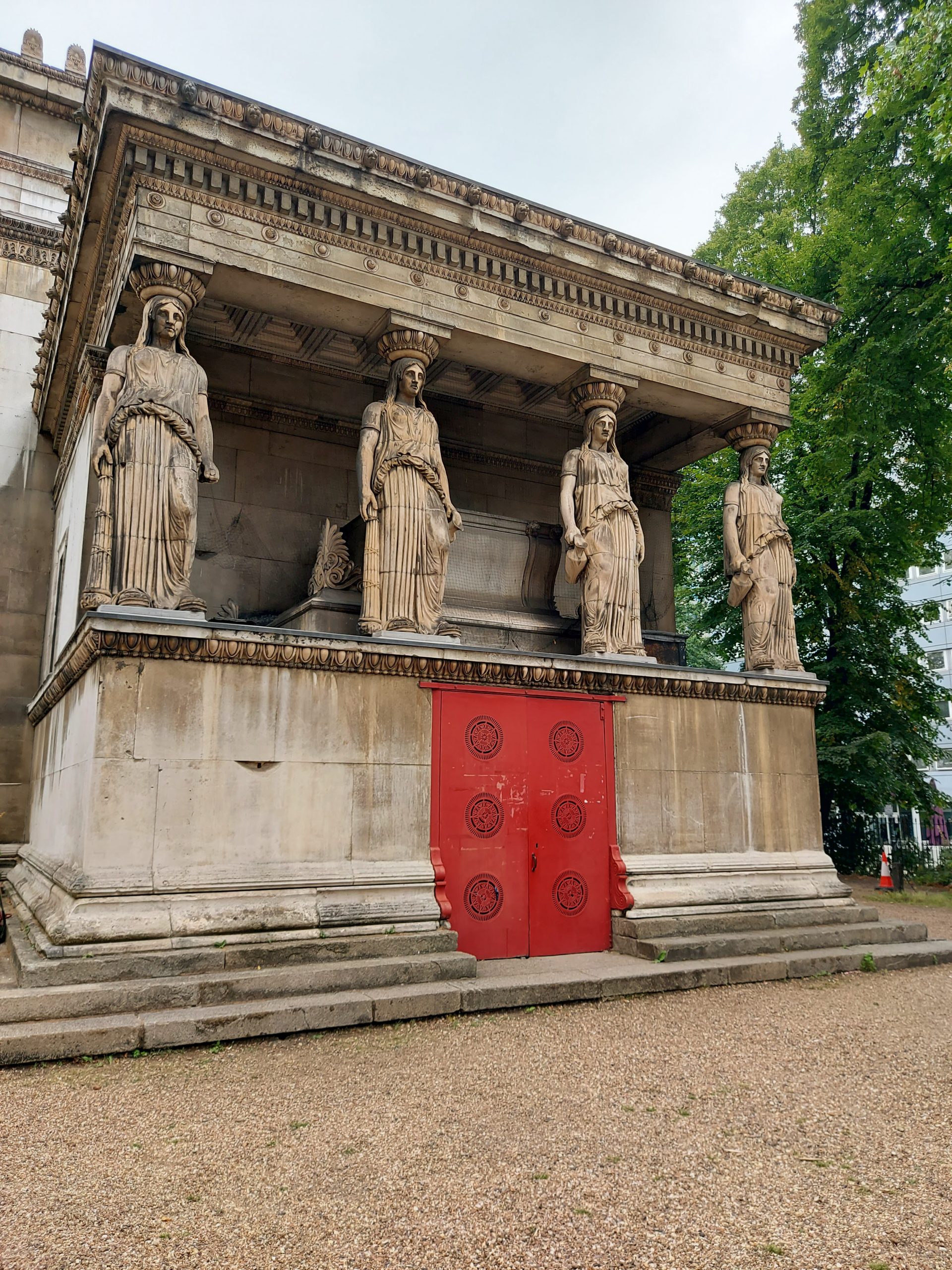
The crypt underneath the church is guarded by caryatids (statues of women holding up the roof). These were also inspired by similar statues in Athens, but had to be shortened in the middle as they were originally too big to fit. Sadly the crypt was closed by the time I got there, but it plays host to regular art exhibitions, so I will have the chance to see it in the future.

crypt
The caryatids guarding the crypt

FACTS

Address: Euston Road, London, NW1 2BA

Website: stpancraschurch.org

Prices: Free

City of London Churches – Open House London

Something else I did during Open House London was visit a number of churches in the City of London. They were all built or rebuilt after the Great Fire of London, and all of them are of historical significance. Open House London was a chance to explore them in more detail.

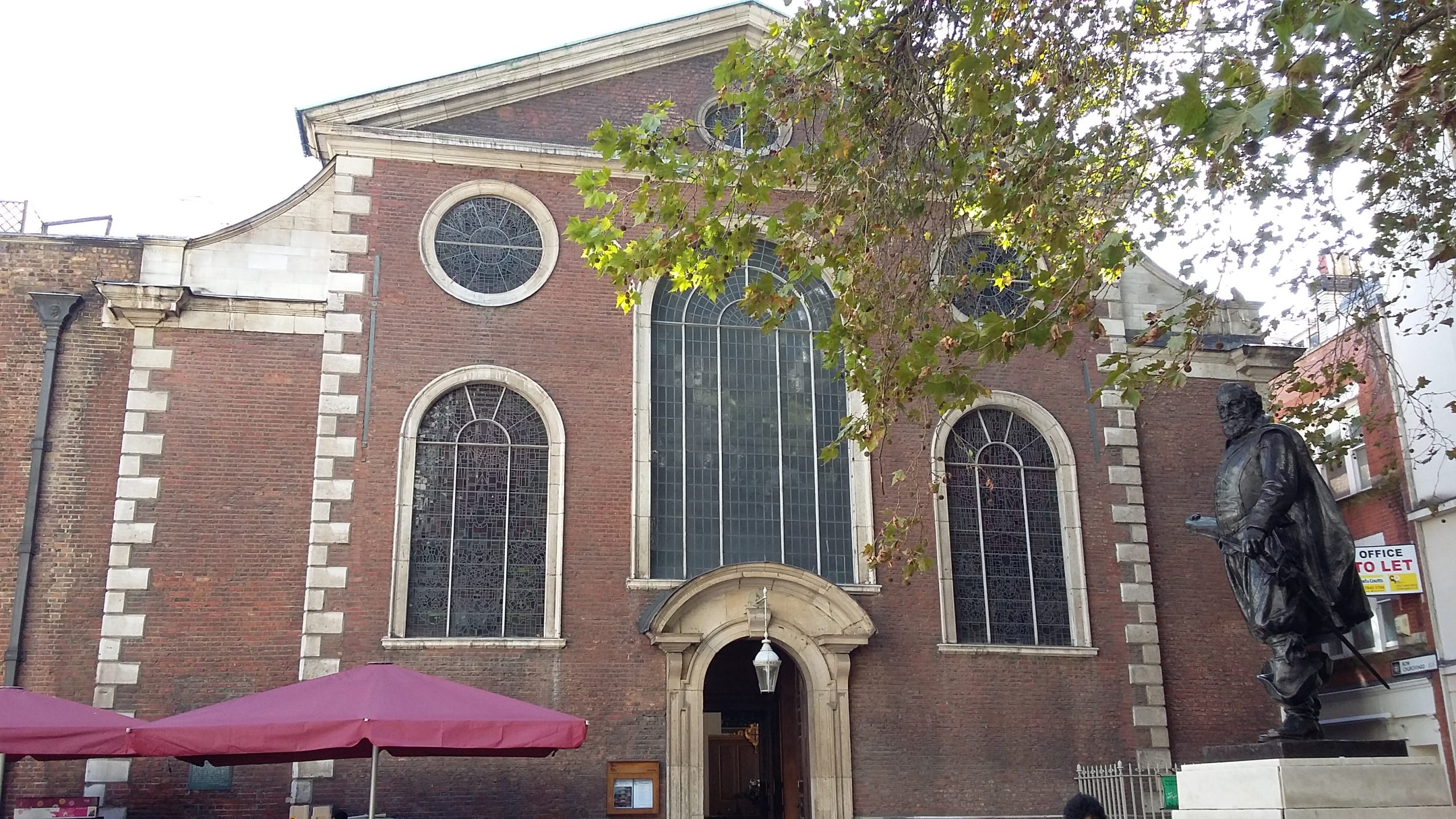
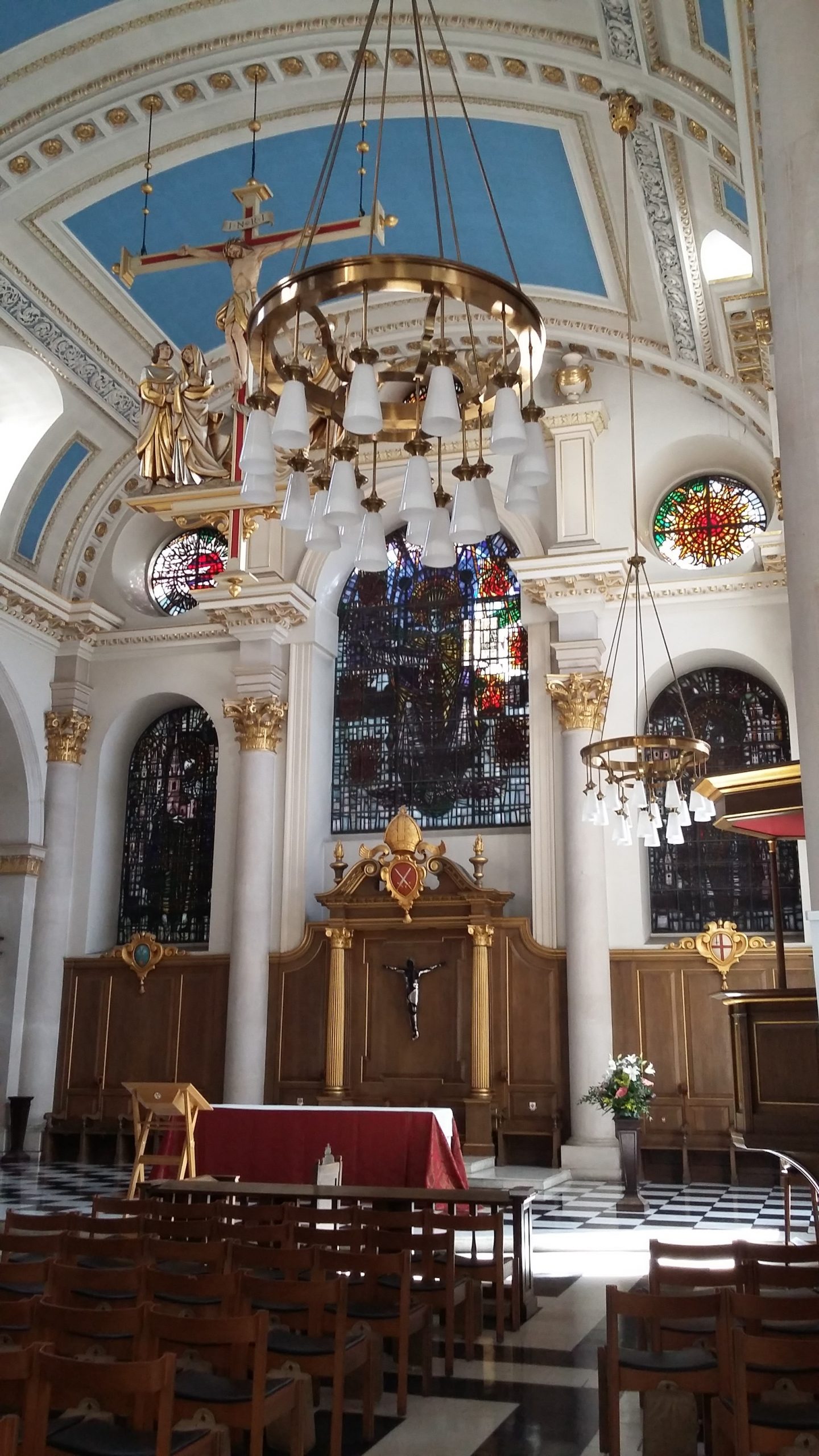
St Mary-le-Bow
Possibly the most famous church in London, as according to tradition, a true Cockney must be born within earshot of the sound of Bow Bells, St Mary-le-Bow on Cheapside was rebuilt after the Great Fire of London by Sir Christopher Wren, although a church has existed on the site since Saxon times. Destroyed in the London Tornado of 1091, it was rebuilt during the reign of Henry II and was famous for its arches, or “bows”, of stone. Much of the church was destroyed by a German bomb during the Blitz, and was restored under the direction of Laurence King. Today, St Mary-le-Bow is a Grade I listed building. A statue of Captain John Smith of Jamestown, founder of Virginia, stands outside: he was once a parishioner of the church. Inside, there is a memorial to members of the Norwegian resistance who died during World War II.

St Mary-le-Bow External
St Mary-le-Bow Internal

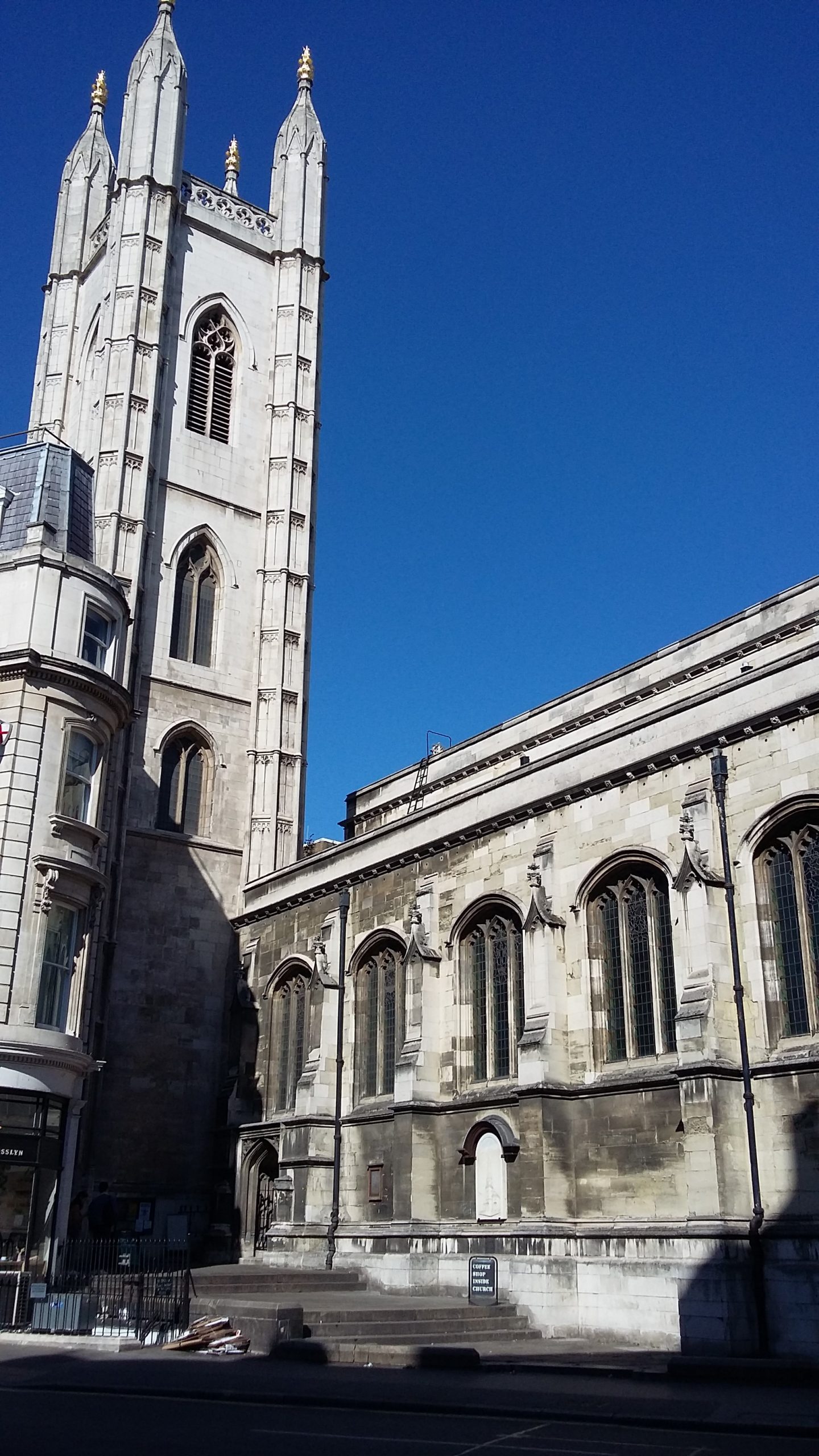
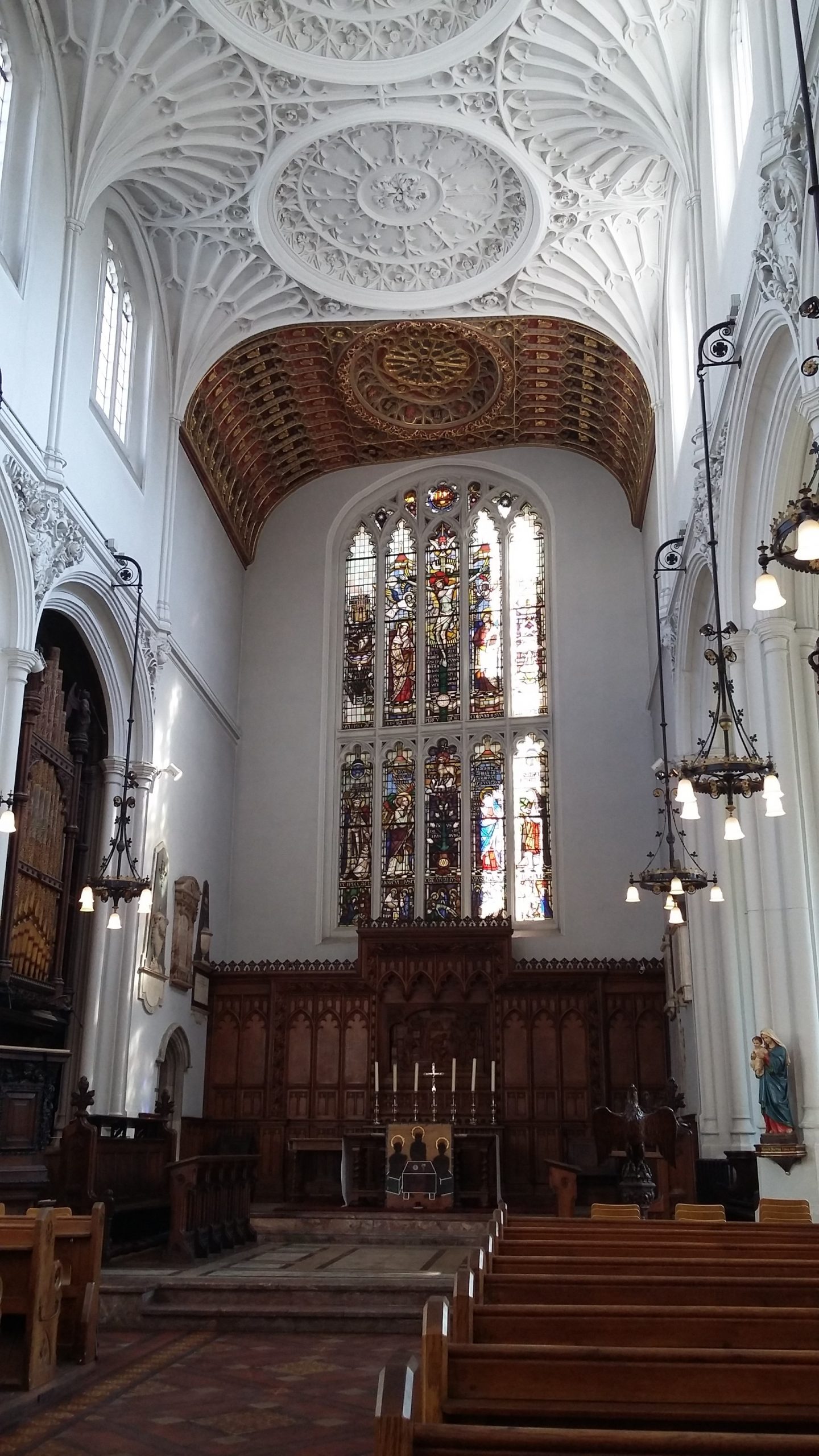
St Mary Aldermary
This Guild church sits on Watling Street at the junction with Bow Lane. Originally a medieval church, it was rebuilt from 1510 and again after suffering damage during the Great Fire of London. Unusually for Wren’s churches, it is in the Gothic style. It has been the Regimental Church of the Royal Tank Regiment since 2007. I found this church particularly welcoming: it has a café, open to all, and hosts conferences, meditation sessions and discussion groups.

St Mary Aldermary External
St Mary Aldermary Internal

St Stephen Walbrook
Of all the churches I visited, St Stephen Walbrook has perhaps the most interesting history. The original church stood on the east bank of the Walbrook, supposedly directly over the remains of a Roman Mithraic Temple, but was moved to its present site on the other side of Walbrook Street in the 15th century. Destroyed, like so many others, in the Great Fire, it was rebuilt to Sir Christopher Wren’s design. In 1987, an altar by the sculptor Henry Moore was installed. The dramatist and architect John Vanbrugh is buried here.

St Stephen Walbrook External
St Stephen Walbrook Internal

St Vedast
St Vedast, also known as Saint Vedast Foster Lane or Saint Vedast-alias-Foster, so-called because of its location in Foster Lane, was founded before 1308 and repaired by 1662; unfortunately, it was badly damaged in the Great Fire four years later. Rebuilt by the office of Sir Christopher Wren, the new church incorporated aspects of the medieval framework. The spire, possibly designed by Nicholas Hawksmoor, was added in 1709-12. Gutted during the Blitz, the church was restored by Stephen Dykes Bower.

St Vedast External
St Vedast Internal

St Pancras Old Church

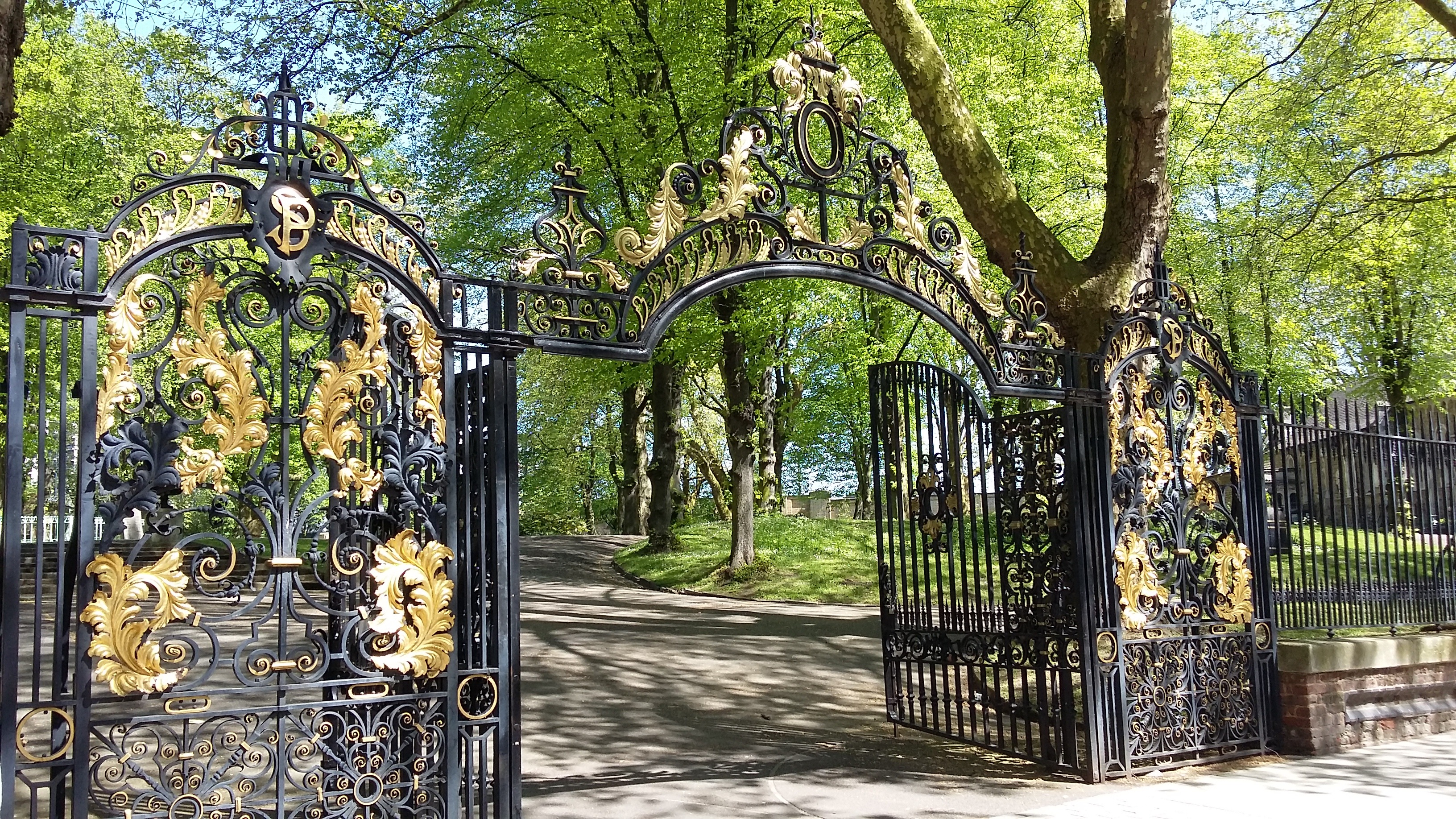
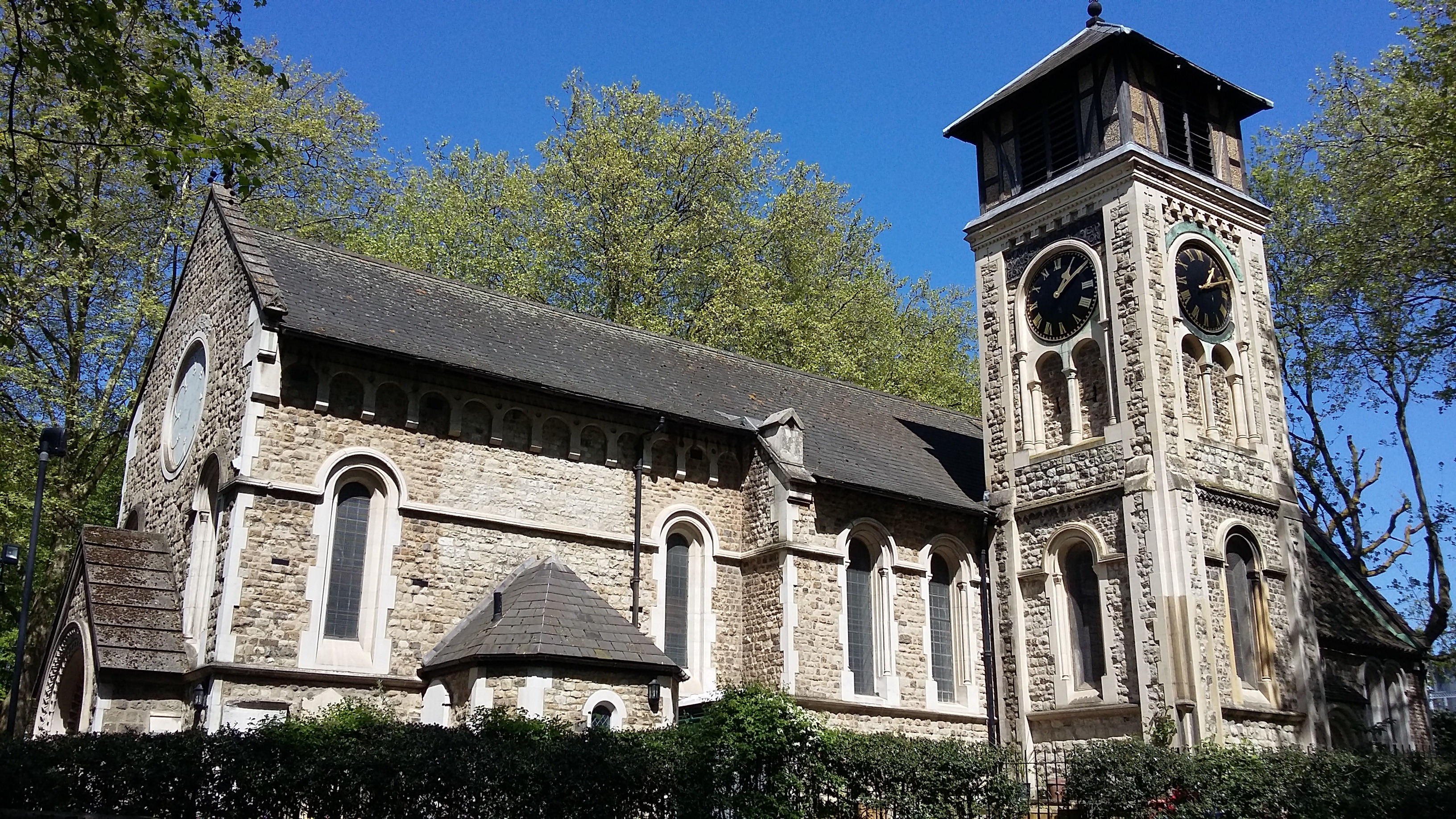
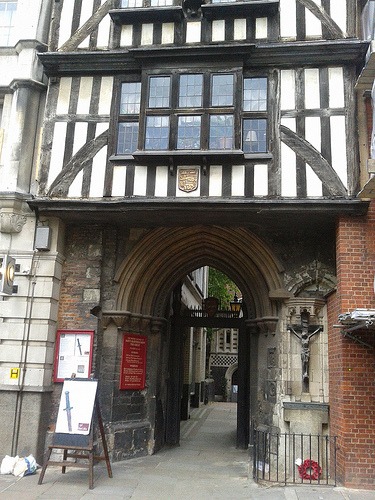
churchyard gateway
St Pancras Old Churchyard

I’ve been meaning to visit St Pancras Old Church ever since I moved to London, so when I walked past it while on my Fleet walk I just had to pop in.

History

The church is located in Somers Town, is dedicated to the Roman martyr Saint Pancras, and is believed by many to be one of the oldest sites of Christian worship in England.

church
St Pancras Old Church

The church thrived until the 14th century, when the population largely moved to Kentish Town, possibly because the area was prone to flooding (the Fleet ran past). The church fell into disrepair but was rebuilt in the Victorian era. Now managed by the London Borough of Camden, it was restored at the beginning of this century.

Notable burials

Many French refugees who had fled the Revolution were buried in the churchyard, including the transgender spy Chevalier d’Éon. John Polidori, famous companion of Byron, is also buried here, as is the architect John Soane, whose tomb, designed by himself, was the inspiration for the famous red telephone boxes.

Sir John Soane's tomb
Sir John Soane’s tomb

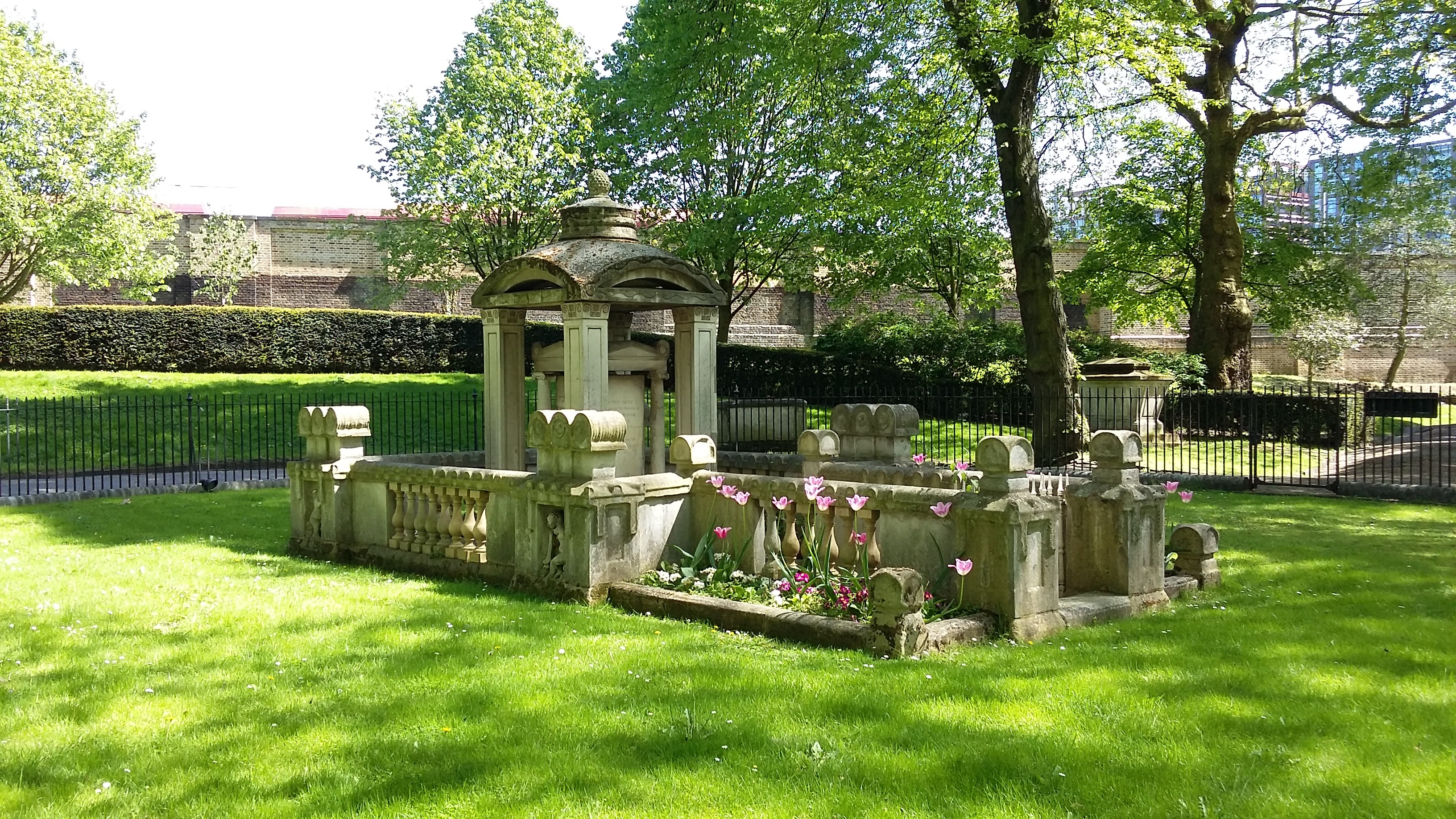
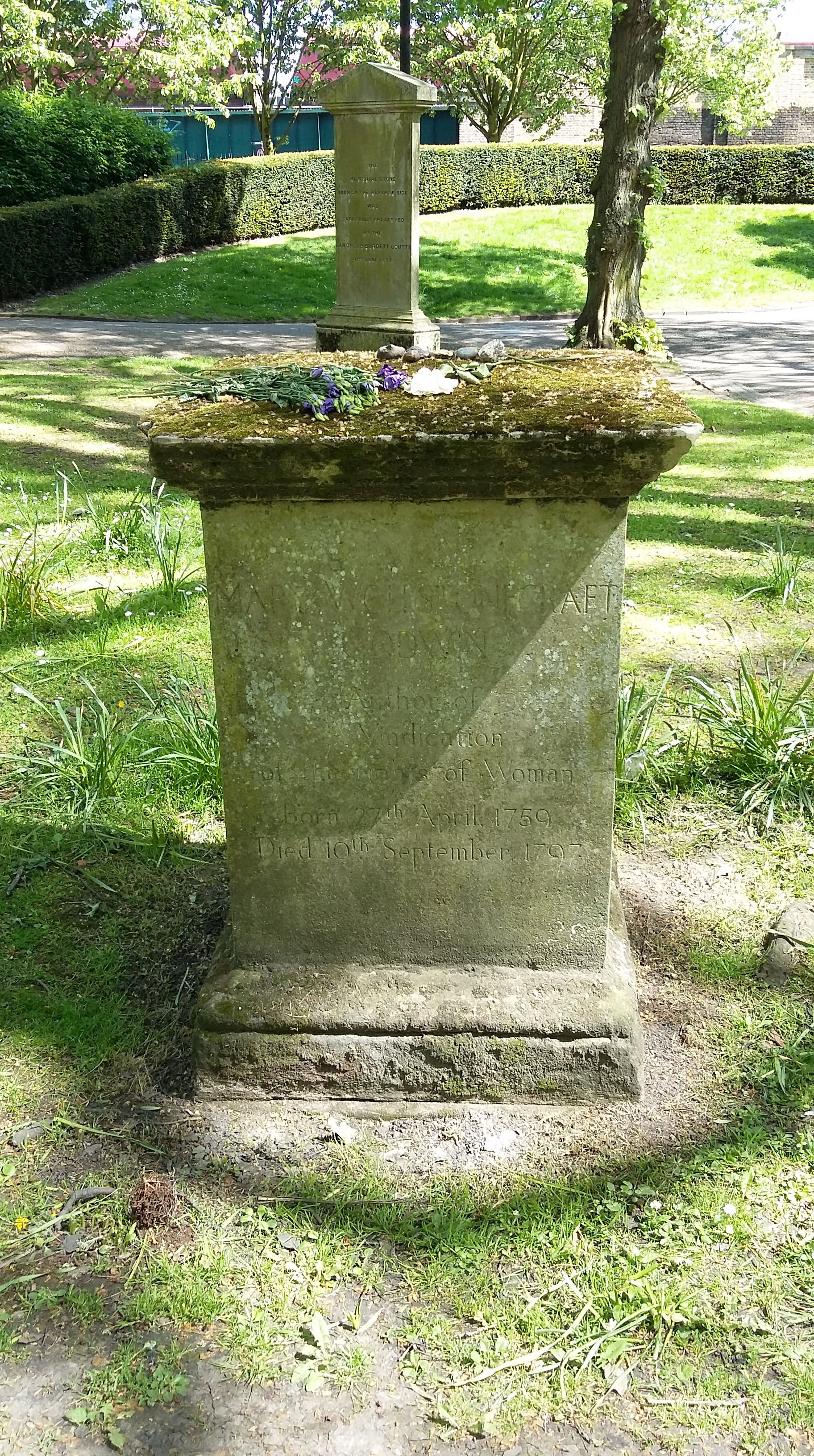
The tomb of Mary Wollstonecraft and William Godwin is here, although their remains are now in Bournemouth. Their daughter Mary and her future husband Percy Shelley met here frequently.

Tomb of Mary Wollestonecraft and William Godwin
Tomb of Mary Wollstonecraft and William Godwin

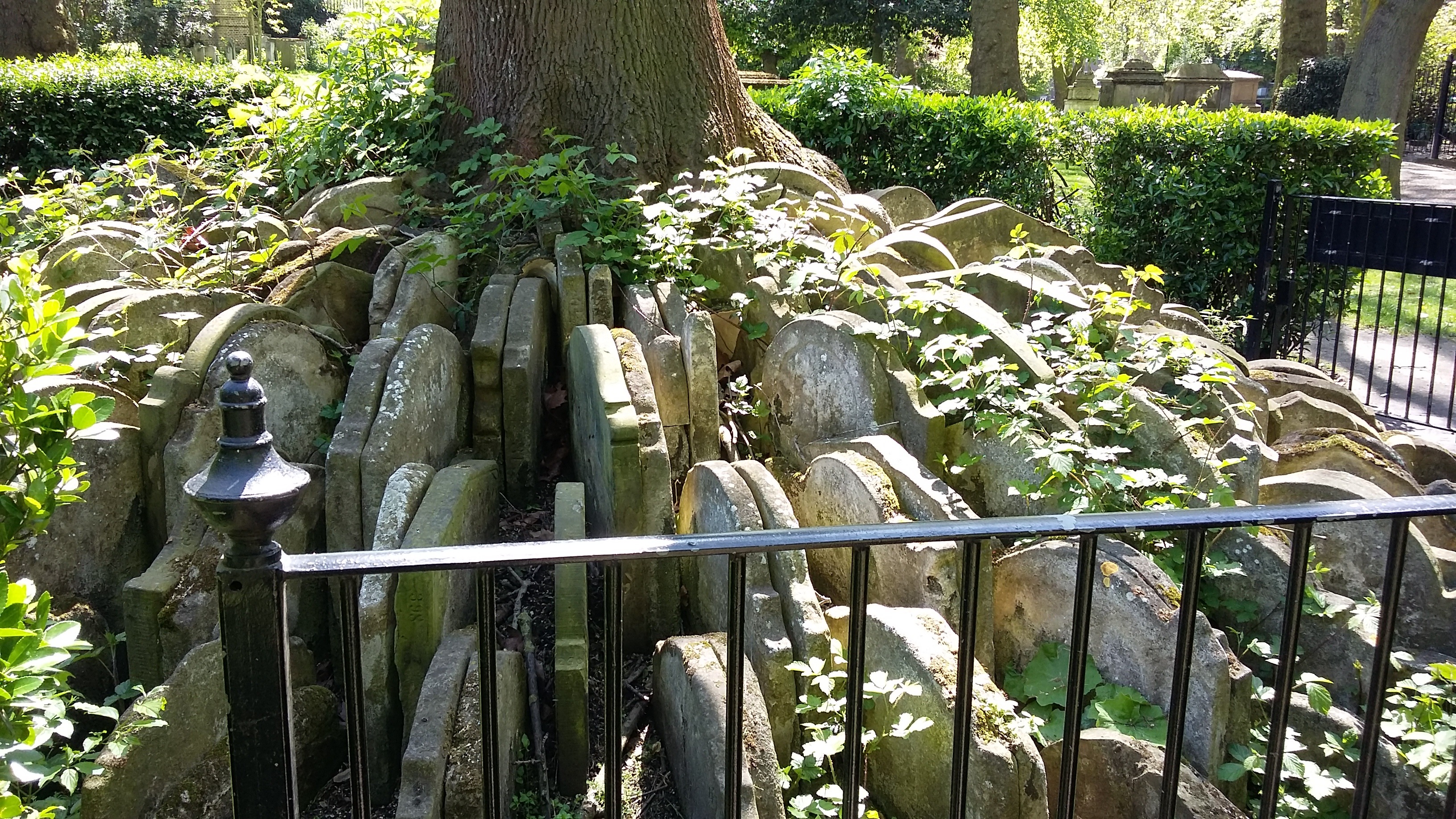
The Hardy tree

As a longtime fan of the novelist Thomas Hardy I was keen to see this famous tree. The young Hardy was apprenticed to a London architecture firm in the 1860s. When a new train line was planned directly through the cemetery, Hardy was assigned the unenviable task of moving the dead bodies. Left with a pile of gravestones, he decided to place them in a ring around a tree near the church, where over the years they have been absorbed into the tree, forming an impressive spectacle.

The Hardy tree
The Hardy tree

The Church

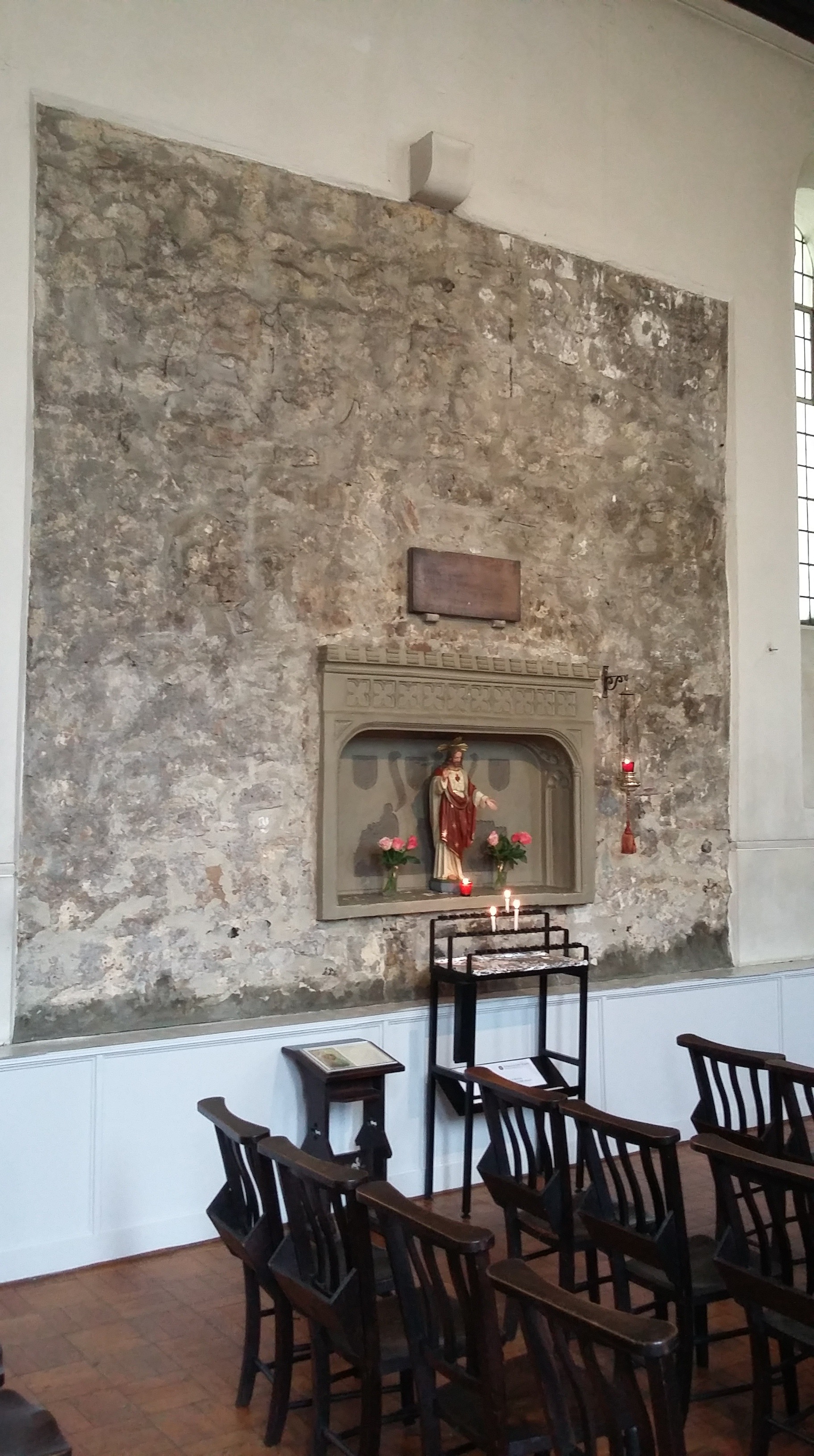
The church was rebuilt in the Victorian era, but elements from its medieval past are still visible, including an entire section of wall.

Inside the church
Inside the church

Medieval wall
Medieval wall

I really wish I’d visited this churchyard before as it’s a beautiful place. There were lots of people just sitting about reading, which sounds like a great idea. It was lovely to be able to stop here and have a rest during my walk.

FACTS

Address: Pancras Road, Camden Town, London, NW1 1UL

Website: posp.co.uk/st-pancras-old-church

Prices: Free

Saint Bartholomew the Great

Saint Bartholomew the Great is one of London’s oldest churches. It was founded as an Augustinian Priory in 1123 and has been in continuous use since 1143. It is an Anglican/Episcopal Church in that part of London known as the City, and I visited on Saturday to see a performance of T.S. Eliot’s play Murder in the Cathedral, about the murder of Thomas Becket.

The church is beautiful and has featured in films and TV shows such as Shakespeare in Love and The Hollow Crown.

2014_0524StBarts01

2014_0524StBarts02

2014_0524StBarts03

2014_0524StBarts04

2014_0524StBarts05

2014_0524StBarts06

2014_0524StBarts07

2014_0524StBarts08

Shoreditch Church

2014_0302ShoreditchChurch00
St Leonard’s Church

A couple of weeks ago I attended a rather unusual theatre performance called Sun. I have reviewed the theatrical experience, but I wanted to write something about the location, as it was rather an unusual one.

2014_0302ShoreditchChurch04
Sign proclaiming the performance of Sun

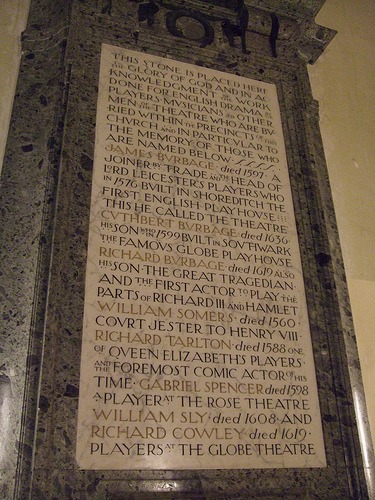
St Leonard’s Church, Shoreditch, has a long and distinguished history. There has been a church on the site for centuries, and it has been known as the actors’ church since the twelfth century, with the first English theatre located close by in New Inn Yard. Several of Shakespeare’s plays had their first performances there, and many of his associates are buried in the medieval church under the crypt: James Burbage, who built the first English theatre; his son Cuthbert, who built the Globe; and his other son Richard, the most famous actor of his time who was the first Macbeth, Hamlet, King Richard III, Othello and Romeo. A stone inside the church records this.

2014_0302ShoreditchChurch01

2014_0302ShoreditchChurch02

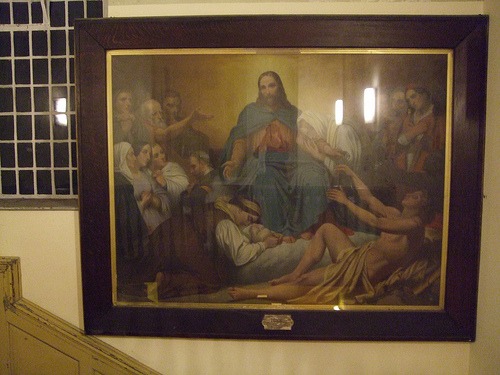
Also notable within the church is art, including this picture.

2014_0302ShoreditchChurch03

In the entrance, while waiting to go in to the performance, I had a look around and found even more interesting things, including an Alice in Wonderland-esque door and what looked like some stocks.

2014_0302ShoreditchChurch08

2014_0302ShoreditchChurch06

2014_0302ShoreditchChurch05

2014_0302ShoreditchChurch07
Looking out into Shoreditch from the church’s doorway