St Mary’s Church, Ealing: Open Day

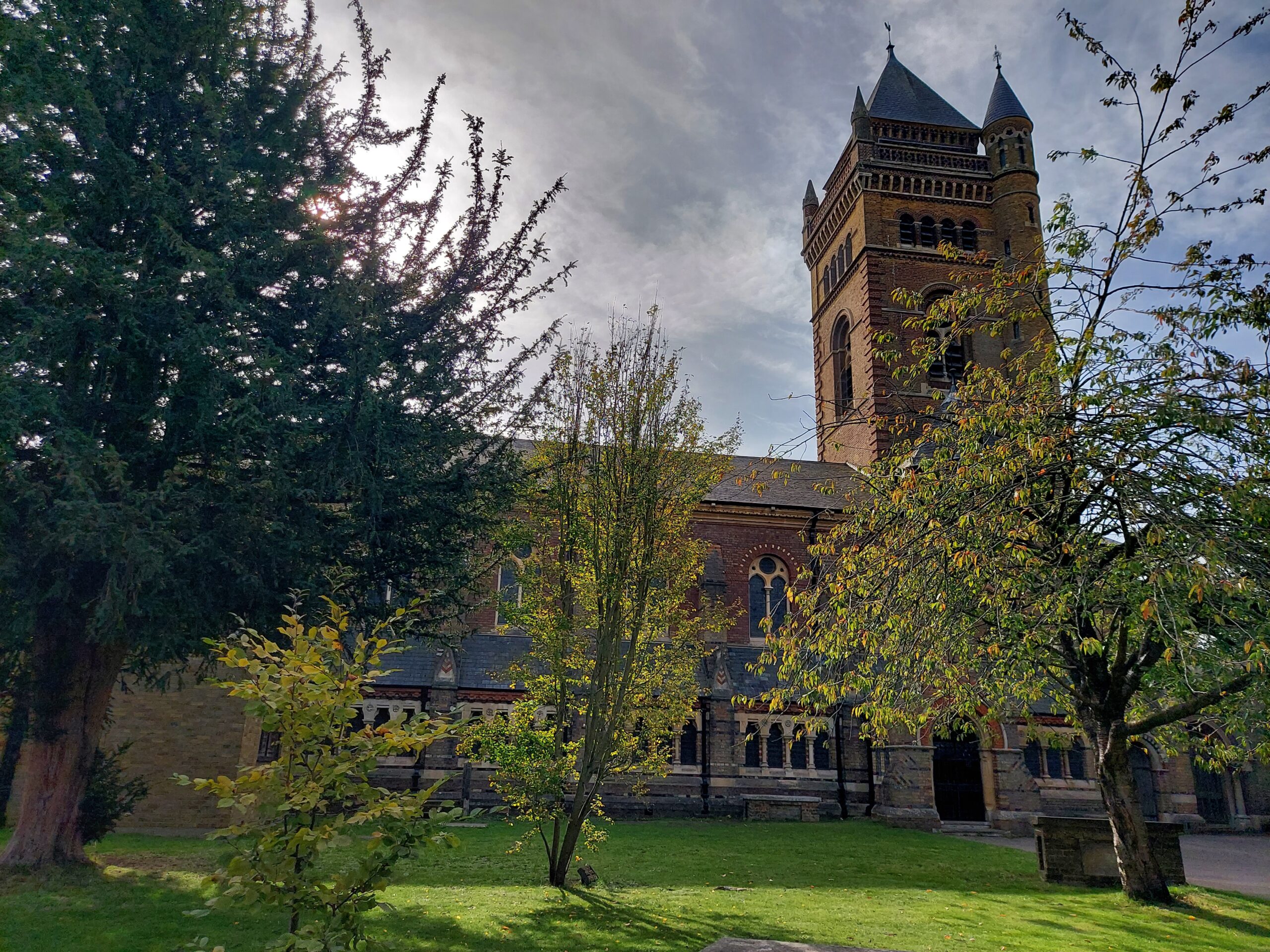
St Mary's Church seen from the side

I’m not religious at all, but I find churches interesting from a historical point of view, so when my local church, St Mary’s Ealing, had an open day recently I made sure to go.

There has been a church on the site for almost a millennium. Located on St Mary’s Road on the way from Ealing Broadway to South Ealing, the Grade II listed church originally marked the centre of Ealing. As the only church in a large parish stretching from Brentford towards Wembley, it was a key landmark in the area. Richard Smart, the vicar at the end of the sixteenth century, compiled a census recording a total of 427 inhabitants in the area. The only two roads from London to the West passed through the parish, and travellers often stopped to rest at the parsonage.
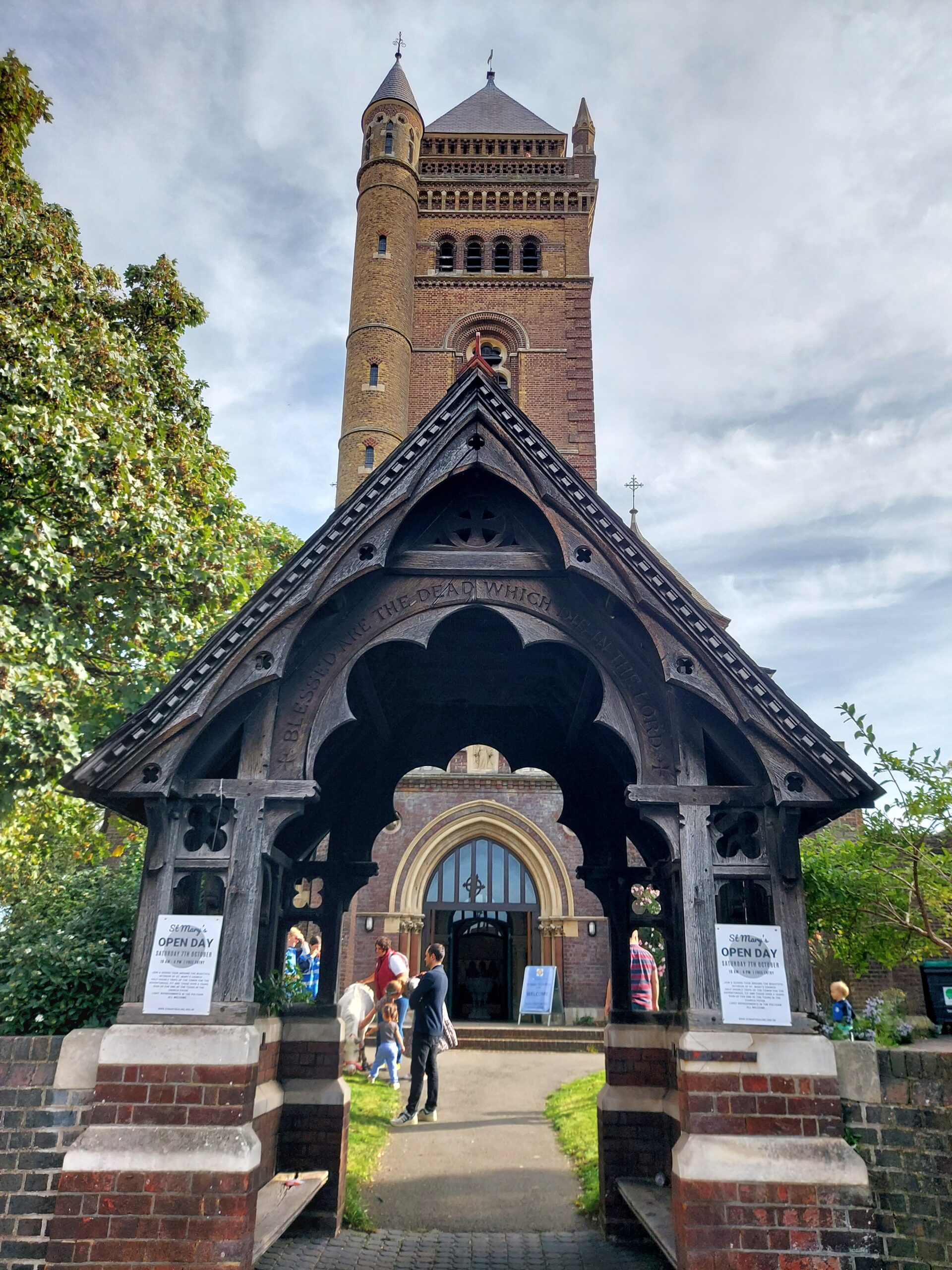
St Mary's Church seen from the front

In 1642, during the English Civil War, the church was severely damaged by Cromwell’s troops. In 1650, a parliamentary survey described St Mary’s as “ruinated and lying open since the plundering”. The Plague, which followed soon after, did not help, as many parishioners died. The original medieval church – now neglected and of which, sadly, no pictures survive – was demolished in 1720, to be replaced by James Horne’s design in 1740.
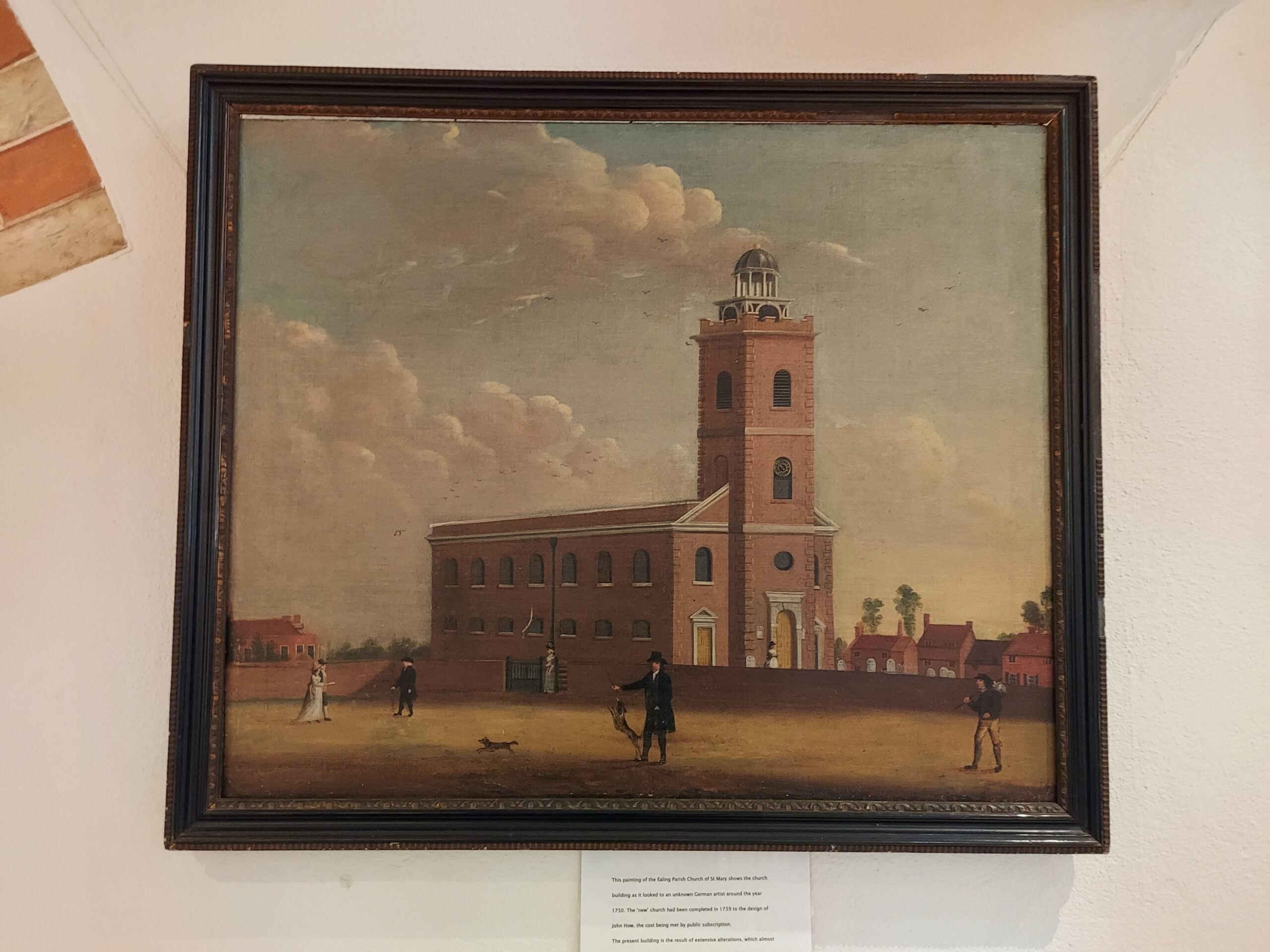
An eighteenth-century painting of the churchThe church as it looked in around 1750

Once the railway reached Ealing in 1838, the area’s population began to grow rapidly, and the centre began to shift towards what is now Ealing Broadway.

Between 1865 and 1873, S. S. Teulon adapted and enlarged the Georgian church, so that it resembled a Greek Byzantine basilica. A vestry was added in 1887 and the organ enlarged in 1927, while further redecoration took place in the 1950s and the ‘Polygon’ building – used as a community space – was built in 1978. The church was restored in 2003.
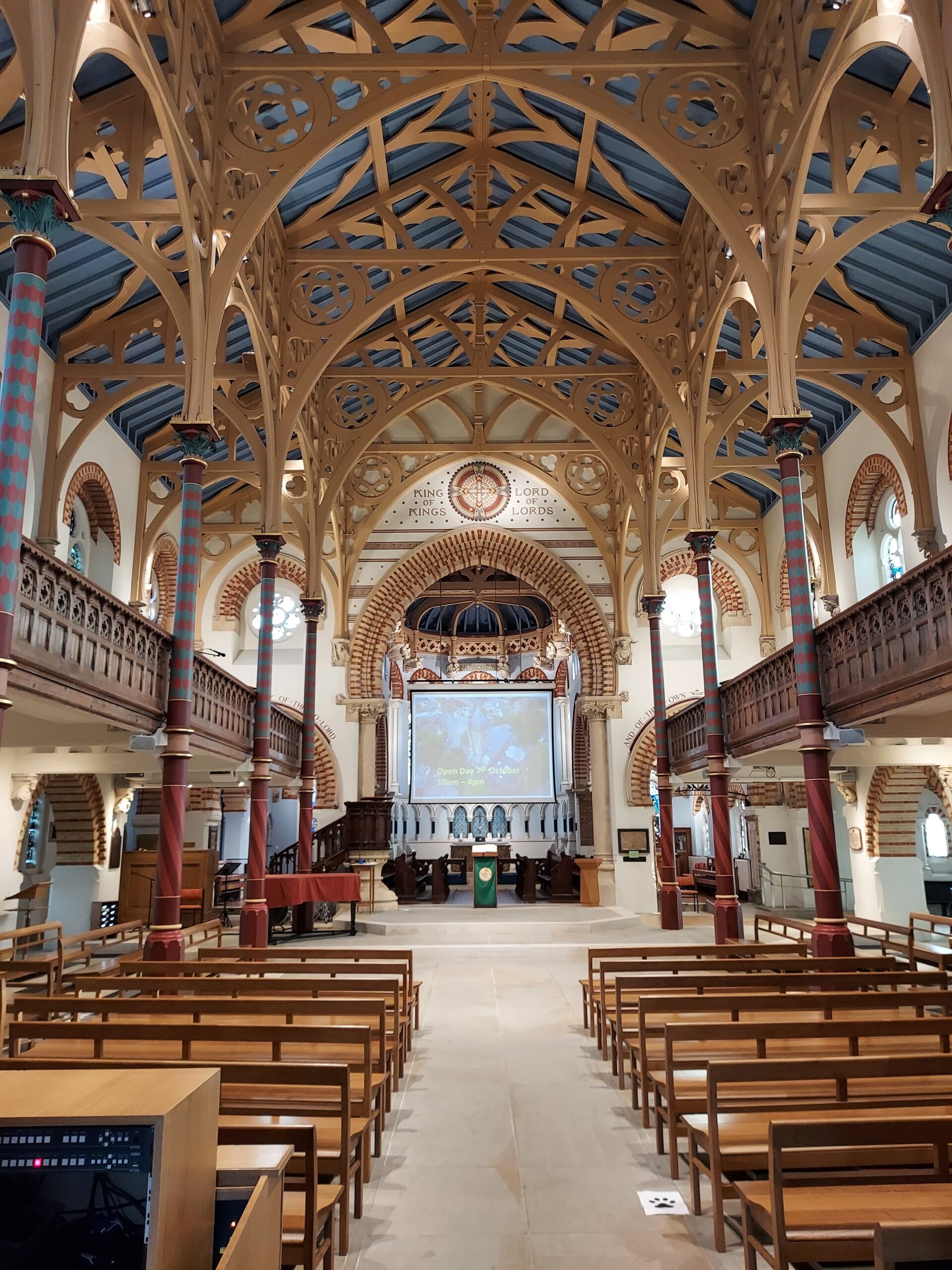
The inside of St Mary's Church

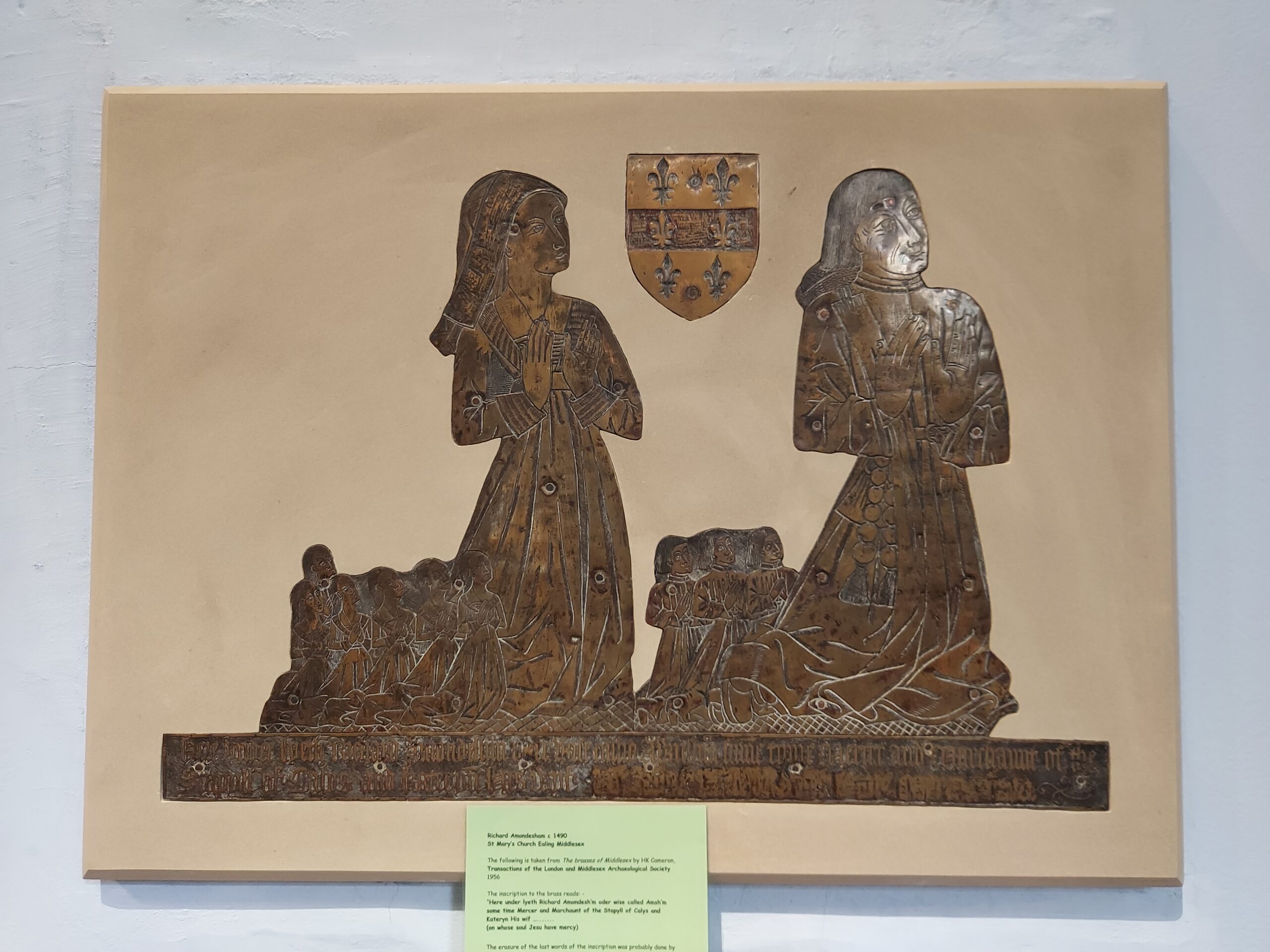
Victorian stained glass windows were commissioned by Thomas Boddington, who lived at Gunnersbury Lodge. From the old church, wall tablets and a medieval brass to Richard and Kateryn Amondesham (around 1490) were retained.
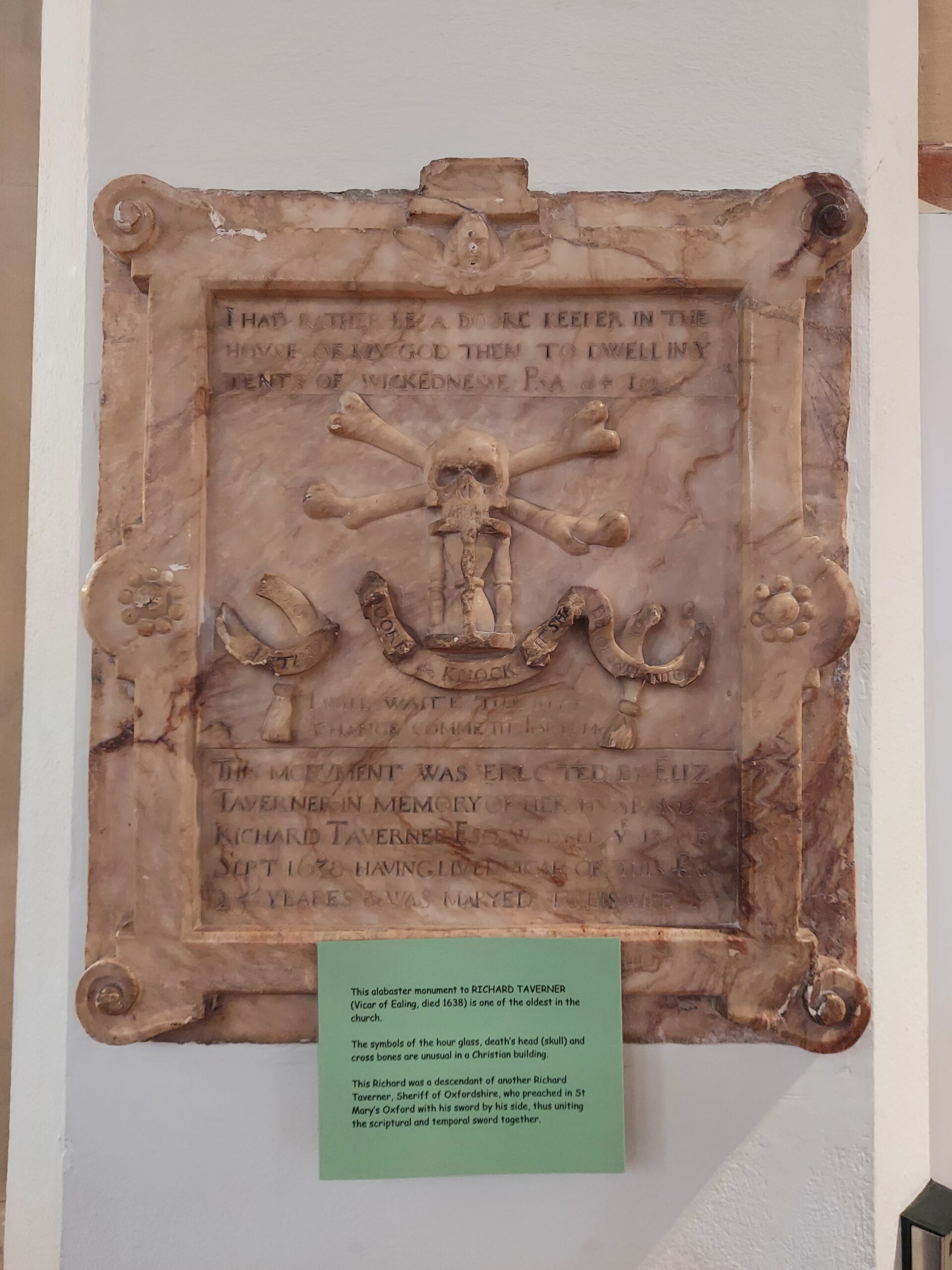
Alabaster monument to Richard Taverner

medieval brass to Richard and Kateryn Amondesham

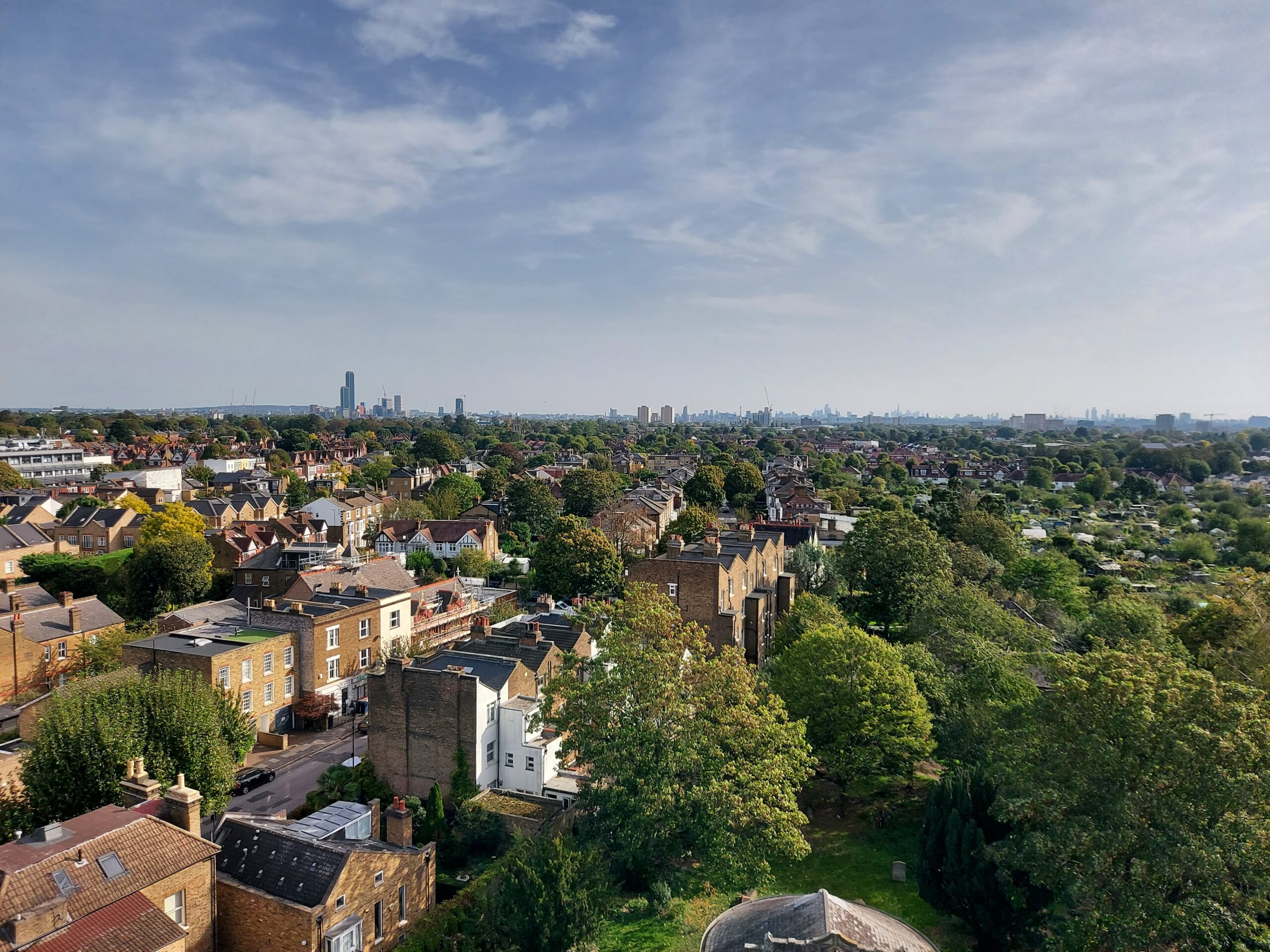
Members of the Church were on hand to take groups of lucky visitors up the tower. It was a hard climb but the beautiful views were worth it.
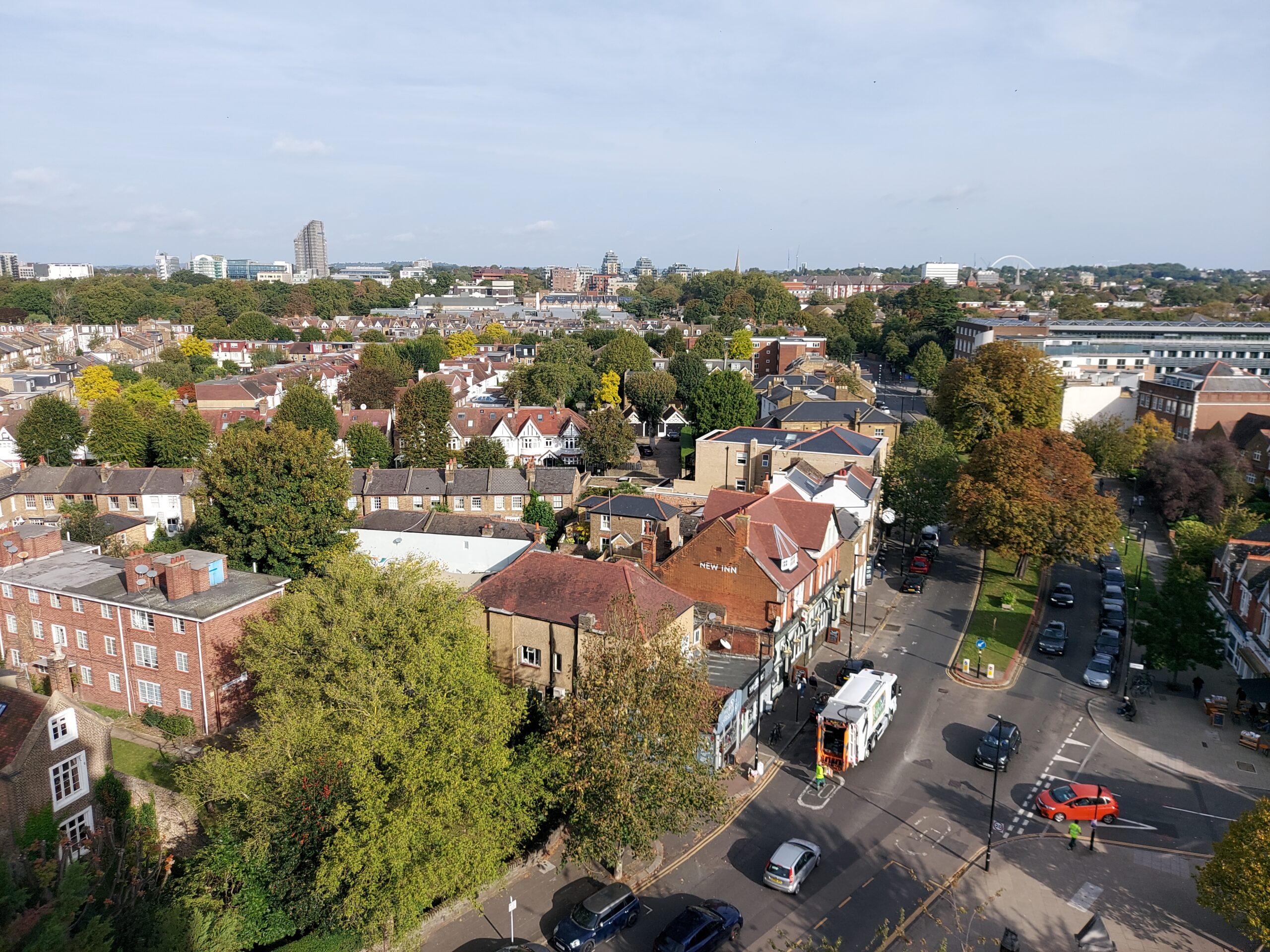
South Ealing Road, looking north, with Wembley Stadium visible in the distance

Looking east towards London

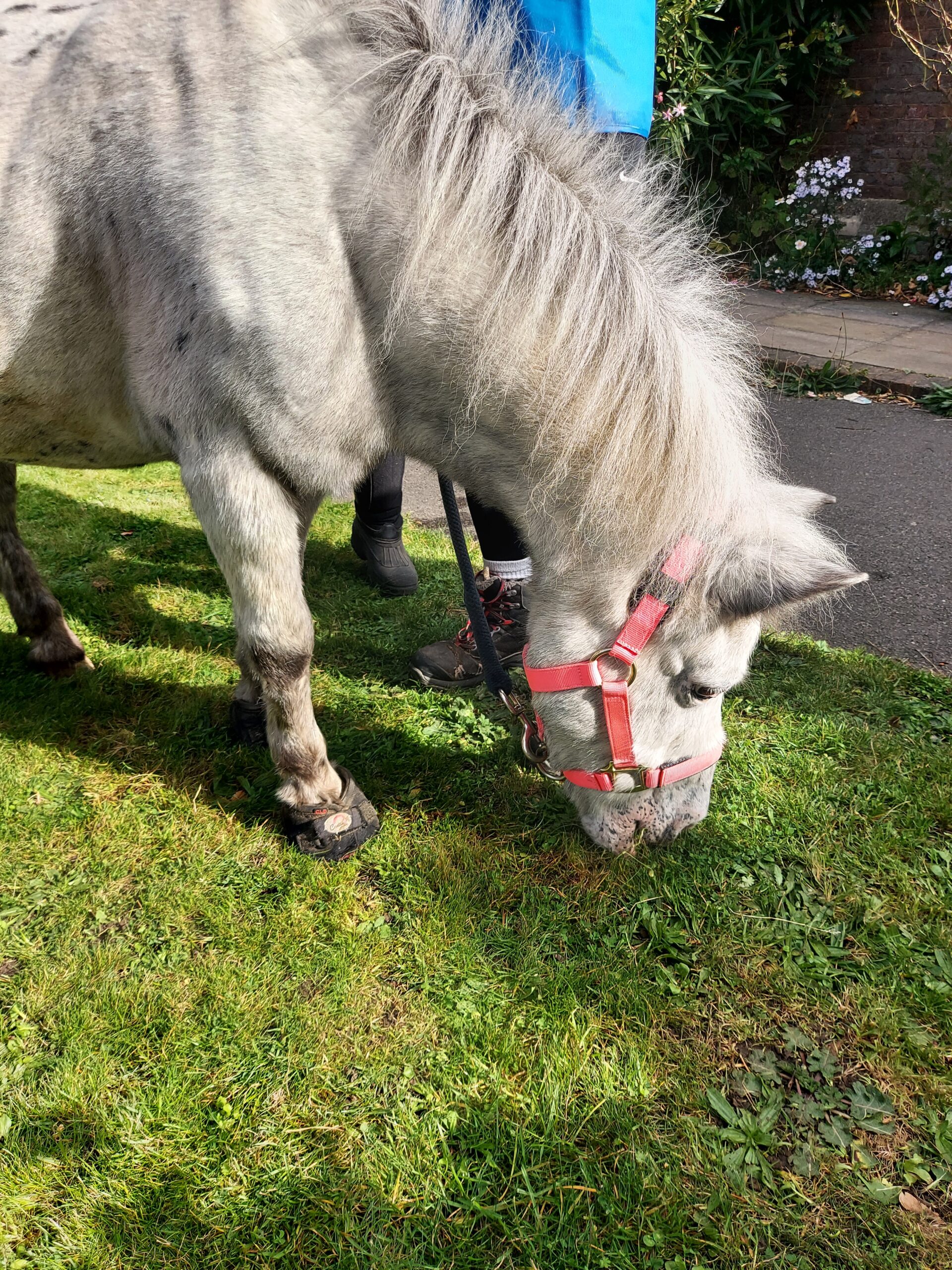
Finally, as part of the open day some gorgeous ponies had been brought over for a visit from a nearby riding school!
St Mary’s Church, Islington: A Guided Tour

St Mary's Church, Islington

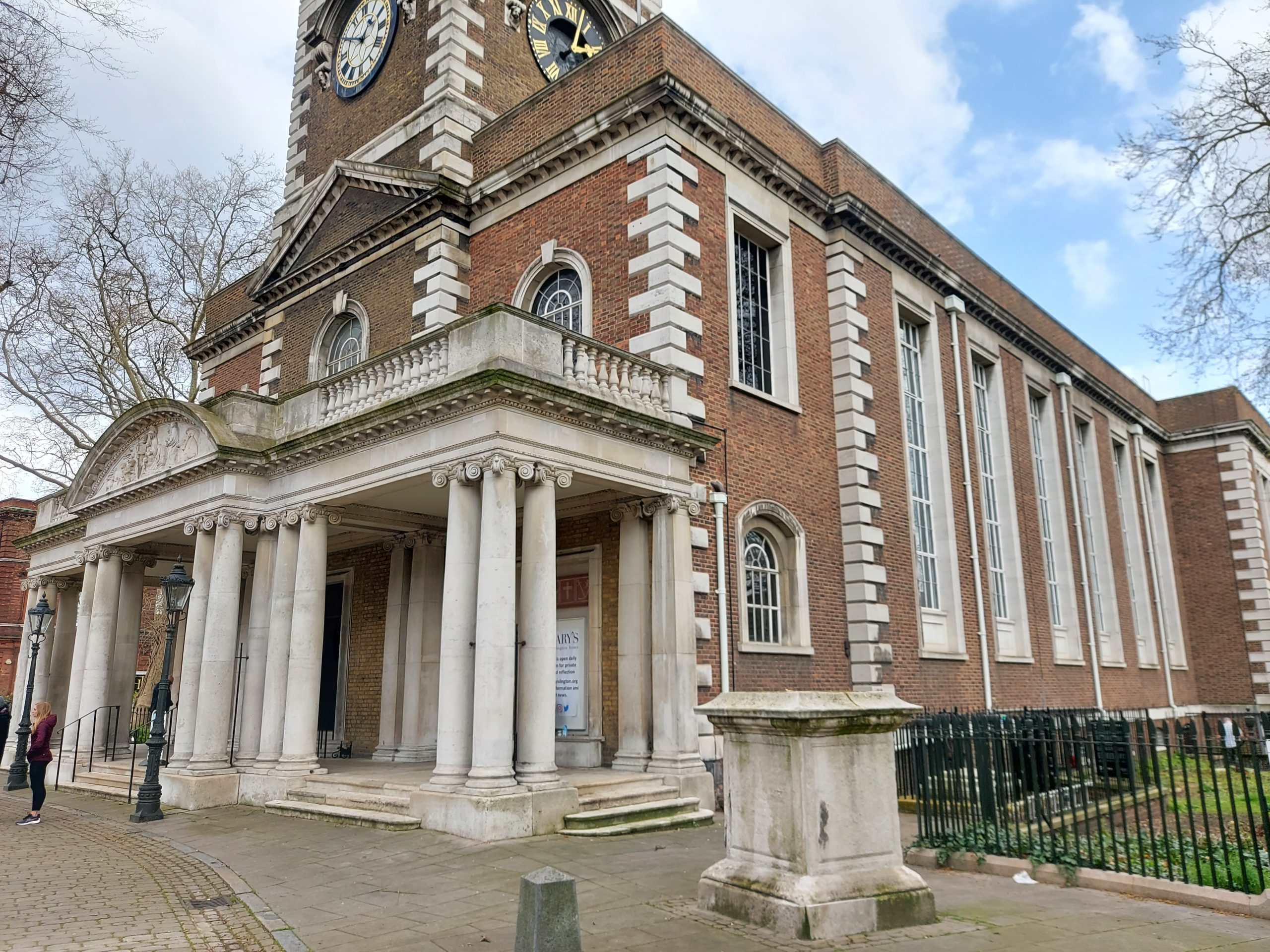
I’ve spent quite a bit of time in Islington – the Almedia and Little Angel theatres are there, plus a couple of pub theatres – and I’ve often walked past St Mary’s Church. I was pleased to get the chance to sign up to a guided tour of the church, organised by Islington Guided Walks.

St Mary's Church, Islington

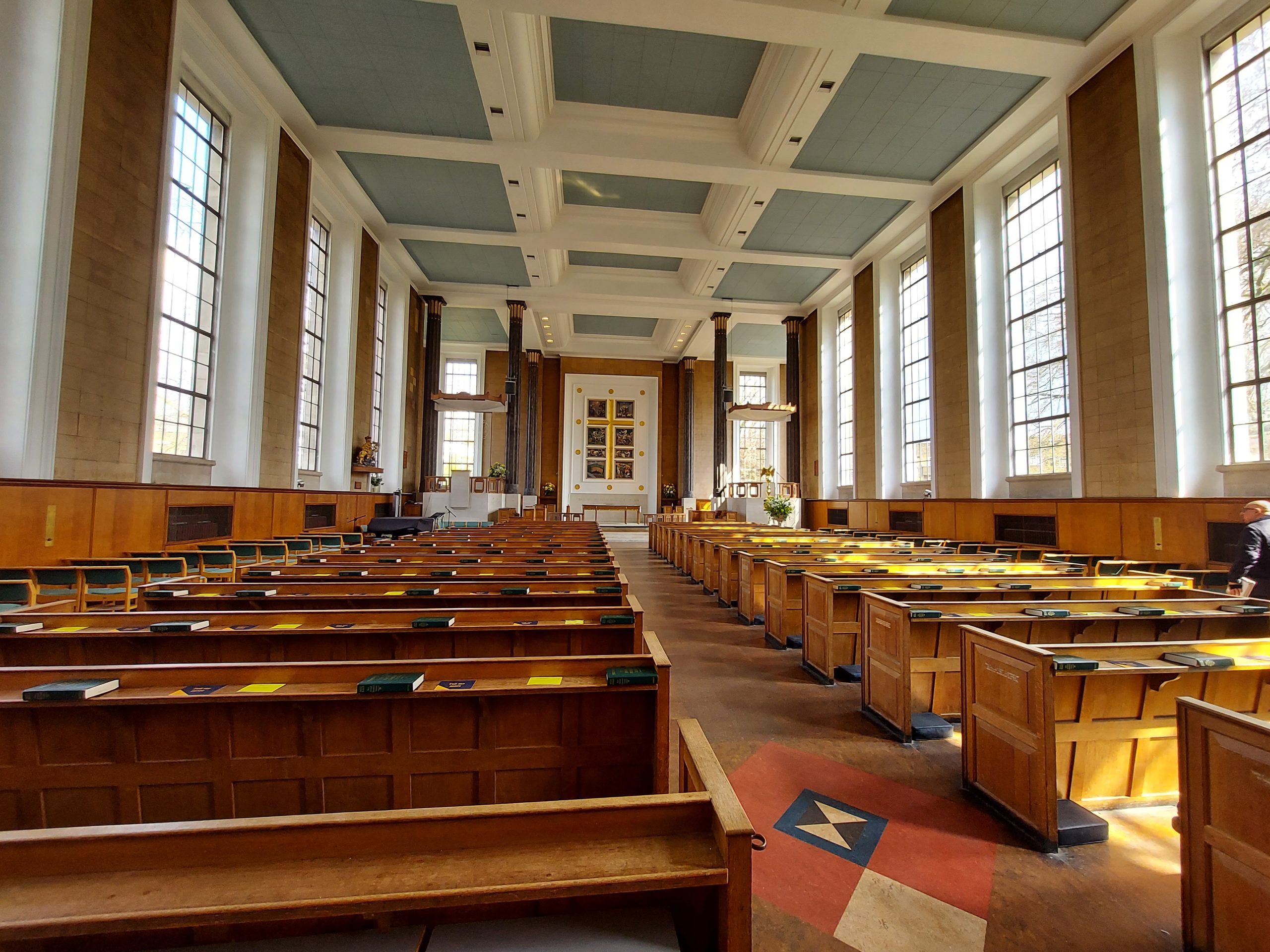
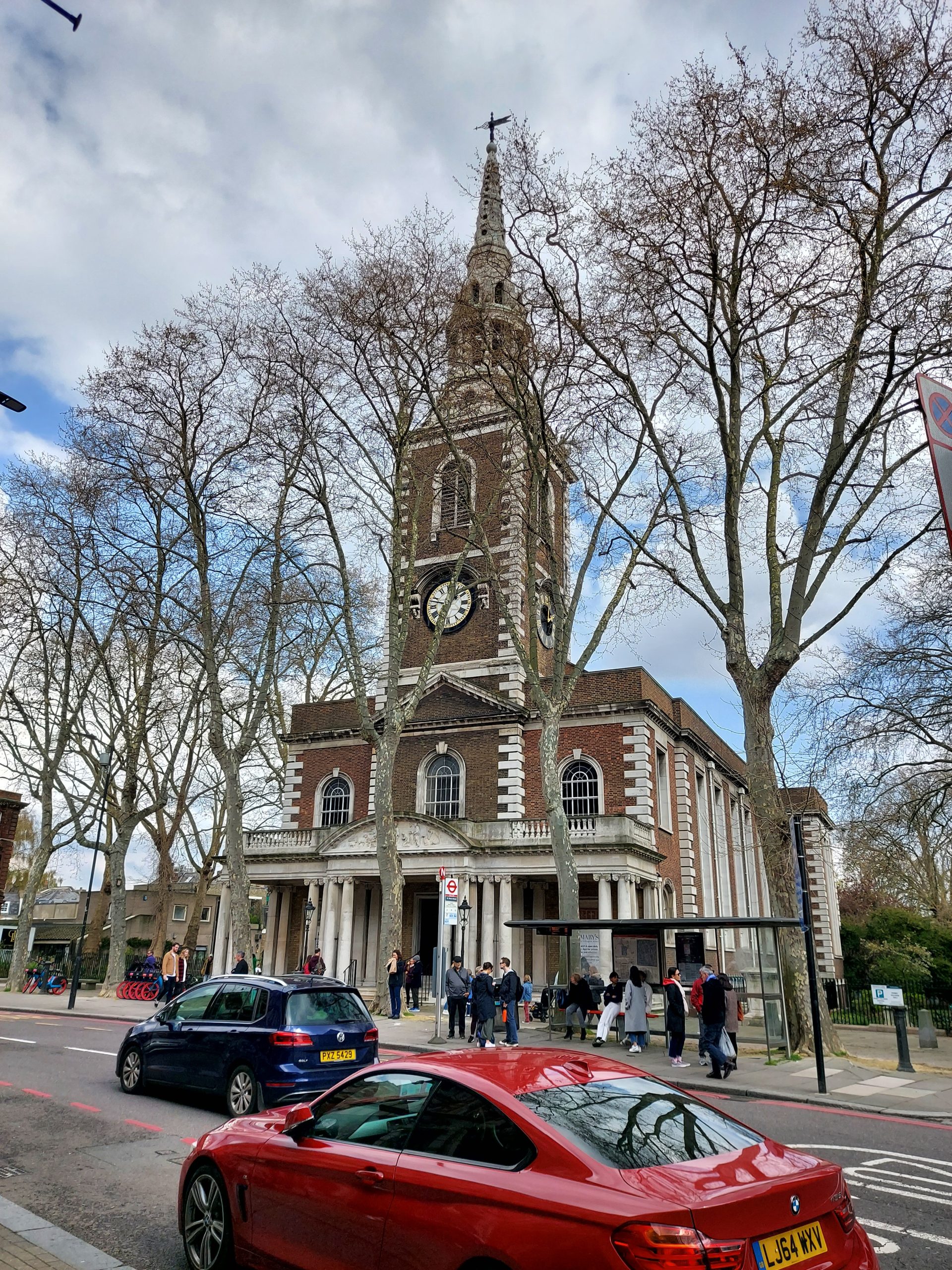
There has been a church on this site since the twelfth century, replaced by a new building in the fifteenth century and again in the 1750s. Maps show the church was at the centre of the parish, even while it was small and surrounded by fields. On the 9th of September 1940, the church was hit by a bomb, destroying everything except the tower and portico. I was surprised when I saw inside: from the outside the church certainly looks like a Georgian creation, and while the rebuilt church in the 1950s resembles a Georgian church in many ways, it is also distinctly modern.

Interior of St Mary's Church, Islington

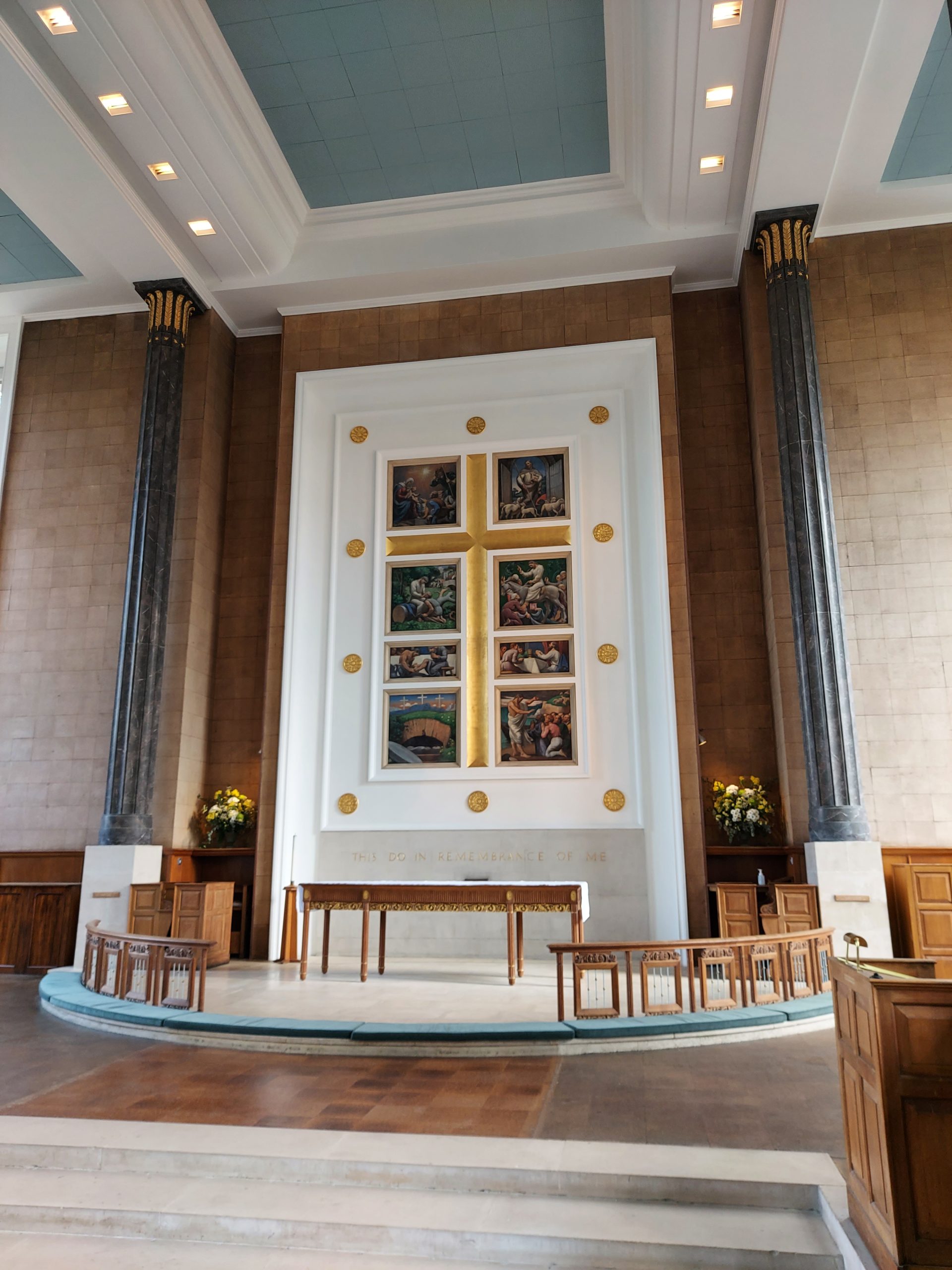
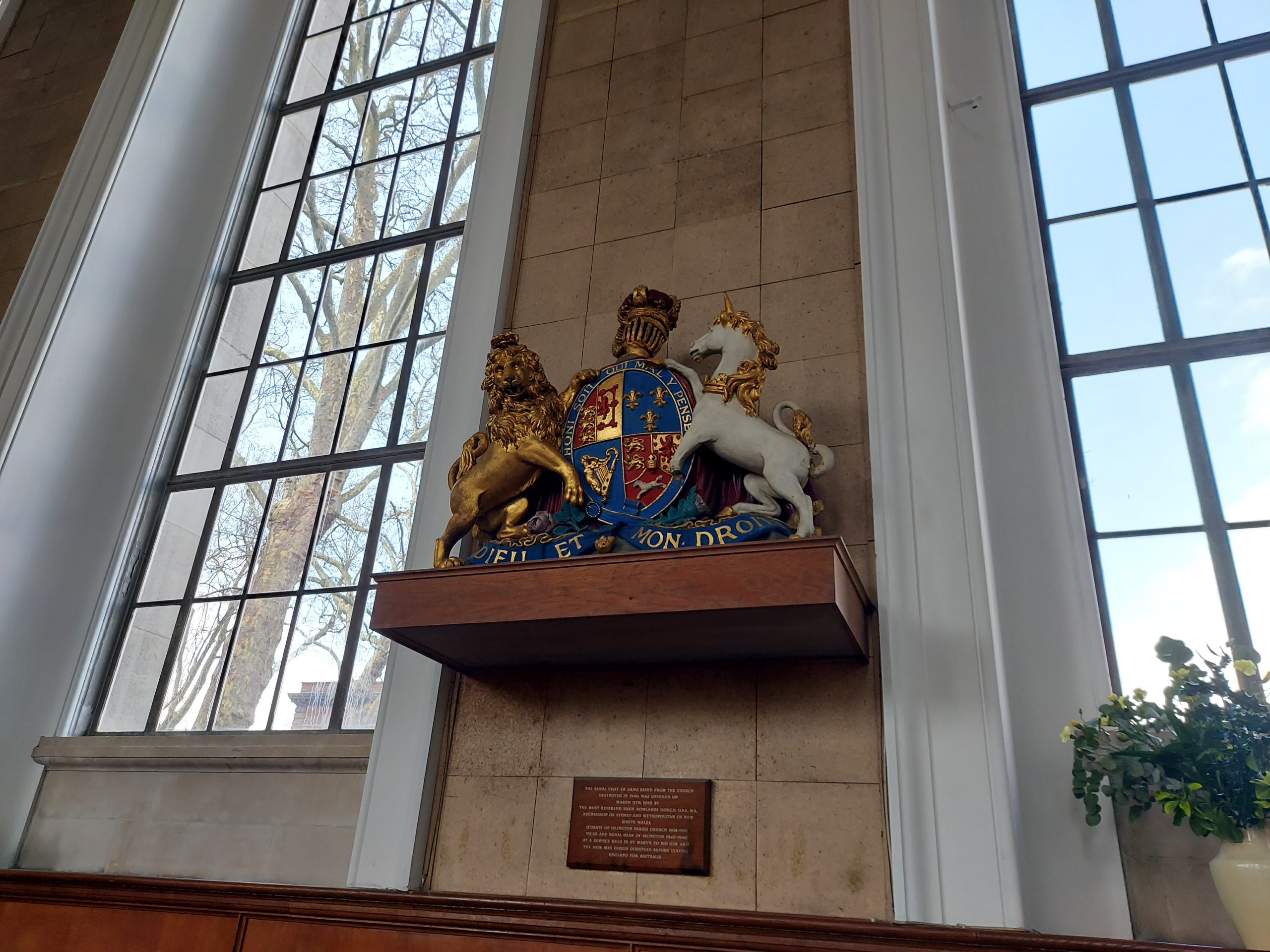
The murals at the east end of the church were painted by Brian Thomas and depict events in Jesus’ life. Pews were donated by various local individuals and groups, including the Arsenal football team. The marble font is the original one from 1754, but the organ pipes decorating the west end came from a church at Berkeley Square. The Royal Arms which hang on the wall of the church are the arms of George II: he was king when the 1754 church was opened. At that time, it was a statutory requirement that all churches displayed the Royal Arms. Miraculously, they survived the World War II bombing.

Front of St Mary's Church, Islington

A small chapel to the right as you enter the church, the Prayer Chapel, contains brasses dating from 1540, originally present in the medieval church. They represent Robert and Alice Fowler and Henry and Margaret Saville (née Fowler), the Fowlers being an influential local family.

Royal Arms inside St Mary's Church, Islington

The crypt, today a rather bland space used for community events, actually dates back to the very first church on the site: one skirting stone has been identified as dating from the twelfth century.

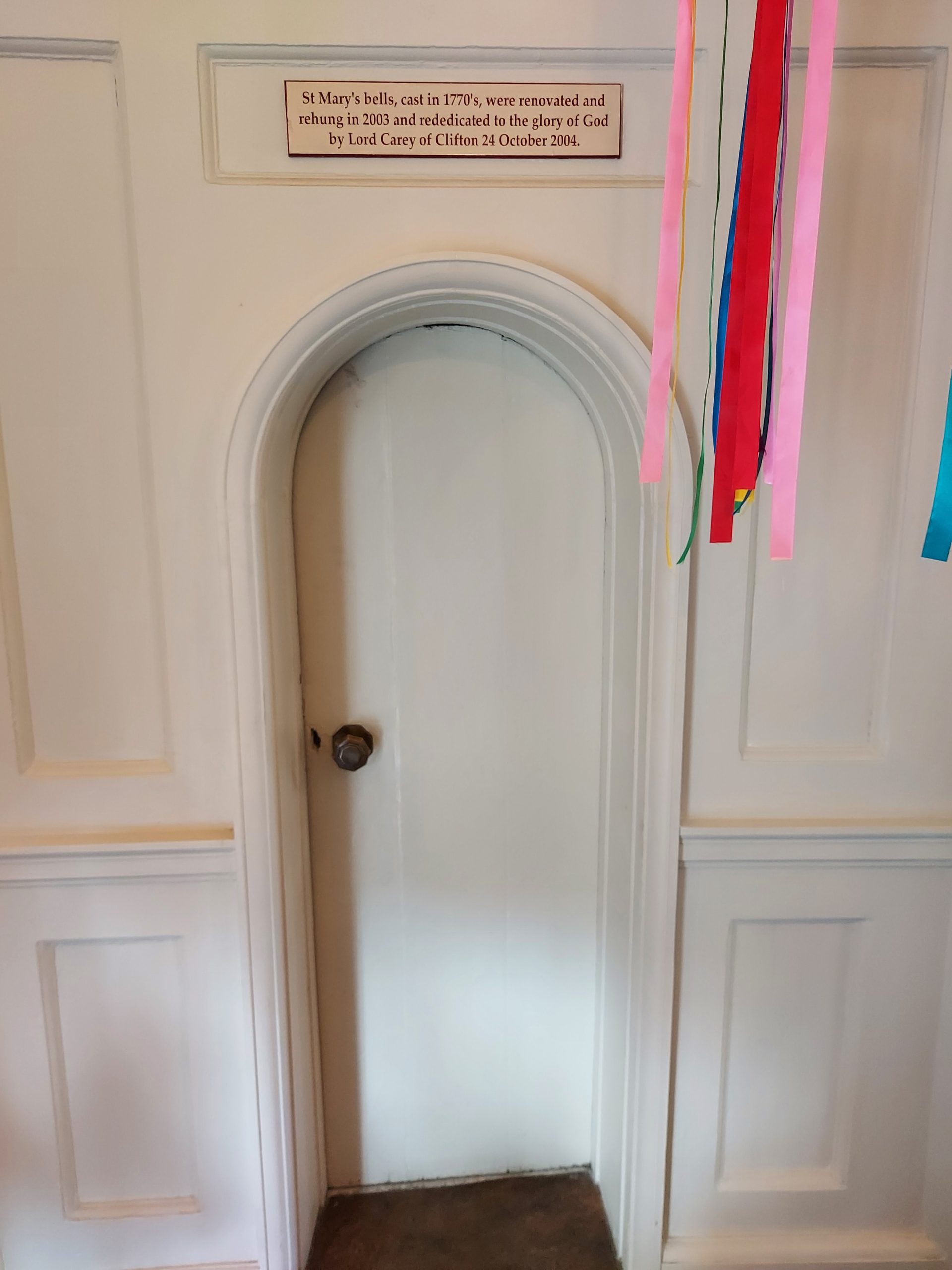
The tower is all that remains of Launcelot Dowbiggin’s eighteenth century church. Inside the winding staircase is an original ship’s mast. The staircase takes you first to the bell chamber, containing bells from the Georgian church.

Entrance to the tower in St Mary's Church, Islington

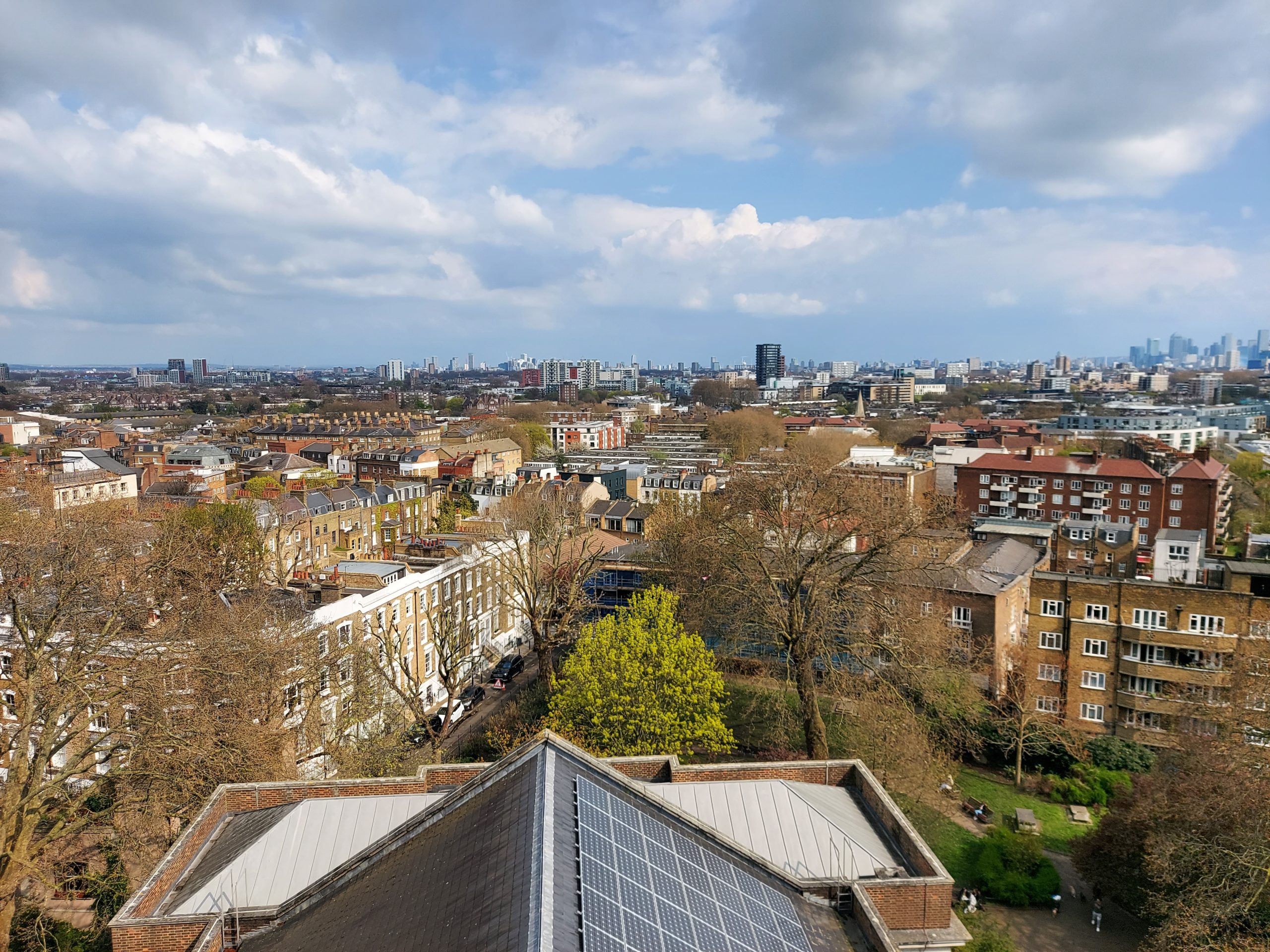
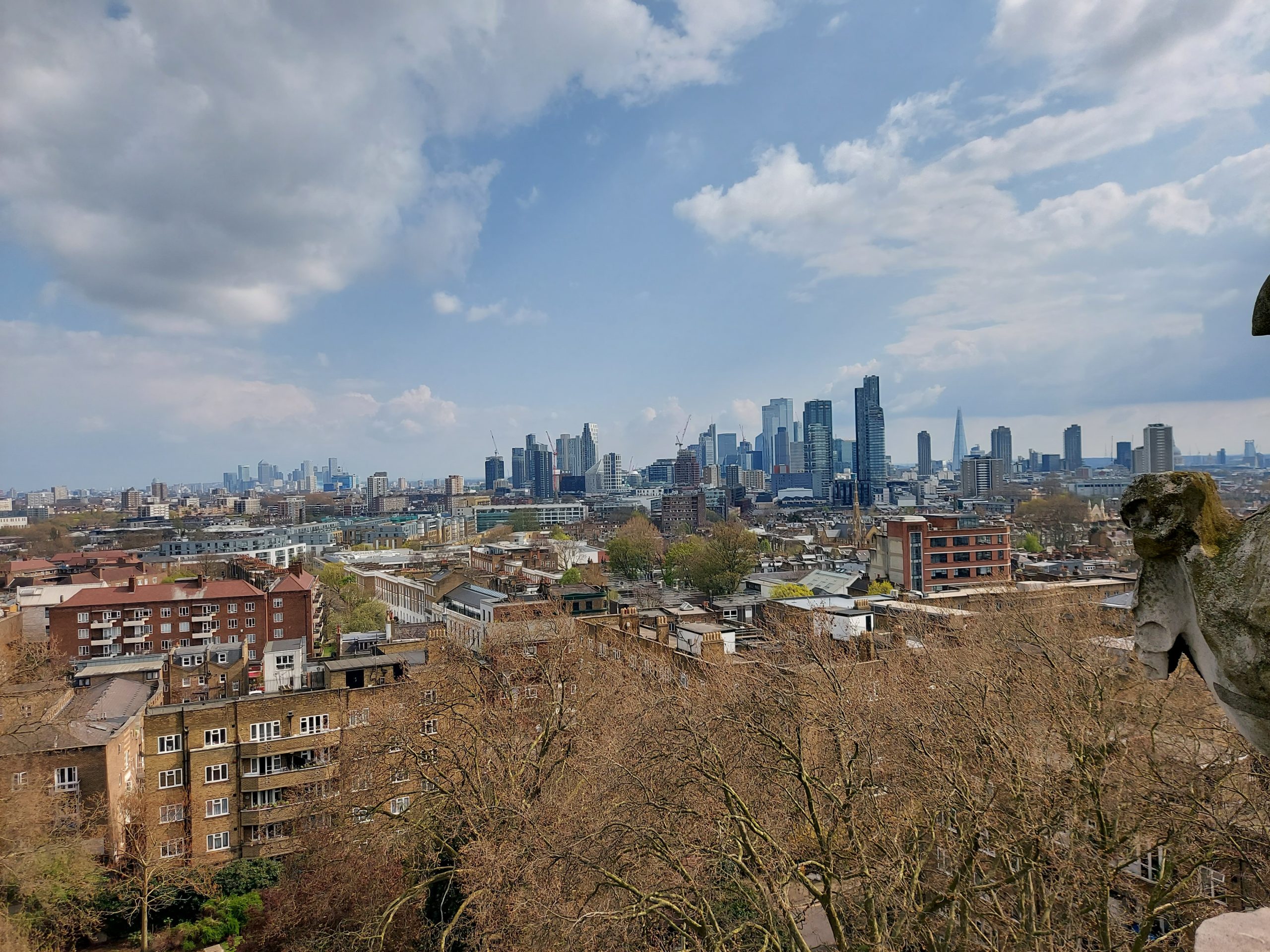
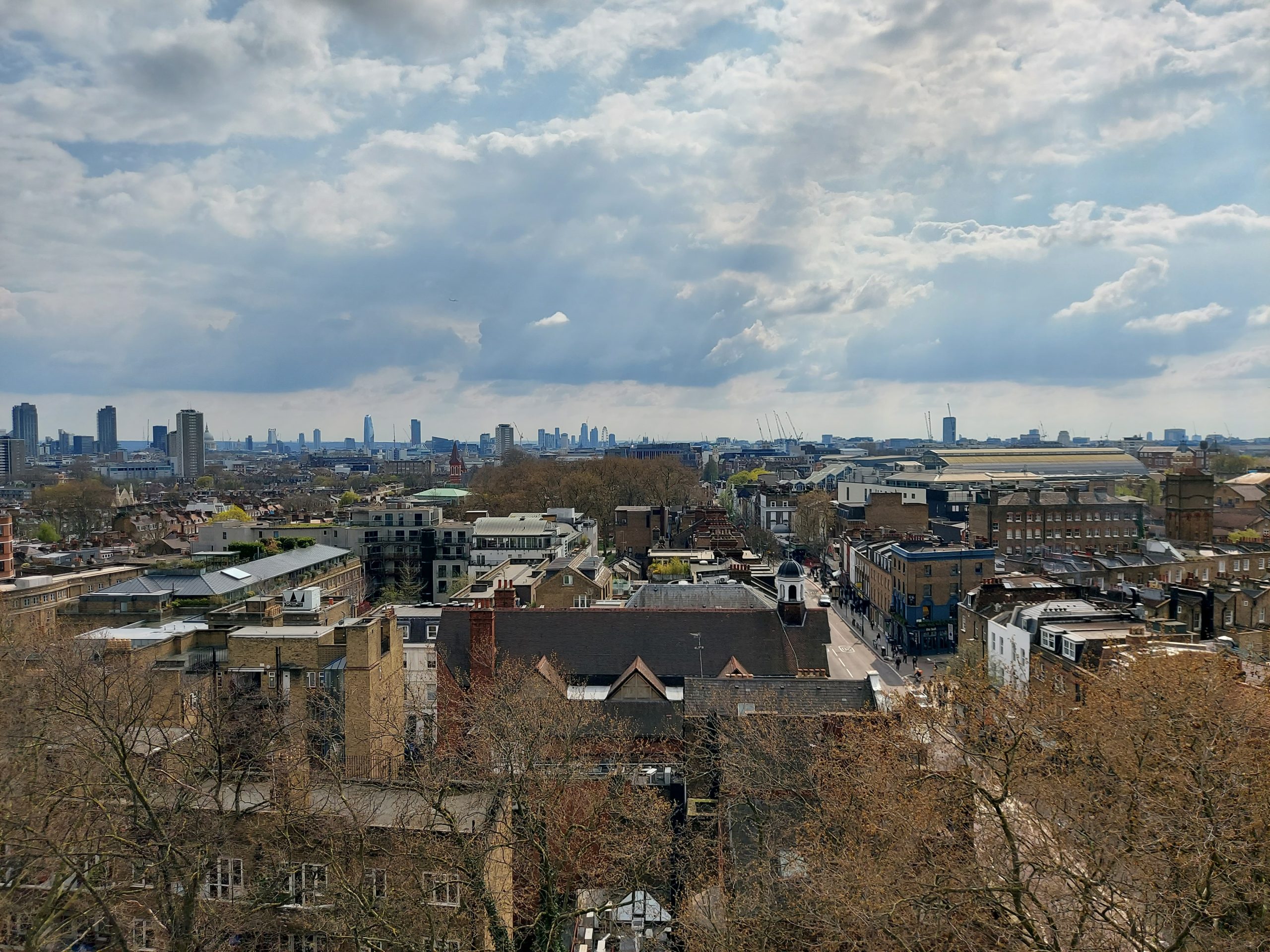
Finally, we arrived at the top of the tower, and enjoyed stunning views over Islington and London as a whole. We could see right down Upper Street.

View from the top of the tower
View down Upper Street