Terra Incognita: Travels in Antarctica by Sara Wheeler is a wonderful book. Wheeler was the first foreigner accepted on the US Artists and Writers Program at the continent and she clearly made the most of her opportunity. She describes everyday life at base, visits the South Pole and Scott’s hut, and goes off on various expeditions, camping out and using all kinds of transport to get around the ice. Interspersed with descriptions of her adventures are fascinating historical snippets, anecdotes from fellow Antarctic residents and musings on what Antarctica means to her. Highly recommended.
As soon as I finished this book I knew I had to count it as the “funny” book in my challenge. I doubt I’ll read a funnier all year.
Hyperbole and a Half by Allie Brosh is an illustrated account of various events in the author’s life, from her adventures with her two dogs to her experience of depression. Her unique drawings are full of character: I don’t normally go for cartoons but I love these.
The book is based on the successful and marvellous blog Hyperbole and a Half. If you haven’t checked it out, please do.
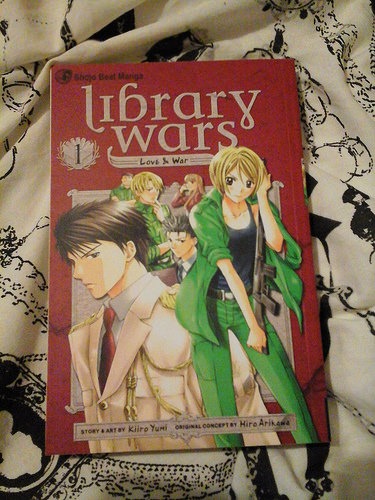
I hardly ever read graphic novels, but I quite fancied this manga book because of the title. Library Wars: Love & War Volume I is the first in a series about Iku Kusahara, an officer-in-training to be part of the Library Defense Force. This group fights against censorship and the banning of books in an alternative future where a government Act allows officials to remove “inappropriate” material from bookshops. Though the public can access such material via the library, tension between the two groups means that the Defense Force is a very important presence. I quite enjoyed the story, though it was quite light, and I will probably seek out further volumes of Library Wars in the future.
I’m not sure if the compilers of the 2015 Reading Challenge intended for the category “classic romance” to be interpreted in this way, but that’s what I’ve chosen to go for. After all, medieval tales of knights, damsels and dragons were the original romances.
Sir Thomas Malory’s Le Morte D’Arthur isn’t an easy read, but it is a worthwhile one. The legend of King Arthur had been around before and would continue to pervade European culture for years afterwards – Arthurian tales are still being created and adapted today – but Malory’s version is one of the most famous and influential. I have found myself wanting to reintroduce words like “smite” and “churl” into the language, however.
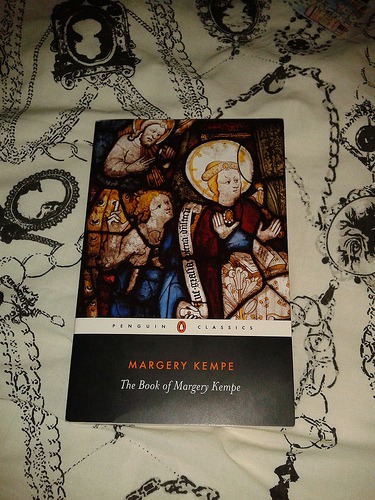
As part of my 2015 Reading Challenge I have just completed my first book. The Book of Margery Kempe is something I originally came across during my first year at university – I studied History and in my first year I did a module on the medieval period: we studied several biographies and accounts of individuals, complementing them with broader studies of the period as a whole. The medieval period was never a specialism of mine, but I really enjoyed this module, and when I saw Margery mentioned on Twitter I remembered that I never did read her entire book, so I decided to rectify that.
Margery Kempe (c. 1373-c. 1440) was a wife, mother and businesswoman in Norfolk, who later in life, after experiencing madness and visions, was called to the spiritual life, experiencing visions and tears and undertaking pilgrimages to Europe and the Holy Land. Her Book, the earliest surviving autobiography in English (the manuscript was only discovered in 1934), was dictated, as she herself could not read or write.
It’s different from your usual autobiography, focusing more on the spiritual side of Kempe’s feelings and experiences. However it’s hard not to admire her determination as she faces opposition, criticism and conflict at every turn – even accounting for the fact that if I’d known her I would probably have found her quite irritating!
Not a light read, but interesting for anyone hoping for insight into the mind of someone who lived during the medieval period.
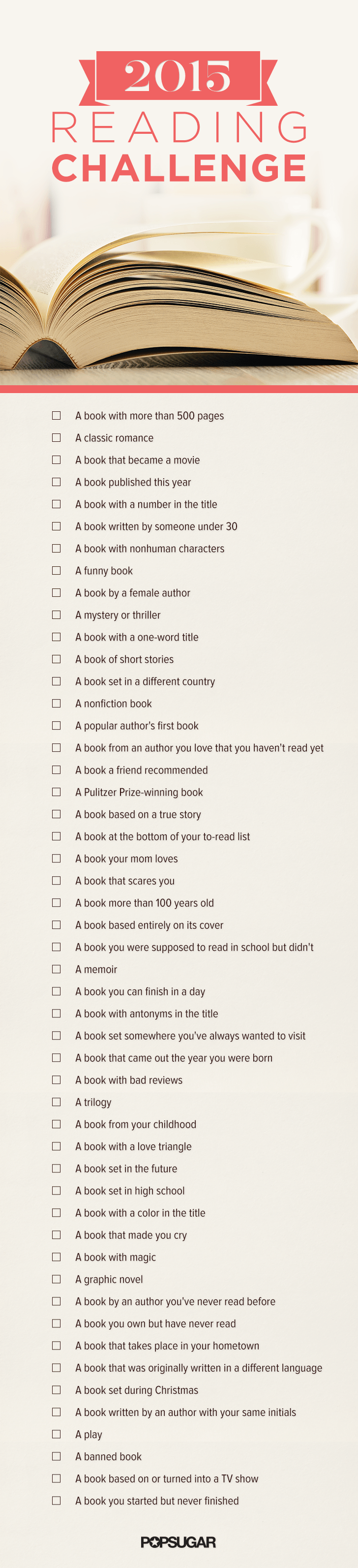
Happy New Year folks! I am back to work today, but thought I would brighten things up by starting a reading challenge. Books took a bit of a back seat last year because I spent so much time at the theatre, so I have decided to focus on reading this year.
This challenge from PopSugar has been floating around, so this is the one I’ve decided to follow.
Will you be following any reading challenges this year?
A few days ago, a Buzzfeed article on “19 British Places All Book Lovers Must Visit” prompted my friend Rachel to write about five of her own favourite literary hotspots. I have shamelessly stolen her idea and would like to present a list of my own. Partly this is to get over my feelings of embarrassment at having been to hardly any of the sites in the original list: despite spending four years of my adult life in Yorkshire, I never did get around to visiting the Brontë Parsonage Museum, and although I visited the town of Glastonbury earlier this year, I was too lazy to walk to the top of the Tor. Look, I have been to some literary places, honest!
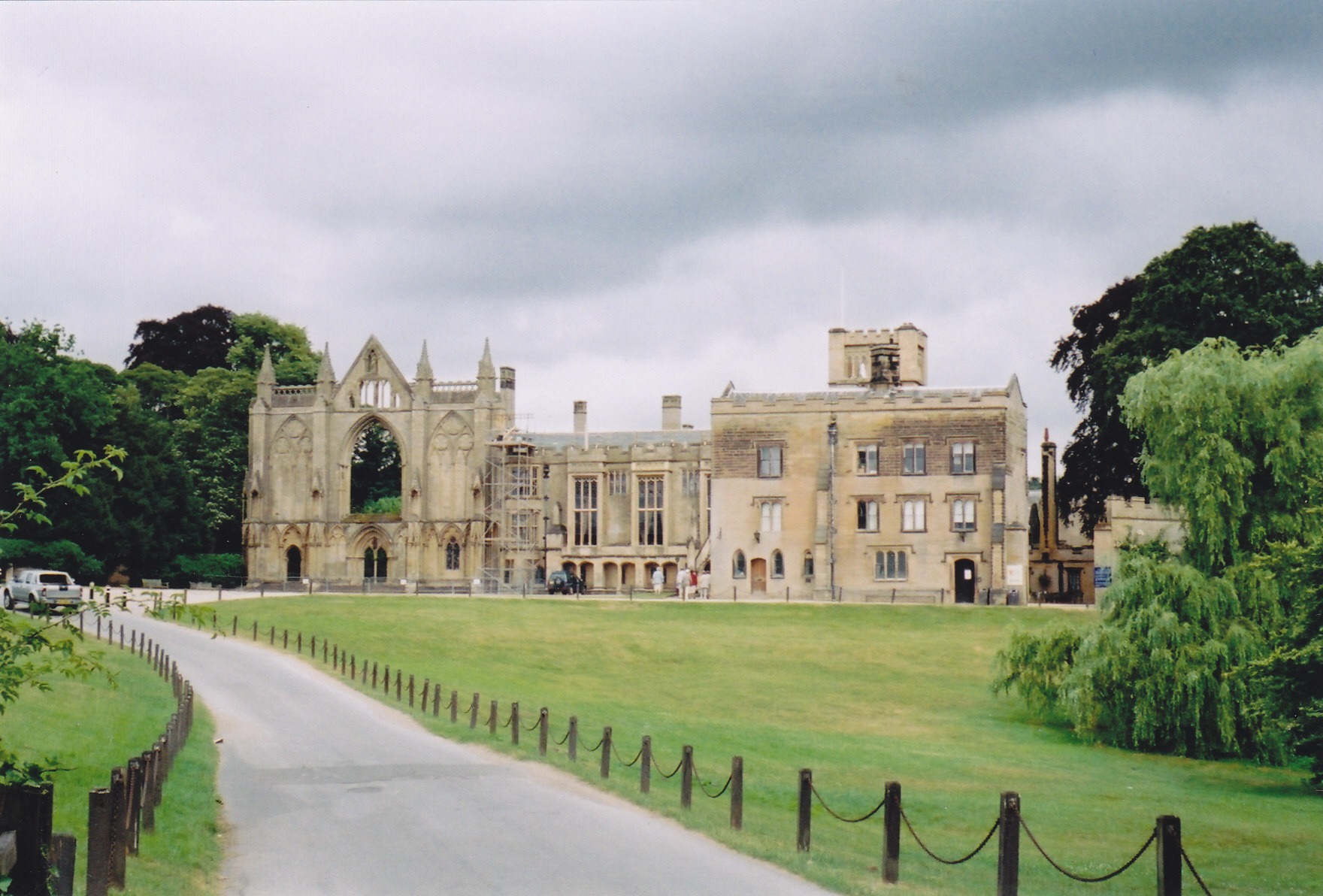
In my late teens/early twenties I was completely obsessed with Lord Byron, and just after I finished my degree at York I made the pilgrimage to his old home near Nottingham. Newstead Abbey is a beautiful place in its own right, but knowing that Byron himself mused, wrote poetry and quaffed wine from a skull within its walls makes it even more special to me. Nowadays Byron’s fame seems to be ebbing, with greater focus on his computer-pioneer daughter Ada Lovelace (who, to be fair, is pretty awesome), but I will always have a place in my heart for the poet who was “mad, bad and dangerous to know”. While some of Byron’s poetry isn’t great, when he is good, he is very, very good. I love Don Juan.
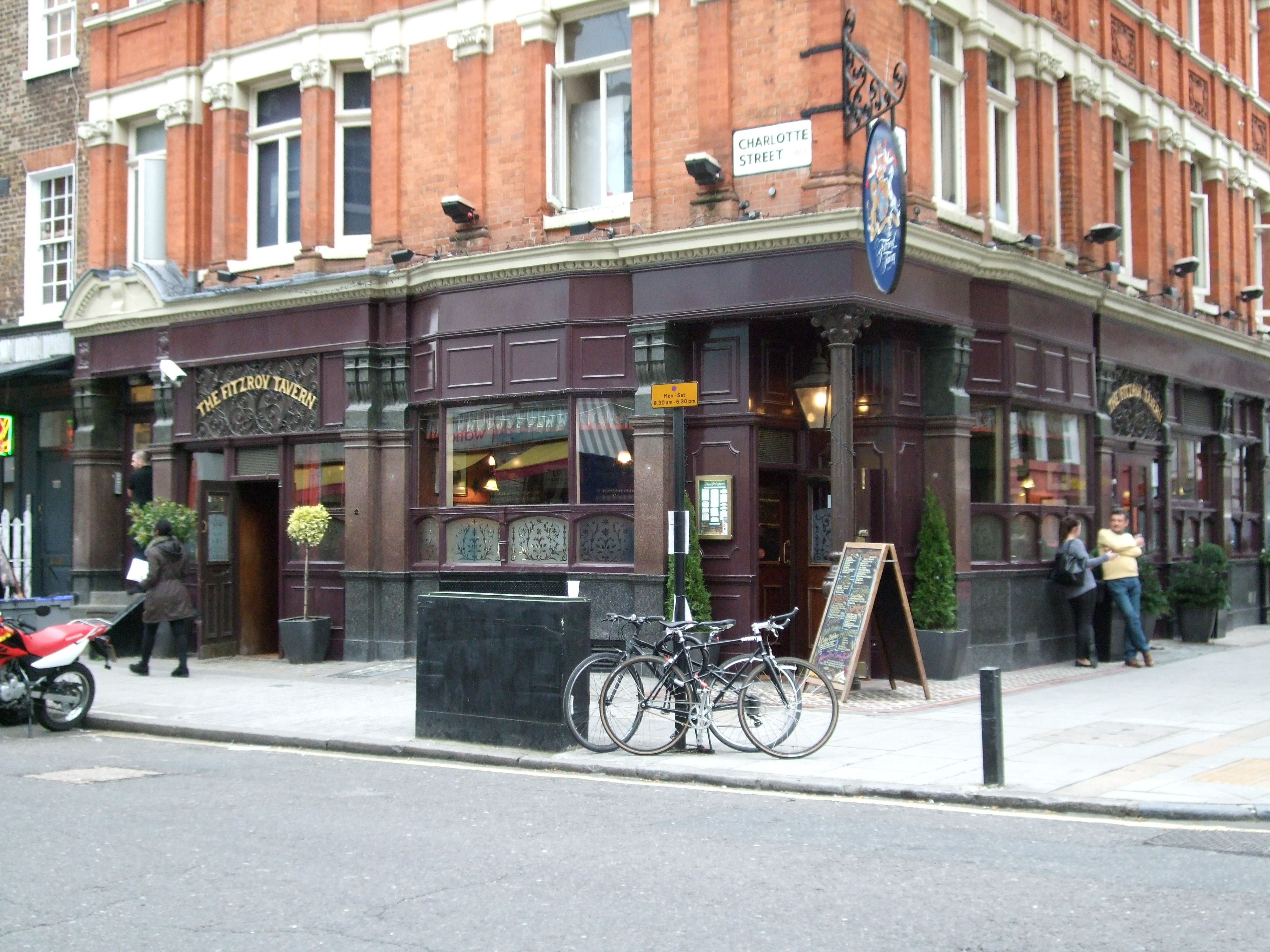
With the centenary of Dylan Thomas’ birth this year, I am surprised Fitzrovia didn’t make it into the list. This area in Bloomsbury was a magnet for artists and writers in the mid-20th century, who spent lots of time hanging out in the local pubs. Thomas is perhaps the most famous of these: he drank in the Fitzroy Tavern and met his wife Caitlin in the nearby Wheatsheaf. However, the area was also frequented by other significant figures: Anthony Burgess, author of A Clockwork Orange, witnessed an altercation in the Duke of York which may have found its way into his novel, while the nearby Newman Arms was supposedly George Orwell’s inspiration for the plebians’ pub in 1984.
If you would like to explore the area further, I recommend the London Literary Pub Crawl: this tour begins at the Fitzroy Tavern and ends in nearby Soho, with numerous beer breaks along the way.
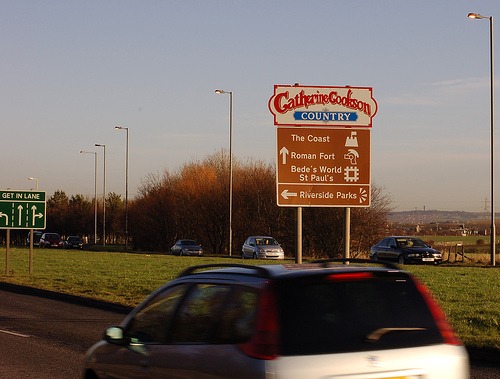
Growing up in the North East of England, I was familiar with the works of Catherine Cookson, the most borrowed author from public libraries for 17 years until 2002. Like many teenagers from the area I grew up reading many of her books, including The Cinder Path and The Branded Man, which were inspired by and set in the region. I’m not sure how popular Cookson is these days, but her hometown of South Shields and the entire Tyneside region still has the “gritty” atmosphere I associate with her books. Further south in County Durham, the open-air Beamish Museum will be recognisable to anyone who has ever watched a Cookson adaptation on television.
The reconstructed Shakespeare’s Globe Theatre on Bankside is a well-known attraction, and it is certainly worth visiting. However, the lesser-known Rose Theatre just down the road is a must-see for anyone interested in Shakespeare and his contemporaries. It was discovered in 1989 during a routine excavation underneath an office block: a campaign to save it was successful, and it has been preserved ever since. The foundations are kept under water to preserve them, and red rope lights mark out the shape of the walls and the stage.
When it was built, the Rose was the first purpose-built theatre on Bankside, and plays are still performed there today, on a platform overlooking the archaeological site.
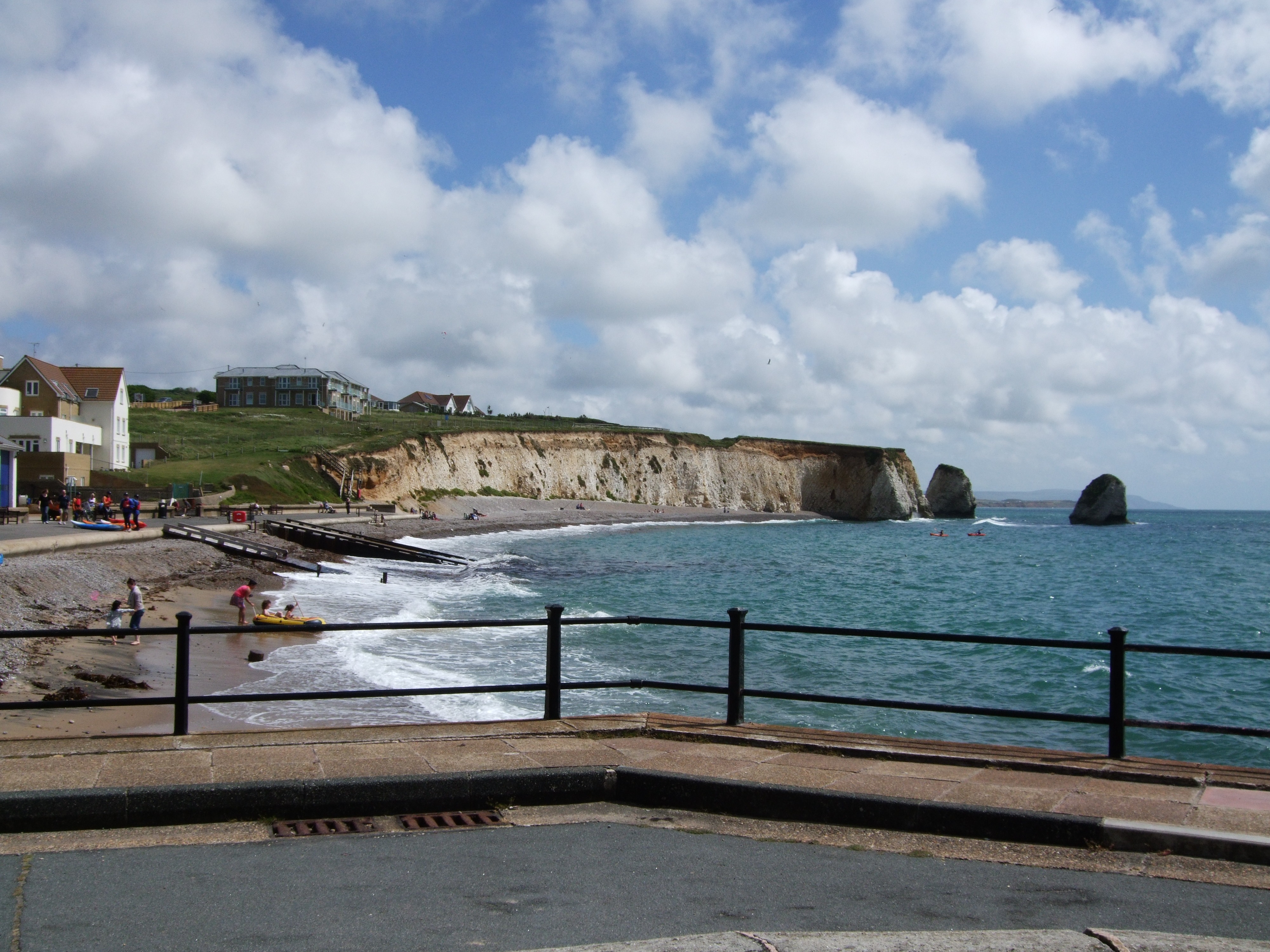
The Isle of Wight has connections with two of my favourite (albeit completely different) writers. Victorian poet Lord Alfred Tennyson lived at Farringford House in the west of the island for many years, and walked every day on Tennyson Down, which was subsequently named after him. He also wrote one of his most famous poems, ‘Crossing the Bar’, while on a ferry crossing the Solent.
Virginia Woolf wrote her only play, Freshwater, about her great-aunt, the photographer Julia Margaret Cameron. The play is set in Dimbola Lodge in Freshwater, not far from Tennyson Down and Farringford, and it is still possible to visit Dimbola, which is now a museum and art gallery dedicated to Cameron.
Also, if this isn’t enough reason to visit the Isle of Wight, the fact that you can go there by hovercraft should be enough to convince you.
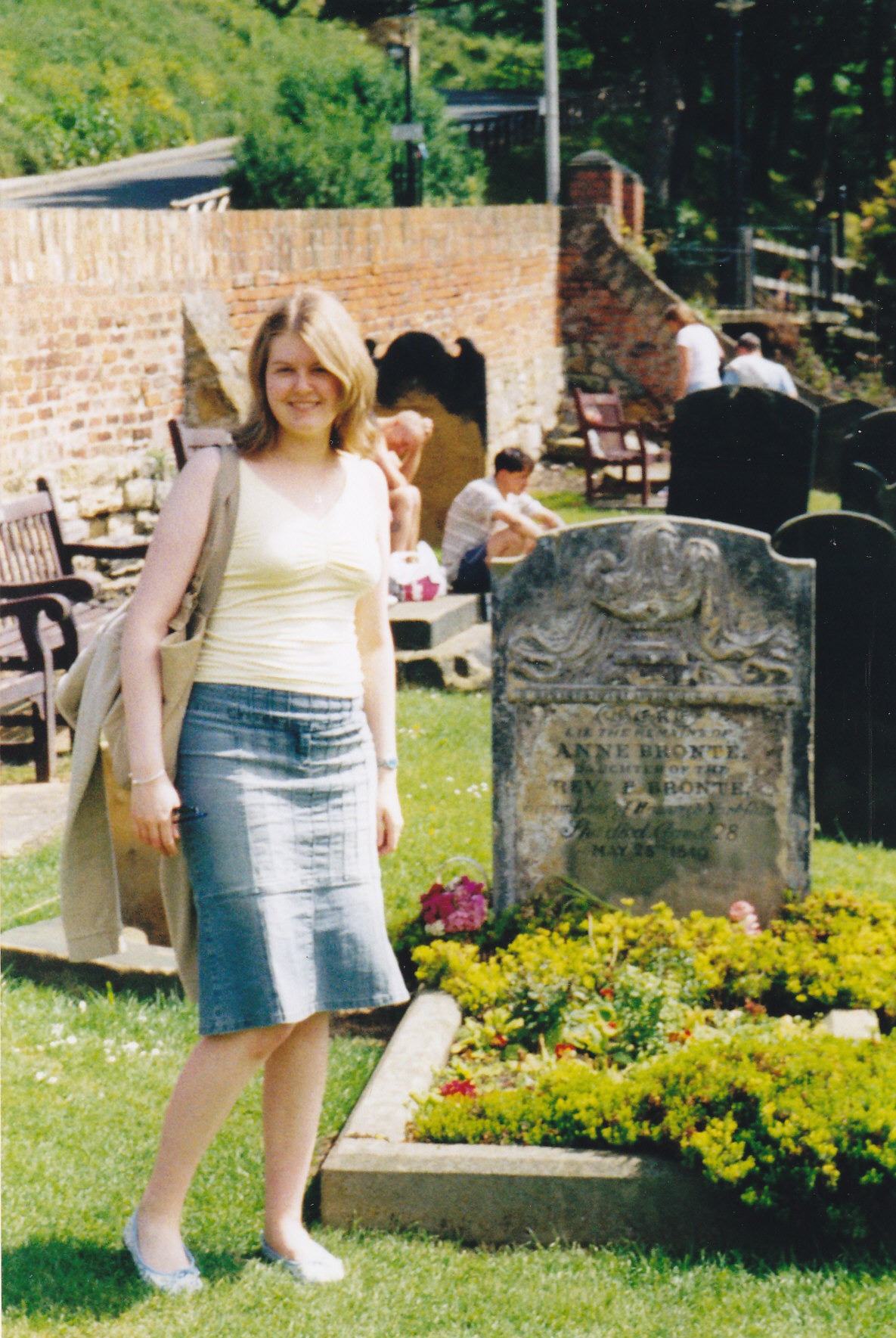
The Yorkshire seaside town of Scarborough might not be an obvious choice for someone looking for places with literary connections, but while the Parsonage Museum in Haworth is the main focus for Brontë aficionados, Scarborough has a claim to fame of its own, as the burial place of youngest Brontë sibling Anne. When she began to show symptoms of the tuberculosis that had killed her brother and sister, Anne travelled to Scarborough with her only remaining sister, Charlotte. Sadly, Anne died there and is buried in St Mary’s burial ground.
If there’s one thing that the Buzzfeed list, Rachel’s choices and my own experiences have shown me, it is that Britain is absolutely chock-full of literary places. I had a really hard time narrowing my own choices down to five, and there are still plenty of places that I haven’t seen. Maybe a trip to Haworth will be on the cards next year?
On the Guardian website a while ago I came across a list of 1000 novels everyone must read. Now obviously, there’s no ‘must’ about any to-read list (unless it’s for study purposes) but I’ve always liked a challenge, and I’ve been dipping in to the list whenever I’ve been stuck for something to read. One of the titles is actually available online, and it’s a little gem that deserves to be more widely read: Augustus Carp, Esq. By Himself: Being the Autobiography of a Really Good Man.
This short satirical novel was written by the well-respected doctor Sir Henry Bashford, and first published in 1924. It recounts the adventures of Augustus Carp, religious prig and resident of south London. Influenced by his over-indulgent father, Augustus is an obnoxious child who grows to be an even more irritating adult – and has no idea how annoying he is. My favourite part of the book was when a bunch of actors got him drunk on port by telling him it was a fruit juice drink called ‘Portugalade’ – I think I might start calling it that! Another favourite moment was when Augustus’ mother rejected his ‘kind’ offer to come and live with him and his new wife and act as an unpaid skivvy, informing him that she’d been saving out of the housekeeping money all along and fancied a holiday! Naturally dear Augustus wasn’t too impressed.
Accompanied by vivid illustrations, this is an entertaining satire in a similar vein to the classics Diary of a Nobody and Three Men In a Boat – if you liked those, give this a try.