Hong Kong

Hong Kong skyline

*I visited Hong Kong in 2010 and wrote about it on the website Ciao. I’ve decided to edit and publish a version of my holiday diary here*

I spent a week in Hong Kong in March 2010. Why Hong Kong? Well, I decided that I wanted to go somewhere reasonably far-flung; it should be somewhere I could ‘do’ in a week; I knew I would be travelling alone, so it should be somewhere safe; and it should have a prospect of reasonable weather in March, which is when I wanted to go (i.e. no typhoons, rain or extreme heat!). Hong Kong ticked all of those boxes, and was within my price range.

I took the Lonely Planet City Guide to Hong Kong and Macau and found it to be an excellent, useful guide. The removable map was very handy for getting around.

***Description and History***
This is what I learned from Wikipedia:
Hong Kong is one of the two special administrative regions of the People’s Republic of China; the other is Macau. Situated on China’s south coast and enclosed by the Pearl River Delta and South China Sea, it is famous for its expansive skyline and deep natural harbour. Hong Kong is one of the most densely populated areas in the world, and has a population of 95% ethnic Chinese and 5% from other groups.

Hong Kong became a colony of the British Empire after the First Opium War (1839-42). Originally confined to Hong Kong Island, the colony’s boundaries were extended in stages to the Kowloon Peninsula and the New Territories by 1898. It was occupied by Japan during the Pacific War, after which the British resumed control until 1997, when China regained sovereignty.

***The Useful Stuff***
I haven’t put prices in my review as these are subject to change, but here is how I think Hong Kong prices compare to the UK’s (based on my understanding and not just my own experience):

Accommodation – Expensive (if not using hostels)
Transport – Cheap
Attractions – Cheap to average
Eating out – Cheap to expensive and everything in between

*Booking*
Normally when I go on holiday I book it online. However as this was my first time holidaying completely alone, I decided to go and speak to someone to make sure I was doing everything right. I decided to go with STA Travel as they are a large reputable company, and when I was searching for flights they came up cheaper on the STA website.

I made an appointment one afternoon in January at my local branch. The lady I spoke to was very friendly and helpful and with her assistance I booked flights, 7 nights’ accommodation and three tours. The total cost came to almost exactly £1000. I was actually shaking when I left the branch – I’ve never spent so much money on something ‘frivolous’ in my life! However I was also incredibly excited. My flights with Virgin Atlantic cost approximately £550, my insurance approx £40, hostel around £140 and the rest of the money was for the tours.

No visa is needed for British nationals to visit Hong Kong for up to 180 days. However, if you are visiting mainland China you will need a visa.

*Flights*
I flew to Hong Kong with Virgin Atlantic from Heathrow Terminal 3. I won’t say too much about my experience as I have already written a review, however I will say that I was really happy with my flights and I recommend Virgin Atlantic. I checked in online both in Britain and Hong Kong (by using a coffee shop terminal). In Hong Kong it is possible to check in for your return flight at Hong Kong or Kowloon Station and drop off your bags there, meaning that if your flight isn’t until the evening you can still get a full day in the city unencumbered by baggage. I have a particularly nervous temperament however and prefer to keep my bags with me as long as possible, so I didn’t take advantage of this service. It also means that you have to use the Airport Express trains, which are more expensive than other methods of reaching the airport.

I was able to prebook a cheap train ticket to London for the outbound flight. My flight wasn’t until the evening so I travelled down the same day. I flew out on the Monday and returned the following Wednesday in the early hours of the morning, just over a week later.

*Transferring from the Airport*
This is the part I always hate – you arrive in a strange country, tired and jetlagged, and have to navigate a brand new transport system. I had never done it alone before, so I was incredibly nervous. However it proved to be really easy. Some of the ways you can travel from the airport include:

Airport Express – this is the most heavily advertised and on the surface the most simple way to reach Hong Kong, however it is also the most expensive. It will drop you at Kowloon or Hong Kong Station, from which there are shuttle buses available to take you to your hotel.

Bus – There are plenty of buses from the airport. I chose to use a bus on my way to my hostel in Kowloon. They are well labelled and mine had an electronic screen which displayed the stations in Chinese and English, so it was easy to know which stop was mine.

Bus + MTR – This is how I got to the airport on the way back, but I wish I’d been savvy enough to know about it on the way there. Simply get a cheap shuttle bus to Tung Chung Station at the end of the Tung Chung line, and from there you can travel to any station on the MTR network. It follows almost exactly the same route as the Airport Express, but stops in more places and is much cheaper! Personally this is the method I’d recommend to travel to and from the airport.

*Getting Around Hong Kong*
Octopus Card – I cannot stress this enough, if you are going to Hong Kong pick up one of these. It saves so much time and hassle. They are available from customer service points in various MTR stations (including the one at the airport). You pay HKD (Hong Kong Dollars) 150, of which 100 is credit and 50 is a refundable deposit. Simply go to a customer service point when you leave to have the deposit and any remaining credit (minus a small admin charge) refunded to you. The cards can be used at/in/on:
-The MTR (journeys are cheaper this way)
-Buses
-Trams
-The Peak Tram
-The Star Ferry
-7-11s and a variety of other stores and bakeries (no more rummaging around for loose change)
The cards can be topped up at MTR stations at add-value machines: simply insert the card, feed in a HKD note and you’re done.

MTR – Hong Kong’s underground system. Growing up near the Tyne and Wear Metro means I’m really used to these kinds of trains and they’re always my first choice when travelling abroad – mainly because it’s near-impossible to get lost on them. The MTR is clean, efficient and always on time. One line runs along the north of Hong Kong Island; others run under the harbour to reach Kowloon, the New Territories and Lantau Island. Journeys are cheap. Get an Octopus card for even cheaper trips and to avoid the queues for the ticket machines, and always remember to scan the card when entering and exiting the station.

Buses – Buses always make me nervous, especially when travelling on a new route, because it’s often hard to know where you are. However, Hong Kong buses are really easy to use and well signposted. They are particularly useful for getting around in the south of Hong Kong Island where the MTR does not reach.

Trams – These run along the north of Hong Kong Island and have been around for almost 100 years! Believe it or not they used to run along the coastline – some serious land reclamation has taken place. They are fairly slow but provide a scenic way to get about the north of the island. Try and get to the front of the top deck for the best view. I found that many people, when they saw I was a tourist, would move to let me sit there which was really nice of them. Please note: you get on the tram at the back entrance and pay – and leave – at the front when you get off. This confused me somewhat at first as it is the opposite to British buses where you pay when you get on and get off at the back (if there is a rear exit).

Tram

Star Ferry – These have been running across Victoria Harbour for around 100 years, and are so named because they all have star-themed names: North Star, Solar Star etc. I loved travelling on the ferry – the breeze from the water is lovely on a hot day and you get a great view. It’s dirt cheap too.

Taxis – Apparently taxis in Hong Kong are excellent value for money, but I never used one so I won’t say anything more about them.

Hong Kong

*Accommodation*
As it’s such a densely-populated, high-rise, businesslike city, accommodation in Hong Kong is expensive. I’m a bit of a cheapskate when it comes to accommodation – I resent paying good money for somewhere to sleep when I would rather spend it on sightseeing. I booked a ‘hostel’ style hotel in Kowloon, on Nathan Road, for £20 a night – I thought this was a bargain considering it was a single ensuite room. I was staying in the optimistically-named Lucky Hotel in Chungking Mansions.

It was only after I’d booked my holiday that I found out Chungking Mansions has a bit of a reputation, and I wasn’t sure if I should just cut my losses and go somewhere else. However I stuck with it and I’m pleased to say everything was absolutely fine. My room was very small and basic, but very clean and quiet and I felt completely safe the whole time I was there. My bathroom was absolutely tiny, little more than a toilet with a shower head, but from previous experience in Asia I know that this is quite usual in densely-populated cities. Also, this was a single room – the two, three and four-bed rooms had proportionally larger bathrooms. The lifts in the block, which I’d heard were ‘coffin-sized’ and always crowded, weren’t as bad as I’d been led to expect and had CCTV. I also saw a lot of security guards inside the block, and there were quite a few families with young children staying at various guesthouses in the block – I’m sure no parent would want their child staying somewhere unsafe.

One warning I’d read about was justified – namely, that people will loiter outside the block and try to get you to come and stay at their guesthouse; if you tell them you already have somewhere booked they will lie and try and get you to go with them, saying that they know the way, but when you get there they will charge you. Someone tried it on with me and it was a bit scary but if you make sure you know which block you’re going to and which floor (there is a board next to each block’s lifts listing all the guesthouses and which floors they are on) you will be fine. They will not force you and are not physically dangerous. Also, once you’re settled in your guesthouse they won’t bother you going in and out as they can see you’ve no luggage with you!

Although my experience was good, I met another girl on one of my tours who was also staying in a hostel at Chungking Mansions (don’t know which one, sorry) and she left after one night because she thought it was dodgy. If you want a basic, cheap place to stay I do recommend the Lucky Hotel but if you’re after any kind of luxury then go elsewhere!

*Food*
I am a vegetarian so I admit to being a bit of a wuss when it came to eating out in Hong Kong. According to my guidebook, there are quite a few vegetarian restaurants if I’d bothered to look for them. However I’m not fond of eating in restaurants alone so I mainly bought food from the 7-11 stores, the numerous bakeries (which sell some interesting rolls) and (I’m ashamed to say it) Starbucks. I did eat in the veggie Buddhist restaurant near the Big Buddha on Lantau Island, which involved a very tasty Chinese meal. The day trips I went on also included meals and as they are designed for tourists there was a veggie option. Again these consisted of Chinese food: assorted sauteed vegetables, fried tofu and boiled or fried rice. The food was very tasty. If you’re not a veggie there are plenty of restaurants around serving all kinds of food. There are McDonald’s and Starbucks everywhere and I even saw a couple of Pizza Express outlets, including one in Stanley!

***My Trip***

*Day 1*
My first full day in Hong Kong was a Wednesday so I decided to take advantage of the fact that many museums are free on this day. I first visited the Hong Kong Museum of Art, which has a lovely view of the harbour and some fascinating galleries, especially the Chinese Fine Art gallery. I especially liked a temporary exhibition on the history of Canton (now Guangzhou) which used to be an important trading port in China. It was designed to be like a ‘travel guide’ to 19th century Canton and I found it really interesting and imaginatively put together.

Hong Kong Museum of Art

Secondly I walked north through Kowloon to the Hong Kong Museum of History. I love this kind of thing: I studied history at uni so I really enjoy finding out about the past of the places I visit. I really enjoyed this museum: it covered the history of Hong Kong from prehistoric times to the recent handover to China, and although there was a lot to see it was never boring or dull. I definitely recommend both of these museums.

Hong Kong Museum of History

After this I took the Star Ferry to Hong Kong Island. It was really exciting to be going on the ferry and it was lovely being on the water and feeling the fresh breeze, especially as it was such a hot day. Once on Hong Kong Island I made my way to the Peak Tram. This took some time as I managed to get lost – there are lots of covered walkways above the traffic as you get off the ferry, and once you’re on the ground you can’t just walk in a straight line – you have to find somewhere to cross the road! I did manage to find the tram eventually and took a trip up.

Star Ferry

The Peak Tram was initially designed to carry rich Westerners up Victoria Peak, where many used to live to make the most of the cooler temperatures at the top. Now it is chiefly a tourist attraction. It is a decidedly strange feeling travelling on a tram which is going up an almost 90-degree hill! You get a great view too.

At the top there are a number of gift shops and restaurants but the main attraction is the viewing deck (which you unfortunately have to pay extra for). The views are amazing and you can get some fantastic photos. I ended up going back on Saturday night to look at the skyline in the dark.

*Day 2*
The second day in Hong Kong was actually spent in Macau, which like HK is a Special Administrative Region of China. It was formerly under Portuguese rule and the Portuguese influence is still visible. I went on a tour which I booked back in the UK, but some of the other people I met had booked it at the Holiday Inn Golden Mile (on Nathan Road) or at other locations. The company was called Gray Tours. To be honest if you have a little time you could easily plan a trip here yourself, but booking a trip does take some of the hassle out of it.

Macau

We took a ferry to Macau which was fun. Don’t forget your passport as it will need to be checked.

Macau

In Macau we saw a good number of interesting things, including a temple, the Macau Museum and the ruins of the Church of St Paul. The church burned down many years ago but the front end stayed standing: this was deemed a miracle at the time and remains pretty impressive now! At one point during the trip we visited a bakery. The cynical part of me thinks that this was a way for the tour guide to get commission, but to be fair the biscuits were delicious (you are allowed free nibbles from the boxes in the front) and the Portuguese egg custard tarts were yummy.

Church of St Paul

The Macau Tower was another item on our itinerary: this offered some pretty impressive views over Macau and also beneath us owing to the glass ceiling. You can go bungee jumping from it but I declined!

Macau from the Tower

Macau is famous for gambling as it is the only place in China where it is actually permitted. It is known as the ‘Las Vegas of the East’. Personally I wasn’t bothered about gambling so didn’t try it.

Temple in Macau

I really enjoyed Macau and would have been happy to spend at least a couple of days there instead of a one-day whistle-stop tour!

*Day 3*
I decided to spend the Friday visiting the Big Buddha on Lantau Island. Despite being on an island the place is really easy to get to – just get off at Tung Chung Station (at the end of the Tung Chung line, the same station you would use if you were getting the shuttle bus to the airport). Across the square you will see the lower station for the cable car that takes you to the top.

Cable car to Lantau Island

The cable car must be a relatively new introduction – a friend of mine visited Hong Kong a few years ago and said that it wasn’t yet built and they had to get a bus there. The cable car is certainly an easier and more scenic route. I arrived at 10am which is opening time and there were still quite a few people in the queue, so I definitely recommend going early.

There are different options for the cable cars: standard and crystal. The crystal car comes with a see-through glass bottom so it’s not for the fainthearted! I chose the ordinary one as it was a bit cheaper. The ride took about twenty minutes and there were some fantastic views of the sea, the airport and, as you approach it, of the big Buddha itself.

Village of souvenir shops

The village next to the cable car stop is incredibly touristy and obviously fake – it consisted almost entirely of souvenir shops and a small cinema showing some sort of film which I avoided because the guidebook said it was rubbish. It took about twenty minutes to walk to the Buddha itself. At the foot of the steps to the Buddha you are asked if you want to buy a meal ticket for the nearby monastery’s vegetarian restaurant – only with a ticket can you get into some of the rooms at the top including the ‘relic’. It’s probably not worth buying this just to see the rooms, as they’re really nothing special, but I decided to go ahead as I was looking forward to a proper vegetarian meal!

Climbing up the steps was hard but not impossible if you’re reasonably fit. There are some good views from the top and the Buddha looks pretty impressive close up. After that I was dying for my lunch so I headed towards the restaurant for a very tasty meal!

Big Buddha

I spent the afternoon travelling back to Hong Kong Island and going about on the tram – this was a fun way to pass some time. I spent the evening just sitting in some coffee shops as I was really tired.

Temple

*Day 4*
Today I went on the ‘Land Between’ tour. This is another tour I booked while in the UK but apparently it is very popular and can be booked in Hong Kong. The tour takes you up through Kowloon and into the New Territories, starting at the Yuen Yuen Institute (a modern, impressive temple complex) and going on to a traditional village, a waterfall and a fishing point.

Hong Kong village

I booked the full-day tour so I had a Chinese lunch included which was very tasty. I really enjoyed the trip as I thought it showed a different side to Hong Kong and was a real eye-opener.

Yuen Yuen Institute

After the tour I had time to go on the Big Bus Company’s tour bus around Hong Kong Island. This is a good way to see a lot of the city, but it is rather expensive – I was tired by this time though and welcomed the chance to relax for a bit! Later that evening I went back up Victoria Peak for amazing views of the city.

On the tour bus

*Day 5*
I began my relaxing Sunday by sightseeing on the tour bus’s other route (included in the ticket price) in Kowloon. After that I got a bus from beside the Star Ferry Pier in Hong Kong Island to the south side of the island. Aberdeen, a cute fishing village, was my first stop, but I didn’t stay there long as I wanted to get to Stanley.

On the way to Stanley

Stanley really is a lovely little village, that has a pier and nearby beaches. There are bars and restaurants dotted along the front – there was even a Pizza Express! I visited the Maritime Museum which was surprisingly interesting and cheap to get in. I also walked along the front to visit the Military Cemetery (I have a thing about cemeteries, I visit one every time I go on holiday), where there were loads of graves from the 19th century and World War II, including lots of children’s graves which was really sad.

Military Cemetery

I really liked Stanley and could have easily spent a couple of days there relaxing, there isn’t a great deal to do but once you’ve ticked the sightseeing boxes I think it would be lovely just sitting by the sea.

Stanley

*Day 6*
My final full day in Hong Kong involved my trip to Shekou and Guangzhou (formerly Canton). I had to get up ridiculously early so the tour group could catch the early ferry, which took about an hour.

School in China

Our first stop was a Chinese kindergarten in Shekou, which is a fast-growing shoppers’ city – I thought it was a rather odd place to take a tour group, but the kids were cute! We also stopped at a zoo to see a panda (who was dozing in a teddy-bear like way), a museum which had on display a couple of the terracotta warriors, and a temple. We took the train back to Kowloon which was interesting – the seats had far more legroom than trains in the UK and we each got a bottle of mineral water free!

China

I really enjoyed my trip to mainland China but I was a bit disappointed it wasn’t more ‘historical’. I would have liked to have seen more old buildings from both ancient China and colonial times but instead there were lots of skyscrapers, without the iconic buildings you get in places like Beijing. I guess this was more ‘authentic’ though and closer to the way people in China actually live.

Panda

The biggest differences between mainland China and Hong Kong was that in the latter city most of the signs are in both Chinese and English – in China most signs are just in Chinese. Also, in China all the toilets were ‘squatter-style’ whereas in Hong Kong I only saw a couple like that – the vast majority were Western-style.

Temple

*Day 7*
This was my last day in Hong Kong so I spent the day hopping about from MTR station to MTR station visiting odd sites that I hadn’t had time to go to before, such as the tomb of a Han emperor and the Noonday Gun (made famous by a song of Noel Coward’s). After I’d exhausted these random places I caught the MTR to Tung Chung Station and took the shuttle bus to the airport, where I returned my Octopus card and got my deposit back, and checked in for a straightforward flight back to the UK.

Noonday Gun

***My Verdict***

Well, as you can probably tell I loved Hong Kong and had a great time! I really recommend it as a holiday destination in its own right or a stopover on the way to Australasia. I feel there is something there for everyone – it’s safe and child-friendly enough for families (especially considering theme parks like Ocean Park and Disneyworld, which I didn’t go to myself), exciting enough for backpackers, safe enough for solo travellers like me and varied enough for everyone. If you want to go somewhere on your own but are a bit nervous then I definitely recommend Hong Kong – it’s really easy to navigate and I found that my confidence has definitely increased having been there.

I hope my review hasn’t bored you: if you have found it interesting or you have been inspired to perhaps visit Hong Kong then it has been worth it!

Hong Kong at night

Reykjavik, Iceland

*I visited Iceland in 2011 and wrote about it on the website Ciao. I’ve decided to edit and publish a version of my holiday diary here*

Reykjavik, seen from the Hallgrimskirkja

I recently went on holiday to Iceland, staying in the capital city, Reykjavik. Reykjavik is the northernmost capital in the world, and is also the smallest capital city in Europe, but then Iceland itself doesn’t have the largest population either. Greater Reykjavik has a population of just over 200,000 people, which is two thirds of the population of the country as a whole. A small island to the north west of Britain, it does tend to get overlooked when concentrating on mainland Europe, but from what I’d heard it seemed like an interesting place to visit, and after seeing signs all over the Tube advertising the place, I took it as a sign that I needed to book a trip!

My Icelandair plane
My Icelandair plane

I booked my trip with Icelandair and the flight from Heathrow Airport took around three hours. During my time in Iceland I went on the Golden Circle tour, bathed in the Blue Lagoon and explored Reykjavik.

***Practicalities***
The flight from London to Reykjavik takes around three hours. Planes land at Keflavik Airport and you need to catch the Flybus or take a taxi (a more expensive option) to get into Reykjavik. The currency is the krona, which went down in value considerably in 2008 after the financial crisis, so Iceland is no longer quite as expensive for the visitor as it was. It’s best to exchange your money there as you’ll get a better exchange rate (I exchanged mine at the airport) and currency can be difficult to obtain back home. British nationals do not need a visa to enter. Iceland is a member of the Schengen Agreement: nationals of countries that have implemented the agreement do not need a visa either. Iceland is not a member of the EU, and you can therefore purchase duty-free products and get tax relief on many purchases there.

Tap water is perfectly safe to drink in Iceland. Medical facilities are good and available to UK citizens with an EHIC (European Health Insurance Card). The climate is milder than you might expect for somewhere so far north – it was around 4 degrees Celsius when I was there at the beginning of April, though the weather can be changeable, and it’s unwise to go off exploring unless you know what you’re doing.

***A potted history of Iceland***
Did you know modern day written Icelandic is close enough to Old Norse for Icelanders to be able to read the language of the old sagas? Or that 80% of Icelanders are descended from Scandinavian and British men but Irish women (since Viking raiders headed to Ireland to kidnap prospective wives before sailing off to Iceland)? These were just two of the interesting facts I learned on my trip to Reykjavik.

The first settlers are largely agreed to have landed in Iceland in the ninth century and claimed land in order to farm. A Parliament, the Althing, was held (in what is now Thingvellir National Park) annually to decide the policies of the Icelandic Commonwealth, until Iceland was brought under the rule of Denmark and Norway in the 13th century. Centuries of poverty followed, with Iceland being hit by the Black Death on two separate occasions. Christianity had been introduced during the medieval period, but during the sixteenth century the nation converted to Lutheranism and the last Catholic bishops were beheaded. During the nineteenth century, a growing independence movement inspired by romantic and nationalist ideals eventually helped to bring about a referendum in 1944 in which Icelanders voted to become a republic.

(This is an extremely short and greatly simplified version of Icelandic history!)

Reykjavik harbour
Looking out towards the harbour

***A little about Icelandic geography***
Iceland’s geography is so unusual and rich that I thought it worth mentioning. Iceland is on the mid-Atlantic ridge, where the North American and Eurasian tectonic plates are slowly moving apart at the rate of about 2 and a half centimetres per year. In fact if you visit the Thingvellir National Park (the Golden Circle tour comes here) you can see the edge of the North American plate which looks like a cliff looking over the plain below. This situation explains why Iceland is prone to so many volcanoes (including the infamous eruption last year, from which you can buy bottles of ash in several places in Reykjavik!), which helps enormously when trying to date archaeological excavations. In addition it explains why you get geysers and hot springs as well as the geothermally heated Blue Lagoon and other similar pools, heated by the flow of magma beneath the earth’s surface.

***Reykjavik***
Although Reykjavik is Iceland’s capital city, it has the feel of a seaside town, with old buildings, a harbour, and brightly-coloured metal panelled houses. I stayed near the historic centre in the Leifur Eriksson Hotel, which was small but clean and comfortable. My hotel was right next to the Hallgrimskirkja, a unique modern church with a tall spire. It’s possible to go up to the top of the church tower to get a good look around the city – one advantage of it being new is that there is a lift instead of the winding spiral staircase you normally get! An advantage of staying here was that it was impossible for me to get lost in Reykjavik – anywhere I went, I could see the church spire at the top of the hill so all I had to do was follow it!

The Hallgrimskirkja at night

It was simple and easy to walk around the city and I found that I got my bearings very quickly – impressive considering that my sense of direction is less than wonderful. I found it to be a very quiet, sparsely populated place on the whole – very different to the bustling atmosphere of London. Down by the sea it could get quite windy. Further in, the old buildings were unusual and very Scandinavian. I seemed to see lots of fairy lights in windows wherever I went – perhaps to compensate for the long winter nights, although at the time of my visit daylight hours were longer than those in Britain.

Statue of Leifur Eriksson

I knew that the crime rate in Iceland was very low, and I felt completely safe and at ease during my time there. However there were a few times when I was walking around in the evening and it was getting dark, there were few people around, and the wind was whistling through the buildings that I actually felt quite spooked. The atmosphere at these times was rather eerie and I can’t really blame the Icelandic people for being superstitious!

Below I discuss the different places I visited in the capital. I haven’t normally given prices as they are subject to change, but I thought costs in general were reasonable.

-Reykjavik Welcome Card-
This card is available to buy from the Tourist Information Office for 24, 48 or 72 hours and gives free entry to several museums, as well as free travel on central buses and access to the city’s thermal pools. I got the 24 hour card which got me free entry to the National History Museum, the Culture House, Reykjavik 871 ±2 Settlement Exhibition and the Reykjavík Maritime Museum which worked out as excellent value for me.

Central Reykjavik
Central Reykjavik

-National Museum of Iceland-
This museum was hard to find as it was slightly out of the city along a main road and looked nothing like a museum. It had the appearance of a factory or out-of-town office block and I only knew it was the right place because a. the map told me so, and b. there was a small sign in front of it with ‘Museum of Iceland’ on. I had to walk to the end to find the entrance and to my relief it looked much more like a museum on the inside.

The museum tells the story of Iceland in chronological order over two floors, beginning with the first inhabitants right up to the modern day. I found the exhibits were well-chosen and the accompanying text informative and interesting. There was an excellent balance between giving plenty of information and not boring with too much.

-National Art Gallery of Iceland-
This museum was very small and there were only three or four rooms. Most of the exhibits were modern paintings and sculpture. Modern art isn’t my favourite thing in the world, but there were a couple of works that caught my eye.

-Reykjavik 871 ±2-
This exhibition was possibly my favourite, being an underground room in the centre of which are the remains of a Viking longhouse, dated to the year 871, plus or minus two years (hence the exhibition’s name). The house itself would be very interesting to see, being very well preserved, however the creators of the exhibit have not relied on this, instead creating a fascinating interactive exhibit on the surrounding walls, providing information on how Vikings lived and the history of the Icelandic people. There is also an interactive table with a plan of the house: you can click on different sections to find out about different areas, with text in Icelandic, English and even runic script. I found all of this incredibly interesting and spent about an hour there – not bad for what is effectively one room!

Inside Reykjavik 871 ±2

-Reykjavik Art Museum-
This museum was pretty much full of modern art. I wouldn’t recommend going to this unless you’re a huge fan of the stuff. There were some interesting collages on the first floor using images from American popular culture, but that’s about it.

-Maritime Museum-
This museum was right on the harbour with a large boat just in front. It was over two floors and there wasn’t a great deal to see, but it was reasonably interesting, particularly the model of the inside of the fishing boat.

Reykjavik Maritime Museum

-Culture House-
The Culture House is the former National Library of Iceland, and now houses manuscripts of the Icelandic sagas. As a librarian and a bit of a rare books geek, I loved looking at these! They are incredibly important works of literature and it was awesome to be able to see the original manuscripts.

***Food and Drink***
Iceland is famed for two main kinds of food: fish and lamb. I didn’t try the latter, but as a pescatarian made the most of the former. Vegetarians should have no trouble finding suitable food as there are plenty of Italian restaurants serving vegetable pizzas. I also noticed a surprising number of Thai restaurants. I think there are several Thai immigrants in Iceland and I imagine the food of the two cultures blends well together as both use lots of seafood.

For lunch, I tended to have a coffee and a pastry: there are a number of coffee shops in Reykjavik, but no global chains – no Starbucks or even McDonalds! On the Golden Circle tour there was a café at the geyser area serving sandwiches, salads and fast food such as burgers and chips. There is a wide choice of food in Reykjavik so there is sure to be something for everyone. Meals can be slightly more expensive than in the UK but not overly so, particularly at the more informal places.

***Nightlife***
A lot of people go to Iceland for the nightlife as Reykjavik is famed for being a party city. I didn’t see much evidence of this on my visit – perhaps because Icelanders tend to drink at home owing to the high cost of alcohol in bars and clubs before heading out at around midnight (by which time I was tucked up in bed!). I could see plenty of bars as I walked around the city, though the quiet atmosphere that was generally present was a far cry from, say, Newcastle on a Friday night. As a female travelling alone, I wouldn’t have been comfortable going clubbing by myself but I did have a quiet drink in a bar every so often.

Central Reykjavik
Central Reykjavik

***Golden Circle Tour***
The Golden Circle Tour is a famous tour in Iceland, reported to be the most popular tour taken by visitors to the country. This is perhaps due to the fact that the landmarks you see on the tour are all in close proximity to one another, and they can all be visited on a day trip from Reykjavik. In addition the sights you see are incredibly impressive!

Several companies run the Golden Circle tour and it can be booked in several ways both before you go to Iceland and after you arrive. I booked mine online at icelandair.co.uk as part of a package including my flights and hotel. As part of the tour I was picked up and dropped off from my hotel so the whole procedure was very easy.

The three main sights you will see on the tour are the waterfall Gullfoss, the geyser area and the Thingvellir National Park. However, aside from this main itinerary each tour will differ slightly with the places visited.

My tour started off at a town, Hveragerði, known as the greenhouse village as geothermal energy is used to grow vegetables, fruit and flowers in greenhouses. This was billed as a toilet/coffee stop but I immediately recognised it as the obligatory gift shop visit you get on pretty much all organised tours anywhere abroad. To be fair to the organisers, this was the only gift shop stop of the day (I’ve been on tours that included more) and the prices there were no more expensive than anywhere else – I was happy to stock up on a couple of gifts there.

The second stop was a church at Skalholt, the site where the last Catholic bishop was beheaded after the adoption of Lutheran Christianity in the sixteenth century. The church itself is comparatively new but does hold a first edition of the Bible in Icelandic – in the Catholic Church the Bible must be in Latin so the translation of this work into the vernacular so that ordinary people had the chance to understand it was significant. The views here are pretty impressive I must say, and you can still see the outline of older buildings in the ground.

Church at Skalholt
Church at Skalholt

Finally, we moved on to the three chief sights of the tour. The first place we stopped at was Gullfoss. Gullfoss (the name means golden falls) is a fall on the Hvita River. In the 20th century there was some speculation that the waterfall might be used to generate electricity, but this was strongly opposed by Sigridur Tomasdottir, the daughter of one of the owners. Today, the waterfall remains preserved in its natural state.The bus pulled up in a car park which also contained several other buses – clearly the place is popular. It was a cold and windy day, but dying to see the waterfall, everyone on the bus tumbled out and headed down to the viewing area. Gullfoss is an impressive two-tier waterfall, which isn’t something I’d ever seen before. The water rushes over one tier and turns at an angle before tumbling down another and rushing down a gully. As you approach it you can’t see the river – it looks like the waterfall is simply rushing into the earth.

Gullfoss
Gullfoss

This view was suitably awe-inspiring but I had an urge to get closer. I could see that there were several people standing on a stretch of rock right next to the waterfall so I headed back, down some wooden steps and along a rocky path right up to the waterfall. Luckily I was wearing my Dr Martens which enabled me to keep my footing despite the ice which was still on the path. I was able to climb onto the rock right beside the waterfall and it was amazing to see the power of the waterfall close up.

I really liked Gullfoss as it was really impressive and different. It’s not supposed to be as good as Dettifoss, the most powerful waterfall in Europe (in north east Iceland), but this one is much easier to reach from Reykjavik! Anyone can go to see the waterfall but if you’re going to go close up you really need to be wearing suitable footwear and have no mobility problems. I did see several children by the waterfall, supervised closely by adults.

Our next stop on the tour was the geyser area. The bus pulled up at around lunchtime and we were given almost two hours to explore the area, visit the exhibition and have lunch. The weather was absolutely freezing, but I couldn’t pass up the chance to see a geyser in action!

The geyser 'Strokkur'
The geyser ‘Strokkur’

The spring named Geysir (the name comes from an Old Norse verb geysa, meaning “to gush”) actually gave its name to geysers in general. Geysers are generally found near volcanic areas, and are formed when water near the surface of the ground works its way down and contacts hot rocks warmed by magma. The resultant pressure causes the water to intermittently erupt from the surface vent. Several geysers are found in this particular area in Iceland, but many are now extinct and others, including Geysir itself, erupt very rarely and unpredictably. However, one, Strokkur (Icelandic for “churn”), erupts reliably and often and this is the one most tourists now flock to see.

Like all the other tourists from the bus, I crossed the road to the geysers. The air was rather misty and there was a distinct smell of sulphur in the air. I wandered over to Strokkur, the most active geyser, and waited like everyone else with an expectant air. Strokkur reliably erupts every eight or so minutes and it was rather funny standing around waiting with all the other tourists with cameras glued to the spot. Eventually, with a gurgle, it erupted quite spectacularly and there were several gasps! I waited around to watch the eruption a couple of times and it was pretty impressive and like nothing I’d ever seen before. Just before it erupts it starts to bubble so you have about half a second to prepare yourself before the explosion!

Afterwards I took the time to look at some of the other geysers and pools. Geysir itself doesn’t erupt much these days. There is a pair of pools a little further up, one is bright blue owing to the mineral content and one is incredibly warm – I stood downwind and felt like I was next to a radiator, a relief in the freezing weather! You are advised not to go past the ropes as you run the risk of being burned.

I crossed the road to the building housing the exhibition. The exhibition room was dark and had some videos of volcanic eruptions and more information on the history and science of the hot springs. It doesn’t take very long to look round.

The final stop on the tour was the Thingvellir (or Þingvellir) National Park. The park has a long and distinguished history: the Icelandic Parliament was established there in AD 930, remaining there until 1789. The National Park was founded in 1930 to protect the remains of this site and also the natural aspects of the area. The Parliament helped to forge a common cultural heritage and national identity among Icelanders. The Althing (assembly) was held here, at which people could make speeches and present cases which were judged by the laws of the time. Thousands of people would flock here, setting up temporary houses and selling goods, watching entertainment and drinking ale.

The park is also significant for geographical reasons. It lies on the boundary between the North American and Eurasian tectonic plates, which are drifting apart at the rate of 2.5 cm a year. The North American plate in particular is especially impressive, towering over the flagpole on the Althing site.

As we drove towards our stop the driver pointed out the edge of the Eurasian plate. Over the years the plates have moved apart leaving a kind of low plain in between. Our coach stopped next to the North American plate which looms like a cliff over the plain.

Thingvellir National Park

As a group we walked for a couple of minutes up towards the North American plate, crossing a bridge and walking slightly uphill in the process. There were a couple of wooden platforms where you could stop and take photos. We stopped just beneath the plate at the point where the Althing used to be held. On the ground it was still possible to see the outlines of some of the huts built to house people attending the parliament. Our guide also pointed out the bridge at which women and criminals were drowned!

While anyone who wished could go back to the bus, most of us chose to walk up to the top of the plate and meet the coach which was going to drive round. This involved walking up a gully next to the plate. At this point a snowstorm came on and I felt as though I was in The Lord of the Rings!

At the top, the views were very impressive. We could see the sea to our right and the plain spread out in front of us. It was strange to think we had crossed over a divide in the Earth’s crust. After looking around for a while we all got back on the bus and were driven back to Reykjavik, arriving at around five. Everyone was dropped off at or near their respective hotels.

If you hired a car in Iceland it would be possible to drive to all of these landmarks and visit them yourself without the restrictions of the tour group. However, this would mean you had to find your own way around and you’d need to be a confident driver. For most people, booking onto a tour would be the easiest and most convenient way to see these major attractions.

Personally, I found the Golden Circle Tour to be one of the highlights of my trip and I’m extremely glad I decided to take it. Gullfoss was really impressive, watching Strokkur erupt was a unique experience, and visiting the Thingvellir National Park was unforgettable and significant. I thoroughly enjoyed the day and I saw, and learnt, a great deal.

***Blue Lagoon***
The Blue Lagoon is a famous, geothermally heated pool and it’s one of the most popular places to visit. I booked an excursion so my payment included return coach travel and the entry fee. It was incredibly surreal to be bathing outside in water as warm as your average bath, while sunlight almost blinded me and the wind whipped the skin off my face!

Blue Lagoon
Blue Lagoon

Overall I loved my trip to Reykjavik and I’m really glad I went. There was so much to see and do and it was nothing like I’d ever seen before. I do recommend it as a destination. It’s unusual enough to be different, enjoyable and sound impressive when people ask you what you did on your last holiday, but it’s also a safe and comfortable place to be with effectively no language barrier. Definitely worth considering as a holiday destination.

Reykjavik
Looking out across the water

My top five literary locations in the UK

A few days ago, a Buzzfeed article on “19 British Places All Book Lovers Must Visit” prompted my friend Rachel to write about five of her own favourite literary hotspots. I have shamelessly stolen her idea and would like to present a list of my own. Partly this is to get over my feelings of embarrassment at having been to hardly any of the sites in the original list: despite spending four years of my adult life in Yorkshire, I never did get around to visiting the Brontë Parsonage Museum, and although I visited the town of Glastonbury earlier this year, I was too lazy to walk to the top of the Tor. Look, I have been to some literary places, honest!

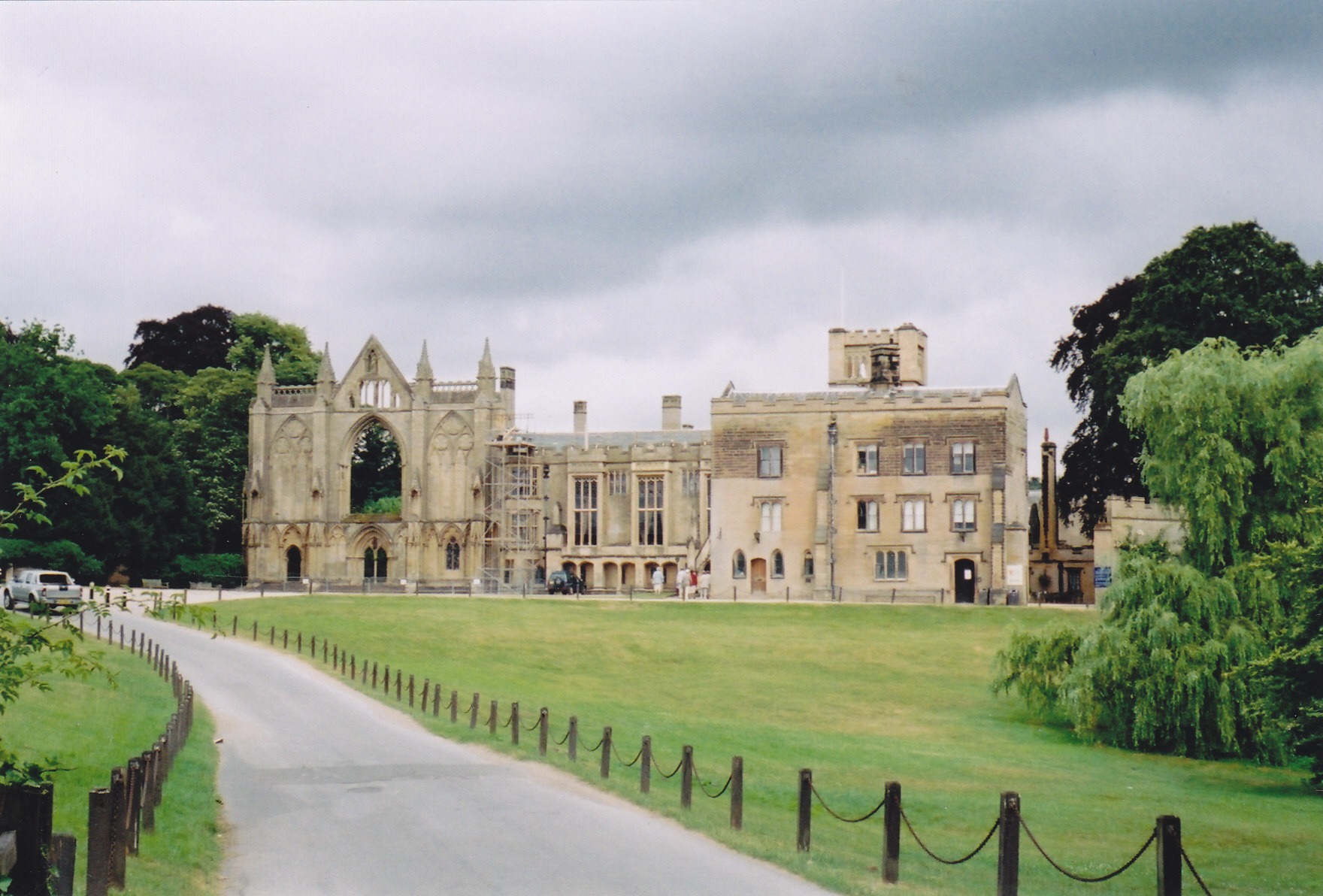
Newstead Abbey

Newstead Abbey
Newstead Abbey

In my late teens/early twenties I was completely obsessed with Lord Byron, and just after I finished my degree at York I made the pilgrimage to his old home near Nottingham. Newstead Abbey is a beautiful place in its own right, but knowing that Byron himself mused, wrote poetry and quaffed wine from a skull within its walls makes it even more special to me. Nowadays Byron’s fame seems to be ebbing, with greater focus on his computer-pioneer daughter Ada Lovelace (who, to be fair, is pretty awesome), but I will always have a place in my heart for the poet who was “mad, bad and dangerous to know”. While some of Byron’s poetry isn’t great, when he is good, he is very, very good. I love Don Juan.

Fitzrovia, London

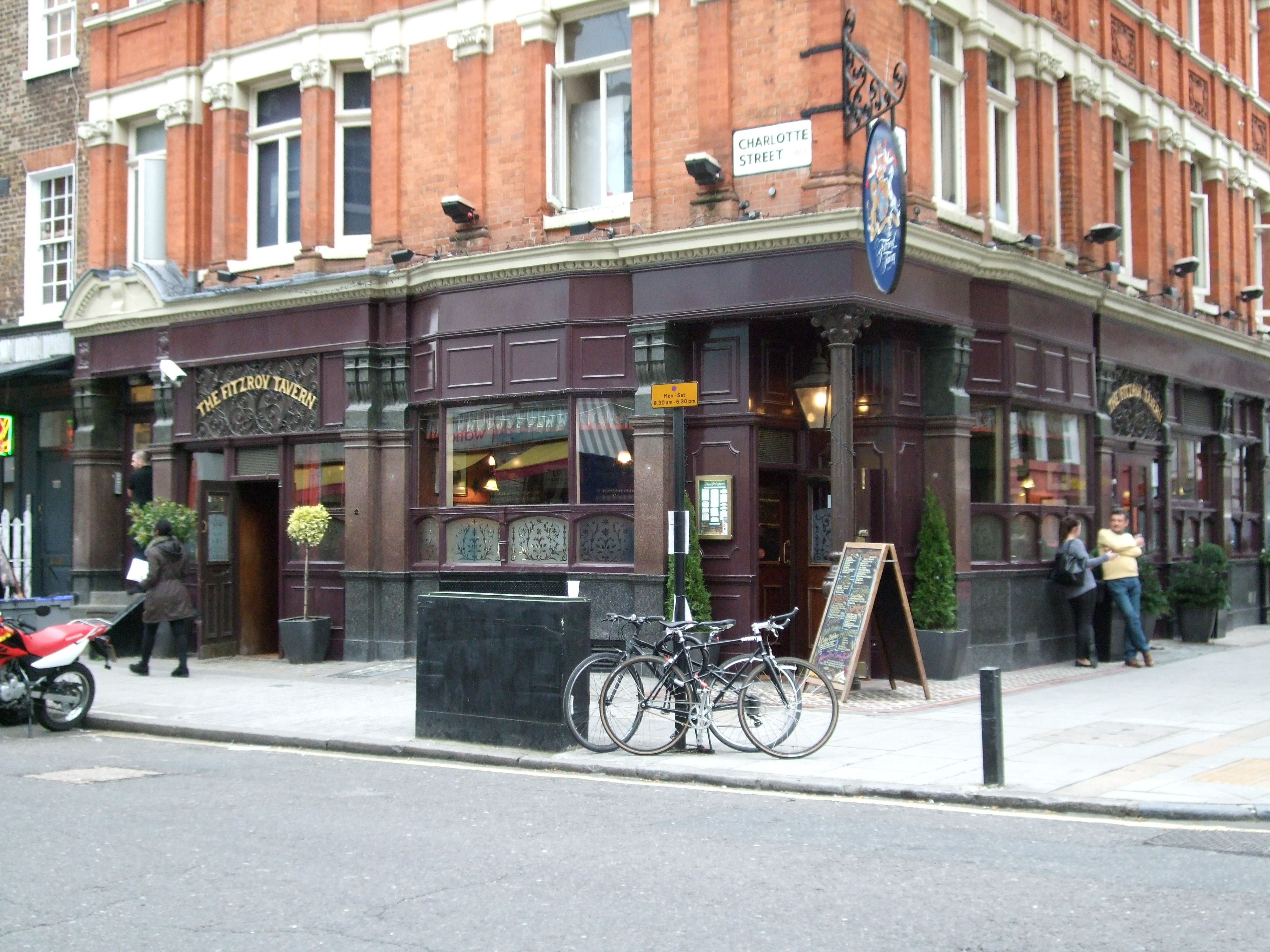
The Fitzroy Tavern
The Fitzroy Tavern

With the centenary of Dylan Thomas’ birth this year, I am surprised Fitzrovia didn’t make it into the list. This area in Bloomsbury was a magnet for artists and writers in the mid-20th century, who spent lots of time hanging out in the local pubs. Thomas is perhaps the most famous of these: he drank in the Fitzroy Tavern and met his wife Caitlin in the nearby Wheatsheaf. However, the area was also frequented by other significant figures: Anthony Burgess, author of A Clockwork Orange, witnessed an altercation in the Duke of York which may have found its way into his novel, while the nearby Newman Arms was supposedly George Orwell’s inspiration for the plebians’ pub in 1984.

If you would like to explore the area further, I recommend the London Literary Pub Crawl: this tour begins at the Fitzroy Tavern and ends in nearby Soho, with numerous beer breaks along the way.

South Tyneside

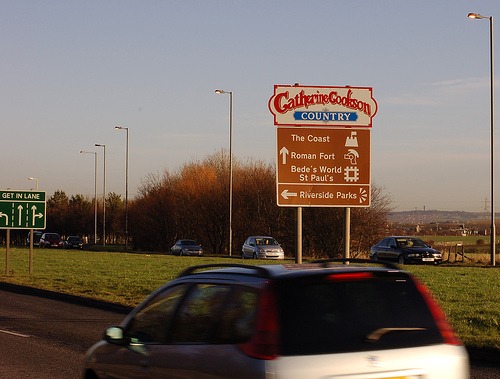
Catherine Cookson Country
Photo: Denise Miller on Flickr

Growing up in the North East of England, I was familiar with the works of Catherine Cookson, the most borrowed author from public libraries for 17 years until 2002. Like many teenagers from the area I grew up reading many of her books, including The Cinder Path and The Branded Man, which were inspired by and set in the region. I’m not sure how popular Cookson is these days, but her hometown of South Shields and the entire Tyneside region still has the “gritty” atmosphere I associate with her books. Further south in County Durham, the open-air Beamish Museum will be recognisable to anyone who has ever watched a Cookson adaptation on television.

Rose Theatre, Bankside, London

Excavation of the Rose Theatre, Bankside, London
Photo: David Sim on Flickr

The reconstructed Shakespeare’s Globe Theatre on Bankside is a well-known attraction, and it is certainly worth visiting. However, the lesser-known Rose Theatre just down the road is a must-see for anyone interested in Shakespeare and his contemporaries. It was discovered in 1989 during a routine excavation underneath an office block: a campaign to save it was successful, and it has been preserved ever since. The foundations are kept under water to preserve them, and red rope lights mark out the shape of the walls and the stage.

When it was built, the Rose was the first purpose-built theatre on Bankside, and plays are still performed there today, on a platform overlooking the archaeological site.

The Isle of Wight

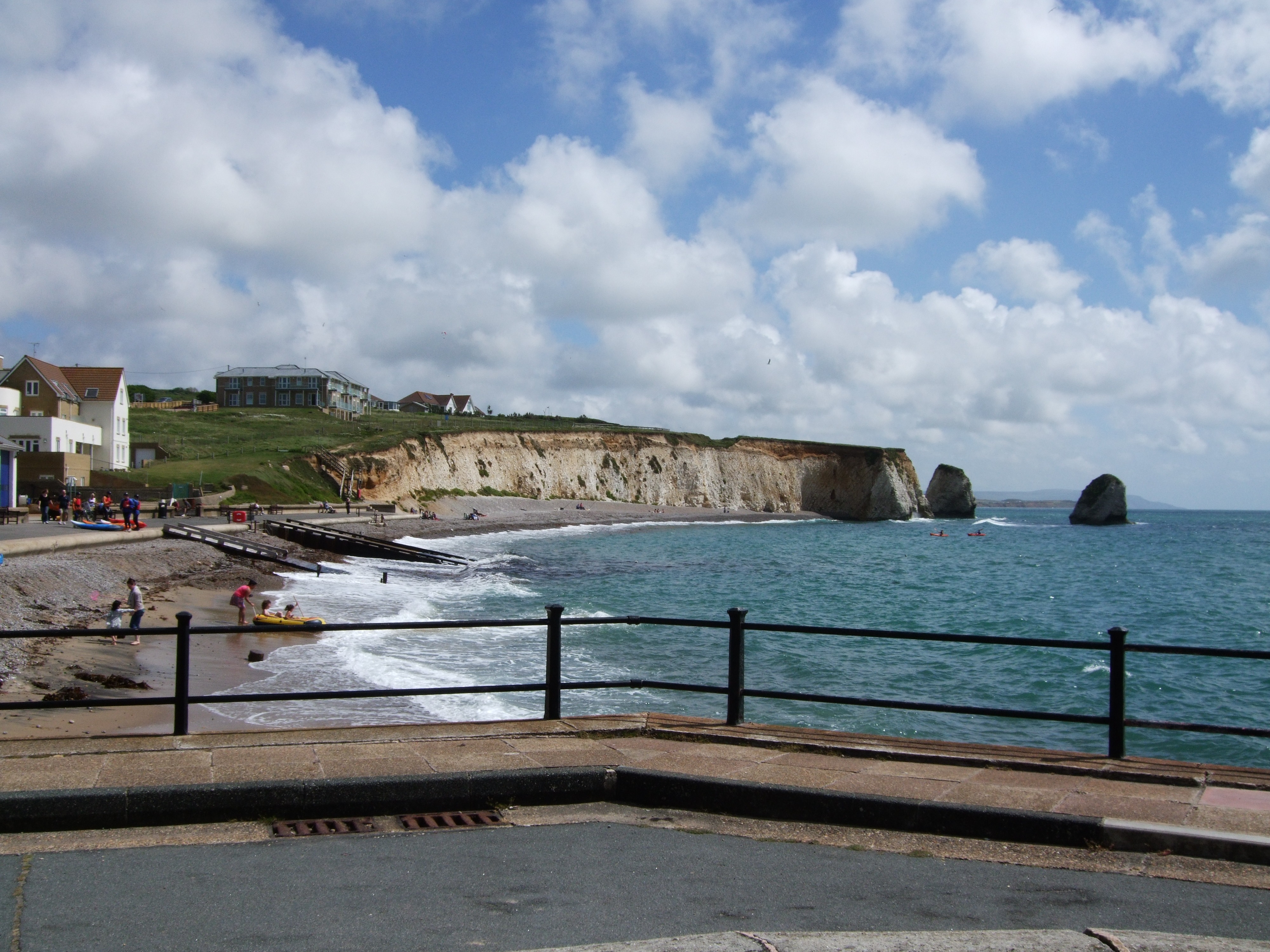
Freshwater Bay
Freshwater Bay, the Isle of Wight

The Isle of Wight has connections with two of my favourite (albeit completely different) writers. Victorian poet Lord Alfred Tennyson lived at Farringford House in the west of the island for many years, and walked every day on Tennyson Down, which was subsequently named after him. He also wrote one of his most famous poems, ‘Crossing the Bar’, while on a ferry crossing the Solent.

Virginia Woolf wrote her only play, Freshwater, about her great-aunt, the photographer Julia Margaret Cameron. The play is set in Dimbola Lodge in Freshwater, not far from Tennyson Down and Farringford, and it is still possible to visit Dimbola, which is now a museum and art gallery dedicated to Cameron.

Also, if this isn’t enough reason to visit the Isle of Wight, the fact that you can go there by hovercraft should be enough to convince you.

Bonus site: Scarborough

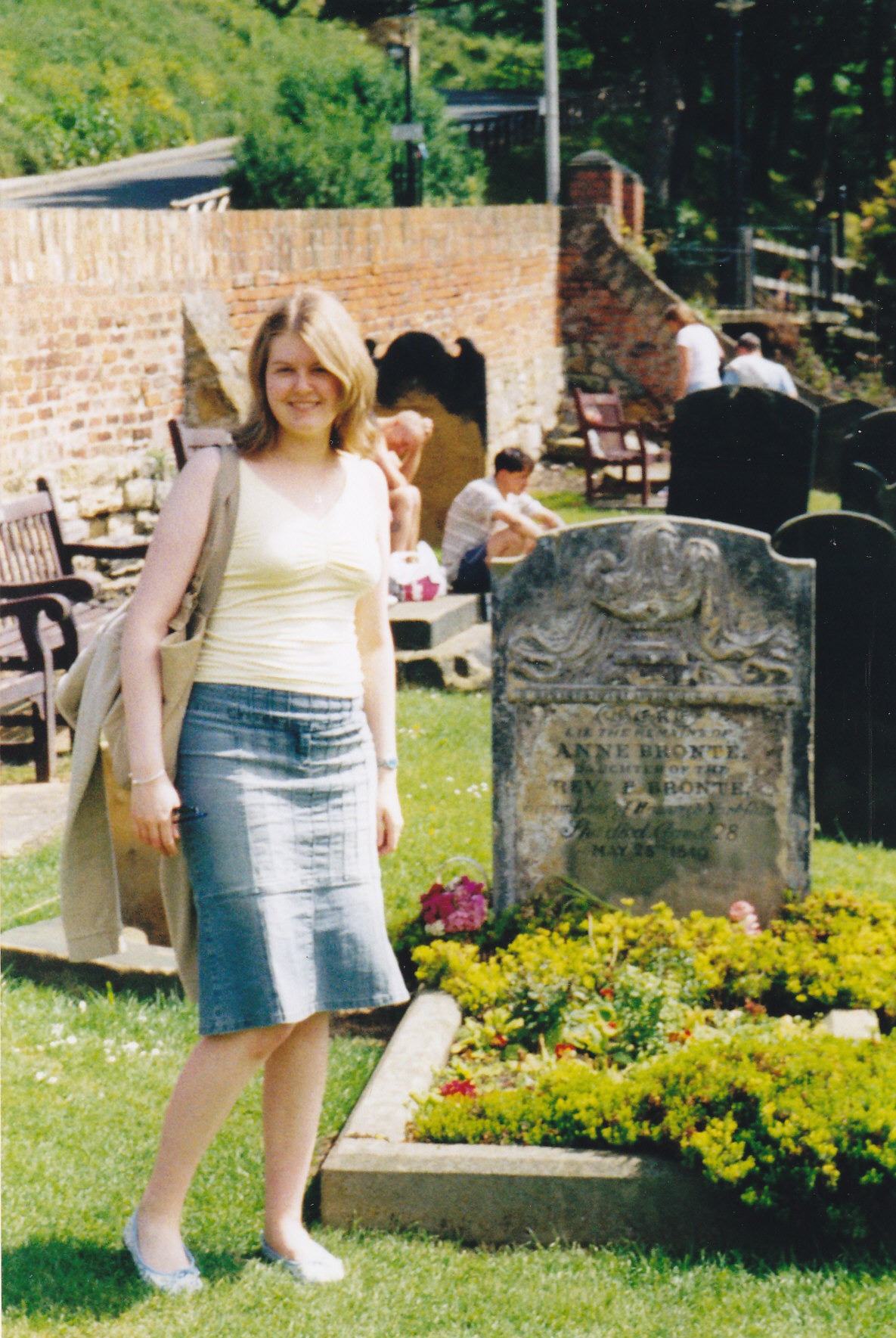
Anne Brontë's grave
Me, as a student, by Anne Brontë’s grave

The Yorkshire seaside town of Scarborough might not be an obvious choice for someone looking for places with literary connections, but while the Parsonage Museum in Haworth is the main focus for Brontë aficionados, Scarborough has a claim to fame of its own, as the burial place of youngest Brontë sibling Anne. When she began to show symptoms of the tuberculosis that had killed her brother and sister, Anne travelled to Scarborough with her only remaining sister, Charlotte. Sadly, Anne died there and is buried in St Mary’s burial ground.

If there’s one thing that the Buzzfeed list, Rachel’s choices and my own experiences have shown me, it is that Britain is absolutely chock-full of literary places. I had a really hard time narrowing my own choices down to five, and there are still plenty of places that I haven’t seen. Maybe a trip to Haworth will be on the cards next year?