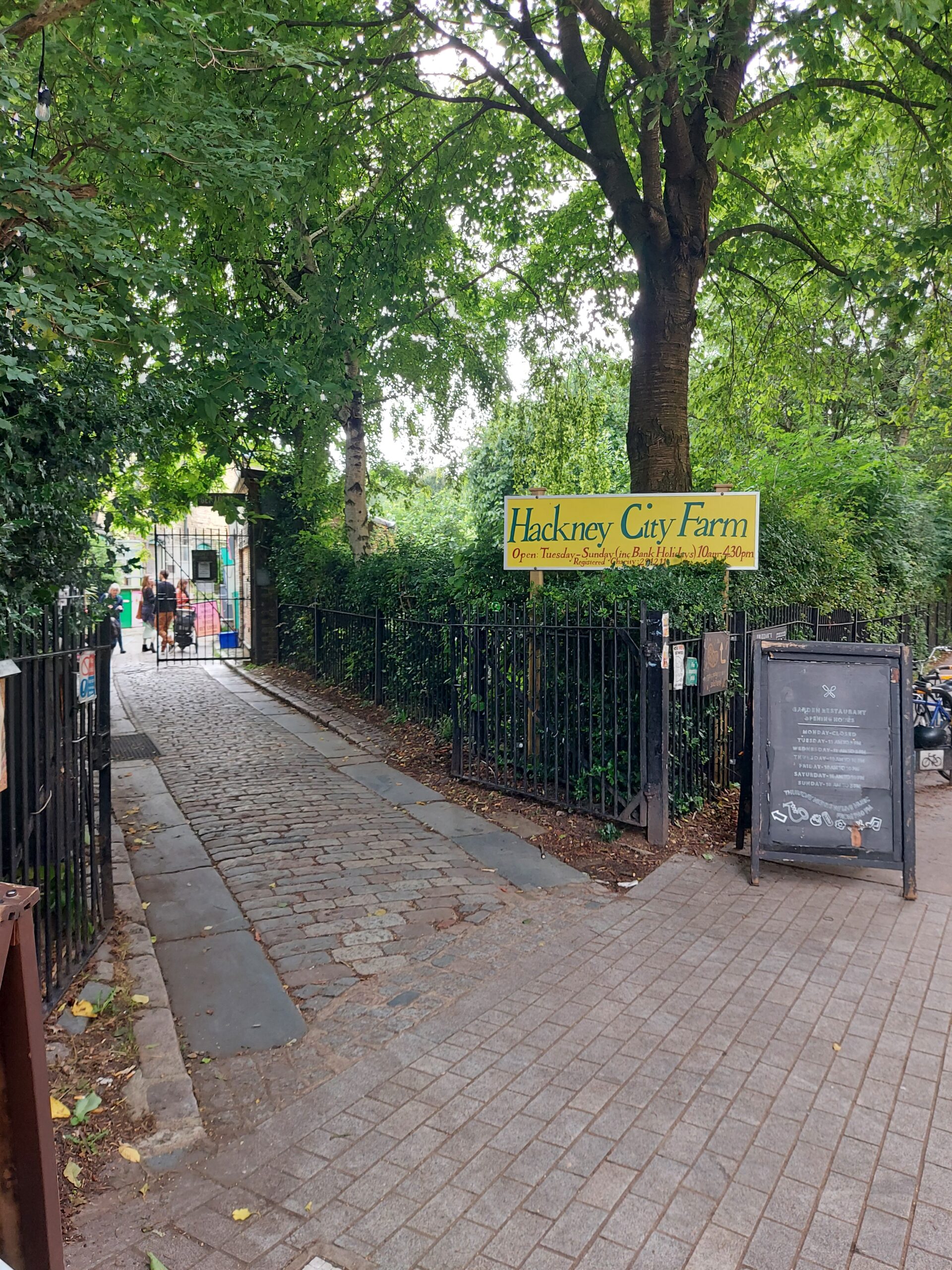
On Saturday I visited Hackney City Farm with some fellow Rebels so we could tick off a clause for Big Kid Summer. I’ve never visited any London city farms before but now I want to go to them all.
Hackney City Farm has been around for over 35 years. It’s free to visit and the farm often hosts school trips. It’s a superb resource for people living in cities to get some idea about animals more often found in the countryside.
We saw sheep, goats, donkeys, chickens, ducks, and baby piglets. The farm is small but there is plenty to see. There is also a garden which is very relaxing to wander round.
At the weekend I decided to visit the Animals: Art, Science and Sound exhibition at the British Library. The exhibition brings together manuscripts, printed works, art and sound recordings to showcase how animals have been portrayed throughout the centuries.
In part the exhibition explores scientific advances in our understanding of animals: how writing about our fellow creatures and portraying images of them accurately has advanced our knowledge. However, it also looks at the misinformation spread by ignorant chroniclers: the naturalist Pierre Belon in his De aquatilibus (1553) portrayed a ‘monkfish’ quite literally, as a monk with a fish tail.
The exhibition is divided into four sections, darkness, water, land and air, each focusing on spectacular and unusual animals from that environment. It is a visual treat, with examples such as The Birds of America (1827–38) by John James Audubon showcasing gorgeous and detailed illustrations. Attention is paid to sound, too, with recordings such as Roger Payne’s Songs of the Humpback Whale (1970), a key player in the campaign to save whales from extinction.
I liked that the exhibition focused on the achievements of oft-overlooked women, including Sarah Bowditch, who illustrated and wrote The Fresh-Water Fishes of Great Britain between 1828 and 1838. It closes with three women talking about their own work and relationships to nature. This powerful exhibition is hugely enjoyable and I learned a great deal from it.
The London Aquarium, located near the London Eye in the old London County Hall building, is somewhere I’ve been meaning to visit for a while. I used to love going to Sea Life centres as a child – I have vivid memories of taking the cable car from the top of the cliff at Scarborough towards the white, pyramid-shaped Sea Life building by the sea. It’s been years since I visited one, however.
My auntie visited at the weekend and although we had a couple of theatre visits planned, it was a bit of a struggle to think of things we could do to fill the rest of the time. We’ve both done things like go on an open top bus and visit Buckingham Palace, and she isn’t that keen on history, so the exhibitions and museums that would normally be my first port of call were out. However, when I mentioned the London Aquarium, my auntie said she thought it sounded like a good idea, so off we went.
As it was such a hot day, we had hoped that everyone would be too busy enjoying the sun to visit indoor tourist attractions. However, this sadly proved not to be the case. We had to wait around an hour to get in, but luckily we were able to stand in the shade until then. Despite the huge queue, everyone seemed to spread out once inside, so it wasn’t as full as we were expecting, luckily.
The Aquarium is, I think, very expensive: over £20 for one adult. My auntie very kindly paid for me, but if I was to go again I would look for a special offer – for instance, the London Days Out offer which gives you 2 for 1 tickets when you travel in by rail. A child ticket is only £5 less than an adult. There are various ticket packages available: if you book online you save a couple of pounds (25% if you go for a special After-3pm ticket) and you can buy ticket packages for other attractions including the London Eye and the London Dungeon.
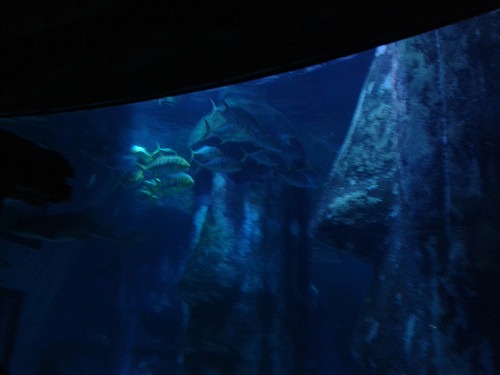
Inside the Aquarium, you follow a path taking you through all of the zoned areas. There are toilets at various points on the route and a buggy park at the beginning. The centrepiece of the Aquarium is the huge tank which is home to several black tip reef sharks. The Shark Reef Encounter, as it is known, begins as you walk over a glass floor looking at the sharks below, and continues as you walk through a glass tunnel, seeing these amazing creatures swimming over your head. There are various points within the Aquarium where you can stand or sit beside the tank and look at the creatures inside.
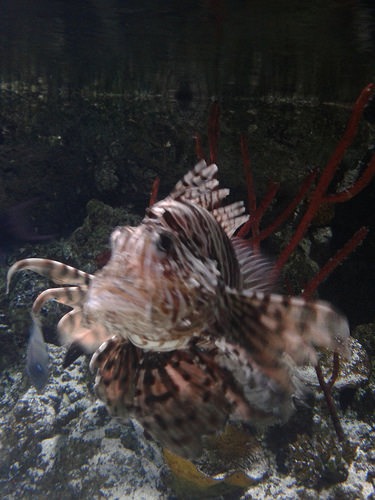
Other zones included Pacific Wreck, Atlantic Depths, Tidal Reach and the River Thames Story, to name just a few. Each zone showcased sea creatures native to that particular area, with information about each fish or other creature that you would find there. It was really fascinating to see so many sea creatures. I particularly liked the brightly-coloured tropical fish, and I loved the ray tank, with friendly rays showing off at the surface of the water.
One theme running through the whole Aquarium was that of conservation. There were regular notices explaining which creatures were endangered and how we can help to save them, from conserving energy to help prevent global warming to giving up eating certain types of fish (such as cod) to help their numbers recover. The Aquarium is doing its best to research, care for and breed the creatures in its care in order to ensure their survival. I really liked learning about this side of the Aquarium’s work, and it made me think about how I could make changes in my own life to help ensure the survival of endangered species.
I’ve left the best until last, as my favourite part of the whole experience was, of course, the penguins! The Ice Adventure section has a number of Gentoo penguins in a specially-built enclosure designed to cater for their needs, including a much lower temperature than you would get naturally in this country. I was particularly excited to meet the newest penguin, a baby who only hatched in June. It (they don’t know if it is male or female yet) still has some fluffy feathers, and we were told that they aren’t waterproof yet, so if the baby falls in the water someone has to go and towel-dry it!
Our visit took a couple of hours, and I’m sure we could have spent longer in there. I would definitely go again, but only if I could get some sort of special offer!
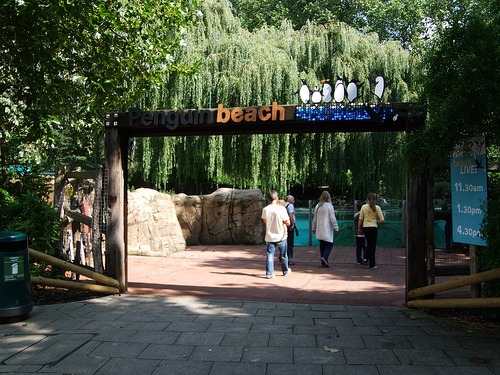
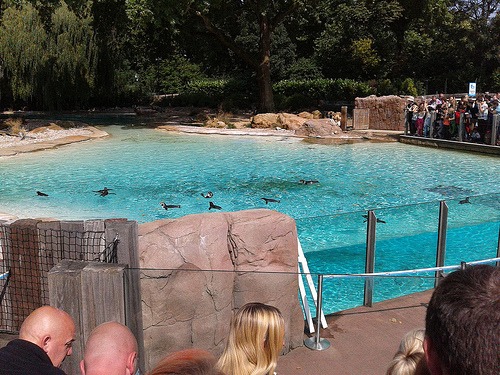
A few weeks ago, I decided to visit London Zoo. I don’t know why I hadn’t got round to doing this sooner, since the Penguin Beach opened a couple of years ago, and I absolutely adore penguins, so you might have thought I’d be dying to go. But it’s so expensive! My ticket was £25, although I did go for the fast track entry, as I can’t be bothered to wait in queues. The best thing about the fast track entry is that it takes you in through the exit, which just happens to be right next to Penguin Beach. So you can guess where I went first.
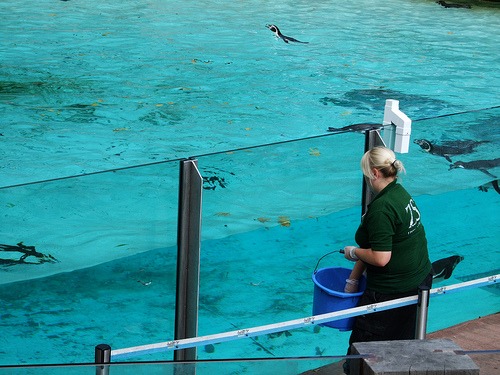
The penguins at Penguin Beach are Humbolt penguins from Chile. There is one exception and that is Rocky, the Rockhopper penguin. The Humbolts are black and white but Rocky has a jazzy yellow tuft on his head – a punk penguin. I was just in time for the penguins’ lunchtime feed, so I sat down with all the other spectators and watched them swim spectacularly towards the pool. Penguins are so elegant in the water but so funny on land, and I was highly amused by one of them who kept waddling after the keeper demanding fish.
Rocky the Rockhopper
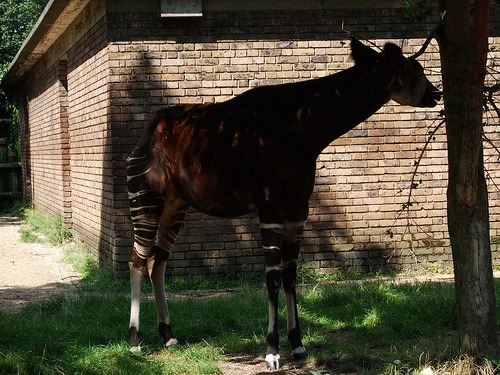
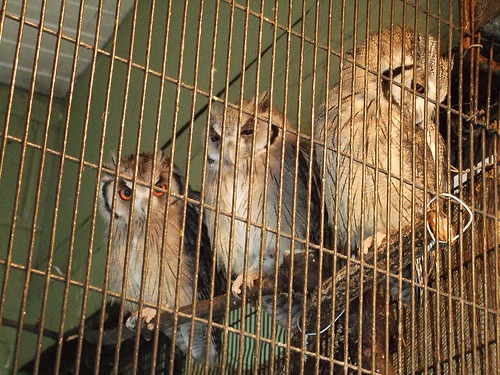
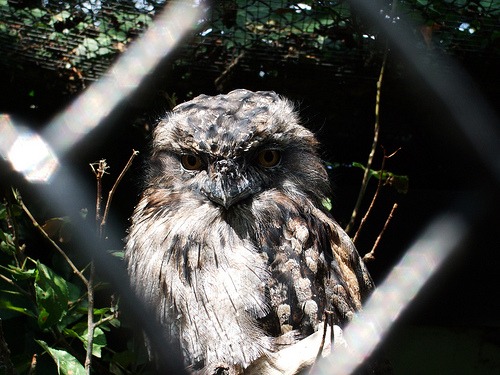
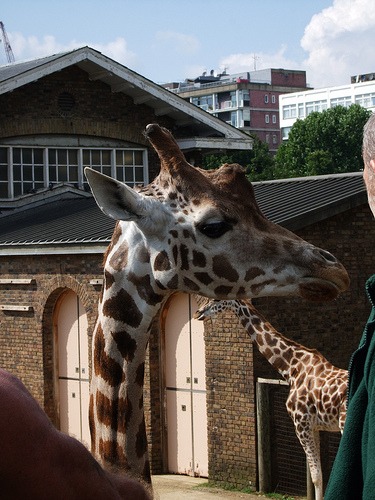
After spending time with the penguins I popped into the Butterfly Paradise. This tropical house was similar to the one I recently visited at the Natural History Museum but with the addition of Atlas Moth caterpillars which were absolutely huge. Next I decided to use the subway and get to the other side of the road to look at the other animals there. I loved the owls and the other birds at this side, and was impressed by the Into Africa section. I couldn’t see any sign of the hunting dogs but the warthogs were having a nap in the sun, and there was a pretty okapi eating some leaves (though I was annoyed at one parent I overheard telling their child that it was a ‘little giraffe’ – WRONG!). Inside the house there was an adorable baby okapi. I wanted to get a picture but it was standing with its back to me and wouldn’t turn round! There were a couple of giraffes too, one of which was being fed. I knew giraffes were big, but I think I’d forgotten just how big.
Okapi
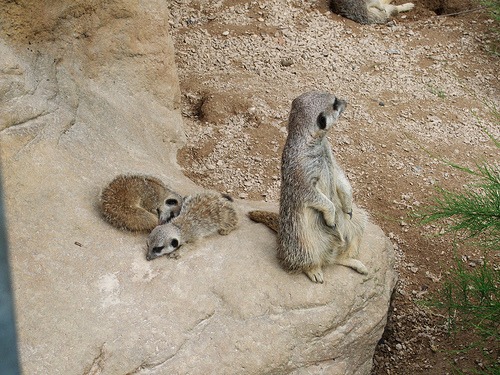
I was super excited at the next thing, which was – meerkats! And even better, BABY MEERKATS! They were just adorable. They all – adults and babies – seemed quite unafraid and happy to pose for photographs.
So adorable – I want one
This end of the zoo is also where the rainforest and nocturnal creatures live. The Rainforest Life area is home to a sloth as well as several monkeys – who looked like little old men – various birds and an armadillo. The nocturnal area had a chinchilla as well as other night-time animals – a colony of fruit bats were particularly impressive.
Realising that a good couple of hours had passed, and I’d still only seen a small number of the animals on display, I decided that it was time to get a move on. I went back up the subway and made a very brief detour into the Bugs building. My favourite thing about this area was the leaf cutter ants – I’ve seen them before but I never get tired of watching them carry their huge pieces of leaf back to the nest. I moved rather quickly through the bit with the spiders – I just don’t like them, they make me shudder, especially the black widow!
One of the things I like about this zoo is that they let you get as close to the animals as possible, while taking into consideration the health and safety of both you and the animals. The Meet the Monkeys enclosure is a case in point: you can wander around inside and see the little monkeys leaping about in the trees above your head.
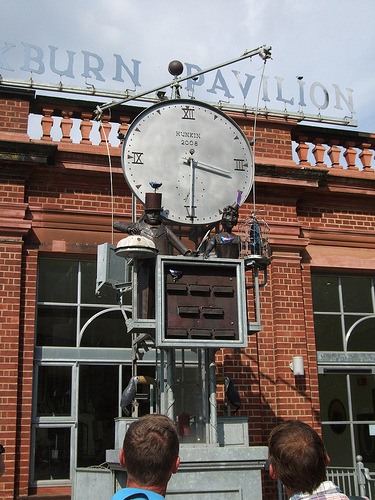
My next stop was the Blackburn Pavilion, where the tropical birds live. This is a lovely ornate Victorian building, and it has a pretty impressive clock outside it.
Awesome clock
I walked past the Animal Adventure section at first, as I thought it was some kind of children’s play area. However I realized my mistake and went back in. It was certainly aimed at children – and designed by them too, apparently – but the animals here, such as camels, alpacas and aardvarks, can be appreciated by adults too. There is also a petting zoo where you can say hello to some sheep and goats – I witnessed a hilarious scene here watching a father try in vain to rescue a map of the zoo the goat had stolen from his child.
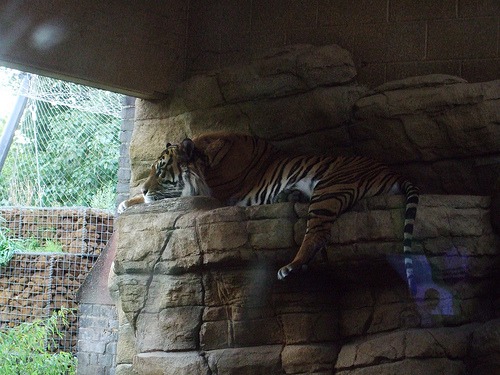
Some of the more exciting animals in any zoo are the big cats, such as lions and tigers. The lions were in a rather old-fashioned enclosure, but the tigers are in a shiny new Tiger Territory: you go on a trail around the enclosure and learn about tiger conservation on the way. I thought this was really well done and informative.
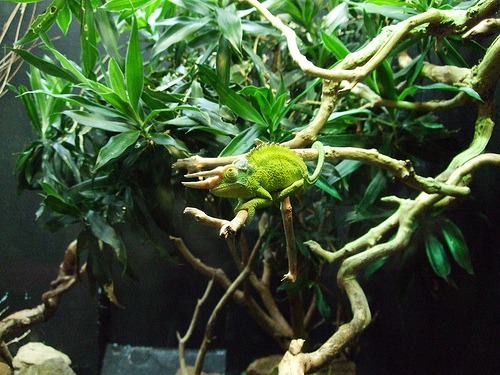
Passing the tapirs, bearded pigs and Galapagos tortoises – which were awesome – I headed into the Reptile House. One of the most exciting parts was actually seeing the place where the first Harry Potter was filmed – the scene where Harry speaks to a snake. I quite like snakes, so I enjoyed looking around here – don’t go in if you’re not a fan! On the way out I saw the Komodo dragons, which were awesome.
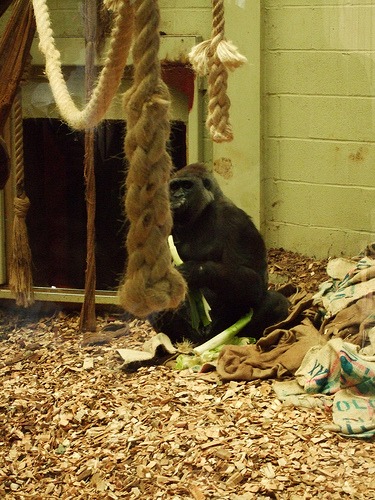
Next I popped into the Gorilla Kingdom. This was great especially when I got to see the gorillas enjoying their lunch. They are so amazing and intelligent. On the way out I passed the various kinds of monkeys who live nearby.
I was running out of time by then, so I quickly headed to the Outback area to check out the kangaroos, wallabies and emus. I then popped into the Aquarium, but didn’t have time for more than a cursory glance. I headed towards the exit – but not, of course, before paying a last visit to the penguins.
I was completely exhausted after visiting London Zoo, but I’m so glad I went. There was loads to see – I’d definitely go again.