
October’s monthly badge was lots of fun and proved extremely timely, as I am probably moving soon and need to sort out my stuff. I also enjoyed the chance to try kintsugi.
Have a clear out and donate a box of items to a local charity shop.
I cleared a couple of large bags full of items.
Spend a few hours investigating your local charity shops. What’s the most impressive thing you can find? What’s the weirdest?
I explored my local charity shops and some a bit further afield. I found plenty of random things including gorgeous furniture (sadly too heavy and impractical for me to buy) and creepy dolls.
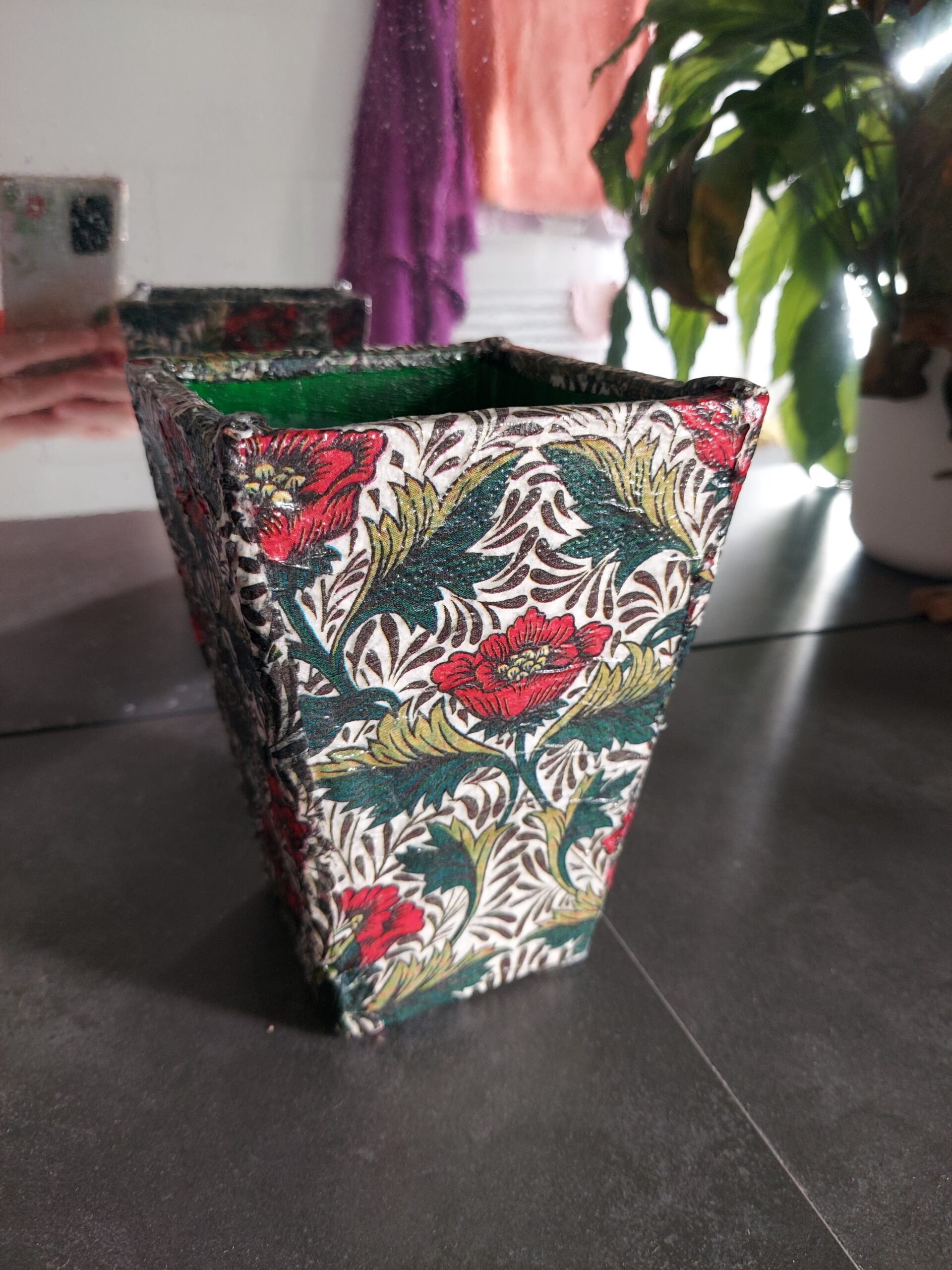
Buy an item from a charity shop and upcycle it.
I bought a cheap wooden vase/pot and transformed it with decoupage.
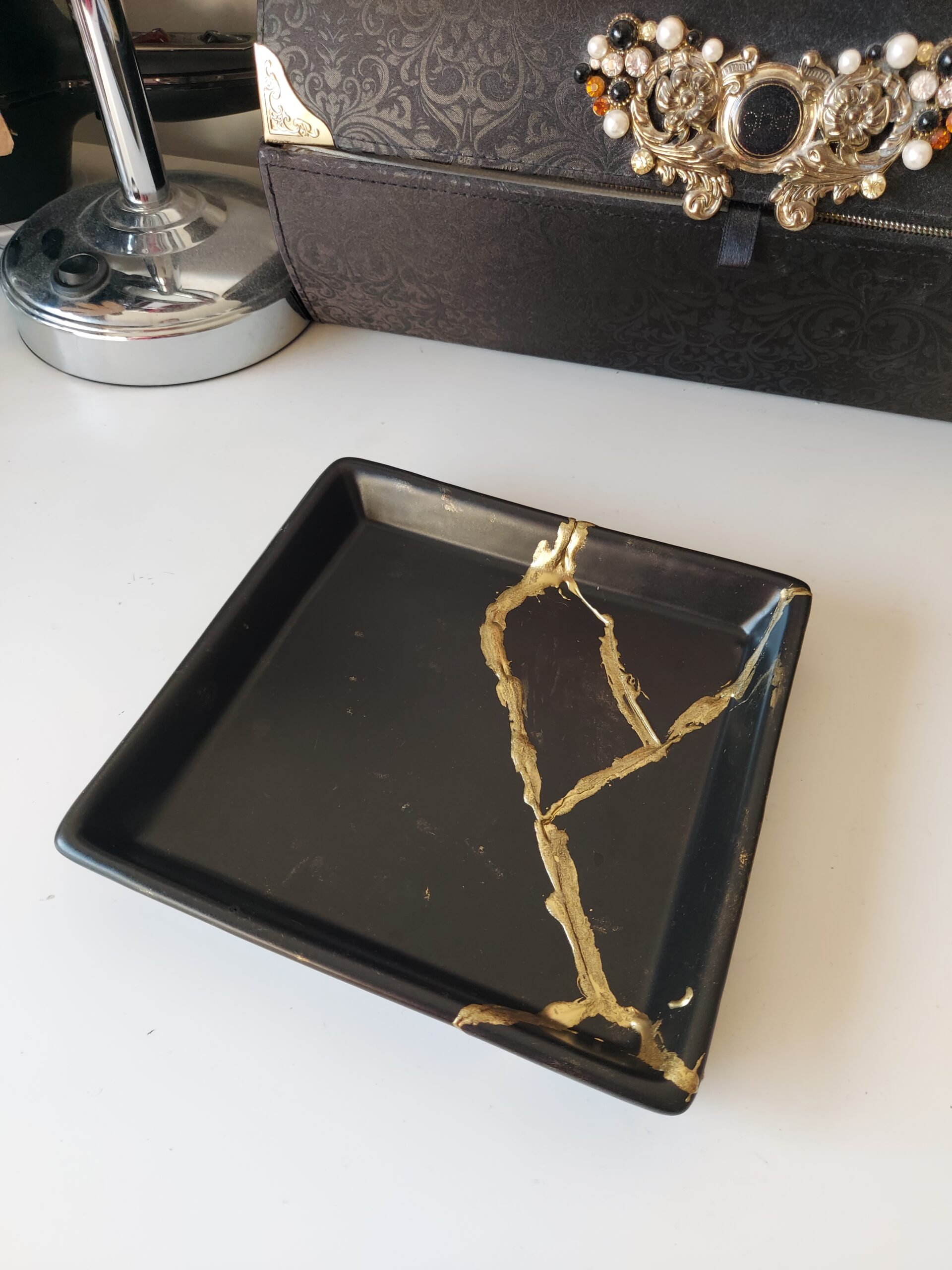
Transform a piece of charity shop crockery using kintsugi.
One of my friends gave me a kintsugi kit a while ago and this badge proved the perfect opportunity to give it a try. I used an IKEA shallow dish that cost me £1 from my local shop.
Watch a film or TV show, or read a book related to charity shops.
I watched a documentary on YouTube called The Charity Business, about donated clothes that end up being sold in African countries such as Ghana.
Write a list of things that cannot be donated to charity shops. Try to find other ways of reusing or recycling these items.
Items that cannot usually be donated include (list taken from the Co-op):
Kitchenware
- heating and cooking equipment that use gas or oil
- knives
- scissors
- refrigerators
Safety equipment
- safety helmets
- safety harnesses
- cycle helmets
- life jackets
- buoyancy aids
Children’s items
- inflatable toys for water
- car seats
- prams
- pushchairs
- buggies
- cots
- high chairs
- cot mattresses
- soft toys without the CE label
Soft furnishings
- used pillows and duvets (although pillow cases and mattress covers may be accepted)
- cushions
- cushion covers
- furniture covers without fire safety labels
Electrical items
- electric blankets
- power tools without instructions
Other
- weapons
- oil lamps
- prescription glasses
- items made from ivory
- petrol or diesel fuelled garden equipment
- personal items, such as shavers (unless unused and in a sealed box)
Electrical items can sometimes be taken to specialist e-waste recycling services. Specsavers accepts donations of old prescription glasses to be given to those in poorer countries. Old bedding or towels might be accepted by animal shelters.
Other items that cannot be donated should be given to responsible waste collection services. Alternatively, Facebook might be worth a try – sometimes people have the skills to reuse or recycle things.