Treasures of Gold and Silver Wire – Guildhall Art Gallery

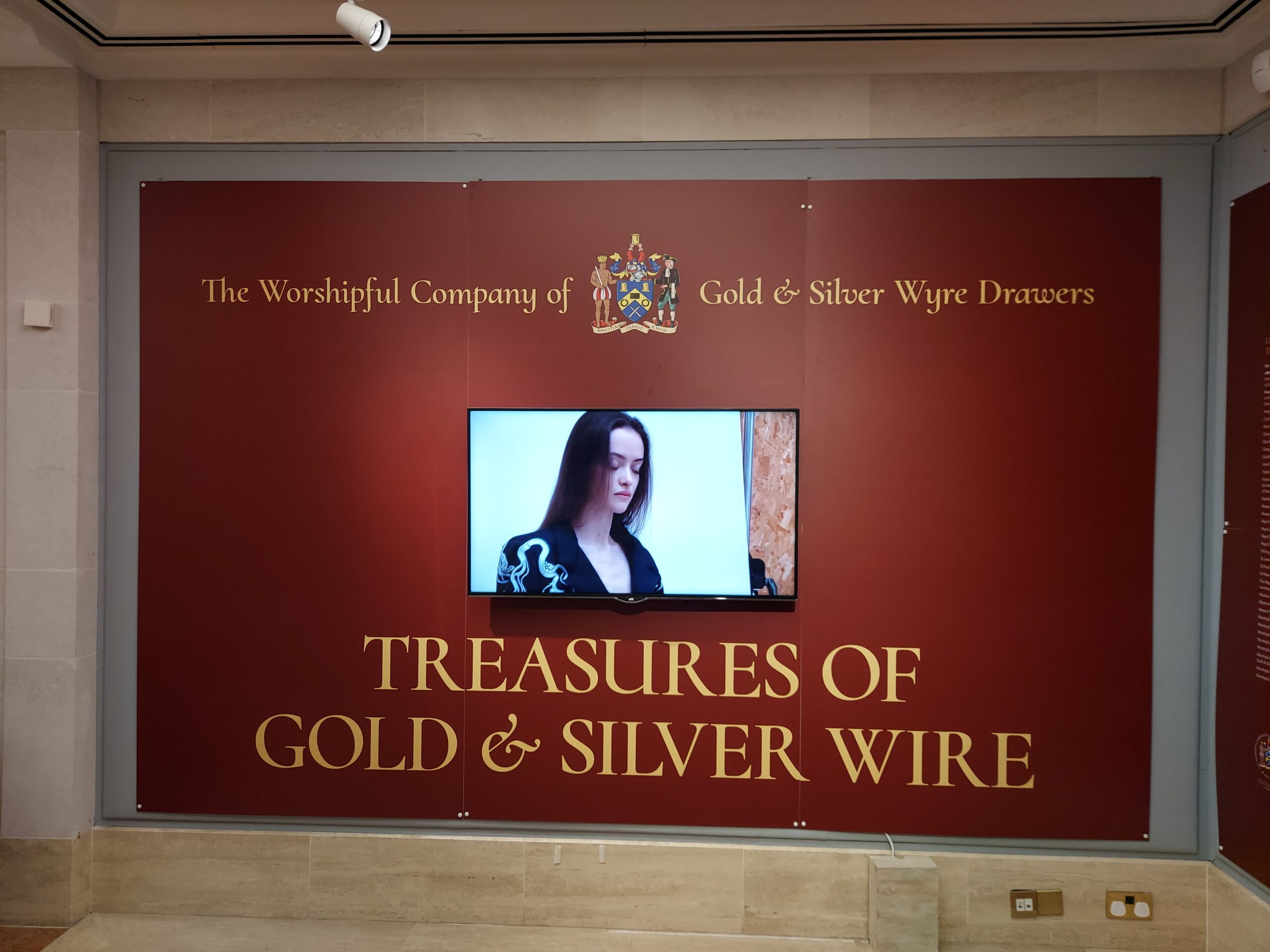
The entrance to the exhibition

In recent years I’ve got really into embroidery and other needlecrafts, so I was excited to visit the exhibition Treasures of Gold and Silver Wire at Guildhall Art Gallery. The exhibition, curated by Dr. Karen Watts, Curator Emeritus at the Royal Armouries, marks the 400th anniversary of the Worshipful Company of Gold and Silver Wyre Drawers, and features over 200 beautiful items made of gold and silver wire, some historical and others more recent, from a variety of different contexts.

Many items in the exhibition are royal: garments worn by both Queen Elizabeth I and Queen Elizabeth II include the 16th century Bacton Altar Cloth, her only surviving dress, and a glove worn by the late Queen at her Coronation in 1953. The coronation dress worn by Queen Mary in 1911, adorned with gold and silver silk thread, is also featured.
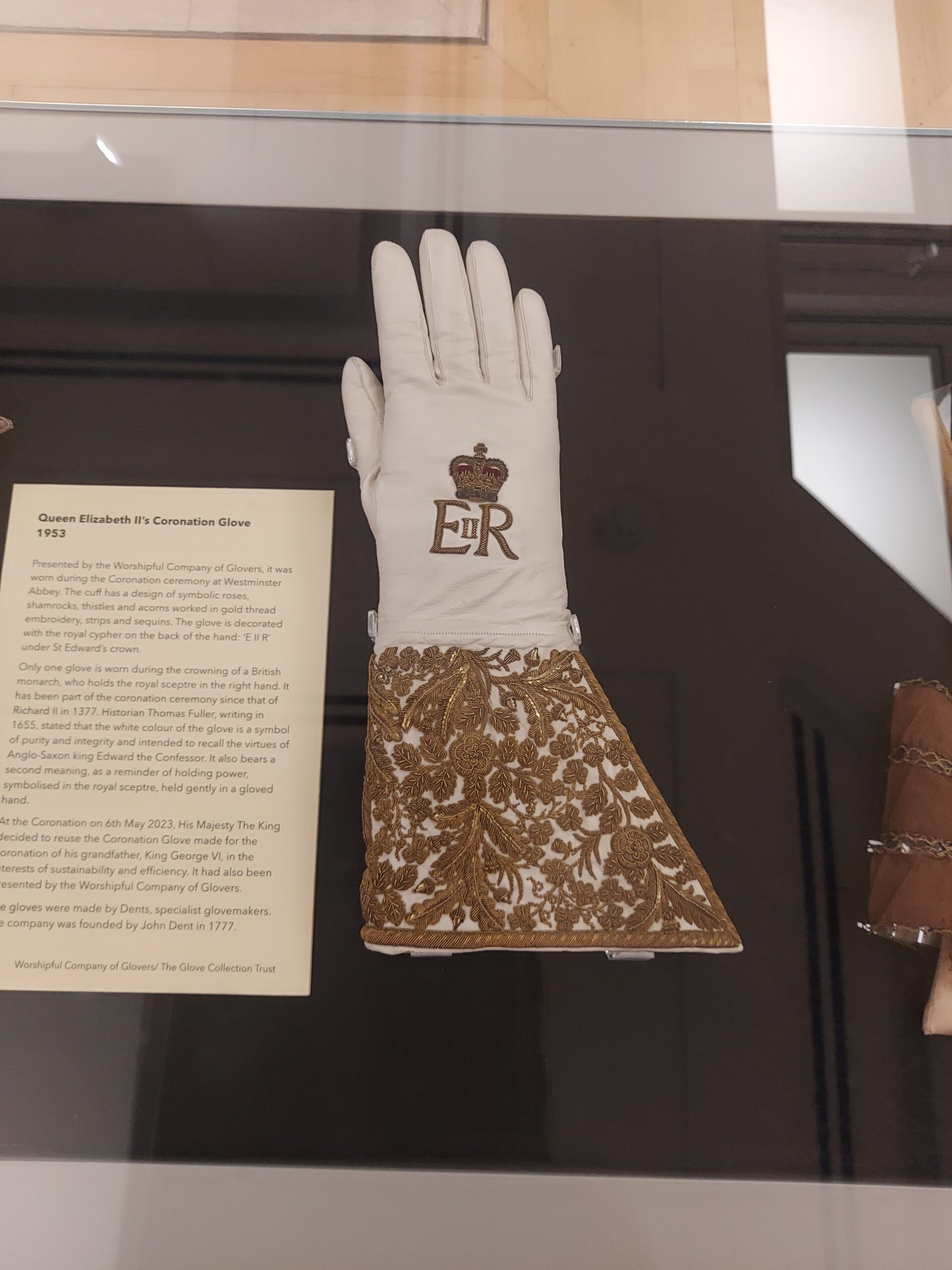
A white glove embroidered with gold including the emblem of Queen Elizabeth II
Queen Elizabeth II’s Coronation glove

My favourite pieces in the exhibition came from theatre, such as a robe and crown worn by David Tennant in the title role of Richard II in the RSC’s production, as well as a crown and robe worn by Dame Helen Mirren in the RSC’s production of Antony and Cleopatra. Costumes worn by actors in the television series The Crown are also on display.
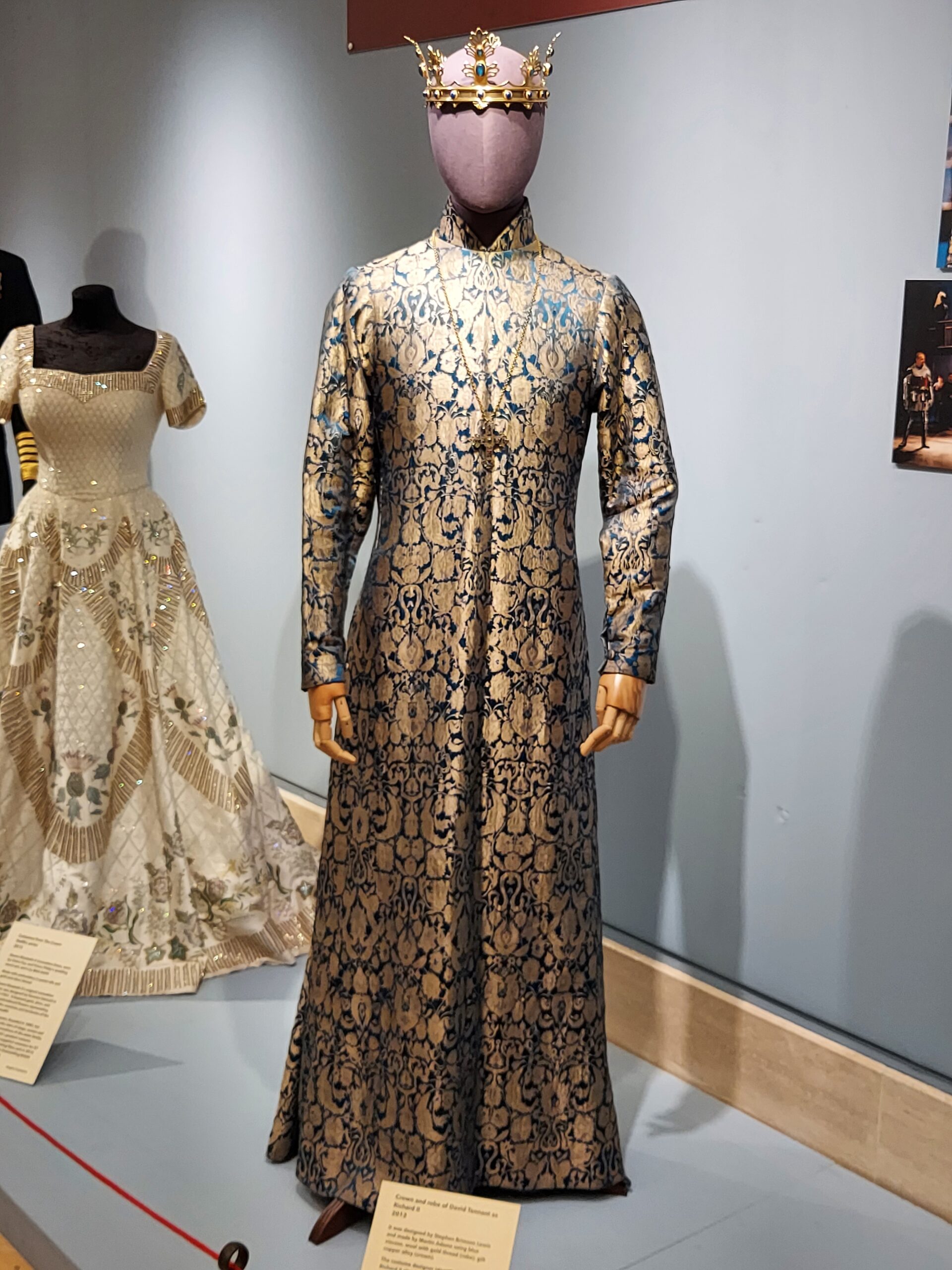
David Tennant's costume for Richard II
David Tennant’s costume for Richard II

Menswear features strongly in the exhibition. A court suit worn by novelist Charles Dickens is shown, as is the Bishop of London’s Silver Jubilee Cope from 1977, and gold-braided dress uniforms from the British Army, Royal Navy, and Royal Air Force. A beautifully-embroidered hearse cloth from 1515 is one of the oldest pieces in the exhibition, and a piece of Oliver Cromwell’s dressing gown is also on display.
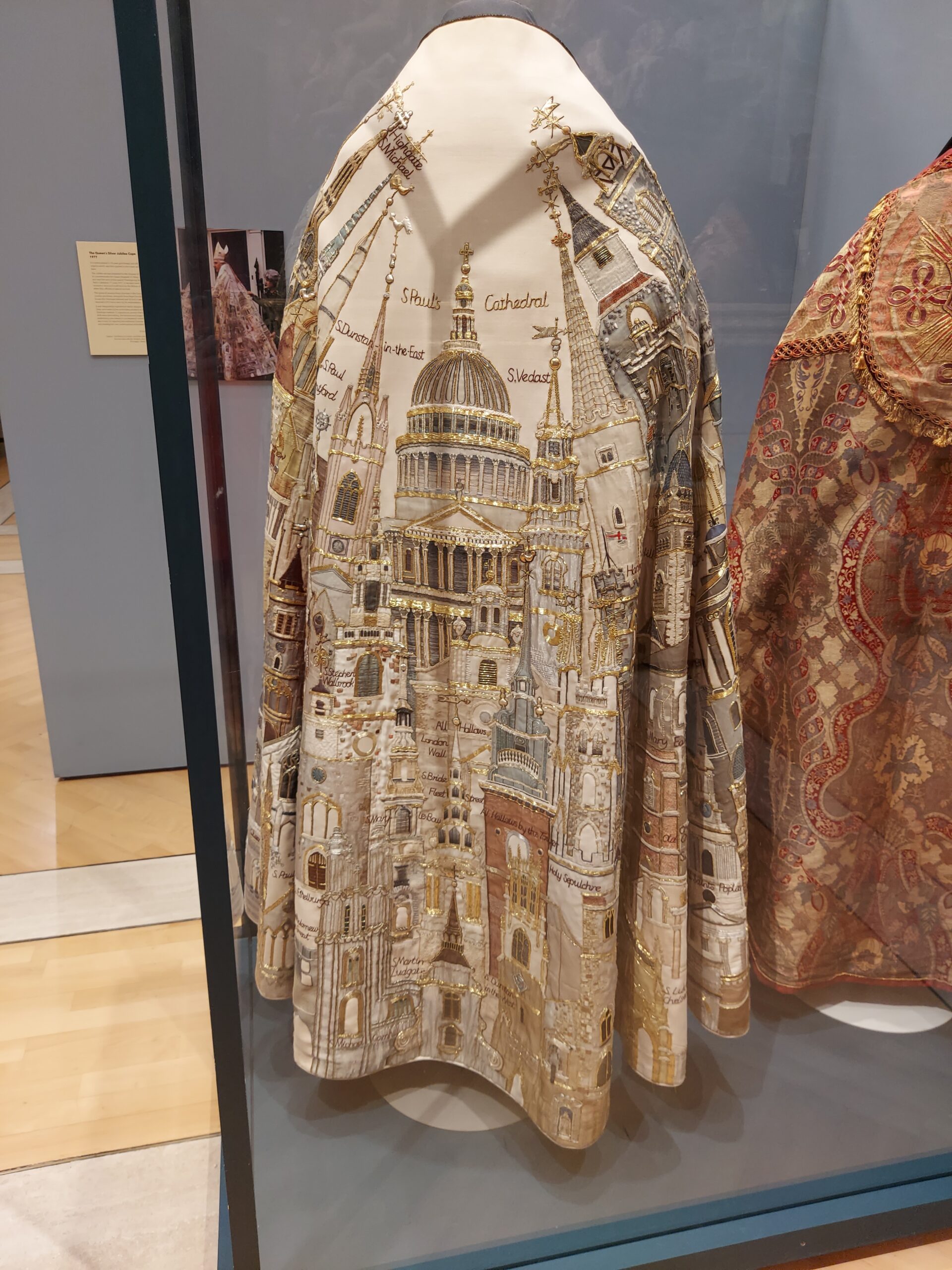
A cope embroidered with various London spires
The Bishop of London’s Silver Jubilee cope

The exhibition ends with some beautiful examples of modern-day embroidery and jewellery using gold and silver wire. These gave me serious envy and inspired me to get working on more embroidery myself!
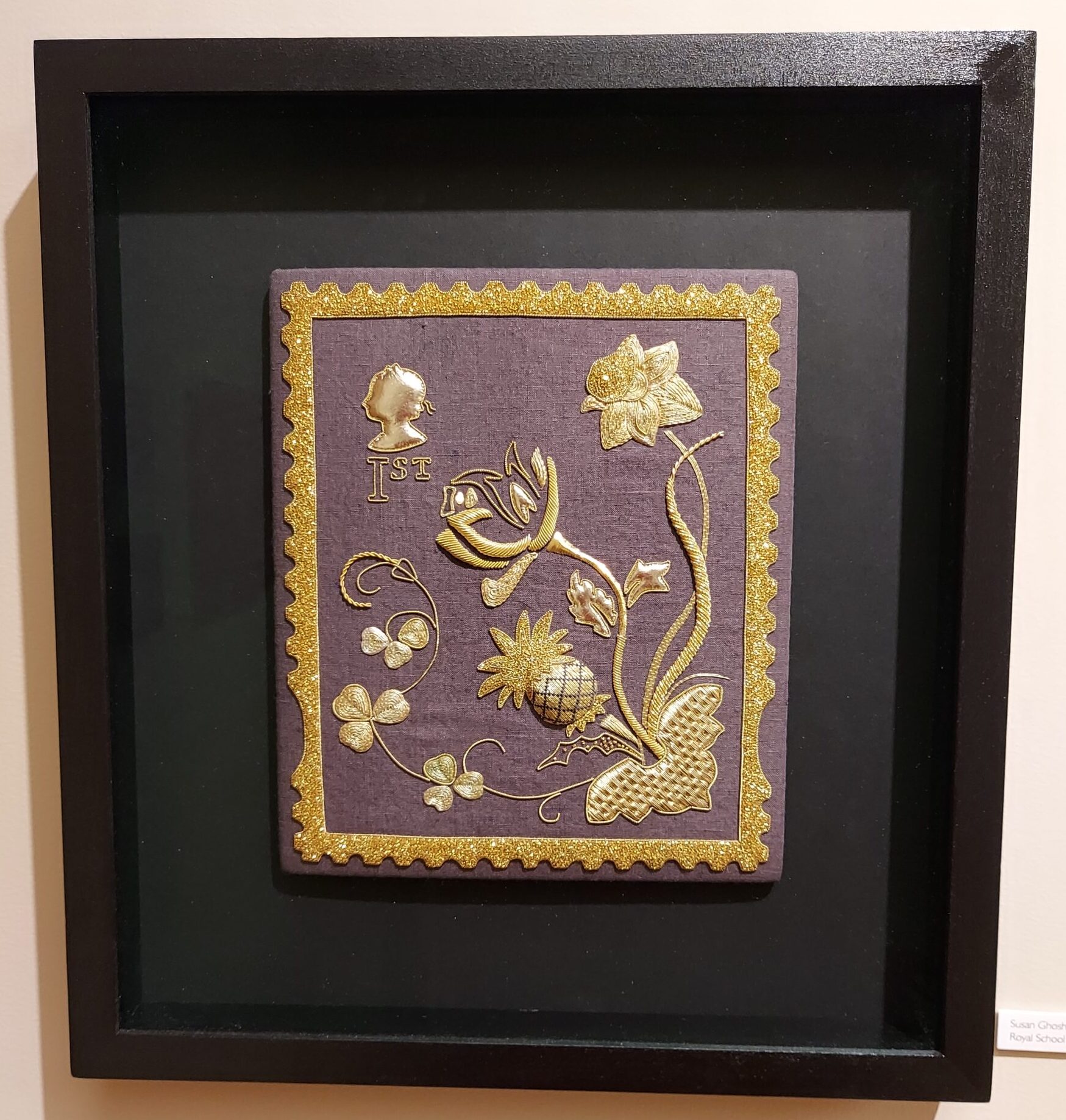
A stamp design embroidered in gold on purple
A modern stamp design

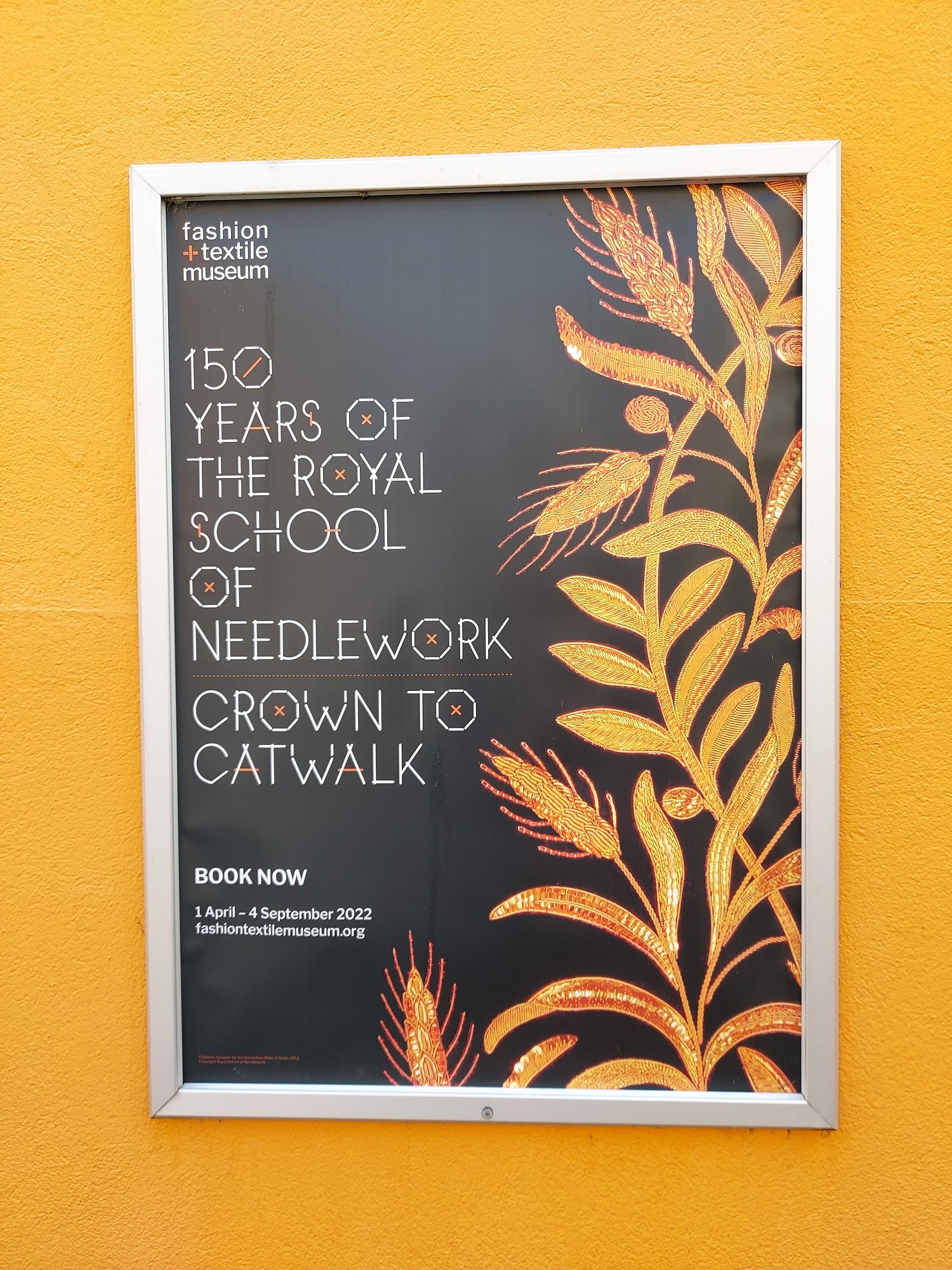
150 Years of the Royal School of Needlework: Crown to Catwalk

Exhibition poster

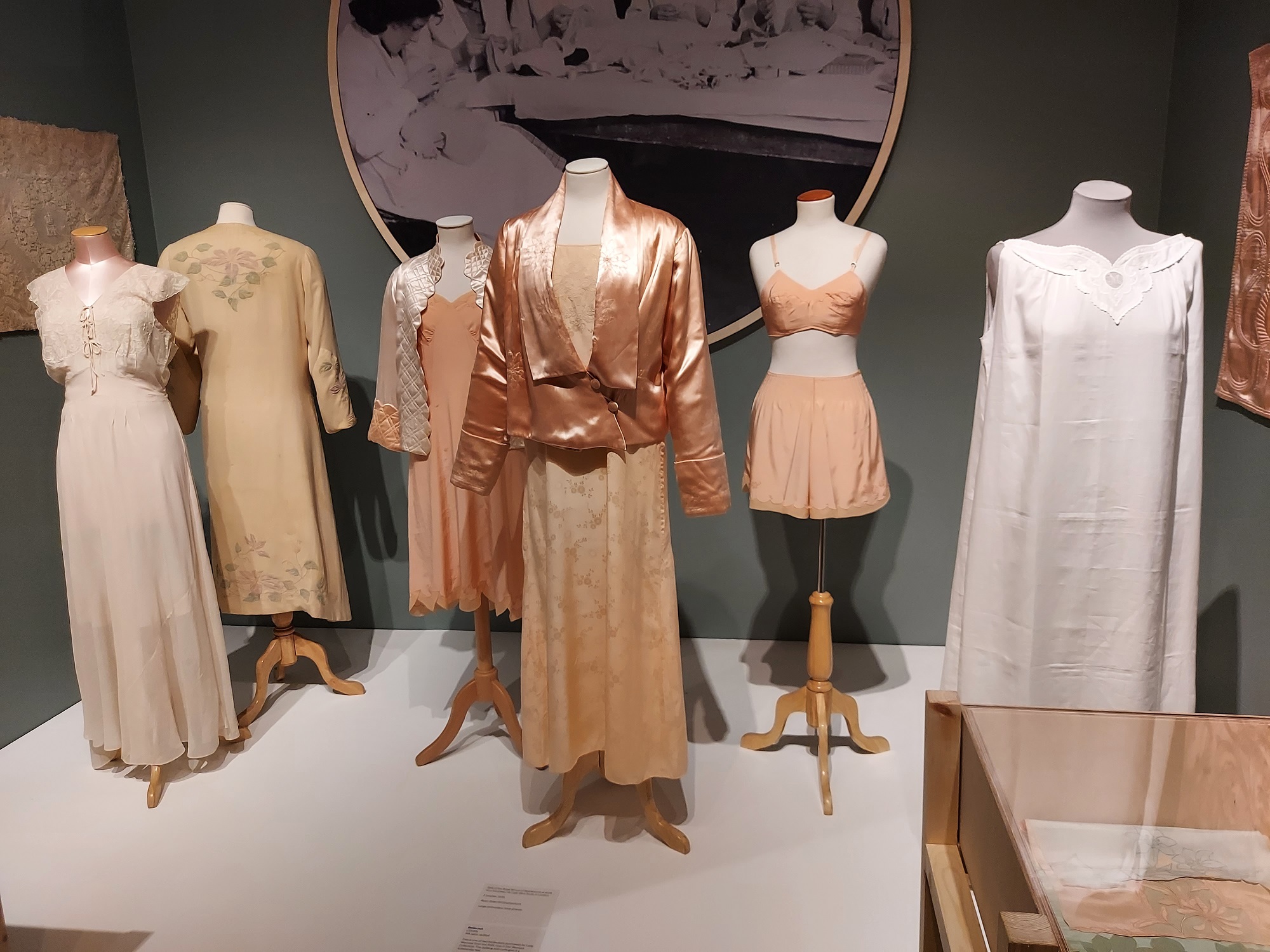
I went to an embroidery class last Friday, hosted by the Royal School of Needlework at the Fashion & Textile Museum. The workshop had been arranged to mark the 150th anniversary of the RSN and the accompanying exhibition, 150 Years of the Royal School of Needlework: Crown to Catwalk. While I was at the workshop, I had a chance to take a look around the exhibition.

In 1872, the Royal School of Needlework (RSN) was founded on two key principles – the first, the preservation of hand embroidery as an art form and the second, the support of women’s independence through work. Many aspects of this artform were in danger of being lost, and the School aimed to preserve them.

Particularly in its early days, the School undertook commissions for members of the Royal Family, often working continuously for hours to complete work on time. Some of this work is on display here, testament to the ability and tenacity of the School’s members.

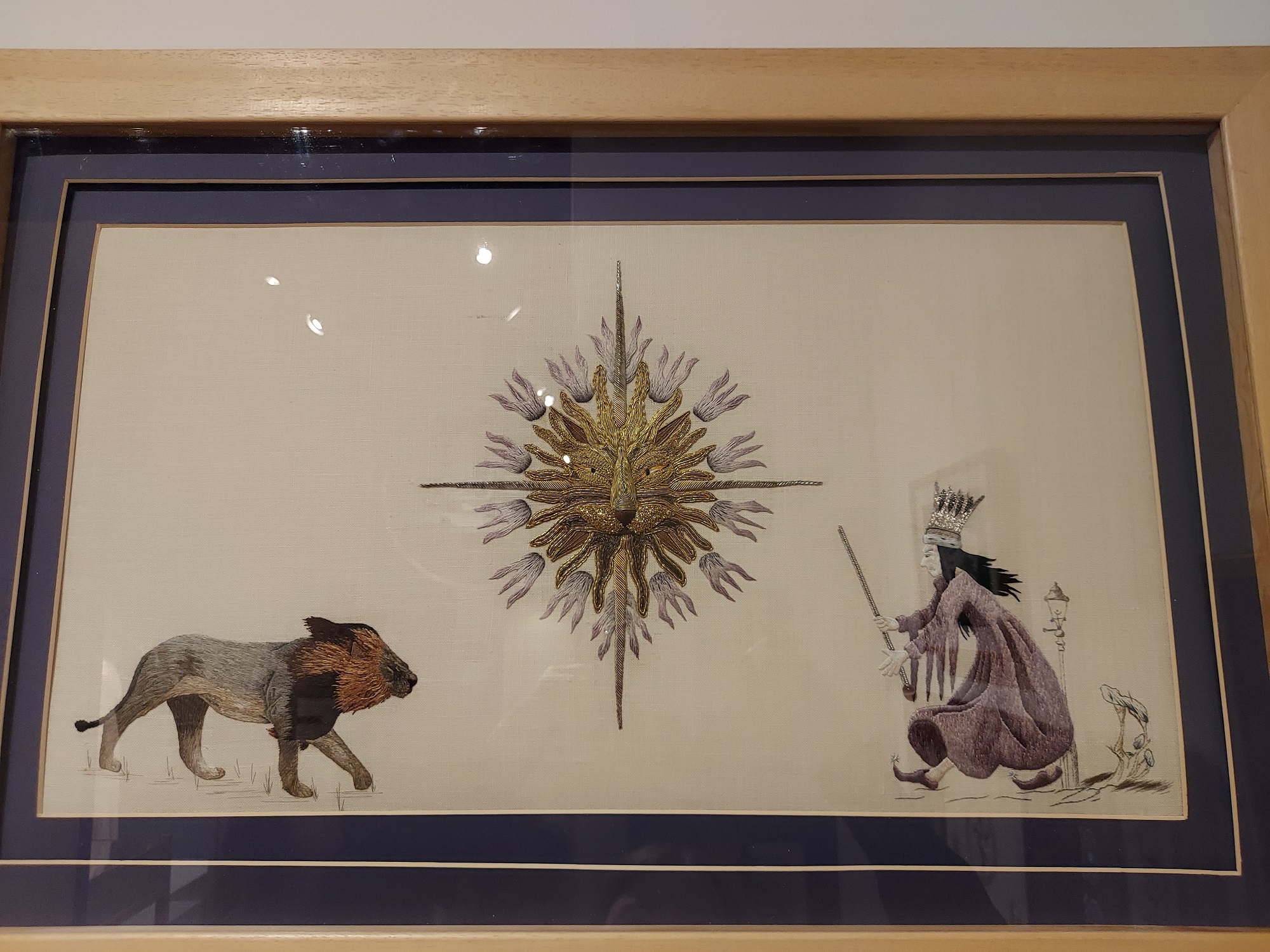
The exhibition also contains examples of work students have produced over time, ranging from classic and religious symbolism to more modern images inspired by books or popular culture. The works encompass many techniques including blackwork, gold embroidery and Jacobean crewel work.

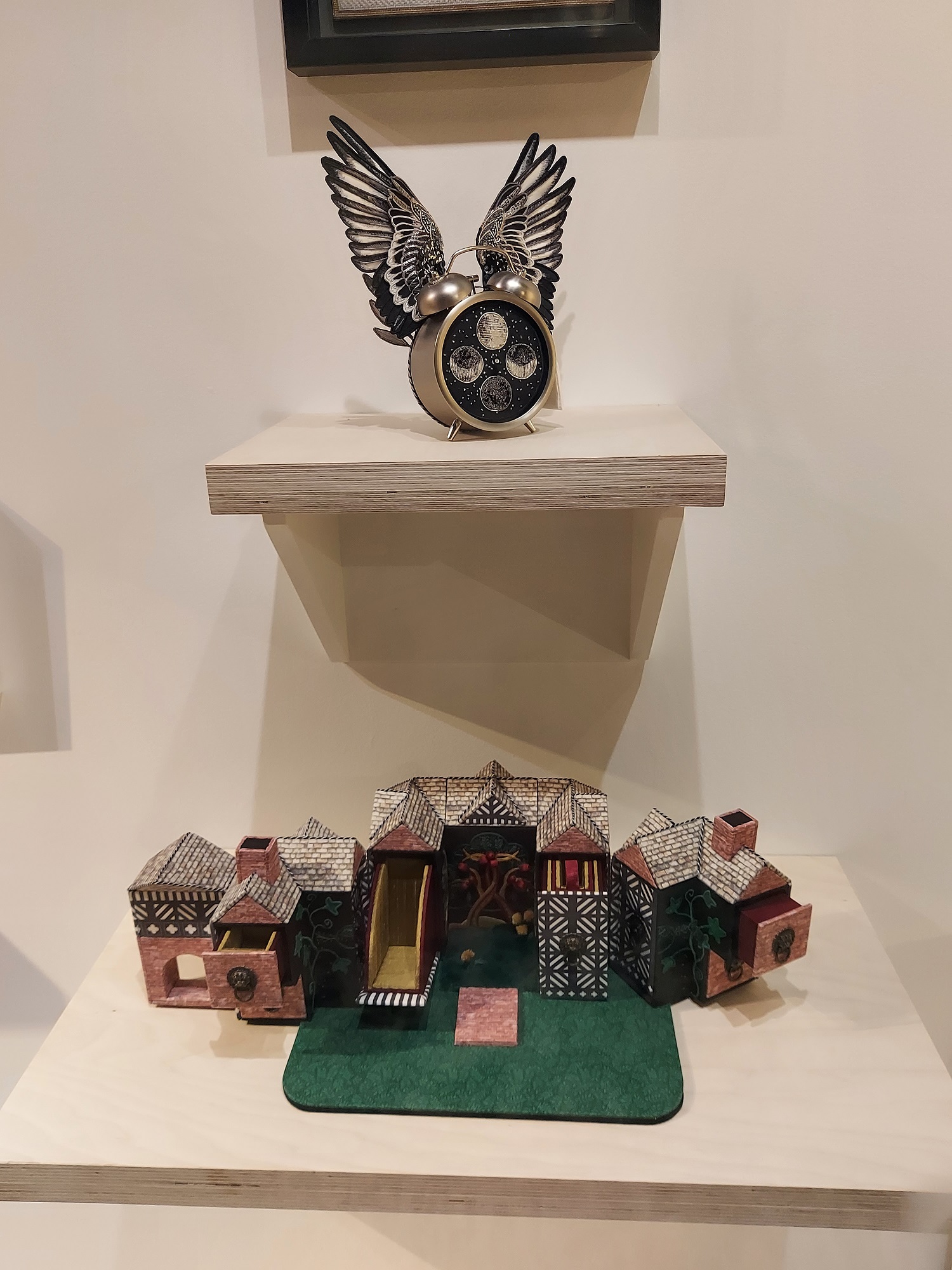
Many of the items on display were made by current members of the RSN, including Kate Pankhurst’s beautiful Tudor box. I could have spent hours looking at the incredibly detailed stitching on display. One of my favourite items was the Red Dress Project – a dress that has been around the world and embroidered by women in 29 different countries.

The exhibition is a must-see for anyone remotely interested in the art of embroidery. It is simply breathtaking.