
There is so much choice when it comes to Open House London that sometimes I like to come up with a theme in order to work out what buildings I want to visit. In the past, for example, I have focused on churches and theatres. This year, I decided to visit several livery companies, located in the City of London.
Chartered Accountants’ Hall
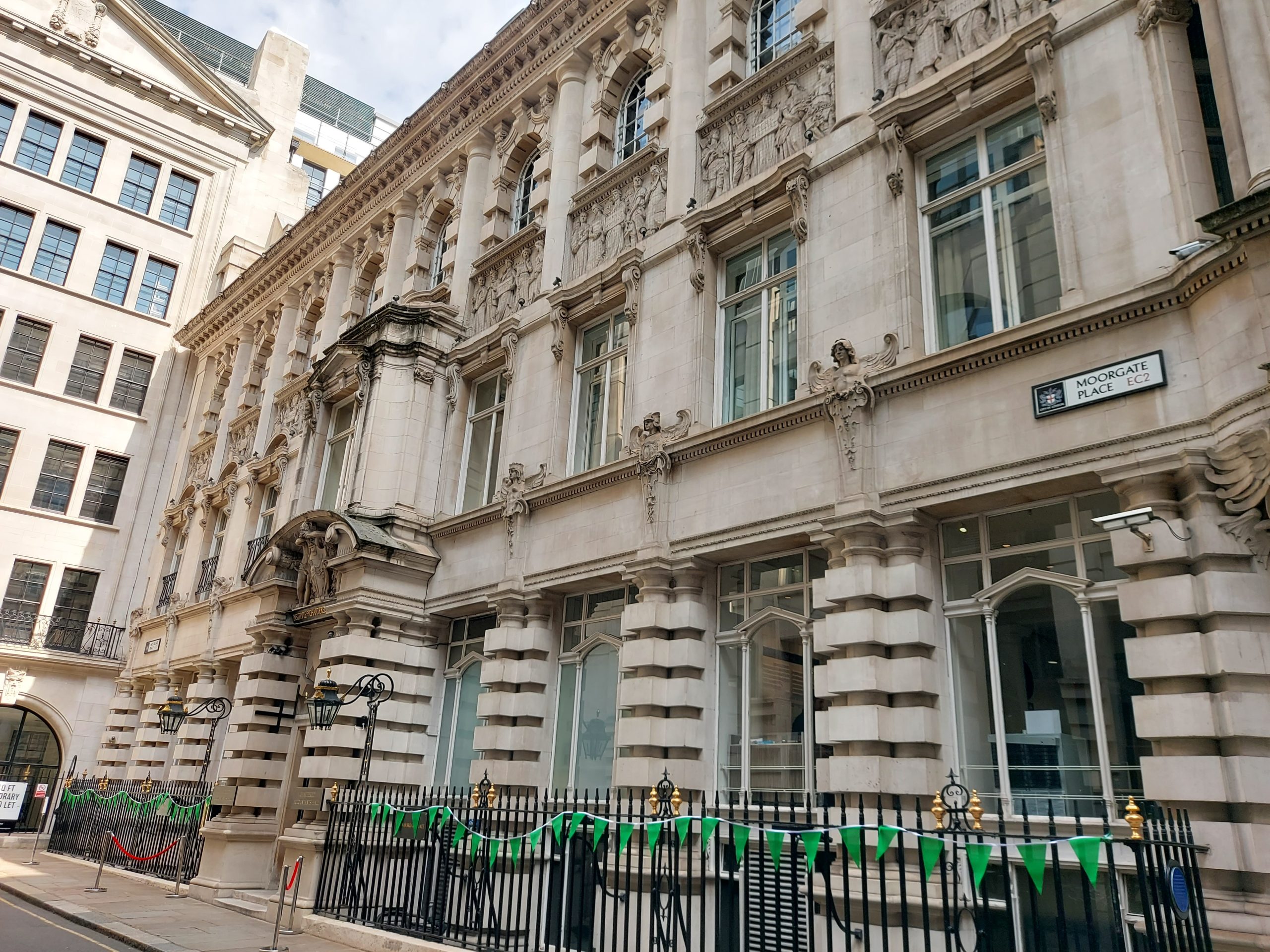
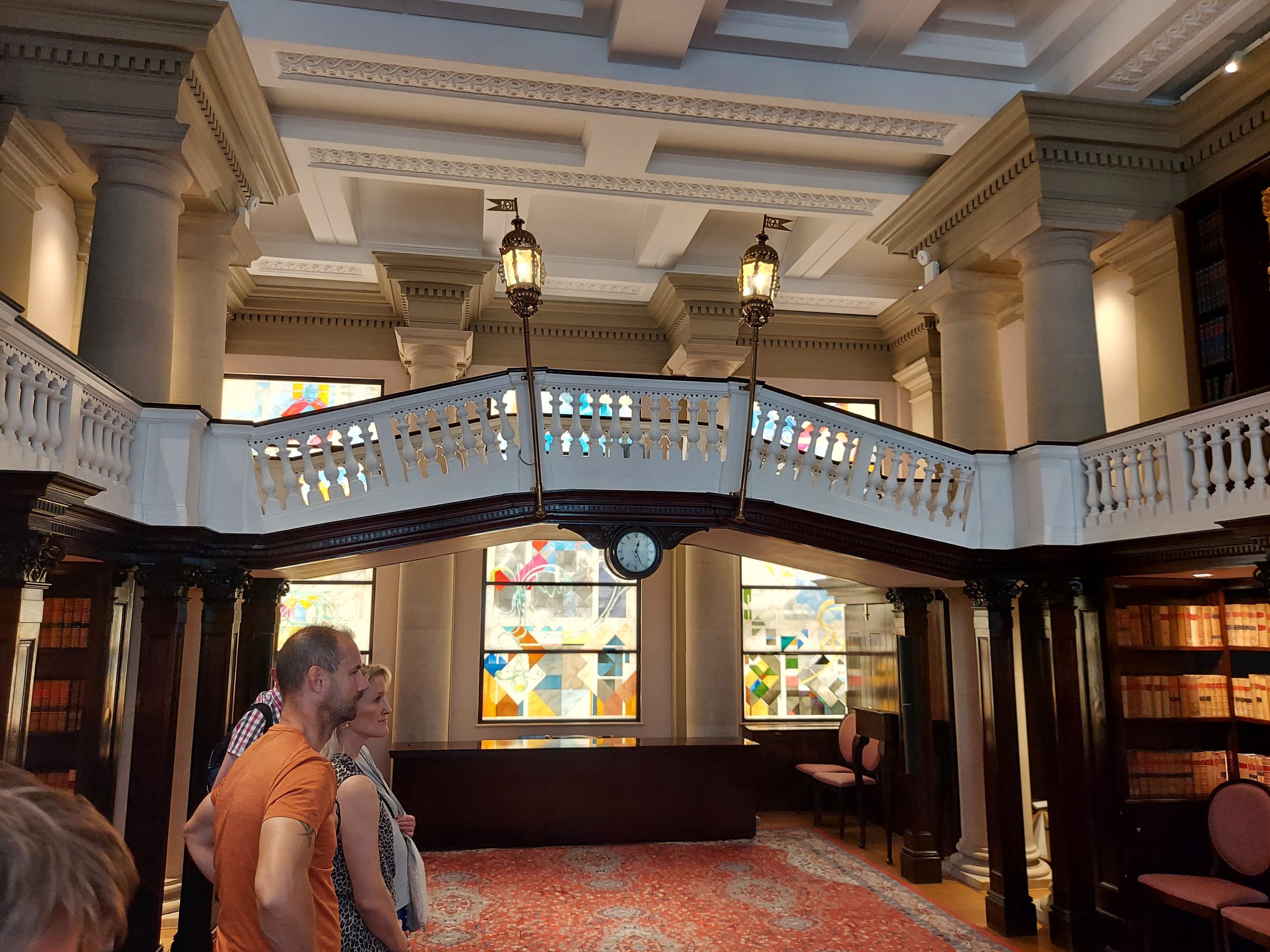
I began the day with a visit to the Chartered Accountants’ Hall, the headquarters of the Institute of Chartered Accountants in England & Wales. It was originally built in 1890 to the design of Sir John Belcher RA, and was extended in the 1930s and again in the 1960s, this time to a more modern design by Sir William Whitfield. I enjoyed my guided tour of the Hall, especially the decorative bridge, inspired by the Rialto Bridge in Venice. The stained glass windows in this room – the members’ room – are relatively recent, having been created by Alexander Beleschenko in 2022. Now Grade II listed, the building has a fascinating exterior, with a carved stone frieze by Hamo Thorneycroft. Its interior features works of art by, among others, Eduardo Paolozzi.
Stationers’ Hall
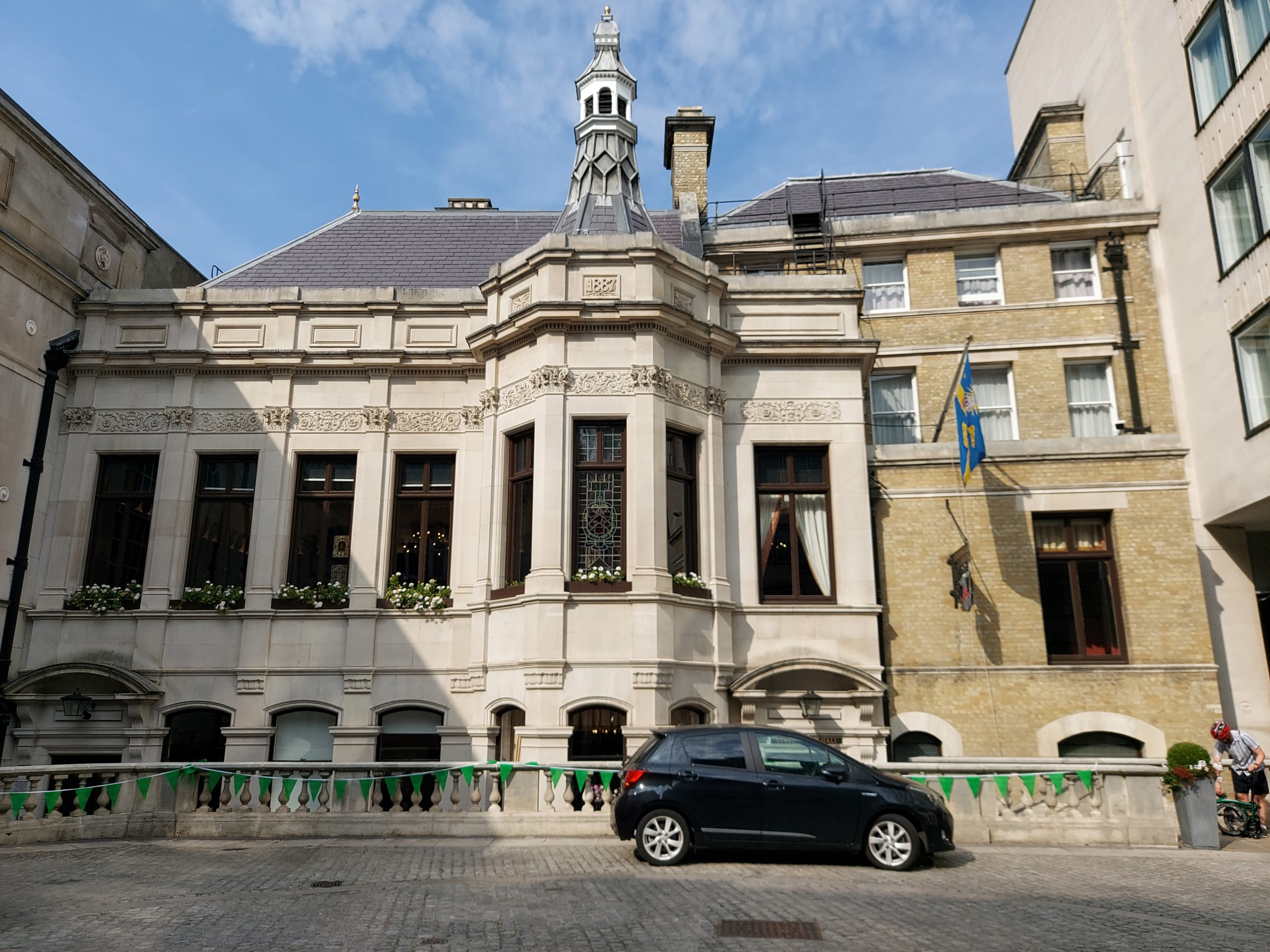
I then made my way to the Stationers’ Hall, home of the Stationers’ Company. The Company has the strap line, “The City of London Livery Company for the Communications and Content Industries“. Stationers’ Hall is one of the few ancient remaining Livery Halls in the City of London. It is Grade I listed and was completed in 1673, after the Great Fire of London.
The hall has several beautiful rooms. The Stock Room, named after the Company’s publishing venture founded in 1603, has oak panelling and carvings dating back to the 17th century, as well as armorial shields of Past Masters of the Company.
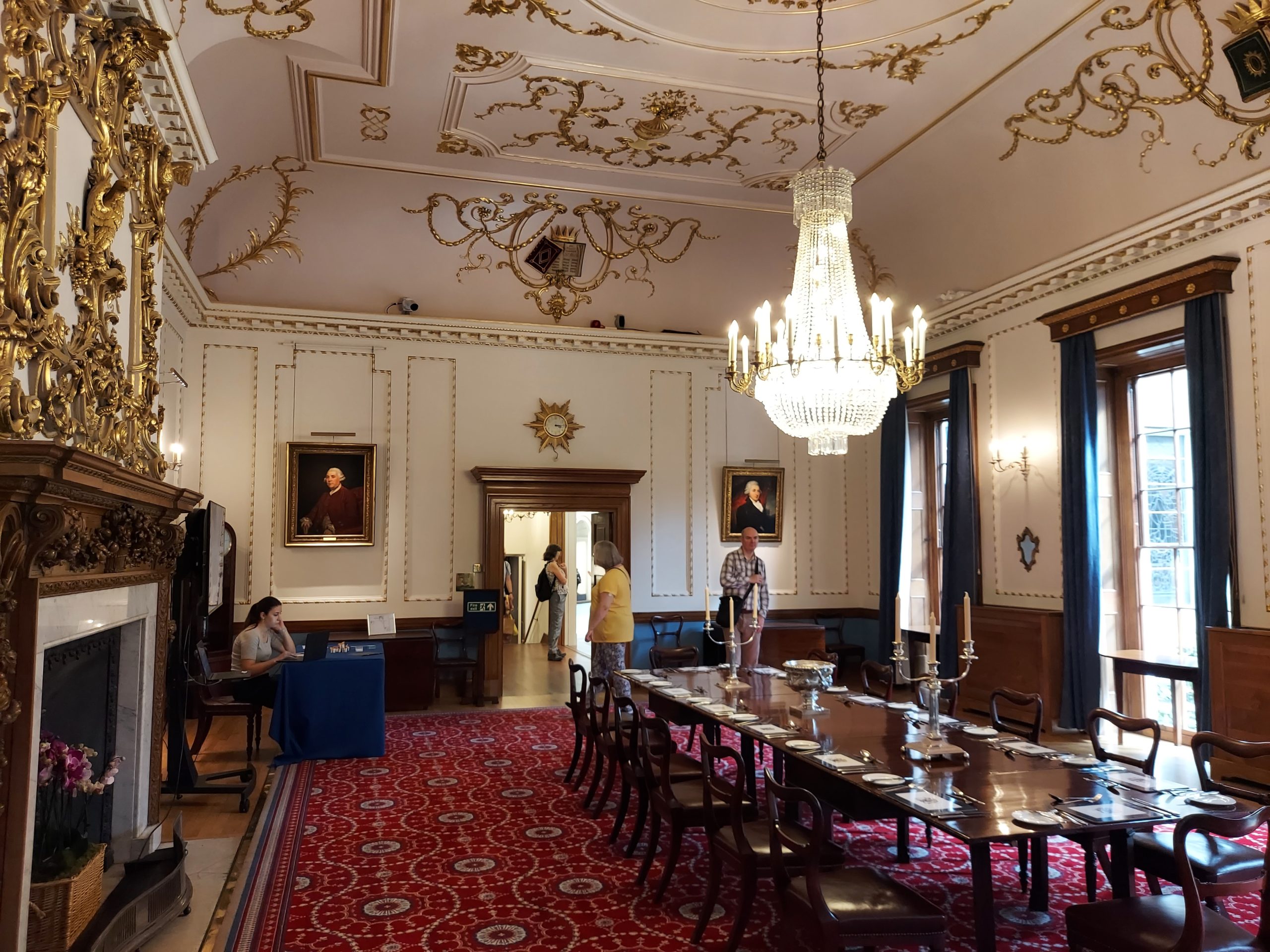
She oak panelling and carvings in the Stock Room date back to the 17th century, while around the friezes are displayed the armorial shields of Past Masters or the Company including HRH The Duke of Windsor. The room takes its name from the Company’s publishing venture founded in 1603. The Court Room is bright, ornate and richly carpeted, with an 18th century carved mantelpiece and gold Rococo ornamentation on the walls. I also particularly liked the images of books dotted here and there around the room.
The Main Hall is the most magnificent room of all, with oak flooring and carved oak panelling dating from the 1600s. It even has a Minstrels’ Gallery. The stained glass windows display several important figures in the world of books and printing, such as William Shakespeare, William Caxton and William Tynedale.
This Hall also has a lovely peaceful garden, which was a joy to relax in after the hectic day.
Founders’ Hall
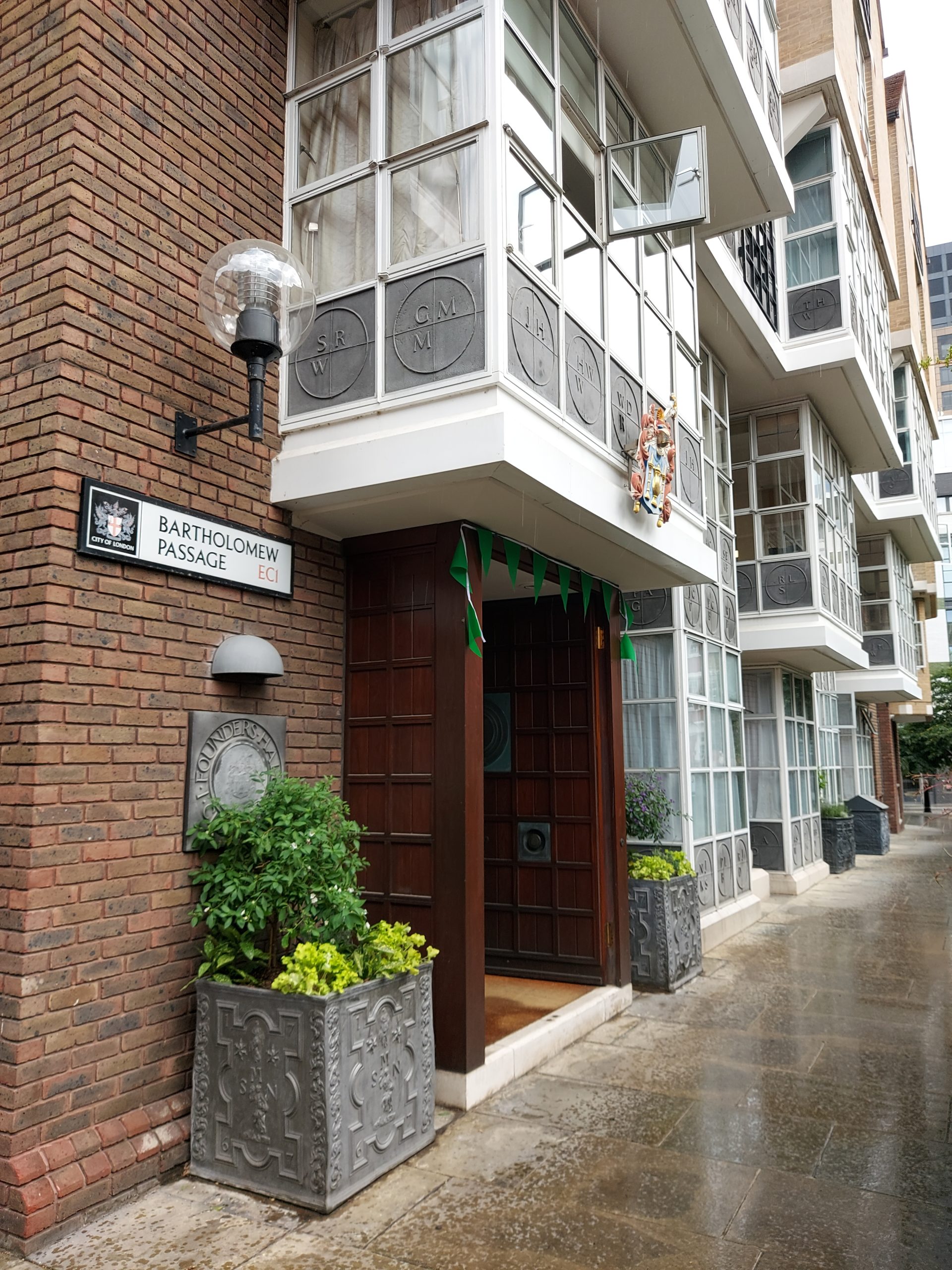
Finally, I popped into Founders’ Hall, home to the Worshipful Company of Founders. Unlike the other two halls I visited today, Founders’ Hall is contemporary, though the company itself dates back to 1365. It was formed as a guild aiming to ensure high standards in the production of bronze and brass articles.
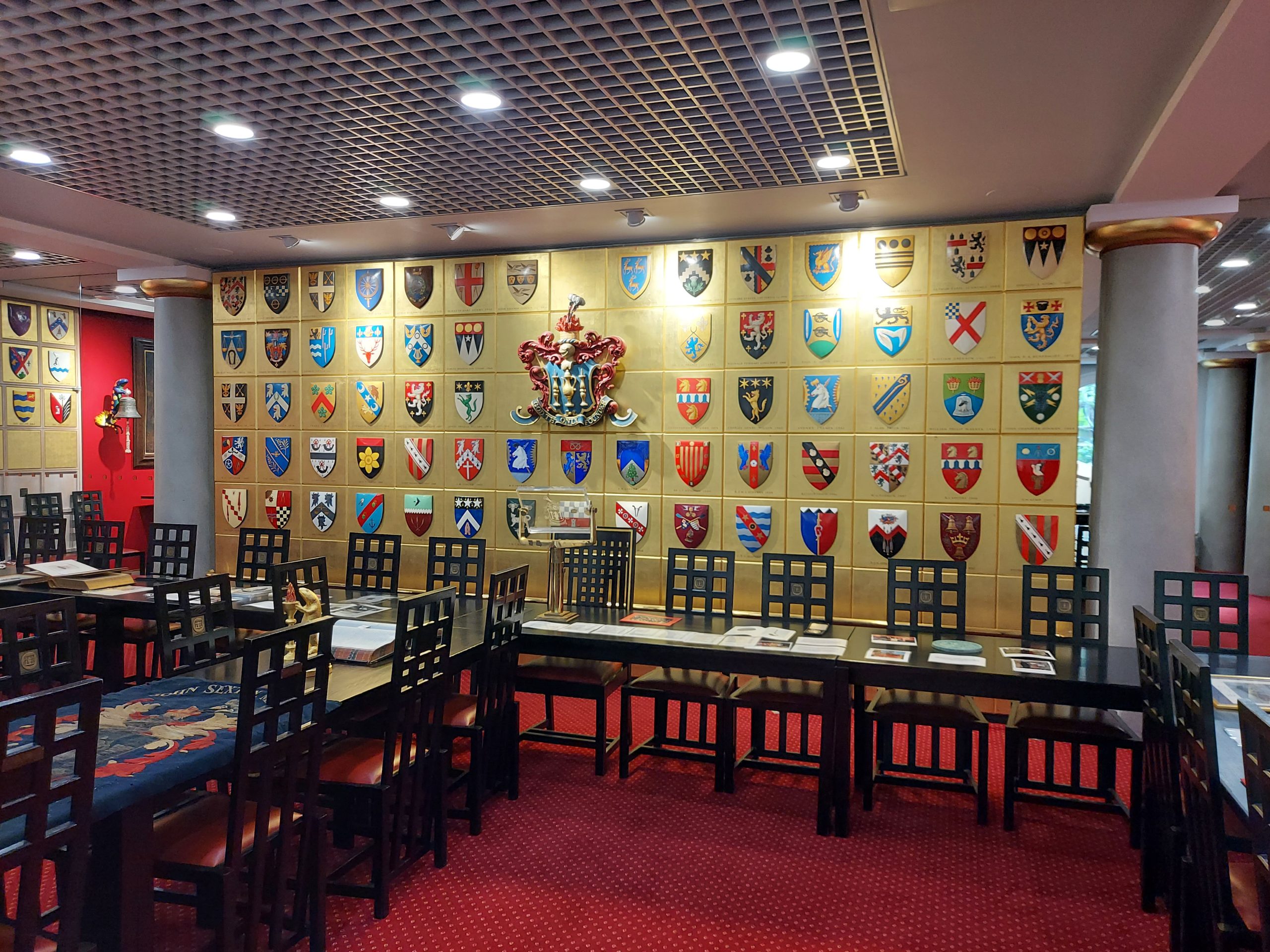
The first Hall was destroyed in the Great Fire of London. This one is actually the fifth Hall for the Company, and was begun in 1985, designed by Sam Lloyd. It was Grade II listed in 2018, and contains Arts & Crafts and postmodern influences. Here, it was particularly interesting to see the coats of arms and other articles on display in the basement Hall, and have the chance to ring some bells in the ground floor Parlour.
I had a great day exploring these Halls. I think my favourite was probably Stationers’ Hall, owing to their connection with books and their lovely garden, but they all have their merits, and a great deal of history.