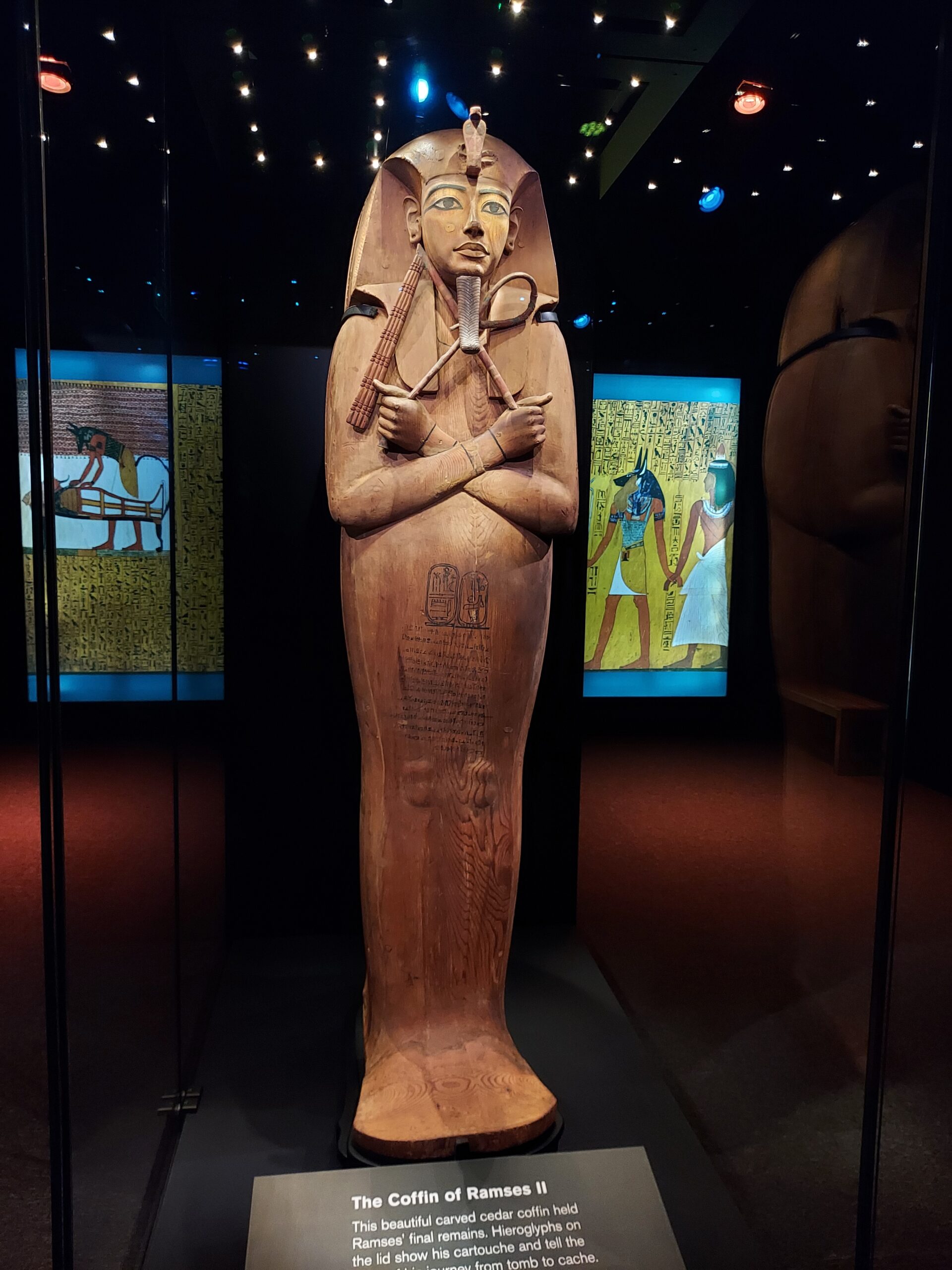
During my last trip to London I visited the Ramses & the Pharaoh’s Gold exhibition at NEON Battersea Power Station. The exhibition brings together 180 ancient treasures from and relating to the reign of Ramses II.
This individual became pharaoh around 1280 BC, on the death of his father Seti I, when he was in his mid-20s. He was the third pharaoh of the 19th dynasty, and throughout his life he had at least eight wives and over 100 children. He was worshipped as a god during his own lifetime, and reportedly ushered in a new age of peace and prosperity.
Also known as Ramses the Great, the King ruled Egypt for nearly 67 years, and was incredibly influential. The exhibition explores his life and reign, in particular his monument-building, military strategy and diplomacy, incorporating related artefacts to illustrate his story.
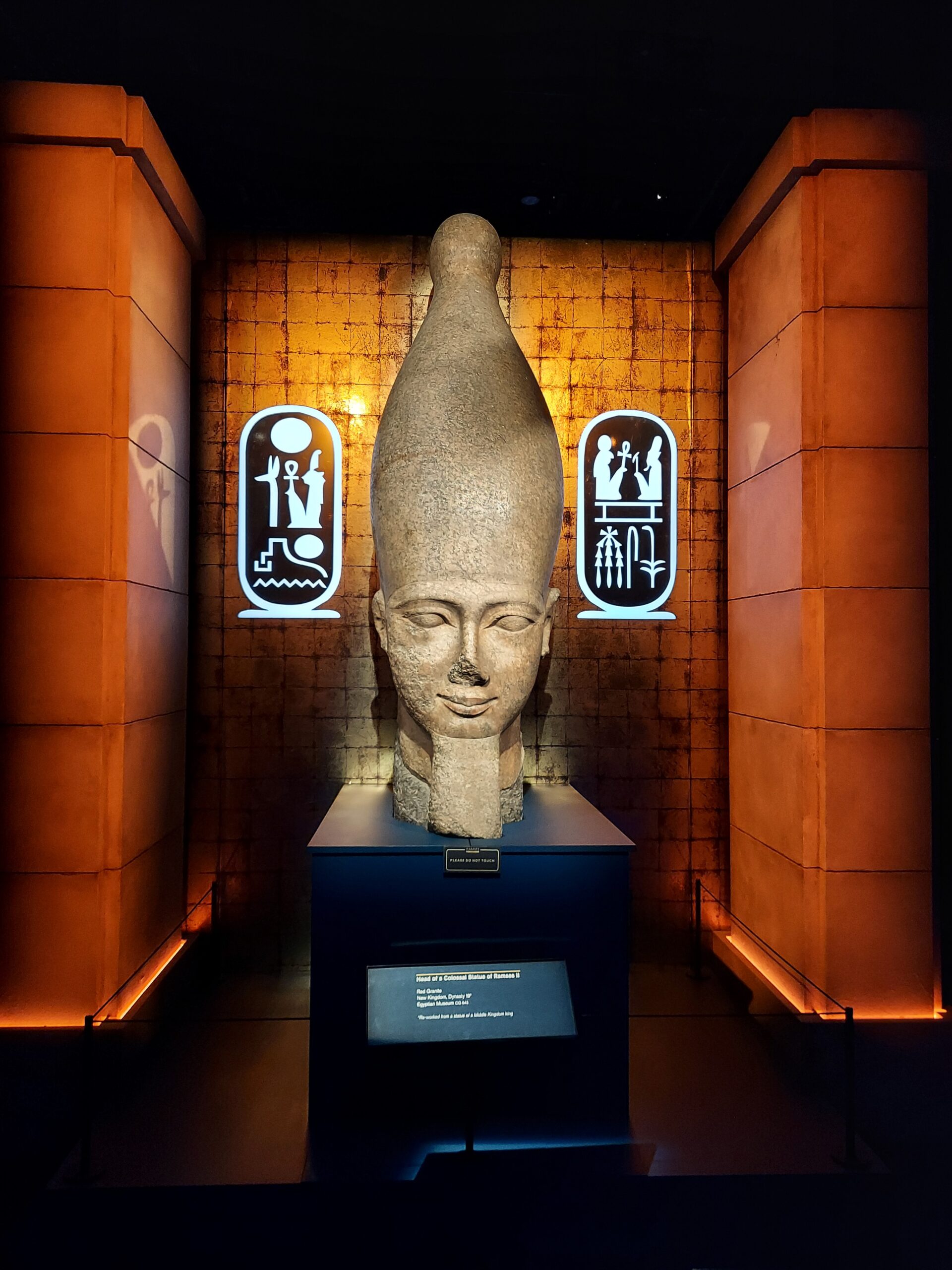
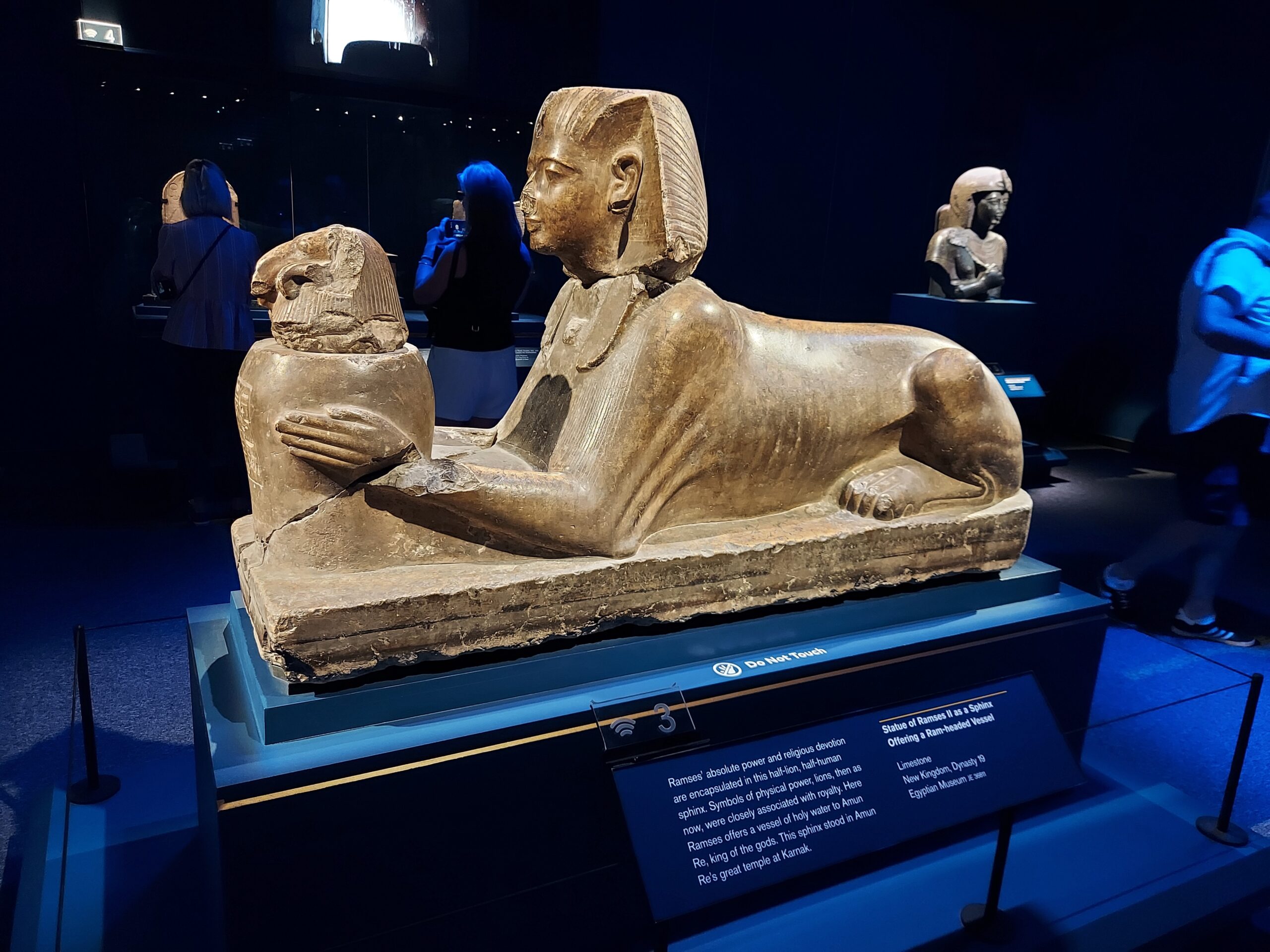
I liked that the exhibition took a “less is more” approach, with fewer items but more space to examine and appreciate each one. Items like the colossal head of a statue of Ramses II demonstrates how the King sought to cultivate his public image, as does the statue of him as a sphinx, which showcases his power and religious devotion.
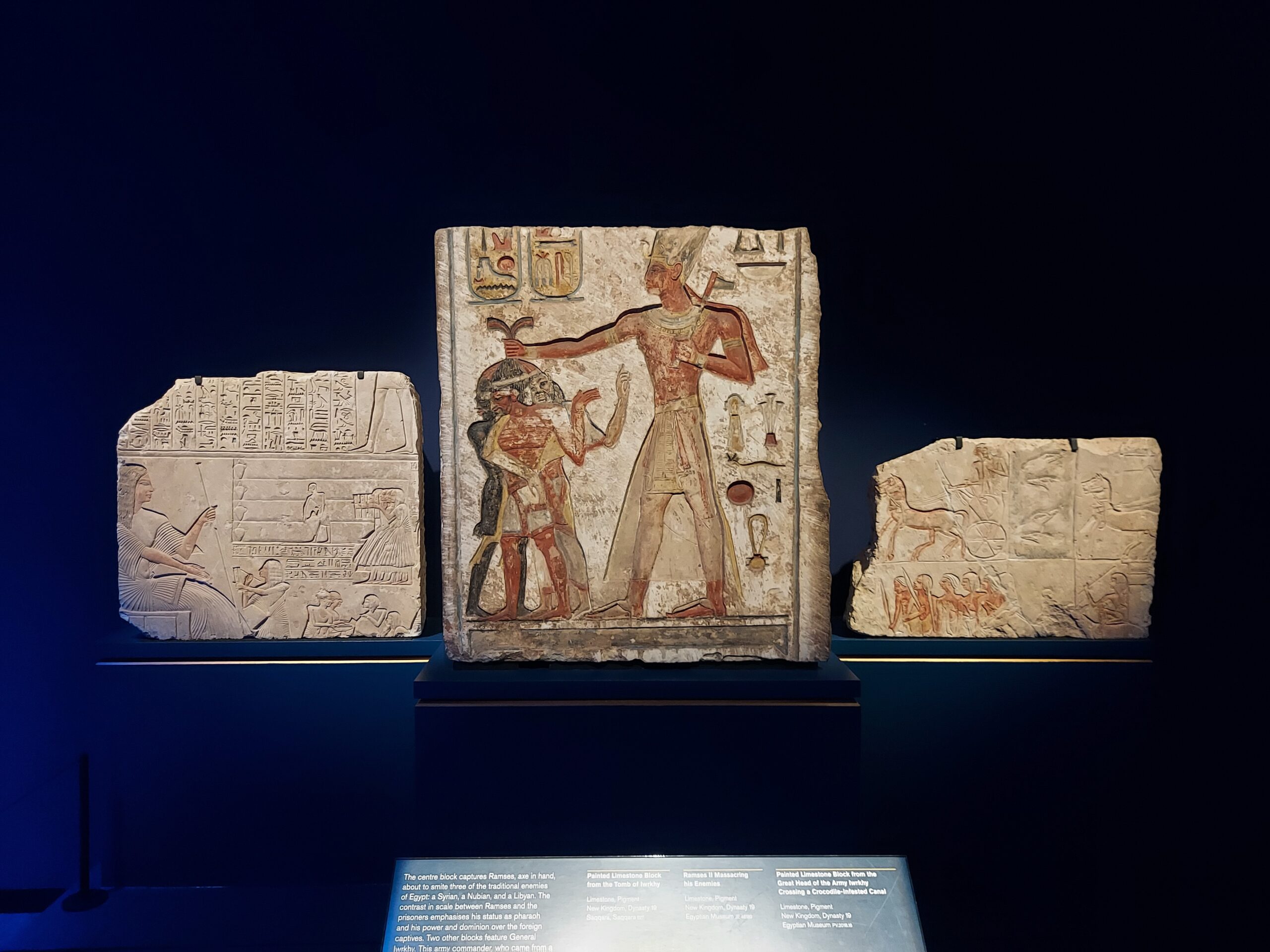
Ramses took part in several military campaigns throughout his reign. Tomb art shows him smiting Egypt’s traditional enemies: a Syrian, a Nubian, and a Libyan. An animated sequence demonstrates some of the pharaoh’s major campaigns.
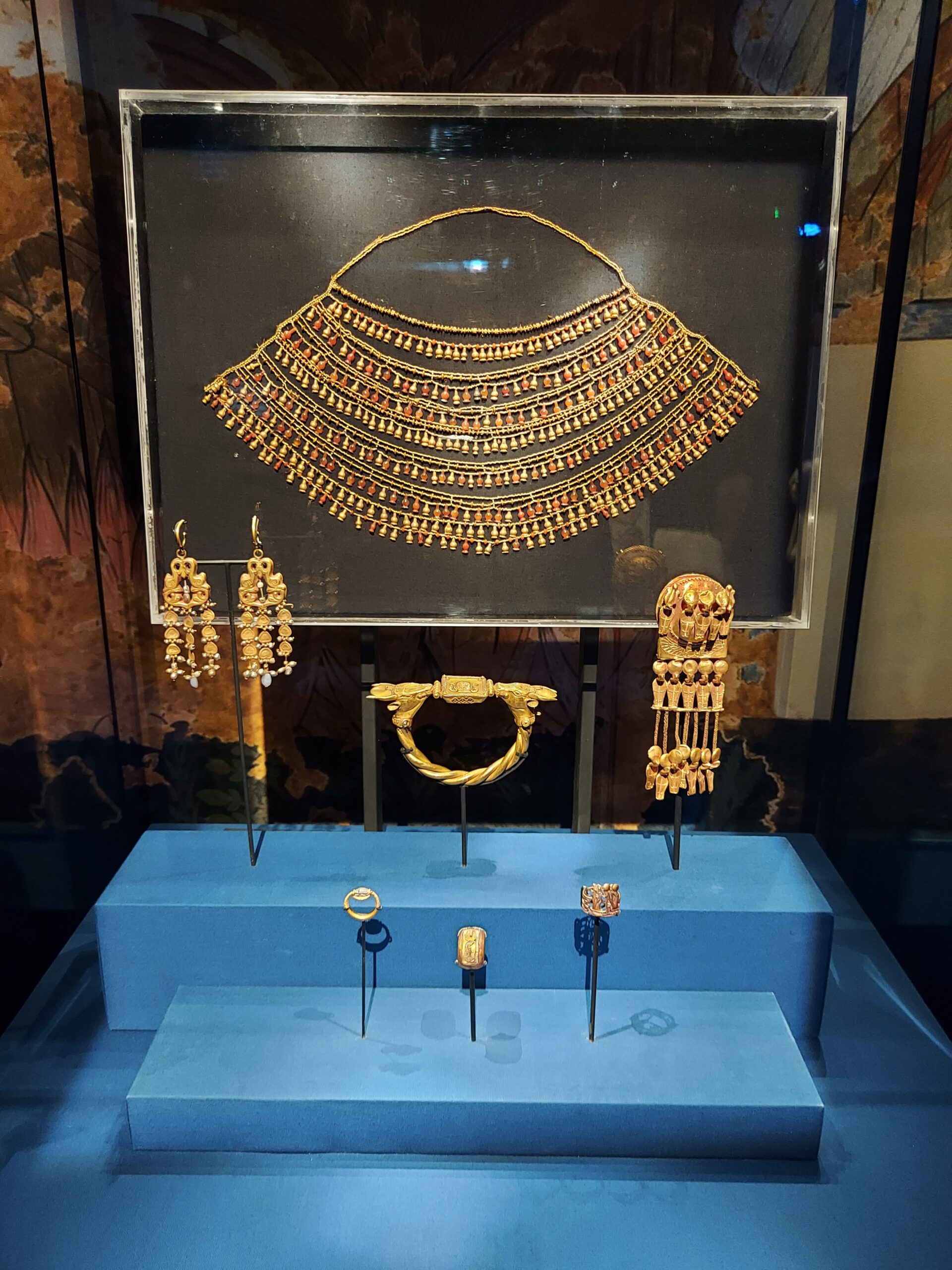
Many of the items on display were taken from Ramses’ tomb, including jewellery, jars, and even his coffin.
At the end of the exhibition I had great fun getting my name drawn in hieroglyphs by an automated robot arm. I loved this, and I thoroughly enjoyed the exhibition.