
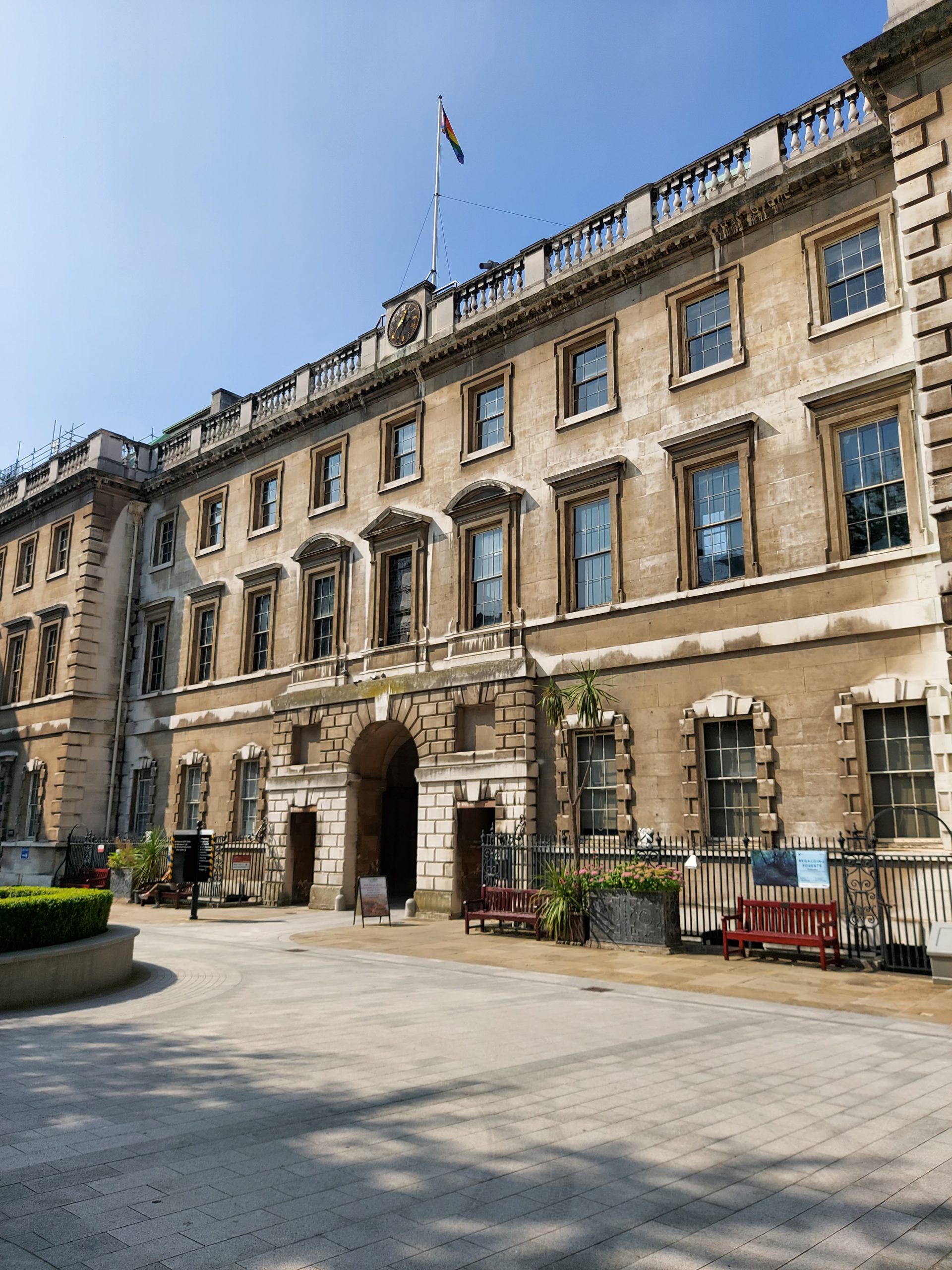
My Open House London Sunday visit was to St Bart’s Hospital, to check out the old parts of the hospital in the North Wing. When I arrived there was a bit of a queue so I almost didn’t bother, but in the end the queue went down really quickly.
The hospital was founded in 1123 to care for the poor of the City of London, but this building was built in 1730 to designs by James Gibbs. It is one of several historic buildings on the site: the Gatehouse (1702), the church of St Bartholomew the Less (with 15th century tower), and the other two James Gibbs blocks of the 18th century, the East and West Wings. These buildings surround a square with an elegant Victorian fountain and other Victorian buildings.
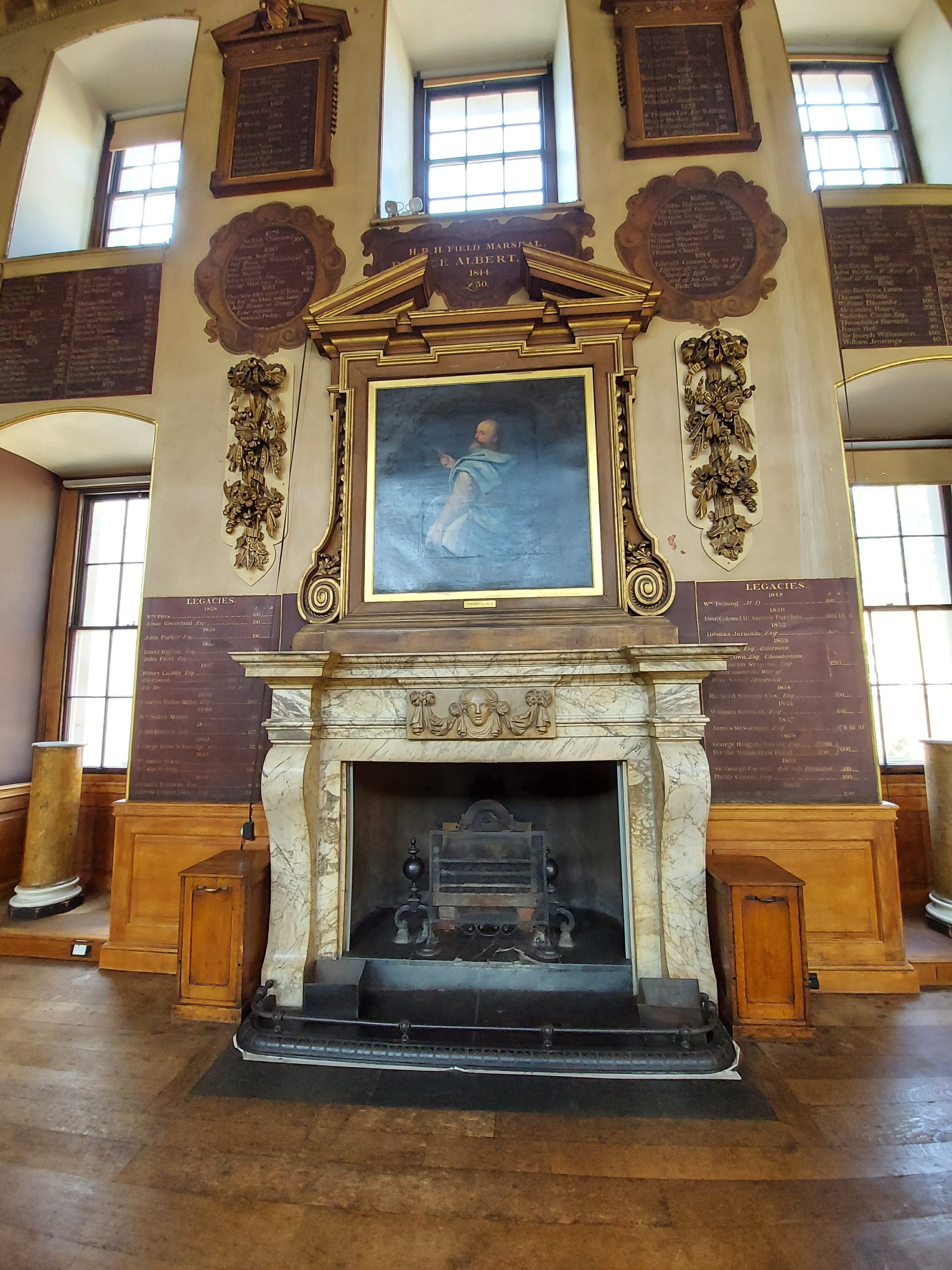
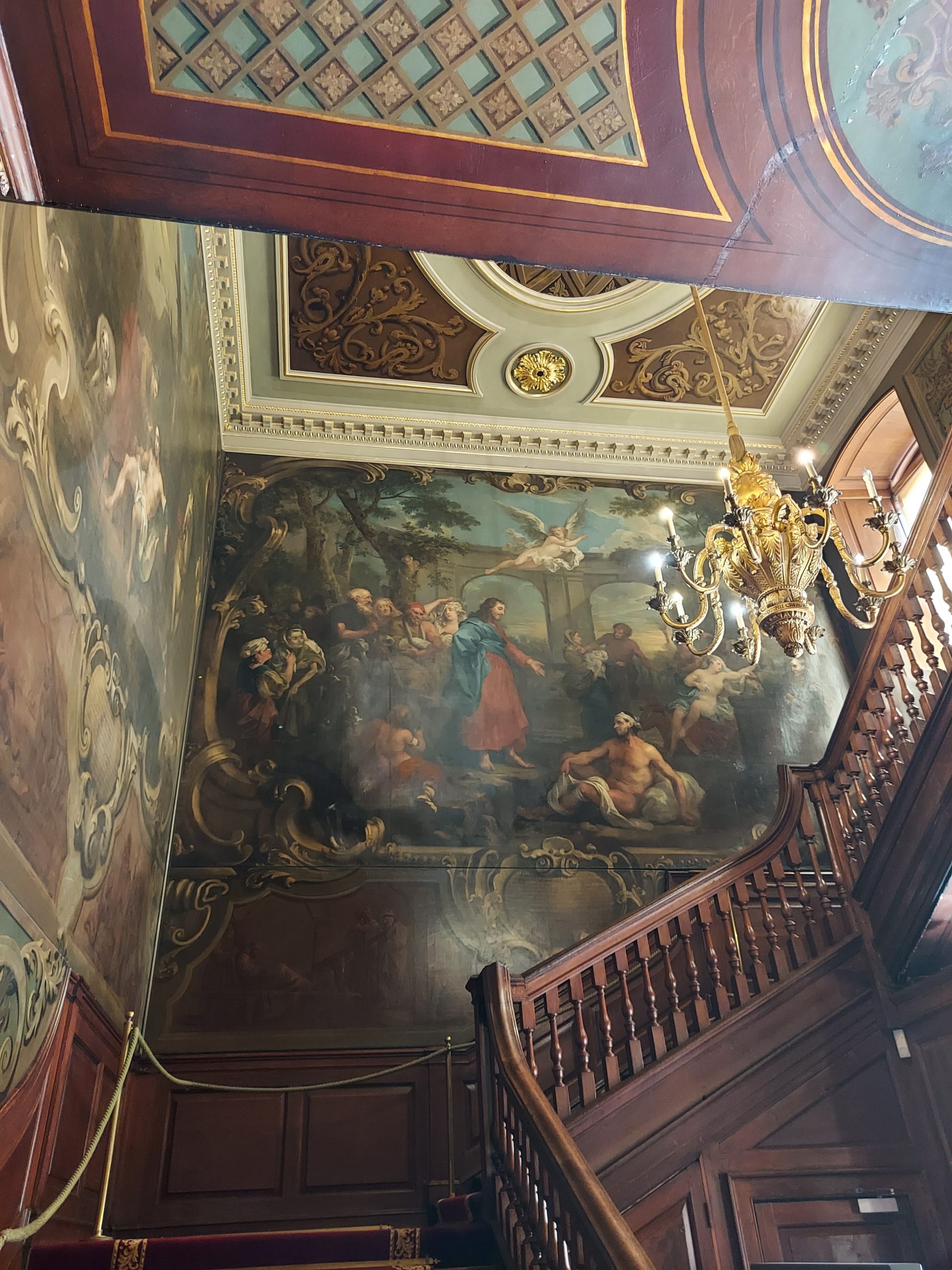
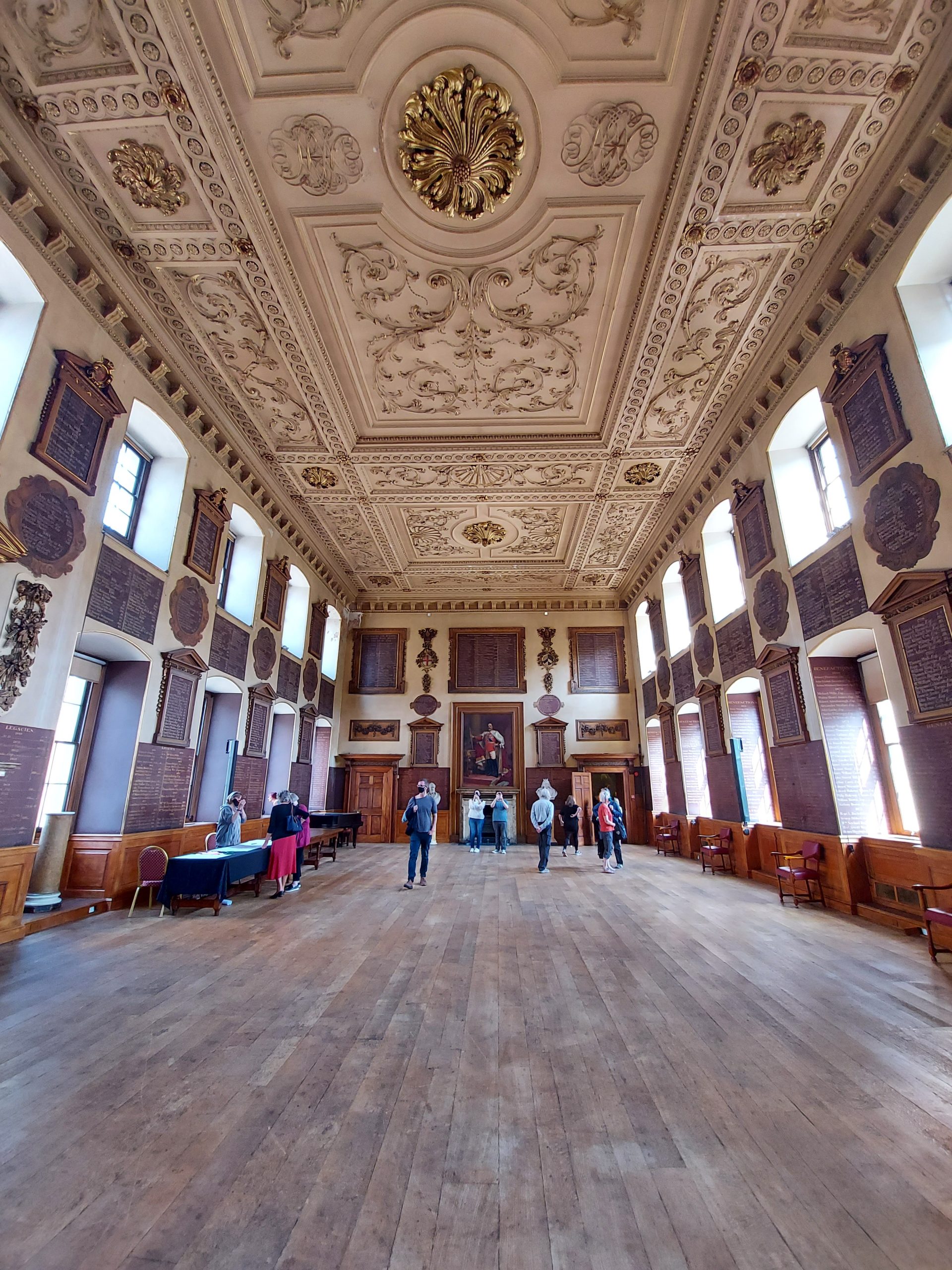
The North Wing was built to contain the financial and management functions of the hospital, including the work of the hospital’s governors, who would use the Great Hall to entertain potential donors in the times before the NHS. On entering the building, the first thing you see is the Hogarth Staircase, decorated by the famous painter William Hogarth and designed to showcase a variety of different illnesses. This magnificent staircase leads to the Great Hall, which is full of portraits and dedications to the early contributors to the redevelopment of the hospital. There is a portrait of Henry VIII at the west end of the room – a copy of a portrait that was hung in the Palace of Whitehall – and a portrait of St Bartholomew hangs over the central fireplace. Opposite this is the 17th century Charter Window, moved to the building from its previous location. The gold leaf ceiling is by Jean Baptiste St Michell.
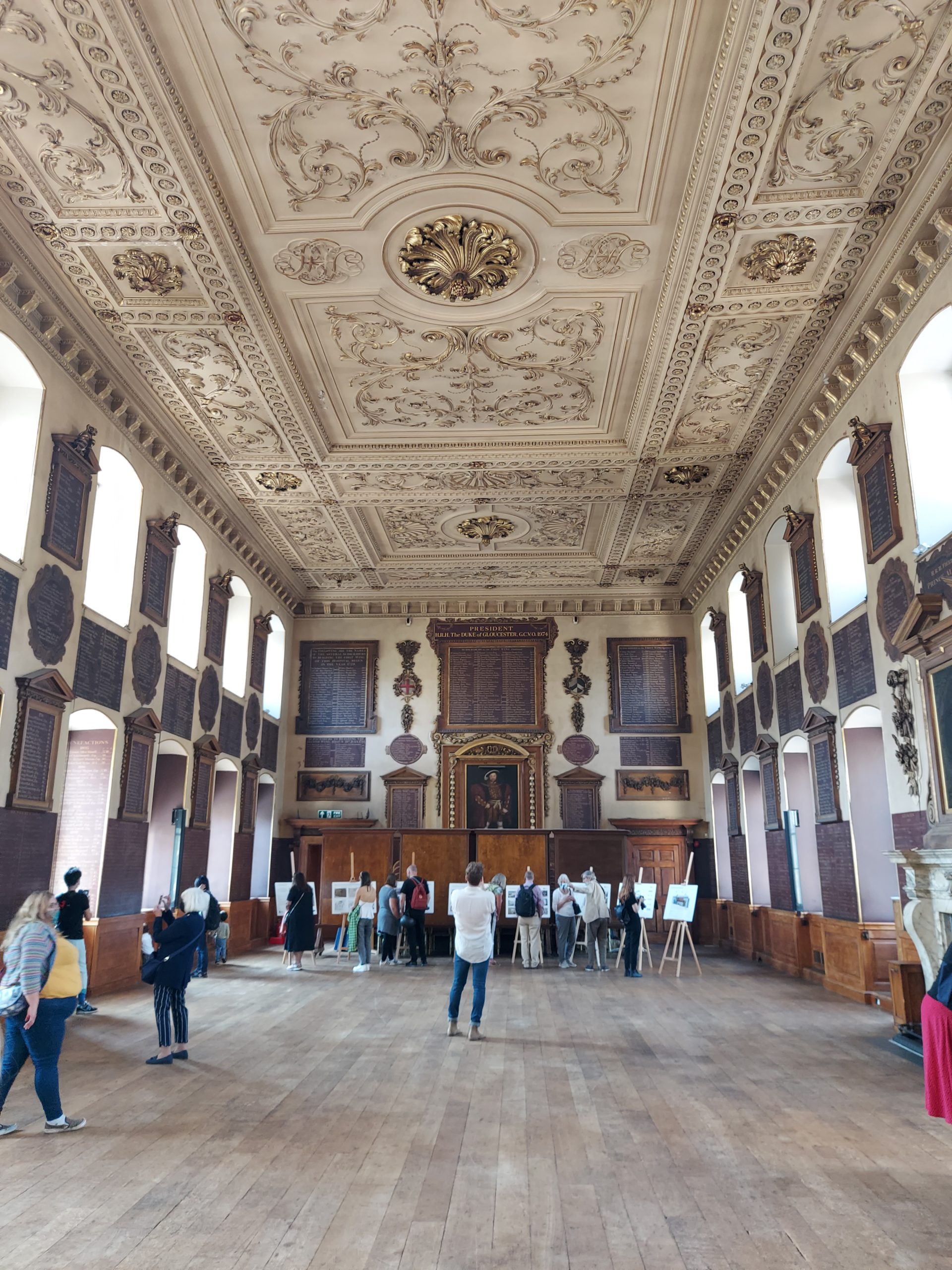
In recent years the building has been used for receptions, dinners, cultural events and examinations. A new charity, Barts Heritage, has now taken it over and is planning a major restoration project to start in 2023, which is the 900th anniversary of the Hospital.
Museum
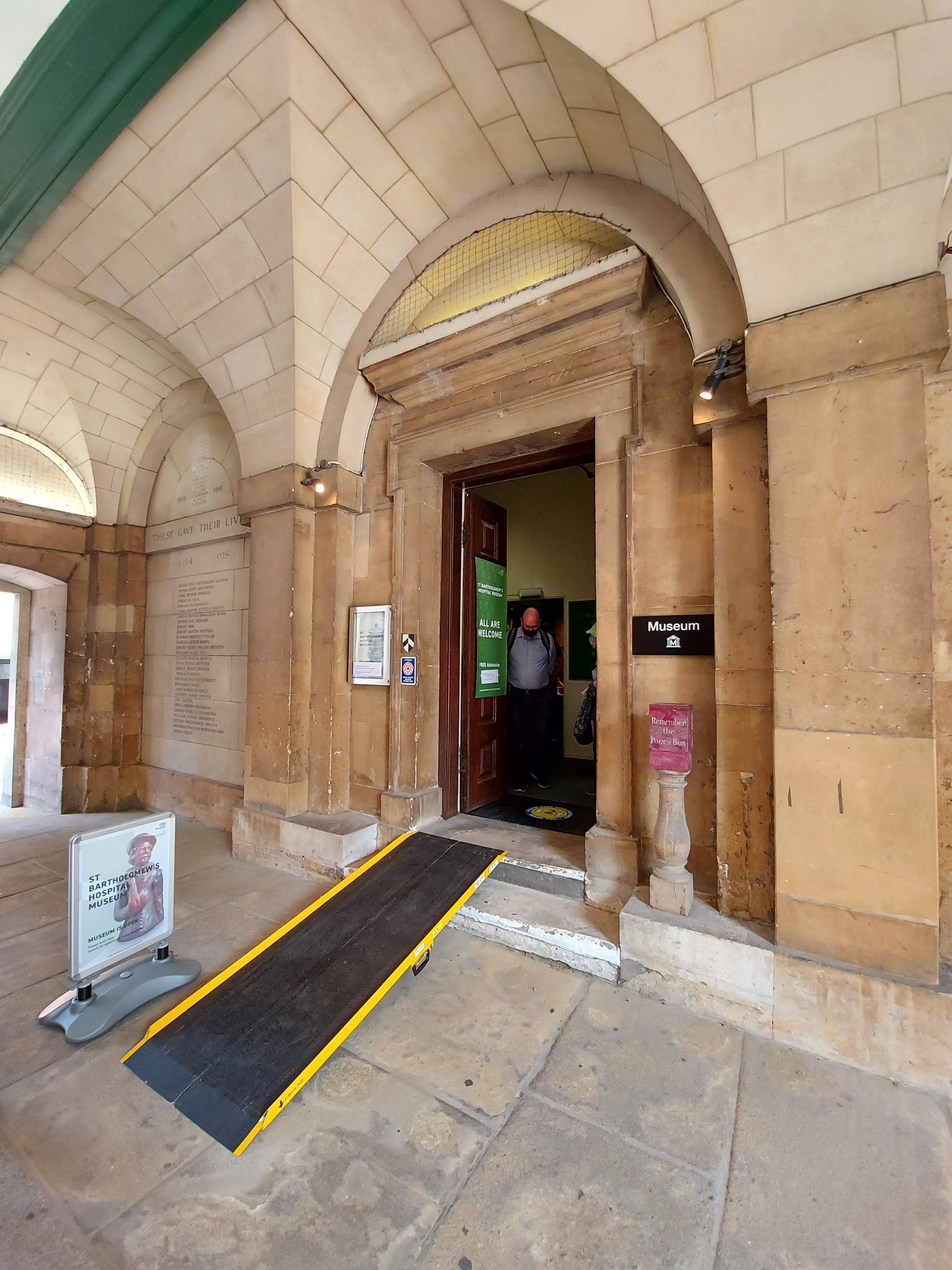
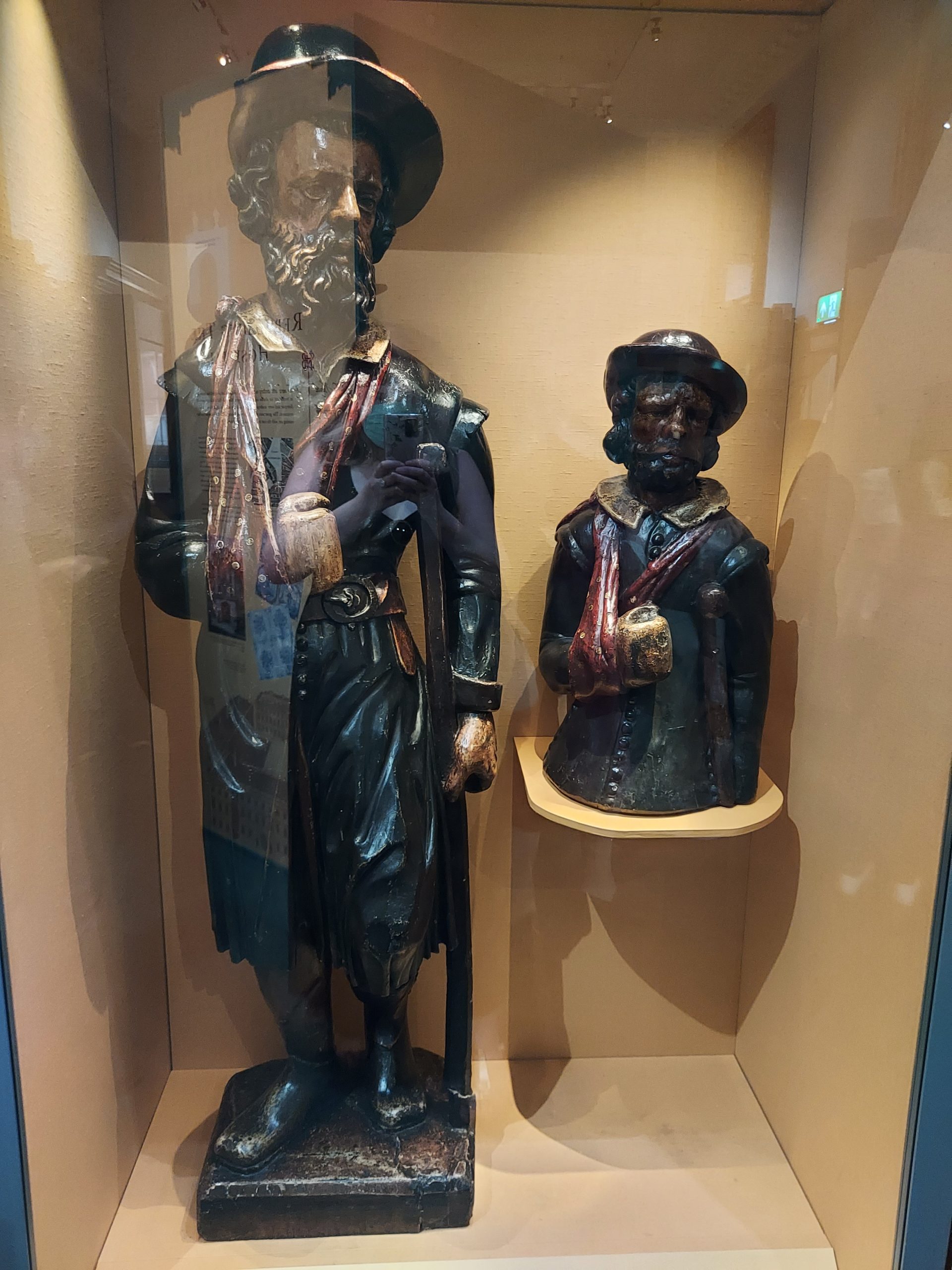
The St Bartholomew’s Hospital Museum (not to be confused with the Barts Pathology Museum) is located on the ground floor and tells the story of the hospital from its foundation to the present day. The permanent exhibition includes original and facsimile archives, objects and works of art, including Rahere’s grant of 1137 – the oldest document in the hospital archives – and the 1546 agreement between Henry VIII and the City of London which refounded the hospital.
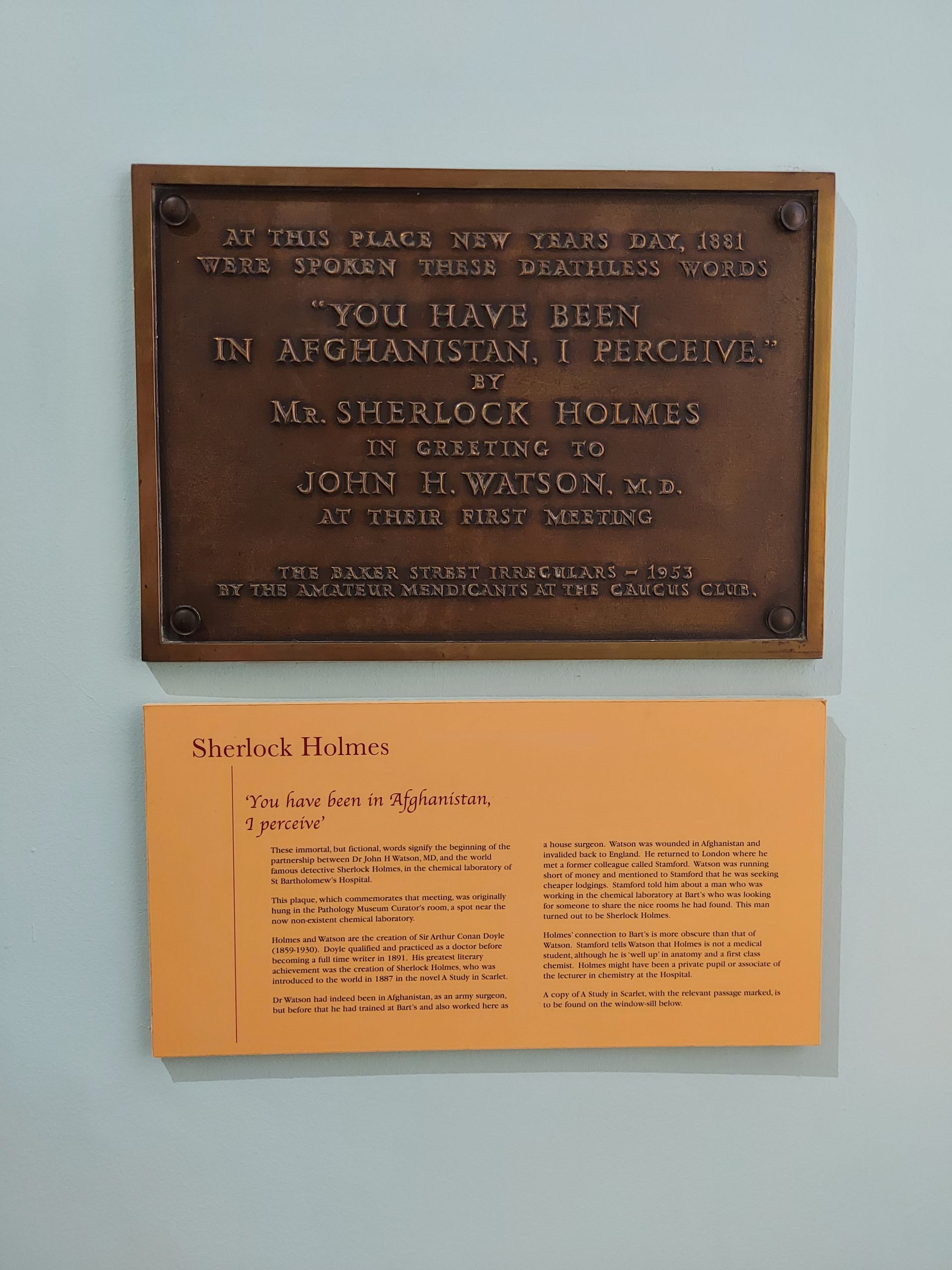
The first thing you see is a plaque marking the first meeting between Sherlock Holmes and Dr John Watson (which was moved here from elsewhere in the hospital).
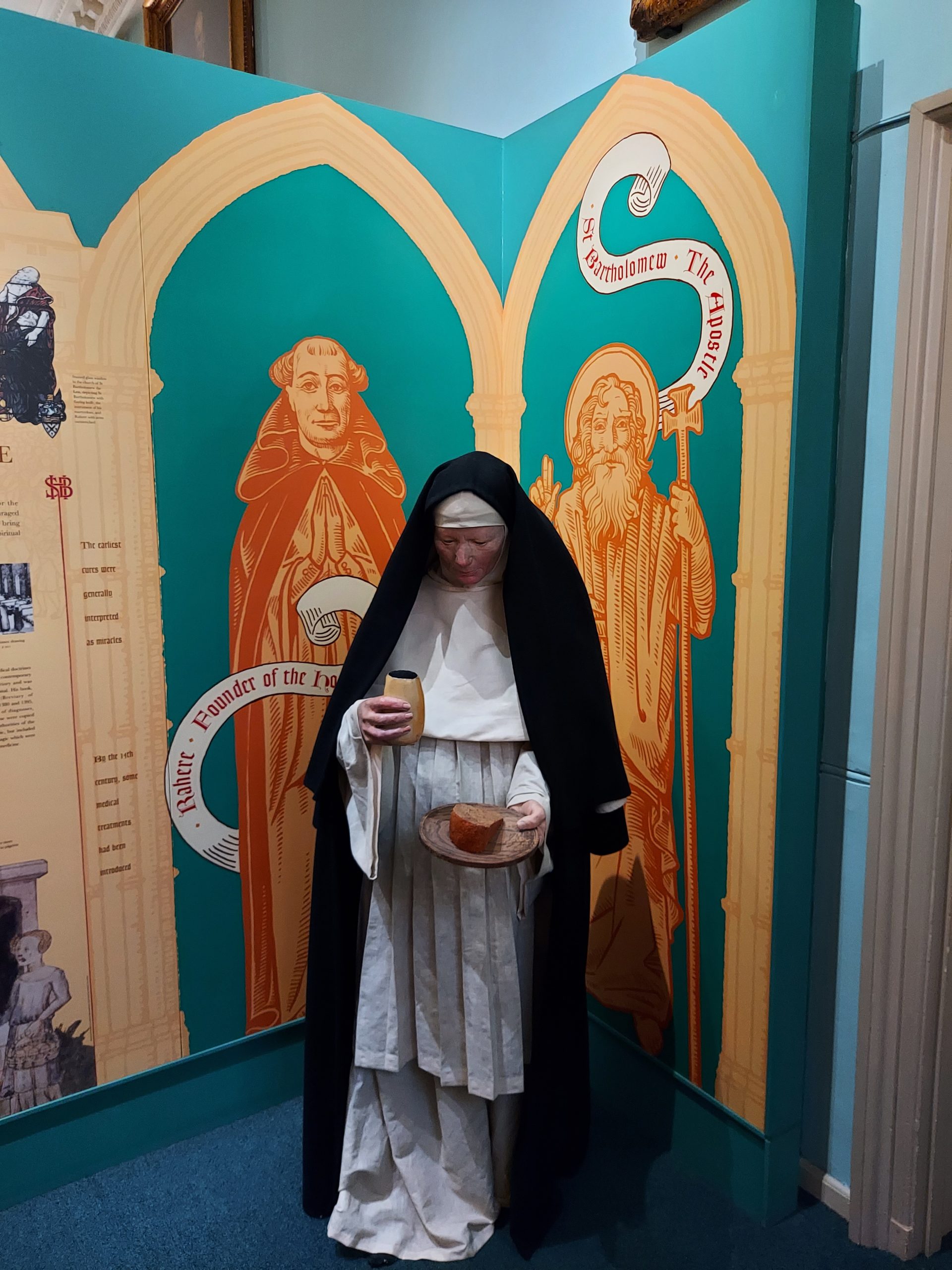
The museum proper begins with an exploration of the hospital’s foundation as part of the Priory of St Bartholomew, by Rahere, formerly a courtier of Henry I. When the Priory was closed as part of Henry VIII’s dissolution of the monasteries, its future was in doubt but following a petition from the City of London, he granted them the hospital and established an endowment so that it could continue its work.
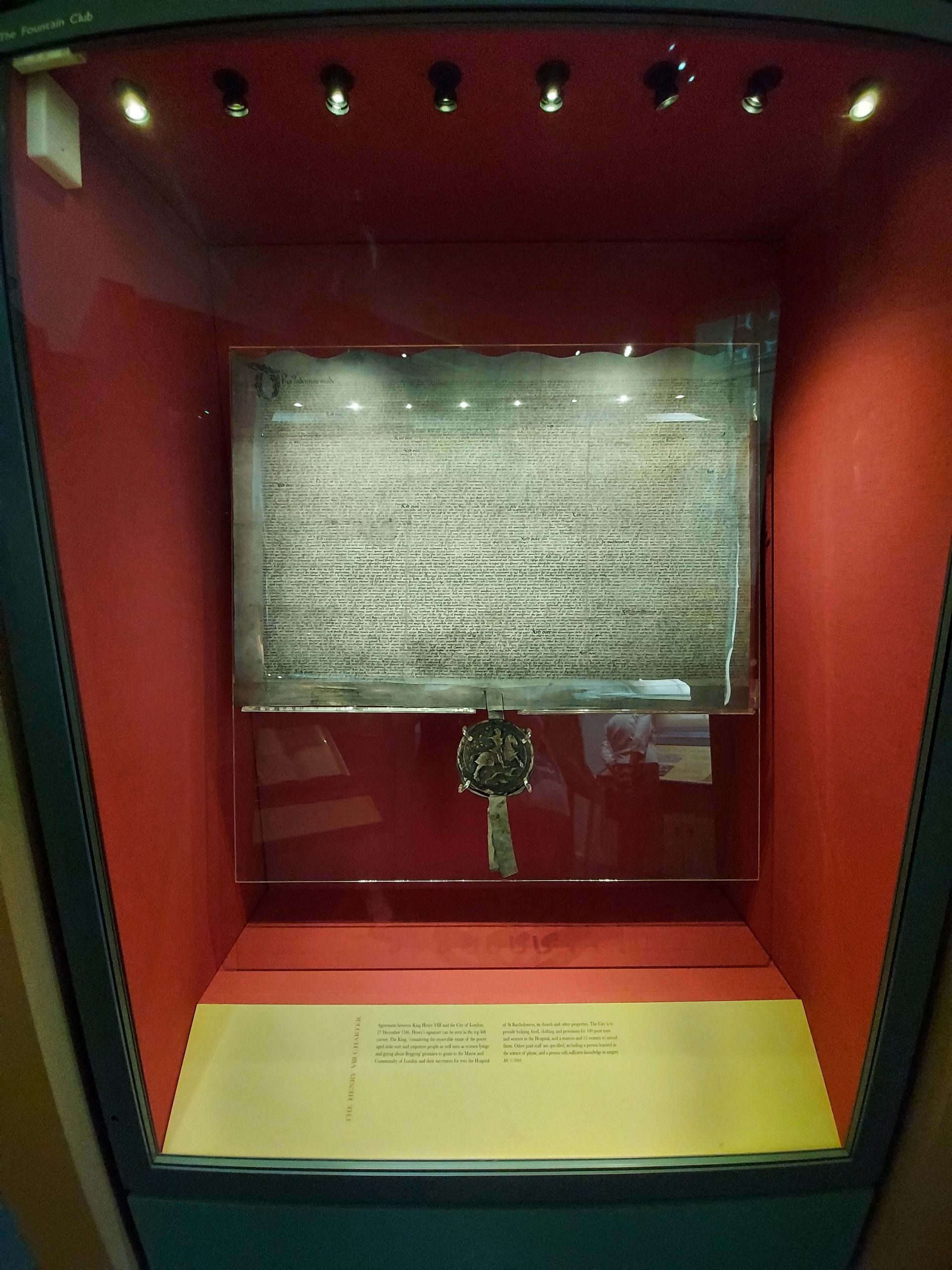
A Board of Governors was set up to administer the hospital, and a matron, nursing sisters, and surgeons were employed to tend to the poor. The general set-up remained fairly constant until the establishment of the NHS in 1948.
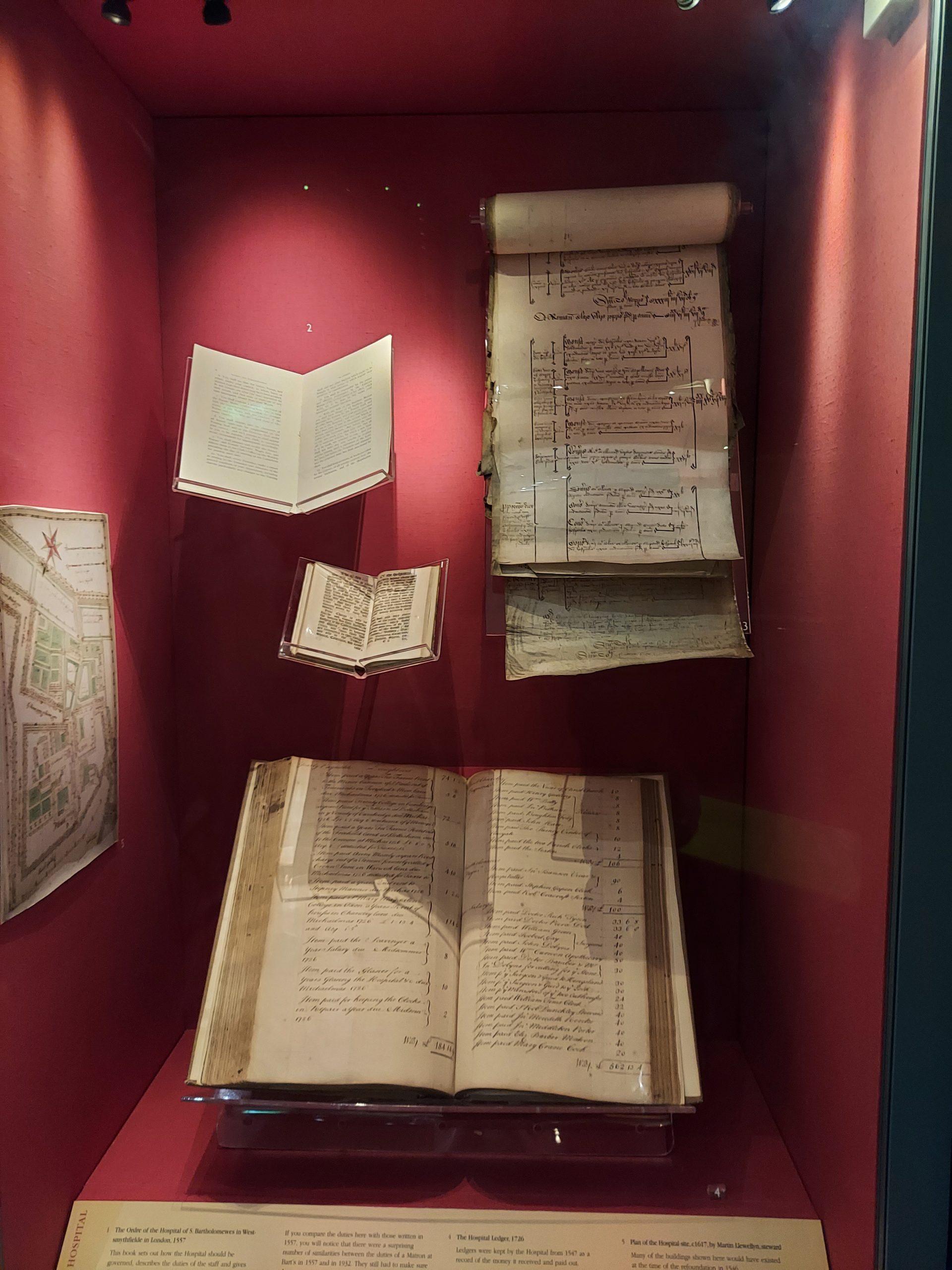
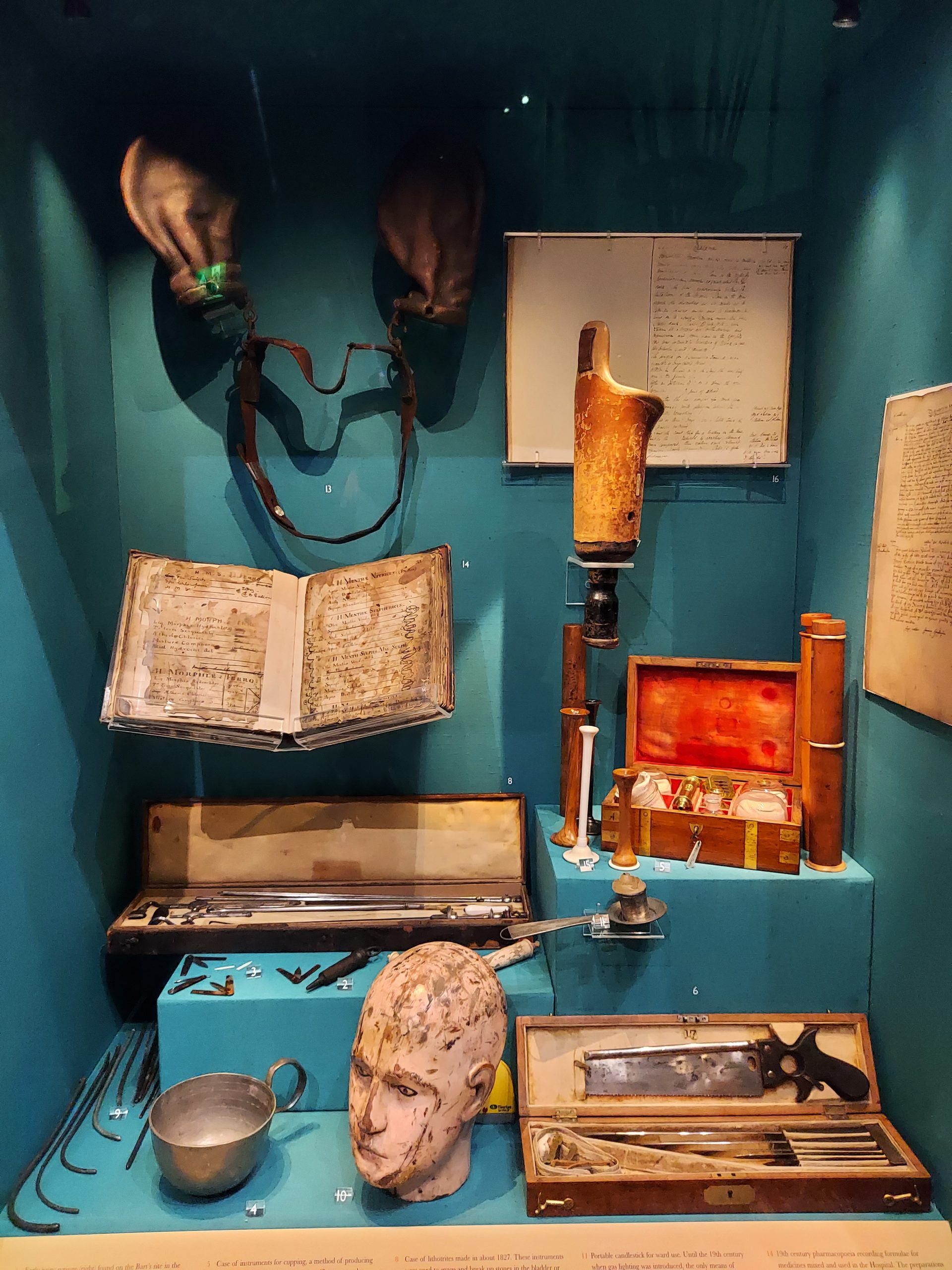
Apprentice surgeons worked at the hospital from the 17th century, and in 1734, anatomy lectures were established. A purpose-built lecture theatre was constructed in 1791, and a formal Medical College established in the 19th century, followed by a School of Nursing in 1877.
FACTS
Address: North Wing, St Bartholomew’s Hospital, West Smithfield, London, EC1A 7BE
Website: bartshealth.nhs.uk/bartsmuseum
Opening Hours: 10am-4pm Tues-Fri
Price: Free