I was looking forward to the November monthly badge: Science Fair. I haven’t done any science since school, but it looked fun: pick a project, work on it, and create a poster about it.
I did a ‘Gold Rosette’ project to create a Rube Goldberg machine, mainly so that I could use it as part of my Inventor badge. The machine proved much harder than I’d expected: it was far more complicated in my head, and in the end I had to create a very basic machine. It doesn’t look like it, but it took me all afternoon to construct it!
I couldn’t make it to the Stockport meet up last year, but I was finally able to get to this one, the last Big Rebel Meet Up of 2023. I didn’t have to get up quite as early as I did to get to Bromsgrove, but it was still a pretty early start, and then a short walk to the venue.
I was Patrol Leader of Greta Patrol this time. Our first session was Self Defence with Mike. This was really interesting and incredibly useful, allowing us to try some handy self-defence tricks that don’t rely on fitness or strength. It was also great fun getting to punch things!
After lunch and our group photo, it was time for our planetarium session with Annette. We had a lovely, relaxing session inside the mobile planetarium and it was captivating – I am glad, however, that I didn’t fall asleep during the session as it was so soothing!
Following this, we had a candle-making session which I really loved. We had a choice of scents (I chose gingerbread) and were able to decorate our containers with cute stickers.
A session on First Aid Scenarios followed, delivered by Allan who had given a talk at Rebel Fest. This was really handy as we got to practice using defibrillators on mannequins of different sizes and shapes. We also got to practice first aid on dummies who had suffered a variety of horrific accidents, which was somewhat traumatising, but as Allan pointed out, if we can deal with the worst-case scenario, we can deal with anything.
Our final session of the day was scrapbooking. A calming and relaxing session, it was much needed after stressful first aid! I made a collage inspired by RBC and by Christmas.
After a Maverick presentation, we did the hokey cokey and then it was time for cake – which I ate on the way to the station to make sure I caught my train.
It’s the greatest time of year once again! I loved last year’s Halloween challenge, so couldn’t wait to get stuck into this year’s.
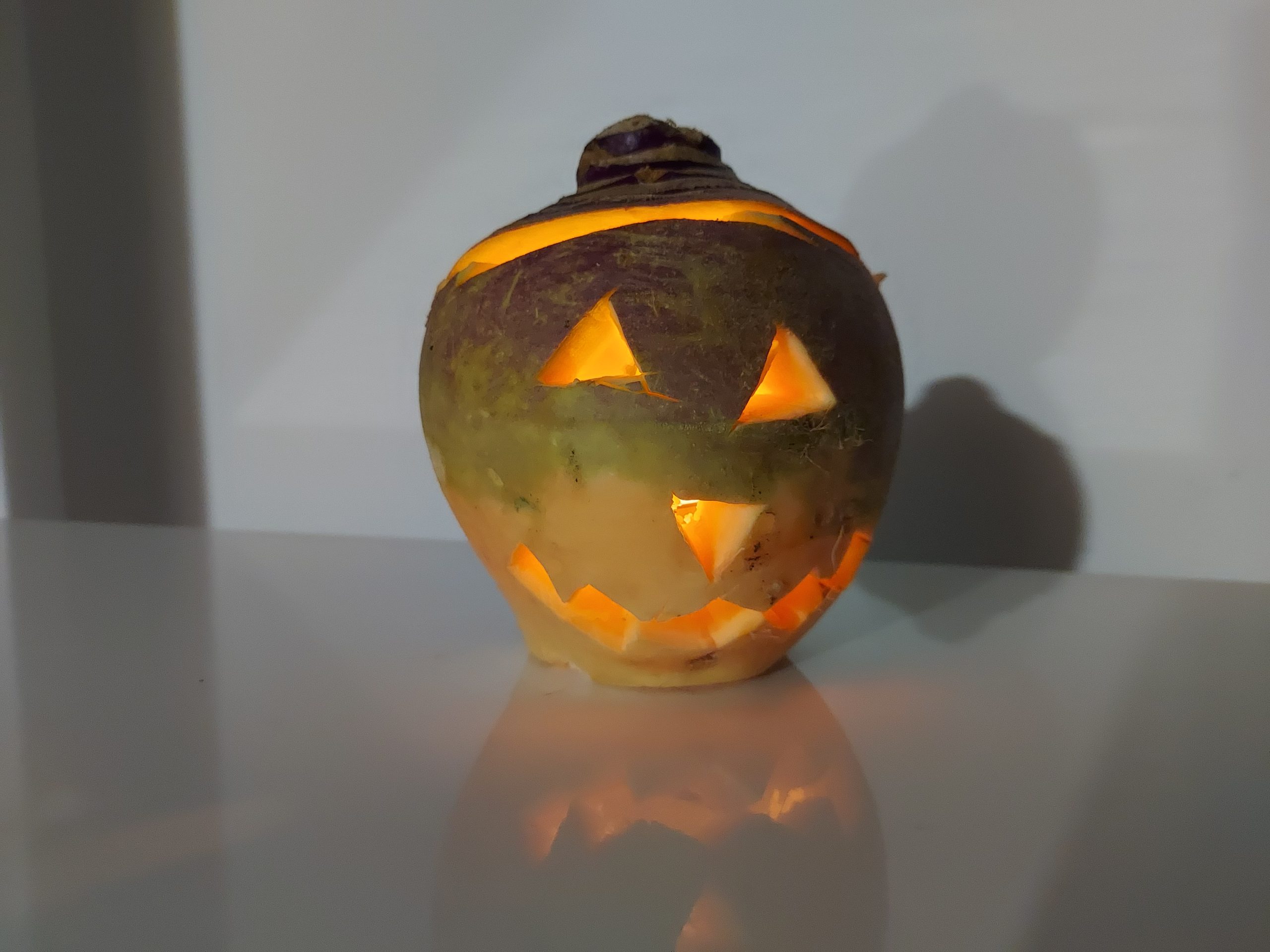
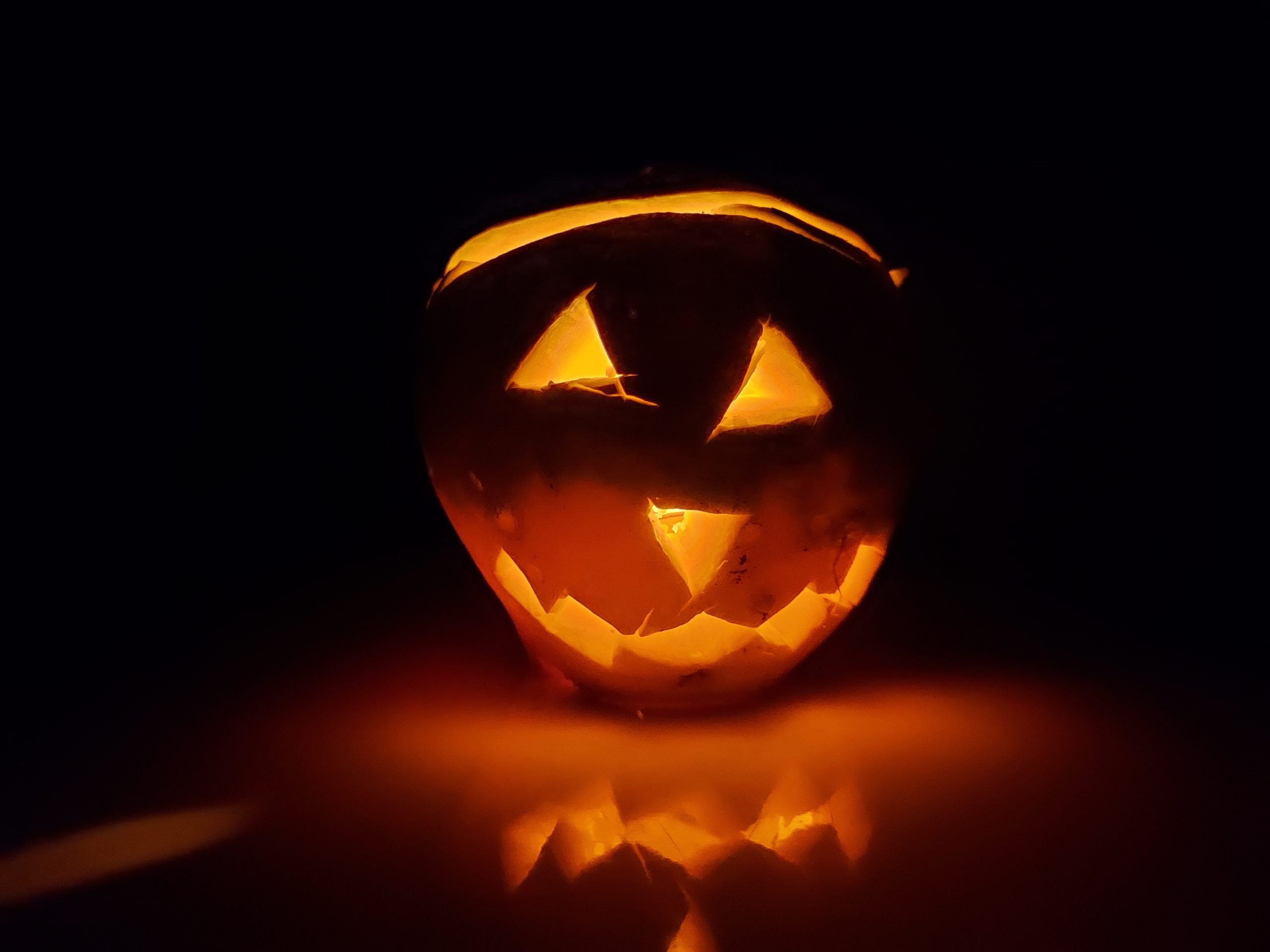
Carve something which isn’t a pumpkin.
I honoured my Northern roots by carving a turnip. Mine ended up looking rather cat-like, but it’s still creepier than a pumpkin.
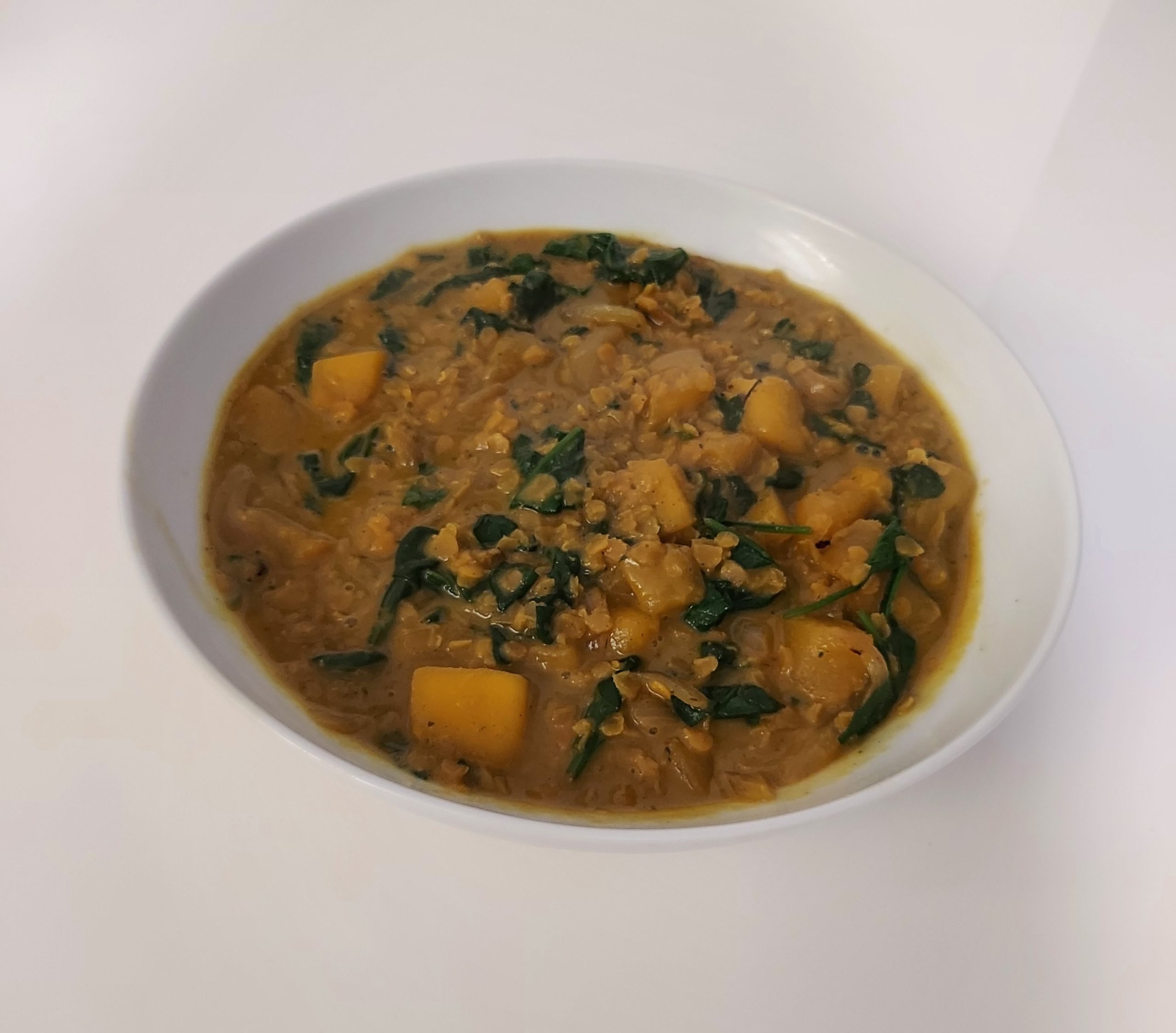
Make something with pumpkin you’ve never made before.
I made a lentil, pumpkin and spinach curry, which was delicious.
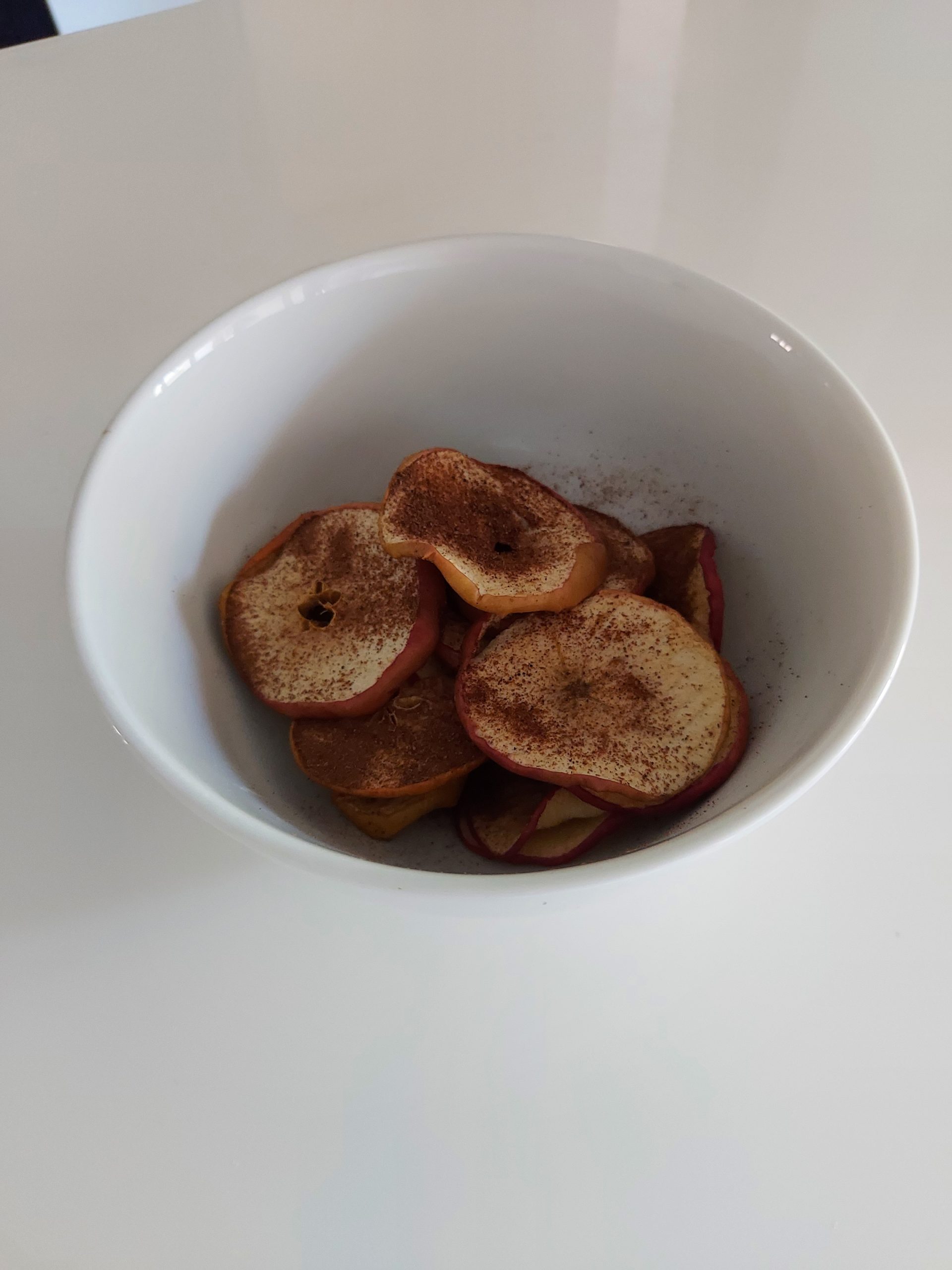
Make apple or vegetable crisps.
I made apple crisps dusted with cinnamon, which were very tasty.
Learn about the teal pumpkin project.
I found this so interesting and I think it’s a brilliant idea. The teal pumpkin project helps to make Halloween trick-or-treating more inclusive for children with food intolerances, allergies or other conditions. Putting a teal pumpkin on your doorstep shows that you have non-food treats available which are suitable for all.
I don’t get kids coming to my door where I live now, but if I ever live somewhere where that changes, I will be sure to take part.
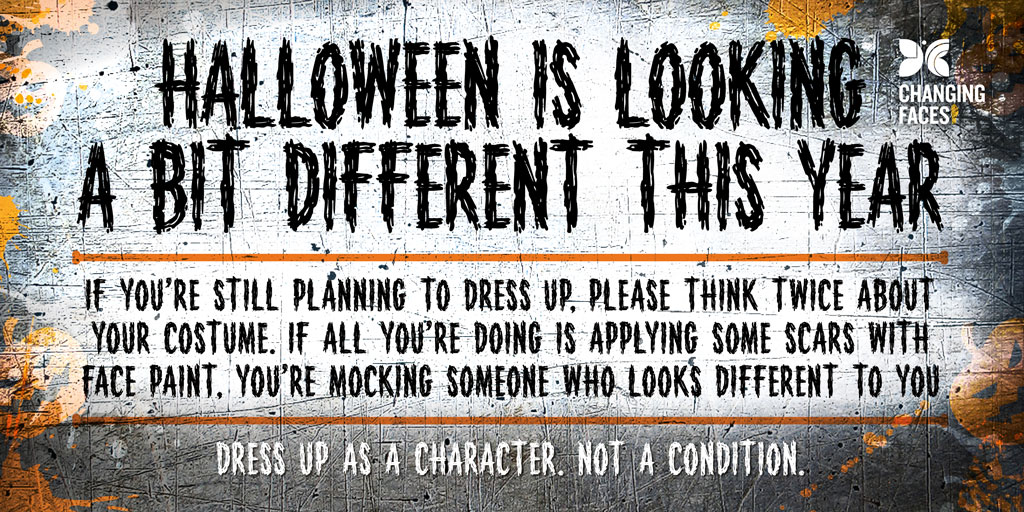
Read about the campaign to remove visible differences from Halloween costumes.
This also provided plenty of food for thought. I found that the charity Changing Facescampaigns for the avoidance of such costumes on Halloween and it’s understandable why, as it perpetuates stereotypes and increases stigma for those with a visible difference.
Make an autumn-themed wreath.
I bought a kit from The Range and had fun putting it together.
Find out about a local legend or ghost story.
I did some research and found out about 16 Montpelier Road in Ealing. (CW: mention of suicide). It’s a fascinating tale that I hadn’t heard before.
Almost a year to the day after attending my first Big Rebel Meet Up in Reading, I went back again for another one. I loved the first, and the second was no less exciting and varied in terms of the activities we took part in.
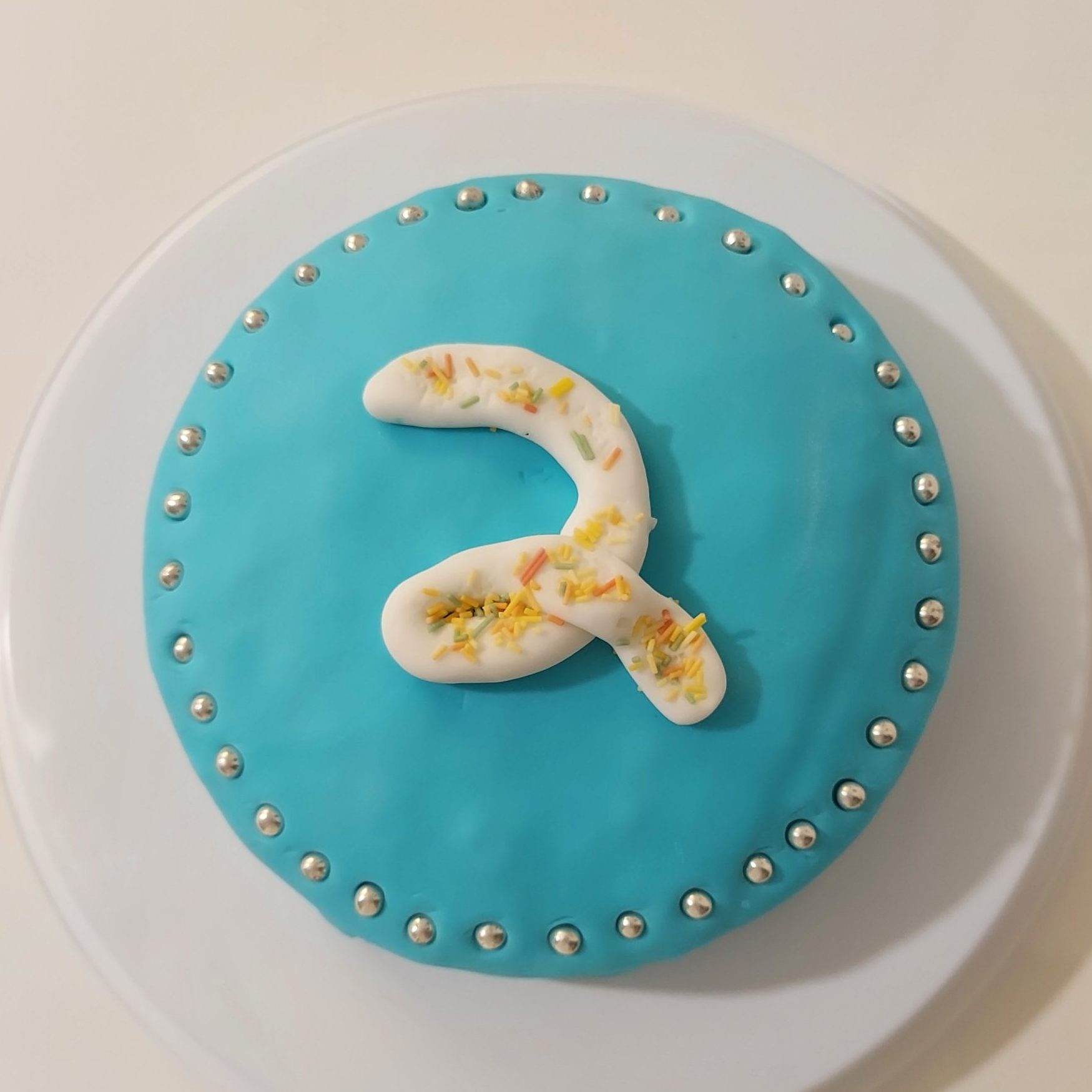
I was proud to be a Patrol Leader for the first time, and I was in Rosa Patrol – which is also the patrol I chose for the Cup. I made a cake for the celebration, which also fulfilled the 2nd Birthday badge clause to design a cake – it was a vanilla sponge covered in bright blue icing with the number ‘2’ on top.
The day kicked off with a ‘geocaching’ session in a local park. Luckily the weather stayed bright and sunny for us, but our shoes did get a bit muddy from running around looking into hedges! Charly had spent ages depositing Kinder egg middles with exciting duck surprises around the park, and as a group we managed to find most of them, though I personally only managed to find one. There were plenty of bemused dog walkers asking why there were so many of us lurking in the park on a Saturday morning!
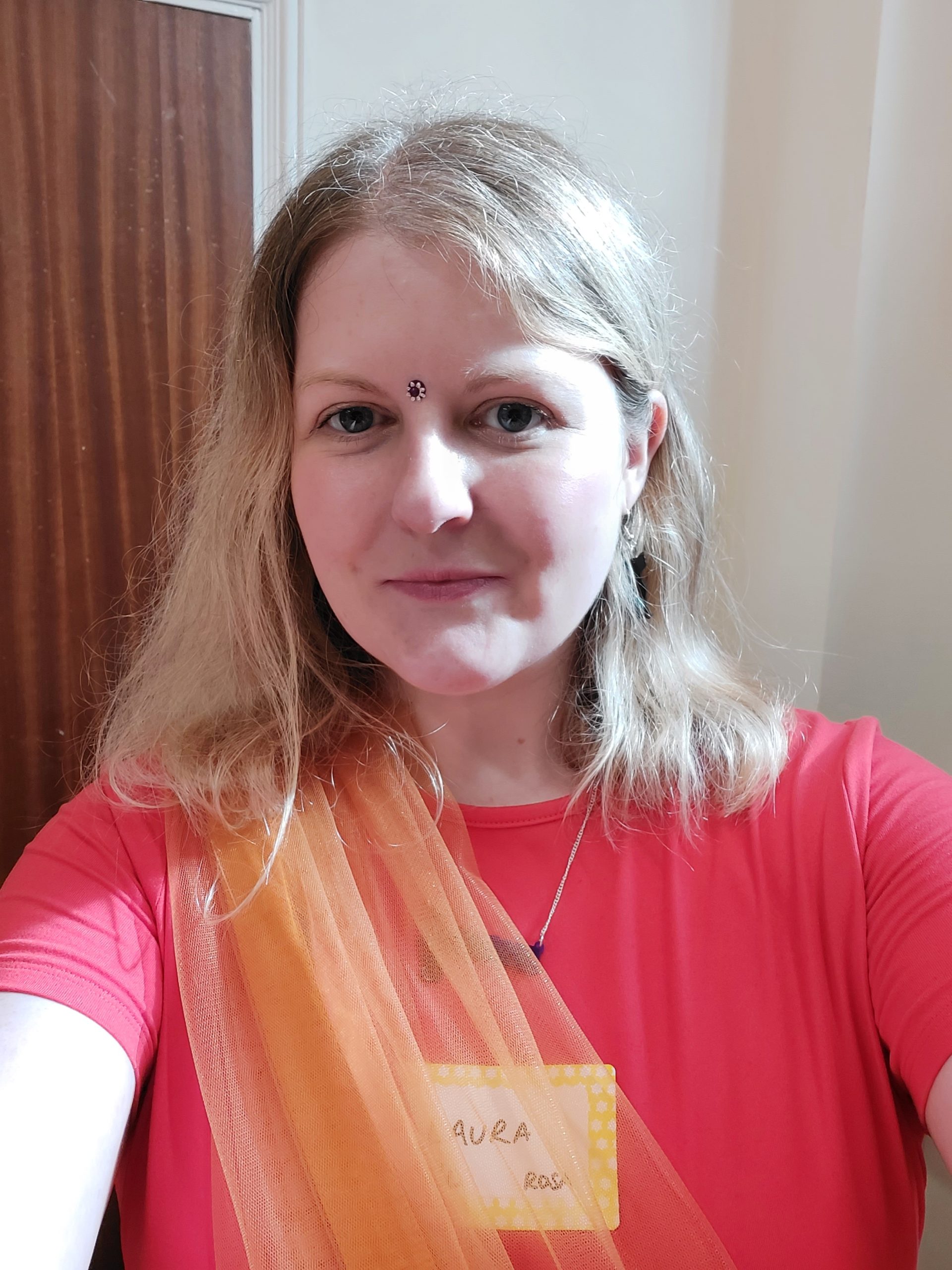
After heading back to the hut, and having lunch, it was time for the afternoon’s activities. My Patrol’s first activity was Bollywood dancing with Shanneen, who also ran a session at Rebel Fest. This was so much fun – I’m not a good dancer but I thoroughly enjoyed myself, and Shanneen is a great teacher.
Ready for Bollywood
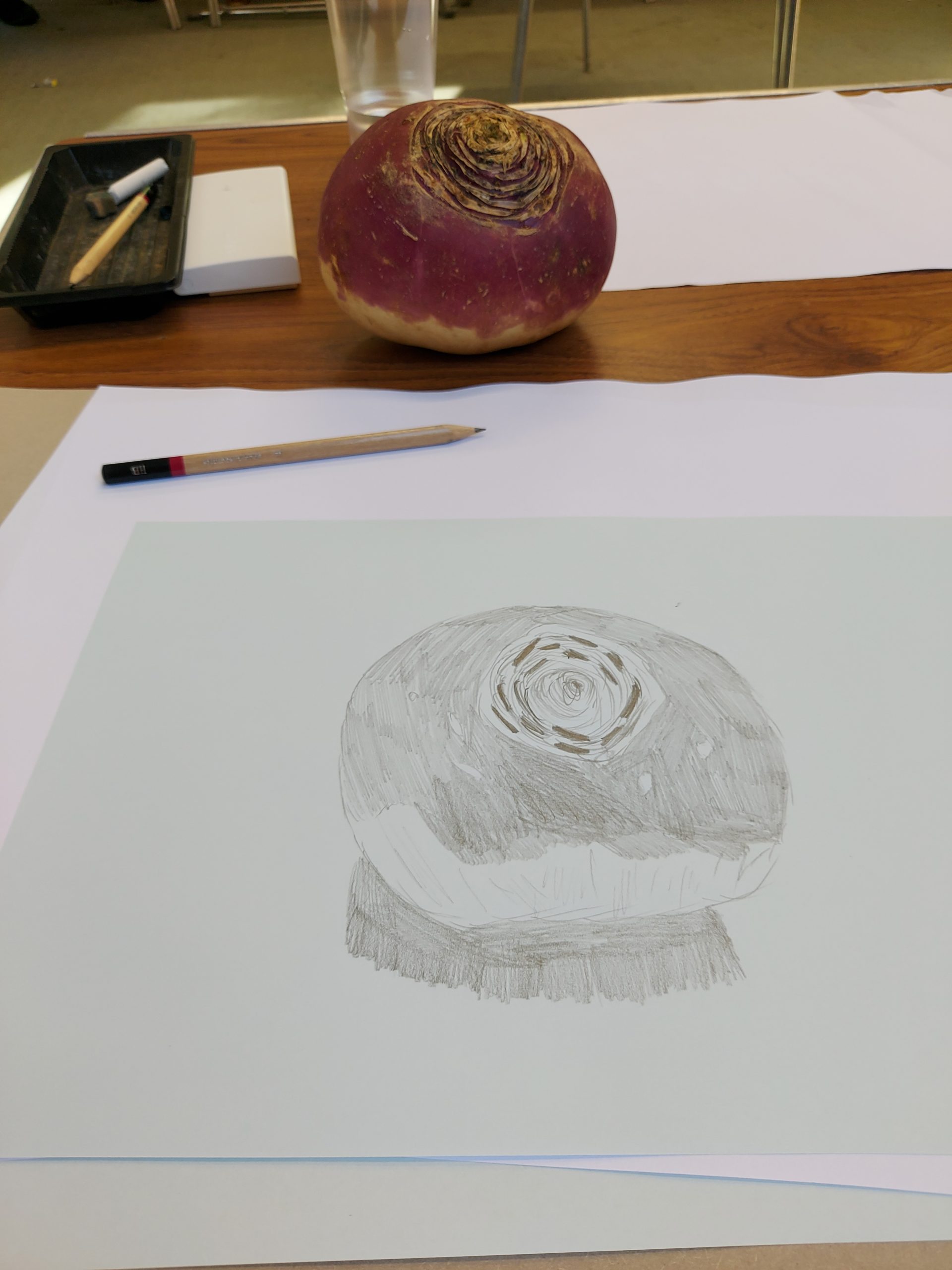
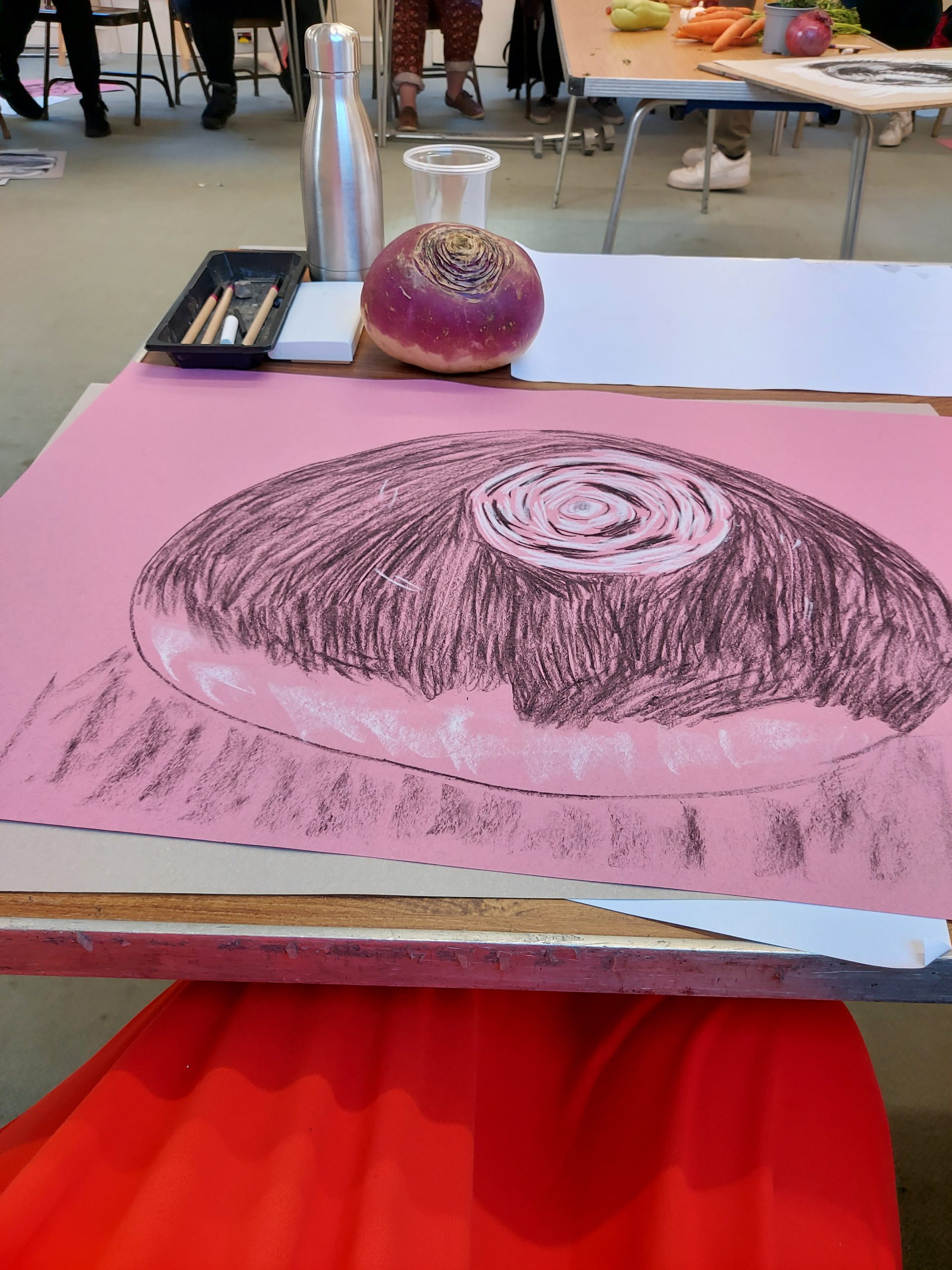
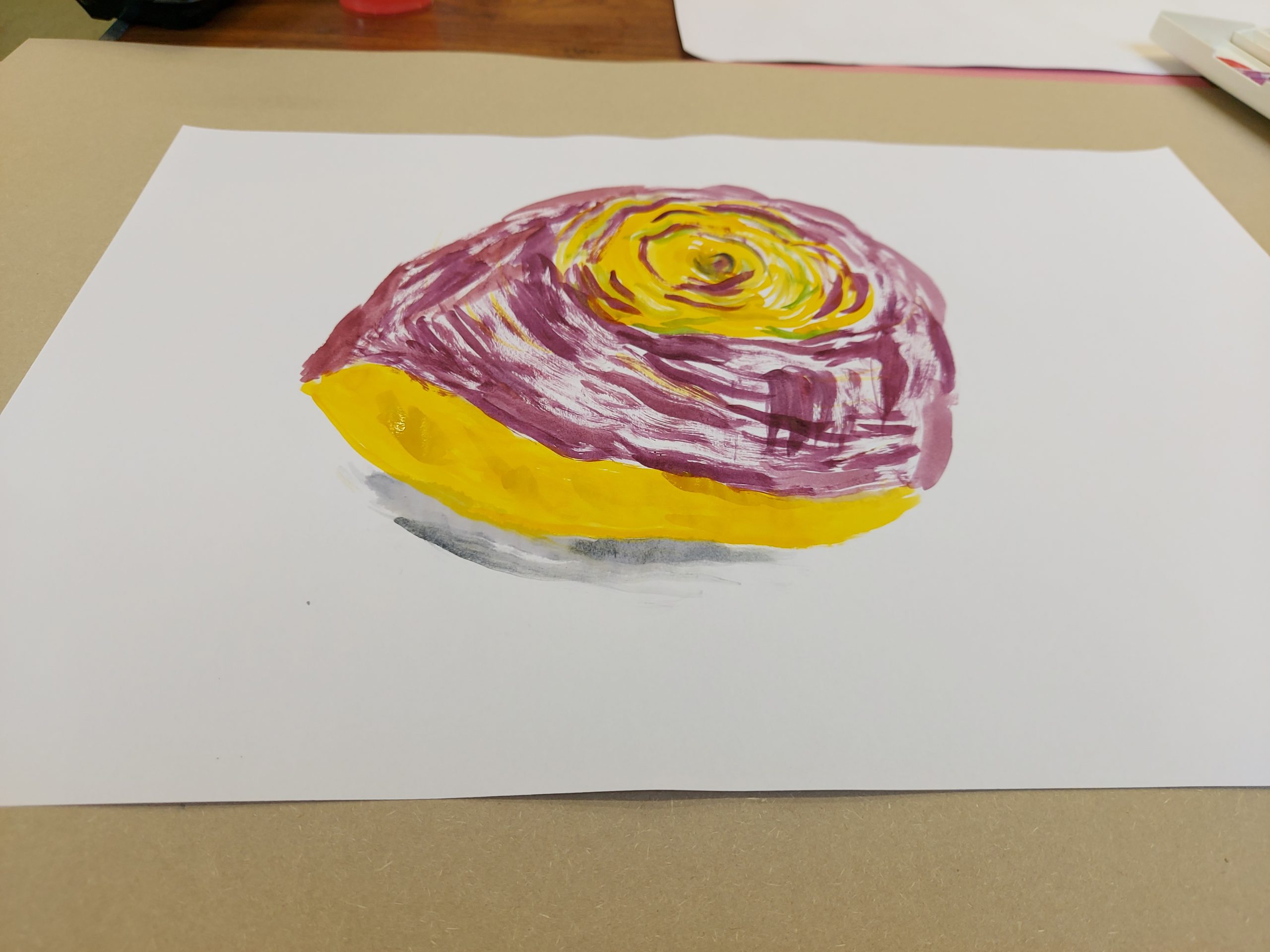
Next up, we had a still life drawing session with Rod, who also ran the life drawing session last October. We had a number of autumnal vegetables to choose from: I chose a turnip and had a nice time drawing it in charcoal, pencil and paint. I’m not a great artist but I did enjoy this session.
My turnip drawing efforts
My favourite session of the day was Improv with Monica. I’m definitely an introvert but Monica made us all feel really comfortable and we had fun coming up with different scenarios. I really enjoyed letting my imagination run wild on this one.
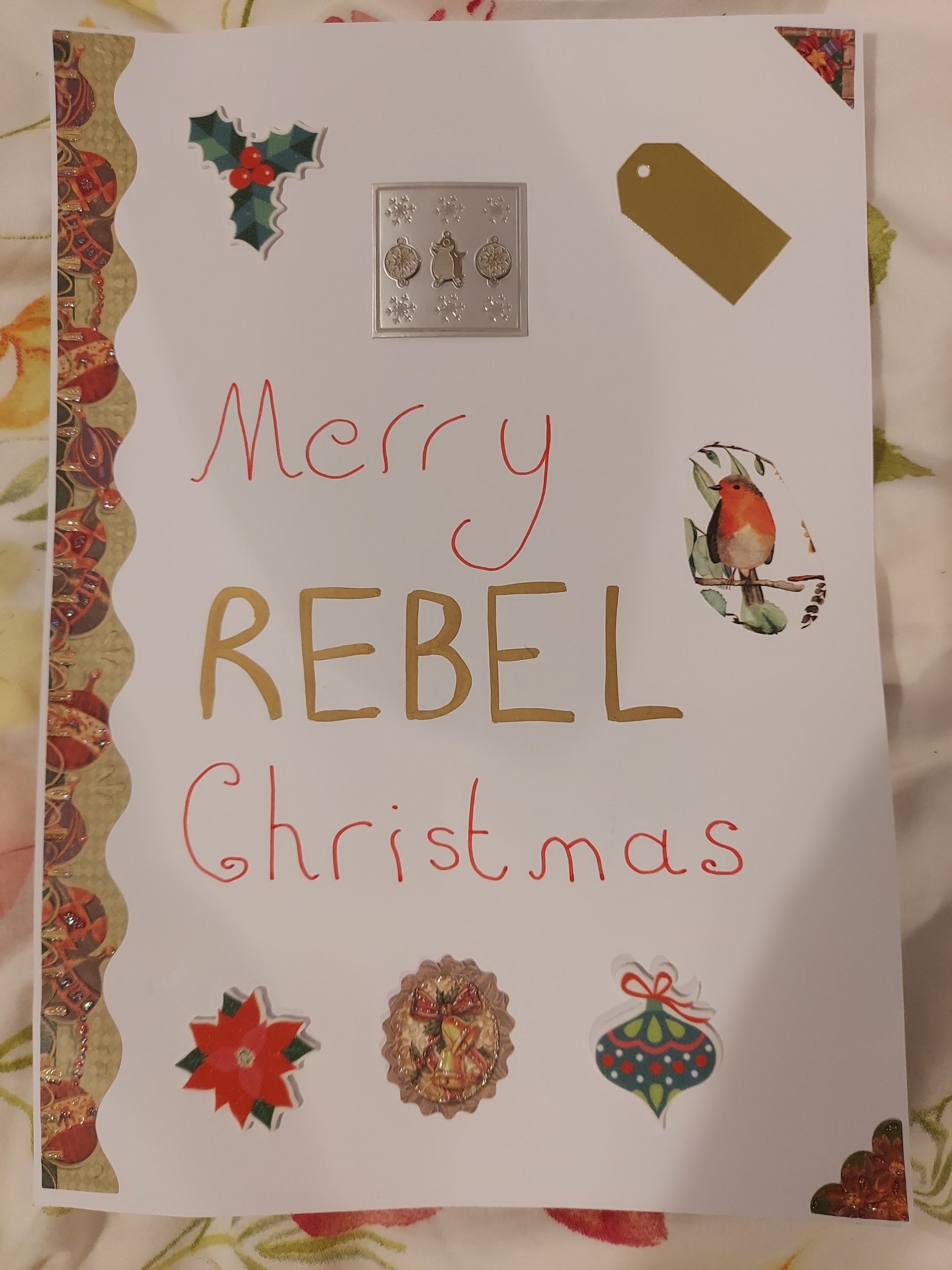
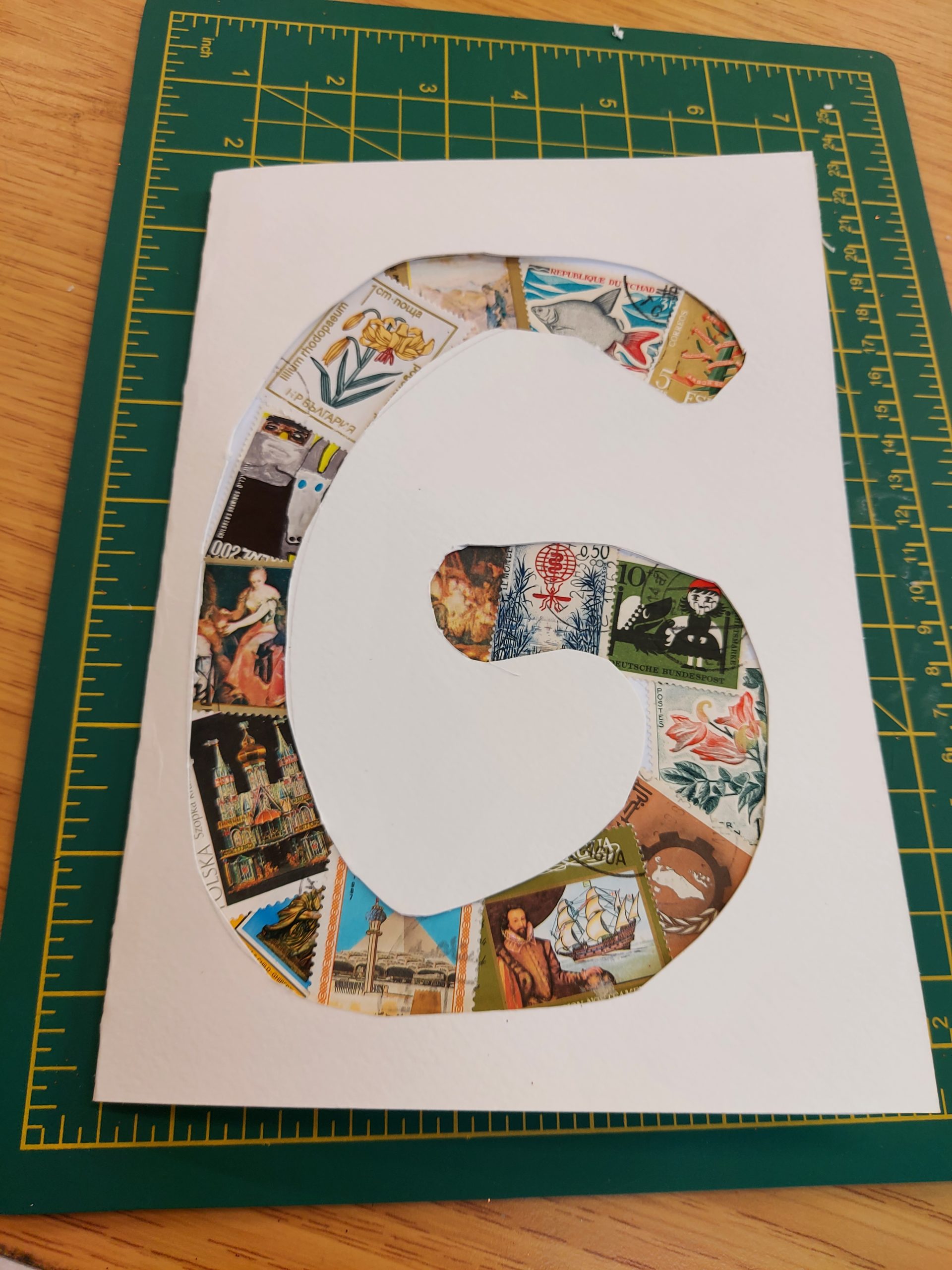
Our final session of the day was collage. This was a lovely relaxing session to end the day. I made a birthday card for my friend with vintage stamps.
My birthday card collage
With these two Reading meet ups, one in Bromsgrove, Rebel Fest and Rebel Summer Camp, I’m now eligible for my ‘5 Meet Ups’ badge, which I will hopefully be able to collect at the next meet up in Stockport!
When I decided to work on the Wild Swimmer badge, I certainly didn’t expect to love it as much as I did. I used to be someone who absolutely hated swimming, and open water swimming in particular baffled me.
Well, what can I say? I’ve become a complete convert. I love the feeling of peace a swim gives me. I love spending time in nature, I find the cooler water refreshing, and I’m happy not to have to put up with the horrible chlorine smell of indoor pools.
I plan to continue with my swims over the winter with the Teddington Bluetits as well as occasional dips with Mental Health Swims. I’ve got myself a tow float and a bright swimming hat, and I plan to get myself some neoprene gloves and boots as well. I would love to attend some full moon swims and other special occasion swims.
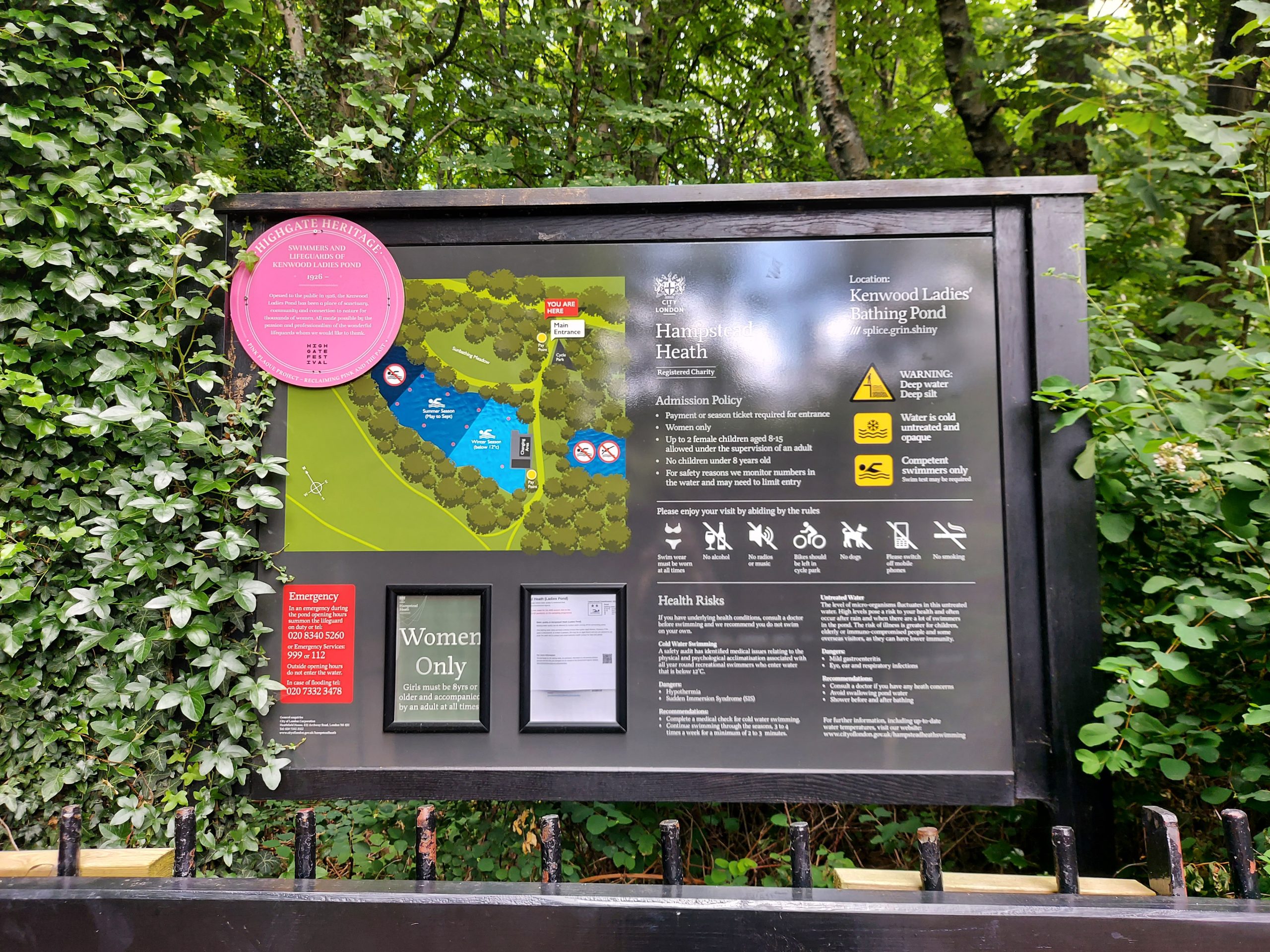
Board at Kenwood Ladies’ Pond
Over a period of three months, swim in open water at least once a week.
I managed to swim on average once a week, although this did mean that some weeks I couldn’t swim and other weeks I managed to swim twice. I can only swim at the weekend so this restricted things somewhat for me. Once I managed two dips in one day!
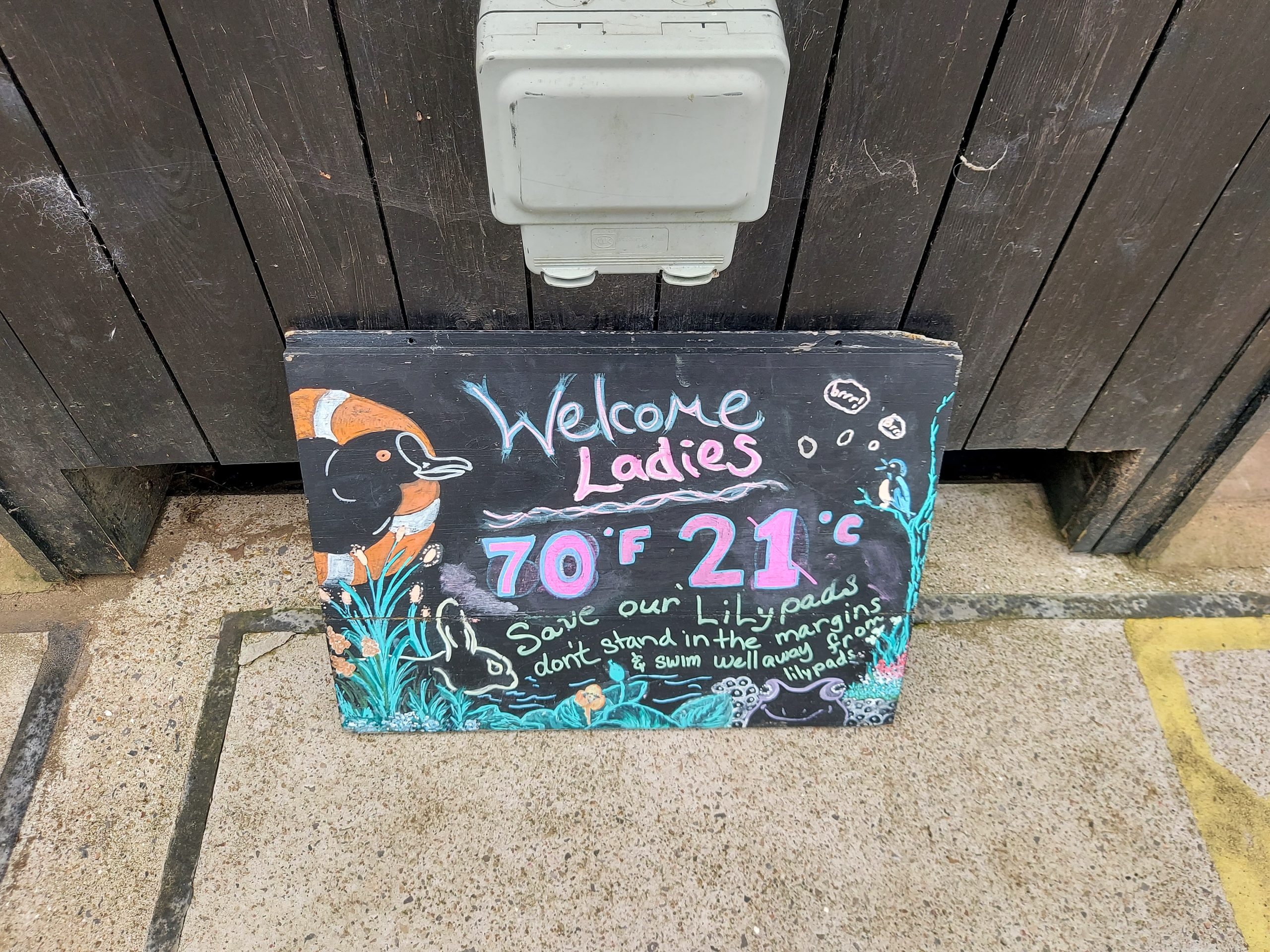
Sign at Kenwood Ladies’ Pond
Swim in at least three different open water venues.
I swam mostly in Kenwood Ladies’ Pond but I also tried out the Hampstead Mixed Pond, the lake at Beckenham Place Park, West Reservoir at Hackney with Mental Health Swims and, when I got more confident, the River Thames with the Teddington Bluetits.
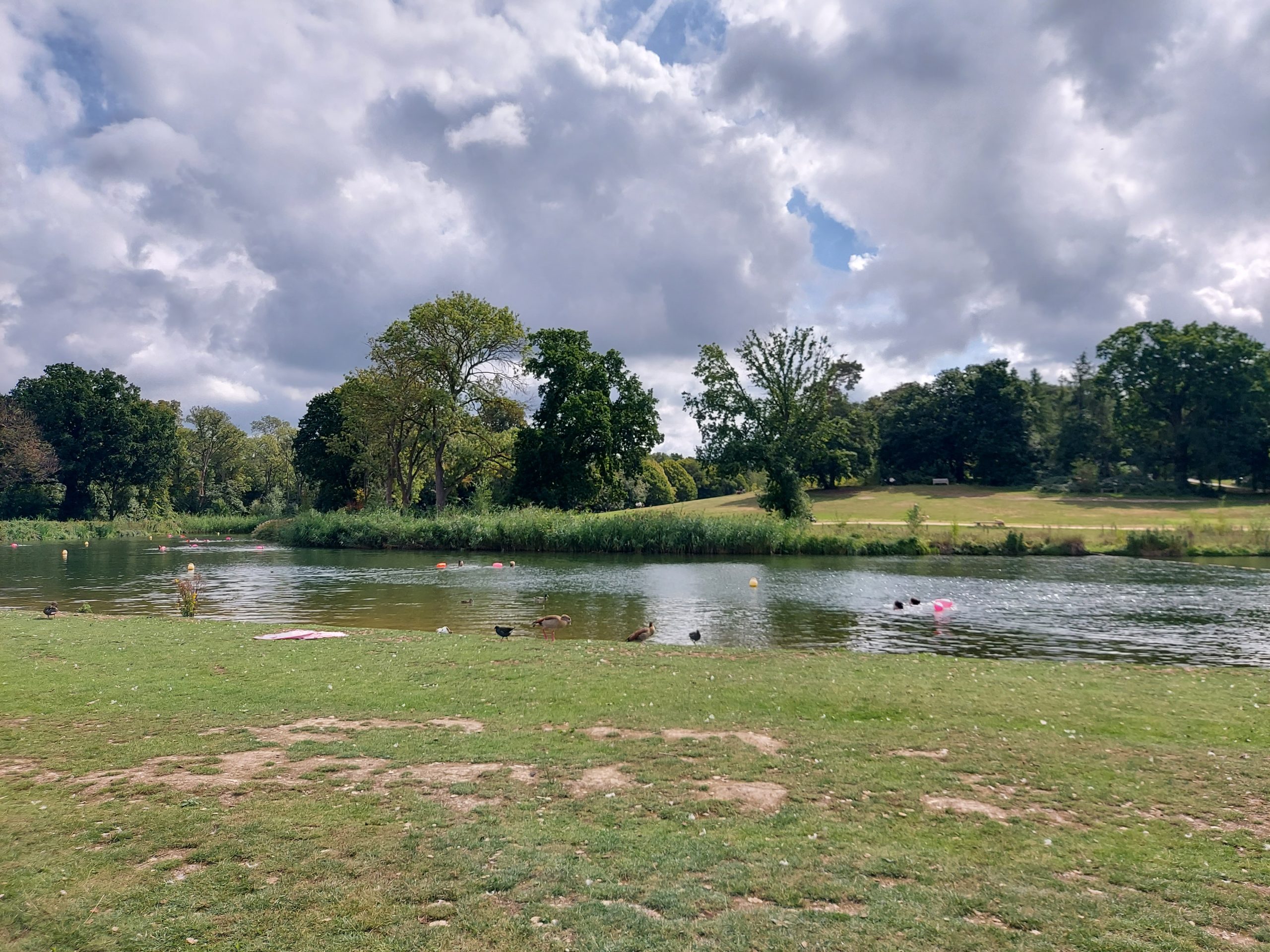
The lake at Beckenham Place Park
Keep a record of water temperatures, who you swam with, time, weather conditions and how far you swam.
02/07 Kenwood Ladies’ Pond, 21°C, my friend Dasa, 30 mins, warm with a breeze, swam to and from various rings
08/07 KLP, 20°C, alone, 20 mins, warm with light rain, a bit more swimming today
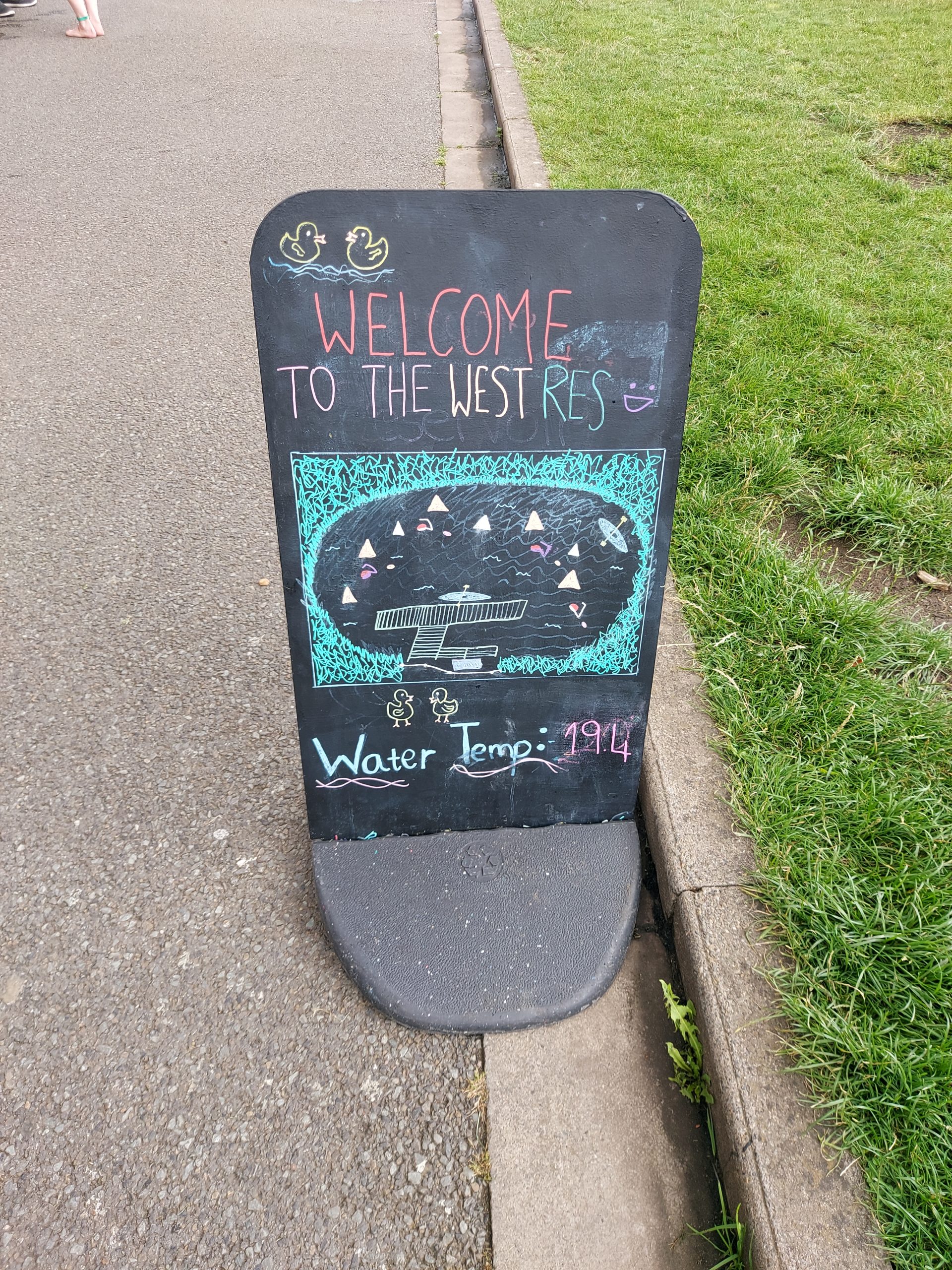
15/07 West Reservoir, 19.4°C, Mental Health Swims, 40 mins, warm but windy, 100m
22/07 KLP, 19°C, alone, 30 mins, warm with light rain, quite a bit of swimming
29/07 KLP, 18°C, alone, 40 mins, warm, quite a bit of swimming, swam to back of pond
12/08 West Reservoir, 20.5°C, Mental Health Swims, 40 mins, warm and a little windy, 150m
13/08 Hampstead Mixed Pond, 19.4°C, my friend Dasa, 40 mins, warm with a breeze and slight rain, swam to the end and back about 3 times
02/09 Beckenham Place Park, 19.5°C, alone, 40 mins, warm but overcast, swam continuously for a good while
03/09 River Thames near Teddington, 17°C, Teddington Bluetits, 30 mins, early morning sunny and getting warm, swam upstream and back
09/09 River Thames near Teddington, 20°C, Teddington Bluetits, 30 mins, hot day, treaded water for a long time
09/09 River Thames near Teddington, 20°C, Teddington Bluetits, 30 mins, hot day, treaded water for a long time
23/09 KLP, 18°C, alone, 30 mins, warm, quite a bit of swimming, swam to back of pond
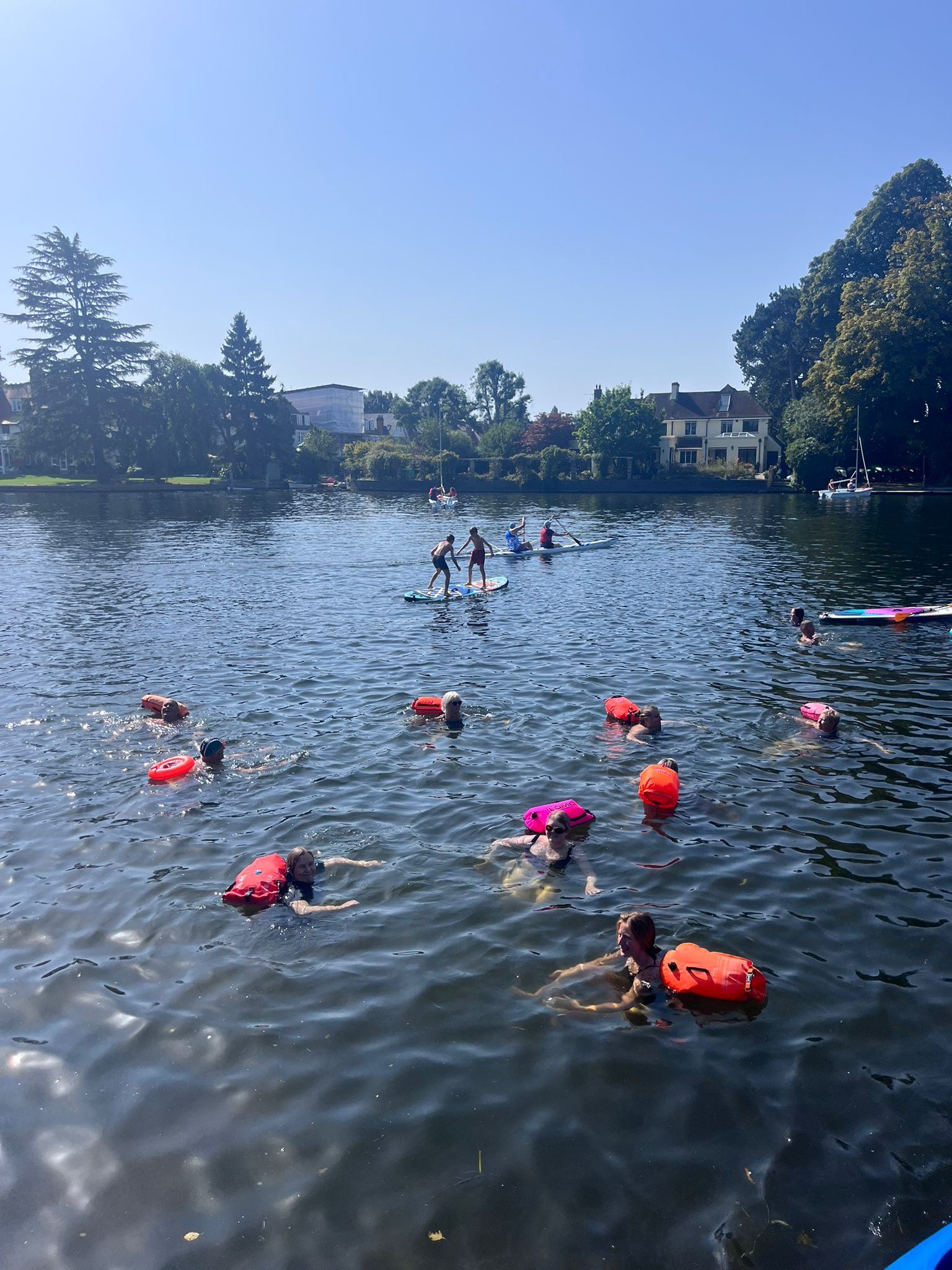
In the Thames with the Teddington Bluetits
Learn how to administer CPR to a victim of drowning.
I learned about CPR in my First Aid course, and noted the following with regards to victims of drowning:
Start with rescue breaths rather than chest compressions.
Many casualties that drown may bring up stomach contents, so be prepared to roll them onto their side to clear their airway.
What equipment do you need to swim in cold water?
For my swims in Kenwood Ladies’ Pond, all I needed was a swimsuit. For many open water swimming venues, tow floats are recommended. I bought my own tow float to use in the Thames.
Brightly coloured swimming hats are recommended (compulsory at some venues) to ensure you are visible in the water.
For cold water below about 14°C, a wetsuit is recommended (plus neoprene gloves, socks/shoes and hat).
If you often swim in an area without changing facilities, a changing robe is recommended, as is a hot drink to warm you up when you get out of the water.
Board at Hackney West Reservoir
How do you care for a neoprene wetsuit?
A neoprene wetsuit should be stored hanging right side out, in a temperate place away from heat sources, and away from sunlight. Do not fold. Storing the wetsuit appropriately can help prevent damage and tears.
To mend a wetsuit, it can be taken to a professional, but small tears can be fixed at home. Neoprene cement or glue can be used to join tears. Larger holes can be covered with neoprene patches and secured with specialist glue.
Describe the differences between a swimming wetsuit and a surfing wetsuit.
Swimming wetsuits are designed for flexibility and speed to help swimmers move through the water more easily. They have more panels, varying thicknesses, buoyancy and thermal protection. They tend to be smoother, easier to remove, and with a lower neck seal to prevent surf rash.
Surfing wetsuits are typically designed for warmth and protection. They often have reinforced knee panels. They come in a variety of styles to suit different watersports and different water temperatures.
Describe how a non-swimmer, weak swimmer and injured swimmer look in the water.
Non-swimmers can thrash their arms, slapping the water trying to keep their heads above the surface.
Weak swimmers use their legs and look like their heads are above water. They may look fine, but could be struggling.
Injured swimmers can be identified by their weak or tired stroke, and diagonal body orientation.
I found this article very useful in terms of potentially identifying someone who is drowning.
Learn how to tow someone in the water.
I completed this clause during the lifesaving session at Rebel Summer Camp.
Take part in a ‘fun’ open water swimming activity.
I attended the ‘Night at the Res’ event at the West Reservoir in Hackney. There was a lovely atmosphere and it was great to be able to swim at the end of the day as the sun was going down.
The September monthly badge was Scrap Heap Challenge. There were two options for this badge: one was a competition, which I decided not to take part in (though I loved seeing everyone else’s amazing entries). The other was a challenge to reduce the amount of household waste across the month.
I’ve already done something similar as part of the Conscious Consumer badge, so I tried something a bit different for this badge. I follow Orjenise on Instagram, and every so often she runs an #Orjenise100 challenge which involves decluttering, recycling and organising. I worked on the challenge throughout the month and managed to sort quite a few things, so I will count this towards the Scrap Heap Challenge badge.
This was one of the badges I overlooked when I first read through the Badge Book, but over the last year I’ve looked again and seen how I can manage to complete it. Staying at a campsite in Dorset helped, as I had access to an open fire pit and a stove.
Cook a meal on an open wood fire.
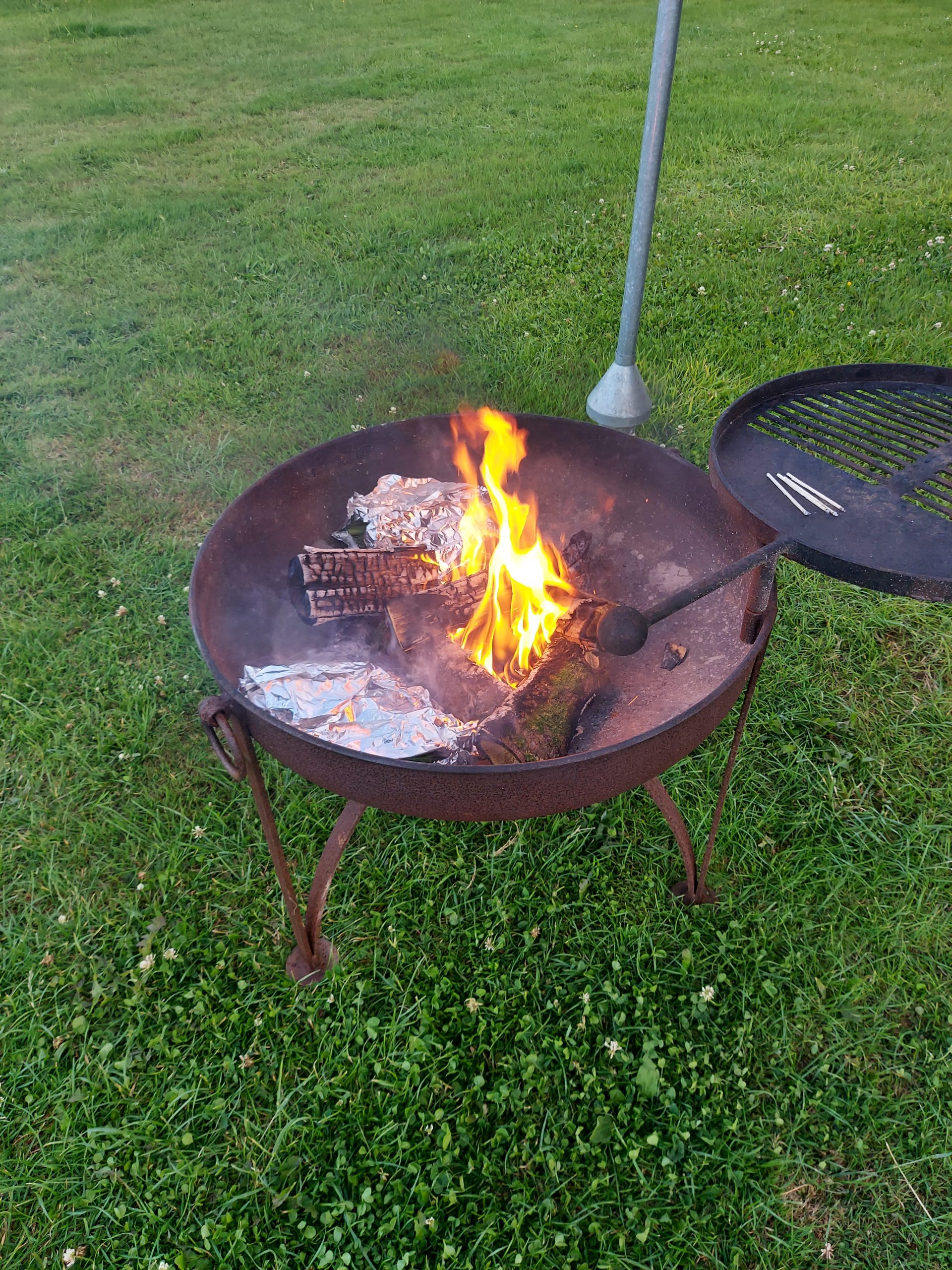
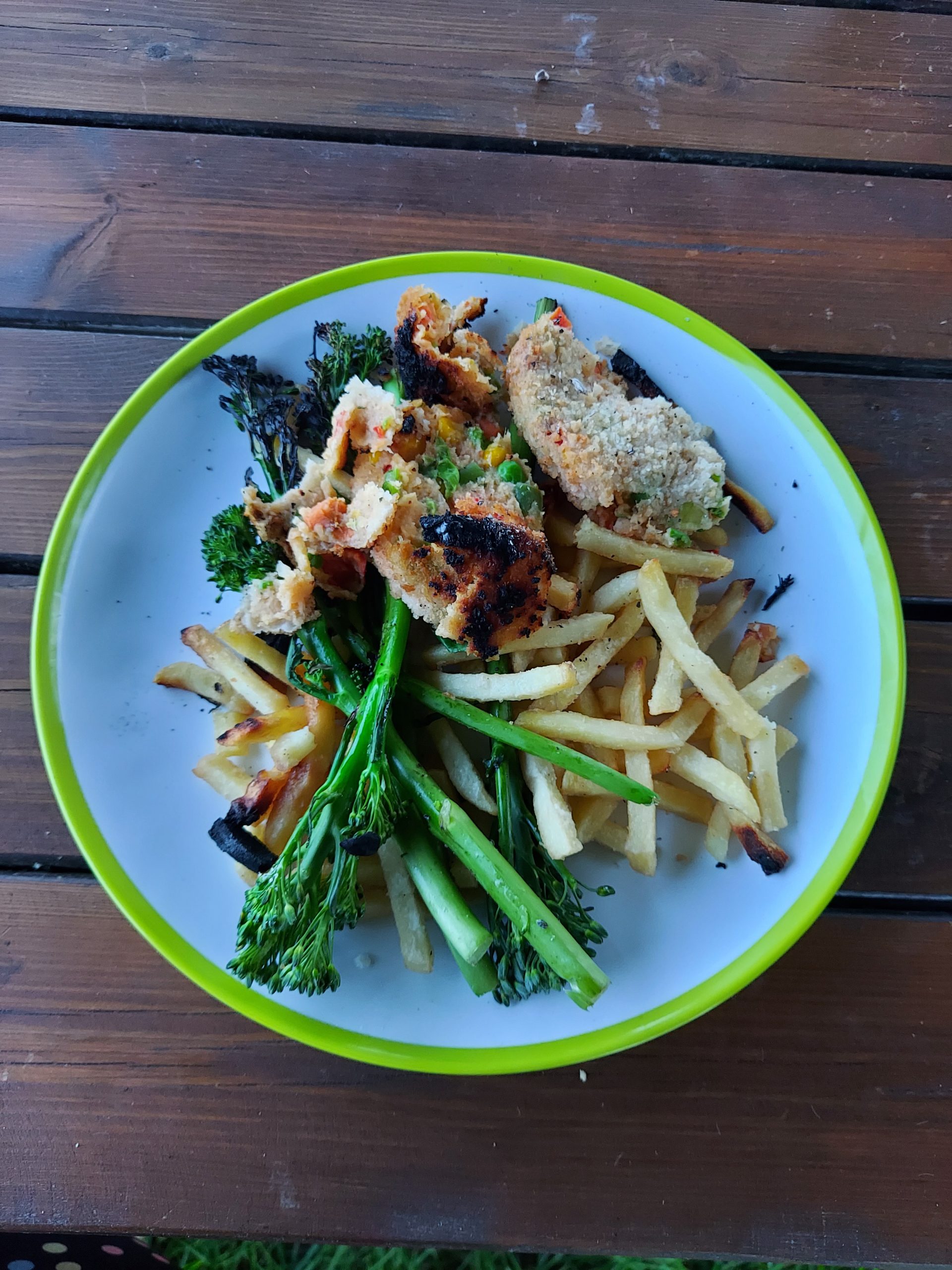
I did this while on my glamping trip in Dorset. I had never built and lit a fire myself so this was quite exciting! I cooked veggie burgers with chips and tenderstem broccoli.
Collect and stack suitable firewood. What safety precautions do you need to take when lighting a fire?
My firewood was already available for me to use, but for future reference oak, ash, beech, birch and elm are the best. Woods with a high resin content should be avoided.
Set up the fire in the open, away from buildings and anything that could burn. Check the wind conditions and never leave the fire unattended. Keep a bucket of water nearby, and don’t sit too close.
Cook a meal on a portable stove.
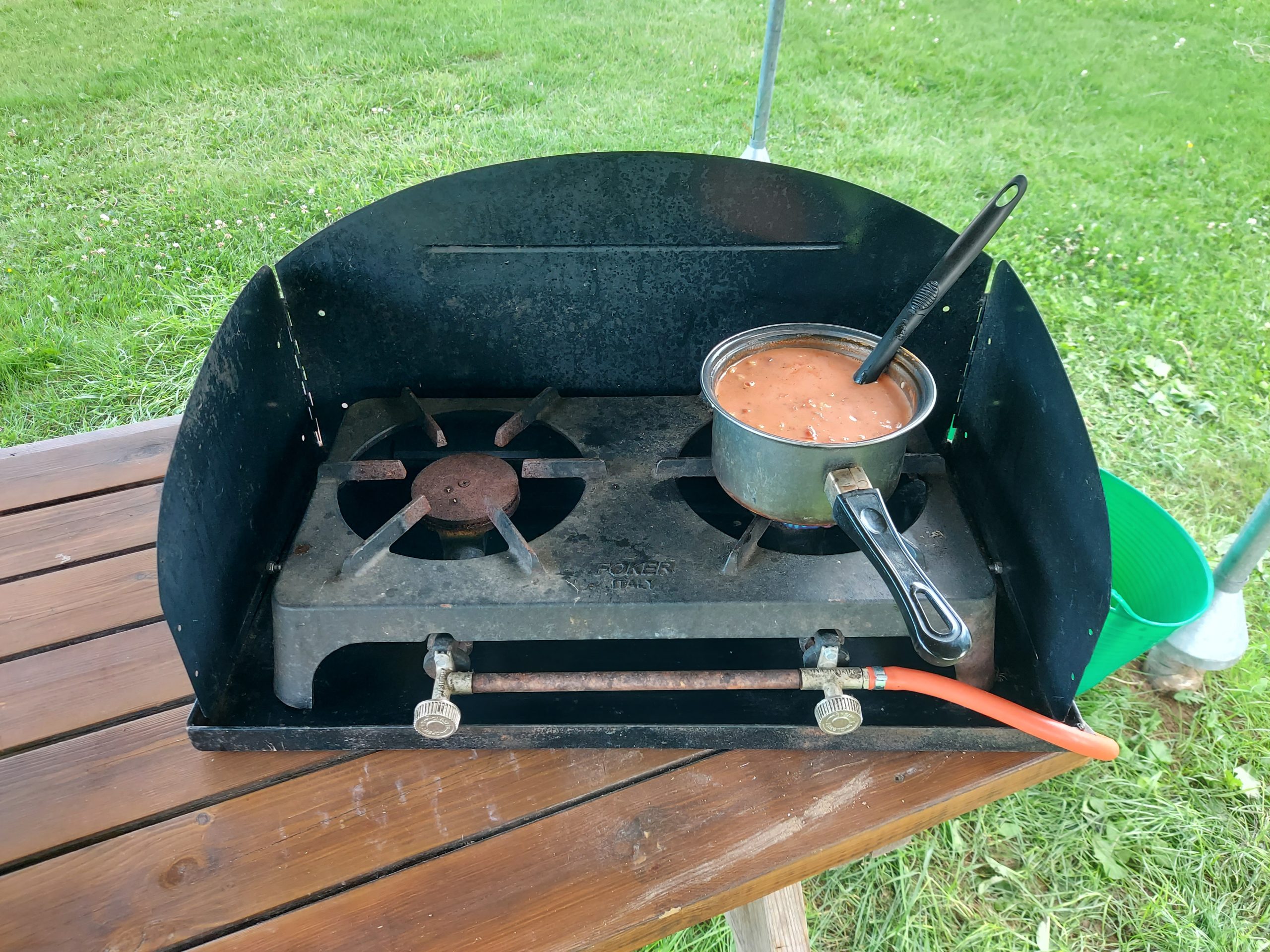
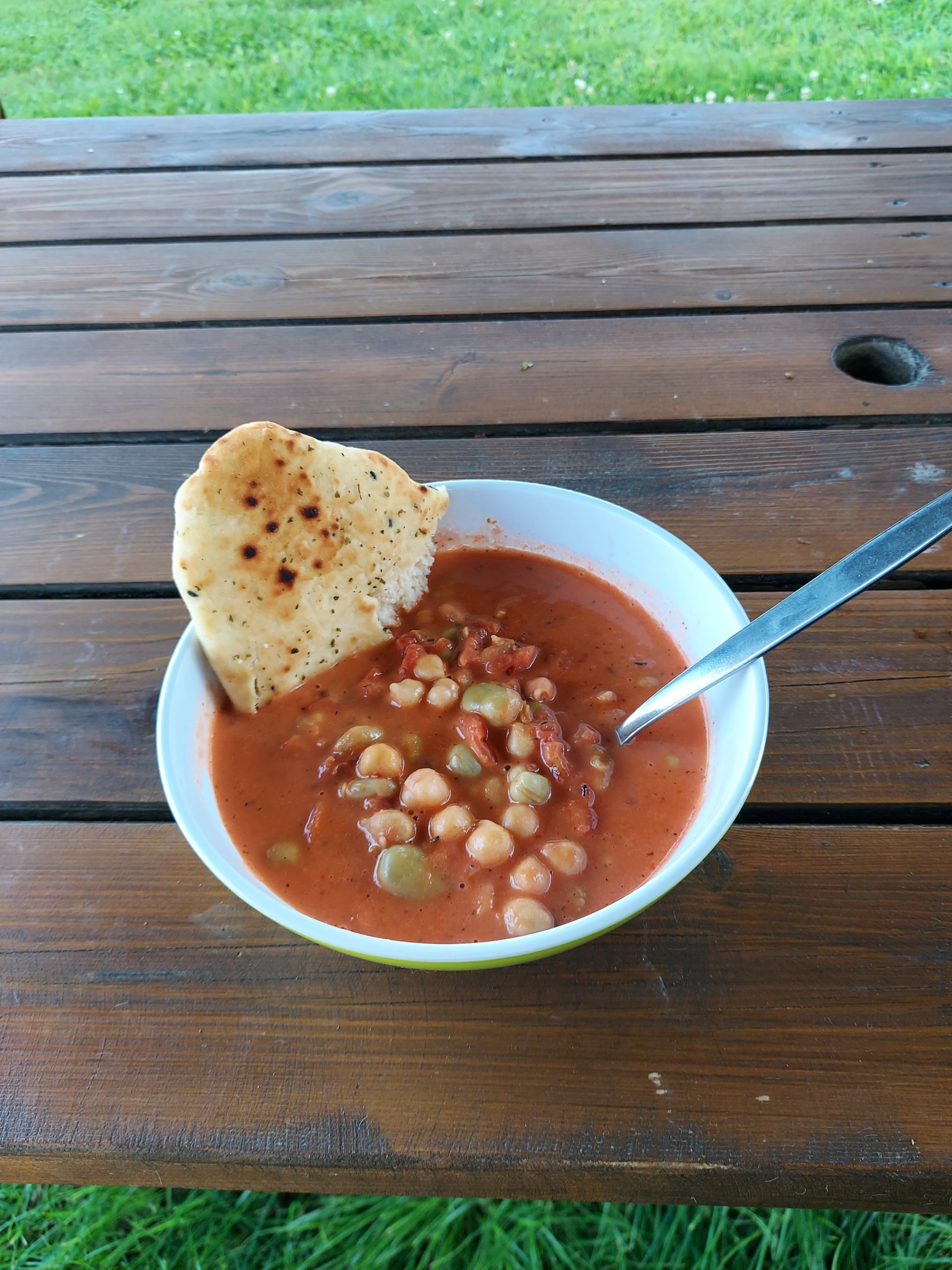
I cooked a meal on a stove while staying in Dorset. I made a stew from tinned ingredients: tomatoes, broad beans, chickpeas and coconut milk, along with some spices I’d brought from home.
What safety precautions do you need to take with your stove? How do you refuel the stove?
Make sure there is adequate airflow over the top and around the sides of the stove. Don’t use pans that are too large as they can concentrate heat back to the gas canister. Use the stove in a well-ventilated place and don’t leave a lit stove unattended.
Cook a meal on a barbecue.
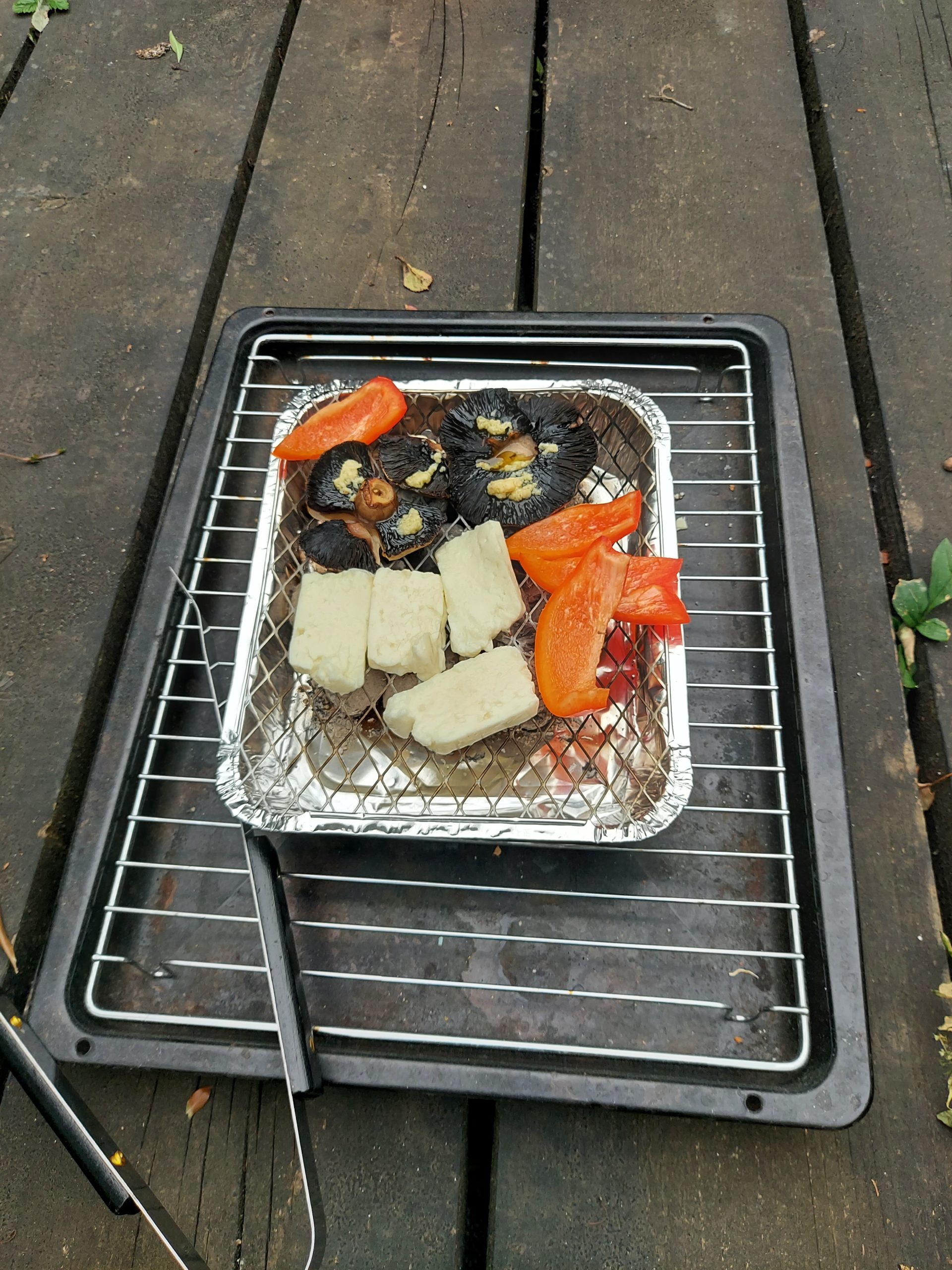
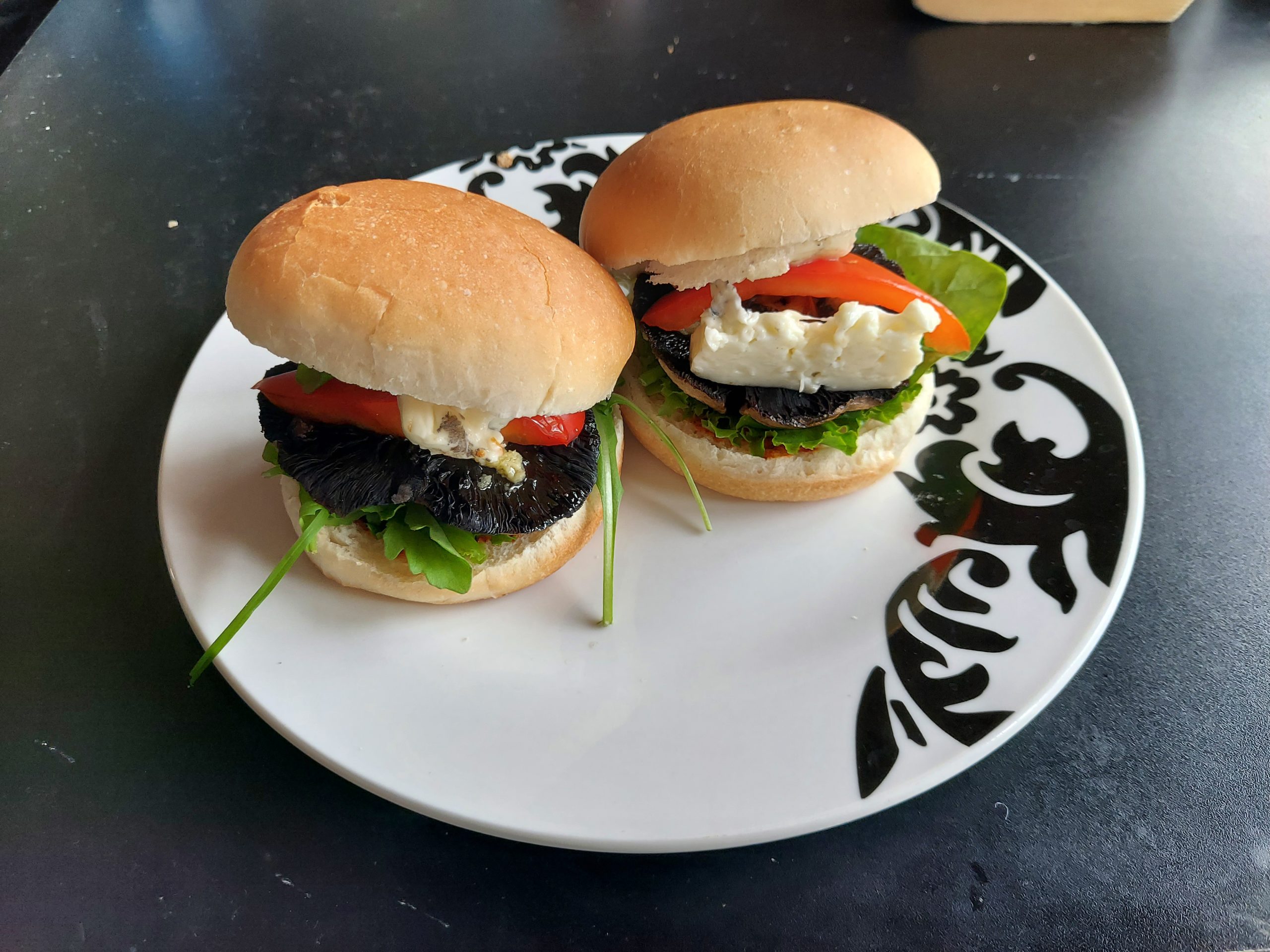
I bought a disposable barbecue to complete this clause. I’m aware of the environmental implications and won’t make a habit of this, but the only other barbecue available to me is regularly used for meat. I made halloumi, mushroom and red pepper burgers.
How would you store ingredients outside?
Tinned and packet foods are best where there is no fridge available to keep them cool.
You can take frozen food and allow it to defrost before eating it on the first night/morning. You can use a cooler if you have one.
Use UHT milk, and store food in plastic containers to keep bugs out.
Make a pocket first aid kit.
I have a first aid kit that I bought from the St John’s Ambulance website and learned how to treat cuts, burns and scalds on my first aid course.
Make a menu book of at least 10 dishes which you can cook outside.
I did the Nature Lover badge in order to achieve my Go Wild! quarterly badge. I really enjoyed the badge – it helped me get outside and enjoy nature. To achieve the badge I had to complete eight clauses out of a possible sixteen, as detailed below.
Visit a nature reserve.
I visited Camley Street Natural Park, a small but peaceful nature reserve near King’s Cross Station. I had a lovely relaxing walk around the park and then enjoyed a coffee beside the canal.
Watch at least three documentaries on the natural world.
Turning to the trusty BBC, I enjoyed Wild Isles, The Green Planet, and Patagonia: Earth’s Secret Paradise on iPlayer.
Learn about different natural habitats, and identify those found in your local area.
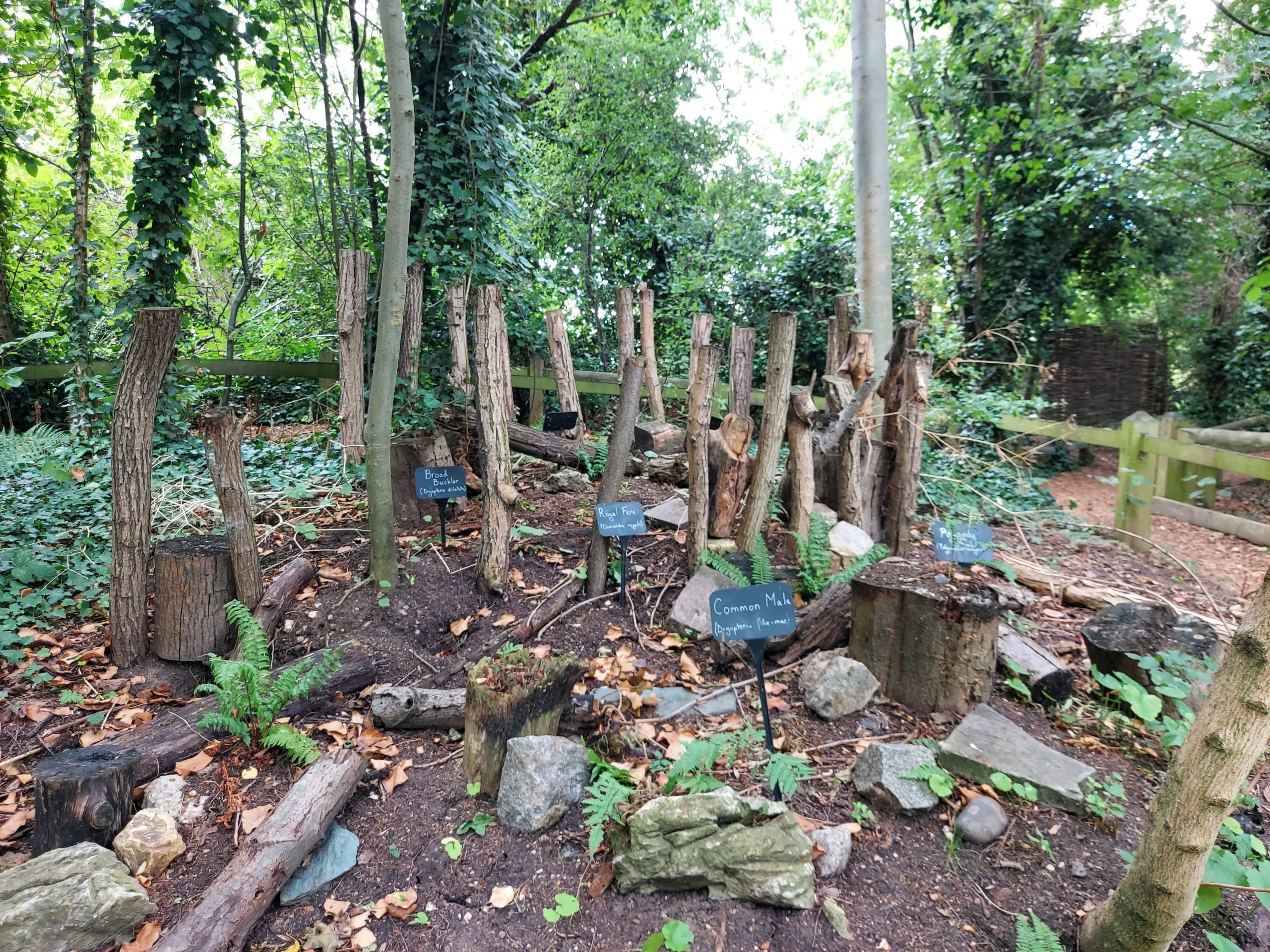
This clause reminded me of school (in a good way!). I learned about different natural habitats, and identified those in my local area as being mainly urban/suburban, grassland and woodland, with nearby areas of wetland and farmland.
Take action to protect nature in your area.
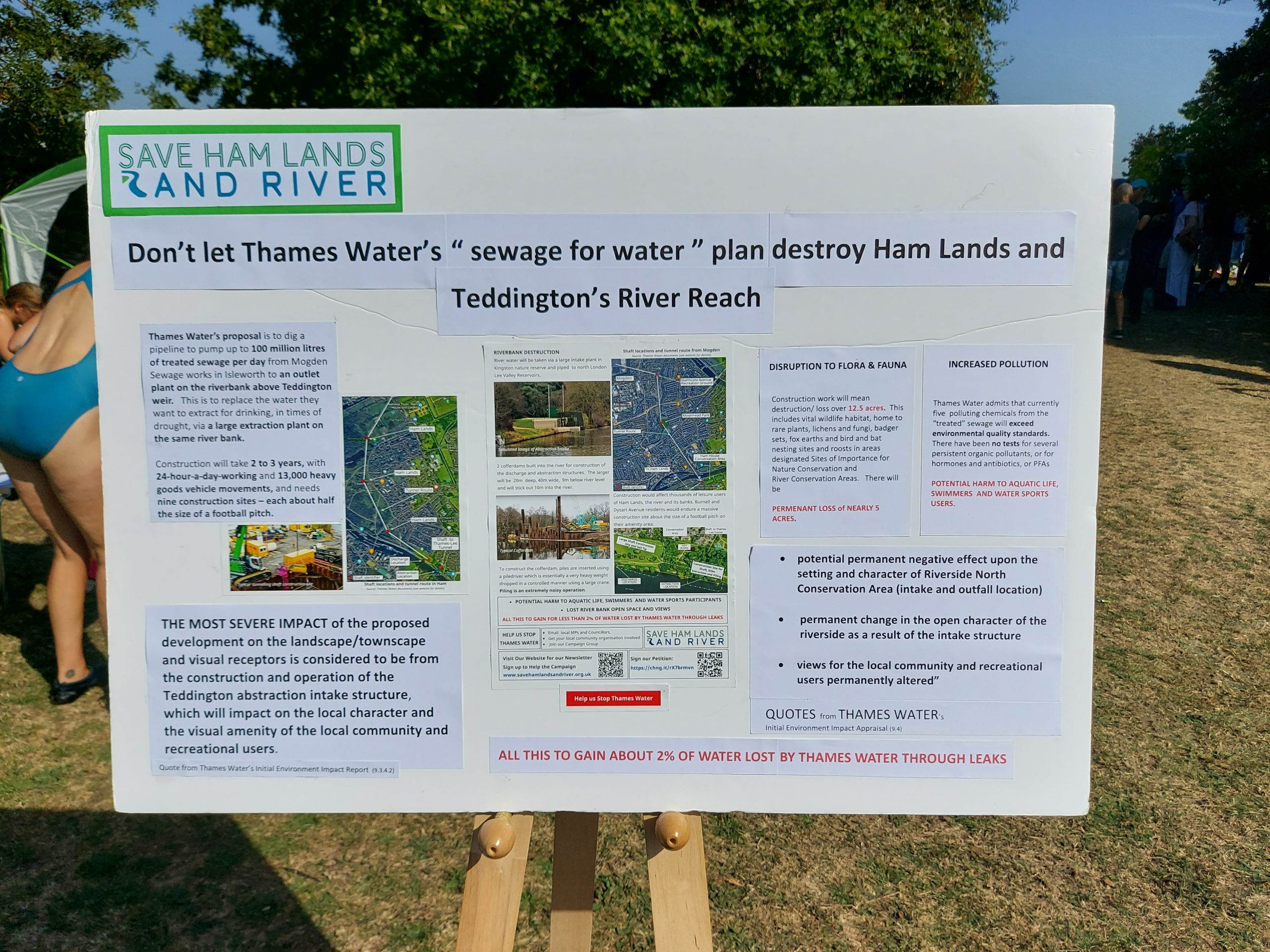
I joined a protest against Thames Water’s plans to build a river abstraction plant on the nature reserve and riverbank near Ham.
Take part in a local or national survey.
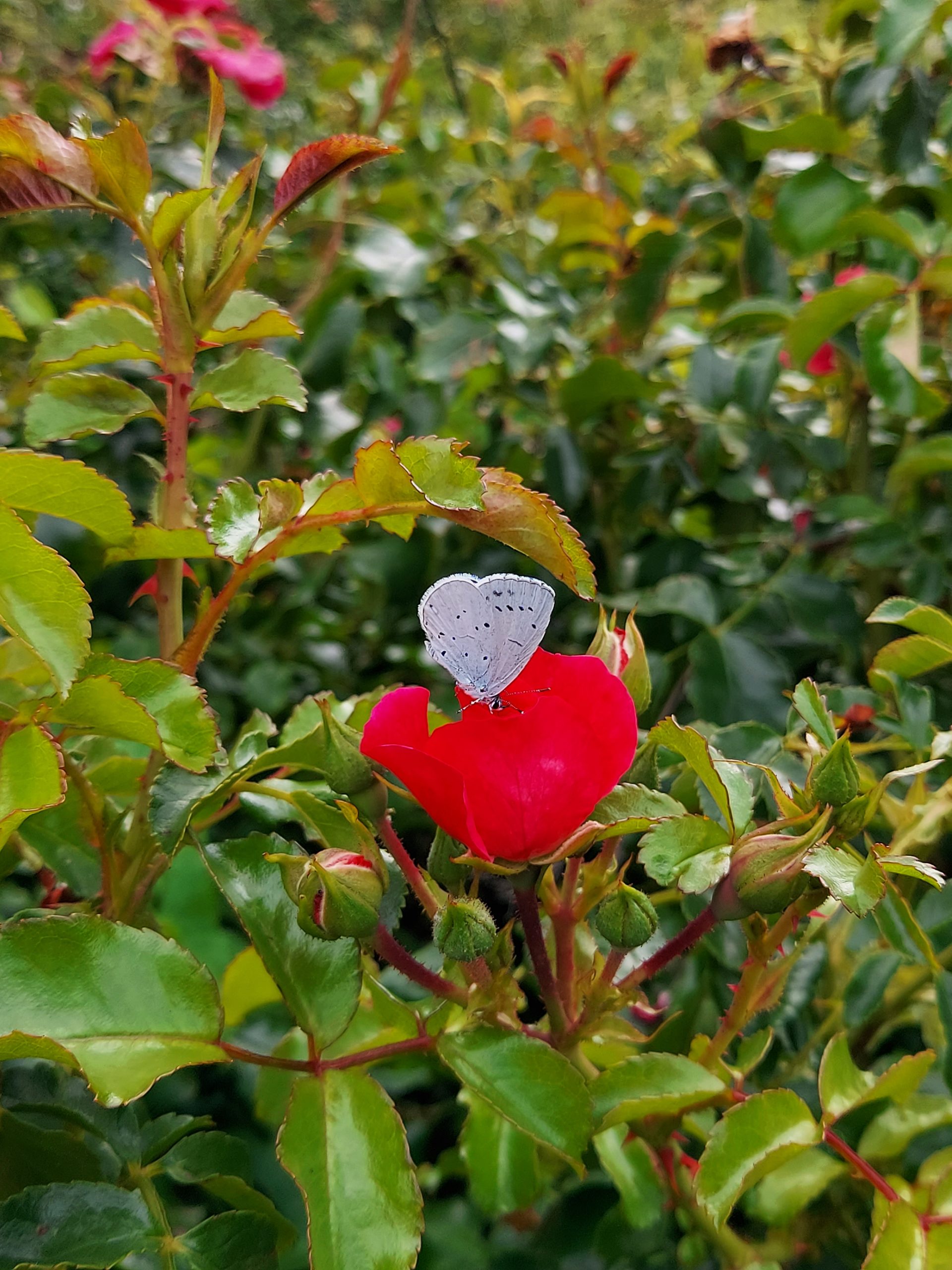
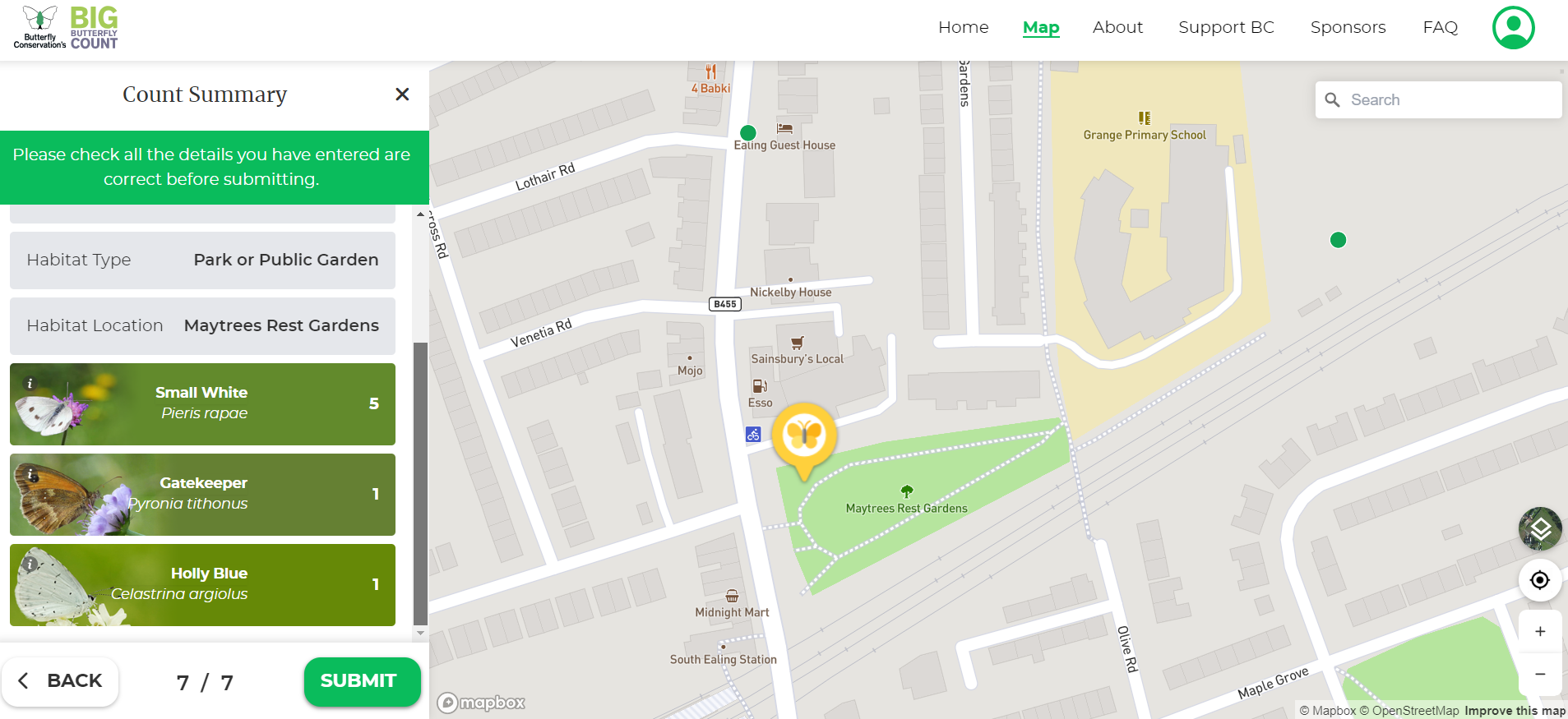
I took part in the Big Butterfly Count in a green space local to me. I really enjoyed the count, and it made me really stop and think about the species of butterfly I was observing.
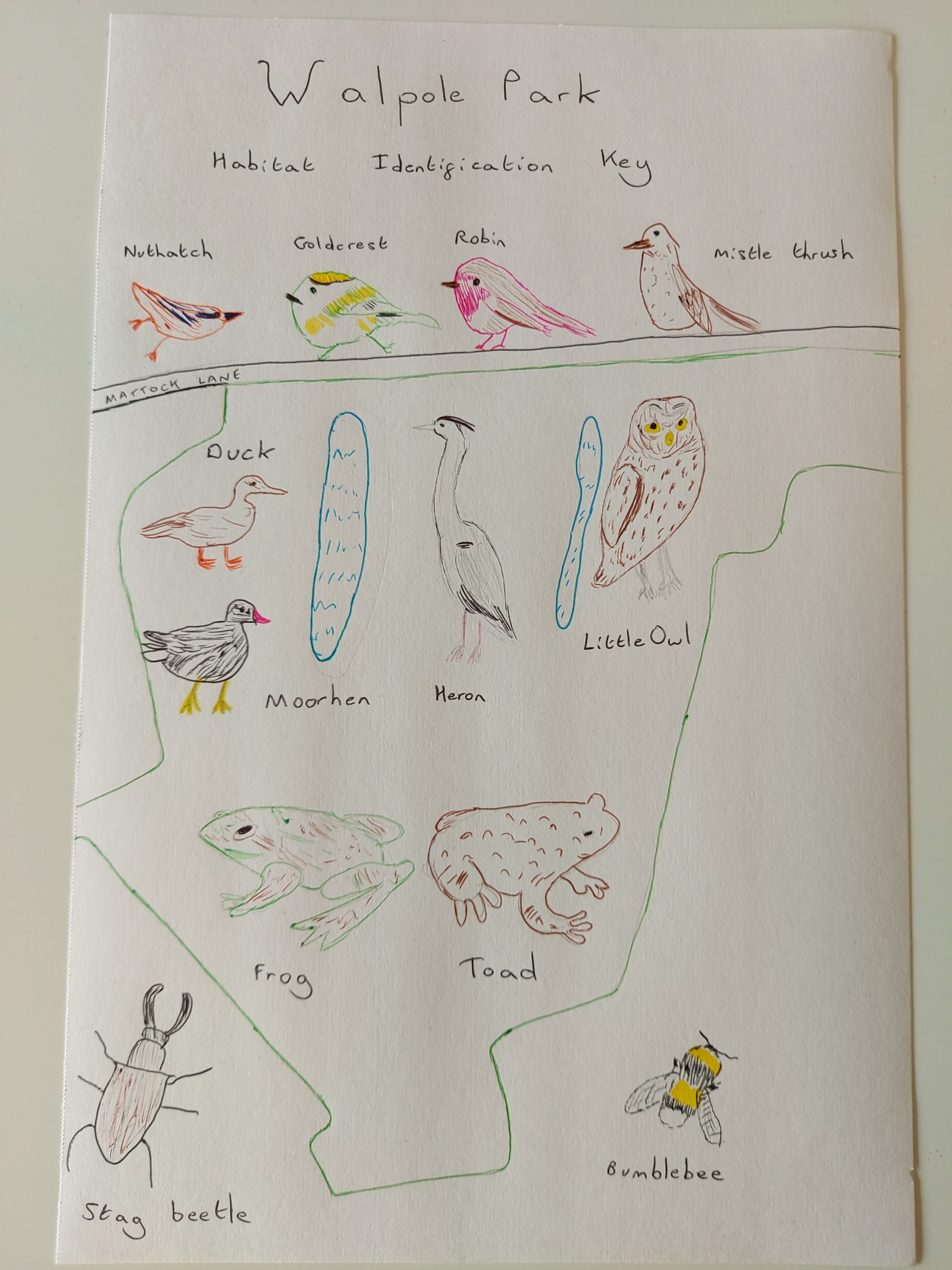
Make an identification key for a local habitat of your choice.
I made a key for a park local to me. My drawings aren’t the best, but I enjoyed doing it.
Go on a nature walk with a group.
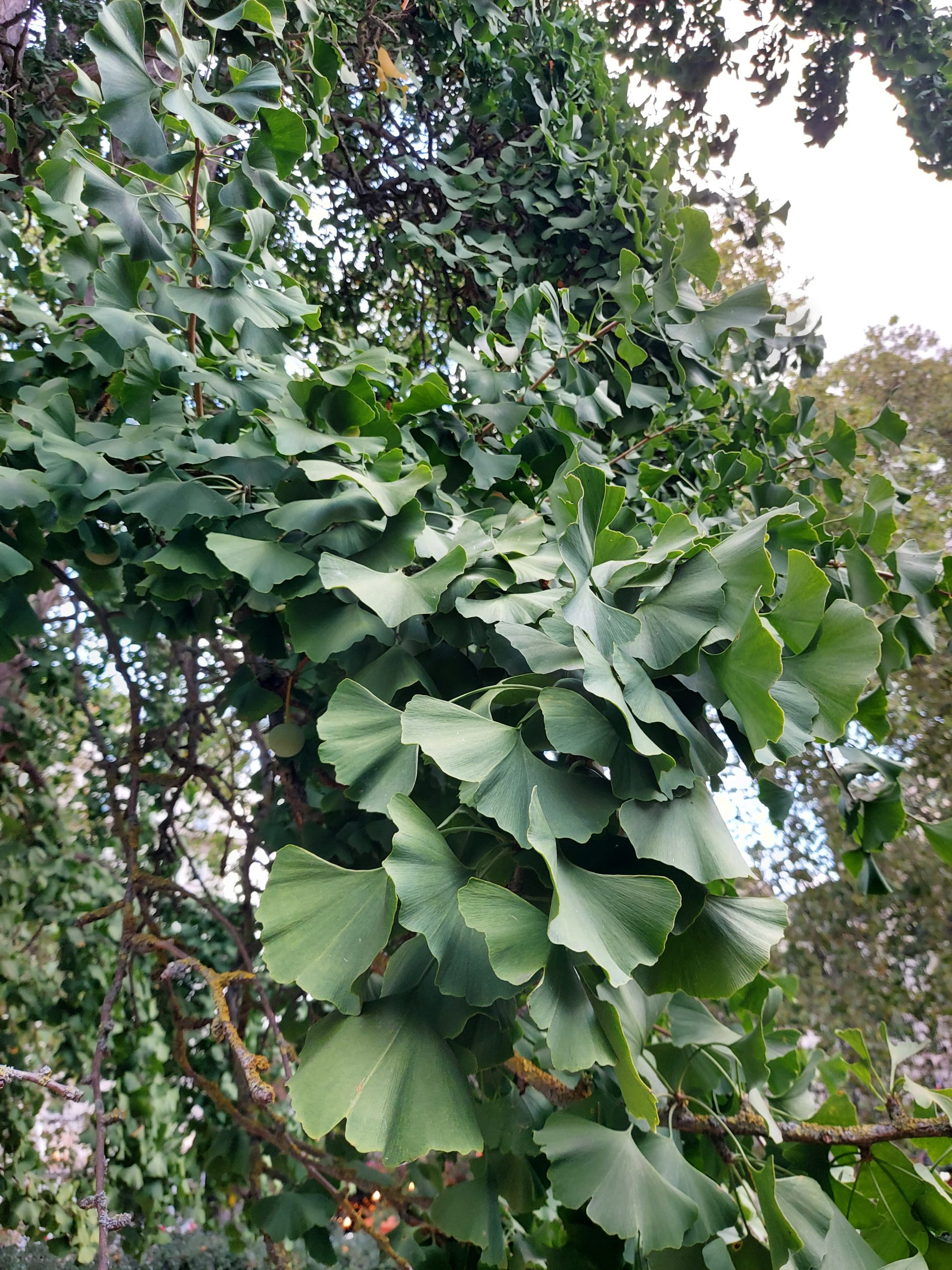
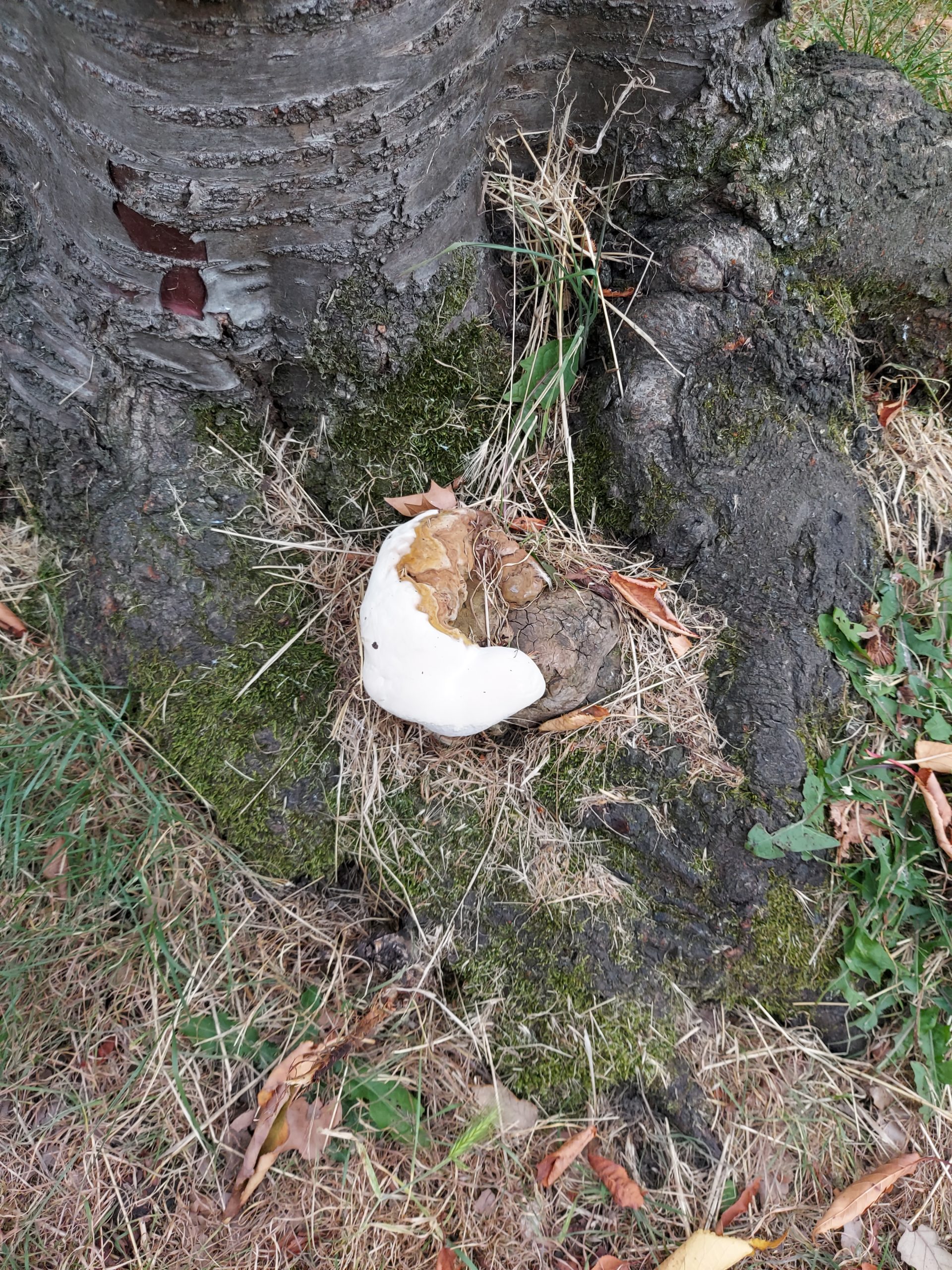
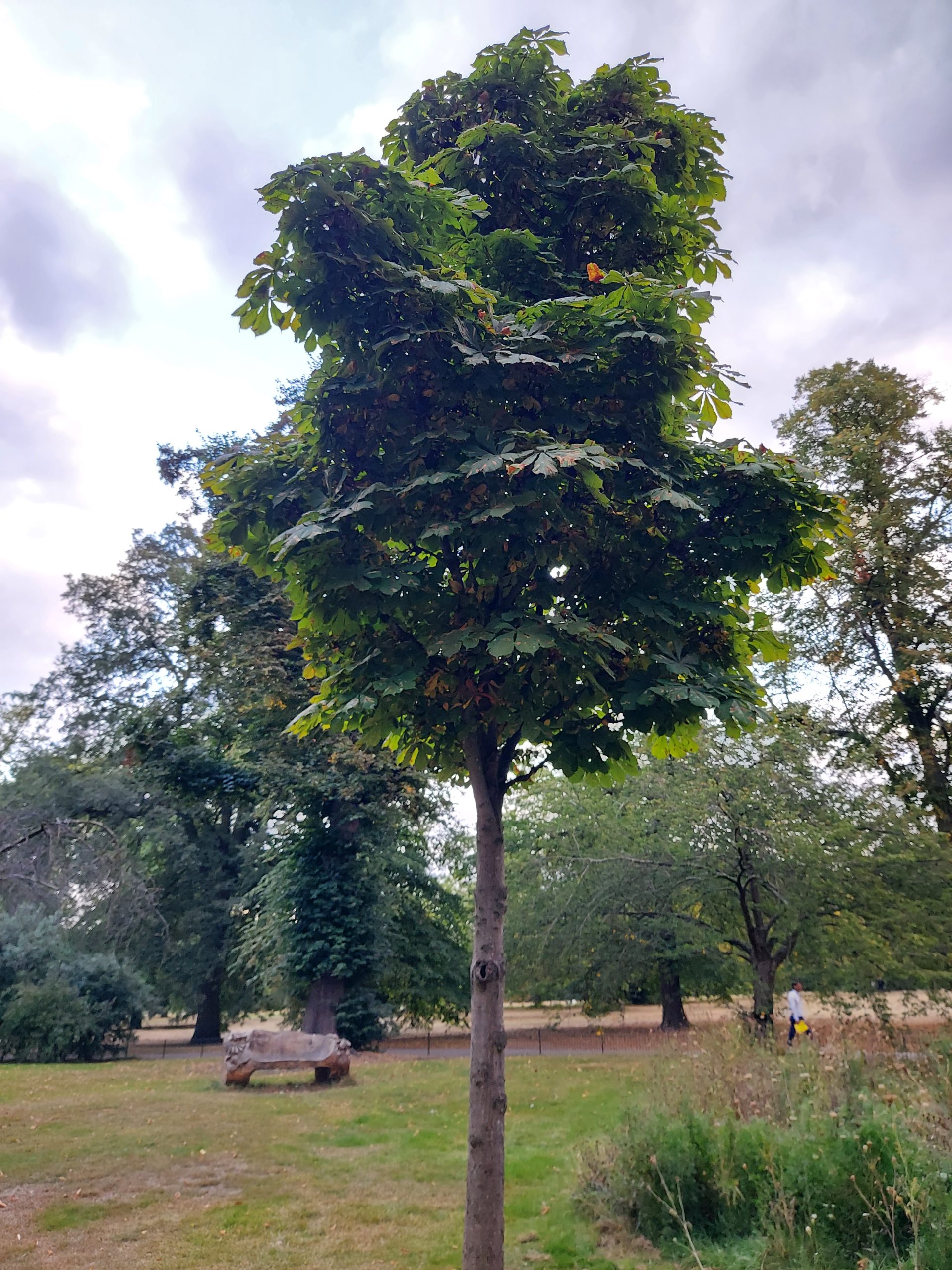
I went on a nature walk in Kensington Gardens organised by the Royal Parks. Some of the things we saw included ginkgo biloba, yew and chestnut trees, fungi such as artist’s bracket and birch polypore, insects such as a carder bee and interesting things such as bat boxes and a loggery for insects.
I learned lots: the most interesting thing I learned was that oak gall ink – made from oak apple galls produced by wasps – was the first permanent ink, made with ground up oak apple galls and iron sulphates. The Magna Carta and the American Declaration of Independence were signed in this ink.
Learn about the Countryside Code.
I read up about the Countryside Code and found it very interesting.
When I first bought my Rebel Badge Book, I thought there would be no way I’d ever be able to manage the Camper badge. Then Rebel Summer Camp was announced, and I hoped that I would be able to complete the badge there. Luckily all went to plan, and I did!
Spend at least 3 consecutive nights under canvas
The camp lasted from the Friday to the Monday, with exactly three nights’ camping – perfect!
Pitch and strike the tent
I managed to pitch and strike my brand new tent, albeit with help (but who can actually manage to put a tent up on their own?). I’m pretty sure I could manage it alone if I had to – once we’d worked out where everything went, it was pretty straightforward.
Keep your belongings safe and dry
My tent proved to be brilliant – it was double-skinned and didn’t let any rain in at all. I kept my shoes and beers in the little front porch bit and they stayed dry too.
Design the menu for the trip
I brought my own breakfasts and evening meals for the trip – all simple options in tins or packets that didn’t require refrigeration or special storage. I chose to buy my lunches on-site, mainly to save time in the middle of the day.
Kit out your camp kitchen
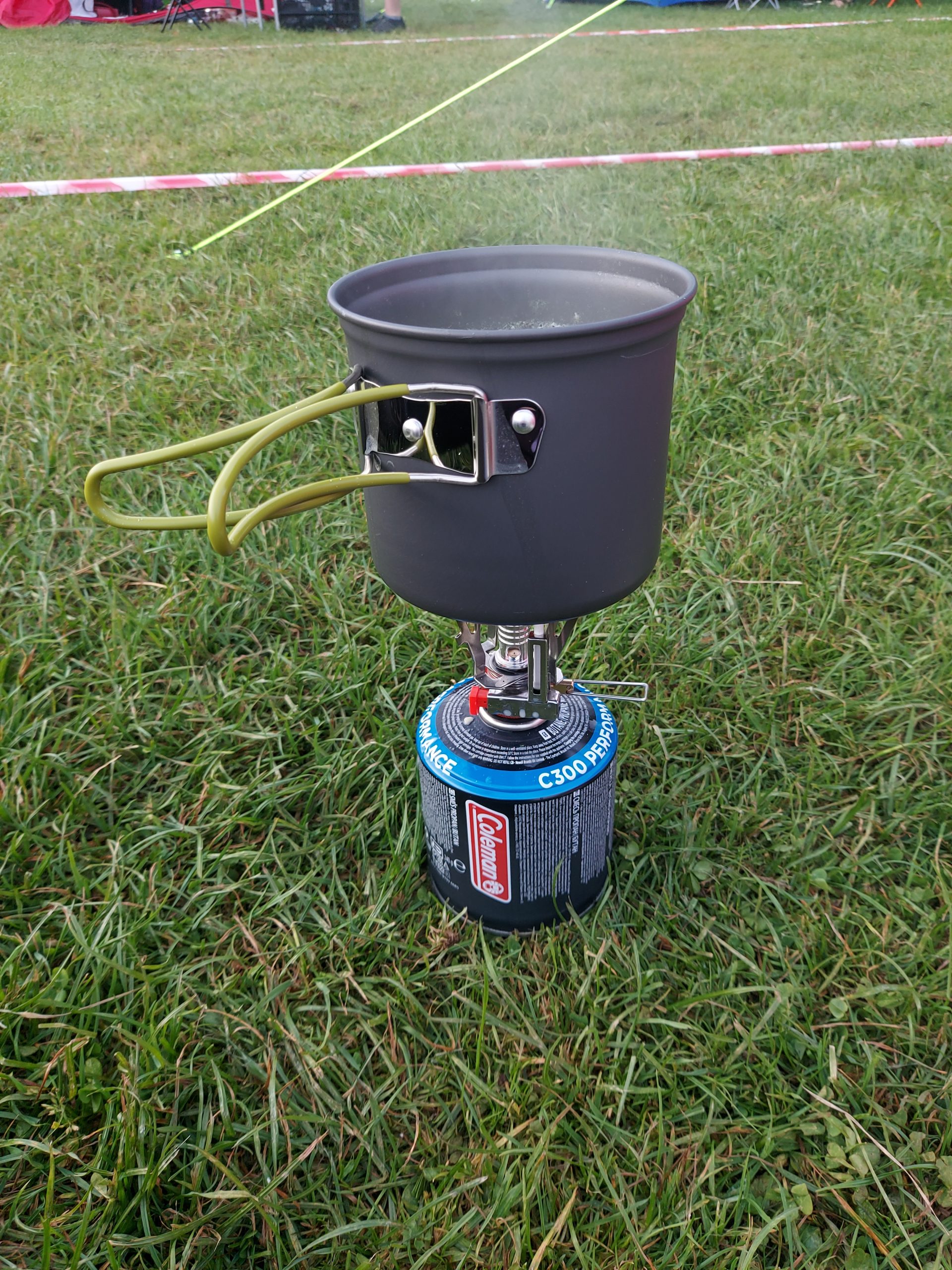
I bought a little camping stove which came with a large pan, a small pan, cutlery and a washing up sponge. I brought some washing up liquid with me and purchased a gas canister for the stove.
Cook at least 4 meals outdoors
I cooked my 3 breakfasts and 3 evening meals outdoors on my new little camping stove. I went for the easy option and chose beans & veggie sausages in a tin for my first breakfast, porridge in a pot for the others, and pasta in sauce for my evening meals.
Leave minimal trace
I’m happy to say that when my tent was packed up, there was nothing to show I’d been there other than a patch of slightly lighter grass. I produced minimal non-recyclable waste (probably less than I do in everyday life).
Know how to treat camp injuries
I learned these skills as part of my First Aid course in June 2023. Luckily I didn’t need to use them!
Prepare a first aid kit for your trip
I bought a first aid kit from St John’s Ambulance and ensured I took all my medications with me. I looked up the location of the nearest A+E before I got to Bromsgrove.
Take part in 3 outdoor activities during camp
I took part in loads of different outdoor activities during Rebel Camp – definitely more than 3!


 Ready for Bollywood
 My birthday card collage