I was really looking forward to this one! April’s monthly challenge was the Chocolate Challenge, and in between going on holiday and spending Easter with my parents, I ate more chocolate than I have done for ages! Of course, I managed to complete some other clauses too.
Research the history of chocolate, and how it has changed over the years.
I read The True History of Chocolate by Sophie D. Coe and Michael D. Coe. It was fascinating and I learned a lot.
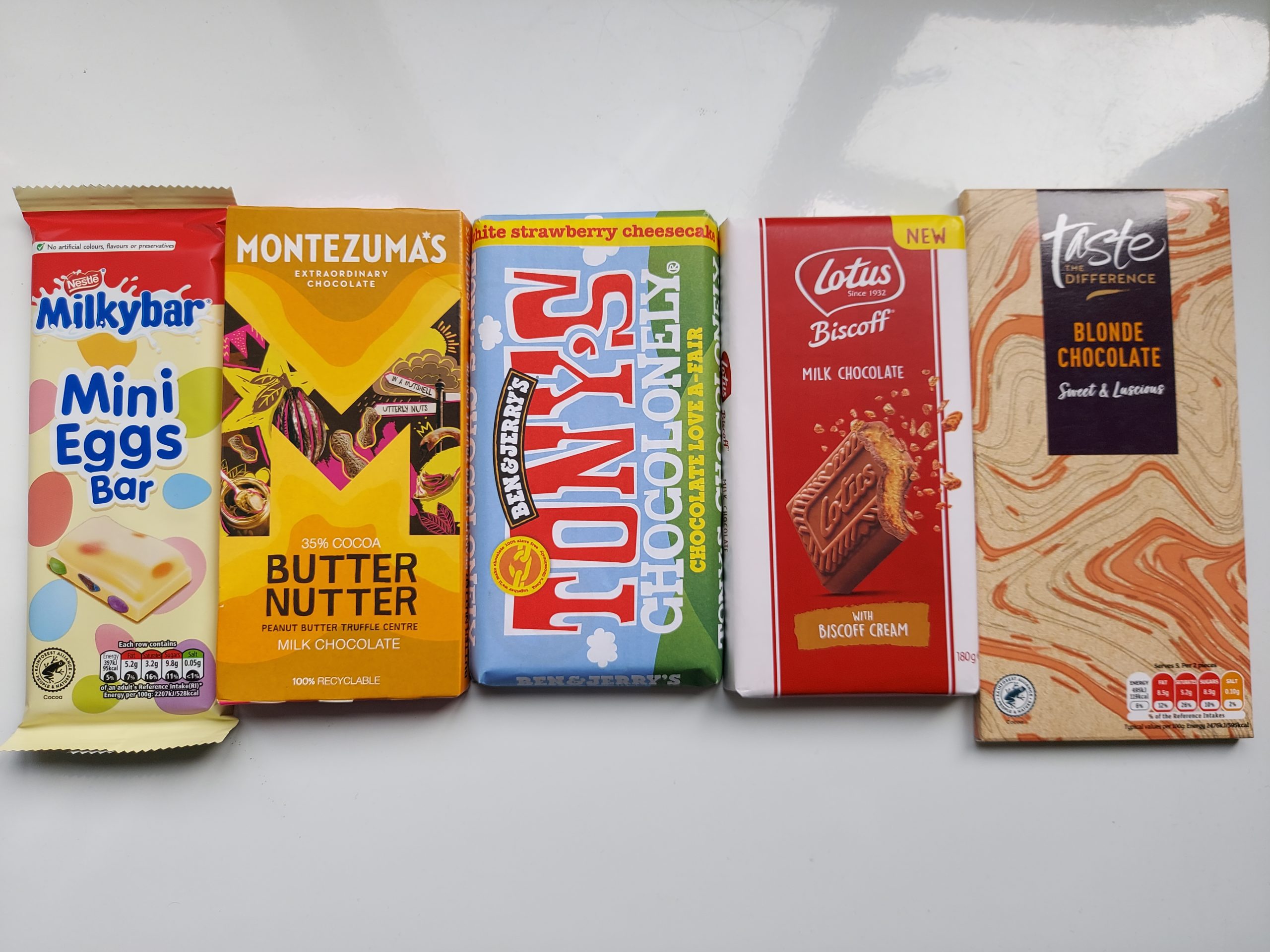
Try five new flavours of chocolate that you’ve never tried before.
This clause was probably my favourite! I tried the following:
- Milkybar Mini Eggs Bar (Creamy white choc, mini eggs add texture and more intense milk choc flavour)
- Montezuma’s Butter Nutter (Yummy peanut butter inside sweet chocolate, like Reese’s but the chocolate is actually good)
- Tony’s Chocolonely Strawberry Cheesecake (Creamy and sweet with biscuit pieces, but the strawberry was a bit too chewy)
- Lotus Biscoff Milk Chocolate (Crunchier than expected with that delicious Biscoff taste)
- Sainsbury’s Taste the Difference Blonde Chocolate (More intense than white chocolate with a rich caramel hit)
Honestly, they were all amazing and I’d give them all 5 stars except for the strawberry cheesecake, as the strawberry bits were a bit chewy and didn’t go too well with the rest of the bar.
Find out about the Fairtrade mark and ethical chocolate production.
The Fairtrade mark is a label awarded to a product that meets international Fairtrade standards. These standards include social, economic and environmental requirements that need to be met, as well as progress requirements showing that standards are continuously improving. This webpage explains more about these standards.
I found this article which looked at some of the biggest ethical issues surrounding chocolate production, including poverty, child labour and deforestation, and the ways in which this is being tackled.
Give someone a chocolate bar as a random act of kindness.
I gave chocolate bars to my housemates before I left to go home for Easter.
Learn about chocolate classification.
I found this really interesting. I learned the following:
- Dark chocolate contains 65% to 99% cocoa mass and 1% to 40% sugar.
- Dark milk chocolate contains 50% to 70% cocoa mass, 20% to 30% milk powder, and 20% to 30% sugar.
- Milk chocolate contains 35% to 55% cocoa mass, 20% to 25% milk powder, and 20% to 25% sugar.
- White chocolate contains 30% to 45% cocoa butter, 25% to 40% milk powder, and 25% to 55% sugar.
- Ruby chocolate contains 40% to 55% cocoa mass, 15% to 30% milk powder, 15% to 30% sugar, and 1% to 5% citric acid.
- Gianduja chocolate contains 20% to 40% cocoa mass, 25% to 35% hazelnuts, and 30% to 40% sugar.
I made a chart to demonstrate this:

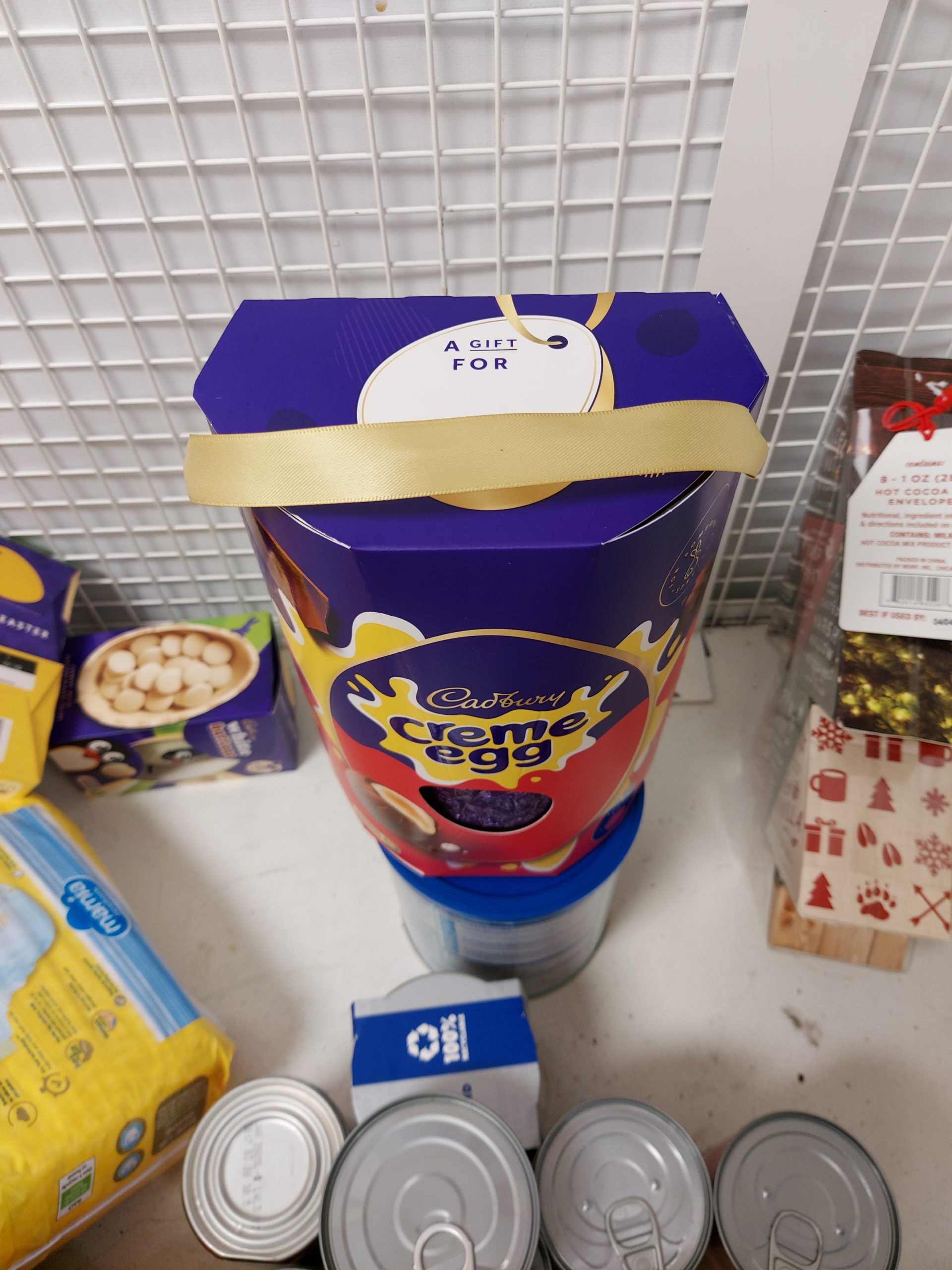
Donate an Easter egg to a foodbank.
I did this on April 1, the first day of the challenge, to make sure it was done in time for Easter.
Try a chocolate which meets a dietary requirement you don’t have.
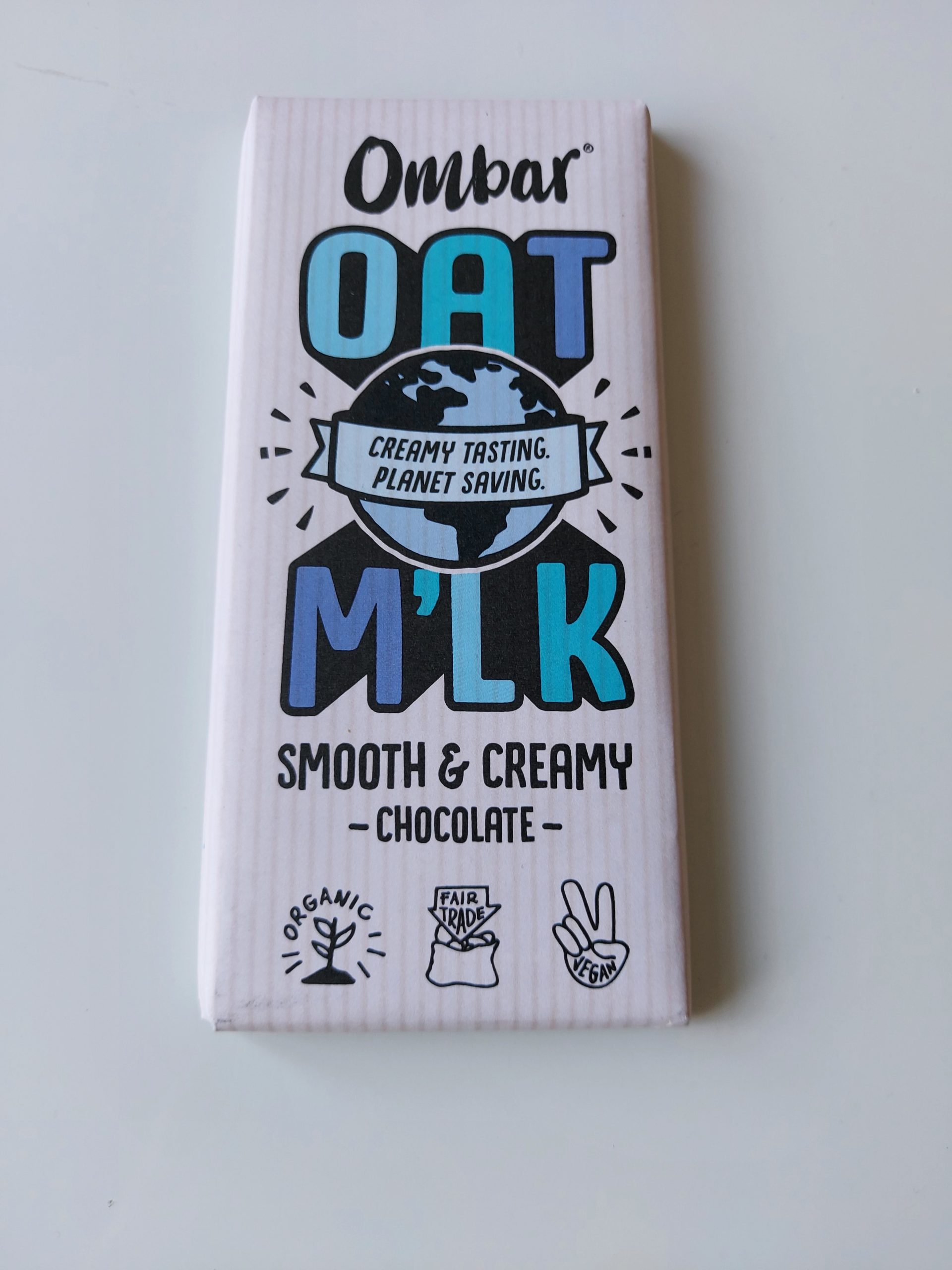
I tried the Ombar Oat Milk chocolate. It wasn’t horrible but just didn’t taste as nice as standard milk chocolate, so I don’t think I’ll be eating it again! Also, why is alternative milk chocolate so much more expensive than normal milk chocolate?
Blind test five different brands of the same type of chocolate.
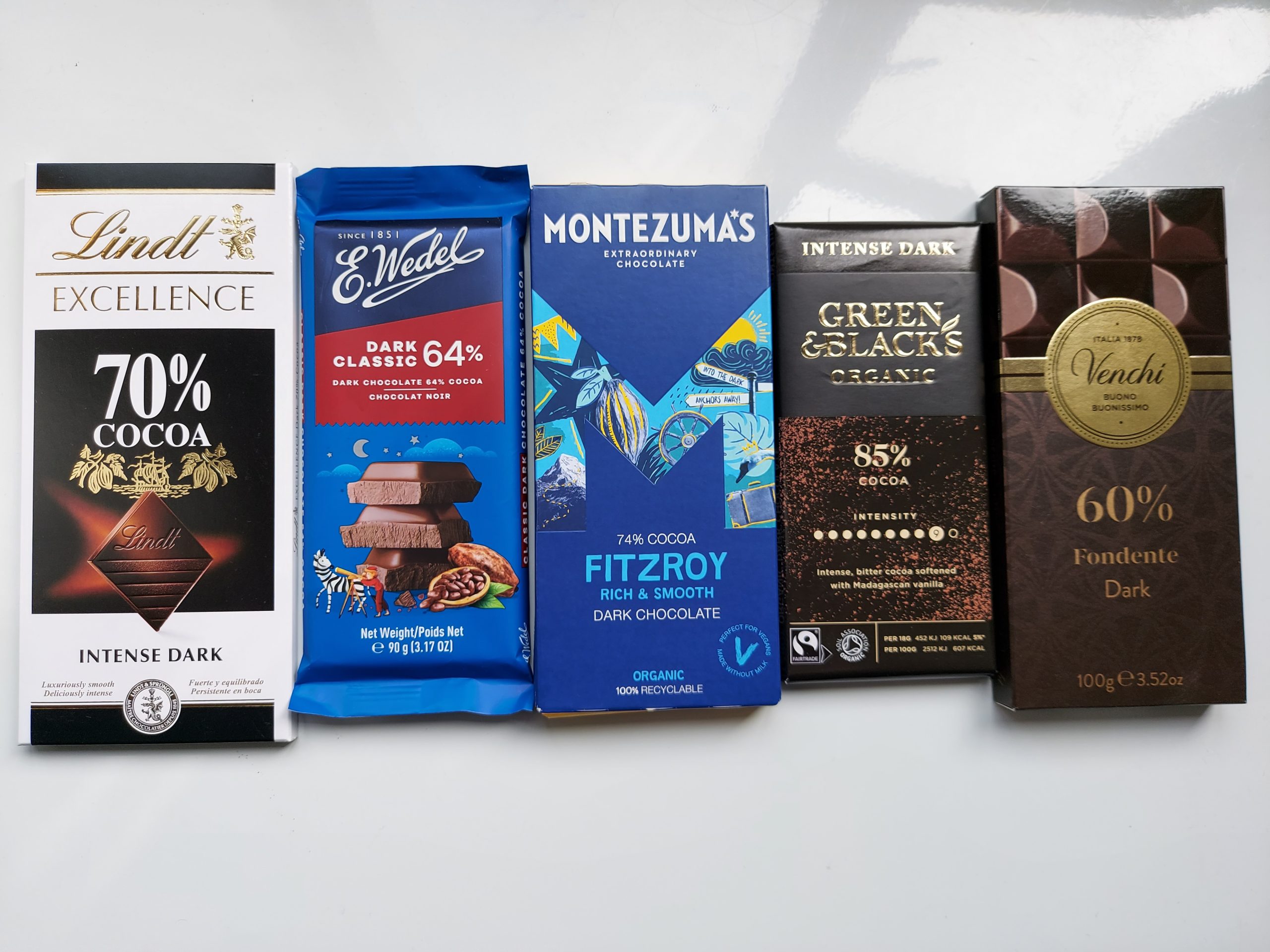
I tried five different types of dark chocolate, and would put them in the following order:
- Venchi 60% Dark
- E. Wedel 64% Dark Classic
- Lindt Excellence 70% Cocoa Intense Dark
- Montezuma’s Fitzroy 74% Cocoa Dark Chocolate
- Green & Black’s Organic 85% Cocoa Intense Dark
The bad news was that the most expensive bar (Venchi) was my favourite. The good news was that the cheapest bar (E. Wedel) was my second favourite. In fact I think I just prefer dark chocolate that is 60% or so rather than the more intense 80% plus.