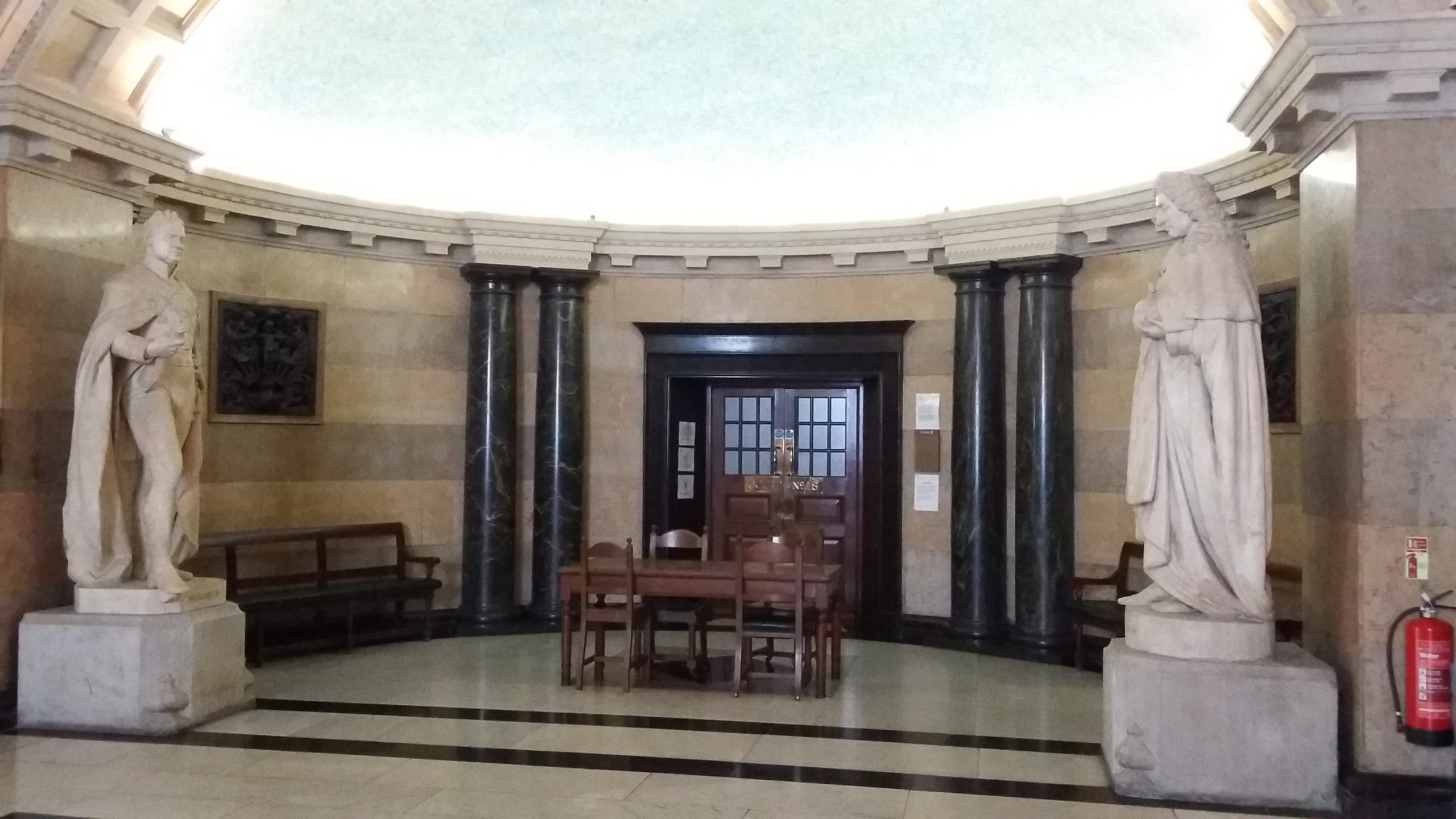
I was thrilled to get the chance to tour the Old Bailey, officially known as the Central Criminal Court, as part of Open House London. This imposing building is recognisable internationally by name, and it and its site is full of history.
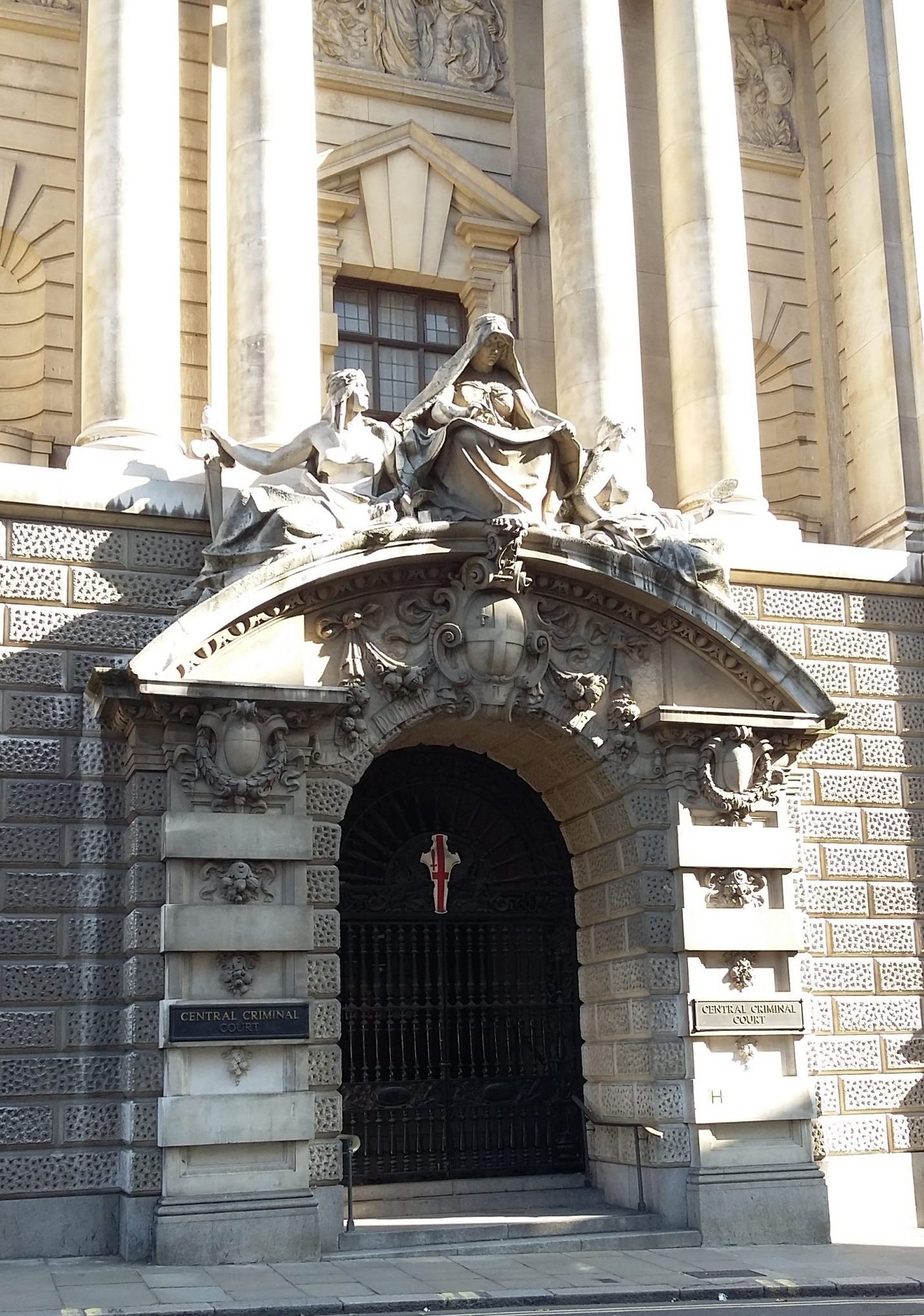
The building’s full name is the Central Criminal Court of England and Wales, but it is usually referred to as the Old Bailey, after the street on which it stands. It has been housed on the same site since the sixteenth century, and was formerly attached to the infamous Newgate gaol, which was demolished in 1904; an extension South Block was later constructed over the site.
Newgate
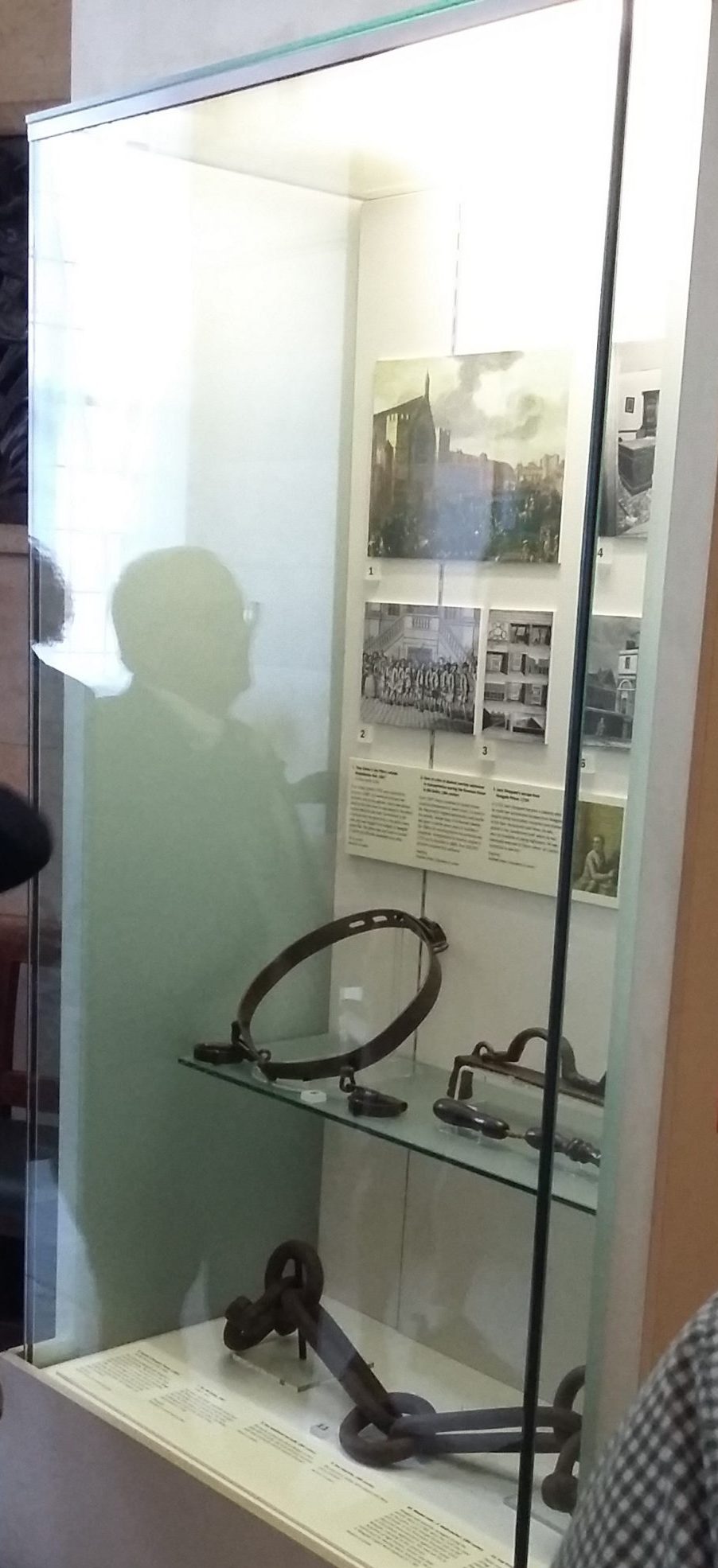
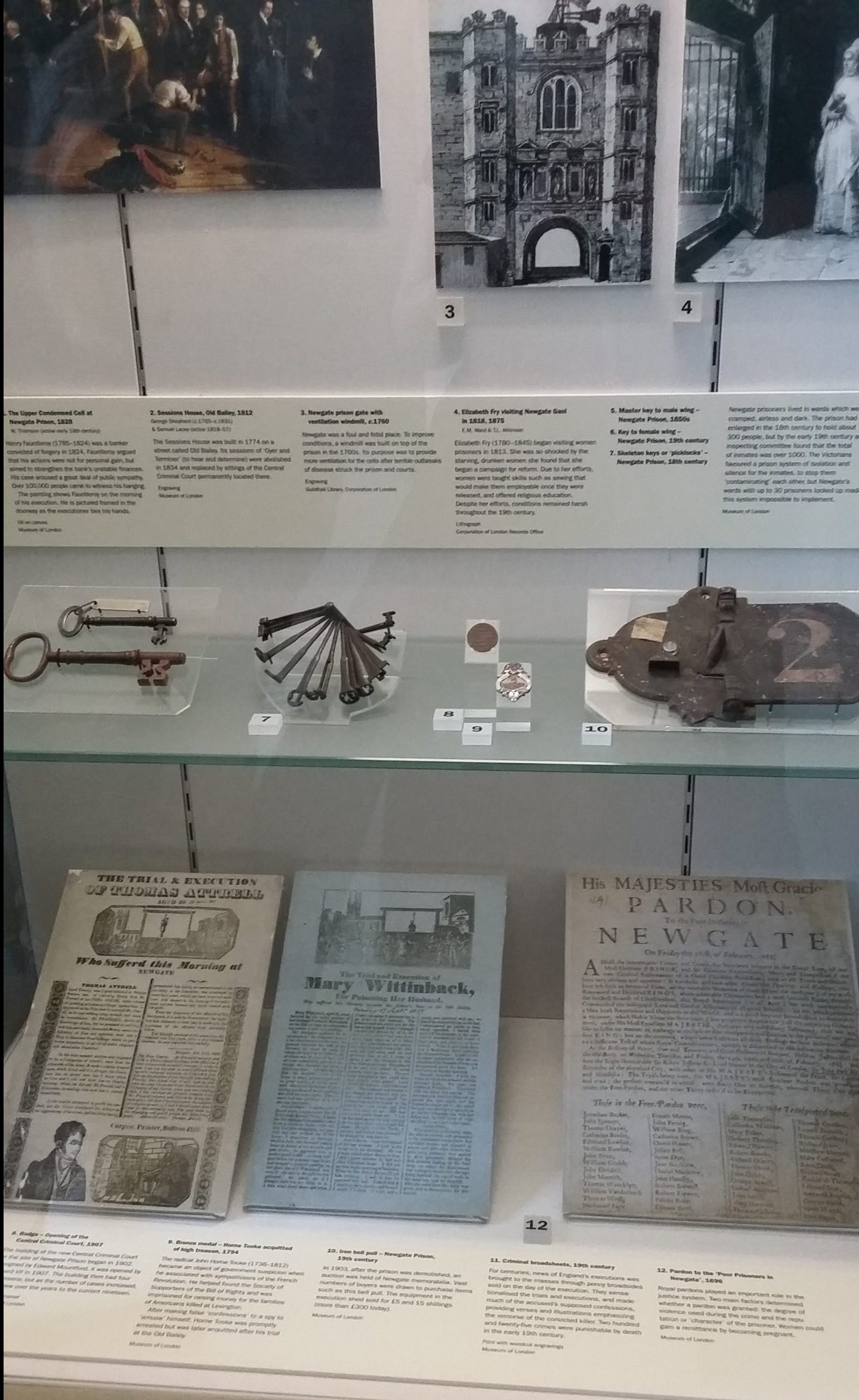
The prison, the name of which will be familiar to many thanks to history, literature and film, was established in the twelfth century and remained in use right up until the beginning of the twentieth. It was reconstructed and rebuilt several times in its history, notably after the Great Fire of London, when it was rebuilt by Sir Christopher Wren; considerable repairs also needed to be carried out after the Gordon Riots of 1780 (described in Dickens’ Barnaby Rudge). Conditions at the prison were often poor, with inmates crowded together in unhygienic conditions with little food. Towards the end of the eighteenth century, executions took place here after the closure of the Tyburn gallows; at first they took place outside the prison in front of crowds, until 1868 when they were moved inside. Today, the Old Bailey has a display of artefacts from Newgate, including items such as manacles.
The Old Bailey
The Court was originally the sessions house of the Lord Mayor and Sheriffs of the City of London and of Middlesex. It also held trials, similar to the Courts of Assize which travelled throughout England and Wales. The first mention of the medieval court was in 1585; it was destroyed in the Great Fire of London in 1666 and rebuilt in 1674.
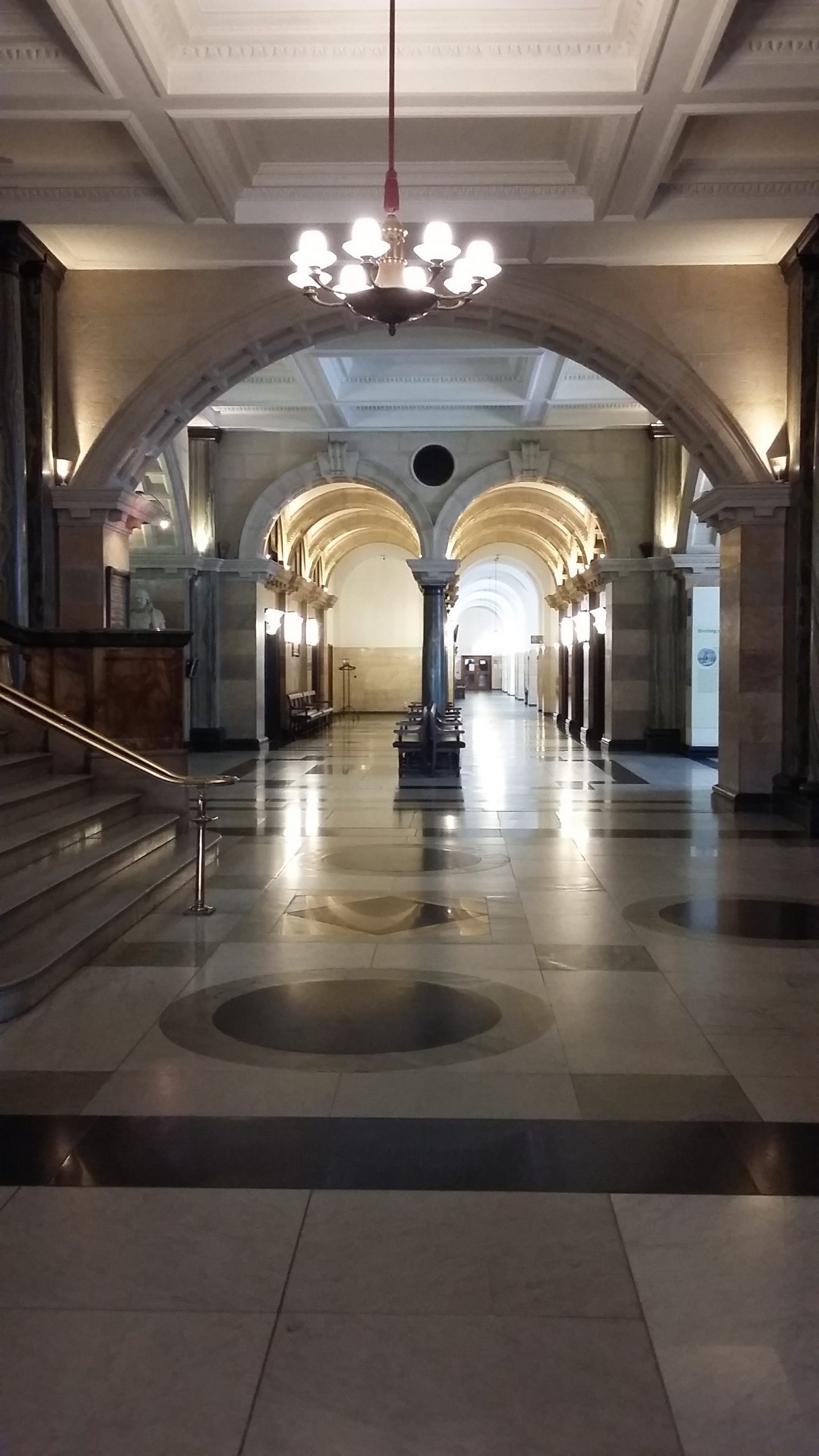
It was renamed the Central Criminal Court in 1834 and its jurisdiction grew to encompass major cases throughout England. In 1856, the Central Criminal Court Act was passed to enable high-profile trials to take place here, in part to ensure the fairness of trials concerning well-known figures who might experience prejudice (either for or against) in their local area.
The Present Building
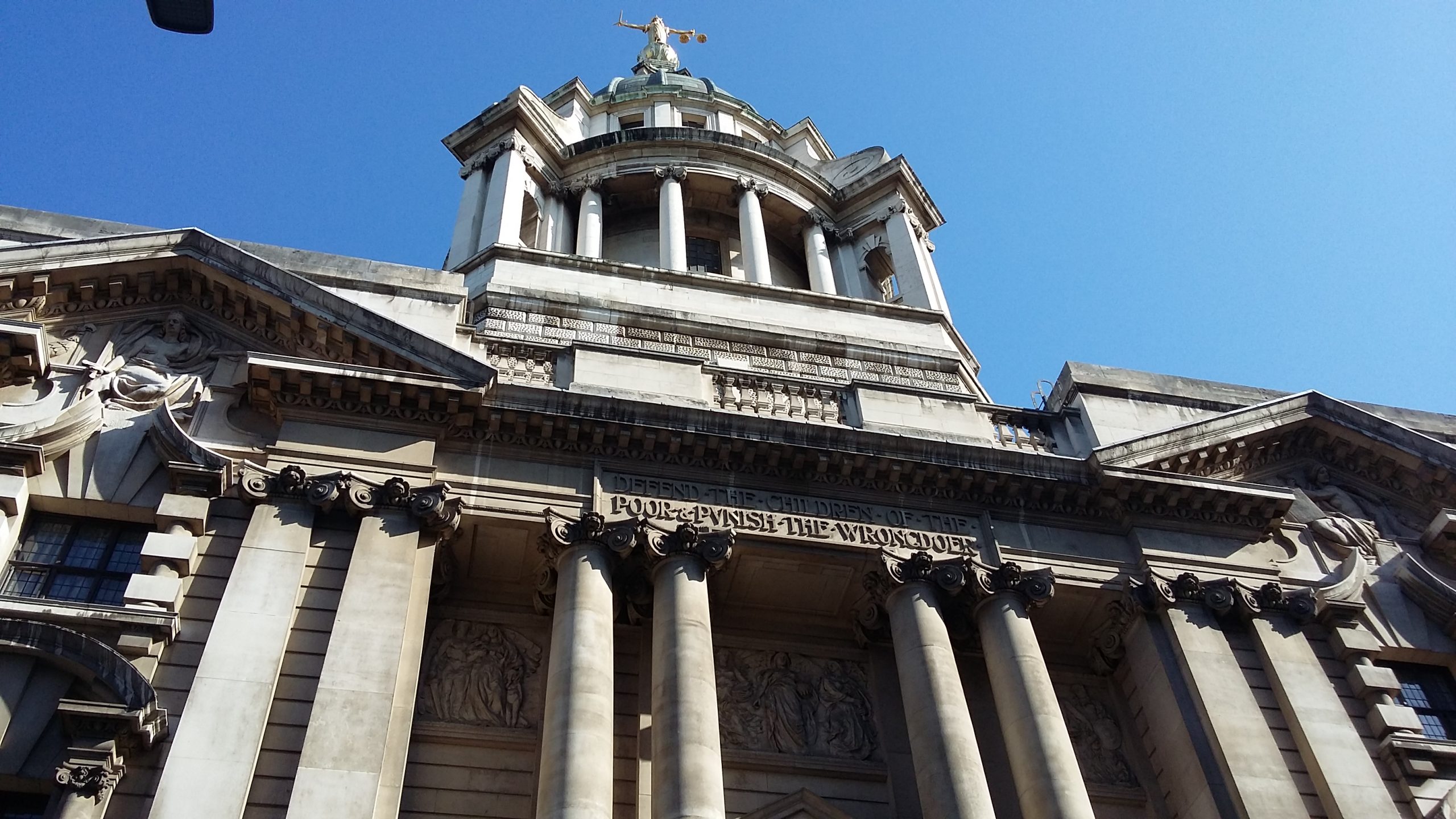
The building which stands today dates from 1902, was designed by E. W. Mountford, and was officially opened in 1907. The phrase “Defend the Children of the Poor & Punish the Wrongdoer” can be seen above the main entrance. On the dome above the court, F. W. Pomeroy’s statue of Lady Justice can be seen, with a sword in her right hand and the scales of justice in her left.

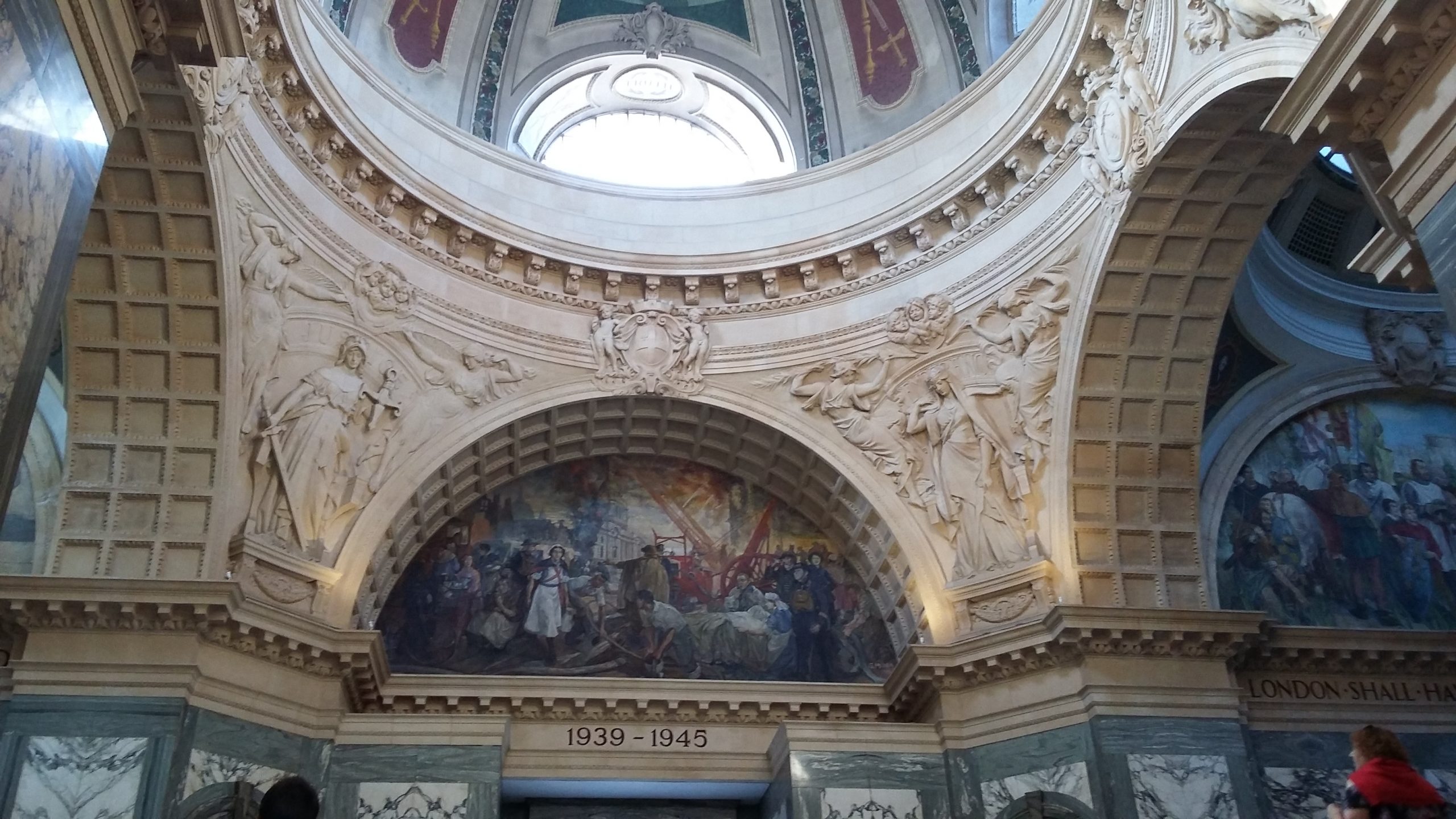
The Old Bailey was bombed during the Blitz, but reconstructed in the 1950s. The Grand or Great Hall commemorates this period of history with paintings of the Blitz, as well as images of St Paul’s and written axioms, some taken from the Bible.
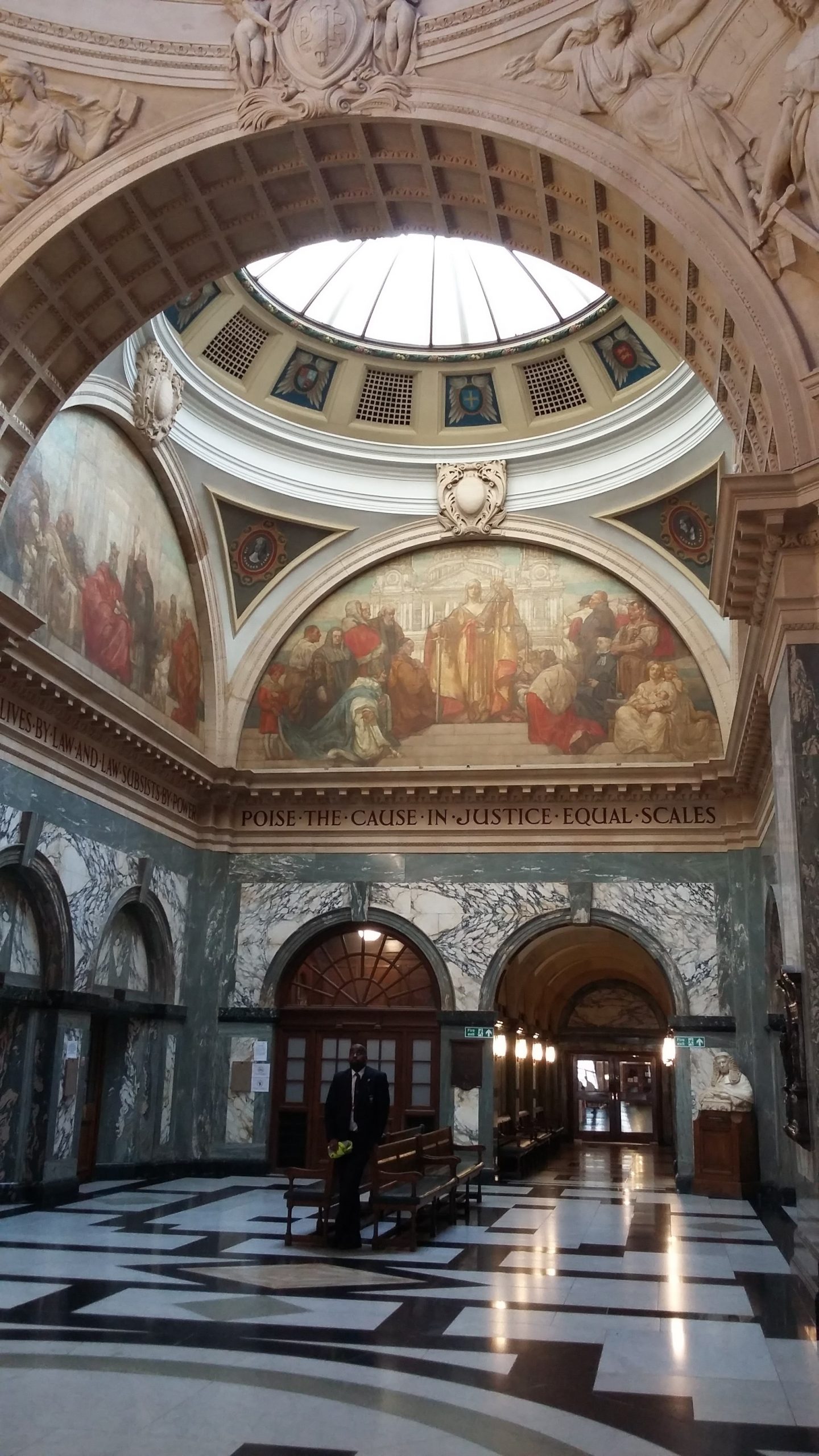
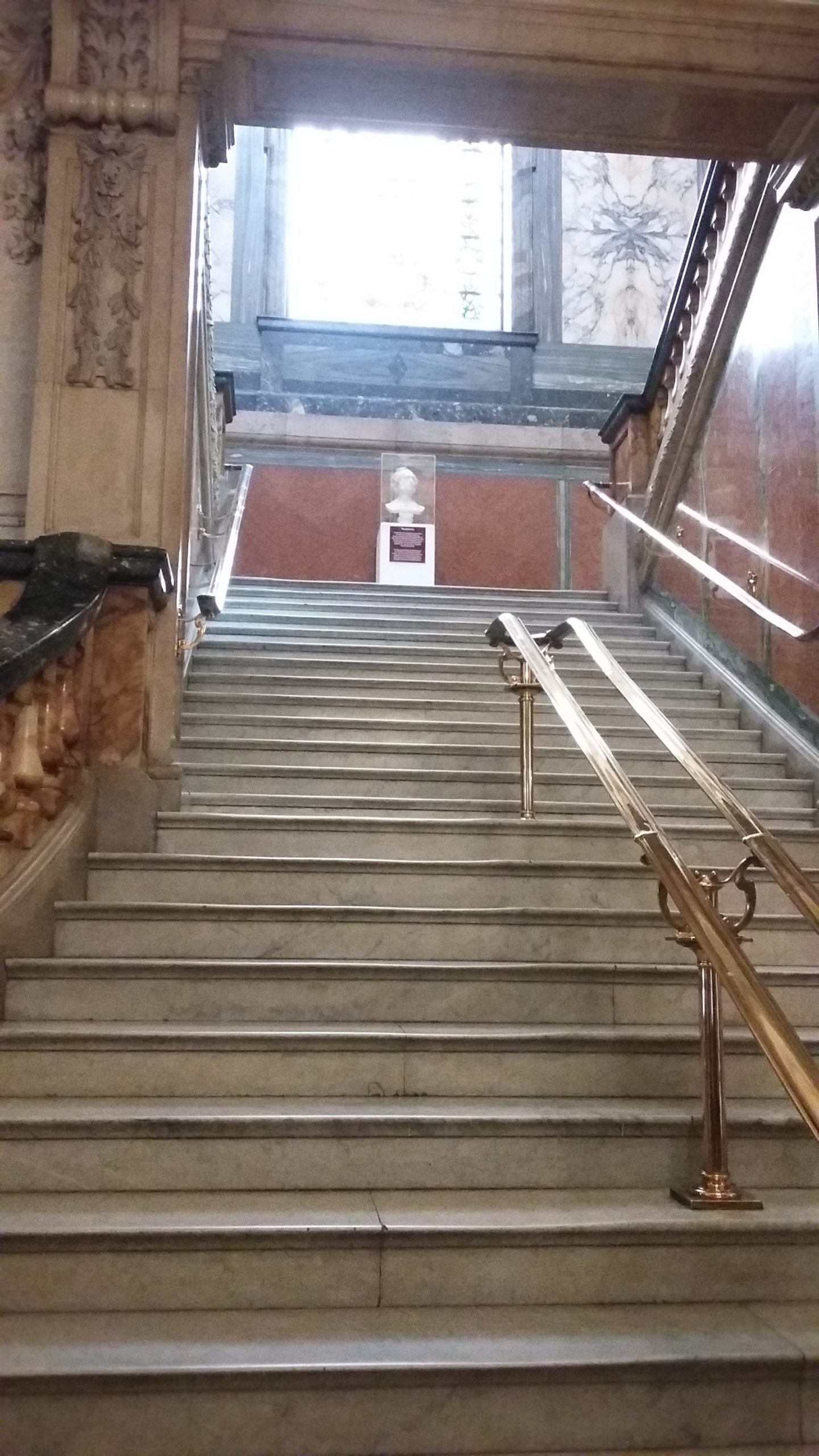
In 1973, the Belfast Brigade of the Provisional IRA exploded a car bomb in the street outside the Old Bailey, injuring 200 people and killing one. You can still view a shard of glass, embedded in the wall at the top of the main stairs, which has been preserved as a reminder.
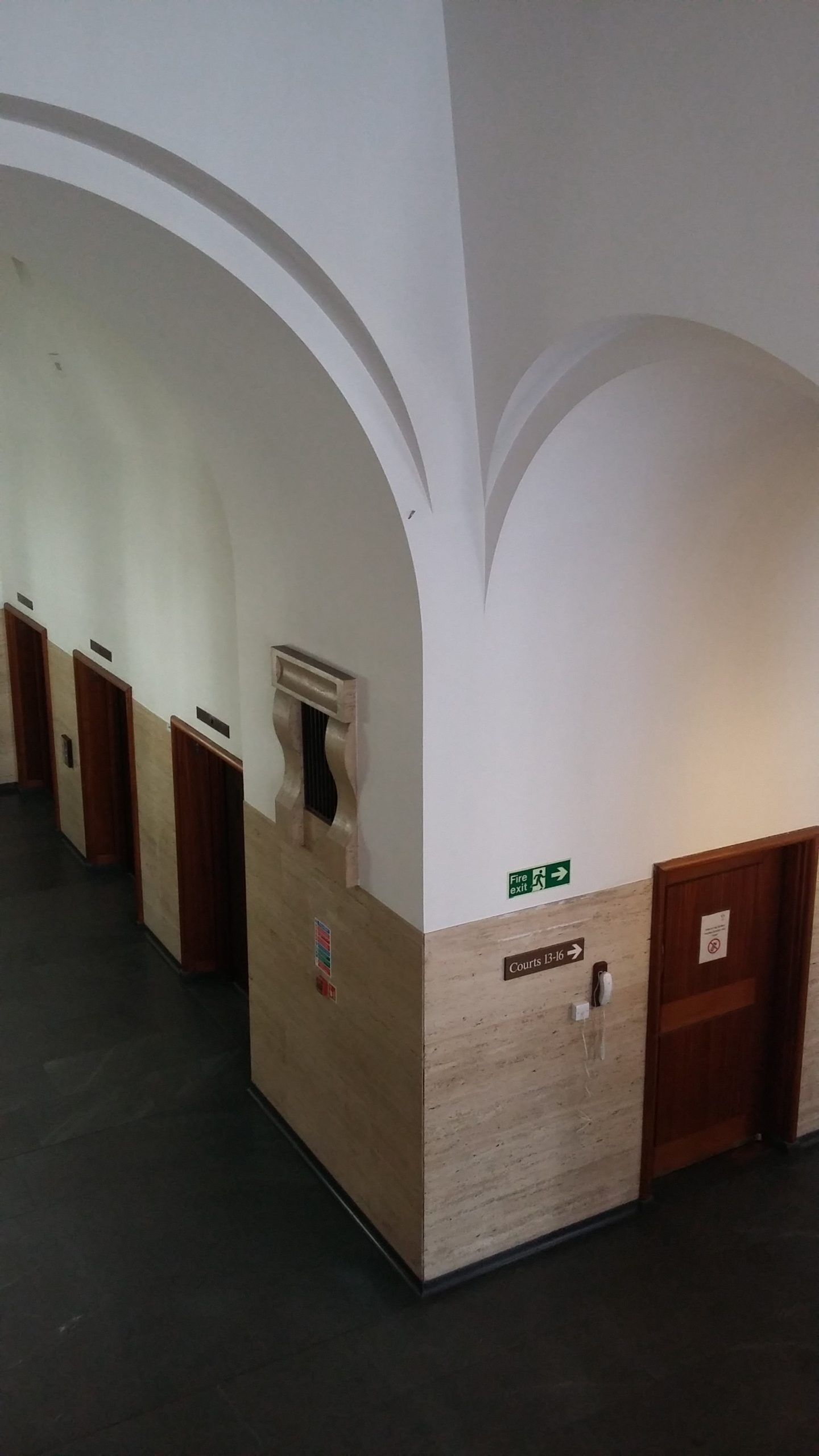
We got to stand in the courtrooms, which was a strange experience, knowing how many high-profile and notorious trials have been held here. Overall the Old Bailey is a fascinating place, and I feel lucky to have had the chance to visit.