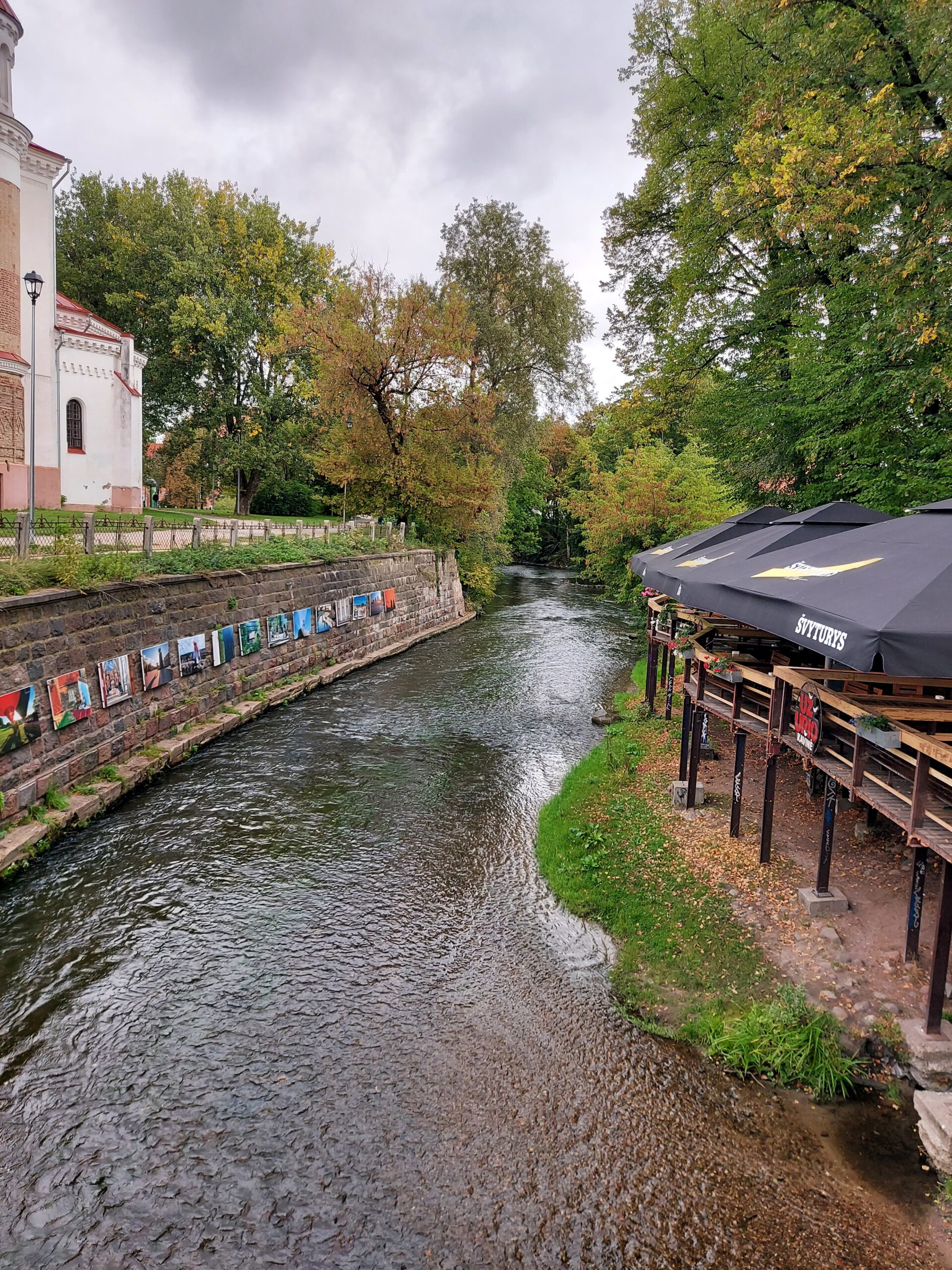
I made the most of my last day in Lithuania. I wasn’t due to fly back home until the evening, and I was up early to walk around Vilnius and explore parts of the city I hadn’t seen yet. As I mentioned earlier, it is a unique mix of pretty old buildings and new and quirky statues.
The Republic of Užupis
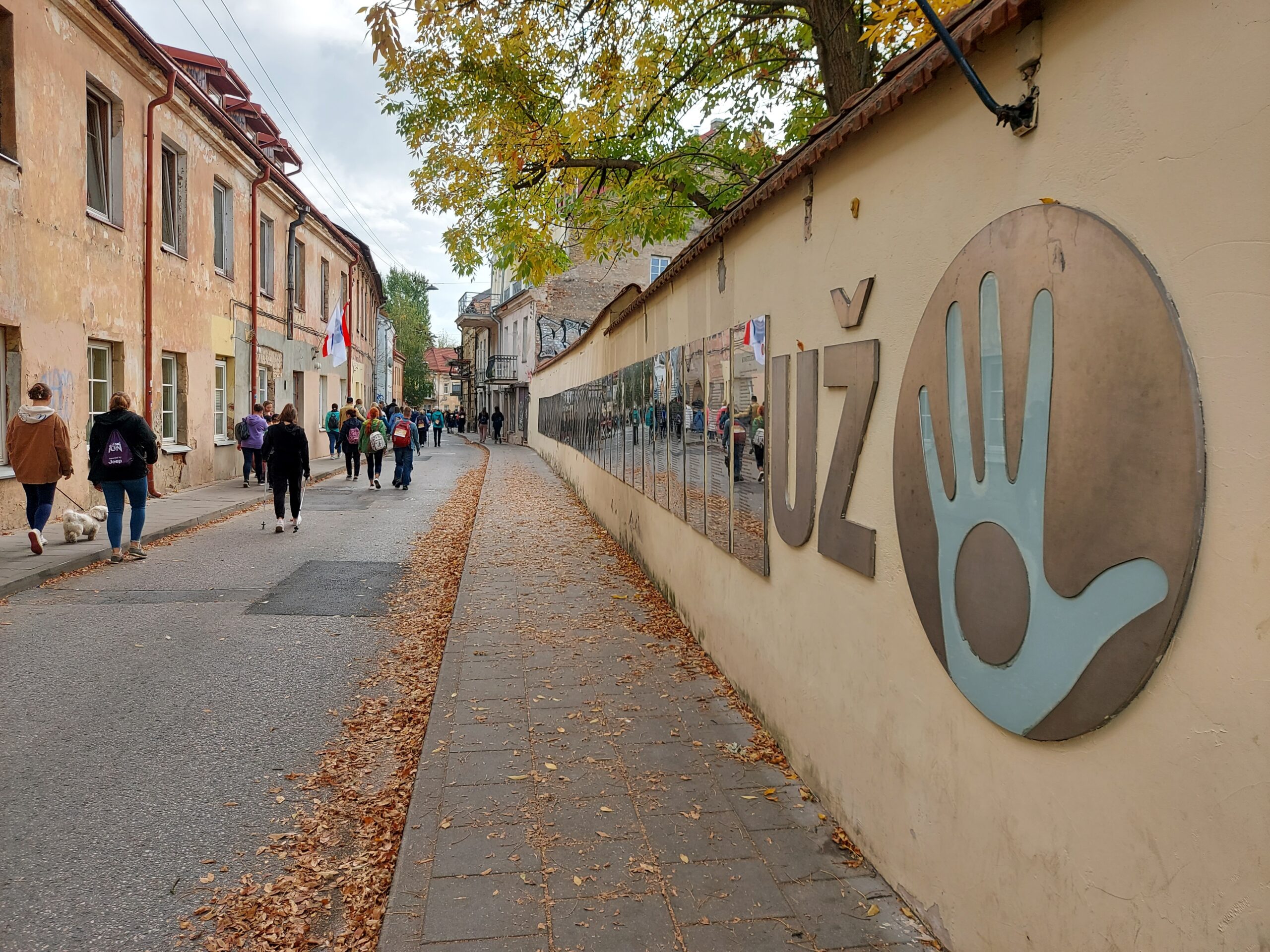
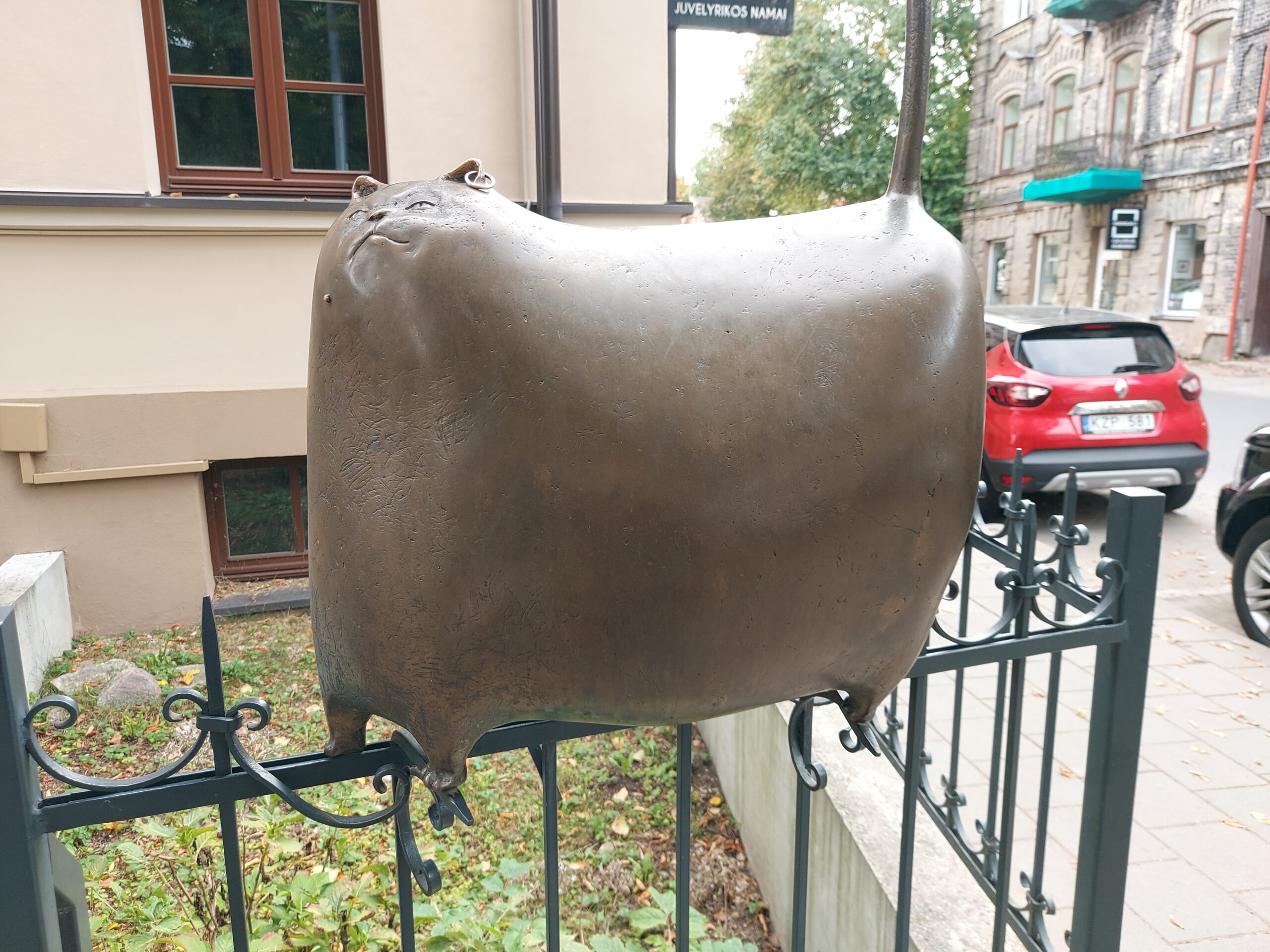
Nowhere is this more apparent than in the Republic of Užupis, a neighbourhood in the city with its own ‘constitution’. Residents, who have historically been bohemians and artists, declared the Republic back in 1997. It has its own flag, unofficial currency, president and an army (now retired). While in the area I came across the Užupis Cat, a sculpture by Jonas Geltis which invites the viewer to “Touch my ear – feel no fear”.
The Užupis Cat
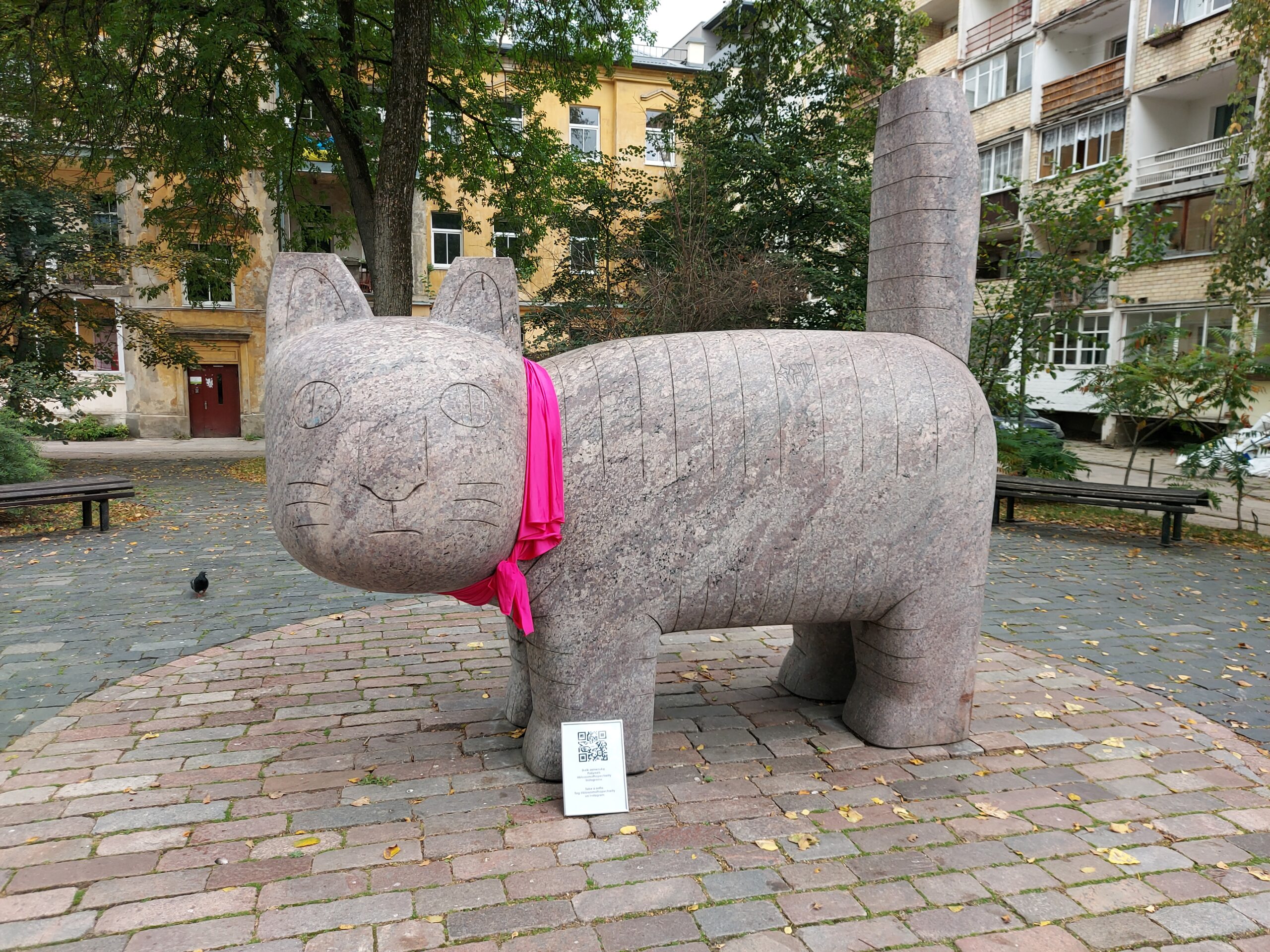
This was not the only cat sculpture I visited. I also went to see Ksenija Jaroševaitė’s cat, created in memory of Lithuanian writer Jurga Ivanauskaitė. This cat was wearing a cute pink ribbon and was very sweet.
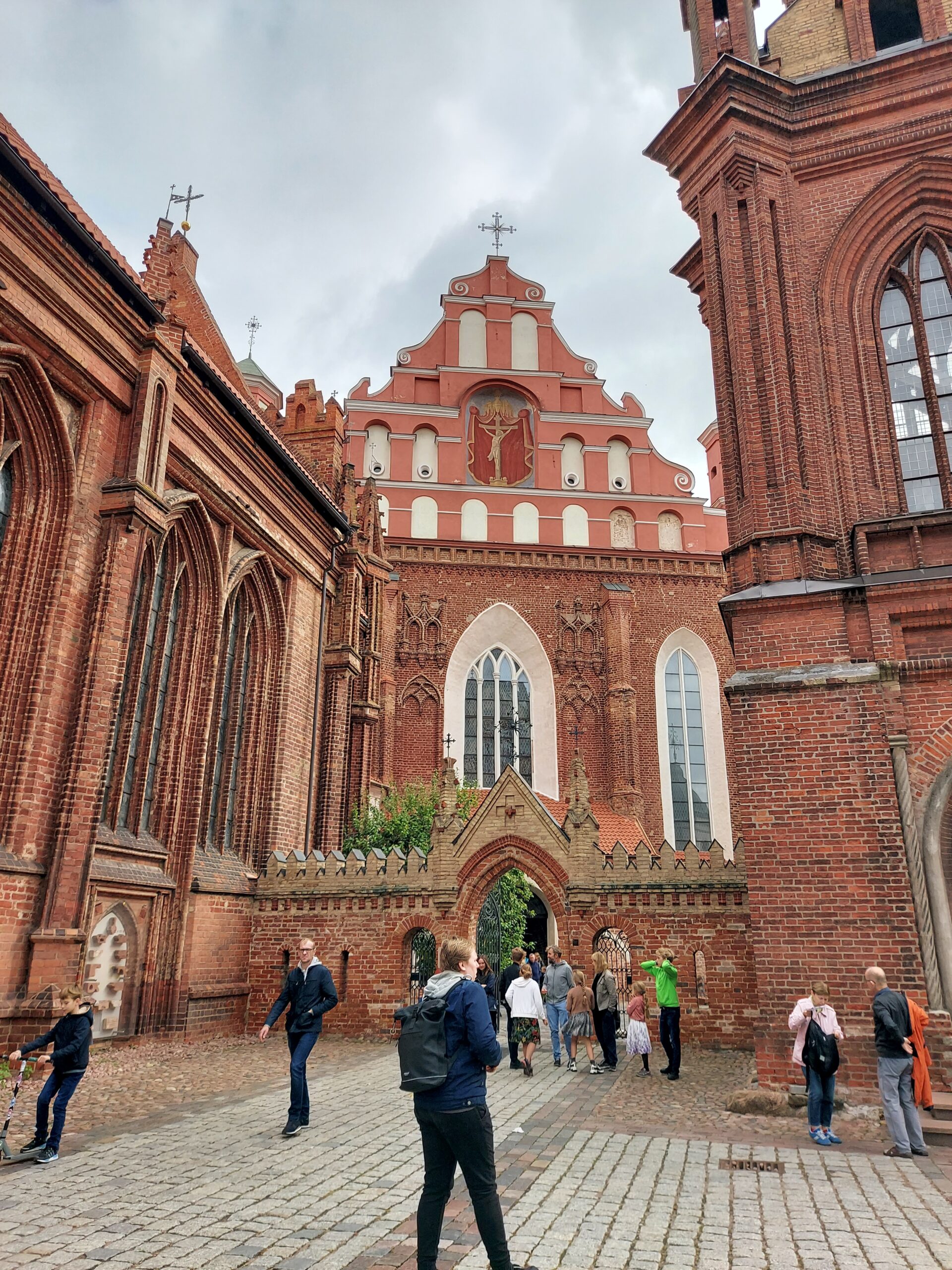
As I was walking around the city, there seemed to be some kind of community walk going on, as there were lots of families out for a stroll. I made my way towards the centre of the city, past further interesting sights such as St Anne’s Church.
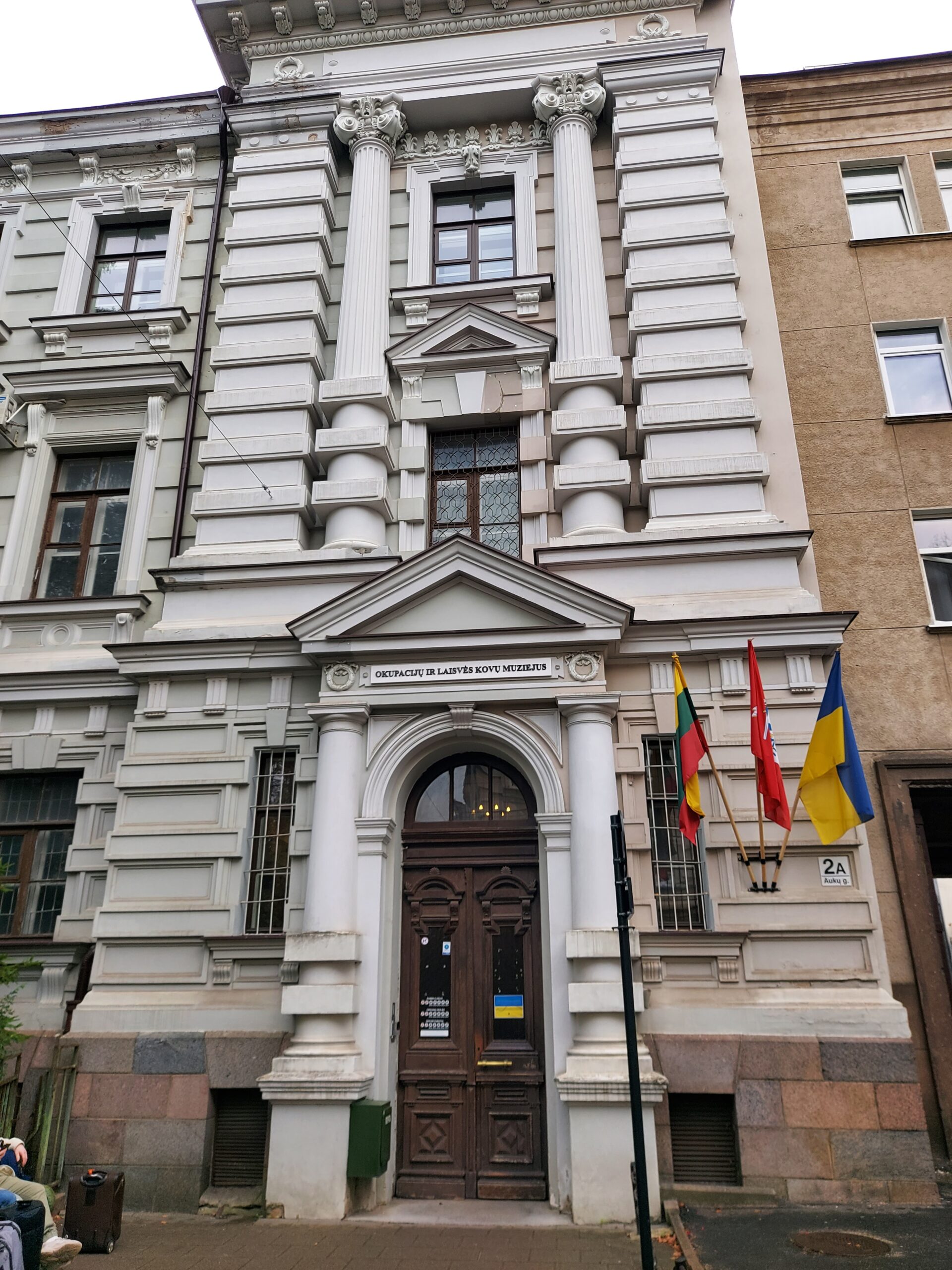
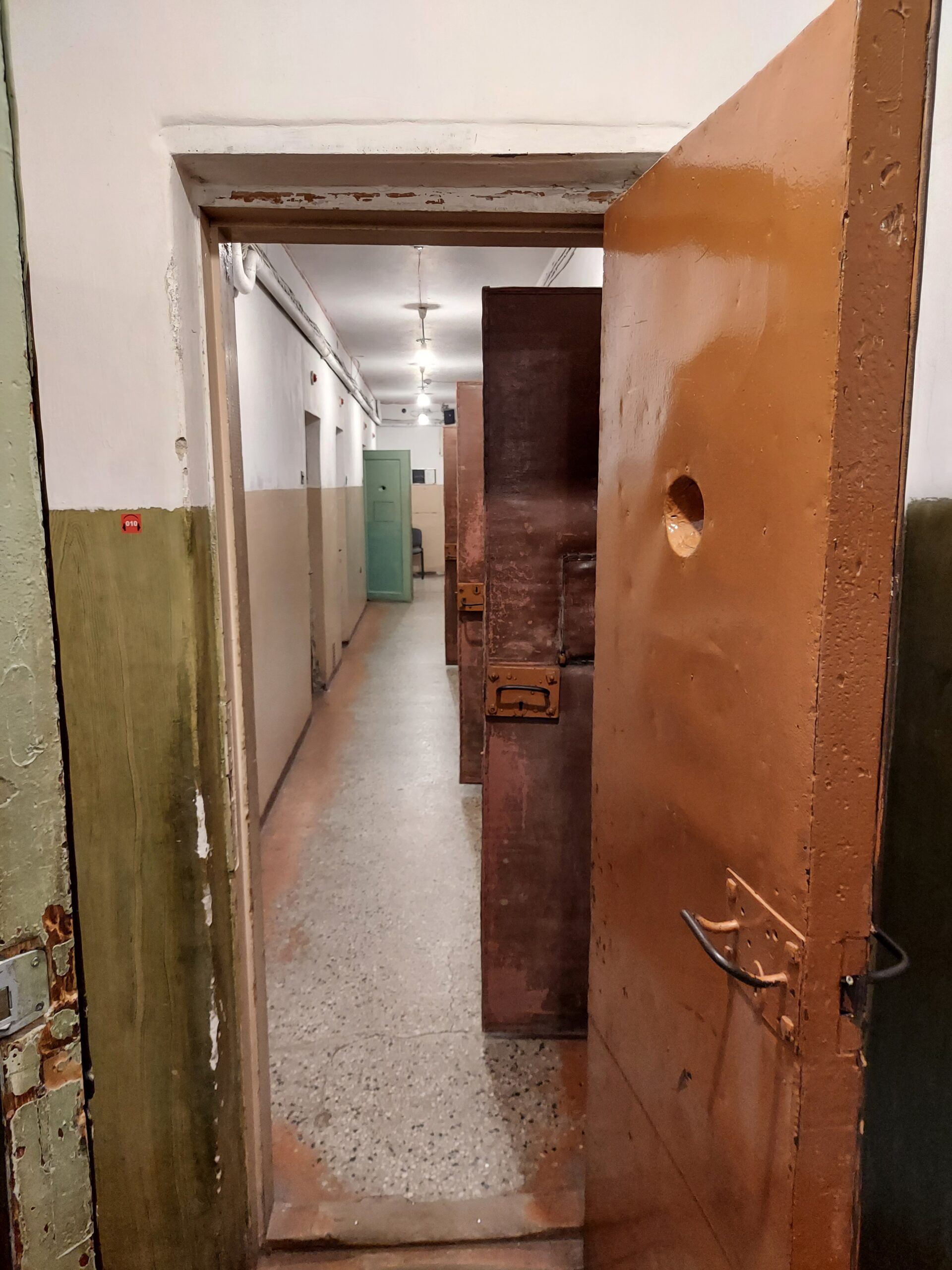
Making my way towards the north west of the city, I headed for the Museum of Occupations and Freedom Fights, also known as the KGB Museum. Situated in the former KGB headquarters, it tells the story of the Lithuanians killed there after the Second World War and of Soviet rule in the country. The prison in the basement was particularly chilling.
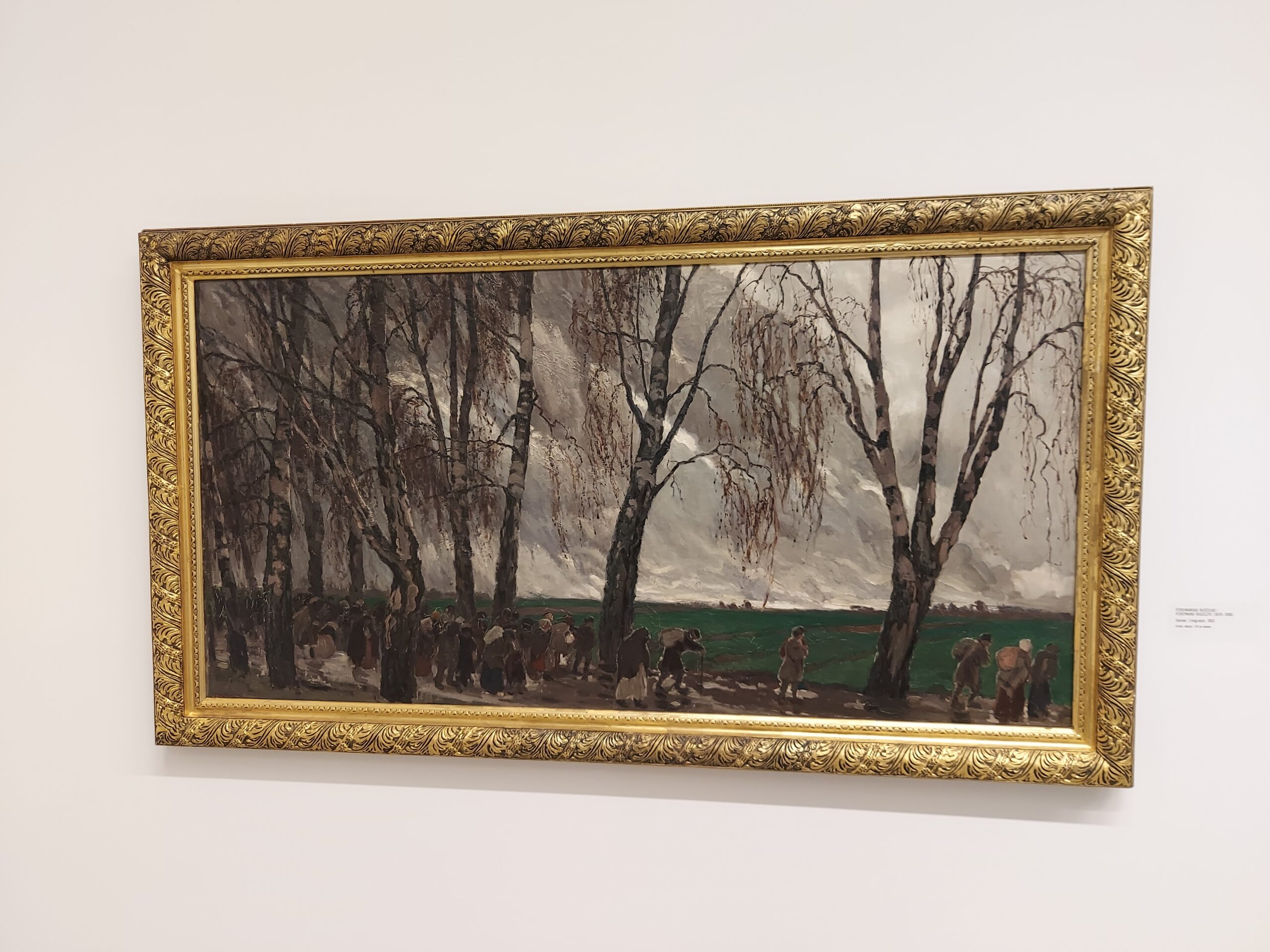
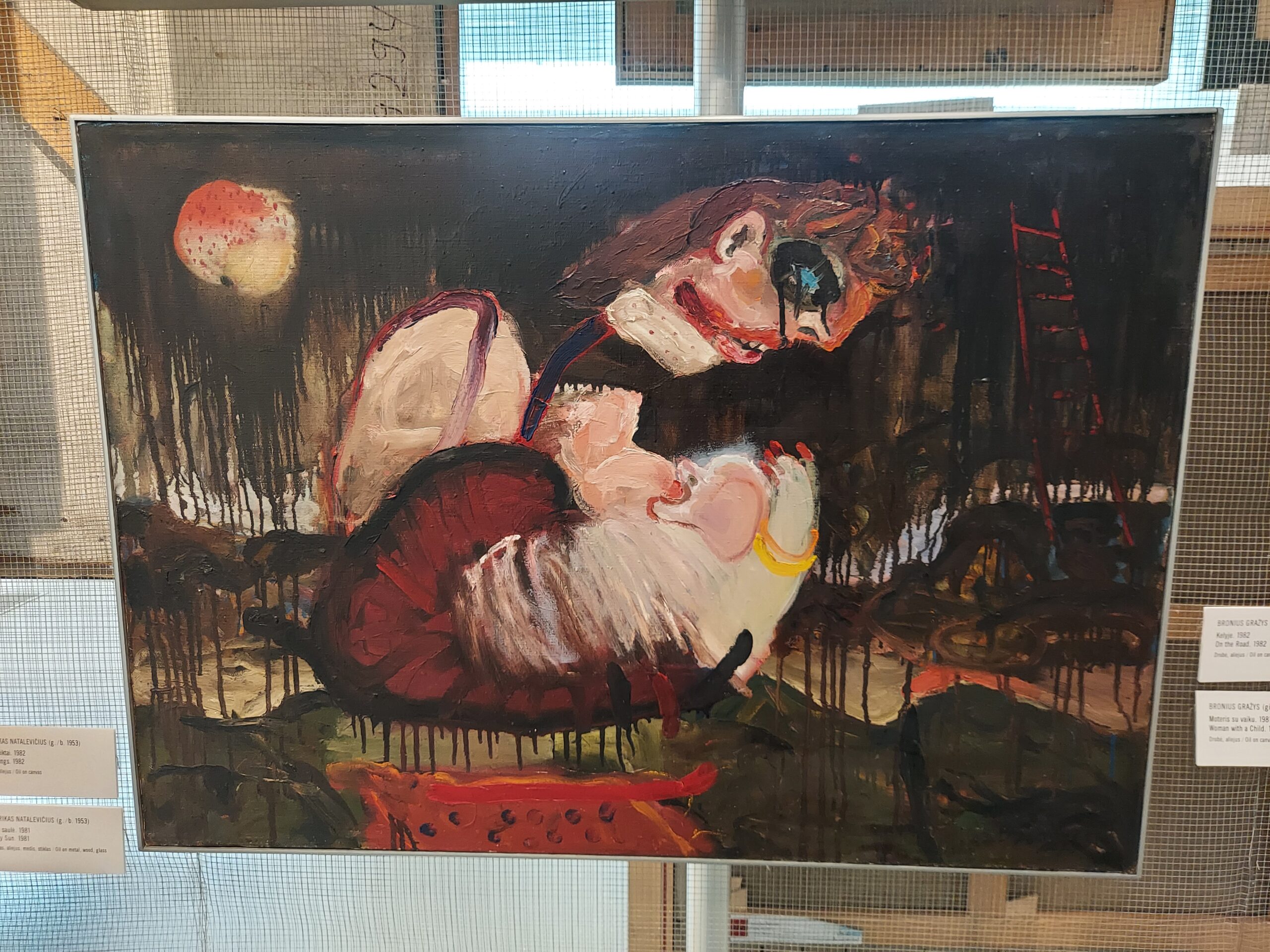
Finally, I strolled across the Neris River and visited the National Gallery of Art. This was super quiet: I practically had the Gallery to myself! It was really interesting, focusing on 20th and 21st-century art from Lithuania and beyond.
Ferdynand Ruszczyc, “Emigrants”, 1902Bronius Grazys, “Woman with Child”, 1981
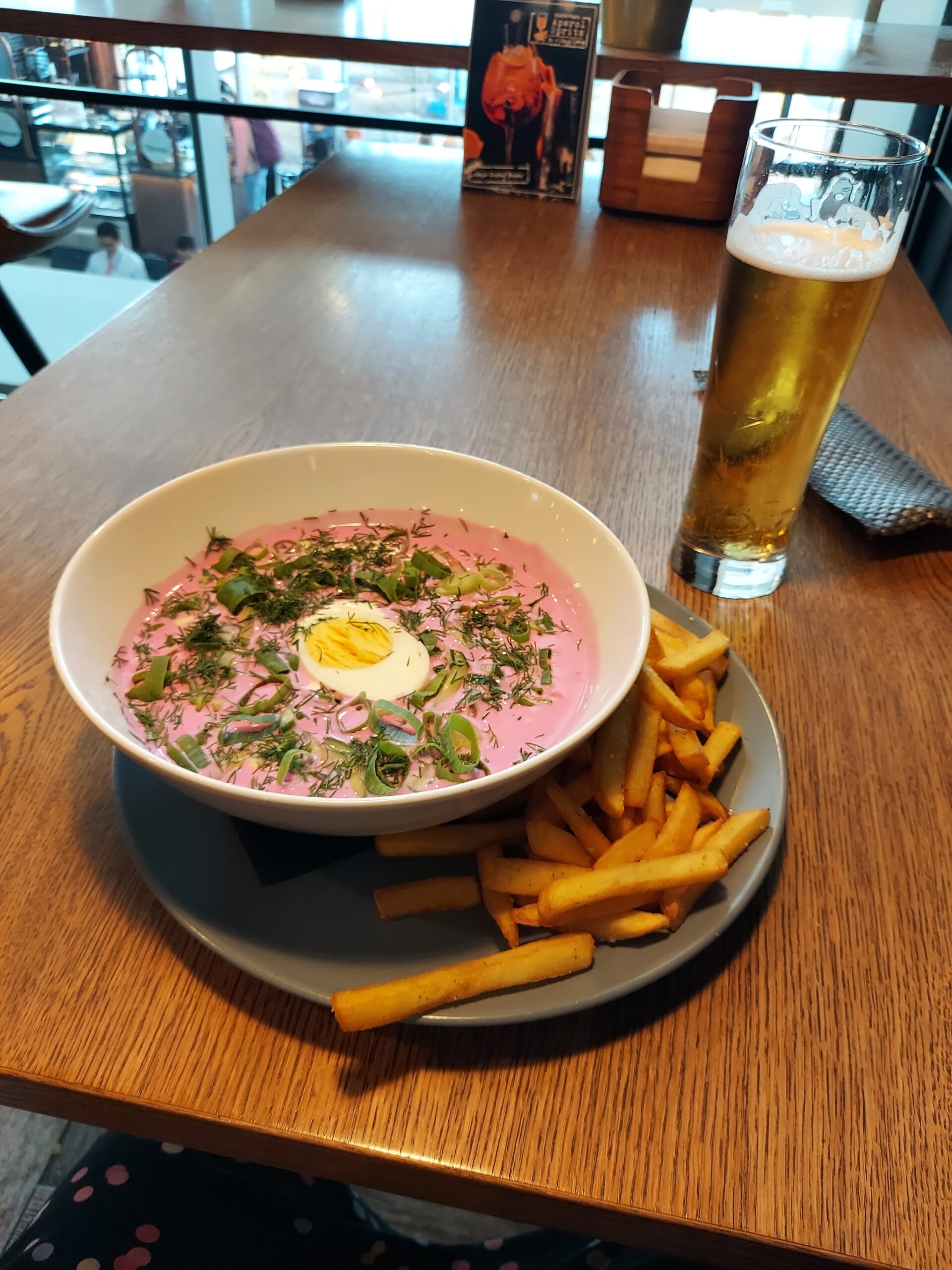
Finally, I got the bus to the airport. Before I flew home there was time to sample Lithuania’s famous ‘pink soup’: this is cold beetroot soup with half a boiled egg in the middle. It doesn’t sound great but it was honestly delicious!
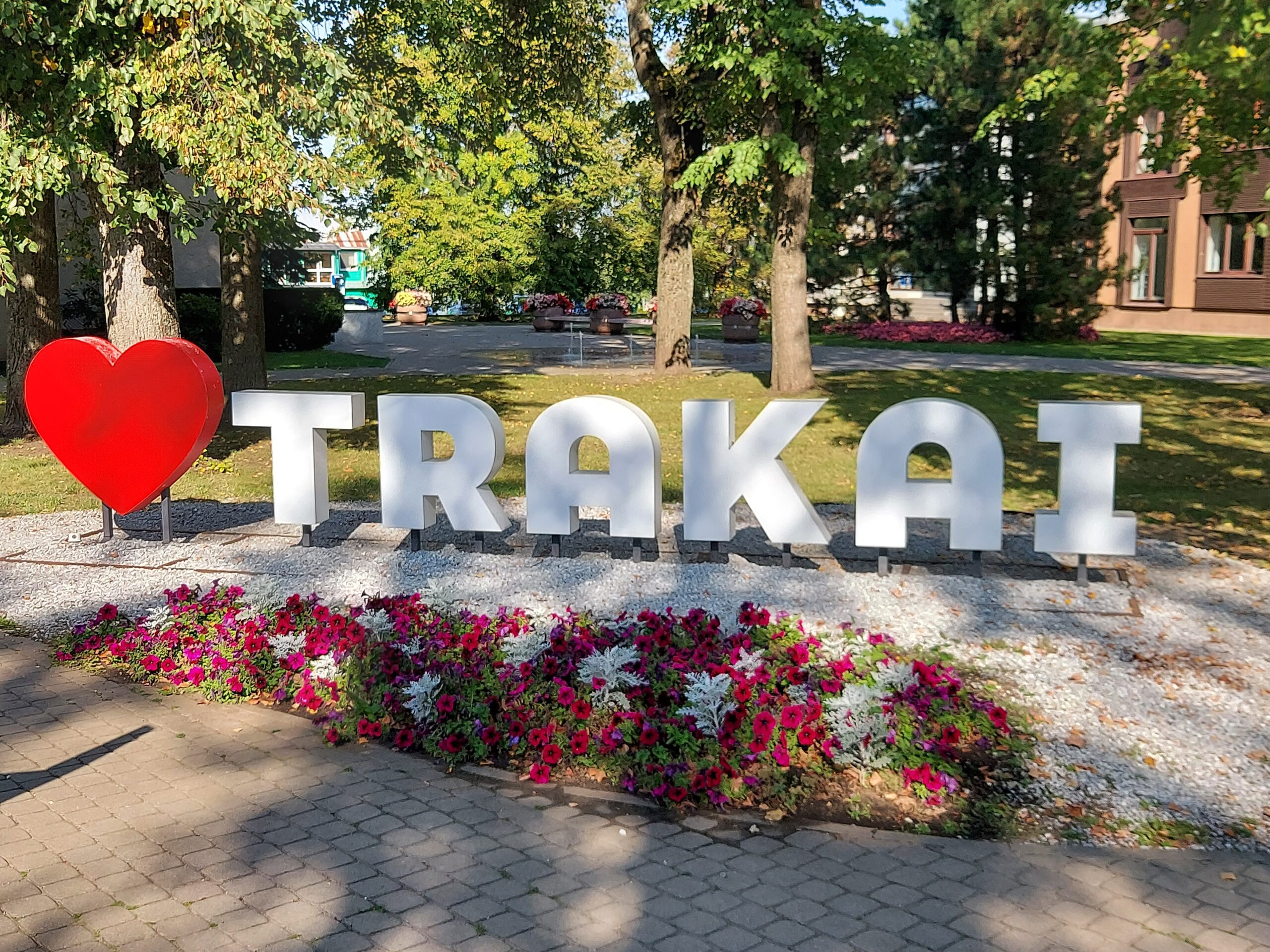
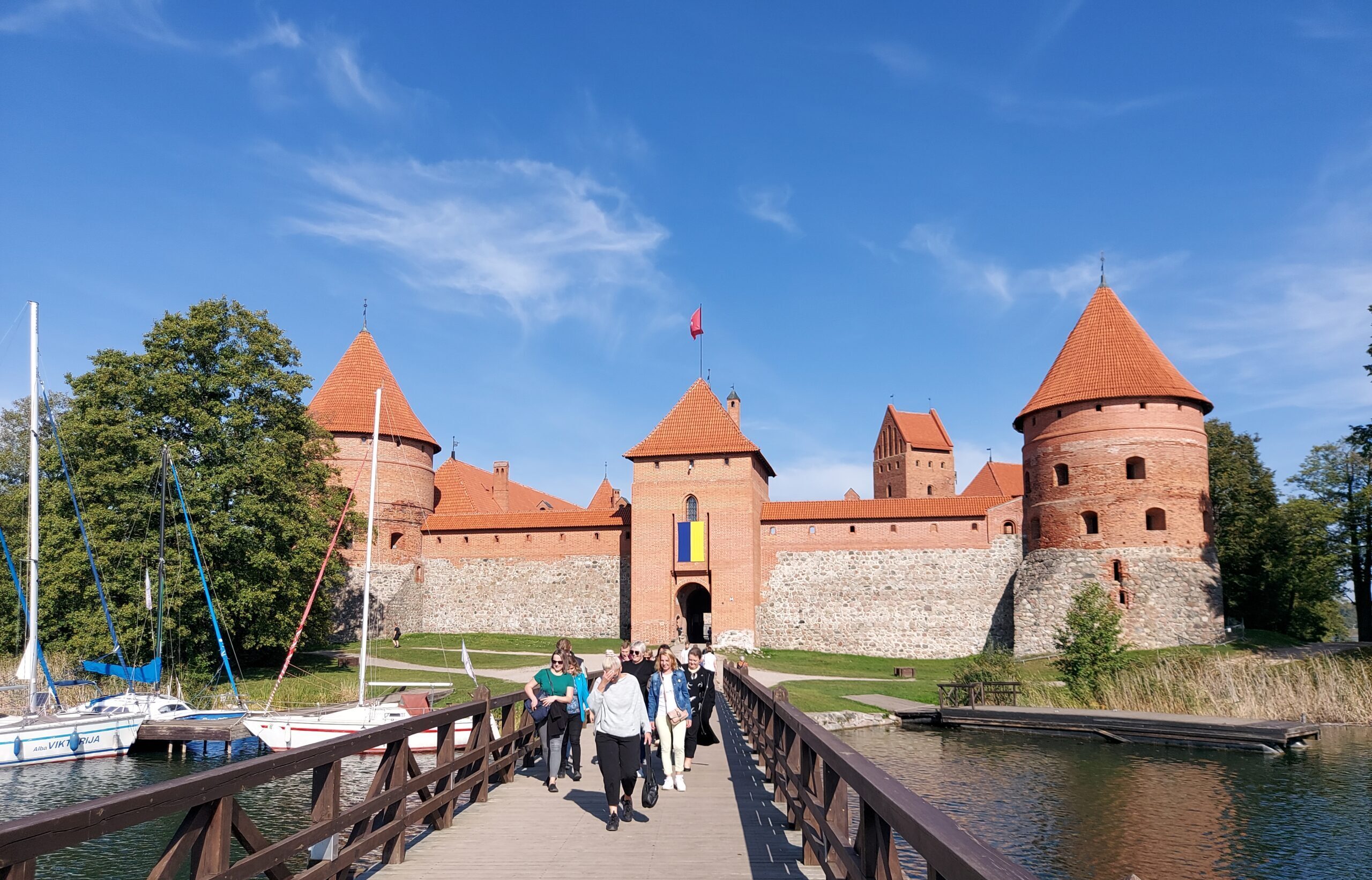
On my first full day in Lithuania, I was up nice and early to catch a train to Trakai, a nearby city, in order to visit Trakai Island Castle.
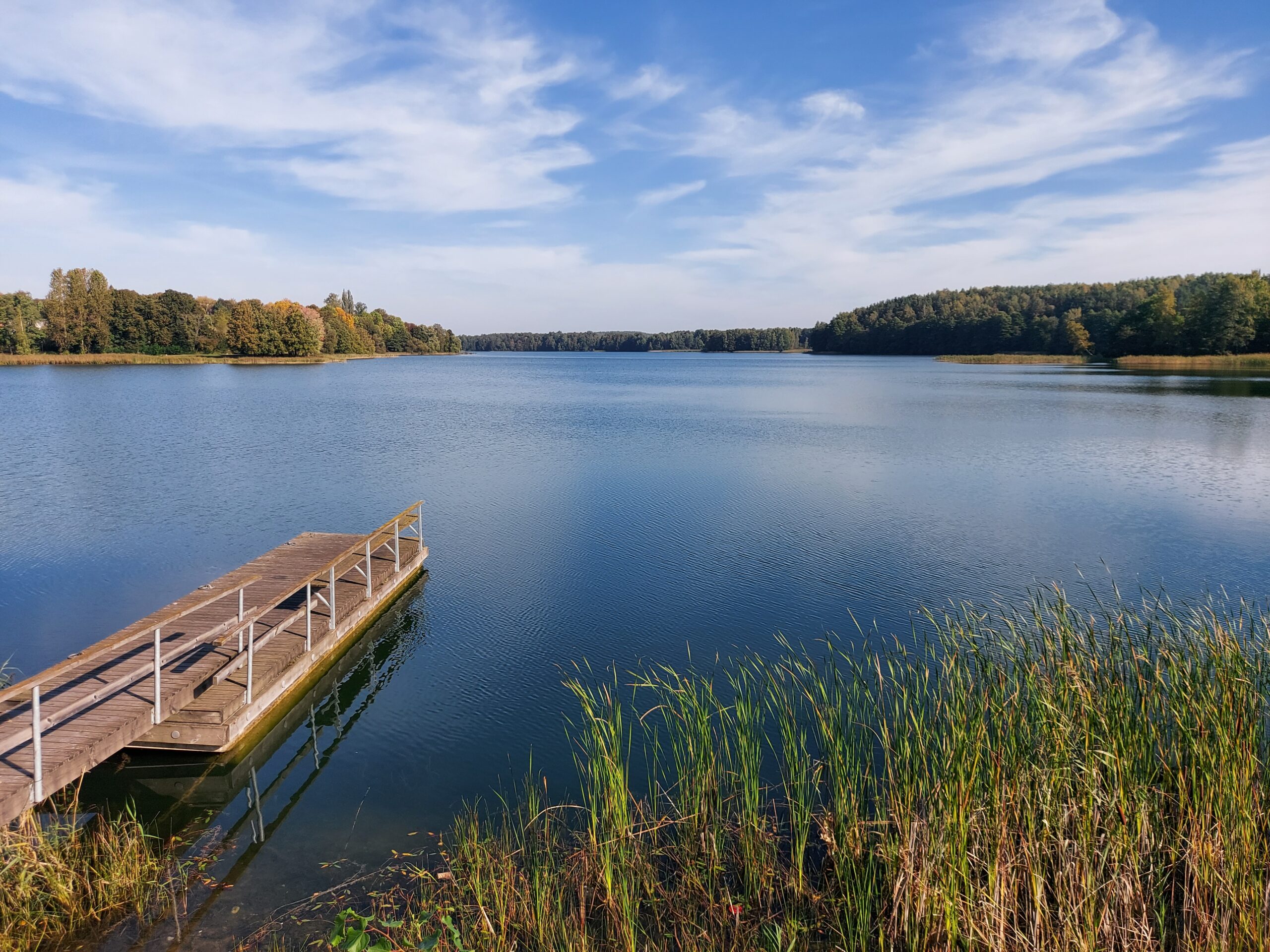
The city itself was beautiful and had an absolutely gorgeous lake. I’ve recently started wild swimming and I was desperate to go swimming here, but for safety reasons decided against it! On the way to the castle I walked past a small market where I bought a floral brooch handmade by the lady who was selling them.
The castle was built in the 14th century and served as a residence for the Grand Dukes of Lithuania. However, the structure fell into disarray in the 17th century and was only rebuilt in 1951. In 1962, the castle became a part of the Trakai History Museum.
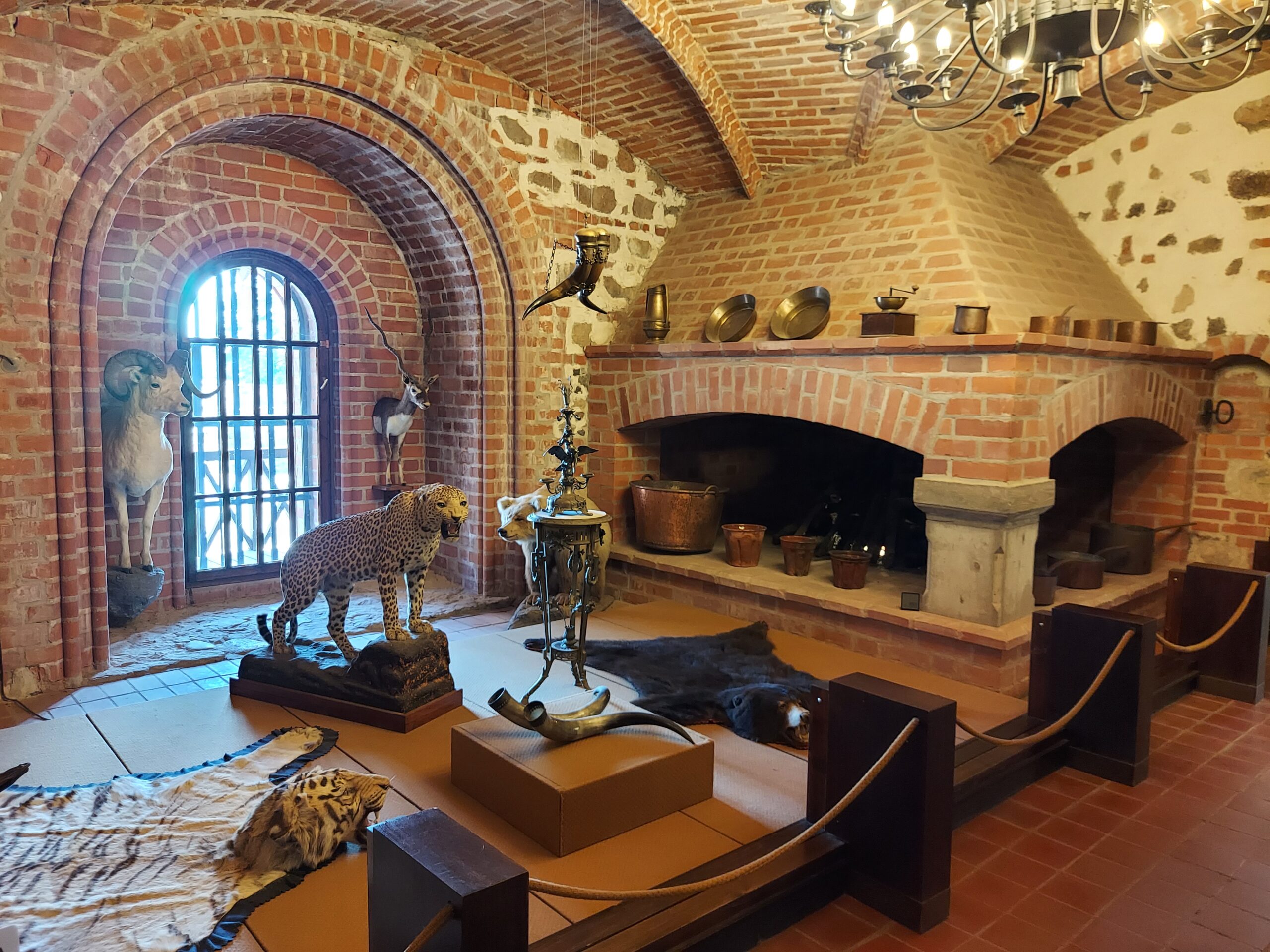
It stands on an island on Lake Galve, one of the deepest lakes in Lithuania. To reach it you have to cross a long wooden bridge: approaching it, it looks like something out of a fairy tale. There is lots to explore inside the castle, incuding exhibitions about the Grand Dukes of Lithuania, artworks, archeological findings and other artefacts.
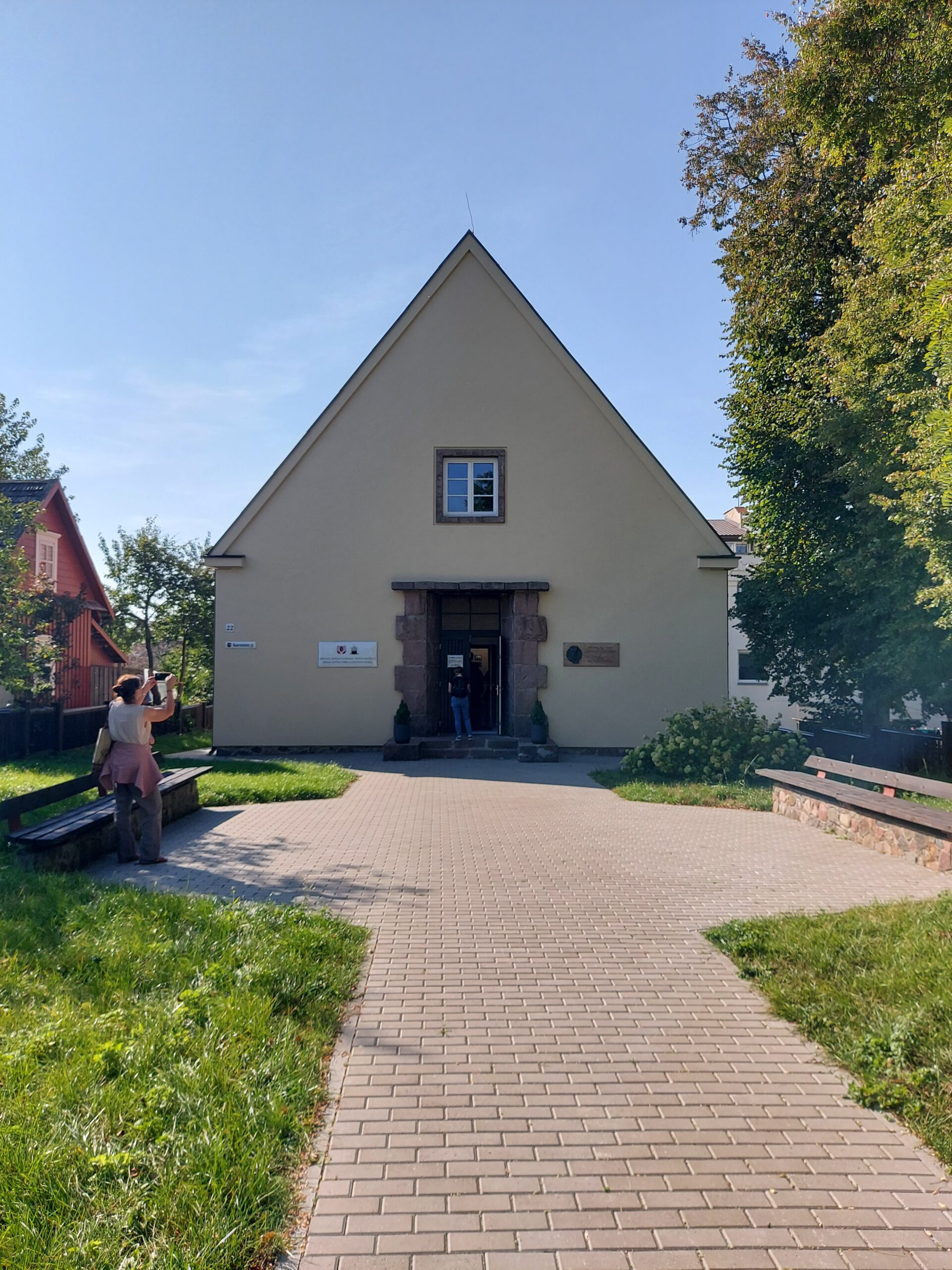
Once I left the castle, I headed back to the railway station, popping into two other museums on the way. Firstly I went into the Karaite Ethnographic Museum, which provides an insight into the culture and history of the ethnic group which moved from Crimea to Lithuania 600 years ago.
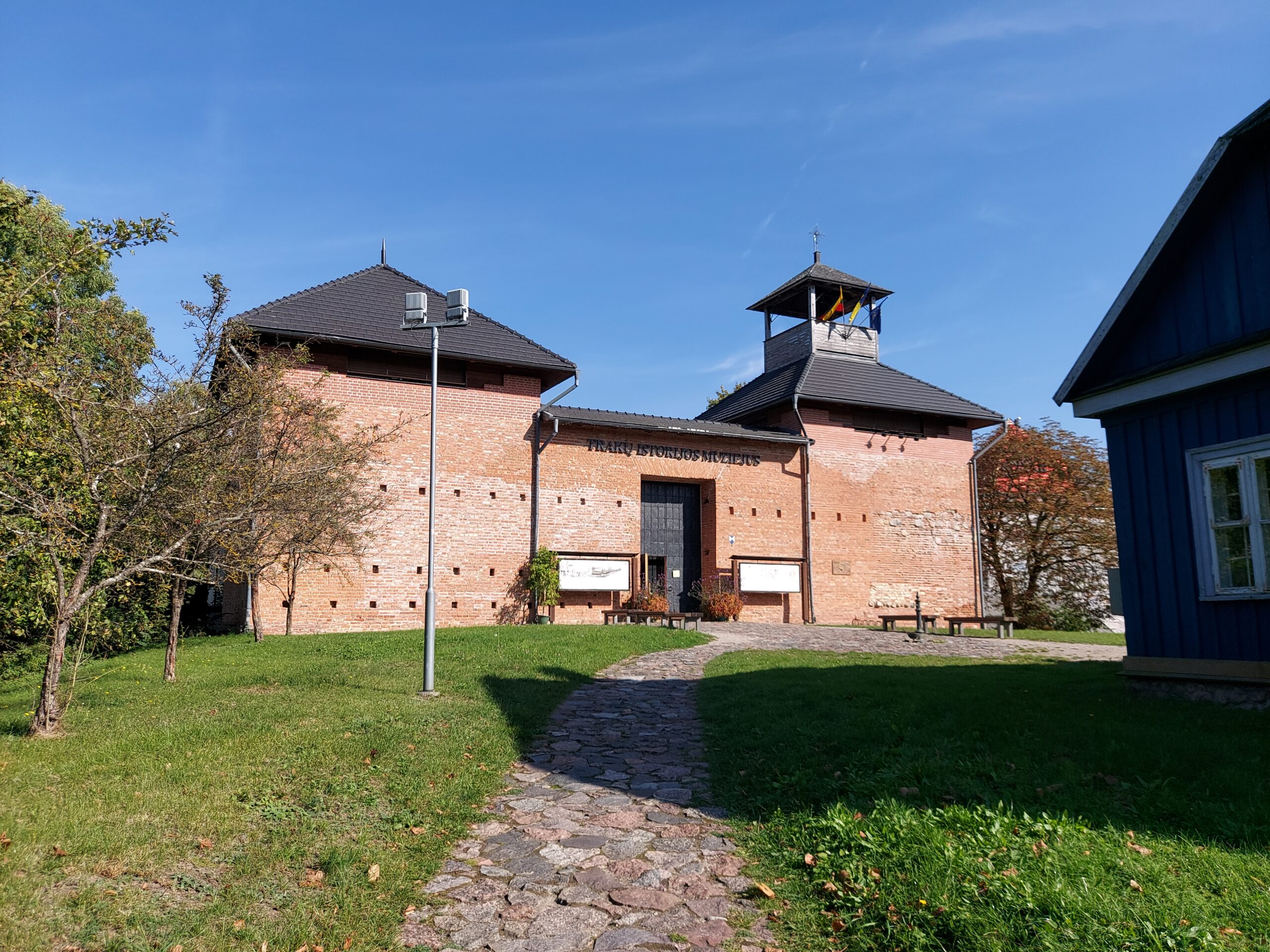
Secondly, I visited a museum called the Trakai History Museum. When inside, the name appeared to be quite misleading as it was actually a small museum of sacred art housed in the chapel of a former Domenican monastery. While not what I was expecting or hoping for, there were a few interesting pieces to see.
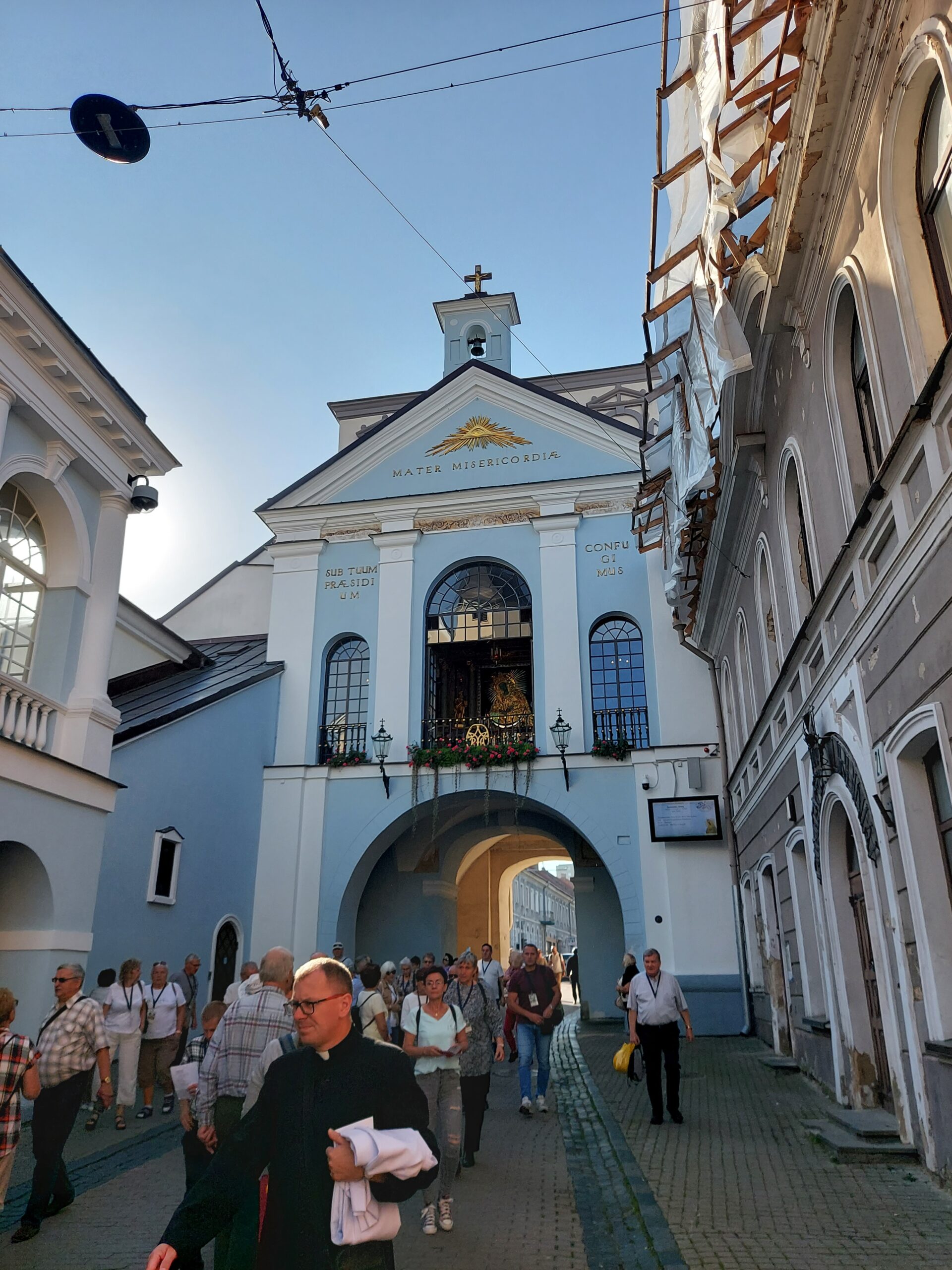
Back in Vilnius, I wandered around the Old Town for a bit, passing the famous Gate of Dawn, and popping upstairs for a closer look. The Gate was built in the early sixteenth century as part of the city’s defensive fortifications, and is the only remaining city gate of the original ten.
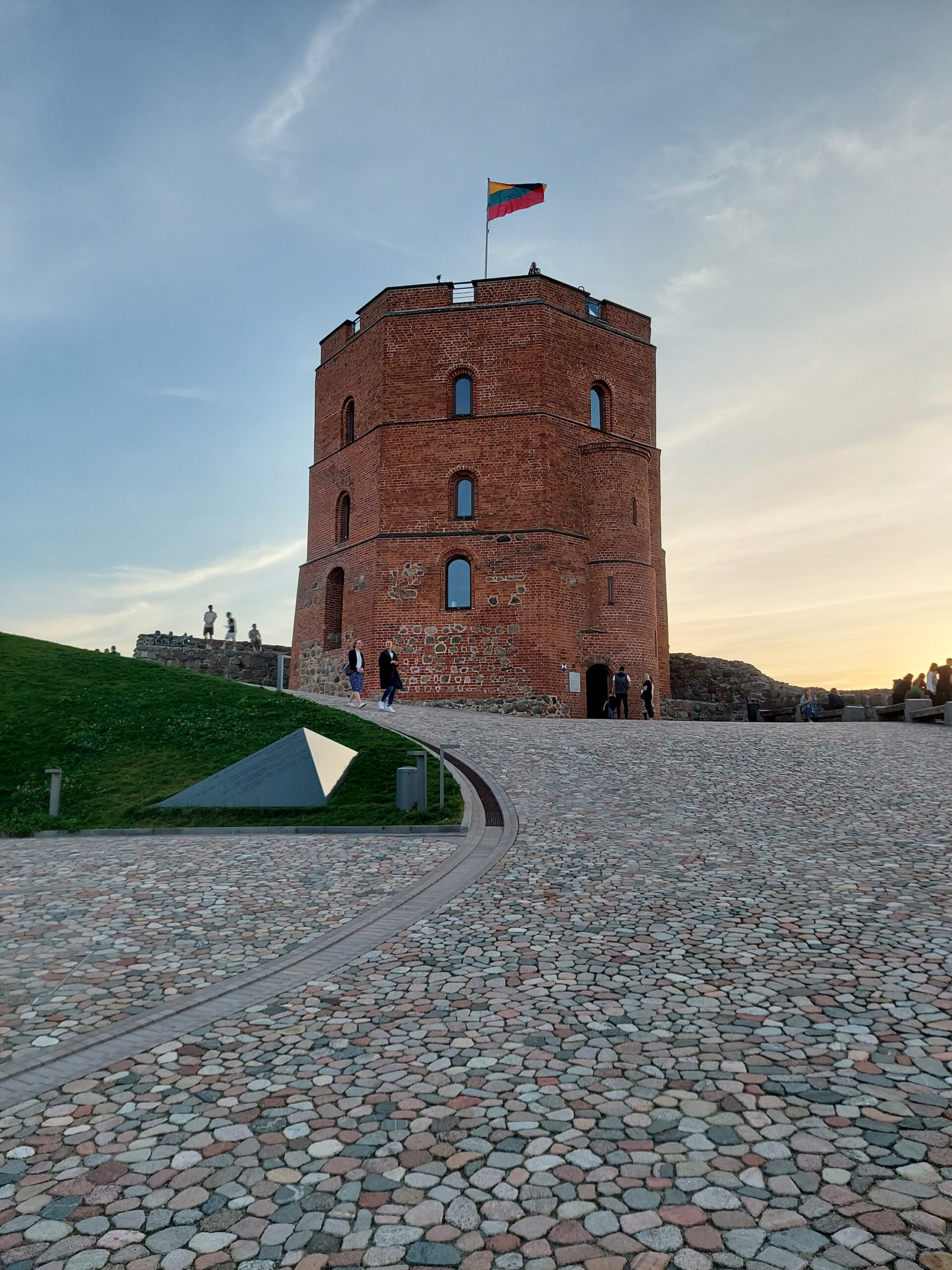
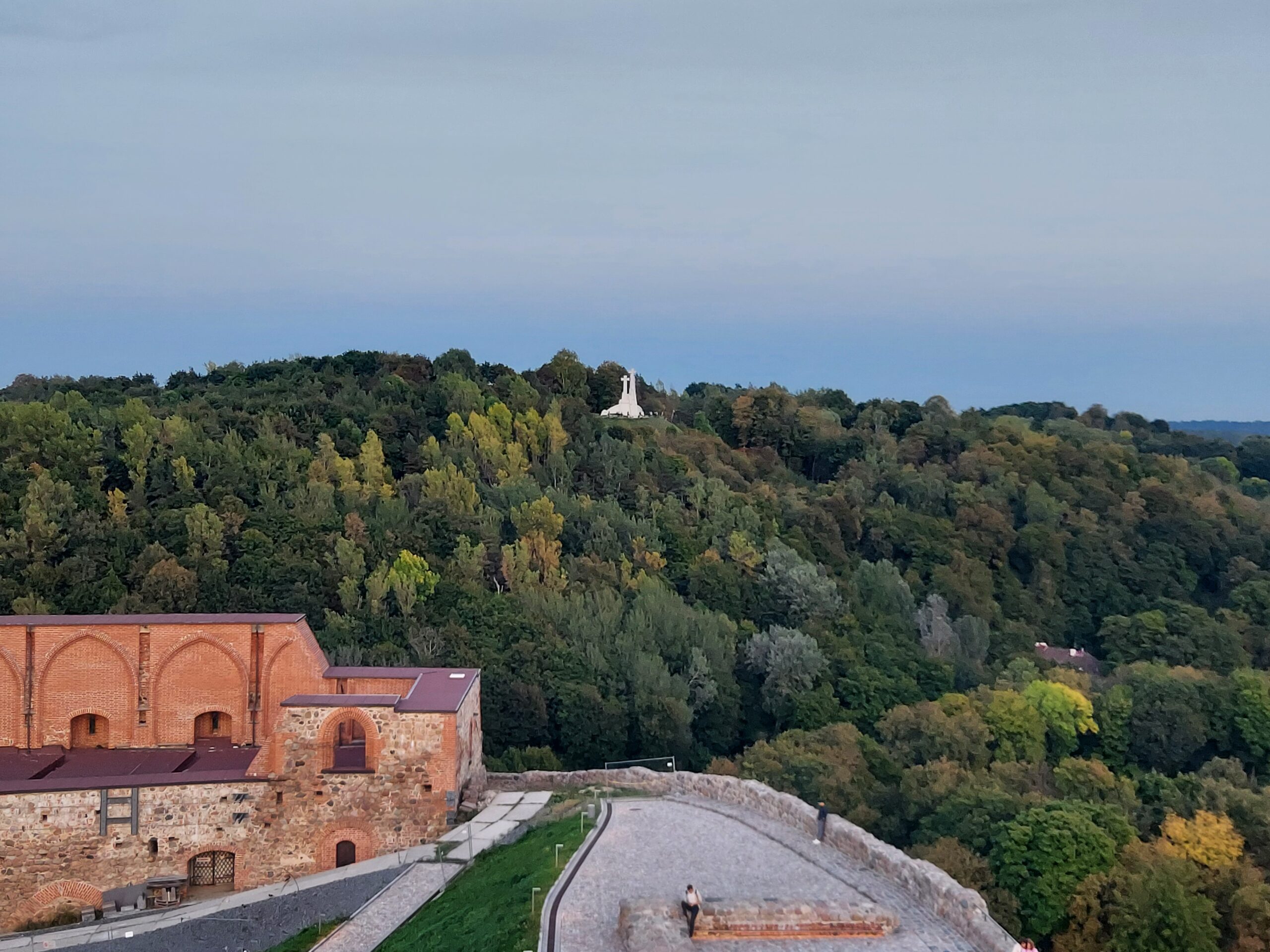
I headed back to the city centre to visit Gediminas Castle Tower. Gediminas’ Tower is the remaining part of the Upper Castle on top of the Gediminas Hill. A legend tells the story of Grand Duke Gediminas who dreamt of an iron wolf howling at the top of this hill. He took it as a prophecy of the city that would one day stand here. Eventually, a wooden castle was built on the hill, followed by a brick castle, built by Grand Duke Vytautas in 1409. The Tower was used as the city’s first telegraph building in 1838, and was opened as a museum in 1960.
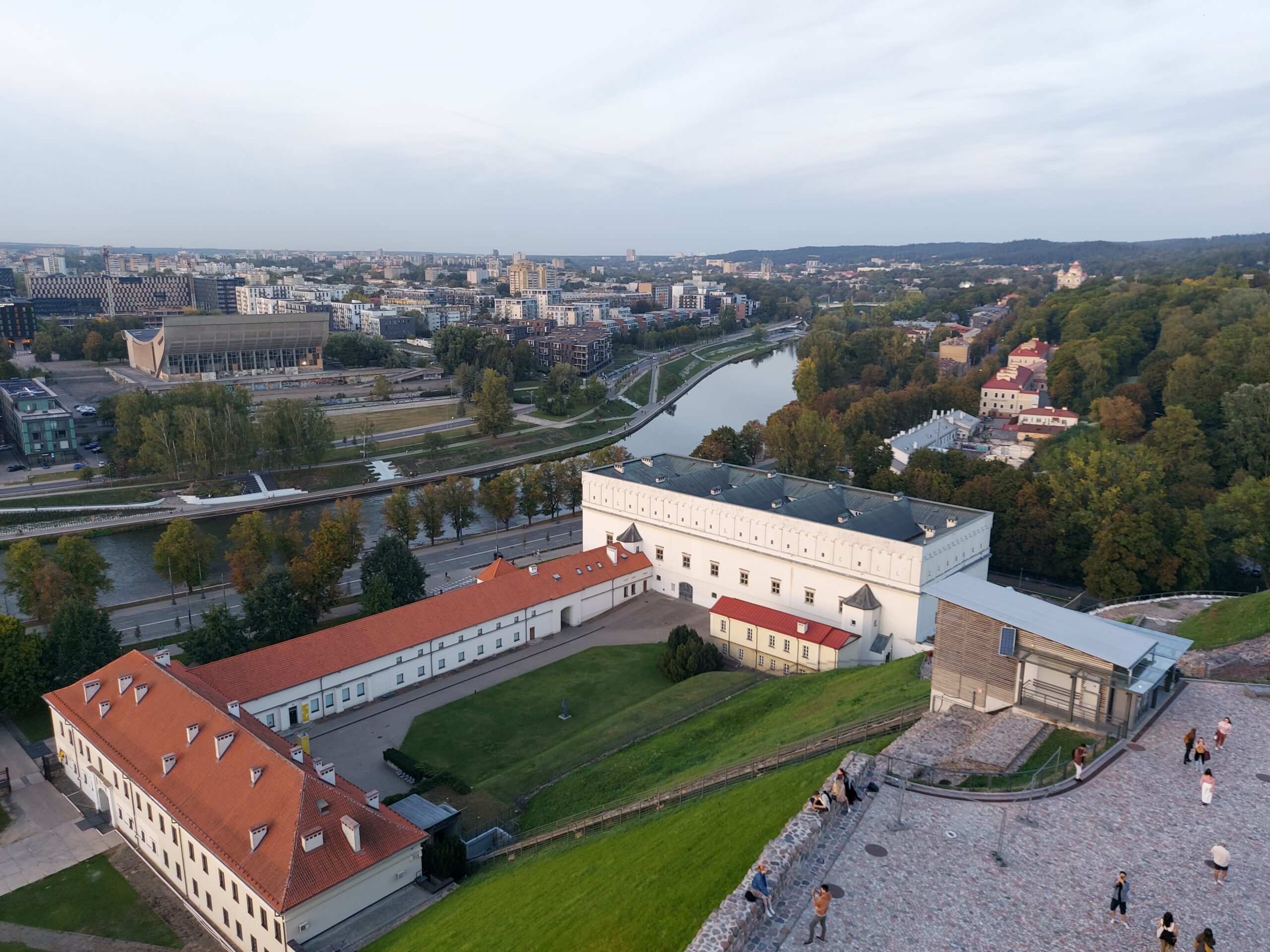
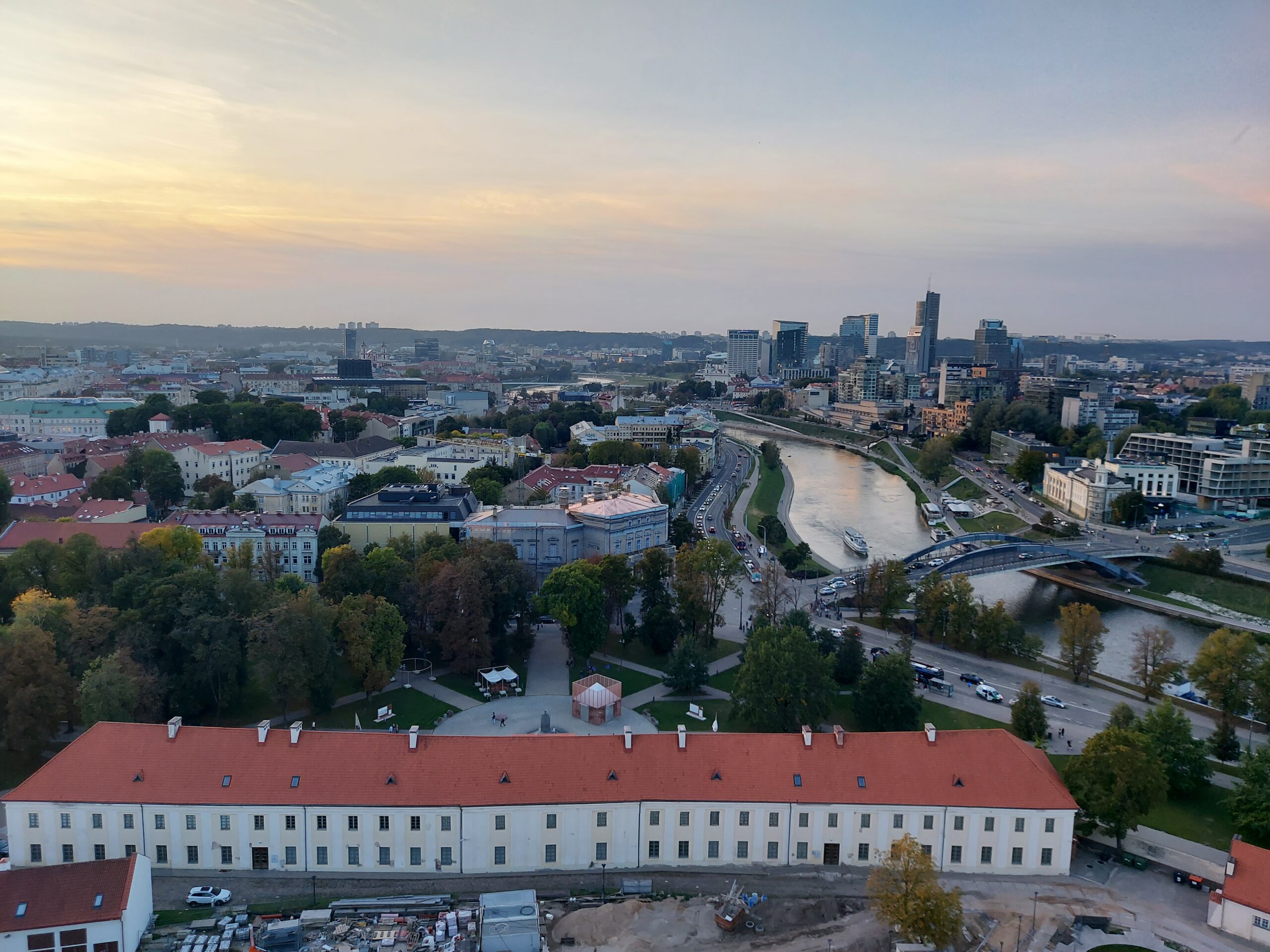
Nowadays it is possible to go up the tower and enjoy spectacular views over Vilnius. The tower has exhibitions on its various floors which are interesting to see. I particularly enjoyed the exploration of Vilnius and the Tower through the years, looking at how the original castles were positioned and how the panorama of the city has changed since the fourteenth century. Other exhibits include Baltic jewellery and military artefacts. Sadly, the third-floor exhibition about the Baltic Way wasn’t open, but I was able to take a look inside. An anti-Soviet demonstration, the Baltic Way took place in August 1989, when almost two million people linked hands from Vilnius to Tallinn.
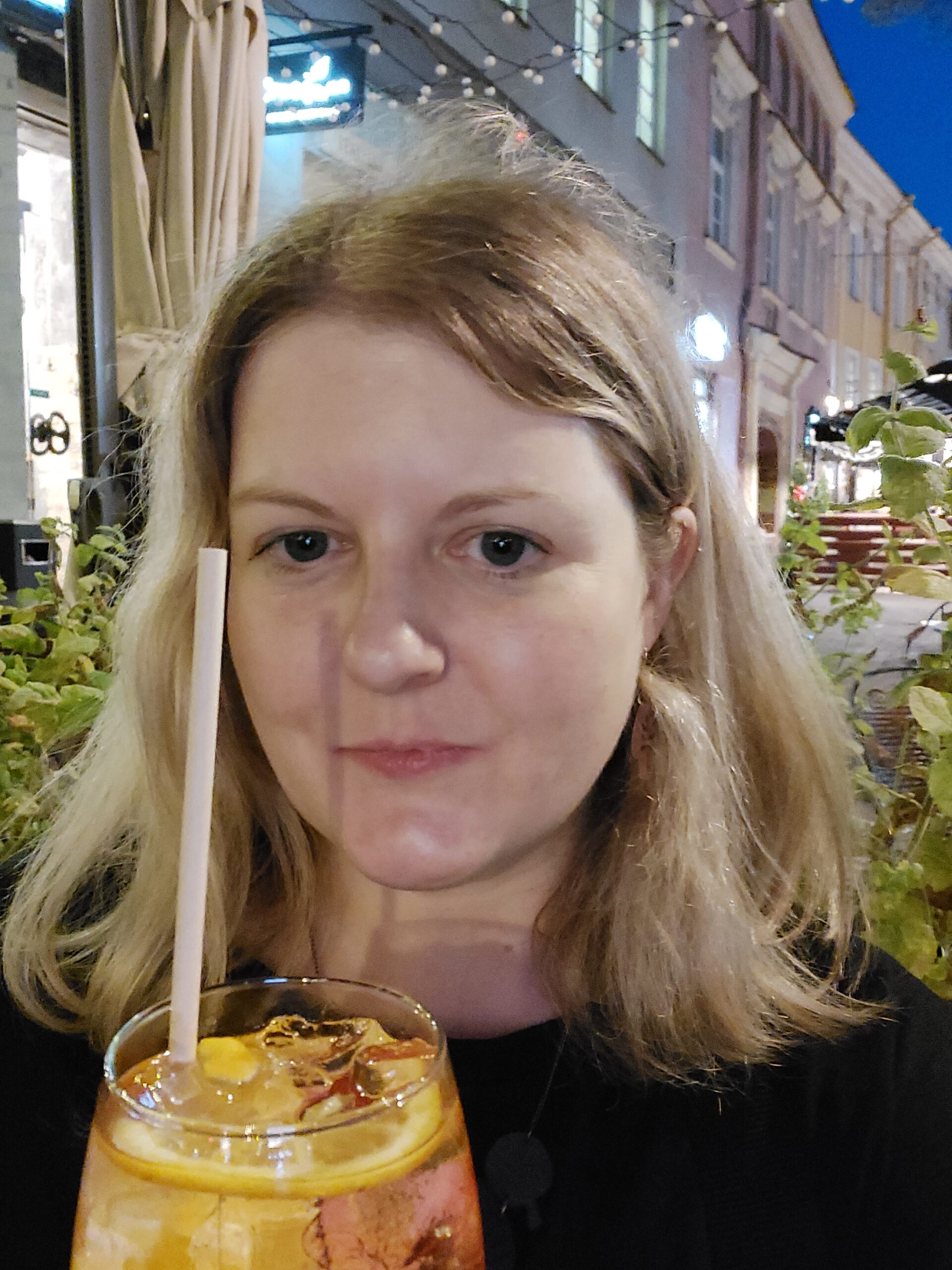
Finally, I had my tea at a restaurant called Grey which was nicer than it sounds! I had what seemed to be potato cakes with mushrooms in. I treated myself to an Aperol Spritz too.
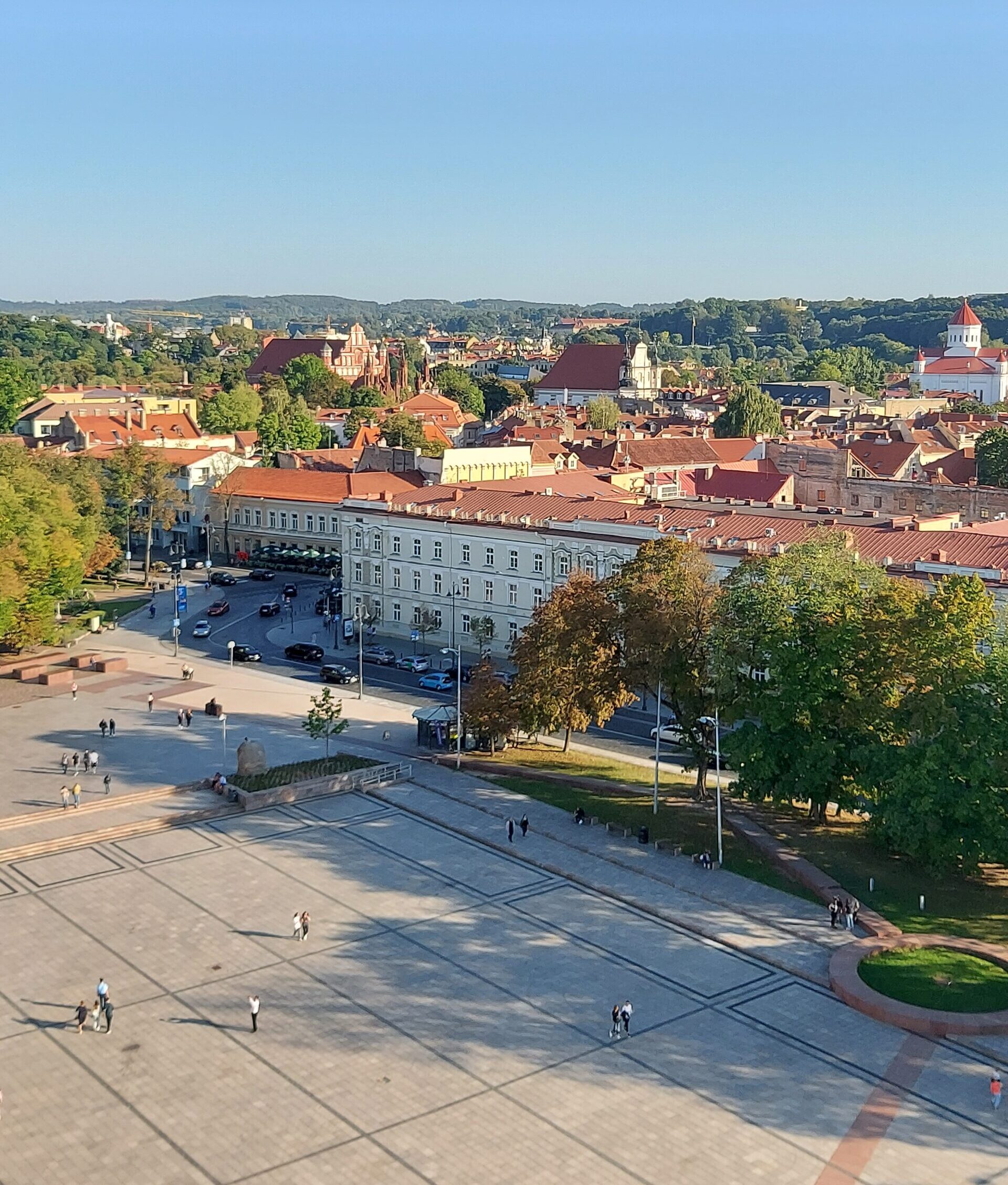
Vilnius Old Town seen from the Cathedral Bell Tower
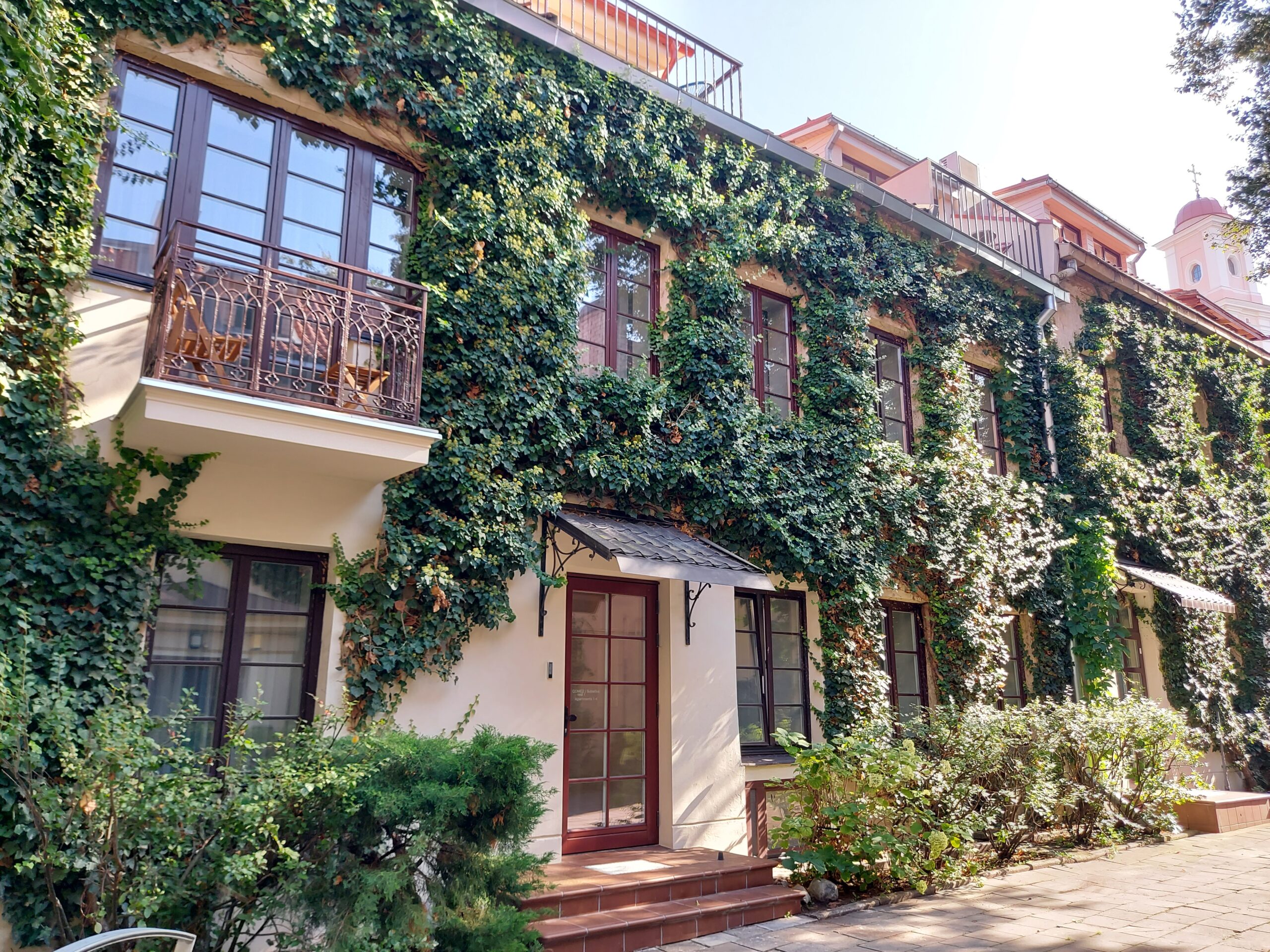
Earlier this year I decided to book a trip to Vilnius, capital of Lithuania. To be honest, what swayed me were the random social media posts from Vilnius’ tourism board. These were quite funny and offbeat so, as I’d wanted to visit all the Baltic states for a while, I booked my trip. My flights were with Ryanair from Stansted and I stayed at COME2rest – Subaciaus 5, a basic but clean and comfortable hotel in the Old Town. At only £115 for three nights, it was a bargain.
My hotel in Vilnius
My flight was early in the morning, so I decided not to book a Travelodge the night before, instead taking the coach from Victoria to Stansted Airport and dozing on the airport floor (along with several others) before the security gates opened. This gave me plenty of time to arrive in Vilnius, take a train from the airport and check in to my hotel and still have almost a full day in the city.
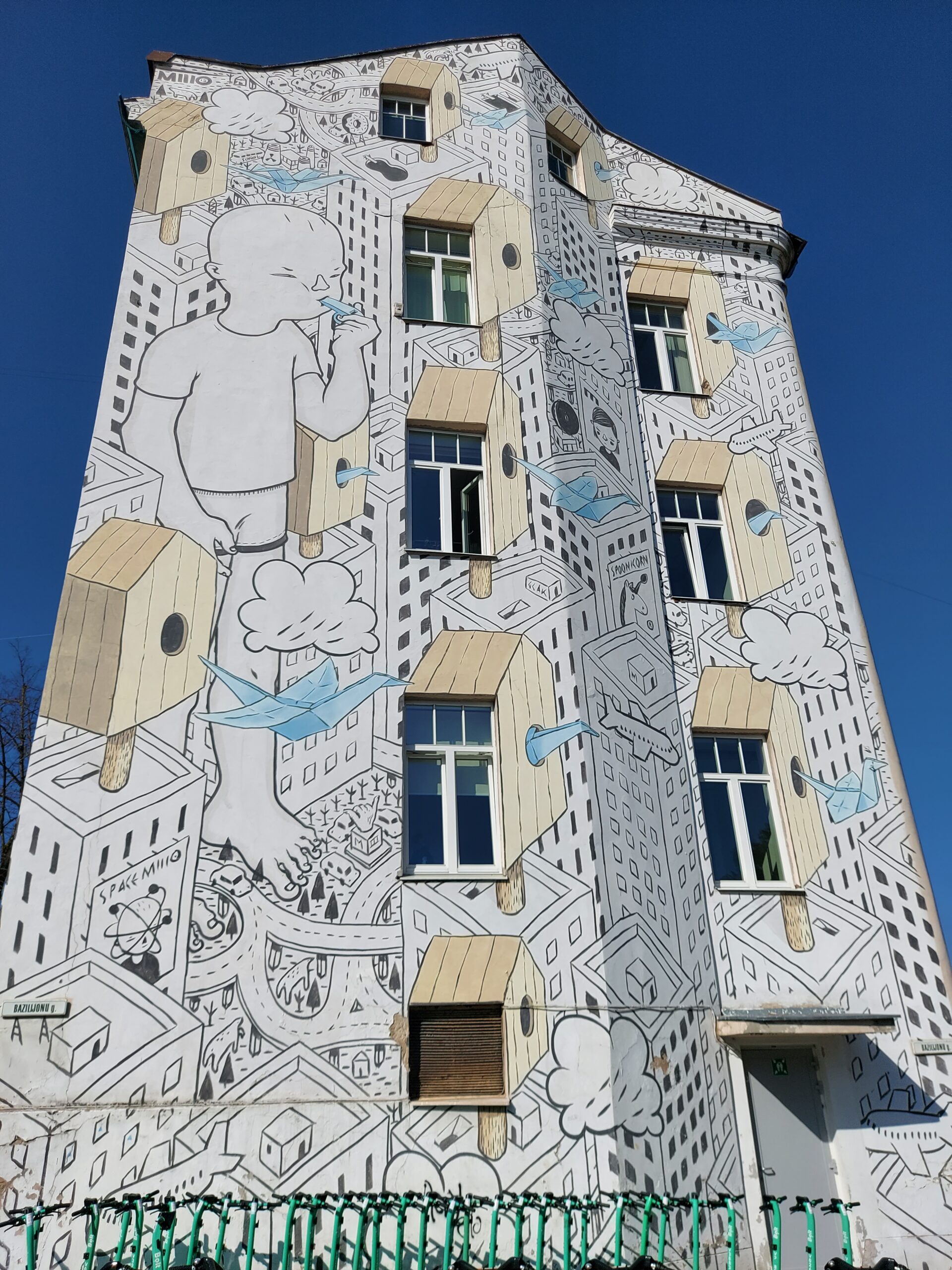
Graffiti on a building in Vilnius
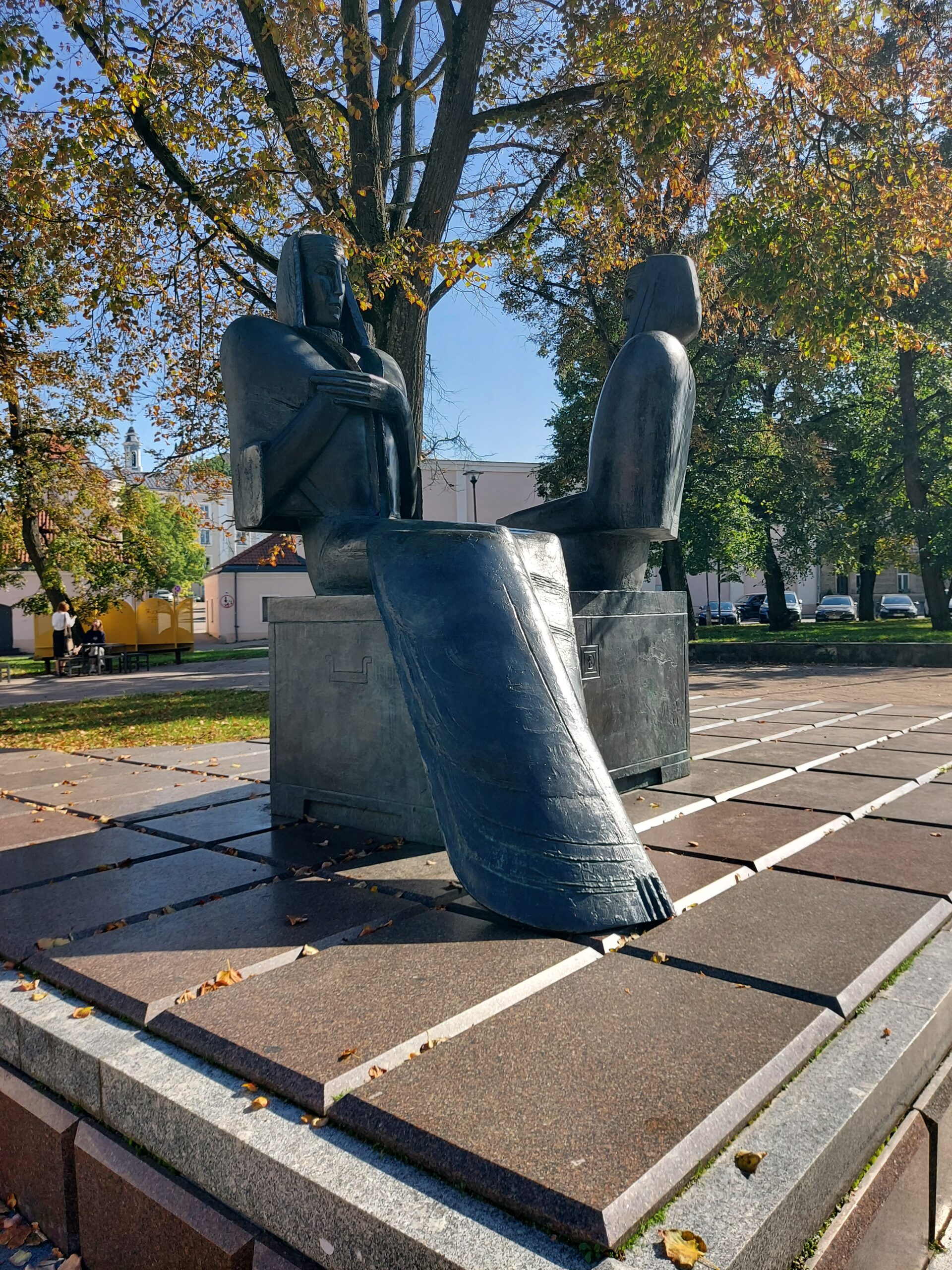
Walking around, I was struck by how clean the streets were, with hardly any litter at all. Modern graffiti art decorated the walls and there were lots of interesting statues and outdoor sculptures to see.
Modern statues in Vilnius
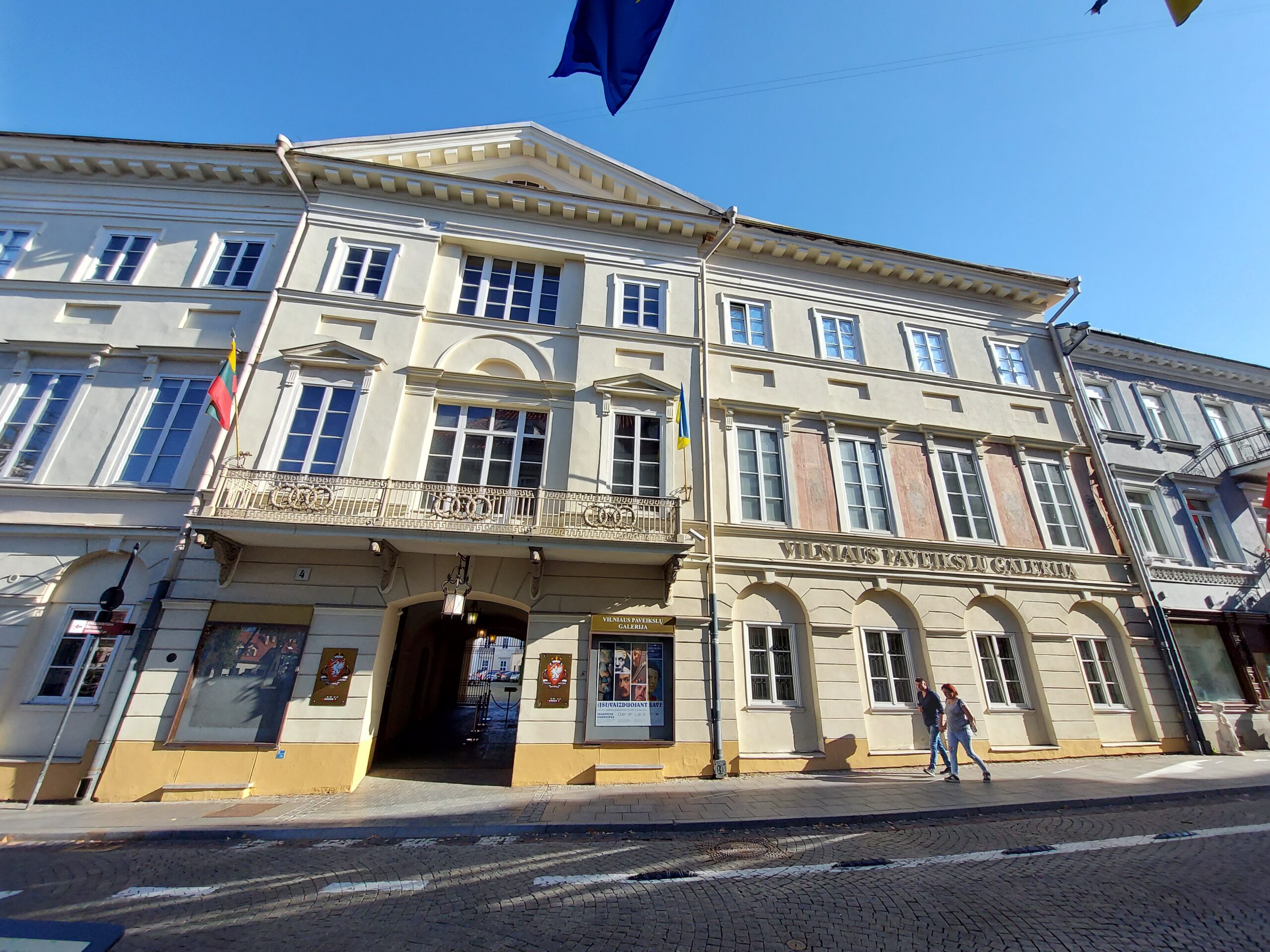
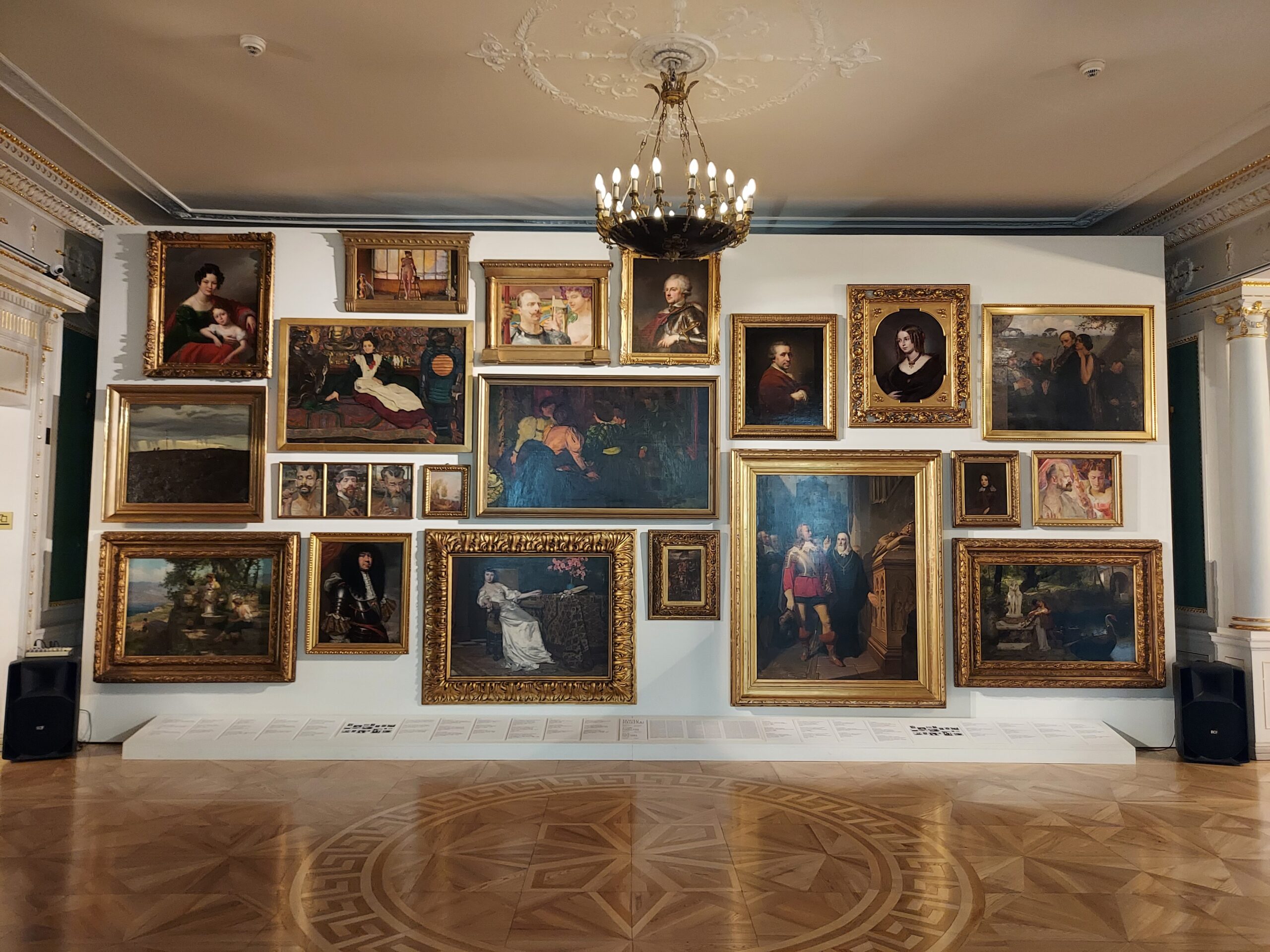
On my wanderings I came across Vilnius Picture Gallery, and I decided to go in. Located in a historic building, the Chodkevičius-Puslovskis Palace, it features artwork from the 16th to the early 20th centuries. There were some interesting things to see, mainly Lithuanian art gathered from manor houses across the country. I always enjoy exploring local culture whenever I go abroad so this art gallery was great.
The Vilnius Picture GalleryArt at the Vilnius Picture Gallery
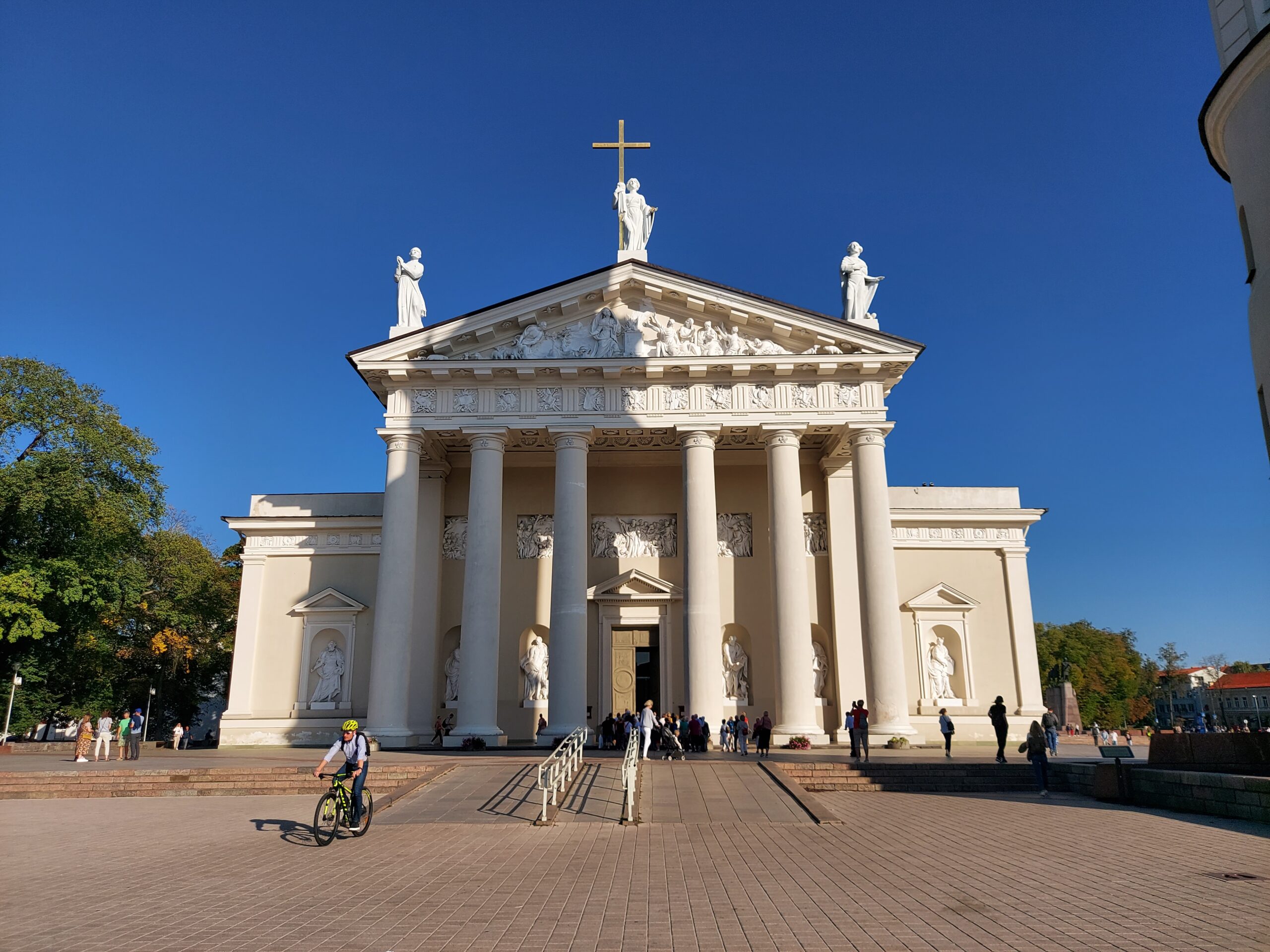
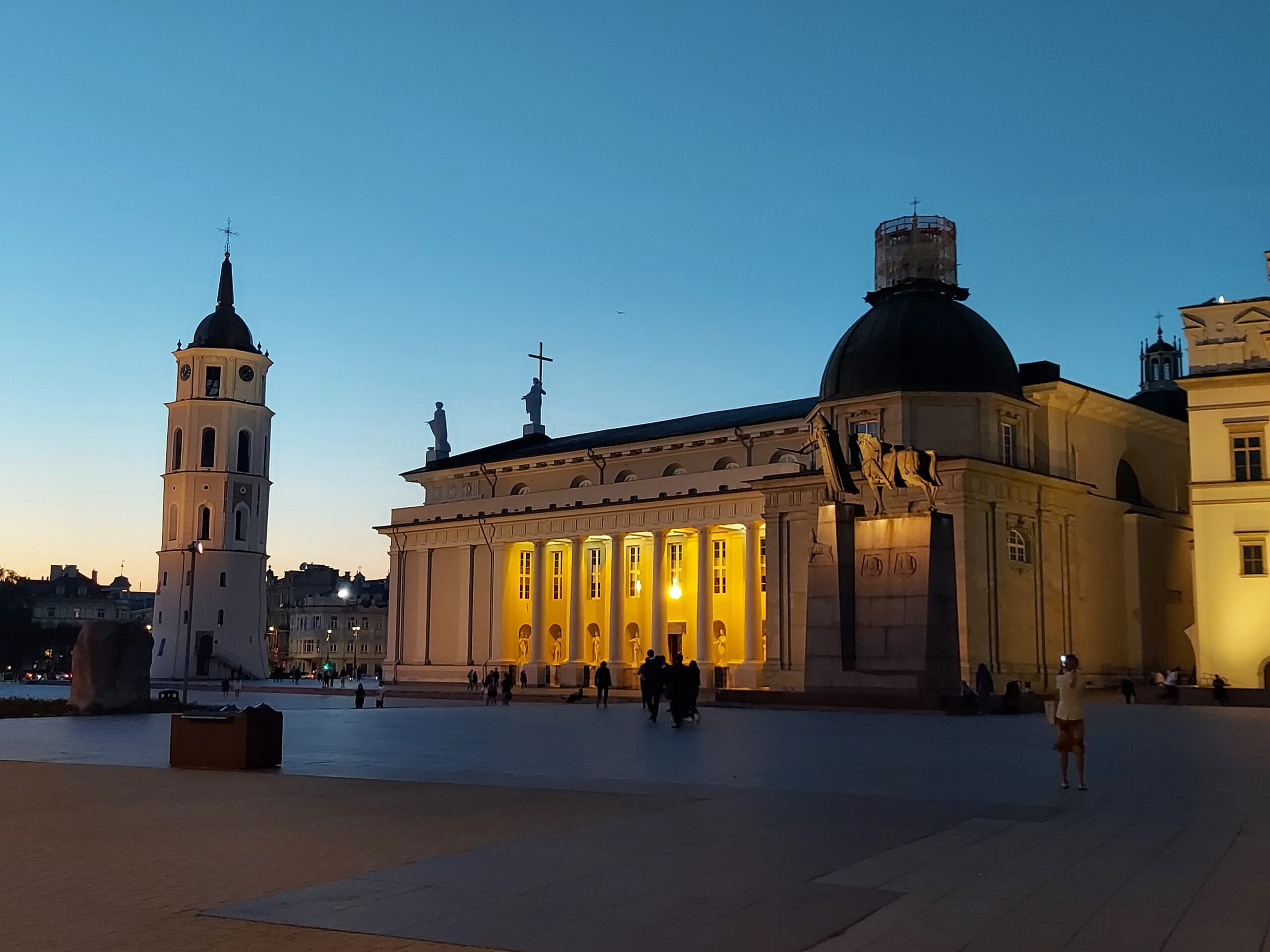
After this I walked down to Cathedral Square to visit Vilnius Cathedral (its full title is the Cathedral Basilica of St Stanislaus and St Ladislaus of Vilnius). The cathedral is unusual in resembling an ancient Roman building more than it does a traditional European cathedral. It was built in the centre of the city on the site of a former pagan temple, next to the castle. Remains of the original 1251 cathedral have been found underneath the current structure; further cathedrals have been built during the last millennium, but they kept burning down and being replaced.
Vilnius Cathedral
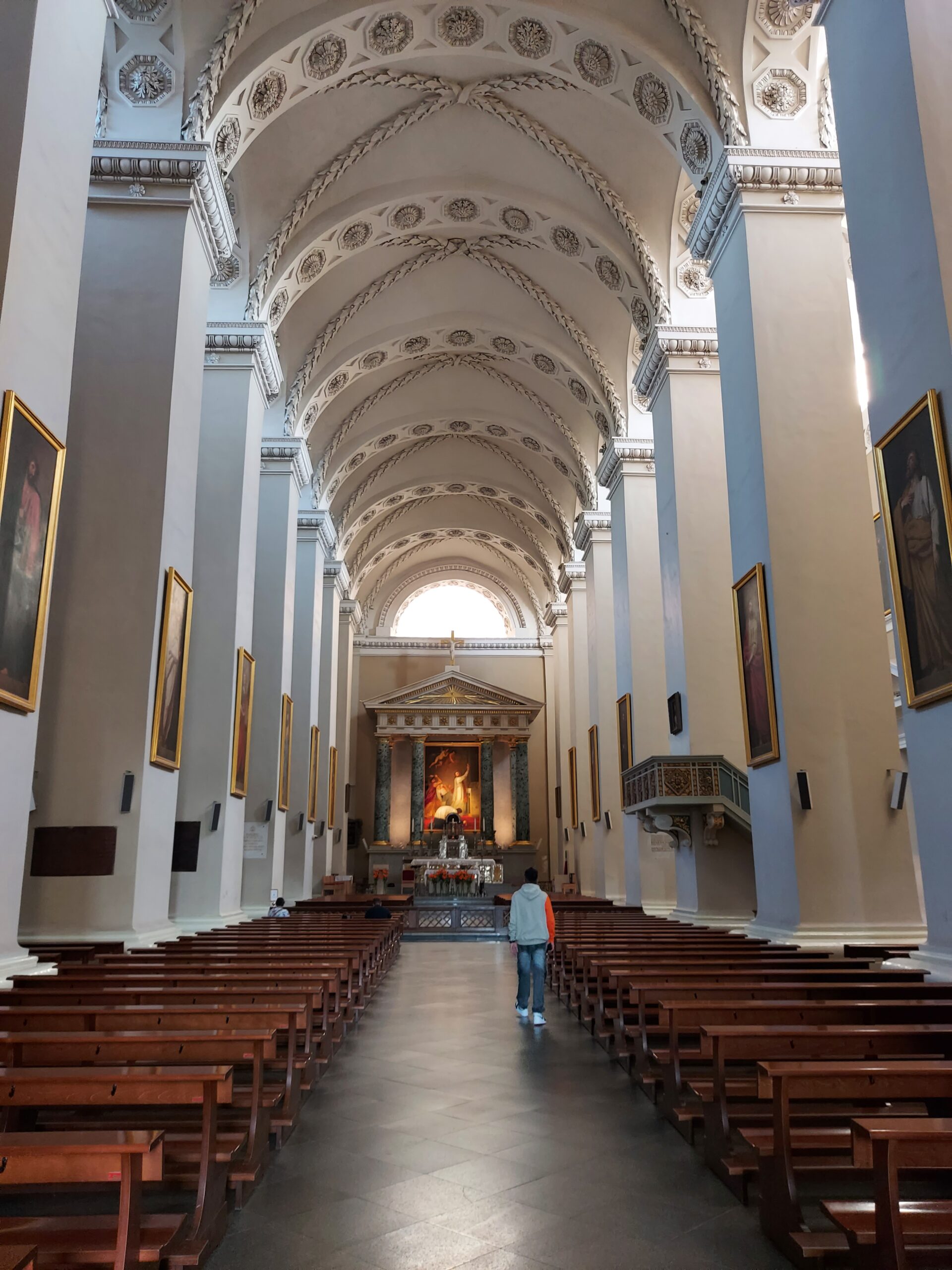
The coronations of the Grand Dukes of Lithuania took place within the cathedral, and many famous people from Lithuanian and Polish history are buried in its catacombs. It was converted into a warehouse during the period of Soviet occupation, but had its status as a cathedral restored in 1989.
Inside the cathedral
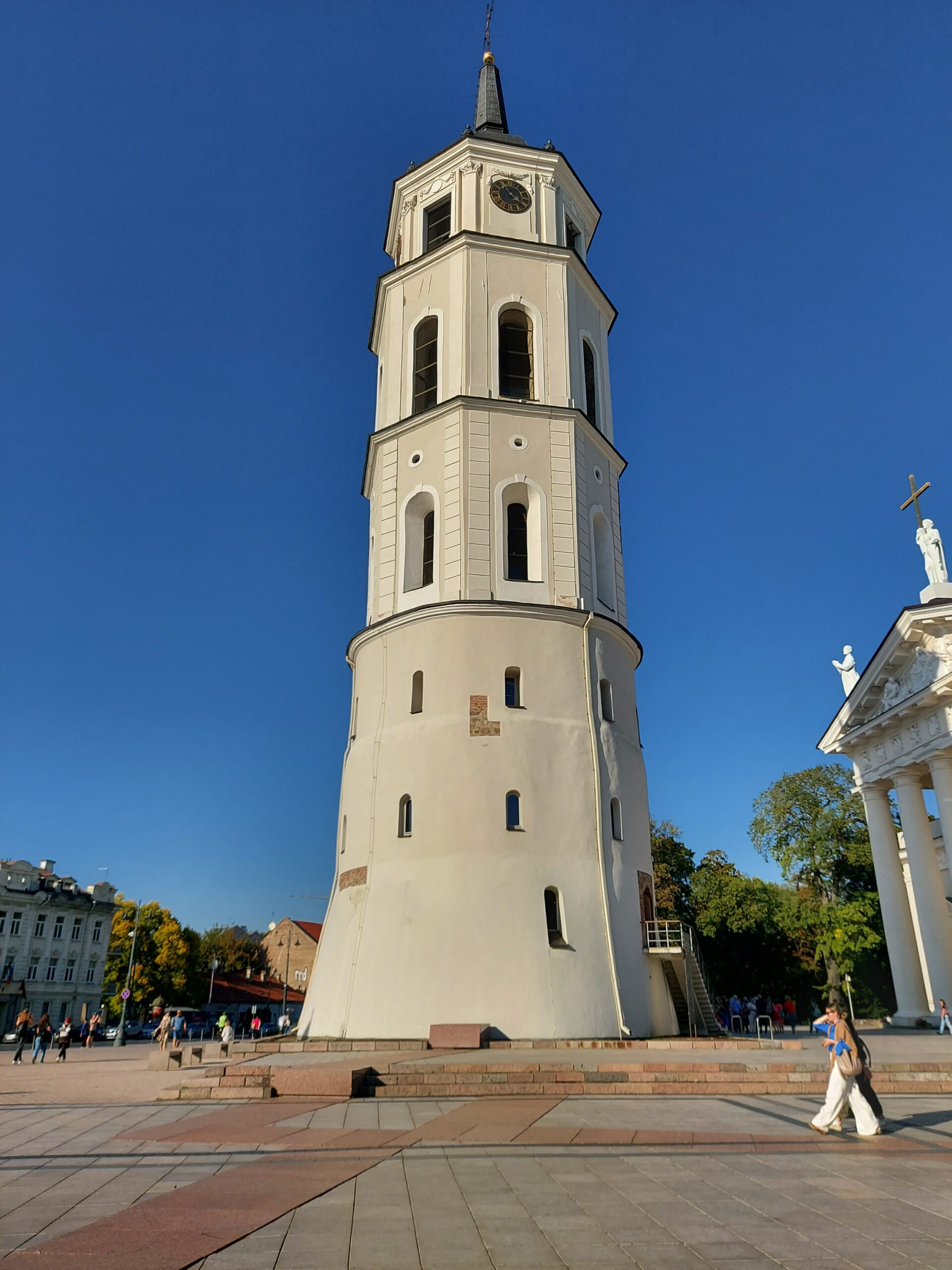
While I was there, I took the time to visit the Bell Tower, located next door. The tower is 57 metres tall (including the cross) and I was able to climb up it and check out the view. The history of the tower dates back to the thirteenth century, although it gained its current appearance in the nineteenth century. Originally a defensive tower, it later became simply a bell tower. Today, it is a symbol of Vilnius and the city’s oldest clock, situated at the top of the tower, chimes its bells to invite people to mass.
The Cathedral Bell Tower
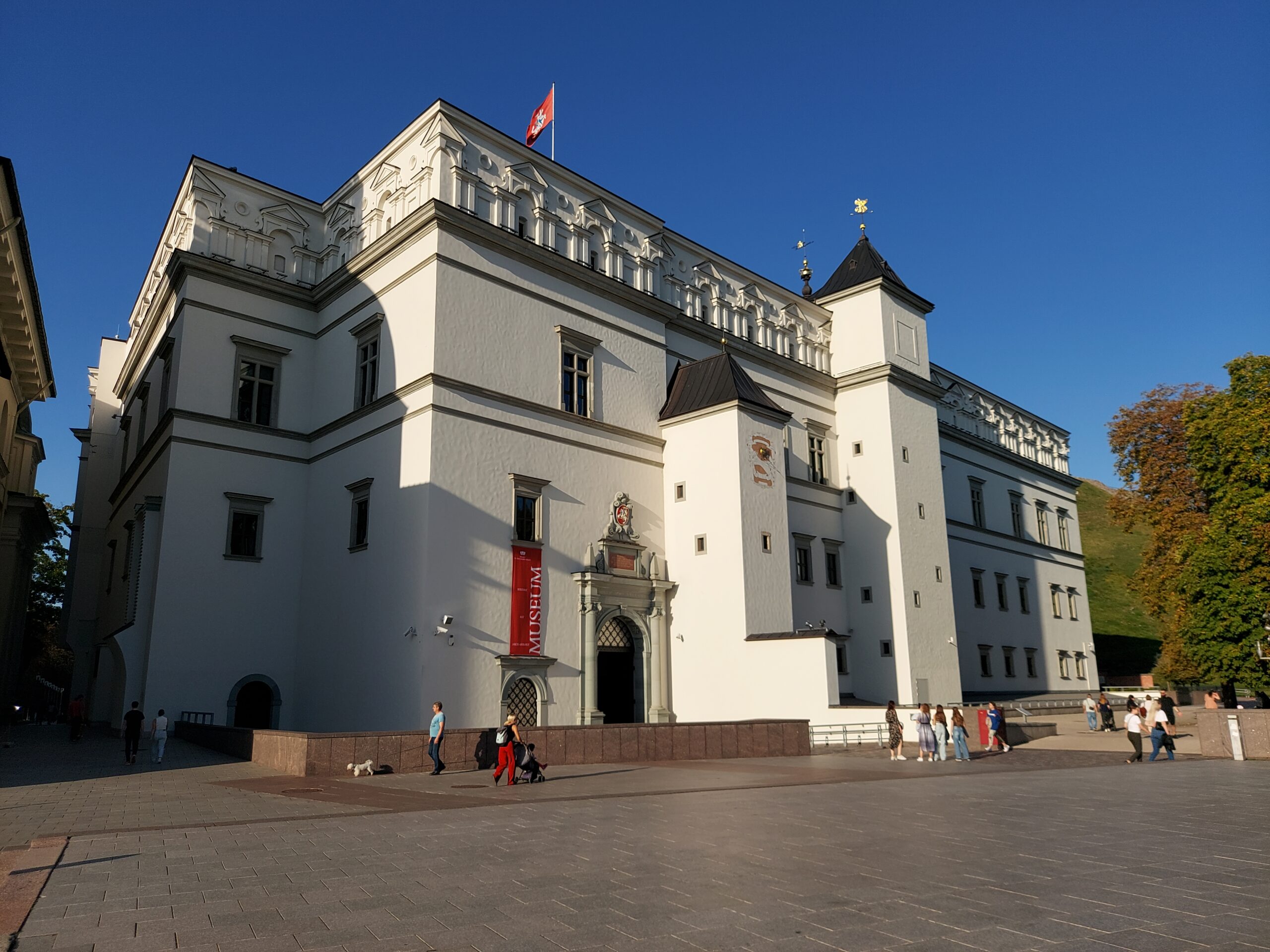
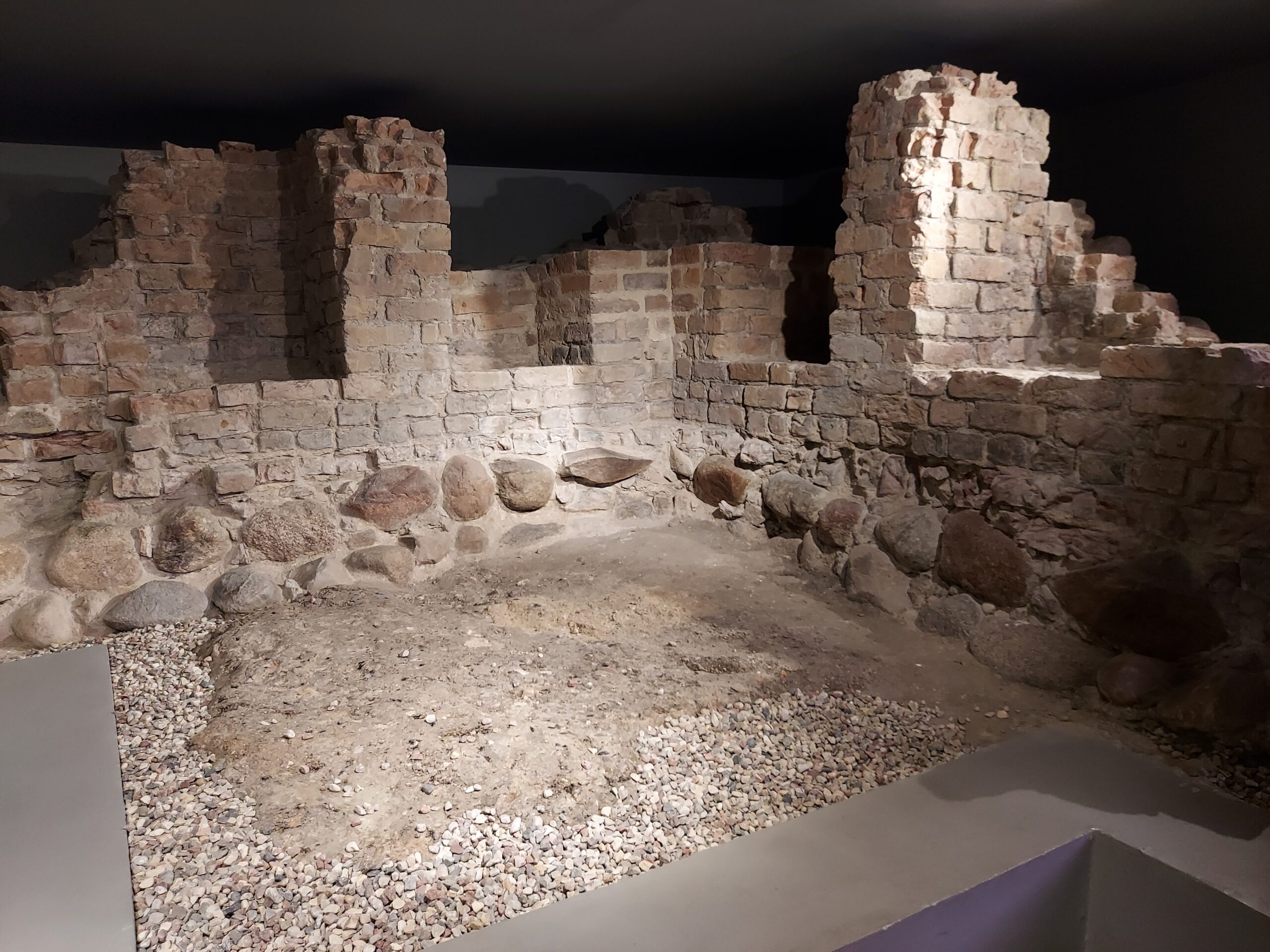
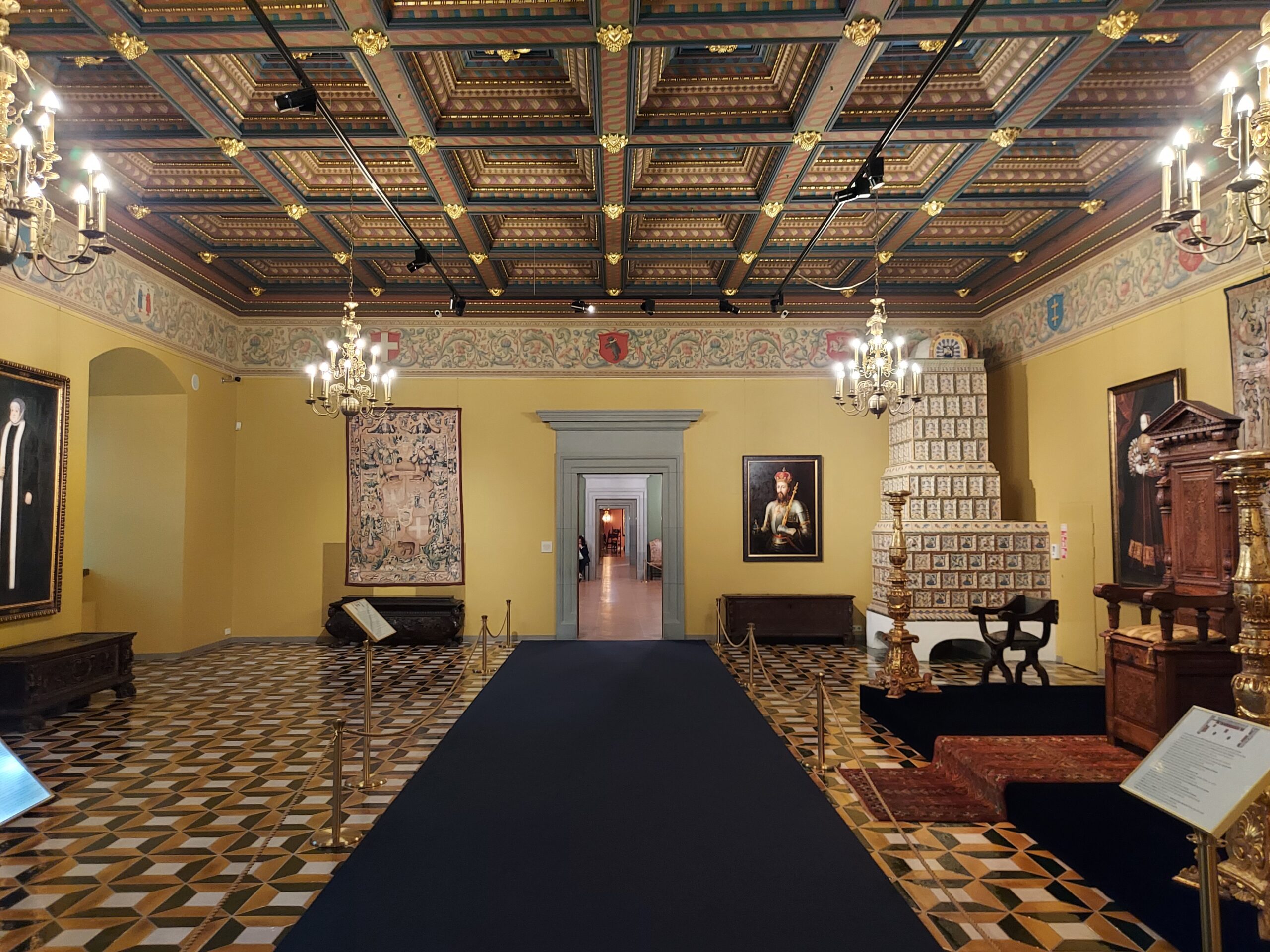
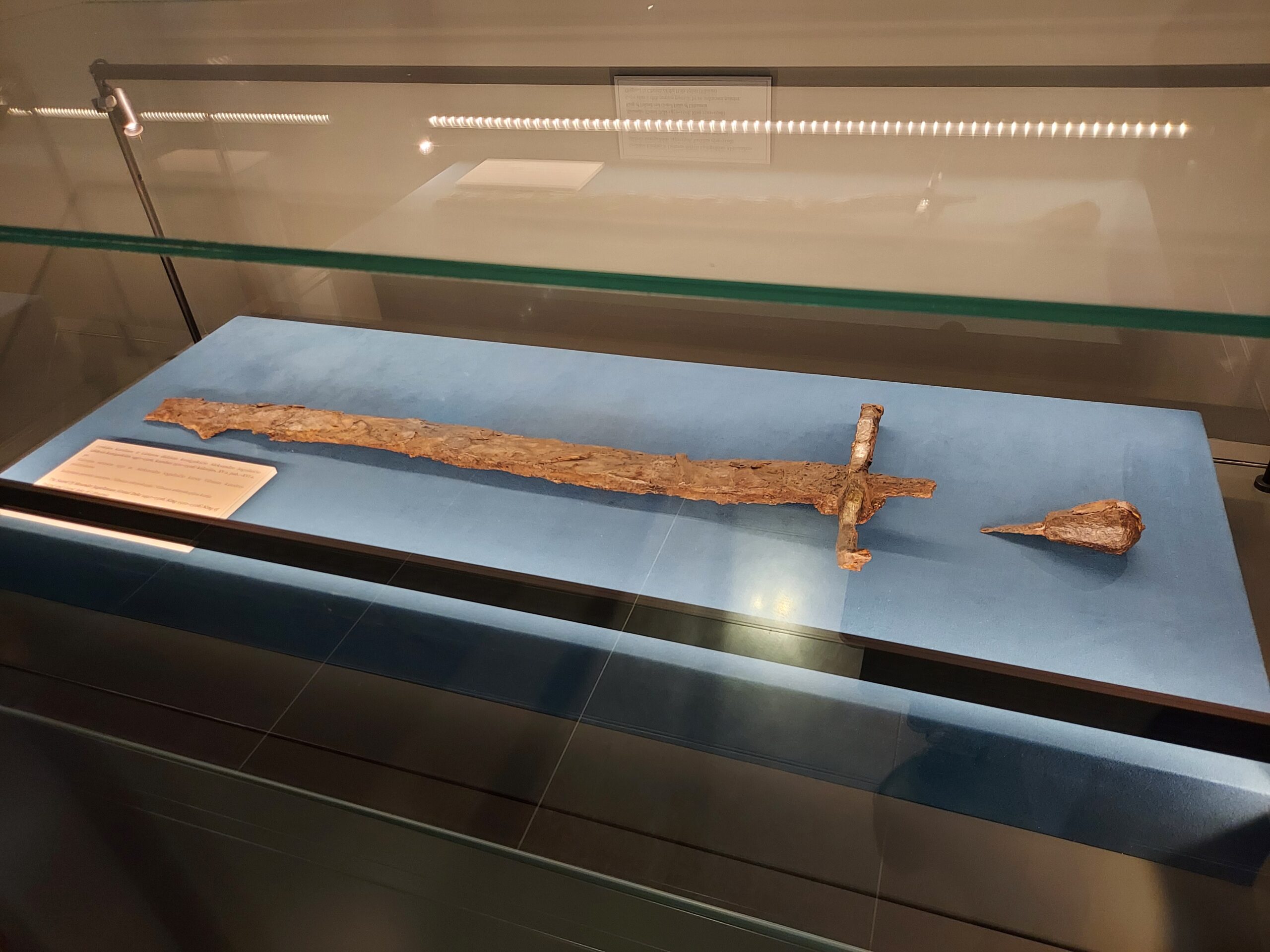
Finally, I visited the nearby Palace of the Grand Dukes of Lithuania. Originally built during the fifteenth century, on the site of a wooden settlement and later stone castle, it was the political, diplomatic, administrative and cultural centre of the Grand Duchy of Lithuania. In the middle of the seventeenth century, the Moscow army destroyed the palace, and it was only restored in 2013. Now acting as the National Museum, there are four main routes you can traverse to uncover the history of Lithuania and the palace (Route IV, home of temporary exhibitions, was closed while I was there).
The Palace of the Grand Dukes of Lithuania
Route I covers historical and architectural development, with elements of archaeology from the palace’s past, models of how it used to look, and other items of interest. This was probably my favourite section as I loved imagining how the palace might have looked.
Ruins of the old palace
Route II takes you through various historical interiors, showcasing rooms decorated in late Gothic, Renaissance and early Baroque styles. These were also interesting to see.
One of the historical rooms in the palace
Route III covers armaments, everyday life and music. I wasn’t so interested in armaments, but I enjoyed learning about the everyday lives of the palace’s inhabitants, and the role of music in palace life.
An old, broken sword
After my visit to the museum I was pretty tired, so I headed back to the hotel to get some sleep.