Rebel Badge Club: Observer

This was a fun badge to work on over the winter period. It helped me to get outside when the weather was dubious and appreciate nature during a cold and dark time – even if some aspects of the badge were made harder by doing them at this time of year!

Over a period of at least three months, monitor the changes to an area of at least ten square metres. Visit the area and make a record of any changes at least once a week.

I chose to monitor the changes outside my bedroom window. I saw the area slowly start to come back to life as the seasons changed from winter to spring, with buds spouting and birds singing.

Choose an outdoor area. Observe it for at least an hour. Identify different species of plants and wildlife in the area. Identify the impact which human activities have on this area.

I chose a spot in my local park, next to a pond, to do this clause. I saw several species of wildlife, including black-headed gulls, moorhens, Egyptian geese, stock doves, mallards, bluetits and a robin, as well as a few grey squirrels. The plants I saw included brambles, beech trees, rushes and dog roses.

While I was there I noticed: a male stock dove trying to seduce a female; doves and gulls engaging in what resembled gang warfare; and two moorhens chasing after a gull for some bread.

In terms of positive impact, humans built the pond and also maintain it. Visitors also feed the birds in the park. However, the food tends to be bread, which is not always the most nutritious. Humans also unfortunately drop litter in the park.
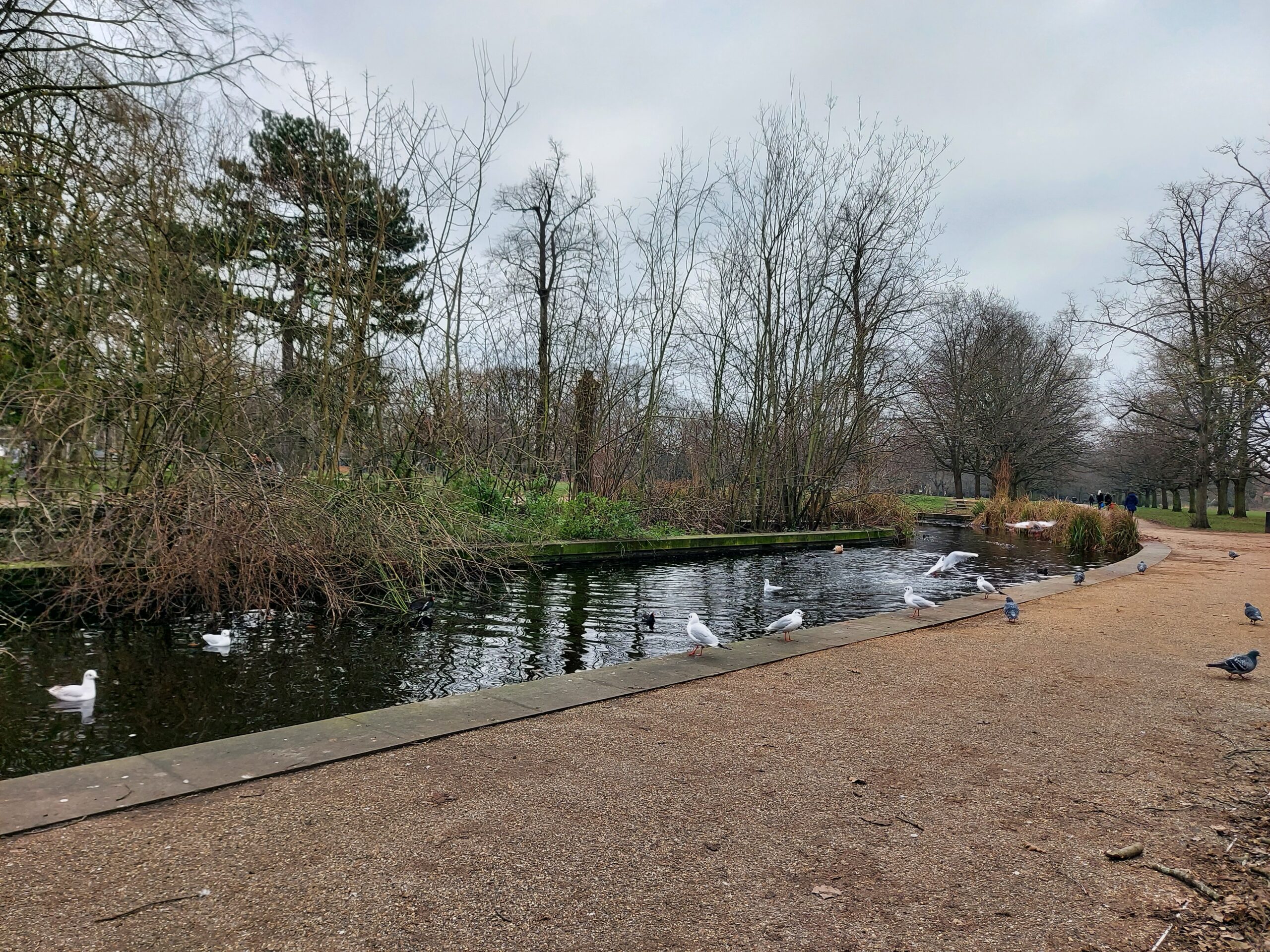
A pond in a park

Learn how to use a tree identification key. Be able to identify at least ten different trees from your local area. Draw diagrams of what they look like in summer and winter.

I used the British Trees Tree ID app from the Woodland Trust to learn to identify trees – I wish I’d done this clause in the summer as it would have been much easier to identify trees from their leaves! However, I did manage to select ten trees, learn about them, and draw diagrams.
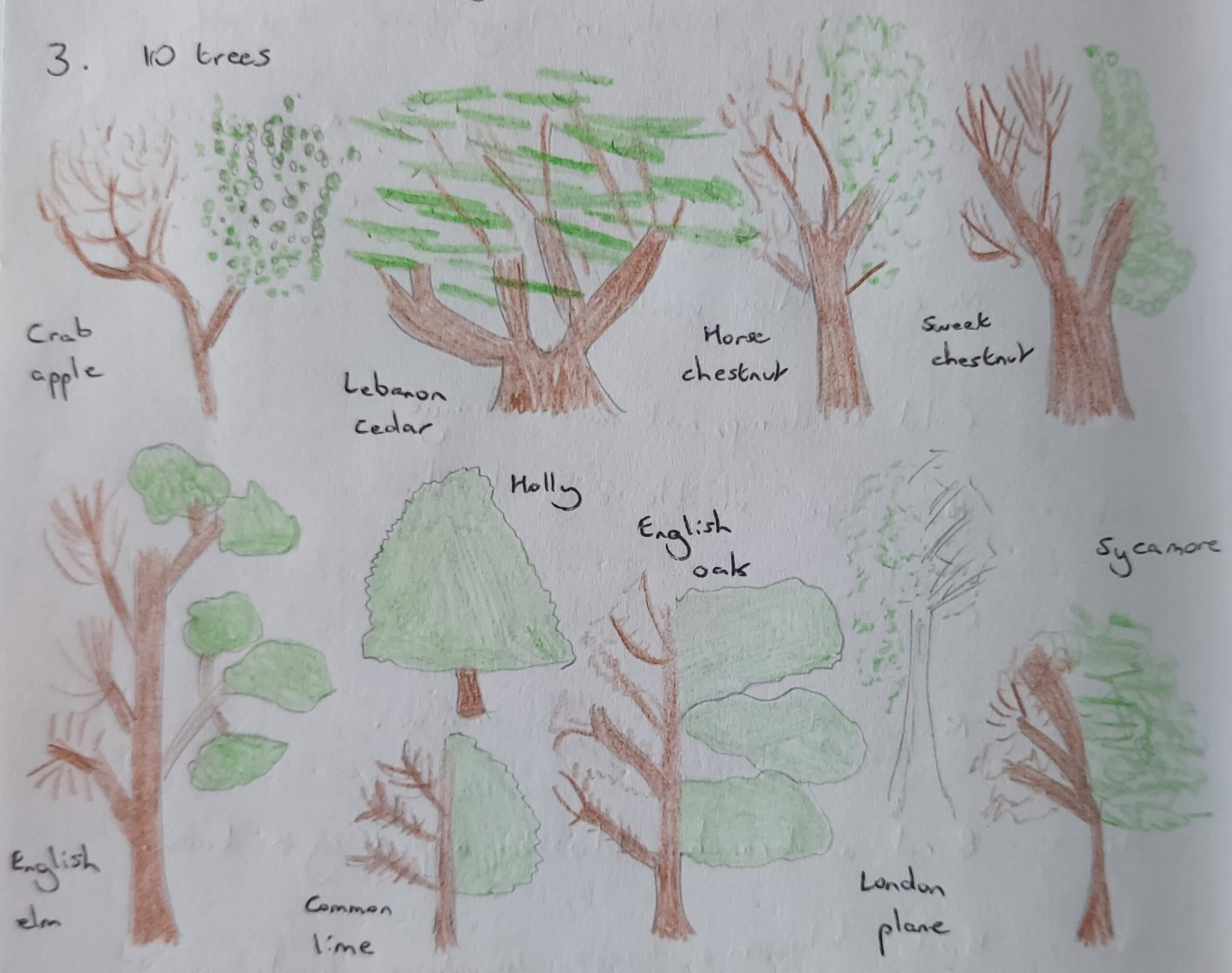
Drawings of 10 trees

Be able to recognise at least ten different birds which live in your local area. Make a book to help a child recognise your ten chosen birds.

To prepare myself for this clause I went on a bird walk and survey in my local park. We saw a surprising number of species: robins, moorhens, black-headed gulls, Egyptian geese, mallards, pigeons, bluetits, green woodpeckers, jays, a dunnock, a nuthatch, a coal tit, a great tit, a wren and a goldcrest. Here is the link to my book about birds.

Be able to identify at least ten different types of flowering plants. Draw coloured diagrams of all ten plants.

I selected my plants and managed some diagrams, although drawing is not my strong point.

<Drawings of 10 flowering plants

For at least a month keep a daily record of the weather.

I kept a record of the weather during January.

Choose one of your completed weather records. Find a creative way to record your findings visually.

I chose the min/max temperature, made a graph from the figures, and drew a picture incorporating all of the points.
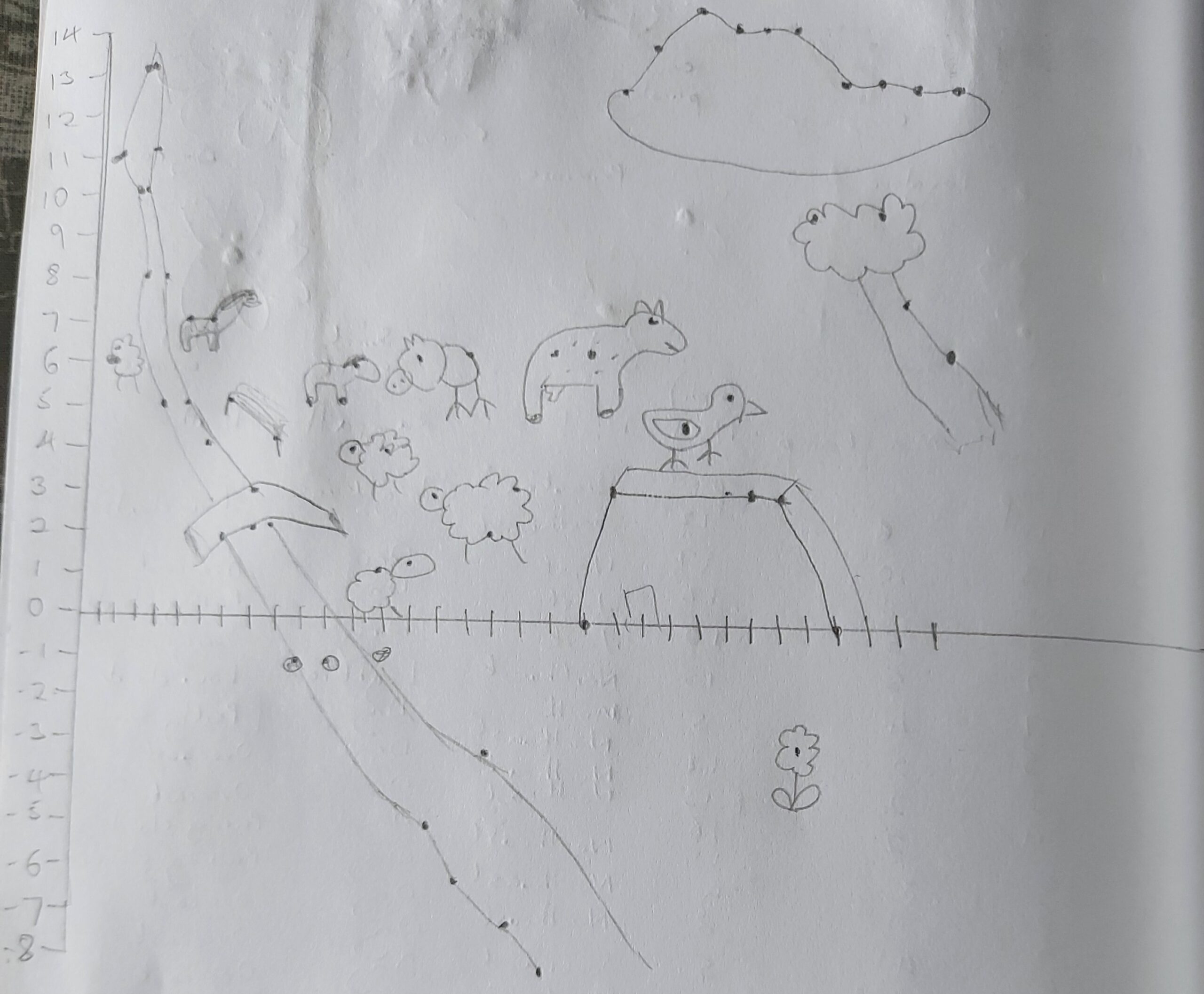
Drawing incorporating min/max temperatures

Take an hour to sit on a bench, or at a coffee shop table in a relatively busy area. Observe the world around you.

I decided to complete this clause while waiting for a train at King’s Cross station. I sat outside Gregg’s and observed my surroundings. I saw a pigeon preening itself on top of the departure board and was amused when it dived down directly in front of someone and gave them a shock! I also spotted some interesting outfits and wondered why everyone was carrying paper bags from Wasabi.

Date completed: 31 March 2024
Rebel Badge Club: Inventor

I was both excited and apprehensive about this badge. Excited, because it looked like fun; apprehensive, because I’ve never done anything like this before and I haven’t done science since school. I really enjoyed working on this badge, however.

Learn about Rube Goldberg machines. Try your hand at creating one and film it in action.

A Rube Goldberg machine is a contraption designed to perform a simple task in a(n overly) complicated way. They are named after the American cartoonist Rube Goldberg, whose drawings often featured such machines. In the UK, such machines are often known as “Heath Robinson contraptions” after the illustrator of that name, whose work actually predated Goldberg’s.

My brain was full of complicated ideas about how I might go about creating such a machine. However, once I began I found that it was incredibly difficult. I kept having to simplify the design so that it would work, and my final successful contraption was very basic indeed! I am full of admiration for those that can create massive and complex machines.

Choose an invention that you admire. Research its origin story.

I’ve always said that the person who invented contact lenses should have a statue dedicated to them. I researched the history of contact lenses and it seems that several people over the years have had a hand in their creation.

Read or listen to a book about innovation.

I read How Innovation Works by Matt Ridley. I really enjoyed it, particularly its central idea that innovation does not happen in a vacuum or on the spur of the moment, but through persistence, trial and error, and the sharing of ideas.

Listen to at least three podcasts, or watch at least three documentaries, about how popular inventions or innovative products were created.

I’ve been listening to the Patented: History of Inventions podcast, which is very interesting. Some of my favourite episodes are those about condoms, the number zero, and coffee.

Brainstorm ideas of inventions which might improve your life.

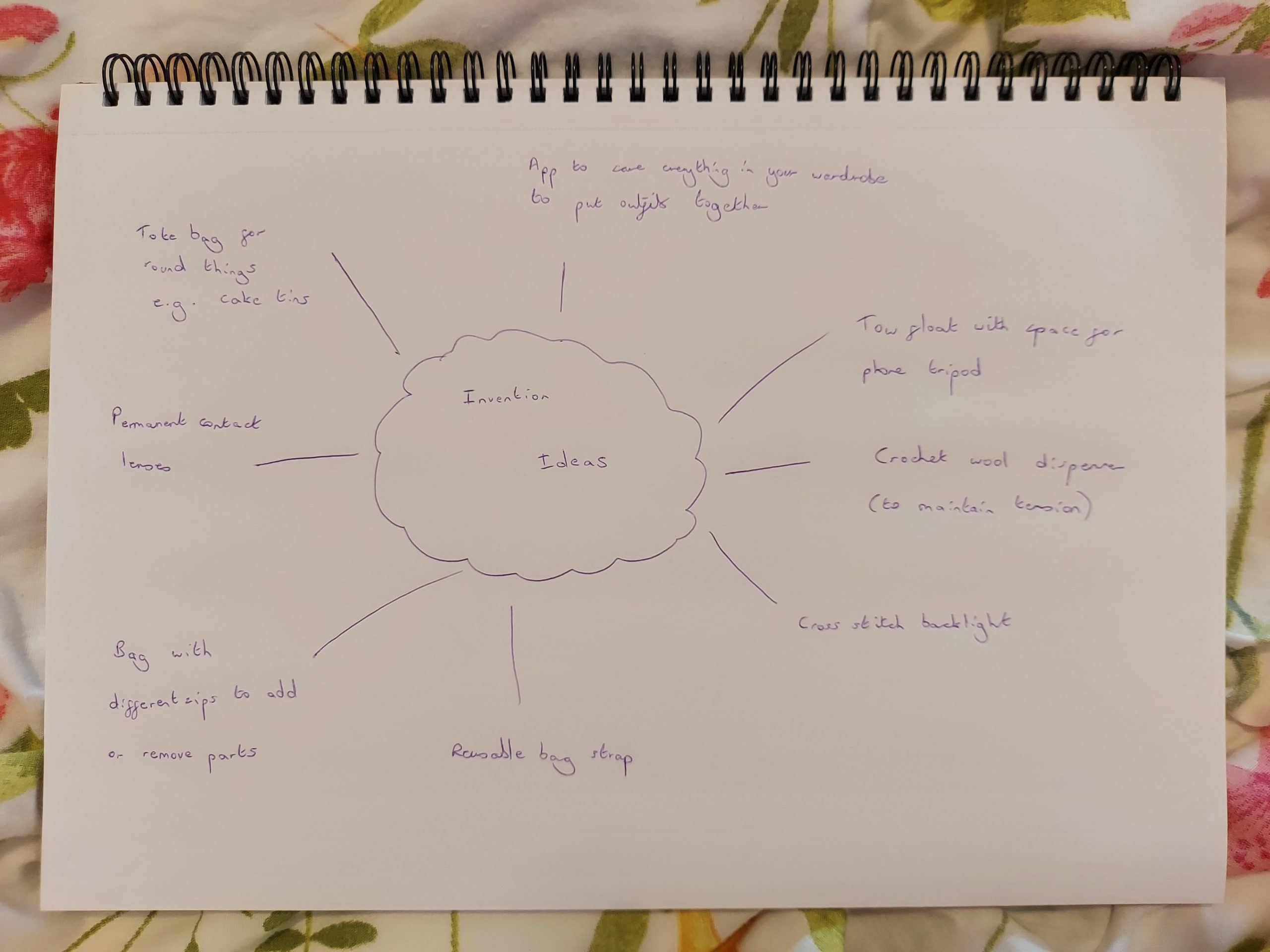
I found this clause quite tricky, as I don’t really have an innovation mindset. However, I managed to come up with some ideas.

Brainstorm of invention ideas

Choose one of your ideas and create a blueprint of it. Make a basic prototype of one of your inventions.

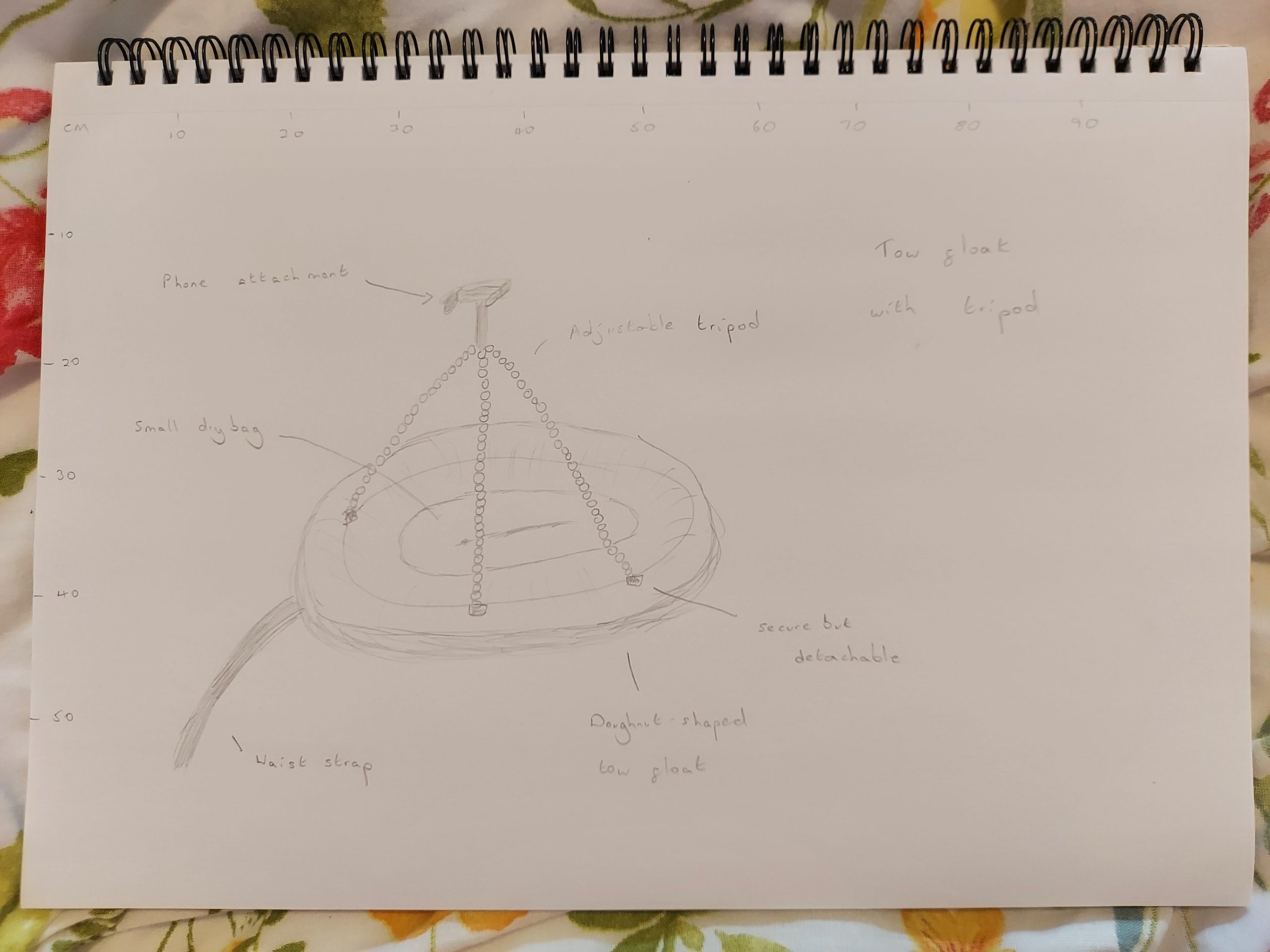
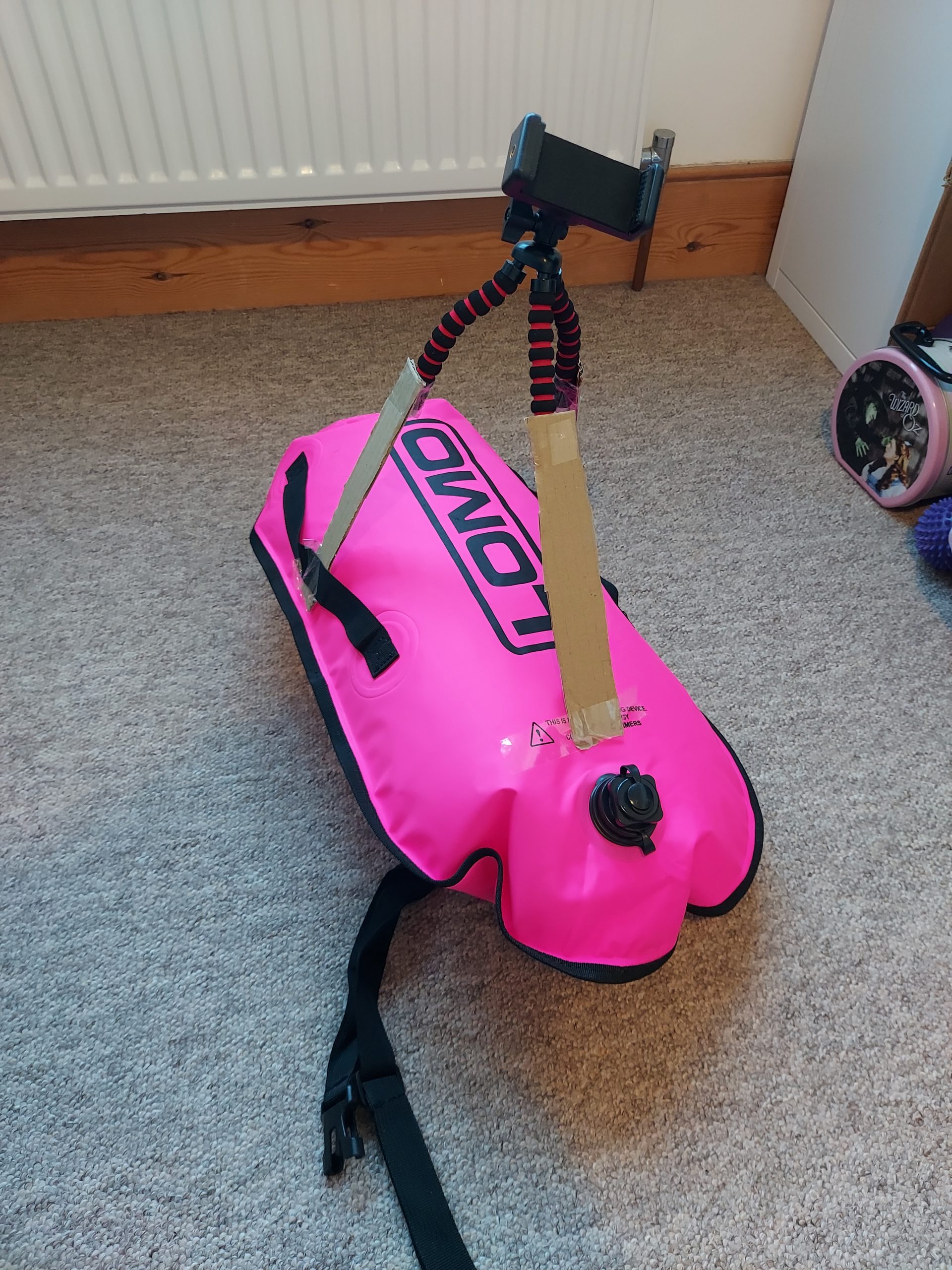
Inspired by my wild swimming this summer, I decided to prototype my idea of a tow float with a tripod attached meaning that you can take pictures and record while in the water. I’m not the best at art, but I hope my blueprint conveys what I want to get across. I made a prototype from my existing tow float and small portable tripod – in real life I think it would be better made with the doughnut type of float, but I made use of what I had.

Blueprint of tow float with tripod


A tow float with a phone tripod attached

Make at least three inventions (from list)

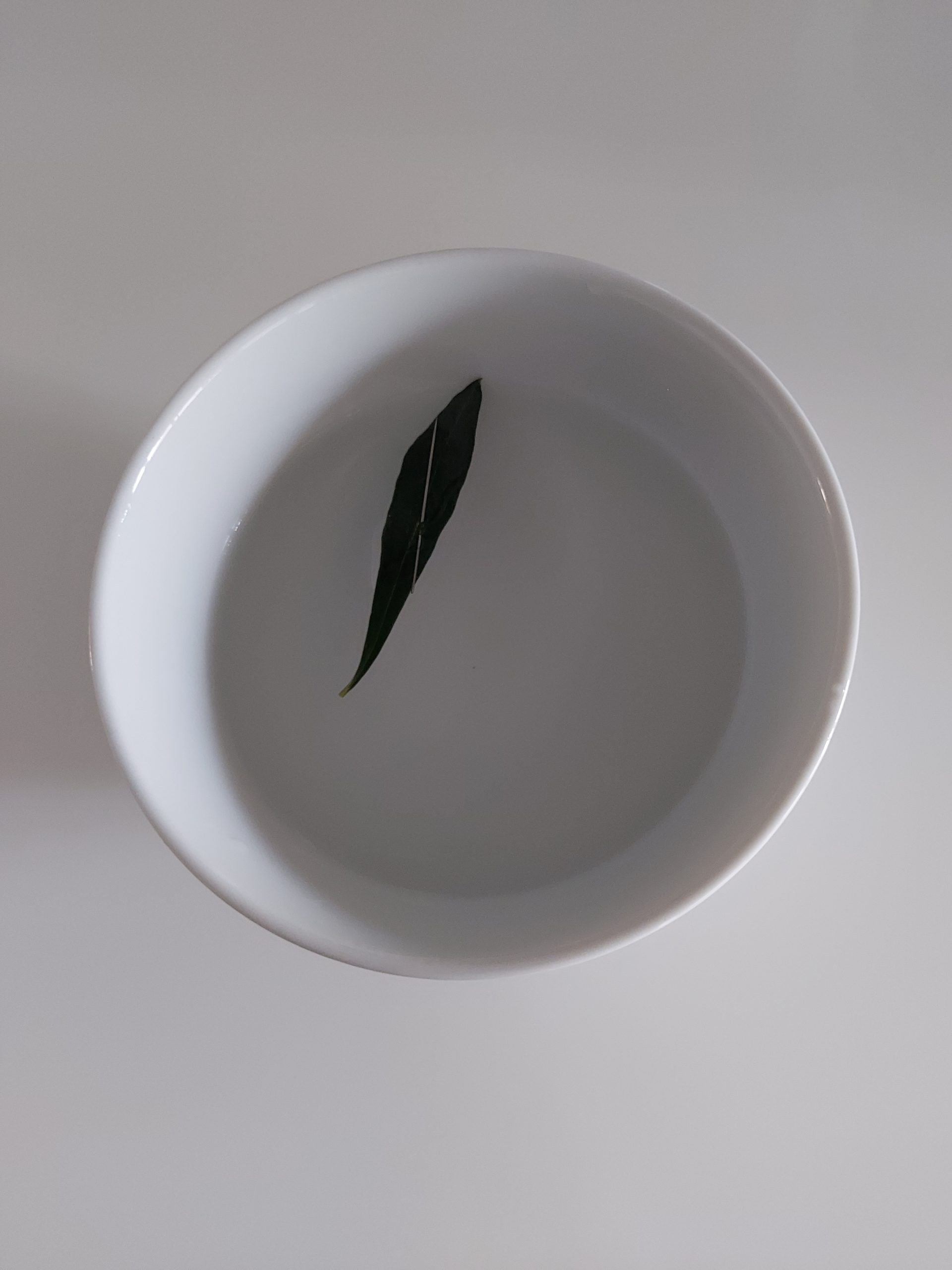
I decided to challenge myself by making inventions selected from the list that involved no or little cost. I chose an amplifier, made of cardboard; a compass, made with a (magnetised) needle in a bowl of water; and a potato clock, made with a kit I picked up from the swaps table at Stockport.

Find instructions to make an invention not listed above. Follow the instructions and make your own version.

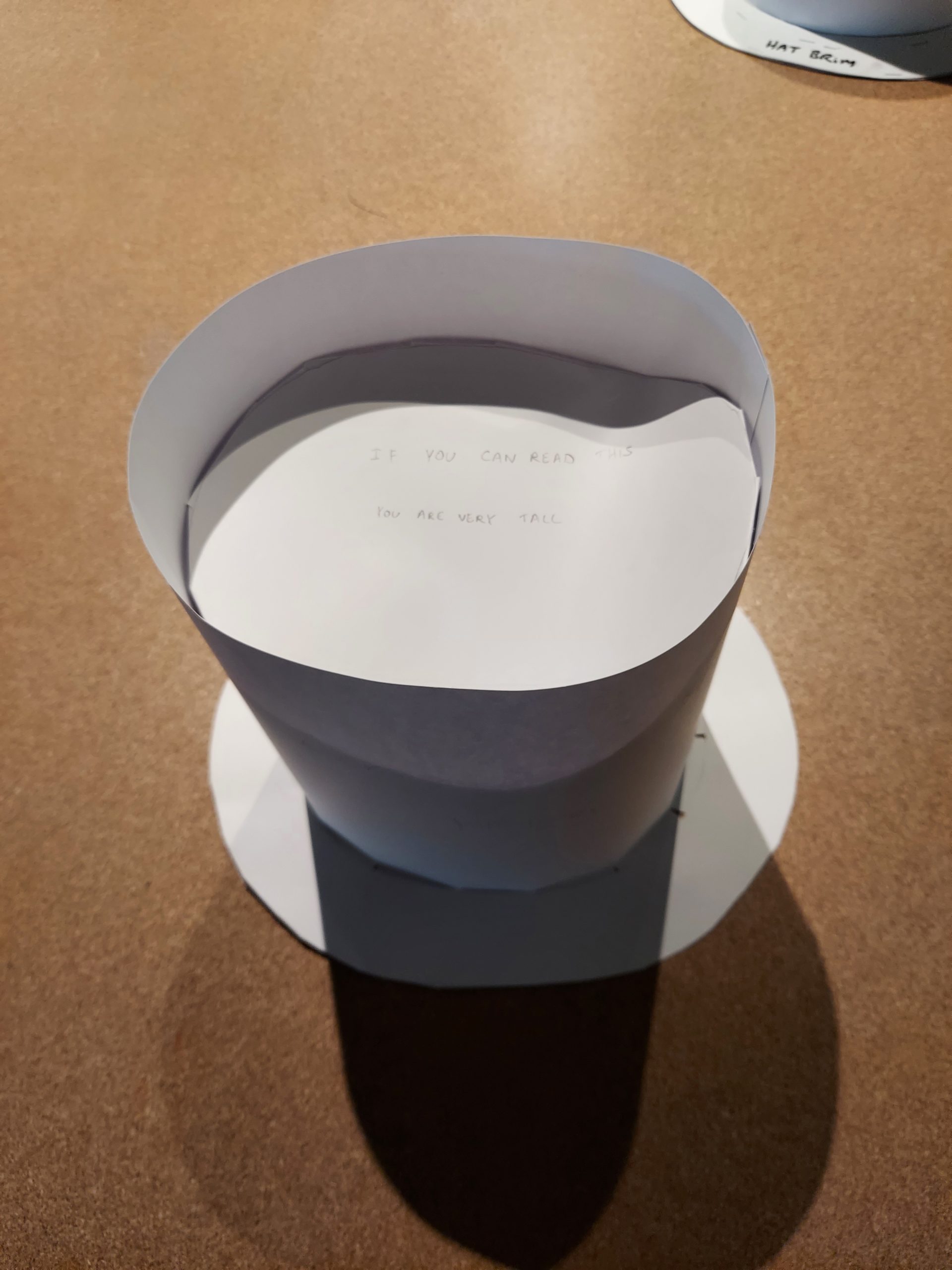
At the National Archives exhibition, Spirit of Invention, I followed the instructions to make a Social Media Hat – I even wrote ‘Rebel Badge Club’ on it!


Date completed: 1 December 2023

Rebel Badge Club: Wild Swimmer

West Reservoir
Hackney West Reservoir

When I decided to work on the Wild Swimmer badge, I certainly didn’t expect to love it as much as I did. I used to be someone who absolutely hated swimming, and open water swimming in particular baffled me.

Well, what can I say? I’ve become a complete convert. I love the feeling of peace a swim gives me. I love spending time in nature, I find the cooler water refreshing, and I’m happy not to have to put up with the horrible chlorine smell of indoor pools.

I plan to continue with my swims over the winter with the Teddington Bluetits as well as occasional dips with Mental Health Swims. I’ve got myself a tow float and a bright swimming hat, and I plan to get myself some neoprene gloves and boots as well. I would love to attend some full moon swims and other special occasion swims.

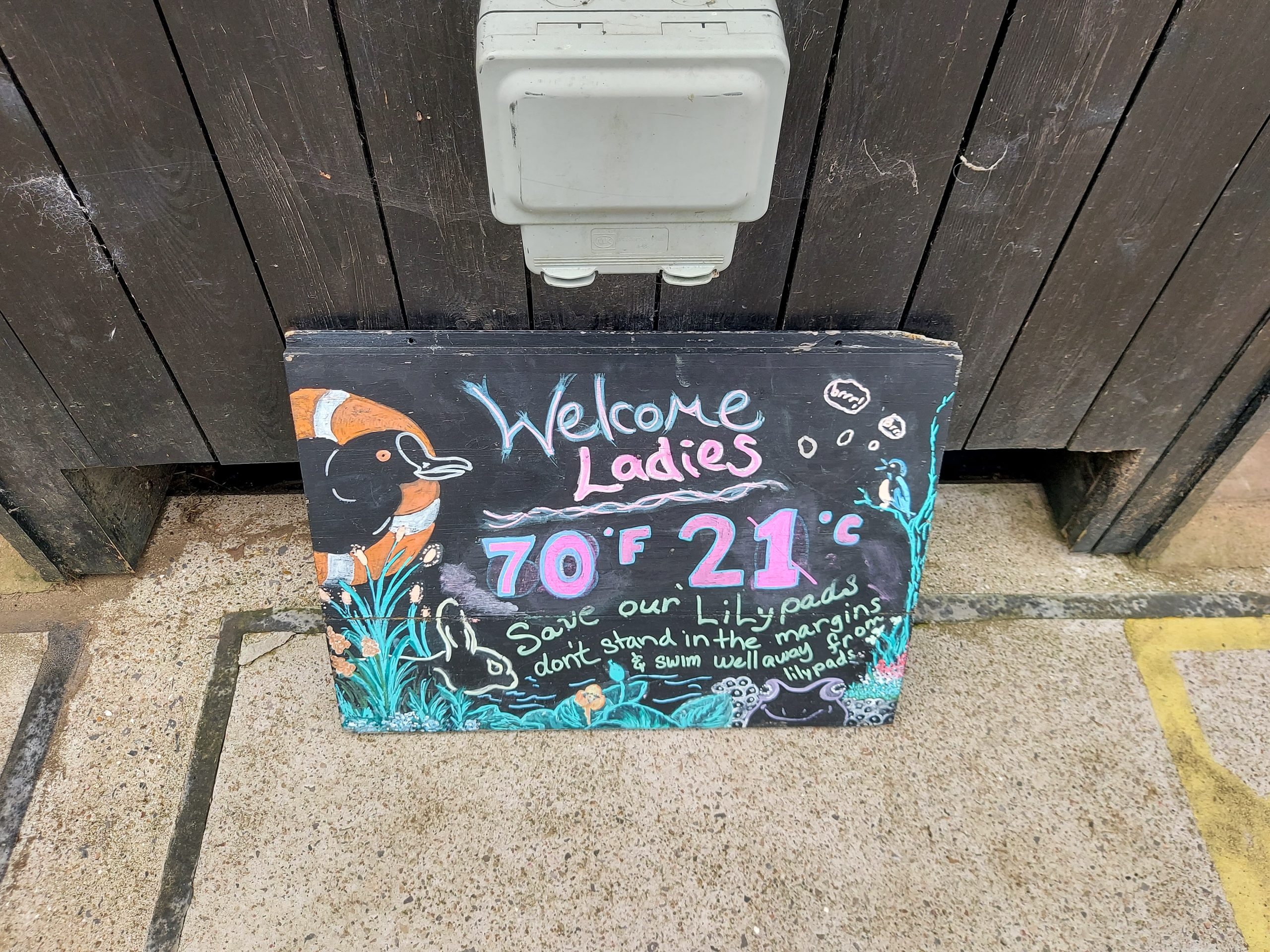
Blackboard displaying the temperature (21 degrees) at Kenwood Ladies' Pond
Board at Kenwood Ladies’ Pond

Over a period of three months, swim in open water at least once a week.

I managed to swim on average once a week, although this did mean that some weeks I couldn’t swim and other weeks I managed to swim twice. I can only swim at the weekend so this restricted things somewhat for me. Once I managed two dips in one day!

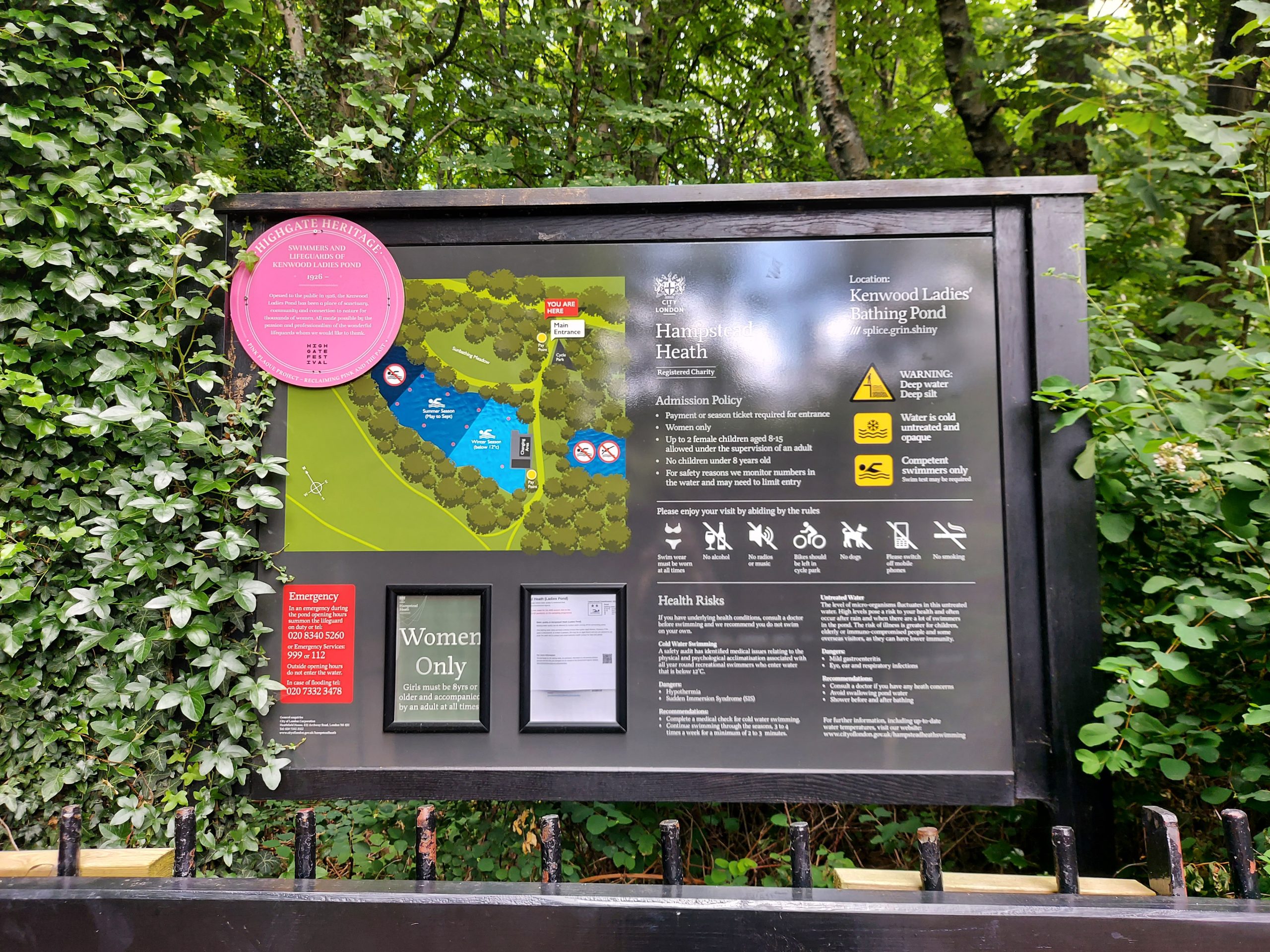
Entrance sign to Kenwood Ladies' Pond
Sign at Kenwood Ladies’ Pond

Swim in at least three different open water venues.

I swam mostly in Kenwood Ladies’ Pond but I also tried out the Hampstead Mixed Pond, the lake at Beckenham Place Park, West Reservoir at Hackney with Mental Health Swims and, when I got more confident, the River Thames with the Teddington Bluetits.

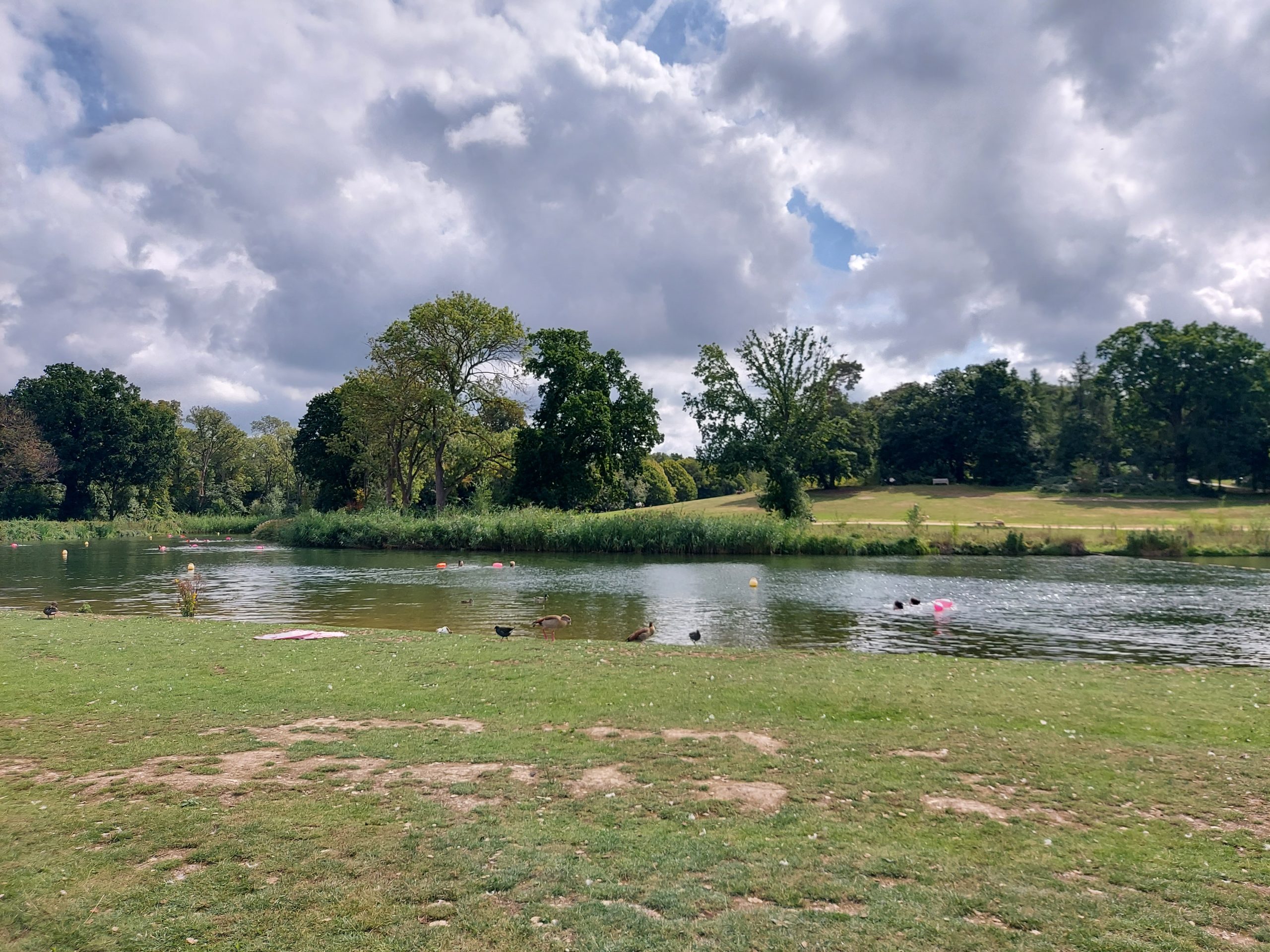
Beckenham Place Park
The lake at Beckenham Place Park

Keep a record of water temperatures, who you swam with, time, weather conditions and how far you swam.

  • 02/07 Kenwood Ladies’ Pond, 21°C, my friend Dasa, 30 mins, warm with a breeze, swam to and from various rings
  • 08/07 KLP, 20°C, alone, 20 mins, warm with light rain, a bit more swimming today
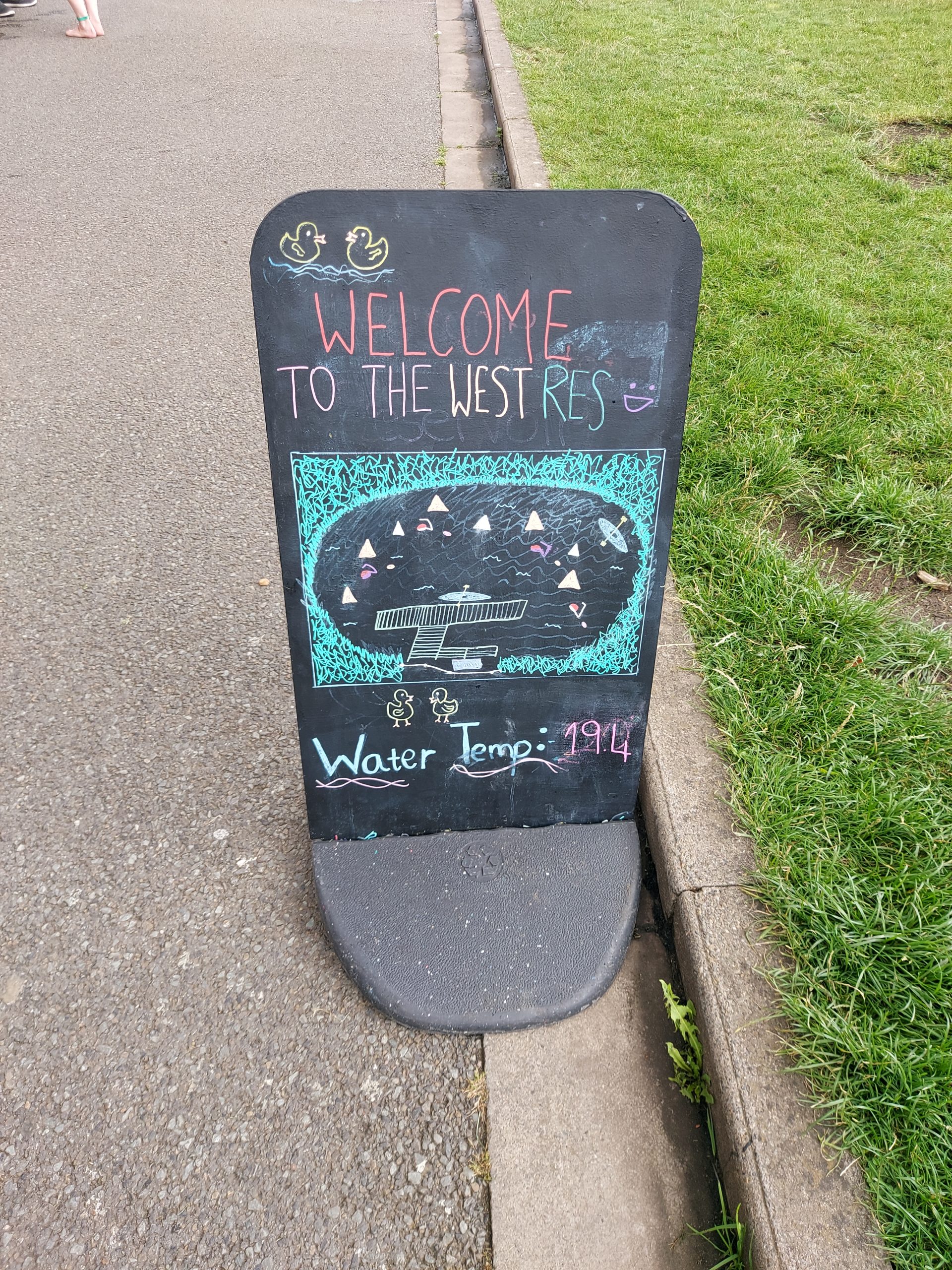
  • 15/07 West Reservoir, 19.4°C, Mental Health Swims, 40 mins, warm but windy, 100m
  • 22/07 KLP, 19°C, alone, 30 mins, warm with light rain, quite a bit of swimming
  • 29/07 KLP, 18°C, alone, 40 mins, warm, quite a bit of swimming, swam to back of pond
  • 12/08 West Reservoir, 20.5°C, Mental Health Swims, 40 mins, warm and a little windy, 150m
  • 13/08 Hampstead Mixed Pond, 19.4°C, my friend Dasa, 40 mins, warm with a breeze and slight rain, swam to the end and back about 3 times
  • 02/09 Beckenham Place Park, 19.5°C, alone, 40 mins, warm but overcast, swam continuously for a good while
  • 03/09 River Thames near Teddington, 17°C, Teddington Bluetits, 30 mins, early morning sunny and getting warm, swam upstream and back
  • 09/09 River Thames near Teddington, 20°C, Teddington Bluetits, 30 mins, hot day, treaded water for a long time
  • 09/09 River Thames near Teddington, 20°C, Teddington Bluetits, 30 mins, hot day, treaded water for a long time
  • 23/09 KLP, 18°C, alone, 30 mins, warm, quite a bit of swimming, swam to back of pond
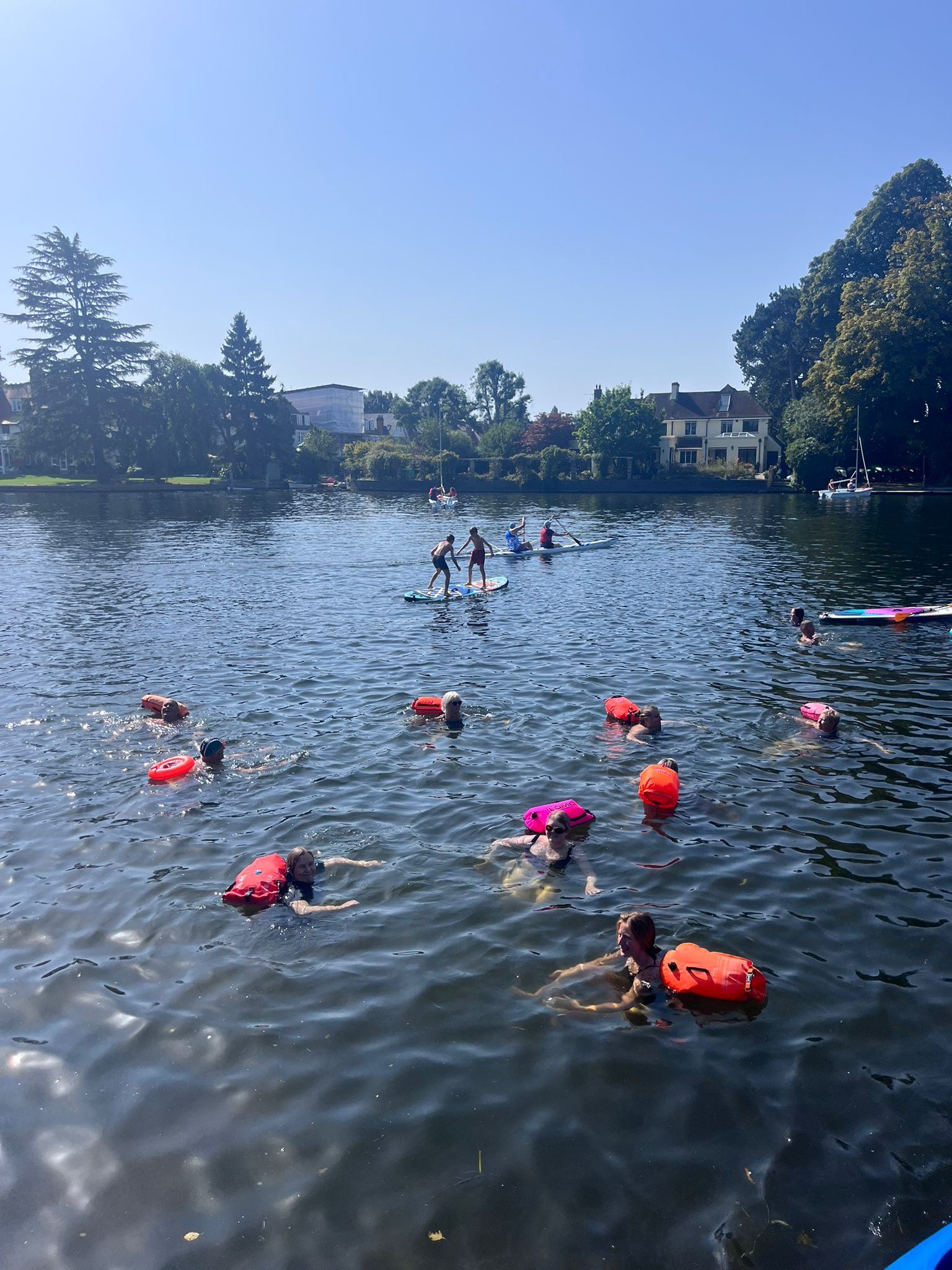
River Thames near Teddington
In the Thames with the Teddington Bluetits

Learn how to administer CPR to a victim of drowning.

I learned about CPR in my First Aid course, and noted the following with regards to victims of drowning:

  • Start with rescue breaths rather than chest compressions.
  • Many casualties that drown may bring up stomach contents, so be prepared to roll them onto their side to clear their airway.

What equipment do you need to swim in cold water?

For my swims in Kenwood Ladies’ Pond, all I needed was a swimsuit. For many open water swimming venues, tow floats are recommended. I bought my own tow float to use in the Thames.

Brightly coloured swimming hats are recommended (compulsory at some venues) to ensure you are visible in the water.

For cold water below about 14°C, a wetsuit is recommended (plus neoprene gloves, socks/shoes and hat).

If you often swim in an area without changing facilities, a changing robe is recommended, as is a hot drink to warm you up when you get out of the water.

Blackboard displaying the water temperature (19.4 degrees) at West Reservoir
Board at Hackney West Reservoir

How do you care for a neoprene wetsuit?

A neoprene wetsuit should be stored hanging right side out, in a temperate place away from heat sources, and away from sunlight. Do not fold. Storing the wetsuit appropriately can help prevent damage and tears.

To mend a wetsuit, it can be taken to a professional, but small tears can be fixed at home. Neoprene cement or glue can be used to join tears. Larger holes can be covered with neoprene patches and secured with specialist glue.

Describe the differences between a swimming wetsuit and a surfing wetsuit.

Swimming wetsuits are designed for flexibility and speed to help swimmers move through the water more easily. They have more panels, varying thicknesses, buoyancy and thermal protection. They tend to be smoother, easier to remove, and with a lower neck seal to prevent surf rash.

Surfing wetsuits are typically designed for warmth and protection. They often have reinforced knee panels. They come in a variety of styles to suit different watersports and different water temperatures.

Describe how a non-swimmer, weak swimmer and injured swimmer look in the water.

Non-swimmers can thrash their arms, slapping the water trying to keep their heads above the surface.

Weak swimmers use their legs and look like their heads are above water. They may look fine, but could be struggling.

Injured swimmers can be identified by their weak or tired stroke, and diagonal body orientation.

I found this article very useful in terms of potentially identifying someone who is drowning.

Learn how to tow someone in the water.

I completed this clause during the lifesaving session at Rebel Summer Camp.

Take part in a ‘fun’ open water swimming activity.

I attended the ‘Night at the Res’ event at the West Reservoir in Hackney. There was a lovely atmosphere and it was great to be able to swim at the end of the day as the sun was going down.

West Reservoir during 'Night at the Res'
Hackney West Reservoir during Night at the Res

Date completed: 30 September 2023

Rebel Badge Club: Outdoor Cook

This was one of the badges I overlooked when I first read through the Badge Book, but over the last year I’ve looked again and seen how I can manage to complete it. Staying at a campsite in Dorset helped, as I had access to an open fire pit and a stove.

Cook a meal on an open wood fire.

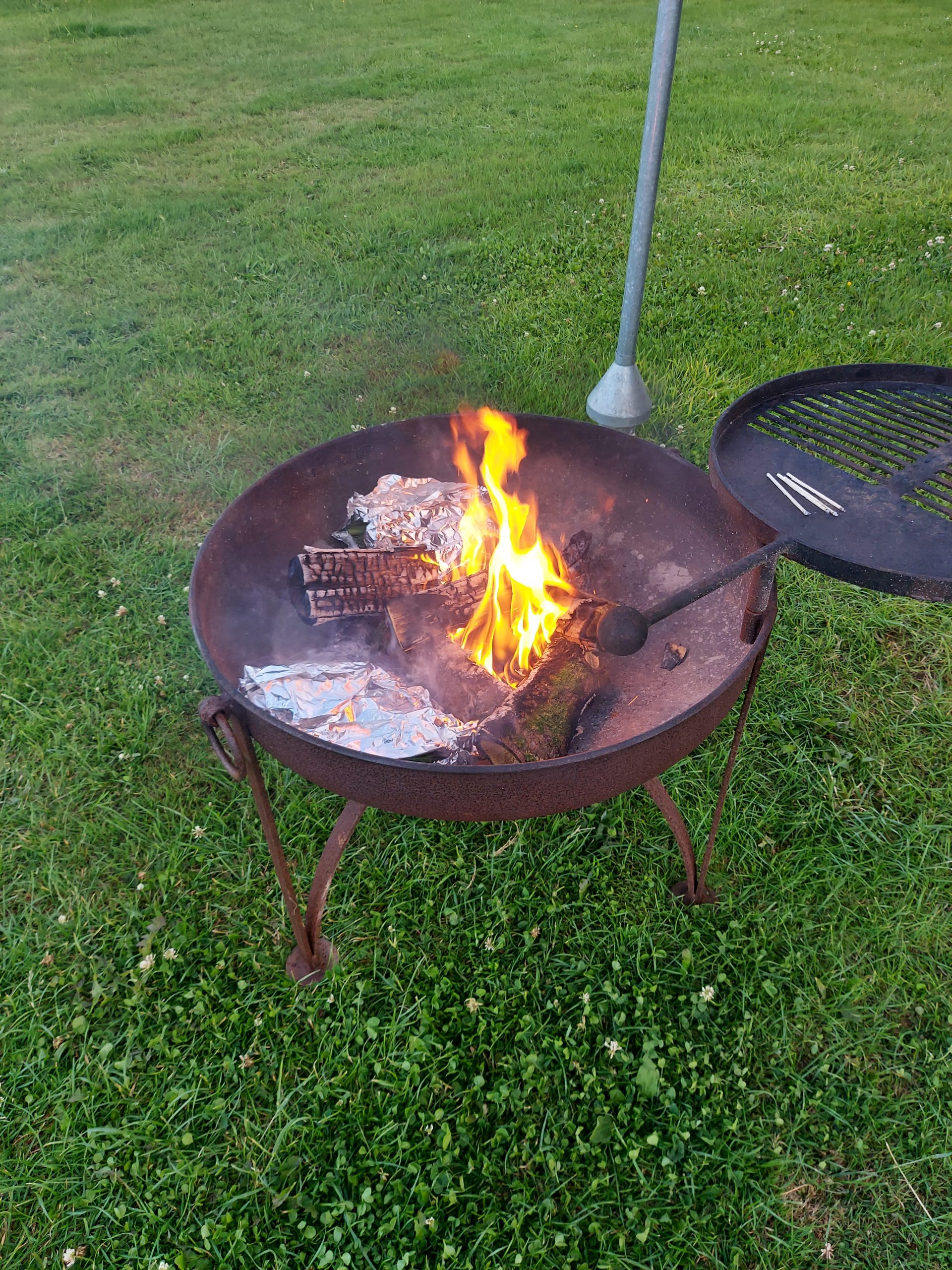
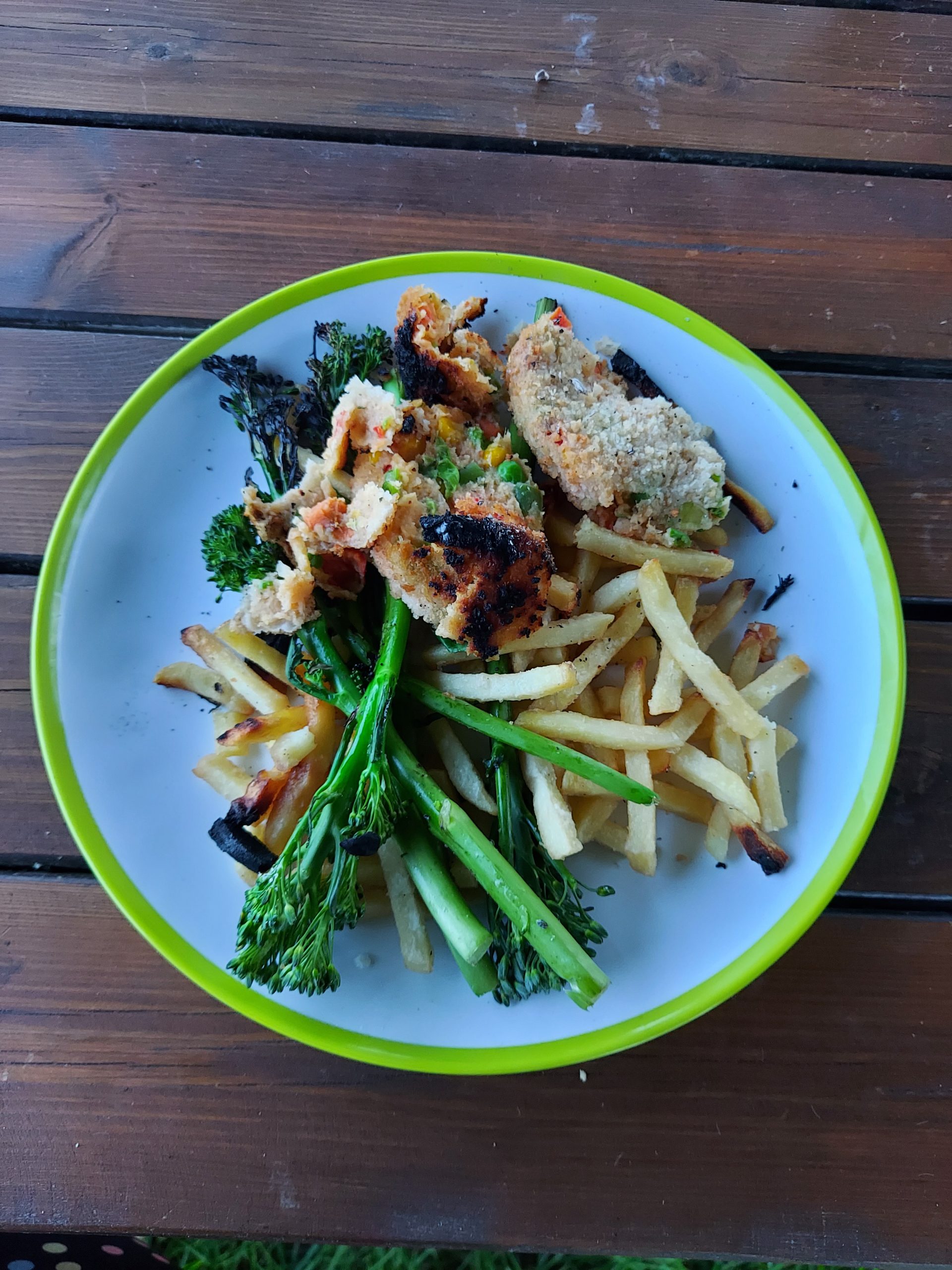
I did this while on my glamping trip in Dorset. I had never built and lit a fire myself so this was quite exciting! I cooked veggie burgers with chips and tenderstem broccoli.

Collect and stack suitable firewood. What safety precautions do you need to take when lighting a fire?

My firewood was already available for me to use, but for future reference oak, ash, beech, birch and elm are the best. Woods with a high resin content should be avoided.

Set up the fire in the open, away from buildings and anything that could burn. Check the wind conditions and never leave the fire unattended. Keep a bucket of water nearby, and don’t sit too close.

Cook a meal on a portable stove.

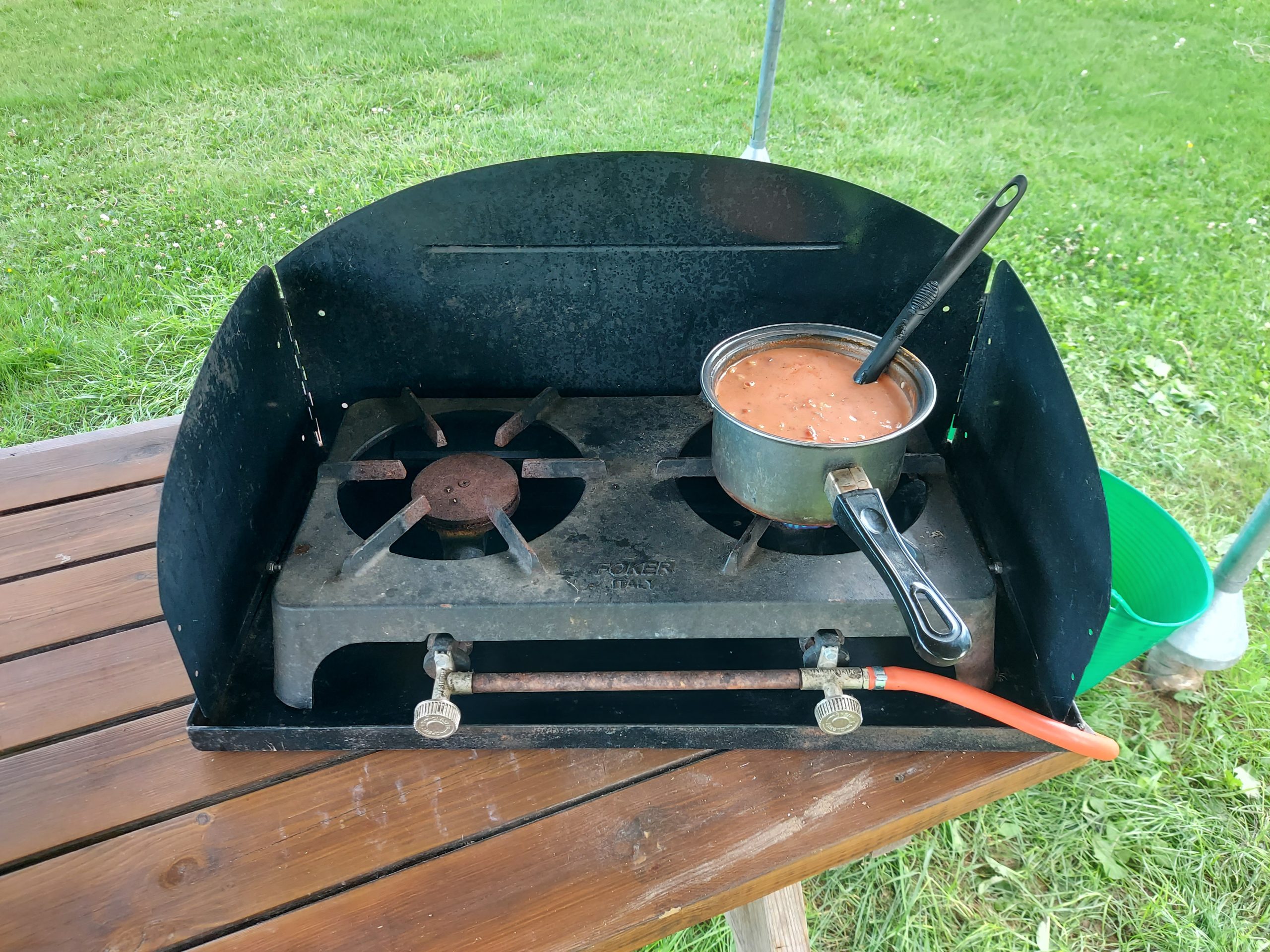
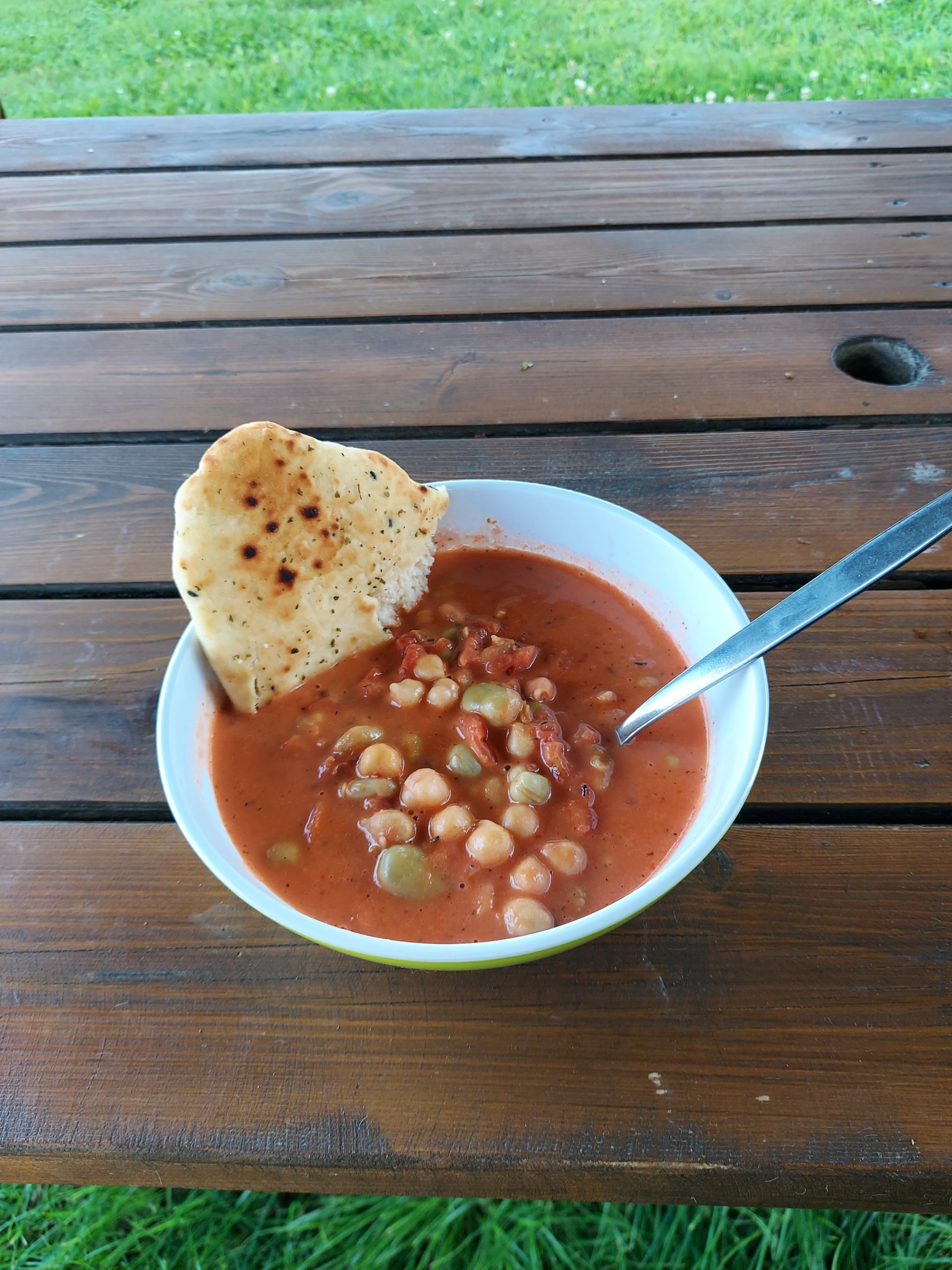
I cooked a meal on a stove while staying in Dorset. I made a stew from tinned ingredients: tomatoes, broad beans, chickpeas and coconut milk, along with some spices I’d brought from home.

What safety precautions do you need to take with your stove? How do you refuel the stove?

Make sure there is adequate airflow over the top and around the sides of the stove. Don’t use pans that are too large as they can concentrate heat back to the gas canister. Use the stove in a well-ventilated place and don’t leave a lit stove unattended.

Cook a meal on a barbecue.

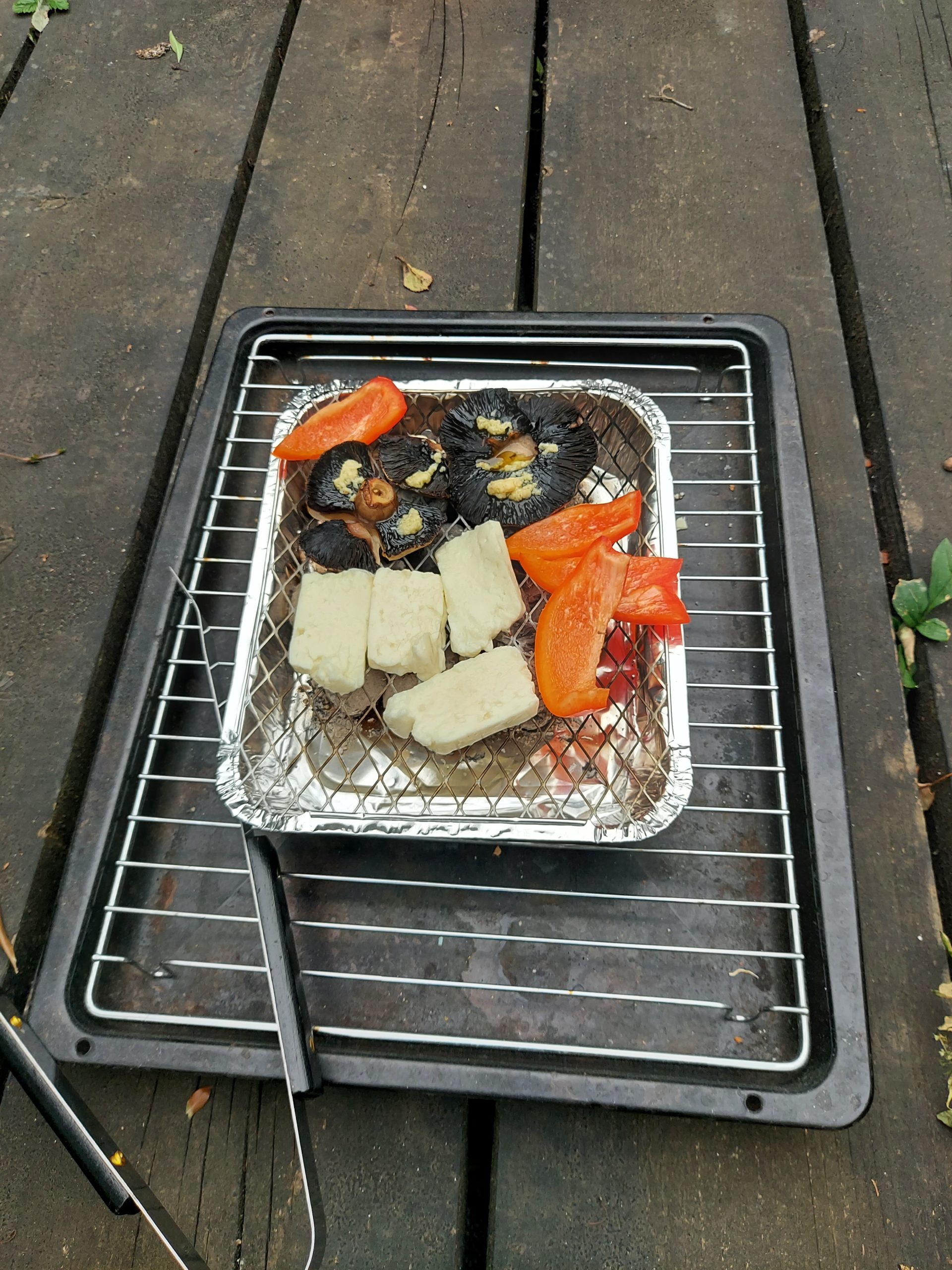
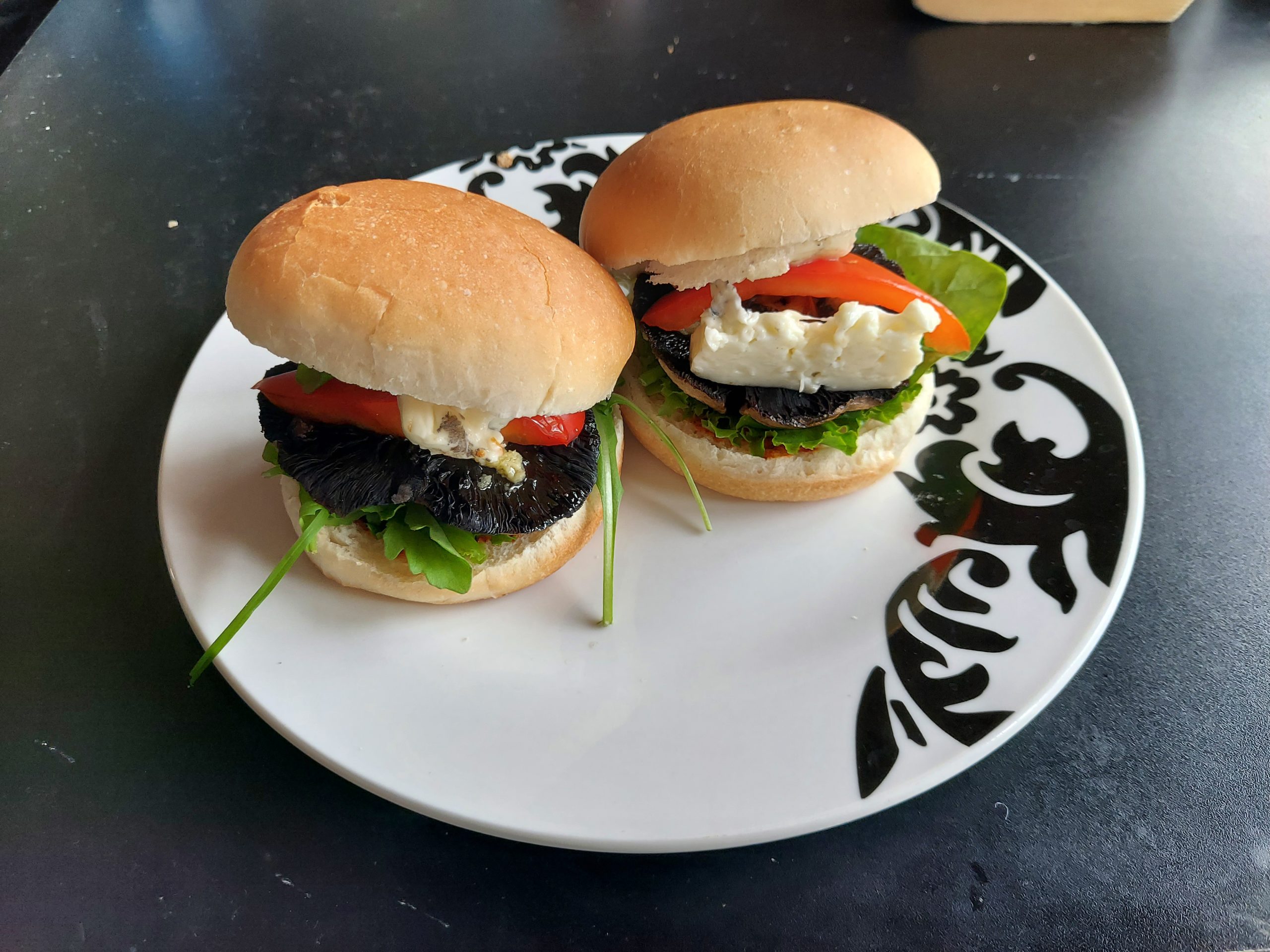
I bought a disposable barbecue to complete this clause. I’m aware of the environmental implications and won’t make a habit of this, but the only other barbecue available to me is regularly used for meat. I made halloumi, mushroom and red pepper burgers.

How would you store ingredients outside?

Tinned and packet foods are best where there is no fridge available to keep them cool.

You can take frozen food and allow it to defrost before eating it on the first night/morning. You can use a cooler if you have one.

Use UHT milk, and store food in plastic containers to keep bugs out.

Make a pocket first aid kit.

I have a first aid kit that I bought from the St John’s Ambulance website and learned how to treat cuts, burns and scalds on my first aid course.

Make a menu book of at least 10 dishes which you can cook outside.

I had fun making my book on Canva.

Date completed: 20 September 2023

Rebel Badge Club: Nature Lover

I did the Nature Lover badge in order to achieve my Go Wild! quarterly badge. I really enjoyed the badge – it helped me get outside and enjoy nature. To achieve the badge I had to complete eight clauses out of a possible sixteen, as detailed below.

Visit a nature reserve.

I visited Camley Street Natural Park, a small but peaceful nature reserve near King’s Cross Station. I had a lovely relaxing walk around the park and then enjoyed a coffee beside the canal.

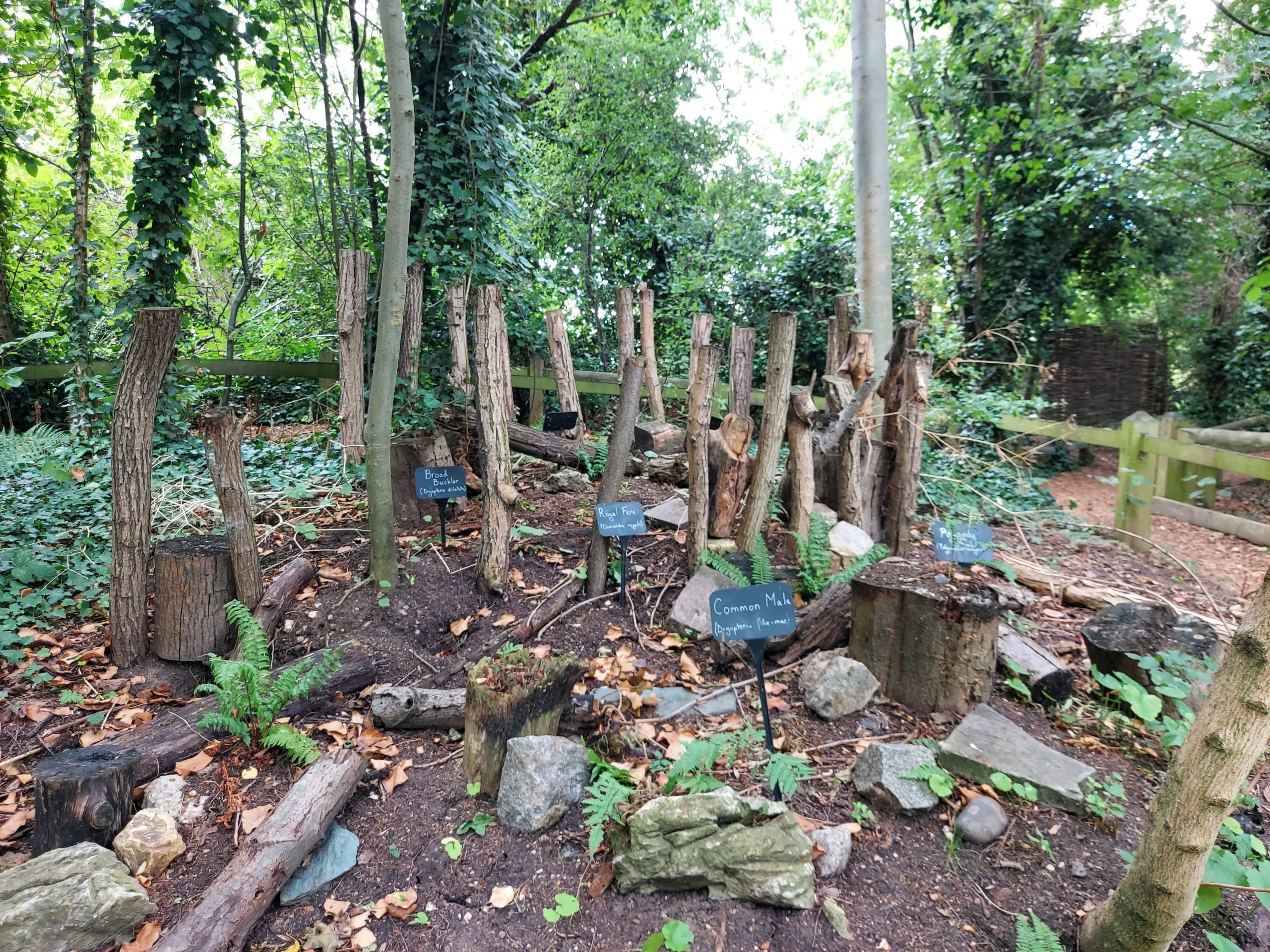
Labelled logs in Camley Street Natural Park

Watch at least three documentaries on the natural world.

Turning to the trusty BBC, I enjoyed Wild Isles, The Green Planet, and Patagonia: Earth’s Secret Paradise on iPlayer.

Learn about different natural habitats, and identify those found in your local area.

This clause reminded me of school (in a good way!). I learned about different natural habitats, and identified those in my local area as being mainly urban/suburban, grassland and woodland, with nearby areas of wetland and farmland.

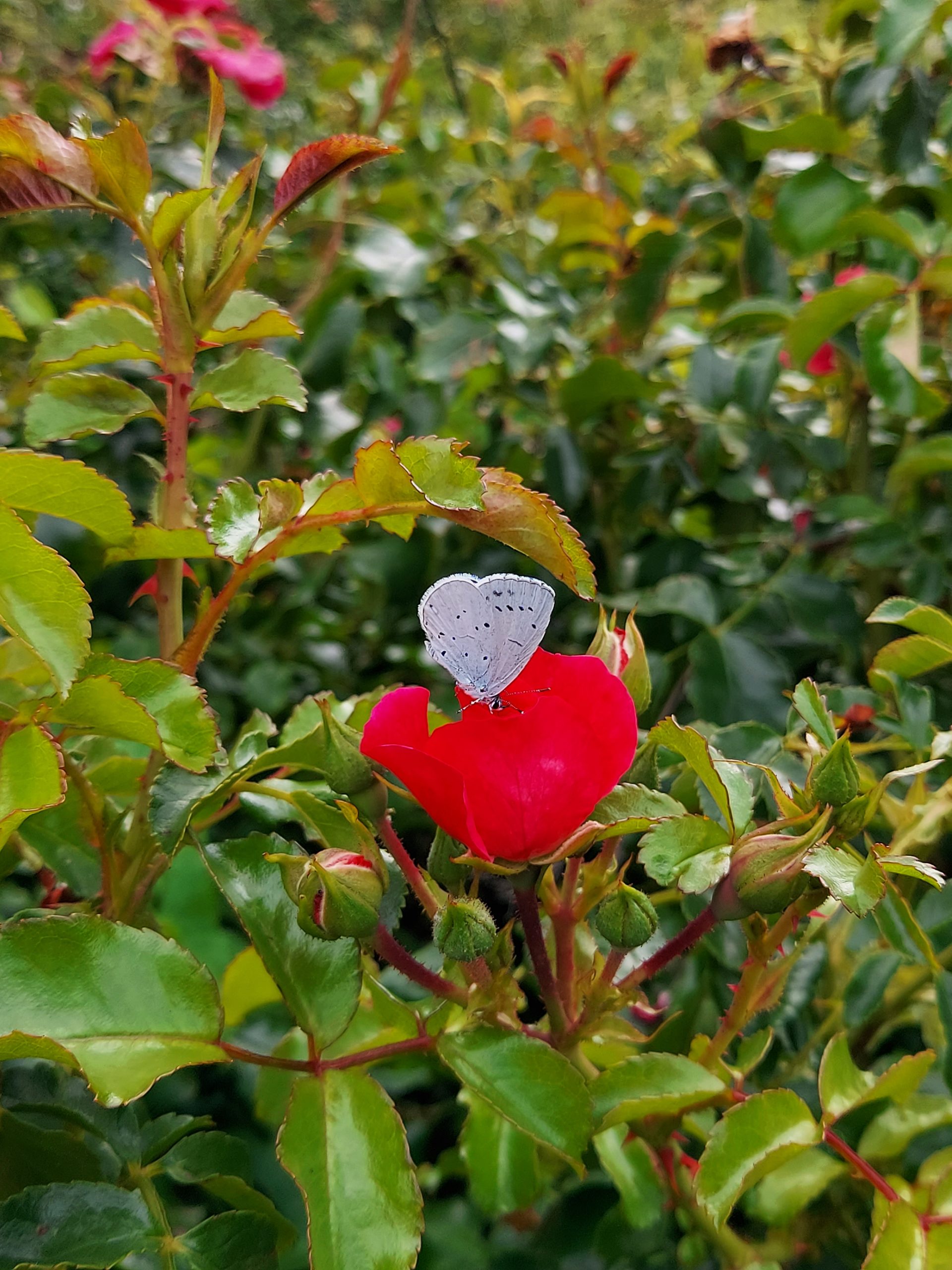
A blue butterfly on a red flower

Take action to protect nature in your area.

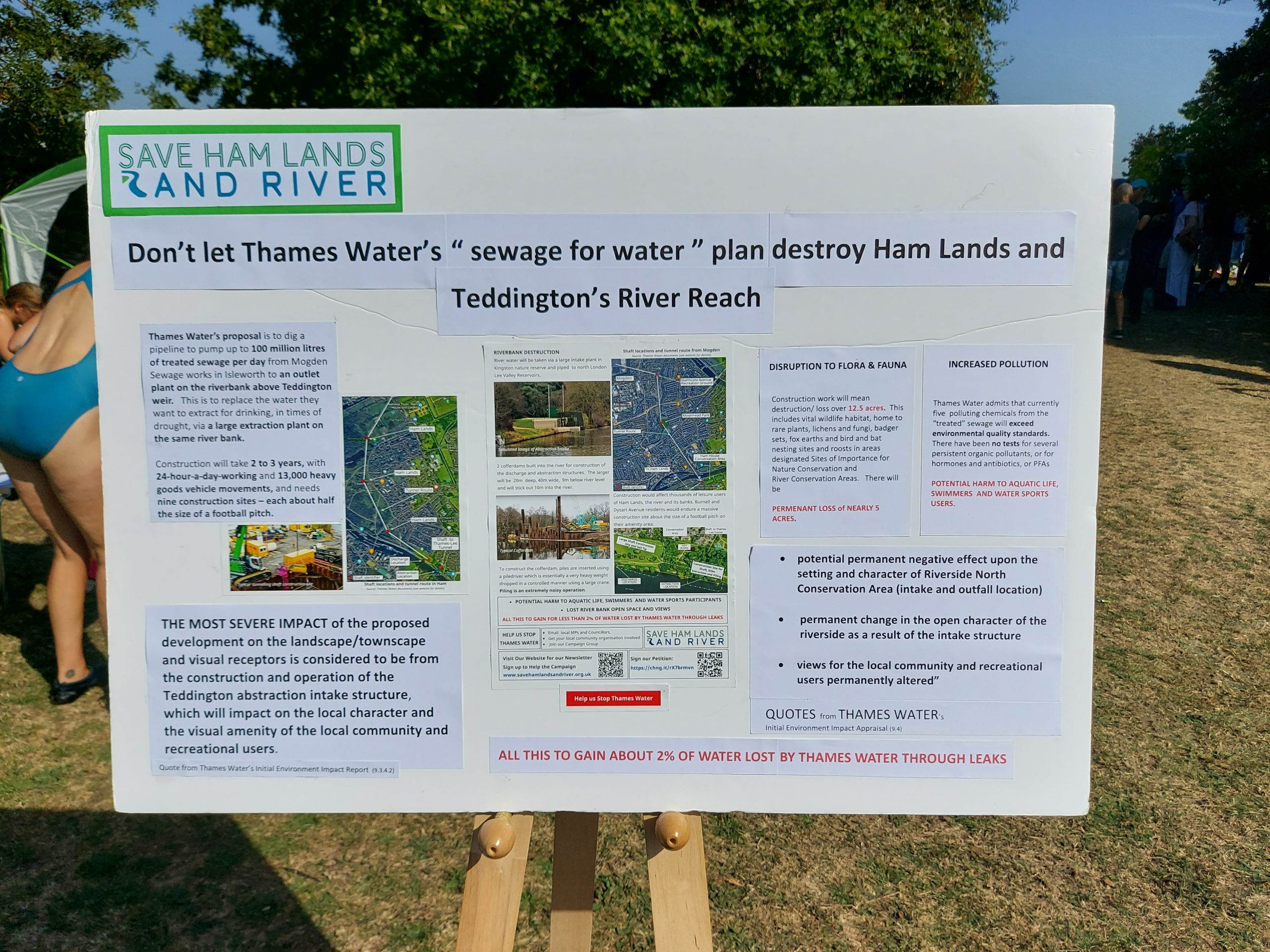
I joined a protest against Thames Water’s plans to build a river abstraction plant on the nature reserve and riverbank near Ham.

Sign protesting against Thames Water's sewage plans

Take part in a local or national survey.

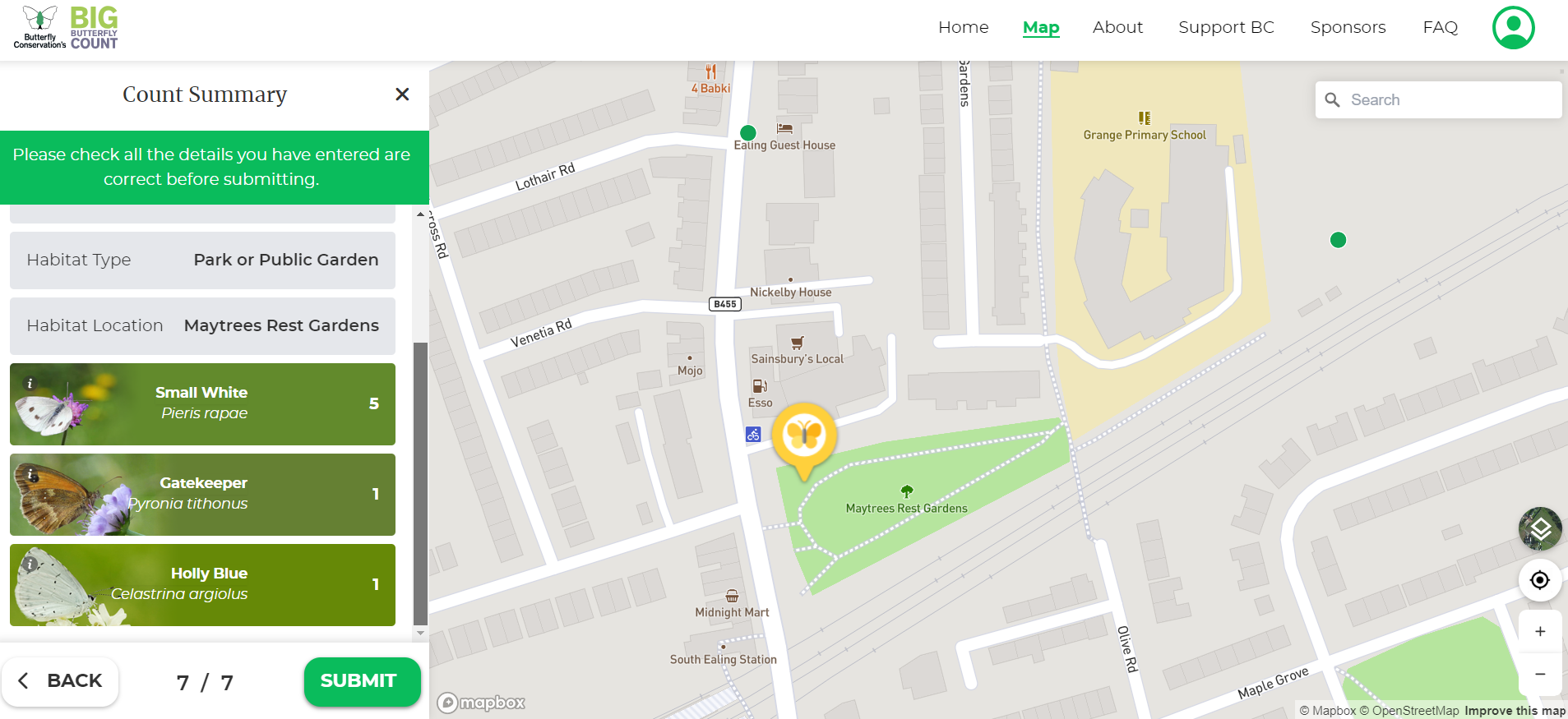
I took part in the Big Butterfly Count in a green space local to me. I really enjoyed the count, and it made me really stop and think about the species of butterfly I was observing.

Map showing the location of my Big Butterfly Count

Make an identification key for a local habitat of your choice.

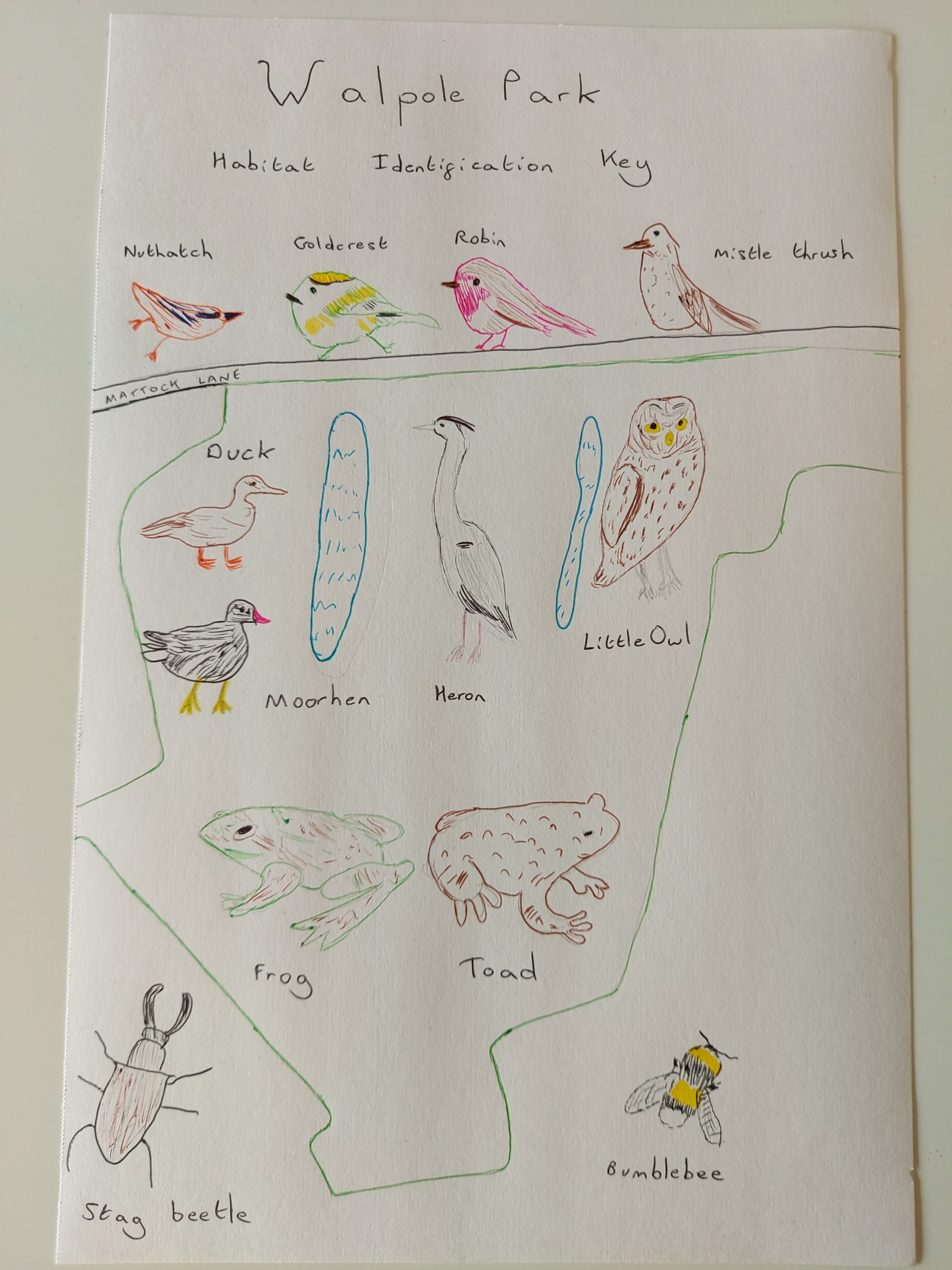
I made a key for a park local to me. My drawings aren’t the best, but I enjoyed doing it.

A habitat key to Walpole Park

Go on a nature walk with a group.

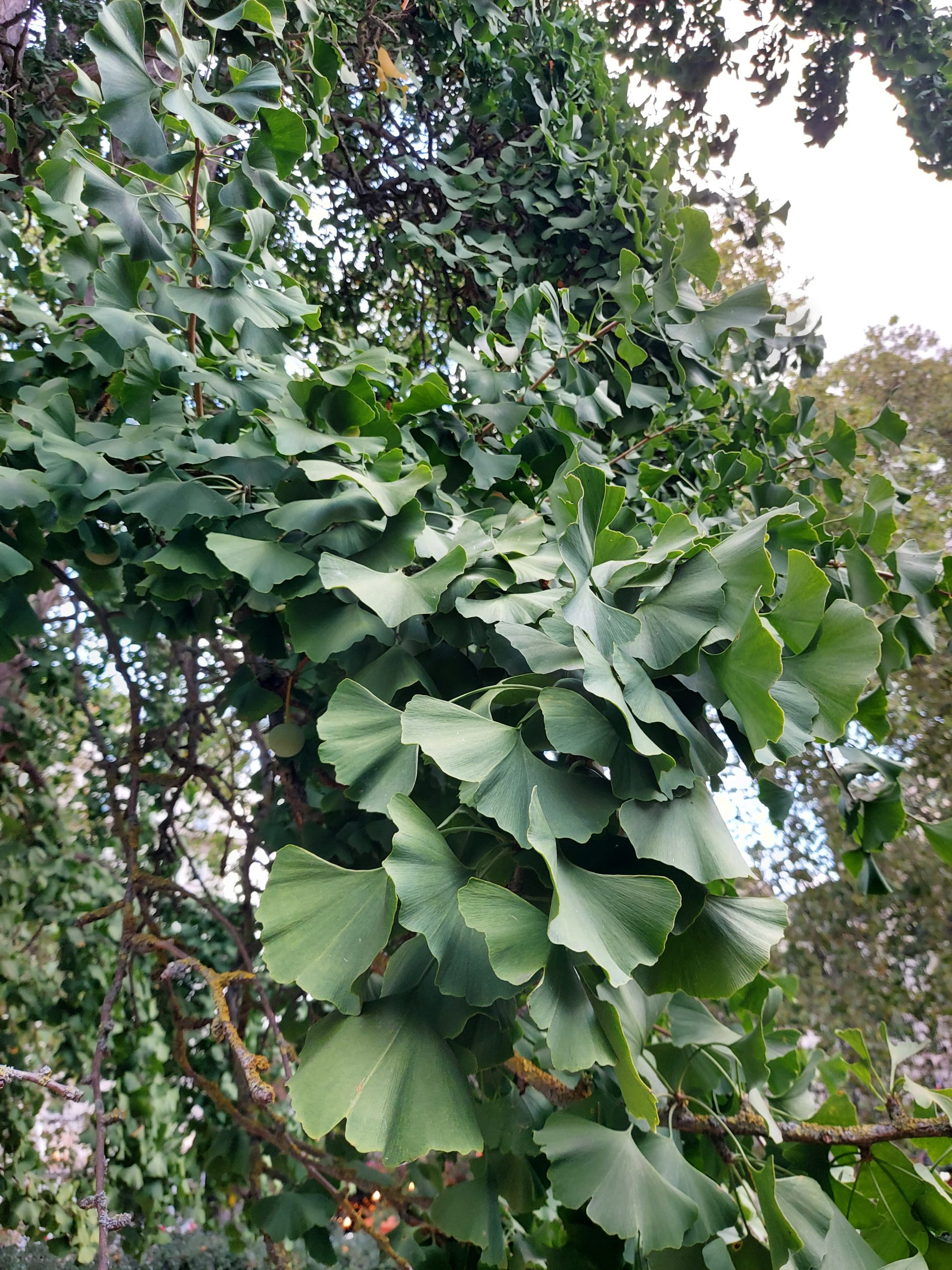
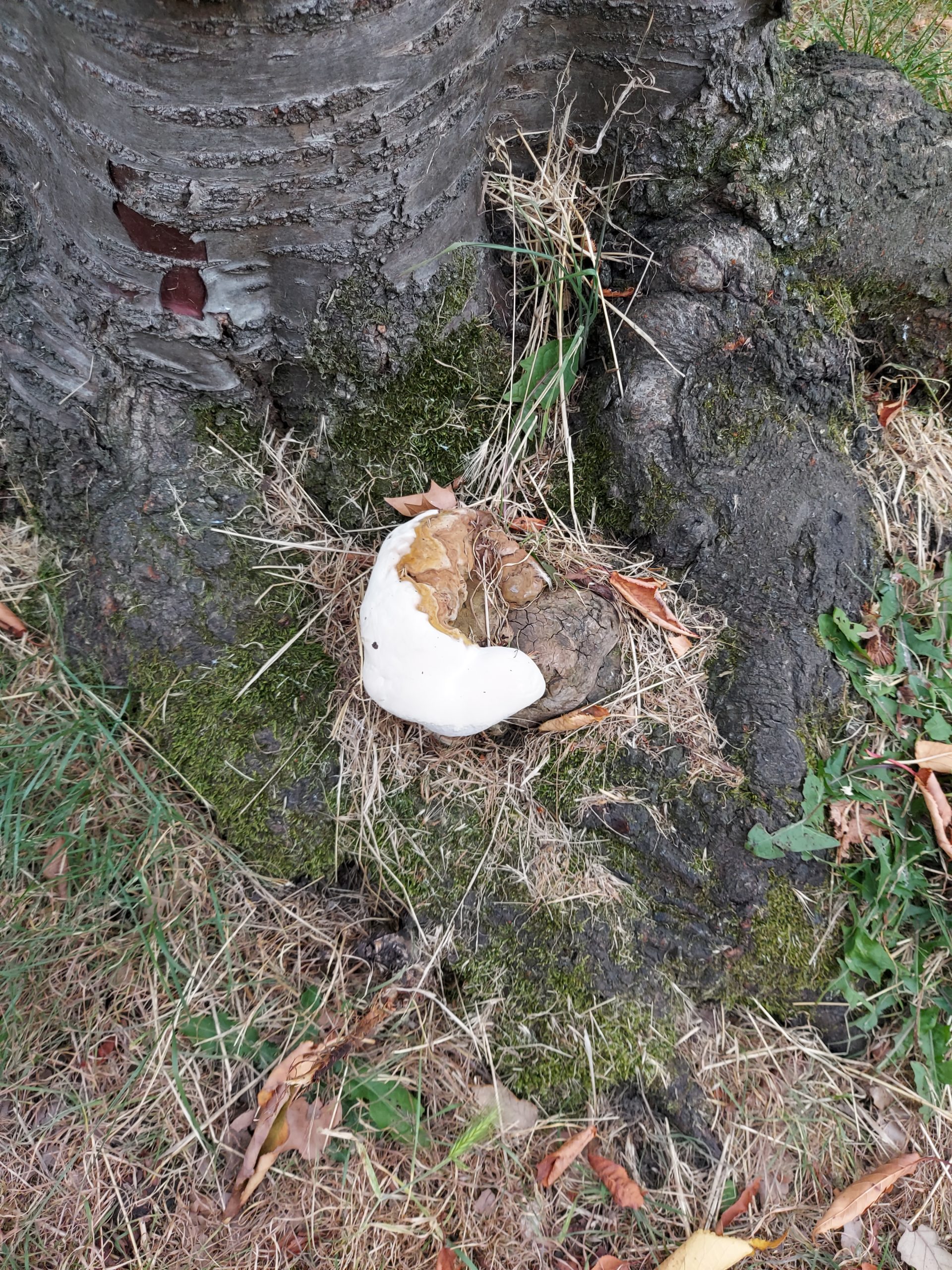
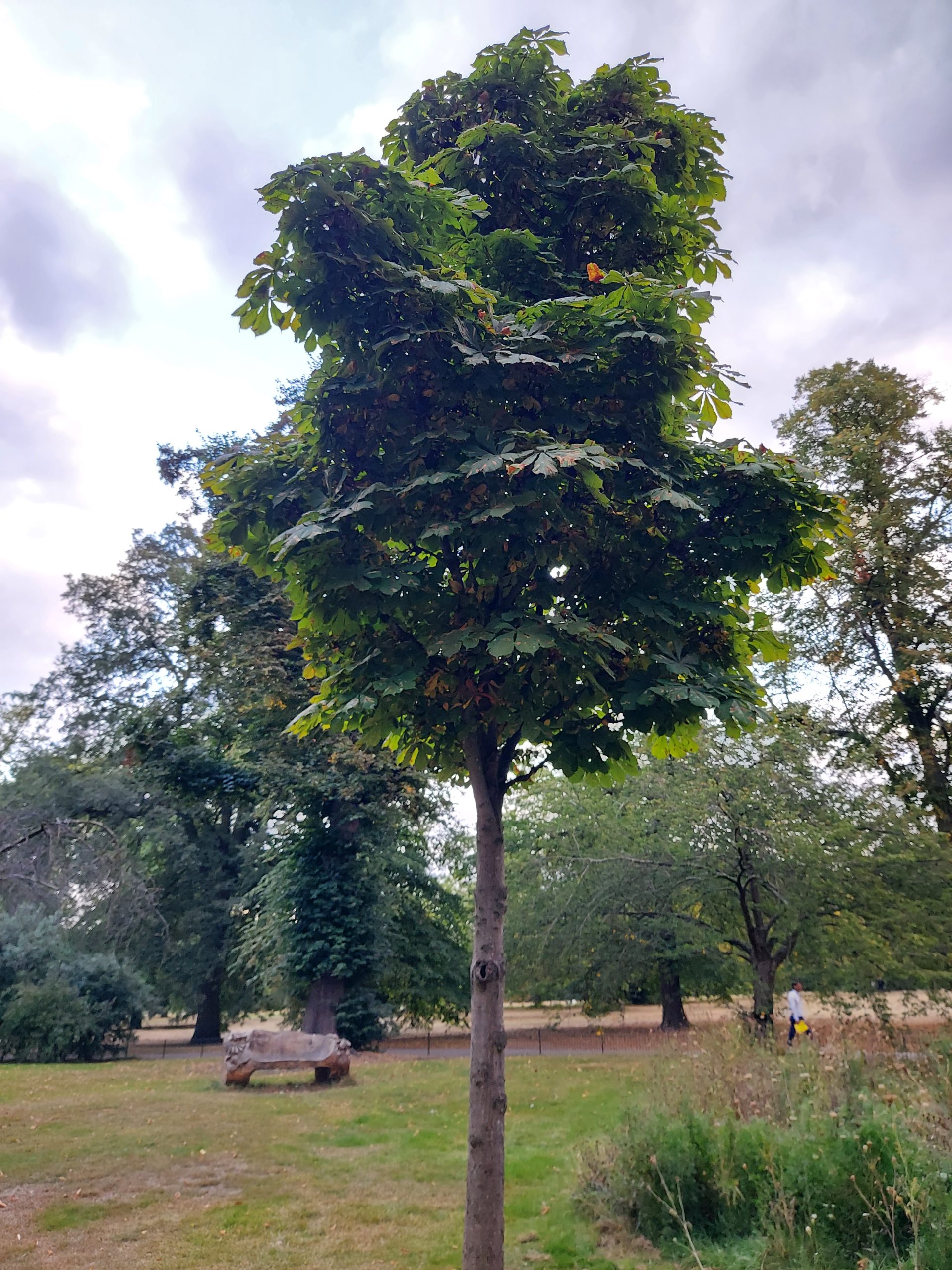
I went on a nature walk in Kensington Gardens organised by the Royal Parks. Some of the things we saw included ginkgo biloba, yew and chestnut trees, fungi such as artist’s bracket and birch polypore, insects such as a carder bee and interesting things such as bat boxes and a loggery for insects.

I learned lots: the most interesting thing I learned was that oak gall ink – made from oak apple galls produced by wasps – was the first permanent ink, made with ground up oak apple galls and iron sulphates. The Magna Carta and the American Declaration of Independence were signed in this ink.

Learn about the Countryside Code.

I read up about the Countryside Code and found it very interesting.

Date completed: 13 September 2023

Rebel Badge Club: Camper

When I first bought my Rebel Badge Book, I thought there would be no way I’d ever be able to manage the Camper badge. Then Rebel Summer Camp was announced, and I hoped that I would be able to complete the badge there. Luckily all went to plan, and I did!

Spend at least 3 consecutive nights under canvas

The camp lasted from the Friday to the Monday, with exactly three nights’ camping – perfect!

Pitch and strike the tent

I managed to pitch and strike my brand new tent, albeit with help (but who can actually manage to put a tent up on their own?). I’m pretty sure I could manage it alone if I had to – once we’d worked out where everything went, it was pretty straightforward.

My red tent

Keep your belongings safe and dry

My tent proved to be brilliant – it was double-skinned and didn’t let any rain in at all. I kept my shoes and beers in the little front porch bit and they stayed dry too.

Design the menu for the trip

I brought my own breakfasts and evening meals for the trip – all simple options in tins or packets that didn’t require refrigeration or special storage. I chose to buy my lunches on-site, mainly to save time in the middle of the day.

Kit out your camp kitchen

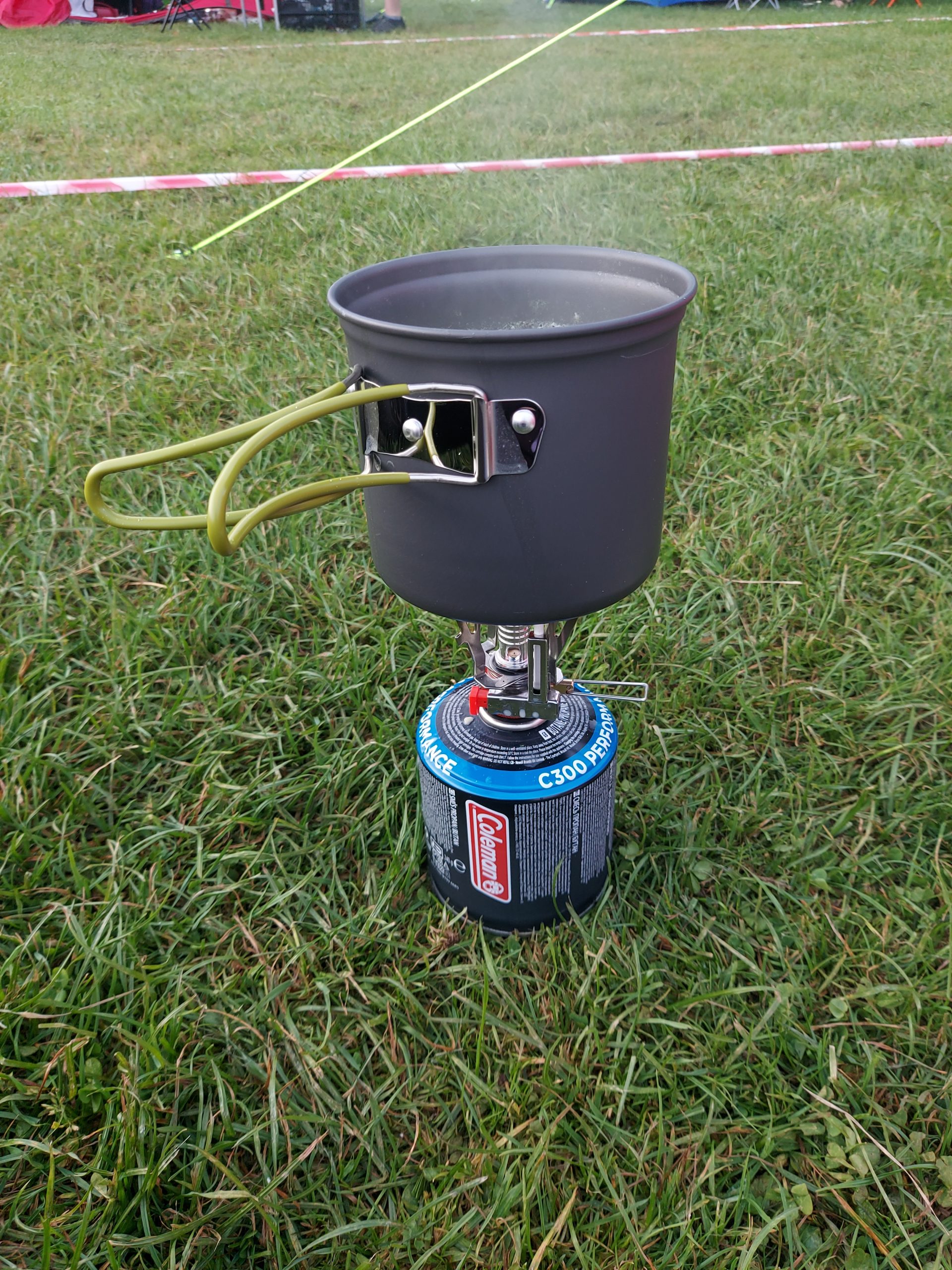
I bought a little camping stove which came with a large pan, a small pan, cutlery and a washing up sponge. I brought some washing up liquid with me and purchased a gas canister for the stove.

Cook at least 4 meals outdoors

I cooked my 3 breakfasts and 3 evening meals outdoors on my new little camping stove. I went for the easy option and chose beans & veggie sausages in a tin for my first breakfast, porridge in a pot for the others, and pasta in sauce for my evening meals.

My camping stove

Leave minimal trace

I’m happy to say that when my tent was packed up, there was nothing to show I’d been there other than a patch of slightly lighter grass. I produced minimal non-recyclable waste (probably less than I do in everyday life).

Know how to treat camp injuries

I learned these skills as part of my First Aid course in June 2023. Luckily I didn’t need to use them!

Prepare a first aid kit for your trip

I bought a first aid kit from St John’s Ambulance and ensured I took all my medications with me. I looked up the location of the nearest A+E before I got to Bromsgrove.

Take part in 3 outdoor activities during camp

I took part in loads of different outdoor activities during Rebel Camp – definitely more than 3!

Date completed: 28 August 2023

Rebel Badge Club: Adventurer

After Rebel Camp I am proud to say that I have managed to complete the Adventurer badge! This is a badge I was a bit nervous about, but in the end I thoroughly enjoyed it.

The badge required the completion of five different adventurous activities from a list. I completed the following:

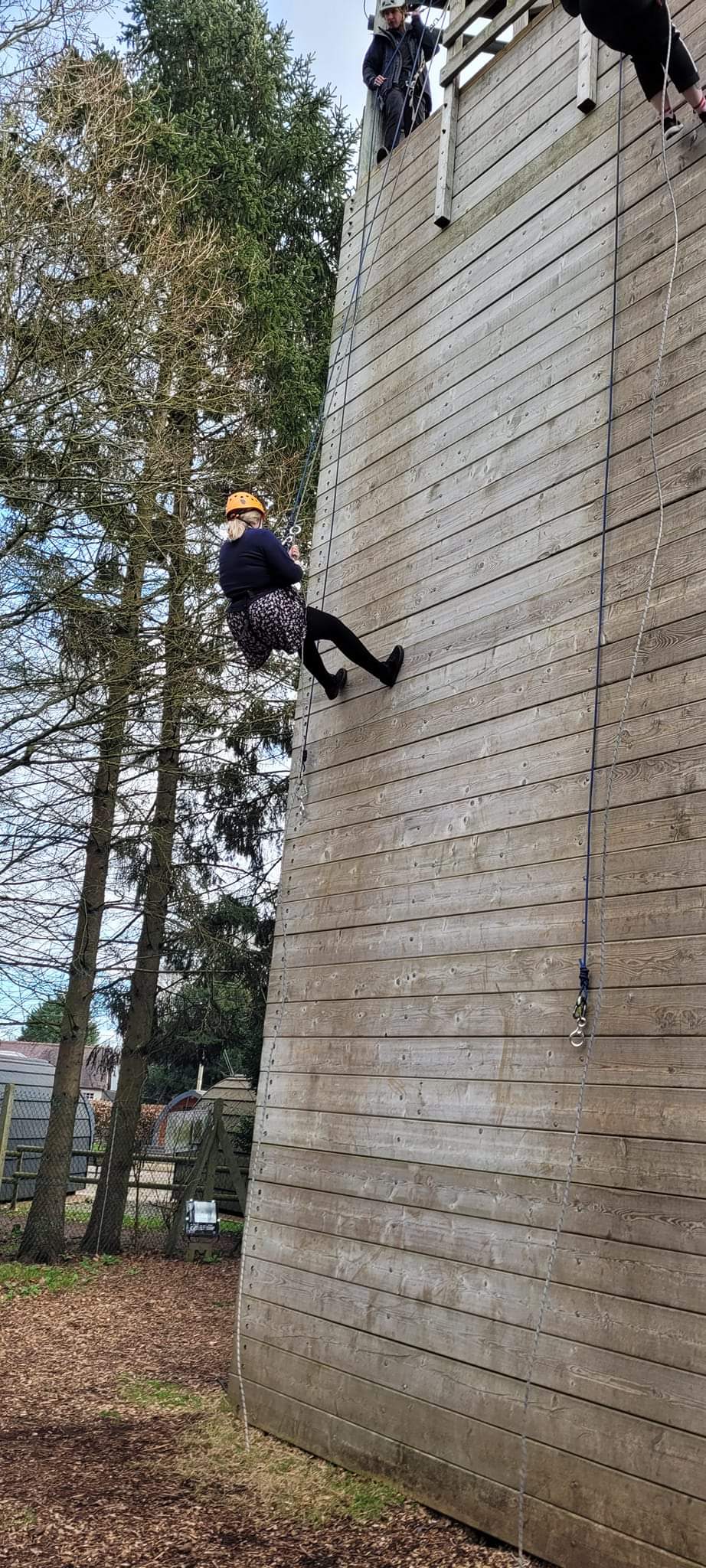
Abseiling: back in February, I attended the Big Rebel Meet Up at Bromsgrove. We were based at Blackwell Adventure and I got to take part in abseiling. I thoroughly enjoyed this, despite that initial panic when leaning back over the edge!

Me abseiling

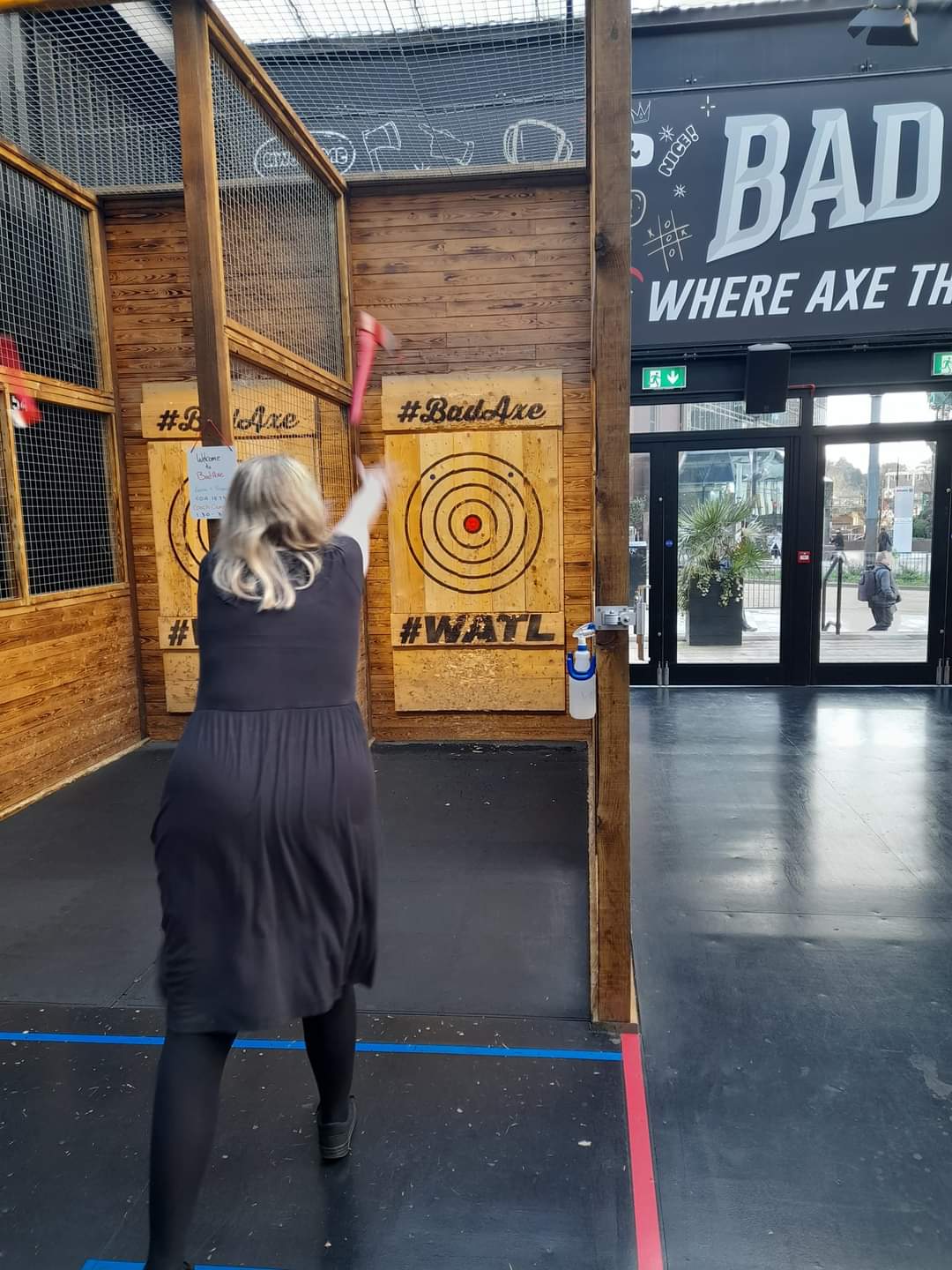
Axe throwing: I attended a meet up of the London Rebels at Bad Axe Throwing in Croydon, and we had a go at axe throwing. I wasn’t as bad as I had expected and even hit a bullseye on one occasion!

Me throwing an axe

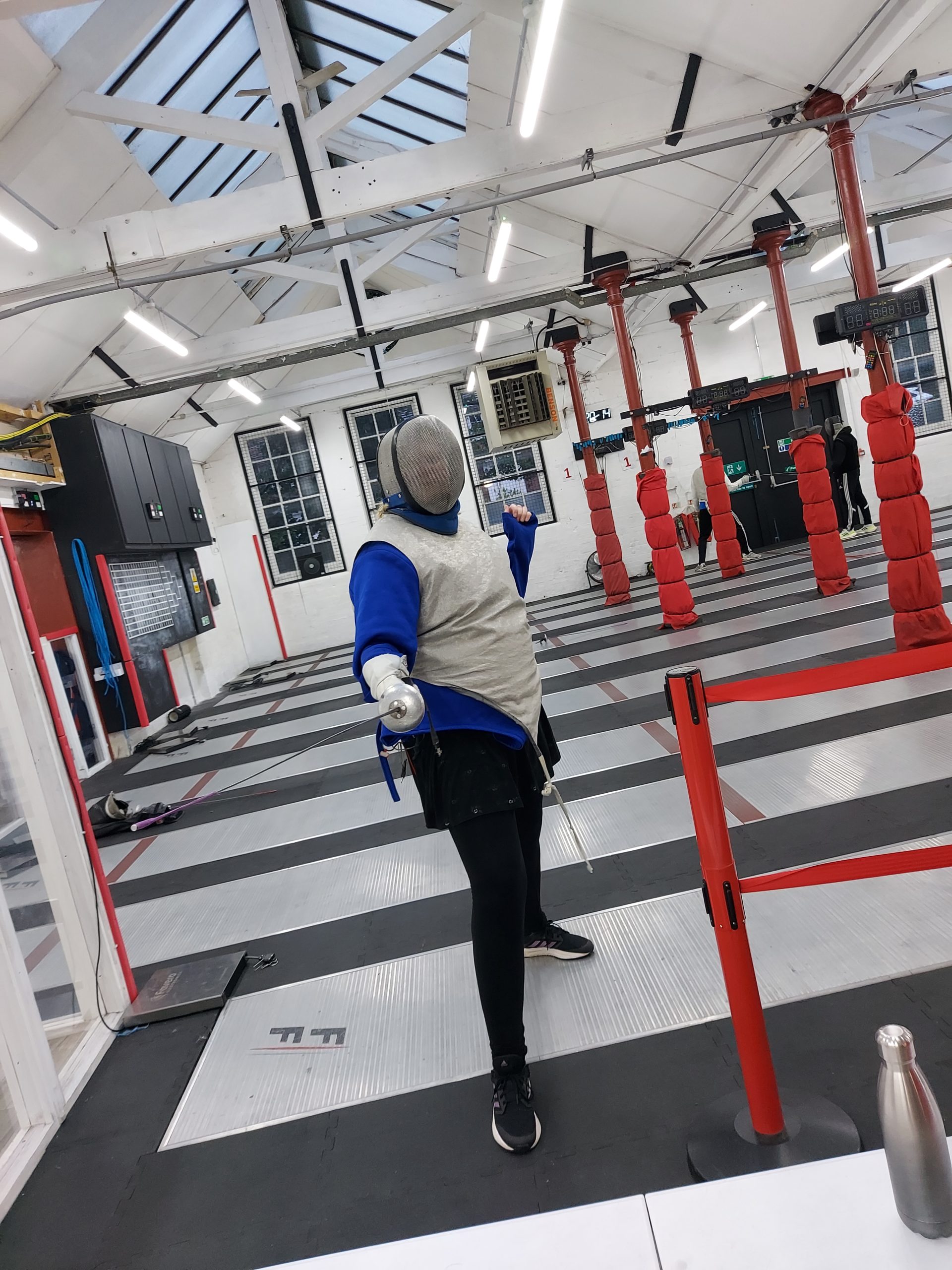
Fencing: I signed up for a free taster session at Fighting Fit Fencing in Barnet. This was great fun although I think the safety equipment you have to wear would put me off doing it again. I could feel the sweat dripping down my face (it was a particularly warm day) but couldn’t do anything about it owing to the mask.

Me in fencing costume

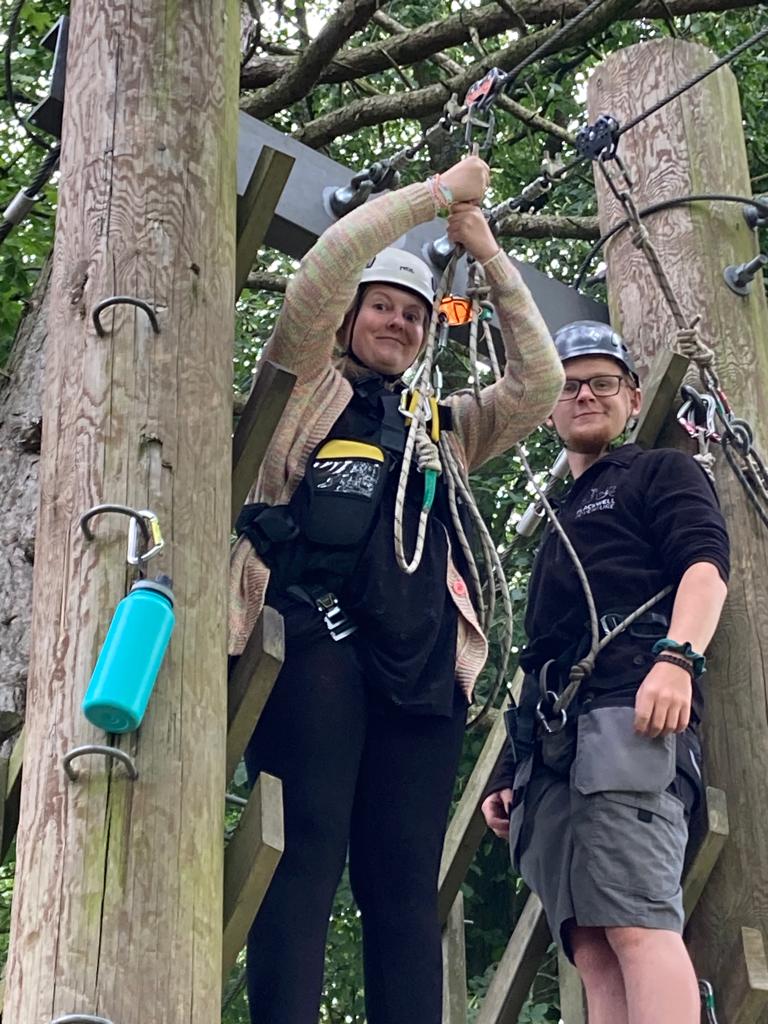
Ziplining: back at Blackwell Adventure for Rebel Summer Camp, I got to try out the giant zip line which was amazing. Possibly my favourite of the adventurous activities I enjoyed over the weekend!

Me waiting to start the zipline

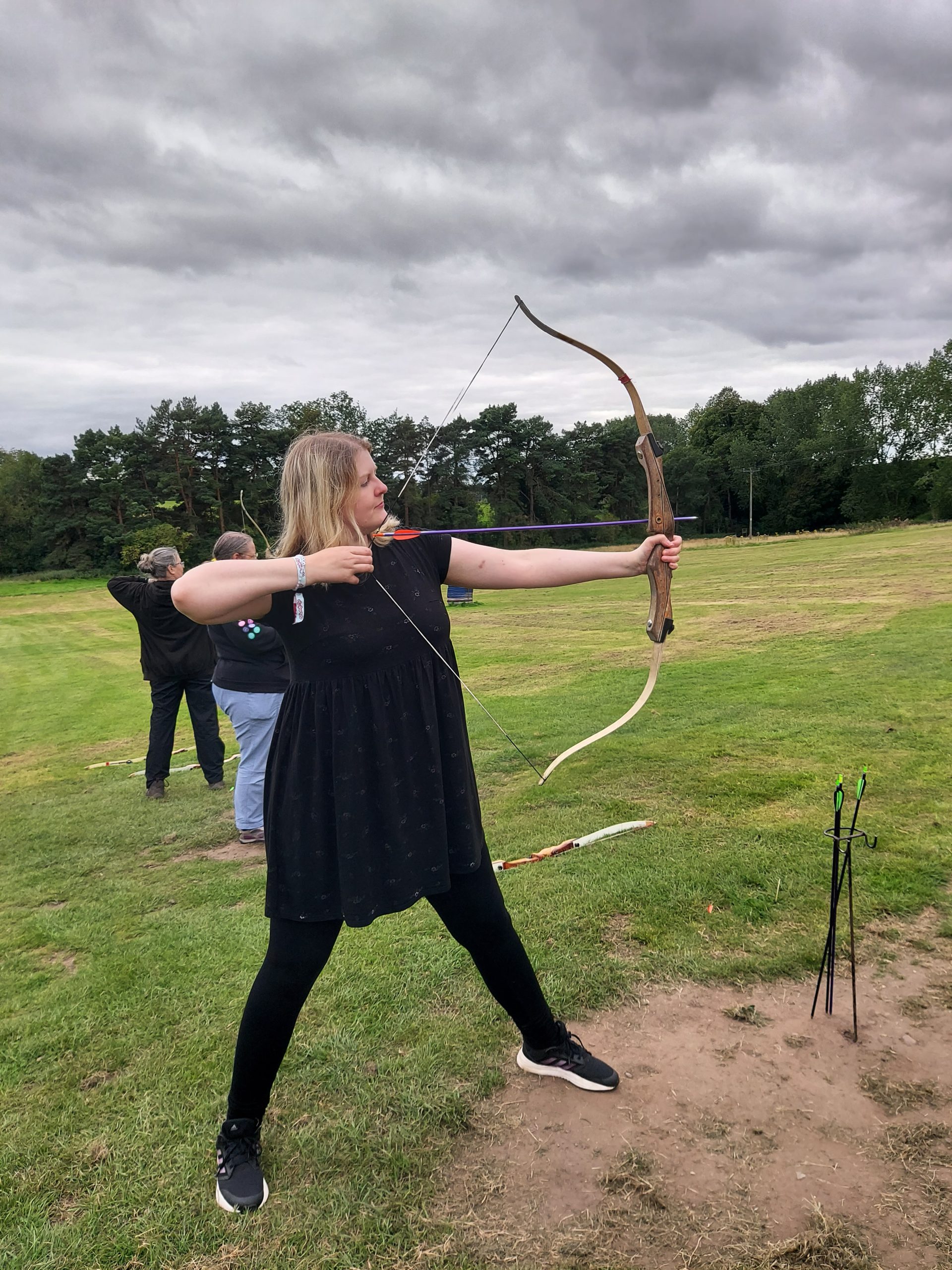
Archery: this wasn’t on my Blackwell schedule but I got to join another patrol for the last session of Camp, seeing as they had spaces. I found archery pretty difficult (it requires a lot of arm strength that I don’t really have) but I enjoyed it, and definitely improved over the session – I actually managed to get a bullseye once, and also popped two of the balloons!

Me with a bow and arrow

In general I have definitely become more adventurous since joining Rebel Badge Club – I did loads of adventurous activities during Rebel Camp but most of them don’t could towards this badge as they aren’t on the official list of activities. I also took part in rock climbing and tree climbing, which are on the list, but I don’t feel that I can really claim them because I was so rubbish – I have little strength in my arms (and not that much in my legs apparently!) so couldn’t get far at all!

There are still activities on the list that I would like to try, such as zorbing and indoor skydiving, so I hope I get a chance to try these in the future.

Date completed: 28 August 2023

Rebel Badge Club: Survivor

The Survivor badge wasn’t one of the badges that immediately jumped out at me, but it did seem intriguing, so I decided to tackle it this year. I signed up for a Bushcraft course which helped me with several of the clauses, and was great fun. I do now feel much more equipped for any survival situation!

Build an emergency shelter.

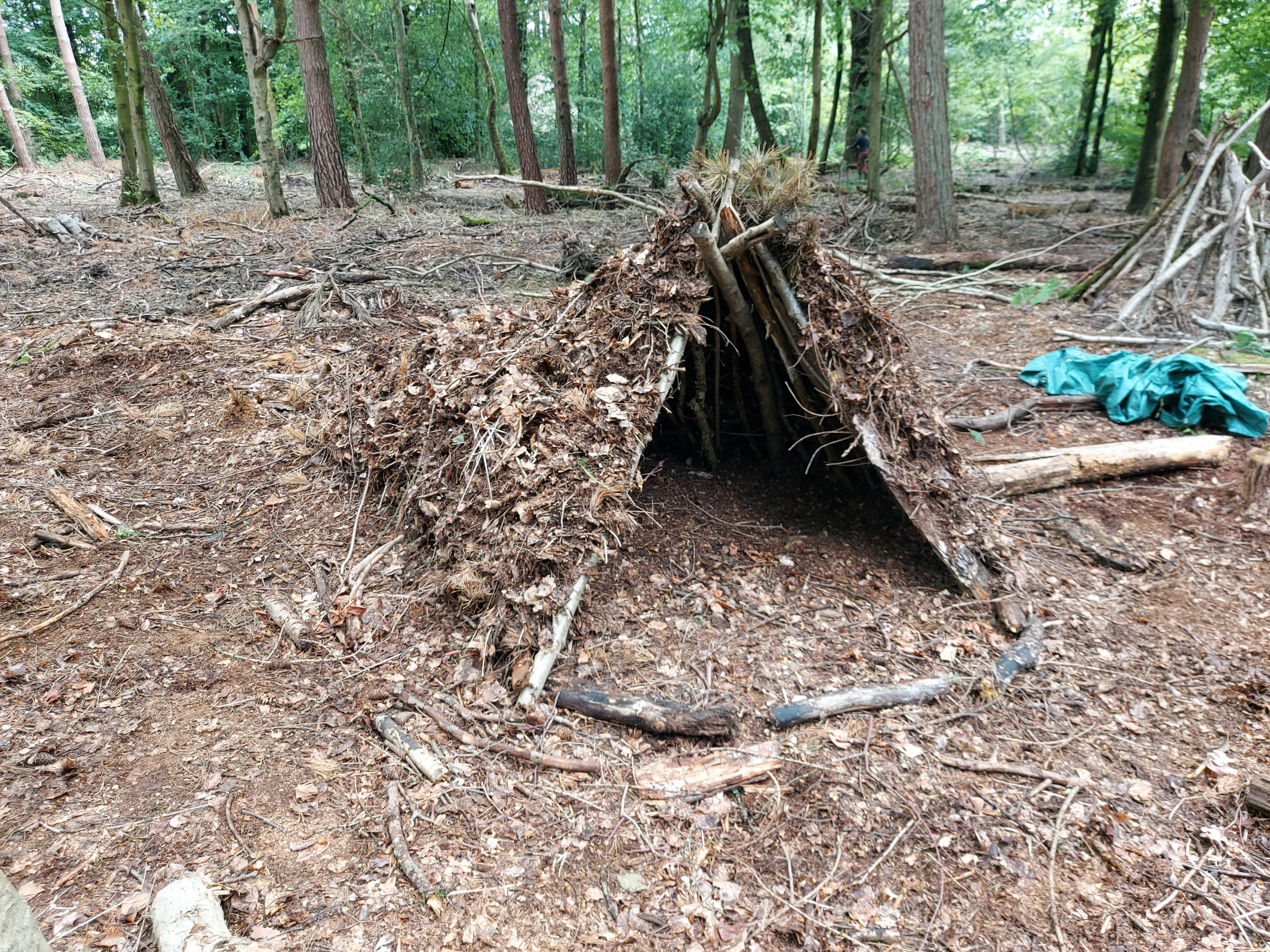
I did this as part of my Bushcraft course. We made a frame with long sturdy sticks, then added smaller sticks alongside before covering with leaf mulch. The end result was warm and waterproof!

A wooden shelter

Research 4 different ways to find water in a survival situation.

  • Collect rainwater
  • Follow your ears to listen for the sound of water
  • Search for signs of water underground
  • Trap condensation from plants

Know when and why water needs to be purified and how to do so.

Precipitation, water from springs, and water from tapped trees can be considered safe to drink ‘as-is’. However, water from other sources should be purified. Boiling or distilling, or using bleach or iodine, are the best methods to use without specialist equipment.

Identify three edible and three inedible plants in your local area.

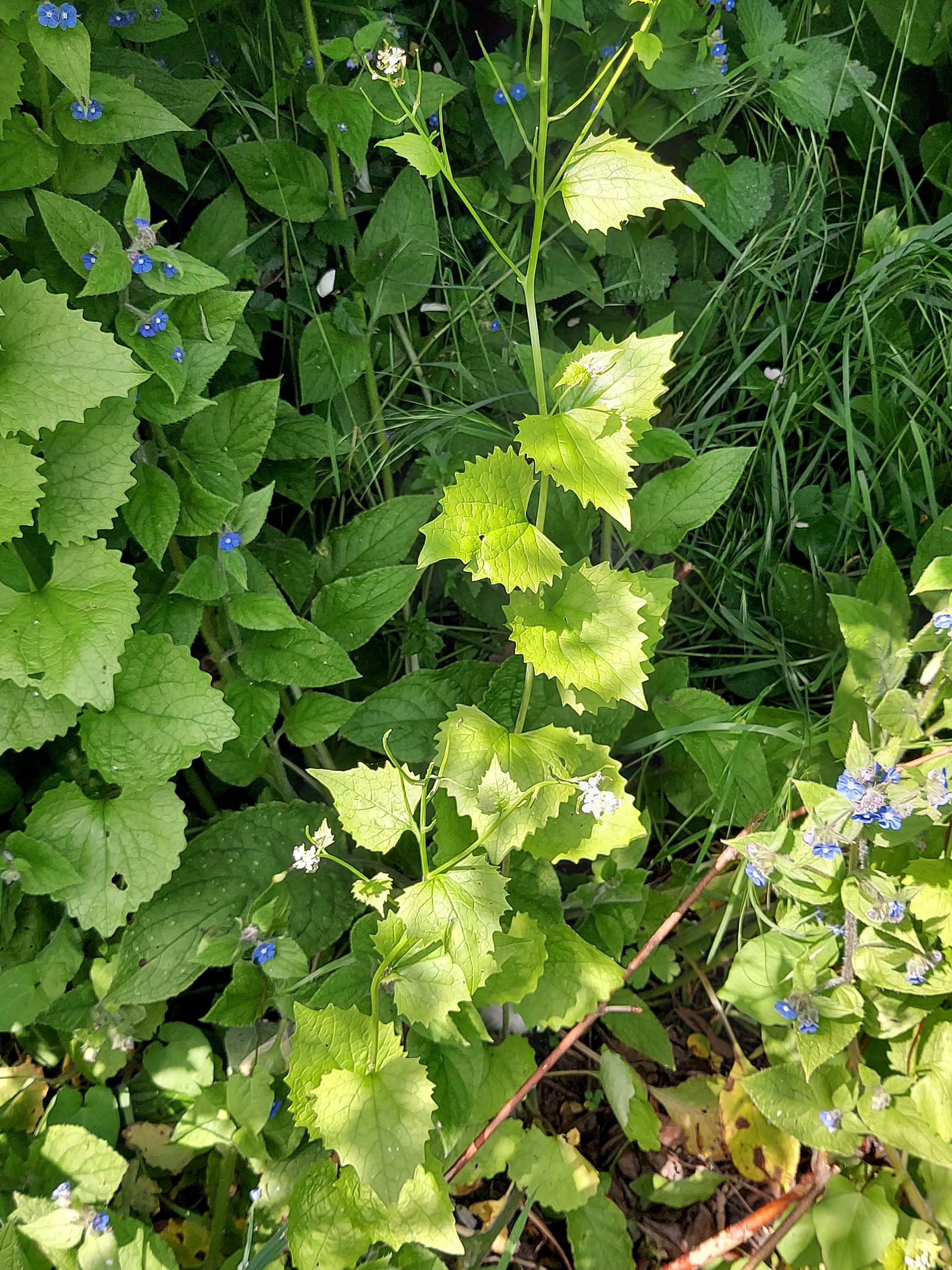
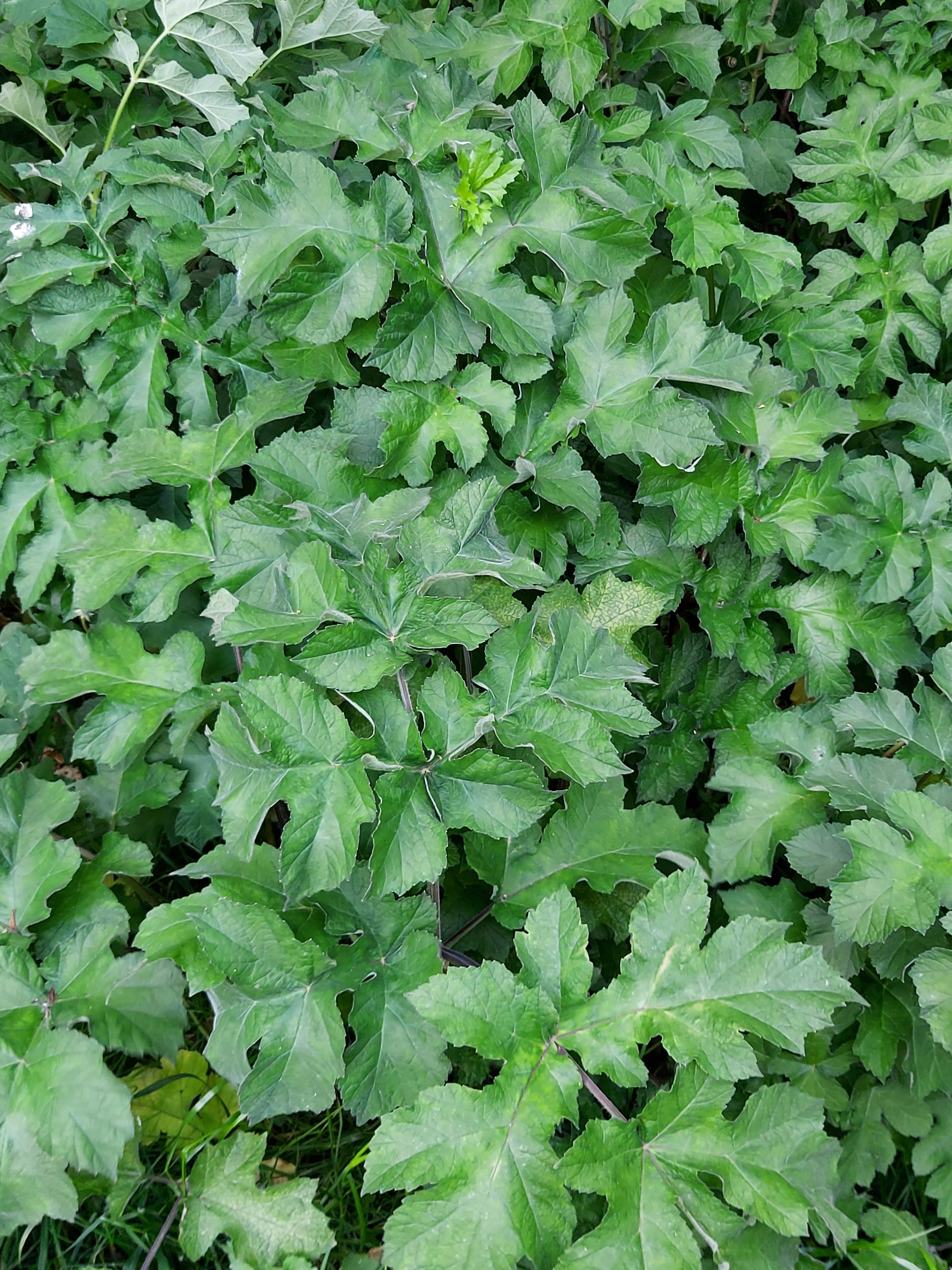
Edible: cow parsley, honesty, common hogweed

Inedible: lesser celandine, wild clematis, giant hogweed

How would you survive if you fell into cold water, fully clothed?

Hold onto something or stay as still as possible until your breathing settles down. Focus on floating with your head above water until the cold shock response abates. When your breathing is under control, perform the most important functions first before you lose dexterity (10–15 minutes after immersion). Focus on getting out of the water quickly. Try to reboard your boat or anything else that is floating. Do not remove any clothing.

Find North with and without a compass (by day and night).

Finding North *with* a compass is fairly straightforward, and I learned how to do this as part of my Explorer badge.

Finding it without a compass is harder, but I learned about several different methods in my Bushcraft course. During the day, you can use the Watch Method or the Shadow Stick method. You can also look at the world around you – if trees have moss growing on one side, this will likely be the north side, as the sun travels from east to west on the south side, meaning the north side is the dampest and most suitable for moss.

At night, if you can locate the North Star (also known as Polaris) then you’ll know where north is. To find it, look for the Plough and find the two stars at the blade end of it. Draw an imaginary line through these two stars and follow the line upwards where you will reach the North Star.

Light a fire without matches.

On my Bushcraft course I learned how to use a fire steel tool, a mirror that directs sunlight, and the fire by friction method.

Describe how to escape a car which is sinking under water.

  • Unbuckle your seatbelt
  • Open or break a window
  • Get any children out first
  • Escape through the window
  • Swim to the surface. If you don’t know which way to swim, look for light and swim toward it, or follow any bubbles you see as they will be going up.

How do you prevent and treat the effects of extreme heat and extreme cold?

Dehydration

Rehydrate the body by drinking plenty of fluids, such as water, diluted squash or diluted fruit juice. Replace lost salt/sugar with a salty/sugary snack.

Sunstroke

  • Move them to a cool area & call 112.
  • Cool rapidly by one of the following methods: whole body immersion from the neck down in water from 1 to 26 degrees, or a cold shower/ hose, or bags of ice on the neck, armpits & groin.
  • If the above are not available, use iced sheets or towels, or fan them.
  • If trained, use the, “Tarpualin Assisted Cooling Method” (TACO).

Hypothermia (Conscious)

  • Shelter them and remove wet clothing, replace with warm clothes and cover the head. If there is no dry clothing, keep wet clothing on.
  • Wrap them up & heat the environment to 25 degrees. Share body heat if needed.
  • Give a warm drink (no alcohol).
  • Call 111 or 112 for emergency.

Hypothermia (Unconscious)

  • Take a Primary Survey: D R S A B. Call 112.
  • Maintain the airway constantly, monitor breathing.
  • Gently place in the Recovery Position. Lay on something warm, wrap from head to toe.
  • Do not move the casualty unnecessarily – it can upset the heart rhythm.

Learn CPR.

I did this as part of my three-day First Aid at Work course at the end of June.

Date completed: 23 July 2023

Rebel Badge Club: Forager

In order to complete the Life Less Ordinary quarterly challenge, I had to complete a badge from the section of the badge book I’d completed the fewest badges from. Forager was a badge that appealed to me, so I went for that one. I know that foraging has really increased in popularity over the course of the last few years, but I wouldn’t have a clue where to start on my own.

Learn to identify common poisonous mushrooms and poisonous berries in your local area.

I looked up common poisonous mushrooms and berries to learn more about them. To be honest I plan to stay well away from mushrooms until I know much more about them, and I will also be very careful with berries!

Make a foraging calendar listing what can be foraged in your area, and when. Make a map of local places you can forage.

January
Acorns
Beech nuts
Blackberries
Chestnuts
Crab apples
Hawthorn berry
Hazelnuts
Pine nuts
Rosehips
Sloes
Whitebeam berries
February
Alexanders
Chickweed
Dandelion
Nettle
Sweet violet
Velvet shank mushroom
Wild garlic
March
Chickweed
Dandelion
Goosegrass/cleavers
Gorse
Hawthorn
Nettle
Wild garlic
April
Alexanders
Bramble leaves
Cow parsley
Garlic mustard
Hairy bittercress
Mallow
Wild garlic
May
Chickweed
Hawthorn
Small-leaved lime
Mallow
Oxeye daisy
Red clover
Sorrel
June
Ash
Elder
Ground elder
Honeysuckle
Lime
Rose
Pineapple weed
July
Bilberries
Chickweed
Chanterelle
Fat hen
Mallow
Meadowsweet
Wild strawberries
Yarrow
August
Blackberries
Crab apples
Elderberries
Greater plantain
Hazelnuts
Rowan berries
September
Beech nuts
Hawthorn berries
Rosehip
Sloes
Wild raspberries
Wild strawberries
October
Bullace
Beech nuts
Hazelnuts
Rosehip
Sloes
Sweet chestnuts
Walnuts
November
Bullace
Hairy bittercress
Hops
Pine
Sweet chestnut
December
Bullace
Hairy bittercress
Hops
Pine
Sweet chestnut

I made a map on Google Maps, which can be accessed here.

Research ways to filter or find clean water in the wild so it can be drunk.

  • Collect rainwater
  • Follow your ears to listen for the sound of water
  • Look for signs of green vegetation or wildlife
  • Melt snow and ice
  • Search for signs of water underground
  • Trap condensation from plants

I found these articles explaining how to filter and purify water.

Attend a foraging course or guided experience and make something with ingredients foraged during the course.

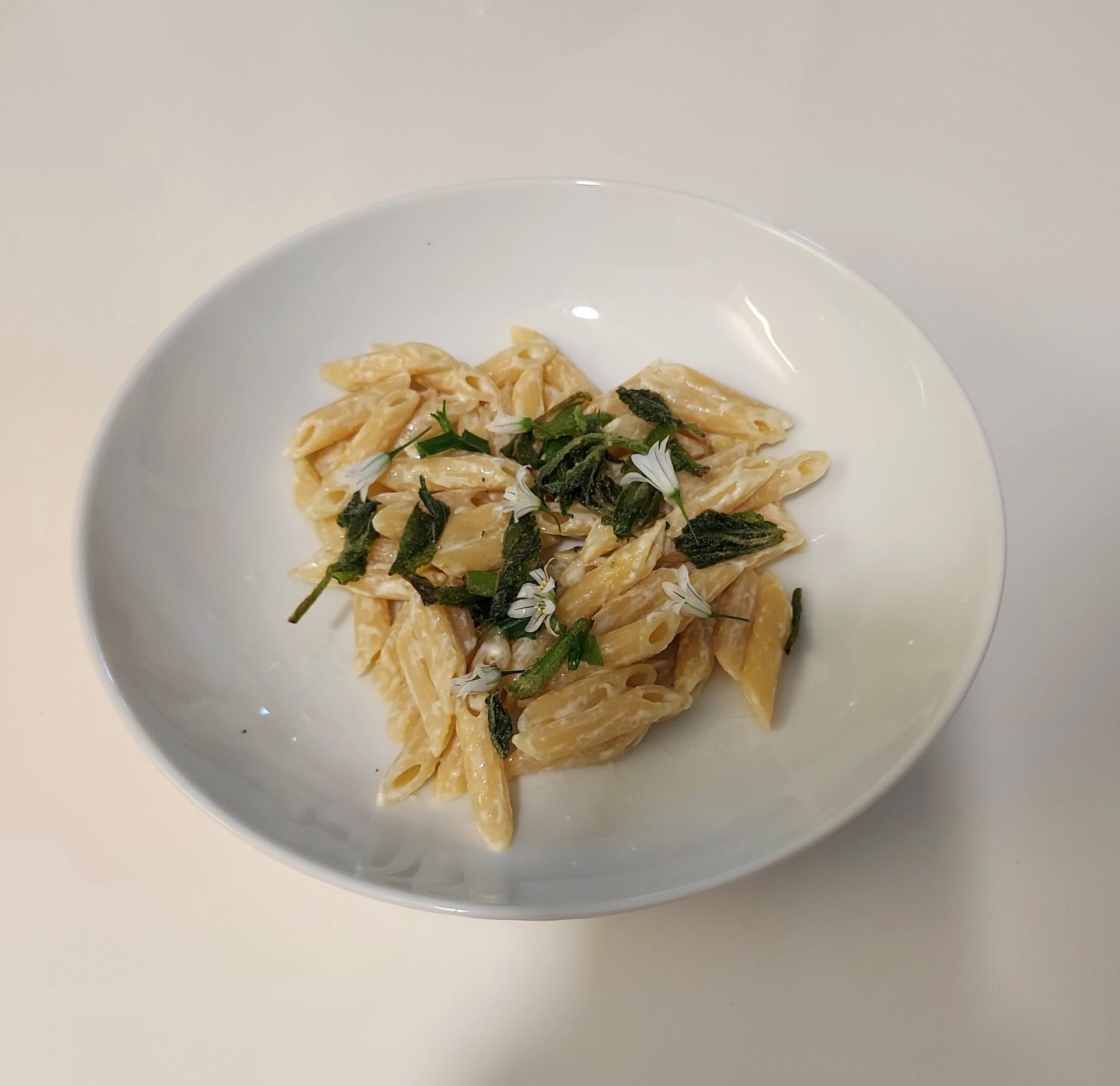
I attended a foraging walk at Tower Hamlets Cemetery Park, run by Made In Hackney and the Friends of the park. The walk was amazing, really informative, and we learned so much about foraging. I got to take home some ingredients and for my tea I made myself some creamy pasta with wild garlic, common hogweed and tri-cornered leek.

A white dish containing penne pasta with cream cheese, topped with greens

Learn to identify at least 10 plants in your area which can be eaten, and anything they are easily confused with.

I learned about multiple plants during my foraging walk, and learned how to recognise them, as well as differentiate them from similar-looking, poisonous plants.

Learn about responsible foraging and any rules or restrictions which apply to foraging in your local area.

  • Forage only for yourself and your family
  • Focus on common and abundant ingredients
  • Know what you are picking
  • Take only what you need
  • Leave more than you take (e.g. take only 1 in every 20 plants)
  • Avoid rare species
  • Take care not to trample or damage the environment
  • Avoid foraging on protected sites, such as Sites of Special Scientific Interest (SSSIs)
  • Get permission from landowners

There are no restrictions in Ealing as far as I know, but foraging is not permitted in nearby places such as Richmond Park and Wimbledon Common.

Learn about the damage which can be caused by irresponsible foraging in sensitive environments.

Irresponsible foraging is usually associated with commercial foragers, however, solo foragers can also have a negative impact. Being careless and disturbing the environment when you forage can damage vegetation and affect wildlife. Taking too much when you forage can upset the balance of local ecosystems by taking food from animals, plants and fungi and leaving gaps for invasive species.

Date completed: 20 May 2023

Rebel Badge Club: Explorer

This badge has taken me longer to complete than any other so far. I originally chose Explorer for the Carpe Diem challenge, but it soon became apparent that I couldn’t do it justice in the space of three months. So I chose a different badge for Carpe Diem and decided to give myself more time for this one. I’m glad I did, as it meant that I was able to actually enjoy it, rather than rush through it.

Learn to navigate using an Ordnance Survey map.

I joined a map reading workshop organised by Gutsy Girls, taking place in the Ashridge Estate in Hertfordshire. We completed a 7-mile walk in the countryside, learning how to read a map as well as work out compass directions from our surroundings.

Set a map using a compass.

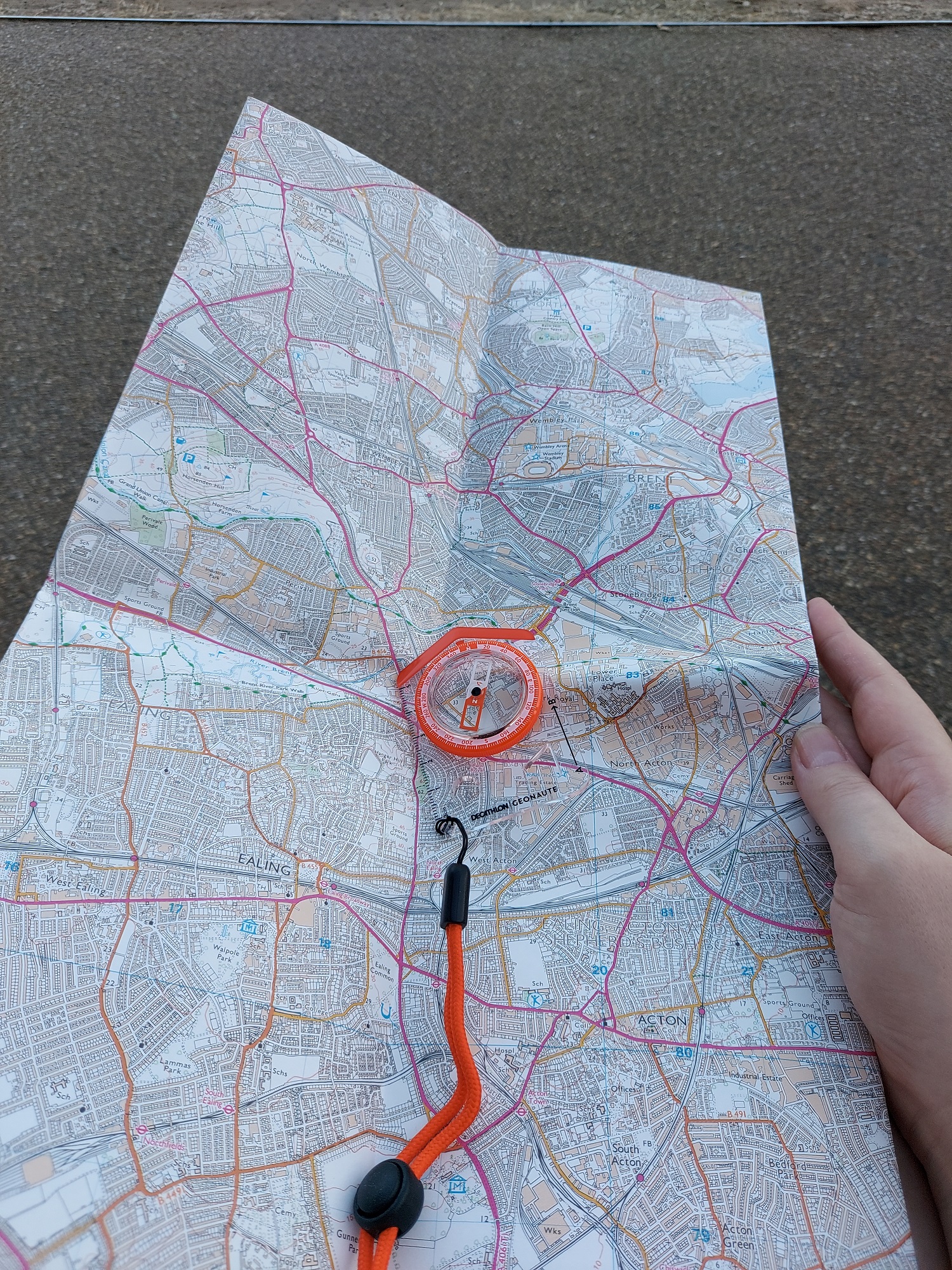
The walk above covered this topic too, and I was able to practice back home with my own compass and map of my local area.

a map with a compass on top
Practising my map-reading skills

Over a period of three months, hike outdoors regularly, and keep a log of the walks, including date, distance, location and weather.

I went on 9 different walks during the period Sept-Nov 2022, covering between 3 to 11 miles each time. During this period I completed the Thames Path and Lea Valley walks.

What hiking gear do you find most practical and comfortable? What items do you bring with you on short hikes? What do you pack for longer ones?

I have special hiking boots (Duke of Edinburgh Award approved!) but other than that I just wear casual clothes – leggings and a T-shirt (sometimes even a casual dress). Depending on the weather I might take a cardigan or a coat. If I’m going further afield I am careful to take enough layers – this is less important when I’m still within London! While I was doing this badge I decided to get myself a proper waterproof jacket with a hood to protect me on future hikes. I also got some waterproof trousers which pack down into a tiny little bag for bad weather emergencies.

On a short hike I would take, at a minimum, water, snacks, painkillers, plasters, and my phone. On a longer hike I might take lunch; depending on the weather I might take a raincoat, a hat and/or suncream. If I am going off the beaten track I would take my compass and a map of the area (either on paper or on my phone).

Plot a route of at least 10 miles on a map and walk or cycle it.

I stayed close to home for this one, plotting a route that took me from my front door and back. I got to see parts of my local area that I’d never seen before, so I’m happy I did this.

Plan a challenging day trip with at least 2 other friends.

I met up with a fellow Rebel, another Laura, to walk the Thames Path from Teddington Lock to Waterloo (we were going to aim for Tower Bridge but after several detours along the way we decided to finish early). We did manage to complete the 20 miles required for this clause. It was lovely to meet her and I really enjoyed the first part of the walk when the air was still cool and it was pleasant to walk beside the river. I found the later parts of the walk tough as the weather was so hot, and even my trusty hiking boots let me down – I ended up with horrendous blisters and couldn’t walk properly for a week. This walk actually prompted me to rethink my plans for the badge so that I could complete most of it during cooler months. It also made me slow down and actually enjoy the badge instead of pushing myself to complete it by making myself miserable.

Pack a bag for the day trip including lunch, snacks, safety equipment and anything else you need to complete the day trip. What did you pack?

I packed water, lunch, snacks, plasters and antiseptic cream. I could really have done with more water as it was so hot, and there was a distinct lack of water fountains along the Thames Path – in fact, I didn’t find one until the end of the walk, outside Waterloo Station.

Plan an overnight adventure trip, where you spend at least one night in a tent.

I was struggling with this clause as I don’t own a tent, but I then discovered that some camp sites have pre-pitched tents. I ended up staying at the Lee Valley Camping & Caravan Park in Edmonton over the weekend of 10-11 September. Although it is technically in London, it is a part I hadn’t really been to before so it was a great experience. I didn’t have a particularly comfortable night – I was cold in my sleeping bag and extremely uncomfortable because of the hard ground – I need to get myself sorted with an inflatable mattress or something before Rebel Camp next year! However, apart from that I did enjoy my weekend – I explored part of the Lea Valley walk, ticked off some activities for my Water Sports badge at the Lee Valley White Water Centre, and visited the town of Waltham Abbey and the Royal Gunpowder Mills.

Plan an overnight stay somewhere you’ve never been before.

I visited Whitby with my mam from 29-31 August. We travelled there by train from Seaham (the closest station to where my parents live) and stayed in a B&B. We had a lovely time – we did an open top bus tour, visited the Dracula Experience and Whitby Museum, looked in practically every Whitby jet shop in existence, and went up to the Abbey (we didn’t actually go inside because it was so expensive). The best part was probably going to the Dracula Experience and seeing my mam completely unfazed by the guy in a wolf mask who jumped out in front of us, telling him that she hoped he was paid well!

Take part in a challenging organised event which includes hiking or long-distance cycling.

I signed up for the London Winter Walk organised by Ultra Challenges. I went for the full marathon walk (26.2 miles). Given how I struggled with my 20 mile walk along the Thames Path, I was a bit worried, but I trained in advance for the walk and the cooler weather also helped me. I completed the walk with only a couple of minor blisters, which I’m pretty proud of!

Date completed: 28 January 2023