
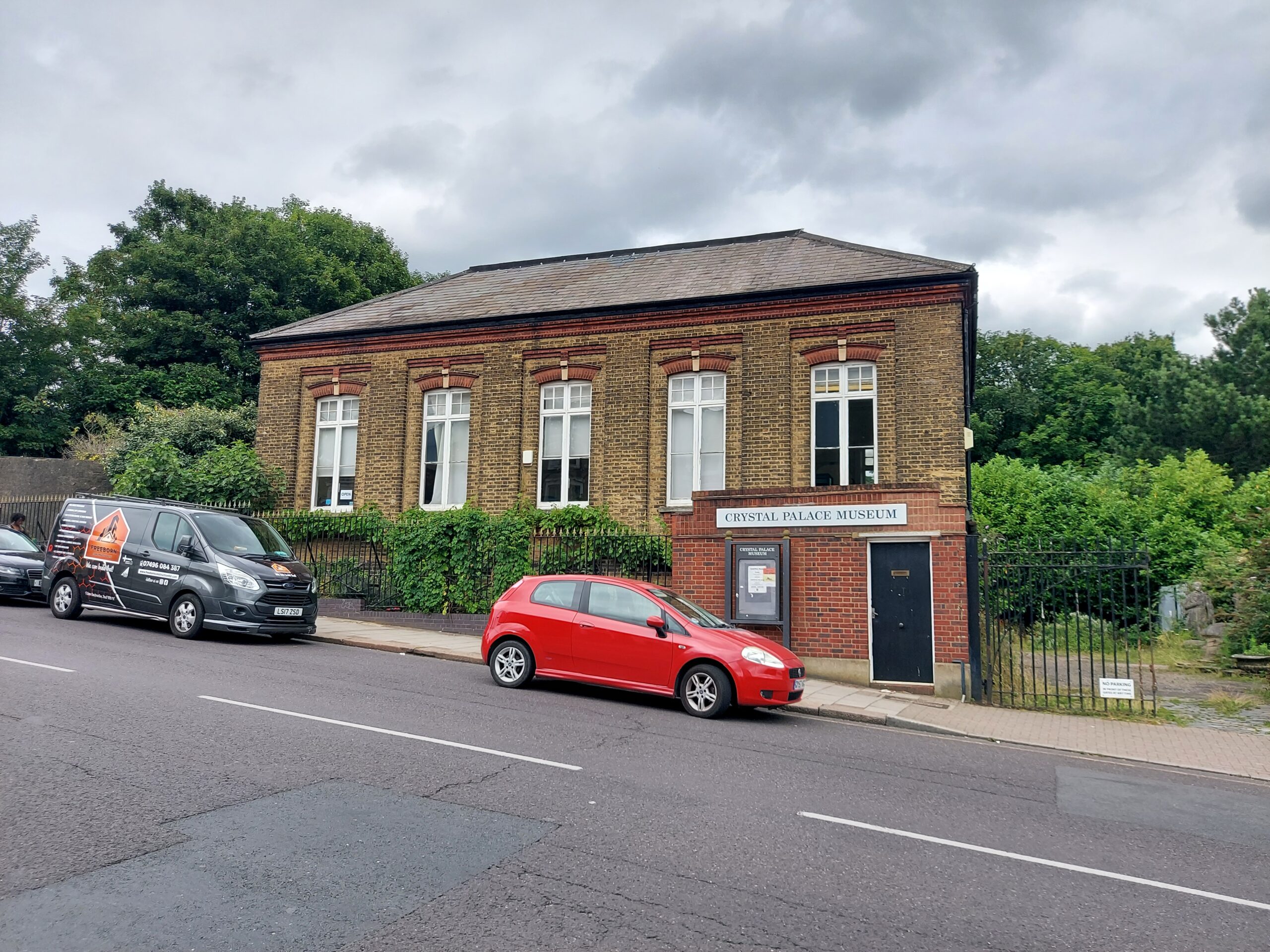
I’ve been meaning to visit the Crystal Palace Museum for years, but it only opens on Sundays so I never managed to get round to it, until I started walking the Capital Ring and began Section 4 at Crystal Palace railway station, just down the road from the museum.
The museum tells the story of the Crystal Palace from its beginnings in Hyde Park to its eventual destruction in a fire in November 1936. The museum itself is housed in the only surviving building constructed by the Crystal Palace Company, built around 1880 as a lecture room for the Crystal Palace Company’s School of Practical Engineering. The museum was opened on 17 June 1990 by the Duke of Devonshire.
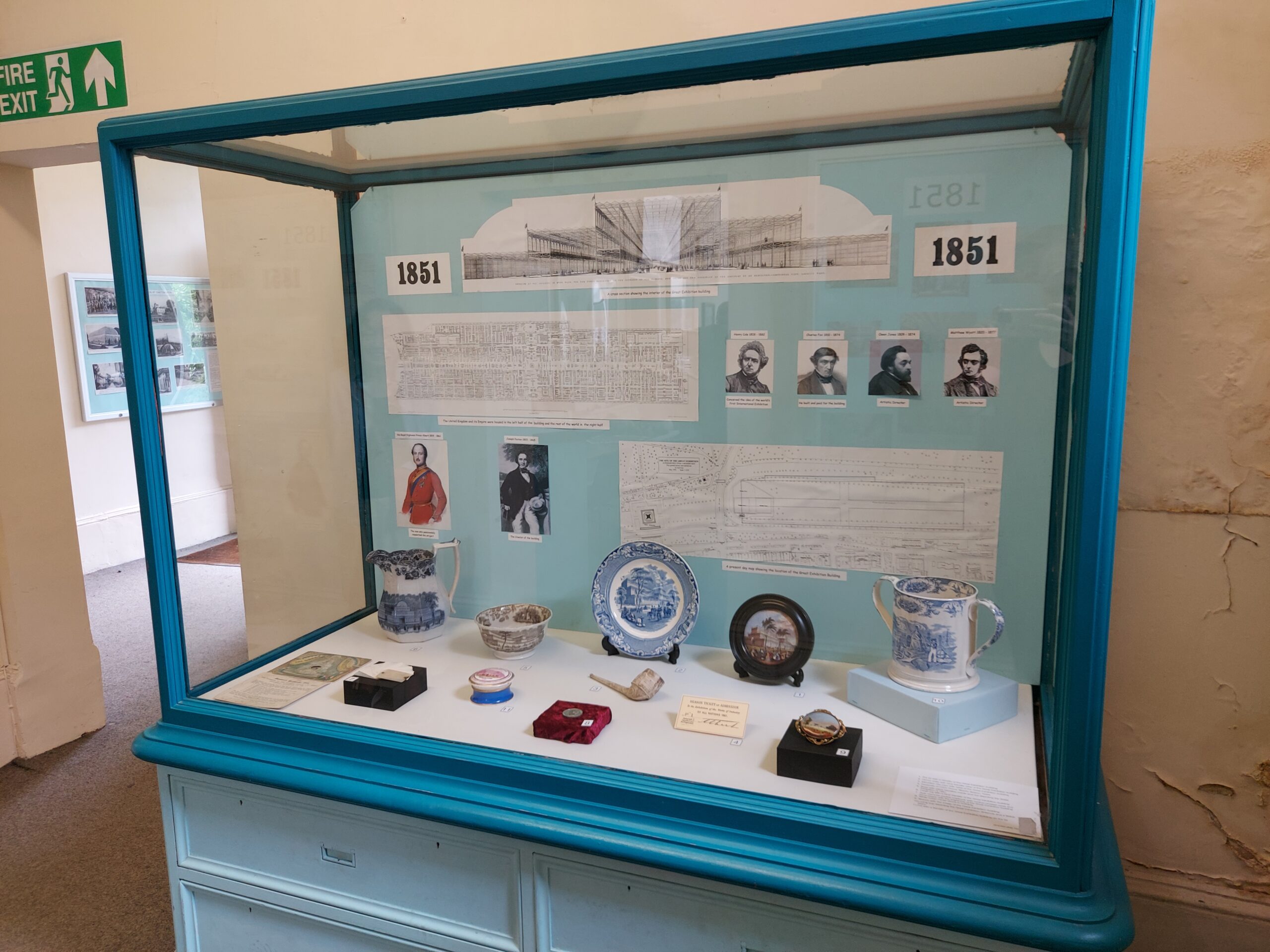
Originally created by Joseph Paxton to house the Great Exhibition of 1851 (the ‘Exhibition of the Industry of All Nations’ staged in Hyde Park), the Crystal Palace was left empty after the exhibition closed. It had been a great success – Paxton was knighted – but it was not to be allowed to remain in Hyde Park. Luckily, nine businessmen came to the rescue, purchasing the building from the contractors and eventually resurrecting it on Sydenham Hill in south east London. Reopening in 1854, it became a focus of entertainment and education for the people, featuring courts of architecture, art and manufacture, beautiful fountains and statues, unusual trees and shrubs and full size models of prehistoric animals (many of which can still be seen today). In 1856, Brunel was commissioned to design magnificent water towers. In later decades, the Palace and its grounds hosted firework displays, ballooning, cycle racing, football, funfairs and motor racing. The Palace eventually gave its name to the entire area.
During the First World War the palace and grounds were taken over by the Admiralty and was renamed HMS Victory VI for the duration of the war. Sadly, it was destroyed by fire in 1936.
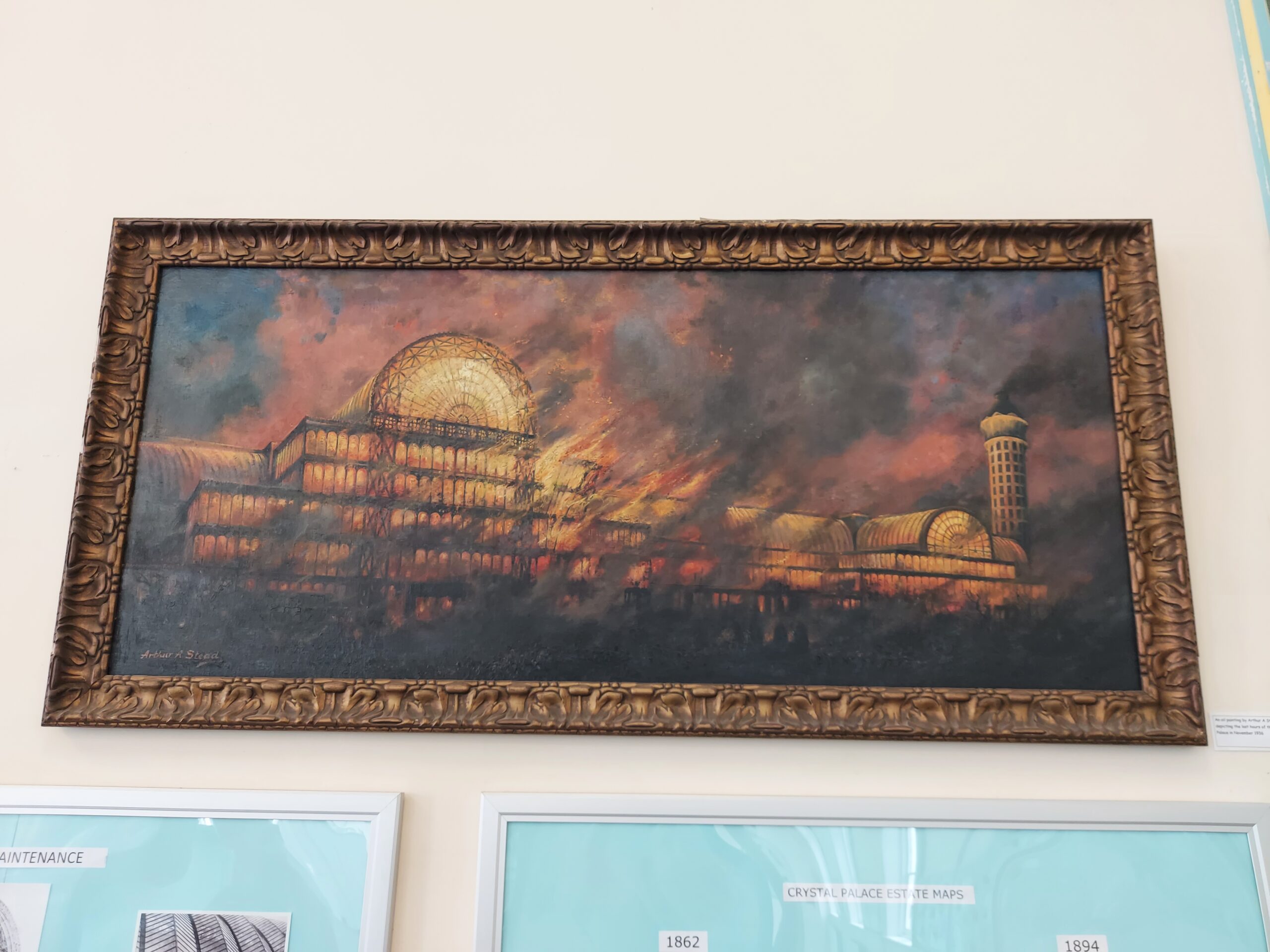
The museum tells the Palace’s story in roughly chronological fashion. I was interested to see how it changed over time when relocated to Sydenham – it did not remain static. The staff are friendly and knowledgeable and very willing to chat about the Palace and its history. Many artefacts linked to the Palace from every stage of its existence can be seen, from Great Exhibition souvenirs to pieces of the building recovered from the rubble. I hadn’t been aware that the Palace suffered several fires before the final, destructive one – I suppose it was only a matter of time before it went up in flames, but it still seems a shame that it is no longer in existence. I definitely recommend a visit to this free museum to learn more.
FACTS
Address: Anerley Hill, London, SE19 2BA
Website: crystalpalacemuseum.org.uk
Opening Hours: 11am-3pm Sundays
Price: Free