Crystal Palace Museum

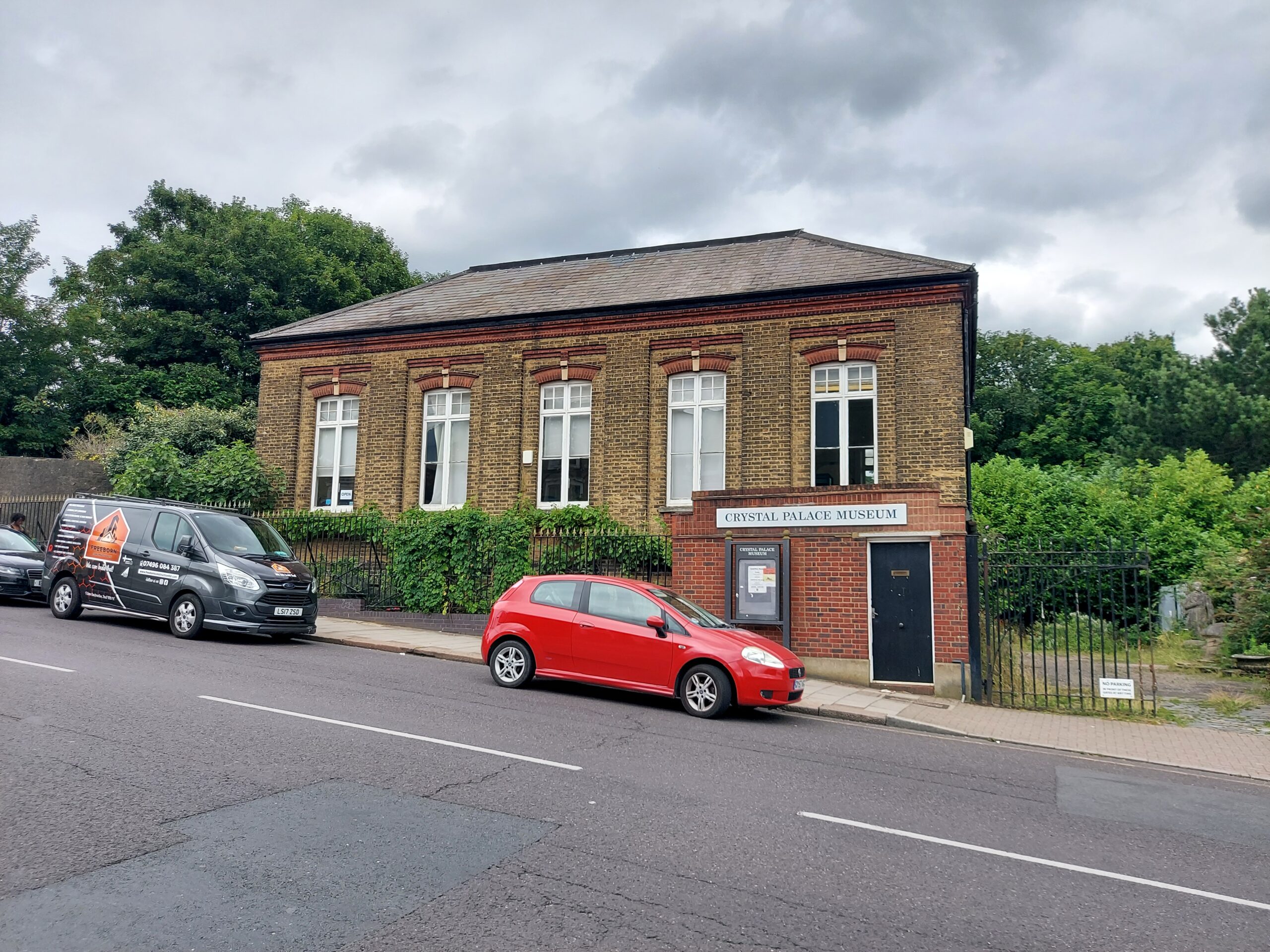
Crystal Palace Museum

I’ve been meaning to visit the Crystal Palace Museum for years, but it only opens on Sundays so I never managed to get round to it, until I started walking the Capital Ring and began Section 4 at Crystal Palace railway station, just down the road from the museum.

The museum tells the story of the Crystal Palace from its beginnings in Hyde Park to its eventual destruction in a fire in November 1936. The museum itself is housed in the only surviving building constructed by the Crystal Palace Company, built around 1880 as a lecture room for the Crystal Palace Company’s School of Practical Engineering. The museum was opened on 17 June 1990 by the Duke of Devonshire.
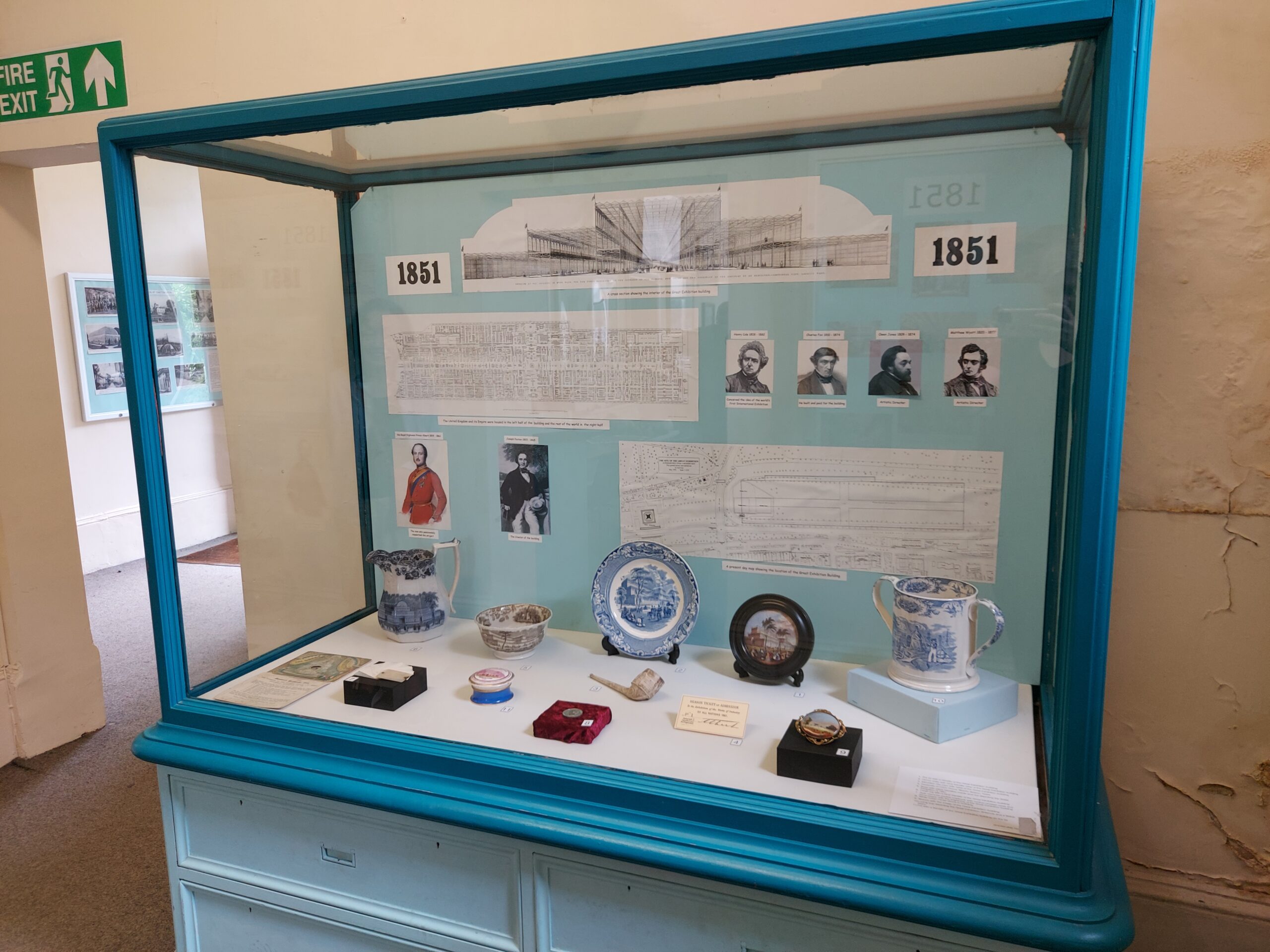
Artefacts from the opening of the Crystal Palace in 1851

Originally created by Joseph Paxton to house the Great Exhibition of 1851 (the ‘Exhibition of the Industry of All Nations’ staged in Hyde Park), the Crystal Palace was left empty after the exhibition closed. It had been a great success – Paxton was knighted – but it was not to be allowed to remain in Hyde Park. Luckily, nine businessmen came to the rescue, purchasing the building from the contractors and eventually resurrecting it on Sydenham Hill in south east London. Reopening in 1854, it became a focus of entertainment and education for the people, featuring courts of architecture, art and manufacture, beautiful fountains and statues, unusual trees and shrubs and full size models of prehistoric animals (many of which can still be seen today). In 1856, Brunel was commissioned to design magnificent water towers. In later decades, the Palace and its grounds hosted firework displays, ballooning, cycle racing, football, funfairs and motor racing. The Palace eventually gave its name to the entire area.

During the First World War the palace and grounds were taken over by the Admiralty and was renamed HMS Victory VI for the duration of the war. Sadly, it was destroyed by fire in 1936.
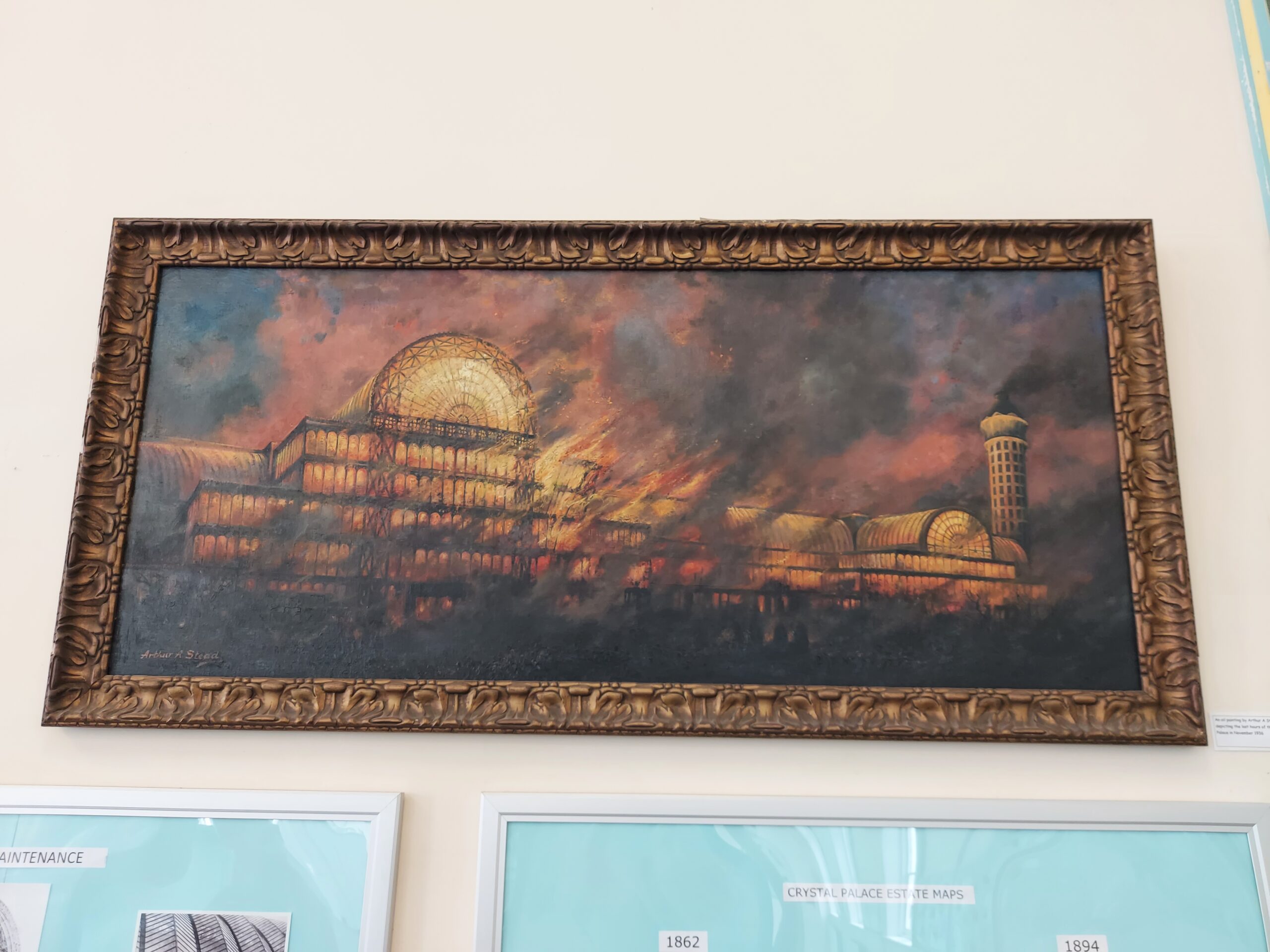
A painting showing fire engulfing the Palace

The museum tells the Palace’s story in roughly chronological fashion. I was interested to see how it changed over time when relocated to Sydenham – it did not remain static. The staff are friendly and knowledgeable and very willing to chat about the Palace and its history. Many artefacts linked to the Palace from every stage of its existence can be seen, from Great Exhibition souvenirs to pieces of the building recovered from the rubble. I hadn’t been aware that the Palace suffered several fires before the final, destructive one – I suppose it was only a matter of time before it went up in flames, but it still seems a shame that it is no longer in existence. I definitely recommend a visit to this free museum to learn more.

FACTS

Address: Anerley Hill, London, SE19 2BA

Website: crystalpalacemuseum.org.uk

Opening Hours: 11am-3pm Sundays

Price: Free

The Crystal Palace Dinosaurs (Heritage Open Days)

Crystal Palace Dinosaurs

The dinosaur models in Crystal Palace Park, south London, are fairly well-known. Usually inaccessible, they can be admired from afar, located on an island fenced off from the rest of the park. However, on rare occasions it is possible to get the chance to visit them close-up. I got this chance during this year’s annual Heritage Open Days celebration.

Iguanodons
Iguanodons

How to find them
I personally found it quite hard to find the dinos – I spent ages walking around Crystal Palace Park, and it was an incredibly hot day which didn’t help – but then again I do have a particularly dreadful sense of direction. They are located by the lakes in the south section of the park near the Penge entrance and the Information Centre.

Mosasaurus
Mosasaurus

History
The dinosaurs were the first ever dino models to be created, and for that reason alone are of huge significance. Now Grade 1 listed, they were created by Benjamin Waterhouse Hawkins, set in a landscape designed by Joseph Paxton which included geological illustrations by Professor David Ansted. The whole display was created between 1853 and 1855, designed to sit alongside the Crystal Palace, which was relocated from Hyde Park to Sydenham Hill following the Great Exhibition of 1851. Waterhouse Hawkins used the latest scientific knowledge and consulted with experts, including paleontologist Richard Owen, to create the sculptures, although several choices he made were naturally educated guesses: our ideas about how dinosaurs looked and acted are still in flux today, and the Victorians had even less to go on than we do.

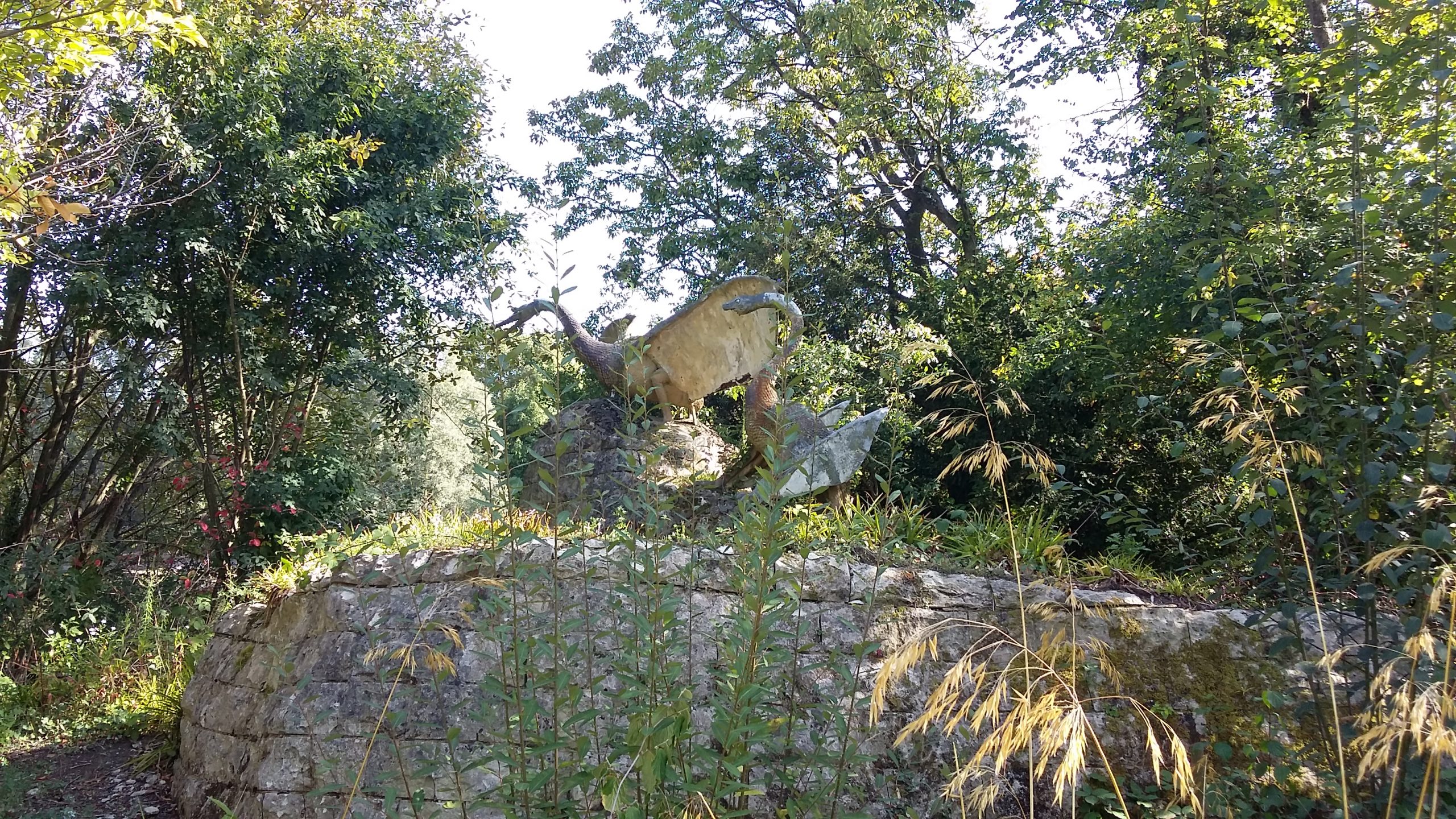
Pterosaurs
Pterosaurs

With this in mind, it is still possible to appreciate how impressive the sculptures are despite what we know about their many inaccuracies. For instance, the nose horns on the Iguanodon models are now known to be thumb spikes, and the Megalosaurus is now believed to have walked on two legs, rather than four.

Iguanodon
Iguanodon

Famously, Waterhouse Hawkins hosted a ‘Dinner in the Iguanodon’, demonstrating just how large the model of this creature actually is. The dinner took place on New Years’ Eve 1853, and guests dined on Victorian delicacies such as mock turtle soup, whiting and pigeon pie.

Megalosaurus
Megalosaurus

Experience
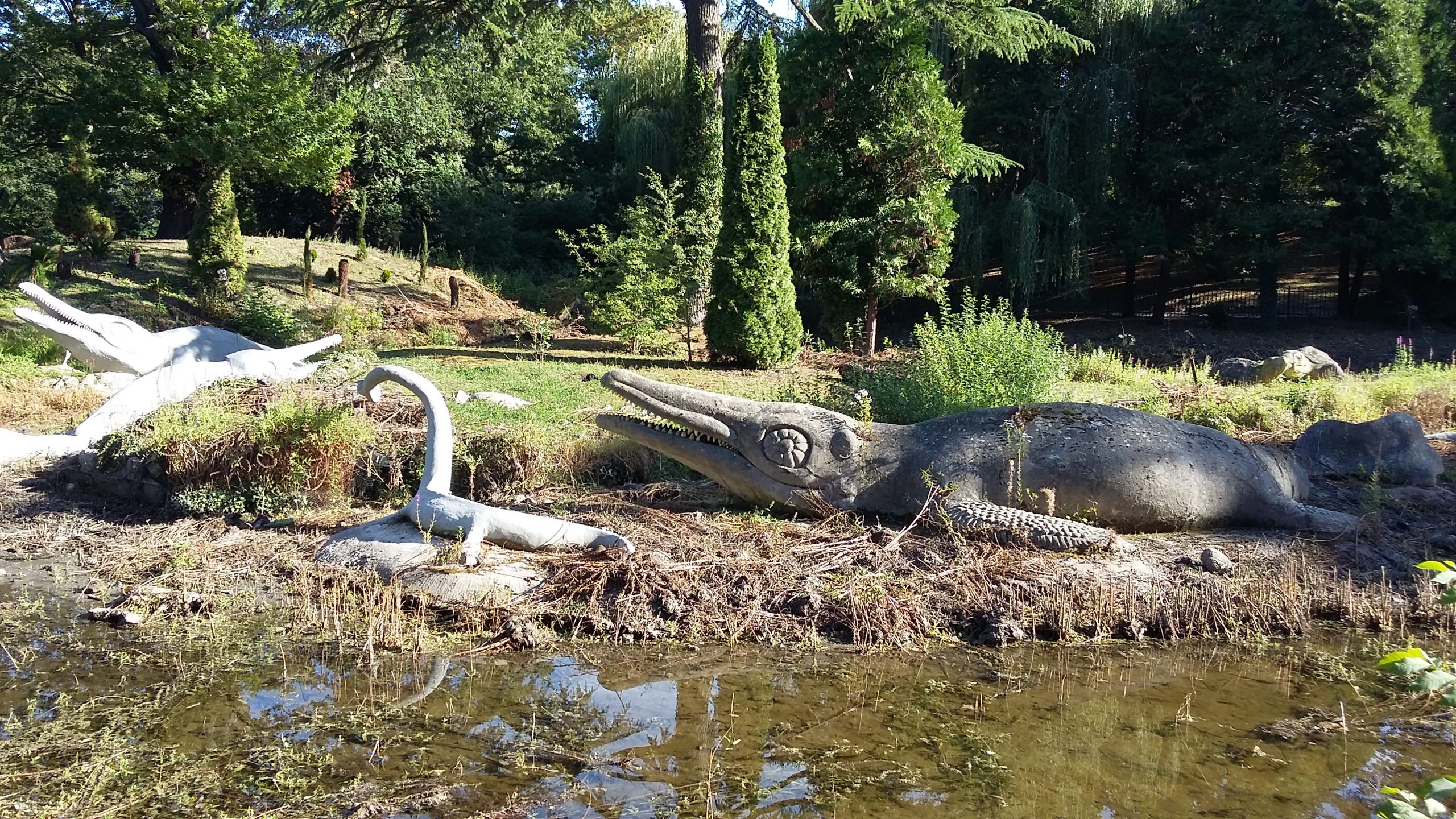
When I finally arrived at the meeting spot, by the gate via which we would cross the bridge to the island, there were lots of people milling around and I felt very lucky to have a ticket: many newcomers had not been aware of the HOD tours and were waiting in hope that a space would be freed up. When it was time to go over, we were taken over the bridge and our guide spoke to us about the various models. The previously-mentioned Iguanodon and Megalosaurus are some of the most impressive, but I also liked the winged Pterosaurs and the spiky-backed Hylaeosaurus. Further towards the lake, ancient marine reptiles such as the Plesiosaur and Ichthyosaur can be found; because it had been a warm summer, the water level in the lake had gone down so it was possible to see more of the models.

Ichthyosaur
Ichthyosaur

We heard about the models, their history and conservation: the models are deteriorating in a number of ways including cracks, paint shedding and vegetation taking up root. Money is being raised to ensure the preservation of these fascinating models.

To find out more, visit cpdinosaurs.org/.

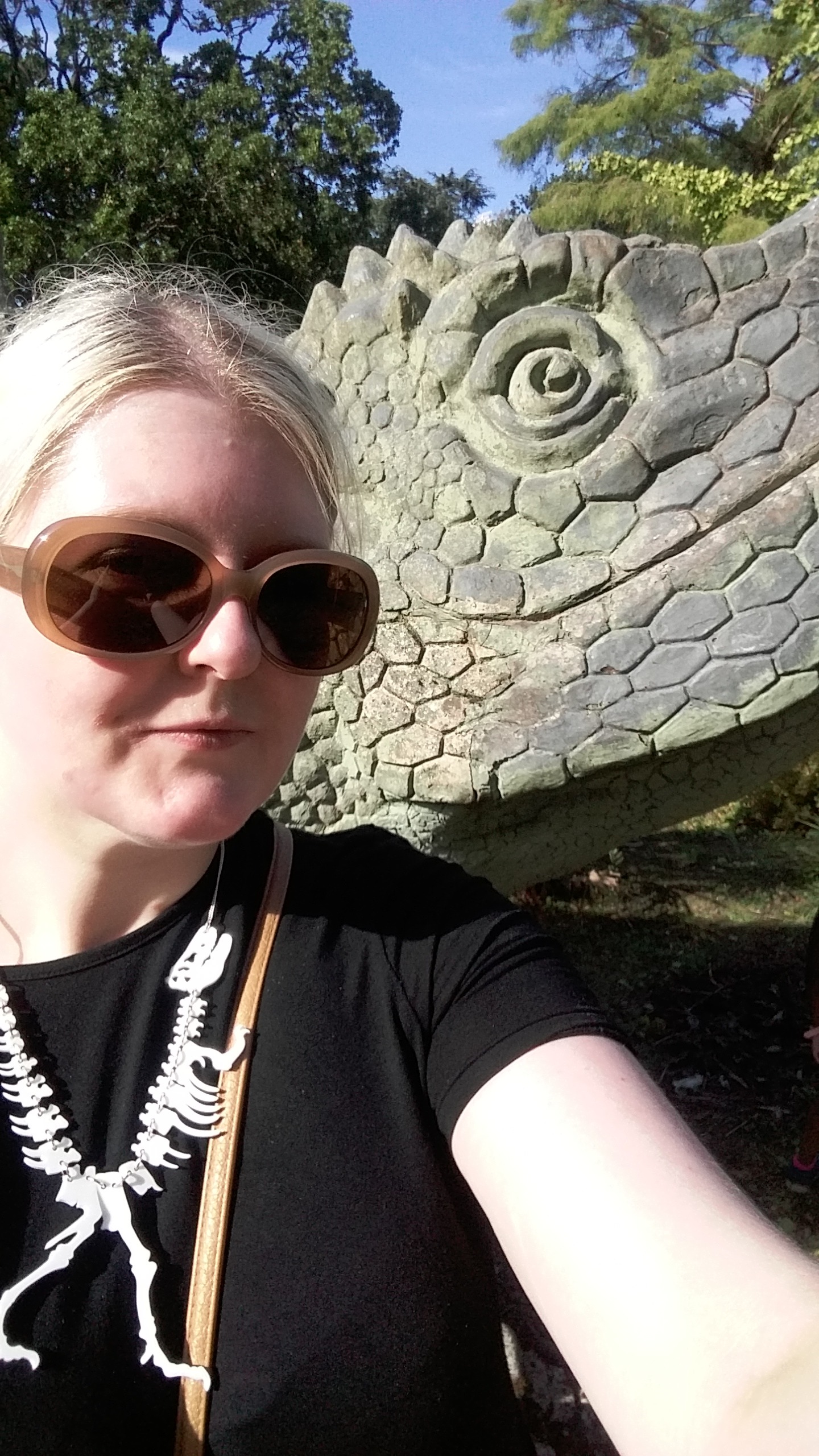
Dino selfie with Tatty Devine dinosaur necklace
I wore my Tatty Devine dinosaur necklace, which seemed appropriate.