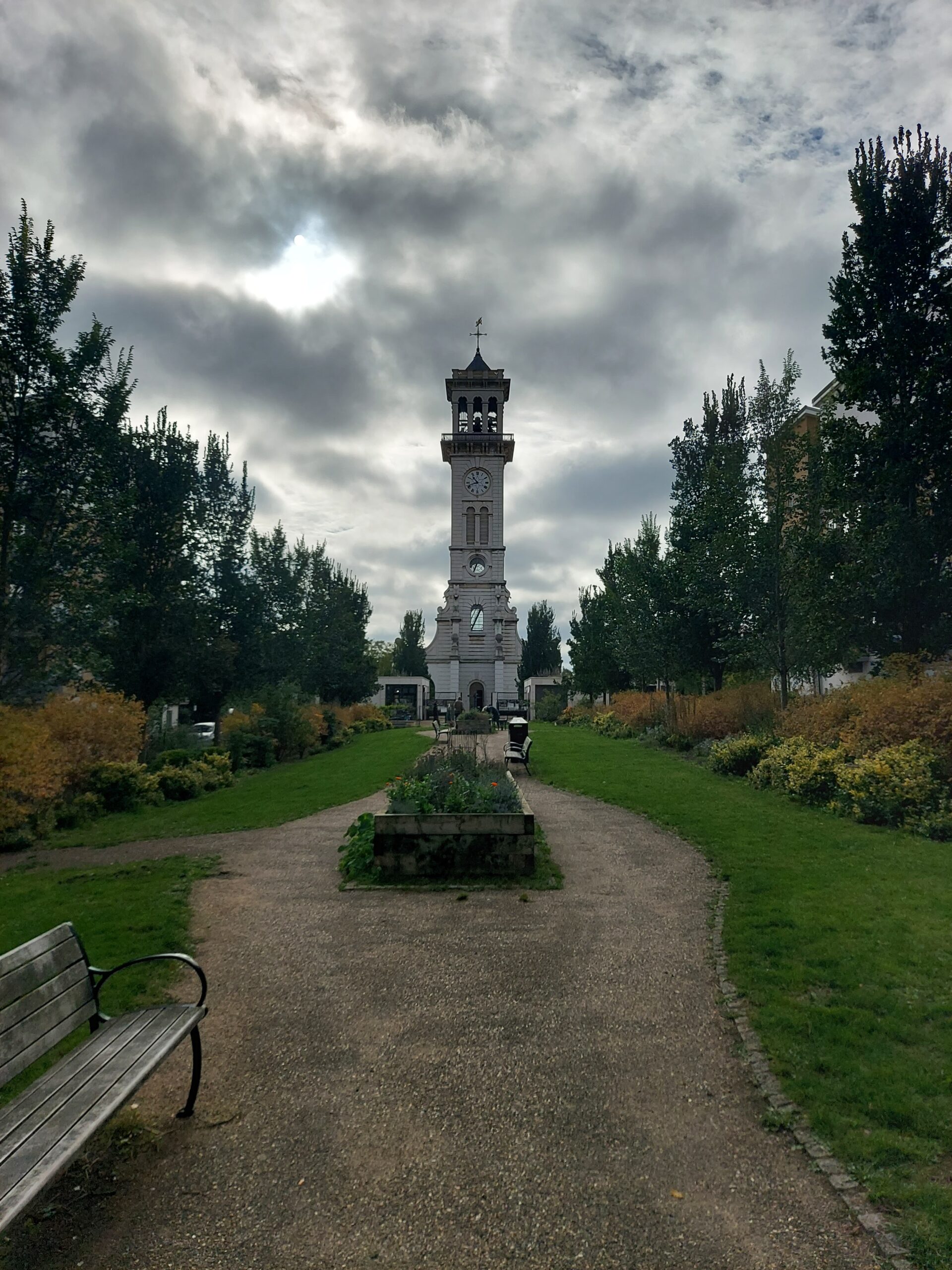
When I completed my kickboxing course recently, I kept walking past Caledonian Market Clock Tower, and wanting to know more about its history. I got my wish when I saw that guided tours were taking place allowing people to climb to the top of the tower and learn more about it at the same time.
The tower used to be the centrepiece of the Metropolitan Cattle Market (later Caledonian Market), just off the Caledonian Road in the parish of Islington (now the London Borough of Islington). It was built by James Bunstone Bunning, architect of the City of London Corporation, and was opened in June 1855 by Prince Albert. The market was opened in response to the difficulties of taking live cattle to crowded Smithfield in the City. It covered 30 acres, and was built on the site of the former Copenhagen House, the Ambassador of Denmark’s residence in the seventeenth century.
The market played host to cattle from all around the country, including Scotland, Yorkshire, East Anglia, Wales and the Cotswolds. Sheep, cows, pigs and horses were all sold here. The conditions were much improved from Smithfield: there was more space, animals were better treated, and there was access to water. At each corner of the market, large pubs (some of which still remain) provided accommodation, entertainment and relaxation for traders and visitors.

The advent of refrigeration in the early twentieth century removed the need for livestock to be brought to London for slaughter. The market became a well-known bric-a-brac market, and was famous for the variety of goods sold. After World War II, the market transferred to Bermondsey, but it is still known by its old name of the Caledonian Market.
The market here in Islington finally closed in 1963. The area was converted to housing and to Caledonian Park. The clock tower still stands as the magnificent centrepiece of the Park, and is Grade II* listed. It was restored between 2016 and 2019.
Our tour took us up one floor at a time of this fascinating structure. Overall, we climbed quite a lot of steps, but it wasn’t so bad as we only did a small number at a time. Some of the narrower staircases were particularly tricky, but handholds and ropes have been added to help. Most of my party managed to get up OK.
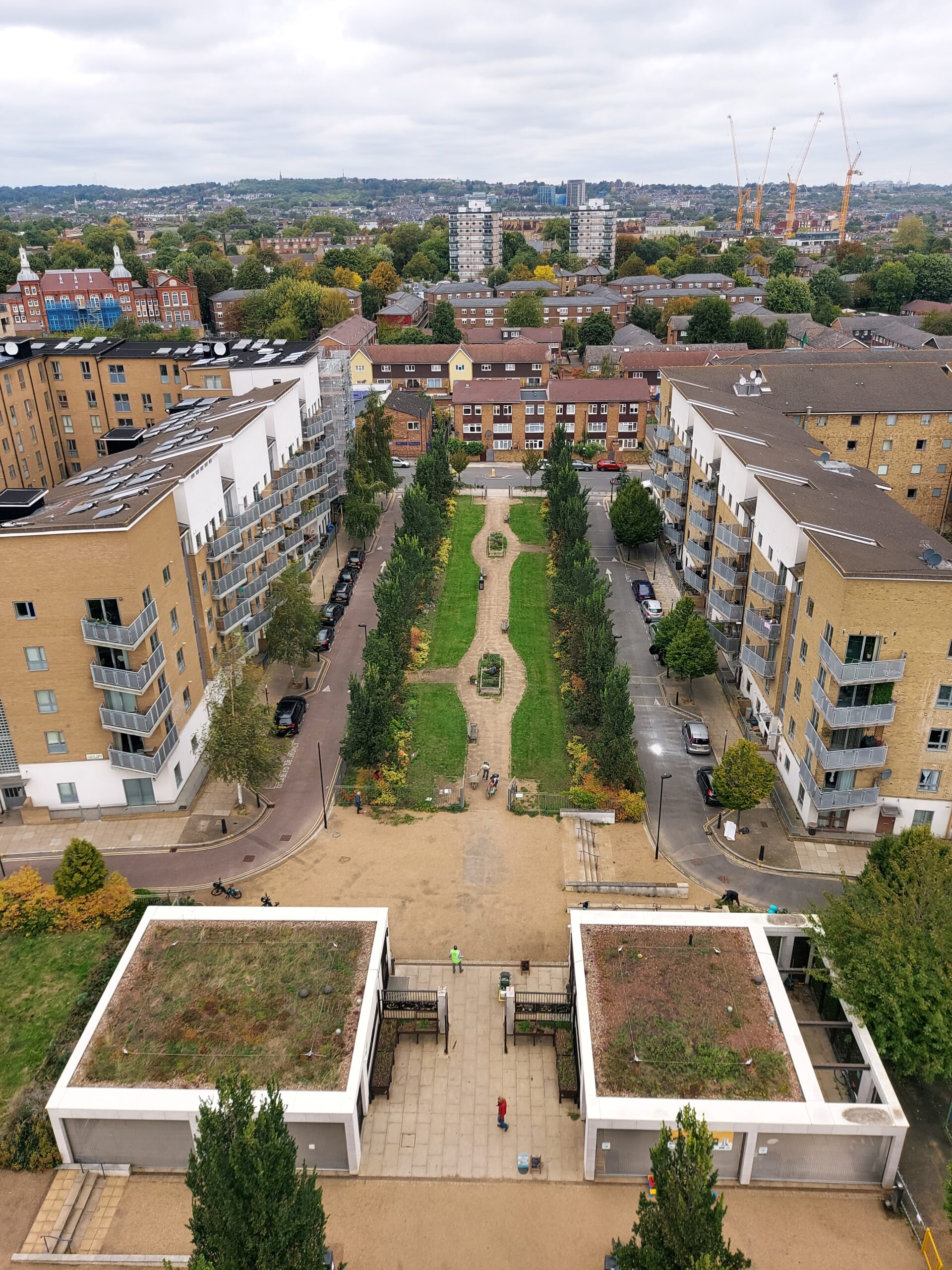
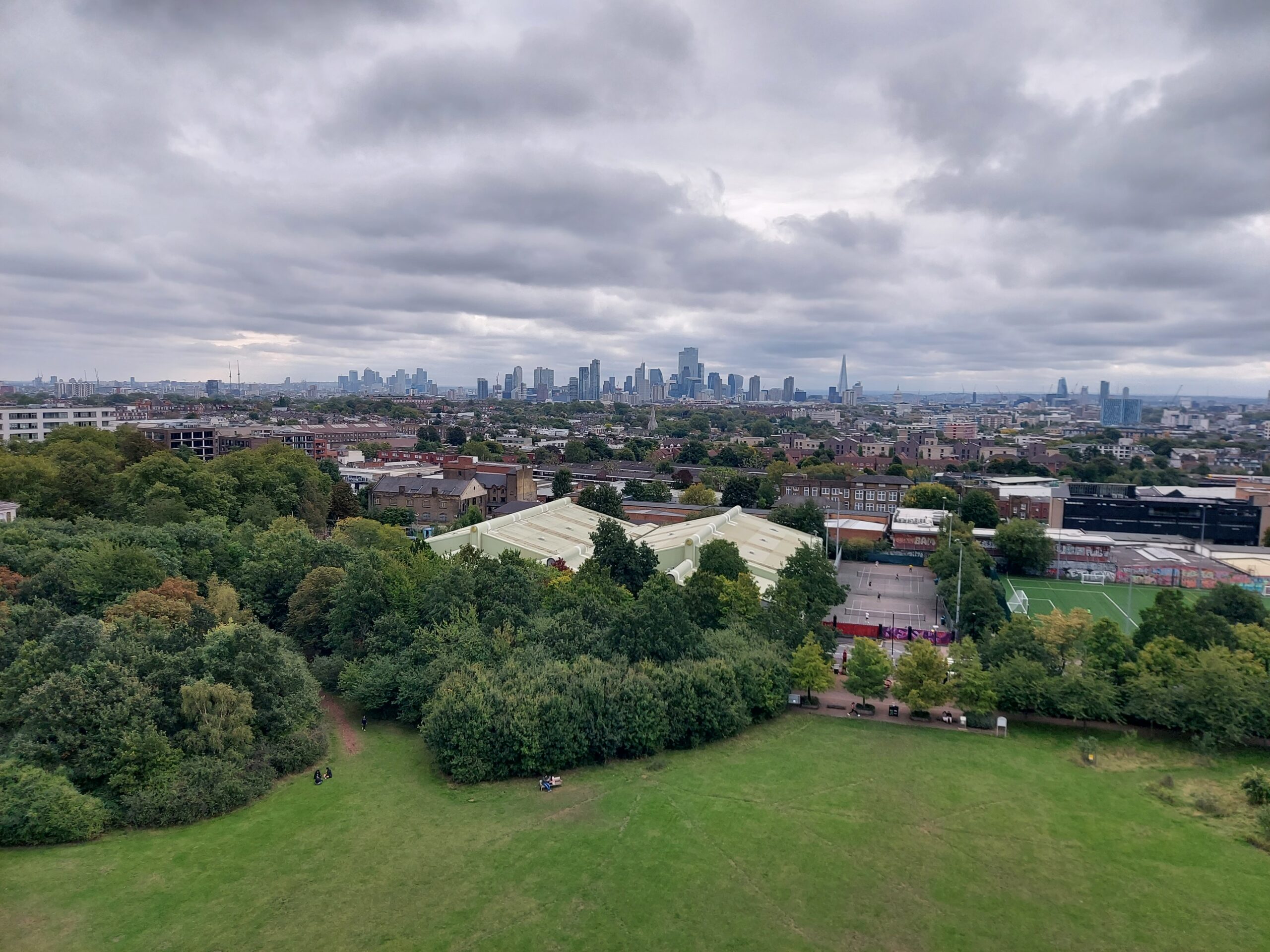
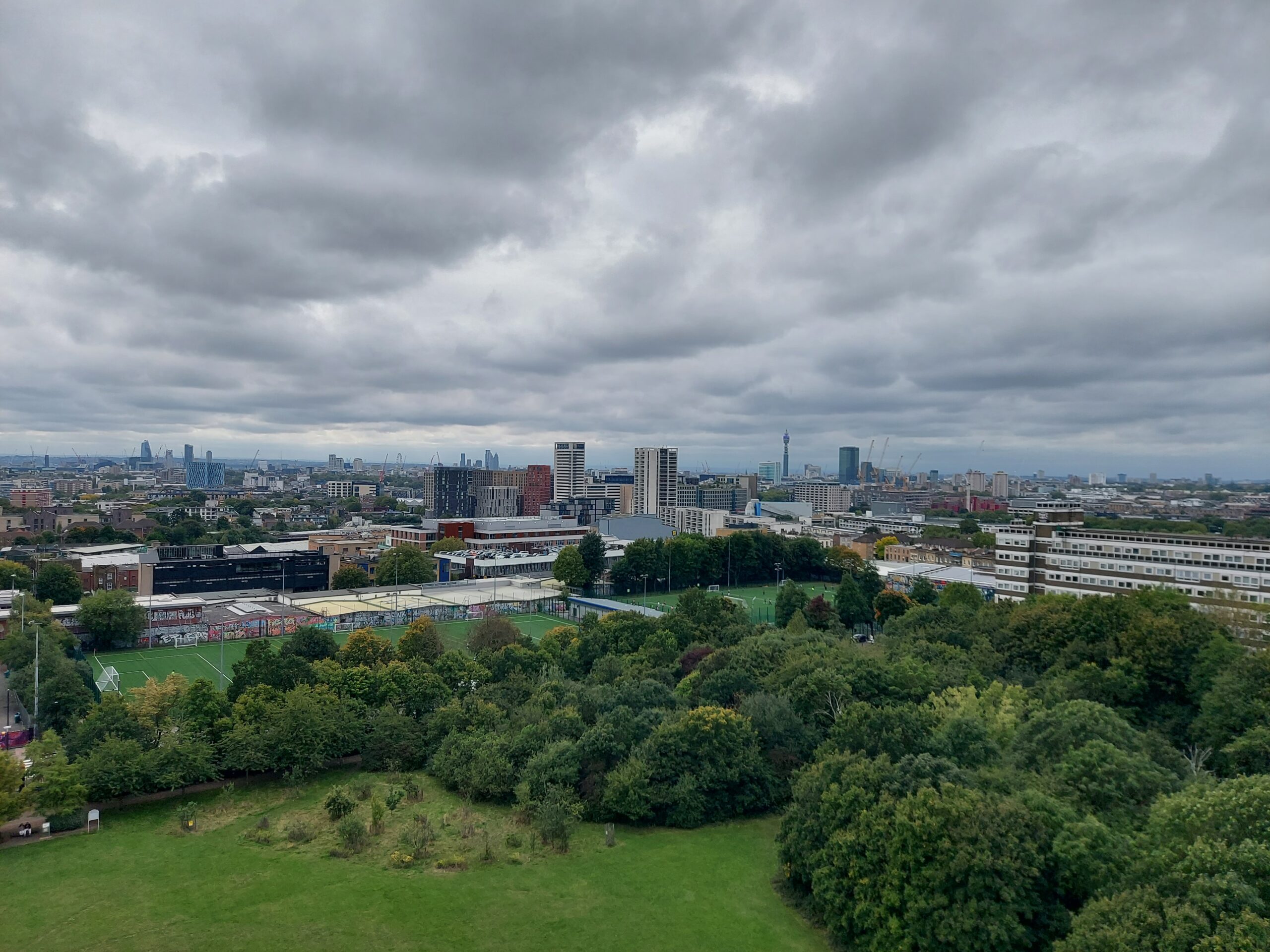
We got to see the workings of the magnificent pendulum clock, and, most excitingly, wonderful views over London. In the north, we could see Alexandra Palace; to the east, the Olympic Park; and to the south, the high-rise buildings of the City and Canary Wharf.
If you have a reasonable level of fitness and are able to manage steep steps, I would definitely recommend booking yourself on a tour. They are run by Islington Guided Walks and can be booked via Eventbrite.