Camping in Lyme Regis

This summer I spent a few nights camping in Lyme Regis (well, it’s more accurate to say I stayed in nearby Uplyme). I wanted a break and thought it would be a good opportunity to work on my Advanced Camper and Palaeontologist badges.

I took the train from Waterloo to Axminster then the Jurassic Coaster bus to Hook Farm Camping & Touring Park. I hadn’t realised there was a walk up a hill from the bus stop to the campsite, but I got there in the end! Once I checked in I was driven to my pitch in a golf buggy, which was fun.
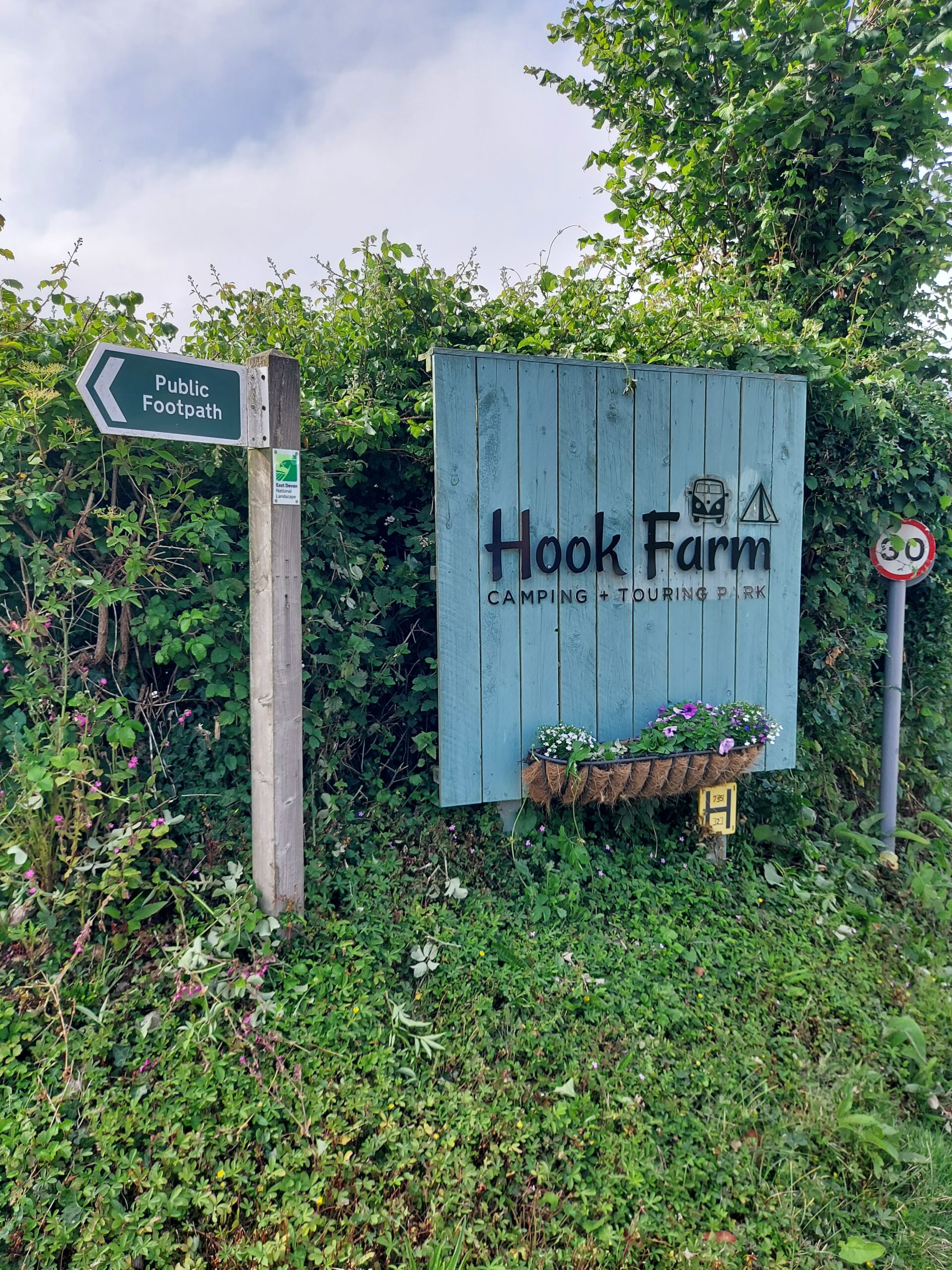
Hook Farm Camping sign

I put up my tent then went to the local pub, the Talbot Arms. I had a couple of pints, but couldn’t get food, so I came back and heated up some macaroni cheese instead. I read for a bit then went to bed.
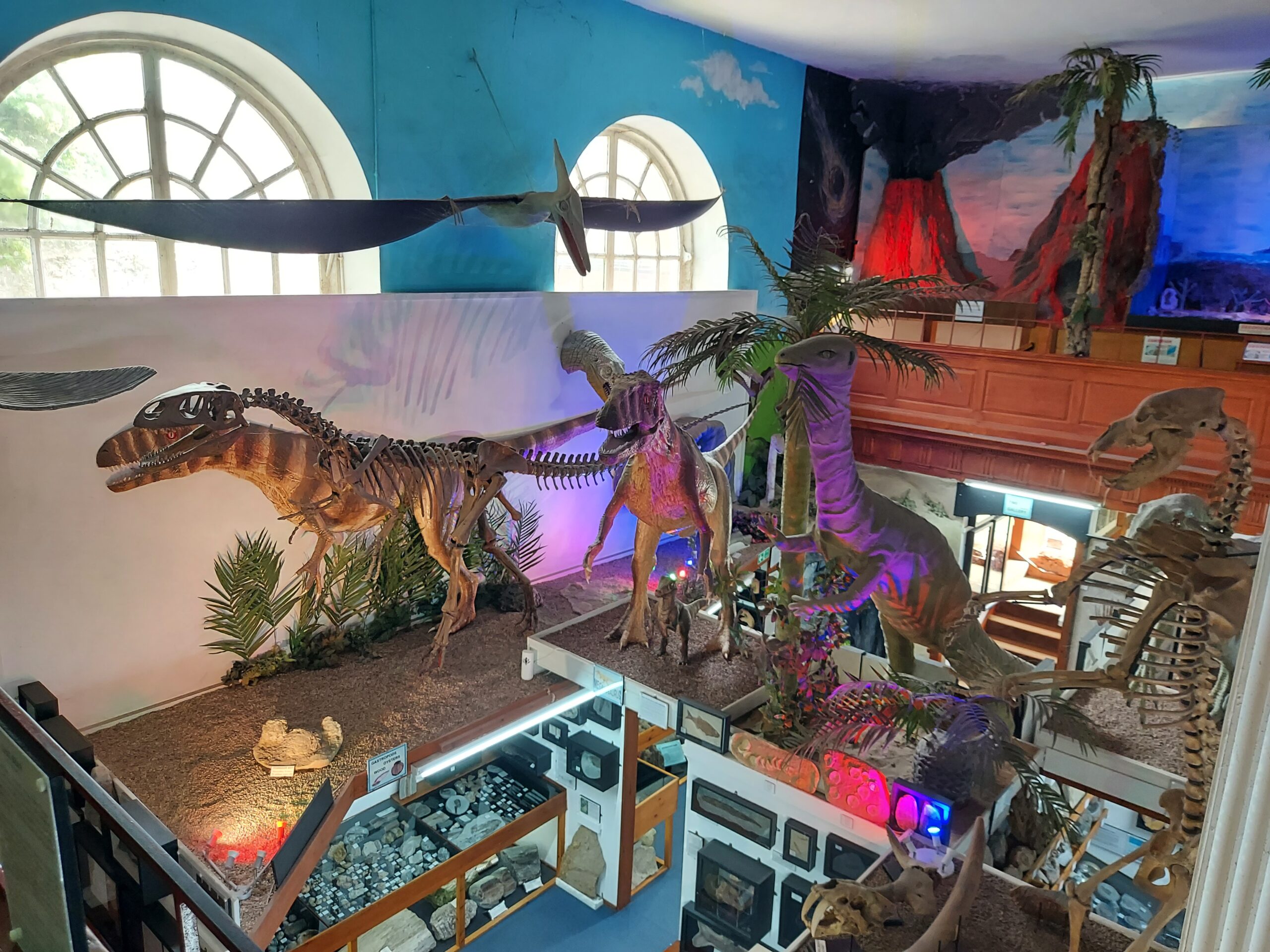
Inside Dinosaurland

The next day, I showered and walked into Lyme Regis. I stopped for breakfast in a pirate-themed café then visited Dinosaurland which was good fun. Then it was time for my fossil walk with Lyme Regis Museum. First there was a talk where we were told what we would be looking for. Then we went out to the beach, passing the Mary Anning statue on the way. We searched for fossils for a good couple of hours and I managed to find a couple.
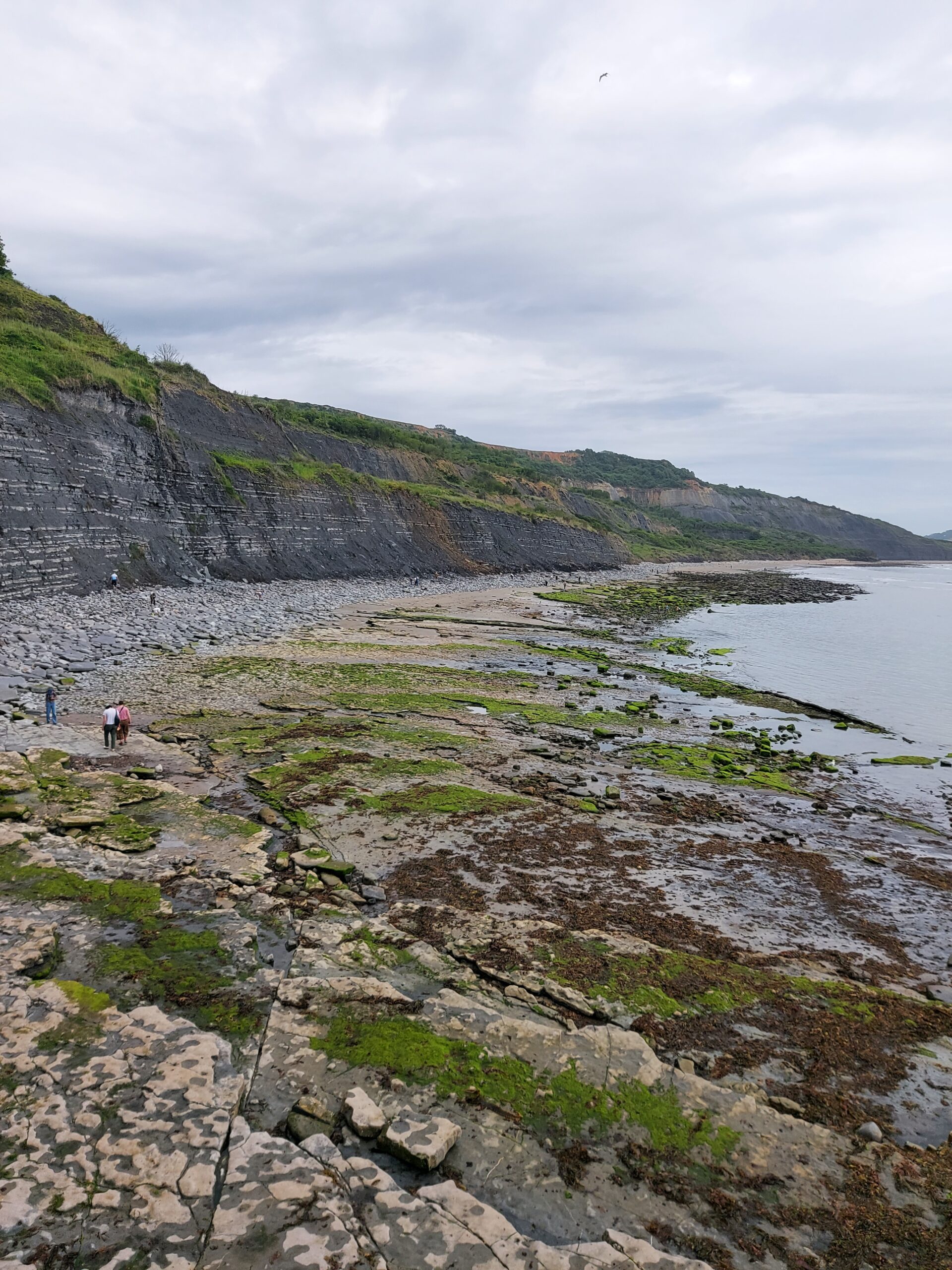
Lyme Regis beach

Afterwards, I went into the museum and had a look around. I had an ice cream milkshake and went for a little walk along the seafront before going for a drink at the Lyme Regis Brewery in the Town Mill. I got fish and chips for tea and ate it on the seafront, then visited Mary Anning’s grave.
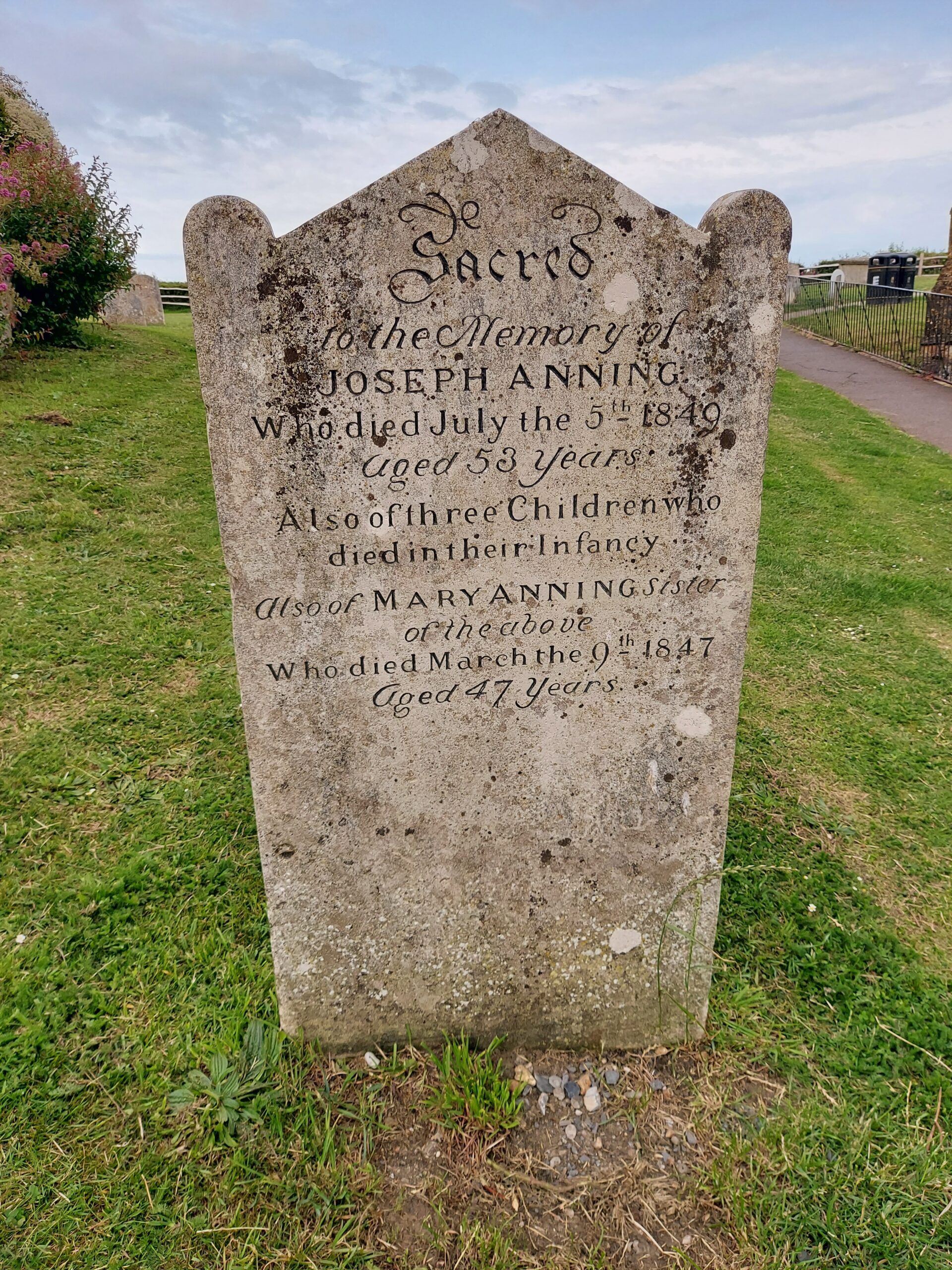
Mary Anning's grave

I had a quick drink in a pub then got the bus back to the campsite. I read for ages before going to bed. The campsite was much busier now it was the weekend.
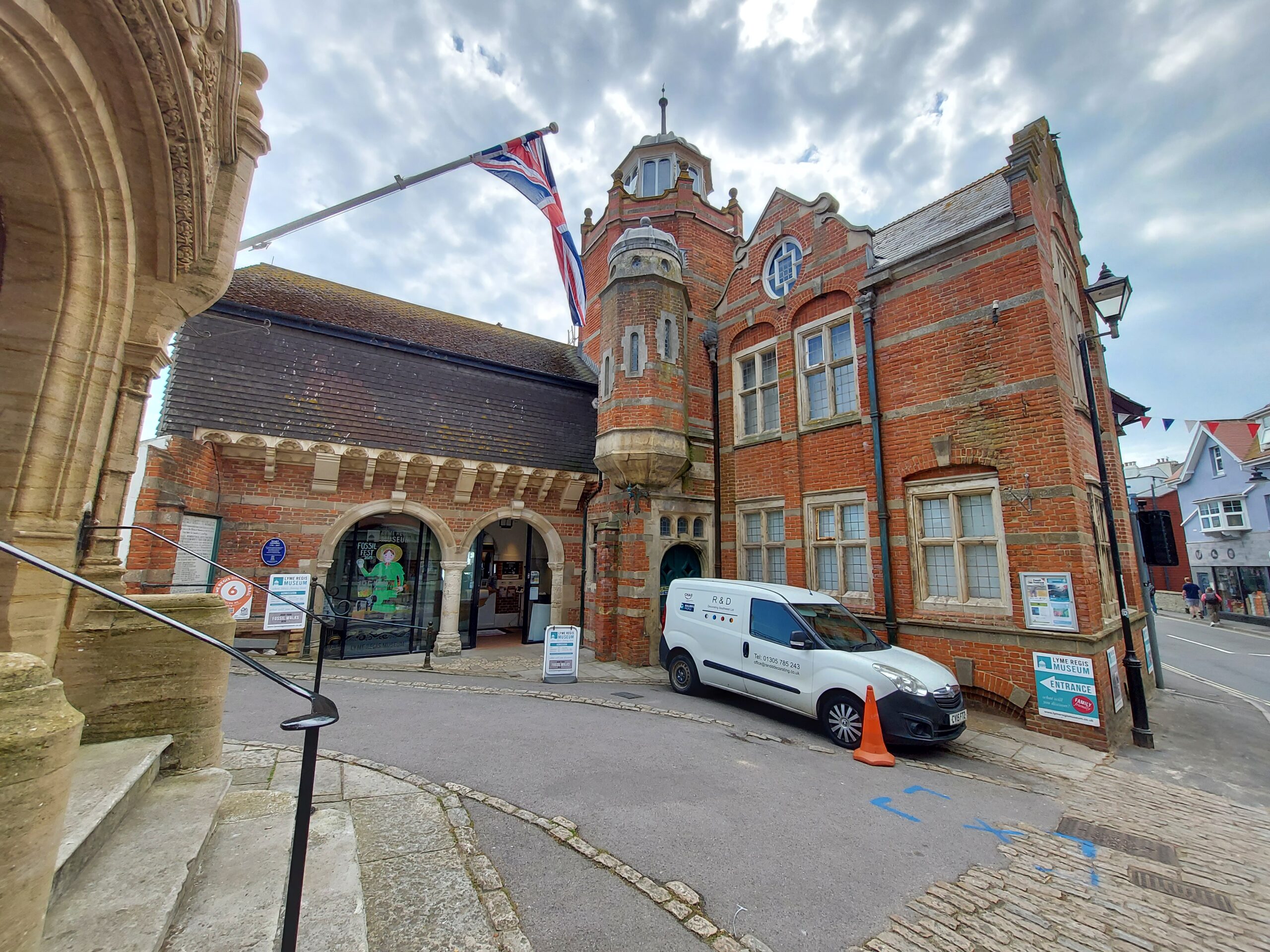
Lyme Regis Museum

The following day I showered then walked into Lyme Regis again. I had breakfast at a café called ‘Amid Giants & Idols’. I walked down to the Baptist Church for my first talk of the Fossil Festival: King Tyrant: A natural history of Tyrannosaurus rex by Mark P. Witton.
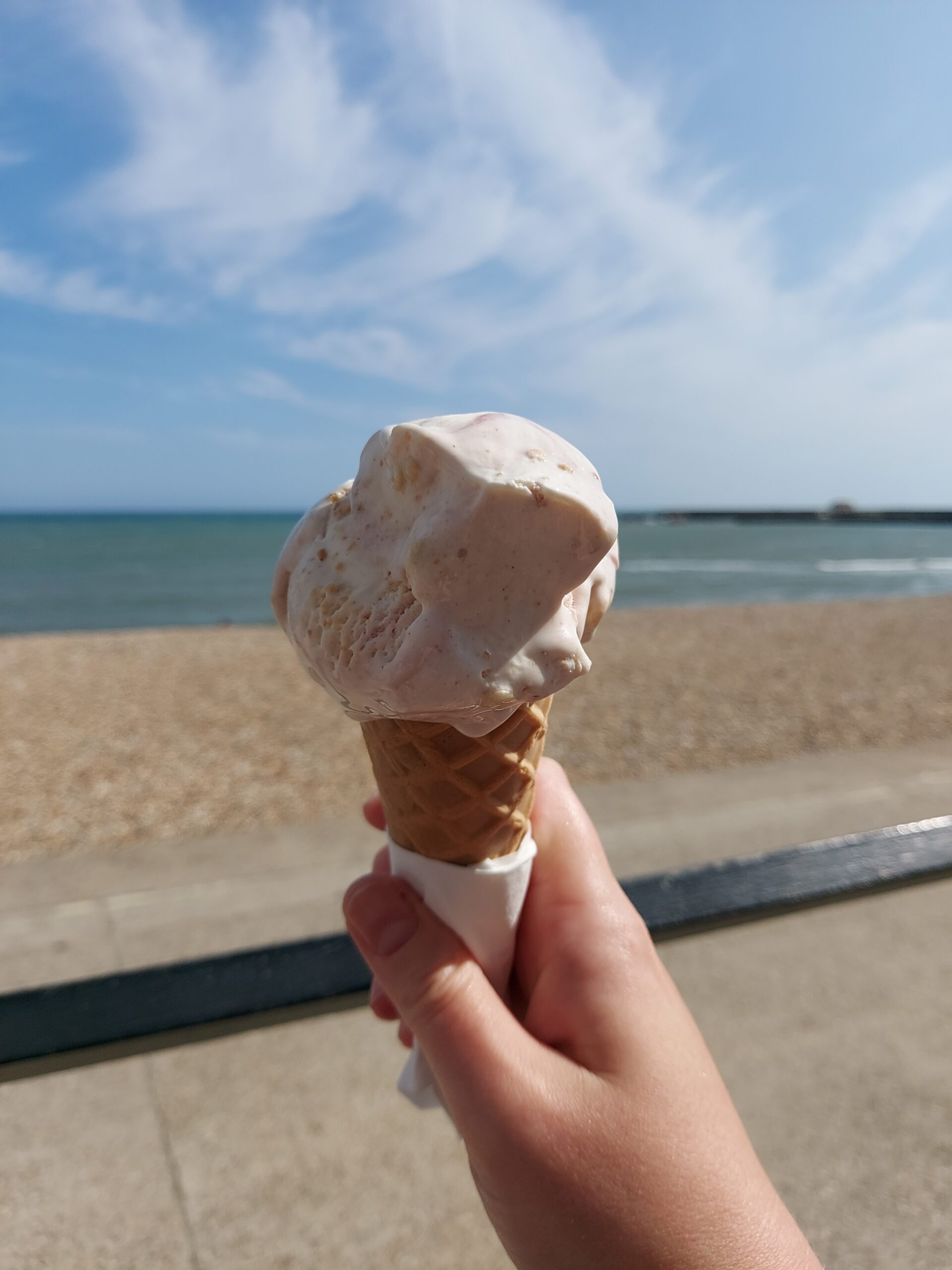
Ice cream

Afterwards I walked down to the seafront, had an ice cream and looked at all the different stands and displays, including the British Antarctic Survey, who had a fossil of a giant penguin bone. I also saw trilobites, which I remember learning about when I was a kid. I went into a few shops and bought a silver ammonite necklace from one of the stalls.
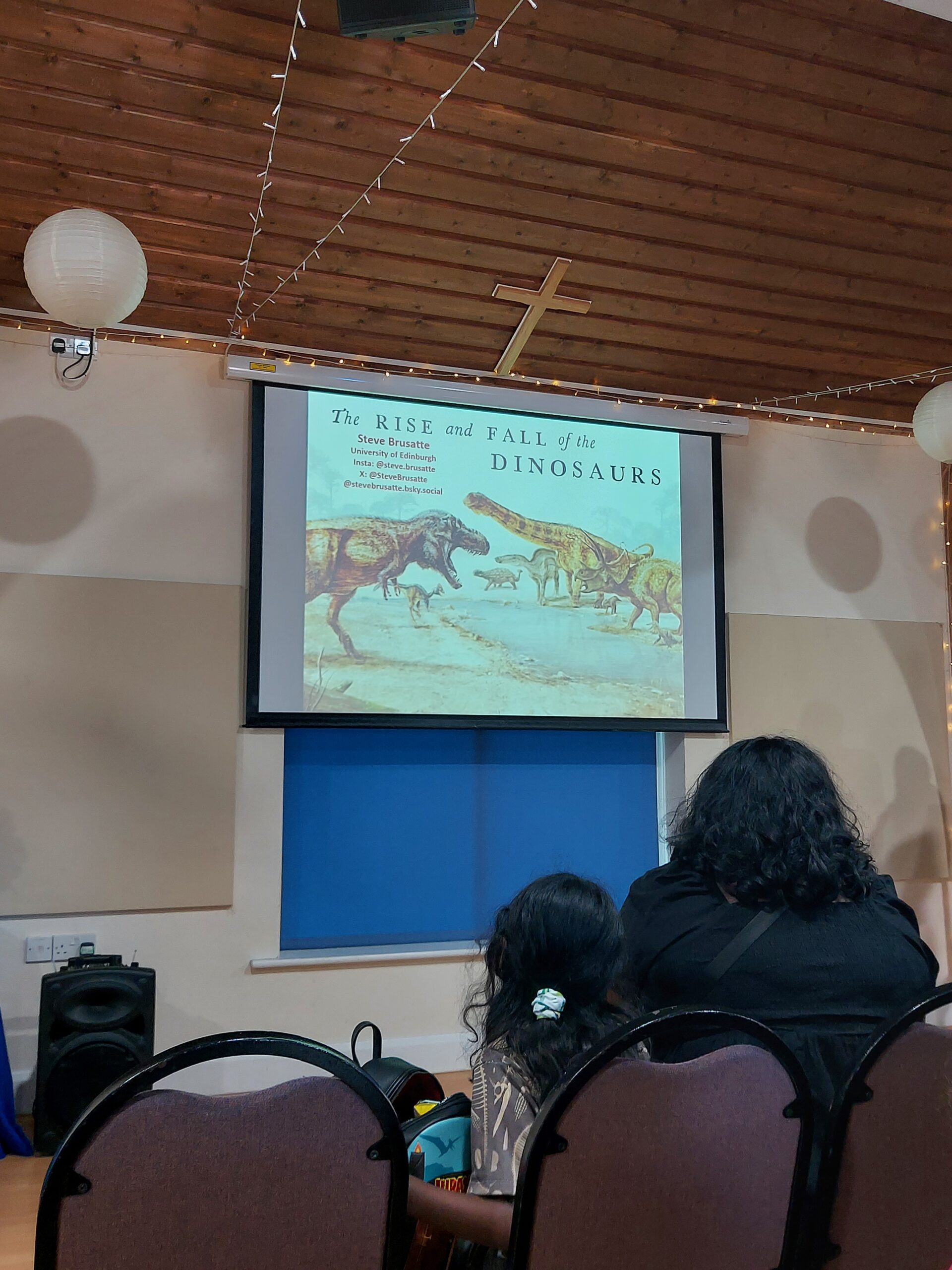
Dinosaur talk

Then I sat in a bar and read for a while before heading back up the hill to the second talk of the festival, The Rise and Fall of the Dinosaurs by Steve Brusatte. I went in a few shops afterwards and had a drink in the pub. Finally I got the bus back to the campsite and bought Indian takeaway from the onsite van.
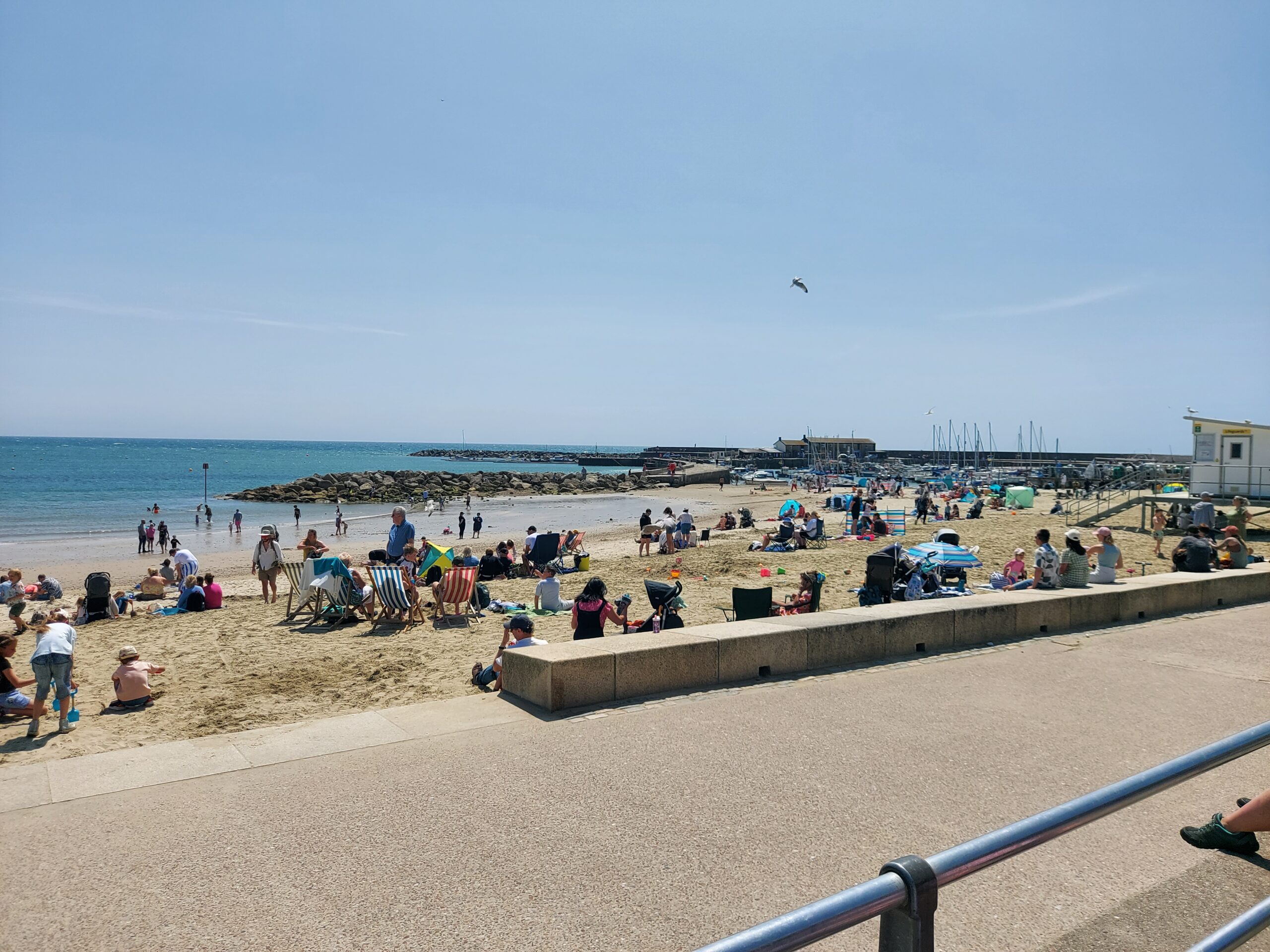
Lyme Regis beach

The next day I showered, packed, and took the tent down. I got a coffee and a croissant from the on-site shop then packed up the tent and got the bus to Axminster station. I had a coffee and a piece of cake while I was waiting for the train. I travelled back to Waterloo and was back home by the evening.
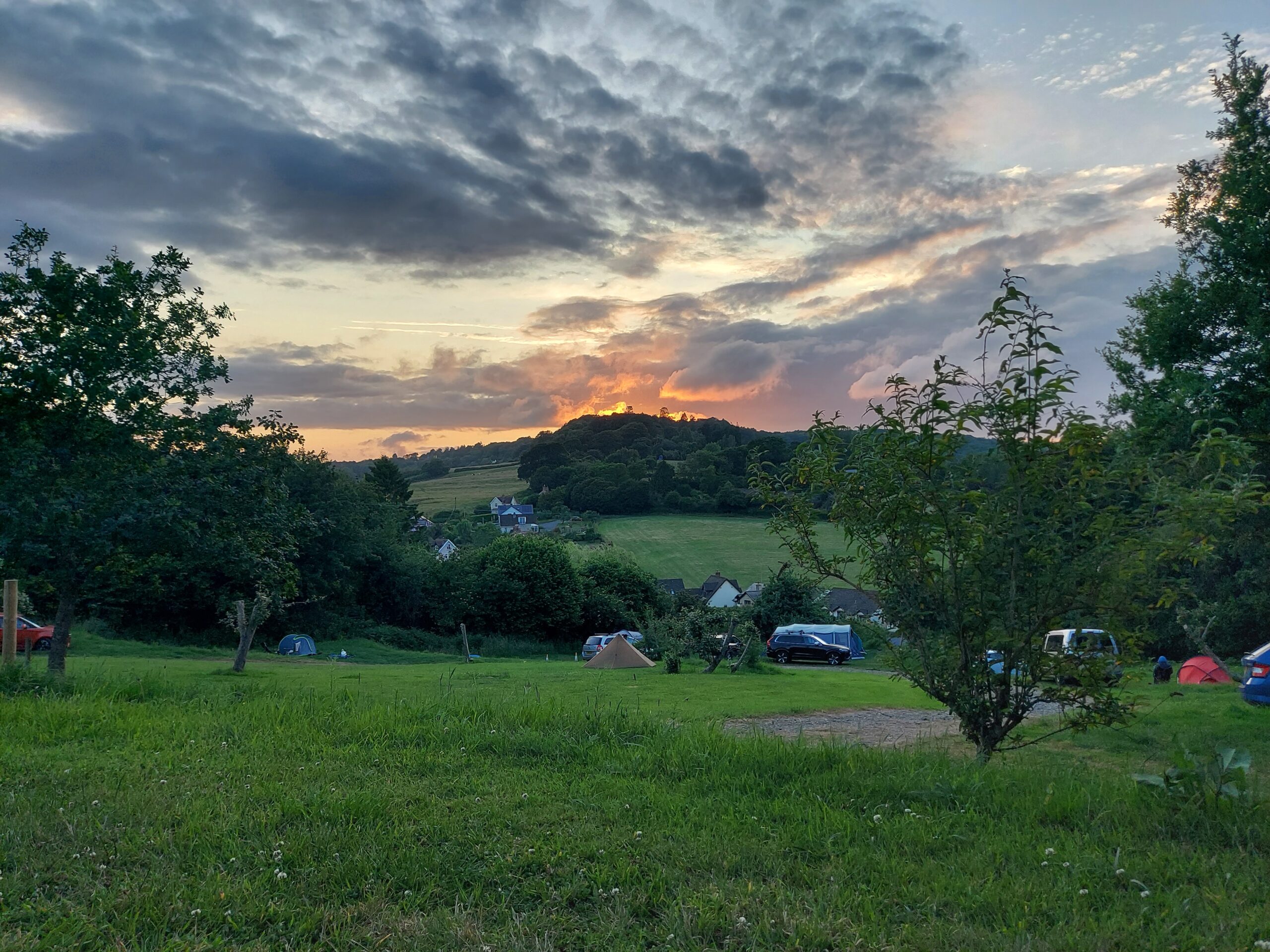
Sunset at Hook Farm

Some quotes from the weekend:

“I could do this all the time!” – a small girl enjoying herself on the fossil walk

“Jurassic Park is my favourite movie!” – another small girl in the queue for the T-Rex talk

“You’re not really going to spend two hours in the fossil shop?!” – older lady to older gentleman, presumably her husband
Thomas Hardy’s Dorchester

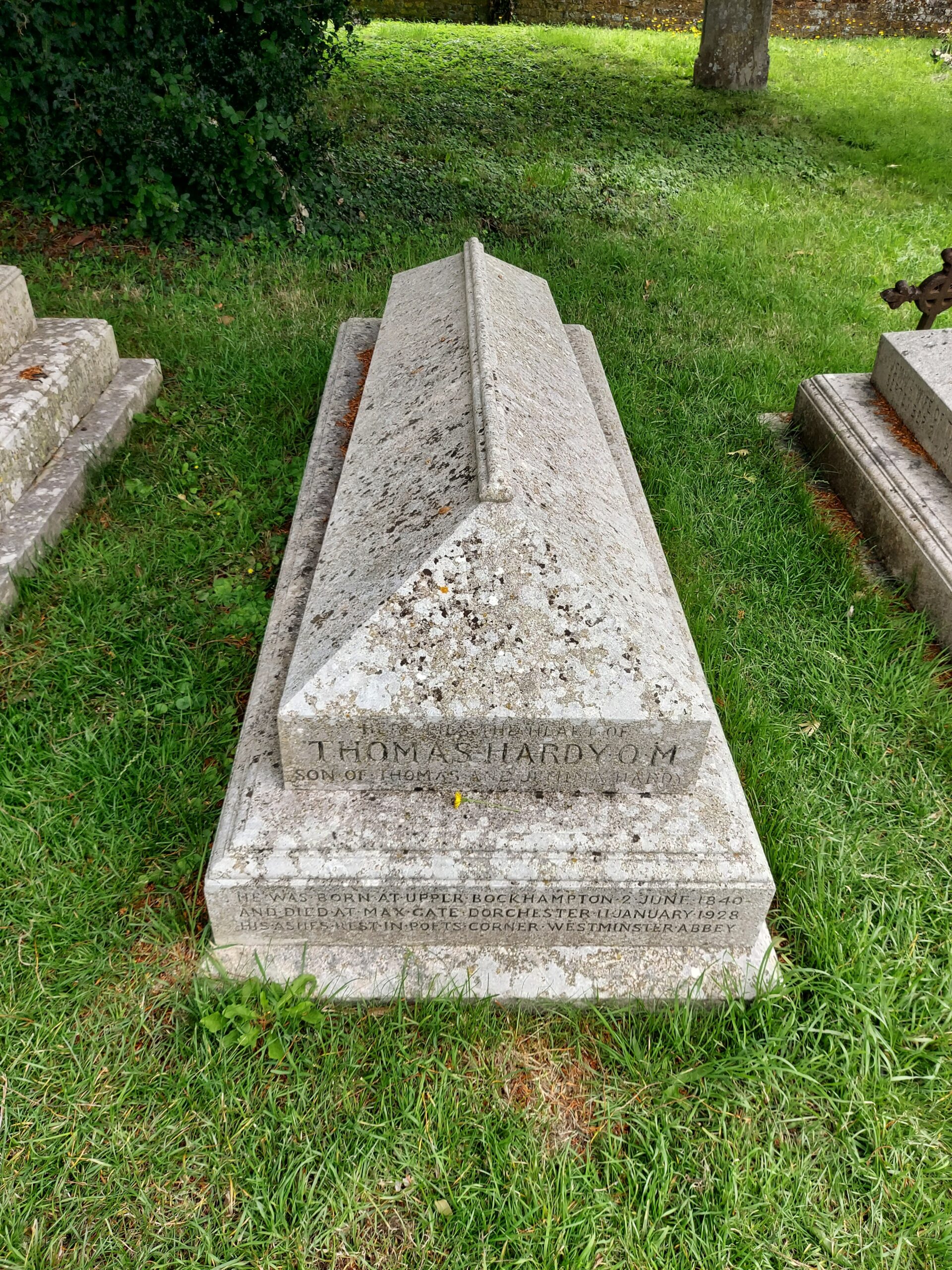
A grey gravestone
Thomas Hardy’s grave in Stinsford churchyard

As I mentioned in my last blog post, I only became a fan of Thomas Hardy after I visited Dorchester as a child with my family. I always knew I wanted to visit again and go to all the Hardy-related sights, but never got round to doing that until my recent camping trip.

One day of my holiday was dedicated to Hardy. Hardy’s Cottage, his childhood home, was a short walk from my campsite so I headed there in the morning. I’d pre-booked a guided tour and our guide was lovely and really enthusiastic about Hardy.

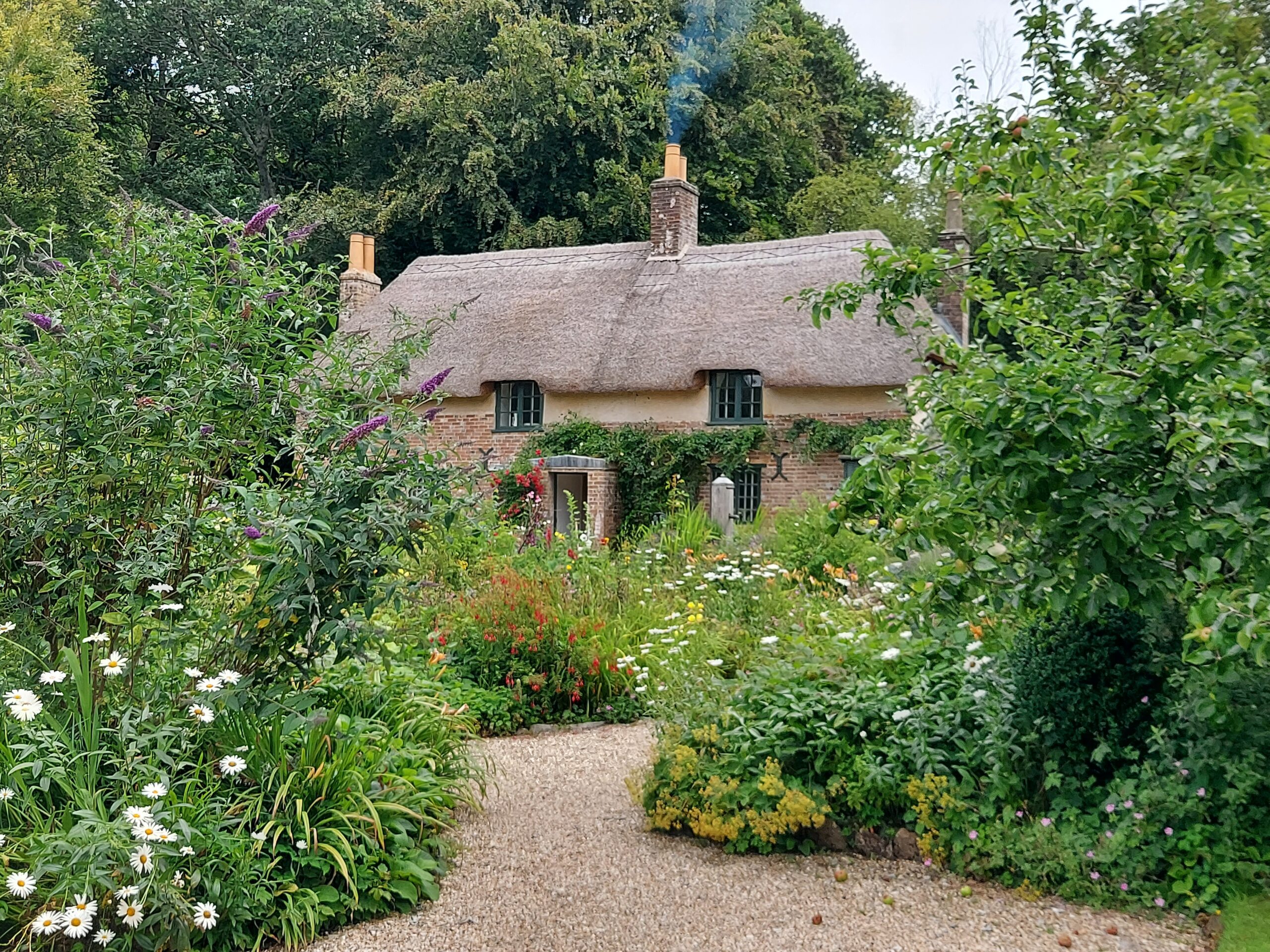
A thatched cottage
Hardy’s Cottage

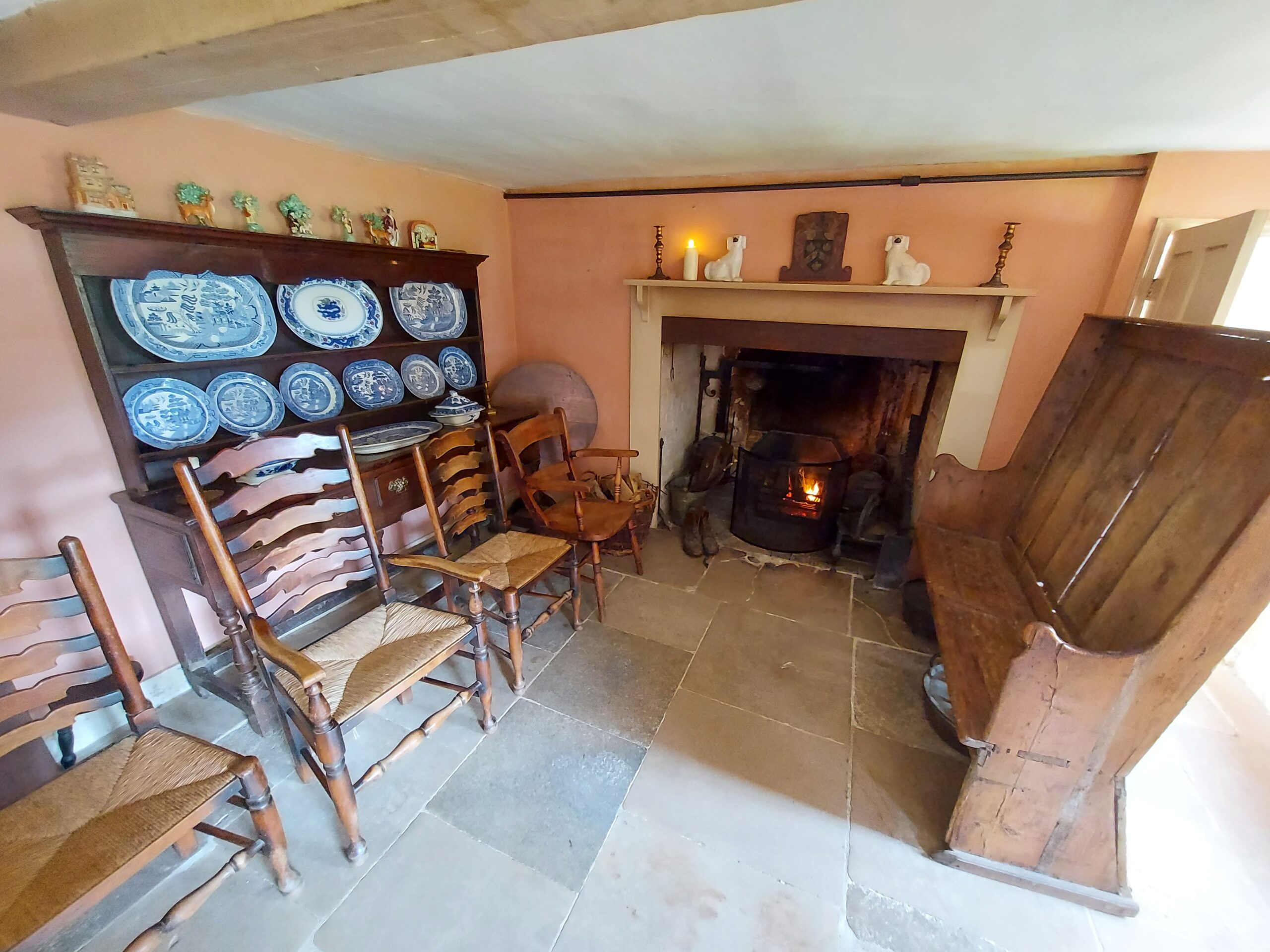
The cottage, built by Hardy’s great-grandfather, is beautiful, with a thatched roof, open hearths and stone floors, and colourful flowers in the front garden. Hardy was born here in 1840 and wrote several early short stories, poems and novels here, including Far from the Madding Crowd. Our guide argued that Hardy was happiest in this cottage and it’s easy to appreciate this. You can imagine how the family pushed back the furniture in the downstairs area to create space for dancing, or sat next to the warm hearth, a den of cosiness in colder weather.

A low-ceilinged cottage kitchen
Inside the cottage

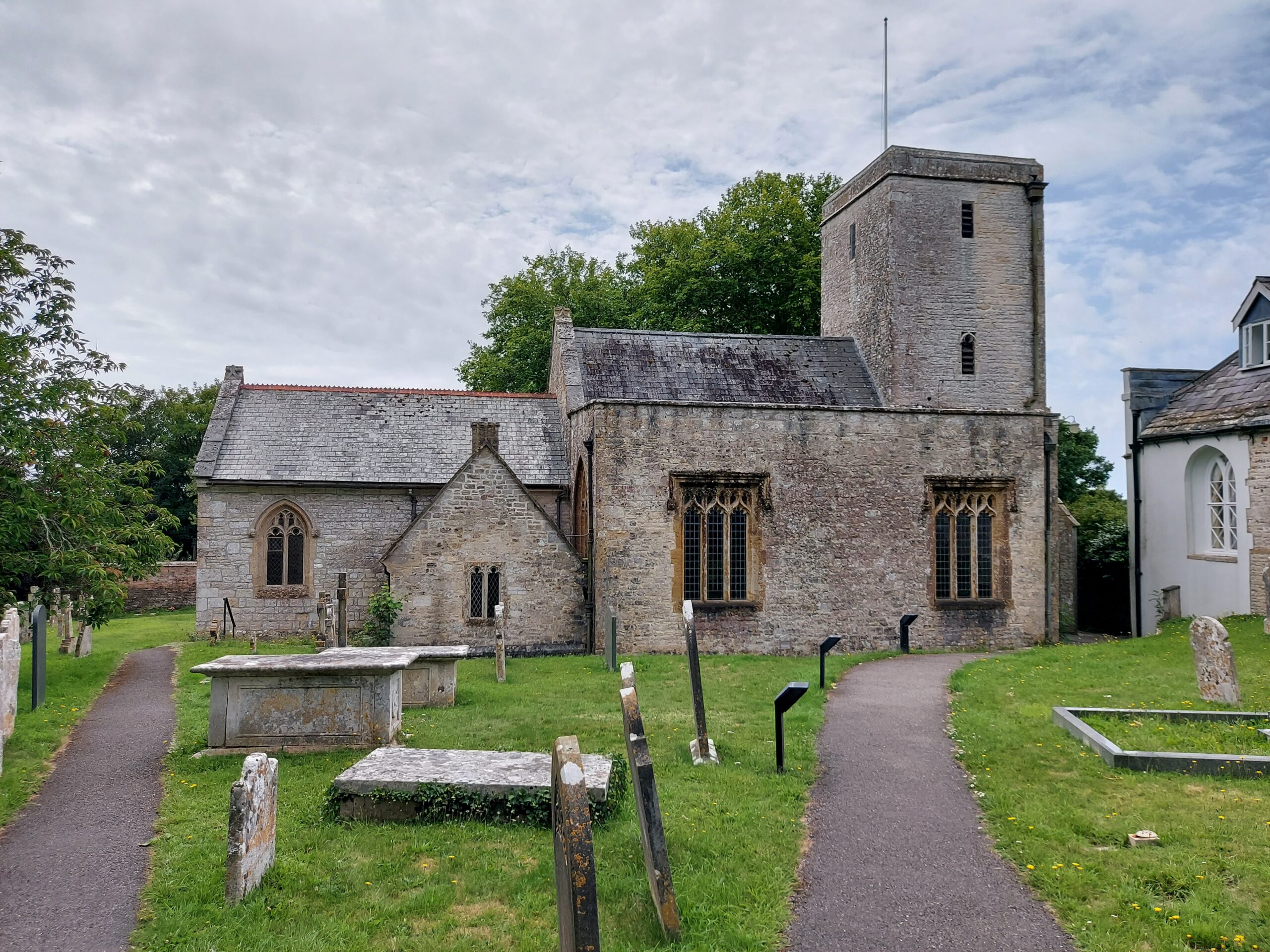
I then walked down to the Hardy’s Birthplace Visitor Centre and had a little rest, before walking to Stinsford via the scenic route – this involved crossing the little stream Angel carries Tess over in Tess of the D’Urbervilles. St Michael’s Church in Stinsford is the ‘Mellstock Church’ featured in Under the Greenwood Tree, and is where Thomas Hardy’s heart is buried (the rest of him is in Westminster Abbey). His two wives are buried with his heart, and several of his family members are also buried nearby. Hardy was baptised here and grew up attending this church. Grade I listed, it is a beautiful historic church, built in medieval times albeit with further adaptations and changes over the centuries.

An ancient church
St Michael’s Church, Stinsford

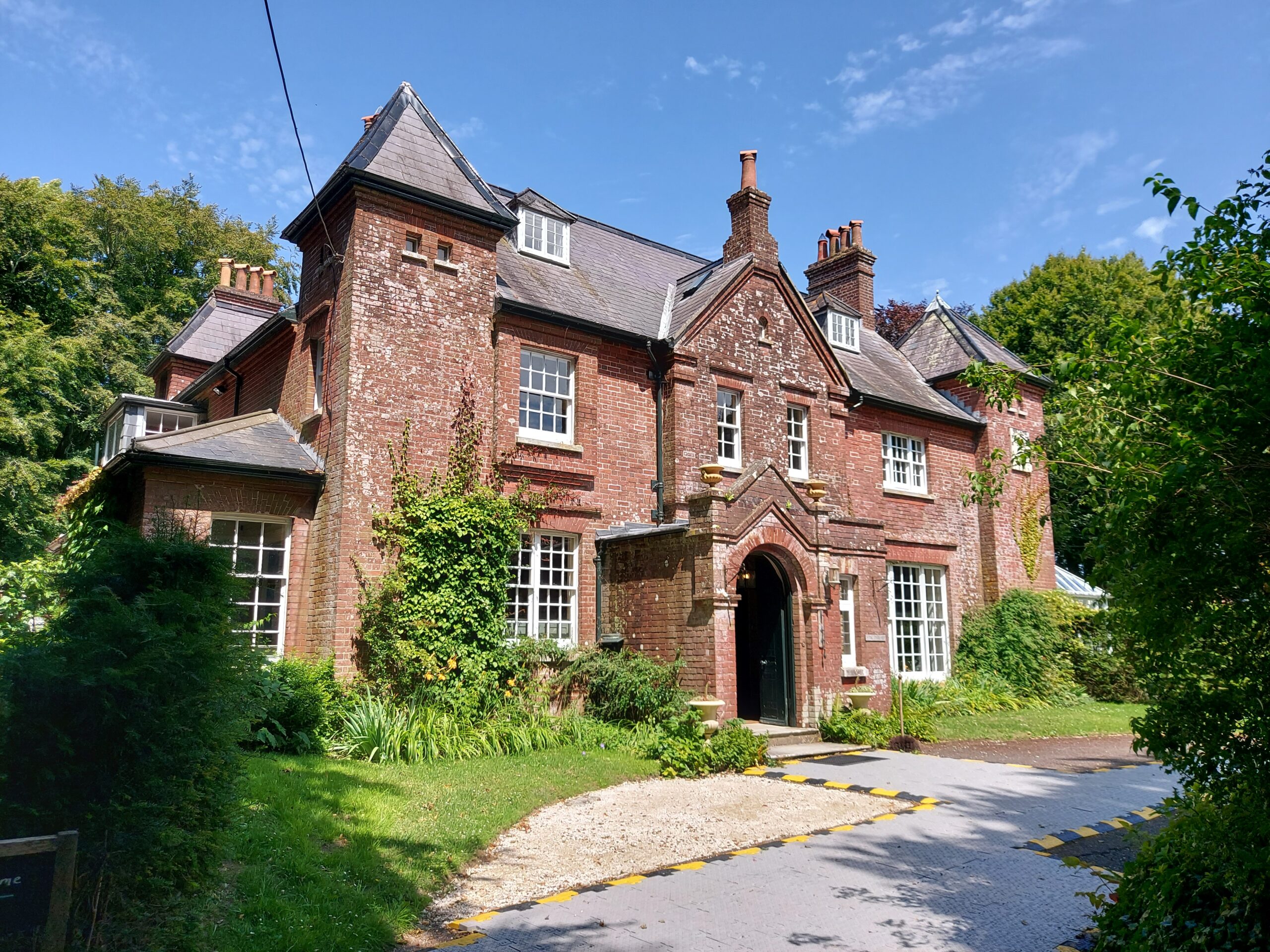
At this point, one of the couples from the earlier tour arrived, and kindly offered me a lift to Max Gate. Hardy, a trained architect, designed this house (built by his father and brother) in 1885, naming it after a local tollgate keeper called Henry Mack. It reflects his desire to be seen as part of society and his role as a successful writer. Here, Hardy wrote his most famous novels, Tess of the D’Urbervilles and Jude the Obscure, as well as a large amount of poetry. He lived here until his death in 1928.

A red brick Victorian house
Max Gate

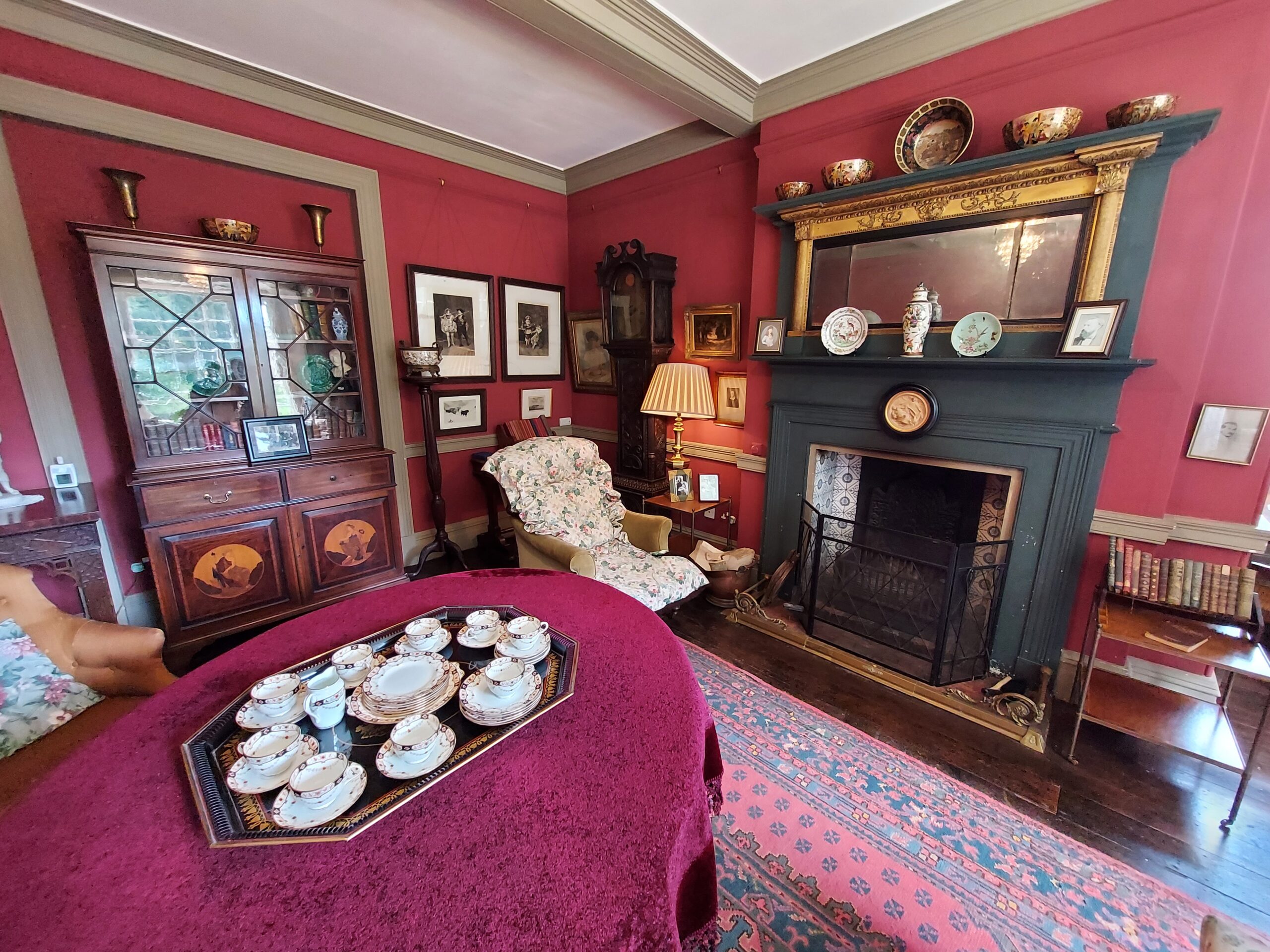
Much of the house’s furniture is sadly not original, as many of Hardy’s possessions were dispersed before the National Trust acquired it. However, rooms have been re-furnished to reflect how they looked in Hardy’s time (his study is now in the Dorset Museum). In this house, his relationship with his wife Emma deteriorated; she eventually came to live more or less separately from him, in some attic rooms which I found incredibly appealing but may have been less so to her, given the circumstances. After her death, and despite his second marriage to Florence, Hardy felt increasingly guilty about his behaviour to Emma, and wrote passionate love poems in her memory.

A Victorian parlour with red walls
Inside Max Gate

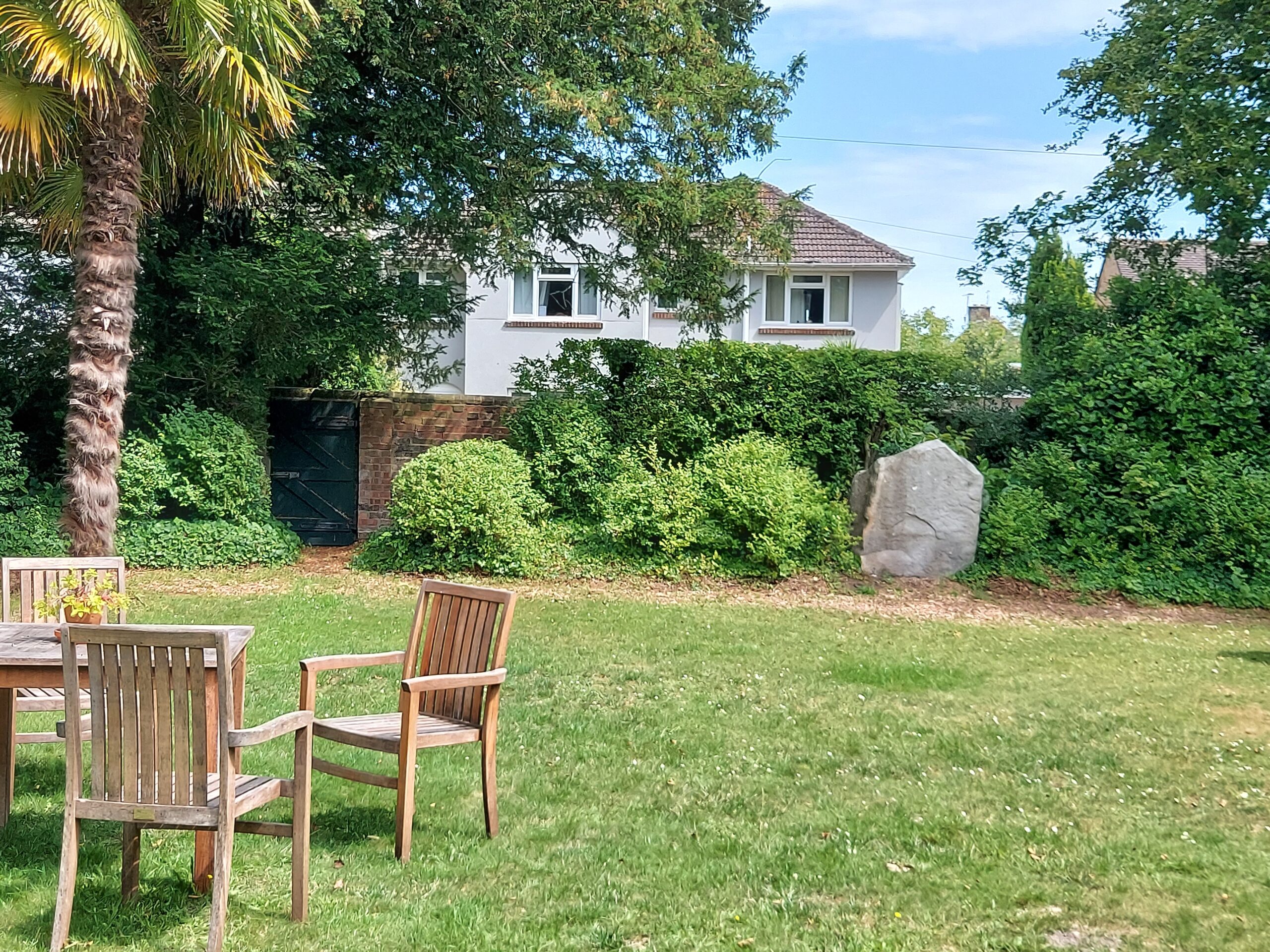
The garden remains much as it was originally designed, with high walls and trees to protect Hardy’s privacy. He apparently used to dart out of the side gate if a visitor arrived whom he did not want to meet. There is a small graveyard in which some of his beloved pets were buried, including his dog. When the house was under construction, Roman relics were found on the land, not to mention half of the Neolithic interrupted ditch enclosure known as Flagstones. This was discovered in the 1980s, many decades after the discovery of one single sarsen stone, which Hardy called ‘the Druid Stone’ and had erected at the edge of his lawn.

A garden with an ancient stone
Hardy’s ‘Druid Stone’

My visit to these three locations was the fulfilment of a long-held ambition to see these places so key to Hardy. I enjoyed every part of my holiday in Dorset, but this was my favourite.

Glamping in Dorset

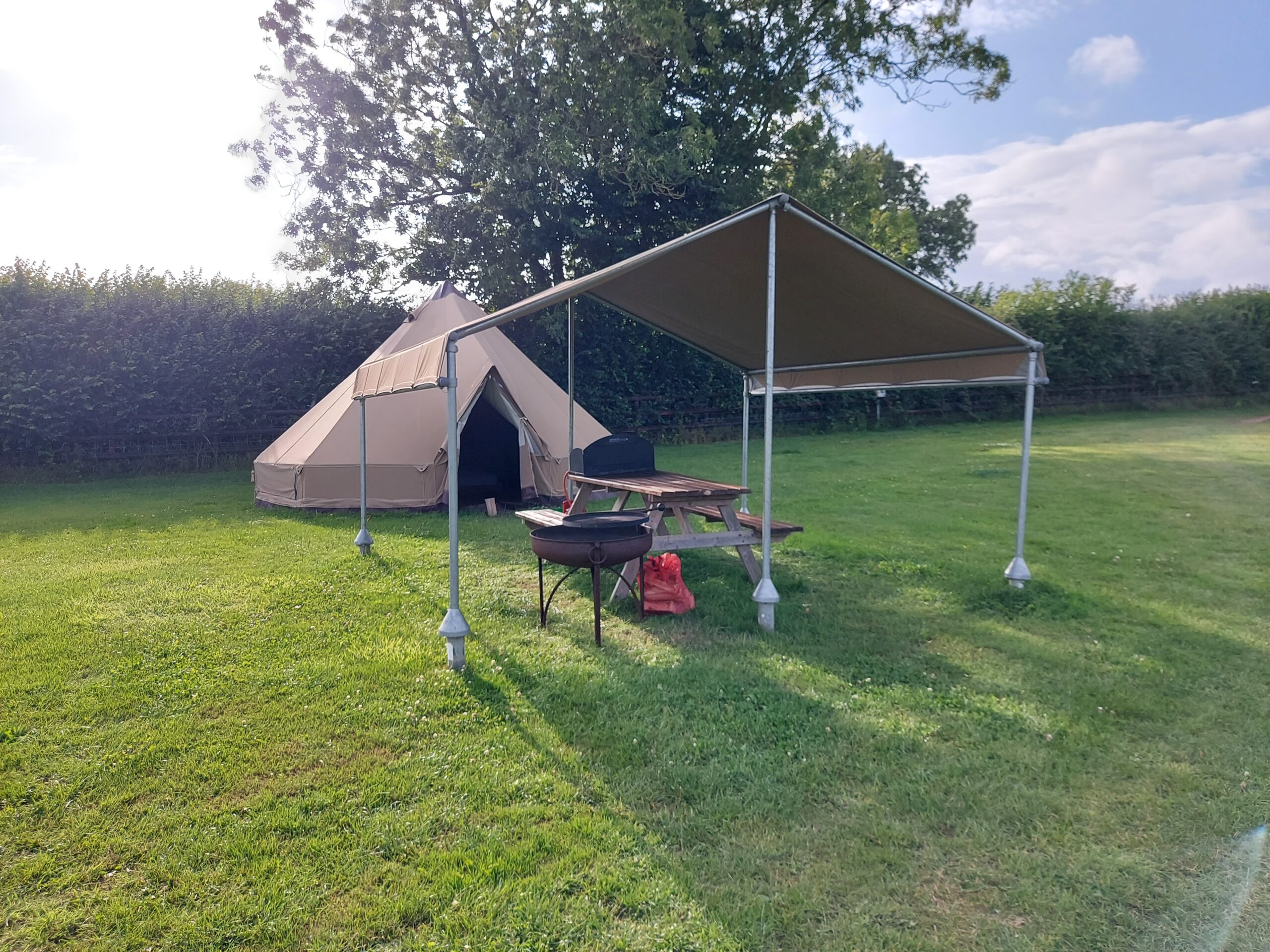
A bell tent with a canopy, picnic table and fire pit in front of it

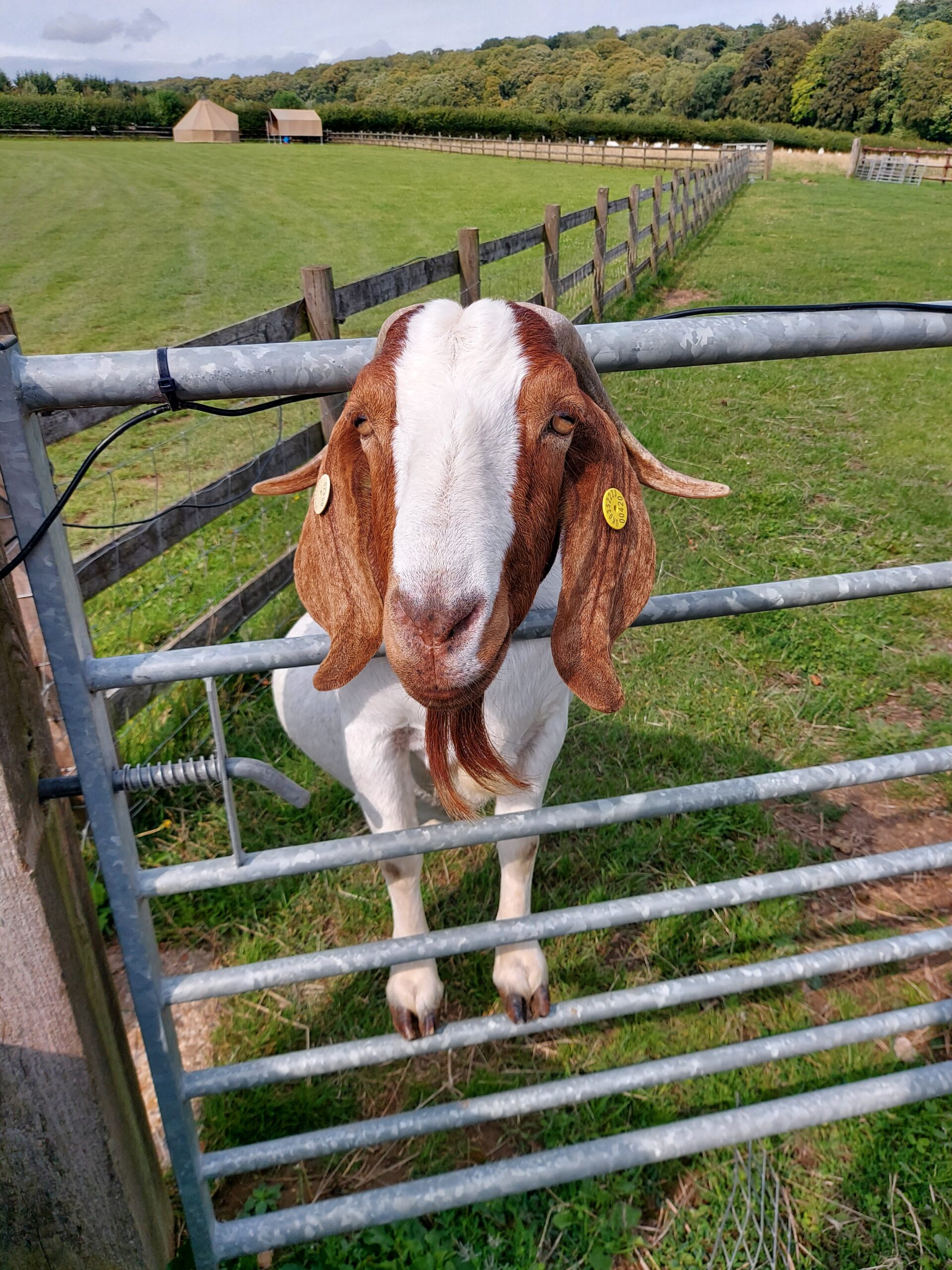
As part of my Glamper badge, I had to experience a stay of at least 2 nights in a pre-erected tent. For my Silver Maverick, I also had to camp out for at least three nights. I decided to combine the two and stay for three nights at Thorncombe Farm near Dorchester. I stayed in a lovely bell tent with a double bed, fridge, camping stove and fire pit. The campsite also had friendly sheep and goats in the next field!

A goat

The last time I visited Dorchester I was a child, and since then I’ve become a fan of Thomas Hardy. I decided I wanted to spend one day focusing on Hardy-related sights (which I will write about in a separate post) and focus on Rebel stuff the rest of the time.

I bought a new rucksack for the occasion, which had a detachable smaller backpack for day trips. I love it but it definitely made me look a bit like a turtle!

My train was from Waterloo to Dorchester South. From there it was a short walk through the town and a half an hour or so stroll from there to the campsite. It’s not easy to find a campsite that you don’t need a car to reach!

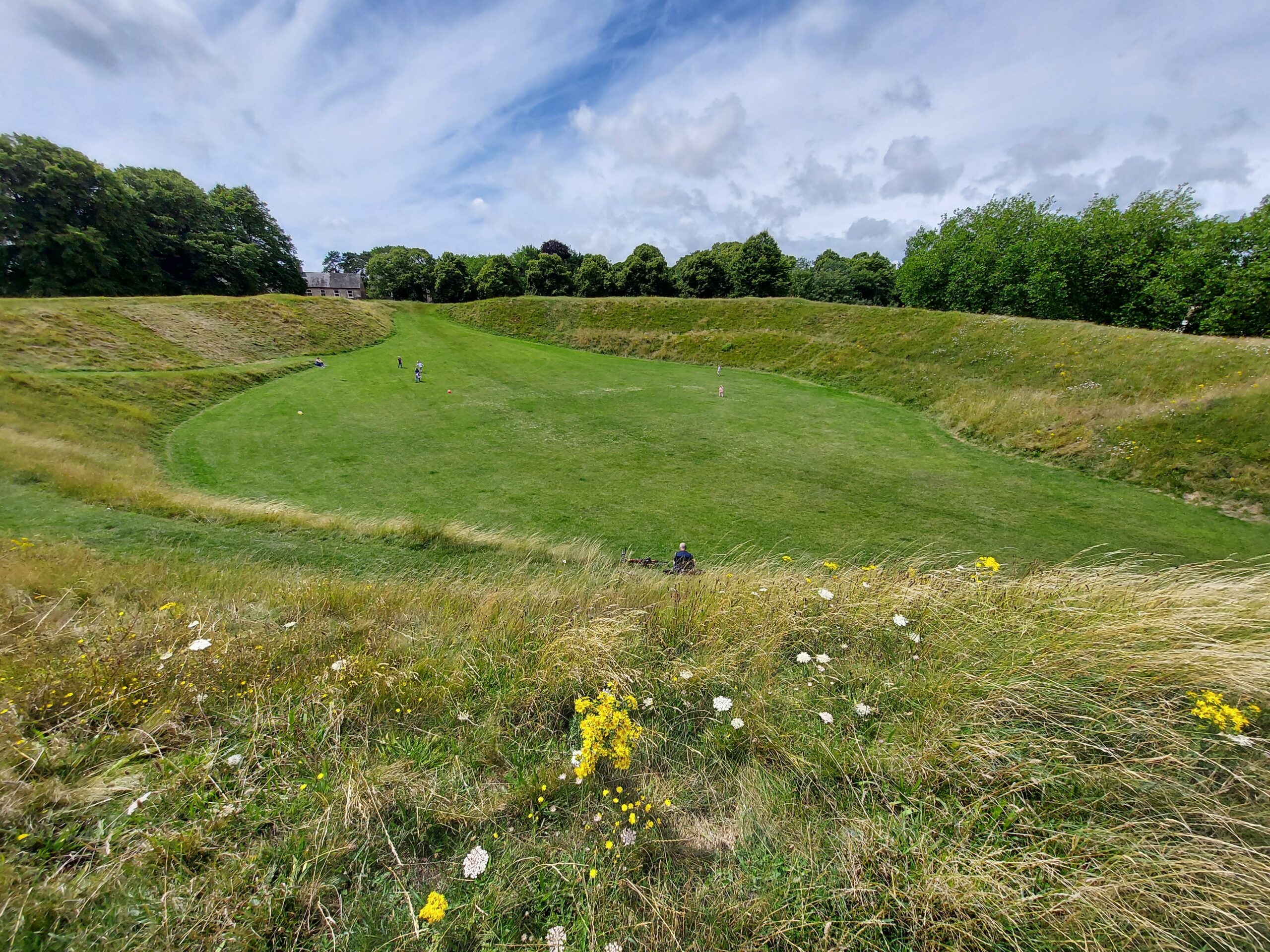
Maumbury Rings

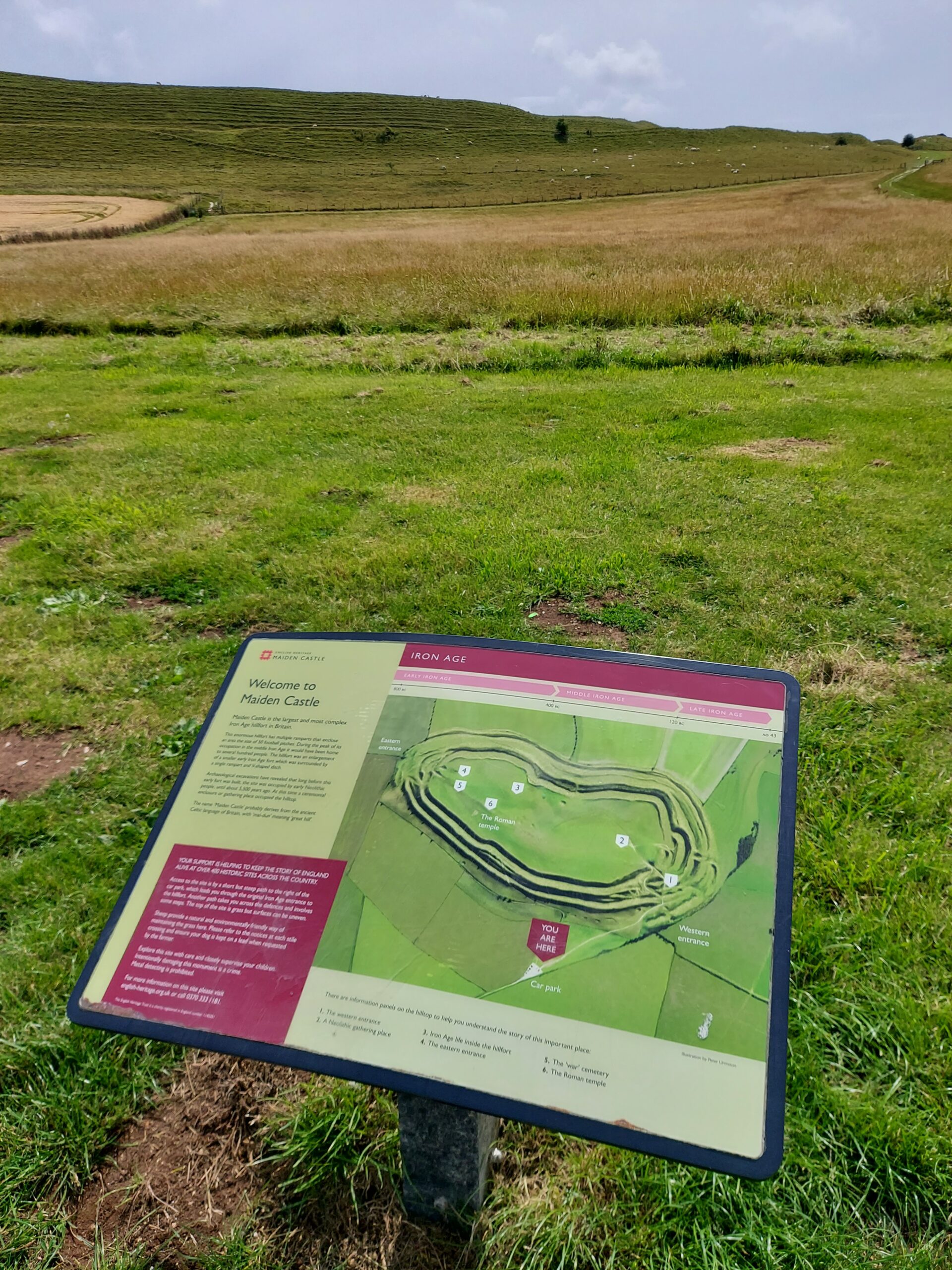
As soon as I got there I went exploring and came across Maumbury Rings Roman amphitheatre, which was also a neolithic henge and, during the English Civil War, a fort. After that, I walked down to Maiden Castle, which is an Iron Age hill fort. It was a fascinating place to be, and full of friendly sheep. It was a bit creepy at first as there was no one else around, but then I found the more popular part and there were loads of fellow walkers.

Maiden Castle

That first night, I cooked a stew on the camping stove (saving the rest for another night) and enjoyed the quiet and the outdoor experience. I also took part in a virtual meet up with other Rebels, and showed them the goats!

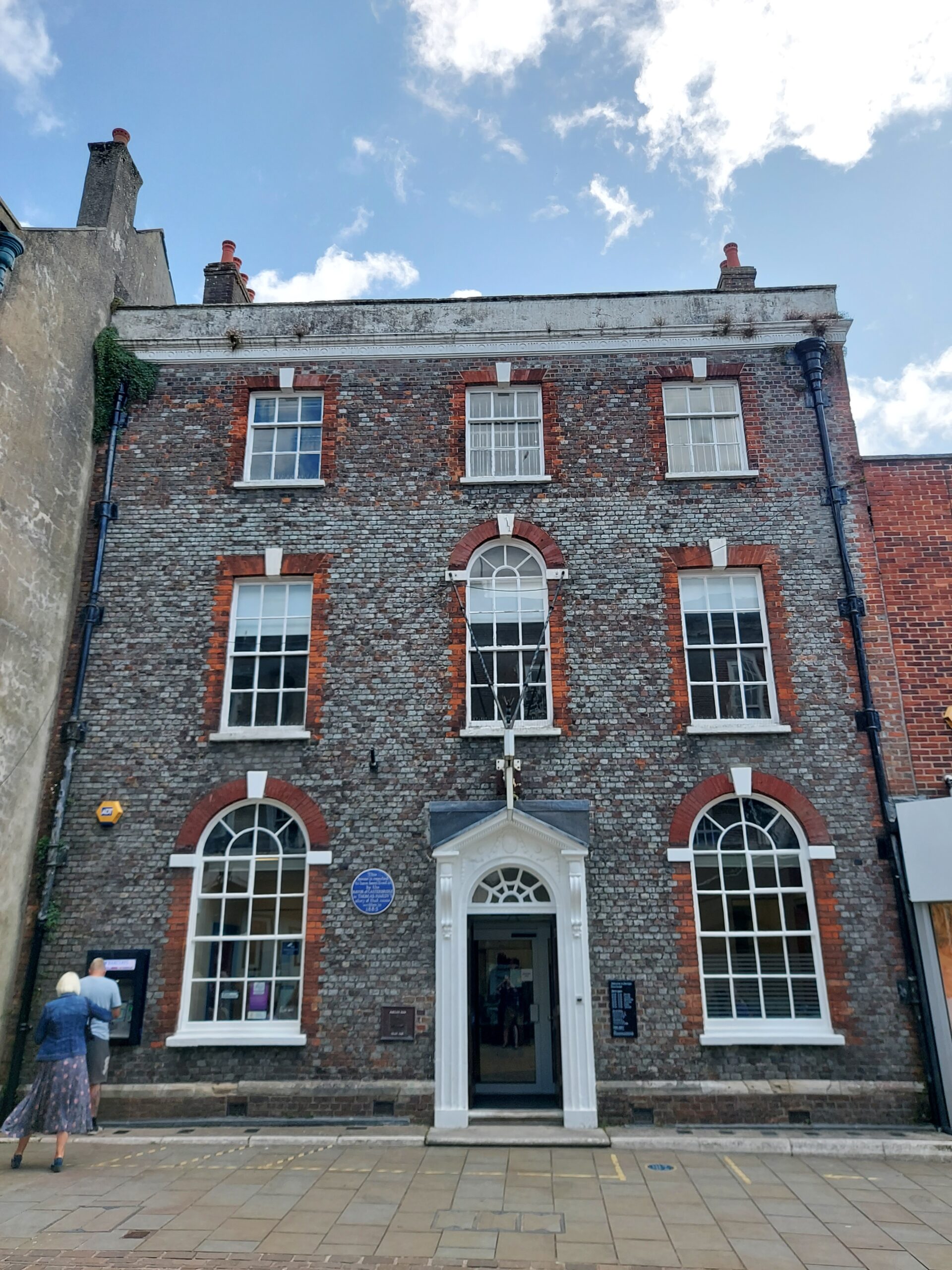
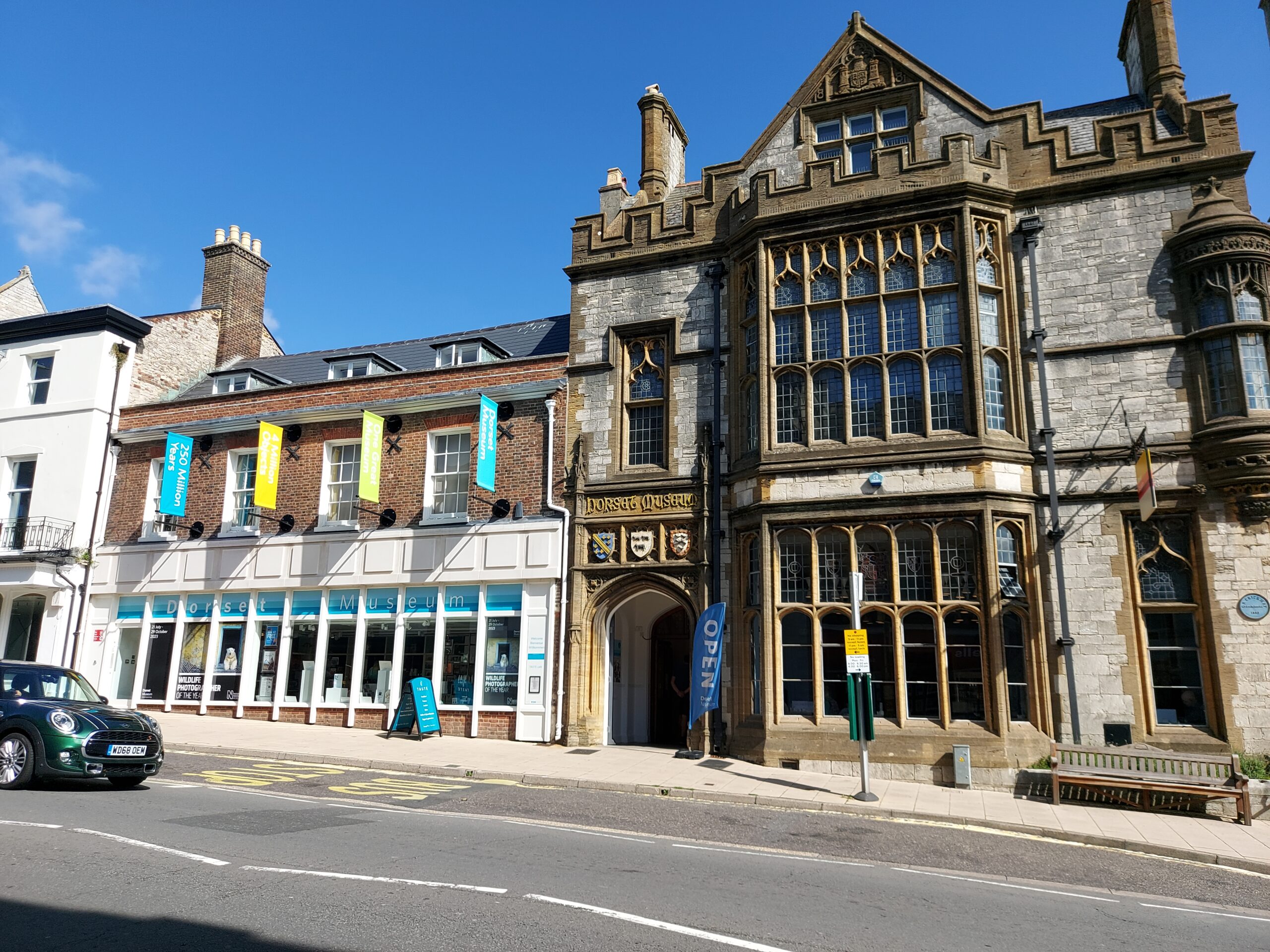
The next day also happened to be my birthday. I had a wander through Dorchester and found the house reputed to have been lived in by Henchard in The Mayor of Casterbridge. I was going to visit the Teddy Bear Museum, which I visited as a child, but the entry fee was pretty steep so I didn’t bother. I did visit Dorset Museum, which I was really impressed with. There was a beautiful Victorian Hall with a genuine Roman mosaic floor, and all the exhibits were well laid out.

The section on ‘Hardy’s Dorset’ was my favourite, featuring a recreation of Hardy’s study including his desk and personal belongings from his house, Max Gate. Items belonging to him, including his scarf, the pens with which he wrote his most famous novels, the original manuscript of The Woodlanders and his perpetual calendar – kept to the date on which he met his first wife Emma – are all displayed.

Dorset Museum

I also enjoyed ‘Natural Dorset’, which looks at fossil finds on the Jurassic Coast including the Weymouth Bay Pliosaur skull. This section also features microfossils and the stories of how people have used and explored the county’s natural landscape, as well as a look at its wildlife.

‘Artists’ Dorset’ features work by the sculptor Elisabeth Frink alongside portraits by Thomas Gainsborough and George Romney. There is a section on the creative community in Chaldon Herring, including novelist Sylvia Townsend Warner and her partner, the poet Valentine Ackland. ‘People’s Dorset’ includes archaeological finds from the Bronze Age and from Maiden Castle, as well as Roman Dorchester. It also features items from agricultural workers as well as wealthier inhabitants of the county, ending with stories from 20th century Dorset.

I got the bus to Weymouth from outside the museum. I had a quick stroll on the seafront, which was pleasant, then caught the bus to the Isle of Portland. I stopped to look for fossils on the beach, but didn’t manage to find any!

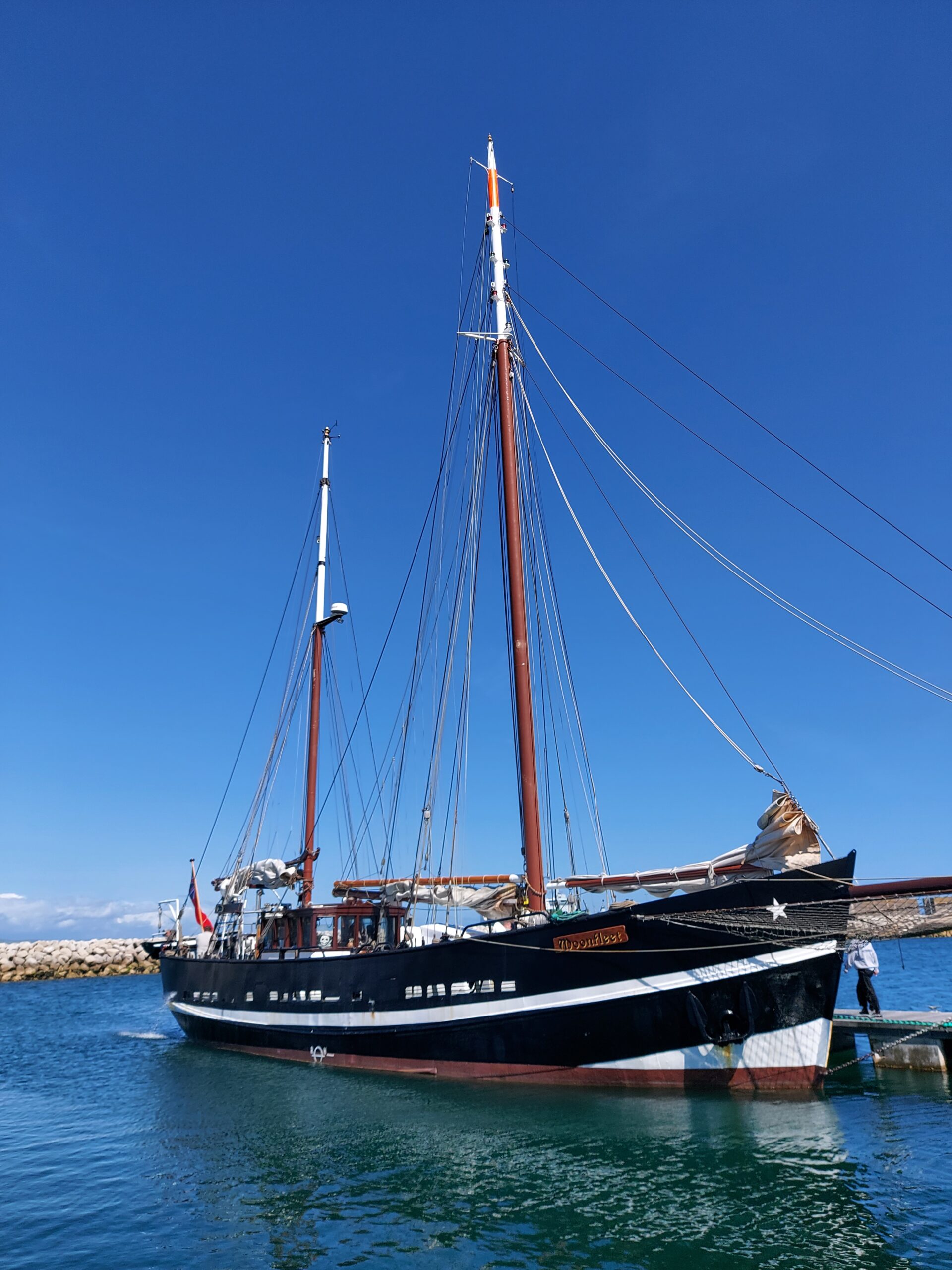
A sailing ship

I then went sailing in Weymouth Harbour with Moonfleet Sailing. I got to help with the sails and learn a little about how sailing ships work. I spoke to a pleasant couple from the Netherlands who had experienced pretty much every kind of weather possible during their short visit to the UK! We also saw dolphins, although I didn’t manage to catch more than a quick glimpse at them.

That evening, I had a go at making a camp fire, and cooked my tea – veggie burgers, broccoli and pre-cooked fries – on it. This was reasonably successful, but the s’mores I tried to make afterwards were not. Blackened and charred, they were inedible.

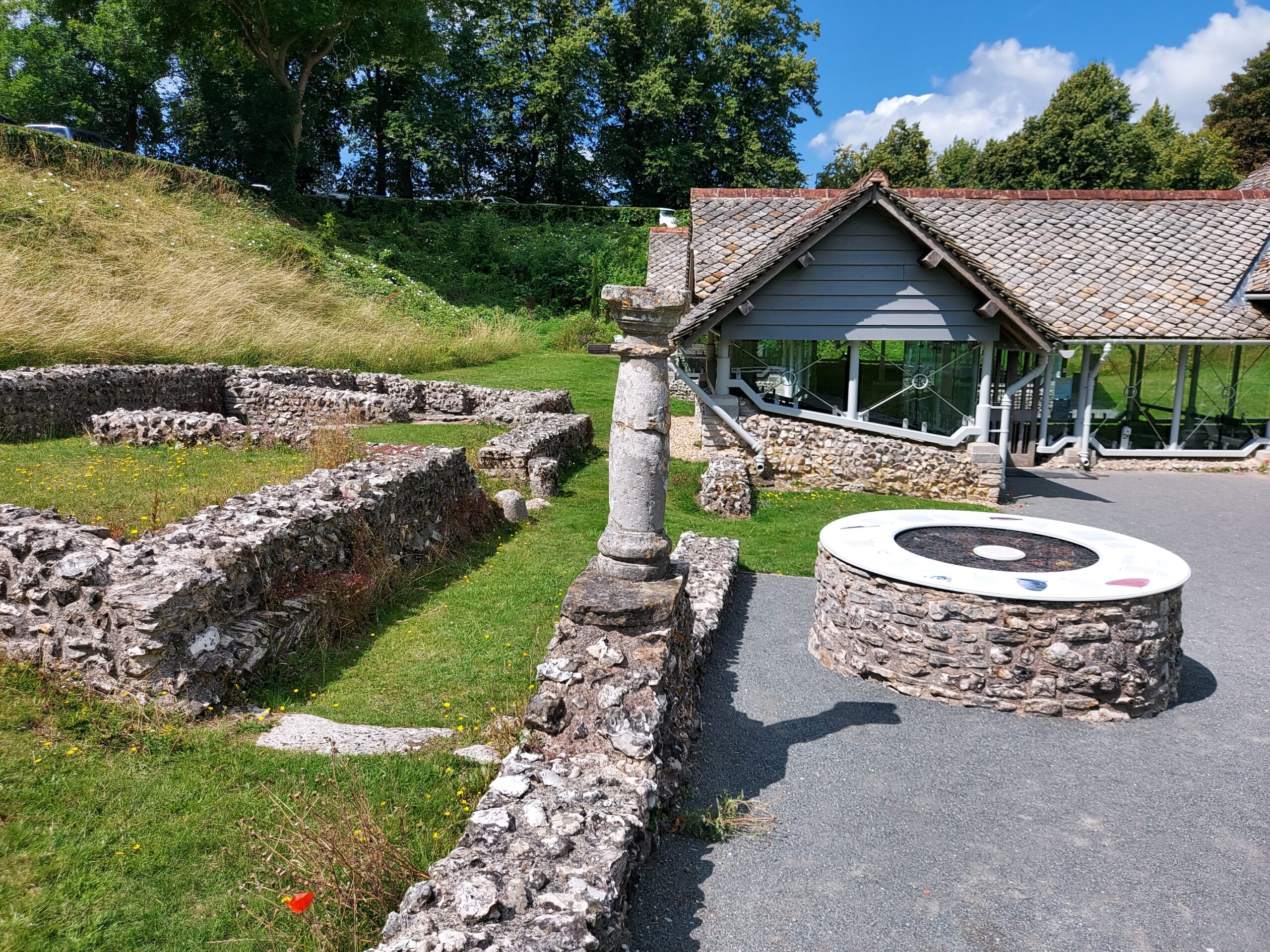
The next day was my Thomas Hardy day, and the day following I was due to go home. Before I left I followed the river to the north of the town and then visited the Roman Town House – a beautifully preserved example of Roman architecture, and the only fully exposed Roman Town House in the country.

Roman Town House