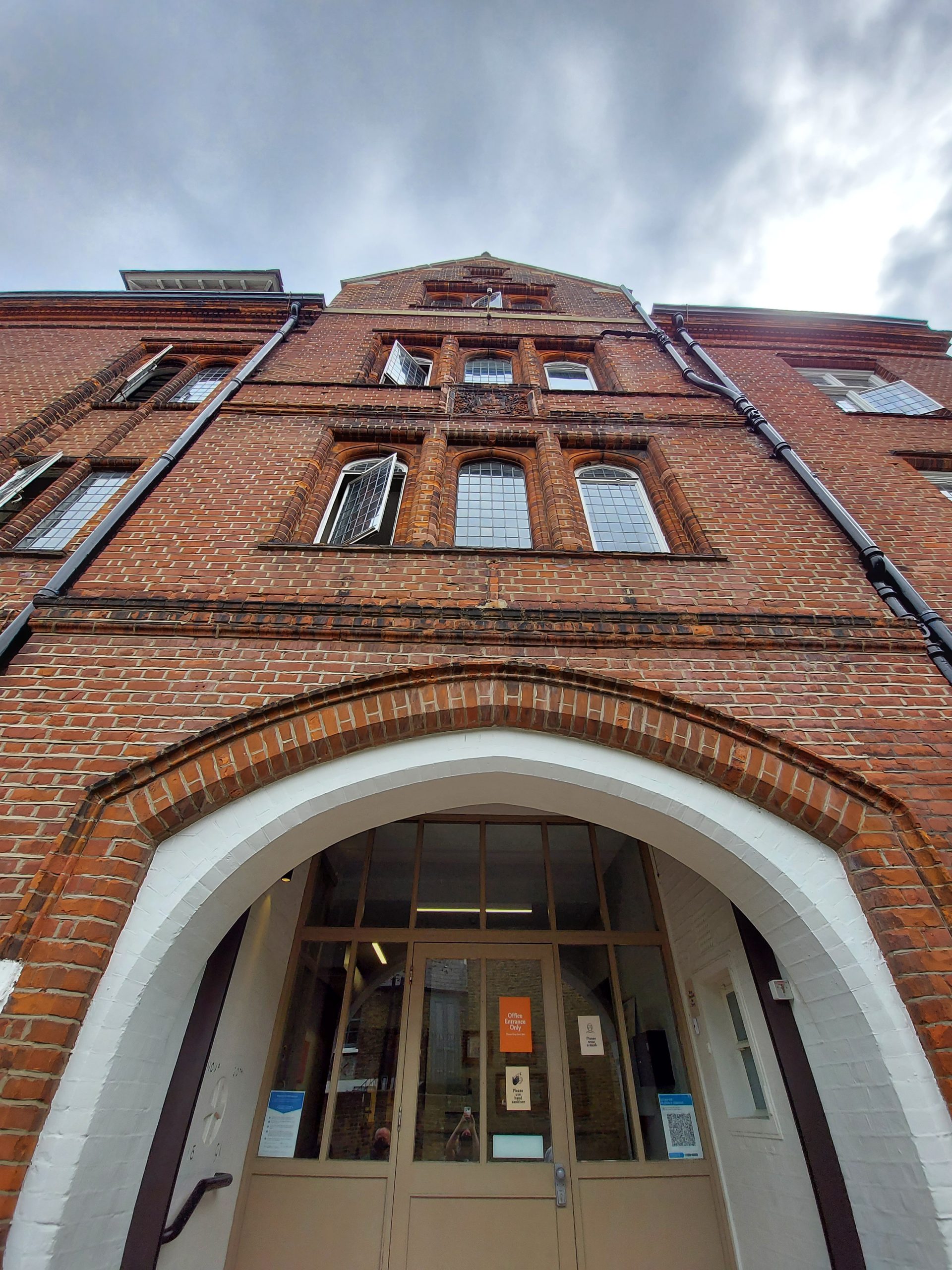
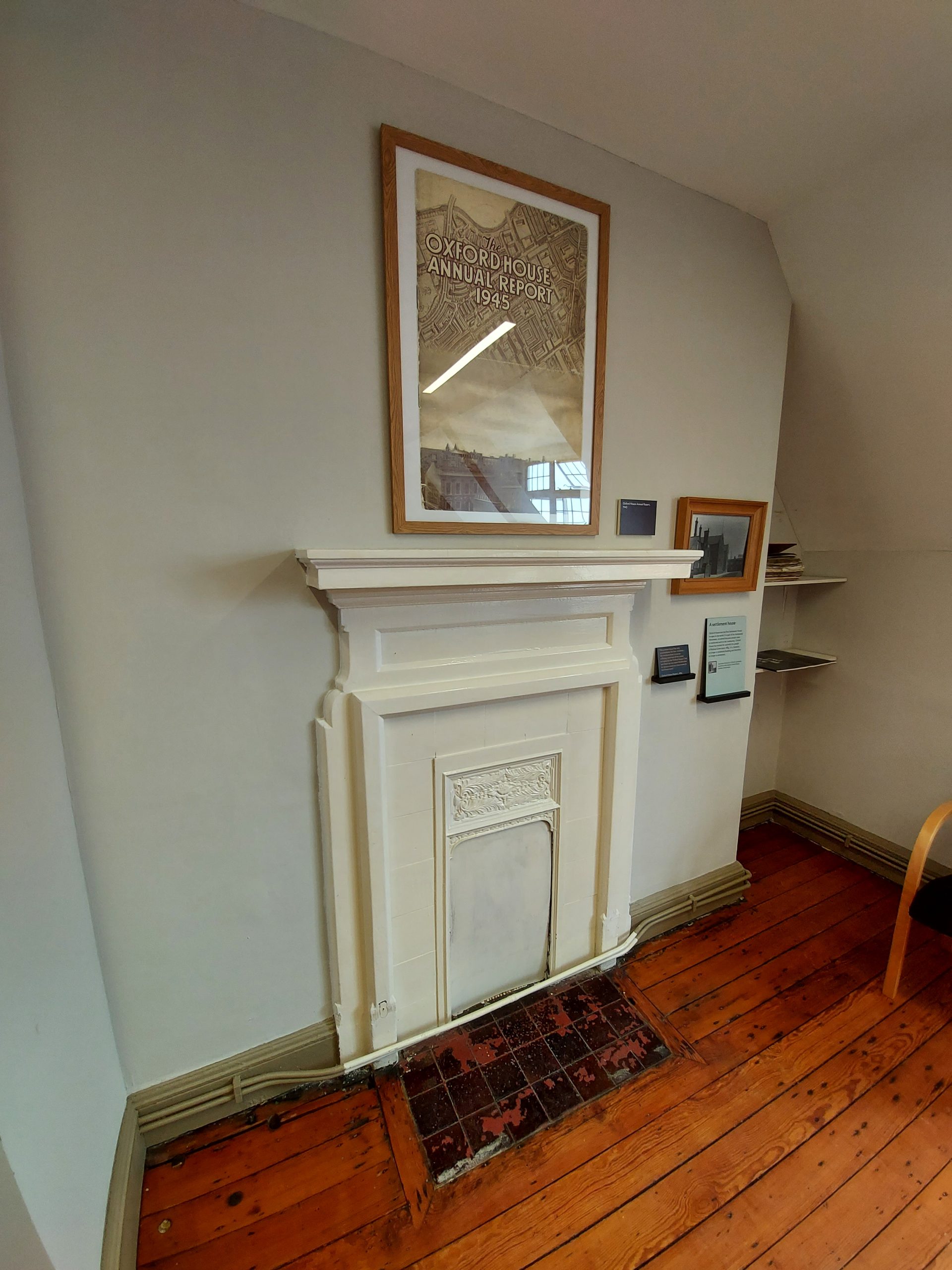
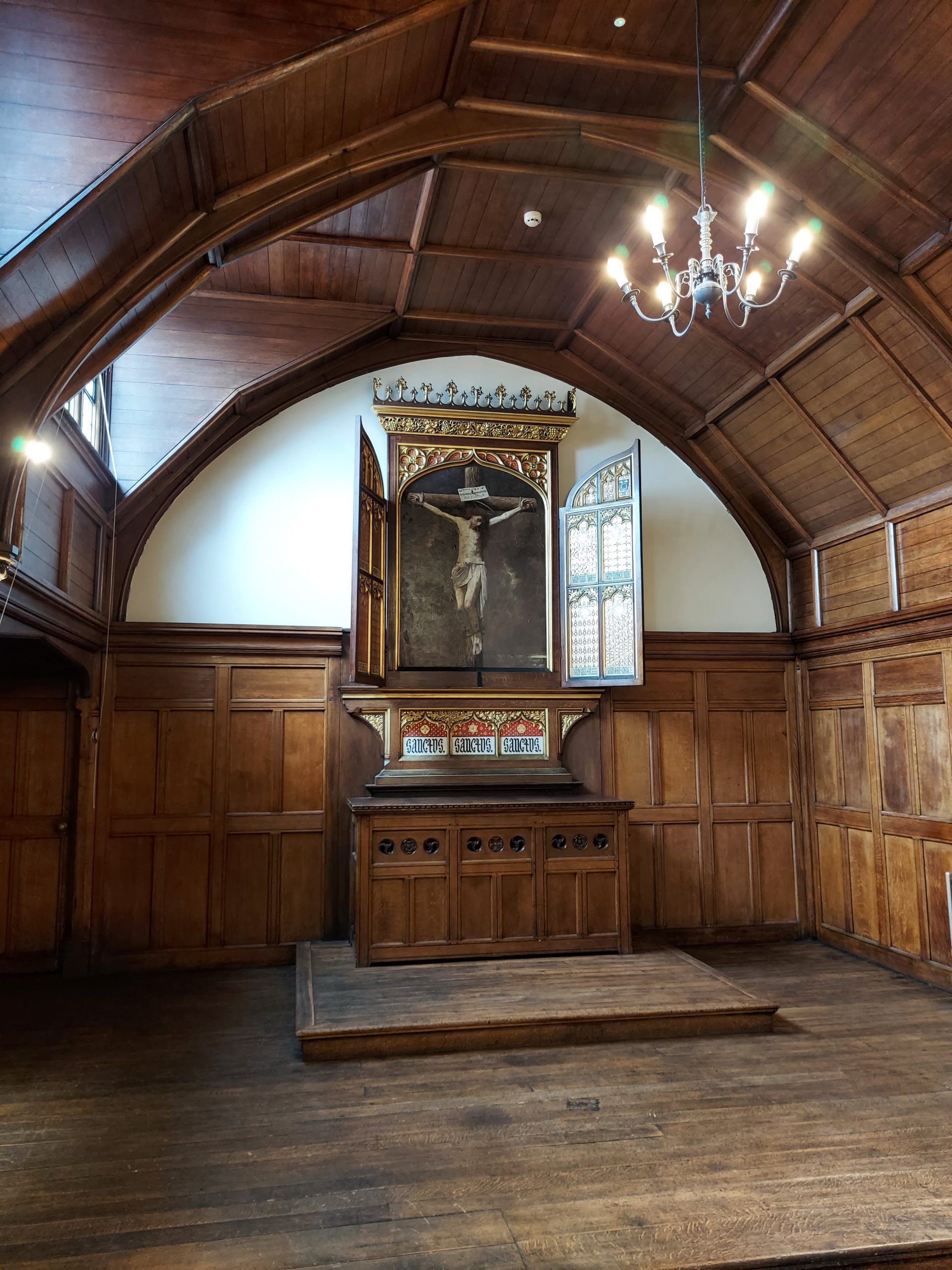
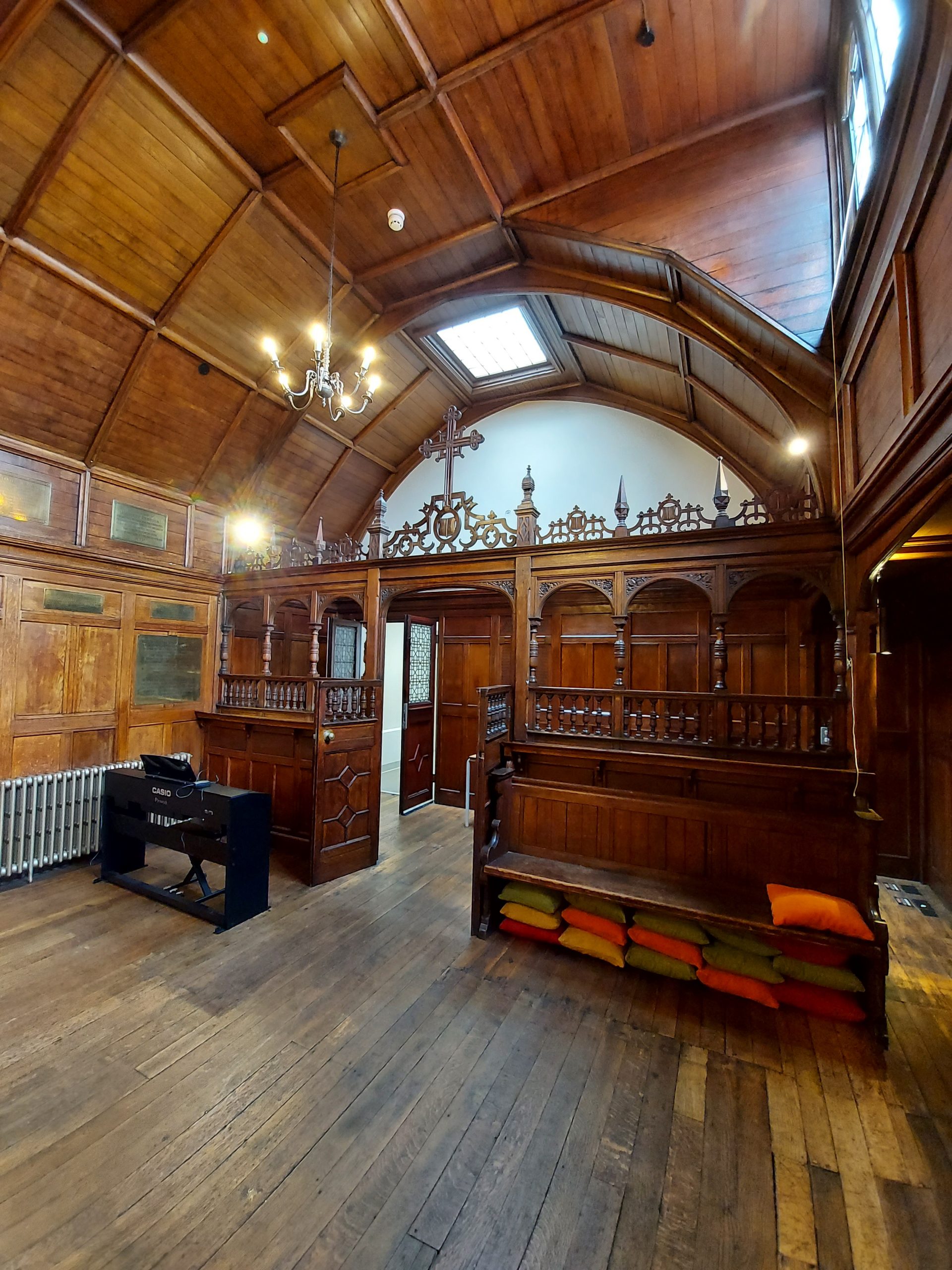
On my second day off I’d booked a tour of Oxford House in east London. Located in Bethnal Green, this building originally opened in 1884 as a settlement house. Such houses were common in the Victorian era, designed for well-off students to experience living in a poorer area and working for the betterment of society. Unlike the nearby secular Toynbee Hall, Oxford House was planned as a religious house, with a chapel inside. Students from Keble College, Oxford would live in, holding prayer meetings and taking classes in and around the House.
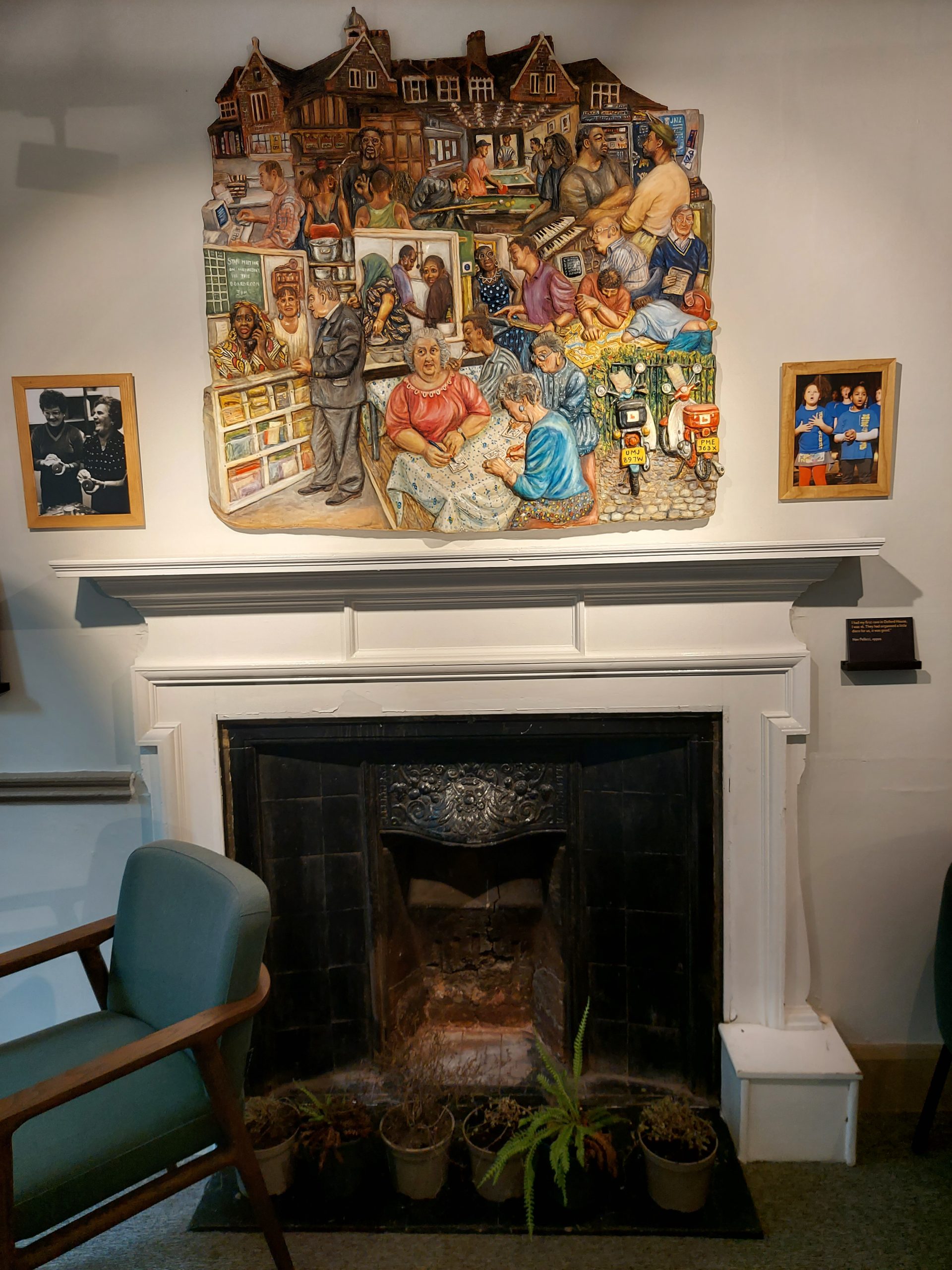
Fireplace with art showing the life of Oxford House
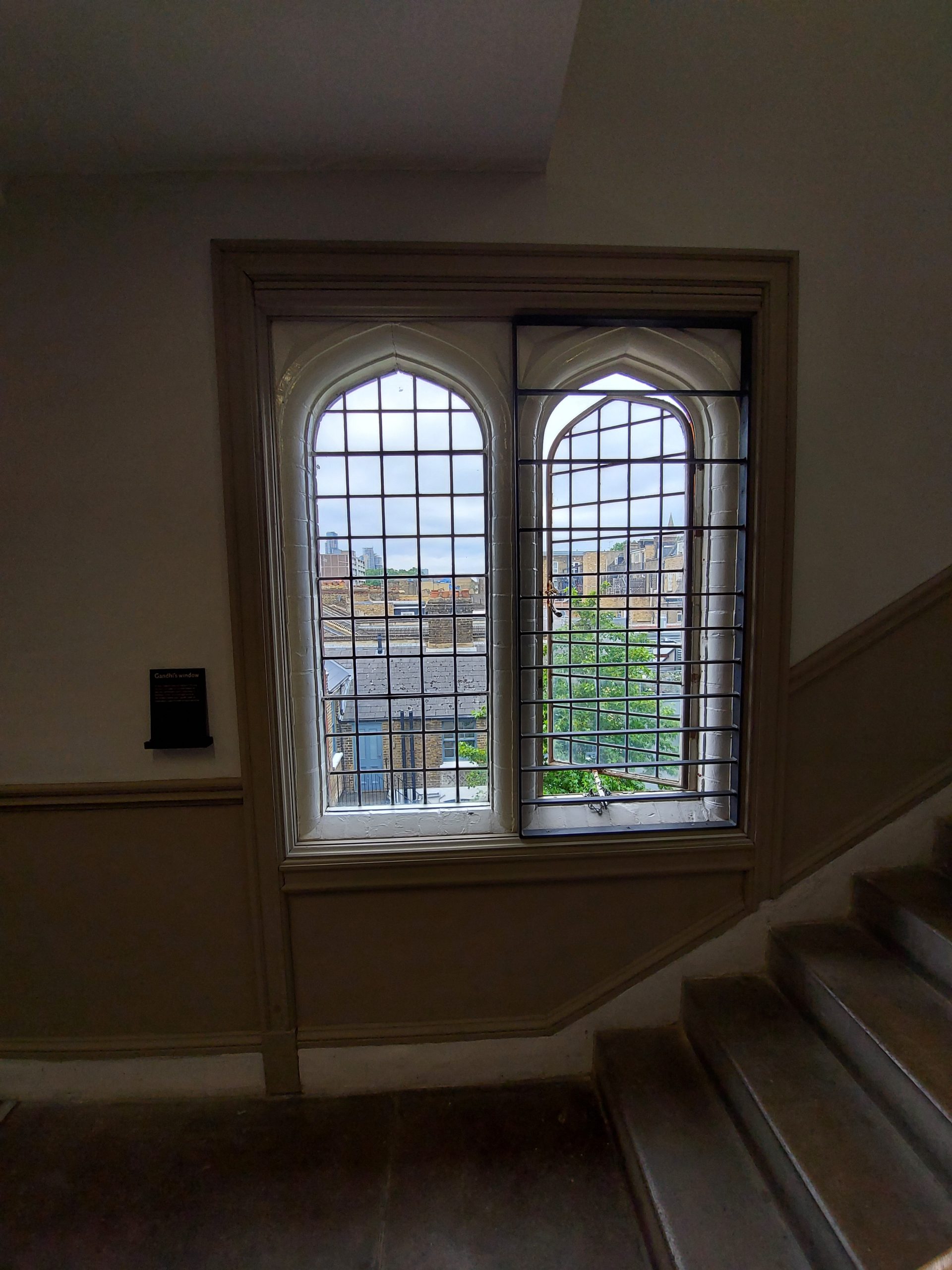
The window out of which Gandhi delivered a speech
One of the meeting rooms
Inside the chapel
In later years, there were more efforts to ensure that the people running the House were part of the community. During World War II it became a house for pacifists and conscientious objectors; in 1935 Gandhi, on a tour of the UK, visited and made an impromptu speech out of a window. In later years, Oxford House was popular with the Somali community – many people remember the delicious food cooked by the Somali women in charge of the kitchens – and was host to groups such as the Lesbian and Gay Christian Association. Oxford House is now a community and arts centre, and seeks to remain part of the community it has served for over a century.
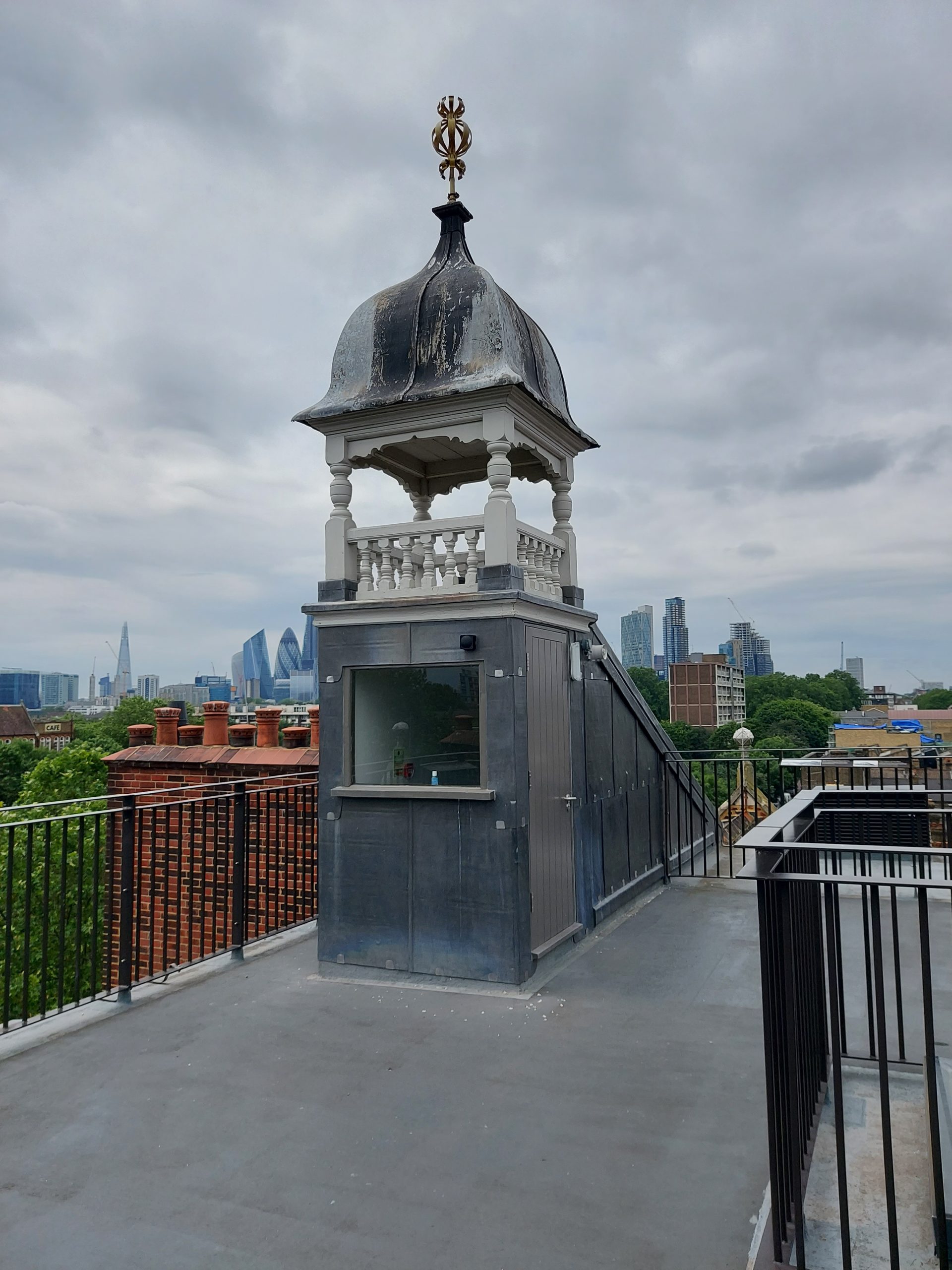
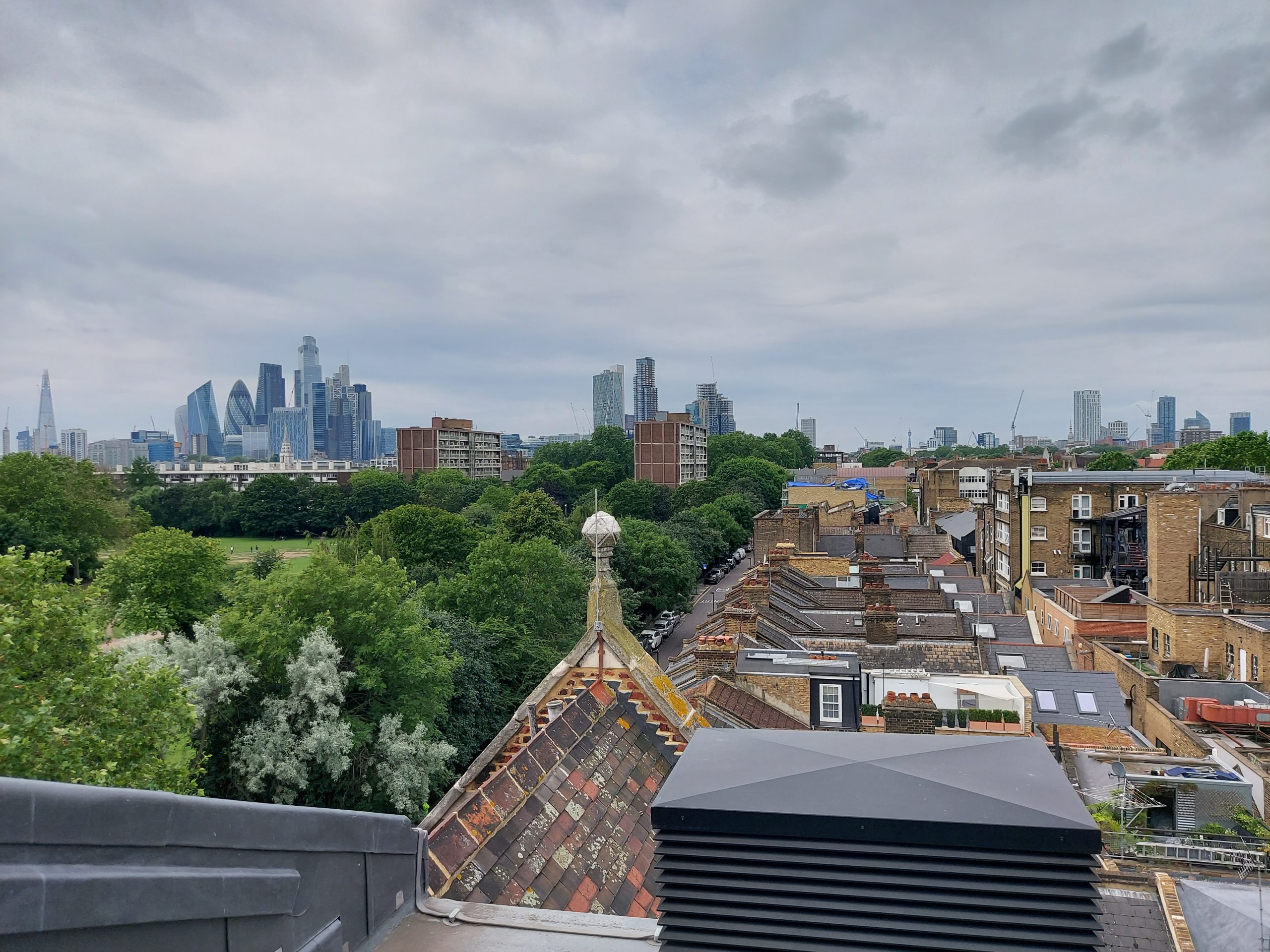
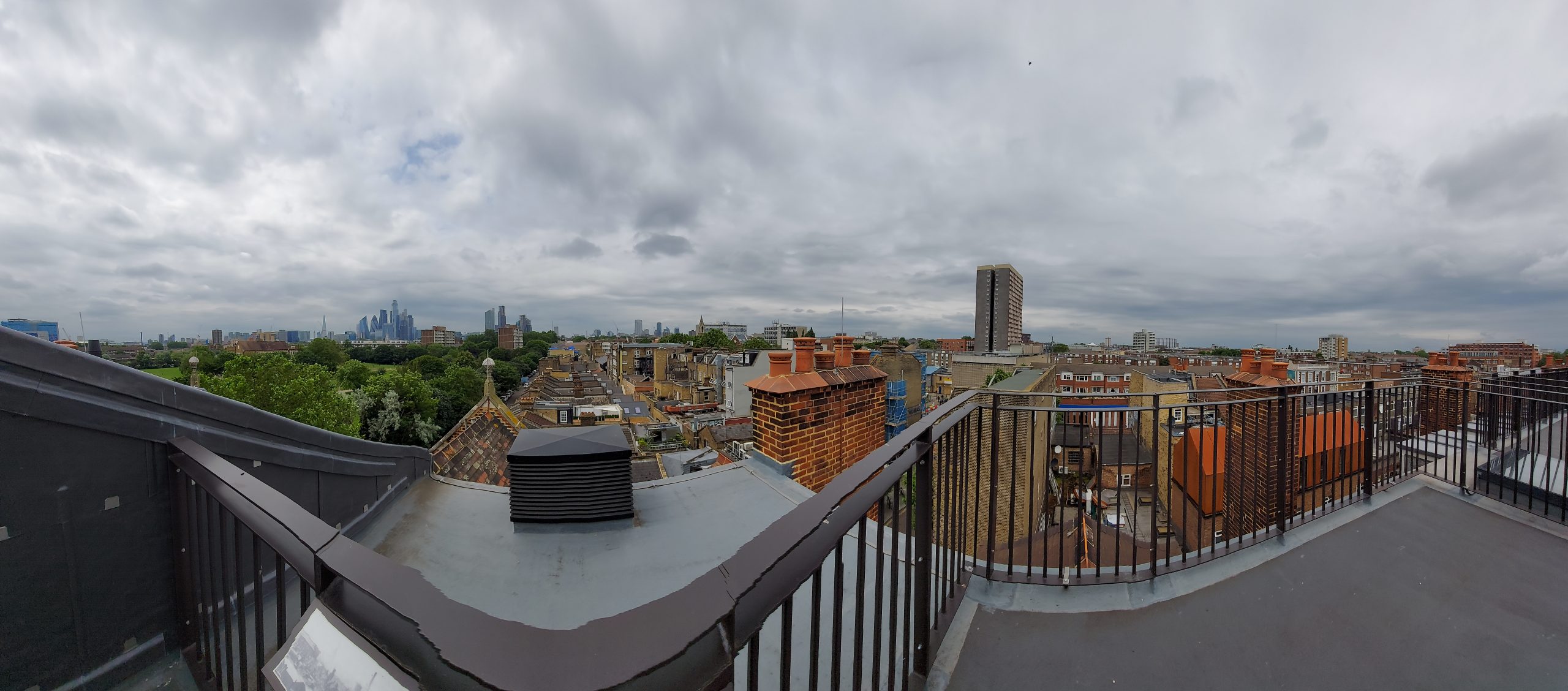
At the end of the tour we got to visit the roof, which offers impressive views over east London. It’s not usual to see London from up high in this part of the city, and I really enjoyed the experience.
After intending to do so for several months, I finally got round to making a visit to the Geffrye Museum in east London. The museum focuses on the history of the home during the past four centuries, exploring how homes have changed and how these changes reflect and are reflected in the way people live.
Open 10-5 every day except Monday (it’s open Bank Holidays though), the museum is free to visit and easy to reach: it’s fifteen minutes away from Old Street tube station, and a couple of minutes from Hoxton Overground station. The building itself is a set of almshouses built in 1714 by the Ironmongers’ Company, owing to a bequest from twice Company master and former Lord Mayor of London, Sir Robert Geffrye. Now Grade 1 listed, the building has been a museum since 1914, after it was sold off by the Ironmongers’ Company who wanted to relocate the almshouses out of Hoxton, which had become one of the most run-down and unhealthy parts of London.
Geffrye Museum
Sir Robert Geffrye
One of the almshouses, No. 14, has been restored and is open to the public (for a small fee) on selected Saturdays and weekdays. Sadly it was not open on the day I visited, so I will have to make a return trip in order to see it. The museum’s past is also evident in the almshouse chapel, which you come across around halfway through your visit.
Former almshouse chapel
On entering the museum, you witness a microcosm of its theme: a selection of chairs arranged in a semicircle, each from a different era. Looking at them, you can see how styles have changed in four hundred years.
Chairs from the last four centuries
Most of the museum is made up of period rooms, each of which is made up to look like a typical family room from a particular period. The rooms are arranged in chronological order, and provide fascinating insight into how people lived during those times.
Hall, 1630
Parlour, 1695
Parlour, 1745
Parlour, 1790
Drawing room, 1830
Drawing room, 1870
Drawing room, 1890
I really enjoyed looking at the development of the rooms and how they changed over time. One important factor in this change was that in the beginning, many middle-class people worked from home, perhaps running their business from the lower floor or front room of their house and living in other rooms. Later, people began to go out to work, and homes were used only for leisure purposes.
Later on, there is a section of the museum devoted to the twentieth century. Another arrangement of chairs greeted me at the start.
Chairs from the last century
These rooms represented shorter spaces of time than the older ones: each portrayed only a decade or so. Perhaps this reflects the more rapid changes in design during the twentieth century.
Drawing room, 1910
Living room, 1935
Living room, 1965
Apartment, 1998
The last bit of the museum was a small exhibition about the people who live and work in Hoxton, a nice complement to the rest of the exhibitions.
I liked the Geffrye: it is a lovely place and there’s a lot to see considering that it’s free. Definitely worth a visit.
I had a very busy and tiring Saturday. I visited 11 tube stations. Eleven! And they were all in east London, most of them on the Central Line.
My travels took me through Leyton and Leytonstone up to Woodford and Snaresbrook. The most notable part of my journey was seeing the Hitchcock mosaics at Leytonstone tube station. Director Alfred Hitchcock grew up in the area and a few years ago several mosaics picturing scenes from his films were installed in the corridor leading to the ticket hall. I had fun trying to guess which film each mosaic represented.
Hitchcock as a child, outside his father’s grocery shop