Rebel Badge Club: Butterfly Effect

Butterfly Effect is the first monthly badge of 2025. The idea is that by implementing some small changes, you can make a big difference to your life. I can get on board with this!

To complete the badge, I had to choose at least 6 clauses from the list provided. I did the following:

Each week, try something new. You decide how big or small the “thing” is.

I tried the following new things: bookbinding, aqua aerobics, making blondie brownies and a new crochet pattern.

Keep a daily journal of things that have made you happy that day.

I linked this clause with the gratitude journal I started for Advanced Diarist. I kept it every day and plan to keep it up this year.

Pick an area of your home which needs organising. Set aside 15 minutes each week to clear it out.

I spent most of January staying with my parents, so I thought it was the perfect time to sort out my room. Each time I focused on a different drawer or cupboard.

Spend at least 30 minutes each week helping someone else in some way.

I kicked off this clause on 1 January when I helped my mam make a three-course meal for eight of us for New Year’s Day. I kept this up for the rest of the month – when I’m at home I don’t really see anyone else to help!

Choose a positive new morning habit for the month.

I chose to drink a glass of water each morning – a good way to try and keep hydrated. I generally struggle with this but found that I felt better and more alert when I managed to keep this up.

Take a small step to support a cause which is important to you.

I signed a petition to save the Prince Charles Cinema.

Rebel Badge Club: Big Kid Winter

The final monthly badge for the year was Big Kid Winter, and I was very excited to work on this one. Designed as a winter version of the Big Kid Summer badges, it featured plenty of options for fun in the run up to Christmas. I didn’t have time to do as many clauses as I would have liked, but I did manage several.

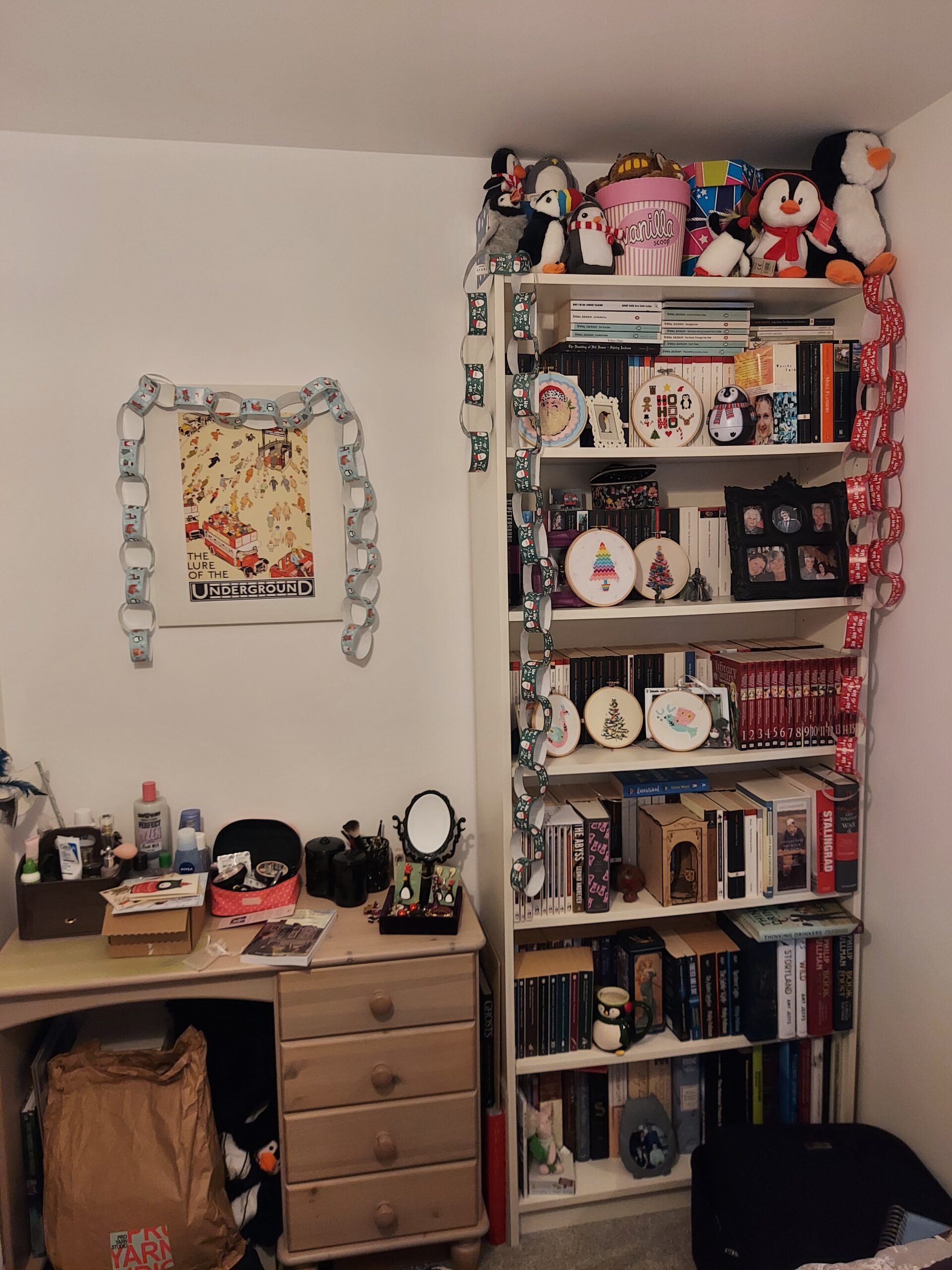
Make paper chains – I made some paper chains to decorate my room, which made it look very festive.

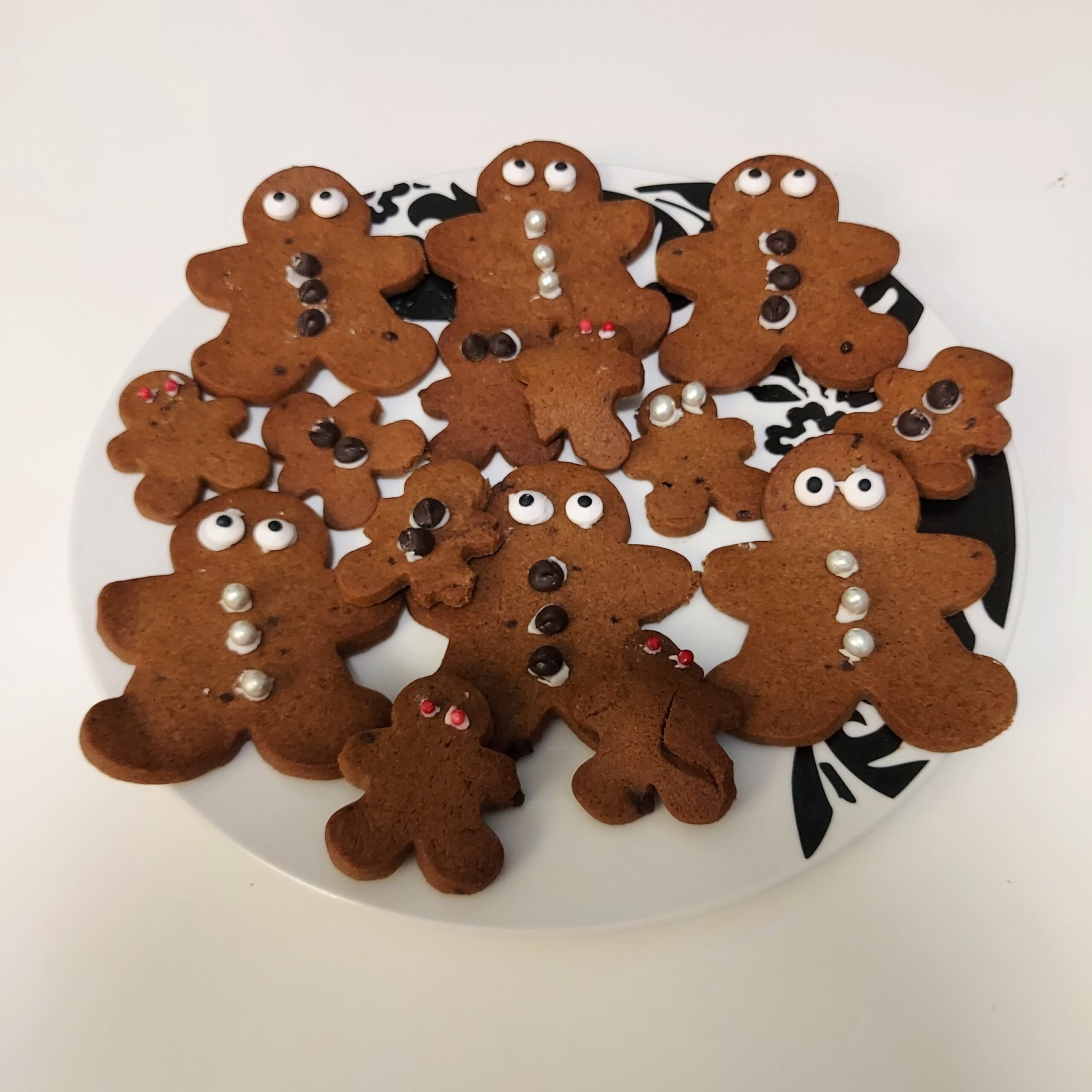
Make gingerbread people – I had fun one Sunday afternoon making some of these.

gingerbread man cookies

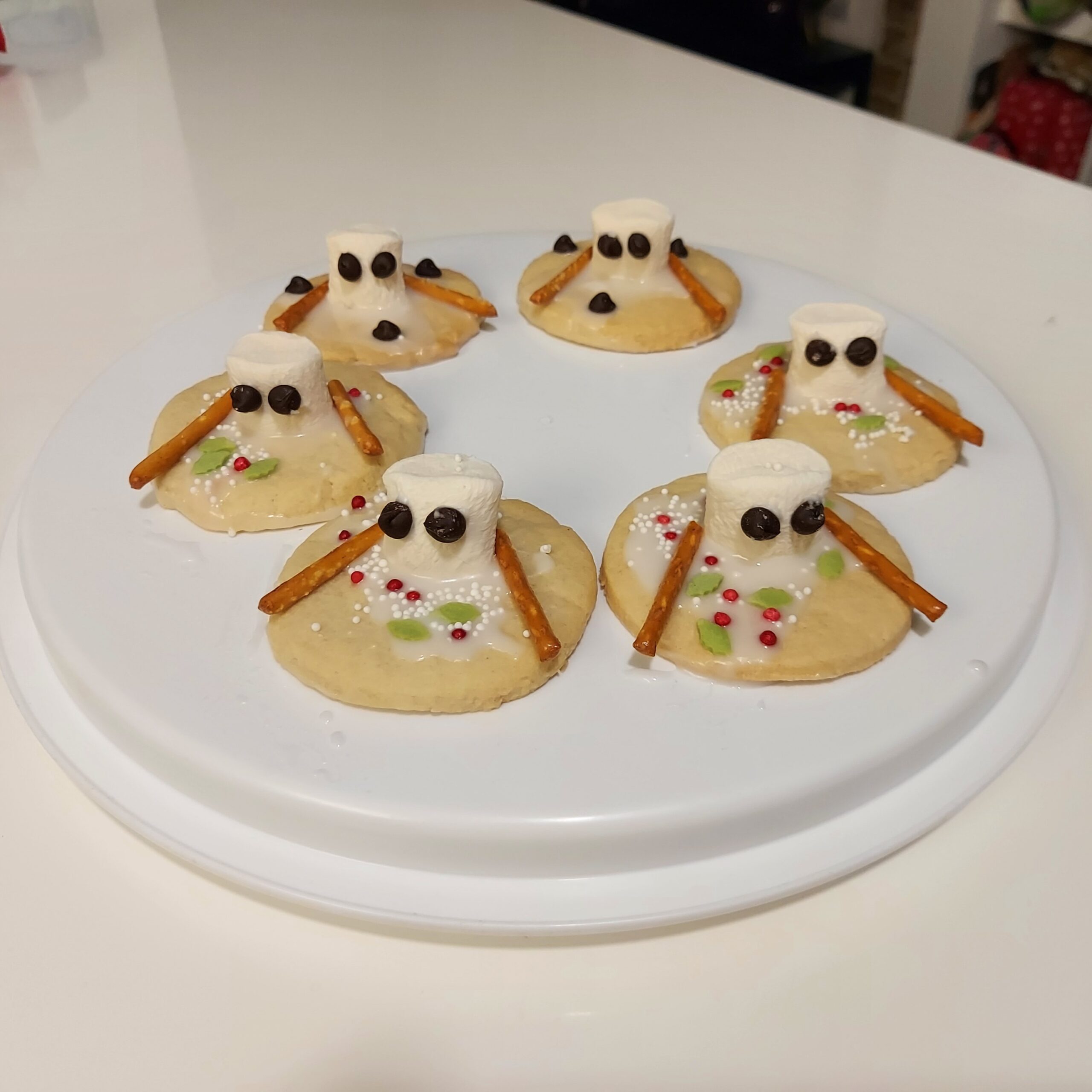
Make melted snowman cookies – At the same time I made some of these cookies, which I’d never done before. They looked a bit dodgy, but tasted pretty good!

Melted snowman cookies

Watch a Christmas movie – I wathced Carry-On with the family, which wasn’t as Christmassy as I would have liked (and not a patch on Die Hard), but which I enjoyed.

Play Whamageddon – I lost this in the first few days when Spotify decided, instead of playing the next episode of the podcast I’d downloaded, to play Last Christmas instead. My phone was offline and I hadn’t knowingly downloaded the song – it’s a conspiracy!

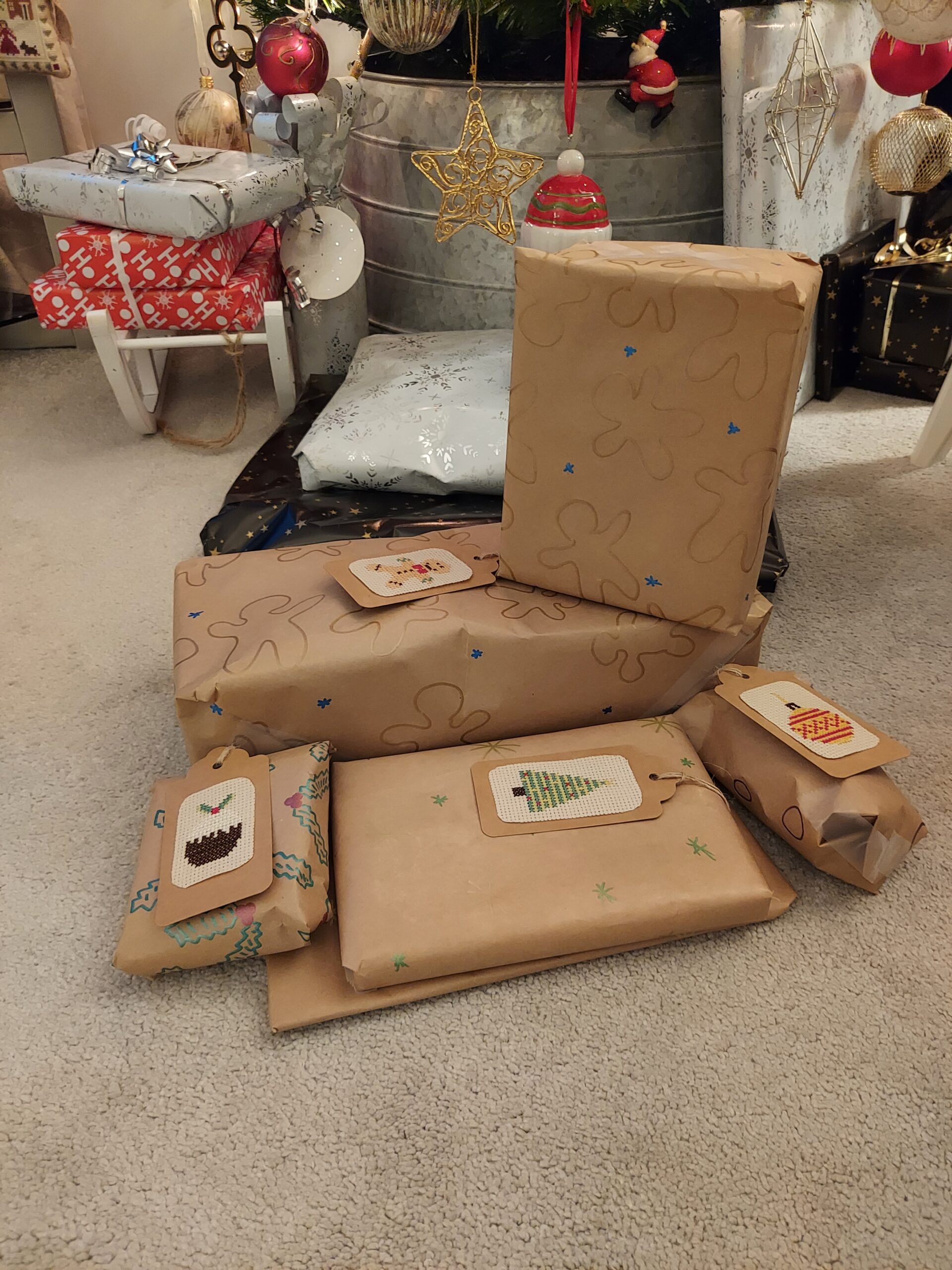
Make your own wrapping paper – I had some plain brown paper and decorated it with metallic pens, making patterns that matched the gift tags I’d cross-stitched earlier in the year. I’m not remotely artistic, but I’m pleased with how it turned out, as my family complimented me on my unique paper!

Wrapped presents

Rebel Badge Club: Ready Rebel Cook!

The Ready Rebel Cook! badge was November’s monthly badge and was a lot of fun. To complete this badge, I had to manage a selection of clauses from the list provided. I completed the following:

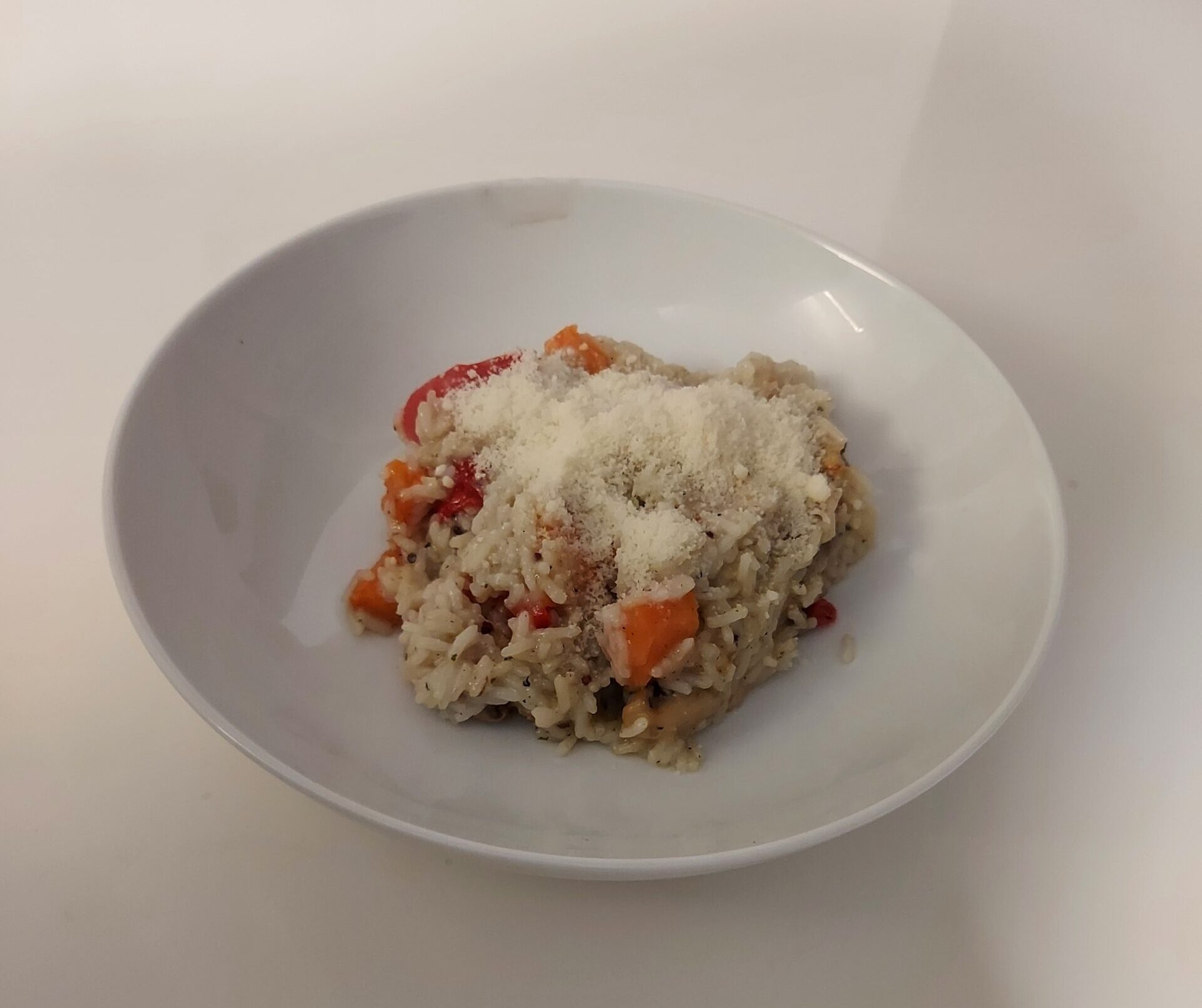
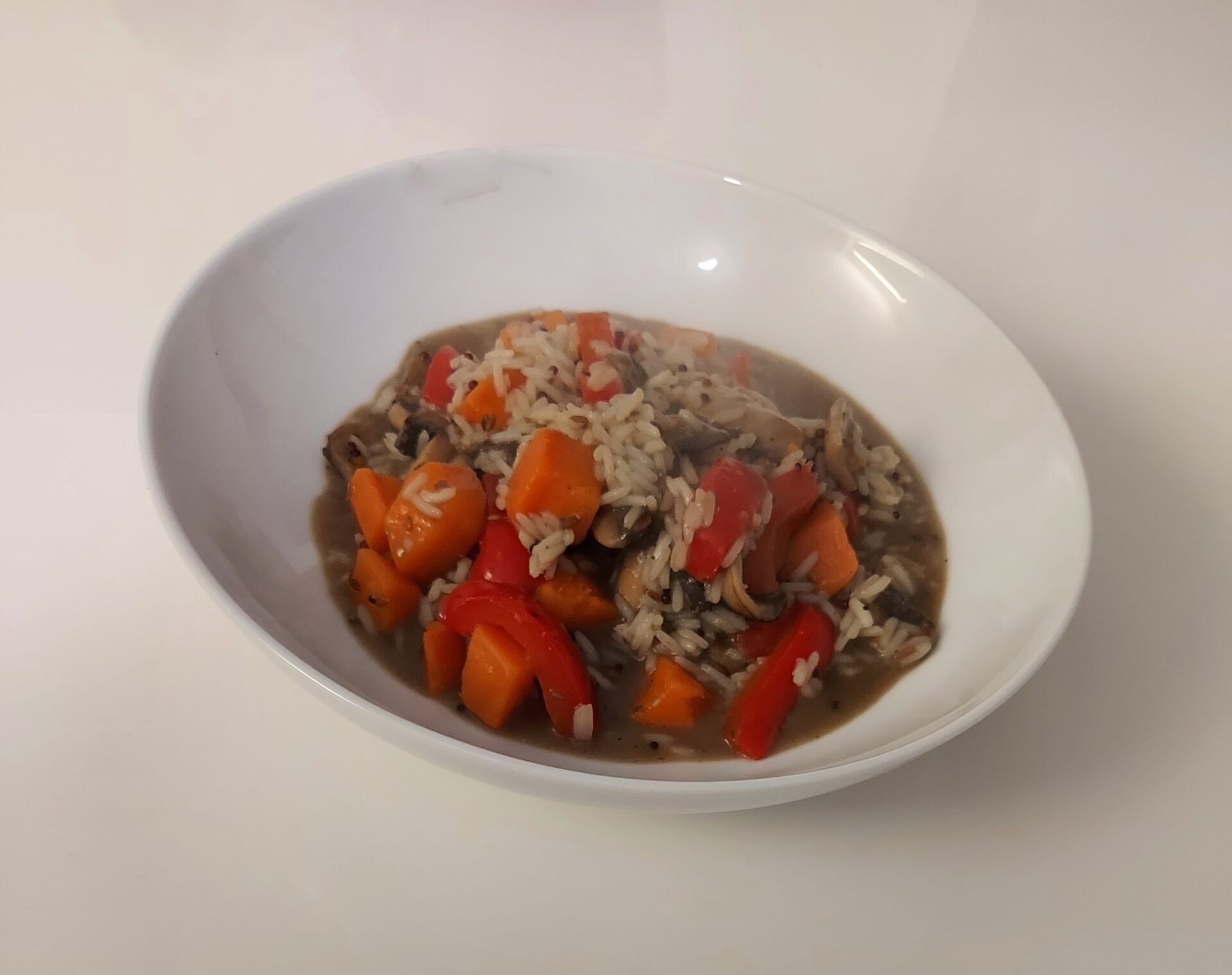
A meal from surprise items suggested by someone else – I asked my mam and she chose mushrooms, peppers, sweet potato, cheese and rice, so I made a risotto.

A risotto in a white bowl

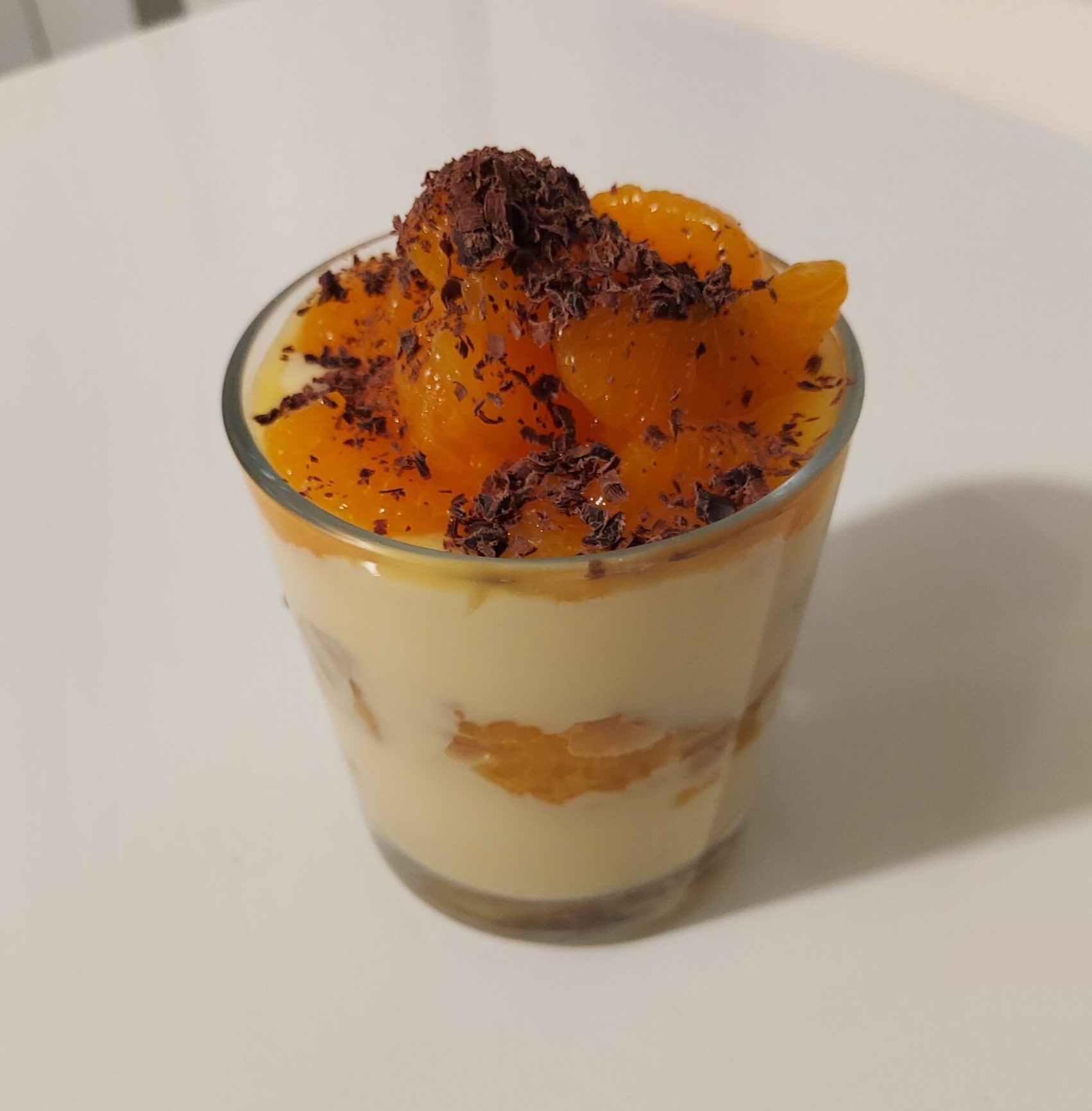
A dish of your own invention including at least 4 of the suggested items – I made a delicious dessert from tinned mandarins, ginger biscuits, dark chocolate and custard.

Dessert made from tinned mandarins and custard

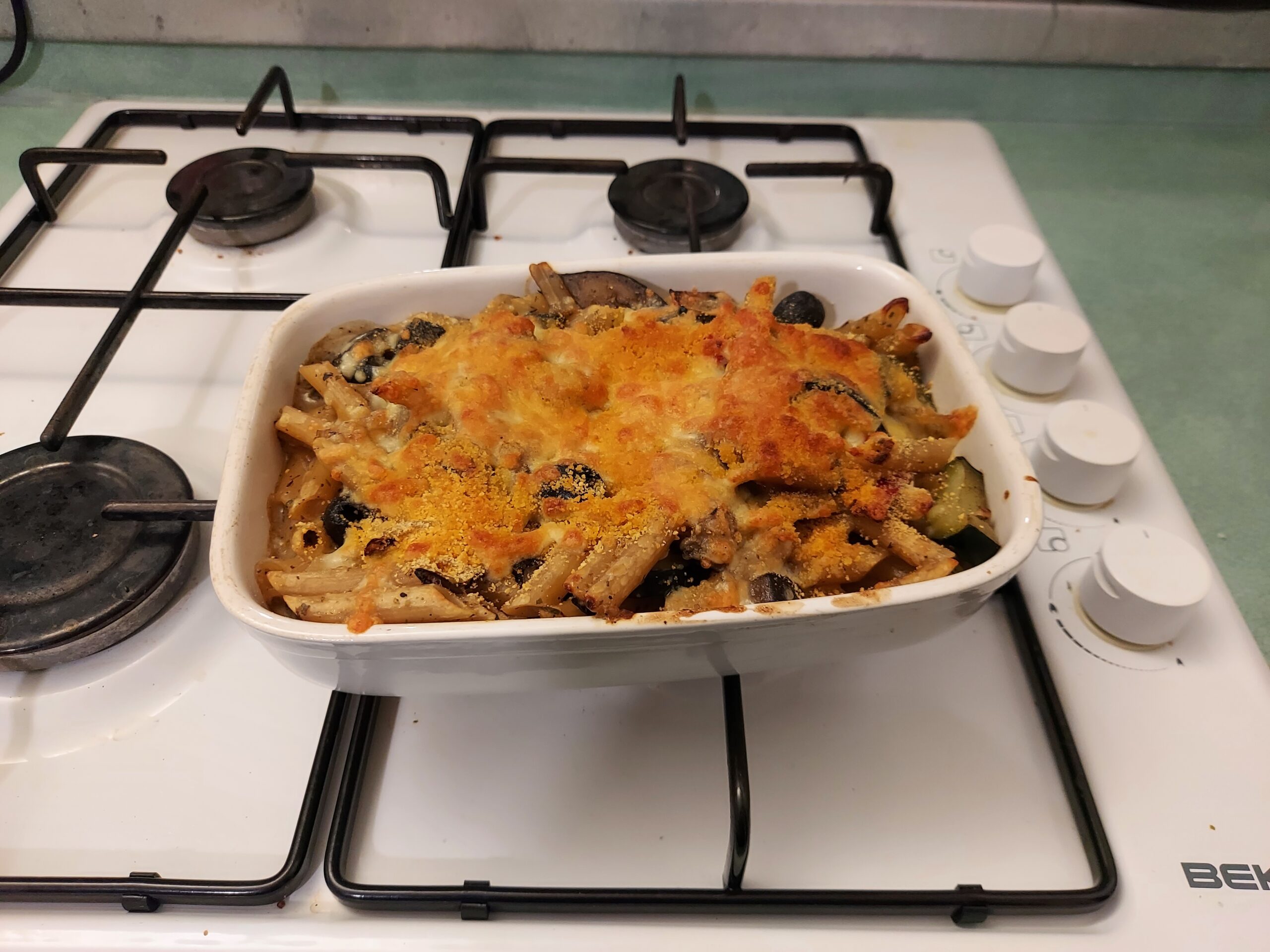
A dish of your own invention including at least 4 of the suggested items – I made pasta including courgette, aubergine, onion, creme fraiche, vegetable stock, breadcrumbs and black olives.

Courgette and aubergine pasta

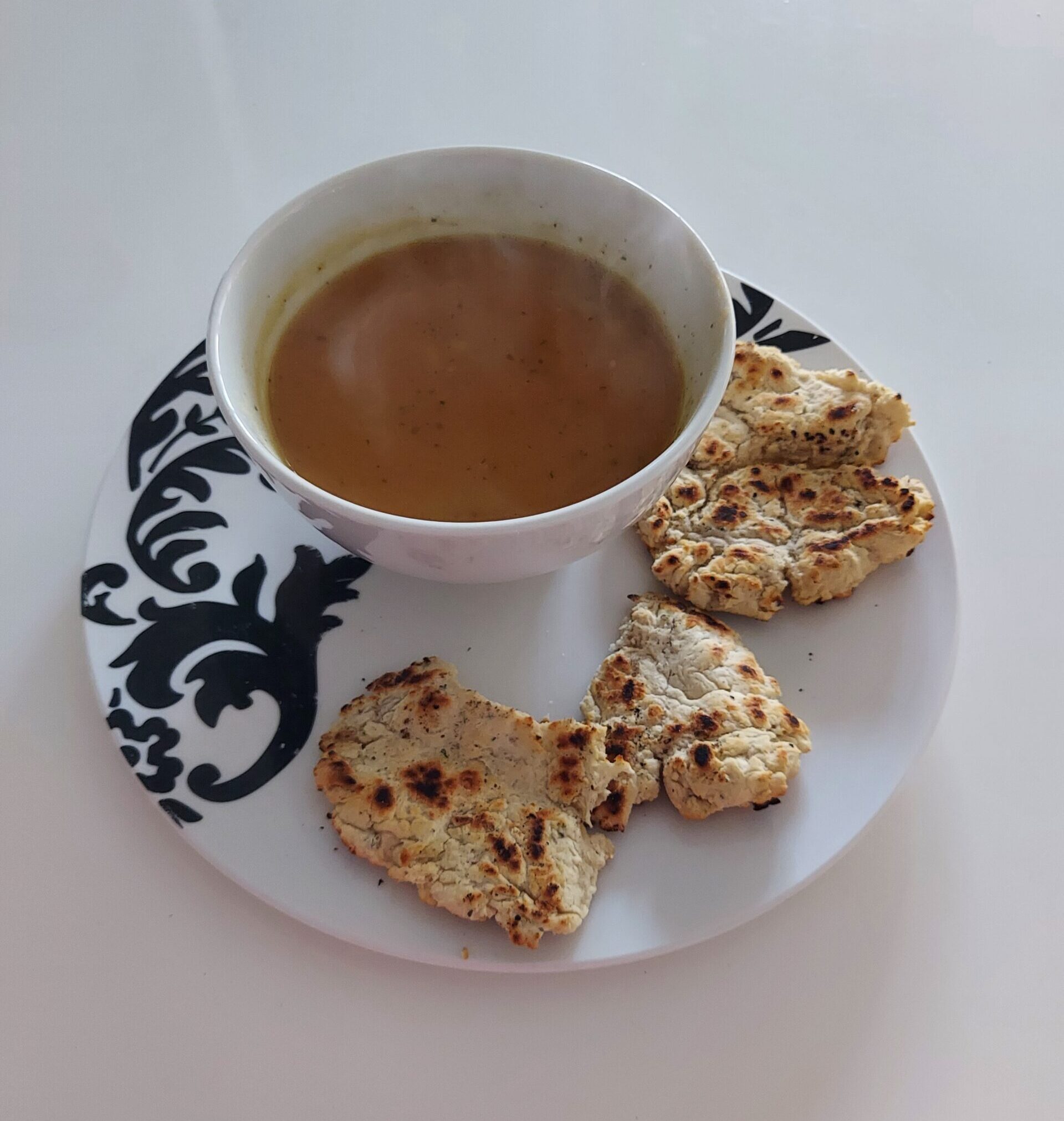
A meal which produces no packaging waste – I made soup from scratch with loose vegetables, served with homemade bread.

Soup and bread

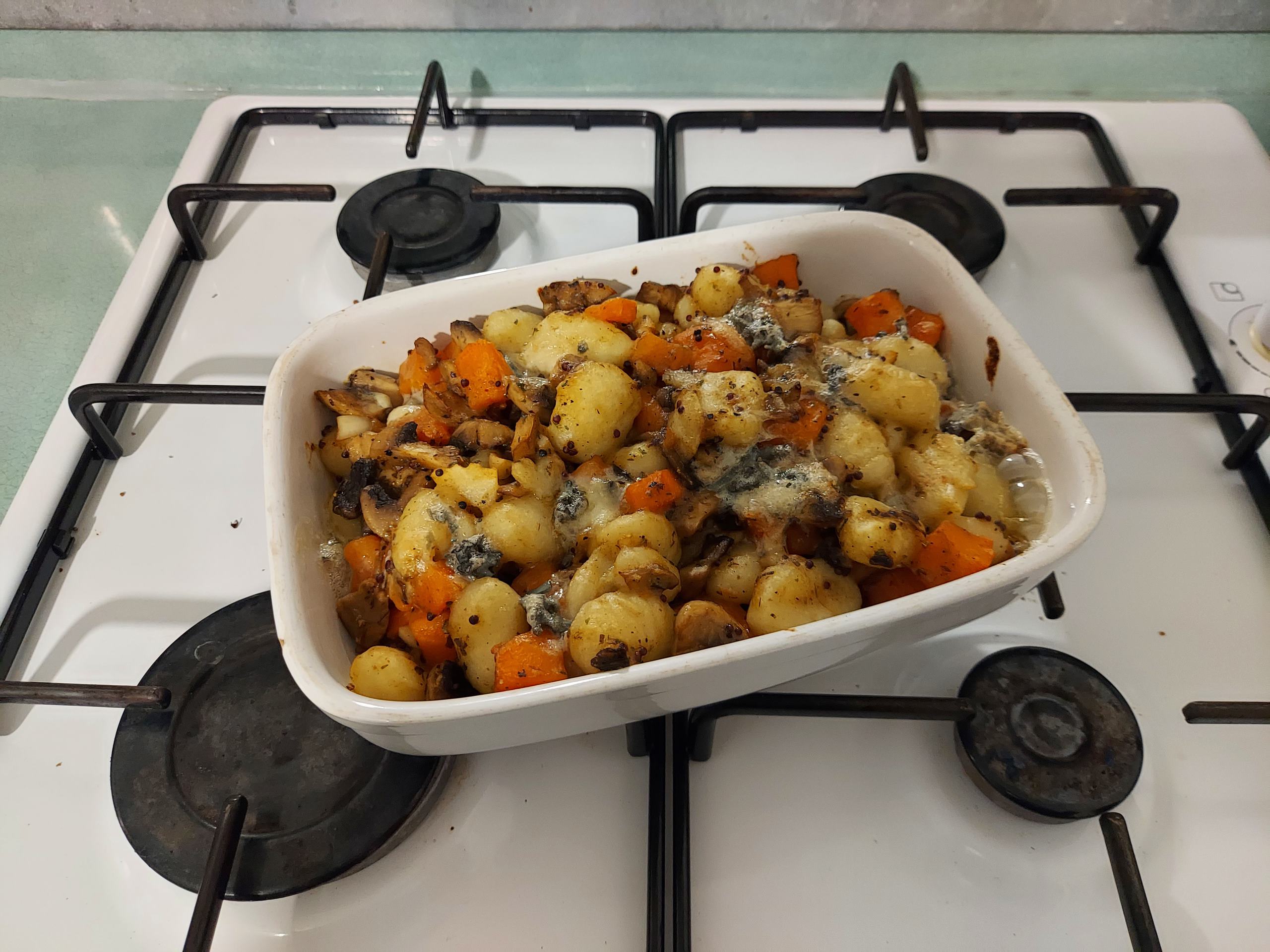
A dish of your own invention including at least 4 of the suggested items – I made a baked gnocchi dish including gnocchi, sweet potato, blue cheese and mushrooms.

Gnocchi dish with sweet potato, mushrooms and blue cheese

A meal for 2 people for £10 – I made a curry with cheap rice and veg.

Vegetable stew

Rebel Badge Club: I’d Survive A Zombie Apocalypse

This month’s challenge was possibly one of my favourites ever – a whole badge dedicated to zombies! Now zombies aren’t actually my favourite spooky creatures, but I thoroughly enjoyed myself during this badge. The clauses were divided into different sections and we had to do at least one clause from each section. In reality, I suspect I wouldn’t last two minutes during a zombie apocalypse, but at least I can pretend otherwise now!

BE PREPARED

Start ‘Couch to 5k’ or walk or run some missions on the app ‘Zombies, Run!’.

I’ve been meaning to try this app for a while so I was glad of the incentive to give it a go. I’ve run four missions so far – I’m out of practice with running so did spend some time walking, but want to use the app to improve.

Screenshot from the Zombies, Run! app

KNOW YOUR ENEMY

Find out about real life zombies in the natural world.

I found an article on LiveScience which was both fascinating and creepy.

Research the origins of zombie folklore.

I really enjoyed researching this. An article on History.com was particularly interesting.

Watch a zombie movie. Identify at least three stupid things non-protagonists do that get themselves killed.

I went to a showing of Shaun of the Dead with some fellow Rebels. I’d never seen it before and really enjoyed it. Some of the stupid things people did included: stopping to say hi to the neighbours, running into a horde of zombies, and running after the person who ran into a horde of zombies.

Read a book which features zombies.

I went for World War Z by Max Brooks, which was a really good read.

SURVIVE

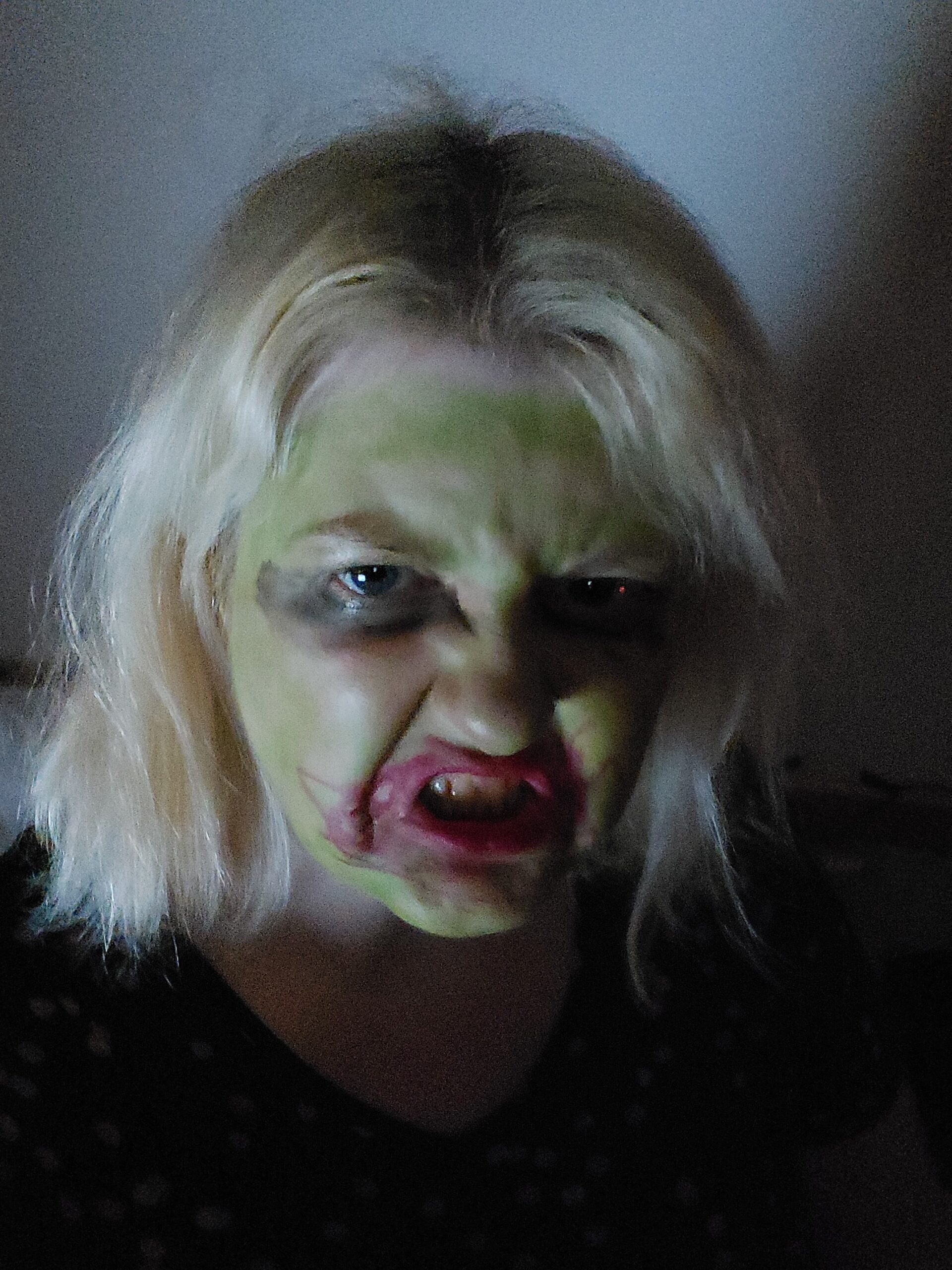
Camouflage yourself as a zombie.

I had fun with my face paints for this clause!

Selfie with zombie face paint

EMBRACE IT!

Make a zombie puppet.

I completed this clause at the Reading meetup where we made paper puppets and acted out various zombie scenarios.

Have a cold pint at your local pub, or a Cornetto, and just wait for it to all blow over.

A few of us popped into the pub after our film screening!

Rebel Badge Club: The Poop Challenge

The Poop Challenge is September’s monthly challenge badge, with a cute poop emoji logo. The serious side of this badge is getting Rebels to understand more about bowel issues, which will help both ourselves and others.

To gain this badge, I needed to complete six clauses. I enjoy research, so I focused on this type of clause.

Read a book about someone’s experiences with bowel issues.

I read Deborah James’ book How to Live When You Could Be Dead, which was inspiring and moving. Dame Deborah died of bowel cancer at the age of 40 and was instrumental in campaigning for increased awareness and funding for the disease.

Learn about the symptoms of bowel cancer, the ‘Never Too Young’ campaign and what changes are cause for concern.

I learned about these on the Bowel Cancer UK website.

Learn about bowel diseases including ulcerative colitis, Crohn’s and IBS. Learn about the use of stoma bags.

I found the Crohn’s & Colitis UK website really useful for this, as well as The IBS Network.

Learn how paleontologists use poop in their work.

I found this article from Science World very interesting.

Learn about gut microbiome and what you can do to support it.

I found this Guardian article helpful for this clause.

Learn about ways to protect and improve your bowel health.

I found an article How To Improve Your Digestive Health: 8 Powerful Tips which had lots of useful information.

Learn about the role of the king’s ‘Groom of the Stool’.

The Tudor Society website has an interesting article about this.

Rebel Badge Club: Rebel Scavenger Hunt 2024

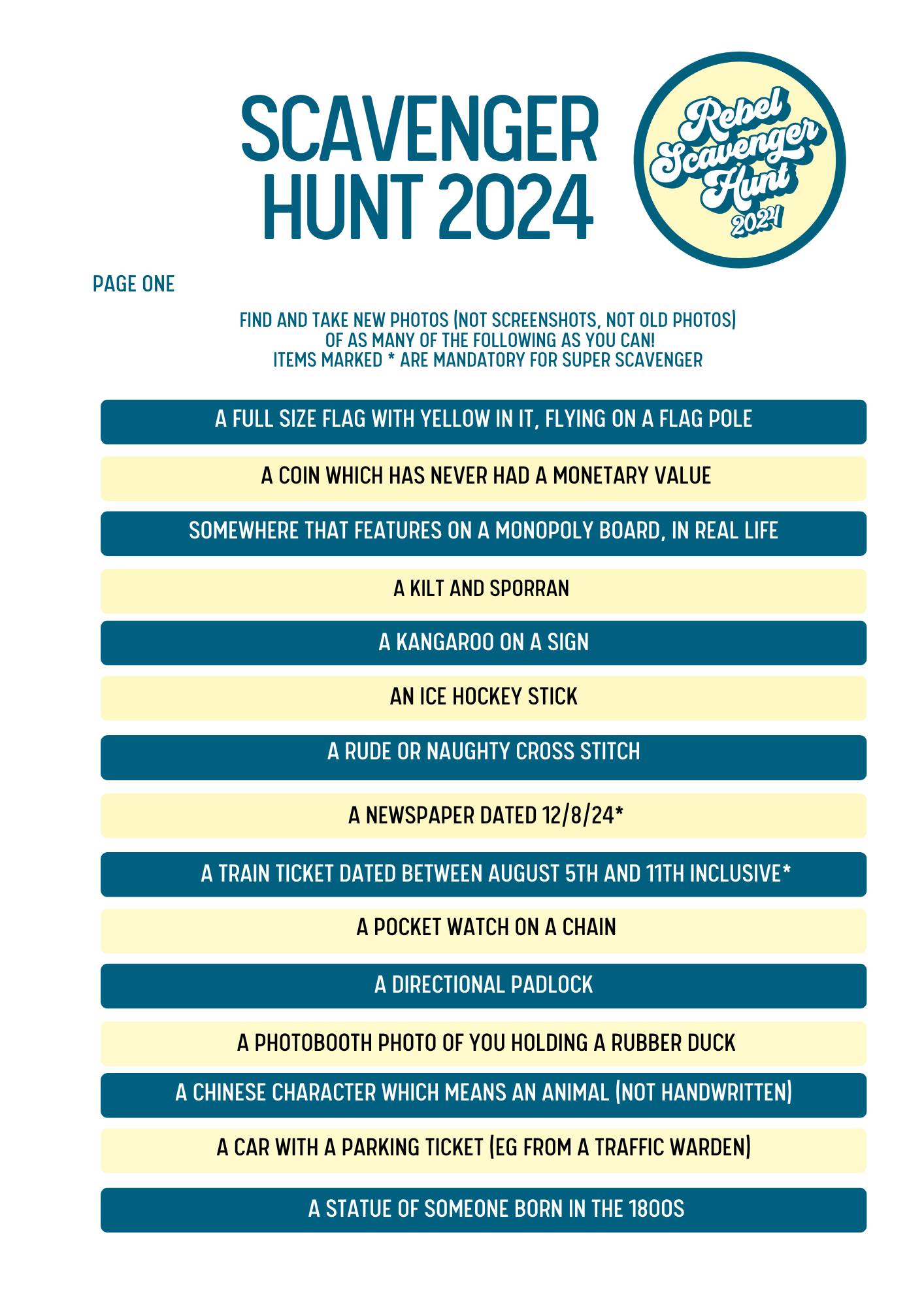
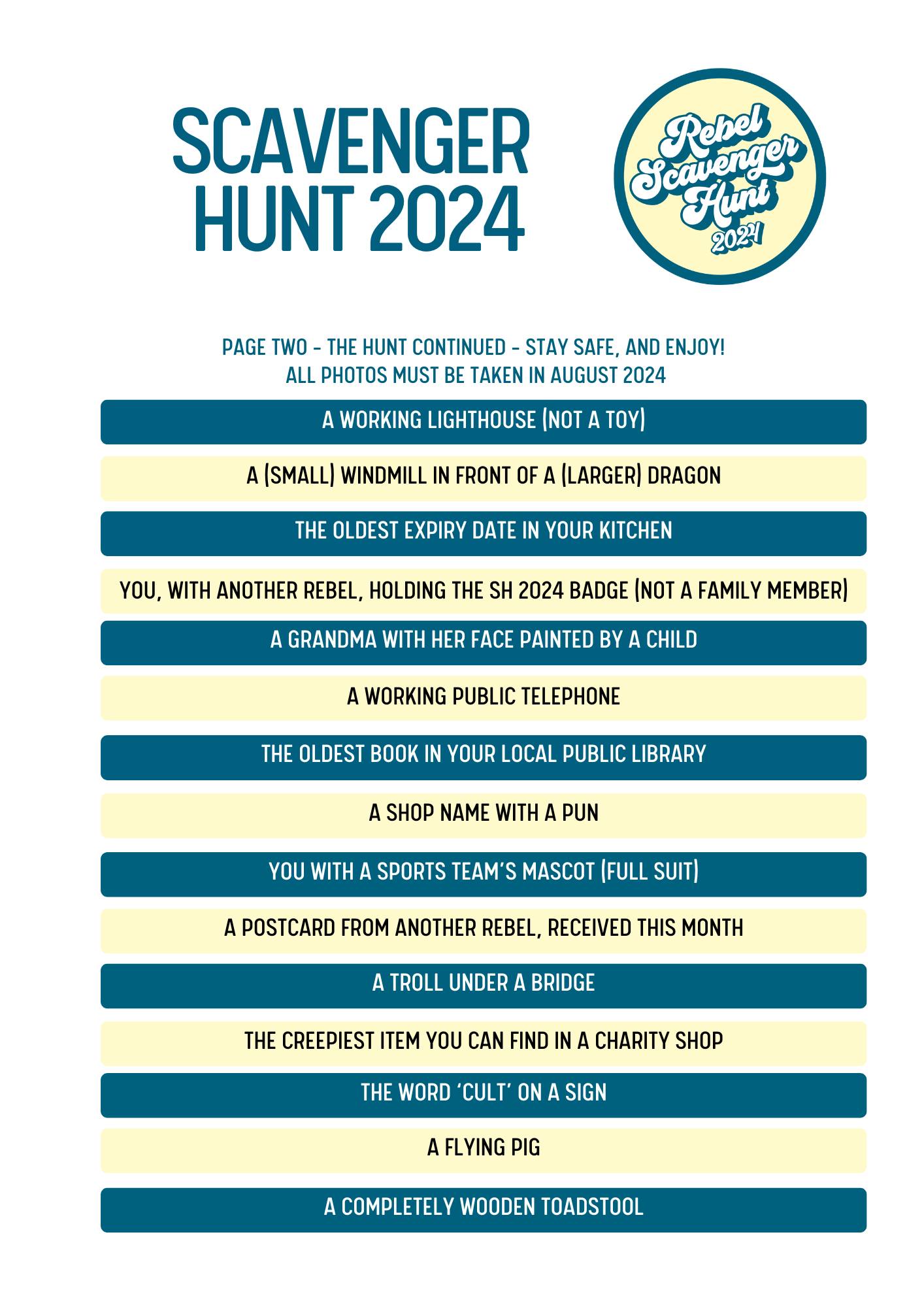
Somehow, the 2024 Scavenger Hunt ended up being even harder than last year! However, I had lots of fun ticking off enough items to gain Super Scavenger for the third year in a row. There were a few I didn’t manage to get – like a grandma having her face painted by a child, and a sports team mascot!

Rebel Badge Club: Big Kid Summer 2024

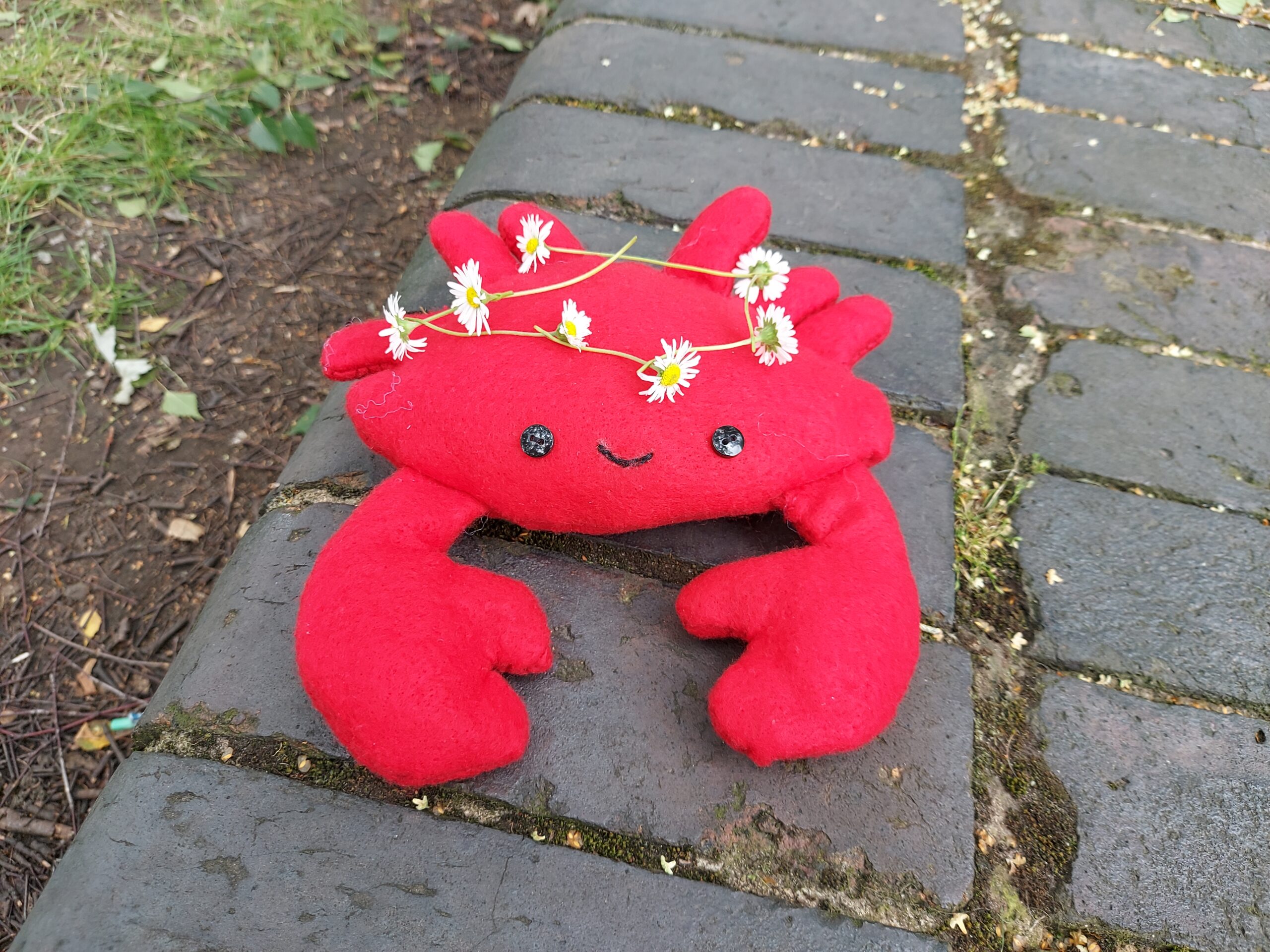
a soft toy crab with a daisy chain crown

Big Kid Summer was a hugely popular badge last year, so I was very happy when it came back this year. I had a day out with some fellow London Rebels where we ticked off several clauses: we visited Hackney City Farm, had a tea party, made daisy chains, climbed trees, rolled down a hill, had a go on an assault course and played hide and seek. I had a brilliant day, and got chips from the chip shop on the way home!

chips wrapped in paper

Rebel Badge Club: Carbon Footprint

Carbon Footprint badge

June’s monthly badge is Carbon Footprint, and requires Rebels to learn about the origins of the concept and then either look at individual ways of reducing one’s footprint, or look at the wider community impact. I’ve chosen to do the latter, mainly because there’s a limit to what I can do as an individual – I already produce fairly little waste, use public transport, don’t eat meat, and live in a shared house so can’t change bill suppliers.

Learn about the origins of the Carbon Footprint concept, and how and why it was brought into public usage.

The term carbon footprint was first used in a BBC vegetarian food magazine in 1999, deriving from the broader concept of an environmental footprint which had been around since 1979. It was popularised in 2005 when fossil fuel company BP hired an advertising company to promote the idea of a carbon footprint for individuals.

These origins are disappointing, but not really surprising, and makes me glad I have chosen to look at the wider community impact, as I do think there is too much emphasis on individual responsibility.

COMMUNITY IMPACT

Research the impact of clean air zones in cities.

Cities with clean air zones include Bath, Birmingham, Bradford, Bristol, Portsmouth, Sheffield and Tyneside (Newcastle and Gateshead). Not to mention, of course, London which has its own ULEZ (Ultra Low Emission Zone).

In London, “concentrations of air pollution have declined across London due to the ULEZ, but remain above the safe limits set by the World Health Organization.” The linked article suggests that the ULEZ is having a positive impact.

Research some of the natural alternatives to trees for reducing carbon dioxide levels.

Restoration and maintenance of peatlands can help create carbon sinks, as well as agricultural soils more generally. Biochar (a charcoal-like biomass by-product) also helps enhance carbon held in soil.

In the ocean, carbon-storing habitats include: kelp forests, salt marshes, seagrass beds, cold-water coral reefs, flame shell and mussel beds, and maerl.

Find out the difference between carbon-offsetting and carbon zero.

Carbon offsetting or carbon neutral means that any CO2 released into the atmosphere from a company’s activities is balanced by an equivalent amount being removed.

Carbon zero or net zero mean that an activity releases net zero carbon emissions into the atmosphere.

This article explores the differences further.

Research new technology to reduce the amount of carbon in the atmosphere.

Many such technologies exist and are being developed, though they are not without controversy. More research is needed to see how well they work.

Technologies include carbon-based concrete, carbon-eating crops, carbon-sequestering fertiliser and trapping carbon in rock. The section on Reversing existing damage in this article discusses them in more depth.

Rebel Badge Club: RebelVision

I was thrilled when the RebelVision badge was announced, as I am a huge Eurovision fan. The badge allowed me to research more deeply around Eurovision, as well as celebrate this year’s contest.

Learn what Eurovision is, and make a timeline of significant events.

In the mid-20th century, television services began to be introduced all across Europe. The European Broadcasting Union (EBU) created the Eurovision Network in order to facilitate the exchange and production of common television programmes, helping to increase programming material for national broadcasting organisations in a cost-effective way. The Eurovision Song Contest began as a groundbreaking – for the 1950s – technical experiment: a simultaneous, live broadcast across Europe. The Italian national broadcasting organisation, RAI, put forward the idea of a song contest after the success of the Sanremo Italian Song Festival. Seven countries took part in the first contest, hosted in Switzerland owing to its central European location; today, it is common for almost forty countries to compete each year.

1956 The first Eurovision Song Contest takes place, featuring Belgium, France, Germany, Italy, Luxembourg, Netherlands and Switzerland. The host country, Switzerland, wins with Refrain by Lys Assia. In this first contest only, countries are allowed to enter two songs each.

1957 Austria, Denmark and the United Kingdom enter for the first time. Scoreboards and public announcement of the voting are introduced.

1958 The tradition of the winning country hosting the following year’s contest begins: the Netherlands, who won in 1957, host this year.

1960 The contest is held in the United Kingdom for the first time: as runners-up, they were asked to host when winners the Netherlands declined.

1969 Four countries – France, Spain, the Netherlands and the United Kingdom – tie for first place. A tiebreak rule is applied in future contests to prevent this happening again.

1970 A brief video introduction to the host country, and ‘postcards’ introducing each artist, are introduced to the contest for the first time.

1971 Groups are allowed to compete for the first time: a maximum of six performers are permitted on stage, a rule which is still in place today.

1974 ABBA win the contest for Sweden with Waterloo.

1975 The points system, in which 12 points are awarded to a country’s top-placed song, 10 to their second-placed, and 8-1 to their third- to tenth-placed songs, is introduced.

1980 Johnny Logan achieves the first of his three victories for Ireland (two as a singer, one as a songwriter) with What’s Another Year.

1981 Bucks Fizz win Eurovision for the UK with Making Your Mind Up.

1988 Switzerland wins the contest with a little-known singer from Canada, Céline Dion.

1990 In response to the pre-teen contestants of France and Israel in 1989, a rule is introduced requiring any Eurovision contestant to be at least 16.

1993 In response to the breakup of the Soviet Union and Yugoslavia, several new countries take part in the contest including Slovenia, Bosnia and Herzegovina, and Croatia.

1994 Irish dancing phenomenon Riverdance makes its debut at the contest in Dublin, Ireland.

1997 The United Kingdom win the contest with Love Shine A Light by Katrina and the Waves.

1998 Dana International wins Eurovision for Israel with Diva, Eurovision’s first openly trans and LGBTQIA performer.

2004 Owing to the growing number of competing countries, semi finals are introduced to the contest.

2015 Australia competes for the first time to mark the sixtieth edition of the contest.

2020 Eurovision is cancelled for the first time in its history, owing to the Covid pandemic.

Listen to this year’s entries and choose your top 5.

I actually chose a top 10, not just a top 5, and it was still really hard! Here are my choices:
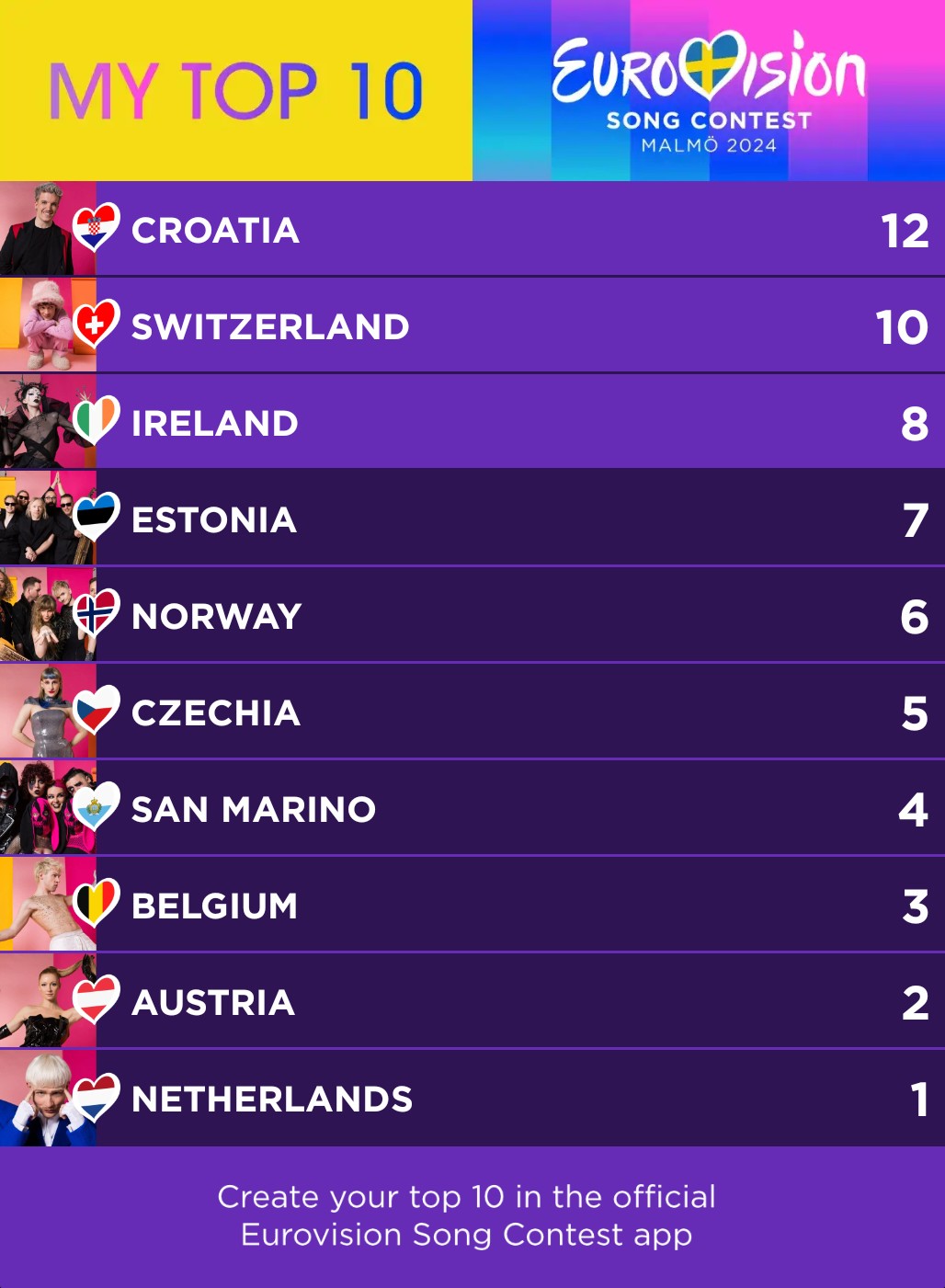
My top 10 Eurovision songs 2024

Watch a documentary or film about Eurovision.

I watched Eurovision at 60 on BBC iPlayer.

Research historic boycotts of Eurovision.

I found this clause very interesting and learned about several historical boycotts and controversies in the contest. Most famously, Russia was banned from the contest after its invasion of Ukraine in 2022. Armenia and Azerbaijan have experienced conflict, mainly over a disputed region, while Yugoslavia was banned from the contest shortly after the 1992 competition because of the siege of Sarajevo. Back in 1975, Greece boycotted the contest after Turkey invaded Cyprus; the following year, Greece’s obviously anti-war song referencing Turkey’s presence in Cyprus led Turkey to boycott in turn.

Take part in a Eurovision watch party, and score each act.

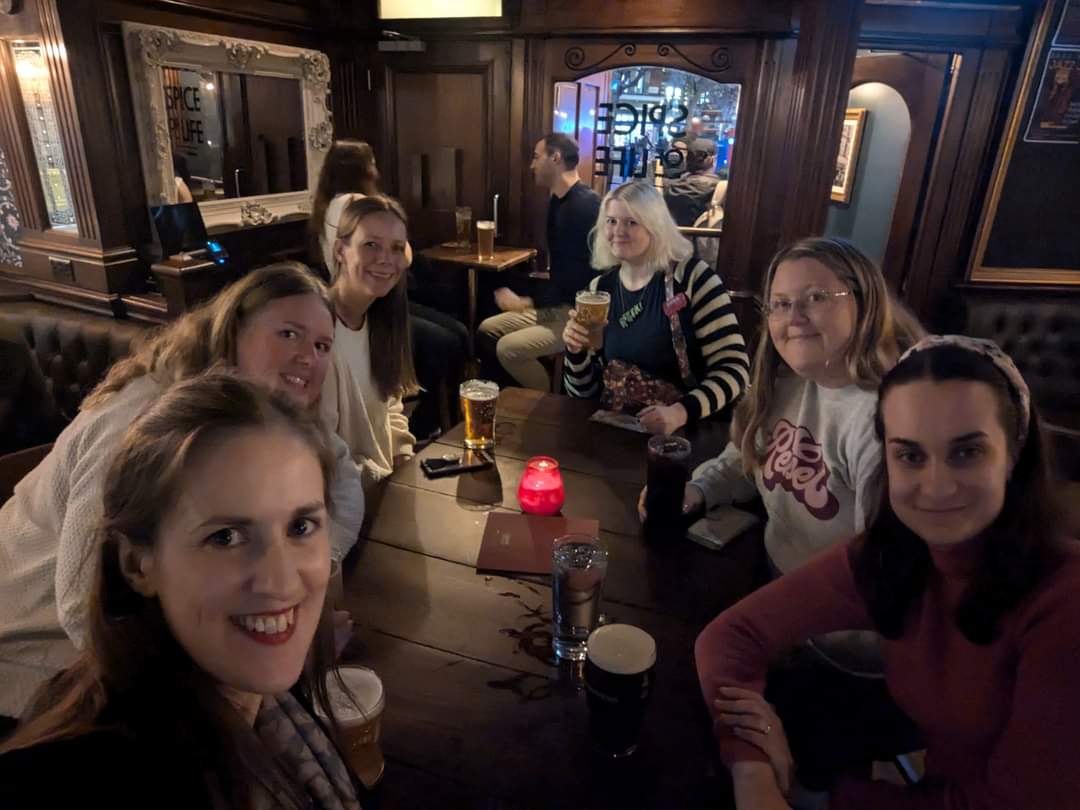
I attended the post-Rebel Monopoly party in the Four Thieves pub in Clapham – it was great fun.
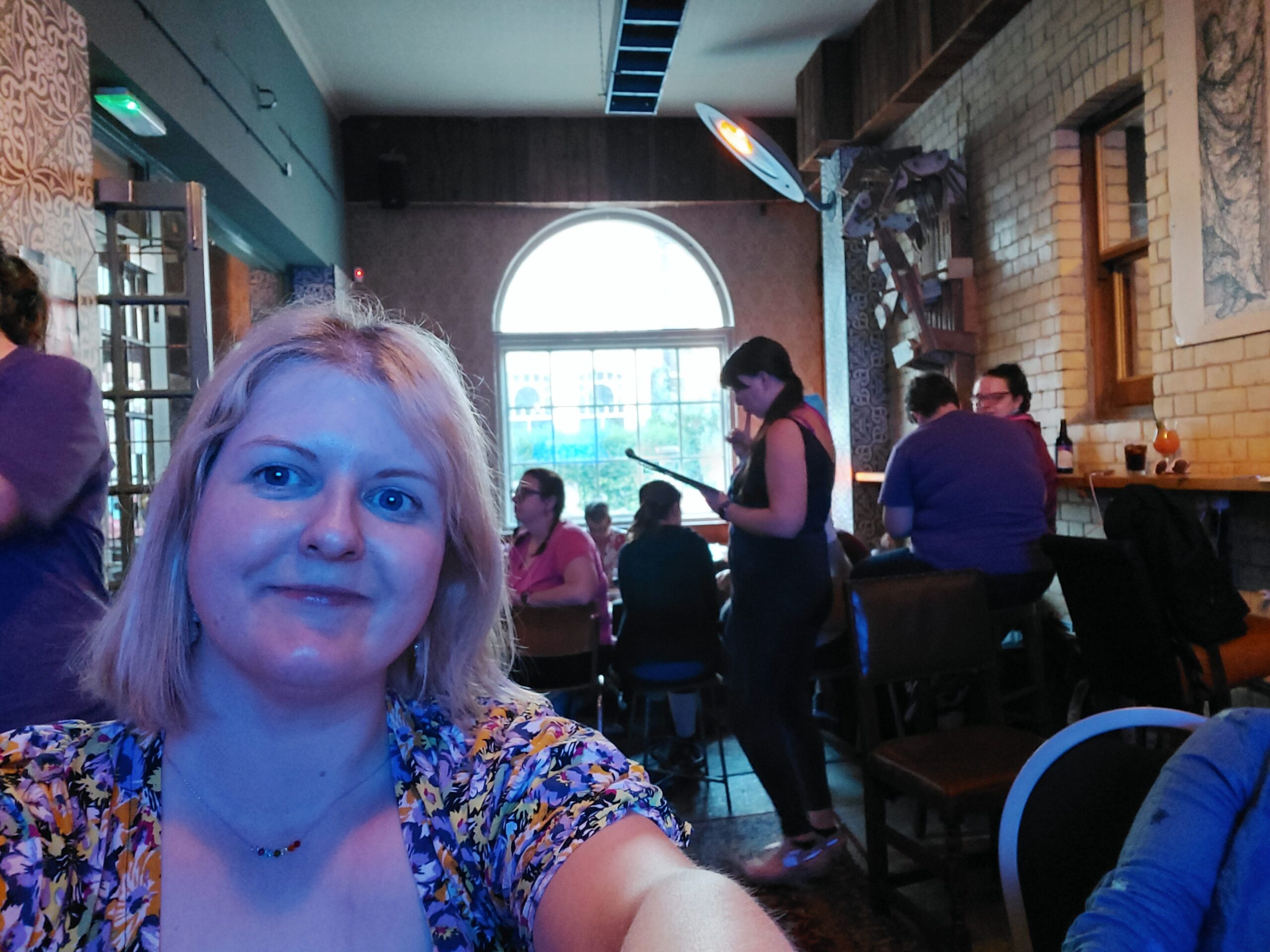
A selfie with other Rebels in the background

Listen to some of the most famous winning songs and choose your top 3.

I found this tough: my favourite songs tend not to be the winners, but even so it was hard to choose a top three. In the end, I would go for Euphoria by Loreen (Sweden, 2012), Arcade by Duncan Laurence (Netherlands, 2019) and The Code by Nemo (Switzerland, 2024). I originally had Lordi in there, but Hard Rock Hallelujah has been superseded by this year’s winner!

Rebel Badge Club: The Big Rebel Sewing Bee

I was quite excited about this month’s badge, The Big Rebel Sewing Bee. Inspired by the TV programme, it had several potential clauses, rated Bronze, Silver or Gold, from which you had to pick one.

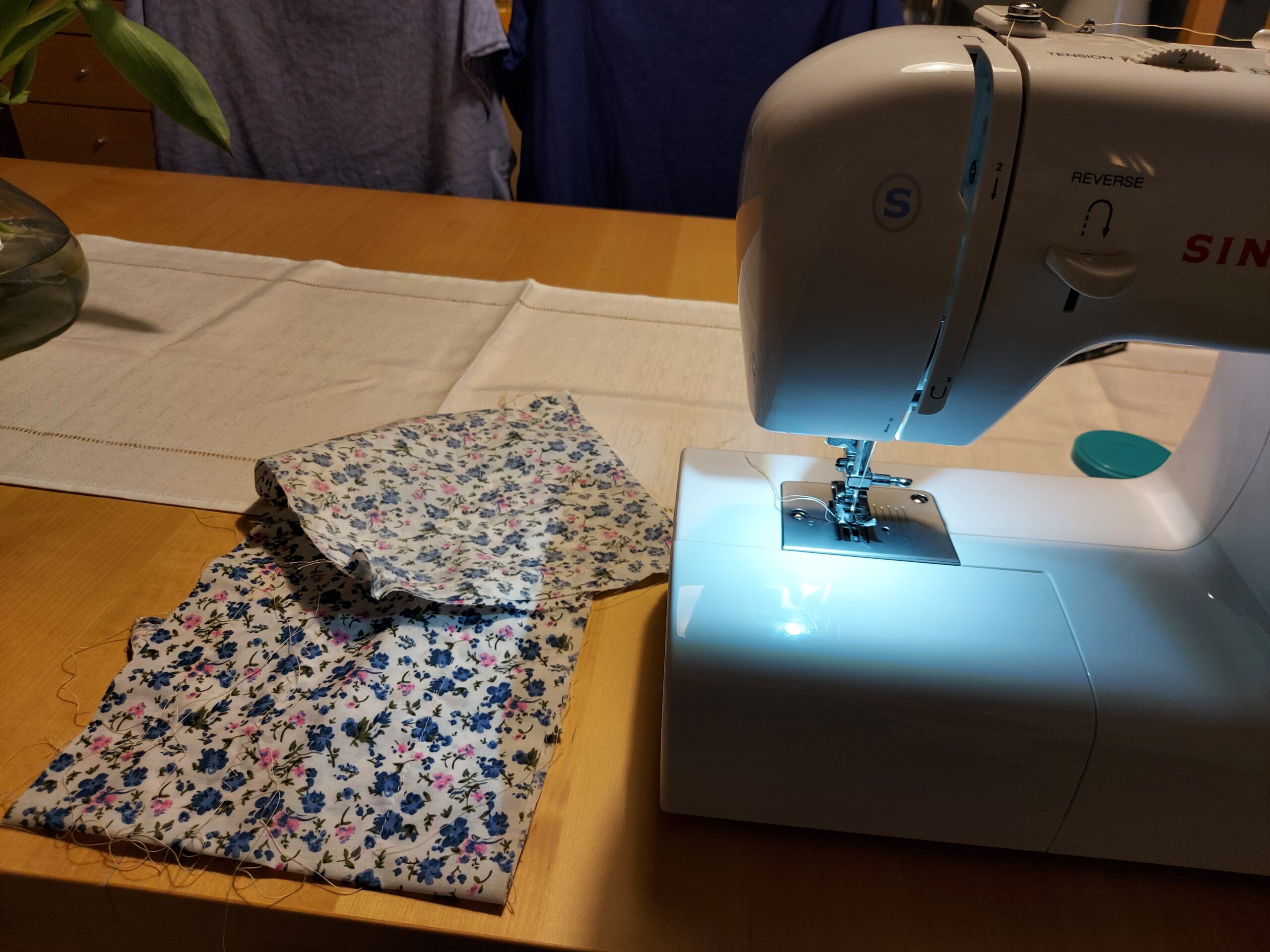
I actually ended up doing two clauses. I was at home for the month, and Mam taught me how to use the sewing machine.

Some material next to a sewing machine

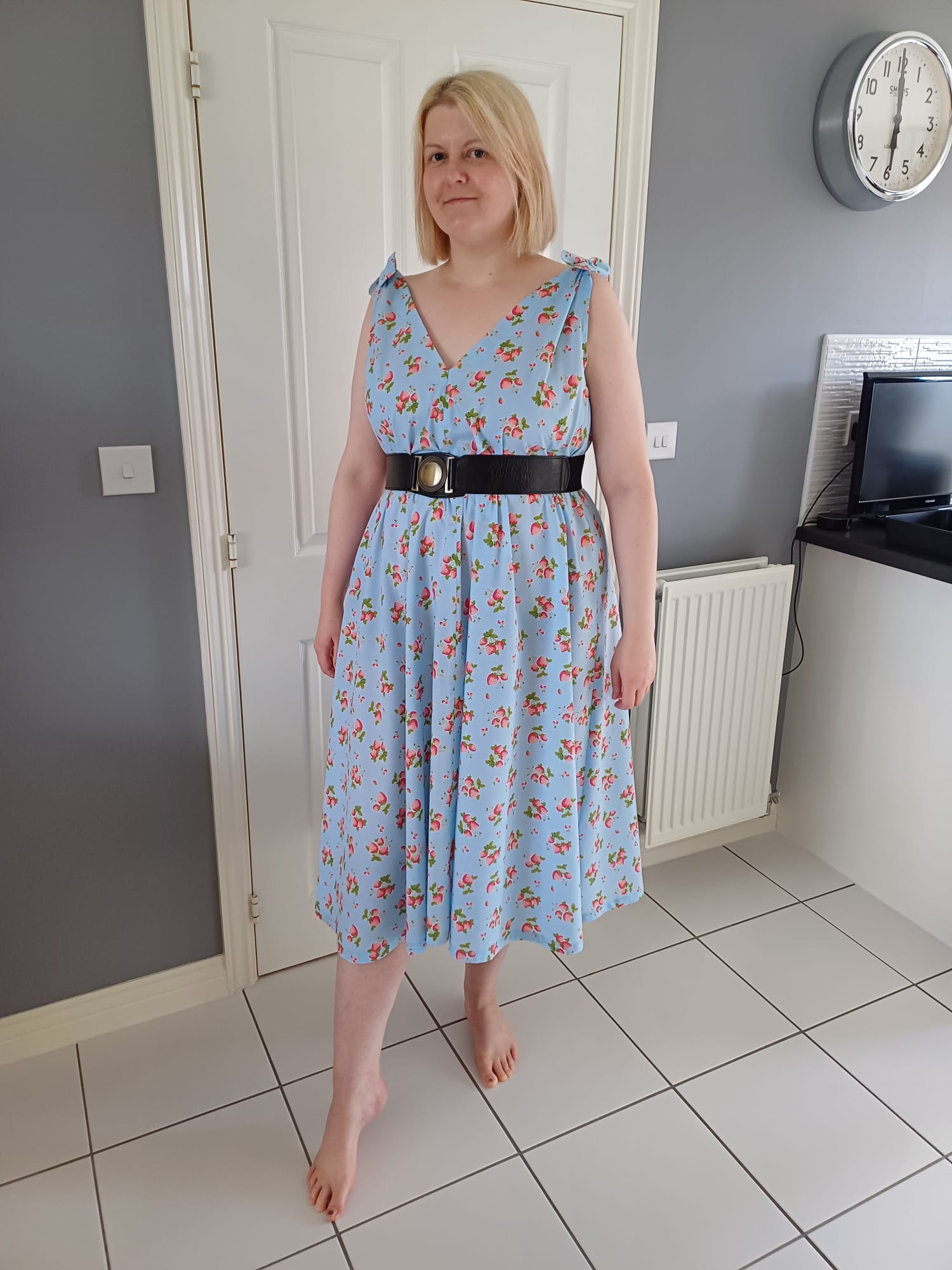
I also kickstarted my Designer badge by making a dress, the pattern of which came in a book I got as a Christmas present after seeing someone I follow on Instagram give it a go. With Mam’s help, I made this lovely Popover Dress in a summery strawberry print fabric.

A blue dress with a strawberry print, cinched in with a black belt