The Rebel With A Cause badge was first introduced last year, and has come back for 2023 as it was so popular and it’s such a worthwhile badge. This year, I was really busy with all sorts of things so decided on something I could do in my free time sitting in front of the computer.
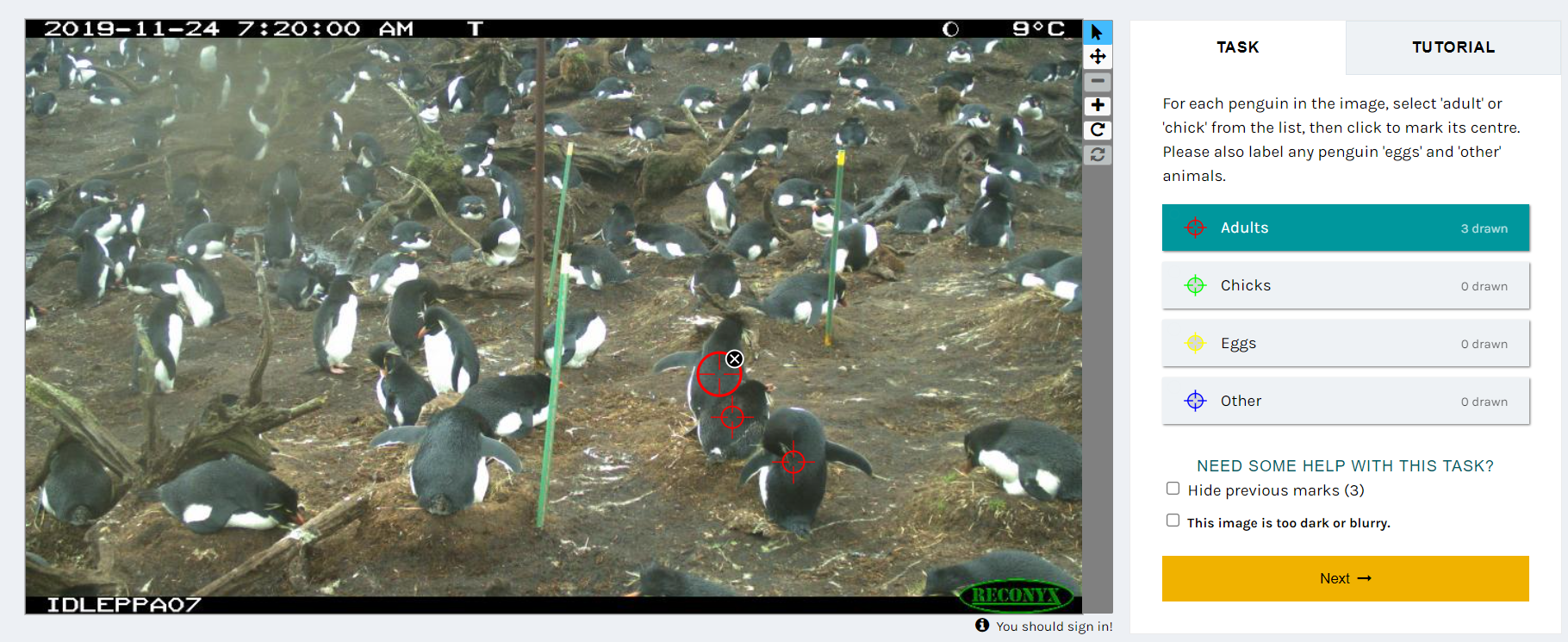
I registered for Zooniverse and helped out with a citizen science project to count penguins. I tried to do a little each day, which added up over the course of the month. I adore penguins so this was perfect for me!
I was really looking forward to this one! April’s monthly challenge was the Chocolate Challenge, and in between going on holiday and spending Easter with my parents, I ate more chocolate than I have done for ages! Of course, I managed to complete some other clauses too.
Research the history of chocolate, and how it has changed over the years.
Try five new flavours of chocolate that you’ve never tried before.
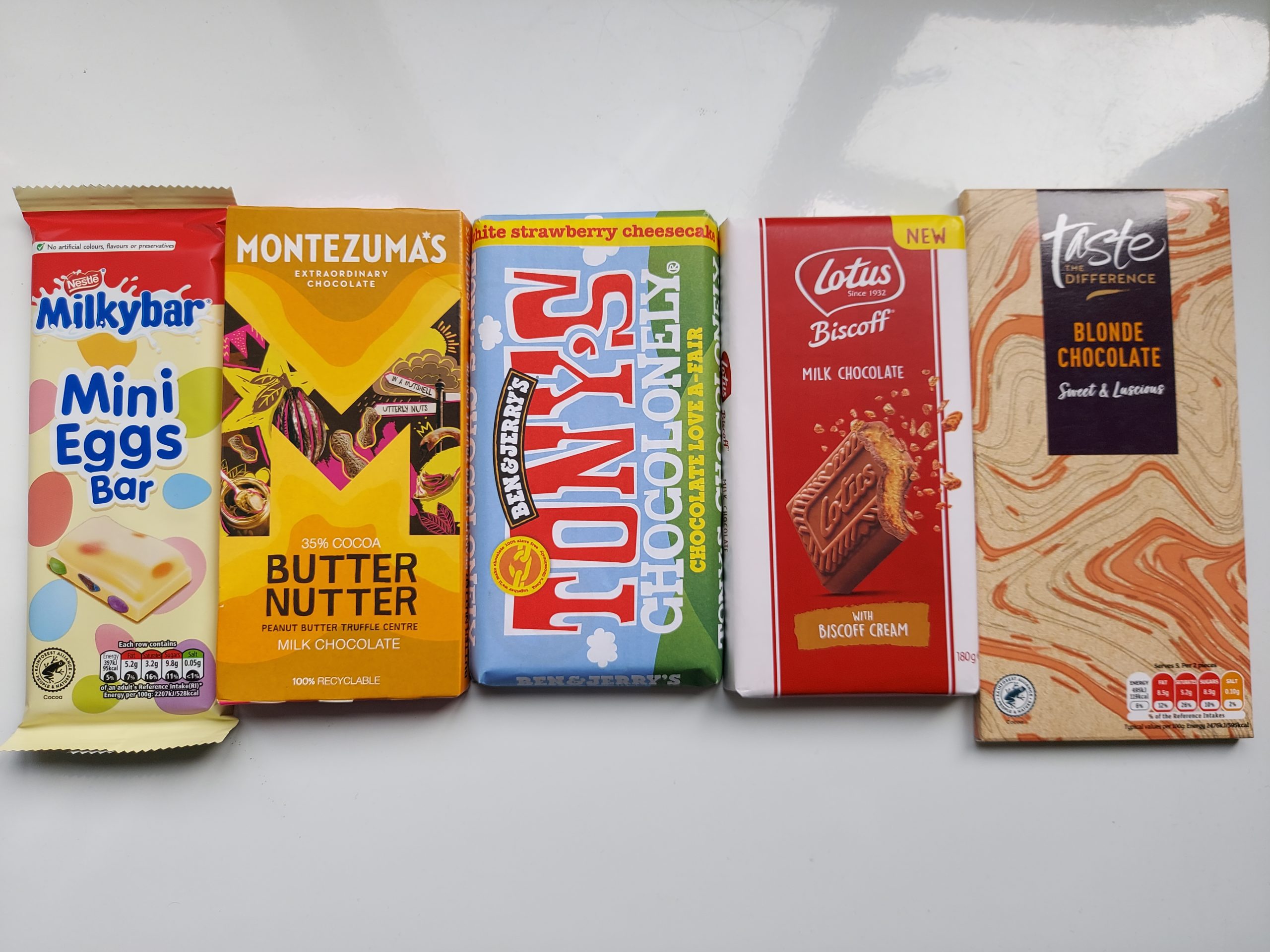
This clause was probably my favourite! I tried the following:
Milkybar Mini Eggs Bar (Creamy white choc, mini eggs add texture and more intense milk choc flavour)
Montezuma’s Butter Nutter (Yummy peanut butter inside sweet chocolate, like Reese’s but the chocolate is actually good)
Tony’s Chocolonely Strawberry Cheesecake (Creamy and sweet with biscuit pieces, but the strawberry was a bit too chewy)
Lotus Biscoff Milk Chocolate (Crunchier than expected with that delicious Biscoff taste)
Sainsbury’s Taste the Difference Blonde Chocolate (More intense than white chocolate with a rich caramel hit)
Honestly, they were all amazing and I’d give them all 5 stars except for the strawberry cheesecake, as the strawberry bits were a bit chewy and didn’t go too well with the rest of the bar.
Find out about the Fairtrade mark and ethical chocolate production.
The Fairtrade mark is a label awarded to a product that meets international Fairtrade standards. These standards include social, economic and environmental requirements that need to be met, as well as progress requirements showing that standards are continuously improving. This webpage explains more about these standards.
I found this article which looked at some of the biggest ethical issues surrounding chocolate production, including poverty, child labour and deforestation, and the ways in which this is being tackled.
Give someone a chocolate bar as a random act of kindness.
I gave chocolate bars to my housemates before I left to go home for Easter.
Learn about chocolate classification.
I found this really interesting. I learned the following:
Dark chocolate contains 65% to 99% cocoa mass and 1% to 40% sugar.
Dark milk chocolate contains 50% to 70% cocoa mass, 20% to 30% milk powder, and 20% to 30% sugar.
Milk chocolate contains 35% to 55% cocoa mass, 20% to 25% milk powder, and 20% to 25% sugar.
White chocolate contains 30% to 45% cocoa butter, 25% to 40% milk powder, and 25% to 55% sugar.
Ruby chocolate contains 40% to 55% cocoa mass, 15% to 30% milk powder, 15% to 30% sugar, and 1% to 5% citric acid.
Gianduja chocolate contains 20% to 40% cocoa mass, 25% to 35% hazelnuts, and 30% to 40% sugar.
I made a chart to demonstrate this:
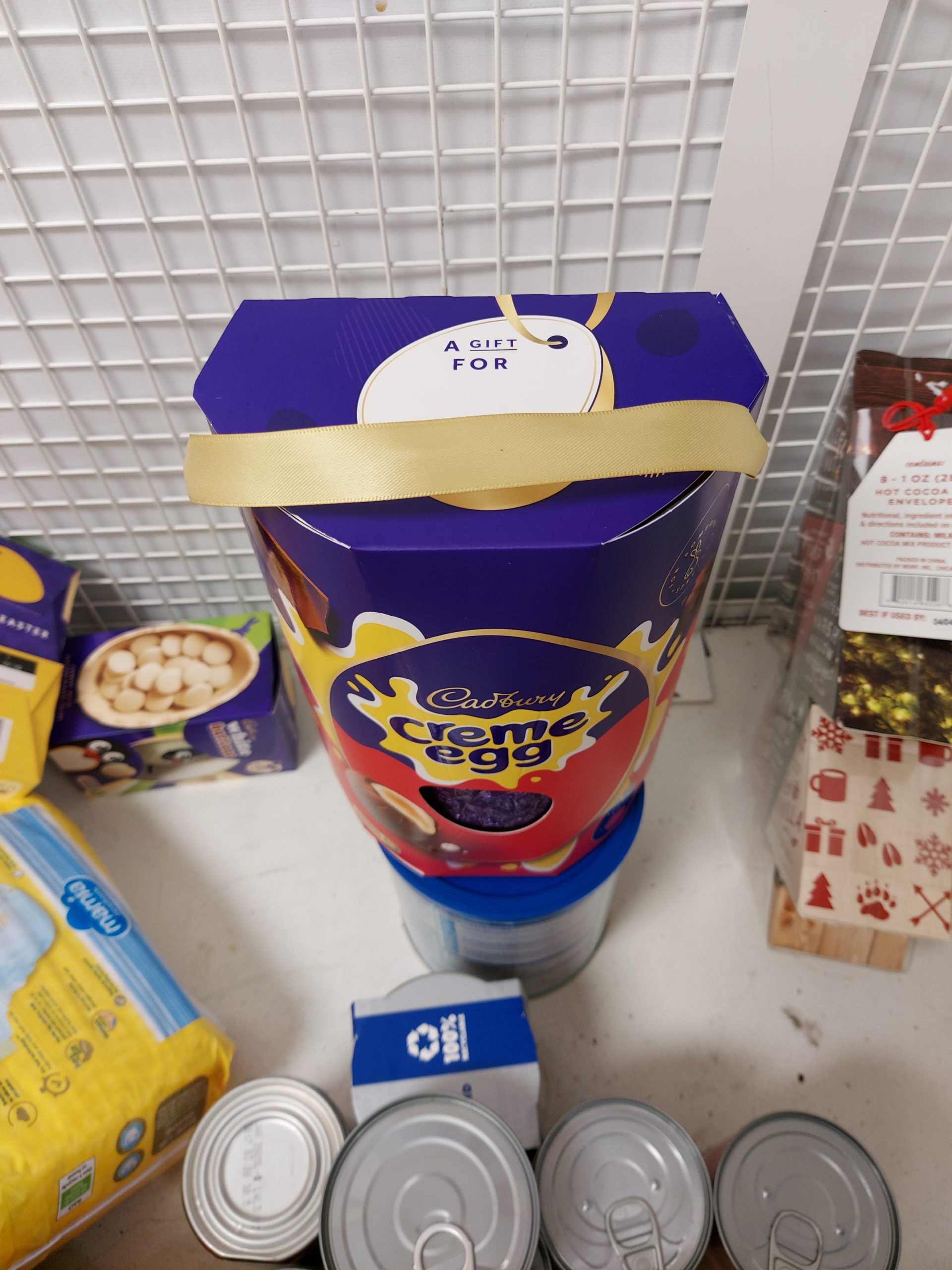
Donate an Easter egg to a foodbank.
I did this on April 1, the first day of the challenge, to make sure it was done in time for Easter.
Try a chocolate which meets a dietary requirement you don’t have.
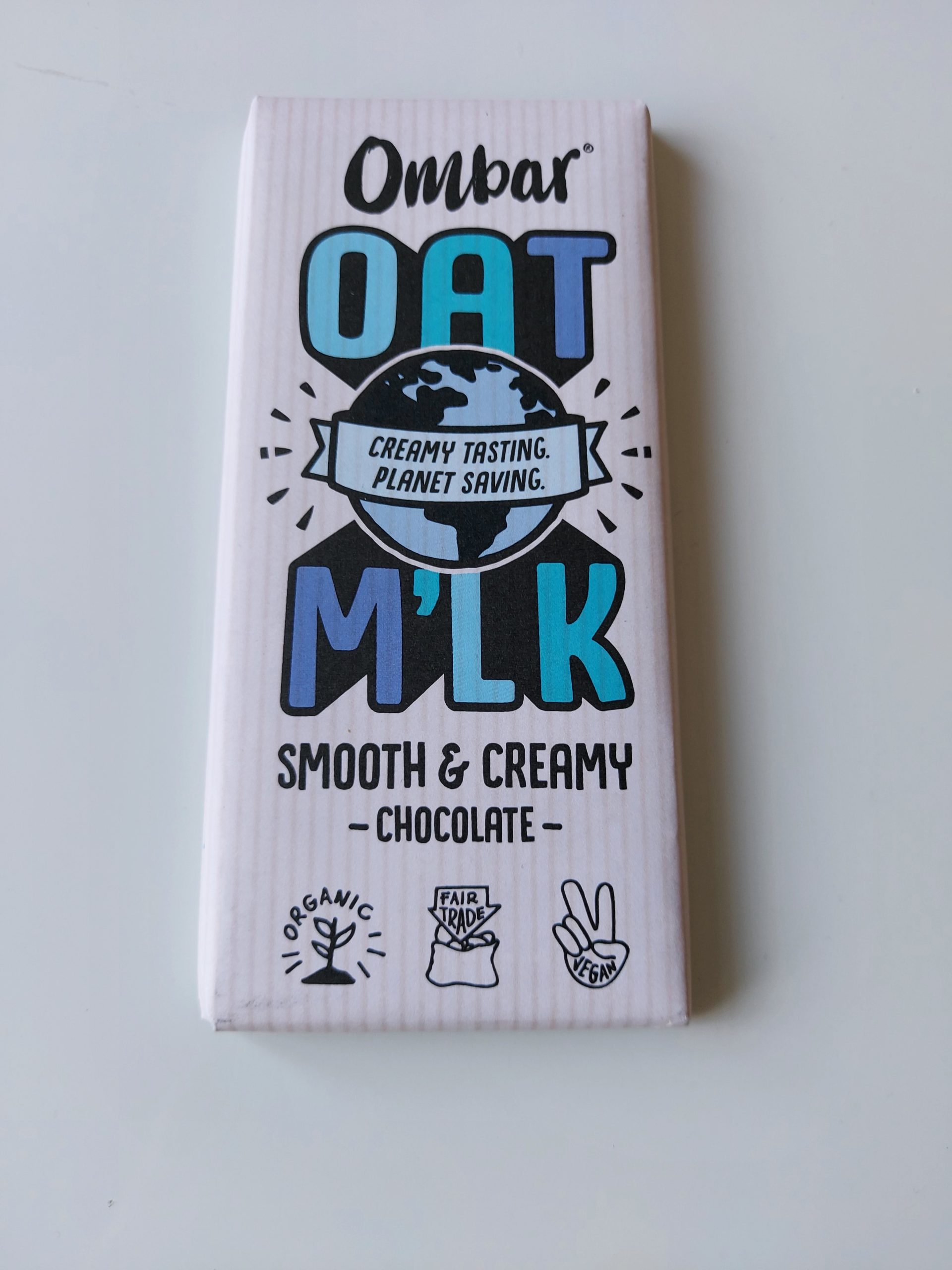
I tried the Ombar Oat Milk chocolate. It wasn’t horrible but just didn’t taste as nice as standard milk chocolate, so I don’t think I’ll be eating it again! Also, why is alternative milk chocolate so much more expensive than normal milk chocolate?
Blind test five different brands of the same type of chocolate.
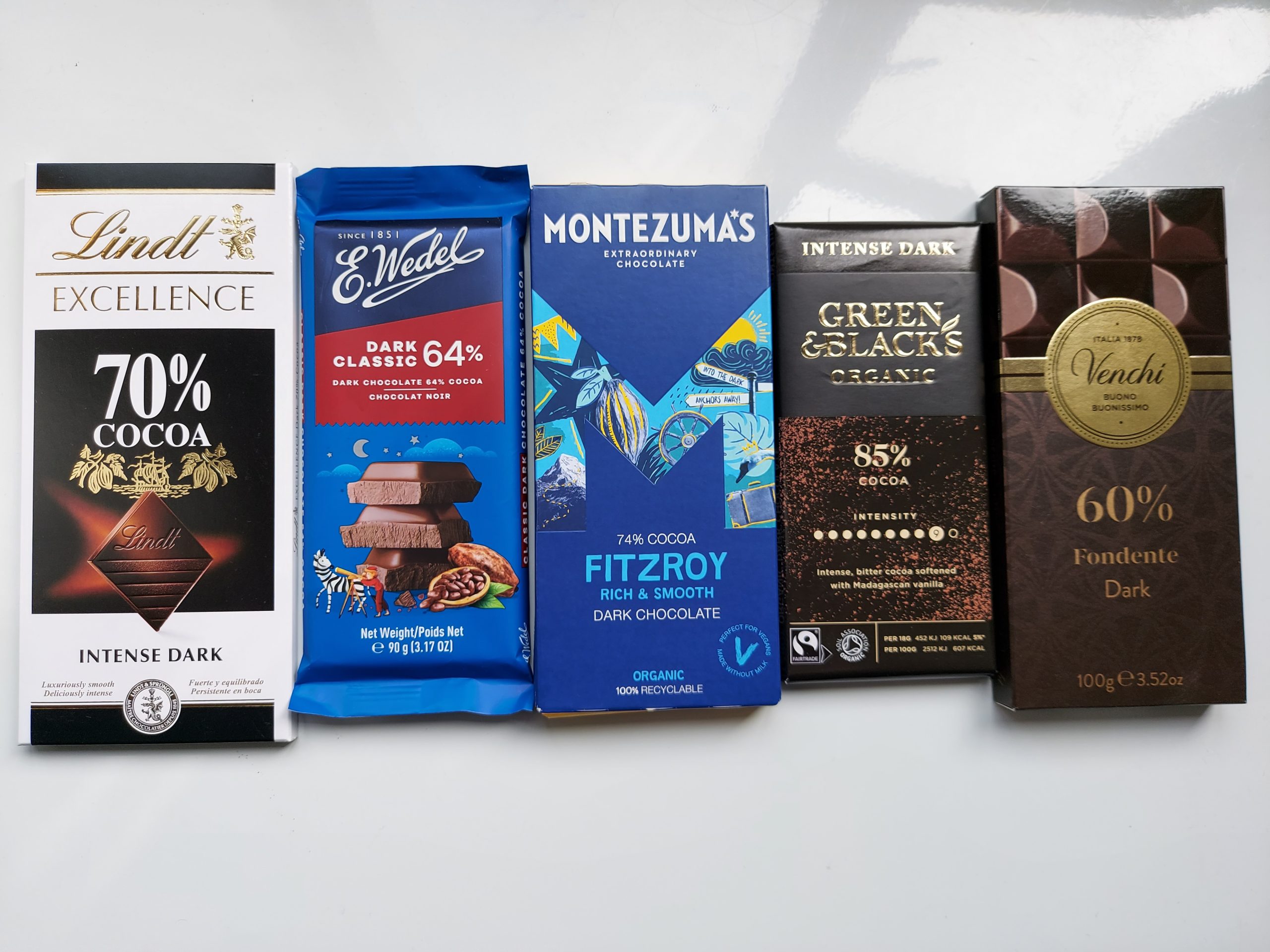
I tried five different types of dark chocolate, and would put them in the following order:
Venchi 60% Dark
E. Wedel 64% Dark Classic
Lindt Excellence 70% Cocoa Intense Dark
Montezuma’s Fitzroy 74% Cocoa Dark Chocolate
Green & Black’s Organic 85% Cocoa Intense Dark
The bad news was that the most expensive bar (Venchi) was my favourite. The good news was that the cheapest bar (E. Wedel) was my second favourite. In fact I think I just prefer dark chocolate that is 60% or so rather than the more intense 80% plus.
The Be A Hero challenge is March’s monthly challenge, designed to coincide with International Women’s Day (8 March). I had fun doing this challenge, as much of it involved reading and research.
Complete the ‘My Powers’ badge from Volume Two.
I had already chosen to complete this badge for the Happy 2023 quarterly badge, so this was an ideal choice for me. My blog post on My Powers is here.
Write a profile about either a historical or a contemporary female hero.
I’ve chosen to focus on Preet Chandi, as she has connections with Antarctica – something I am incredibly interested in. Known as ‘Polar Preet’ thanks to her accomplishments, she is a British physiotherapist and British Army Medical Officer and has completed two groundbreaking Antarctic expeditions in recent years. In 2021-22 she completed a solo expedition to the South Pole, while the following year she recorded the longest ever solo and unsupported polar expedition.
Chandi took part in various endurance events before her polar adventures. In 2017 she participated in the Lanyard Competition, a 40-mile (64 km) event, as part of a team of six with the Royal Signals. In 2019, she completed the Marathon des Sables, a 156-mile (251 km) ultramarathon across the Sahara.
Chandi completed her first expedition to the South Pole in 40 days, 7 hours and 3 minutes, making her the third fastest solo woman to reach the South Pole unassisted. She was also the first woman of colour to reach the South Pole solo and unsupported.
In November 2022, Chandi began her second solo expedition from Hercules Inlet, aiming to become the first woman to cross Antarctica solo and unsupported. Sadly she missed out on the crossing record, however on 20 January 2023 it was announced that Chandi had broken the world record for the longest solo and unsupported polar expedition, having travelled 868 miles (1,397 km) up to that point.
In November 2022, Chandi won Woman of the Year and also the Inspirational Award at the Women in Defence Awards 2022. She aims to inspire people to pursue their dreams, push their boundaries and believe in themselves.
Explain the difference between equity and equality in your own chosen way.
Equality: everyone gets a book.
Equity: everyone gets a book at the right level for their reading ability and on a topic or genre that interests them.
Learn about the history of the suffrage movement and the Suffragettes.
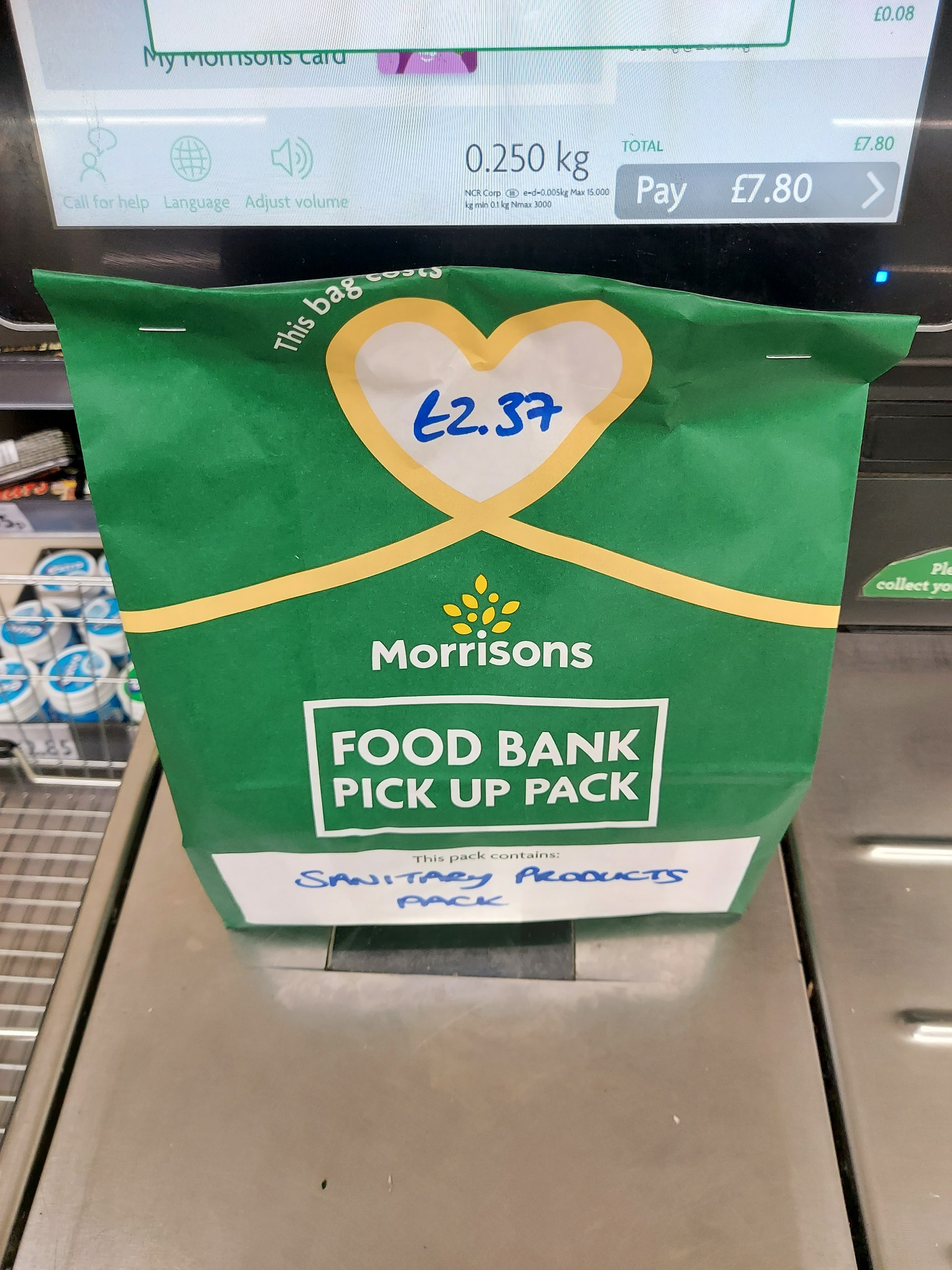
I donated period products to the food bank as part of my weekly shop.
Learn about the history of IWD and how it is celebrated around the world.
I found this article about the history of International Women’s Day. My first encounter with the day was in the context of studying Russian as an evening class at university. This was back in the Noughties and I’d never heard of the day before or seen it marked. It seems to have been historically celebrated in many Communist or former Communist countries, whereas nowadays it is marked all around the world. Social media has definitely played a role in raising awareness of IWD and women’s issues.
Read and review a feminist book.
I read Invisible Women by Caroline Criado Perez. This is an incredibly important book which examines the ways women have been sidelined and ignored over the years, in areas such as healthcare, safety and town planning. Basically, seeing men as the “default” gender ignores the many ways in which women have different needs.
However, the book does have some flaws. It talks about women having different heart attack symptoms to men, which is not true. When it talks about relationships, it is referring to exclusively heterosexual relationships (although it does at least acknowledge that they are specifically heterosexual relationships). It ignores the existence of trans and non-binary individuals completely: it would have made the book richer to examine how the issues described in the book relate to them. In addition, some of the ways in which women are shown to be different to men are social rather than biological. For instance, women are more likely to take smaller shorter journeys throughout the day (e.g. to drop children off at school, take older relatives to hospital), whereas men are more likely to go straight to work. While I agree that it is important to take these journeys into account when planning public transport – and unfortunately it is the more straightforward suburb-to-city-centre journey that tends to be catered for – this shouldn’t inherently be women’s work and I feel we should be working towards a world where men and women share the care burden equally.
Having said all that, if you pick up the book aware of its limitations, it is still a very important and eye-opening work and well worth a read.
February’s challenge was the LOVE Challenge, appropriately enough since this is the month of Valentine’s Day. I used to hate this day but I am a bit more tolerant of it now! I actually had a lot of fun completing the clauses this month.
Once a week, all month, make a conscious effort to treat yourself
To treat myself this month I chose a trip to the theatre, a PALentine’s Bouquet Workshop with LUSH, a meal out with a friend, and a trip to the Big Rebel Meet Up in Bromsgrove.
I also completed the following six clauses of my choice:
Make a rose from a medium of your choice.
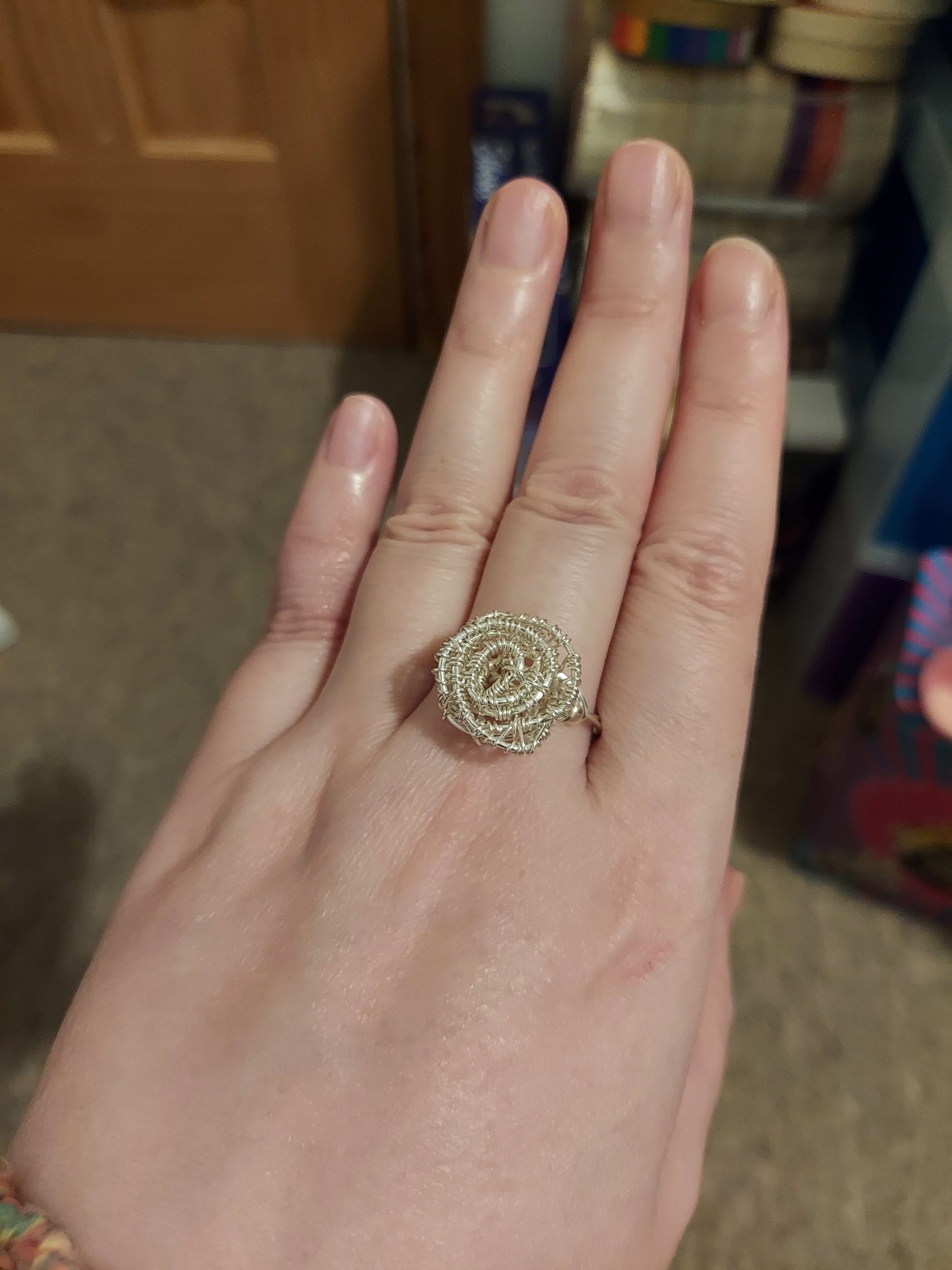
I bought a kit online and made a wire-wrapped rose ring. It was tricky but I’m quite pleased with the final result. I’m going to give it to my mam for Mother’s Day.
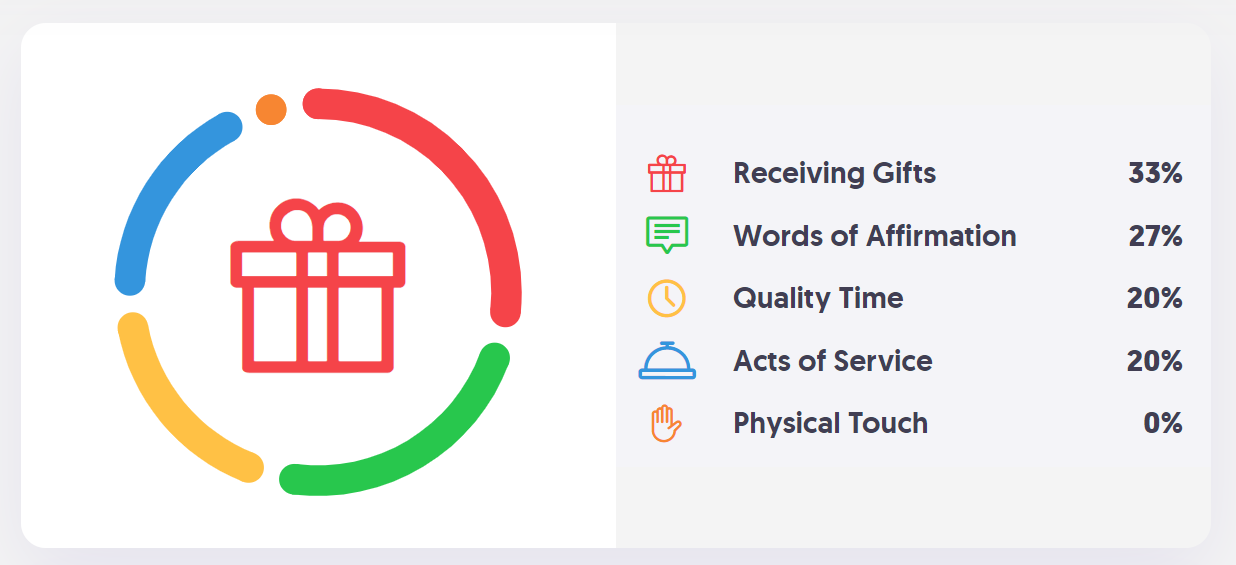
Learn about the five love languages and recognise which apply/ies to you.
Another Rebel kindly provided a link to a love languages quiz. My results did not surprise me:
Learn about the history of Valentine’s Day.
I found this article on the topic which was very interesting.
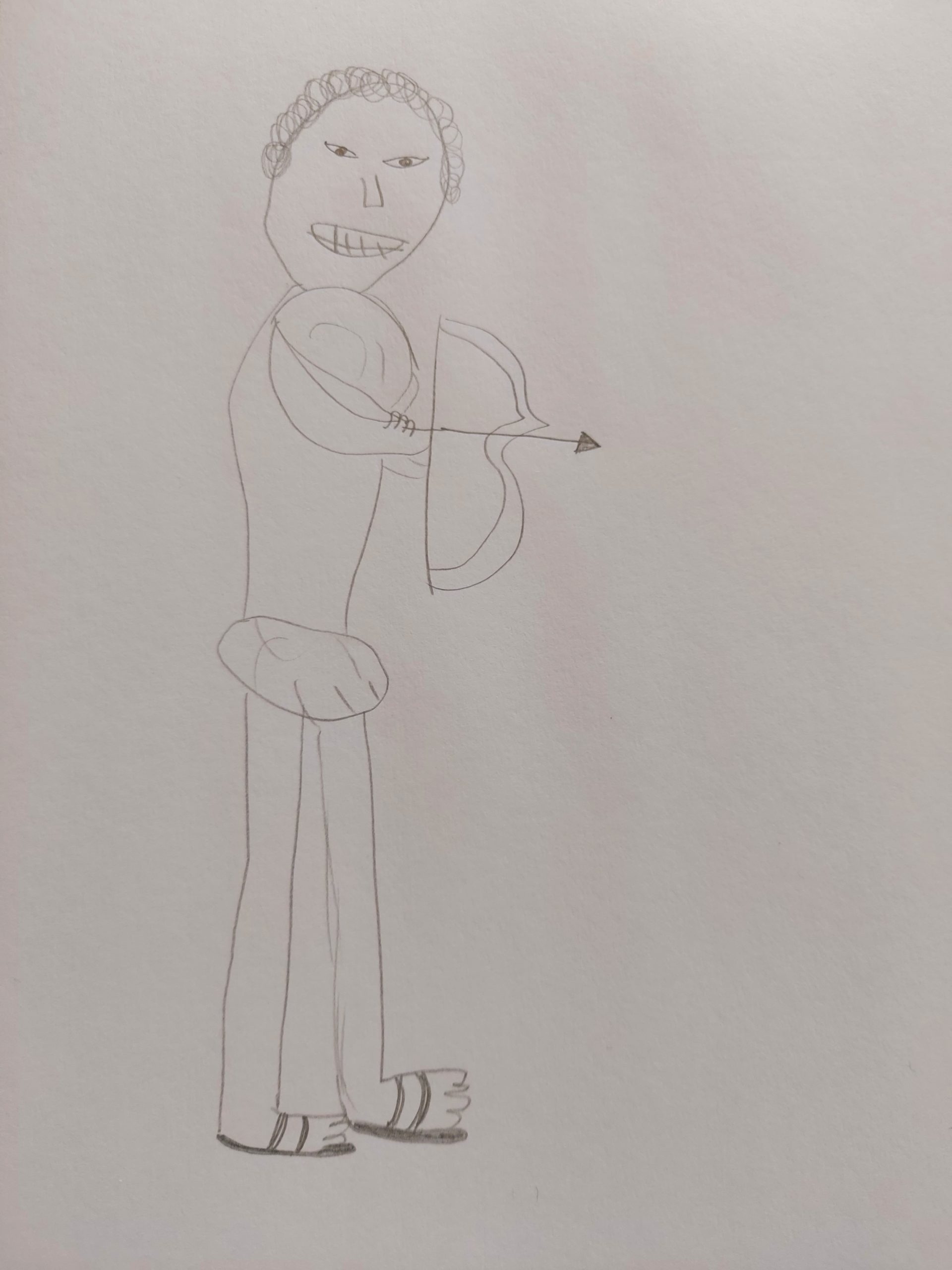
Draw or paint a picture of Cupid.
Yes, I know it looks like a five-year-old child drew it, but it’s my work, I promise!
Research the origins of the heart symbol and how hearts came to represent love.
I found this article which was so interesting – I had no idea the shape had such a history!
The name of this challenge speaks for itself: Exercise Every Day. January is in many ways the worst month to exercise every day in: the sadness of the post-Christmas period, along with the short days and cold weather. However, January is also the month of Yoga With Adriene‘s 30 Days of Yoga Challenge, and participation in this helped me to complete this month’s badge.
Along with yoga, I started my Runner badge this month so have been going for a run three times a week. Most notably, I took part in the London Winter Walk on Saturday 28 January and completed over 26 miles!
In the same vein as the Halloween Challenge, the Christmas Challenge has been designed so that you complete 8 out of the 16 clauses available. I love Christmas so this was another challenge I’ve thoroughly enjoyed!
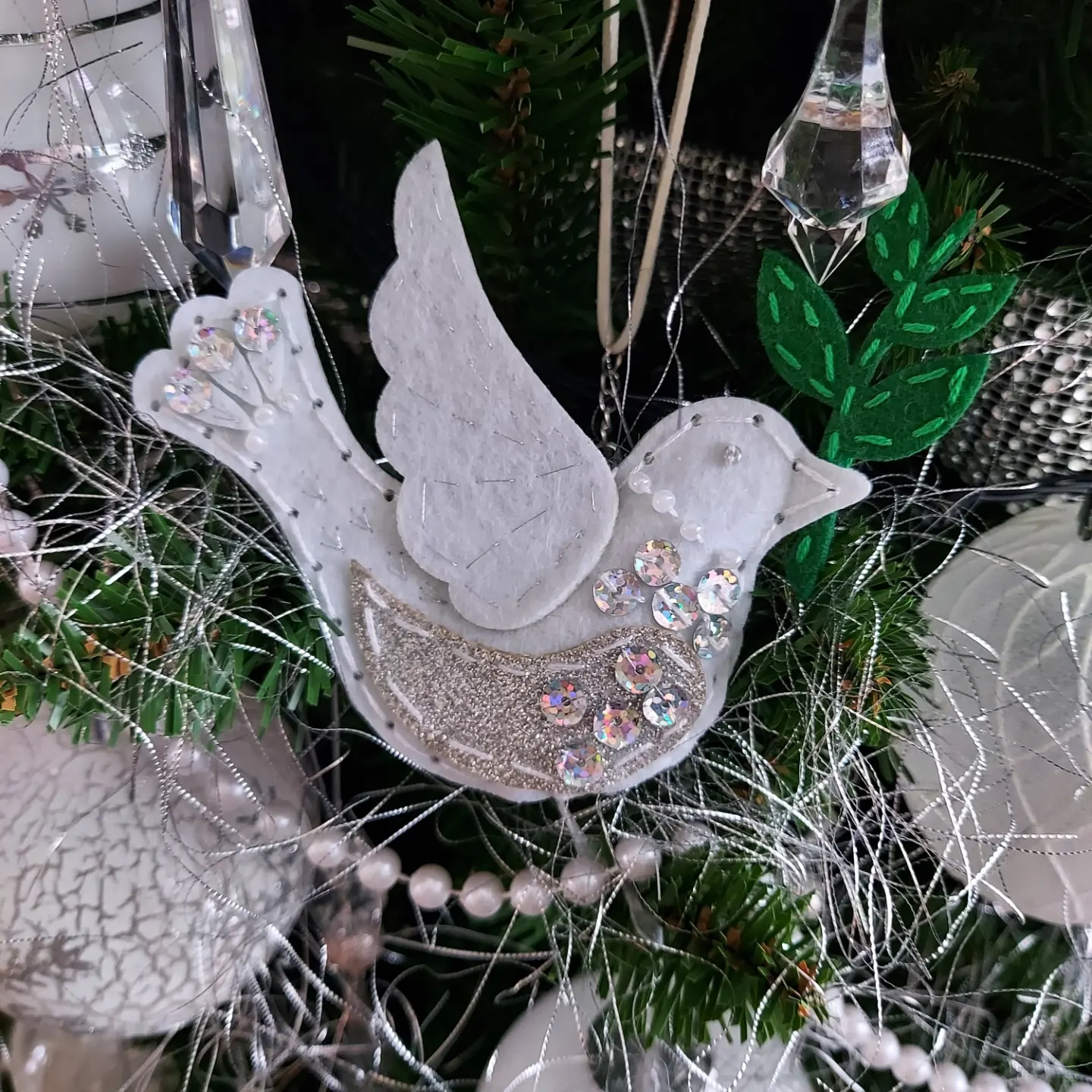
Make a festive ornament
I got a kit from eBay and made this lovely dove.
Take part in a reverse advent calendar
I signed up to the Injustice Advent Calendar from Transform Trade, which I found out about via the RBC Facebook page, and have been following the prompts each day.
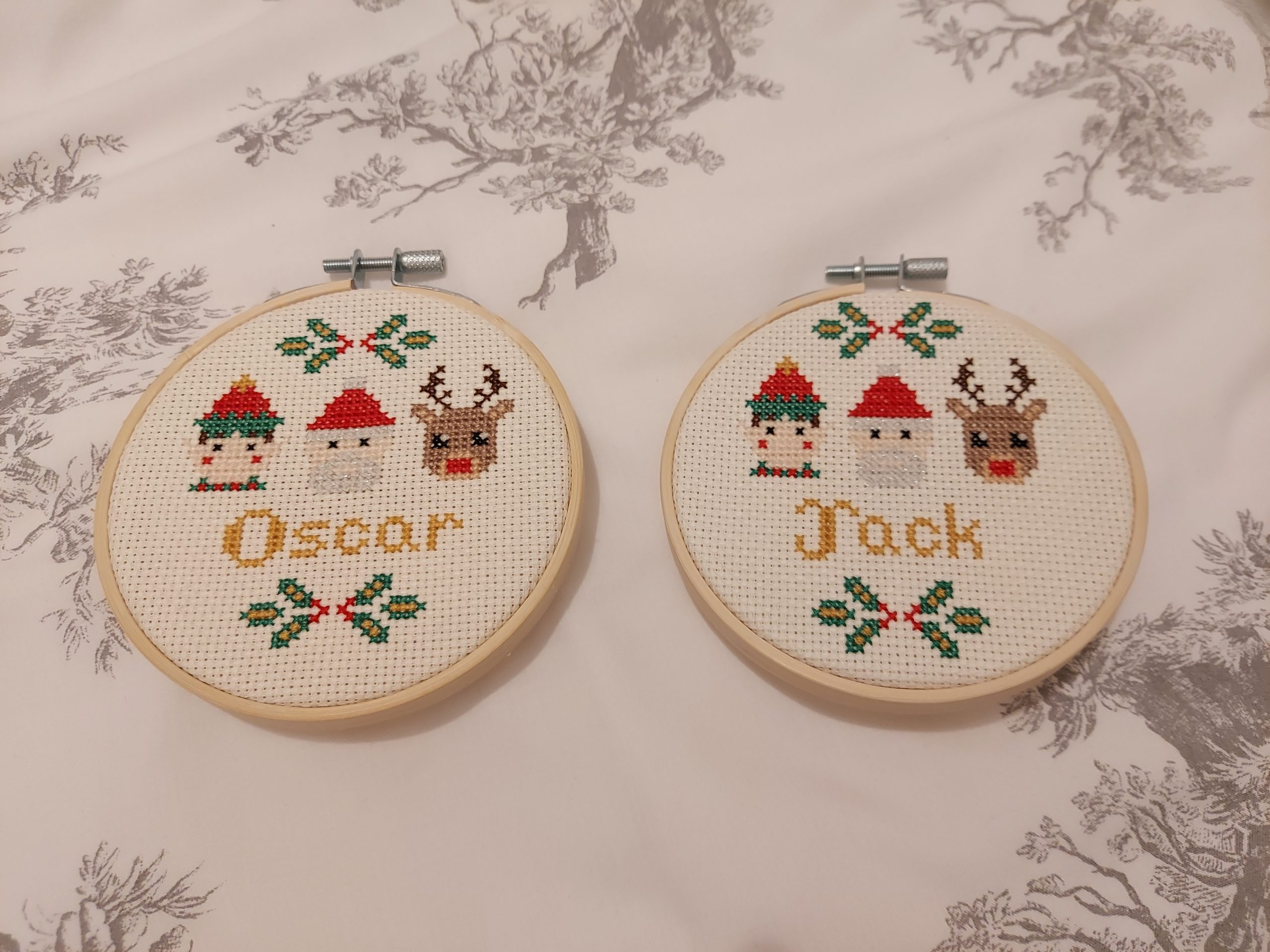
Handmake at least one present
I made cross stitched gifts for my cousins’ little boys.
Learn about the different celebrations which take place in December around the world
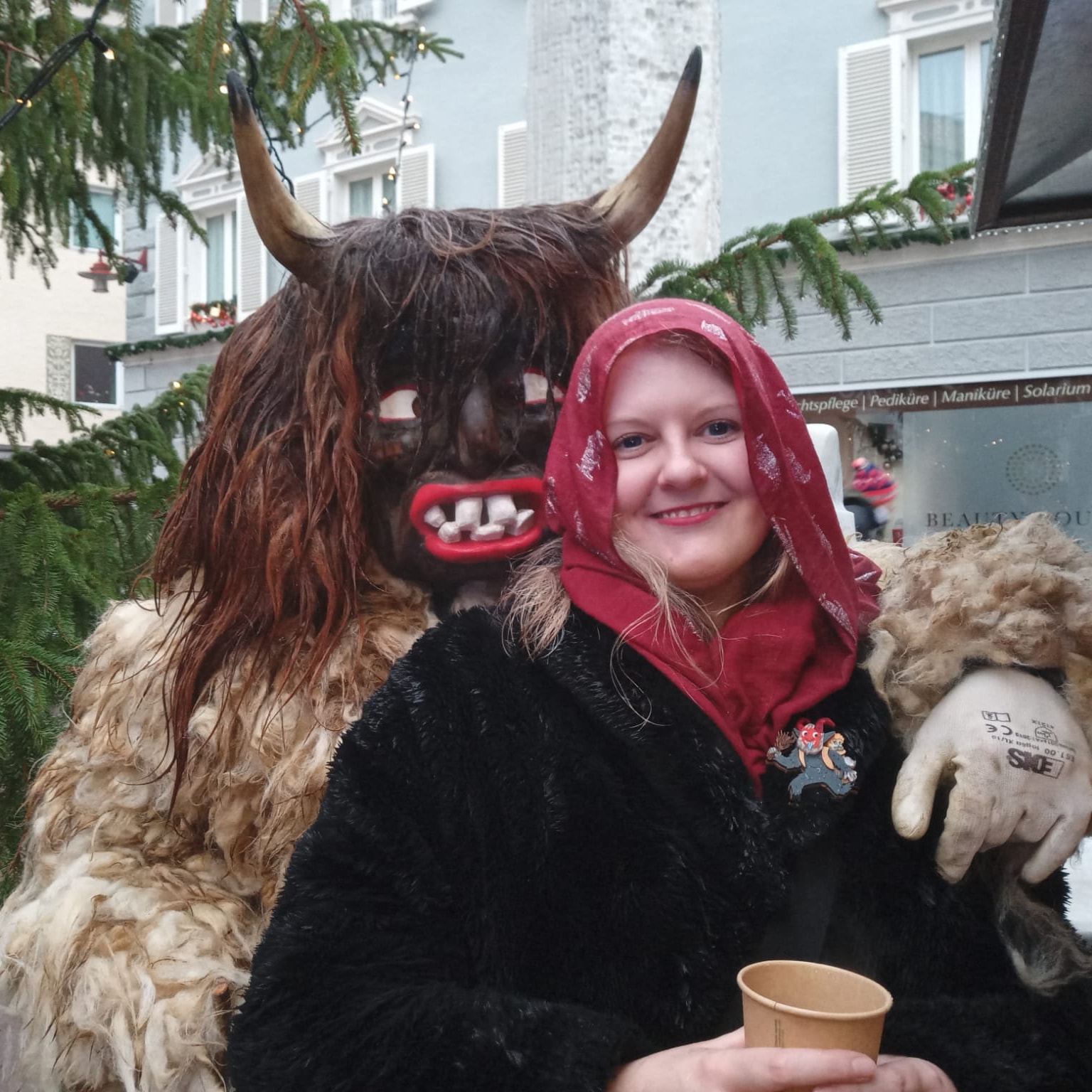
I’ve learned a lot about this in the past, but this year I took my learning to the next level and actually attended some Krampusnacht celebrations in South Tyrol – I had an amazing time!
I’m the one on the right.
Take part in “Whamageddon”
I lasted quite a while this year as I managed to avoid the song entirely while I was abroad! Sadly, the day after I came back (8 December) I was stewarding the panto at my local theatre and “Last Christmas” was part of the pre-show playlist.
Watch at least three Christmas movies
I’ve been trying to work my way through alternative Christmas movies: this year I watched Christmas Holiday (1944), Whoever Slew Auntie Roo? (1971) and Deathcember (2019), which are all very different but enjoyable films.
Take part in a festive event
While I was on holiday I went to a Christmas lights event in Innsbruck – the theme was a local marmot travelling around the world, so there were giraffes, penguins, polar bears, an underwater scene and waltzers – plus lots more.
Visit a Christmas market
I visited a Christmas market in Innsbruck and another when I got home – I met up with some friends in Kingston.
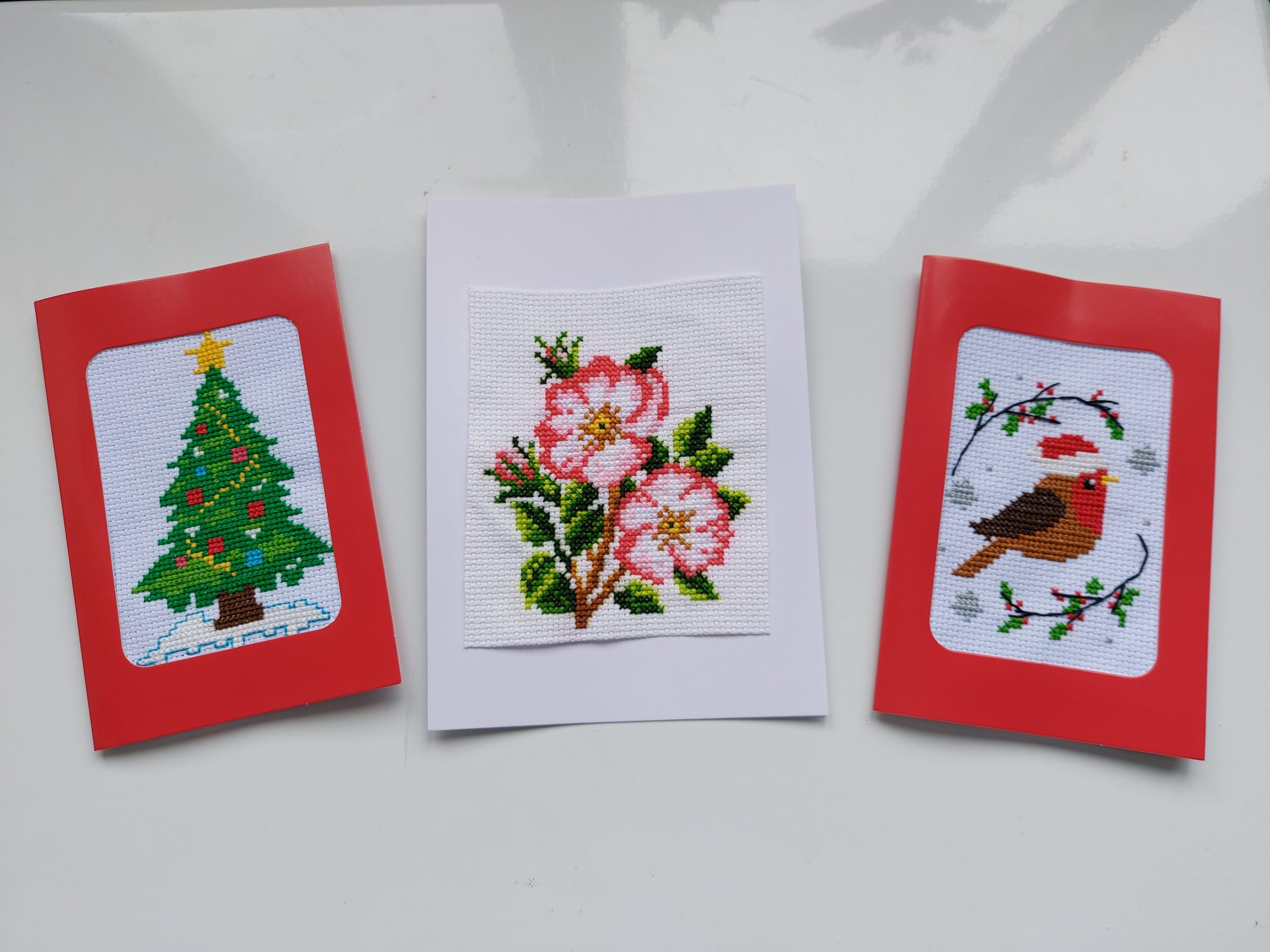
Make your own festive cards
I cross stitched some cards for my housemates – there are three of them which was a manageable number!
So, November’s monthly challenge was perfect for me. Write Every Day – you choose what you write. I had no problems sticking to this challenge, because I write so much anyway – theatre reviews, blog posts, and my daily diary.
I’ve also been working on my novel as part of my Maverick Award (on which more later), so that helped me achieve this badge. I signed up for NaNoWriMo, and while I didn’t manage anywhere near the 50,000 words that challenge aims for, I did manage several thousand.
I love Halloween. When I was younger we used to have Halloween parties in our garage, dressed in the staple 90s Halloween uniform of a black bin bag and pointy hat. These days, I don’t usually dress up or go to parties, but I like to celebrate in other ways. I was very excited at the possibility of a Halloween badge, especially as the matching sticker glows in the dark!
My homemade Halloween efforts
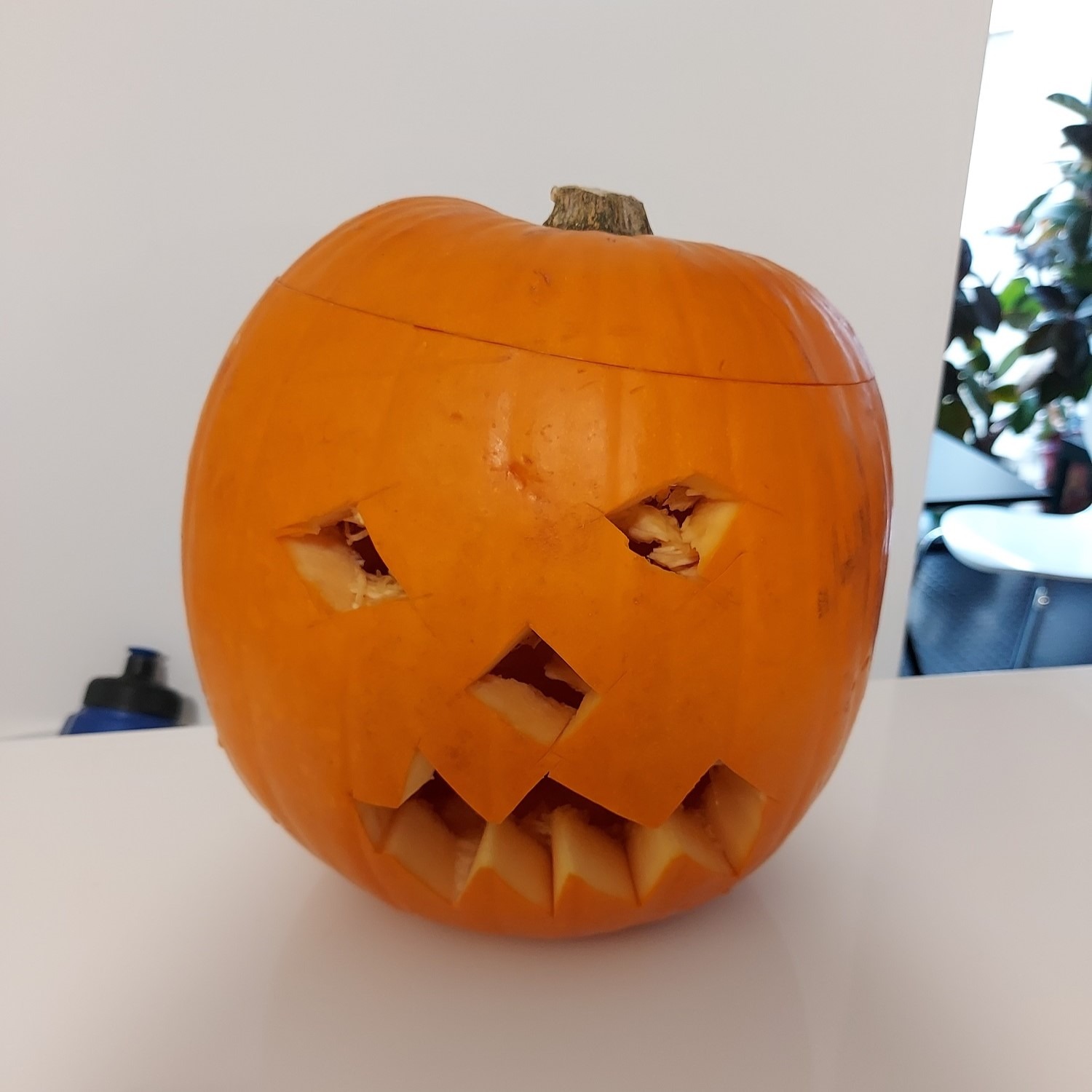
Carve a pumpkin.
When I was younger, it was all about turnips – we didn’t really have pumpkins up north. Turnips are far harder to carve than pumpkins, however, so I chose a pumpkin this time. I don’t have much artistic ability, so I stuck to a traditional scary face.
Use your pumpkin scraps in a recipe.
I roasted my pumpkin to make pumpkin soup. Unfortunately I put the pumpkin in the oven and went to do some yoga, so when I got back a lot of the pumpkin pieces had burned. I was only able to get one bowl of soup out of the pumpkin that was still good enough to eat. Oh well!
Watch a scary or spooky movie and review it.
Halloween Ends, 2022
Halloween Ends is the final film in a trilogy that started with Halloween in 2018, and continued with Halloween Kills in 2021. Together the three films are direct sequels to the original Halloween from 1978, and star Jamie Lee Curtis as Laurie Strode, who is trying to rebuild her life after the ordeal she suffered at the hands of Michael Myers.
This film didn’t go in the direction I expected. Most of it focuses on Corey, a young man who is ostracised by the town of Haddonfield after a terrible accident. The opening scenes of the film were genuinely shocking and unexpected, and Rohan Campbell does an excellent job at portraying Corey’s transformation.
The tone of the film didn’t quite convince me – it was less horror and more romantic drama for much of its runtime. I also wasn’t sure about the portrayal of Michael in this movie – his apparent weakness didn’t quite fit in with the almost superhuman strength we witnessed in him during the last two films. I almost felt sorry for him at times.
Overall, though, the film does make some brave choices and I found it interesting to watch even if it didn’t live up to the original. But then, what would?
Read a Gothic novel and review it.
Wylding Hall by Elizabeth Hand
This short novel, first published in 2015, brings together traditional folk horror and a haunted house setting with a more unusual twist. In the early 1970s, up and coming folk rock band Windhollow Faire are sent off to Wylding Hall by their manager for the summer, with the aim of developing their sound and coming up with songs for their second album. At the end of the summer, their guitarist and songwriter goes missing, and the mystery surrounding his disappearance helps to make the album a cult hit. Decades later, the surviving members of the band are being interviewed for a documentary series, and recall that long-gone summer with a mix of nostalgia and unease.
I loved this book, a twist on the traditional haunted house mystery. Wylding Hall is a character in its own right, with ancient wings, shifting corridors and a decaying library. The story is told by members of the band and their team, and together they form a picture of a mysterious and ancient place, evoking the atmosphere of the 1970s. Throughout the book we learn more about what is going on at Wylding Hall, with references to ancient practices and prehistoric barrows, but plenty is left to the imagination. It takes a lot for a book to scare me, but one part in particular, involving photographs, did send chills down my spine. I would definitely recommend this book to anyone who loves a good Gothic tale, and even to those who aren’t normally fans of the genre.
Each year I am fond of telling anyone who will listen that turnips were originally carved instead of pumpkins. I do stick to pumpkins these days however, as they are so much easier.
Research alternative autumn festivals to Halloween.
The most famous autumnal festivals apart from Halloween are probably the Day of the Dead and Thanksgiving. For this badge I decided to research some festivals I didn’t previously know about. For instance, in Laos and Thailand, Boun Awk Phansa takes place in October and marks the end of the three-month Buddhist Lent period. People offer gifts to monks, take part in candlelight processions around temples, and send out small boats filled with candles, flowers and incense on the Mekong River. In India, Diwali – the festival of light – takes place in October or November each year.
Of course, Bonfire Night or Guy Fawkes Night is a key festival in the UK, marking the anniversary of the 1605 attempt to blow up Parliament. As a child my family used to celebrate this festival at least as much as Halloween, with fireworks, a bonfire, a guy (stuffed effigy) to go on top, and assorted autumn food.
Research the origins of a supernatural being.
Ghosts are among the most famous and popular supernatural beings. I’ve been reading a book called The First Ghosts by Irving Finkel, a keeper at the British Museum, who is an authority on cuneiform inscriptions on clay tablets from ancient Mesopotamia. In this book he explores the presence and role of ghosts in Mesopotamian culture, and it’s fascinating.
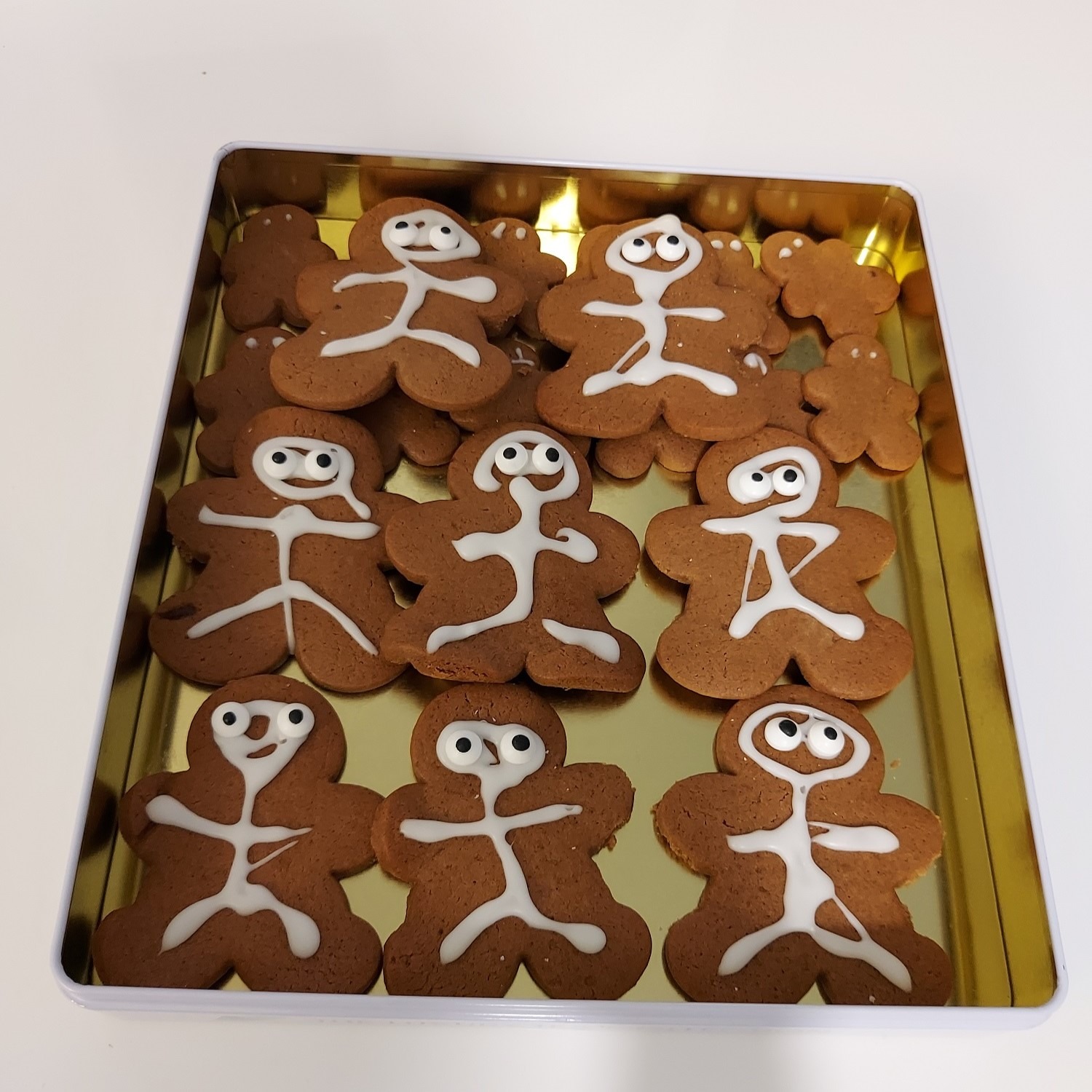
Do some Halloween-related baking.
I made some ‘gingerdead’ men and iced them to make them look like skeletons. I thought they looked more like Mr Burns from the Simpsons in that scene where he’s glowing and comes out of the forest, but I tried, I guess!
The September challenge for Rebel Badge Club was the Food Bank Challenge – sadly, so many people are facing food poverty this winter so the challenge was incredibly timely.
For this challenge, you needed to complete eight out of a possible sixteen clauses. I chose the following clauses – here’s how I got on.
Find out where your local food bank is, and how you can help them – are they looking for specific produce at the moment? Volunteers, etc.?
My local food bank has a number of sites around Ealing. At the moment their most needed items are rice, tinned fish, UHT milk (semi-skimmed and whole) and fruit squash. The volunteer opportunities require the ability to drive or be available Monday to Friday, when I am at work, however I can still help by donating food or money.
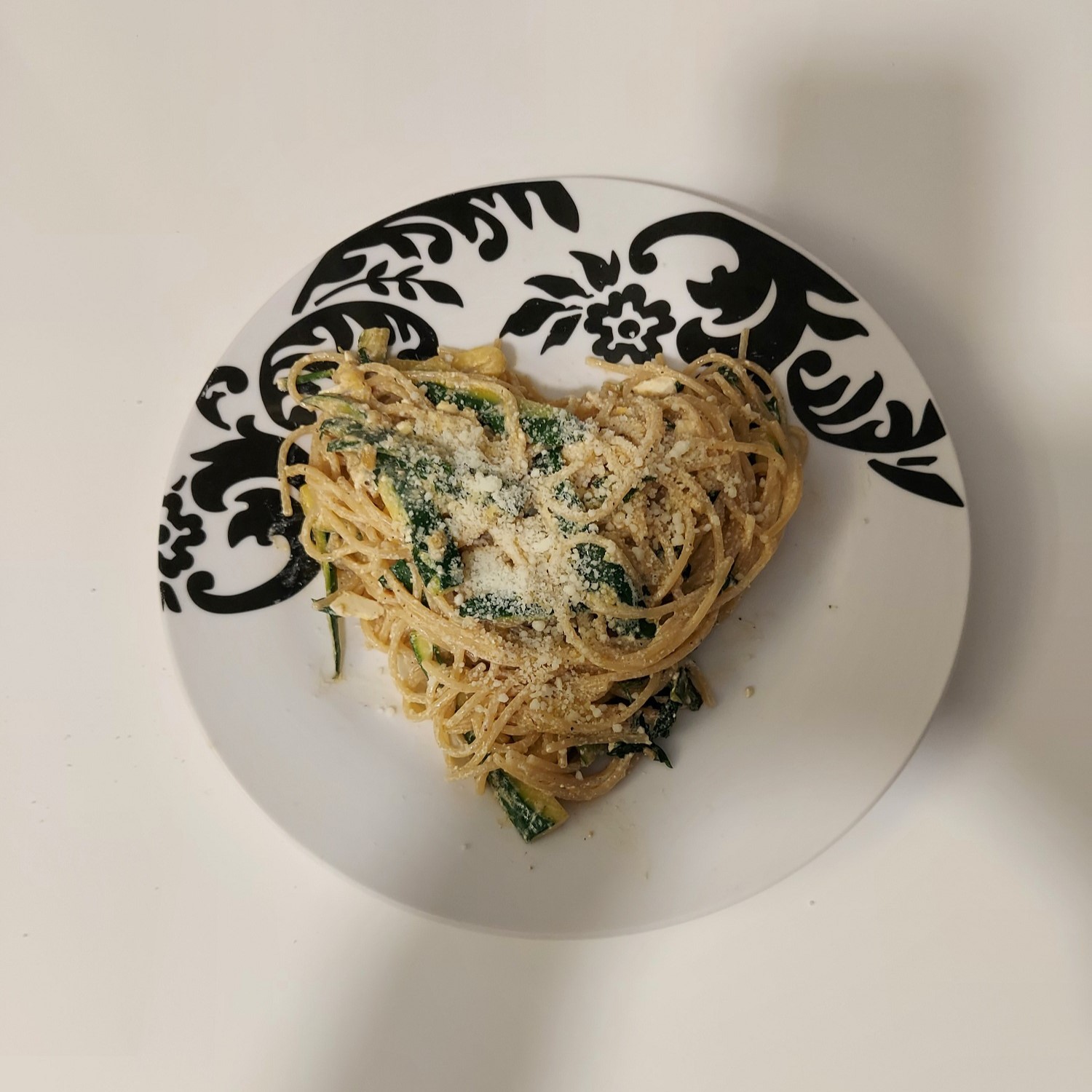
Choose a set budget, e.g. £1, £2 – and find three recipes you can make with that amount of money.
I found this clause pretty straightforward, mainly thanks to Jack Monroe’s recipes and tips which I’ve used for years. My chosen recipes are as follows, each costing under £1 per portion (I use Tesco value rice and pasta which are 45p and 35p per bag respectively):
Rice, lentils & onions (serves 1): boil 75g of rice (10p) and 25g of red lentils (20p). Meanwhile, chop an onion (12p) and fry in a little oil (2p) on a low heat. Once ready, drain the rice and lentils and add to a bowl. Top with the caramelised onions. Multiply quantities to serve multiple people. 42p per portion
Cannellini bean pasta (serves 2): gently fry a chopped onion (12p) in a little oil (2p) on a medium heat. Once the onions have browned, add a drained tin of cannellini beans (65p) and cook slowly, breaking up the beans. Add a little salt and pepper, and a teaspoon of paprika (5p). Meanwhile, boil 150g of pasta (15p). Once cooked, drain, and mix into the bean and onion mixture. Serve. 49p per portion
Mushroom pasta (serves 2): gently fry a chopped onion (12p) in a little oil (2p) on a medium heat. Once the onions have browned, add a pack of sliced mushrooms (£1) and fry until browned. Meanwhile, boil 150g of pasta (15p). Add half a packet of Philadelphia or the supermarket own-brand version to the onions & mushrooms (50p) – use a non-standard variety such as garlic & herb for a more exciting meal. Cook slowly to melt the Philadelphia into a sauce. Drain the pasta, add to the Philadelphia mixture, stir and serve. 90p per portion
Find out which non-food items you can donate to your local food bank.
Toiletries such as deodorant and toothpaste, household items like laundry detergent, period products like sanitary towels and tampons, baby supplies such as nappies and baby wipes, and face masks and hand sanitiser all come in handy.
Learn about online food donation, and food waste apps.
Apart from donating money to foodbanks, you can donate when online grocery shopping, which is good to know. I’ve heard about food waste apps, but never used them – this article from The Independent is a really good round-up of the best on offer.
Learn about how your local food bank is funded and who can access it. Is it an independent bank or part of a national scheme?
Ealing Foodbank is part of the Trussell Trust’s network, probably the most famous foodbank-related charity in the UK. In Ealing the foodbank is managed by local churches and community groups.
To receive a food parcel, you need to get a voucher from an organisation like Citizens Advice or a local support agency.
Find out about other parallel schemes in your area – for example baby essentials banks, period poverty schemes and school uniform funds.
The Ealing Salvation Army runs a Baby Bank every Tuesday, providing second-hand baby clothes and equipment. I couldn’t find anything about a period poverty scheme beyond the general schools initiative, or help for school uniforms beyond the requirement for schools to make second-hand uniforms available to buy.
Research ways that you can preserve food for longer in your kitchen. Try one!
I found this article useful as a general guide to keeping food fresher for longer. My mam is always telling me to prevent salad from going soggy by adding a piece of kitchen roll inside the bag to soak up excess moisture. This clause was the push I needed to actually try it, and it works!
Donate a basket of food to your local food bank, community fridge or local supermarket drop-off point.
My supermarket makes this so easy by having a drop-off point just after the checkout – I need to do this more often.
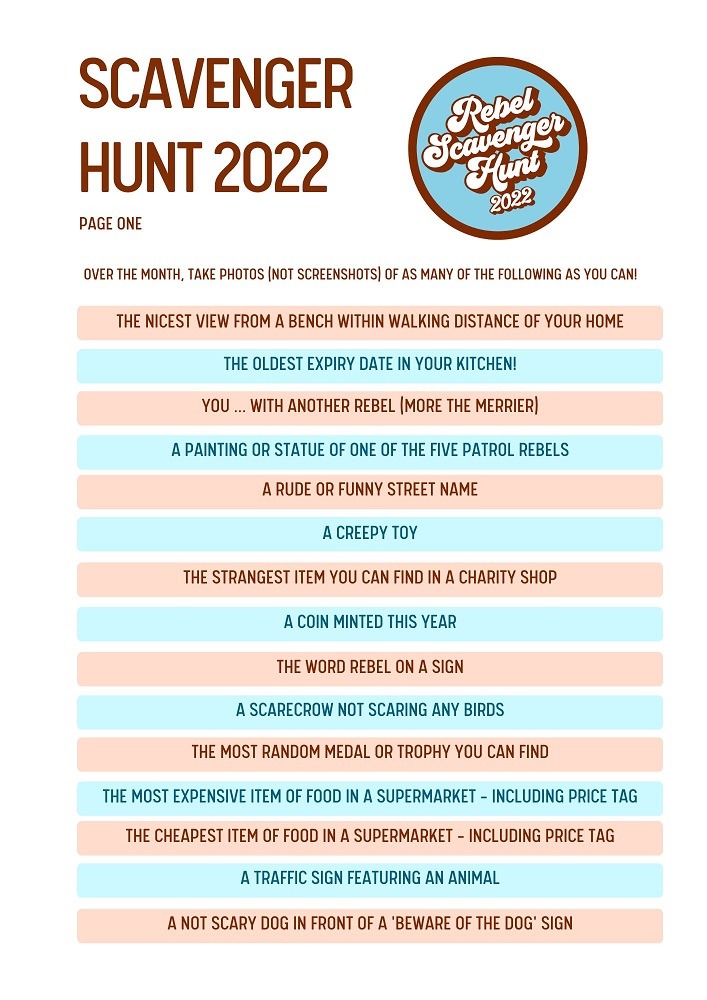
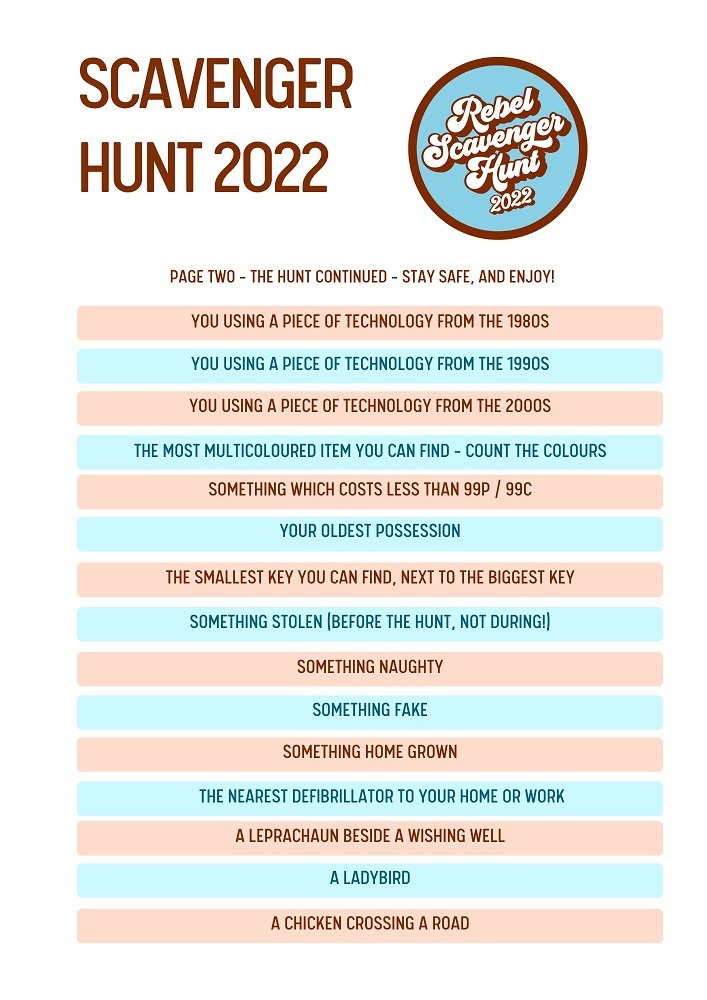
The monthly Rebel Badge Club challenge for August was a scavenger hunt – we were given a list of 30 items to find and photograph. It was great fun trying to get as many as I could – I managed to find something for each clause, although some are definitely a stretch. The one I’m proudest of is “A leprechaun beside a wishing well”, which involved an hour-long round trip on the bus to reach the pub!
My photographs can be found here. Hopefully I will be approved for the Super Scavenger badge!