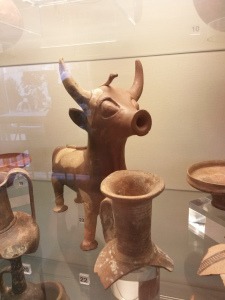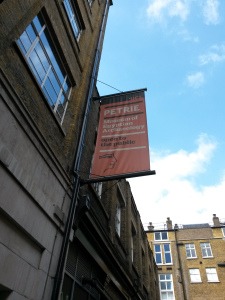

The Petrie Museum in London, which is part of UCL Museums & Collections, contains around 80,000 objects relating to Egyptian and Sudanese archaeology, making it one of the greatest such collections in the world. The museum looks at life in the Nile Valley from prehistoric times, through to the time of the Pharaohs, the Ptolemaic, Roman and Coptic periods, right up to the Islamic period.
The museum was originally set up in 1892 as a teaching museum for the Department of Egyptian Archaeology and Philology at University College London. It was created thanks to a bequest from the writer Amelia Edwards (1831-1892) who donated her large collection of Egyptian antiquities, but it was the work of Professor William Flinders Petrie (1853-1942) that propelled the museum into international significance.
It can be found hidden away behind several University buildings in central London: it’s difficult to find at first but once you get there, the entrance is apparent. Once inside, the compact museum contains a wealth of treasures: there are so many items it’s easy to be overwhelmed, but with patience it’s possible to track down some of the highlights, including the earliest ‘cylinder seal’ in Egypt, the oldest wills on papyrus, and even some incredibly rare and fragile Egyptian costumes.
The museum has the world’s largest collection of Roman period mummy portraits (first to second centuries AD), in which you can trace the development of a society caught between two cultures. In addition, it has many works of art from famous emperor Akhenaten’s city at Amarna, including tiles, carvings and frescoes. Also, the wider collection is largely taken from documented excavations, ensuring that it can offer profound insight into the everyday lives of people living at the time.
Whether you are an expert in Ancient Egypt or a casual visitor, there should be something to appeal to you in this small but rich museum. Special events regularly take place, so it’s worth checking the website regularly.
FACTS
Address: University College London, Malet Place, London, WC1E 6BT
Website: ucl.ac.uk/museums/petrie
Opening Hours: 1-5 Tues-Sat
Prices: Free