I was browsing the Tesco Clubcard website looking for somewhere to use up my remaining vouchers, when I came across Birdworld. It wasn’t far from me, and what’s more, it had penguins! So I decided to visit.
The start of the walk from Bentley station
The nearest station is Farnham in Surrey, reachable from London Waterloo. You can then get a bus which stops directly outside Birdworld. However, I followed the directions on the website which explain how to walk through countryside from Bentley station. This might have been a good idea if it hadn’t been 30°C; as it was, I arrived at the park already tired. There is also a stream right next to the car park that you need to leap over – I was convinced I was going to fall in! Next time I think I’ll stick to the bus.
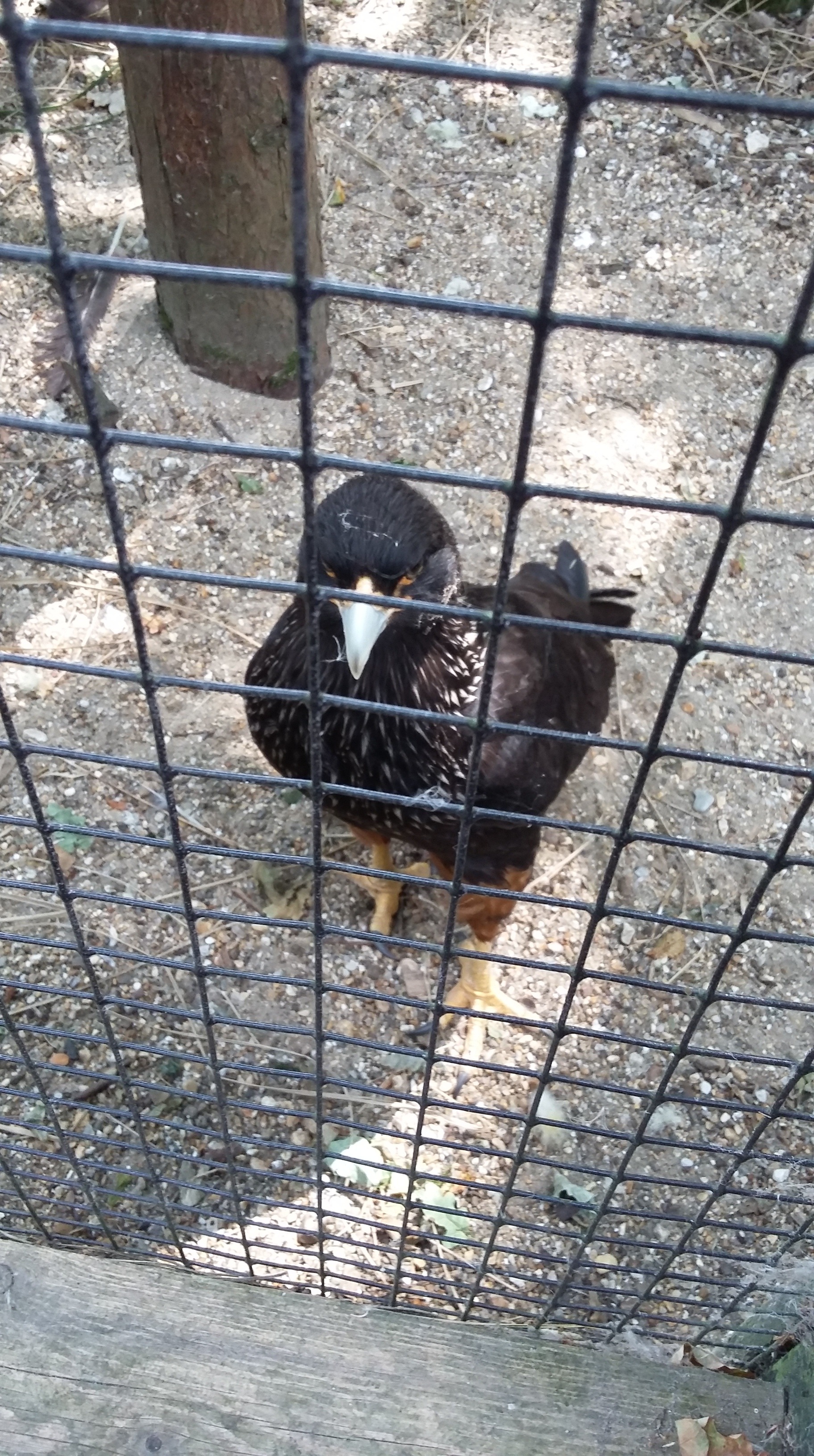
Some sort of toucan
There is a gift shop and cafe at the entrance, so once I’d bought my ticket I had an early lunch before doing anything else. I picked up a map of the park and checked out the event times before heading off to explore.
I forget what this bird was called, but it had a cool name
As the name might suggest, Birdworld is home to a weird and wonderful variety of birds, from penguins to parrots, flamingos to owls. It has over 150 species and is the largest bird park in the UK.
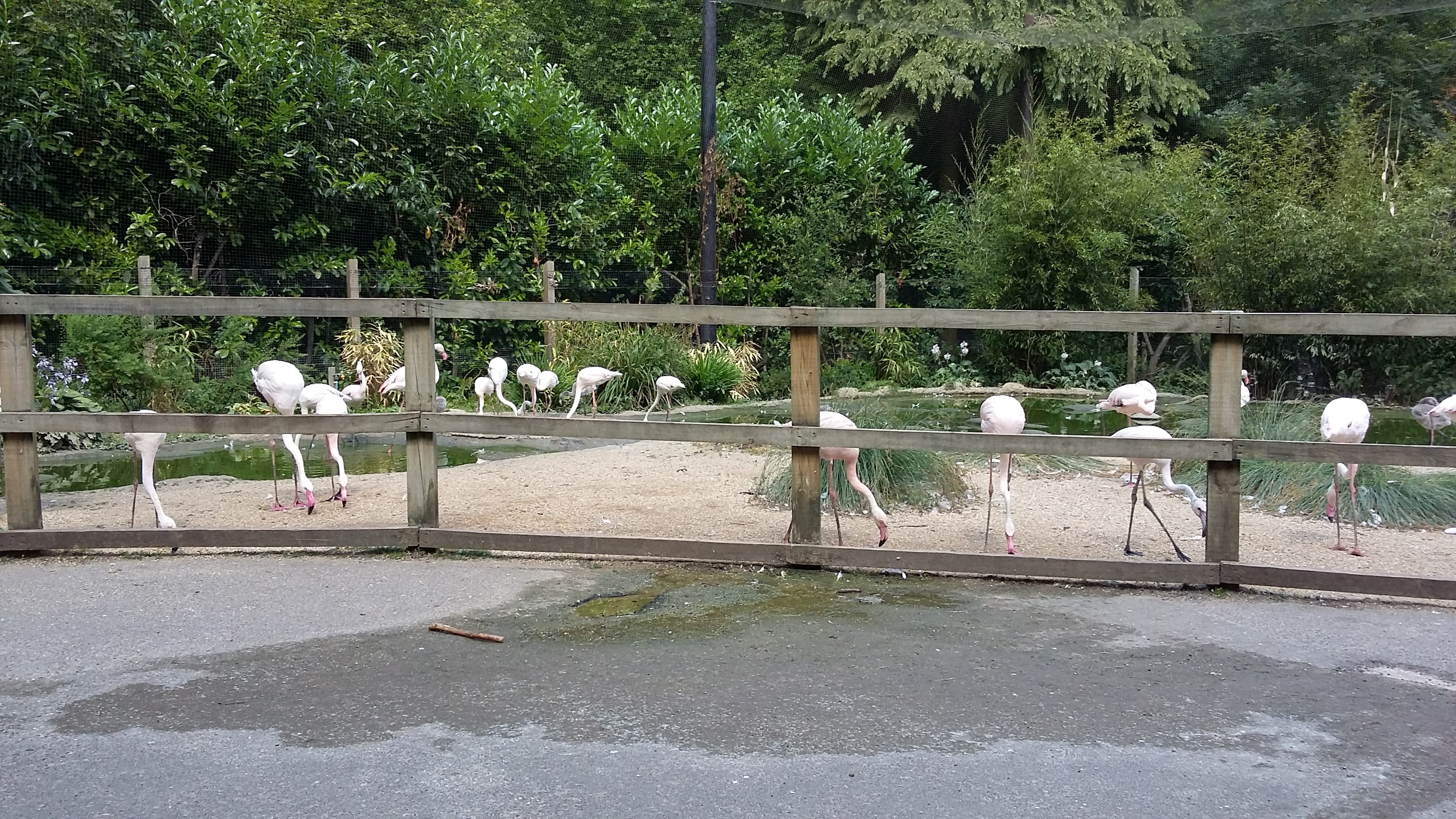
Flamingos
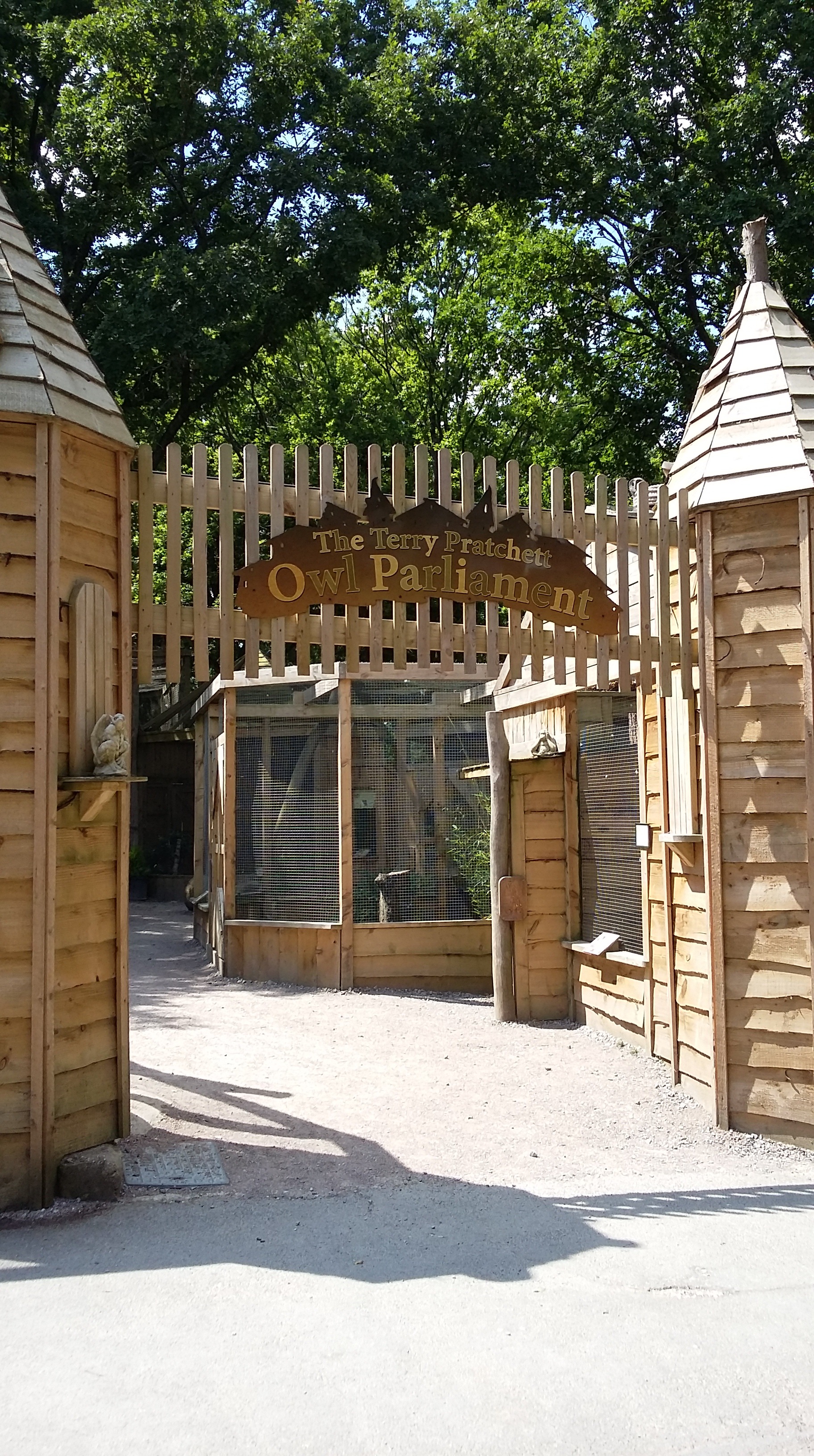
You can follow the recommended route, or just wander around like I did. I started with the birds near the entrance, including the owls (this area is named after Sir Terry Pratchett) and the parakeets, before moving on to the flamingos and other sea birds.
The Owl Parliament
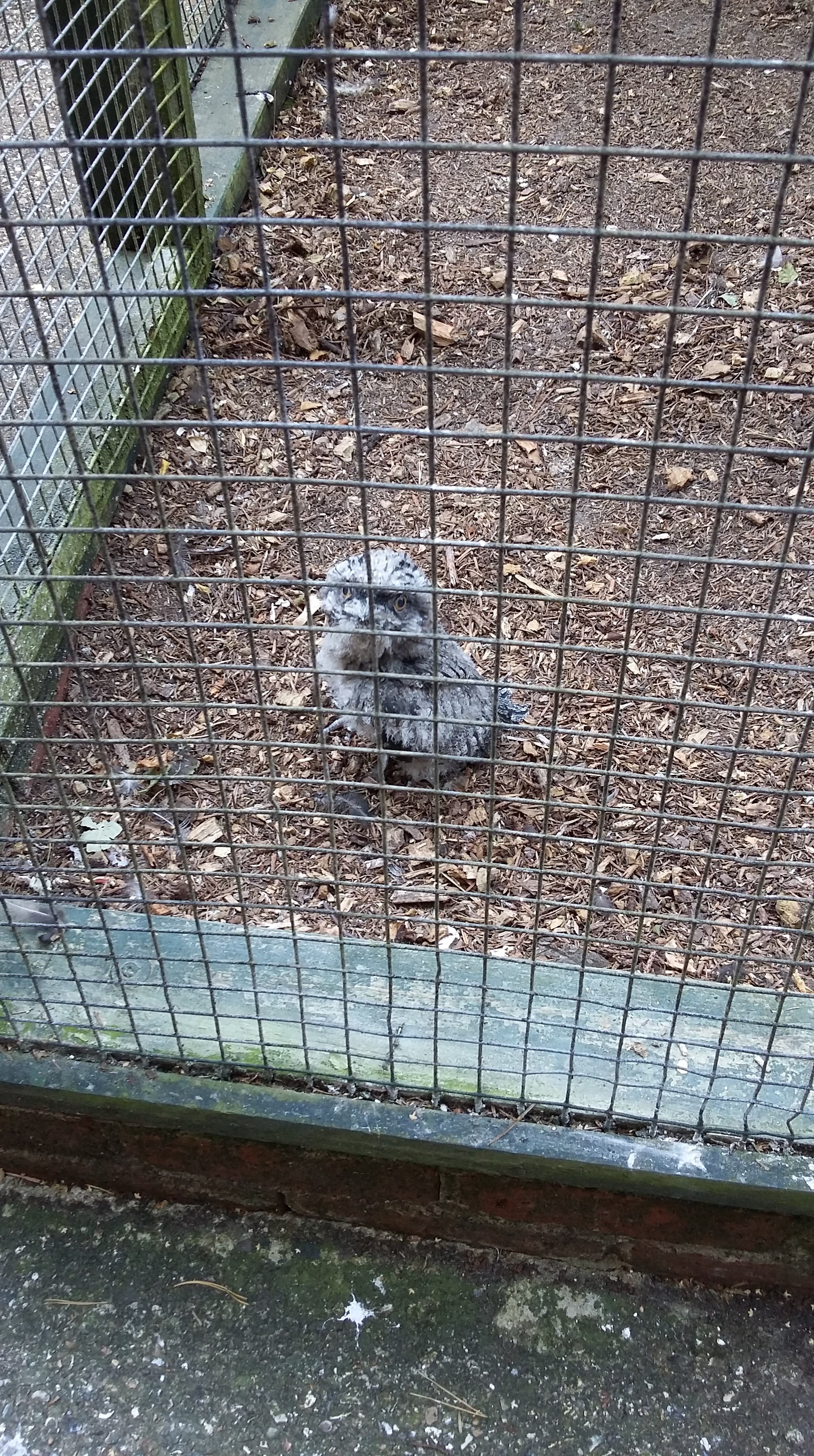
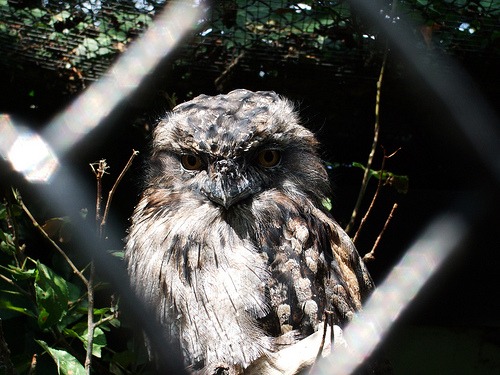
Along the way I passed kookaburras, peacocks and the gloriously named Tawny Frogmouths.
Baby Tawny Frogmouth
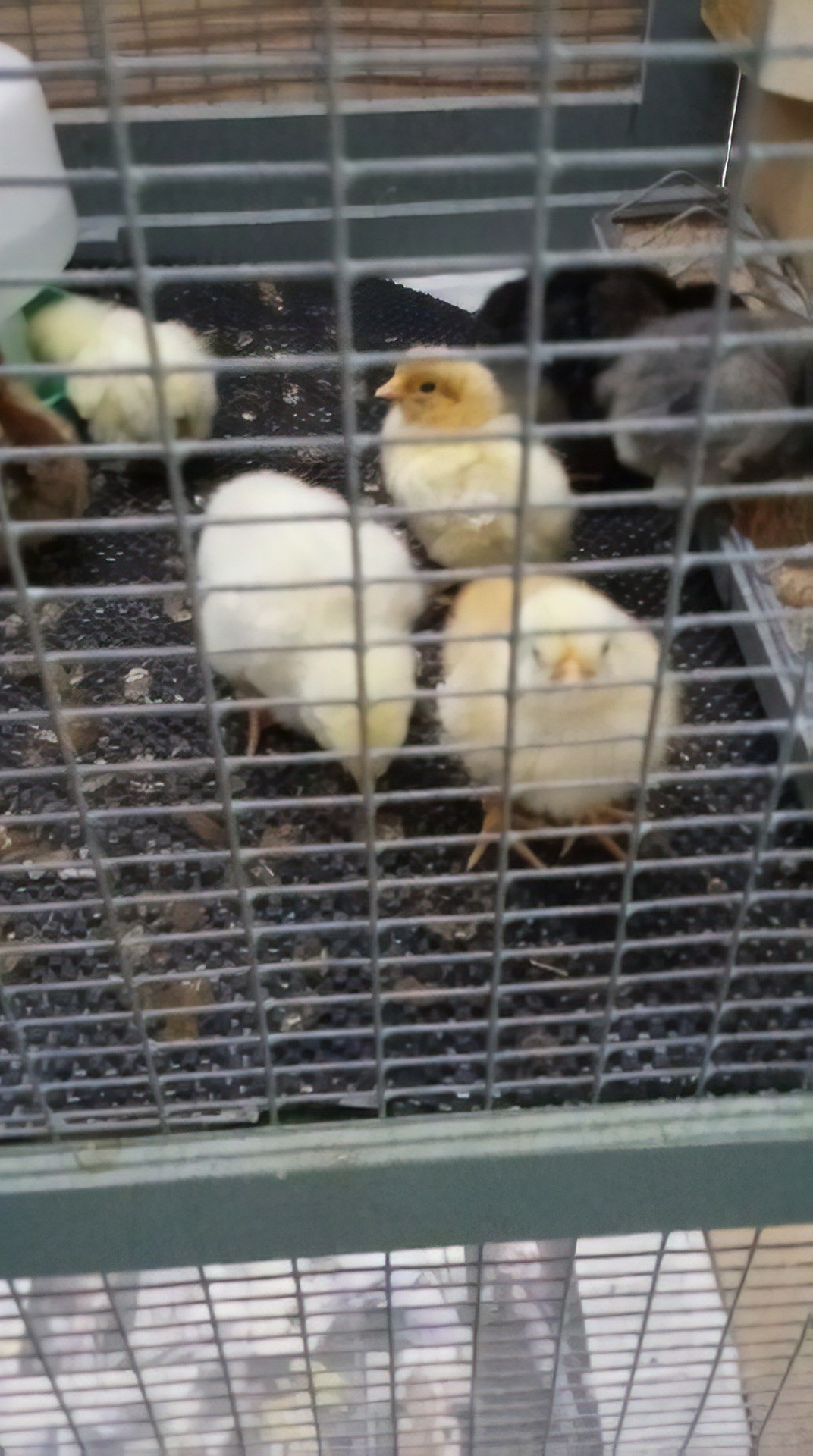
There is a farm right at the back, with rabbits, goats and chickens – there were even a few baby chicks. I missed out on seeing the live show in the theatre as I was a few minutes too late, but was able to watch from outside. I did get to the flight display area in time to see some of the birds of prey in action, which was very entertaining.
Baby chicks
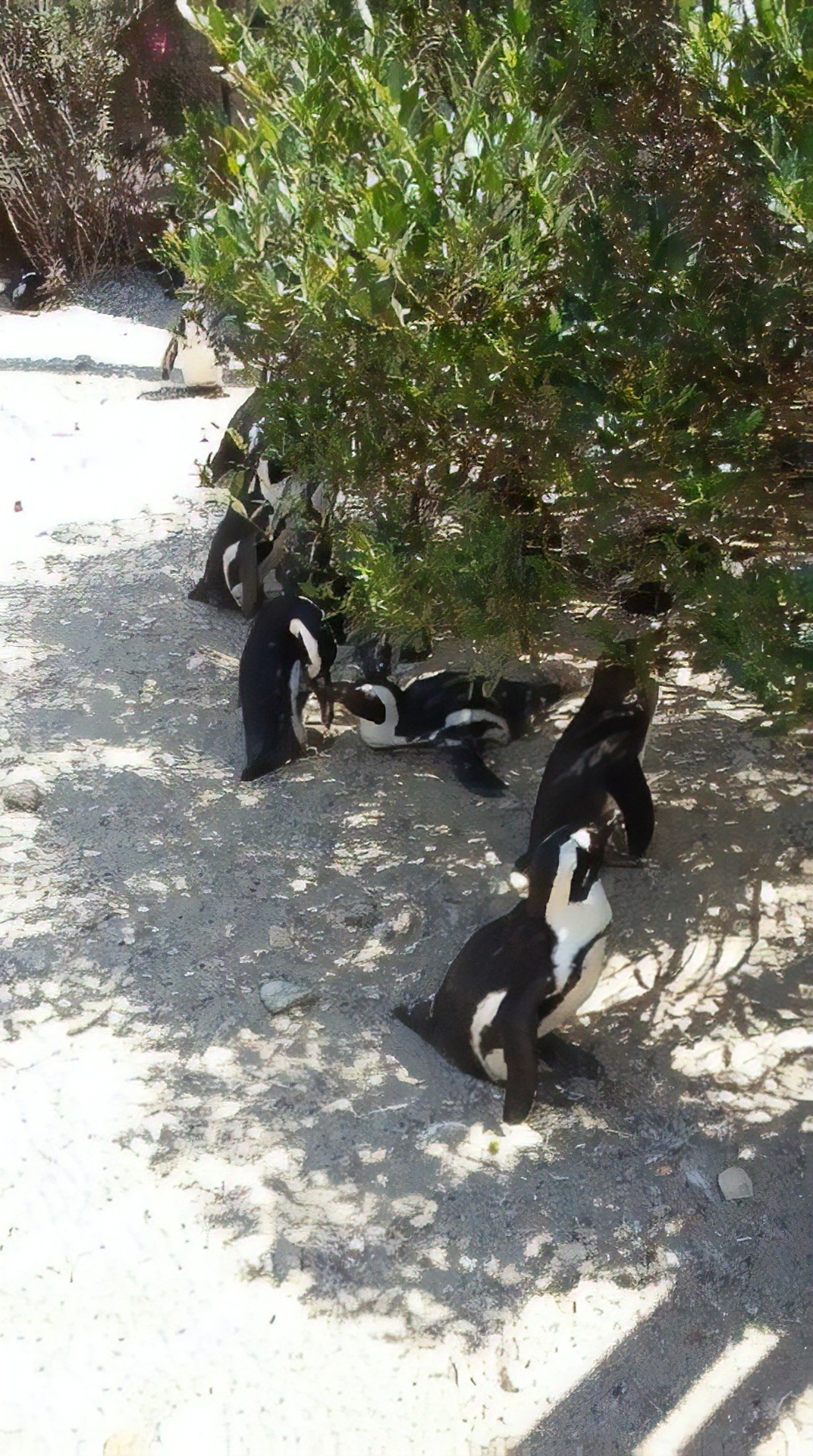
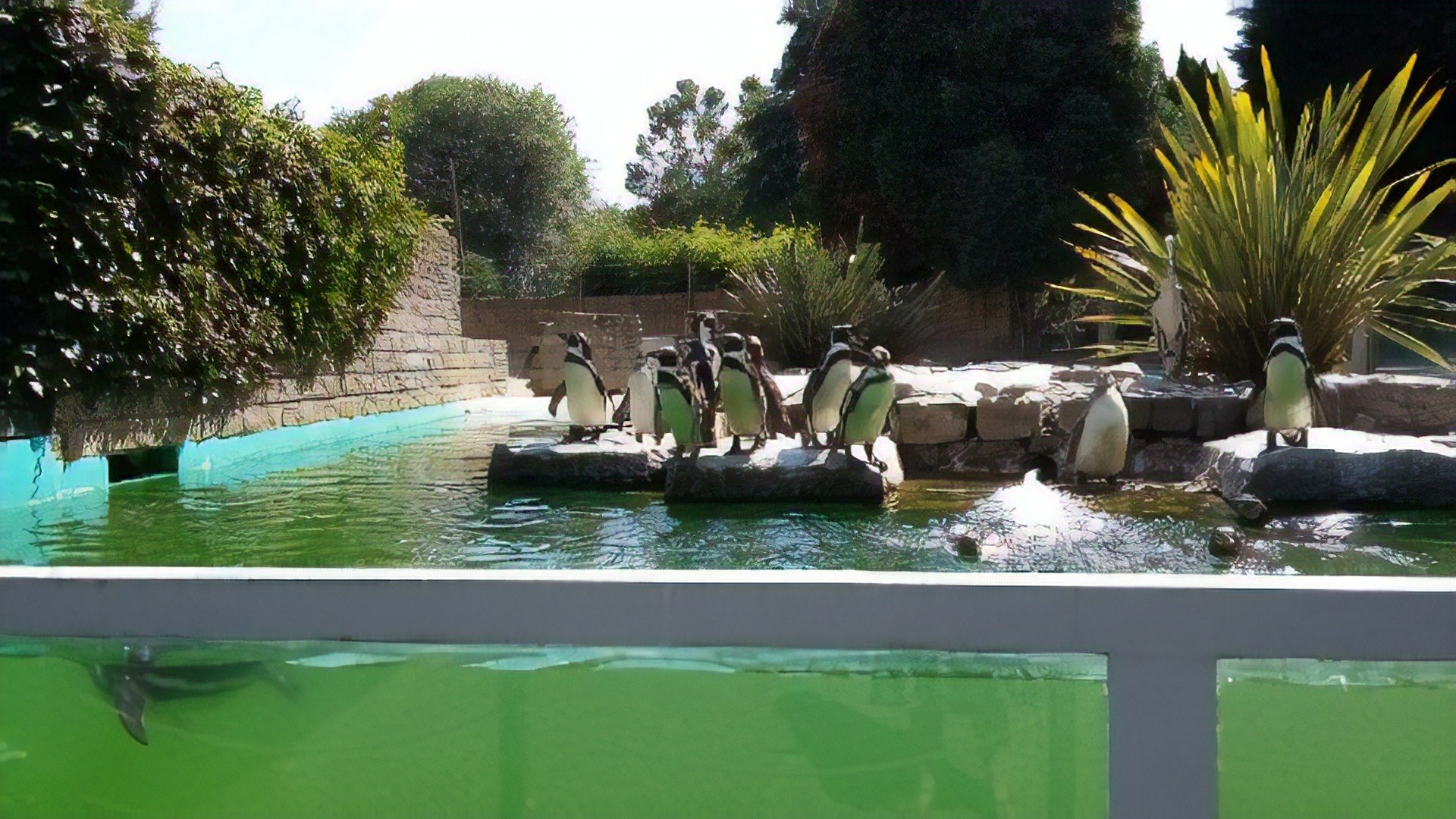
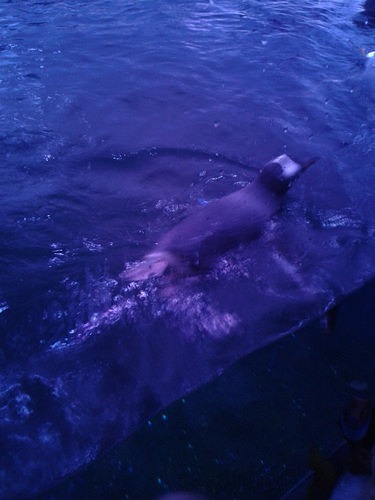
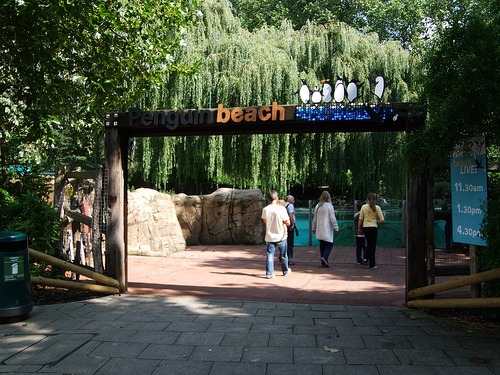
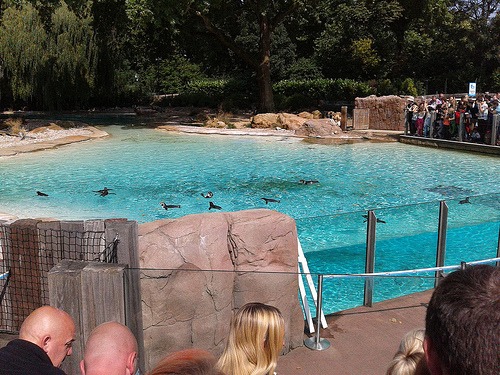
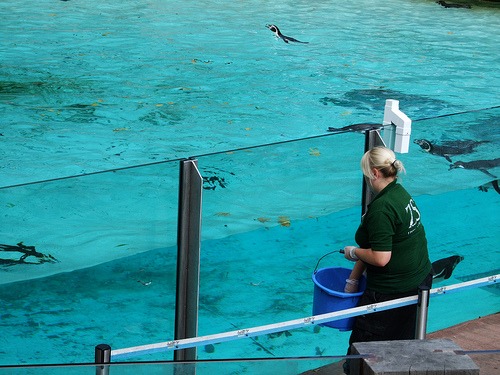
I left the penguins till last, as they are my favourites! There are two species of penguins living at Birdworld – African penguins, which live at Penguin Beach, and Humboldt penguins, which can be found at Penguin Island. I was in time to see the Humboldts being fed – they REALLY love their fish.
African penguins at Penguin BeachHumboldt penguins at Penguin Island
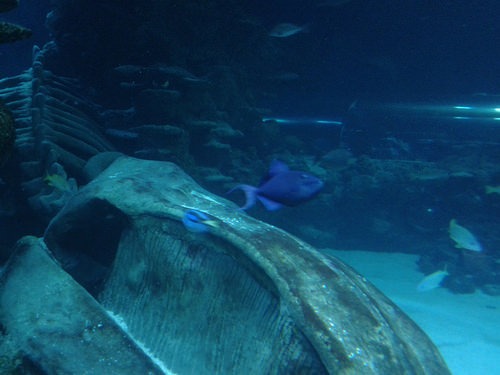
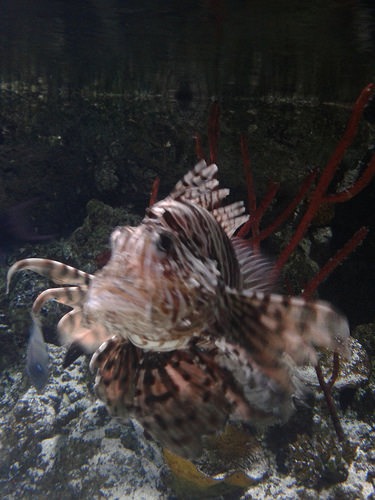
Before I left, I visited Underwater World, the entrance to which is just across from Birdworld. Entrance is included in the price of your ticket. This place has several interesting varieties of fish, and even miniature crocodiles.
Kookaburras
I really enjoyed my visit to Birdworld, and if I lived closer I’d seriously consider buying an Annual Pass so that I could visit the penguins regularly. In any case, I certainly plan to visit again at some point.
Prices: Adult £15.95, concession £13.95. Cheaper prices apply for children and under 3s are free. Prices are also cheaper off-season when the park is not fully open – check the website for details.
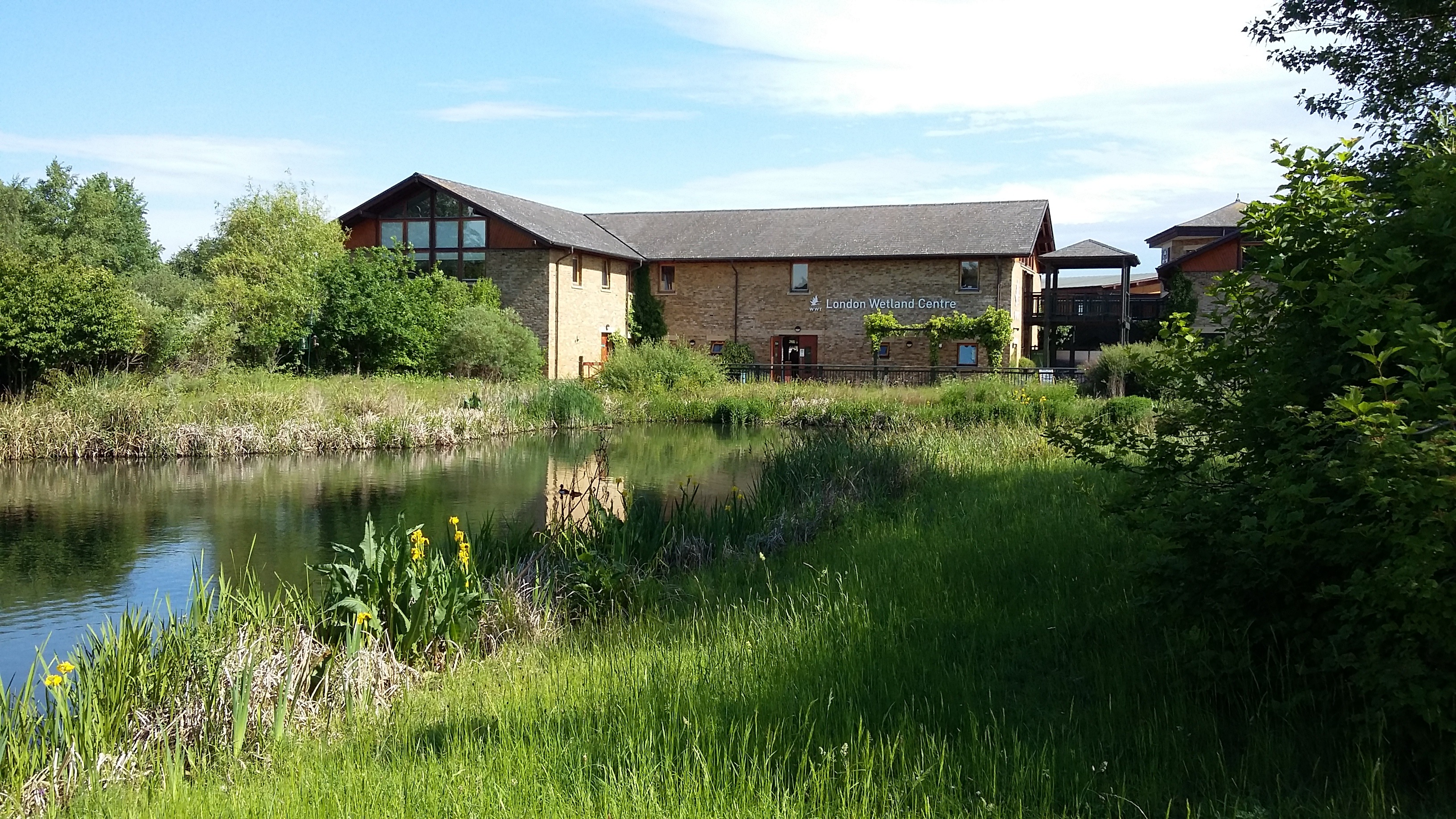
The WWT is a conservation charity with a focus on saving and preserving wetlands, which are havens for wildlife and essential to our ecosystem. There are several wetland centres throughout the country. I actually grew up pretty near the Washington centre, so have visited it several times; this is the first time, however, that I have visited the London site.
I got the bus to the centre (several buses run nearby, from Hammersmith and White City) and walked up to the entrance. The first thing I spotted, in a pond close by, was a statue of Peter Scott. He founded the WWT in 1946: the first site was at Slimbridge and even then was open to the public. (Incidentally, Peter was the son of polar explorer Robert Falcon Scott. In his last letter to his wife Kathleen, Scott wrote of their son, “Make the boy interested in nature if you can”. Looks like that worked out pretty well).
Once I’d paid and passed through the entrance building, I found myself in a central courtyard with the observatory straight ahead, a café to my right, and two possible routes ahead of me: the West route and the South route, which curve around the main lake in the centre (a map is available online). I opted for the West route first of all.
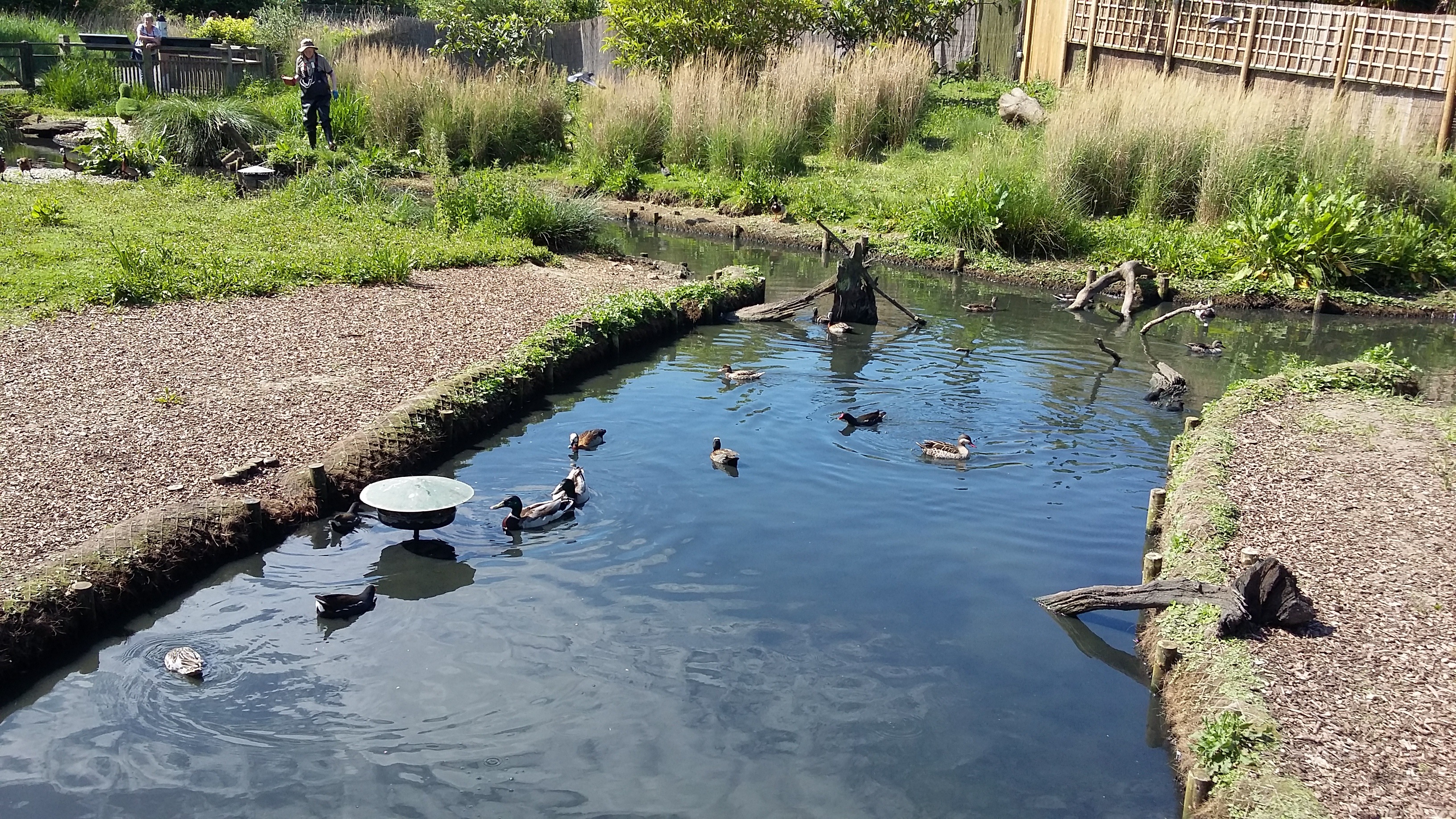
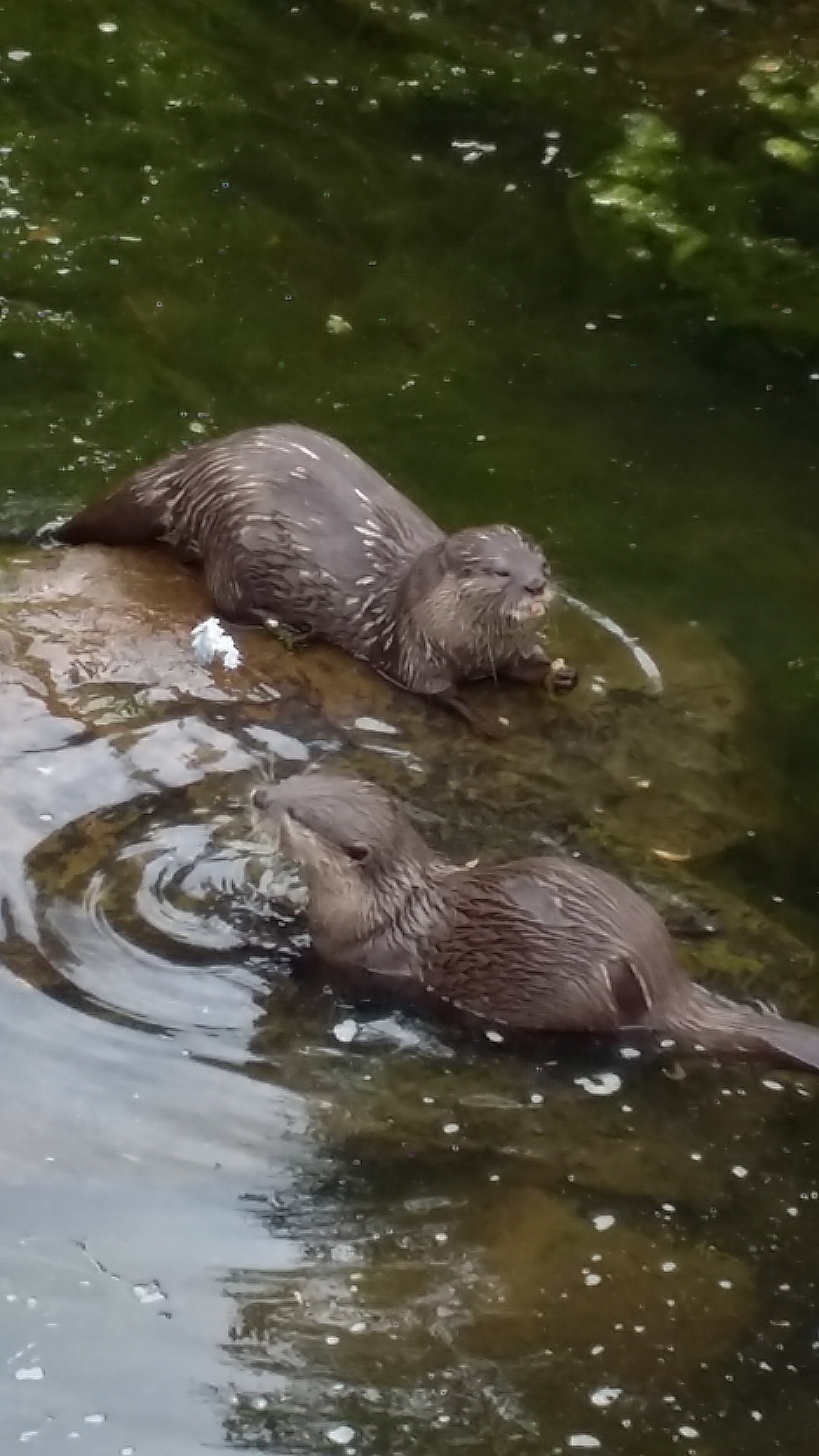
It was a lovely day, and I enjoyed walking past the various ponds and lakes, trying to identify the various birds roaming around. This area is divided into different sections, each one based on a wetland from a different part of the world. I had fun with some of the rather random bird names – I’m particularly fond of the whistling ducks. As I walked back I realised I was just in time for the otter feeding. There are a pair of otters here, Asian short-clawed otters, and it was fun to watch them play and dive for their fish.
When I got back to the entrance I went for a cup of tea before heading down the South route. This one was much quieter, calmer and more open. I passed the bat house and had a lovely view out onto the expanse of the main wetland. I ventured into a couple of the hides, but I don’t really have the patience to sit quietly identifying birds!
A note on accessibility: the wetland was built upon the site of a defunct reservoir, so it’s pretty flat, and most of the paths are wide. The largest hide even has a lift, so overall it seems pretty accessible.
I really enjoyed my trip to the Wetland Centre. I wonder if I made a mistake coming in the late spring: I thought this would be the best time but in fact it’s in the winter when you’re more likely to see the rarer birds. The website has an interesting guide to what you might be able to see each season, as well as lots of interesting facts about wetlands and wildlife.
Entrance is pretty pricey, but it’s all for a good cause, and if you use Clubcard tokens like me it’s a bargain. Recommended.
FACTS
Address: Queen Elizabeth’s Walk, Barnes, London SW13 9WT
Entrance to the Butterfly FarmApproaching the building
While I was in Stratford upon Avon recently I found the time to pay a visit to Stratford Butterfly Farm. This is located over the river from the theatre, a very short walk away. I didn’t find it too busy when I visited, perhaps because it was a sunny day – I can imagine it being a popular rainy day activity for families. It’s also popular with school groups.
Wildflowers in the front garden
The entrance to the Butterfly Farm is bright and attractive with lots of colourful wildflowers. The entrance is also the gift shop, which contains an array of toys and jewellery. After paying my entrance fee I moved into the main Flight Area, a tropical paradise full of plants, with butterflies flying overhead and a pond in the middle. There is also an iguana – thankfully there were signs directing us to look up, as he was sunning himself by the ceiling and blended in so well with his surroundings that he would have been impossible to spot otherwise!
The main Flight Area of the Butterfly Farm
The other rooms at the Butterfly Farm all lead off this main tropical room and I spent most of my time in here. The butterflies were gorgeous and there were lots of them to see. Naturally enough there were signs advising people not to touch the butterflies’ delicate wings. Signs displayed the kinds of butterflies that could be seen; some of them are bred here and others are imported. I have been to the summer-only “Butterflies” exhibition at London’s Natural History Museum and this experience was certainly comparable to that.
ButterflyButterfly
The Caterpillar Room contains several species of impressive caterpillar, as well as silk moths and pupae. Information boards explain the kinds of butterfly each caterpillar will turn into – it’s not always possible to tell from the caterpillar itself! There is also an Emerging Cage where, if you are lucky, you can spot a newly-formed butterfly emerging from its cocoon.
Caterpillar
This room in particular, and the whole Farm in general, is also home to a family of quails. There is a sign up warning visitors not to step on or disturb these adorable little birds. The main room is also home to several brightly-coloured budgies.
I must admit I was rather worried about going into Arachnoland, as I do have a phobia of spiders. However in the end I wasn’t too worried about viewing these creatures from the safety of the other side of the glass – I was more concerned when the spider was hiding somewhere and I couldn’t keep an eye on it! If you are interested in spiders of all sizes from small Black Widows to larger tarantulas then this will be very interesting for you.
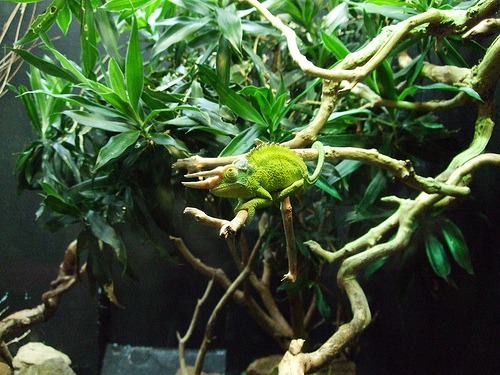
Insect City was a fascinating area, containing an incredible variety of insects from all over the world, including mantids, stag beetles, stick insects and grasshoppers. I think these creatures are amazing and I really enjoyed having a look at them. This area is also home to some impressive Giant African Land Snails, poisonous frogs and a rather cross-looking chameleon!
Mr Chameleon
I spent around an hour and a half in Stratford Butterfly Farm and thoroughly enjoyed my visit. I had a great time getting away from it all in a tropical paradise for a little while. It’s definitely worth popping in here if you are visiting Stratford, particularly if you want a break from all the Shakespeare.
One of my birthday presents was a ticket to the Warner Bros. Studio Tour, which is all about the making of Harry Potter. I’d been wanting to go for ages, but I’m glad I waited, as it was only recently that the Hogwarts Express was installed at the attraction.
Shuttle bus at Watford Junction
The tour site is about 20 miles north of London, near Watford, and there is a shuttle bus from Watford Junction. My friend and I travelled from west London, catching the train at Euston, and were impressed to see references to the studio tour all over the place – it’s a popular attraction! Once there, it was VERY exciting to see the bus. It’s not free, but it’s very handy – taking you straight there and back – and there’s even a little Harry Potter video to watch while you’re travelling.
EntranceChess pieces
The entrance to the building is exciting in itself, with a number of props dotted around, including a number of the chessmen from the first film. Elisa and I took the opportunity to get a selfie in front of the attraction!
Harry Potter selfie!
The main lobby is huge, with a cafe, a gift shop and cloakroom (and toilets of course) – there are even some attractions here, like Ron’s car that was used in Chamber of Secrets. We had loads of time to kill before our tour, so we went for something to eat in the cafe.
Main lobby
Afterwards we checked out the gift shop, as you do. Everything was incredibly expensive. I did buy a little something later on, but I might have bought more if it hadn’t been so pricey.
When it was time for our tour, we got in the queue and were thrilled to notice Harry’s cupboard under the stairs as we were passing.
Harry’s cupboard
We were taken into a room and shown a video, with the main actors from the films – Daniel Radcliffe, Emma Watson and Rupert Grint – introducing the experience. Then it was into the Great Hall!
Entrance to the Great HallInside the HallThe fireplaceLaden tablesHourglasses showing House pointsTeachers’ costumesThe Hall
I loved the Great Hall. It was an amazing feeling to be in the space where so many things happened over the course of the eight films. There were tables laid out with food, and costumes from some of the characters, including the school uniform and the teachers’ robes. The Great Hall doesn’t have a ceiling, because it is meant to reflect the night sky, and CGI stars were added after filming.
The Gates of Hogwarts
Once out of the Great Hall, the rest of the building is full of amazing props from the Harry Potter series, complete with information boards explaining how particular tricks were done and how things worked on screen. There were so many things to see, from the Gryffindor common room to the Potions classroom, Dumbledore’s office and game props from Quidditch and the TriWizard Tournament.
TriWizard Ball costumesThe Mirror of ErisedGryffindor Common RoomDumbledore’s officeTriWizard CupQuidditch ballsThe Golden SnitchPotions classroomHogwarts paintingsEntrance to the Chamber of Secrets
I really liked the “green screen” section which explained how broomsticks, Hagrid’s bike and other objects were made to fly.
Quidditch outfitsMotorbike and sidecarBroomstick
Later in the exhibition, the displays focused on sets outside of Hogwarts.
Borgin and Burke’sThe Malfoy mansionUmbridge’s office
The next part was one that I was really excited about – the Hogwarts Express! You can see the train in all its glory, and even climb inside the carriages.
The Hogwarts ExpressLogo on the side of the trainThe stationCostumes from the final scene from the last movie (sob!)
Following this we arrived at a cafe, which was perfectly timed – we were pretty tired by this time, having spent a good couple of hours wandering around, and wanted a sit down. You can bring your own food for a picnic if you like, or you can purchase food here. We weren’t hungry, but we did fancy trying the Butterbeer. It was very sweet: Elisa hated it, but I quite liked it!
Sampling the Butterbeer
Luckily it was a fine day, as the next bit was outside. We got to see the Knight Bus (made from two genuine double decker buses), Privet Drive, the moving corridor at Hogwarts, the cottage at Godric’s Hollow, and Ron’s car.
The Knight BusBus signInside the busNo. 4 Privet DriveSignCorridorCottageInside the car
Back inside, there was a fascinating section on animatronics and how they were made and manipulated for the Harry Potter films. I was particularly interested in Dobby and in Hagrid’s huge head, not to mention Fawkes the phoenix.
FawkesA mandrake
Next we made our way into Diagon Alley, which was full of shops from the movies. I loved this section – I only wish it was really possible to go into the shops and buy wands and delicious sweets for real!
The next section was all about concept art and models for the sets, which was fascinating. Finally, we got to see the incredible model of Hogwarts which was used for overhead shots. The detail on this model is incredible and my picture really doesn’t do it justice.
Hogwarts
I had an incredible time at the studio tour and it is a must-see for any Harry Potter fan, or even anyone who is interested in how films are made. It’s pricey, but worth it in my opinion as there is so much to see.
Timed tours are in operation and you do need to book in advance. My friend and I didn’t book far enough in advance for a Saturday in July so we ended up having to choose a later timeslot. The attraction doesn’t close until late so this wasn’t a big problem for us, but I think the earlier in the day you can go the better, as there are likely to be fewer people.
The tour was definitely a highlight for me, as a huge Harry Potter fan, and I’m so glad I went.
Opening Hours: Times vary, but it is open 7 days a week, usually from 9 or 10am until 6-10pm with the last tours scheduled three hours before closing. You MUST book (well) in advance.
Prices: Adult £35, child £27; family tickets and studio tour packages are available
Recently I’ve decided to visit the cemeteries in London known as the “Magnificent Seven”, the garden cemeteries established in the nineteenth century in order to alleviate overcrowding in parish cemeteries. The cemeteries were originally established on the edges of the city, but the expansion of London over the next two centuries ensured that they are now well and truly part of the city.
The cemeteries are:
Kensal Green Cemetery (established in 1832)
West Norwood Cemetery (1837)
Highgate Cemetery (1839)
Abney Park Cemetery (1840)
Nunhead Cemetery (1840)
Brompton Cemetery (1840)
Tower Hamlets Cemetery (1841)
I hope to visit them in the order in which they were established, starting with Kensal Green.
The book I’m using as a reference and guide is Turpin, John and Knight, Derrick, The Magnificent Seven: London’s First Landscaped Cemeteries. Stroud: Amberley Publishing, 2011.
The London Aquarium, located near the London Eye in the old London County Hall building, is somewhere I’ve been meaning to visit for a while. I used to love going to Sea Life centres as a child – I have vivid memories of taking the cable car from the top of the cliff at Scarborough towards the white, pyramid-shaped Sea Life building by the sea. It’s been years since I visited one, however.
My auntie visited at the weekend and although we had a couple of theatre visits planned, it was a bit of a struggle to think of things we could do to fill the rest of the time. We’ve both done things like go on an open top bus and visit Buckingham Palace, and she isn’t that keen on history, so the exhibitions and museums that would normally be my first port of call were out. However, when I mentioned the London Aquarium, my auntie said she thought it sounded like a good idea, so off we went.
As it was such a hot day, we had hoped that everyone would be too busy enjoying the sun to visit indoor tourist attractions. However, this sadly proved not to be the case. We had to wait around an hour to get in, but luckily we were able to stand in the shade until then. Despite the huge queue, everyone seemed to spread out once inside, so it wasn’t as full as we were expecting, luckily.
The Aquarium is, I think, very expensive: over £20 for one adult. My auntie very kindly paid for me, but if I was to go again I would look for a special offer – for instance, the London Days Out offer which gives you 2 for 1 tickets when you travel in by rail. A child ticket is only £5 less than an adult. There are various ticket packages available: if you book online you save a couple of pounds (25% if you go for a special After-3pm ticket) and you can buy ticket packages for other attractions including the London Eye and the London Dungeon.
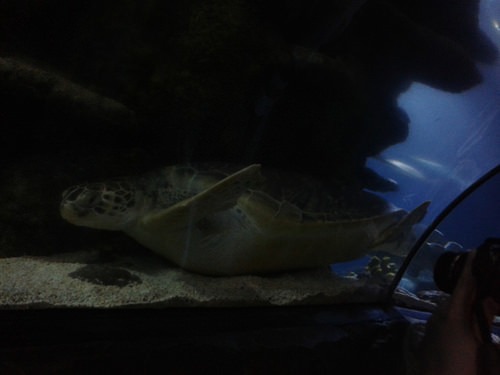
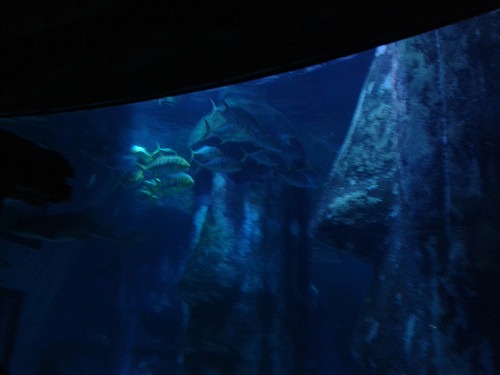
Inside the Aquarium, you follow a path taking you through all of the zoned areas. There are toilets at various points on the route and a buggy park at the beginning. The centrepiece of the Aquarium is the huge tank which is home to several black tip reef sharks. The Shark Reef Encounter, as it is known, begins as you walk over a glass floor looking at the sharks below, and continues as you walk through a glass tunnel, seeing these amazing creatures swimming over your head. There are various points within the Aquarium where you can stand or sit beside the tank and look at the creatures inside.
Other zones included Pacific Wreck, Atlantic Depths, Tidal Reach and the River Thames Story, to name just a few. Each zone showcased sea creatures native to that particular area, with information about each fish or other creature that you would find there. It was really fascinating to see so many sea creatures. I particularly liked the brightly-coloured tropical fish, and I loved the ray tank, with friendly rays showing off at the surface of the water.
One theme running through the whole Aquarium was that of conservation. There were regular notices explaining which creatures were endangered and how we can help to save them, from conserving energy to help prevent global warming to giving up eating certain types of fish (such as cod) to help their numbers recover. The Aquarium is doing its best to research, care for and breed the creatures in its care in order to ensure their survival. I really liked learning about this side of the Aquarium’s work, and it made me think about how I could make changes in my own life to help ensure the survival of endangered species.
I’ve left the best until last, as my favourite part of the whole experience was, of course, the penguins! The Ice Adventure section has a number of Gentoo penguins in a specially-built enclosure designed to cater for their needs, including a much lower temperature than you would get naturally in this country. I was particularly excited to meet the newest penguin, a baby who only hatched in June. It (they don’t know if it is male or female yet) still has some fluffy feathers, and we were told that they aren’t waterproof yet, so if the baby falls in the water someone has to go and towel-dry it!
Our visit took a couple of hours, and I’m sure we could have spent longer in there. I would definitely go again, but only if I could get some sort of special offer!
I fear a lot of things – spiders, telephones, excessive social interaction – but one thing I do not fear is heights. This is just as well, since another thing that my friend and I did when she was staying with me was go up the Shard.
Ground floor entrance to the ViewWall of quotes celebrating London
You have to book in advance and yes, the price is extortionate (nearly £20) but the view from up there is incredible. In fairness the experience is planned really well: your ticket is timed, and you have half an hour from the stated start time on your ticket to go in. Once inside, you have to queue for a very short while in order to go through an airport-style security system. This isn’t as scary as it sounds: the staff are all cheerful and friendly. To reach the very top you have to go into two different lifts, both of which made my ears pop owing to the sheer speed of travel! I liked the moving images and videos on the ceiling of the lifts.
Once up, there are two levels: one which is fully indoors, and another, the highest, which is slightly open to the elements. Luckily the day we’d chosen was a good one, with little wind and not too many clouds, so we got a clear view over London while suffering only mild chills. The space was busy, but not too crowded, as it surely would have been if tickets weren’t timed.
And what a view it is. I’ve been on the London Eye and I’ve been to the top of the ‘Gerkhin’, but the Shard is something else entirely. My friend and I stayed up there for ages, pointing out landmarks and trying to identify random buildings. This is definitely an experience where pictures say much more than words ever could.
The ‘Gerkhin’, the ‘Walkie Talkie’… and I don’t know the names of the other buildings!Looking approximately west towards the ThamesBlackfriars Bridge, the Tate Modern and the Millennium BridgeThe London Eye, which looks tiny from hereSt Paul’s CathedralThe Tower of LondonBattersea Power StationThe BT Tower, with Wembley in the background
The other weekend I decided to complete my exploration of the Central Line by visiting the final station on my list, Epping. Epping is right at the end of the line at the eastern side, in fact it is actually in Essex. It wasn’t always the end of the line though, in fact the Central Line used to terminate at Ongar. You can still see the tracks extending out from Epping station, although they have partly been taken up.
Looking east from Epping Station
The line from Ongar to almost Epping Station still exists, though, and in recent months a heritage railway has been introduced on the line. This runs between North Weald and Ongar, with another branch extending from North Weald to the end of the remaining track near Epping. The eventual plan is to join up the track again at Epping, and build another station near the existing Epping station to accommodate the heritage railway. In the meantime, a heritage bus service – including both red central London buses and the green ones that were used in the outlying districts – shuttles passengers between Epping and North Weald stations, and are included in the price of your ticket (which is valid all day). The railway itself uses both steam and diesel trains, and I was able to ride on both during my day out.
Heritage bus at EppingNorth Weald StationOn the platform at North WealdA train at Ongar StationPlaque at Ongar StationSteam train pulling in to Ongar StationThe end of the line towards Epping – the line reaches into the forestHeritage bus, returning to Epping
The Epping Ongar Heritage Railway is a fun day out for the whole family: I saw lots of children who seemed to be enjoying themselves, as well as adults who just wanted an escape from busy modern life. The towns of North Weald and Ongar are sweet, too (but don’t go on a Sunday like I did – nothing is open). I look forward to seeing how it develops in the future, particularly when the awaited extension to Epping is complete.
A few weeks ago, I decided to visit London Zoo. I don’t know why I hadn’t got round to doing this sooner, since the Penguin Beach opened a couple of years ago, and I absolutely adore penguins, so you might have thought I’d be dying to go. But it’s so expensive! My ticket was £25, although I did go for the fast track entry, as I can’t be bothered to wait in queues. The best thing about the fast track entry is that it takes you in through the exit, which just happens to be right next to Penguin Beach. So you can guess where I went first.
The penguins at Penguin Beach are Humbolt penguins from Chile. There is one exception and that is Rocky, the Rockhopper penguin. The Humbolts are black and white but Rocky has a jazzy yellow tuft on his head – a punk penguin. I was just in time for the penguins’ lunchtime feed, so I sat down with all the other spectators and watched them swim spectacularly towards the pool. Penguins are so elegant in the water but so funny on land, and I was highly amused by one of them who kept waddling after the keeper demanding fish.
Rocky the Rockhopper
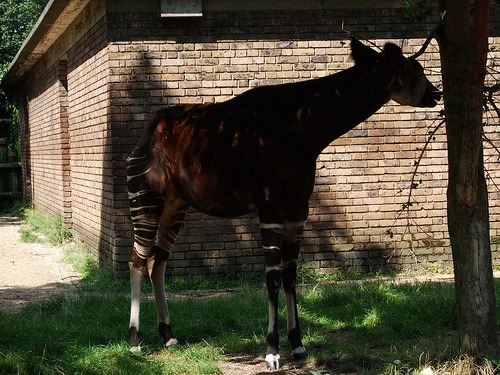
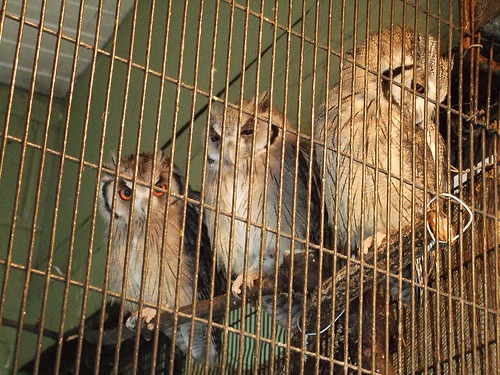
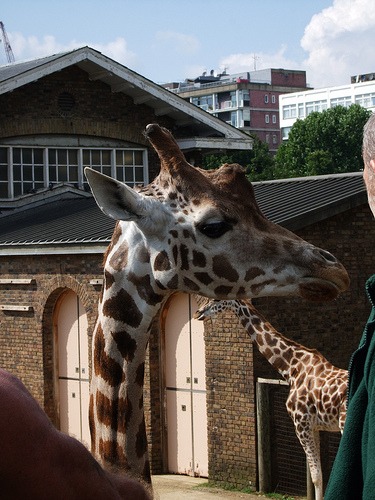
After spending time with the penguins I popped into the Butterfly Paradise. This tropical house was similar to the one I recently visited at the Natural History Museum but with the addition of Atlas Moth caterpillars which were absolutely huge. Next I decided to use the subway and get to the other side of the road to look at the other animals there. I loved the owls and the other birds at this side, and was impressed by the Into Africa section. I couldn’t see any sign of the hunting dogs but the warthogs were having a nap in the sun, and there was a pretty okapi eating some leaves (though I was annoyed at one parent I overheard telling their child that it was a ‘little giraffe’ – WRONG!). Inside the house there was an adorable baby okapi. I wanted to get a picture but it was standing with its back to me and wouldn’t turn round! There were a couple of giraffes too, one of which was being fed. I knew giraffes were big, but I think I’d forgotten just how big.
Okapi
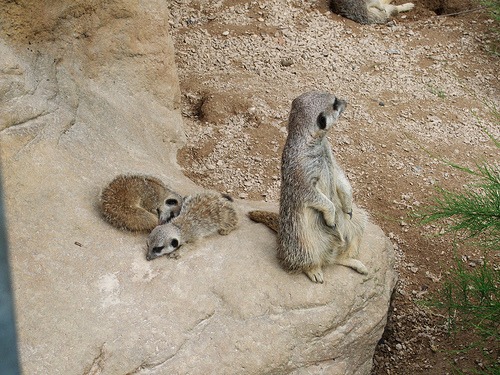
I was super excited at the next thing, which was – meerkats! And even better, BABY MEERKATS! They were just adorable. They all – adults and babies – seemed quite unafraid and happy to pose for photographs.
So adorable – I want one
This end of the zoo is also where the rainforest and nocturnal creatures live. The Rainforest Life area is home to a sloth as well as several monkeys – who looked like little old men – various birds and an armadillo. The nocturnal area had a chinchilla as well as other night-time animals – a colony of fruit bats were particularly impressive.
Realising that a good couple of hours had passed, and I’d still only seen a small number of the animals on display, I decided that it was time to get a move on. I went back up the subway and made a very brief detour into the Bugs building. My favourite thing about this area was the leaf cutter ants – I’ve seen them before but I never get tired of watching them carry their huge pieces of leaf back to the nest. I moved rather quickly through the bit with the spiders – I just don’t like them, they make me shudder, especially the black widow!
One of the things I like about this zoo is that they let you get as close to the animals as possible, while taking into consideration the health and safety of both you and the animals. The Meet the Monkeys enclosure is a case in point: you can wander around inside and see the little monkeys leaping about in the trees above your head.
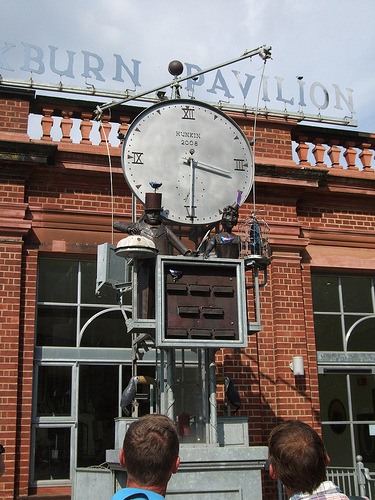
My next stop was the Blackburn Pavilion, where the tropical birds live. This is a lovely ornate Victorian building, and it has a pretty impressive clock outside it.
Awesome clock
I walked past the Animal Adventure section at first, as I thought it was some kind of children’s play area. However I realized my mistake and went back in. It was certainly aimed at children – and designed by them too, apparently – but the animals here, such as camels, alpacas and aardvarks, can be appreciated by adults too. There is also a petting zoo where you can say hello to some sheep and goats – I witnessed a hilarious scene here watching a father try in vain to rescue a map of the zoo the goat had stolen from his child.
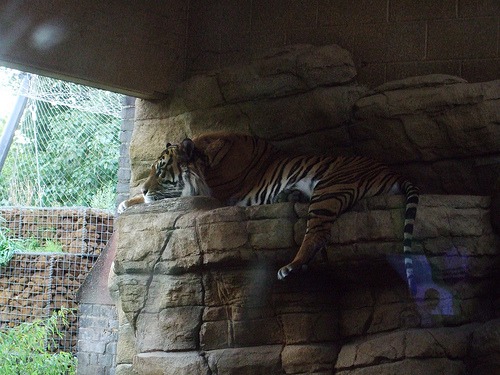
Some of the more exciting animals in any zoo are the big cats, such as lions and tigers. The lions were in a rather old-fashioned enclosure, but the tigers are in a shiny new Tiger Territory: you go on a trail around the enclosure and learn about tiger conservation on the way. I thought this was really well done and informative.
Passing the tapirs, bearded pigs and Galapagos tortoises – which were awesome – I headed into the Reptile House. One of the most exciting parts was actually seeing the place where the first Harry Potter was filmed – the scene where Harry speaks to a snake. I quite like snakes, so I enjoyed looking around here – don’t go in if you’re not a fan! On the way out I saw the Komodo dragons, which were awesome.
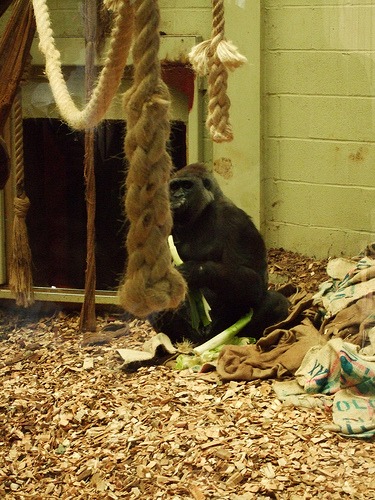
Next I popped into the Gorilla Kingdom. This was great especially when I got to see the gorillas enjoying their lunch. They are so amazing and intelligent. On the way out I passed the various kinds of monkeys who live nearby.
I was running out of time by then, so I quickly headed to the Outback area to check out the kangaroos, wallabies and emus. I then popped into the Aquarium, but didn’t have time for more than a cursory glance. I headed towards the exit – but not, of course, before paying a last visit to the penguins.
I was completely exhausted after visiting London Zoo, but I’m so glad I went. There was loads to see – I’d definitely go again.
Despite having lived in London for over two years, I’d never been to Kew Gardens. At a loss for something to do on Sunday, however, I decided to finally visit. I caught a bus from my home in west London which dropped me off outside, however there is also an Underground and Overground service nearby in the form of Kew Gardens station (you could also try wombling free – sorry, bad joke).
Though Kew opens at 9.30 am in the summer, I didn’t get there until 1 pm, and wished I had turned up earlier as there was a bit of a queue – I only had to wait around fifteen minutes, however. Kew is huge – the site covers 132 hectares (326 acres) and there is a lot to see. It is possible to take the Kew Explorer, a kind of open bus, around the gardens, with regular departures at key points plus a commentary – but this costs £4 (£1 for a child) so I didn’t bother. I wished I had by the end of the day, though, as I was shattered!
The Temperate House (along with its neighbour Evolution House) is currently closed for restoration until 2018. This was a shame, as it is the largest surviving Victorian glasshouse in the world (opened 1863, the same year as the first London Underground line) and I would have liked to see it. Still, I suppose they’ve got to do their restoration work sometime – and it was one less thing for me to visit.
Instead, I headed right and went into the Palm House. As the name suggests, this glasshouse holds an amazing variety of palms. Not being a gardening expert, I grew slightly bored after looking at a few, but the general atmosphere of the house was evocative. In fact, it was rather TOO evocative – up on the walkway, it was so hot and humid that I thought I was going to faint! Underneath the glasshouse, there were – bizarrely – a number of fishtanks.
Palm House
Outside, I popped into the nearby Waterlily House. Though it was small, the waterlilies were amazing – but there was the same humidity problem I had experienced in the Palm House, so I made a fast exit.
Waterlily House
As a respite from the humid greenhouses, I decided to have a look inside the Plants & People exhibition in a stone building behind the lake. This looked at the ways in which people make use of plants, from food and housing to furniture, jewellery, musical instruments and pain relief. The exhibition was fascinating, if a little too packed to take everything in.
Next, I headed towards the Princess of Wales Conservatory, which was one of my favourite parts of Kew. Inside, varying climates are replicated in different areas to show the different kinds of plants that grow in varied climates. For instance, cacti and plants such as aloes grow in the desert – I was fascinated by one species that resembles a group of stones, which helps protect it from predators. Delicate orchids grow in more temperate climates, while leafy palms prefer tropical environments. I was also interested in the room of carnivorous plants: I spent some time watching a fly hovering round the edge of one to see if it would be eaten – luckily it survived this time!
Princess of Wales ConservatoryAlpine House and rock garden
After this I wandered over to Kew Palace (open April – September 10.30 – 17.30). This palace is small by palatial standards, resembling a small country manor more than a royal home. Famously, it is the place where George III stayed during his bouts of ‘madness’ (probably porphyria). Poignantly, the dishes from which he was fed during his worst days are on display, as are letters relating to his illness. The rooms at the top of the house are unrestored and stripped back, allowing us to get an idea of what they would have been like when Georgian princesses lived in them. Round the corner from the Palace are the Royal Kitchens, the only remaining part of the former palace complex that stood on the site.
Kew Palace
After stopping for a piece of cake and a cup of tea at the White Peaks Café, I spent some time exploring the top end of the gardens. There were fewer people at this end and it was peaceful and pleasant, with beautiful plants and trees everywhere. At one point I was walking by the river. Eventually I passed the Badger Sett, which is designed for kids to explore – obviously I didn’t go in here but it looked like the kids who were there were having a great time!
Historic, gnarled tree
Eventually I came to the Treetop Walkway, which allows you to see round the gardens, although I couldn’t see much except the tops of the trees (and the Temperate House through a gap in some of them). The walkway is high and there are lots of stairs, but there is also a lift. The walkway itself can be worryingly wobbly, but it seems sturdy enough, and the barriers around it are high.
View of the Temperate House from the walkway
After this, I wandered over to the bottom corner of the gardens to admire the Pagoda and the Japanese Gateway before walking in the direction of Victoria Gate (the main gate, where I came in) once again. On the way, I entered the Marianne North Gallery and the Shirley Sherwood Gallery of Botanical Art. The former contains hundreds of beautiful watercolours painted by Victorian artist Marianne North, while the latter is currently displaying beautiful and intricate paintings of flowers and vegetables (which are more interesting than they sound!).
PagodaMarianne North GalleryMarianne North GalleryRuined Arch
I was really exhausted by this time, so after a quick look at the Mediterranean Garden, I headed off. Not before treating myself to some hand cream and wildflower body spray in the shop first, though!
***Visitor Info***
Kew has several entrances: the Victoria Gate is the main gate on Kew Road – other gates can be found to the left of the Victoria Gate (Lion Gate), the right (Elizabeth Gate) and by the river (Brentford Gate, for cars and motorbikes only).
Tickets are priced at £16 for adults (£14.50 without the ‘voluntary’ donation – I hate this practice but loads of places do it nowadays), but I was able to get in for half price with my Art Fund pass. Concessions are £14 (or £12.50) and children under 16 go free. This summer, it is also possible to buy a “lazy summer afternoons” ticket for £7 if you turn up after 3.30 pm.
Opening times vary with the season; in summer the gates open at 9.30 am and close at 7.30 pm, though most attractions within the gardens close at least half an hour earlier.
I had a really lovely day at Kew and I would recommend it to anyone. I think you’d get the most out of it if you have a particular interest in gardening or plants, but I haven’t and I still managed to have a good time. I would like to visit again at a different time so I can get an idea of how it changes with the seasons.