Where’s Charly? – Cardiff

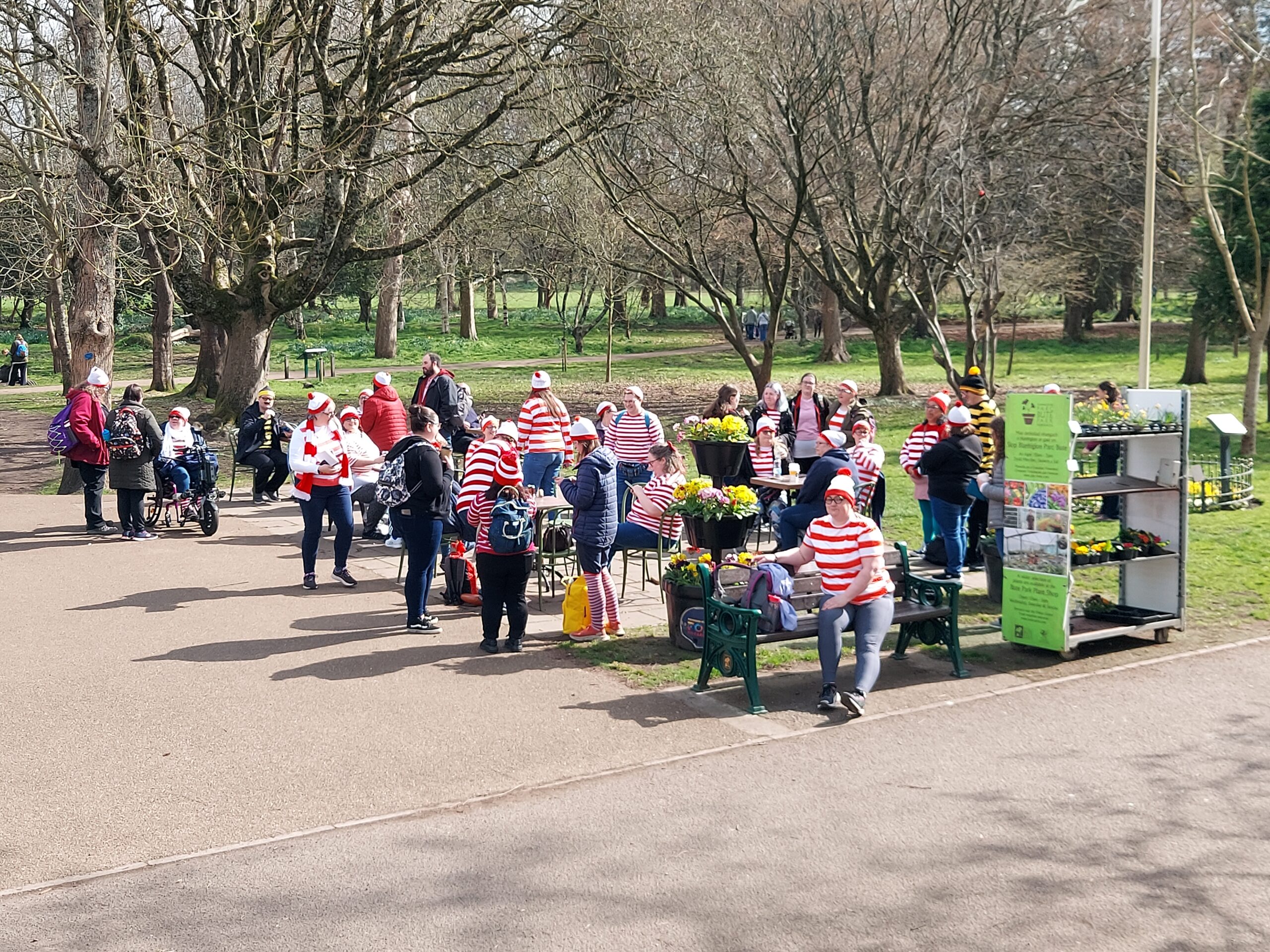
Several Wallys in Bute Park

On Saturday, around 60 Rebels descended on Cardiff to play a treasure hunt-style game based on Where’s Wally? (or, as they say in America, Where’s Waldo?). Most dressed as Wally; a few came as his nemesis, Odlaw, and some dedicated Rebels brought accessories, such as binoculars or shovels. We got many strange looks, several comments along the lines of “Found him!” (funny the first time; less so by the end of the day), and a few genuinely interested enquiries. Charly, Mr Duck and Davina deserve extra credit for their costumes as a wizard, mermaid, dragon and giraffe!

The game involved running around Cardiff (a lovely city) searching for items: sights of Cardiff, dragons, and Wally’s accessories/items associated with Rebels. I was part of Team 15 with Roisin, Sarah and Madii. I want to make a special shoutout to the lady in the joke shop on Castle Street who, once she had a few groups in asking for stuff and realised what was going on, had everything out ready once we headed into the shop. She could have got annoyed with us for not buying anything but she totally leaned into it.

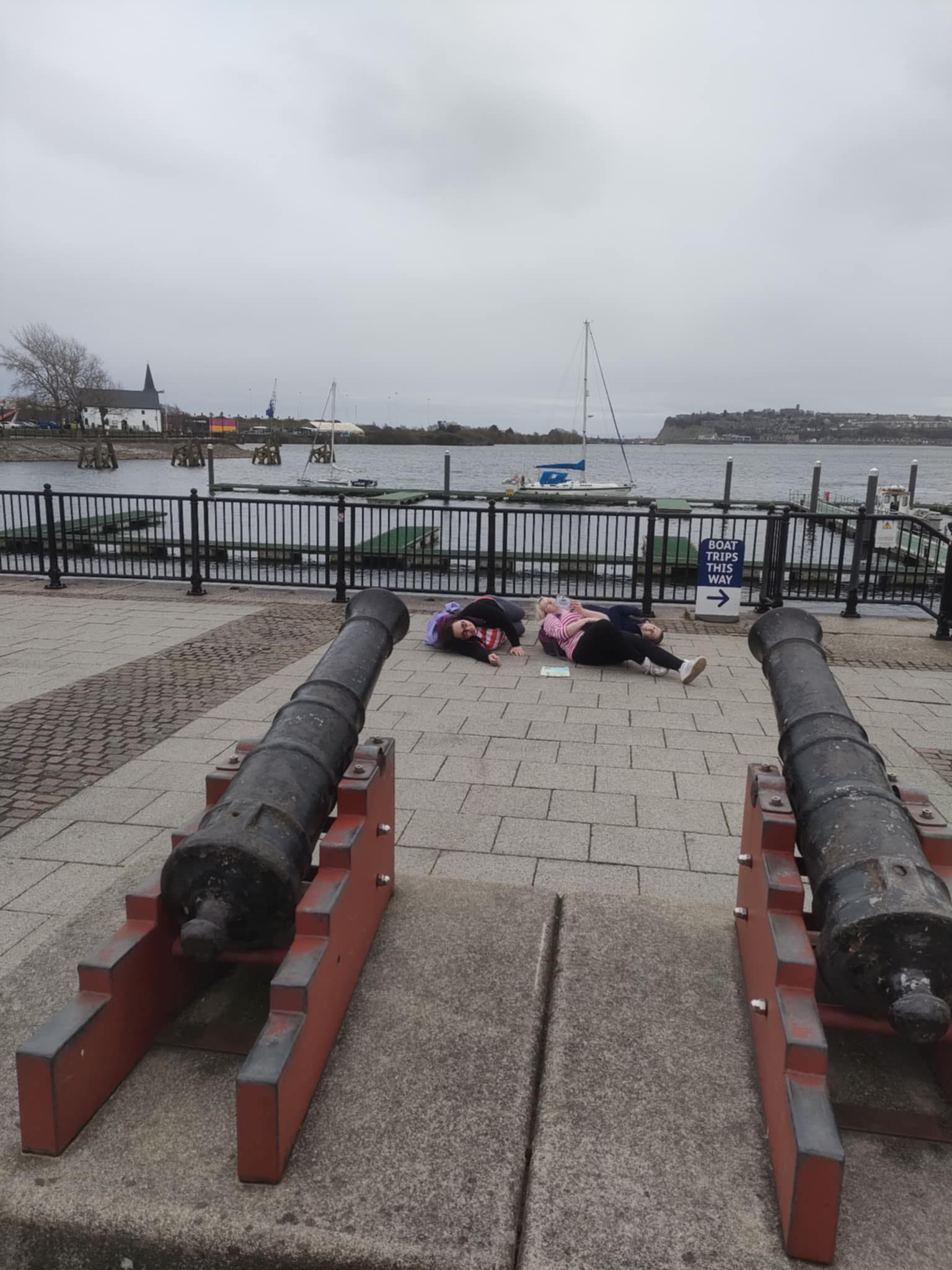
The second half involved a trip to Cardiff Bay. We decided to walk it, but ended up getting lost, which was not fun! Luckily we didn’t miss out on anything we needed to do at the other end, which is a good thing as I would NOT have wanted to miss the mermaid. We were so exhausted we collapsed in a heap by the cannons.

Three tired Wallys collapsed by the cannons

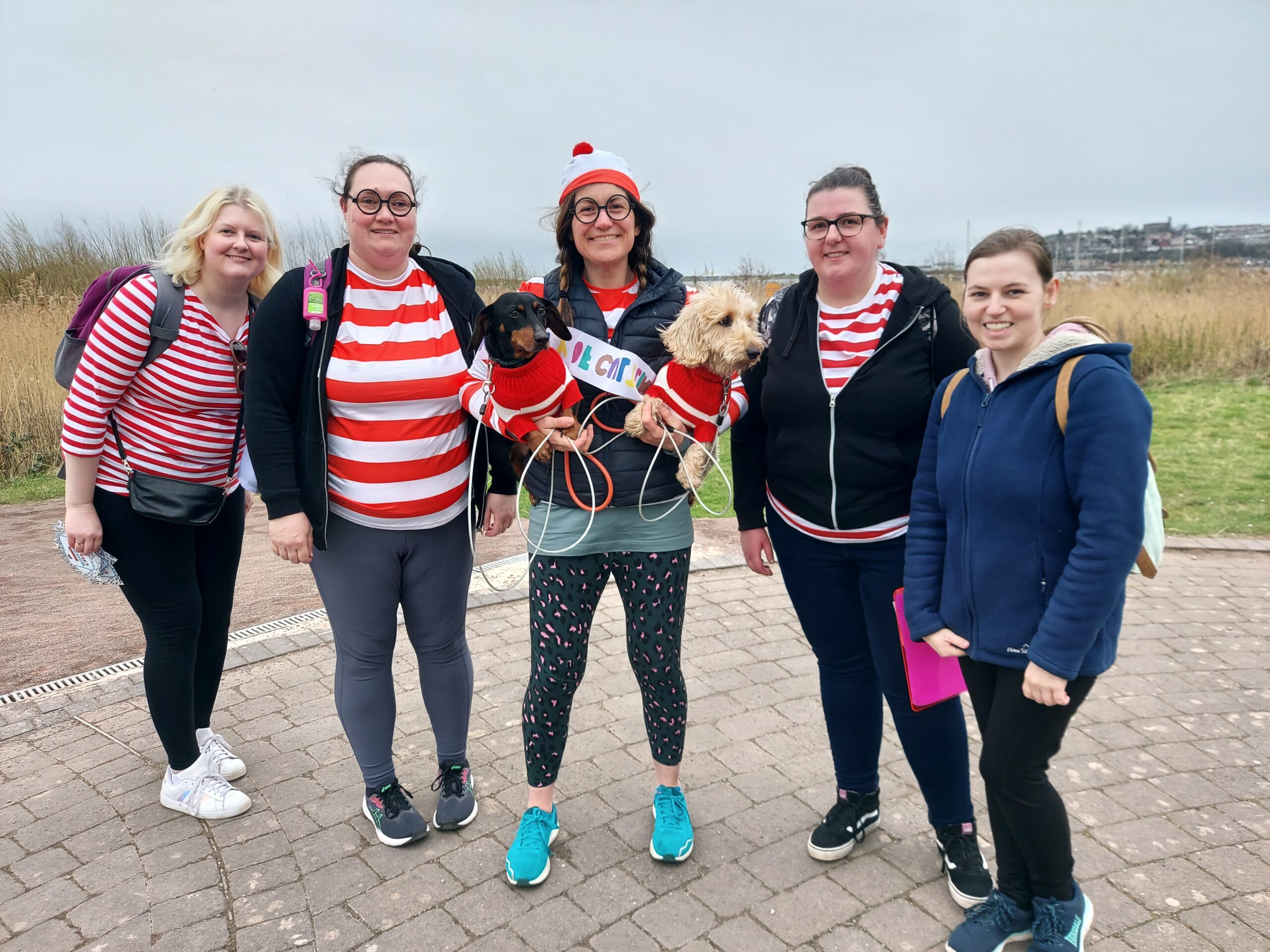
We completed the game by finding Charly (and Hugo and Dudley!) in the wetlands. By this point we couldn’t even think of walking back to Cardiff so got a taxi from an extremely obliging nearby hotel.

I ended up walking over 14 miles that day, so no wonder my feet were killing me. I was extremely relieved to get on my coach at the end of the day.

Our team came joint 8th with 36 points – 8/16 for the Dragon and Odlaw, and third place for the Wizard (14/16). We got 6 bonus points for the later challenges. Not a bad result!

Five Wallys and two pups!

Rebel Badge Club: World Book Day 2025

I’m claiming the World Book Day badge. I’ve loved this one!

Read a book you haven’t read since childhood

I chose Mrs Frisby and the Rats of NIMH by Robert C. O’Brien, which I loved when I was younger. Even as an adult I found it to be incredibly well written, and despite some old-fashioned gender politics (which I can forgive as it was written in 1971) it hasn’t dated. I would enthusiastically recommend this to modern kids.

Read a book with a mushroom on the cover

The Ghost Woods by C. J. Cooke was my choice for this clause, as I enjoyed the previous book I read by this author. Fungi actually play a pretty big part in the story, so this was a good choice! I really enjoyed this one – Gothic and creepy.

Read a book which features a dragon

I went for Beowulf (the Seamus Heaney translation). I’ve been meaning to read this one for years so I’m glad to have finally got round to it. I didn’t like it as much as the ancient Greek and Roman epics I’m studying at the moment, but an interesting read.

Read a book with the word ‘duck’ in the title

My pick was Duck, Death and the Tulip by Wolf Erlbruch. It’s a children’s picture book but really moving.

Read a banned book and unpick why it was banned

I read The Bluest Eye by Toni Morrison. I thought this was an excellent book about the impact internalised racism can have. When looking into why it was banned, it actually doesn’t seem to have been banned because of its examination of racism, but rather for its sexual content and some of the events that occur in the book. While I don’t agree with the ban, I have more sympathy than I thought I would with parents concerned about their children reading this.

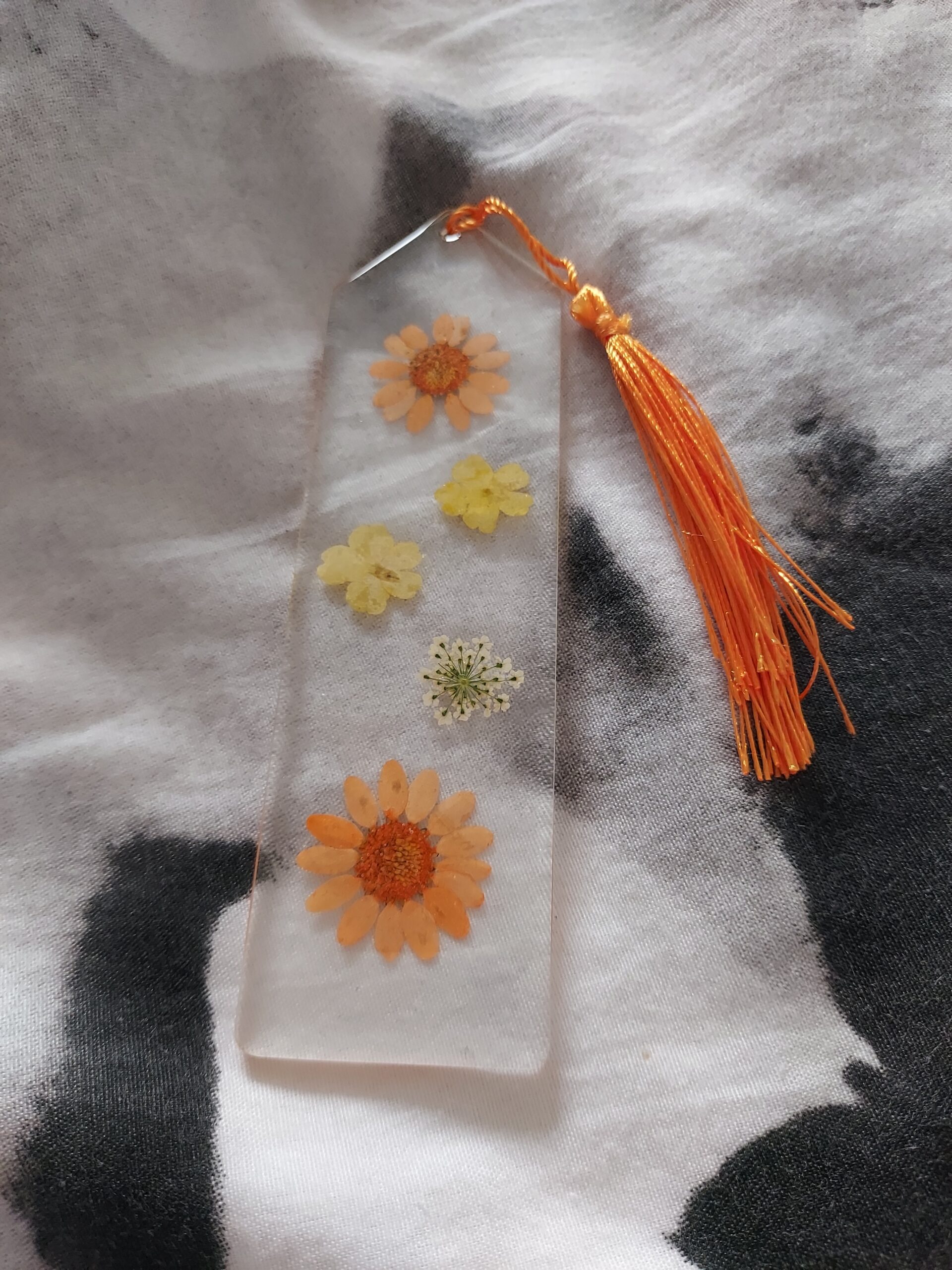
Big Bookmark Exchange

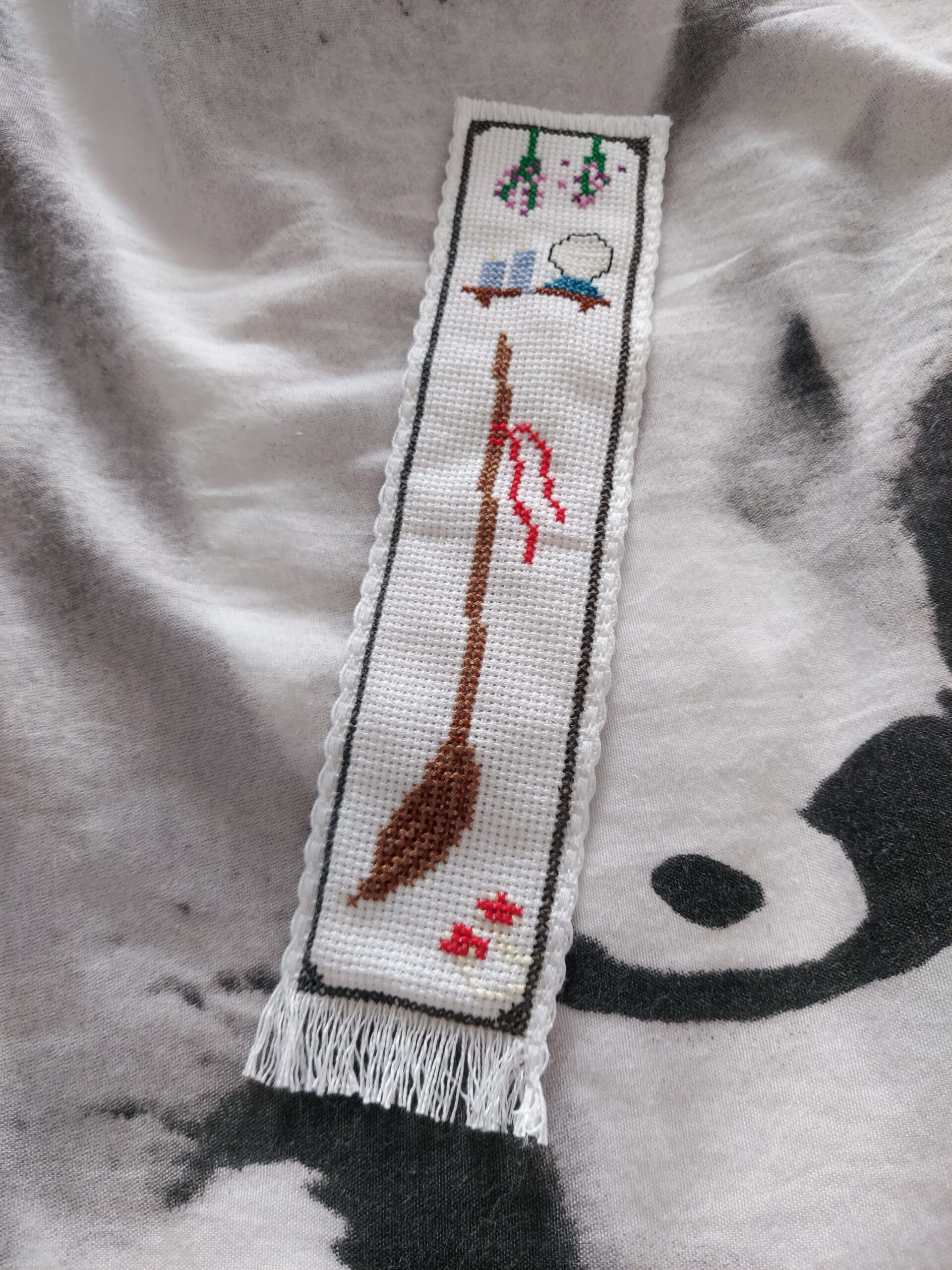
I received this beautiful resin bookmark from Holly Louise Brigden. I sent her a cross stitched one in return.

Rebel Badge Club: Detective

When I was little I loved to read books like Enid Blyton’s Secret Seven and Five Find-Outers, and I remember having my own fingerprinting kit and my own detective club (never actually popular with anyone else). Therefore I was really looking forward to the Detective badge.

Learn about the science of fingerprinting.

Fingerprints are completely unique, even more so than DNA. Fingerprints are the tiny ridges, whorls and valley patterns on the tip of each finger. They form from pressure on a baby’s tiny, developing fingers in the womb. Fingerprint analysis has been used in criminal cases from the mid-nineteenth century. Scotland Yard established its first Fingerprint Bureau in 1901. The Japanese National Police Agency established the first electronic fingerprint matching system in the 1980s.

Fingerprints are an example of biometrics. They are relatively accessible and easy to classify and sort. They are made up of ridges called friction ridges. Each ridge contains pores, which are attached to sweat glands under the skin.

The three distinct shapes are arch, loop and whorl. Arches slope upward and then down, like narrow mountains. Loops begin on one side of the finger, curve around or upward, and exit on the other side. Whorls form a circular or spiral pattern. Looking at my own fingerprints, I appear to have whorls! Scientists analyse these patterns, including characteristics called minutiae that cannot be seen with the naked eye.

The technique of fingerprinting is known as dactyloscopy. Until digital scanning came about, it was done using ink and card. Fingerprints found at the scene of a crime can be categorised as visible prints – those that leave an impression, such as on blood, dirt or clay – or latent prints – those that can be made visible using powder, lasers or other light sources.

Learn about the use of DNA evidence.

DNA evidence has been utilised since the mid-1980s.

DNA is also known as a “genetic blueprint” as it contains the instructions that govern the development of an organism. Just 2% of human DNA contains genes that determine hair colour, eye colour and height as well as other physical features. This part is called the coding region. The other 98% is called the non-coding region, and this is used by forensic scientists in criminal investigations. It contains unique repeating patterns called short-tandem repeats (STRs) that can be measured to define the DNA profile of an individual.

All cells contain DNA except mature red blood cells. Sweat, semen, body fluids or skin cells left behind at a crime scene can be examined. No two people have completely matching STR markers, except for identical twins.

Investigators collect items from the crime scene that might have DNA on them, and analyse them. The best evidence comes when DNA from a suspect is found where it should not be. For instance, during a break-in where the suspect would not have any legitimate reason to have been there. Reference samples are taken from suspects and victims, as well as elimination samples to rule out e.g. investigators. Evidence should be properly collected and preserved in appropriate conditions.

Parents share around 50% of their DNA with their children. Siblings also share around 50% of their DNA. Grandparents/grandchildren, aunts and uncles/nieces and nephews, and half siblings share between 17% and 34%.

Learn about blood spatter analysis and different patterns.

Blood behaves according to certain scientific principles. Therefore, blood left behind at a crime scene can be analysed to work out how the blood may have been shed. Patterns, size, shape and location of the bloodstains can be analysed using principles of biology, physics and mathematics to work out where the blood came from, what caused the wounds and from what direction, the position of the victim and perpetrator and any movements made afterwards. Information can be gathered not only about what happened, but also what could not have happened, perhaps corroborating or refuting witness statements.

Bloodstains can be classified into three basic types: passive (including drops and pools), transfer (resulting from objects coming into contact with existing bloodstains) and impact (such as gushes, spurts and splashes).

Make a scrapbook about your favourite fictional detective.

I made a scrapbook about Inspector Erlendur from my favourite Icelandic detective series.

Solve at least three cases.

At the Big Rebel Meet Up last autumn I worked with my patrol to solve The Balthazar Stone.

I read The Aerial Acrobat Mystery, a solve-it-yourself detective novel.

I also listened to Cold Tapes, a podcast series investigating a murder on a remote Antarctic base.

Learn at least three different methods of concealing a message.

I completed this clause while working on the Codebreaker badge, but I will repeat my findings here. Some ways to hide a message include using invisible ink, using constrained writing (e.g. acrostics or intentional spelling mistakes), and hiding messages within digital photographs.

Watch at least three true crime documentaries, listen to at least three different true crime podcast series, or read three detective novels. Write reviews of the chosen media.

I love detective novels, so I read and reviewed three books.


Holy Island – L. J. Ross

I don’t read a lot of contemporary British crime. My preferences are for either classic crime of the Agatha Christie era, or modern Scandinavian crime fiction. For the Detective badge I decided to branch out and give some British crime a go. This series has been on my radar for a while as it’s set in my home region – although I’ve never actually been to Holy Island. Something I need to rectify!

This first book in the series sees our protagonist DCI Ryan enduring some enforced time off after a particularly stressful case (which we learn more about over the course of the story). The discovery of the body of a young woman, killed in a ritualistic fashion on the island of Lindisfarne, brings him back to work. Soon he and his team realise that they have a serial killer on their hands – or do they?

There was a lot to like about the book. The island setting worked well and I enjoyed the discussions of history, ritual and folklore. The plot had plenty of twists and turns and kept me guessing throughout. DCI Ryan is a likeable protagonist, even if he is a bit of a cliche – highly able but flawed, taciturn but respected by his team. Oh, and, of course, he’s hot.

Some aspects I was less keen on. The book is littered with incongruous Americanisms, though I’m inclined to blame the publisher for those. I was uncomfortable with the casual misogyny – on first meeting Anna Taylor, another major character, Ryan refuses to believe she is an academic doctor – the book is set in 2015 by the way, not 1915. The comparative descriptions of Anna and her sister made me feel uneasy. Anna herself is also hot (of course), and has seemingly gone from study at Durham University straight to an academic career at the same place without any stressful moves or fixed-term contracts, which, from what I know about academic careers these days, seems highly unlikely. I could have done without the romance, which had me rolling my eyes, and the plot, while compelling, was extremely far-fetched.

All things considered, and admittedly against my better judgement, I did enjoy this book despite its flaws. I’ll probably read the rest of the series, if only to spot locations I’m familiar with.


Tokyo Express – Seichō Matsumoto

For my second book for the Detective badge I went for Tokyo Express by Seichō Matsumoto. I’ve seen it in bookshops and thought it looked intriguing, so now was the time to give it a go.

Originally published in 1958, it is the mystery of a young couple found dead on a rocky beach. They have both died by cyanide, and it is assumed that it is a lovers’ suicide. However, two detectives – experienced Torigai Jutaro and young Kiichi Mihara from Tokyo – believe that something is not right. Between them they work to solve the puzzle of this case.

The story is unusual in that we have no real doubt of the killer’s identity – the interest is in how the detectives manage to work it out. I have come across this in other Japanese detective fiction I have read – perhaps inspired by this book, considered a classic. There are still surprises in store, motivations to uncover, and the puzzle of “howdunit”. One thing that struck me is that the plot could not have taken place in the UK – our public transport is simply too unreliable.

I liked the relationship between the two detectives, Torigai and Mihara, as there is a sense of mutual respect, particularly from the younger to the older. The tone of the book is elegiac, reminiscent of Georges Simenon novels. There is an unhurried atmosphere, yet this does not make the book any less compelling.

I appreciated the occasional diagrams showing platform layouts and train times, as they helped me to visualise what was being talked about. Similar descriptions in other novels often leave me lost without these visual aids.

I found the book very satisfying, and enjoyed the writing style. I would certainly read more by this author. I’ve never read a Japanese crime novel I didn’t like – perhaps this is because only the best are translated into English, but either way, it bodes well.


Death On Ice – R. O. Thorp

The third book I chose as part of my Detective Badge was Death On Ice by R. O. Thorp. I chose it because I’m a sucker for anything set in the Arctic. The blurb promised a cosy mystery on a cruise ship filled with scientists, crew members and rich eccentric guests – great stuff.

This is the first book in what will be a series featuring the Blanchard twins, Finn and Rose. Both scientists, they are on the ship to study Greenland sharks. When a murderer strikes, they are the only individuals free from suspicion – since they are in a submersible exploring the Arctic Ocean at the time – so end up helping two British policemen currently in Svalbard, Tom and Titus, investigate.

The Arctic setting is a great one because of the isolation, the cold and the simple inhospitableness. Rose and Finn are both appealing characters, with a close relationship that is lovely to see. I also enjoyed the relationship between the two detectives and how the four of them all worked together.

Thorp has a quirky writing style that I love, with a turn of phrase that reminded me of Wodehouse. ‘Cosy crime’ is an apt description, because even when bad things are happening, the writing made me smile. The wider cast of characters – the ship’s captain and crew, the assorted guests – are all really well drawn.

Without getting into spoiler territory, I really enjoyed the LBTQIA+ representation in the book. I wasn’t aware of this before going in, but it’s another point in the book’s favour.

I might have chosen the book because of the setting, but I definitely want to keep up with the series – I’m looking forward to the next book about this duo.

Date completed: 28 February 2025

Rebel Badge Club: The Cupid Challenge

I ended up really enjoying this monthly challenge, designed to coincide with Valentine’s Day.

Make or decorate a heart using a craft which is new to you.

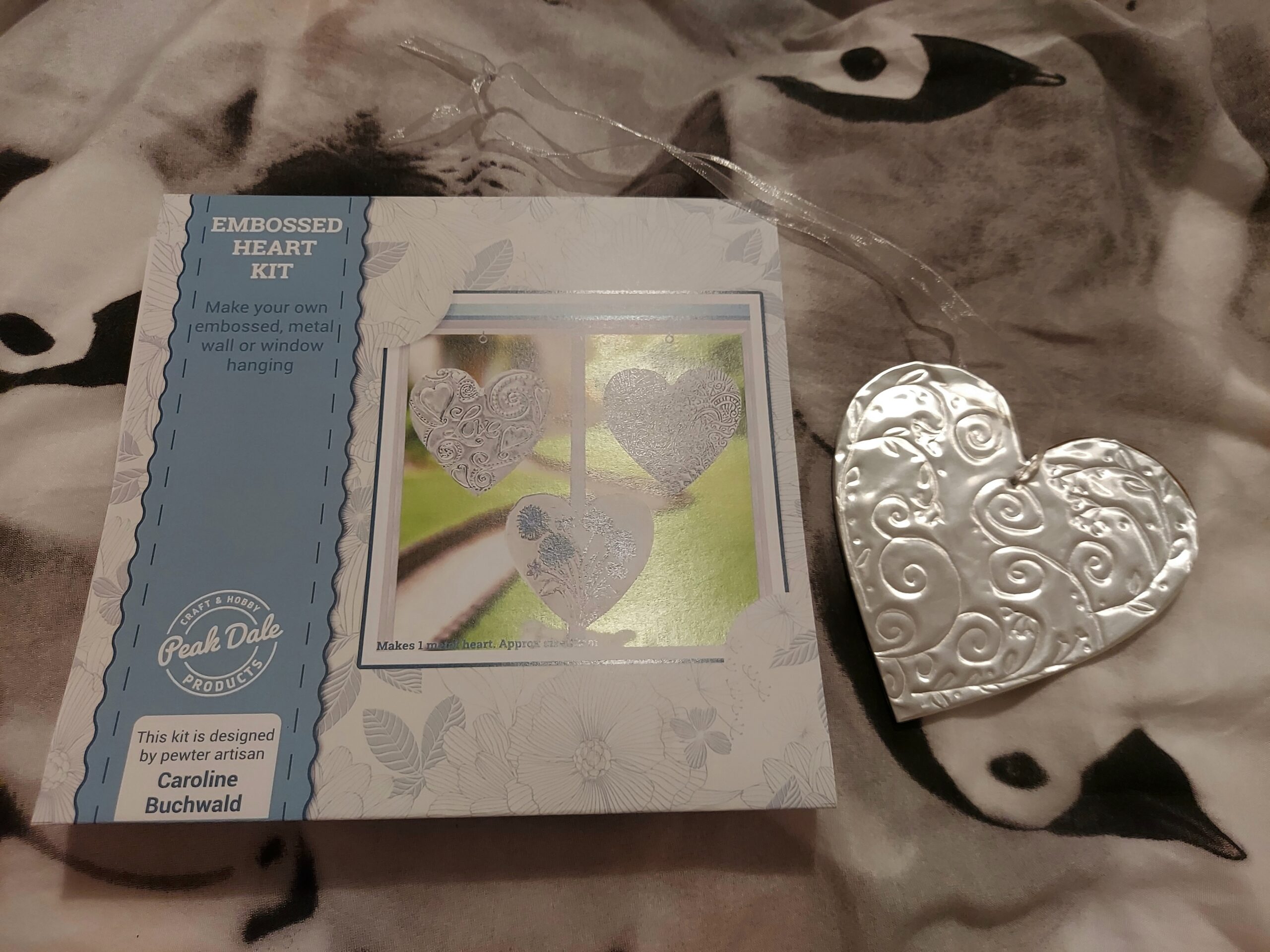
I’ve done a lot of crafts, but one I hadn’t tried was metal embossing. I found a kit online and I’m fairly pleased with the finished result, though I don’t think this craft will become a favourite.

Metal embossed heart and box

Research different gods linked to love in mythology.

I found an interesting article on Owlcation, 7 Gods and Goddesses of Love From World Mythology.

Read the story of Cupid and Psyche.

I read this story by Apuleius and really enjoyed it.

Build a homemade chocolate box.

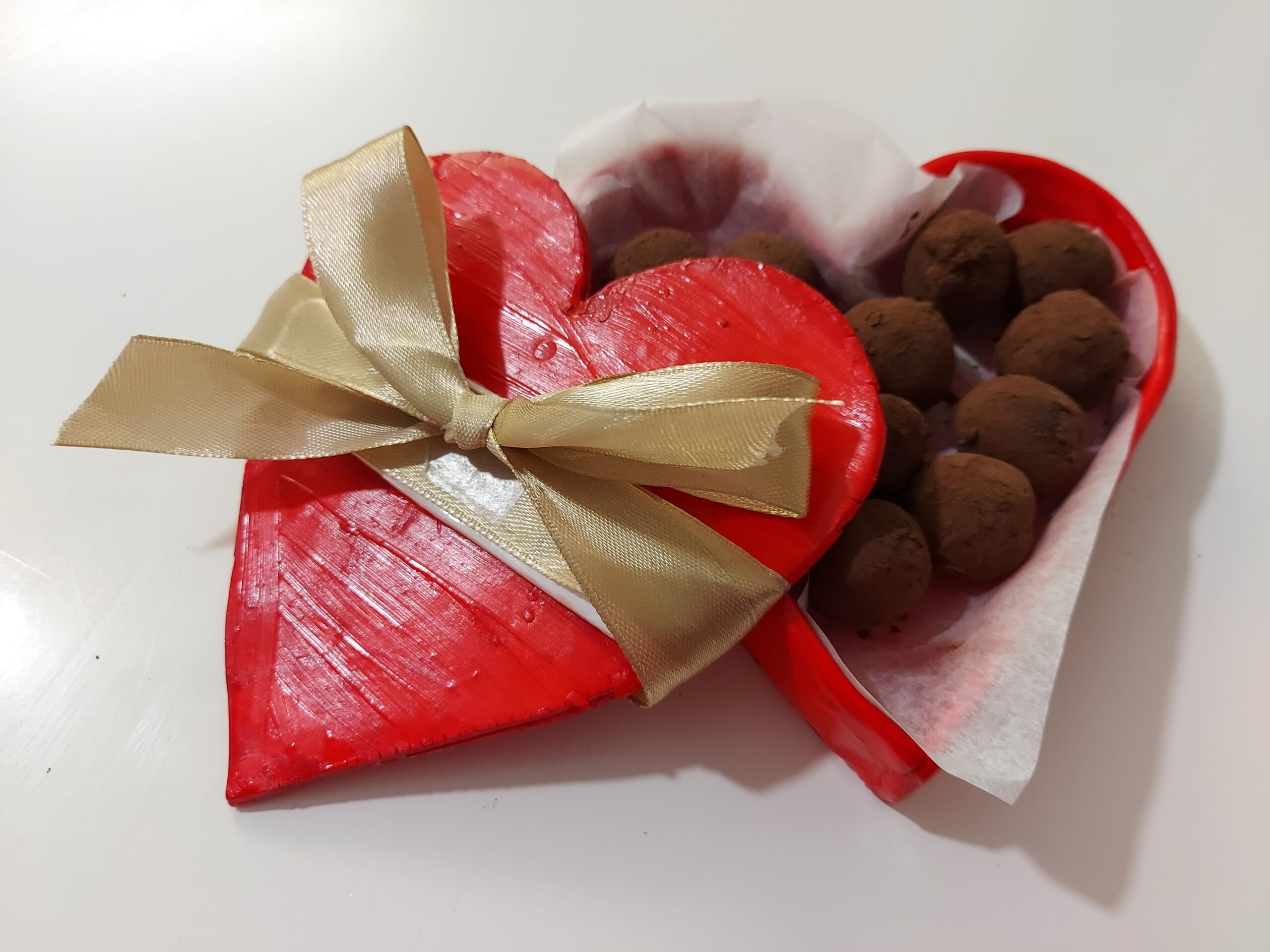
I had some leftover polymer clay from another project and made a heart-shaped box with it. I painted the box red and added a ribbon.

Make homemade chocolates.

I then made some three-ingredient vegan chocolate truffles to go in it.

A clay box containing truffles

Go on a solo date.

Even though I go on holiday by myself, go to the theatre alone all the time, visiting a restaurant by myself is something I find quite daunting. I was determined to challenge myself for this badge, so I visited a local Thai restaurant I’ve wanted to try for a while. After that I sat in a pub for a bit with a book, then went back home to finish the book with a big bar of chocolate.

Learn about different global traditions linked to love.

I learned about different traditions on the Team Rosa Zoom call.

In Japan, women give men gifts on this day, then men give women gifts of a higher value on 14 March, known as White Day because white chocolate is commonly given.

In Fiji, a would-be proposer should give a sperm whale tooth to his prospective father-in-law. In the Philippines, the most popular day to marry is Valentine’s Day, as the government pays for all weddings on this day.

In Slovakia, girls would water a cherry tree branch, and whichever branch blooms, that is the man they will marry. In Argentina, ‘Sweetness Week’ in July sees people give sweets and chocolate to their loved ones.

In the Amish community, courting couples go on buggy rides and observe the practice of ‘bundling’ before marriage. Pranks and jokes are important parts of Amish weddings, which are traditionally huge.

Rebel Badge Club: Butterfly Effect

Butterfly Effect is the first monthly badge of 2025. The idea is that by implementing some small changes, you can make a big difference to your life. I can get on board with this!

To complete the badge, I had to choose at least 6 clauses from the list provided. I did the following:

Each week, try something new. You decide how big or small the “thing” is.

I tried the following new things: bookbinding, aqua aerobics, making blondie brownies and a new crochet pattern.

Keep a daily journal of things that have made you happy that day.

I linked this clause with the gratitude journal I started for Advanced Diarist. I kept it every day and plan to keep it up this year.

Pick an area of your home which needs organising. Set aside 15 minutes each week to clear it out.

I spent most of January staying with my parents, so I thought it was the perfect time to sort out my room. Each time I focused on a different drawer or cupboard.

Spend at least 30 minutes each week helping someone else in some way.

I kicked off this clause on 1 January when I helped my mam make a three-course meal for eight of us for New Year’s Day. I kept this up for the rest of the month – when I’m at home I don’t really see anyone else to help!

Choose a positive new morning habit for the month.

I chose to drink a glass of water each morning – a good way to try and keep hydrated. I generally struggle with this but found that I felt better and more alert when I managed to keep this up.

Take a small step to support a cause which is important to you.

I signed a petition to save the Prince Charles Cinema.

Rebel Badge Club: My Personality

I find personality tests quite fascinating although I am sure that most are flawed in some way. The My Personality badge from Book 3 sounded really interesting and I decided to give it a go in January.

To gain the badge, I had to complete at least five different personality tests, analyse the results, and think about their accuracy.

My starting point was an article on VeryWellMind, What is personality testing?, which was very interesting.

Myers-Briggs Type Indicator (MBTI)

I took this test a few years ago so I’ve known for a while that I’m an INFJ (Introverted, Intuitive, Feeling, Judging). Apparently this is the rarest MBTI type. I’m very strongly introverted, but the other aspects are a bit more balanced.

The strengths of INFJs are: Sensitive to the needs of others, reserved, highly creative and artistic, focused on the future, values close, deep relationships, enjoys thinking about the meaning of life, idealistic.

The weaknesses are: Can be overly sensitive, sometimes difficult to get to know, can have overly high expectations, stubborn, dislikes confrontation.

I think that all describes me pretty well. Interestingly, popular INFJ careers include librarianship – I used to be a librarian until I moved sideways into e-learning.

Apparently I’m most attracted to ENFPs. This makes sense as I definitely get on well with extroverts, as I find we complement each other and I can bounce off their energy.

Enneagram Test

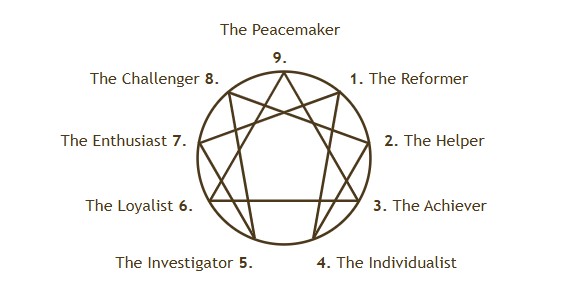
Enneagram diagram

I’d heard of the Enneagram test but hadn’t looked deeply into it. Apparently I am an Ennegram Type 5 with a wing of 4. Type 5s are “thinkers who tend to withdraw and observe”. Honestly, this was spookily accurate. I do tend to use books as a substitute for real life (ironically less so since I joined RBC).

HEXACO Personality Inventory

HEXACO results

This was another test I hadn’t heard of, but the answers seemed pretty accurate. For me the most striking were H, X and O. H stands for honesty-humility and high scorers are fair, non-manipulative and law-abiding. I like to think that I am a fair person and I don’t like lying or manipulation – I haven’t wanted to sign up for any Rebel Traitors weekends as I hate the idea of lying to people! My low extroversion score definitely makes sense (I’ve always thought my strongest personality trait is introversion) and my high openness score suggests that I am intellectual, inquisitive and imaginative. I like to think I am!

Apparently, my score suggests I prefer a partner who is similar to me. This contradicts what my MBTI test said about preferring extroverts, but it’s not like I don’t have and appreciate introverted friends, and the other values (particularly honesty-humility and openness) are really important to me.

Sixteen Personality Factor Questionnaire

This test felt particularly complicated and I’m not sure about the answers, however the ones that jump out at me are my high self-reliance, openness and sensitivity scores. I have a low social boldness score – not surprising!

DISC Assessment

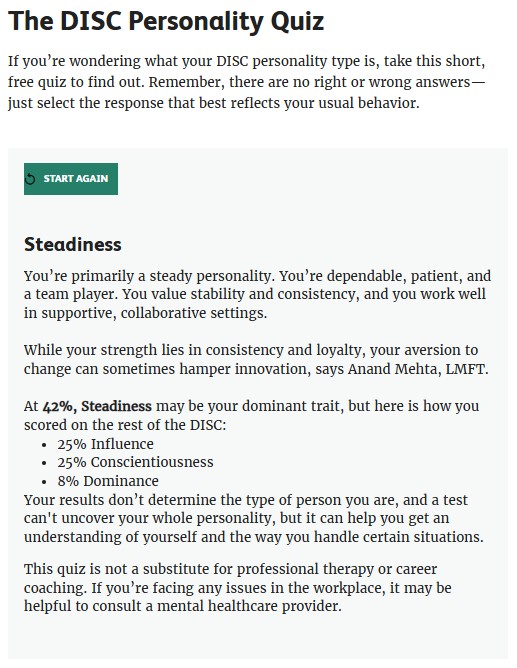
DISC results

DISC definitely felt more work-orientated than the other tests I took. In terms of work, it is fairly accurate: I show patience, loyalty and consistency in a work setting (I am not particularly patient in everyday life!) and am suspicious of change. I’m not sure it would be so accurate outside of a work setting.

Completing these tests has highlighted areas in which I’d like to improve. I can definitely be stubborn, and I hate confrontation. I also have a tendency to retreat from real life, which means I don’t always make the most of life. I’d like to work on these aspects of my personality.


Finally, I had to learn about the origins of these tests, how widely used they are, and any criticisms they have faced.

MBTI: Based on Carl Jung’s approach to personality, and developed by Isabel Myers and her mother Katherine Briggs during World War II, this test categorises people into one of 16 different types. It is one of the most widely-used personality tests in the world, but has been criticised for unreliability and oversimplification. It is not accurate at predicting careers, but is still used by many employers as part of the recruitment process.

Enneagram Test: This has roots in Sufism but was popularised in the West by Russian philosopher Gurdjieff. The word “enneagram” comes from the Greek “ennea,” meaning nine, and “gramma,” meaning something drawn or written. The Enneagram Test is fairly popular, but has also been described as pseudoscience and “an assessment method of no demonstrated reliability or validity”. Despite this, it is sometimes used by employers as part of the hiring process.

HEXACO Personality Inventory: Developed in 2000 by Canadian psychology professors Kibeom Lee and Michael C. Ashton, this test measures six key areas of personality: honesty-humility, emotionality, extraversion, agreeableness, conscientiousness, and openness to experience. The test originates from research on the Big Five personality types. It has been correlated to predict certain behaviours and has been used to map differences in personality traits between different academic majors. However, it has been criticised because of the subjectiveness of its answers and the potential for test-takers to choose options reflecting social desirability instead of accuracy. Neither does the test consider cultural differences. HEXACO can be used by employers as part of recruitment, but there is a chance applicants could distort their responses based on what they think employers are looking for.

Sixteen Personality Factor Questionnaire: This test is based on Raymond Cattell’s trait theory of personality, and was developed from the 1940s using statistical techniques. Sometimes used in recruitment, it is subject to the same criticisms of other personality tests, such as oversimplification.

DISC Assessment: This identifies four main personality categories: Dominance, Influence, Steadiness, and Conscientiousness. It is often used by employers because it focuses more on actions. The test is based on psychologist William Moulton Marston’s DISC emotional and behavioural theory, first published in 1928, but has been criticised as pseudoscience.

The criticisms of most personality tests seem to be along similar lines: that personality is not fixed, these tests oversimplify personality traits, and they have not been scientifically tested. I personally think that they are fine for personal use and for use by psychologists and other professionals (who actually understand them) but I wouldn’t be comfortable with a potential employer wanting me to take any of these tests.

Date completed: 23 January 2025

Rebel Badge Club: Advanced Rebel Community

I’ve realised that I can claim the Advanced Rebel Community badge!

  • I’ve been an active member of the Facebook group since I joined in 2022.
  • I have organised 3 meetups in my local Rebellion – a Thames Path walk, a wild swimming evening and a rage room.
  • I’ve completed my 5 Meet-Ups badge.
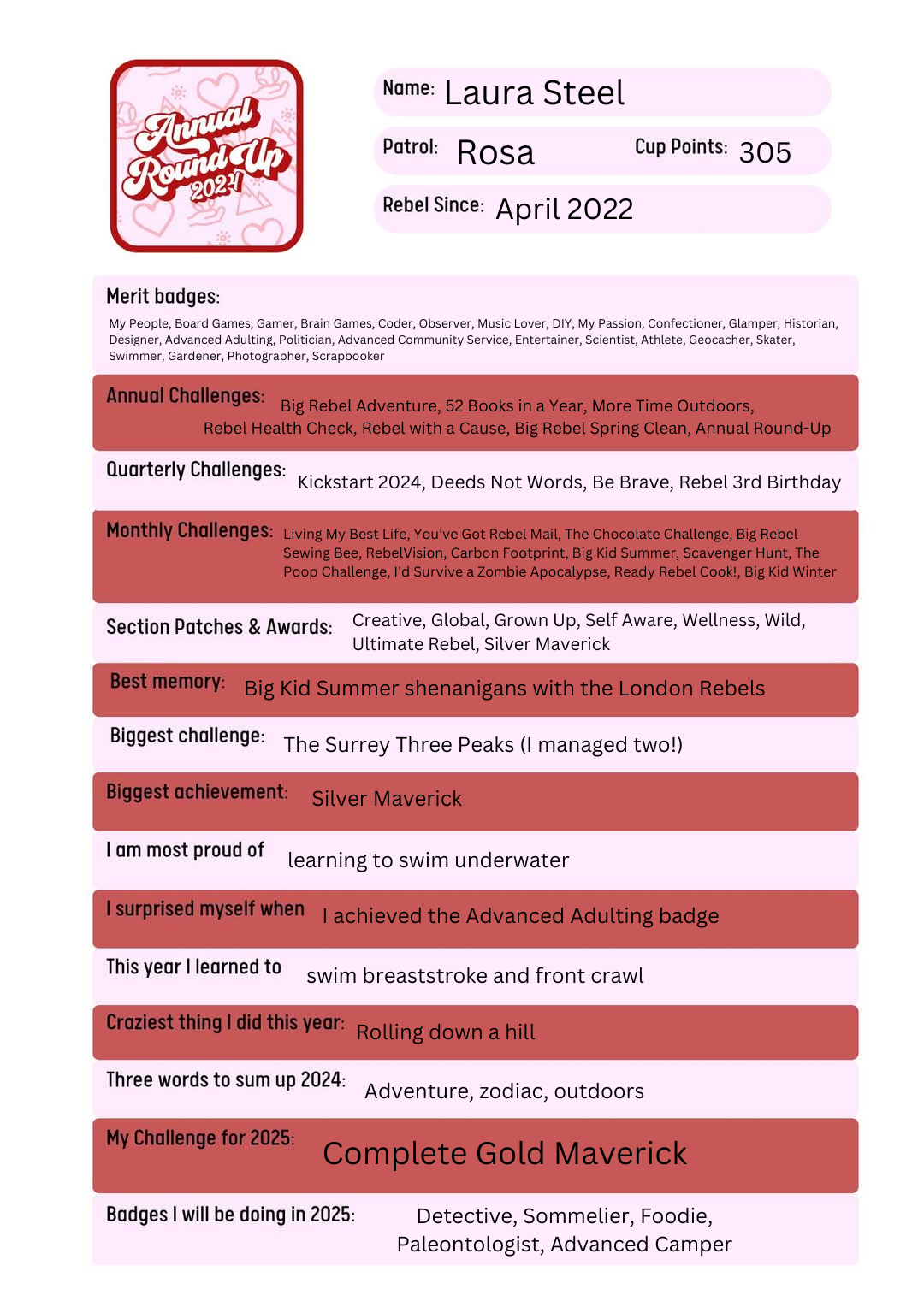
  • I’ve taken part in the Rebel Cup each year and got 305 points last year.
  • I’ve acted as a Patrol Leader at a couple of Meet-Ups.
  • I’ve been an active member of the Rebel Council since 2022.

Date completed: 1 January 2025

Rebel Badge Club: Lift Off! 2025 (Quarterly badge 1, 2025)

Quarterly Challenge 2025.01

I think the first RBC quarterly challenge of the year is always my favourite – it really helps me get excited for the coming year. The 2025 challenge, Lift Off!, is no exception.

To complete this badge, I need to do the following:

  • Choose six badges, one from each section, to complete in 2025, and complete at least 2 of them this quarter. I’ve chosen Film Critic (Creative), Global Citizen (Global), Sommelier (Grown Up), My Personality (Self Aware), Advanced Diarist (Wellness) and Paleontologist (Wild). I will complete Global Citizen and My Personality this quarter.
  • Choose a badge that has an Advanced version. Complete the first badge, then make plans to complete the Advanced badge later this year. I’ve chosen Detective, and I will then work on Advanced Detective.
  • Start working on at least one of the annual badges. Obviously I’ve started working on all of them, because I love a challenge!

I will link to my posts on the above badges once I’ve completed them.

I also need to do the following:

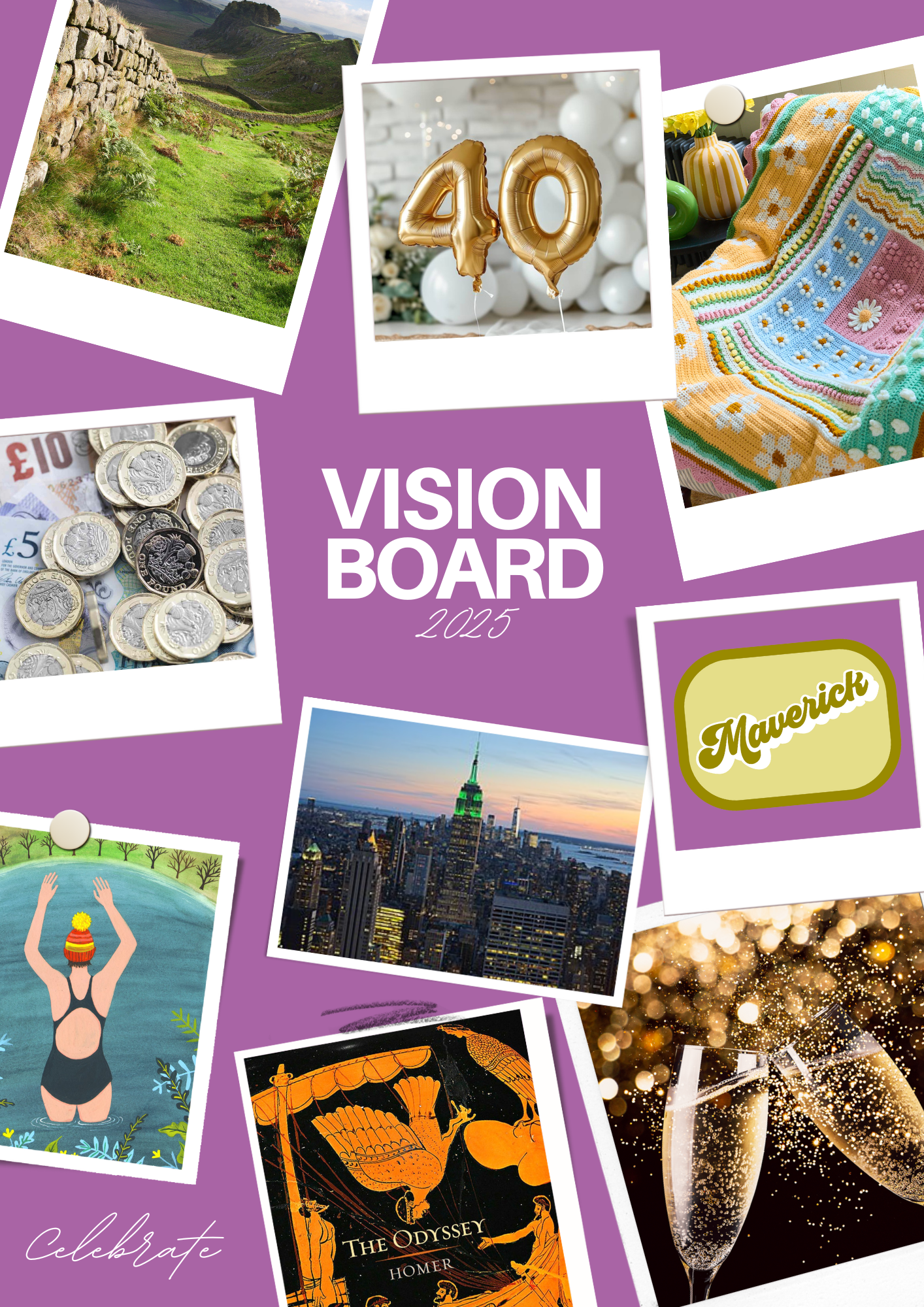
  • Make a vision board for 2025. My vision board is below: Hadrian’s Wall walk, my 40th birthday, crochet, completing my Gold Maverick, parties, a trip to New York, wild swimming, saving money and completing my Classical Civilisation A level. My word for the year is ‘Celebrate’ as I’m celebrating my 40th and my parents are celebrating their 70ths.

2025 Vision Board

  • Choose at least three general goals for 2025, and break them down into steps, some of which are achievable over the next 12 weeks.
  1. Complete my Classical Civilisation A level
    – Submit all my assignments
    – Revise for the exams
    – Take the exams
  2. Complete my outstanding crochet projects
    – Make a list of projects I need to make
    – Follow the steps to make each project
    – Repeat
  3. Walk the London Loop
    – Plan when I will walk each section throughout the year
    – Set aside days to walk it
    – Walk a quarter of it this quarter

Rebel Badge Club: Chief Rebel’s Challenge 2024

Chief Rebel's Challenge 2024 badge

I was very pleased to achieve the Chief Rebel’s Challenge this year.

To do this, I had to: