Rebel Badge Club: Geographer

I did Geography A level so this badge was a really nice refresher of several topics I used to know something about. I tried to pick a range of clauses across the different geographical areas and covered a variety of parts of the world.

Understand the difference between physical, human and environmental geography.

  • Human geography is the study of societies, cultures and economies.
  • Physical geography is the study of landscapes and environments.
  • Environmental geography is the study of how humans impact the Earth.

Understand the water cycle.

The water cycle is the process by which water is transferred between the surface of the earth and the atmosphere.

Evaporation/transpiration/sublimation

Water at the surface of the earth (e.g. in oceans) is heated by the sun, turns to liquid or gas and becomes water vapour, rising into the atmosphere. At the same time, plants and trees release water vapour from their leaves into the atmosphere via transpiration. Ice can change straight into water vapour by a process called sublimation.

Condensation

As air rises and cools in the atmosphere, often forming clouds, the water vapour is forced to condense from a gas into liquid water droplets.

Precipitation

Within clouds, liquid water droplets often merge together over time. At some point, they may get large enough to fall from the sky, resulting in hail, rain, sleet or snow.

Once the water reaches the surface, it may flow into bodies of water (e.g. rivers), soak slowly into the soil (eventually reaching a river), collect on ice caps or glaciers or soak into plant or tree roots. The cycle then begins again.

With the help of the UCAR website I drew a diagram of the different cloud types.
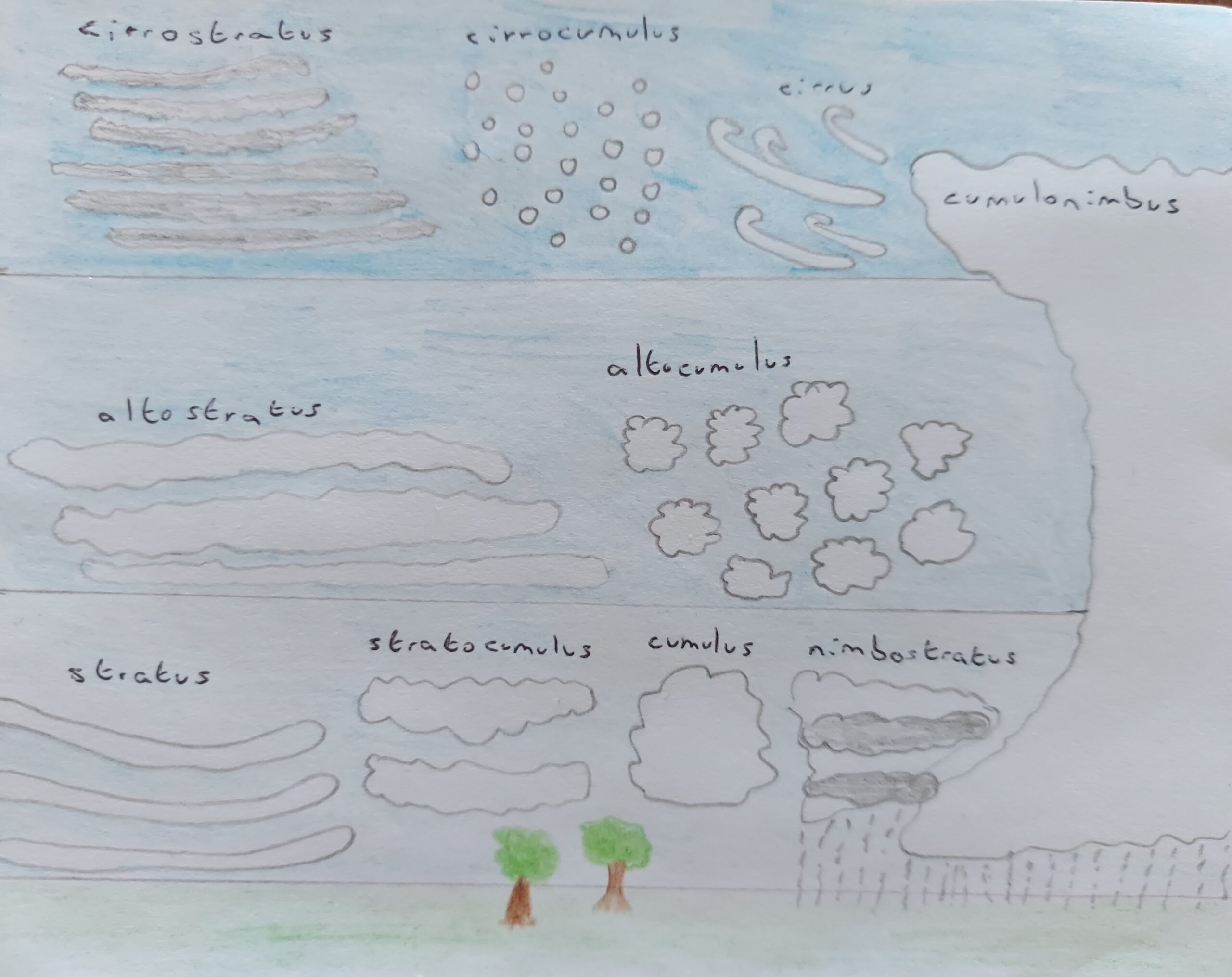
Diagram of different cloud types

Cloud cover is measured in oktas, or eighths. This involves visually assessing how much of the sky is covered by clouds, ranging from 0 oktas (no clouds) to 8 oktas (full cloud cover).

The Met Office often uses terminology to describe how cloudy it is: for instance, scattered cloud usually means 3 or 4 oktas, broken cloud is 5 to 7 oktas, and overcast is 8 oktas.

Learn about the three different types of rock.

Sedimentary rock forms when particles accumulate in layers. These particles are often former living organisms. The pressure of the layers eventually squeezes them together to form solid rock.

Metamorphic rock forms when existing rocks are changed by heat, pressure or reactive fluids (but not melted). These rocks can be igneous, sedimentary or even metamorphic.

Igneous rock forms when magma or lava cools and solidifies.

I made models of the different kinds of rock using chocolate shavings, but there are no photos as I ate the evidence!

I also completed an OpenLearn course on An introduction to geology.

Make a 3D representation of a 2D map.

Inspired by the release of a new map of the landscape beneath the ice of Antarctica, I made a 3D representation.
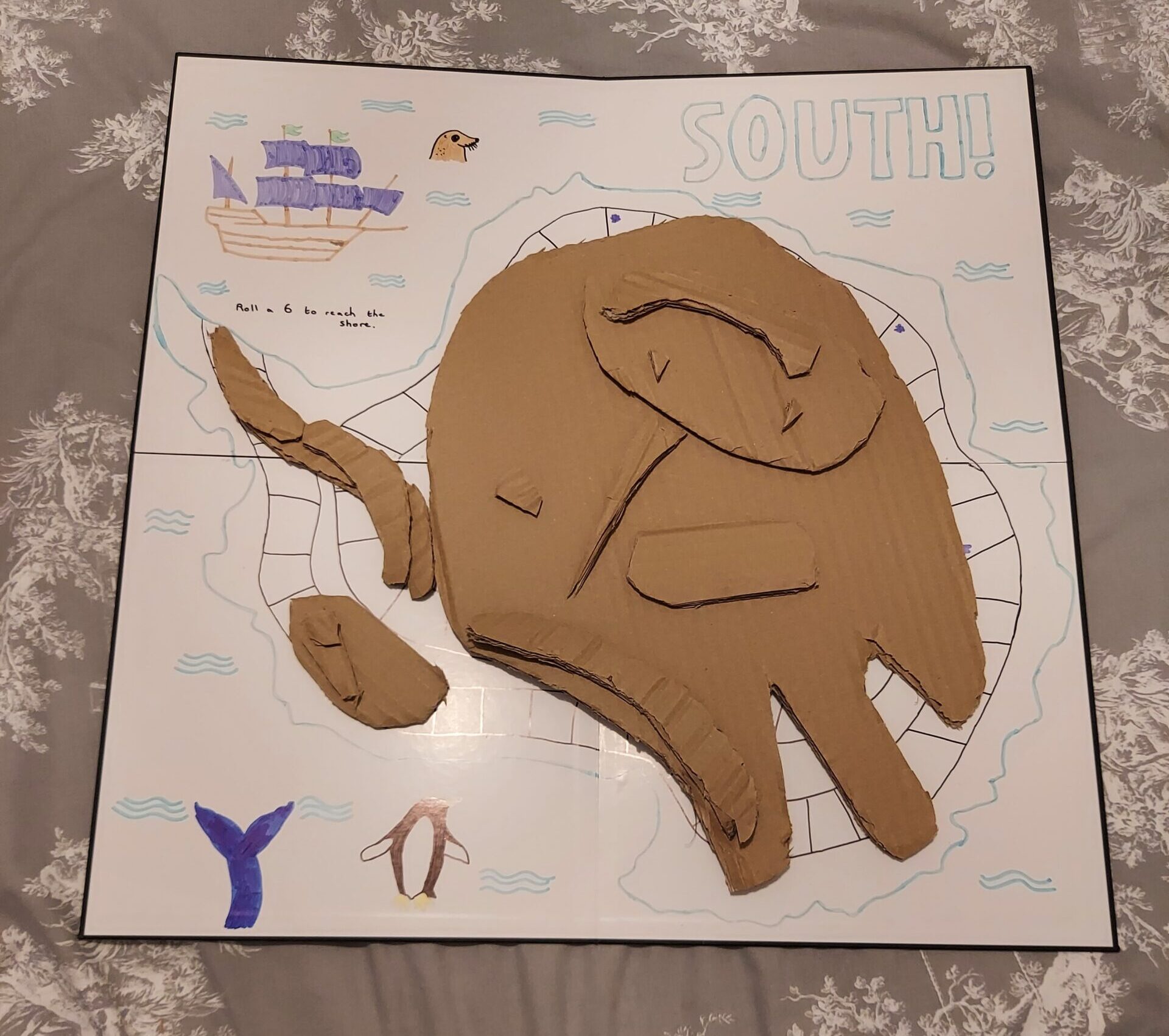
Cardboard 3D map of Antarctica

Pick a continent and find out how the boundaries, languages spoken, and names of countries have changed over time.

I decided to learn about Asia, and found a brilliant YouTube video exploring the history of this continent over time.

Choose a continent you are not totally familiar with. Learn the names and capitals of all the countries or states, and be able to identify them from location and shape.

I chose Africa and used this map to help me.

What are the characteristics of a rainforest?

  • Tropical rainforests have distinct characteristics which support biodiversity. They have a consistent climate with a hot and humid atmosphere, and an average temperature of 28°C. They are very wet, with over 2,000 mm of rainfall per year.
  • Soils are not very fertile, although there is a thin fertile layer on the surface where the dead leaves decompose, red in colour and rich in iron. The high rainfall means that nutrients are quickly washed out of the soil.
  • There is a wide range of plant species supporting many different animals, birds and insects.

Rainforests can be found in the tropical climate region, near the equator. Regions include central America, central Africa and south-east Asia.
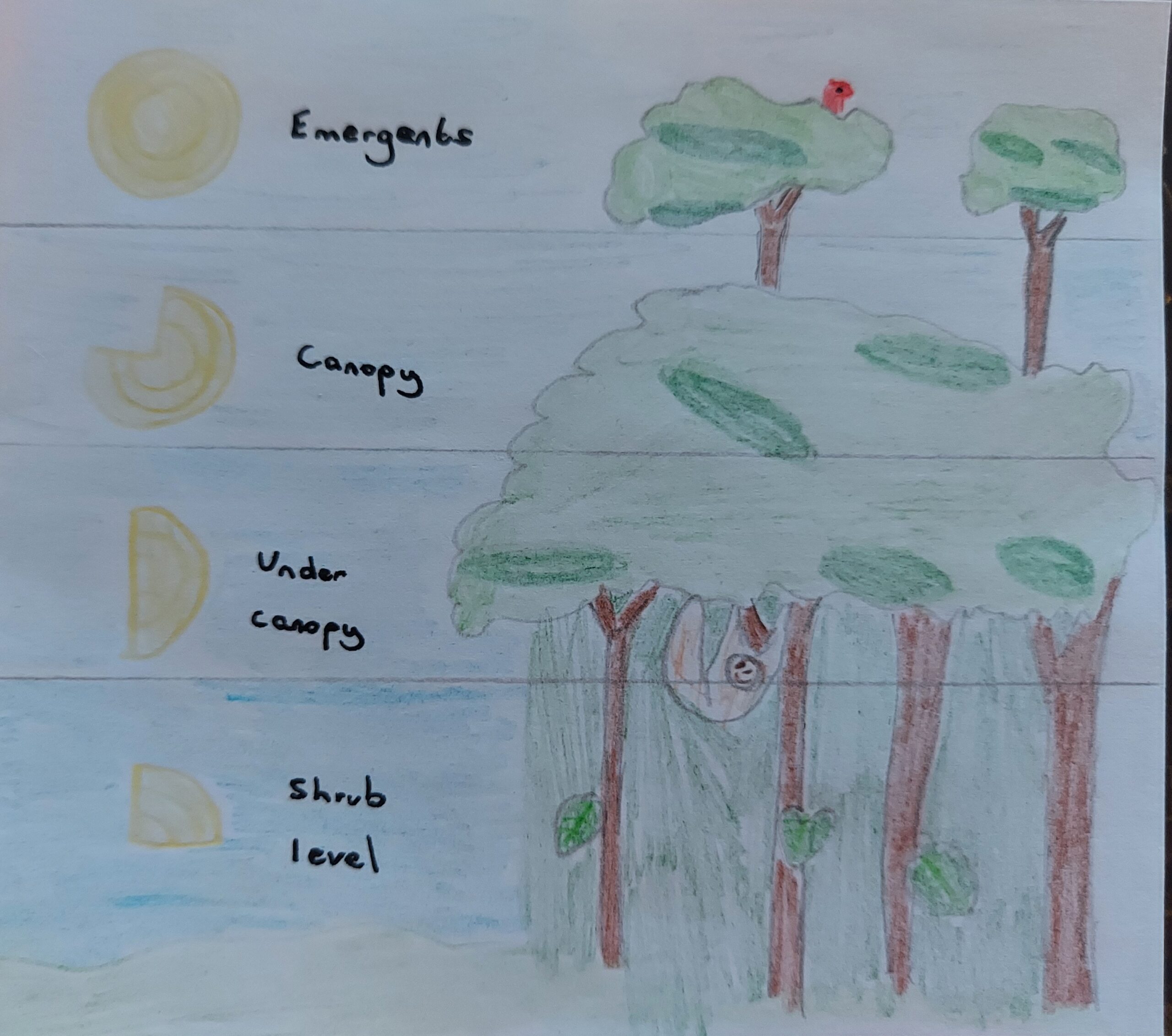
A diagram of the different layers of a rainforest

I drew a diagram of the different rainforest layers. The emergent layer has the tallest trees in the forest. They are supported by buttress roots so that they don’t blow over. The canopy is a bit more sheltered, has fruit all year round, and is home to most wildlife including insects, tree snakes, birds and mammals such as howler monkeys, jaguars and sloths. The under canopy is shady and cooler, and seedlings lie dormant here until plants and trees die, leaving a space for them to grow. Lianas (vines) take root in the ground and climb up trees to reach sunlight. The shrub layer is dark, and is covered with dead and decaying roots and leaves (humus); it is prone to flooding during torrential rainfall.

Deforestation is the removal of trees and forests. It is done for purposes of farming, logging, mining and road creation, as well as clearing land for population growth and the creation of hydroelectric power stations. Deforestation results in soil erosion, loss of biodiversity and climate change but often also results in economic development.

Understand the evidence for and against climate change. What are the natural and human causes of climate change?

It is pretty clear that climate change is happening. The Royal Society has a very useful page on how it works.

Natural causes include:
  • Orbital changes – the Earth has natural warming and cooling periods caused by  variations in the tilt and orbit of the Earth around the Sun.
  • Volcanic activity – during a volcanic eruption carbon dioxide is released into the atmosphere.
  • Solar output – there can be fluctuations in the amount of radiation from the Sun. A high amount results in an increase in Earth’s temperatures.
Human causes include:
  • Burning fossil fuels, eg coal, gas and oil – these release carbon dioxide into the atmosphere.
  • Deforestation – trees absorb carbon dioxide during photosynthesis. If they are cut down, there will be higher amounts of carbon dioxide in the atmosphere.
  • Dumping waste in landfill – when the waste decomposes it produces methane.
  • Agriculture – agricultural practices lead to the release of nitrogen oxides into the atmosphere.

What is the UN, and how is it working to protect the planet?

The United Nations is an intergovernmental organisation that aims to maintain international peace and security, develop friendly relations among states, promote international cooperation, and serve as a centre for coordinating global action.

The UN holds a Climate Change Conference each year in order for world leaders to meet and assess progress on climate change goals. The Paris Agreement was set out in 2015 at COP21. It is a legally-binding international treaty and 195 parties (194 states plus the EU) have joined. The Agreement set goals for all nations to reduce greenhouse gas emissions, periodically assess collective progress and finance developing countries to help them mitigate and adapt.

Choose a country you do not live in. Evaluate the positive and negative impacts of tourism on that country.

While not strictly a country, Antarctica has experienced growing tourism in recent years and it’s a topic I’m very interested in, particularly as I would love to visit myself. It does seem as though the negative impacts can outweigh the positive, although many can be mitigated by following all the rules in place to protect the continent. The positive impacts should not be overlooked, however.

Positive Impacts
  • Tourists become ambassadors for Antarctica – able to speak up in favour of protecting the continent. Why should anyone care about a place no one knows about or visits?
  • As Antarctic tourists are more likely to be wealthier, better-educated and influential, they are more likely to be receptive to the message of conservation.
Negative Impacts
  • Oil spills from ships and boats are a continual risk.
  • Erosion or disturbance of fragile environments from many tourists exploring the same small areas.
  • Spreading diseases from pathogens carried on footwear.
  • Impact on breeding birds if the presence of numerous people causes them anxiety.
  • Invasive species brought in as cargo, or on food or clothes.

Learn about natural disasters.

I completed a course on FutureLearn called Extreme Geological Events, which covered earthquakes, volcanoes, floods and tsunamis, the countries affected by them, and mitigating measures.

Date completed: 31 May
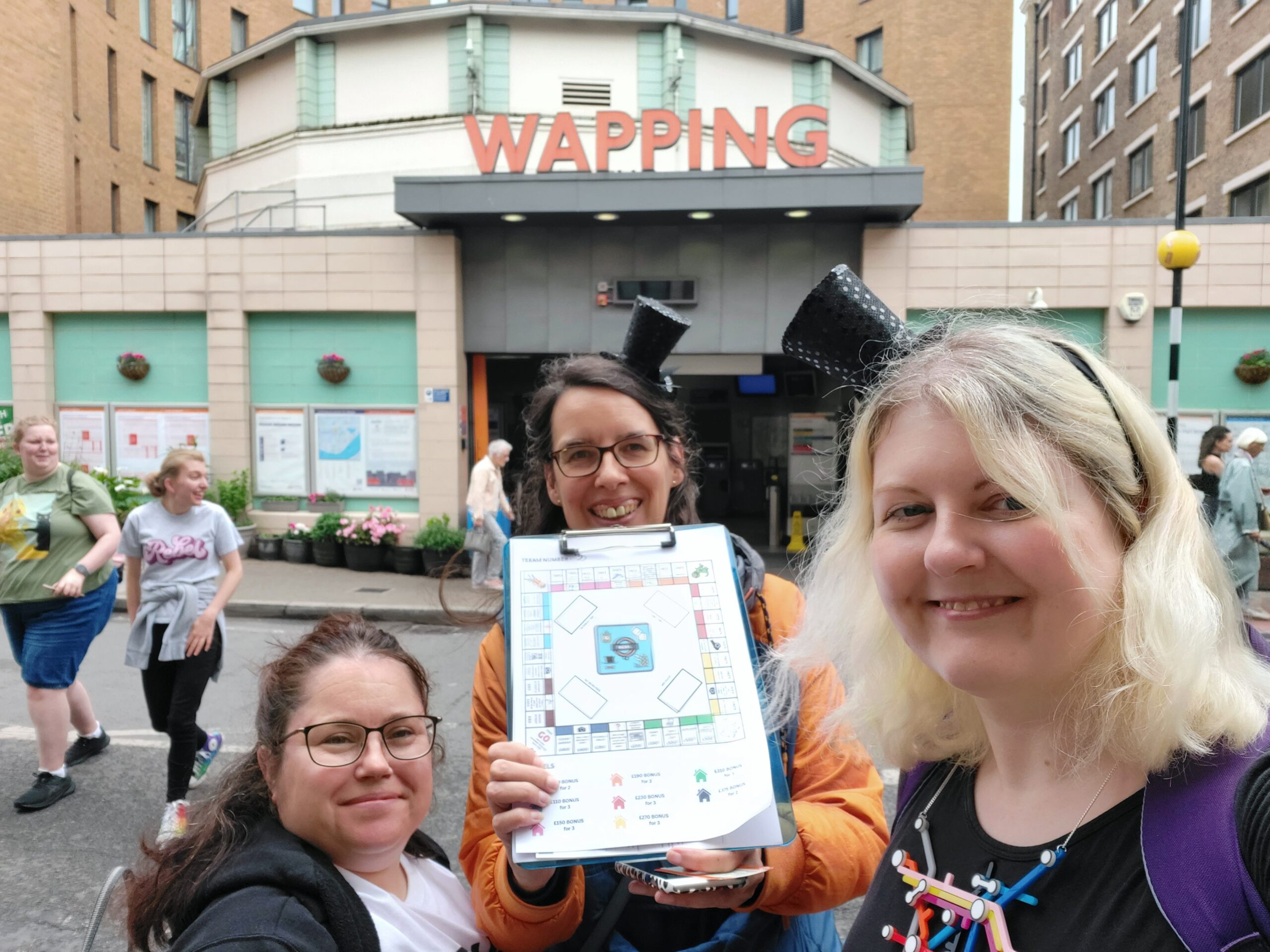
Rebel Monopoly – London 2025

Fresh-faced at Wapping

For the second Monopoly game this year, we were back in London. This time I was excited because I helped plan the day as part of my Gold Maverick! As there is a London Underground Monopoly board, my thoughts immediately went to the Tube (as someone who is a tad obsessed with it) and I came up with quite a few ideas – not all of which were used I hasten to add!
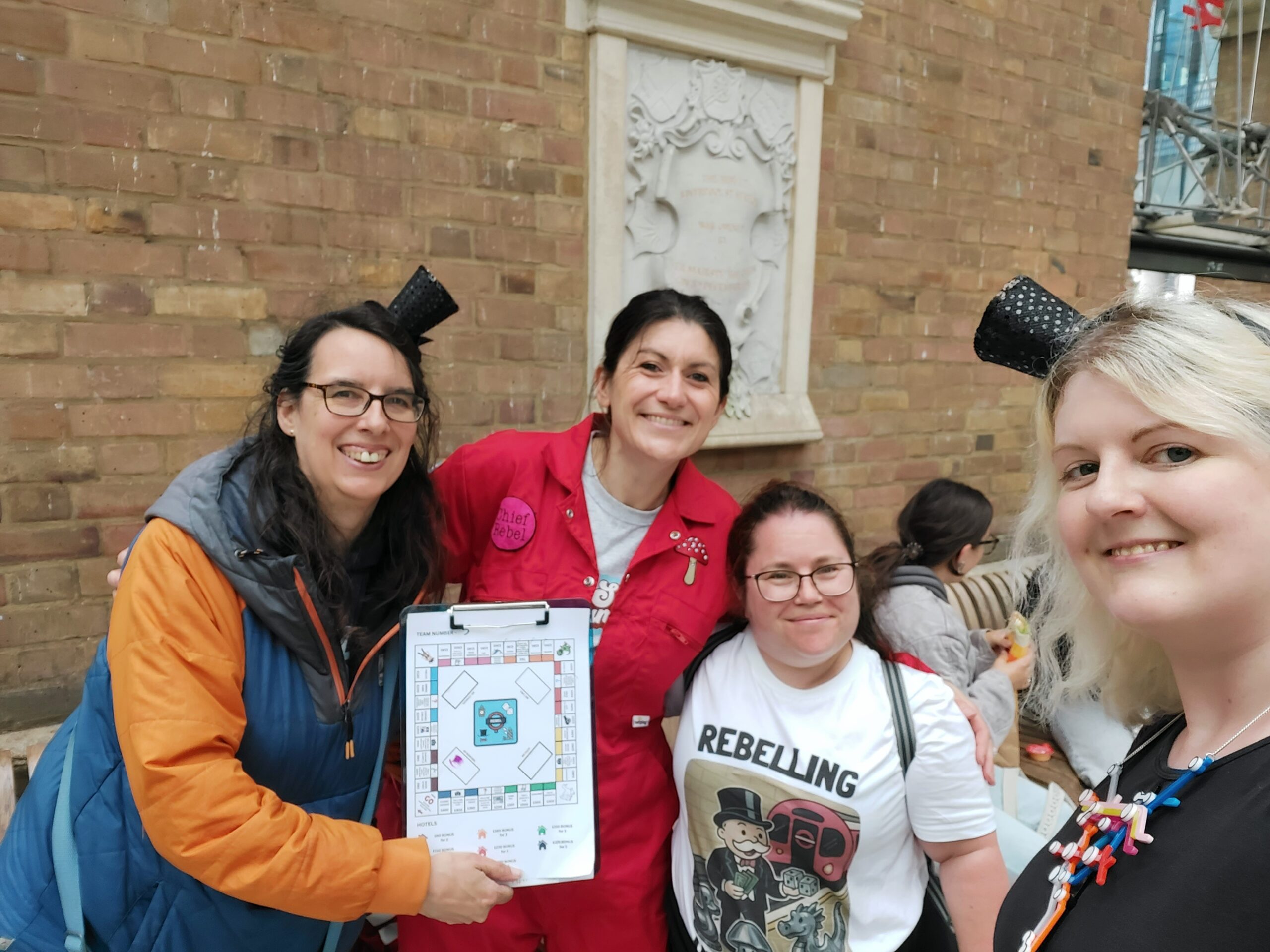
We met in Canary Wharf and it was so much fun to see people dressed up – this time around, dressing up as a Tube station was an option, and people really went for it. There was a Paddington, a Baker Street, several Elephant & Castles, and an Oxford Circus – sadly, no Cockfosters! When we set off – I was in a team with Claire and Ruth again, Katrina sadly not being able to make it and our fourth team member unfortunately ill – we headed straight for the Overground stations on the map before trekking to Baker Street and the Lost Property Office (the old one!). We also visited Charly at ‘Go’ in Paddington, and travelled south to the Natural History Museum to return the ‘Lost Property’ (a little duck) to Mr Duck.

With Charly at Liverpool Street

In a bid to get more bonus money, we headed to Wimbledon to find a tram. From this point we kept bumping into the same Rebels over and over – clearly on a similar trajectory to us! While picking up stations, we tried to earn more bonus money by dancing to a busker.

We had to contend with delayed and crowded trains throughout the day – especially as Sunderland were playing at Wembley that day. As a Sunderland supporter I kept an eye on the match and was glad that they won, but it would have been easier if they had played on a different day!

We didn’t do so well this time around, but it was something of a relief to realise that even the winning teams didn’t manage to complete the board. In any case, it was still a really fun day, and it was really nice to go for drinks afterwards and chat. I’m looking forward to the final Rebel Monopoly event now!

London Monopoly Board - completed

Rebel Badge Club: Big Rebel Bake Off

The Big Rebel Bake Off was the monthly challenge for May. Despite exam commitments this month, I really wanted to complete the badge, and decided to choose three clauses, one from each section on the syllabus.

Beginner: Make a tray bake which requires no baking

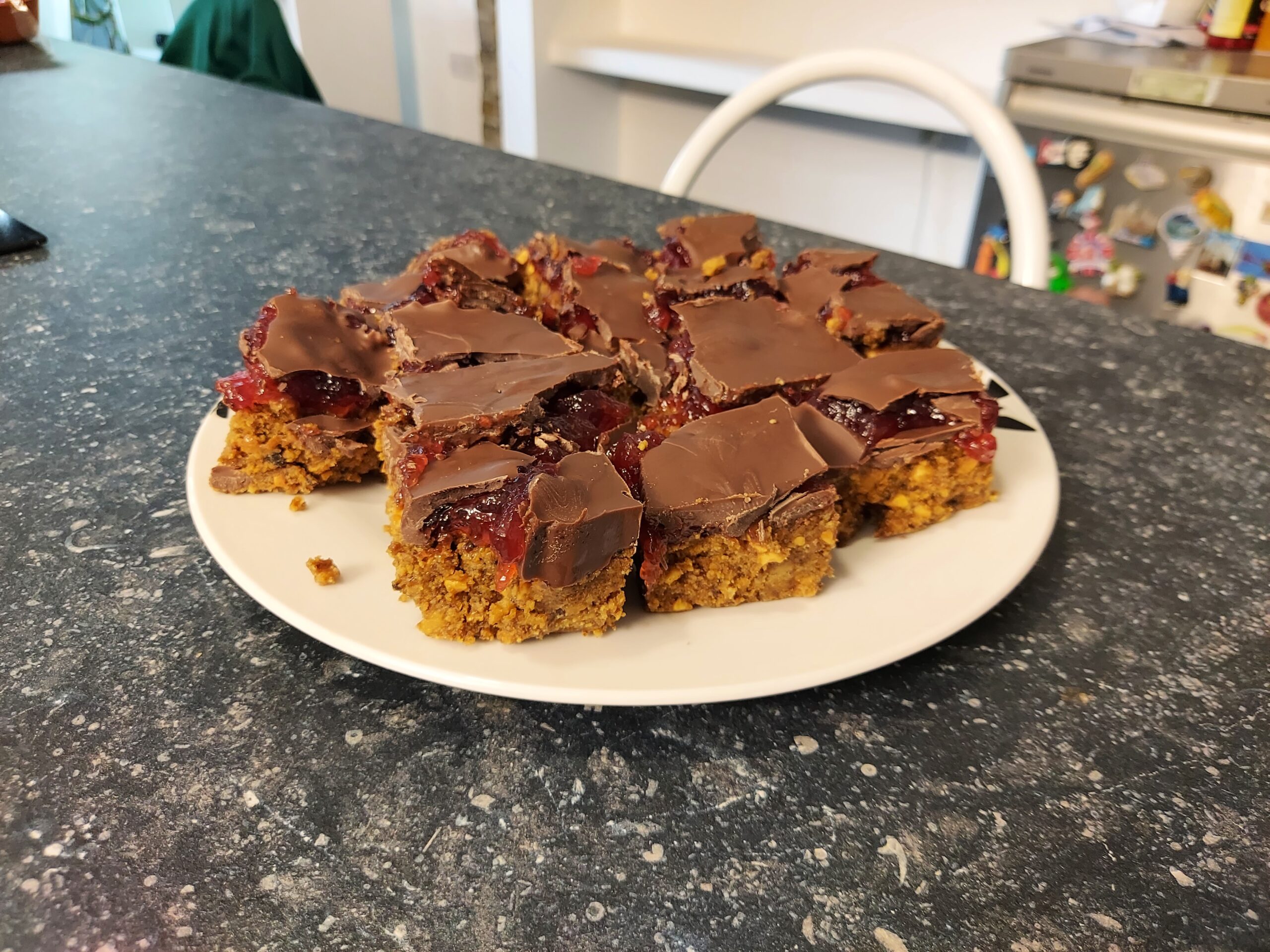
I made these Peanut butter squares, with the addition of a layer of jam. They were yummy!

PBJ Traybake

Intermediate: Make a cookbook with other Rebels

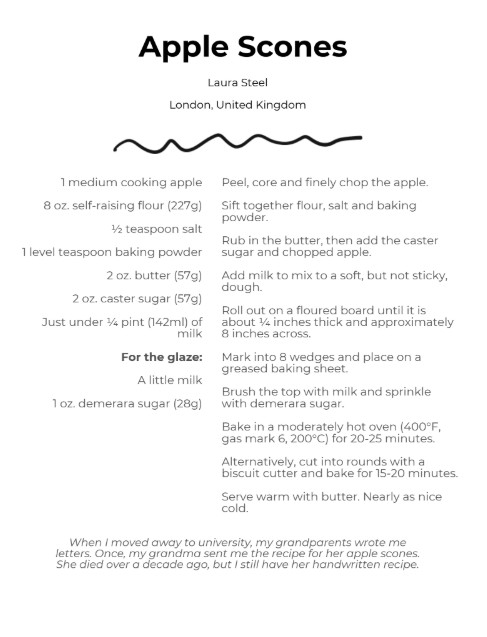
I contributed to the Rosa Patrol cookbook, with the recipe for apple scones my grandma sent me at university.

Apple Scones recipe

Advanced: Make your own puff pastry

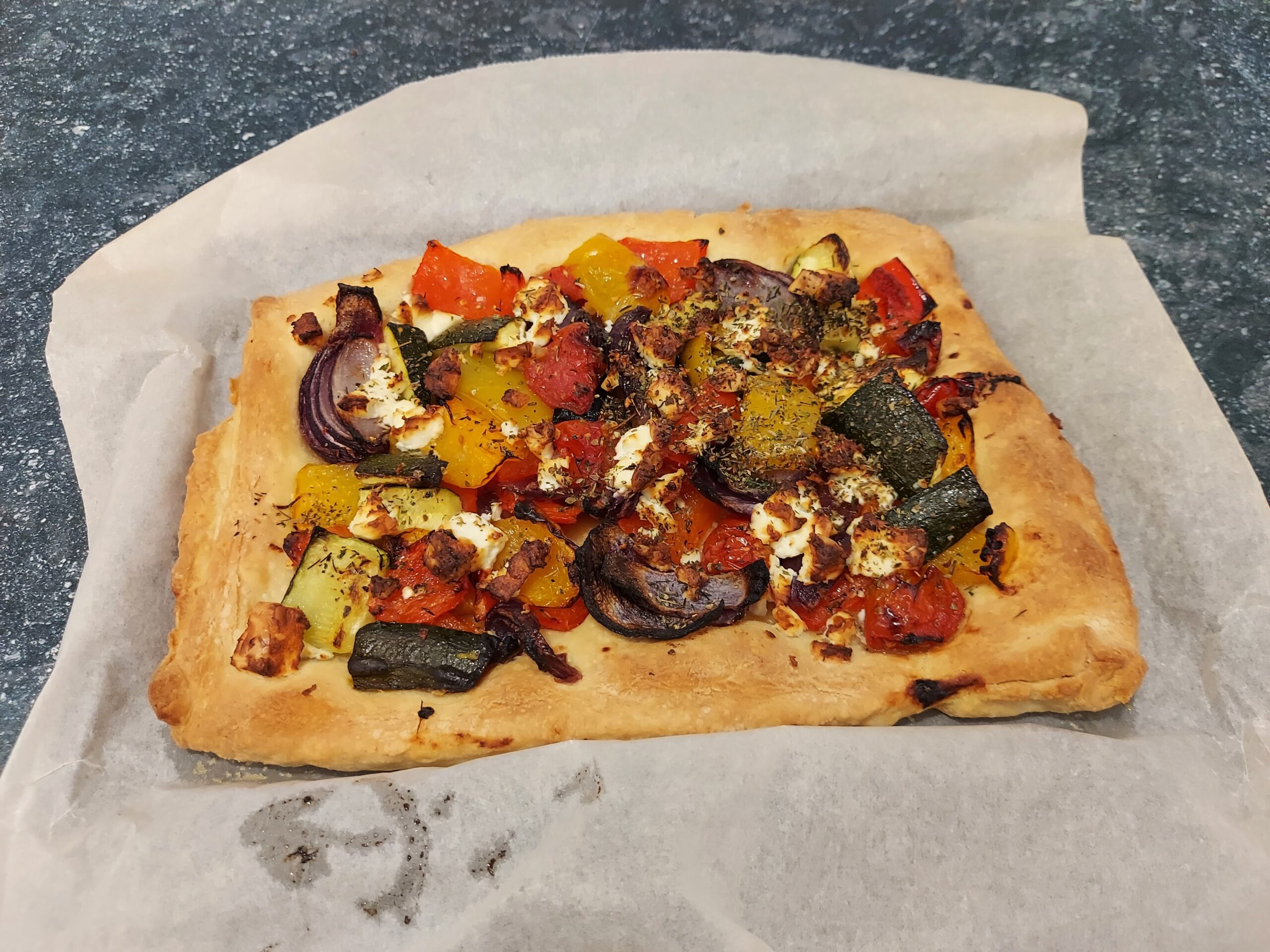
I used a recipe I found online. I found it easier than I expected and it turned out pretty well! I used the pastry to make a roast vegetable and feta tart. I was really proud of this as I was too scared to make my own puff pastry for the Baker badge, so this felt like an achievement!

Roasted Vegetable Puff Pastry Tart

Hadrian’s Wall – Practice Expedition

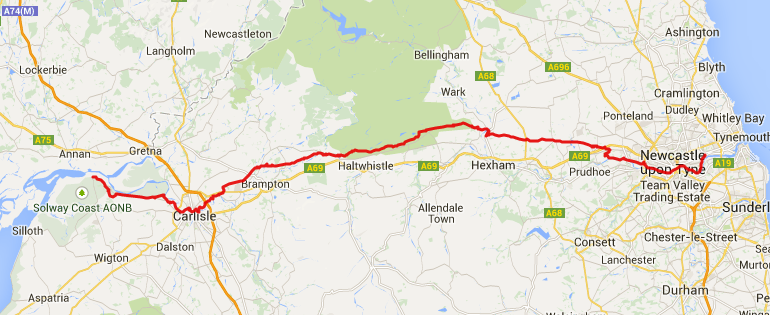
I must be slightly insane because this year I’m planning to walk Hadrian’s Wall. I’m doing it as part of my Gold Maverick Award, which is an assessed Rebel Badge Club challenge similar to the Duke of Edinburgh’s Award. I’m walking with Heather, a fellow Gold Maverick. The route is 84 miles, or 135 kilometres, between Bowness-on-Solway in the west and Wallsend in the east. After discussion, we opted to walk east to west, beginning at Wallsend.

Plan of Hadrian's Wall walk

As part of the Award we have to complete a ‘practice’ expedition followed by the ‘real’ expedition. We’ve decided to complete part of the Wall for the ‘practice’, and the rest for the ‘real’. The main expedition takes place in July, and we completed the ‘practice’ this past weekend. Our trip coincided with the hottest weekend of the year, which wasn’t ideal, but at least it wasn’t pouring with rain!

We met on the Friday and went for a couple of drinks in Newcastle before the adventure began. We also had tea at Wetherspoon’s – the Mile Castle – which seemed particularly appropriate. We stayed at the Albatross Hostel in a private room with bunk beds – comfy and good value.

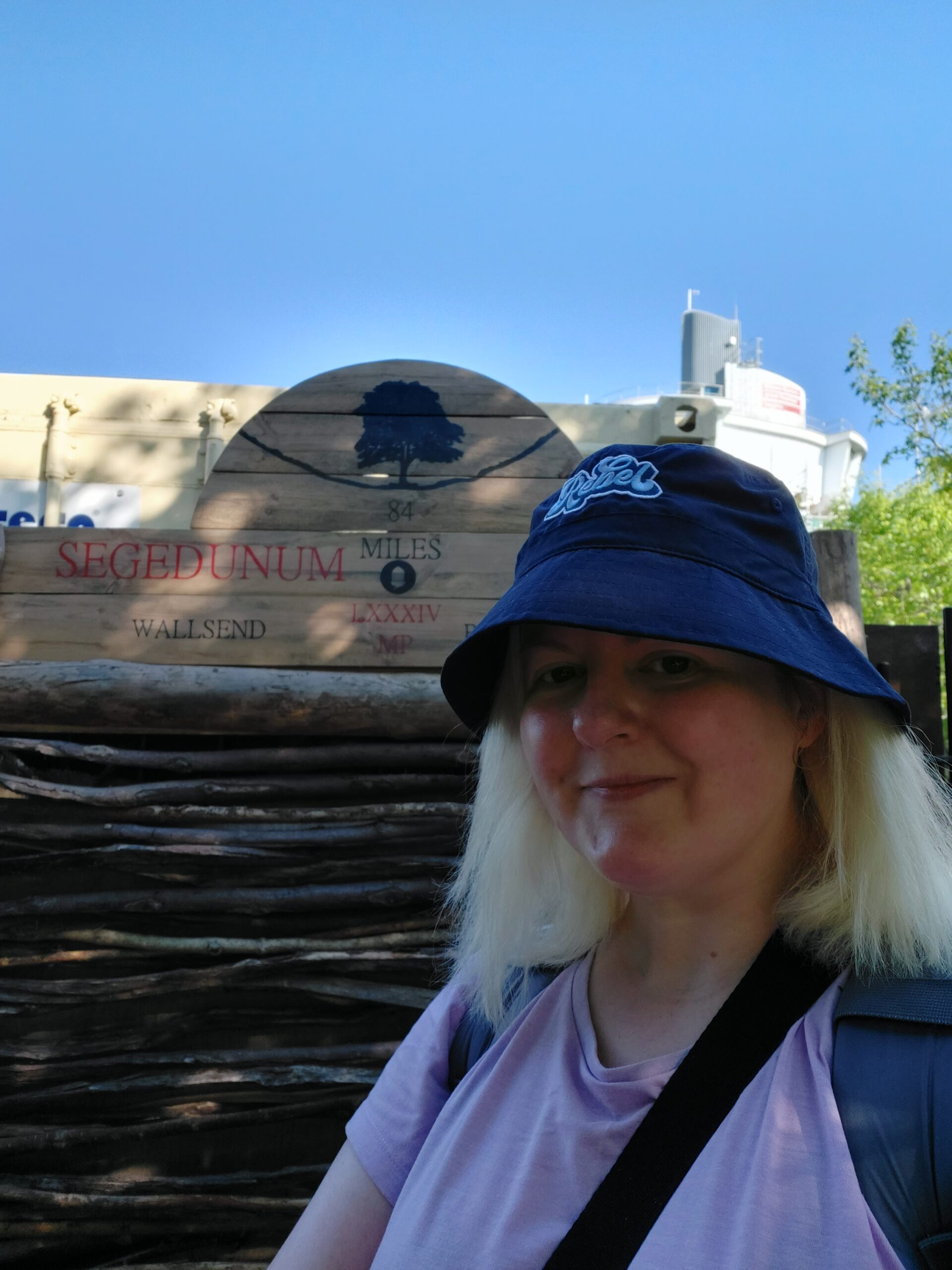
Me at the beginning of Hadrian's Wall at Wallsend

Day 1: Wallsend to Heddon-on-the-Wall, 15 miles

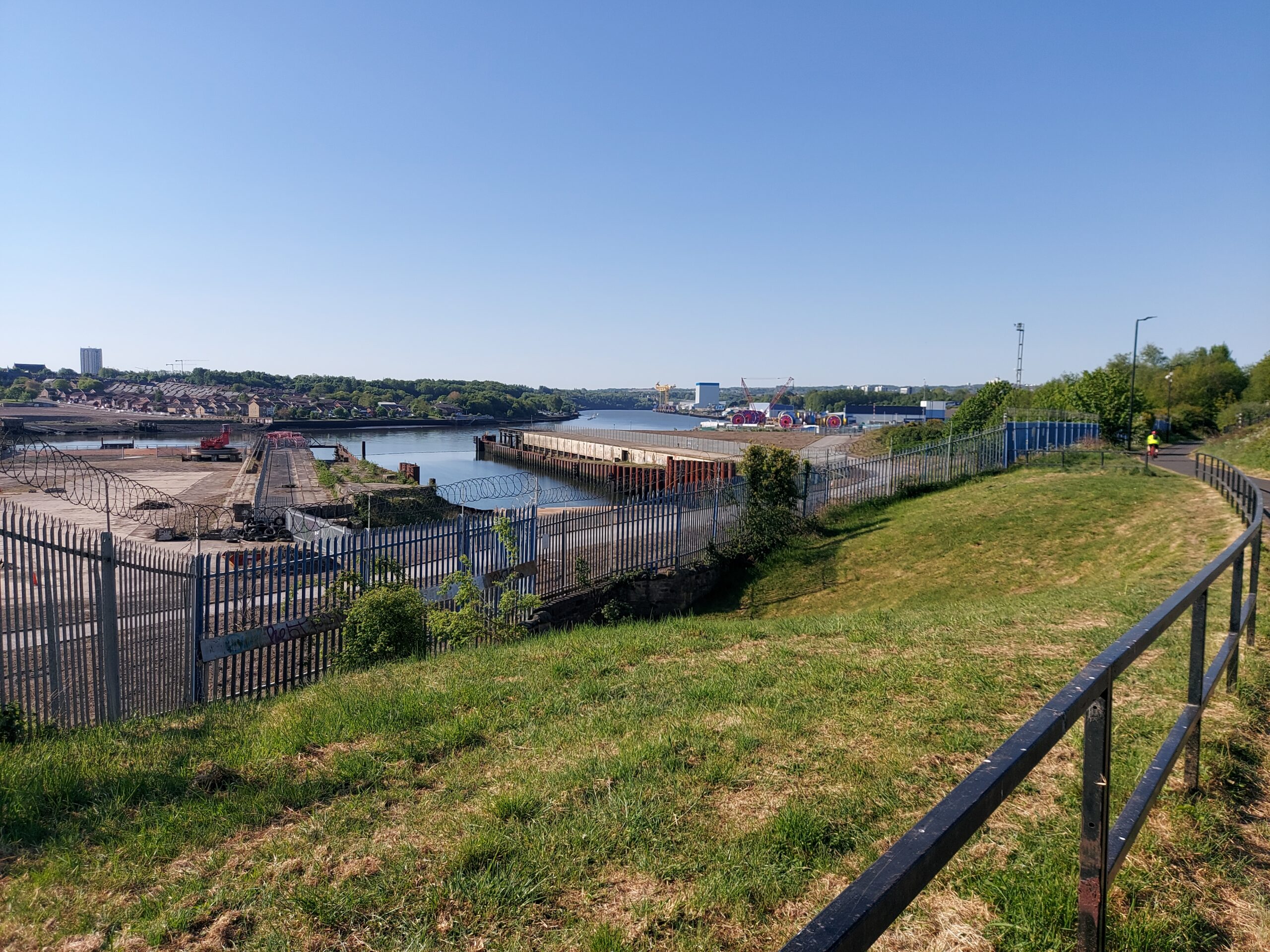
The Tyne at Wallsend

Our first full day of walking began at Wallsend – we took the Metro there and got our passports stamped at Segedunum Roman Fort. Our walk began with a long trek over pavements alongside the Tyne, with a section cutting through the centre of Newcastle. I confess the temptation to stop for a cocktail by the river was strong at this point, but we managed to resist! After a couple of hours we stopped for something to eat at Liosi’s Sicilian Cafe Bar.

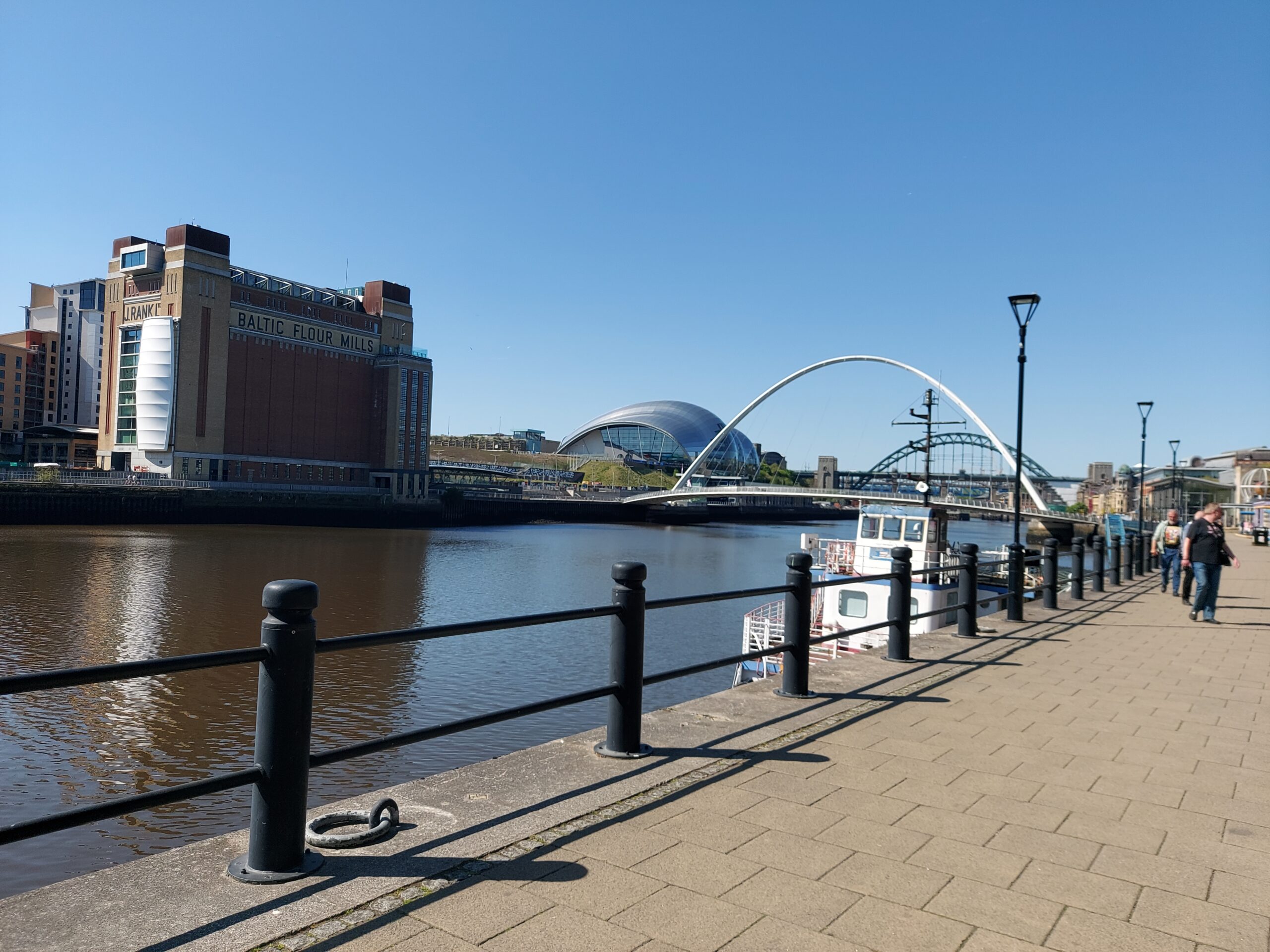
The Tyne with the Baltic, the Glasshouse, the Millennium Bridge and the Tyne Bridge in the background

The walk then took us further beyond Newcastle, alongside the river for much of the way, with a final long pull uphill to end the day with. We passed someone enthusing about a nearby observatory but we were too tired to make even a short detour!

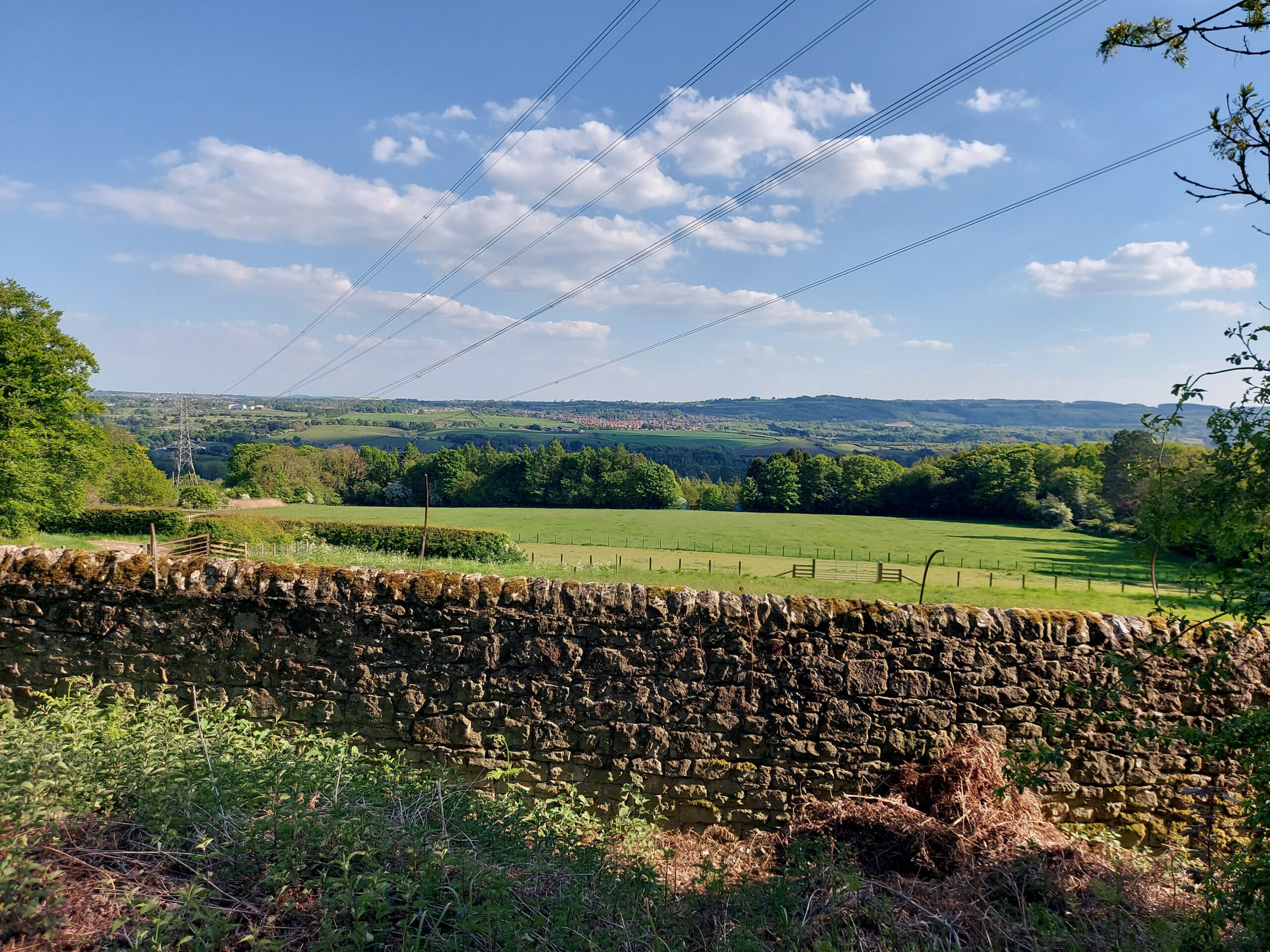
View on the way to Heddon-on-the-Wall, a blue sky with a few white clouds, a stone wall and rolling fields

Eventually we arrived at Heddon-on-the-Wall, exhausted, and had tea at The Swan before walking a short distance to Houghton North Farm, where we were staying. We ended up ordering pizza as we were much too tired to cook!

Day 2: Heddon-on-the-Wall to Chollerford, 14.5 miles

The following day, we set off in good time to start our journey to Chollerford. It was very hot again today. We stopped off at the Robin Hood Inn for a much-needed break and to get our passports stamped, before starting on the next section. The path here mostly ran alongside the B6318 and the old military road, so it was fairly easy to follow, though we didn’t see much of the wall itself.

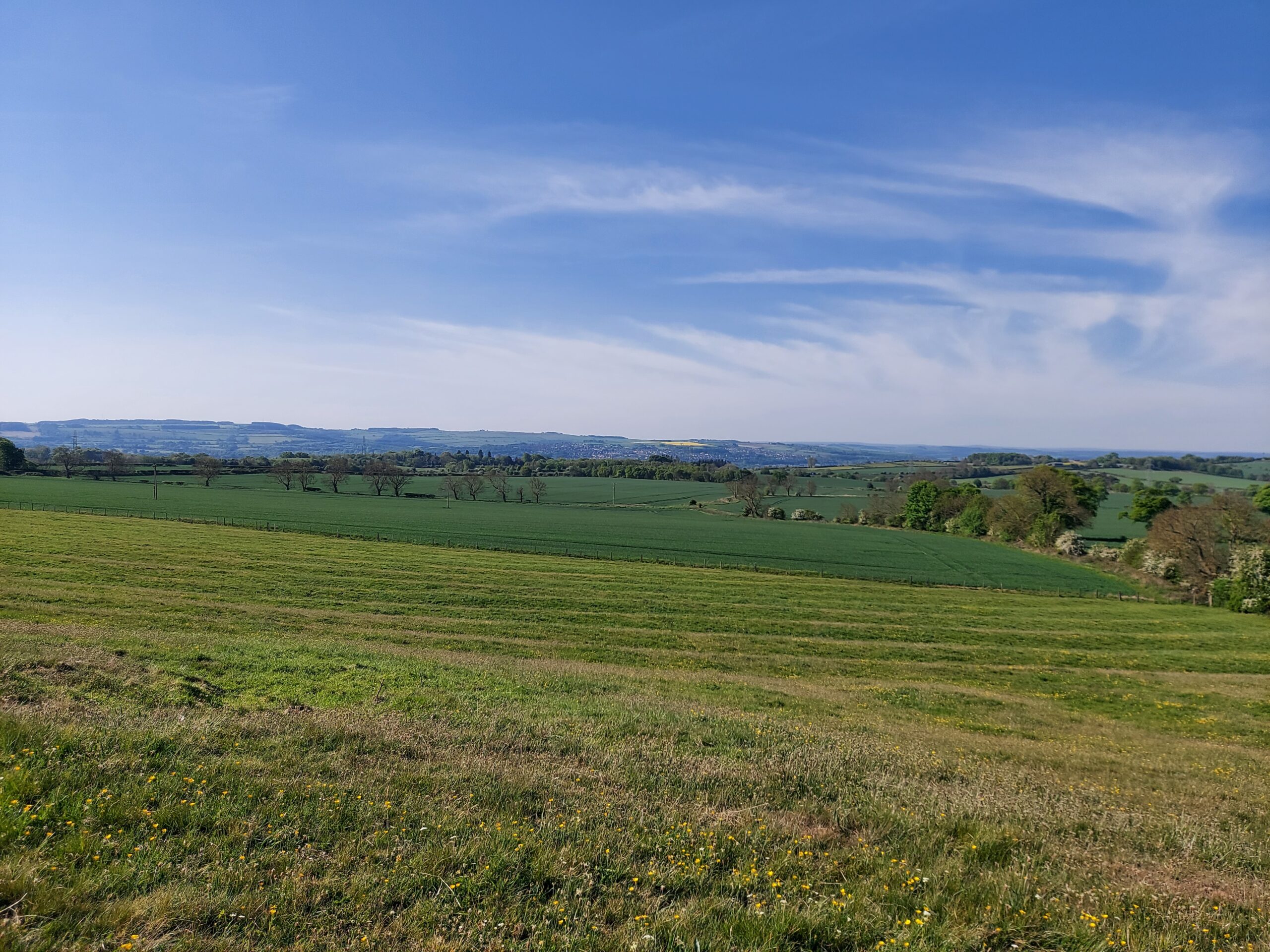
View on the way to Chollerford, a wide blue sky with fields beneath

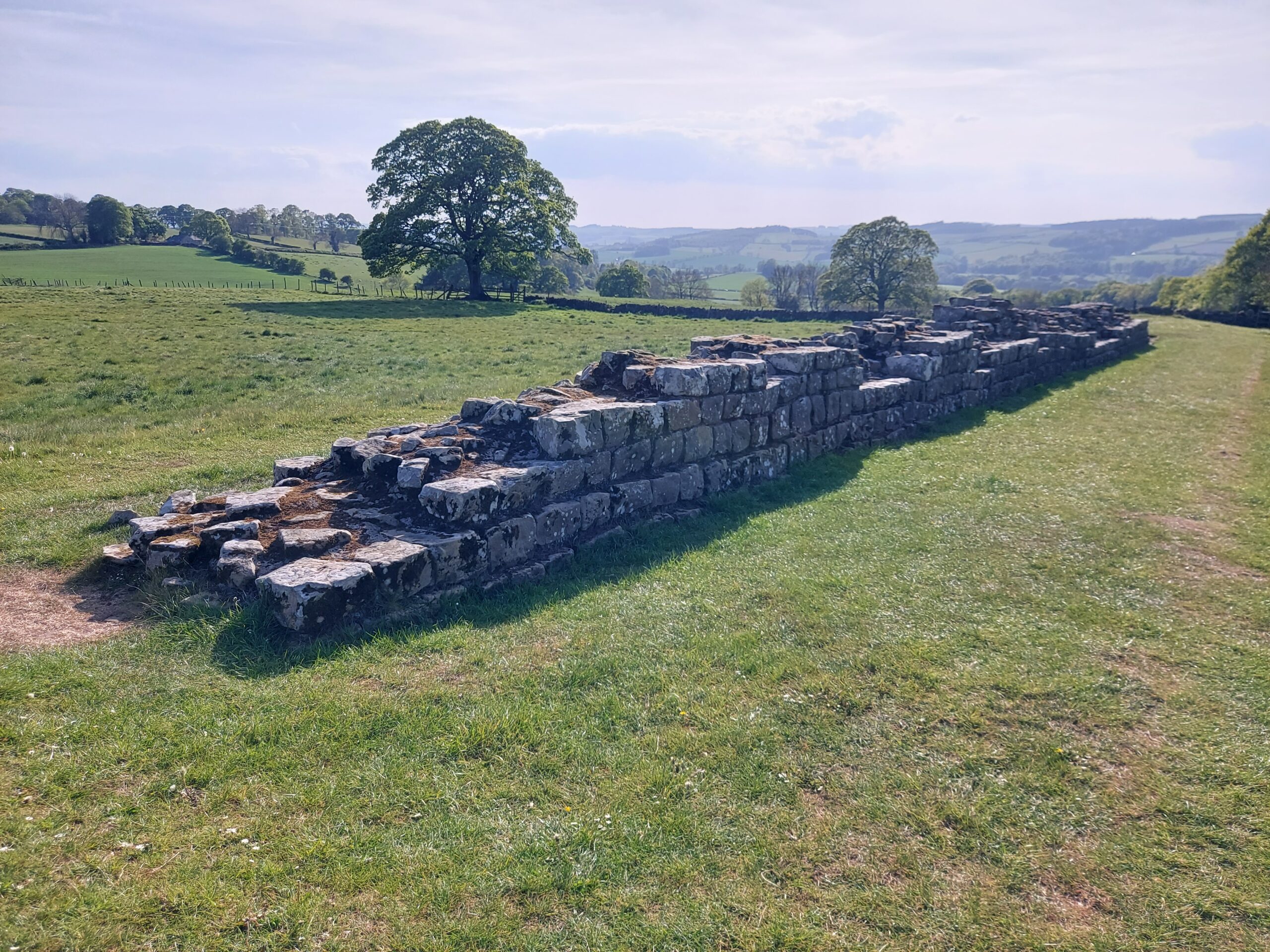
We had a break at Errington Coffee House and enjoyed a sandwich before embarking on the final leg of our journey. We were pleased to come across a decent chunk of wall towards the end, which boosted our spirits somewhat!

A piece of wall

Arriving in Chollerford later than we had planned, I ended up phoning my brother to come and get me. It was sobering driving back home along more or less the same route I had been painstakingly walking for the last two days.

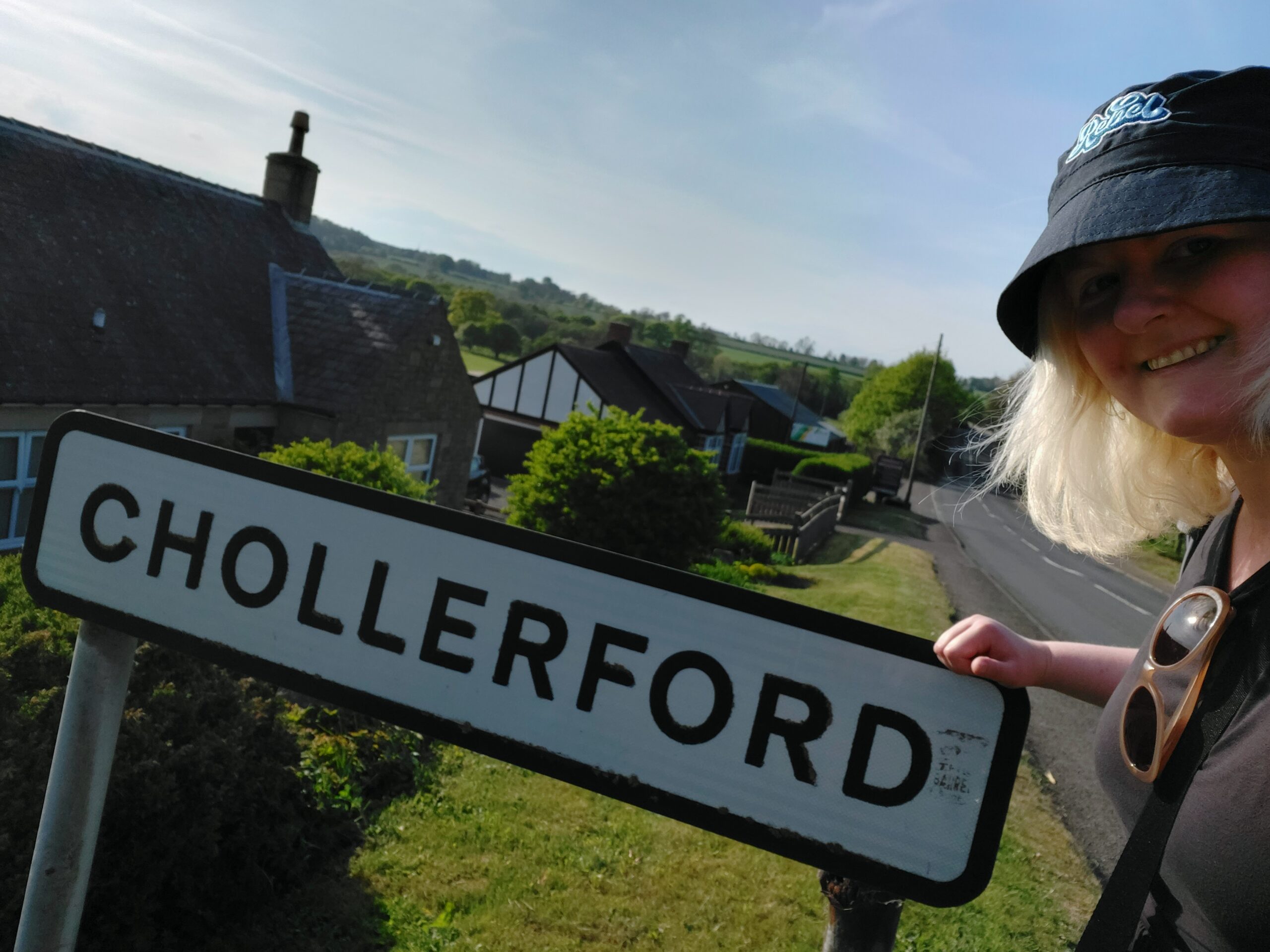
Me with the Chollerford sign

We ended up doing around 30 miles this weekend, which was a decent chunk of the walk. I was pleased that we managed to complete it, and learned what to do and what not to do during the ‘real’ expedition in July. One important point being – don’t leave your walking poles at home!

Rebel Monopoly – Cambridge

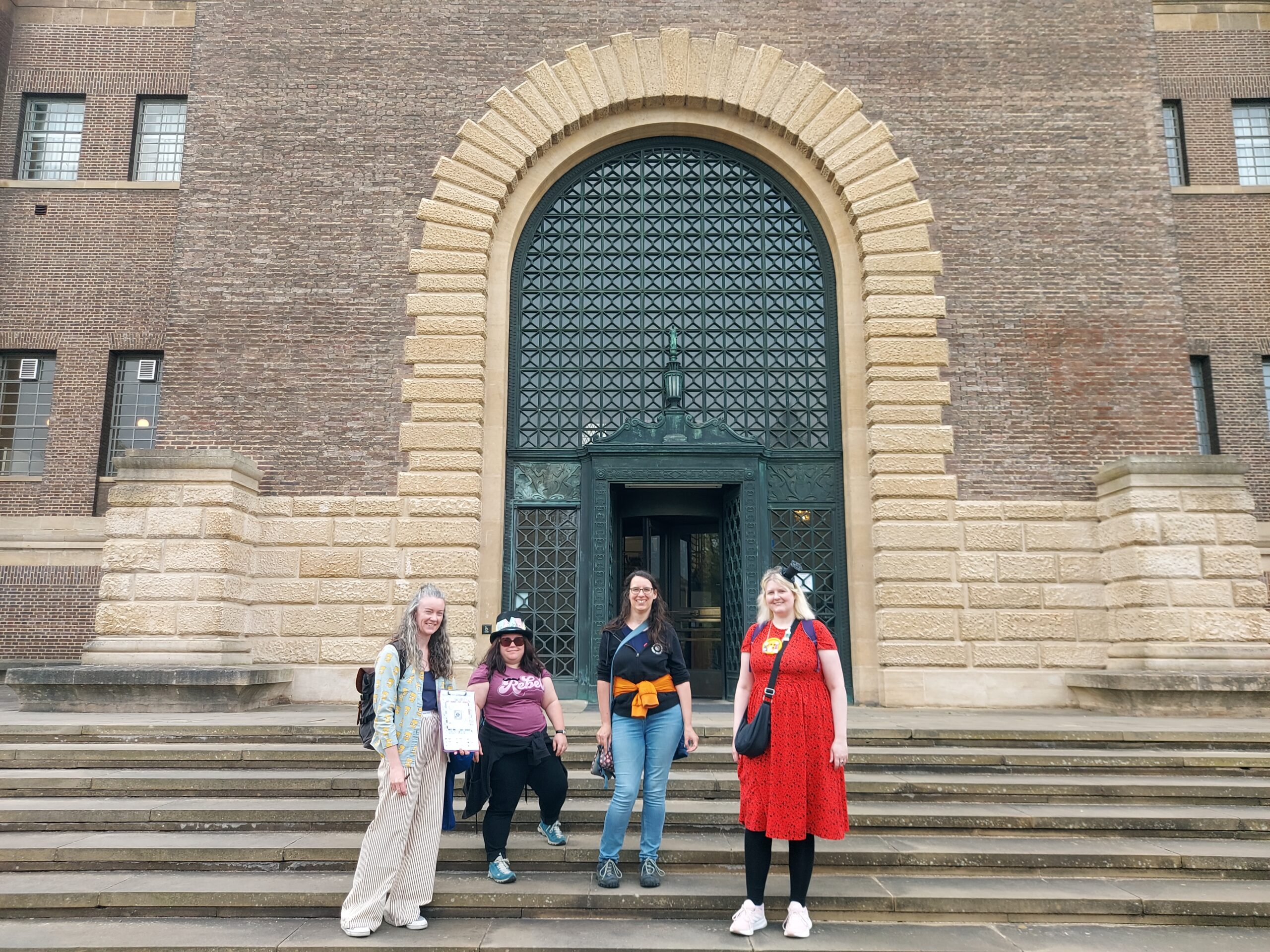
In front of the University Library

I loved last year’s Rebel Monopoly so much that I signed up for the three Monopoly games due to take place this year. The first of these took place in Cambridge, a city I know reasonably well due to having lived there for a year. I was in a team with Claire, Katrina and Ruth and after we all met up on Parker’s Piece – some of us wearing top hats – we made a plan to visit the furthest ‘stop’ before tackling the others.

It turns out Cambridge is a lot bigger than I had remembered! We visited colleges I hadn’t ever walked past back in the day. Luckily, the Banker (Sam) was located just outside St John’s College, a familiar area to me. As well as college stops, we had to try and pick up bonus money by visiting other places, like the railway station, and completing other tasks. Highlights of the day included our enthusiastic Uber driver, who took us to the station and back, and Katrina asking a couple of students to borrow their Blues blazer (which saved us trying to find one in a shop!).

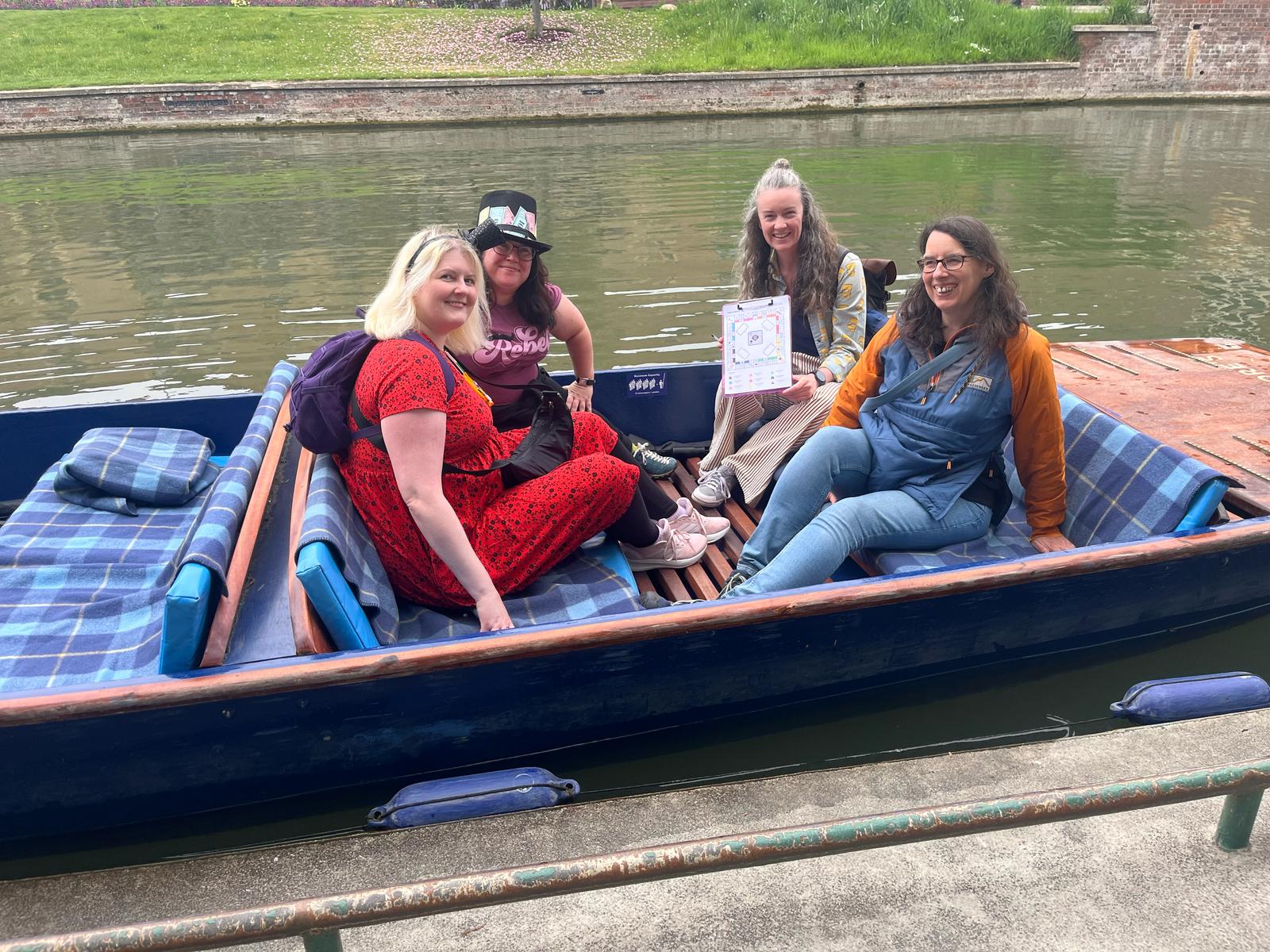
In a punt

At various points during the day, Charly positioned herself at a particular location in the city, announced that she was ‘Go’ and the first teams to find her would get bonus money. When she posted a picture of Shackleton’s sextant I knew exactly where she was (the Polar Museum) and we raced to get there. At the beginning of the day, we had decided we weren’t very competitive; as we were racing towards the Polar Museum, trying to beat the North East Rebels, I realised we needed to rethink that stance!

In the end, all our hard work paid off and we came second overall. I’m very pleased with that result, but ultimately what made it a great day was my lovely team, the hardworking crew and the fun challenges.

Cambridge Monopoly board - completed

Rebel Badge Club: Local History

I’ve been living in Ealing for fourteen years now, and I’ve learned a bit about the history of the area in that time. There’s always room to learn more, however, and the Local History badge (chosen as part of the ‘Curiouser and Curiouser’ quarterly challenge) has helped me to do so.

Visit a local museum to learn more about the history of your local area.

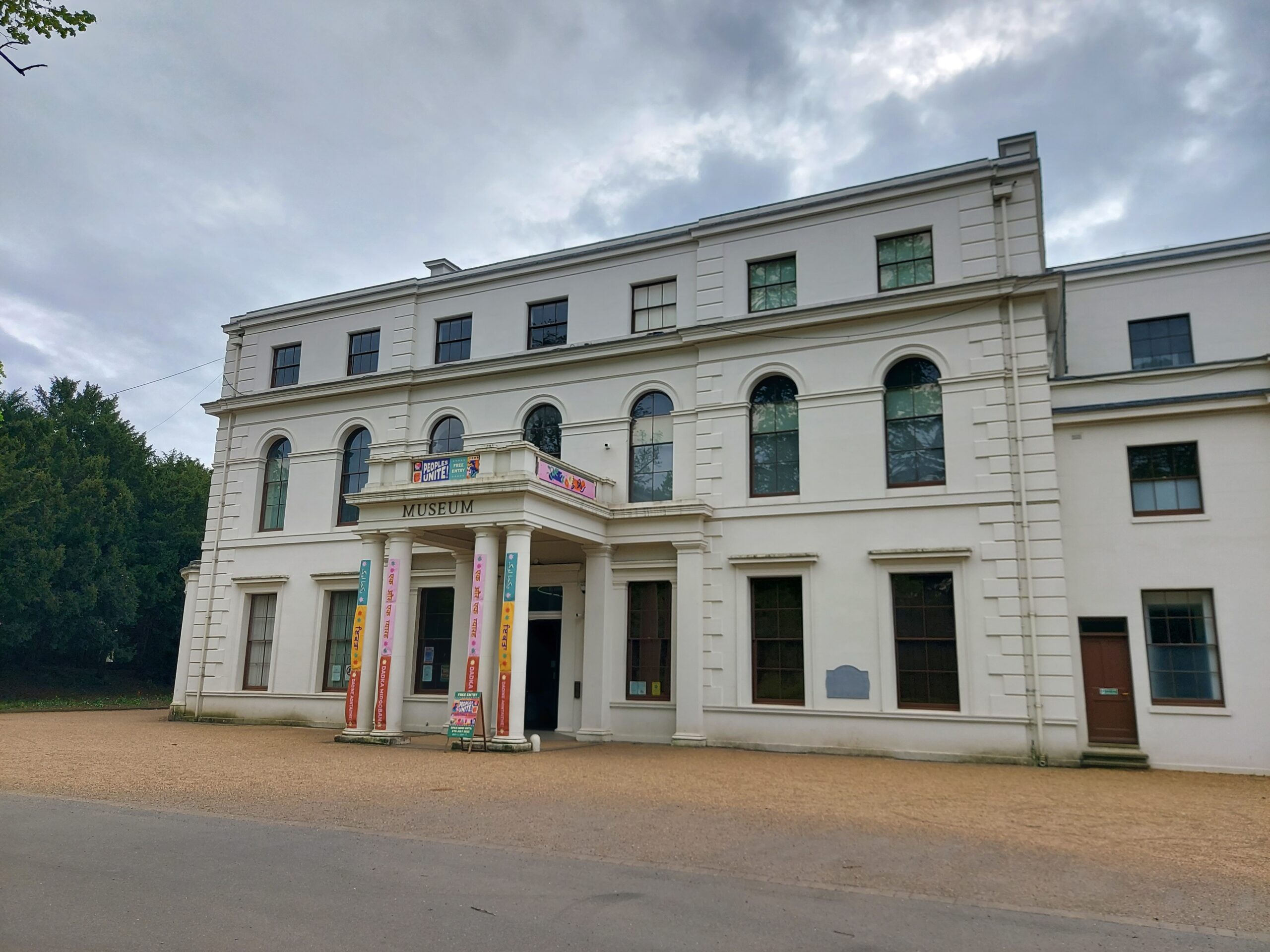
I visited Gunnersbury Park Museum to learn more about the history of Ealing. The main galleries had exhibitions about notable people, industries and fashions of the area, while there was also a special exhibition on the history of Southall specifically which was really interesting.

Gunnersbury Park Museum

Visit a local historic attraction.

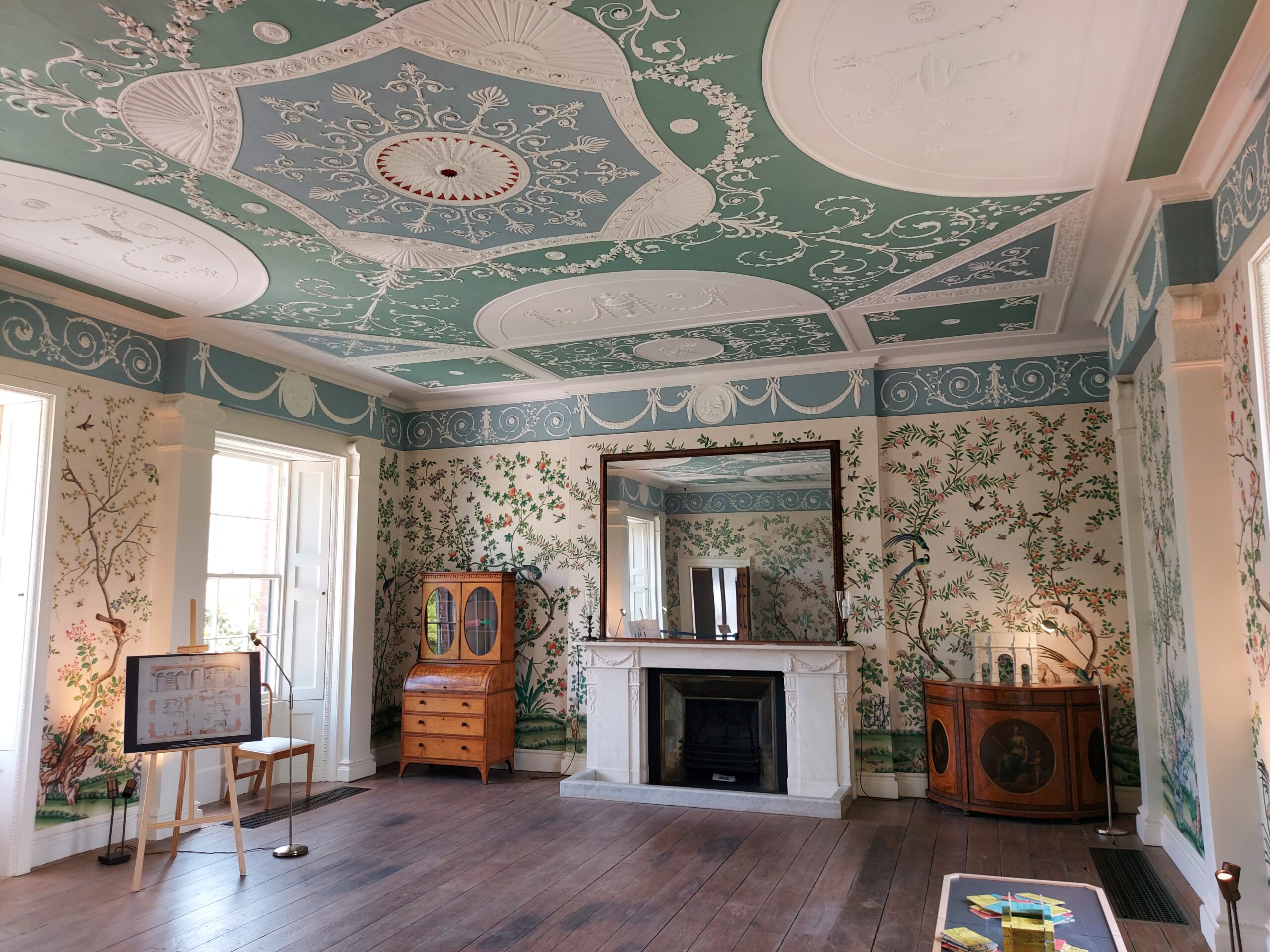
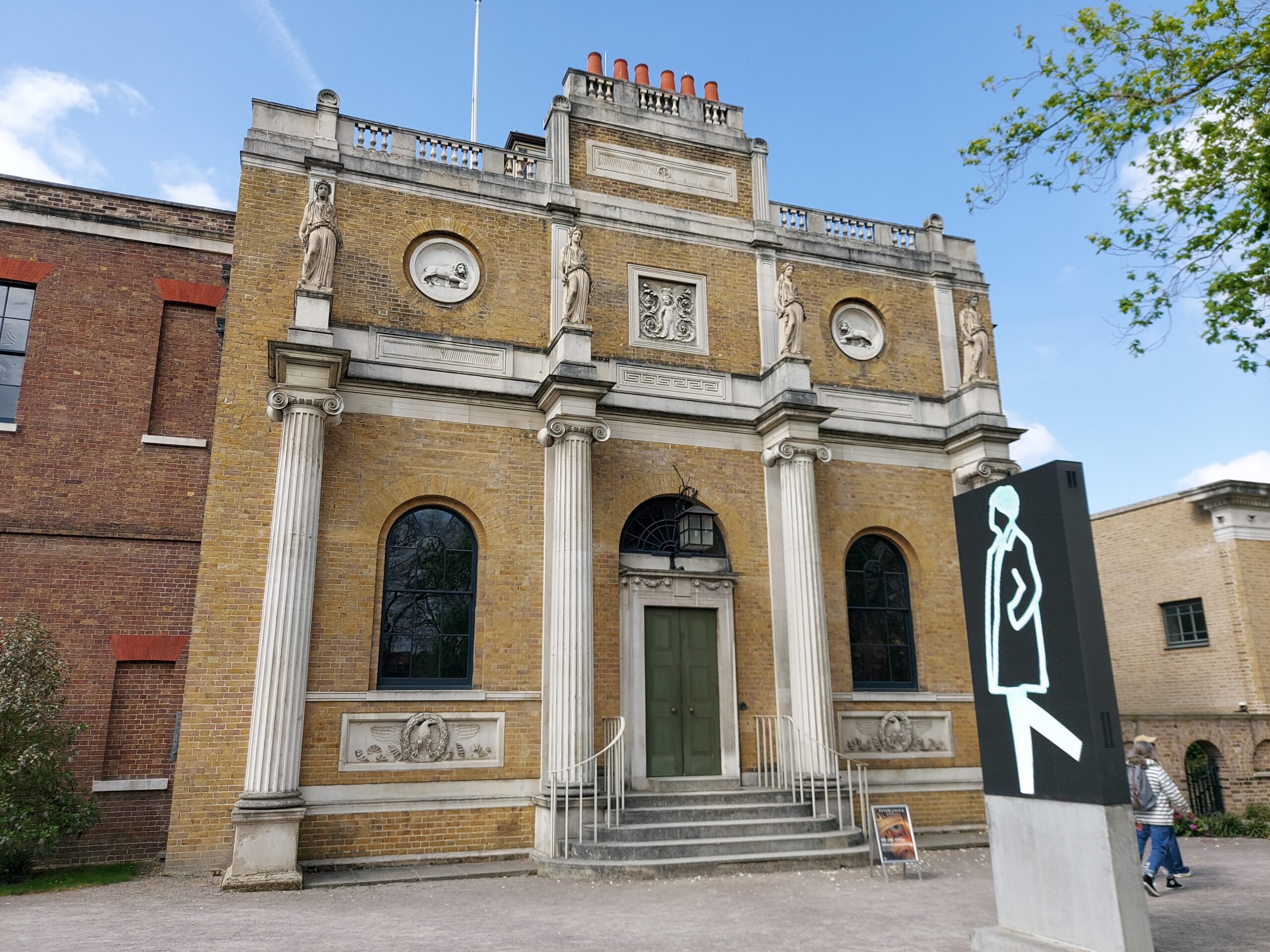
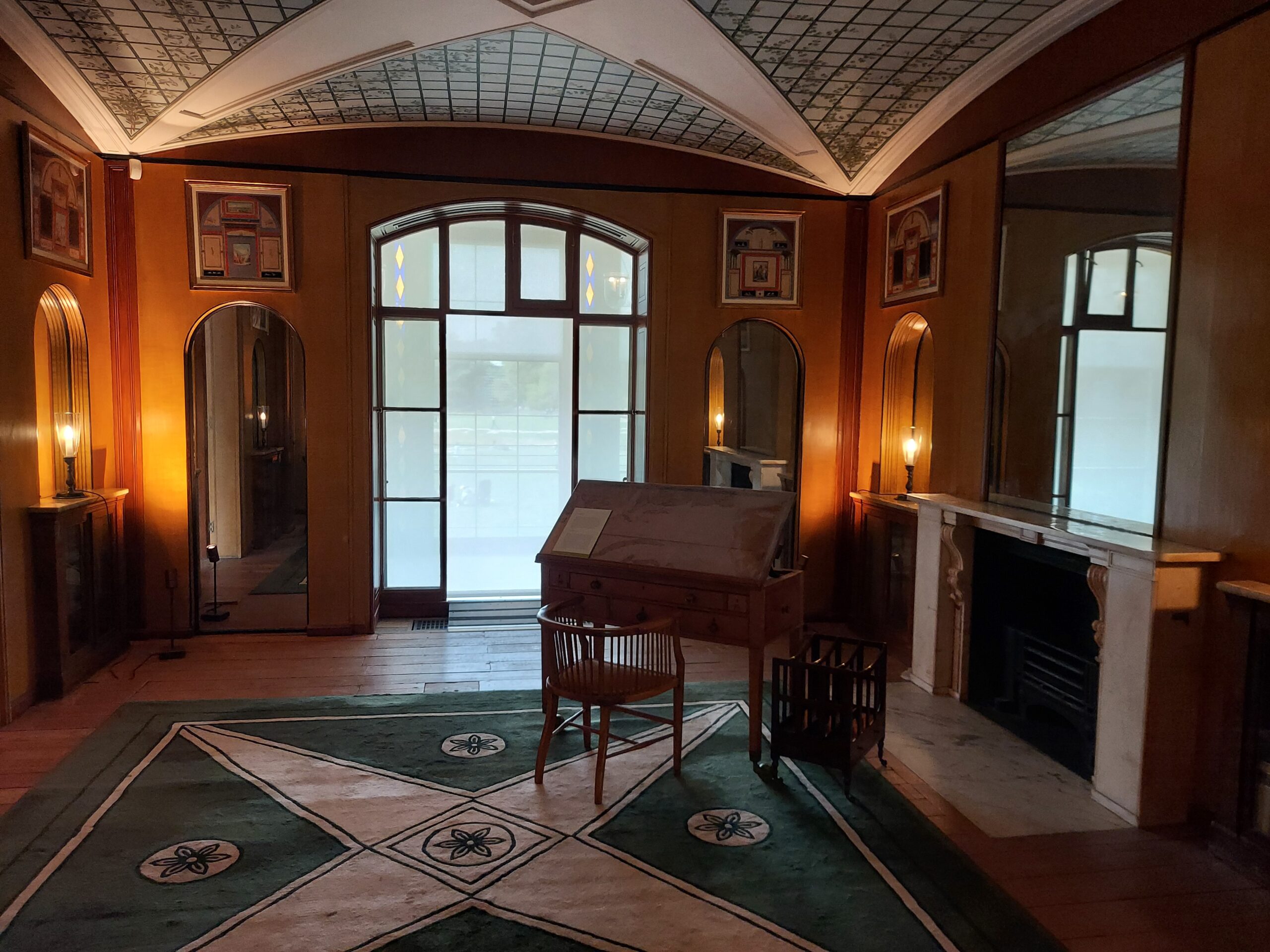
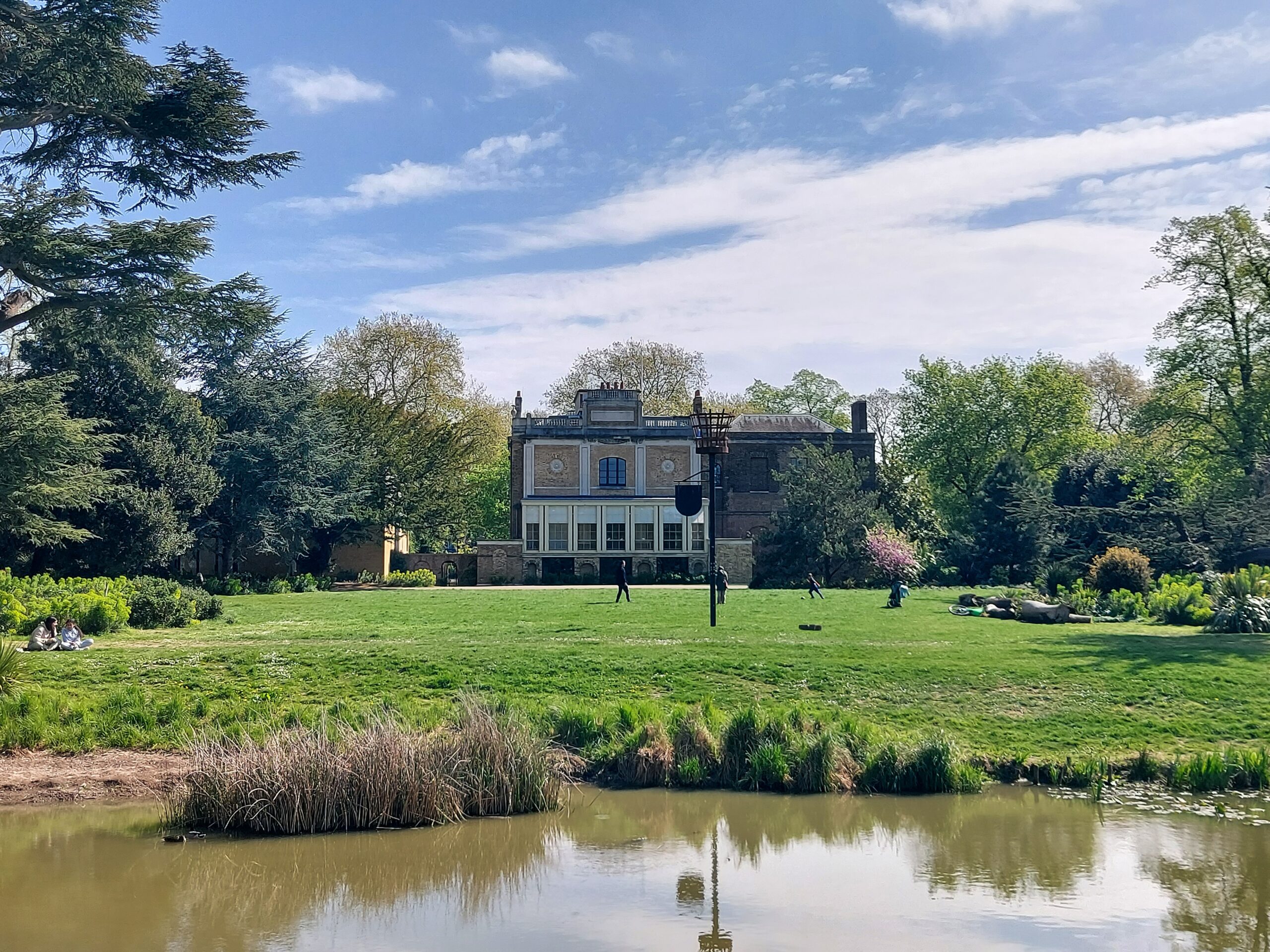
I visited Pitzhanger Manor, the country home of architect Sir John Soane. I have visited before, but had never done a guided tour. I learnt a lot.

Access the census records for your home.

I accessed the 1939 Register for my home. At this time, there were three single women living here.

I used other resources such as censuses to find out more about them.

  • Charlotte was born in Leeds but at some point moved to Kensington. Until 1911 she was living there with her parents and siblings.
  • Hilda was born and also lived in Kensington. The 1921 census shows her living with her mother in Battersea.
  • Mabel was born in Wandsworth. The 1921 census records her as a servant in Ealing.

I don’t know how these women met or ended up living together in what is now my home. I like to think that they were proto-Rebels, living their best lives and enjoying freedom and companionship.

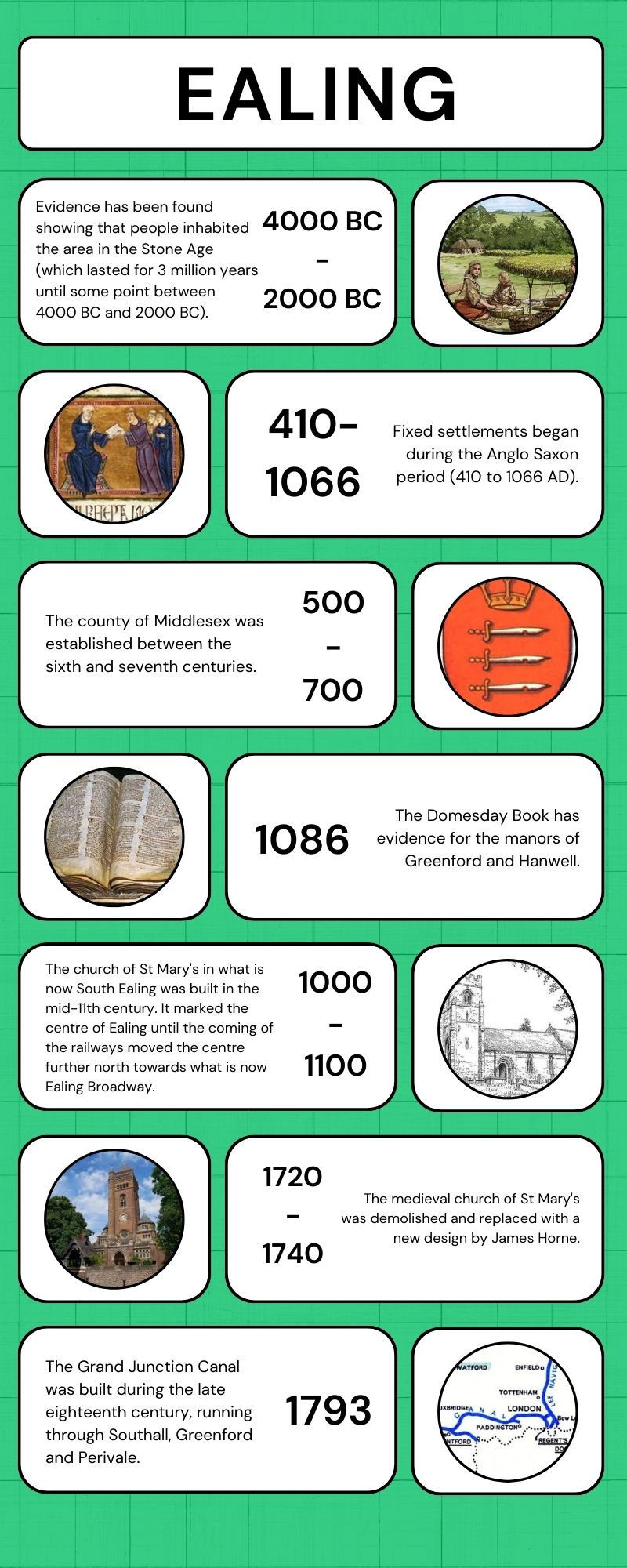
Write a timeline of important dates for your local area.

Learn about key historical figures in your local area. Make a presentation in the medium of your choice about what your area is famous for.

There are quite a few historical figures with links to Ealing.

Lady Byron, born Anne Isabella Milbanke (Lord Byron’s widow) of Fordhook House, Ealing, founded Ealing Grove School in 1834. This was the first industrial school of its type. In 1860 C. N. Atlee, a former headmaster of the Lady Byron school, set up the Byron House School in St. Mary’s Road (South Ealing Road). The site is now the University of West London, and a blue plaque at the entrance is dedicated to Lady Byron.

Thomas Henry Huxley (1825–1895), biologist known as “Darwin’s Bulldog” for his adherence to his theory of evolution, was born in Ealing. His father was a mathematics teacher at Great Ealing School until its closure.

Ho Chi Minh (né Nguyễn Sinh Cung, 1890–1969), revolutionary and politician, worked in the kitchens of the Drayton Court in 1914. He was the founder and the first president of the Democratic Republic of Vietnam.

Spencer Perceval (1762–1812), British Prime Minister from 1809 until his assassination, lived in a large house at Elm Grove, on the south side of Ealing Common.

Dusty Springfield (1939–1999), soul singer, lived in Kent Gardens, West Ealing during the 1950s, attending St Anne’s Convent School in Northfields and later working at Bentalls department store in Ealing Broadway.

Crime novelist Agatha Christie’s parents are buried in South Ealing Cemetery. She herself is listed in the 1911 census at 99 Uxbridge Road as Agatha Miller (her maiden name). She was visiting her great aunt Margaret Miller (supposedly the inspiration for Miss Marple) who had lived in Ealing for more than three decades.

I created a presentation about what the seven towns in the modern London Borough of Ealing are famous for.

Attend a local history talk or workshop.

I attended a talk on Secret Ealing at my local library. I also bought and read the associated book, which was full of interesting information.

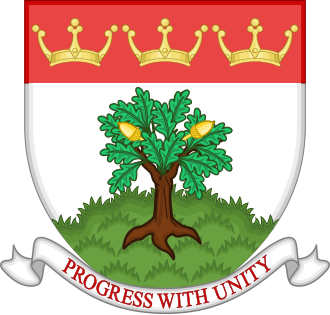
Does your local area have a coat of arms? Research the meaning of each of the different sections.

The coat of arms of the London Borough of Ealing was granted on 1 September 1965. At the top are three golden Saxon crowns, representing the three former Middlesex boroughs of Ealing, Acton and Southall.

At the centre is an oak tree, which was also present in the coats of arms of both Ealing and Acton (Acton is considered to mean “oaktown”), referring to the ancient forest west of London which formed much of what is now Ealing. The oak is also appropriate to the origins of Southall and Norwood (“the southern holt and the northern wood”). Originally there were twenty acorns because they stand for the original twenty wards in the present borough. The grassy base comes from the former Acton coat of arms and the silver field was part of the Ealing coat of arms. The motto is ‘Progress With Unity’.

Three crowns, an oak tree and the text 'Progress with Unity'

If your country has listed buildings, find out about a local grade listed building.

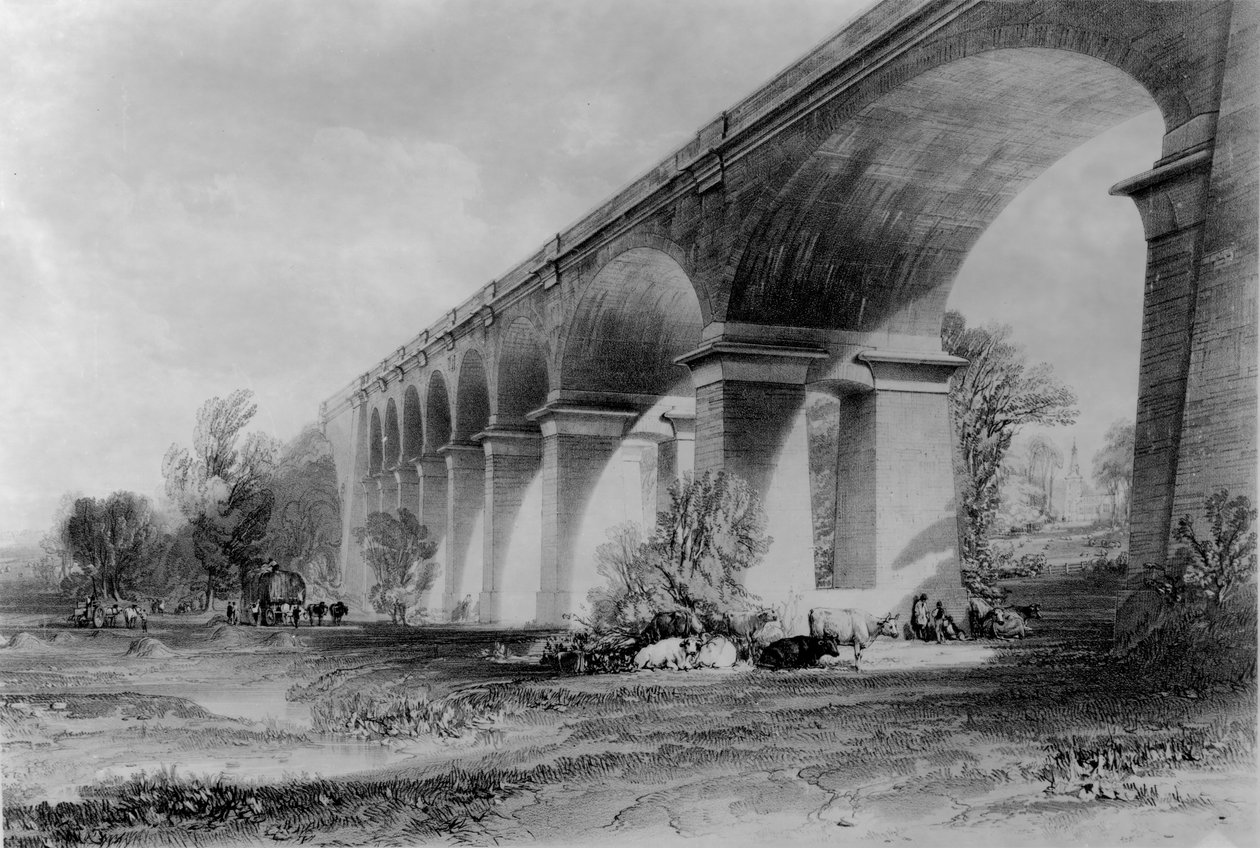
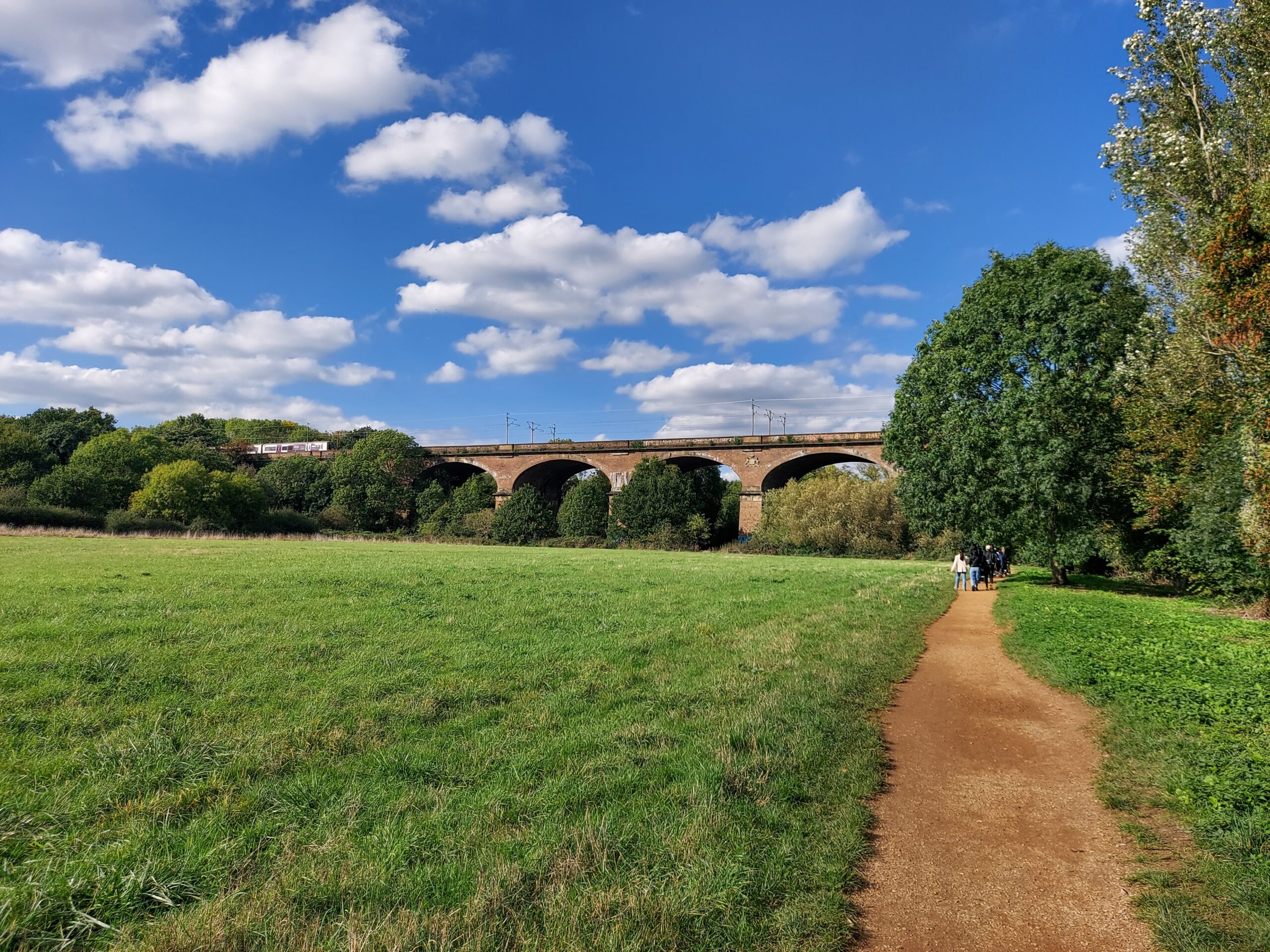
There are six Grade I listed and 18 Grade II* listed buildings in Ealing. The Wharncliffe Viaduct was listed on 8 November 1949.

The brick-built viaduct was constructed in 1836-7 for the Great Western Railway at an elevation of 20 metres (66 ft) in order to carry the railway across the Brent Valley. It was the first major structural design by Isambard Kingdom Brunel, the first building contract related to the GWR project, and the first major engineering work to be completed. The 270-metre-long (890 ft) viaduct has eight semi-elliptical arches, each spanning 70 feet (21 m) and rising 5.3 metres (17 ft). It is 17 metres (56 ft) wide.

The viaduct takes its name from James Stuart Wortley Mackenzie, Lord Wharncliffe, who was chairman of the parliamentary committee that steered the passage of the GWR Bill through Parliament. A carving of his coat of arms is visible on the central pier on the south side. In 1839, the viaduct carried the world’s first commercial electrical telegraph.

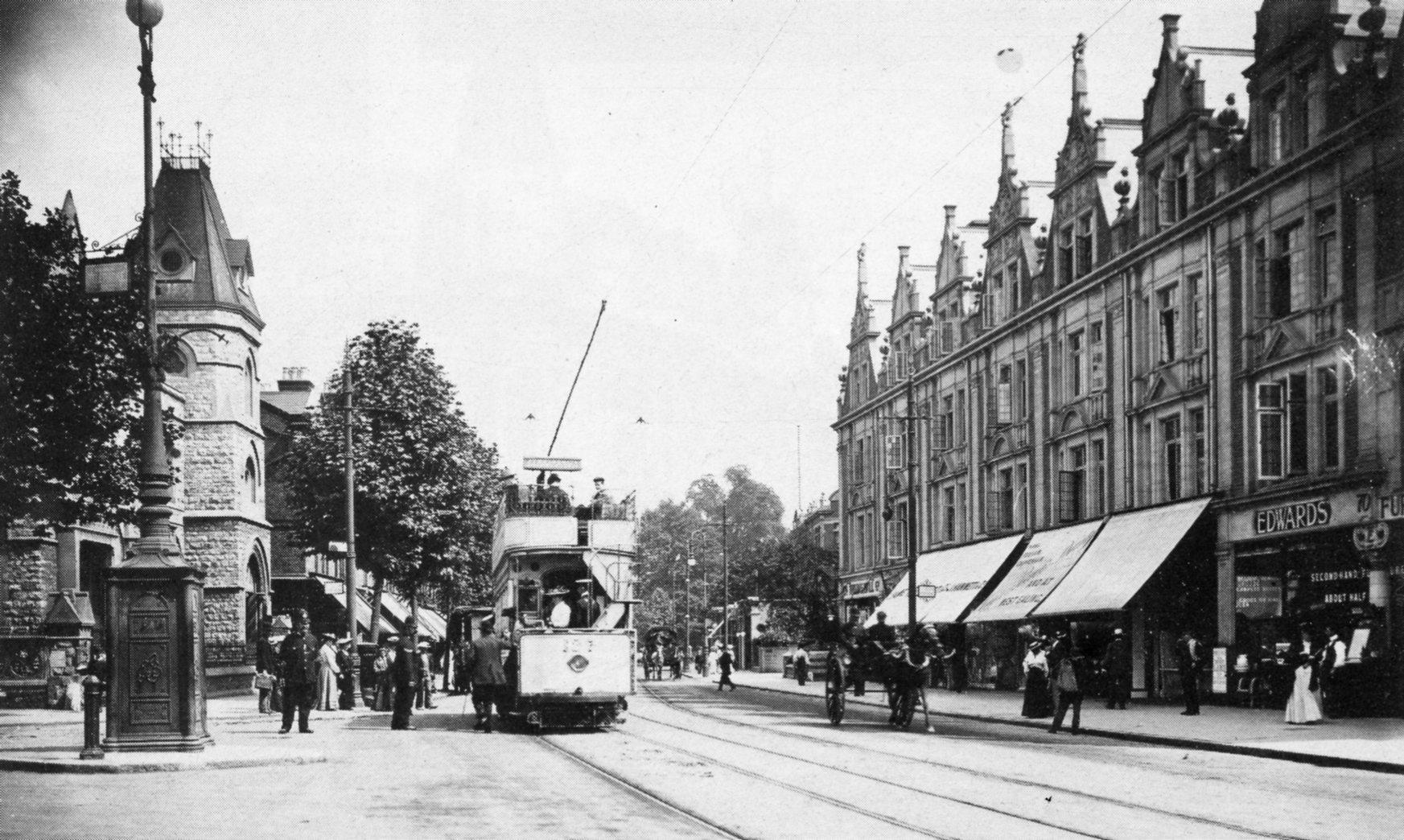
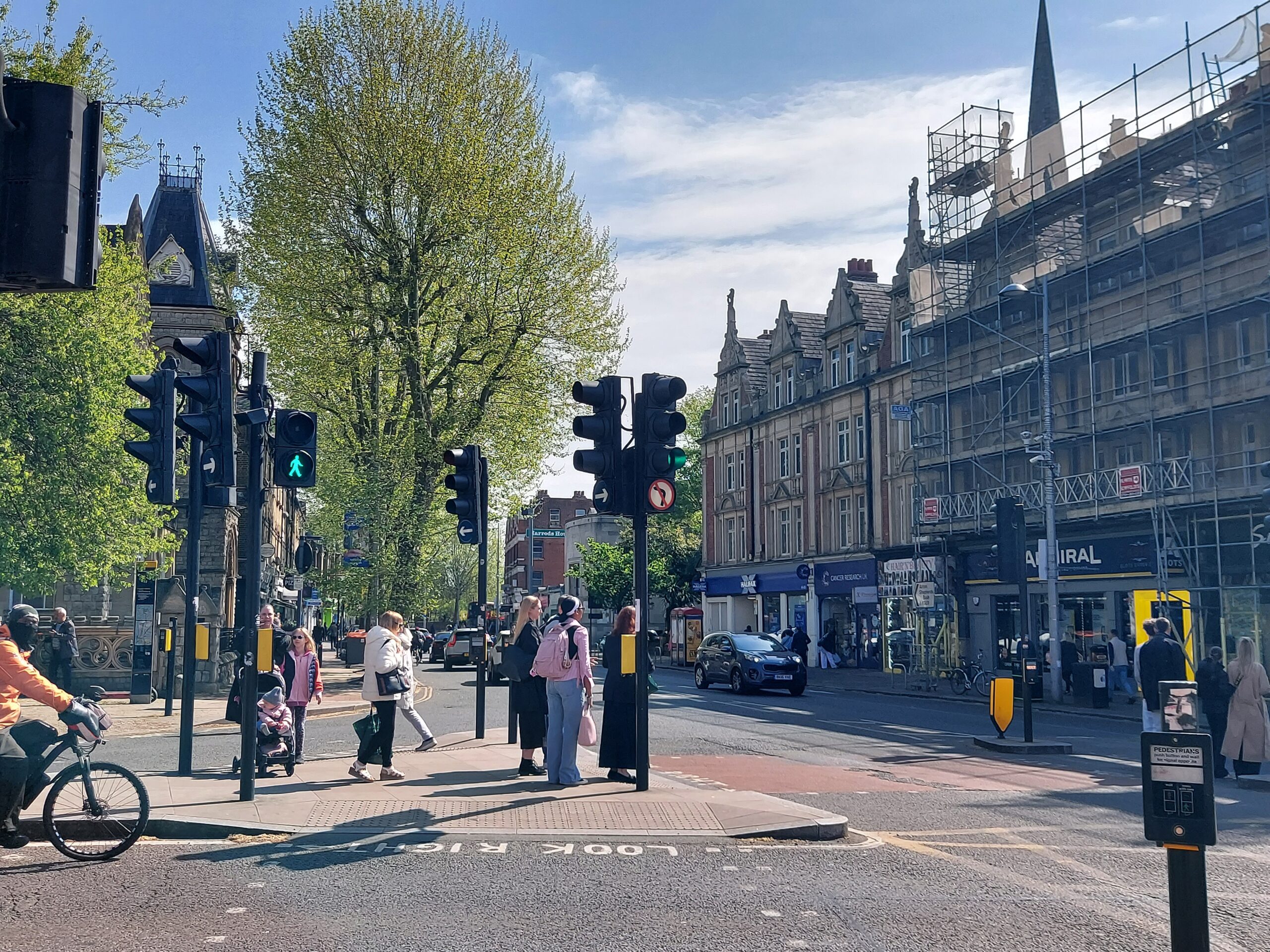
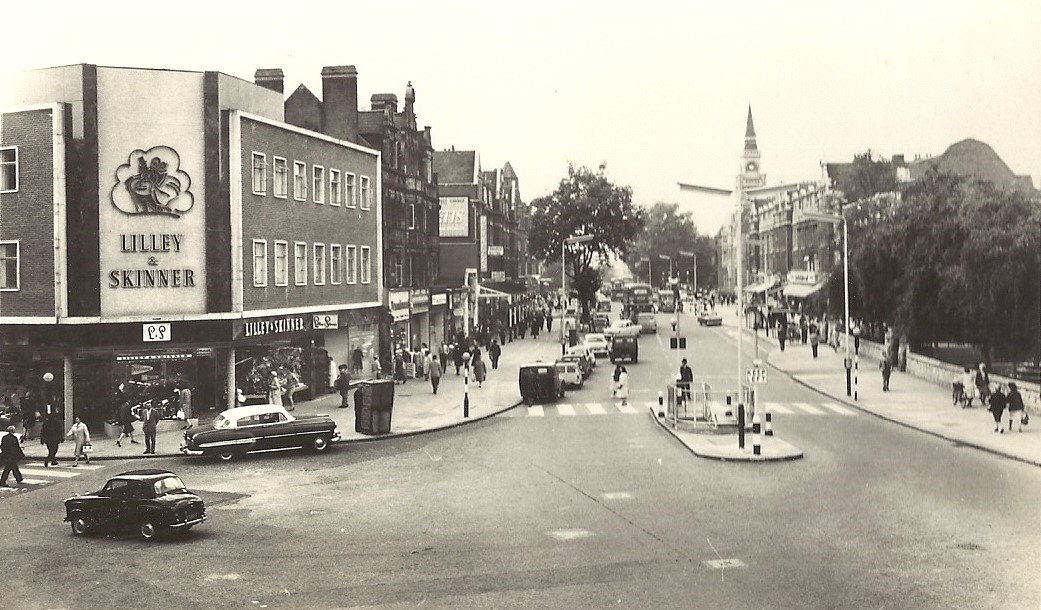
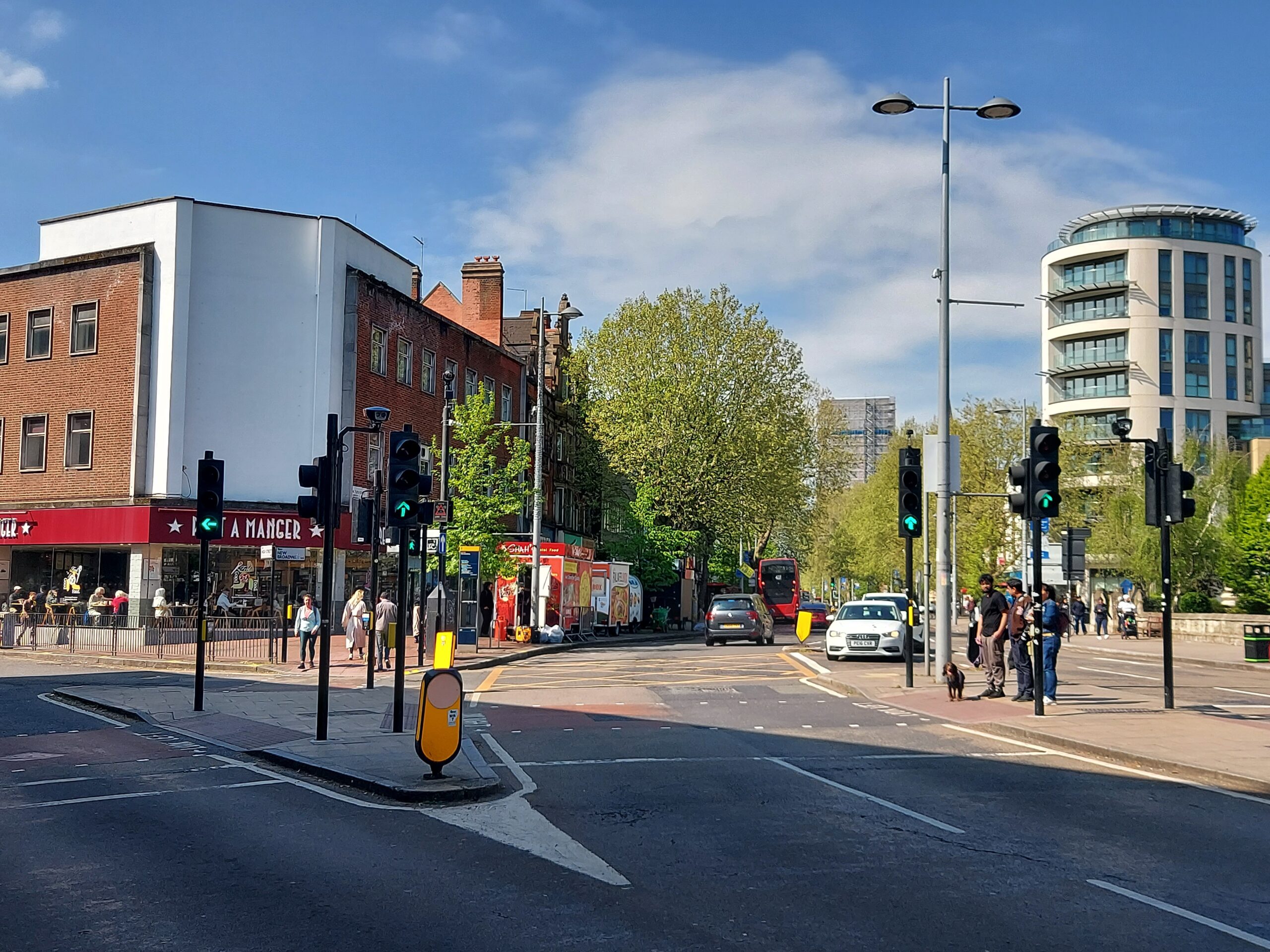
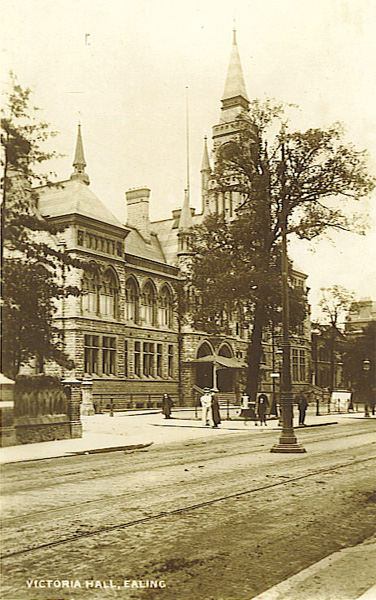
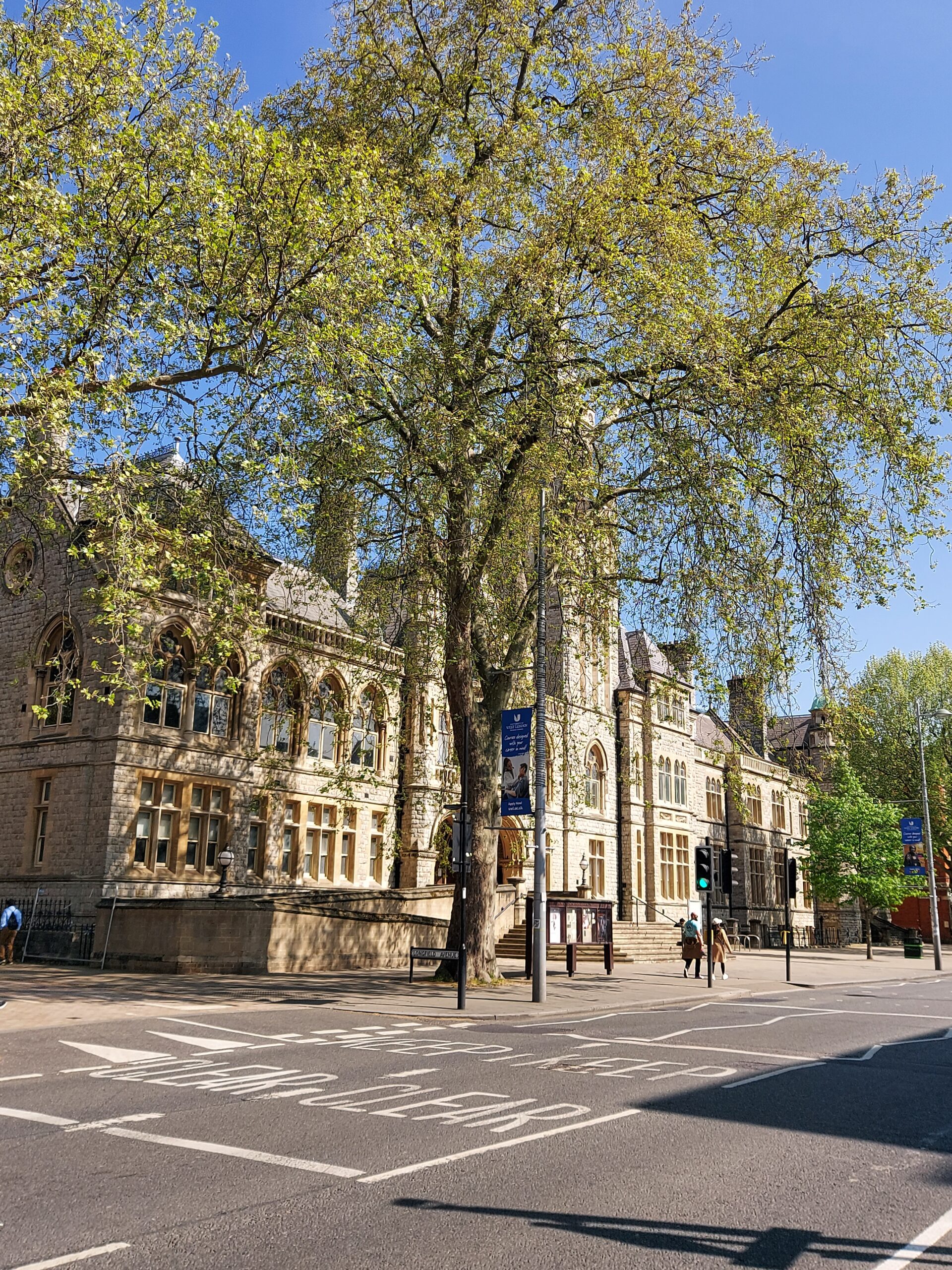
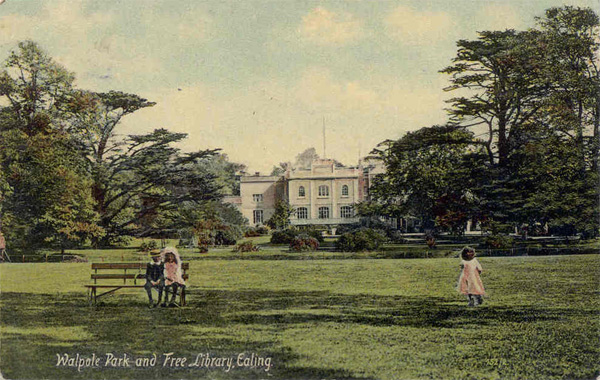
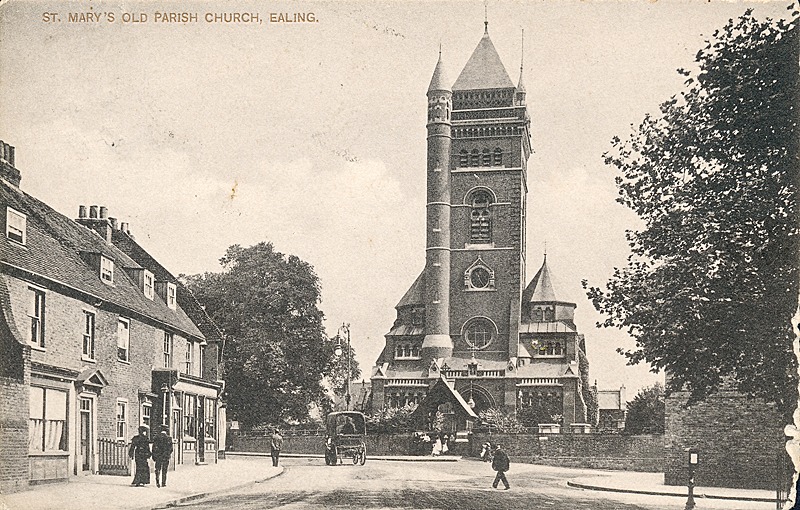
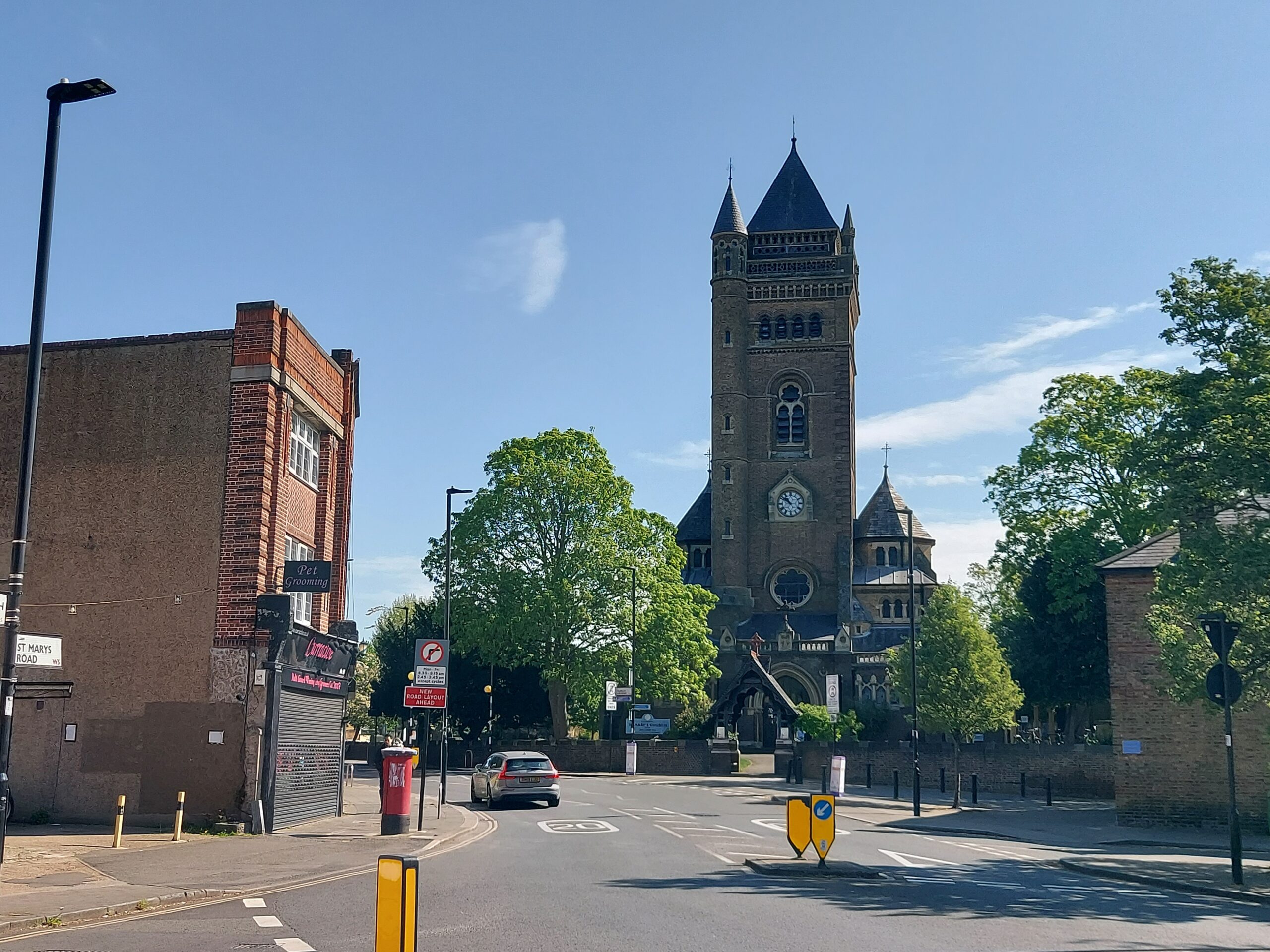
Find historical photos taken in your area. Take new ones in the same places, and compare and contrast them.

Date completed: 20 April 2025

Rebel Badge Club: Back to the Future

This month’s badge was Back to the Future, inspired by the classic movies but incorporating a variety of nostalgic and futuristic clauses. I had a lot of fun with this one.

Watch an episode of a show you watched as a child. Compare it to a modern equivalent.

I decided to watch an old episode of Gladiators, a show I absolutely adored as a child. It was so strange watching it again: it was simultaneously exactly as I remembered it, and clearly of a different time. The hairstyles in particular were glorious. As an adult I have more of an appreciation of just how challenging these games would have been. There is absolutely no way I would have been able to last more than a couple of seconds on Hang Tough, for instance, and as for running up that Travelator – forget it!

I watched one of the new episodes on BBC iPlayer. While it can’t compare to the original in terms of sheer nostalgia, it has definitely kept the spirit of the 90s show, and I’d like to watch more.

Revisit an old childhood collection.

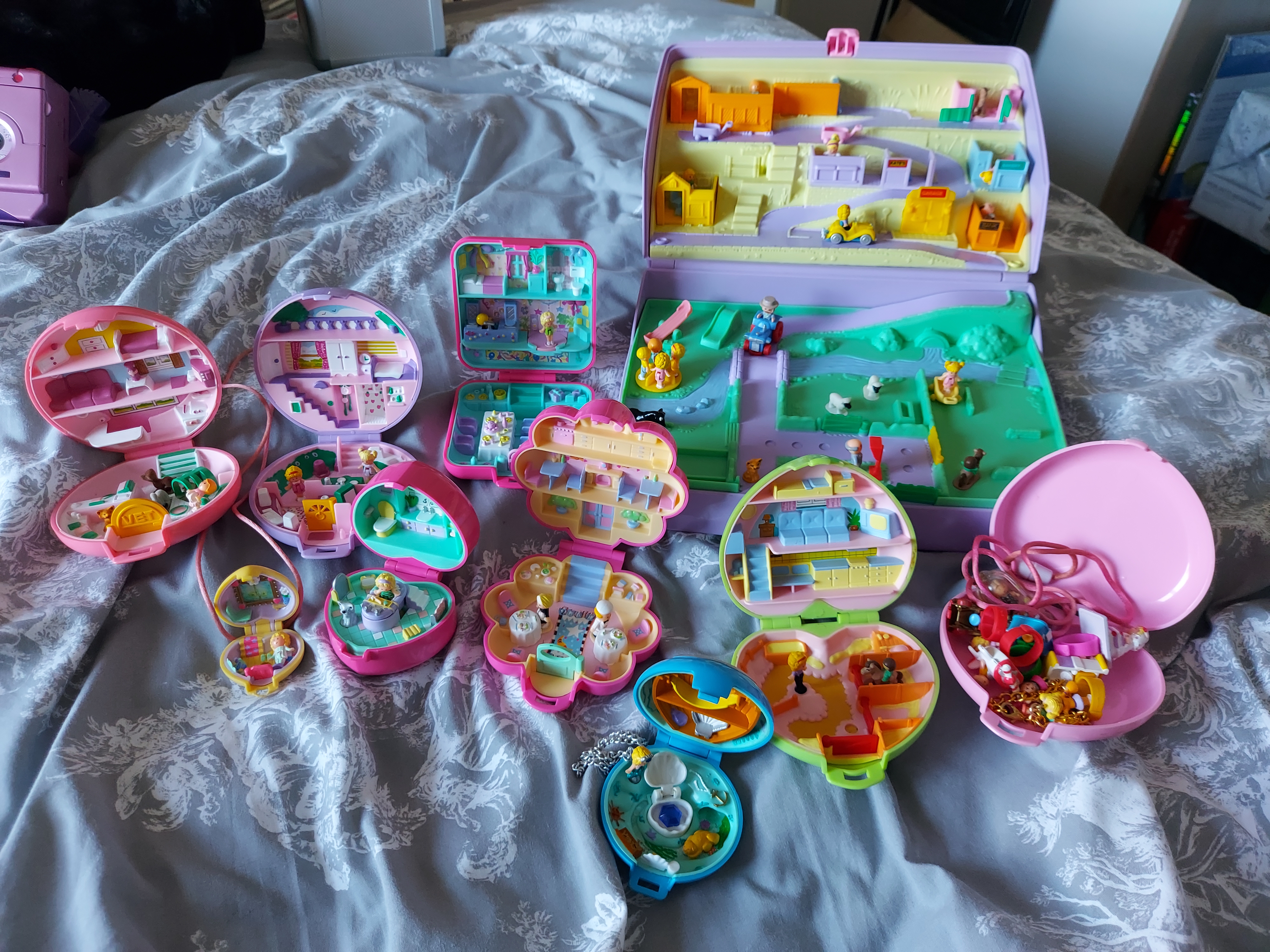
I got out my Polly Pocket collection and had a nice time arranging everything. Playsets are going for £20-200 online which is impressive, but I’ve no intention of selling anything. I’m a bit gutted because I definitely used to have the Funtime Clock but I don’t know what happened to it.

Assorted Polly Pocket playsets

Watch all the Back to the Future films.

Embarrassingly, I’ve never actually seen the films before (although I have seen the stage musical). I really enjoyed watching them – they were brilliant – and it was fun to see what a 1980s idea of 2015 looked like. I’m rather sad we don’t have hoverboards or flying cars. I was particularly disturbed at how much Biff in the alternate 1980s timeline reminded me of Trump.

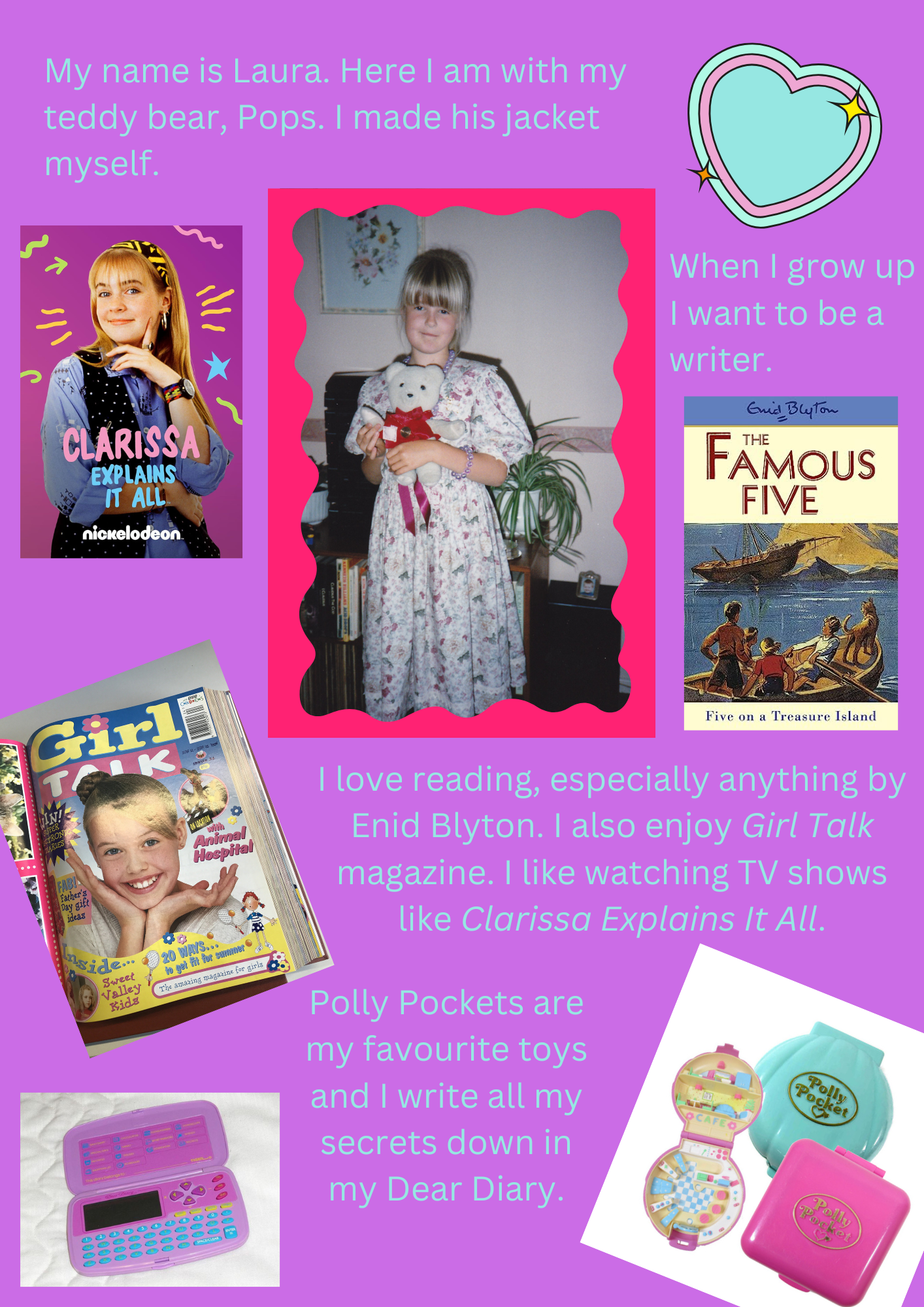
Make a profile of yourself as a child.

It’s 1995 in the photo and I’m not sure why I’m dressed like a haunted Victorian child, but never mind. I still have Pops and he came to Camp last year! I’m pretty sure I was younger than 10 when I played with Polly Pockets, but a lot of my childhood memories have blended together (sure I’m not alone in this).

Profile of myself as a child

Create some spirograph art.

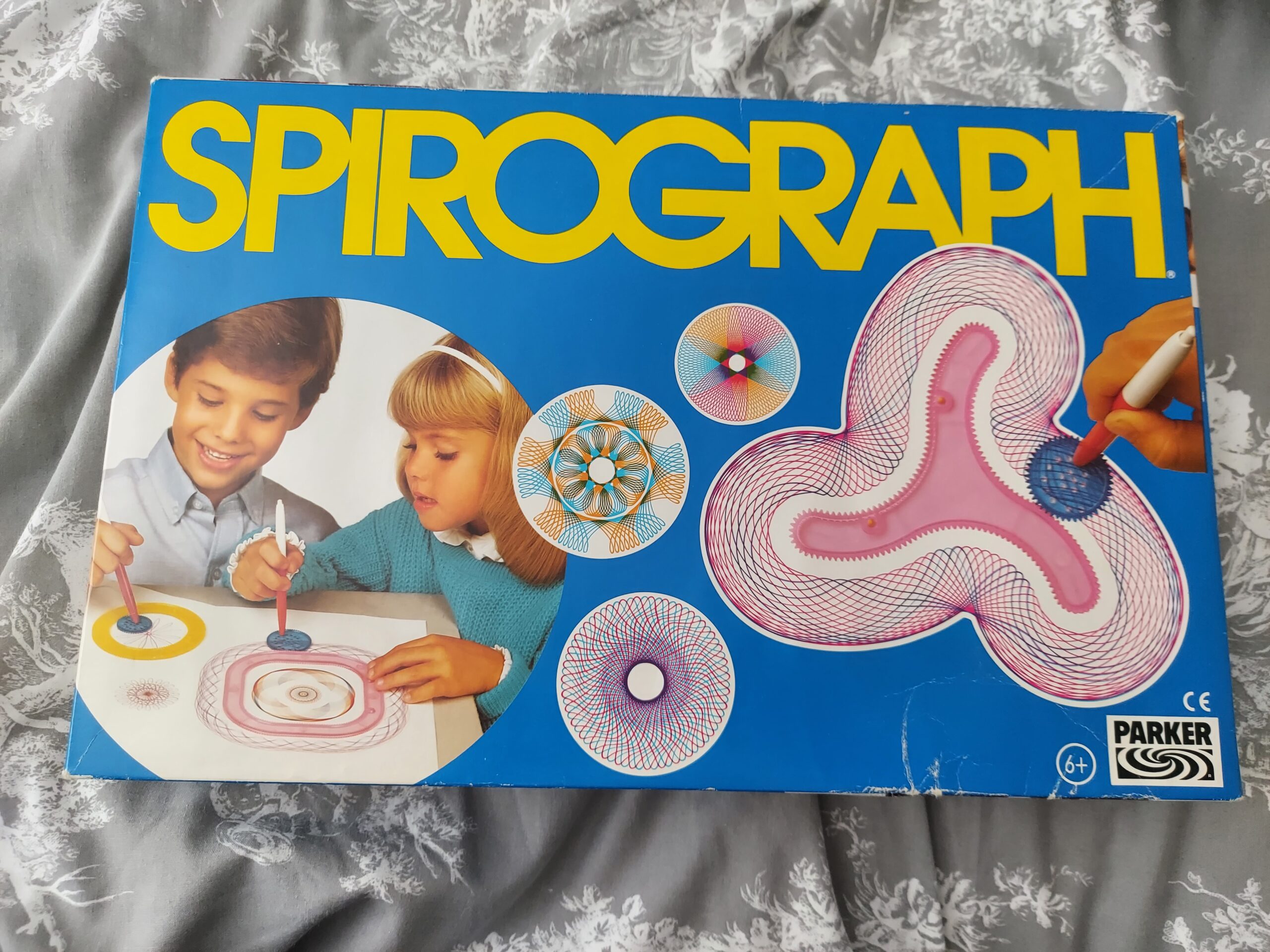
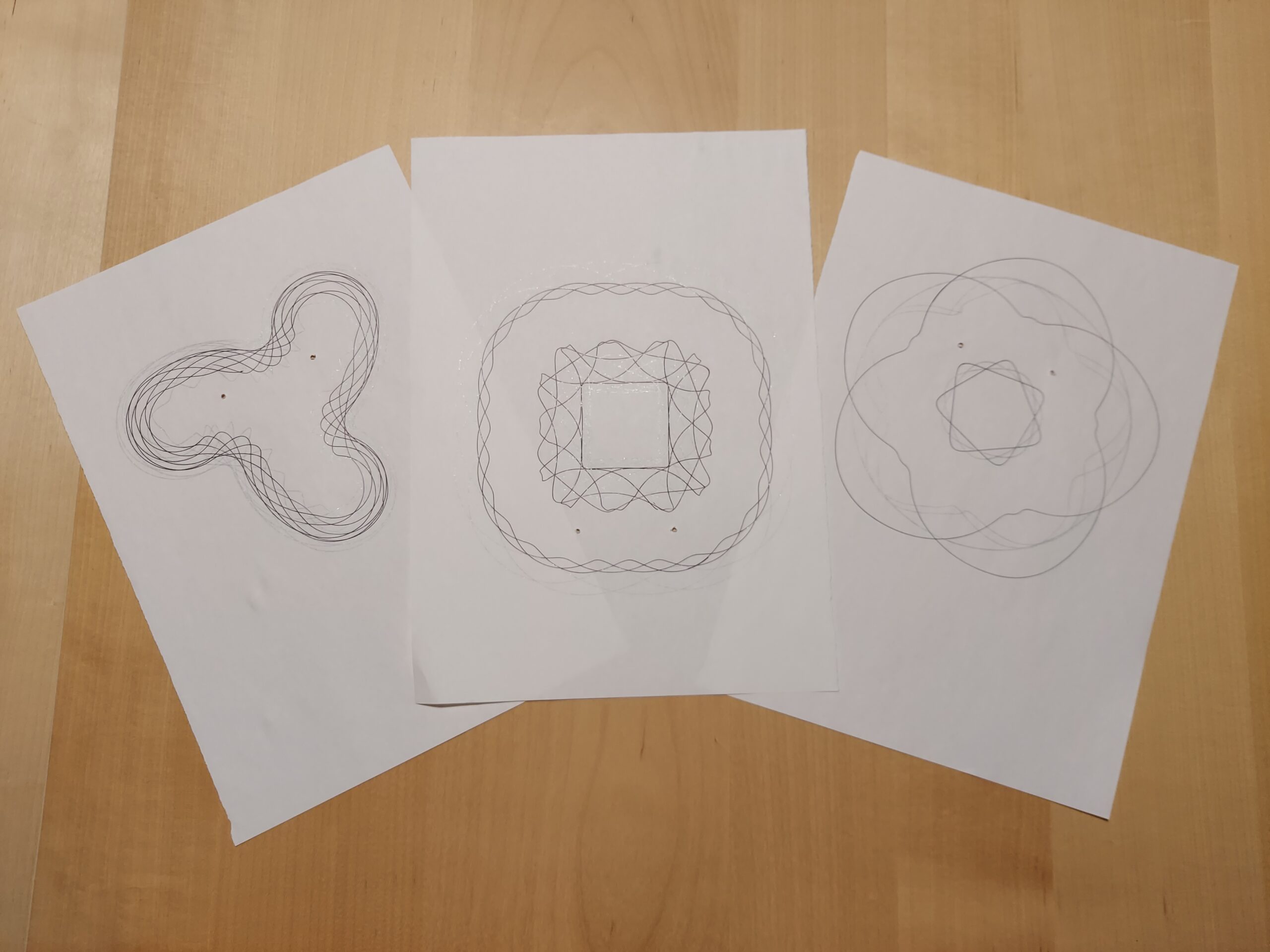
By some miracle I still have my Spirograph set. The pens have dried out (unsurprising after 30+ years) so I had to use different ones, but otherwise the set still worked just as well as it ever did. I was pleased to see that my own hand-eye coordination has improved.

Spirograph box

Spirograph drawings

Learn about a current space exploration mission.

I decided I wanted to do at least one futuristic clause. I chose this one and decided to read about the Psyche mission, which sounds super interesting.

Rebel Badge Club: Curiouser and Curiouser (Quarterly badge 2, 2025)

Quarterly Challenge 2025.02

Curiouser and Curiouser is the second Quarterly badge for 2025, and it sounds like it’s going to be a lot of fun.

To complete this badge, I need to do the following:

  • Complete Event Planner, Confectioner or Barista. I’ve completed Confectioner already and plan to finish Event Planner in July, so I’ve decided to work on Barista for this badge.
  • Complete Apothecary, Mixologist, or one of the Advanced versions. I’ve decided on Advanced Mixologist.
  • Complete one Global badge based on learning: I’ve chosen Local History.
  • Complete one Wild badge based on learning: I’ve chosen Geographer.

I will link to my posts on the above badges once I’ve completed them.

I also need to learn a curious fact each week for 12 weeks, and present the facts in an interesting way.

End of quarter update – Here are my curious facts, which I also presented as a little quiz:

1. The fear of long words is called Hippopotomonstrosesquippedaliophobia.

2. Genghis Khan killed so many people that the carbon dioxide levels in the atmosphere were significantly decreased as a result.

3. The sun is extremely loud, but we can’t hear it because sound can’t travel through the vacuum of space.

4. Lobsters have teeth in their stomachs.

5. 31 October 2000 was the last time all of humanity was on Earth. Since then there has always been at least one person in space.

6. Koala fingerprints are so similar to human fingerprints that they could be mistaken for each other, potentially confusing crime scene investigators.

7. In 2014, there was a Tinder match in Antarctica, between two research scientists, one of whom was working at the US McMurdo Station while the other was camping a 45-minute helicopter ride away.

8. The Chupa Chups logo was designed by Salvador Dalí.

9. The term cereal is derived from the name of the Roman goddess of grain crops and fertility, Ceres.

10. All clown fish are born male and can become female later in life.

11. Sharks evolved before dinosaurs did.

12. In Ancient Egypt, the word for ‘cat’ was actually pronounced ‘mew’, or ‘meow’.

Rebel Badge Club: Global Citizen

I’ve been meaning to complete the Global Citizen badge for a while, and the Lift Off! quarterly challenge seemed like the perfect time.

Learn about the history of a group you do not belong to.

I decided to learn about Jewish people. I read both volumes of Simon Schama’s The Story of the Jews: Finding the Words, 1000 BCE – 1492 CE and Belonging, 1492–1900. They were complex, interesting and highly readable.

Read or a listen to a book which talks about the discrimination which those belonging to the group you chose in Clause 1 have suffered.

I read Off-White by Rachel Shabi, which was fantastic and dealt with antisemitism in a complex and enlightening way.

A book cover with the text Off White: The Truth About Antisemitism by Rachel Shabi.

Learn about the festivals celebrated by your chosen group of people.

I read about Jewish festivals on Britannica.com.

Make something related to another faith, belief or nationality.

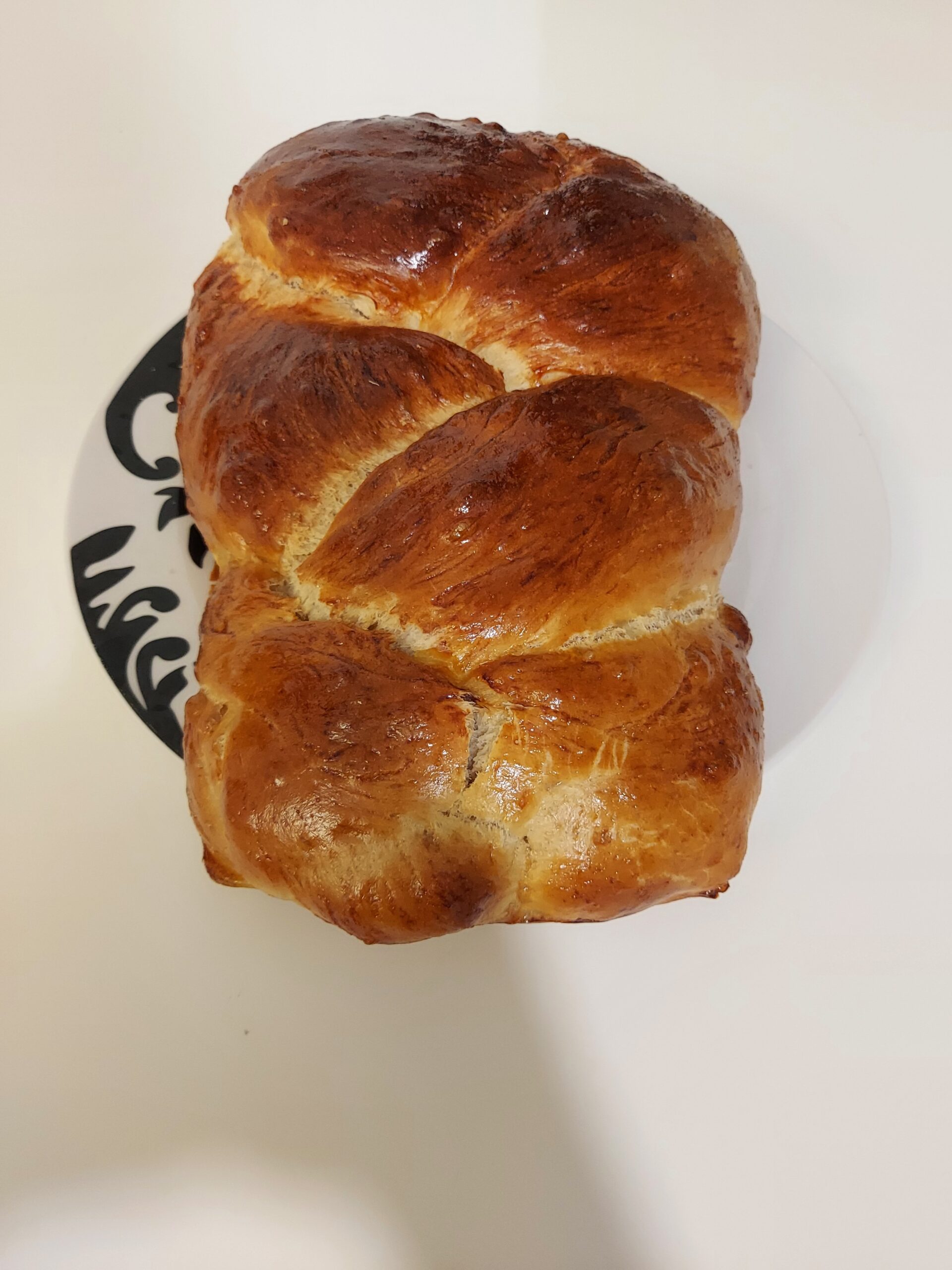
I finally made Challah bread – months and months after we learned how to make it at RebelFest!

A loaf of Challah bread

Research a disability or neurodiversity which you do not have yourself.

I decided to research blindness and vision impairment. I started on the RNIB website where I discovered some key information on sight loss in the UK.

I then moved on to Fight For Sight to read more about issues facing blind and visually impaired people, including loneliness, domestic abuse, employment and economic cost.

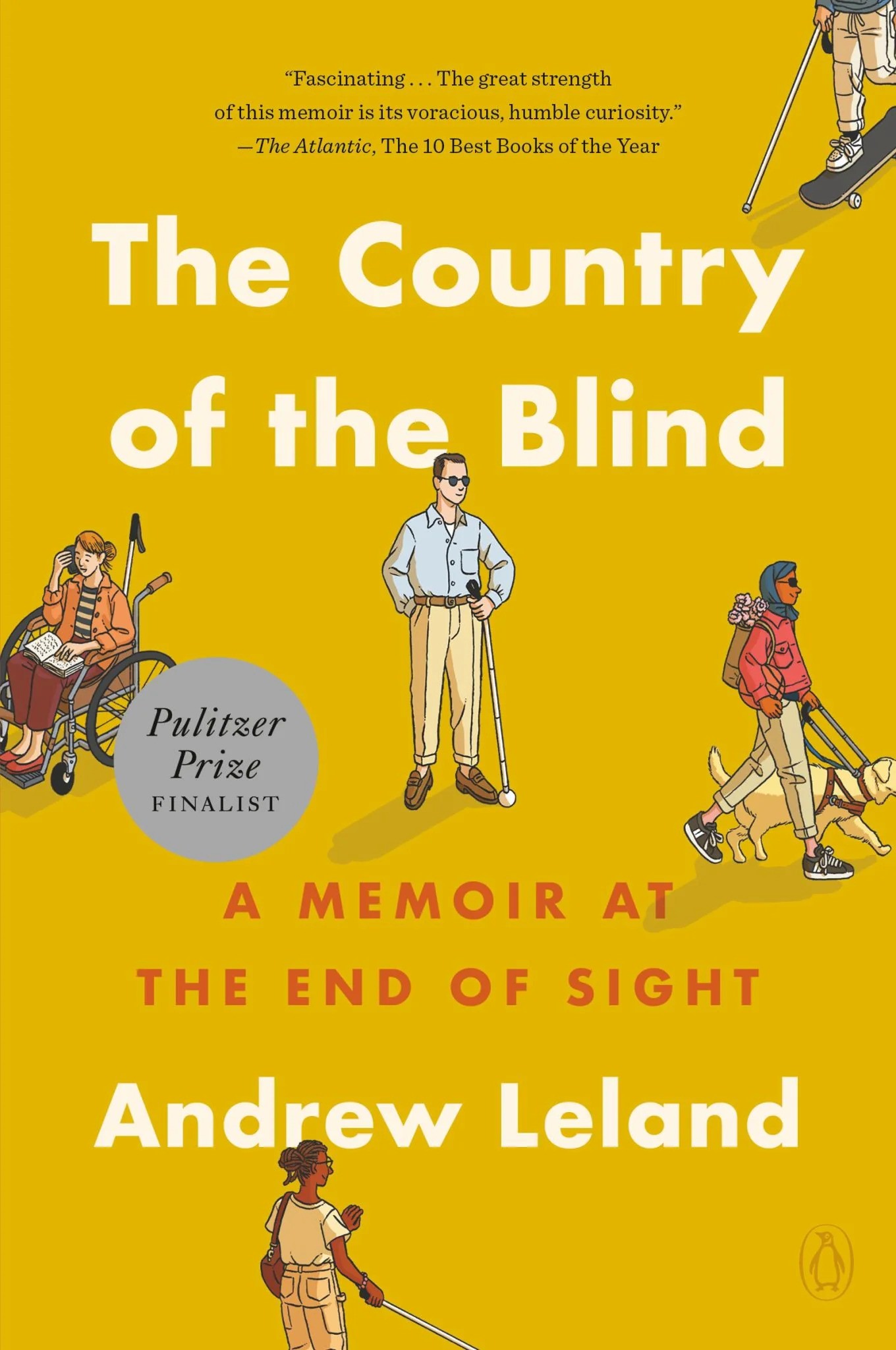
I read The Country of the Blind: A Memoir at the End of Sight by Andrew Leland. This was a brilliant first-hand account of one person’s experience with sight loss and his quest to learn about the history and culture of blindness. It was rich and fascinating.

Book cover of The Country of the Blind: A Memoir at the End of Sight by Andrew Leland. The cover is yellow-orange with drawings of blind people experencing life, with various genders, races and abilities. One woman is in a wheelchair, one man has a guide dog, another has a cane.

Over a period of at least a month, take positive steps to improve the experiences of those with your chosen disability.

I emailed my local councillors to raise awareness of new legislation around reasonable adjustments in schools for children with vision impairments.

I have signed up to Guide Dogs to learn more about their campaigns and help where I can.

I made efforts to add image description to all my picture uploads on my blog and social media. I also made efforts to use camel case in hashtags as they are helpful to screen readers.

Date completed: 31 March 2025