Utopia: Then and Now – King’s Place

The other day I went to King’s Place for an interesting talk about Sir Thomas More’s Utopia. Entitled Utopia: Then and Now, the talk featured Michael Caines chairing a discussion between Matthew Beaumont and Chloë Houston, academics who have worked on the book.

I originally read Utopia as a history undergraduate and although I’ve forgotten most of the details, I do remember finding it an interesting read. The talk looked at the concept of a Utopian society, which reaches back to the classical period, and whether or not there is a universal “utopian impulse” in many societies around the world. The talk also discussed the idea of a dystopia in relation to an utopia, and how one could be related to the other. The discussion also mentioned other ideas of utopia throughout the years, including critical (such as Voltaire’s Candide) and mocking (such as Swift’s).

Ultimately, the talk made me realise that my original understanding of Utopia is actually rather simplistic, and it would definitely be worth me going back and exploring this hugely important text.

Treasures of the British Library

Treasures of the British Library is the permanent collection of rare books and manuscripts on display in the British Library‘s Treasures Gallery. I had visited before, several years ago, but decided that the time was right for another visit.

There are more than 200 items in this Gallery, also known as the Sir John Ritblat Gallery, including hand-painted books, early printed books, maps, manuscripts and musical scores. Some of the most famous include Gutenberg’s 1455 Bible, the Magna Carta, the Lindisfarne Gospels and the Beowulf manuscript which is written in old English. These are just the early works: from later years we have a notebook of Leonardo da Vinci’s, a Shakespeare First Folio, the handwritten score of Handel’s Messiah, and even handwritten Beatles lyrics. Among the more unusual items are Jane Austen’s writing desk. There are also letters written by early kings and queens, including Elizabeth I.

My favourite items include the manuscripts of Jane Eyre and Tess of the d’Urbervilles, as well as Captain R.F. Scott’s diary detailing his ill-fated expedition to the South Pole. There is room in the Gallery for small temporary displays: the current display is Beyond Paper: 3000 Years of Chinese Writing (until 17 January 2016) and it includes some of the earliest examples of Chinese writing, inscribed on “oracle bones”, as well as writings on other materials including wood, silk and paper.

The Treasures Gallery is free to visit and it’s a must-see for anyone interested in the history of British literature. It is open seven days a week and is located near Euston and St Pancras/King’s Cross stations.

Animal Tales – British Library

I popped into the British Library to see a small free exhibition called Animal Tales. It explored the different stories told about animals, “from Aesop’s Fables to Ted Hughes’s Crow”. It was interesting to see the variety of animals that have been presented between the pages of books, from fairy tales to childrens’ stories and even political satire (such as Animal Farm).

London Lit Weekend: Trollope at 200 – King’s Place

As part of London Lit Weekend I visited King’s Place near King’s Cross to attend a talk on Victorian novelist Anthony Trollope, entitled Trollope at 200. The talk comprised a number of academics and Trollope enthusiasts discussing the themes explored in the author’s work: writer and biographer Jonathan Keates, Oxford Professor of English Literature Helen Small, Emeritus Professor of Modern English Literature at University College London John Sutherland and Simon Grennan, scholar in the field of visual narratology and creator of a graphic adaptation of Dispossession.

I personally feel that Trollope is a very underrated author, so was pleased to attend this discussion. Members of the panel discussed their own experiences of Trollope, his role as a novelist “of the present”, his realism and naturalism, and his handling of dialogue. One panellist raised the question of Henry James’ debt to Trollope, which I had never considered although I am a fan of both authors. I left the talk with a determination to seek out those works by Trollope that I haven’t already read, and with a renewed appreciation of his work.

Science in Wonderland: The Scientific Fairy Tales of Victorian Britain – Conway Hall

2015-07-13 19.22.22

Yesterday I attended a talk organised by the Conway Hall Ethical Society and the London Fortean Society, held at Conway Hall. The talk, entitled Science in Wonderland – The Scientific Fairy Tales of Victorian Britain, was delivered by Melanie Keene, a historian of science for children.

Keene spoke about how and why fairy tales were seen as appropriate mediums to instruct children in science. Fairy stories were very popular in Victorian Britain, and science was also growing in popularity. In 1859 The Fairy Tales of Science was released, a compilation of non-fiction lectures. We were shown some impressive pictures, including witches flying through the skies on telescopes and an evocative image of “monster soup”, a display of life as seen through a microscope. One unusual love story saw a microscopist falling in love with a creature living in his petri dish, who sadly subsequently died. Fairies were drawn as chemical elements, holding hands to combine into molecules, while L. Frank Baum’s The Master Key was subtitled An Electrical Fairy Tale. Finally, referencing the title of the lecture, an edition of Alice’s Adventures in Wonderland was displayed, showing Alice’s encounters with creatures beneath the microscope, even more unusual than the ones she encounters in the Lewis Carroll original.

Sherlock Holmes: The Man Who Never Lived And Will Never Die – Museum of London

My parents and their friends came to London over Easter, and on Good Friday we went to the Sherlock Holmes exhibition at the Museum of London. We were excited by the entrance to the exhibition, which was in the form of a bookcase in which, so the assistant told us, we had to find the secret door. Unfortunately, we all felt that the exhibition itself failed to live up to this.

There were certainly many fascinating and relevant items on display, from film posters from the detective’s various incarnations over the years to original manuscripts, including Sir Arthur Conan Doyle’s 1886 A Study in Scarlet notebook, containing the first ever lines of a Sherlock Holmes story, and the manuscript of Edgar Allan Poe’s The Murders in the Rue Morgue. There were also a couple of costumes – including a traditional outfit from Holmes’s mid-20th century incarnation as well as the Belstaff coat worn by Benedict Cumberbatch in the most recent BBC series.

Overall, though, I thought that there was too little that was actually related to Sherlock Holmes, and too much context and setting the scene. For instance, there were many paintings and photographs of late nineteenth century London, which helped to put Doyle’s work in context and picture Holmes’s London, but which was not directly connected to Holmes. There were also objects on display that related to the novels and adaptations, such as Victorian ephemera like typewriters and costumes, not directly associated with Holmes.

It would be wrong to say that I did not enjoy the exhibition – I found it very interesting – but I thought it had been mis-advertised. If it had been marketed as an exhibition about nineteenth-century London, I would have been quite happy.

2015_0403SherlockHolmes03
Costume from the exhibition


2015_0403SherlockHolmes02
Benedict Cumberbatch’s coat from the modern Sherlock


Seven books that changed the way I see the world

This is a post that I originally wrote back in 2011 and posted on my librarianship blog. As it’s World Book Day today, I thought I’d re-post it here.

A while ago I read blog posts by Rachel Bickley and StEvelin on Seven books that changed the way I see the world, originally inspired by Bobbi Newman’s post on the same topic. Now that 23 Things is over, I’ve been thinking about what my own choices would be. It was a tough decision, but I’ve finally come to a conclusion.

The Story of Holly and Ivy – Rumer Godden
I first read this book when I was about five and found it on the bookshelf in my infant school. It made such an impact on me that I tried to track it down on Amazon twenty years later, having still remembered the story after all this time.

The book is about a lonely orphan girl called Ivy and how she wishes for a grandmother to love her and a doll of her own. Put on the train to a children’s home one Christmas, she ends up in the little village of Appleton, where Christmas doll Holly waits in the window of the toy shop hoping for a little girl to love. Meanwhile, Mrs. Jones prepares for Christmas, all the time feeling that Christmas is a time for children and wishing that she had a little girl of her own.

This is a lovely story about Christmas, magic and wishing. It strongly influenced my view of Christmas and the sort of books I liked to read afterwards – books with a bit of magic in them, even if it’s implicit.

The Doll in the Garden – Mary Downing Hahn
I came across this book while I was in primary school. Though I absolutely adored reading as a child I wasn’t incredibly adventurous – I read a lot of Enid Blyton for example – but took this book out of my local library as part of the Summer Reading Challenge.

The story is about a young girl called Ashley whose father has recently died. She and her mother move into a house next door to a rather unpleasant old woman, Miss Cooper. While exploring the garden, Ashley and her new friend Kristi find a doll buried in the soil, along with an apology note. Following a ghostly white cat that appears in the garden, Ashley travels back in time to the early 1900s and finds the owner of the doll, a young girl called Louisa, who is seriously ill with consumption. Back in the present day, Ashley and Kristi discover that their neighbour Miss Cooper is the person who stole the doll all those years ago and have to try to persuade her to return the doll to Louisa, hoping that this will help her get better.

This book is excellent in the way it explores grief, jealousy and relationships, dealing with adult themes in a way children can relate to. It made me think about all of these things in a way I hadn’t before, and the memory of it stayed with me all these years. As with The Story of Holly and Ivy, I managed to track down The Doll in the Garden on Amazon recently and enjoyed re-reading it from an adult point of view.

Jane Eyre – Charlotte Brontë
This one’s probably a bit of a cliché but I first read this book when I was about eleven and really related to the heroine. I really admired Jane and tried to model myself on her. I think she is inspiring in the way she maintains her self-respect and determination even though she is completely alone in the world. I have to admit that I have never expected a Mr Rochester-like figure to turn up and carry me off, although I maintain that Edward Rochester could wipe the floor with Fitzwilliam Darcy.

His Dark Materials Trilogy – Philip Pullman
I first read this trilogy when I was about fifteen, around the time the final book, The Amber Spyglass, was released, and absolutely loved it. As well as telling a fantastic story, the books tackle important subjects like religion, philosophy, quantum physics and the nature of the soul. One part that made an enormous impression on me was the part towards the end where Will and Lyra end up in the world of the dead. I loved the idea that when you die the most important thing is to have a story to tell – about something you’ve done or something you’ve learned – to show that you’ve lived. This genuinely influenced my outlook on life.

I can also thank The Amber Spyglass in particular for my interest in poetry. At the beginning of each chapter there is a quote from a poem or play and I took great pleasure in tracking down the ones I didn’t recognise, which in turn led me to a greater exploration and understanding of poetry.

Jude the Obscure – Thomas Hardy
I absolutely love Thomas Hardy’s books, even though most people I know can’t stand him. In Jude the Obscure, the title character Jude Fawley faces a number of hardships including being unable to attend university owing to his working-class background, difficult relationships, and other tragedies I won’t go into in case I spoil the story for those who haven’t read it. Jude is my favourite of Hardy’s novels, though it’s also considered his most depressing. I think this is why I like it so much, although I’m not entirely sure if Hardy appeals to me because of my pessimistic nature or whether his books influenced my pessimism. In any case, I sometimes feel like I do have a bit of a fatalistic attitude to life which was probably shaped by his books, especially this one.

The Seagull – Anton Chekhov
The Seagull is a play not a book, but I’m including it anyway – I do actually have the text in book form, though I’ve also seen it performed three times. It is set on a Russian country estate and peopled with a rounded cast of characters. The younger characters have different ambitions and dreams. Konstantin wants to write plays, but his innovative work meets with bafflement. Nina wants to be an actress, but her family is opposed to the idea and she has to sneak out of the house in secret. The older characters have unfulfilled dreams and regrets of their own: Konstantin’s mother Irina is a fading actress, while Trigorin is a writer who is slightly scornful of his own middlebrow novels. Irina’s brother Sorin, meanwhile, spends much of the play lamenting the mistakes he made while young.

Love triangles and emotional undercurrents form the backbone of the play but it was the different reactions of the main characters to tragic events in their lives that really struck me. Konstantin and Nina in particular deal with things very differently and I found their actions and behaviour alternately saddening, inspiring and thought-provoking. I won’t say any more for the sake of those who haven’t read or seen the play, but it made me think about my own attitude to life and how I deal with things.

Antarctic Navigation – Elizabeth Arthur
I wasn’t sure whether to include this book or not, seeing as I only read it a few months ago. However I haven’t been able to stop thinking about it since. I discovered it in a moment of serendipity – it caught my eye while I was browsing the shelves in my local library and I thought it looked interesting.

In short, Antarctic Navigation is about one woman’s mission to visit Antarctica and trek to the South Pole. However it is so much more than that. Covering the first thirty or so years of the heroine Morgan Lamont’s life, it is a kind of Bildungsroman in the tradition of the great Victorian novels. You learn about her childhood, the beginning of her interest in Antarctica, and her obsession with Robert Scott which eventually prompts her to try and recreate his doomed 1912 expedition. The descriptions of the harsh Antarctic landscape are vivid and the history and science of the area are woven into the story in a fascinating way. The story has quite a modern sensibility as it carries the awareness that the continent is under threat due to human activity and the fragility of nature. Antarctica itself also becomes a kind of symbol for the unknown, and the book’s title is a kind of metaphor for exploration both externally and inside of you – this is much more beautifully done in the book than my clumsy explanation suggests.

It’s a sign of a good book when you don’t want it to end and feel bereft when you close it for the last time – particularly when the book is eight hundred pages long. Before reading this novel, I had a passing albeit largely unexplored interest in Antarctica. Now, I have a wishlist of books about the place and really want to learn more.

These books are among my favourites, but I do have other favourite books which I wouldn’t necessarily put on this list. It’s interesting that I read four out of the seven while I was a child – I wonder if you are less likely to have your viewpoint challenged or shaped as an adult. Do we lose the capacity to be strongly influenced by literature as we get older? What books helped to change the way you see the world?

Terror and Wonder: The Gothic Imagination – British Library

I finally managed to make it to the exhibition Terror and Wonder: The Gothic Imagination at the British Library before it closed. It extended its opening hours during the final week, which was handy for me because I turned up on Monday (the exhibition space is normally open until 8 pm only on Tuesdays) to find the space almost empty. This made it a very pleasant experience to go round.

The exhibition, which opened in 2014, was designed to mark the 250th anniversary of the publication of the first Gothic novel. This was Horace Walpole’s The Castle of Otranto, which made its debut in 1764. The exhibition covers the history of Gothic over the last two and a half centuries, and I found it fascinating. Many of the books on display and much of the information imparted were things I was already familiar with, but plenty of others were not.

In the eighteenth century, Gothic – which encompassed such authors as the aforementioned Walpole (who lived in a Gothic villa in Twickenham, Strawberry Hill), Matthew Lewis (author of The Monk) and Ann Radcliffe (author of The Mysteries of Udolpho) reflected the cultural concerns of the period, with ruined castles and abbeys, upstanding young noblemen, virginal heroines and mad monks. Renewed interest in sixteenth century writers such as Shakespeare and Spenser, and a growing interest in the “Gothic” or medieval past, combined with a growing interest in death and the supernatural led to many novels being set in medieval or Renaissance times, the era between the superstitious past and the dawning of the Age of Enlightenment.

I was excited to see a first edition of The Castle of Otranto, as well as copies of the “Horrid Novels” mentioned in Jane Austen’s satire of the Gothic craze, Northanger Abbey. I hadn’t realised that they really existed, so I left determined to track them down.

The French Revolution inspired more disturbing forms of Gothic literature, and the Romantic era borrowed from Gothic – most particularly in 1816 when the famous stormy night at the Villa Diodati resulted in Mary Shelley’s Frankenstein and Polidori’s The Vampyre. However, in the Victorian era Gothic was largely set in urban areas and in contemporary times – Dickens in particular used Gothic imagery to emphasise the plight of the poor. The later Victorian period saw penny dreadfuls take centre stage, and lurid stories such as The String of Pearls by James Malcolm Rymer (which introduced the character of Sweeney Todd) became popular, as well as the eternal classics Dracula and The Strange Case of Dr Jekyll and Mr Hyde. In the twentieth century, graphic novels, film and TV allowed the genre to develop further, and the exhibition ended with a display of recent photos taken at the Whitby Goth Weekend, which is now entering its third decade.

I loved the exhibition – it was a brilliant exploration of Gothic through the ages and it gave me plenty of ideas of what I would like to read next.

My top five literary locations in the UK

A few days ago, a Buzzfeed article on “19 British Places All Book Lovers Must Visit” prompted my friend Rachel to write about five of her own favourite literary hotspots. I have shamelessly stolen her idea and would like to present a list of my own. Partly this is to get over my feelings of embarrassment at having been to hardly any of the sites in the original list: despite spending four years of my adult life in Yorkshire, I never did get around to visiting the Brontë Parsonage Museum, and although I visited the town of Glastonbury earlier this year, I was too lazy to walk to the top of the Tor. Look, I have been to some literary places, honest!

Newstead Abbey

Newstead Abbey
Newstead Abbey

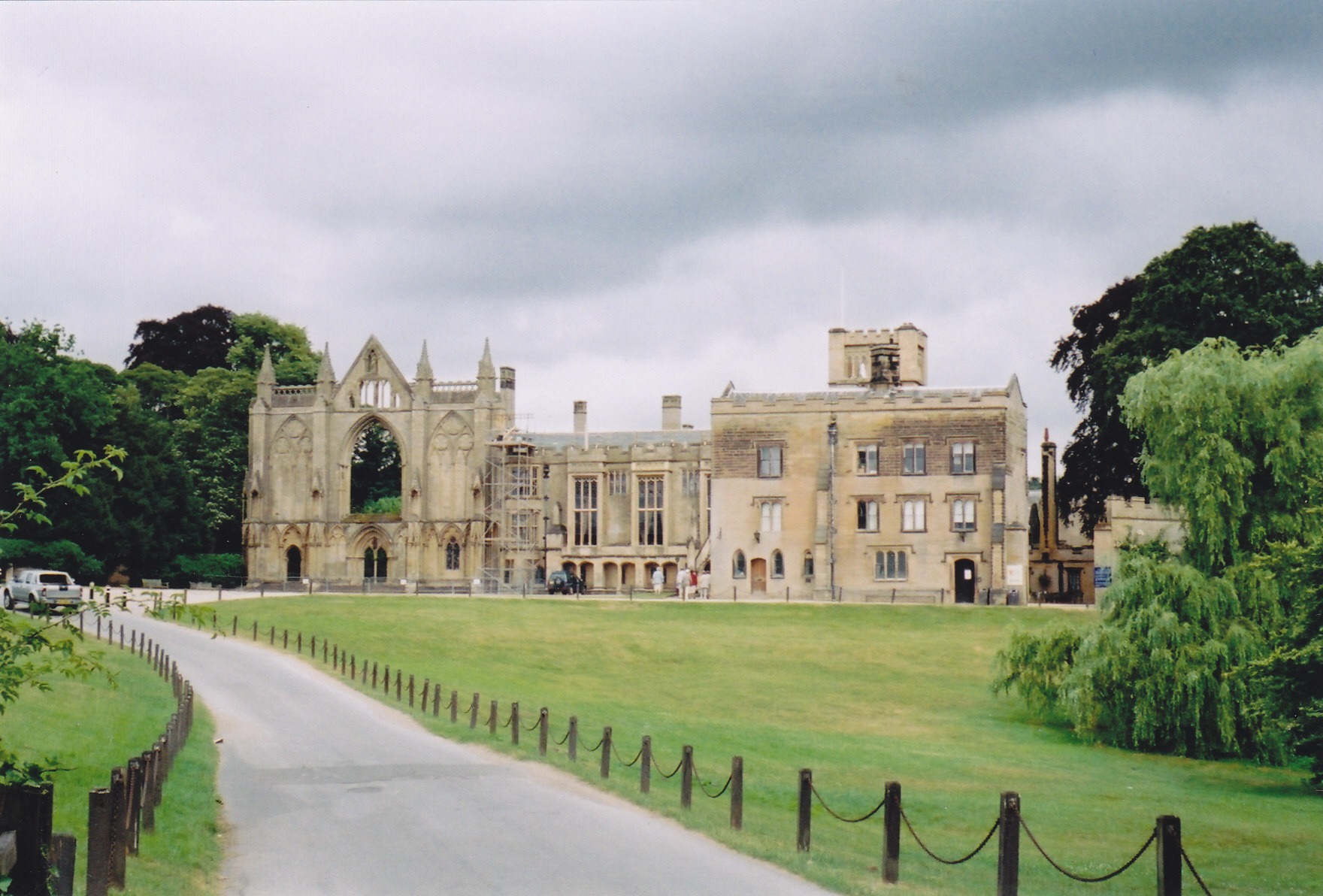
In my late teens/early twenties I was completely obsessed with Lord Byron, and just after I finished my degree at York I made the pilgrimage to his old home near Nottingham. Newstead Abbey is a beautiful place in its own right, but knowing that Byron himself mused, wrote poetry and quaffed wine from a skull within its walls makes it even more special to me. Nowadays Byron’s fame seems to be ebbing, with greater focus on his computer-pioneer daughter Ada Lovelace (who, to be fair, is pretty awesome), but I will always have a place in my heart for the poet who was “mad, bad and dangerous to know”. While some of Byron’s poetry isn’t great, when he is good, he is very, very good. I love Don Juan.

Fitzrovia, London

The Fitzroy Tavern
The Fitzroy Tavern

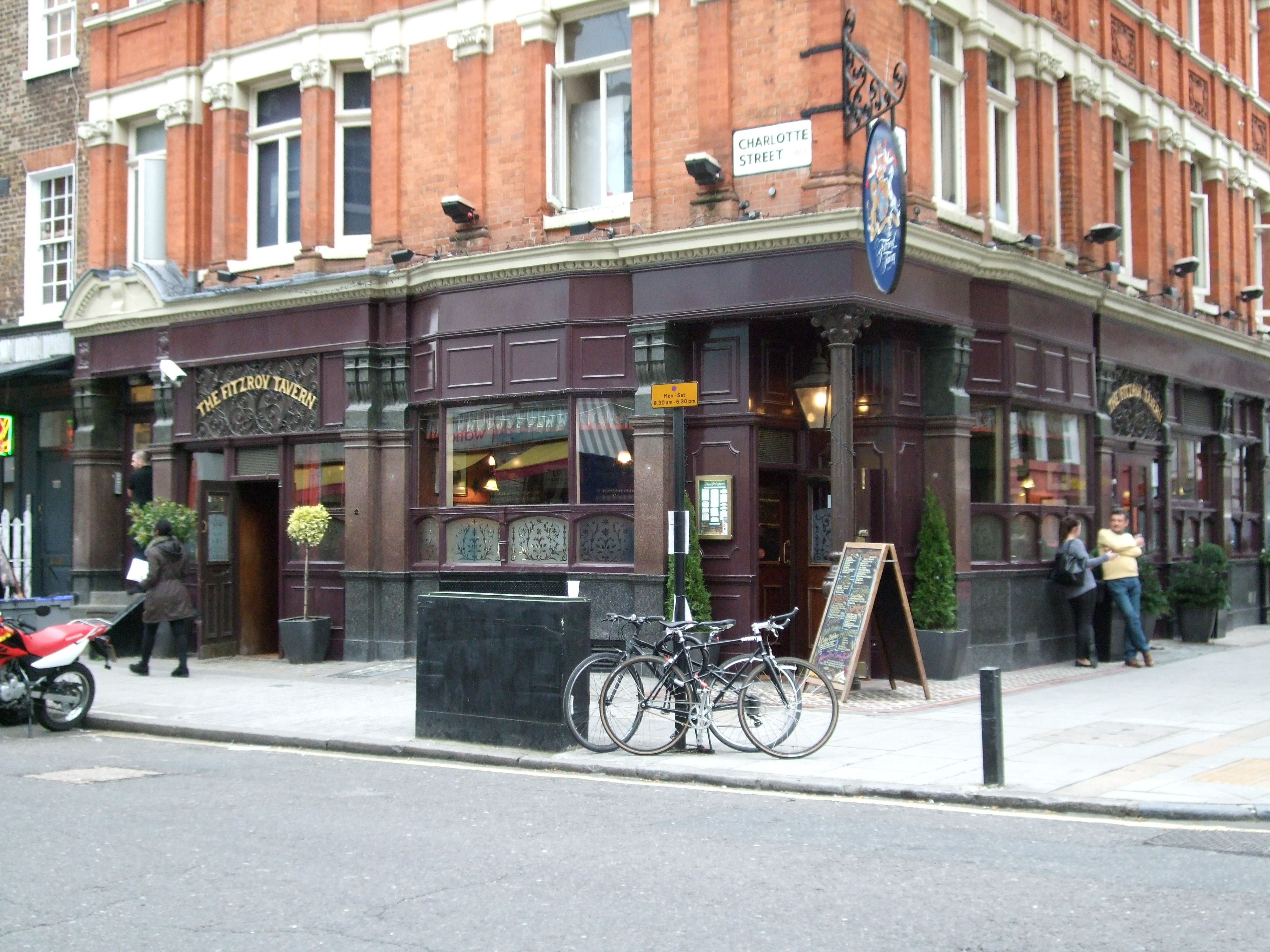
With the centenary of Dylan Thomas’ birth this year, I am surprised Fitzrovia didn’t make it into the list. This area in Bloomsbury was a magnet for artists and writers in the mid-20th century, who spent lots of time hanging out in the local pubs. Thomas is perhaps the most famous of these: he drank in the Fitzroy Tavern and met his wife Caitlin in the nearby Wheatsheaf. However, the area was also frequented by other significant figures: Anthony Burgess, author of A Clockwork Orange, witnessed an altercation in the Duke of York which may have found its way into his novel, while the nearby Newman Arms was supposedly George Orwell’s inspiration for the plebians’ pub in 1984.

If you would like to explore the area further, I recommend the London Literary Pub Crawl: this tour begins at the Fitzroy Tavern and ends in nearby Soho, with numerous beer breaks along the way.

South Tyneside

Catherine Cookson Country
Photo: Denise Miller on Flickr

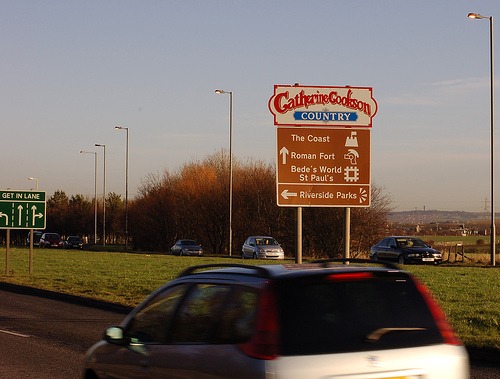
Growing up in the North East of England, I was familiar with the works of Catherine Cookson, the most borrowed author from public libraries for 17 years until 2002. Like many teenagers from the area I grew up reading many of her books, including The Cinder Path and The Branded Man, which were inspired by and set in the region. I’m not sure how popular Cookson is these days, but her hometown of South Shields and the entire Tyneside region still has the “gritty” atmosphere I associate with her books. Further south in County Durham, the open-air Beamish Museum will be recognisable to anyone who has ever watched a Cookson adaptation on television.

Rose Theatre, Bankside, London

Excavation of the Rose Theatre, Bankside, London
Photo: David Sim on Flickr

The reconstructed Shakespeare’s Globe Theatre on Bankside is a well-known attraction, and it is certainly worth visiting. However, the lesser-known Rose Theatre just down the road is a must-see for anyone interested in Shakespeare and his contemporaries. It was discovered in 1989 during a routine excavation underneath an office block: a campaign to save it was successful, and it has been preserved ever since. The foundations are kept under water to preserve them, and red rope lights mark out the shape of the walls and the stage.

When it was built, the Rose was the first purpose-built theatre on Bankside, and plays are still performed there today, on a platform overlooking the archaeological site.

The Isle of Wight

Freshwater Bay
Freshwater Bay, the Isle of Wight

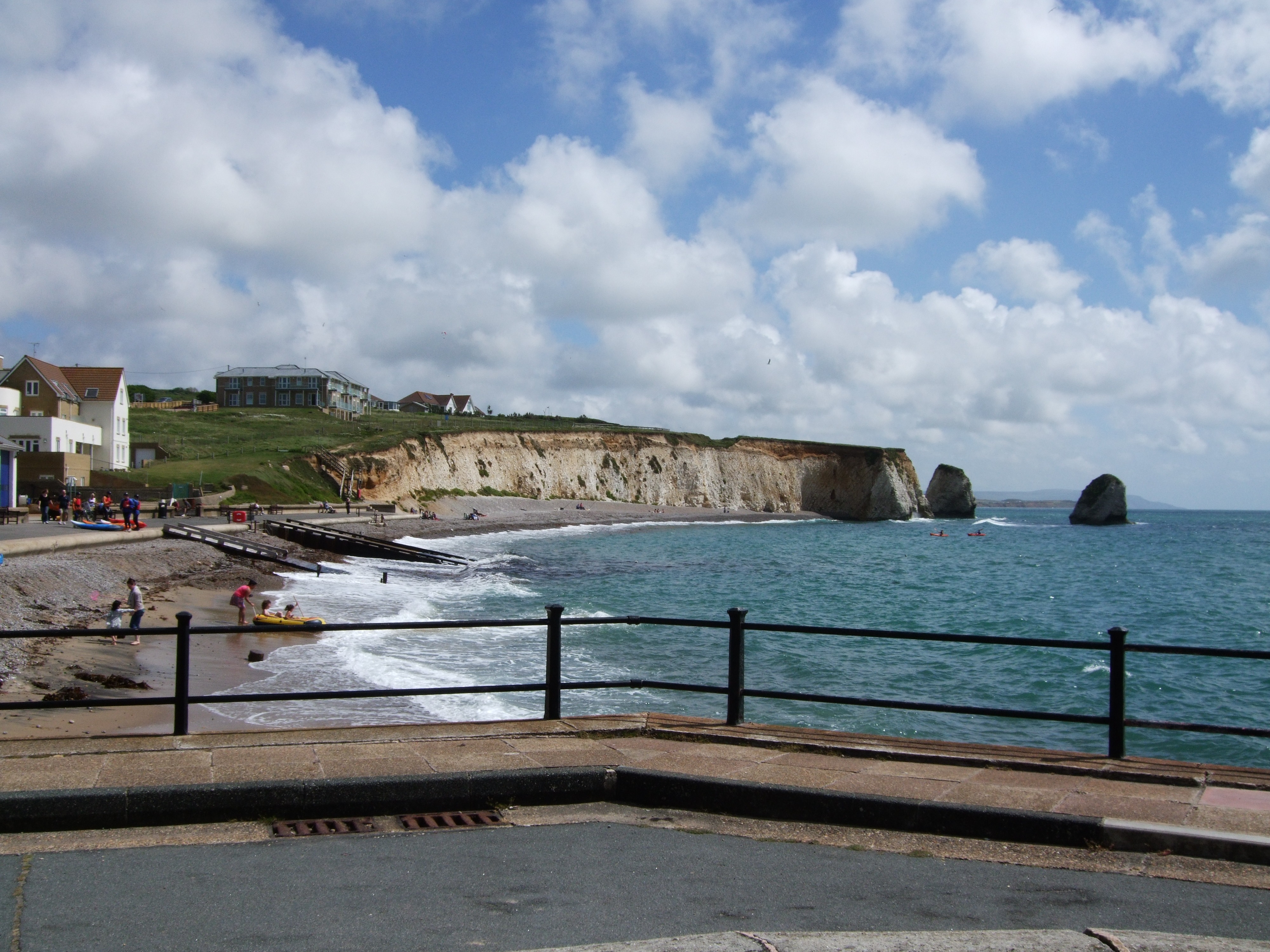
The Isle of Wight has connections with two of my favourite (albeit completely different) writers. Victorian poet Lord Alfred Tennyson lived at Farringford House in the west of the island for many years, and walked every day on Tennyson Down, which was subsequently named after him. He also wrote one of his most famous poems, ‘Crossing the Bar’, while on a ferry crossing the Solent.

Virginia Woolf wrote her only play, Freshwater, about her great-aunt, the photographer Julia Margaret Cameron. The play is set in Dimbola Lodge in Freshwater, not far from Tennyson Down and Farringford, and it is still possible to visit Dimbola, which is now a museum and art gallery dedicated to Cameron.

Also, if this isn’t enough reason to visit the Isle of Wight, the fact that you can go there by hovercraft should be enough to convince you.

Bonus site: Scarborough

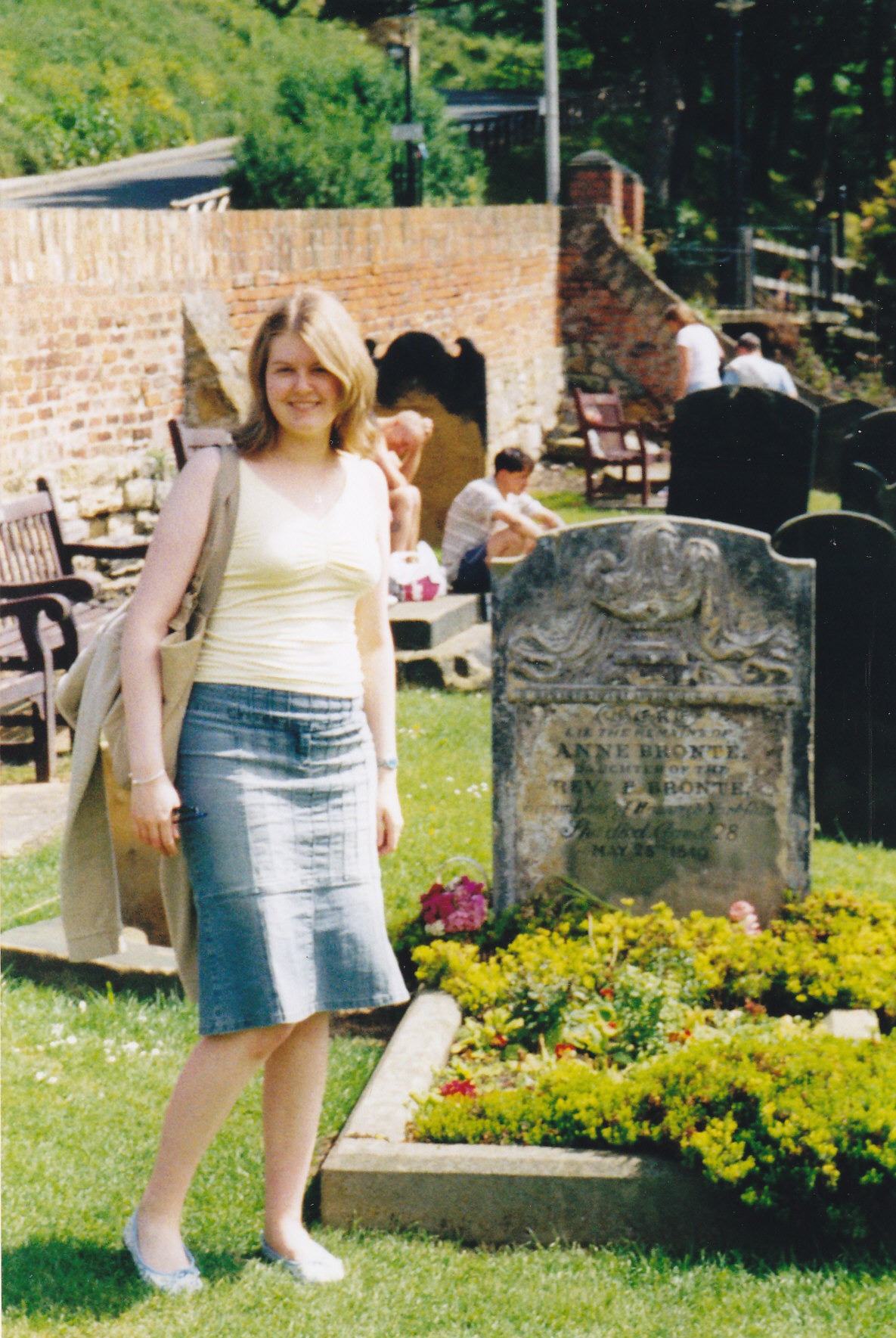
Anne Brontë's grave
Me, as a student, by Anne Brontë’s grave

The Yorkshire seaside town of Scarborough might not be an obvious choice for someone looking for places with literary connections, but while the Parsonage Museum in Haworth is the main focus for Brontë aficionados, Scarborough has a claim to fame of its own, as the burial place of youngest Brontë sibling Anne. When she began to show symptoms of the tuberculosis that had killed her brother and sister, Anne travelled to Scarborough with her only remaining sister, Charlotte. Sadly, Anne died there and is buried in St Mary’s burial ground.

If there’s one thing that the Buzzfeed list, Rachel’s choices and my own experiences have shown me, it is that Britain is absolutely chock-full of literary places. I had a really hard time narrowing my own choices down to five, and there are still plenty of places that I haven’t seen. Maybe a trip to Haworth will be on the cards next year?

Dylan Thomas in Fitzrovia

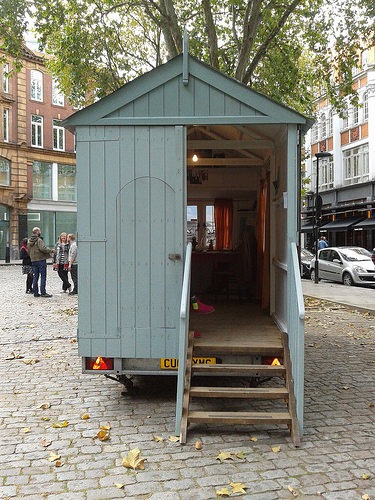
This week has seen the Dylan Thomas in Fitzrovia festival happening in central London, based around the part of Bloomsbury where the writer used to hang out in the middle of the century. Talks, readings and performances have all been taking place, and I have booked to see Clown in the Moon, a performance about Dylan, tomorrow. Yesterday I took advantage of the fact that I work incredibly close to the area where the festival is taking place, and popped out to see Dylan’s writing shed, which is on tour around the country.

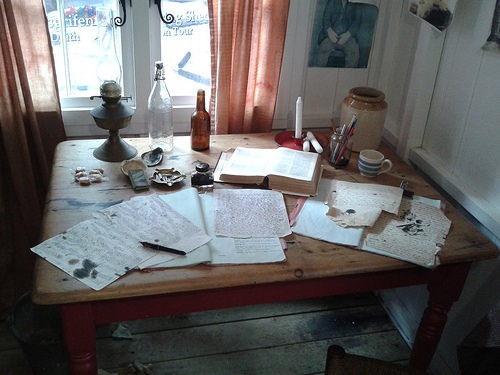
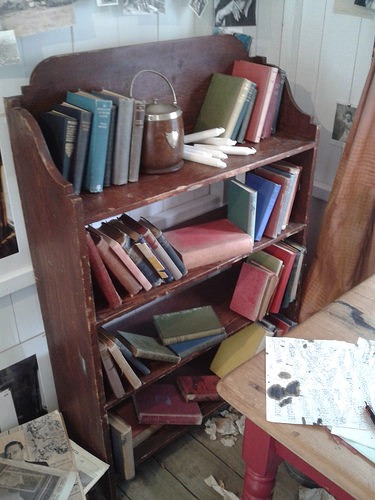
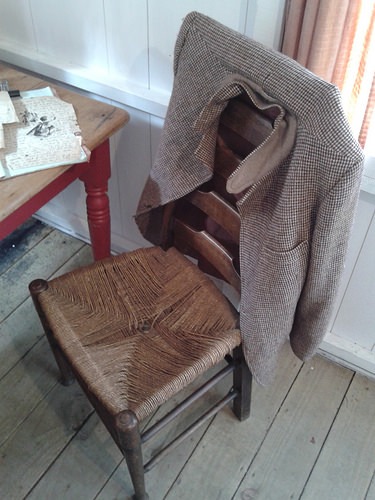
The shed is a near-exact replica (it has been scaled down slightly to allow it to be transported around the country on a trailer) of Thomas’ real writing shed in Laugharne. It is full of bookshelves, papers and other odds and ends, with Dylan’s coat draped over the back of the chair – just as if the poet himself could come inside at any moment.

2014_1023DylanShed01
The shed
2014_1023DylanShed02
Words, words, words
2014_1023DylanShed03
The desk
2014_1023DylanShed04
Bookshelves
2014_1023DylanShed05
Coat