The second exhibition I saw at the Natural History Museum was Mammoths: Ice Age Giants. I thought it complimented the “Britain” exhibition really well, being about some of the creatures who were around when early humans were.
In the exhibition I learned where mammoths stand on the evolutionary tree: they aren’t ancestors of elephants, as I used to think, but an entirely different branch, like mastodons. Woolly mammoths are the most famous kind, but this is because woolly mammoths lived in cold areas and were therefore more likely to be preserved after death.
Some of the mammoths were absolutely huge – the Columbian mammoth in particular! In contrast, the pygmy mammoth, though still pretty large compared to other animals, was much smaller than other mammoths. This is because pygmy mammoths lived on islands, and a smaller size was advantageous in clambering about the island and coping with smaller amounts of food.
The highlight of the exhibition was “Lyuba”, a baby mammoth discovered in Russia in 2007. This is the first time she has been seen outside Russia. Lyuba died when she was only one month old, probably from asphyxiation after falling into mud. Her body has remained wonderfully preserved for 42,000 years: she has lost most of her fur, her tail is missing and her trunk has shrunk but otherwise she looks fantastic for her age!
This exhibition closes on 7 September, and I definitely recommend trying to catch it before it goes.
At the weekend I went to see a couple of exhibitions at the Natural History Museum. The first was Britain: One Million Years of the Human Story, inspired by the Ancient Human Occupation of Britain (AHOB) project, a three-phase study investigating humans from Palaeolithic and Mesolithic northern Europe.
The exhibition told a chronological story from the earliest evidence of human presence in the British Isles, through to the first appearance of Homo sapiens in Britain. I found it fascinating to learn about the presence of early humans. Among the items on display were a skull from the earliest known Neanderthal in Britain, bones from the animals that lived during that time, and tools and other evidence of human habitation. Over the last million years, humans have been present in Britain on and off, depending on weather and other conditions. Other amazing creatures have been here too, including mammoths, rhinos and lions.
Evidence of human presence has been found mainly in the south: the north and Scotland experienced longer and more severe freezes, meaning that evidence could have been destroyed. Finds have been discovered at places such as Kent’s Cavern in Devon and Happisburgh in Norfolk.
I was interested to learn that when Homo sapiens superseded Neanderthals, the latter’s genes were not wiped out entirely. Apparently most humans (except for those most closely descended to the original Homo sapiens who came out of Africa) have some Neanderthal genes. Two purpose-built models show how the species differed.
Neanderthal manHomo sapiens
At the end of the exhibition, there was a video with six celebrities talking about the results of their own DNA analysis. It was interesting to see the huge range and scope of their DNA origins, from Scandinavian and Asian to Native American. I wonder what mine would say?
Frogmore House, the royal residence next to Windsor Castle, is only open (apart from group visits) for one weekend in the year. I visited on the Saturday, having prebooked my ticket, although in the end I hadn’t really needed to as although there were plenty of people in the house, it certainly wasn’t crowded.
The gardensChapel
I hadn’t realised what a long walk it would be from Windsor to the house – more than once I found myself looking longingly at the little buggy transporting people with more reason to avoid walking than I. Still, it was a nice day, if a little too hot for me, and the gardens were beautiful, well worth a wander through. On the way I passed a small chapel as well as the mausoleum in which Queen Victoria and her husband Prince Albert are buried. Unfortunately it is not possible to visit the mausoleum, as it is in need of repair and currently deemed unsafe for visitors.
MausoleumGothic Ruin, used by Queen Victoria
The house itself had a homely feel (as far as a stately home like this can be called “homely”), and I was impressed with the various collections of knick-knacks on display. One room was entirely given over to black lacquer boxes, another contained relics from the Royal Yacht, Britannia. The house was originally built in the late seventeenth century, and was bought by George III a century later for the use of his wife Queen Charlotte. Other notable residents include the Duchess of Kent (mother of Queen Victoria) and the future King George V and Queen Mary, the latter of whom turned the house into a kind of museum.
The house
Frogmore House is definitely worth a visit, if you can get there when it is open. Several people were picknicking in the grounds and looked as if they were having a lovely time. It would be possible to visit both Windsor Castle and Frogmore House on the same day, if you were organised and started early!
As I probably mentioned when I last wrote about Windsor Castle, you can get your ticket stamped so that you can return as many times as you like within the next year. I took advantage of this on Saturday when I returned to Windsor to visit Frogmore House (on which more later).
The Round Tower viewed from the ground
My reason for returning was to experience two tours that are only available during August and September. These are Conquer the Tower, which allows you to climb to the top of the famous Round Tower, and The Great Kitchen, which allows you to see inside the oldest working kitchen in the UK (and possibly the world). These tours cost extra, but I didn’t mind this too much as I was able to get into the castle itself for free.
Conquer the Tower
I had to be inside the Engine Court for both tours. For the Tower tour there was a covered space beside the entrance where lockers were stored: we had to put our bags in here. We weren’t allowed to take any pictures inside the building or in certain directions when we were outdoors, as you are not allowed to take photos of the Queen’s apartments. However, there was plenty to photograph even with these restrictions.
View of the river with Eton College Chapel in the background.
Our guide was brilliant, knowledgeable and friendly. He pointed out the narrowing staircase, allowing for better defence of the Tower, and the cannon poking out of the wall above us. There are 200 steps up to the top of the tour, but luckily we were able to break our journey partway through. There is a slope around the mid-level of the Tower, which was designed so that soldiers could drop boulders from the top and have them bounce off at an angle and land on any unfortunate enemies trying to besiege the Castle!
The Moat Garden
The view from the top of the Tower was great. We could see over the town of Windsor itself, as well as the Long Walk in Windsor Great Park (down which I would walk later to visit Frogmore House).
The Long Walk
In the other direction we could see as far as the Shard in London, although we couldn’t quite see Wembley Stadium which is sometimes visible on a clear day.
Windsor Town Centre
By a happy coincidence, our tour was timed to coincide with the Changing of the Guard, which we were able to observe from up above. The band also obliged us by playing, not a hymn or patriotic anthem, but Don’t Stop Me Now by Queen!
Changing of the Guard
I really enjoyed the tour – but it was a little chilly up there, so I wasn’t sorry to descend. On the way down, our guide told us that a twelve-year-old boy was buried under the staircase – he had died of the plague many centuries ago.
The Union flag means that the Queen is away – the Royal Standard is flown when she is in residence
The Great Kitchen
The meeting point for the Great Kitchen tour was on the other side of the courtyard. We were taken through the exit from the State Apartments, past the lines of people getting their tickets stamped, and through a slightly hidden door. We were shown the undercroft (sadly, our tour guides told us that they didn’t have access to the impressive wine cellar!), one of the oldest parts of the castle which was only properly discovered after the fire in 1992 (previously it had been converted into offices).
The kitchen itself is huge, with a high ceiling and lots of space. I loved the contrast between ancient and modern: the kitchen space is incredibly old, and there are still some old cooking ranges present, but the worktops are stainless steel and the lowered lighting is designed so that chefs have an excellent light to work by. The ceiling is cleverly designed: it looks very old, but it in fact conceals air vents. There were photos on display showing some of the impressive creations concocted by the chefs, who are responsible for cooking for State banquets. Sadly I couldn’t take any photos of the kitchen, but it’s pretty impressive. Lastly we visited the pastry kitchen, where desserts are created.
If you are visiting Windsor Castle during August or September, I strongly recommend including one or both of these tours in your visit – the Tower tour in particular.
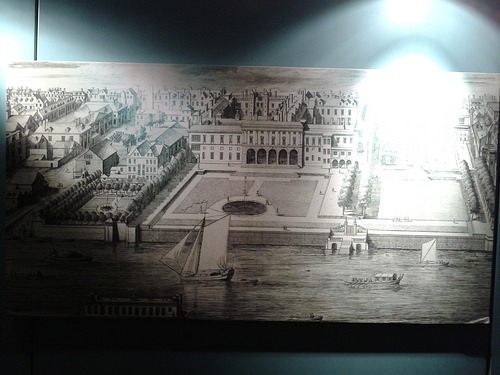
After visiting the tattoo art exhibition at Somerset House I found my way downstairs into a “hidden” exhibition about the old Somerset House palace. This was built during the Tudor period, originally for Protector Somerset, but he died before it was completed.
The palace being next to the Thames, it was ideally placed for river-based entertainment. During the seventeenth century, a floating coffee house called “The Folly” was often moored outside. Visitors travelling along the river would often stop and visit: Samuel Pepys, the famous diarist, himself visited in 1668.
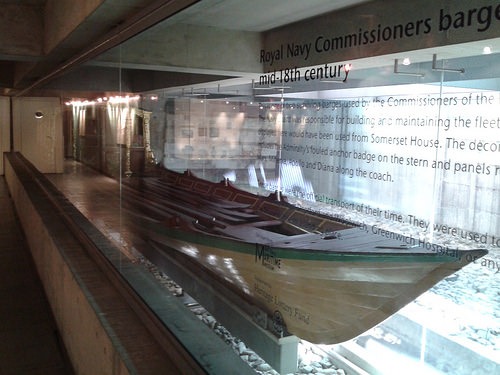
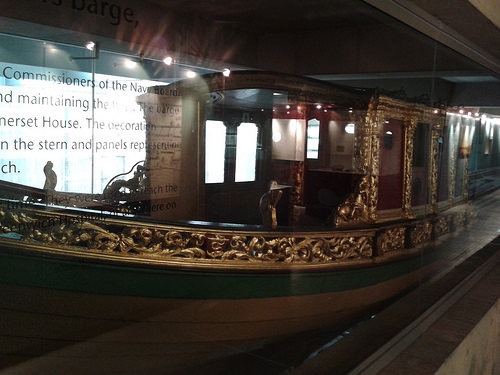
On display are several items from the history of Somerset House, dug up by archaeologists over the years. There is also a barge, used by the Commissioners of the Royal Navy, which would have patrolled the river during the 17th century.
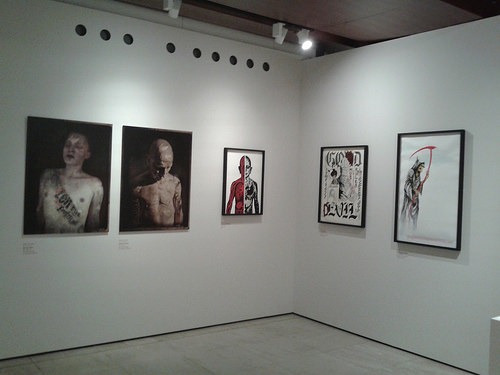
Somerset House is currently hosting an exhibition on tattoo art. I don’t have any tattoos myself, but I can appreciate the incredible artistry that goes into them.
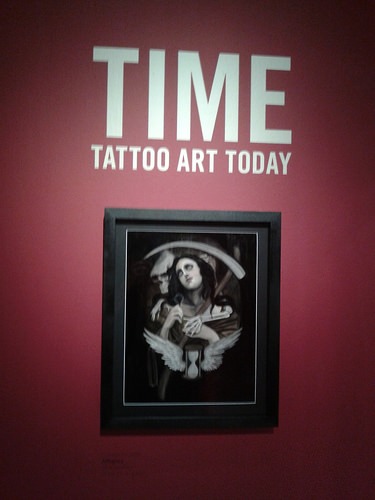
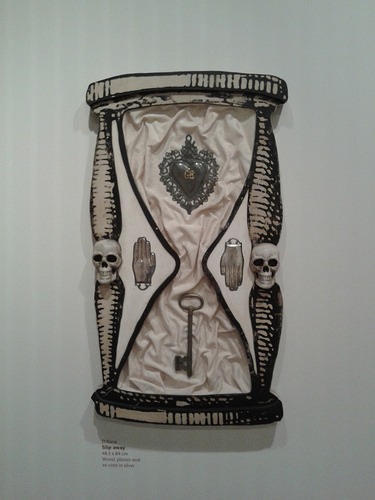
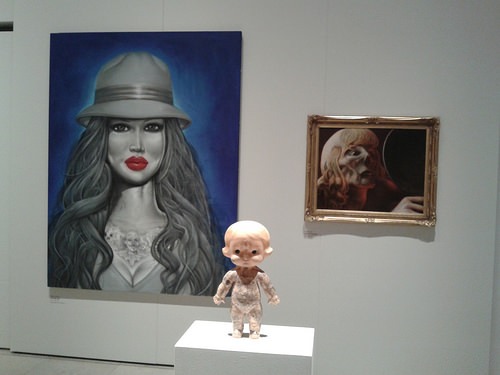
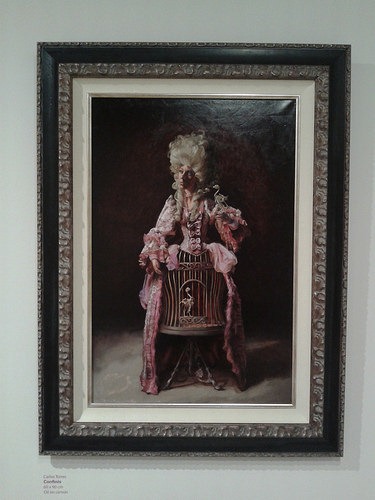
Time: Tattoo Art Today presents artworks from 70 of the world’s most influential tattoo artists, including Ed Hardy, Horiyoshi III, Paul Booth and Rose Hardy. The artists were commissioned to create new works on the theme of time. The result is a varied collection of artworks made with a range of different materials and methods including watercolour, sculpture, oil painting and painting on silk.
There were some incredible pictures, wonderfully detailed. I still don’t think I want a tattoo myself, but I can’t help but admire the quality of the artists’ work.
Rose Hardy, Rouge
Time: Tattoo Art Today is on in the Embankment Galleries, Somerset House, until 5 October. Entry is free.
After visiting the Kenneth Clark exhibition, I went along to the British Folk Art museum, also at Tate Britain. This exhibition comprises collections from across Britain which have been described as folk art, a term generally used in connection to social history or folklore studies. It is the first major exhibition of its kind in the country, and covers work from the seventeenth century to the middle of the 20th, which is when folk art supposedly began to become more commodified.
The first section of the exhibition consisted of a selection of painted, carved or constructed signs outside buildings which were used to denote the kind of business and as an early form of advertising. Some of these signs are obvious, such as a boot or a shoe to denote a cobbler, and a padlock or key for a locksmith. Others are less so: a bear was often used outside a barber’s (as bear grease was commonly used on the hair), and the three golden balls outside a pawn shop represent the family crest of the Medicis, wealthy Italian bankers. The detail and craftsmanship evident on some of these signs is incredible.
In early 19th century Frant, a village near Tunbridge Wells, a tailor named George Smart created and sold pictures made from textile scraps, which he then sold to tourists. “Smart’s Repository” produced some amazing pictures of fascinating village figures, including the policeman and an old woman in a red coat. Many folk artists painted pictures relating to rural life and landscapes, including images of the sea and sky. One notable such artist was Alfred Wallis (1855-1942), a rag and bone merchant and self-taught painter from St Ives, who created paintings based on his early career at sea.
Some folk arts were classed as crafts, including the mysterious “god in a bottle” sculptures (wood and liquid in glass bottles), straw crafts and leatherwork. Some were carved figures, such as the Highlander which was kept outside a tobacconists, and ship figureheads such as the huge HMS Calcutta, made in Mumbai 1831 of Indian hardwood.
I was hugely fascinated by the work of Mary Linwood (1755-1845), a woman who imitated the Old Masters and British artists to recreate their work in needlepoint. Her fantastically detailed works showed an incredible amount of talent, yet how to categorise an artist who, while incredibly able, does not create original works?
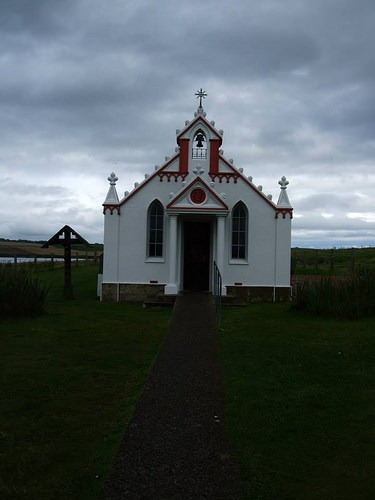
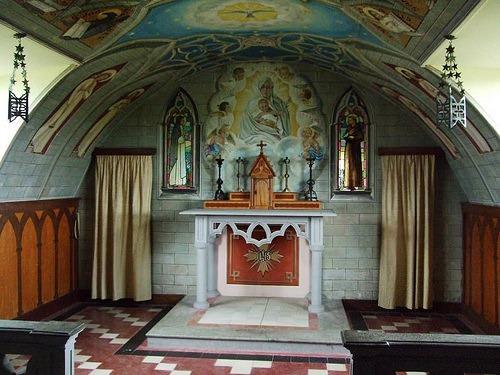
Towards the end of the exhibition there were displayed assorted sculptures, artefacts and textiles, from places such as Beamish Museum in County Durham. These reveal the wide-ranging skills and talents of folk art practitioners. At the end, archival photographs displayed some other examples of folk art, including one man who transformed his back garden into a wonderland, and the chapel built in Orkney by Italian prisoners during the Second World War.
Overall this was a fascinating exhibition, and one which I thoroughly enjoyed. It is on until the end of August, so do try to catch it if you can.
The Italian Chapel in Orkney (taken by me on holiday last year)The interior of the Italian Chapel
I went along to the Comics Unmasked: Art and Anarchy in the UK exhibition at the British Library recently. I’m not a particular fan of comics or graphic novels, but I’m always interested in learning more about anything to do with literature.
The exhibition displays both mainstream and underground comics, demonstrating the breadth of subjects they have addressed throughout the years, including politics, gender, violence and sexuality. I enjoyed reading about the history of comics, from their roots in medieval manuscripts and the “Punch” character through to modern comics and graphic novels. I was left with several ideas about graphic novels to try, including Neil Gaiman’s Sandman, Alan Moore’s Watchmen and V for Vendetta, and Posy Simmonds’ Tamara Drewe.
I love Tatty Devine and I’ve wanted to go to one of their jewellery-making workshops for ages. I signed up for a Charm Bracelet Workshop at their store on Brick Lane, and went along one Sunday morning.
To make the bracelet, we could choose a silver or gold chain – I chose silver. We then had the task of choosing ten charms to add to it. I had lots of trouble choosing charms as there were so many lovely ones and I just couldn’t decide. In the end I went for a mixture of styles and colours, though several others there chose a theme for their bracelet – one woman went for a gold chain with gold and tortoiseshell charms, which looked really lovely.
The next bit was adding the charms to the bracelet. We used pliers to open the charm rings, thread the charm and add the ring to the bracelet. This was fiddly, but easier than I’d expected. The shop staff who were helping us were really helpful and friendly and they tightened all our charms for us to stop them falling off!
I was very pleased with my finished product and I hope I get the chance to go to another workshop in the future.
Radical Geometry looks at the original and radical art of South America over the last 100 years. In the early to mid-20th century, artists from the region began to innovate and pioneer a new visual language to evoke their beliefs about art. In the beginning this coincided with a sense of optimism in the region, with a strong economy and progressive politics dominating. Cities across South America began to see themselves as an integral part of the world, not on the periphery. However, artists from these cities did vary as to their approaches to art.
In Buenos Aires, artists were often political, with strong left-wing leanings expressed in their art. In Brazil as a whole, many had an intellectual focus and also worked with poets, while Venezuelan artists integrated their work with buildings. In Montevido, capital of Uruguay, Joaquín Torres García blended pre-Colombian art with European avant-garde to create a unique style, though in Argentina he was seen as old-fashioned, with many artists rejecting traditional models (Rhod Rothfuss, for instance, rejected the traditional picture frame); several of these were Marxists. In Brazil, great changes during the 1950s and 1960s meant the creation of new wealth, and there was a rivalry between up-and-coming São Paulo and former capital Rio de Janeiro. The first Biennial Exhibition outside of Venice was held in São Paulo in 1951.
Abstract-style art isn’t normally my thing, but I found the clean lines and shapes really restful after coming in to the cool gallery from an extremely hot and sunny courtyard. I found a lot of the exhibition really thought-provoking – I had never considered, for instance, why paintings have square or rectangular frames (except for the odd round artwork), and that they could be framed differently. I also loved the sculptures, such as Sphere (1976) by Gego (Gertrude Goldschmidt). My favourite piece, though, was Physichromie No. 500 (1970) by Carlos Cruz-Diez, which seemed to change colour as I walked past it.
This wasn’t my usual sort of exhibition, but I really enjoyed learning about South American art and how it reflected the wider societal ambitions and beliefs of the artists. It is definitely worth visiting – it runs until 28 September.