Tutankhamun: Treasures of the Golden Pharaoh

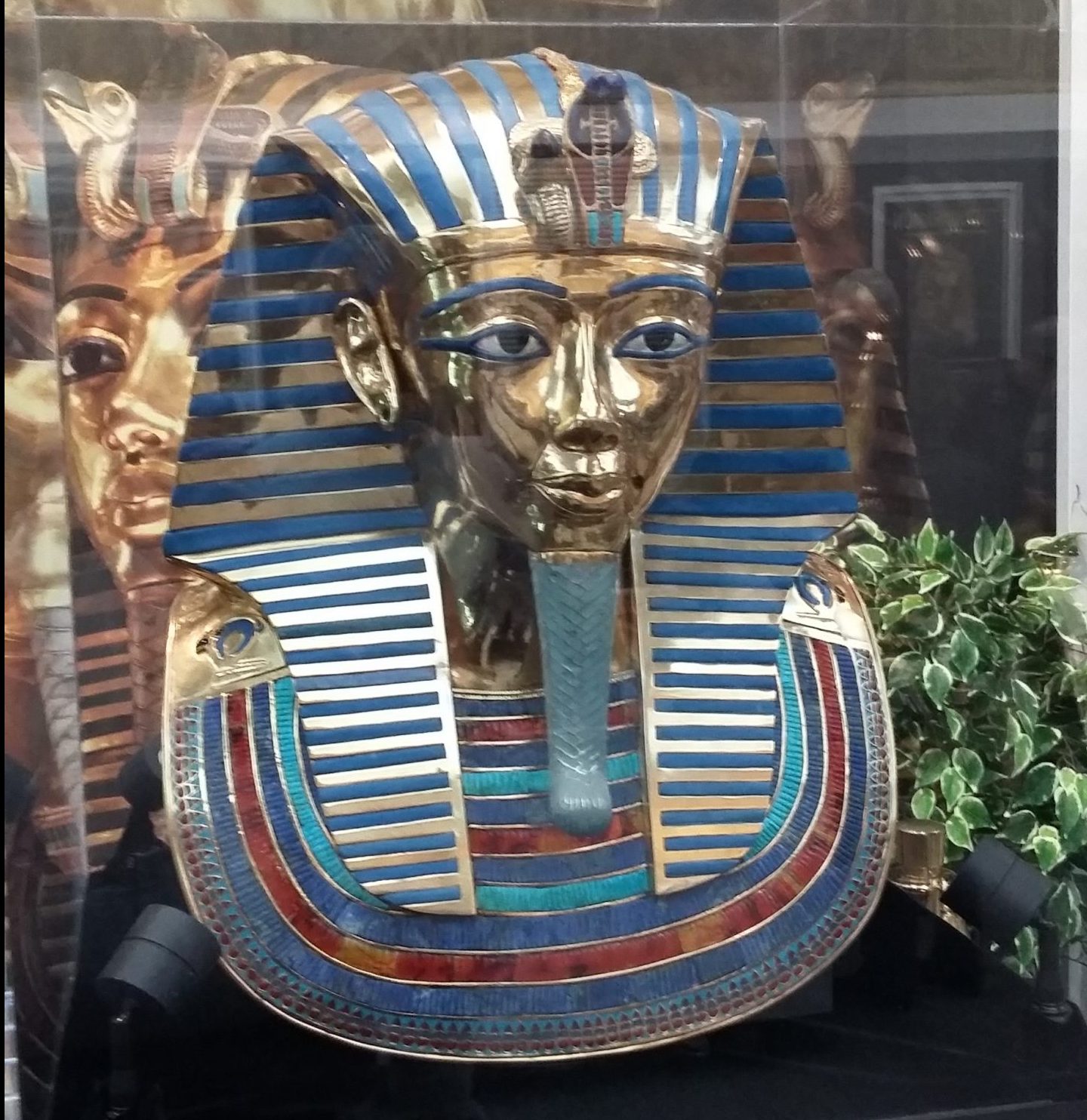
Mask replica
A replica of Tutankhamun’s famous mask

I feel very lucky to have got tickets for Tutankhamun: Treasures of the Golden Pharaoh at the Saatchi Gallery in London. I went to the exhibition on a day off in November, with my mam and a friend, who’d come down to London for the purpose.
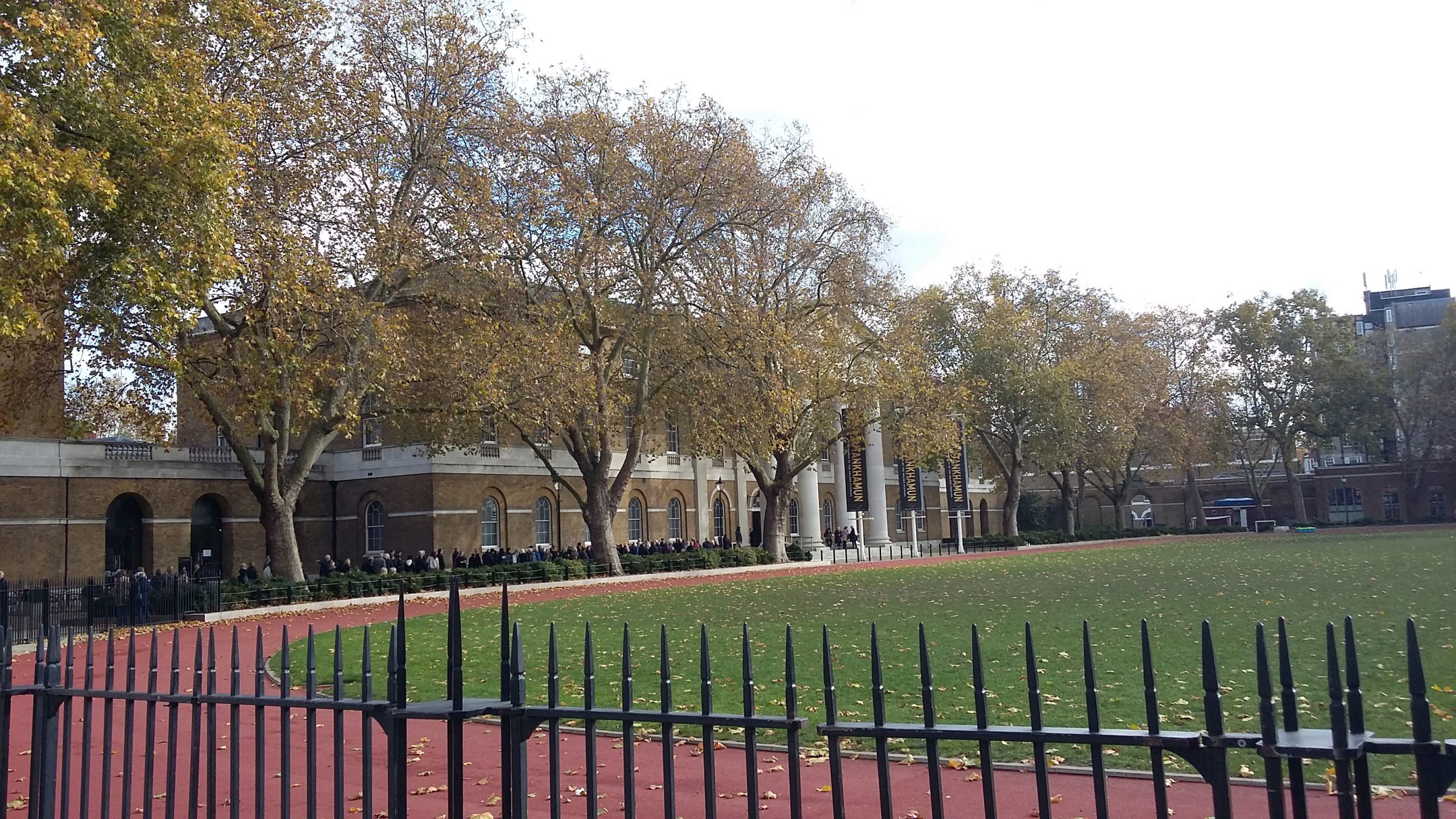
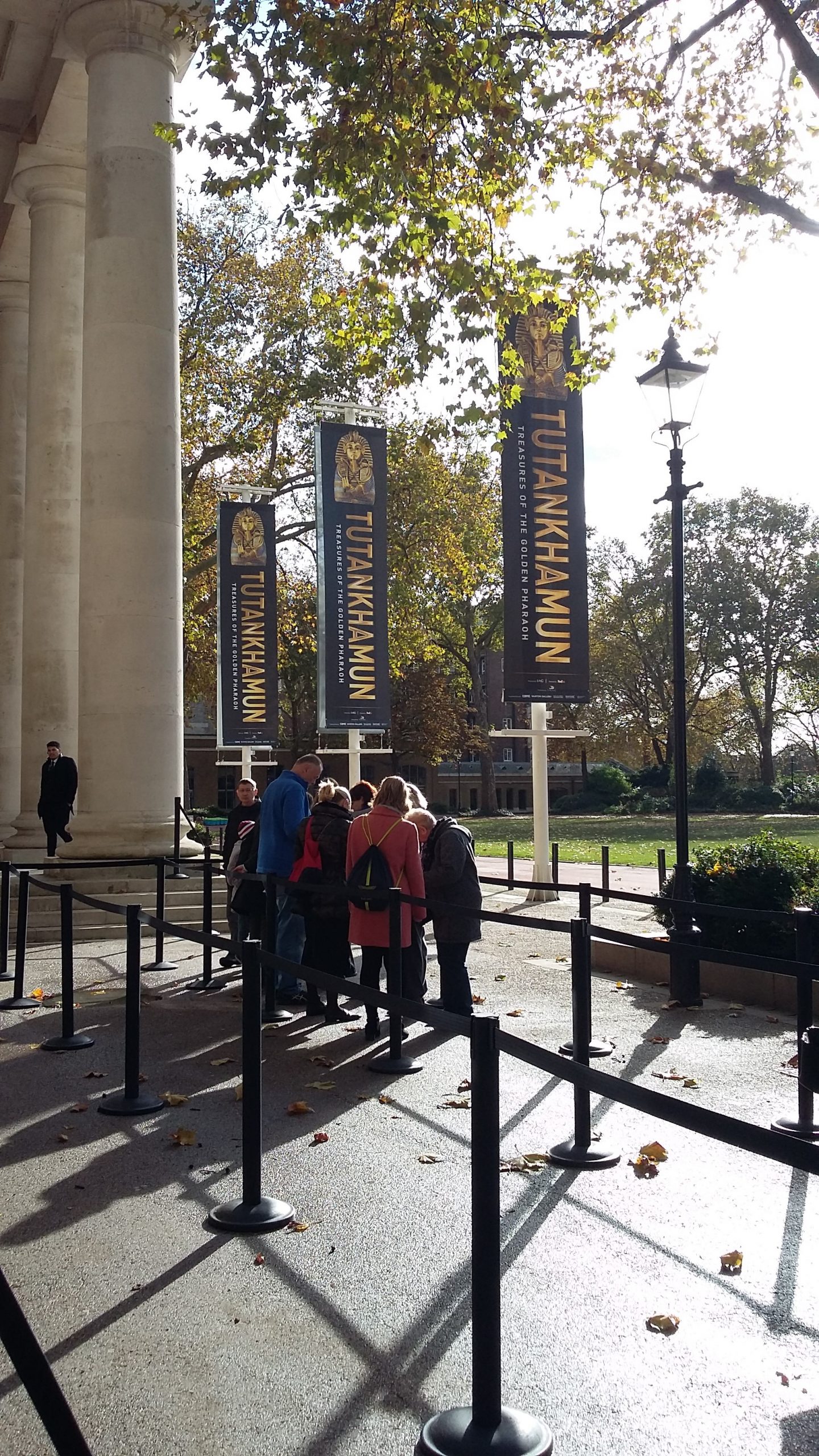
Saatchi Gallery
Saatchi Gallery
Exhibition queue
Waiting to go in

The queue outside the Saatchi Gallery was massive, and it was obvious that the exhibition was going to be popular. It commemorates the 100th anniversary of the discovery of Tutankhamun’s tomb, and marks the last time these artefacts will tour before being permanently housed in a purpose-built museum in Giza. Although the exhibition does not include Tutankhamun’s famous mask (which is available to view in replica at the end of the exhibition), it includes a vast array of treasures, many of which have travelled out of Egypt for the first time. London is the third stop on the exhibition’s world tour.
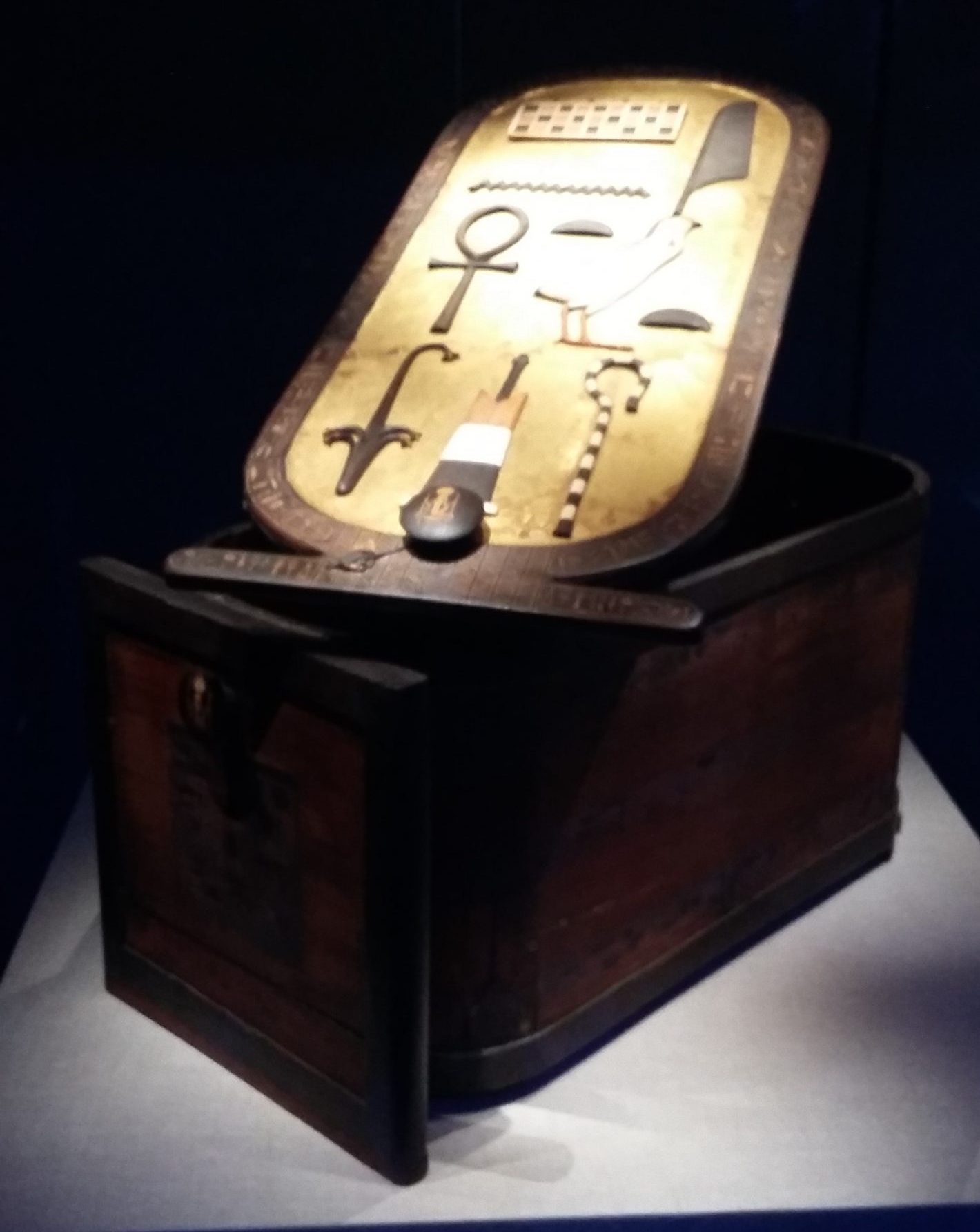
Cartouche box
Cartouche box

The treasures take up the whole of the Saatchi Gallery; great thought and care have been taken in arranging a one-way route allowing visitors to navigate the site with ease. The space was crowded, but I can’t see how it could have been made less so to accommodate everyone wanting to see the exhibition. Though I had to wait a little time to view a few of the exhibits, I managed to see everything I wanted without feeling rushed or overwhelmed.
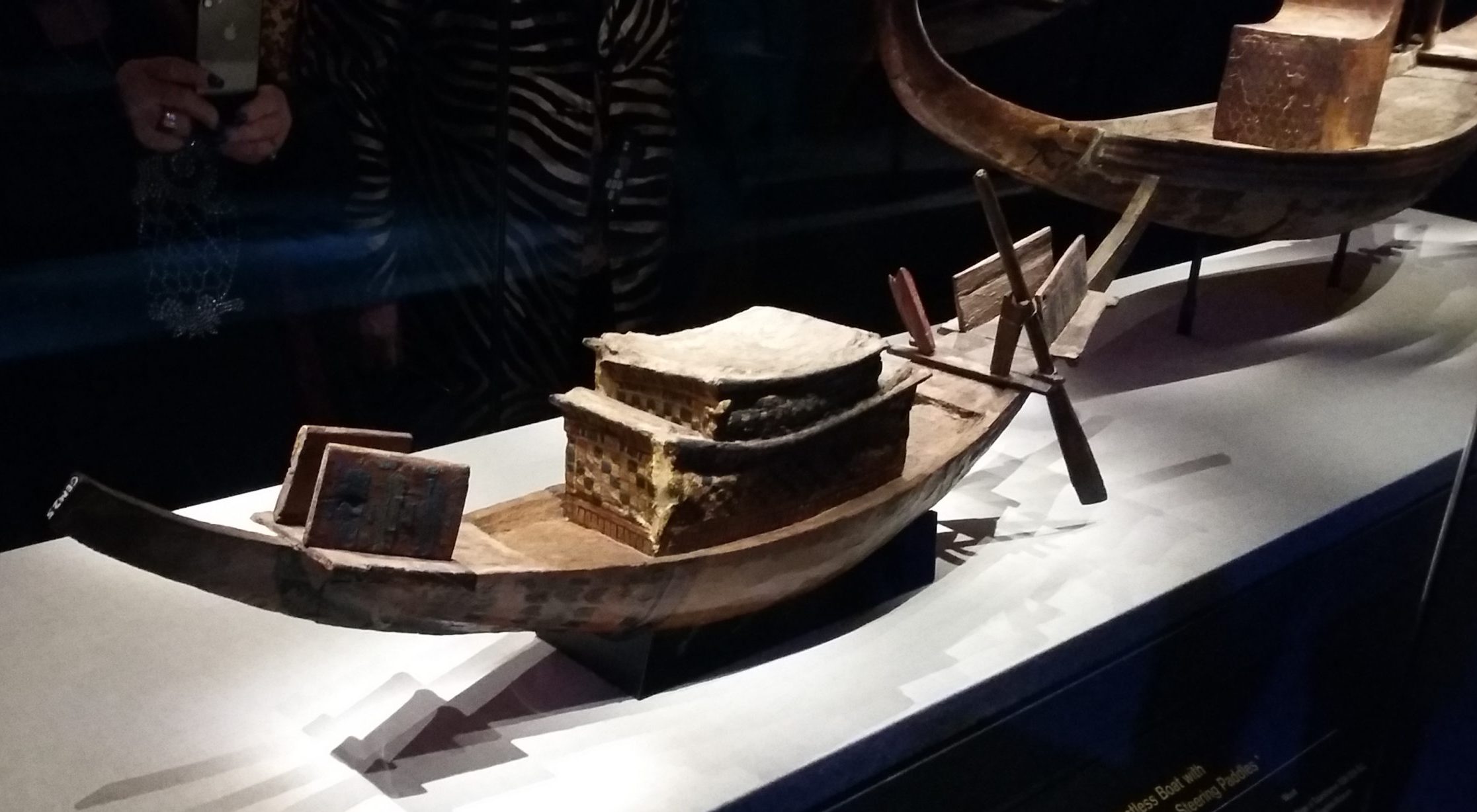
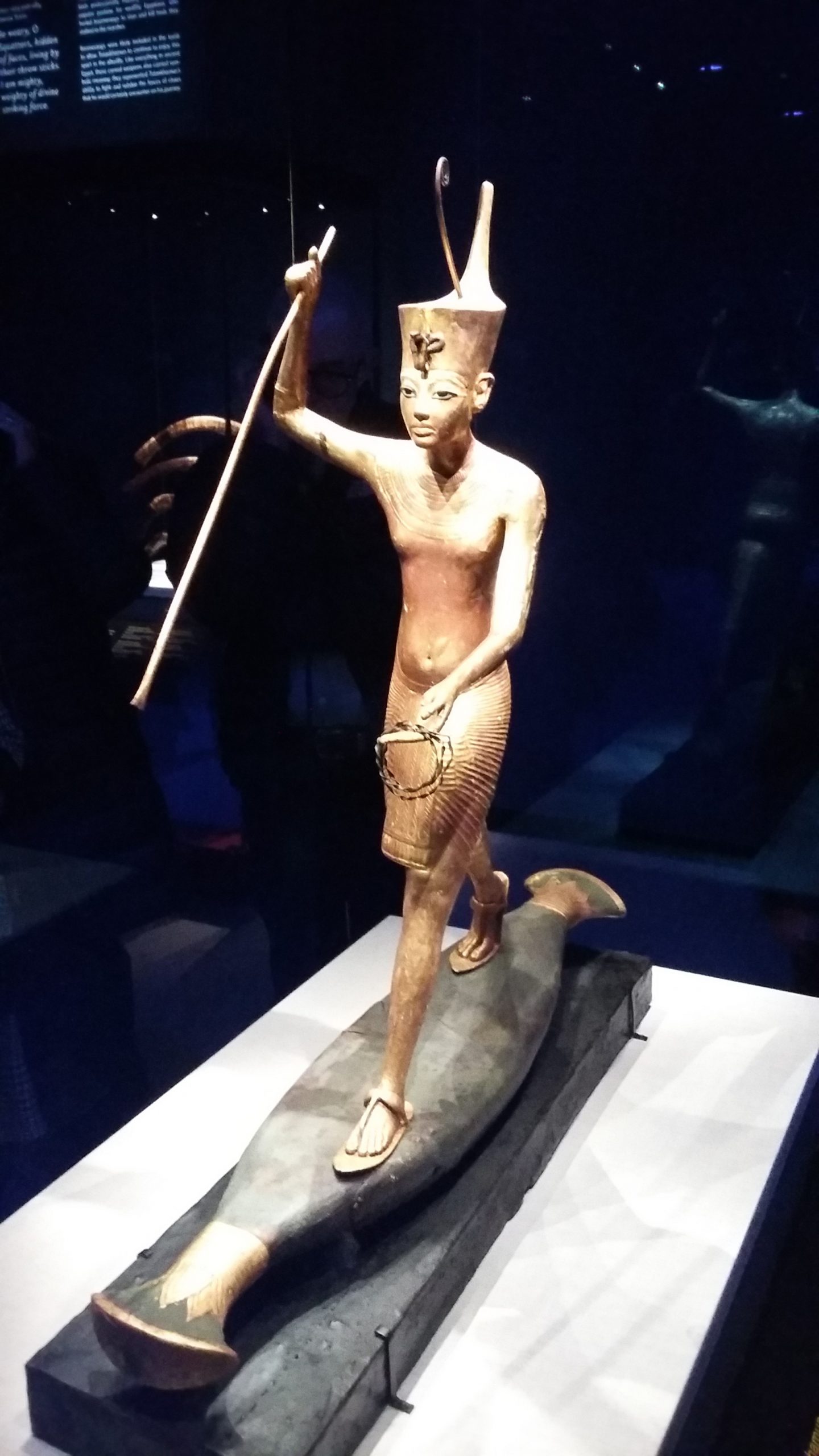
Wooden boat
Wooden model of a boat
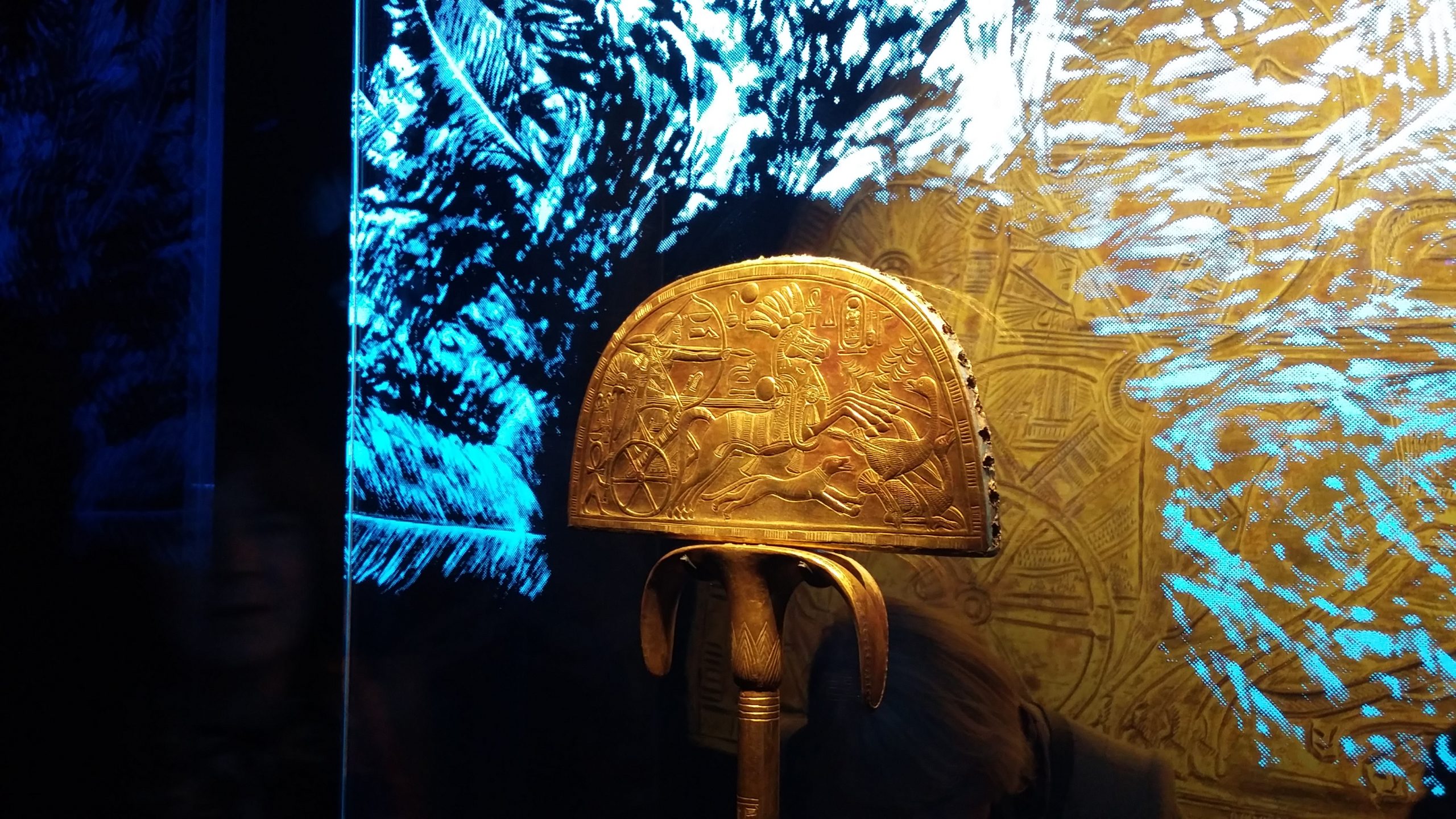
Fan
Fan
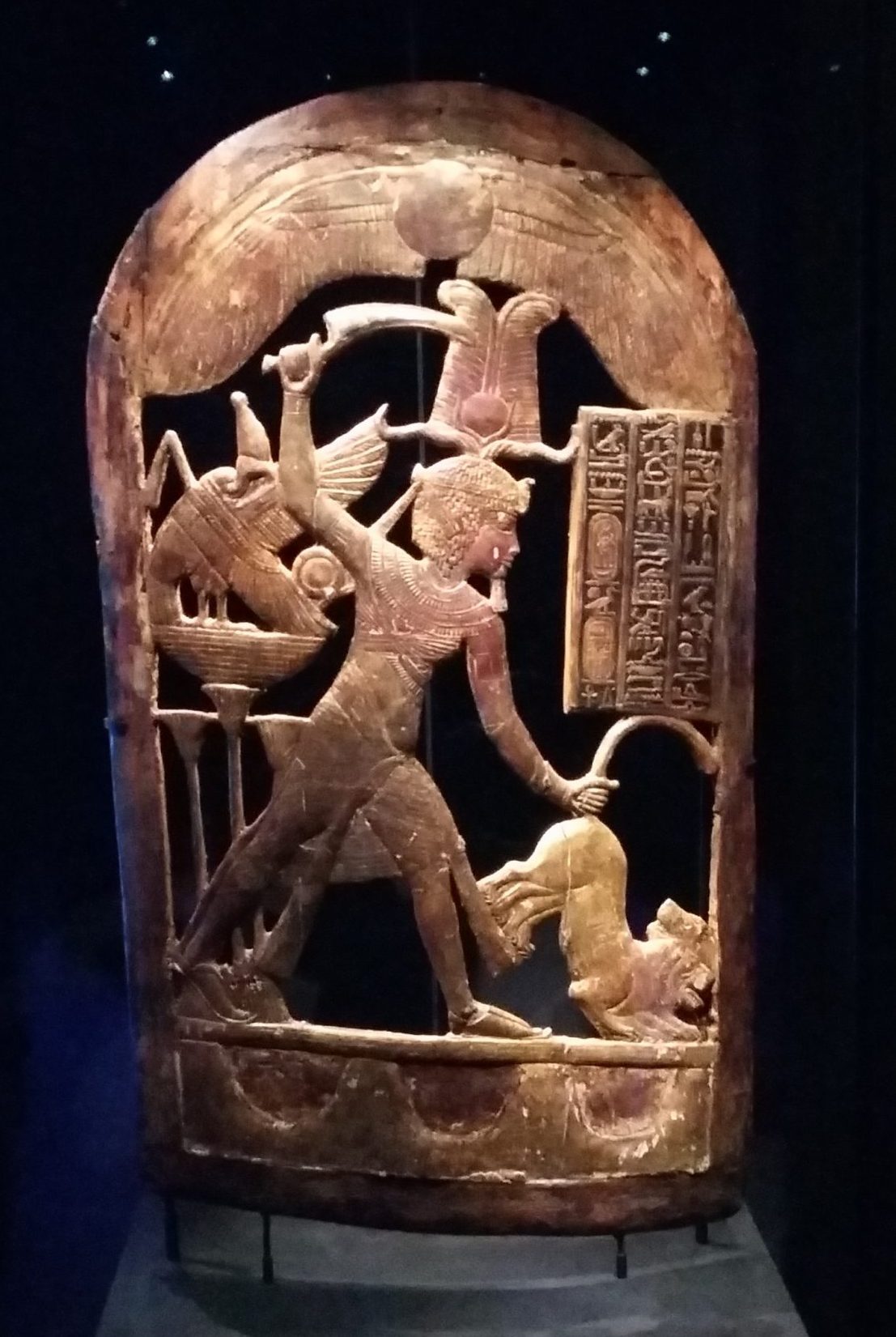
Shield
Shield

The exhibition is structured in a way that corresponds to how the boy-king’s tomb was laid out. You move through outer chambers before finally arriving at the sarcophagus. The artefacts, many of which were made in a hurry by artisans after Tutankhamun’s early death as a teenager, reflect everything a pharaoh would need in the afterlife, including statues, shields, fans, boxes embossed with hieroglyphs, shining and often encrusted with gems. However, there are also the more mundane items, such as simple chairs, a bed and even foodstuffs. It really struck me what good condition these items are in, considering they are over three thousand years old. I’m sure the centuries spent locked inside a dry, dark tomb would have helped, but still, it’s pretty impressive. Keeping in mind their age, the workmanship and the detail on these artefacts is simply astounding.
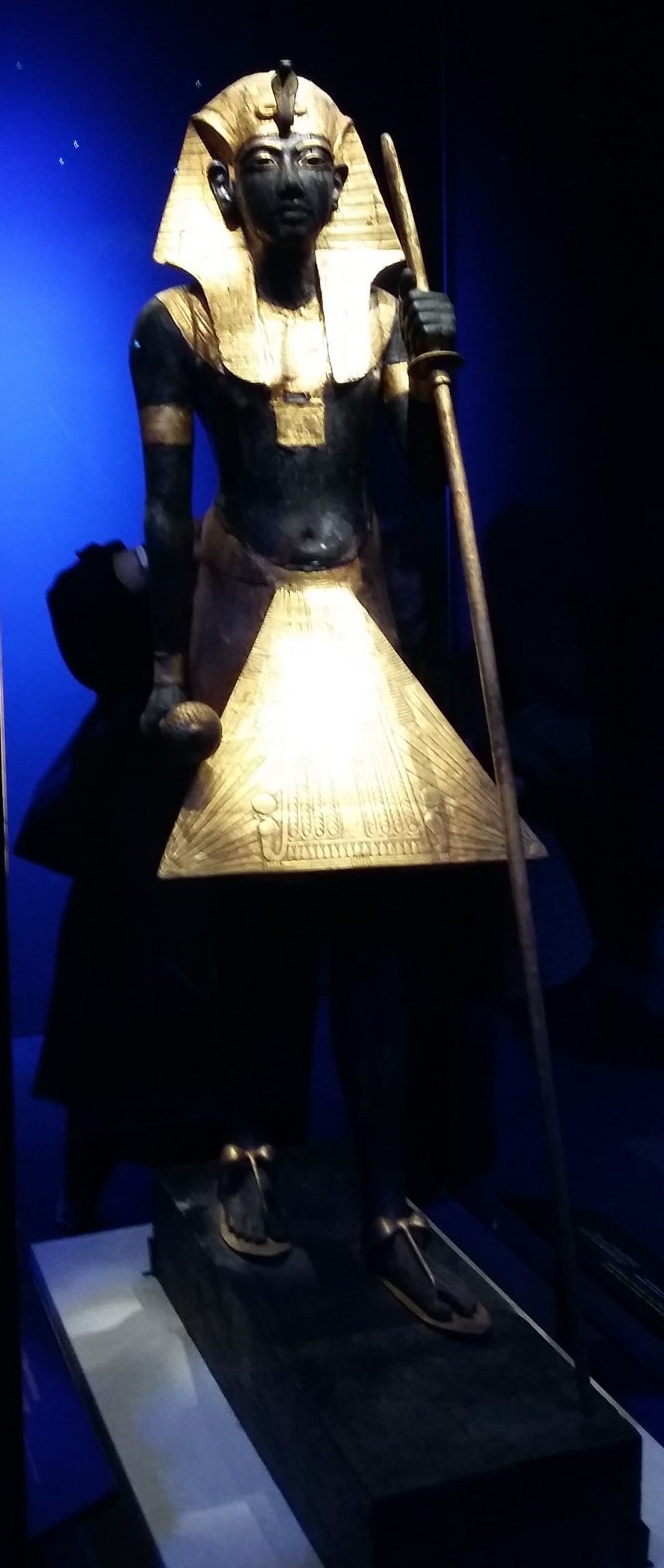
In addition there is an examination that led up to Howard Carter’s discovery of the tomb in 1922, including the acknowledgement that a young boy acting as a water carrier for the archaeological party, Sheikh Hussein Abd el-Rassul, helped to discover the tomb by uncovering the top step. Finally, the exhibition looks at Tutankhamun in popular culture, including songs, films, and the Egyptian influence on 1920s fashions.
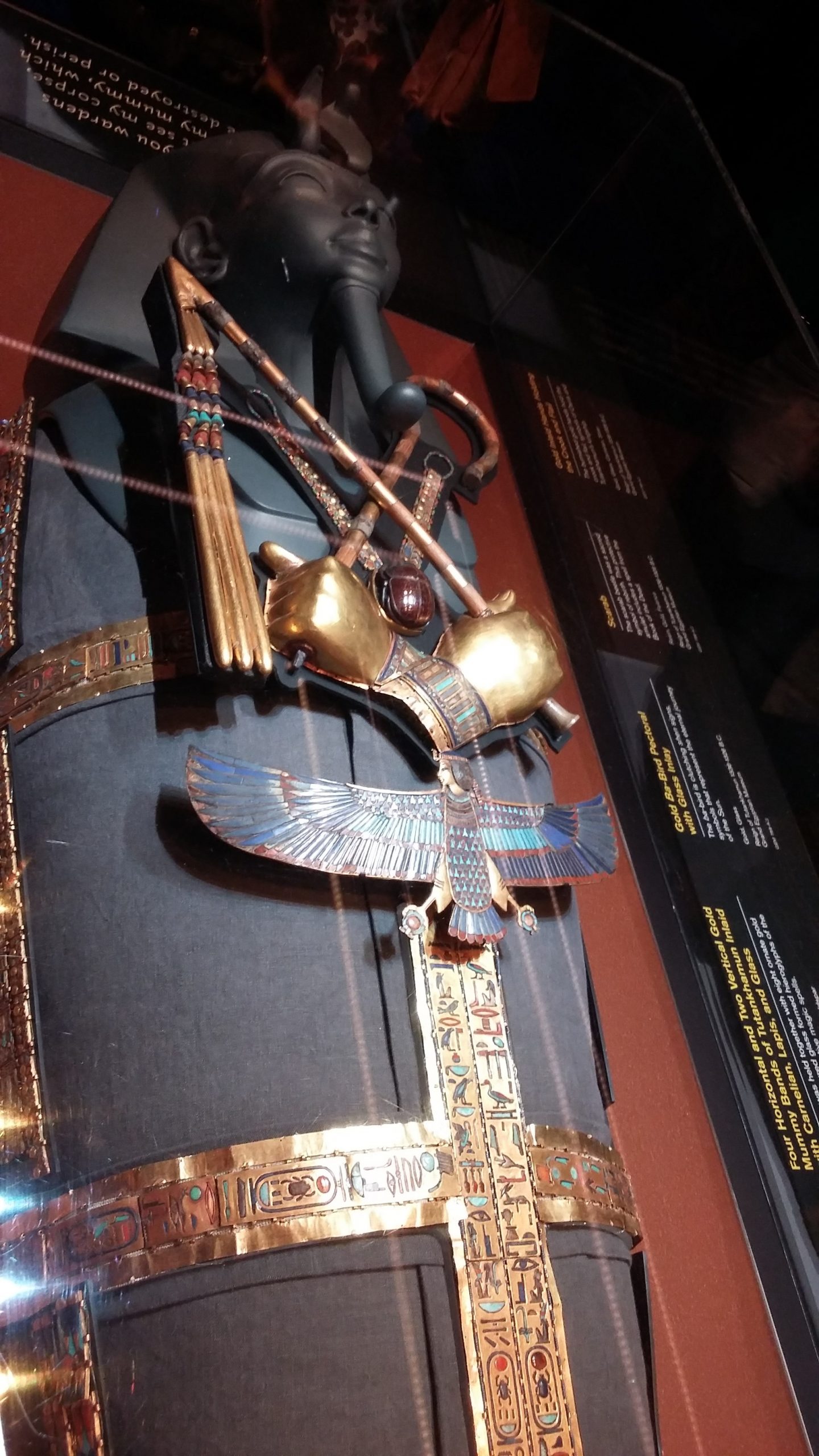
Sarcophagus
Sarcophagus

Tutankhamun: Treasures of the Golden Pharaoh is an expensive exhibition, but I honestly feel it is worth the money. We spent a good half day there, and there was much to admire and to learn about.

The exhibition runs until 3 May 2020.

Gaiety is the Most Outstanding Feature of the Soviet Union – Saatchi Gallery

The bizarre title of this exhibition drew me to the Saatchi Gallery on Sunday, as did the fact that it consists of new art from Russia – I am fascinated by anything Russian so Gaiety is the Most Outstanding Feature of the Soviet Union was on my must-see list.

This despite the fact that modern art is certainly not my forte. Still, I enjoyed my previous visit to the Gallery – rather to my surprise – and resolved to keep an open mind. Some of the exhibitions were lost on me, such as odd sculptures; some weren’t to my taste, but I could appreciate the thought that went into them and the humanity that lay behind them, such as Sergei Vasiliev’s photographs of tattooed prisoners and Boris Mikhailov’s pictures of the homeless in Ukraine, illustrating the disintegration of society in a post-Soviet world.

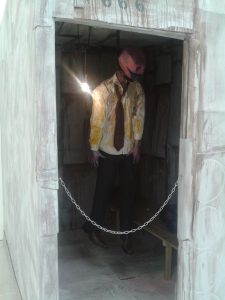
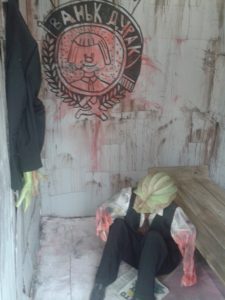
One of my favourite displays was this piece by Daria Krotova, bringing to mind the works of Dostoyevsky and Gogol and seemingly concerned with the recession and the culpability of those in positions of power.

2013 0303 Saatchi Gallery 02

2013 0303 Saatchi Gallery 01
2013 0303 Saatchi Gallery 03

I also loved these pictures by Valery Koshlyakov – made from cardboard and roughly-applied paint, they are striking and beautiful.

2013 0303 Saatchi Gallery 04

Grand Opera, Paris

2013 0303 Saatchi Gallery 06

Notre Dame, Paris and High-rise on Raushskaya Embankment

The exhibition is running until the 9th of June.

Breaking the Ice: Moscow Art, 1960-80s
While I was at the Gallery I also dropped in on the exhibition upstairs, which continued the Russian theme by displaying Moscow art from an earlier period. I found this harder to get into, but I did like this image which juxtaposed Lenin’s face with an easily recognisable advertising logo.

2013 0303 Saatchi Gallery 08

This exhibition is on until the 28th of March.

Saatchi Gallery

I had a bit of time left on Saturday morning and decided to pay a visit to the Saatchi Gallery, which is fairly close to Buckingham Palace. I’m not the greatest fan of modern art, and I must confess that one of the main reasons I went was so that I would have an excuse to tick Sloane Square station off my list.

Founded in 1985 by advertising behemoth Charles Saatchi in order to display his collection of contemporary art, the Gallery occupied several premises before finally settling in the Duke of York HQ building on King’s Road, Chelsea with an exhibition dedicated to new art from China. It has been there since 2008, and Saatchi gifted the Gallery and more than 200 works to the state in 2010. The Gallery aims “to provide an innovative forum for contemporary art”.

2012 0915 Saatchigallery

Entrance to the Saatchi Gallery

The Saatchi Gallery is pretty famous for holding regularly changing exhibitions of modern art, and the current exhibition is called Korean Eye 2012. Having been to Korea before, I was interested in seeing what Korean art was all about and this curiosity partially overcame my aversion to modern art, which I don’t understand and rarely like.

Many pieces displayed as part of the exhibition were odd to say the least. The first exhibits I came across were the apparent result of smashing up a pile of crockery and sticking it back together to produce something resembling a termite nest. A giant ball of wood dominated one room. I came across some pictures which appeared fairly normal until I walked past them and realised they were hologram pictures: the stylishly clad ladies viewing works of art miraculously appeared to shed their clothes when viewed from a different angle. This technique is undoubtedly clever, but also a bit voyeuristic.

Still, the display exceeded my expectations and I was genuinely impressed by some of the work. In one room I came across a round side table on which rested a cup of tea. Initially scornful, I peered at it more closely and observed a little whirlpool disturbing the surface of the tea. The exhibit was accurately titled ‘Storm in a Teacup’ and I really liked it, partly because I genuinely don’t know how the whirlpool got in there.

Another artist had produced models from cardboard, which were well designed and carefully put together, except for the fact that they were unfinished. A cardboard dog with perfectly constructed and finished hind legs and an abstract box-shaped head was particularly eerie. In another room, photographs of women posing in white dresses took on a life of their own with the addition of white fabric attached to the bottom of the frames, extending the dresses beyond the boundaries of the photographs and adding an extra dimension to the work.

In addition to the Korean art on show, there was an exhibition of chess sets, each the work of a different artist. There were some pretty unusual sets on display: I especially liked the ‘picnic’ set with slices of pizza as pawns. There was also a great set with one team made up of characters like Superman, WonderWoman and Jesus and the other consisting of such figures as Voldemort, Dracula and Saruman.

The Saatchi Gallery itself is well laid out with a clean white design and logically labelled exhibition rooms. It is free to enter and doesn’t have the pretentious atmosphere I had expected: there were all kinds of people there, including Korean (I presumed) holidaymakers and families with small children. I never thought I’d say this about a modern art gallery, but I actually quite enjoyed my visit, and I’d consider going back.

FACTS

Address: Duke of York’s HQ, King’s Road, London, SW3 4RY

Website: saatchigallery.com

Opening Hours: 10am-6pm 7 days a week

Prices: Free