I have no artistic ability whatsoever, but for some reason when my friend asked me if I fancied coming to a pottery class, I said yes. Despite being convinced that I couldn’t possibly create anything good, I turned up on Saturday morning ready to give it a go.
Potters’ wheels in a row
The class took place in Banbury, where my friend lives, at the Banbury campus of Banbury and Bicester College. It was pouring with rain when we arrived, so we were glad to get inside and check out the equipment.
All fresh and clean… not for long
We were shown how to create a basic bowl on the wheel, which was operated by a foot pedal. Our instructor made it look so easy – but of course it wasn’t. The first time I threw a lump of clay down onto the wheel, it didn’t stick hard enough, so when the wheel began to go around the clay flew off at speed.
My first bowl plant pot, painted red
Over the course of the next few hours – with a break for tea and cake kindly brought in by another course attendee – I produced a number of ‘interesting’ pieces. What I realised is that you might have a particular bowl shape in mind, but the resulting piece won’t necessarily resemble the picture in your mind. My first ‘successful’ piece looked more like a plant pot. I was able to paint this piece too, and chose a nice bright red for it (no patterns – I’m far too inartistic for that!). Sadly we only had time to paint one piece, but the natural clay is still a nice earthy colour.
Successful bowl
I tried to make so many standard bowls, but they all collapsed, until finally – success! Towards the end of the session I decided to have a go at making some egg cups. Despite being a proper adult I still eat my boiled eggs out of shot glasses, so the thought of owning an actual egg cup was a pleasing one. I’m not convinced the first egg cup will be able to stand up on its own, but the second seems sturdier.
Egg cups
My creations will need to be fired in the kiln twice and then they will be ready for pickup. I had lots of fun in my pottery class and I would definitely recommend seeing if an FE college near you runs similar classes – it’s something different to do and you feel a real sense of achievement when you have created something.
Everyone’s heard of the Thames, but surprisingly few people seem to have heard of its many tributaries – the most famous being the Fleet River. This is perhaps understandable, given that the Fleet (and many other minor rivers in London) are hidden away – but the signs are still there, if you know where to look. I’ve wanted to walk the Fleet for a while, and decided to go for it on Saturday: the weather was slightly cooler at the beginning of the Bank Holiday weekend.
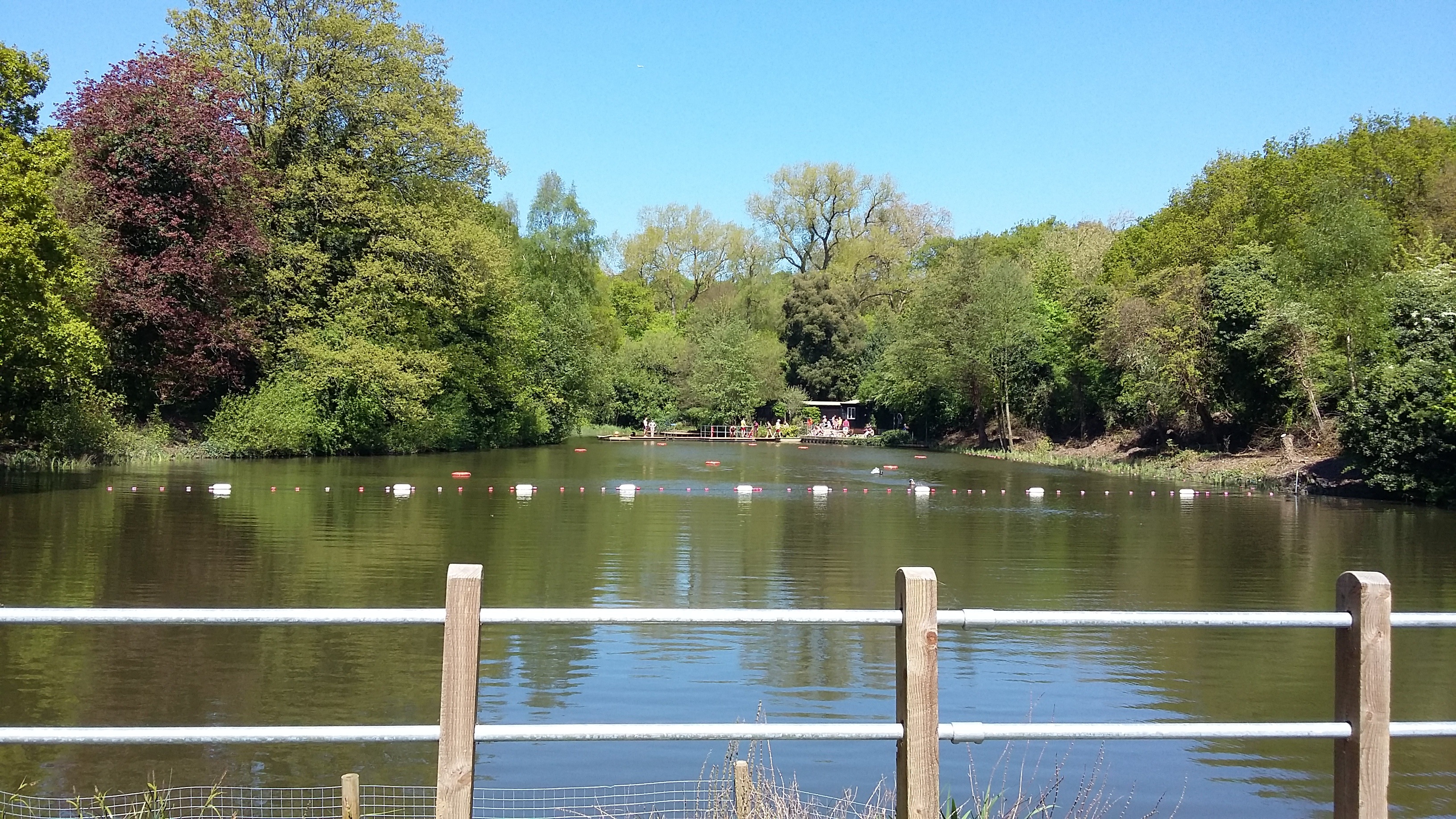
Vale of Health Pond
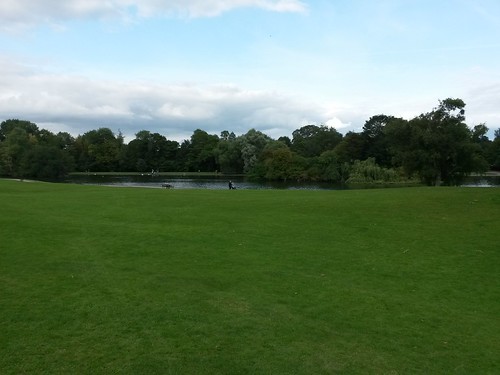
I began my journey on Hampstead Heath, where the Fleet (the name is derived from the Anglo-Saxon flēot, ‘tidal inlet’) still flows overground, at the Vale of Health pond: this pond feeds the Hampstead Brook, the western arm of the River Fleet. You can follow the course of the brook through the woods of Hampstead Heath, though it was almost dried up on the hot day I visited. Further on, the stream flows into the public bathing ponds at the bottom of the Heath.
The Fleet flowing through Hampstead Heath
(I should mention here that another branch of the river flows down from Highgate, but I chose the Hampstead branch, purely because it was easier for me to get to. One day I might go and check out the Highgate branch too).
Hampstead Ponds
The Fleet was a major river in Roman times, and its status was largely maintained into the Anglo-Saxon era, with wells, supposedly with healing qualities, built at Clerkenwell and Bridewell. As London increased in size, the river became notorious for filth and sewage, surrounded by prisons and slums. From 1680 the Fleet became the New Canal, lined with wharves frequently used by the coal trade from the North East of England; hence the street names Newcastle Close and Old Seacoal Lane. From the mid-eighteenth century onwards, parts of the river were gradually covered over, enclosed in brick-lined sewers, until the 1870s when the final section, up at Hampstead, was covered.
Grating outside the Prince Albert pub
The two branches converge in Kentish Town, before heading down towards the centre of London. I walked away from the calming greenery of the Heath into the built-up and urban Camden, stopping at the Prince Albert pub, where the Fleet flows under an iron grating. It can be heard easily (but not so easily seen, in the sunlight). Sadly, my plan to stop for a drink in the pub was thwarted as it was closed (this also happened with the next pub on my route. Clearly the universe is conspiring against me).
Heading down towards King’s Cross, I passed St Pancras Old Church (another blog post to follow). I was fascinated to see a picture showing the Fleet rushing by the Church in the days before it was covered up. King’s Cross was originally named Battle Bridge, referring to an ancient bridge over the Fleet where Boudica’s army is said to have fought an important battle against the Romans. I hurried past the busy King’s Cross station and onto Gray’s Inn Road, before avoiding the traffic and heading into a quieter, more residential area. I passed a housing estate called Fleet Court – clearly I was going in the right direction. My route also took me past the Mount Pleasant Mail Centre and the new Postal Museum.
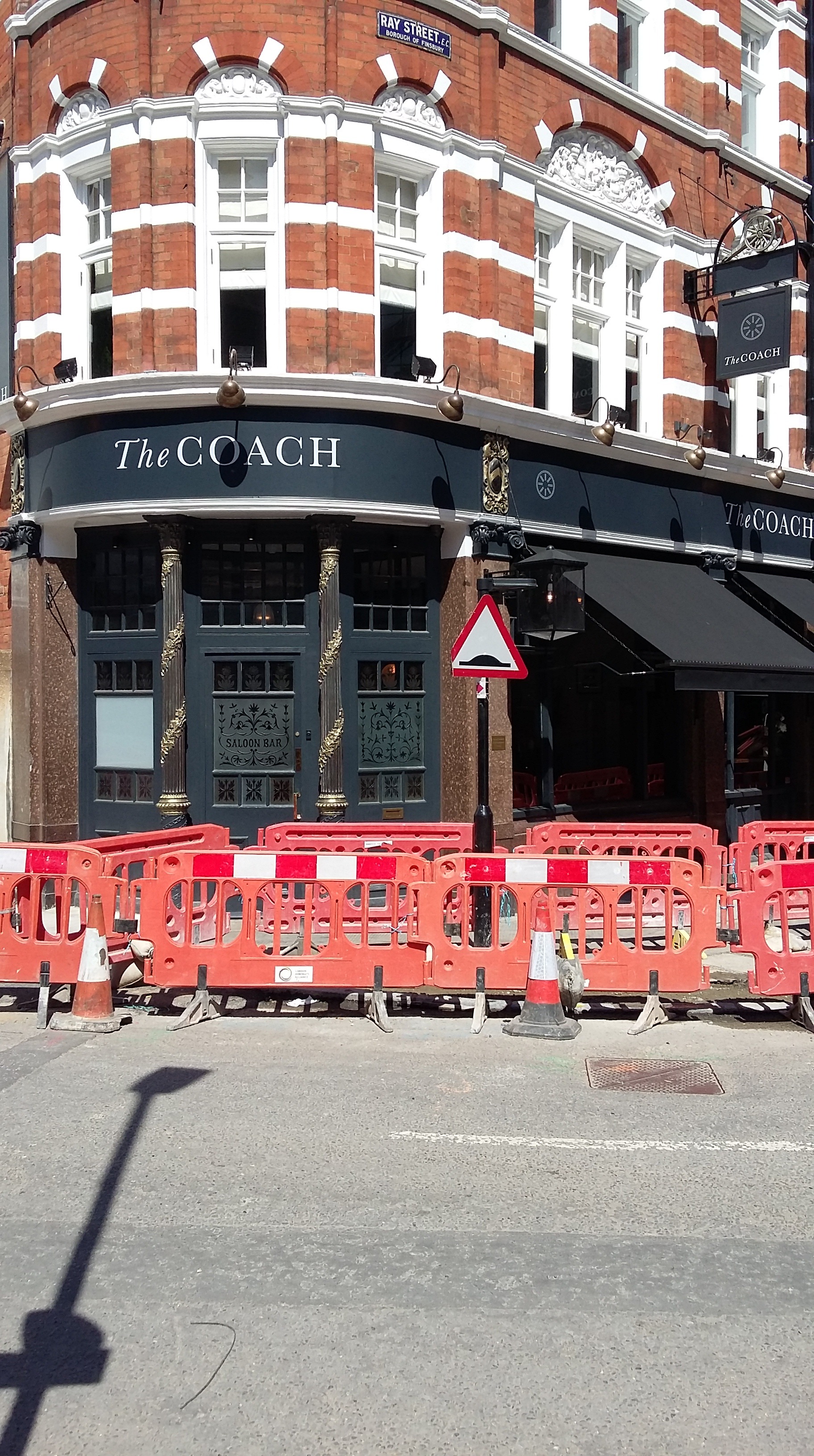
Grating outside The Coach pub
My next encounter with the Fleet was in Farringdon, outside the Coach pub, where another grating covers the rushing Fleet, though I wasn’t able to hear anything this time. The Fleet’s presence here seems to be more well-known: I overheard someone pointing it out as I loitered. The original Hockley tavern, which stood on the site, was in the midst of an area known for gambling and bear-baiting and apparently, in 1709, a bear killed the landlord.
I walked down Saffron Hill, a small, sloping street, but couldn’t find any signs of the Fleet here although I’d heard that they exist. Never mind – I soon arrived at Holborn Viaduct, a bridge over a valley which was carved out by the widening Fleet over several years. This stretch of the river was once full of ships, loading and unloading their produce (including the stones for Old St Paul’s Cathedral). This part of the river was also known as the ‘Holbourne’.
Holborn Viaduct
Towards the end of my walk, I passed Ludgate Circus, which crosses Fleet Street, named for the river. It was originally the site of the Fleet Bridge river crossing. The King Lud pub occupied the building now used by Leon between 1870 and 2005, and it is rumoured that the Fleet could be seen flowing under a glass floor panel.
Ludgate Circus
Finally, my walk came to an end as I reached Blackfriars Bridge. What remains of the Fleet flows out of Victorian sewers into the Thames underneath the bridge, although sadly I couldn’t view the exit as the area is currently undergoing building works. Still, I was very pleased to have finally got the chance to follow the Fleet.
The Fleet flows into the Thames beneath Blackfriars Bridge
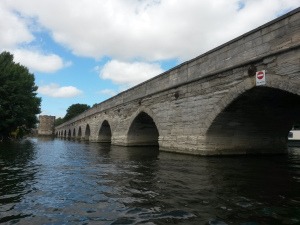
Twickenham: home of rugby, and now, home to some of my friends, whom I went to visit recently. I’ve been to the town a couple of times in the past (to go to the theatre, surprise surprise), but I’d never been for a proper look round or visited any of Twickenham’s impressive pubs.
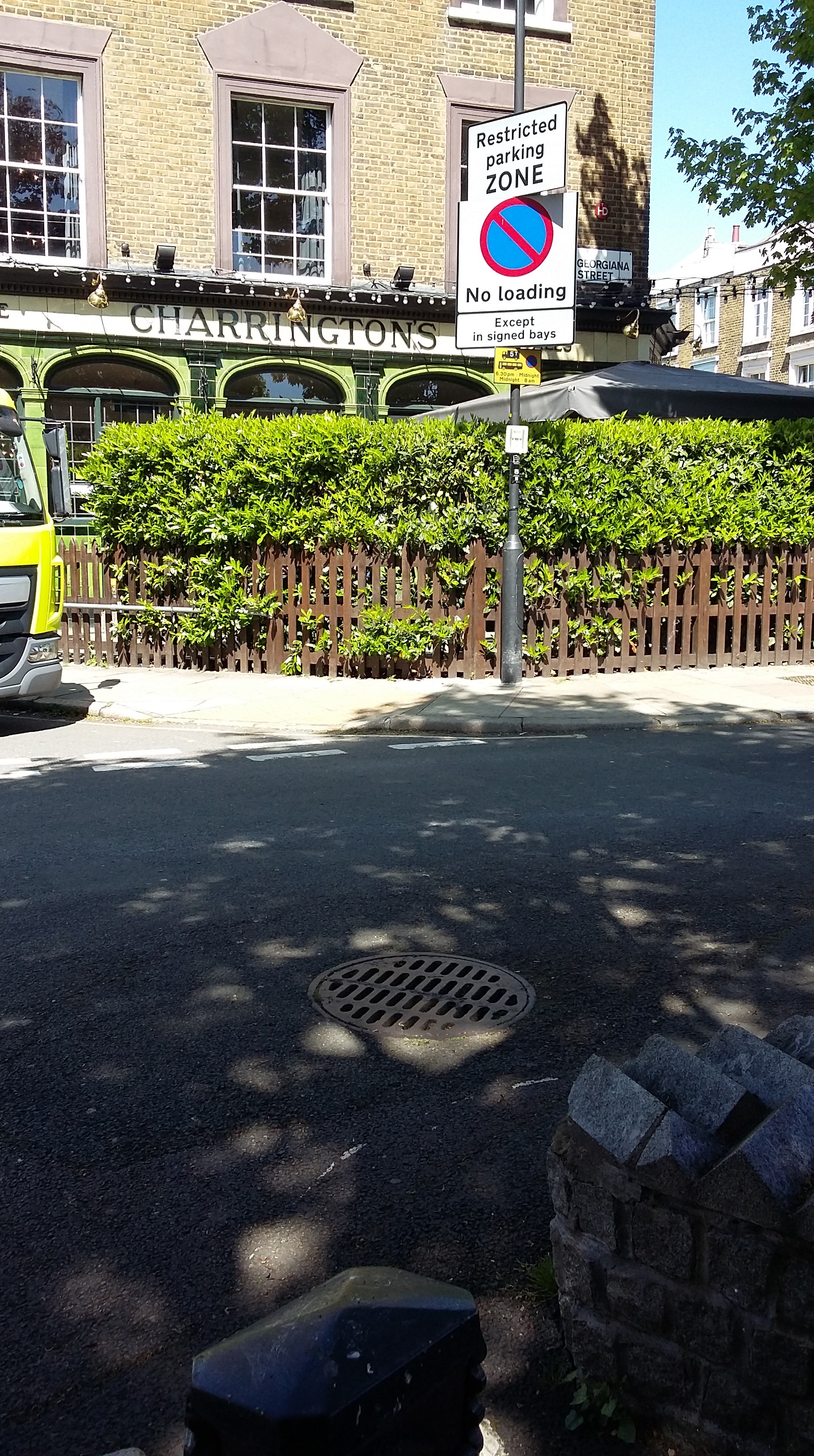
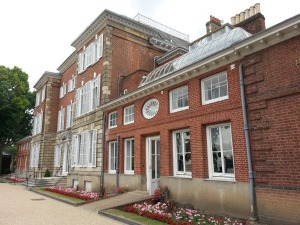
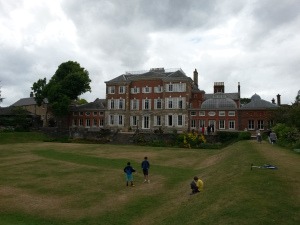
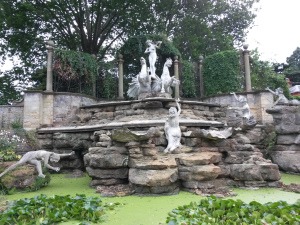
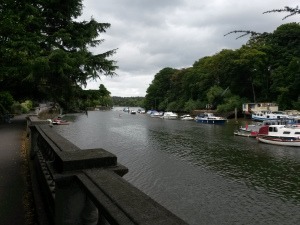
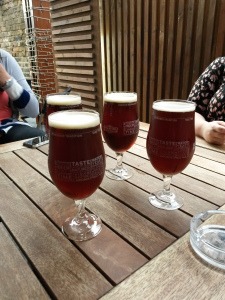
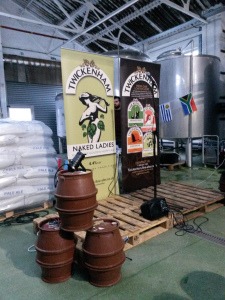
We began with lunch by the river and took a detour to wander through the York House Gardens (passing a working Victorian urinal on the way) and view the Italian Fountain (a.k.a. the “Naked Ladies”). We visited some more pubs and made a doggie friend before heading to comedy in the brewery.
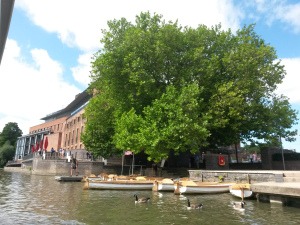
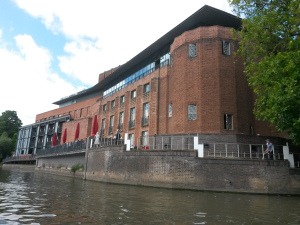
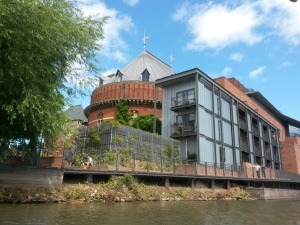
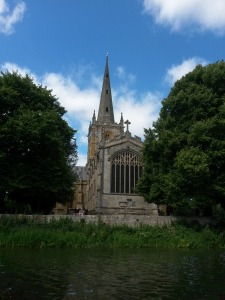
Last time I was in Stratford I went up the Tower in the RSC building, but I also took the opportunity to go for a canal boat ride. It was a gorgeous summer day and I’d been meaning to do this for a while.
By the riverRSC TheatreSwan Theatre
The boat takes you past the theatre and the church before turning around and heading the other way: a lovely trip on a warm day.
I spent another day in St Albans at the weekend in order to spend time with some friends. We alternated visits to pubs with various cultural activities. I was excited to finally get the chance to go up the Clock Tower.
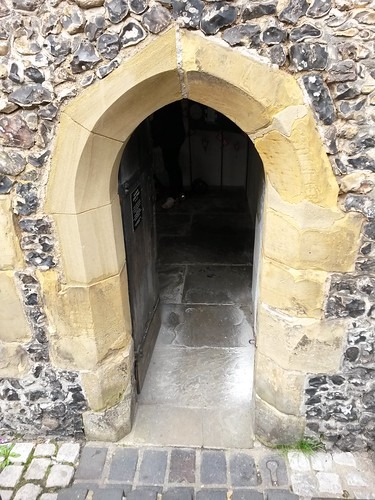
Going in…
This is located on the High Street of St Albans. It was built between 1403 and 1412, the only medieval town belfry in England. It is designated a Scheduled Ancient Monument. It’s possible to go up the tower at weekends during the summer months, at a cost of £1 for adults (children go free). The climb is very steep and rather tough, so if you’re unfit you may wish to reconsider!
The clock machineryInside the tower
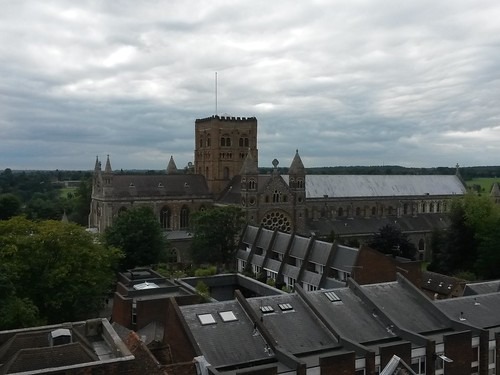
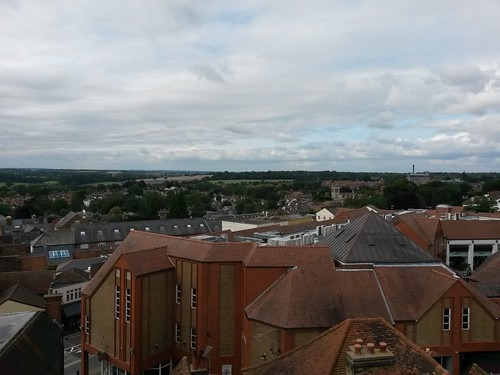
We were exhausted by the time we got to the top of the tower, but it was worth it because the views were amazing.
Cathedral of St AlbansLooking out over St AlbansA formidable-looking gargoyle
Later we visited the Roman remains in the park, before finishing off in a number of pubs.
At the weekend I visited some friends who have recently moved to St Albans in Hertfordshire. We embarked on a magical mystery historical tour.
Our first stop was Verulamium Park, so called because it lies on the site of the Roman city of Verulamium. It has a pretty lake with ducks and moorhens and on the edge there is a pub, called Ye Olde Fighting Cocks. We didn’t visit the pub on this occasion, but we did have lunch there the last time I visited. Apparently the pub holds the Guinness Book of Records title for being the oldest pub in England.
We walked away from the lake and came to the remains of the City walls and outline of the main London Gate. During the legendary drought of 1976, planes flying overhead could see the outlines of the old Roman city, made visible by the lack of grass, which had withered away in the heat.
Looking towards the lake at the remains of the London Gate. Apologies for the inconveniently-placed dog waste bin…The remains of the London Gate
The Hypocaust Mosaic is nearby, covered by a purpose-built building. It is beautifully preserved and, in one corner, the hypocaust – or method of underfloor heating – can be seen.
The Hypocaust Mosaic
Following this we visited the nearby Verulamium Museum, containing many objects of everyday life, more mosaics, and a couple of skeletons. It cost £5 to enter which we thought a bit pricey, but there were some interesting things to see. We didn’t go to see the nearby Roman theatre as you had to pay separately to go in, and none of us felt like forking out more!
Mosaic in Verulamium Museum
Walking back into town, we could see the abbey – officially St Albans Cathedral – in the distance.
View of St Albans Cathedral
We decided to go inside.
St Albans Cathedral
The first thing that struck me was the gorgeous ceiling.
CeilingAnother part of the ceiling
The rood screen, known as the Wallingford Screen, dates from around 1480, but the statues date from the Victorian period and are replacements of those destroyed in the Dissolution of the Monasteries.
Wallingford Screen
This figure – a replica of an original on display in a case elsewhere in the Cathedral – stood above the Poor Box.
Poor box figure
There were several interesting things to look at, including this skull.
The shrine of St Alban still draws pilgrims to the abbey. Alban died around 300 AD; he lived in Verulamium and the story goes that he gave shelter to a Christian priest, who converted him. Alban changed clothes with the priest, who escaped, and died in his stead.
Shrine of St AlbanShrine of St Alban
This ancient structure was designed so that priests could watch over the shrine constantly.
The Cathedral is unique in having very good and visible wall paintings, relics of the pre-Reformation days, which incredibly survived the Dissolution.
I loved this gorgeous window.
The CathedralThe Cathedral
Finally, we visited the Museum of St Albans. This was a free museum and we both enjoyed it. My friend was impressed when she found her street mentioned on one of the information boards. My favourite thing was the stocks: you could put your head and hands through and be pelted by (cloth) fruit and vegetables. Hours of fun!
Museum building
St Albans is a nice place to visit if you want a bit of history. There are some lovely pubs too, and I definitely want to climb the tower when it reopens in the spring.
I left Somerset on the train back to London, travelled from Paddington to Euston, and hopped on another train, this time to Northampton. I was staying with my friend Elizabeth for the weekend, and she met me at the station.
The title of the above post is slightly misleading as we spent very little time in Northampton at all, at least on the Saturday. During the day we visited Coventry, which is a short distance on the train. I last visited Coventry in 2003 to stay with my cousin who was studying at the University. I didn’t get a chance to look around the cathedral then, but I made up for it this time.
Coventry Cathedral was heavily bombed during the Second World War and only the shell remains. However it has been turned into a lovely place to remember and reflect on the consequences of war, and it stands for the importance of peace. The new cathedral is very modern, but also beautiful in its own right. It stands alongside, and is connected to, the old cathedral and the two fit surprisingly well together.
We then visited the Herbert Art Gallery & Museum, which had an interesting exhibition about the history of Coventry, a fascinating art exhibition, and a lovely café.
In the evening we went to see Justin Timberlake at the Birmingham LG Arena. This concert was the main reason for my trip. We both have fond memories of his tunes at University and always said we’d like to see him in concert. I normally go for standing tickets but for this gig they were £100 (!!) and I would never pay that much, so we chose the cheap seats at the back. However, the venue was small enough for us to still have a great view. I wouldn’t have gone for the cheap seats at the O2 in London; you are so far back you might as well not bother.
Justin didn’t disappoint, playing all his classic hits rather than focusing solely on his recent album. I was surprised at how genuinely talented he is – I thought I would just have a bit of a dance to the songs I knew but I was unprepared for how good his voice was, how awesome his dancing was and how well he played instruments, including the guitar and the piano. He commanded the stage and completely charmed the audience.
The next day we stayed in Northampton. Elizabeth took me to a local Sikh temple, as one of her friends had invited her. I admit I knew next to nothing about the Sikh religion but everyone was very welcoming. Later we visited the museum where she works: there was an exhibition of art inspired by John Clare’s work, and another on underwear through the ages, with a beautiful selection of corsets!
I caught the train back to London, sorry that my long weekend was over, but looking forward to the Easter break.
I had some time off in the middle of April and ended up having a whistle-stop tour of the country (or at least, of Somerset and Northamptonshire). First, I travelled to Somerset to visit my parents, and their friends who recently moved to the area. I hadn’t seen my parents for ages so it was really nice to spend a couple of days with them. I stayed with their friends who have a lovely cottage with original fireplaces and actual flagstones!
We spent a day looking around Glastonbury, which is as hippy as you might expect, with interesting shops and some unusual sights. In one of the more ordinary shops, we witnessed the following exchange:
Man (just entered shop): “Do you sell jackets for coconuts?”
Shop assistant: “No, sorry”
Man: “Oh, ok. Thanks. Bye”.
I thought I’d misheard, but apparently not! The shop assistants just said, well this is Glastonbury, nothing surprises us.
GlastonburyI bet this would be an interesting library to work at
I was sad not to get a chance to visit Glastonbury Abbey – I will have to make a return visit.
The following day we visited Wells. As it has a cathedral, it is technically a city, but it is tiny. Beautiful, though. We had a look around some of the shops but sadly didn’t visit the cathedral.
WellsIs this the best name for a bakery ever?
I enjoyed my flying visit to Somerset: it tends to be a place people pass through on the way to get to Devon or Cornwall but it is worth visiting in its own right. I definitely want to come back.
Having never been to Wales, I decided to rectify this late last year, and planned a trip one weekend in March. My plans were somewhat scuppered when I went to book a hotel for the Saturday night and found nothing for less than £400. I promptly changed my theatre ticket from an evening to a matinee, and planned a day trip instead.
When I arrived in Cardiff, tired after a super-early train from Paddington, I realised why all the cheap hotel rooms had gone – I’d unconsciously timed my trip to coincide with the rugby final. Note: never do this. Cardiff was full of people wearing daffodil necklaces and dragon hats (the Wales supporters) and kilts and blue and white outfits (the Scotland supporters).
I stayed out of the way, and headed off to find some culture to pass the time until the theatre. I began at the Tourist Information Centre, based in the beautiful Old Library building, which has a gorgeous ornate tiled corridor. I didn’t go to the information part, instead I had a look round the Cardiff Story exhibition which had lots of interesting information about the history of the city.
The Old Library building, now the Tourist Information Centre and location of The Cardiff Story
Tiled corridor inside the Old Library
Close-up of some of the detail in the tiled corridor
The museum also has an extensive collection of art in the permanent collection, including historic and applied art, Impressionist art and contemporary art. I spent a long time in these galleries as there was so much to see. I didn’t get a chance to look around the natural history galleries – something to do another time!
National Museum of Wales
Inside the Museum
After this it was time to head to the New Theatre to see a performance of Under Milk Wood by Dylan Thomas. Thomas is one of my favourite writers and I’d been looking forward to this performance for ages. I loved it – it was really well staged and acted by all involved.
When I got out of the theatre I went for a walk to explore Cardiff. I passed the Millennium Stadium – now empty – and found an interesting signpost on one of the roads near the Castle.
Millennium Stadium
Signpost
Unfortunately I then got caught up in the mass exodus from Cardiff. I had to wait in line outside the station in order to get my connection to Bristol. In fairness, the whole thing was very well organised, with appropriate lines for every destination, and everyone seemed to be in a good mood. I was glad when I finally got on my train, however!
Queue outside Cardiff station after the rugby
I really enjoyed my trip to Cardiff, despite the problems I had leaving it. I would definitely go again, as there is so much to see and do – but I will make sure there are no sporting events going on before booking anything!
Yesterday, I saw quite a few tweets linking to articles (like this one on london24.com) announcing the wooden escalator at Greenford station’s last day of operation. The escalator was first installed in 1947, and was the last remaining wooden escalator on the Underground. Most were taken out of service after the King’s Cross fire, seeing as they pose obvious fire risks; Greenford’s presumably lasted longer as it was in the open air.
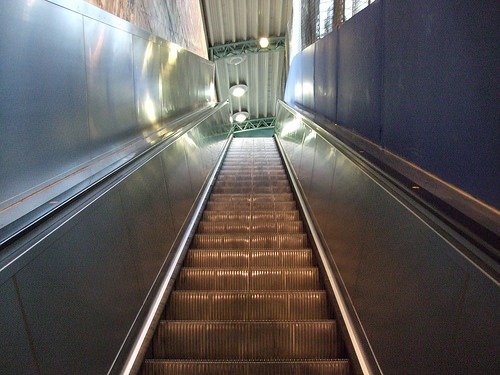
A new, temporary escalator has been installed for the time being, meaning that the tube’s oldest and newest escalators were positioned alongside each other. In the longer term, the wooden escalator is due to be replaced by an innovative glass incline lift: the introduction of step-free access is obviously great news but it’s sad to say goodbye to a piece of history.
As it happened, I had the day off work, and Greenford is close to where I live, so I had time to pop down to the station hoping to ride the wooden escalator for the last time (yes, I am a massive geek). Sadly, the escalator had already been cordoned off: apparently it stopped running several days ago. This was disappointing, but I still managed to get some pictures before it vanished completely.
The wooden escalator, disappointingly out of use
End of an era for the last wooden escalator on the tube
Looking to the future: the newest escalator on the tube network