The monthly badge for November is Myths & Legends, and although I’ve had a busy month this month, I’ve enjoyed this one.
Understand the difference between a myth and a legend.
Myths tend to be concerned with gods, goddesses and supernatural happenings, while legends often have some basis in historical fact.
Research the origins of dragons.
Dragons appear in virtually all countries around the globe. Possible inspirations for dragons include dinosaur fossils, ancient crocodiles, Goannas (in Australia at least), whale bones and – interestingly – the human brain, hardwired to fear snakes and large cats – a fear that, in the imagination, combined to create the dragon.
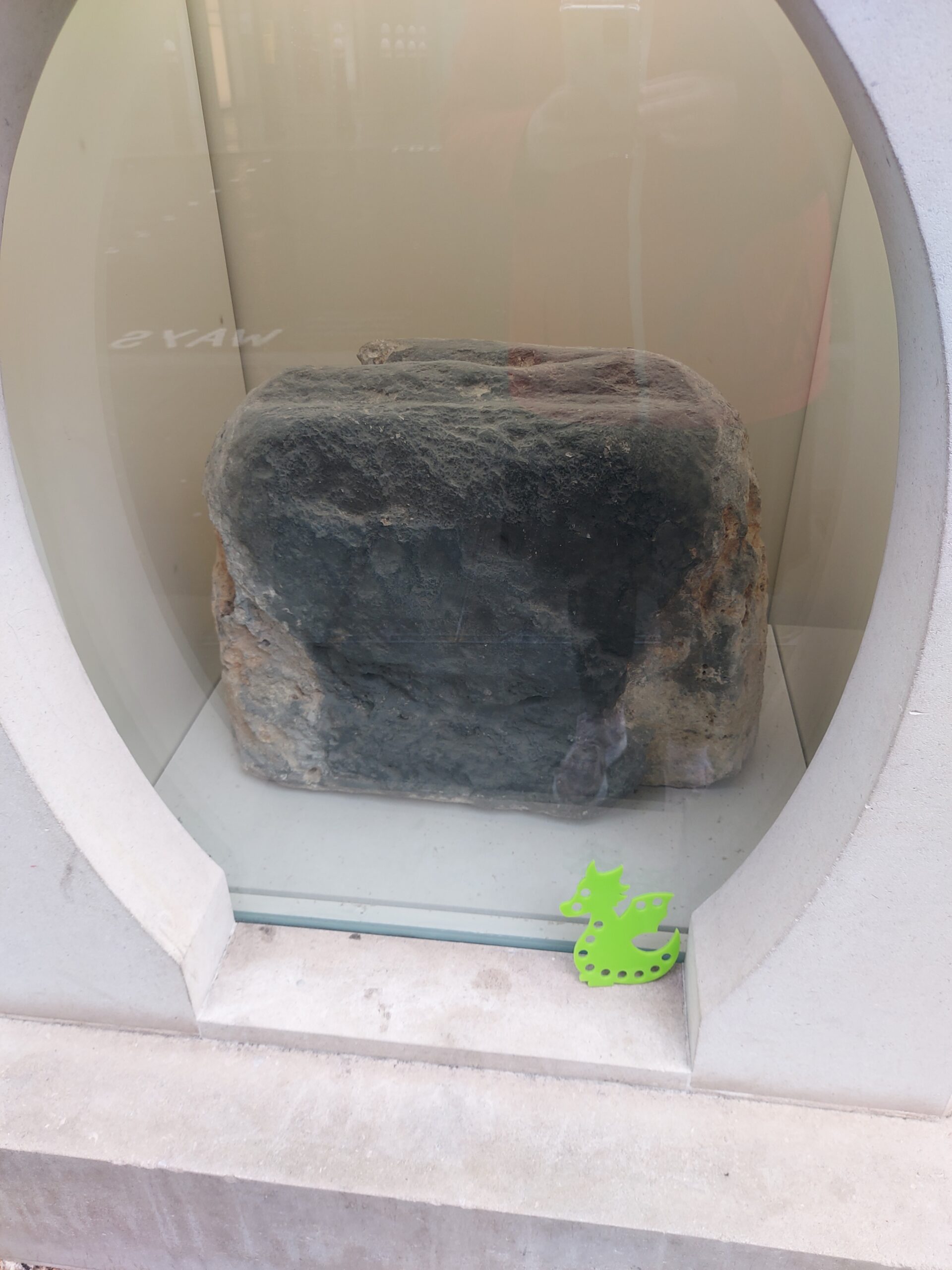
Take a dragon on a field trip to explore a local legend.
Find 3 stories from 3 different countries which involve dragons.
Iraq: In Sumerian mythology, the dragon Kur is a personification of the underworld. He kidnaps the goddess Ereshkigal and takes her to the underworld. The god Enki goes to rescue her, and a war ensues between Enki and Kur.
Russia: Slavic folklore tells of Zmey Gorynych, a green, three-headed dragon who walks on his hind legs and spits fire. In one legend, he is killed by the knight Dobrynya Nikitich after breaking a promise to stop kidnapping young women.
Iceland: a dragon is one of the landvættir (land-spirits) protecting the island from invaders. According to the Icelandic sagas, they turned away the would-be invader Harald Bluetooth.
Watch a film or TV series based on a myth or a legend.
I went to see the new Frankenstein film, based on the book by Mary Shelley which in turn took inspiration from the Greek legend of Prometheus.
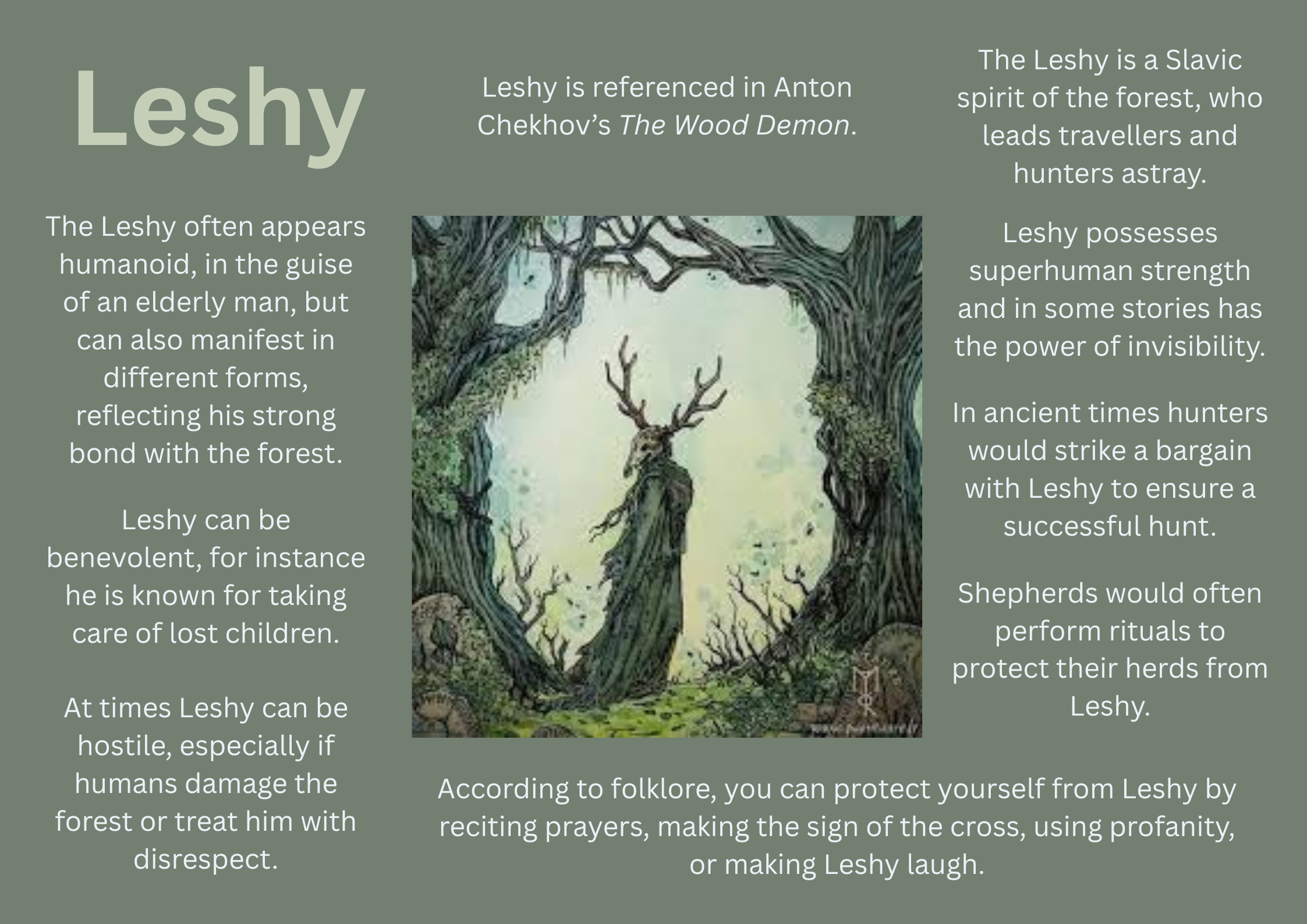
Make a fact sheet about a lesser known mythical creature.
I made a fact sheet about the Slavic spirit Leshy.
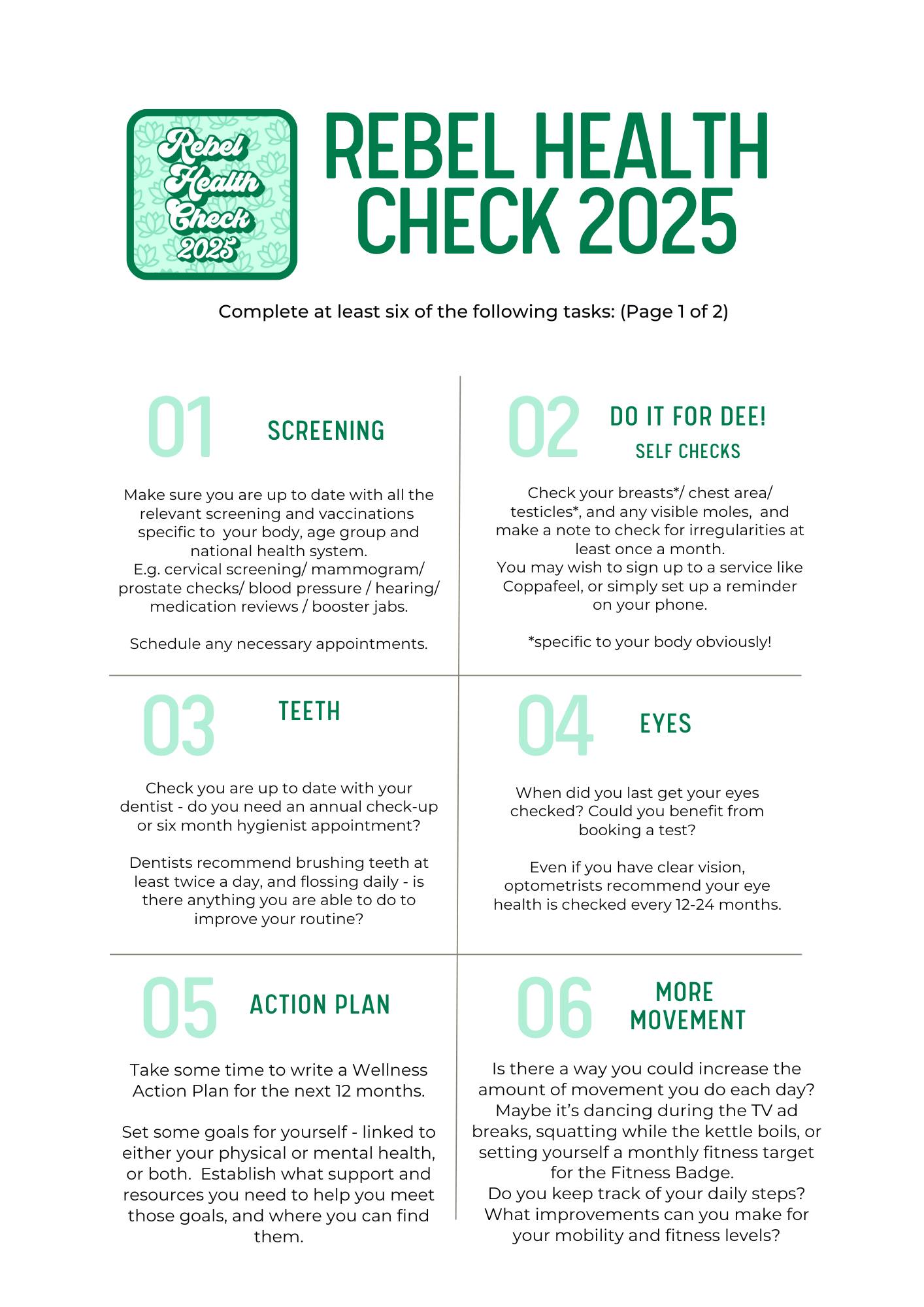
I’ve completed the Rebel Health Check for 2025. I completed 6 tasks:
01 Screening – I made sure I was up to date with all relevant screening tests.
02 Self Checks – I checked myself and made a note to check regularly.
03 Teeth – I attended my annual dental checkup, needed a filling, and went back to get it – not pleasant, but best to nip these problems in the bud!
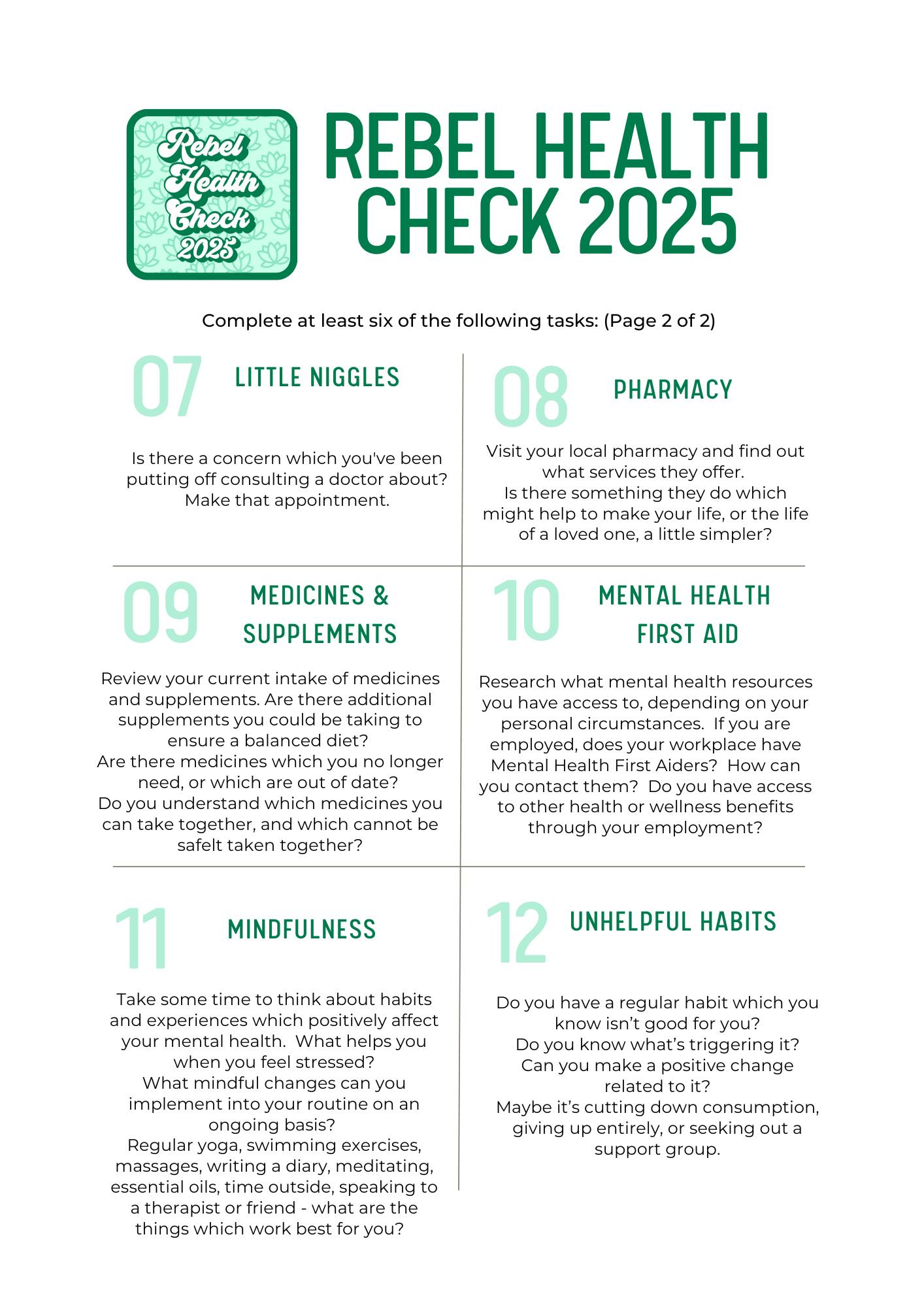
07 Little Niggles – I went to the doctor about a concern I had. I got checked out and I’m fine – such a relief to get it sorted.
08 Pharmacy – I visited my local pharmacy to find out what services they offer. Online prescriptions is one service, which I’d like to take advantage of. A Health MOT for over 40s is offered, but this is just a blood pressure check, which I get at my pill renewal appointment anyway. The pharmacy also offers health advice, including flu advice, flu jabs, skin advice and a contraception service.
09 Medicines & Supplements -I reviewed my current intake of medicines and supplements. All the medicines in my box are up to date and I don’t need to change any of my prescribed medicines, but I’ve decided to try a magnesium supplement to see if it improves my sleep and energy levels.
At the end of the month I realised I was able to claim the Advanced Rebel Buddy badge.
I have helped at least three new Rebels find their way around the Club, both online and offline. I’ve enjoyed myself – I’m always happy to share the Rebel love.
I decided to work on the Film Critic badge in October and pick films according to a horror theme. I couldn’t pick just five of the ten categories on offer so I reviewed a film for every category. Because it’s Halloween season, I was able to see lots of the films in cinemas, even the older ones, thanks to special screenings.
I don’t give star ratings in my reviews as it stresses me out but my favourite was Train to Busan and least favourite was The Babysitter.
October’s monthly badge was lots of fun and proved extremely timely, as I am probably moving soon and need to sort out my stuff. I also enjoyed the chance to try kintsugi.
Have a clear out and donate a box of items to a local charity shop.
I cleared a couple of large bags full of items.
Spend a few hours investigating your local charity shops. What’s the most impressive thing you can find? What’s the weirdest?
I explored my local charity shops and some a bit further afield. I found plenty of random things including gorgeous furniture (sadly too heavy and impractical for me to buy) and creepy dolls.
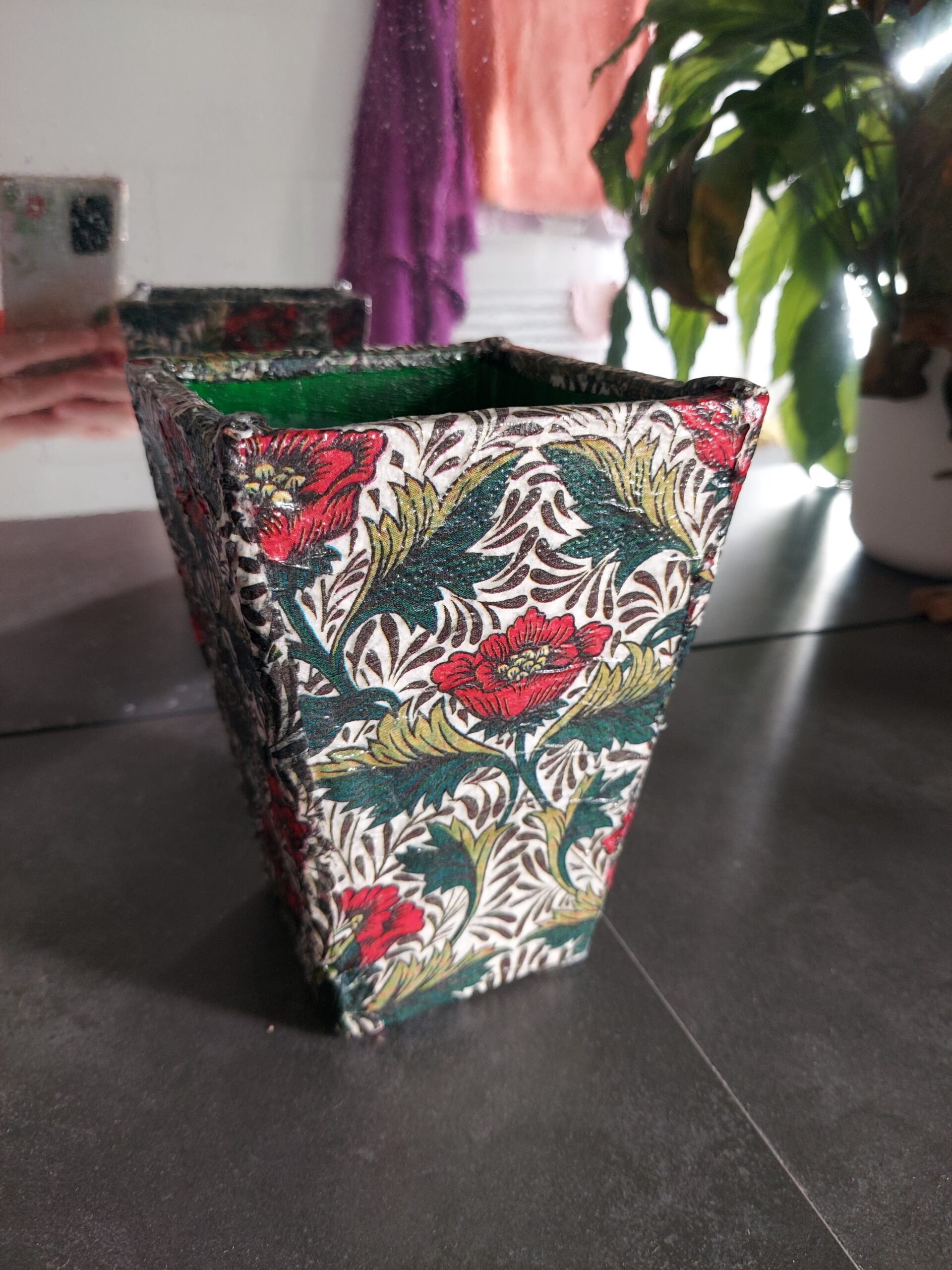
Buy an item from a charity shop and upcycle it.
I bought a cheap wooden vase/pot and transformed it with decoupage.
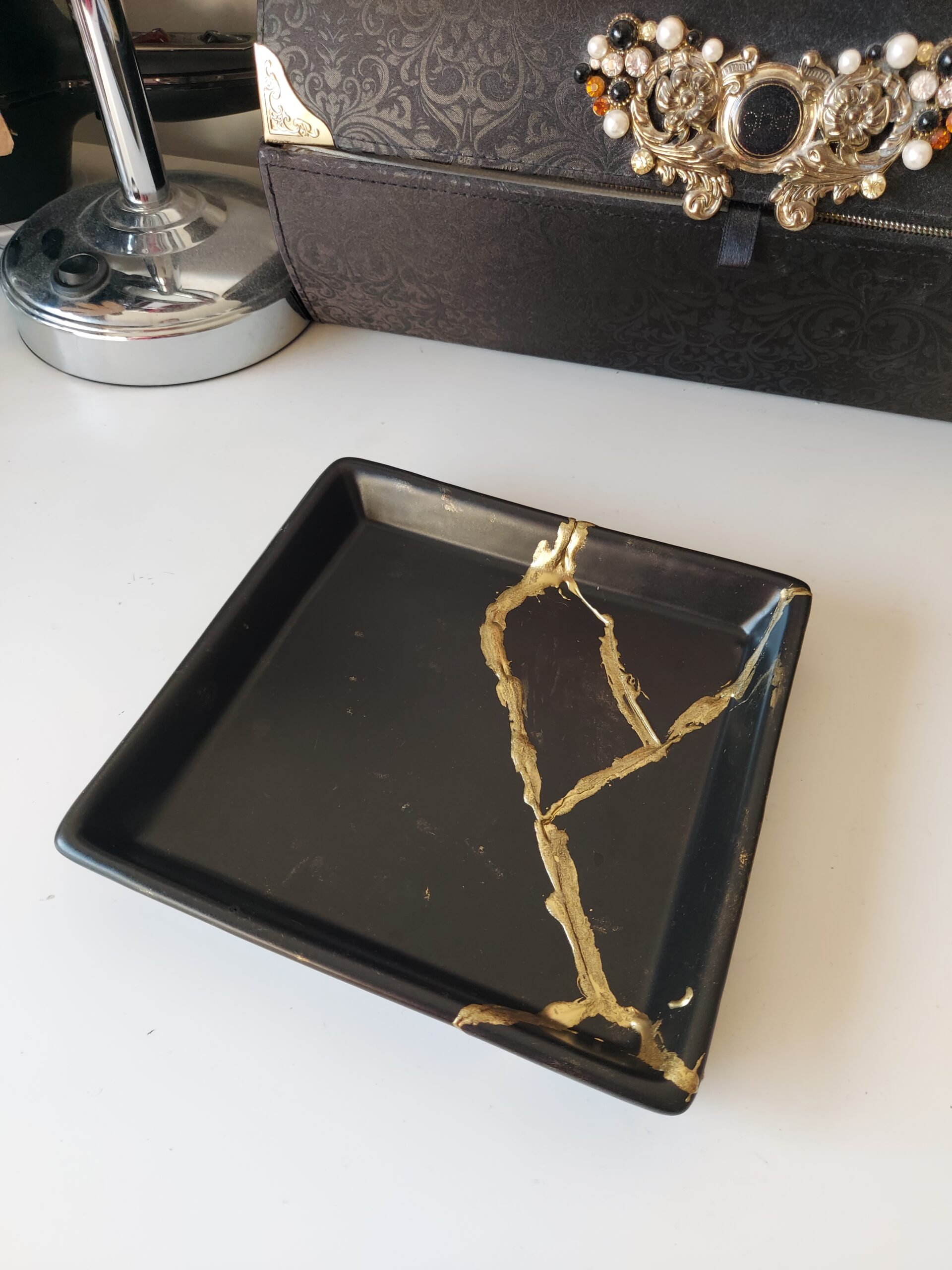
Transform a piece of charity shop crockery using kintsugi.
One of my friends gave me a kintsugi kit a while ago and this badge proved the perfect opportunity to give it a try. I used an IKEA shallow dish that cost me £1 from my local shop.
Watch a film or TV show, or read a book related to charity shops.
I watched a documentary on YouTube called The Charity Business, about donated clothes that end up being sold in African countries such as Ghana.
Write a list of things that cannot be donated to charity shops. Try to find other ways of reusing or recycling these items.
used pillows and duvets (although pillow cases and mattress covers may be accepted)
cushions
cushion covers
furniture covers without fire safety labels
Electrical items
electric blankets
power tools without instructions
Other
weapons
oil lamps
prescription glasses
items made from ivory
petrol or diesel fuelled garden equipment
personal items, such as shavers (unless unused and in a sealed box)
Electrical items can sometimes be taken to specialist e-waste recycling services. Specsavers accepts donations of old prescription glasses to be given to those in poorer countries. Old bedding or towels might be accepted by animal shelters.
Other items that cannot be donated should be given to responsible waste collection services. Alternatively, Facebook might be worth a try – sometimes people have the skills to reuse or recycle things.
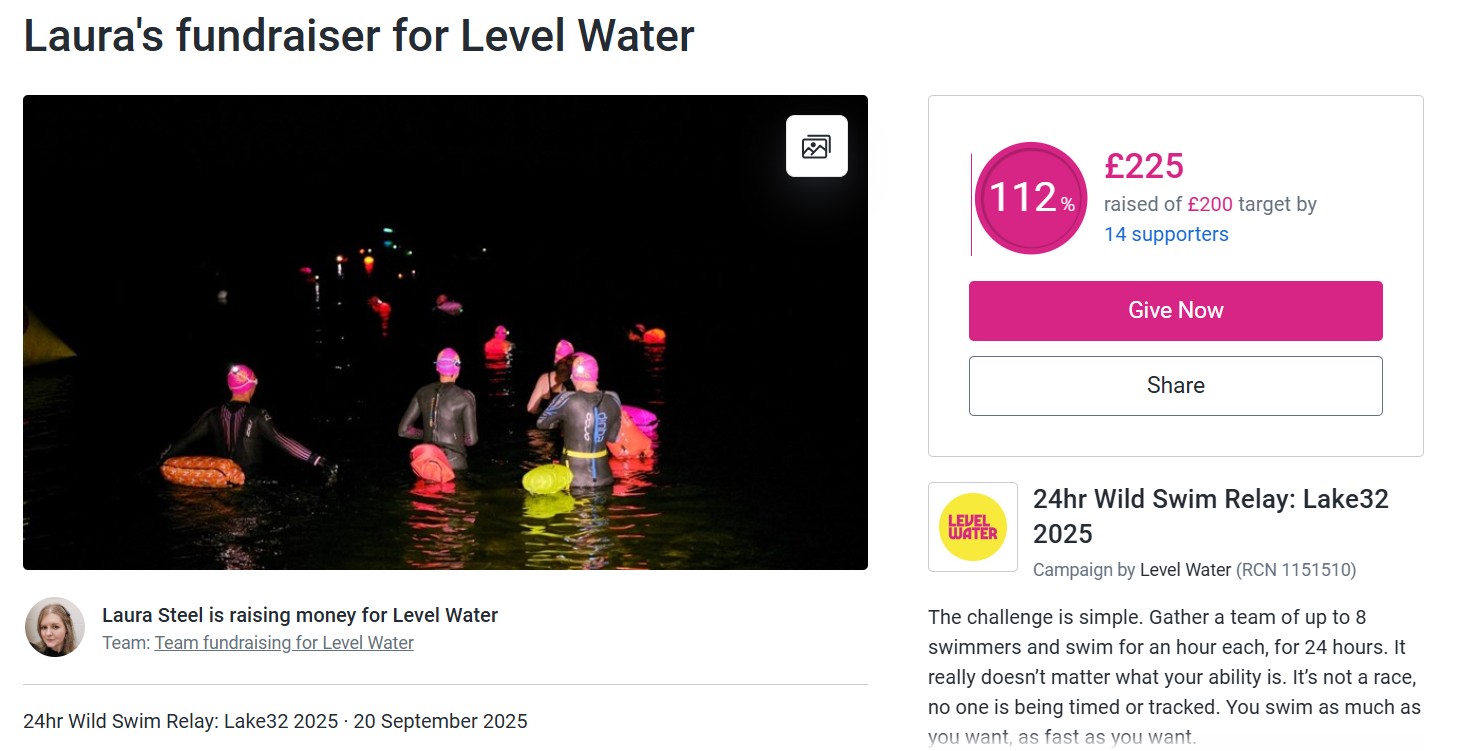
I’m claiming Rebel With A Cause in 2025 after the Big Rebel Adventure swim relay. I managed to raise £225 for Level Water, an organisation that provides swimming lessons for disabled children. I’m really proud of this and grateful to everyone who sponsored me.
I only made it to one Big Rebel Meet Up this year, but it’s the one I always like to attend – the birthday celebration in October. I was Greta Patrol Leader at this meetup.
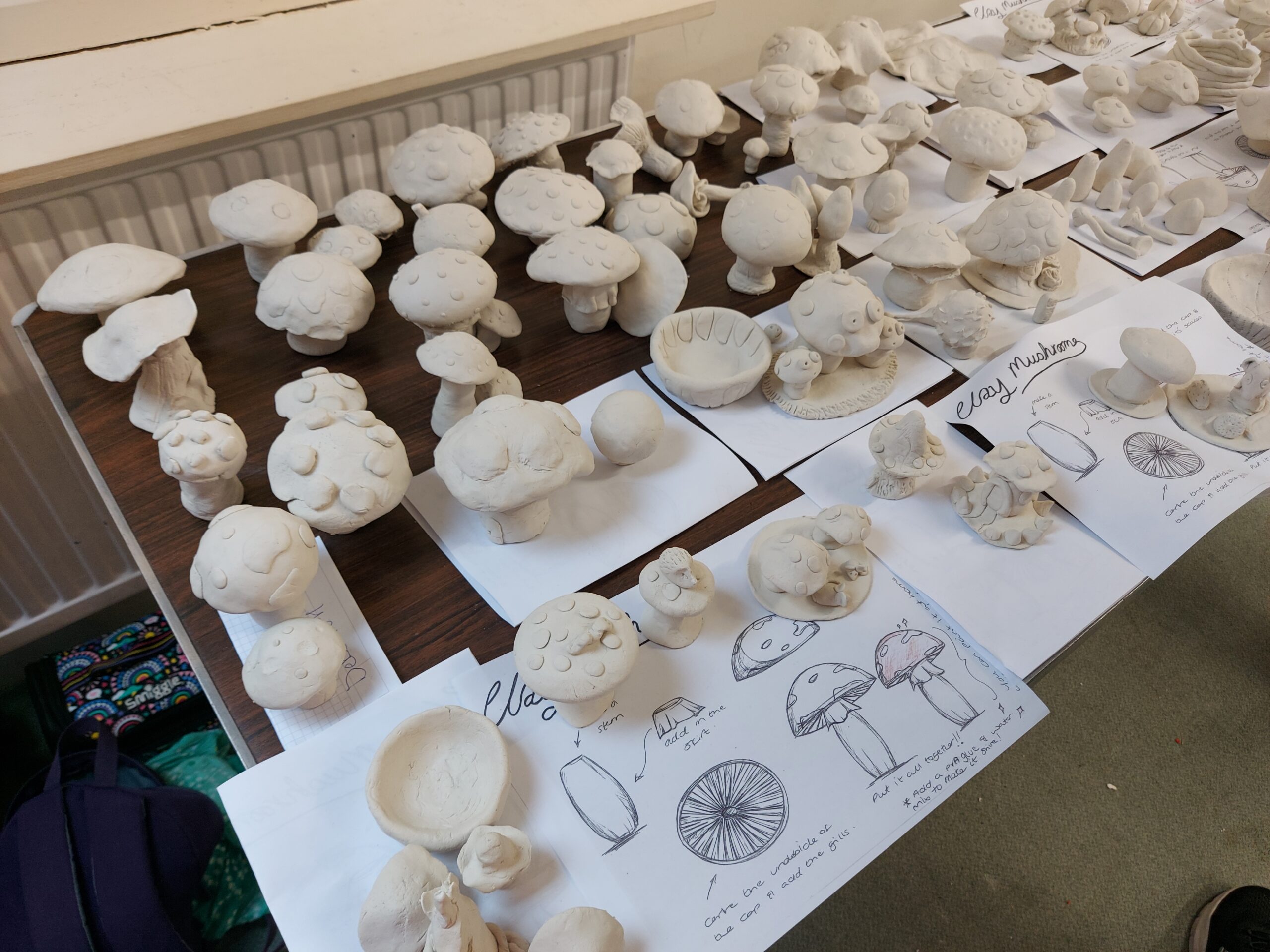
We started with clay toadstools in a session run by Crystal. I had fun making a smaller and a larger one. Later in the day I popped back to see what other people had done and many hadn’t stuck to mushrooms, but had branched out, making full woodland scenes, ducks and other fun objects.
Next we had Drum and Bounce with Emma. This was a fun class and really got our hearts racing! I was as uncoordinated as usual but I still enjoyed it.
After lunch we headed to the kitchen for some party prep. We made cake and mushroom vol-au-vents. The vol-au-vents were worryingly easy to make – I want to give them a go myself in the future!
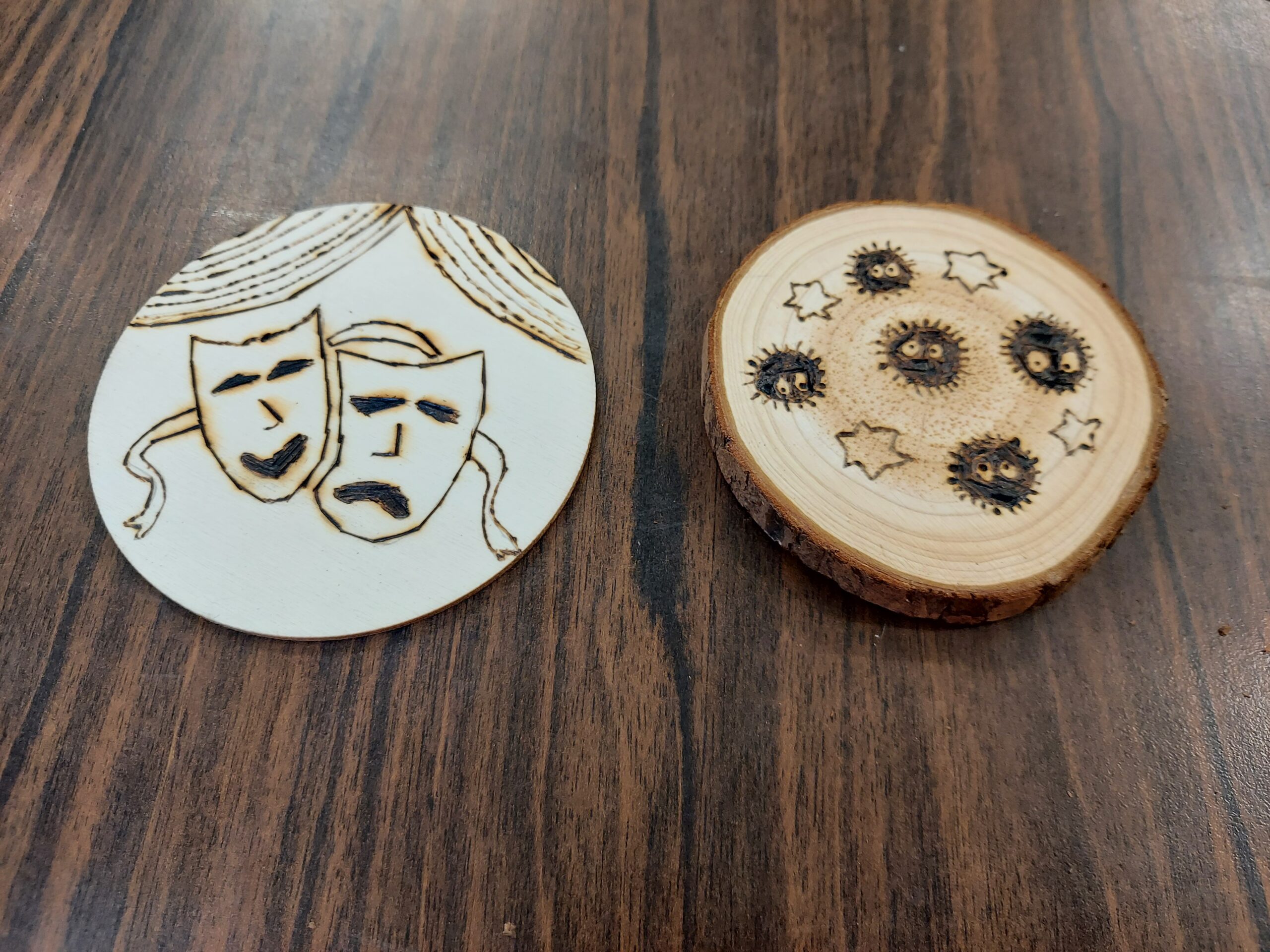
Upstairs, we had a pyrography session with Tom. I created a theatre symbol on my ‘practice’ piece of wood and added soot sprites to my ‘proper’ piece. This was a fun activity and not something I’d tried before.
Finally, we did some pin hole photography with Justin. I’d done this before but it was still good to try it again.
At the end of the day, we had a party to celebrate Rebel Badge Club’s 4th birthday. We ate party food and played a massive game of Pass the Parcel!
I’ve had my eye on the Sommelier badge ever since I got Book 2, and I finally got round to completing it in October. I love my wine, so it was nice to explore it in more depth.
Visit a winery and learn about the process of making wine.
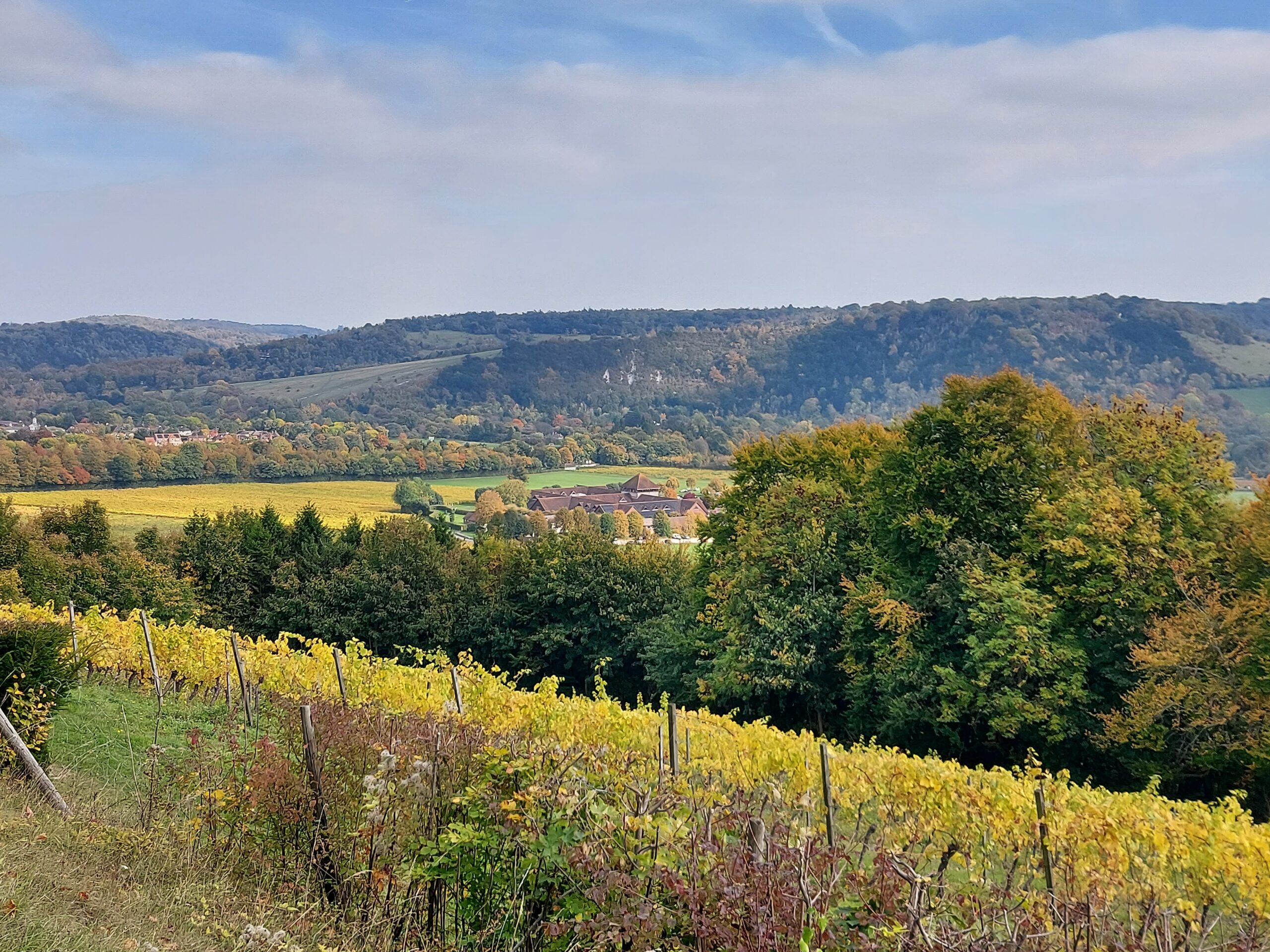
I visited Denbies Wine Estate in Surrey and did the indoor and outdoor tours.
Take part in a wine tasting.
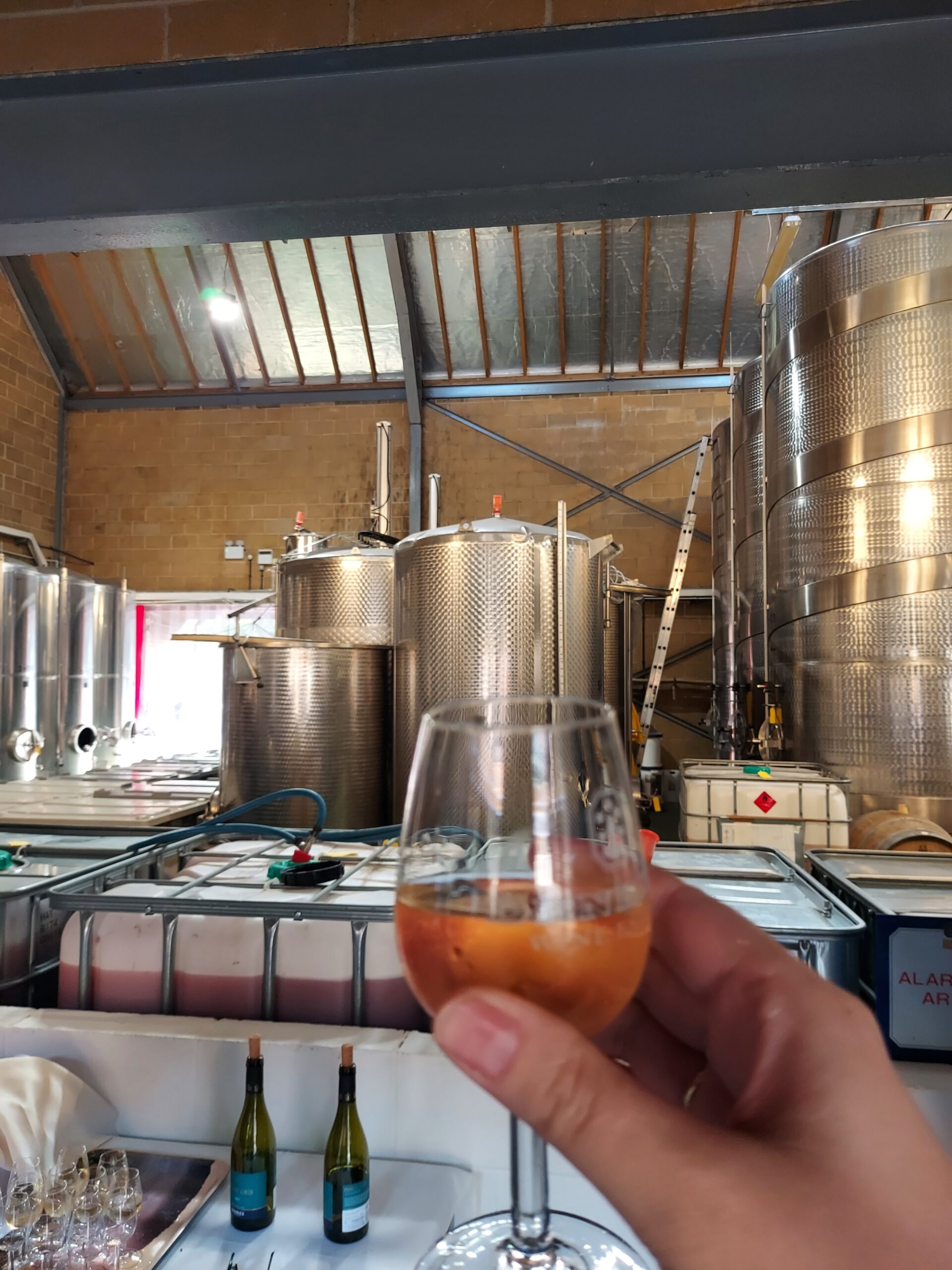
At Denbies I also took part in a wine tasting. We sampled Whitedowns Rosé NV, Pinot Gris 2023, Surrey Gold and Pinot Noir 2022.
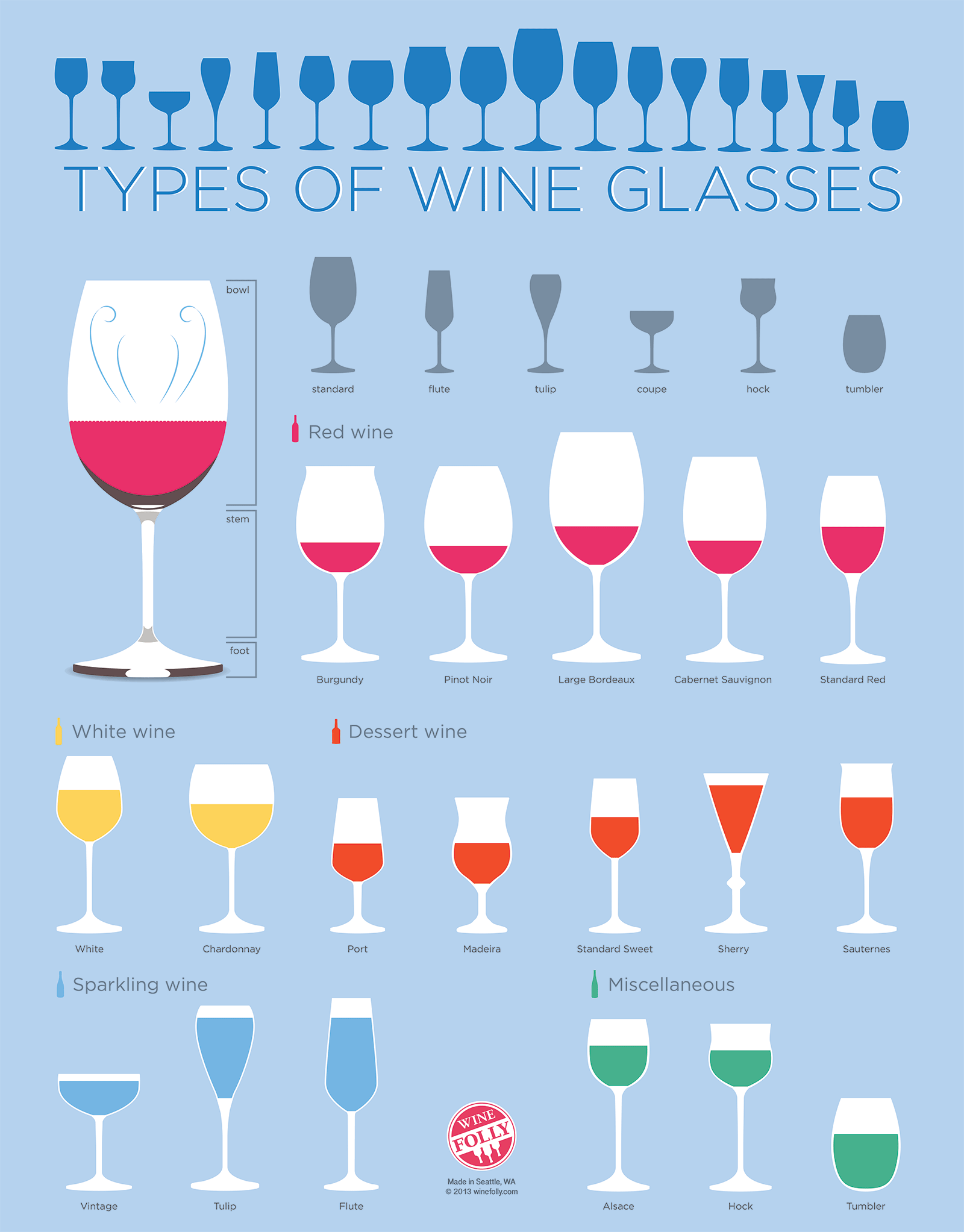
Learn about the different types of glass, bottles and wine glasses.
Bottles
Wine bottles come in many different sizes. The ‘standard’ size is 750ml, which is around five glasses of wine. A ‘half bottle’, or ‘demi’, contains 375ml and a ‘quarter bottle’, ‘split’, ‘piccolo’ or ‘mini’ holds 187.5ml. Bottles tend to be round because this shape was traditionally easier for glassblowers to produce, and modern winemakers tend to stick with tradition.
Standard sizes come in a variety of shapes which traditionally correspond to types of grape/flavours of wine. The most common is the Bordeaux which is tall with high shoulders. Associated grapes include Merlot, Malbec, Sauvignon Blanc and Chenin Blanc. The Burgundy has a wider base, sloping shoulders and a shorter neck. It is usually used for Chardonnay and Pinot Noir.
Slightly less common are the Rhone, similar to the Burgundy but with a longer neck, used for grapes such as Grenache and Mourvedre; the Champagne, a Burgundy-style bottle made with thicker glass to withstand the pressure of the bubbles and typically used for sparkling wine; and the Alsace or Rhine, tall and slender and used most commonly for grapes like Riesling and Pinot Gris.
Larger sizes are also available: the Magnum (1.5l), Double Magnum/Jeroboam (3l), Rehoboam/Methuselah (4.5l), Imperial (6l), Salmanazar (9l), Balthazar (12l), Nebuchadnezzar (15l) and the Midas/Melchizedek (30l).
The ‘punt’, the indent at the bottom of the bottle of wine, does not usually mean anything, although a deeper punt is desirable for sparkling wines as it can help make the bottle stronger.
Glasses
Wine glasses are designed for different types of wine in order to maximise the qualities of that wine. I found this article very helpful.
Red wine glasses are generally larger and taller than white wine glasses, to allow the wine to come into contact with more oxygen. The widest, albeit shortest, of the red wine glasses are those for Burgundy and Pinot Noir, owing to the bolder aromas of these wines. Glasses for Bordeux, Cabernet and Merlot are the tallest, while glasses for Syrah, Shiraz, Sangiovese and Malbec are shorter and slightly smaller. For white wine, the smaller bowl makes it easier to detect the subtler aromas, although Chardonnay glasses are much wider and resemble red wine glasses, providing a bigger surface area for this full-bodied wine.
Learn the differences between ‘old’ and ‘new world’ wine.
Old World
New World
France, Germany, Italy
Australia, Chile, USA
Restricted by tradition
Able to be experimental
Often labelled with regional name
Grape varieties usually mentioned
Typically lighter in body
Can be fuller-bodied
Terroir-driven
Grape-driven
Lower alcohol content
Higher alcohol content
Learn how rosé and sparkling wines are made.
Rosé wine is made by using the same fermentation process as red wine, but at the temperature of white.
Sparkling wine is made by starting with a base wine (made in the white wine way) and fermenting it for a second time, trapping the carbon dioxide in the liquid which dissolves into the wine, creating tiny bubbles. Premium sparkling wines are then aged in the bottle, the yeast subsequently removed by turning the bottles regularly over time. A sugar dosage is then added to make the wine sweeter before it is resealed.
Learn about the different tools available to make wine taste its best.
Corkscrew or other wine-opening tool
Wine glasses
Decanter
Wine preserver
Champagne stopper
Glass polishing cloth
Book about wine
Learn about the different types of wine flavours.
White wine exists on a spectrum from sweet to dry.
Red wine exists on a spectrum from fruity to full-bodied.
Wine flavours can include red or black fruits, such as raspberry and plum; citrus, like lemon or lime; other fruits such as peach; floral like rose and jasmine; and herbal such as basil or rosemary. Spicy flavours can include cinnamon, black pepper and vanilla; earthy notes can include mushroom, leather and soil.
Write a glossary of wine terms useful to a newcomer.
Acidity – the tartness that adds liveliness to wine
Appellation – a legally-defined geographic area where wine is produced, e.g. Champagne or Bordeaux
Body – how a wine feels in your mouth. Can also be checked by swirling it around in your glass
Dry – in the context of wine, dry is the opposite of sweet
Finish – wine flavours that linger after swallowing
Legs – when you swirl wine around in your glass, the legs are the streaks you can see running down the side
Nose – a wine’s aroma. Swirl the wine in your glass to release the scent
Tannins – bitter-tasting compounds present in the skin and seeds of grapes that produce a dry feeling in the mouth
Terroir – a French word referring to the terrain where a grape is grown: the soil, climate and land
Typicity – how true a wine’s flavour is to its region and grape variety
Varietal – a wine made from one specific grape variety
Variety – the specific grape type used to make wine
Current Affairs was the final badge I chose for the Ready Player One quarterly. I know it’s important to keep up with the news (and I do), but it’s certainly depressing. If anything, I feel like we are moving even closer to a dystopian society!
Over a period of at least three months, make an active effort to stay on top of the news.
I recorded the headlines from the Independent each day and checked a number of other news sources, including the Guardian and the BBC, too.
Create a visual political spectrum from far-right to far-left.
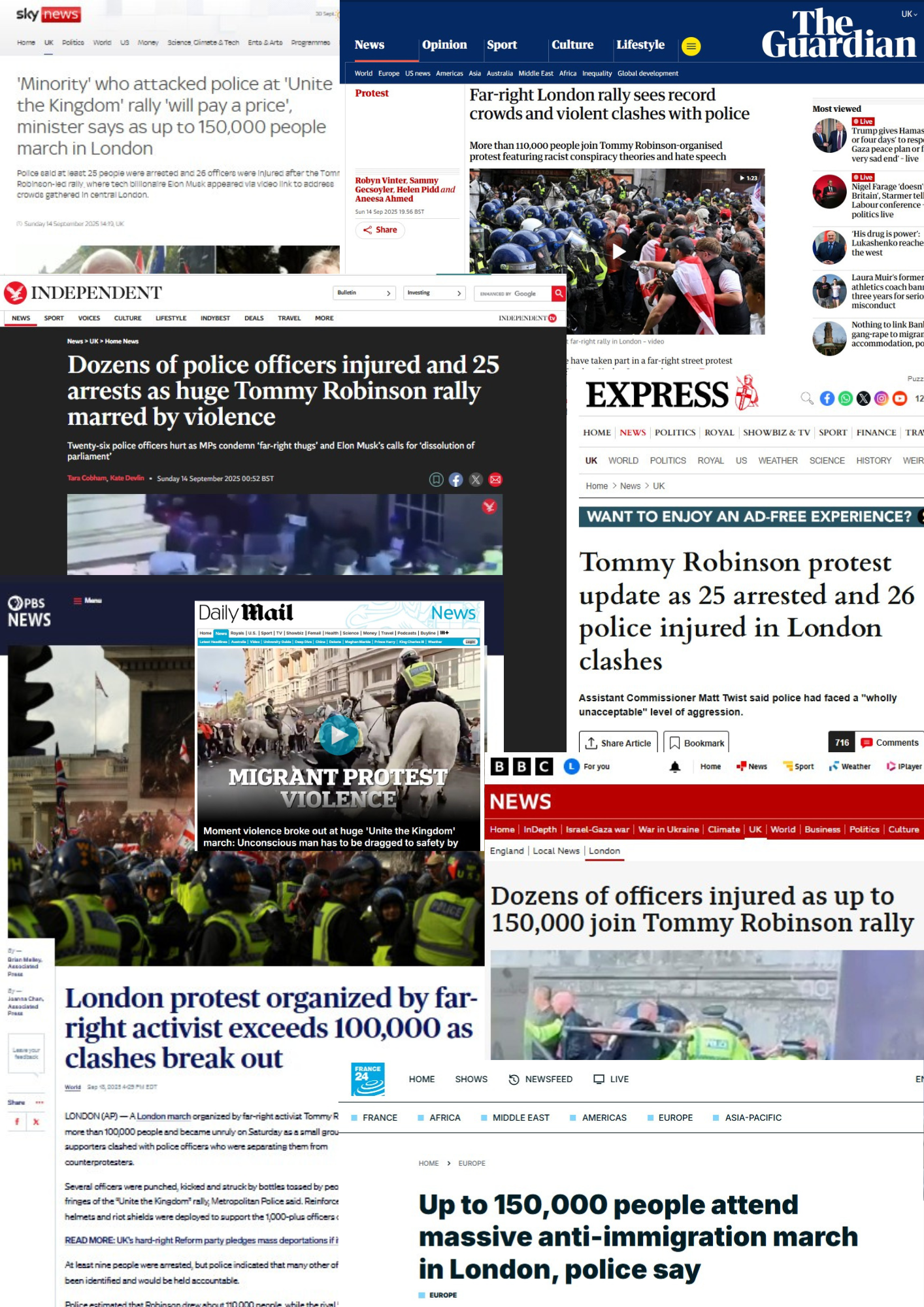
Choose a current domestic news story, and compare the different ways the story is presented in different forms of media.
I chose the ‘Unite the Kingdom’ march of 13 September. I was actually surprised at how similar the presentations were across left- and right-wing media. It appears injuring police officers is frowned upon across the political spectrum. Having said that, it was interesting that some sources called it a march, others an anti-immigrant protest, and some named it as a right-wing event.
The sources I used were the Guardian, the Independent, the Daily Express, the Daily Mail, the BBC and Sky News. I also looked at France24 and PBS News from an international perspective.
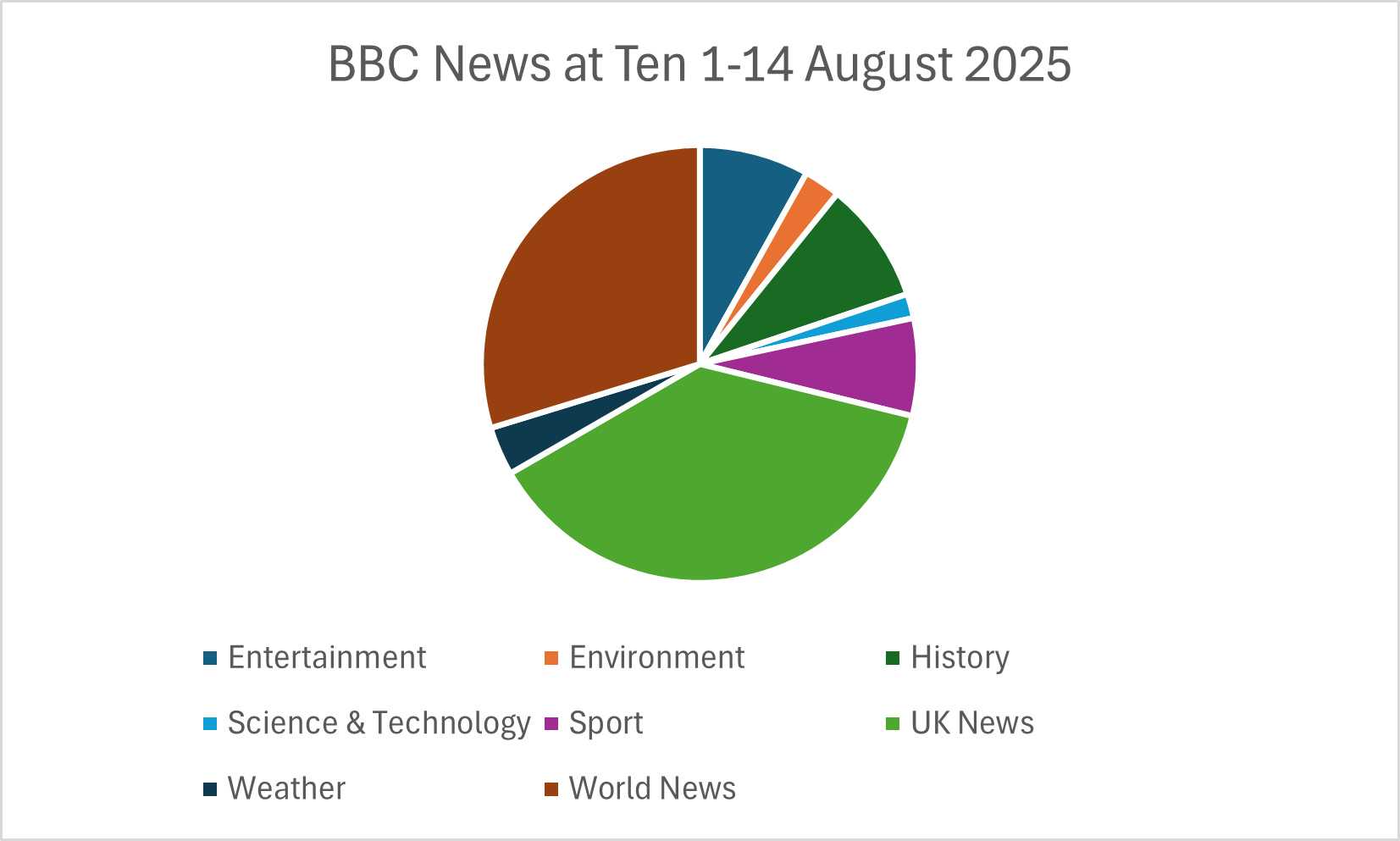
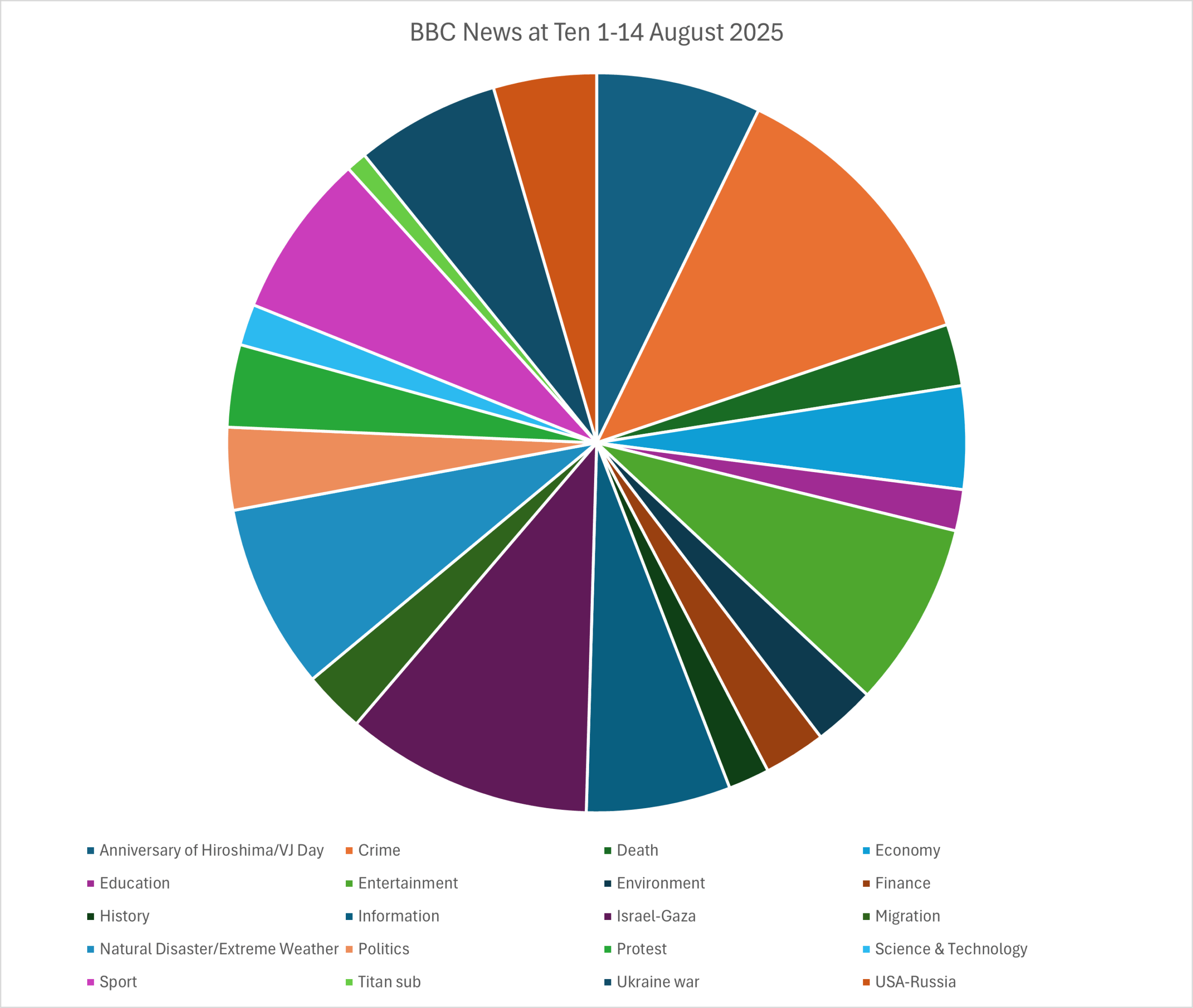
Watch a daily news bulletin regularly for at least two weeks.
I watched BBCNews at Ten daily during the first half of August. I created two charts, one grouping the stories covered in terms of broad categories and another which was more specific, showing how certain topics really dominated coverage during this period. This is understandable to an extent, but I would have liked to see more coverage of worldwide topics such as the Sudanese genocide.
Find some examples of ‘fake news stories’ that you are surrounded by on social media.
I found plenty of examples of ‘fake news stories’ online. I had never heard of a CRAAP test but now I know what one is I will be applying it regularly!
Some sources suggest that the impact of fake news on elections is overblown. People are more likely to believe fake news when it is in line with their own political beliefs, which suggests that their voting plans are not actually swayed too much by disinformation. However, the increasing problem of bots and AI can make things worse as these can spread misinformation much more quickly and much more realistically, making it harder to detect, prevent or stop them.
Create a timeline of events which have caused distrust in the media over the last century.
Learn about the media laws and regulations in your country.
I found this document, from the Global Campaign for Free Expression, very helpful.
Print media is self-regulating in the UK and established the Press Complaints Commission. Two broadcasting acts regulate broadcast media. Private television and radio are regulated, respectively, by the Independent Television Commission (ITC) and the Radio Authority (RA), both provided for in the Broadcasting Act 1990. There are seven codes of conduct governing content standards within the media in the UK, one for the press and six for the broadcast media. They generally provide guidelines rather than setting clear standards or prohibitions.