Mari Lwyd is a Welsh tradition that I came across a few years ago. A wassailing folk custom found in South Wales, it features a horse’s skull mounted on a pole and carried by an individual hidden under a sackcloth. First recorded in 1800, it involves a group of men accompanying the horse from house to house, requesting entry through the medium of song; householders were required to reply, also through song, and this would continue until one side backed down. If the householders quit first, they would invite the group in and provide them with food and drink.
The London Welsh Centre and The Spring Heeled Jacks have organised a special Mari Lwyd event for the past five years. This involves visiting various pubs, rather than individual homes (I’m not sure how Londoners would react to seeing this on their doorstep), but the principle is the same. I went along to Friday’s event at the Boot pub just to see it in action. As I’d expected, it was creepy but awesome. There were a fair few people there, drawn possibly by the advertisement on Londonist, but there were several bemused looks from passers-by, suggesting that not everyone is familiar with this custom!
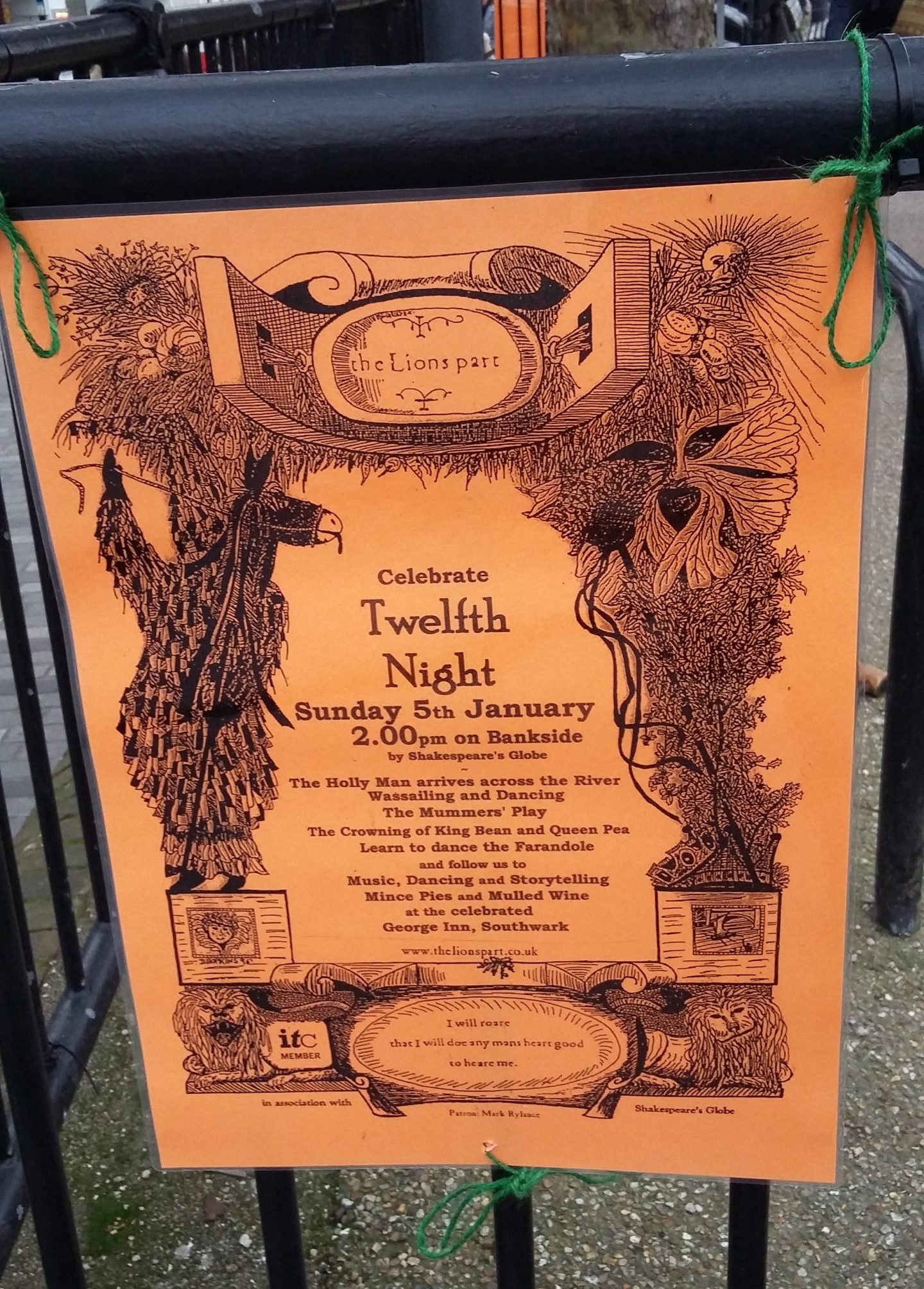
Twelfth Night used to be a major part of the festive celebrations in the UK, but these days it usually goes unmarked. The Lions Part, however, mark the occasion each year with a performance in Southwark, appropriately starting next to the Globe, as it was during Tudor times that the occasion really came into its own.
Twelfth Night celebrations on Bankside
I arrived on Bankside Pier just as the Holly Man – winter equivalent of the Green Man – arrived, in time to see the St. George Folk Combat Play, performed by the Bankside Mummers. There was quite a crowd gathered and I ended up standing on the wall to get a better view. The play, which featured stock characters like the Turkey Sniper, Clever Legs, the Old ‘Oss and many others, mixed old-fashioned language with modern references and was a hit with the audience.
Twelfth Night poster
After the performance, Twelfth Cakes were handed out to the audience and those who found a pea or a bean were invited to come up and be crowned King and Queen. One of these elusive objects could not be found so a random audience member was selected instead! The party then paraded down to the George Inn near London Bridge. I headed home as I was pretty cold by this time, but I was glad to have gone.
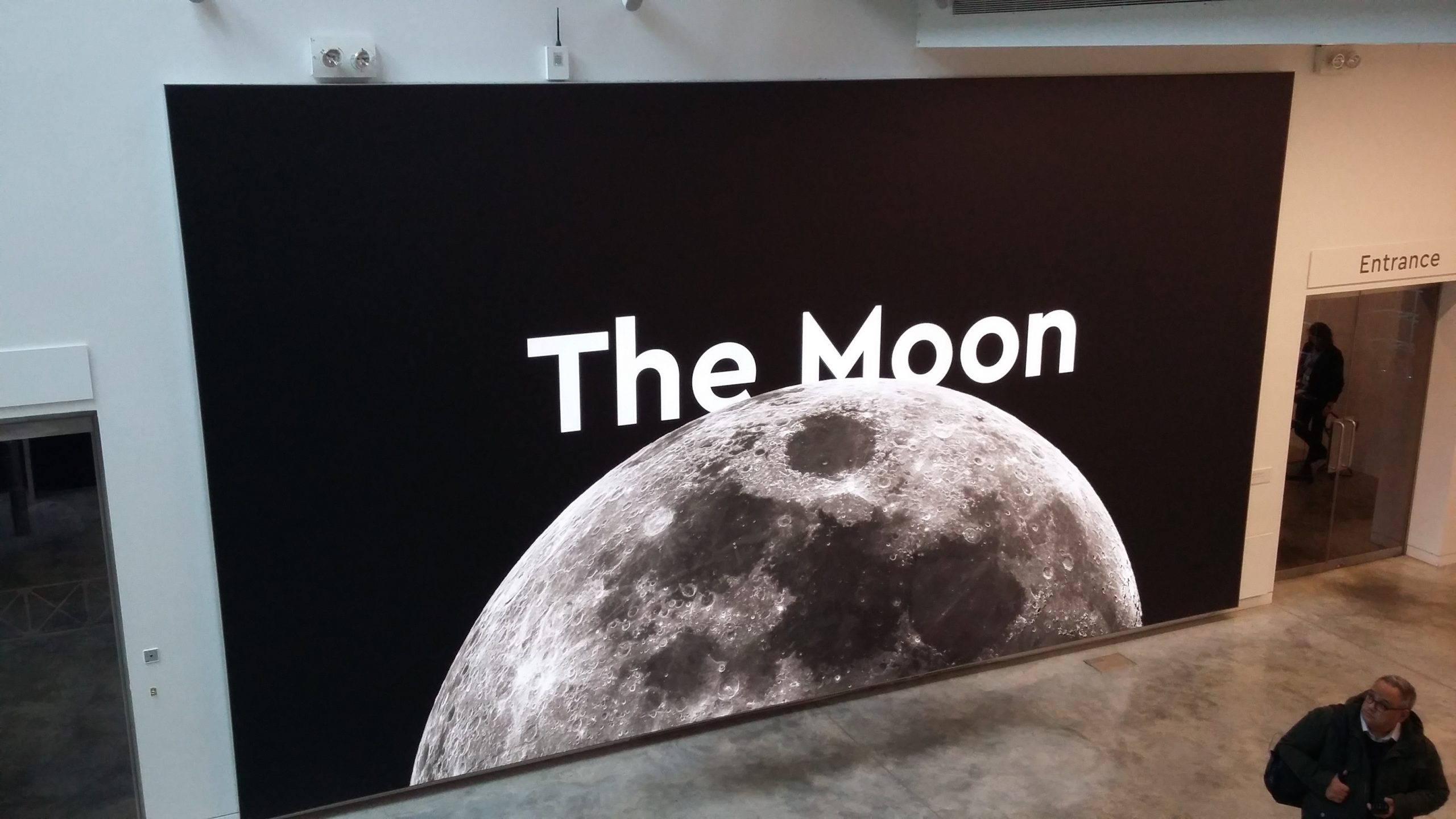
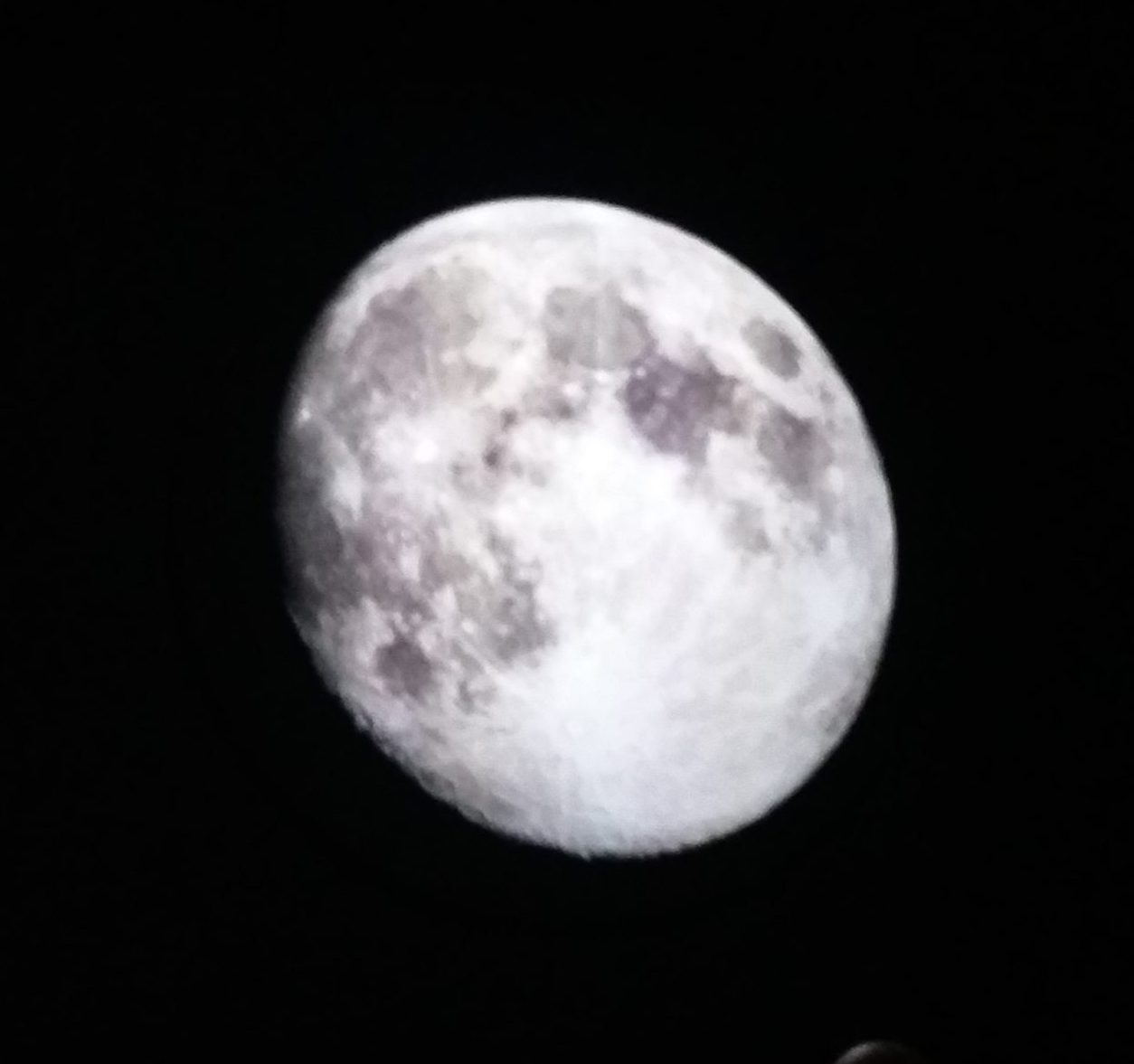
I went to the National Maritime Museum to visit The Moon on its very last day. The Science Museum had an exhibition on the Sun not long ago, so this exhibition seemed apt. Also, it’s the celestial body associated with my star sign, Cancer. The exhibition marks 50 years since the moon landings, but as well as space travel it looks at the history of our understanding of the moon, literature associated with it, and religious and cultural practices with the moon at their centre.
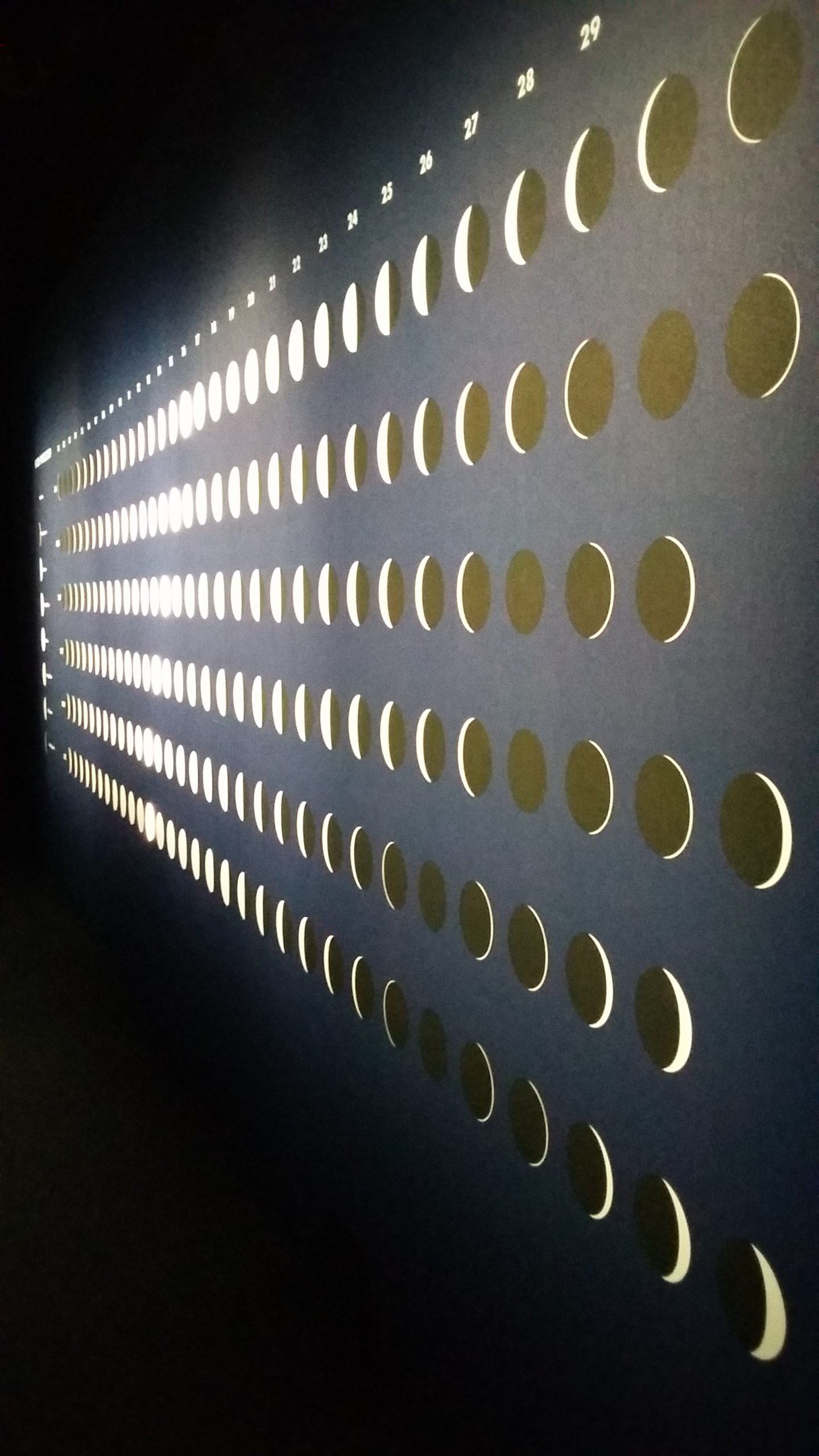
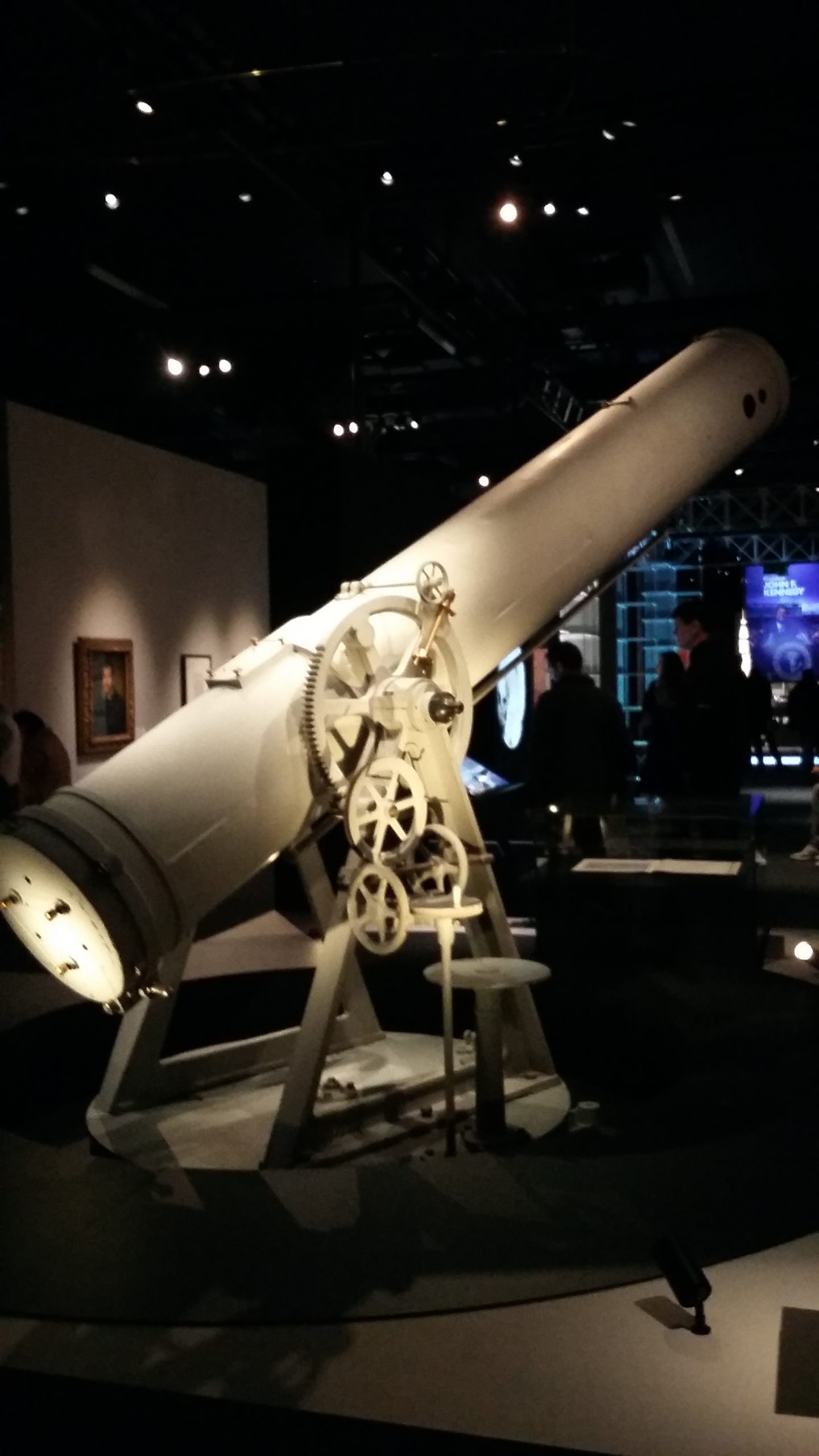
Accompanied by a musical soundtrack of Debussy’s ‘Clair de Lune’, the exhibition explores early superstitions about the Moon, looks at the scientific developments that allowed us to view and eventually visit it, and looks to the future with the prospect of human settlement on the Moon. I was intrigued by the role of the Moon in the lives of ordinary people, and the names given to the different phases of the Moon. Much of the artwork featuring moonlit landscapes is beautiful, and the early photos and diagrams of its surface perhaps even more so.
An important part of the exhibition is devoted to the Space Race: items from actual Apollo missions are some of the most exciting on display. This leads on to a section that asks who owns the Moon: there are some difficult questions to be asked in the future, but there is also excitement at the prospect of further exploration.
On the first Saturday of the New Year I went to the British Museum with my friend to see the exhibition Troy: Myth and Reality. The exhibition looks at the myths surrounding Troy and the Trojan War before exploring the evidence for the real existence of Troy and how the legend has been interpreted over the centuries.The first object on display is a magnificent urn painting, dating from approximately 530BC. It shows Achilles at the instant he kills Penthesilea, leader of the Amazons: a dramatic moment showcasing the violence of the Trojan War. Homer’s Iliad and Odyssey, as well as Virgil’s Aeneid, tell stories of characters such as Achilles both real and mythical, and are hugely well known in the Western world and beyond.
Most people know the basics of the myth: Trojan prince Paris runs off with Helen, wife of Menelaus, king of the Spartans. But was she abducted or did she go willingly? Whas she as beautiful as legend suggests – “the face that launched a thousand ships” – or was she simply an excuse for the Greeks to declare war? The contemporary and near-contemporary artefacts in the exhibition offer a variety of perspectives and interpretations.One aspect I found fascinating was the gallery exploring the discovery of Troy as a real place:
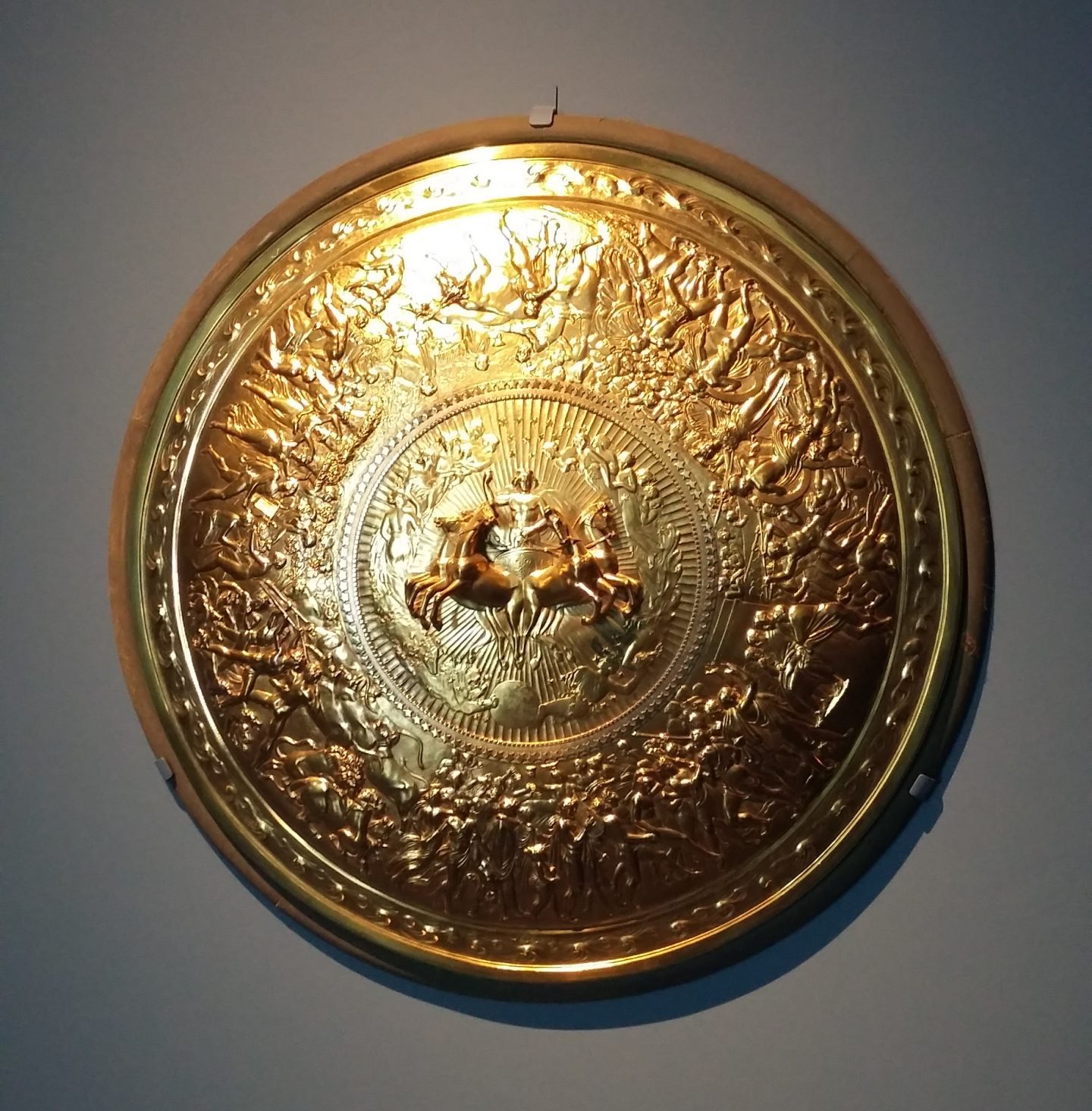
Homer’s Iliad references the northern Turkish city of Ilium, and for many years Troy was thought to be at a place called Bounarbashi. In the nineteenth century the focus changed to Hisarlik. Many objects excavated during this period are displayed here. The second half of the exhibition focuses on differing interpretations of the Trojan War over the centuries, and it’s fascinating to see how these changed over time. It ends with a 19th-century interpretation of Achilles’ shield, symbolising how the myth has inspired artists and creators for years and years.
It’s been several years since I’ve seen the Lord of the Rings trilogy, so I thought it would be a good time to refresh my memory. The Prince Charles Cinema holds all-night marathons every December, and I went along armed with snacks and energy drinks.
The marathon featured all three films, in extended editions, over a period of more than twelve hours with minimal breaks. It was less of an endurance test than I’d expected (the energy drinks helped), because the movies are so good, and still hold up well twenty years after they were first made. Boromir’s “One does not simply walk into Mordor” line got a particular laugh.
When the final credits rolled I went for a Wetherspoon’s breakfast and went back home, where I spent the whole day sleeping.
My second Ramin Karimloo gig in a year – truly, I have been spoiled. This gig rounded off 2019 nicely, in the intimate surroundings of The Other Palace.
Ramin sang lots of Broadgrass-style songs as well as songs from his latest album, From Now On, and other musical hits. No matter how many times I see him live, I am always left wanting more.
Throughout the show, Ramin kept hinting about an exciting forthcoming announcement. It turns out that he will be starring in a concert production of the musical The Secret Garden at the Palladium next spring. That is definitely going on my list!
George IV: Art & Spectacle is the latest exhibition to take place at the Queen’s Gallery, London. This king, who spent many years as Prince Regent (giving the Regency period its name) before taking the throne in his own right, is portrayed here as a keen art collector whose legacy can still be seen today.
Growing up, George was not allowed to leave the country owing to the orders of his father, George III, so instead he collected works of art from all over Europe and the east, as well as paintings of subjects closer to home – his family, and earlier monarchs. His energies were first directed at Carlton House, his London residence, which he filled with art, sculpture and furniture, but his vision eventually outgrew this comparatively small living space. Famously, he established the Royal Pavilion in Brighton, and on becoming king he instigated work at Windsor Castle and Buckingham House, transforming the latter, under the care of architect Thomas Nash, into Buckingham Palace.
It seems that George did have a keen eye: he collected works by the likes of Rembrandt, as well as commissioning works of his own. He enjoyed literature too, keeping a collection of Jane Austen’s works in each of his residences, and inviting Sir Walter Scott to dine.
One thing I found interesting about the exhibition was that George, spending money lavishly at a time of economic hardship for many of his subjects, was widely disliked, and this image of him has coloured our perception. I’m not really surprised, and it makes me wonder if having this exhibition now was really a good choice, as poverty levels in the UK reach crisis point. Not long ago, there was criticism over a plan to refurbish Buckingham Palace during this time of austerity, and however much George IV embraced the arts, I feel similarly about his own spending, fascinating as this exhibition was.
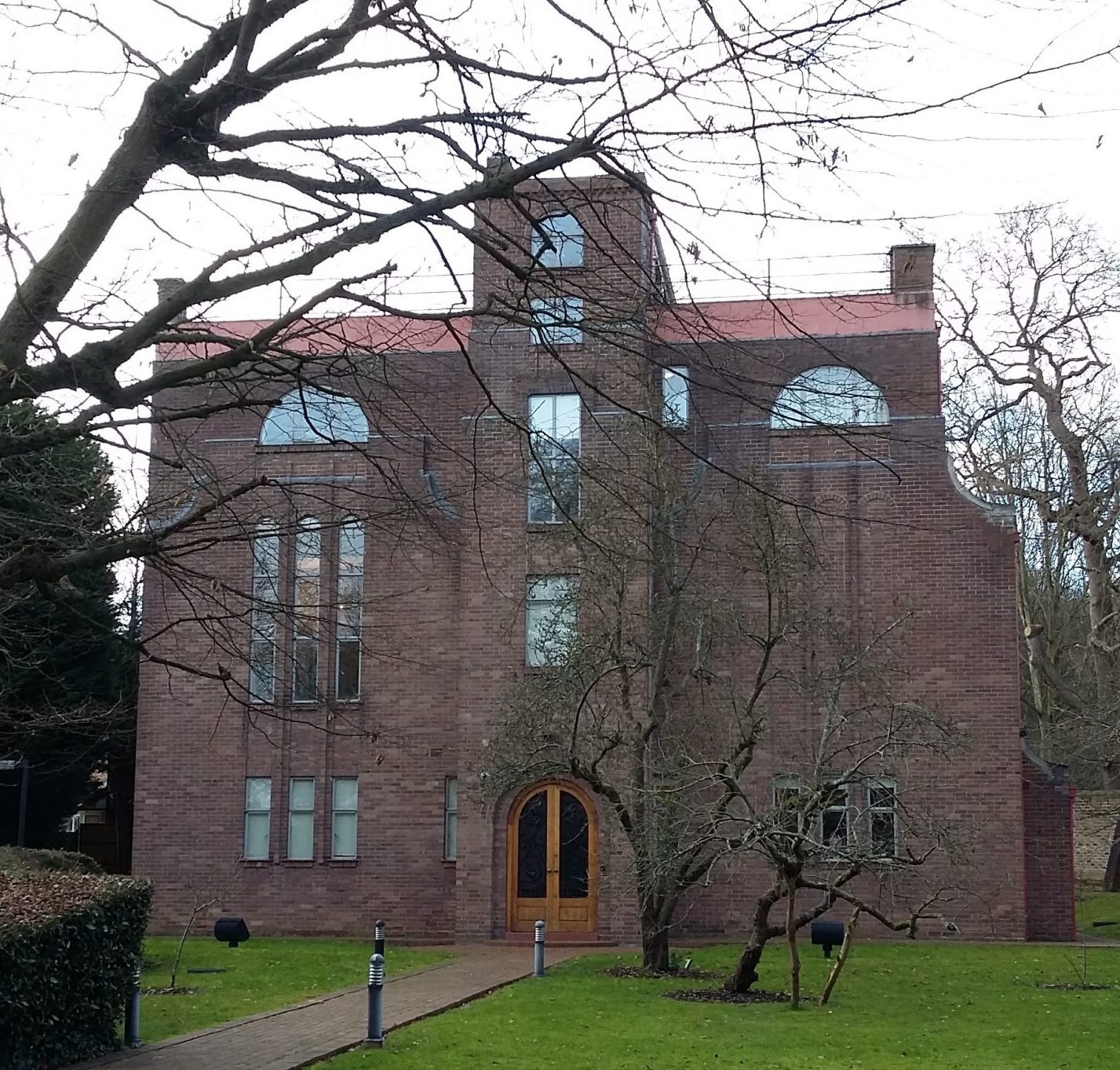
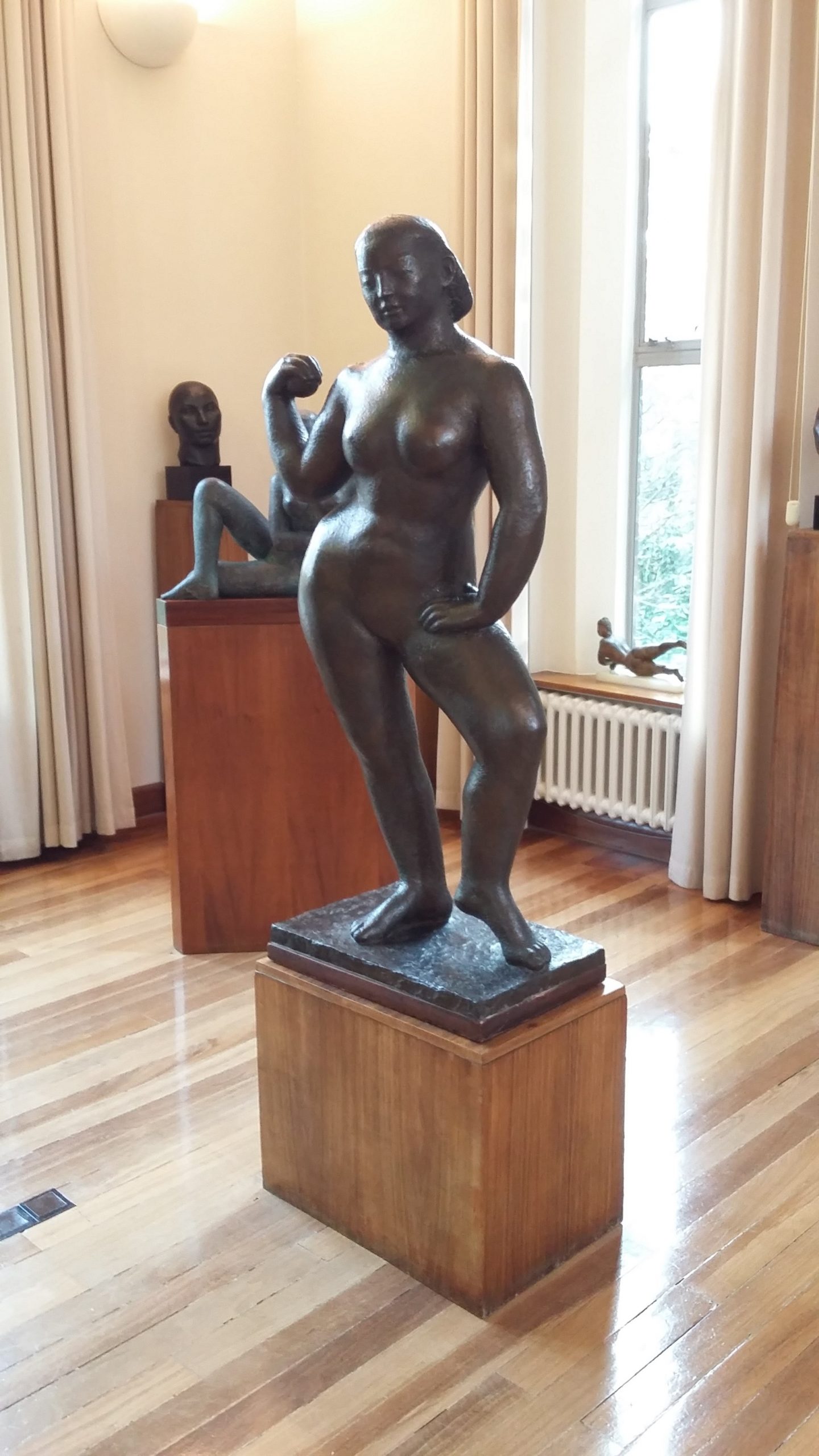
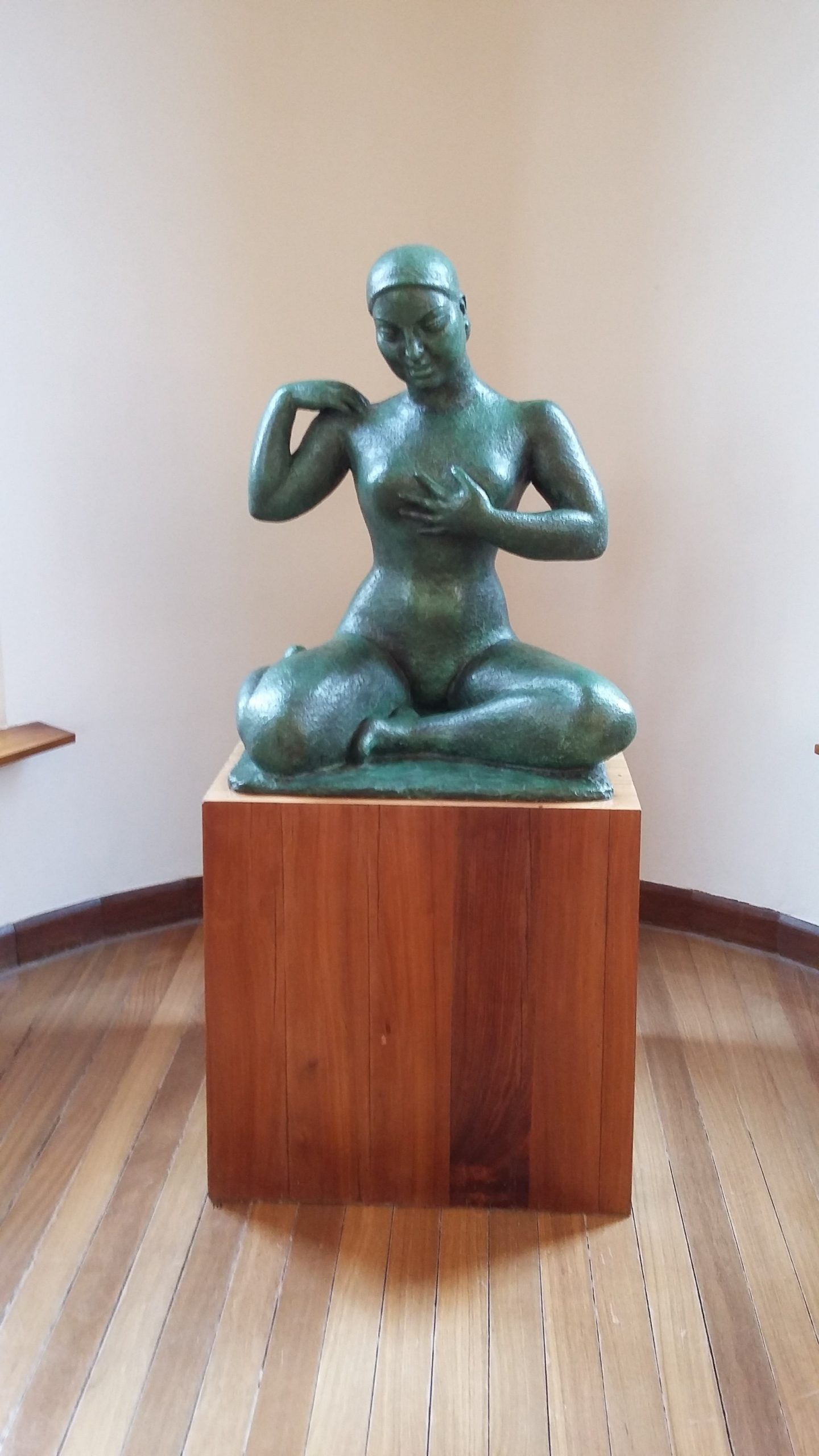
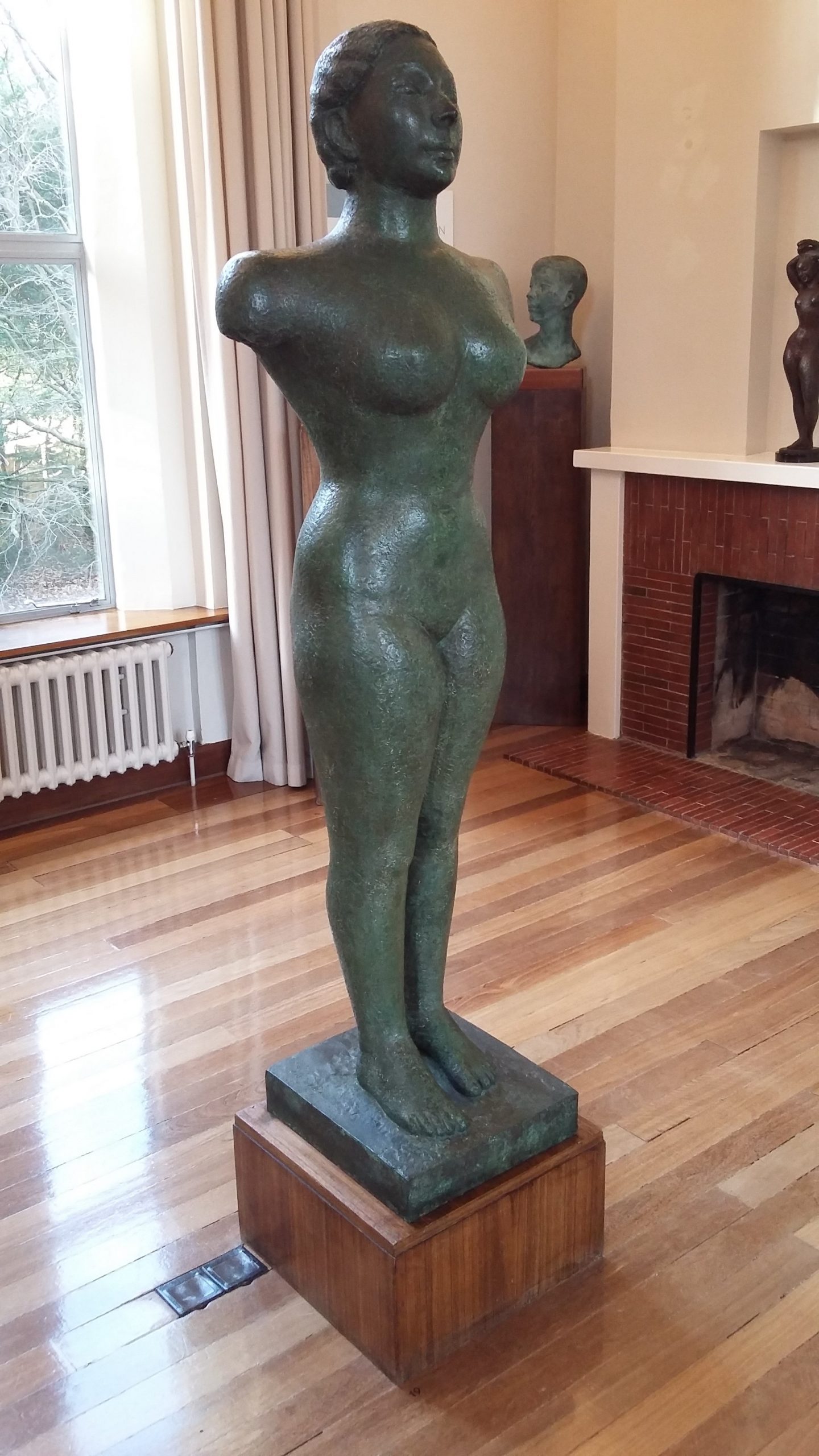
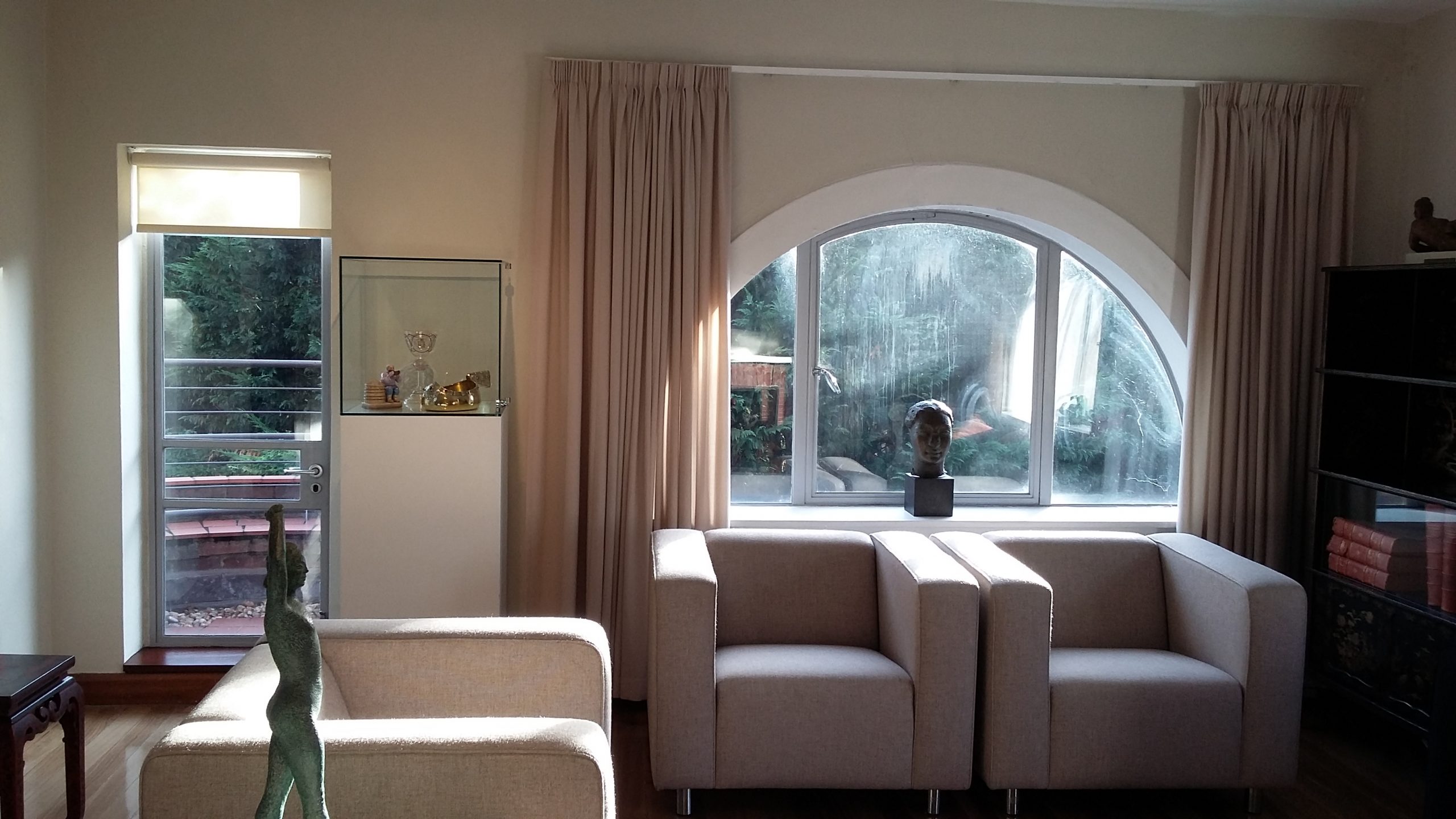
One Saturday in December I decided to visit the Dorich House Museum near Kingston, the former studio home of Dora Gordine (1895-1991) and Richard Hare (1907-1966). Now in the keeping of Kingston University, the house was completed in 1936 to a design by Gordine, who incorporated a modern studio, now used to display her impressive sculpture as well as paintings and drawings. There is also a gallery in which she displayed her work.
Sculptures by Dora Gordine
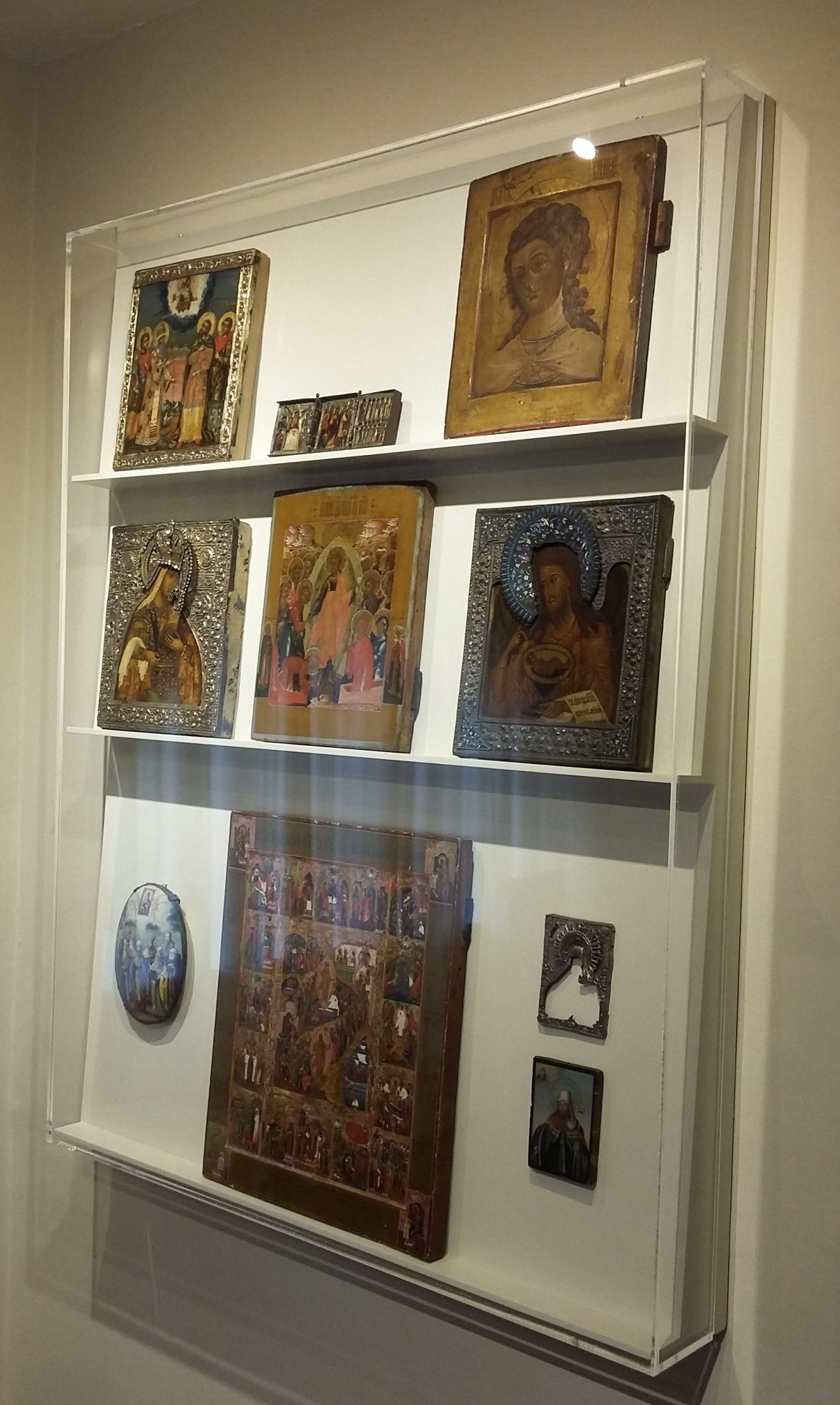
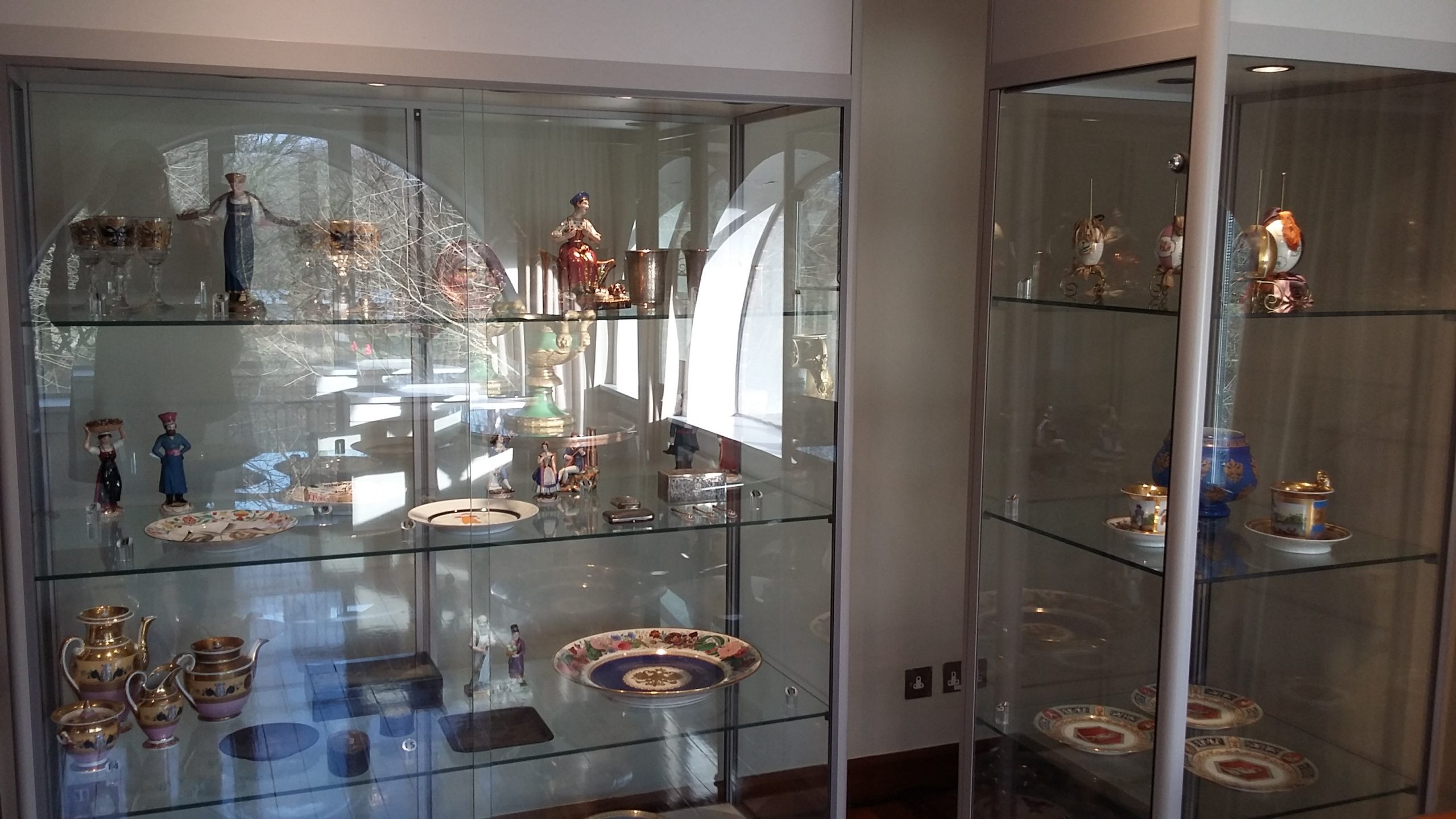
The museum also incorporates the Russian Collection of 18th to early 20th-century paintings, ceramics, glassware, metalwork, folk art and furniture. This was the domain of Russian scholar Richard Hare. Most of the collection can be viewed in the Russian suite on the top floor.
Russian iconsRussian artefacts
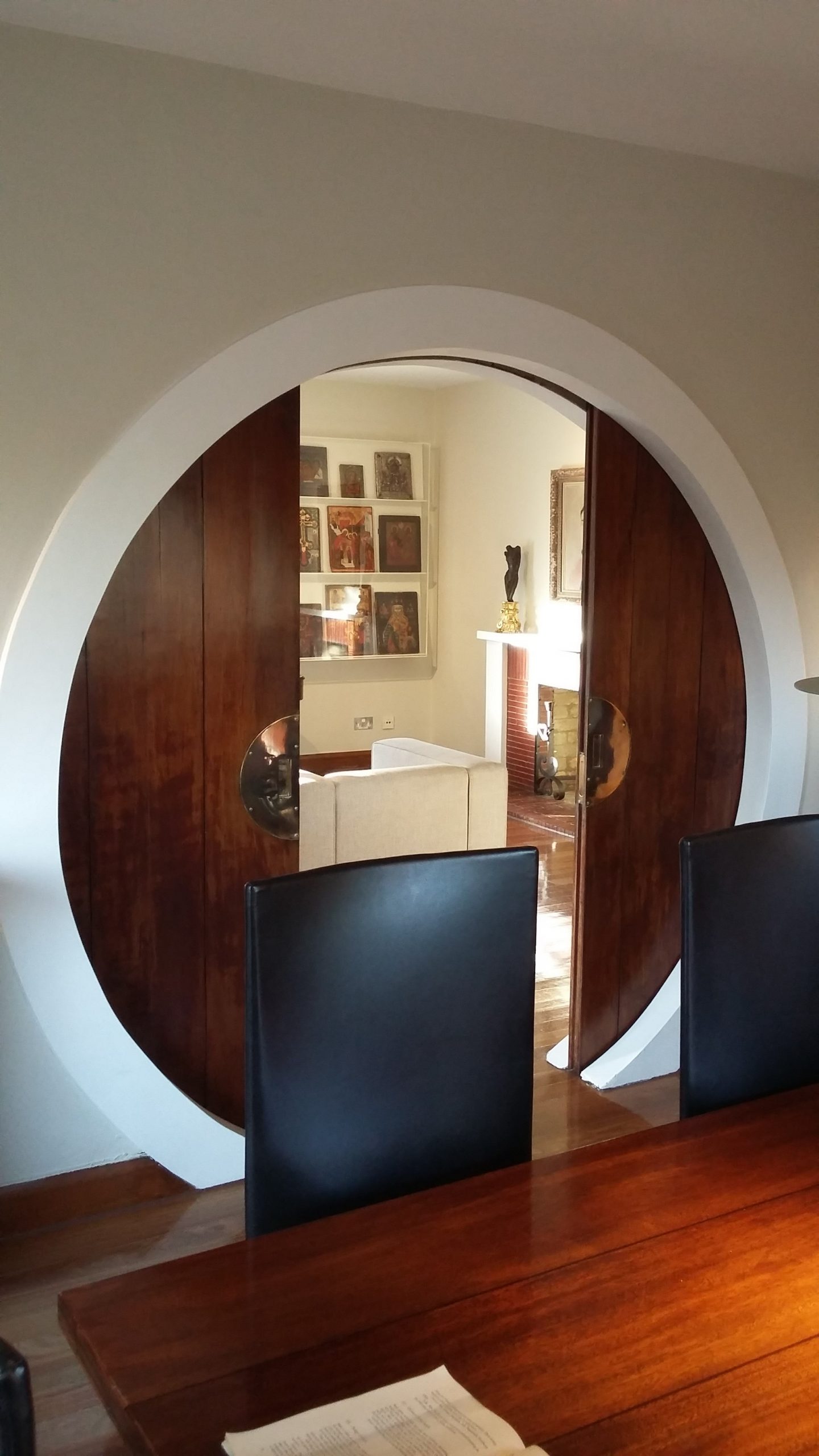
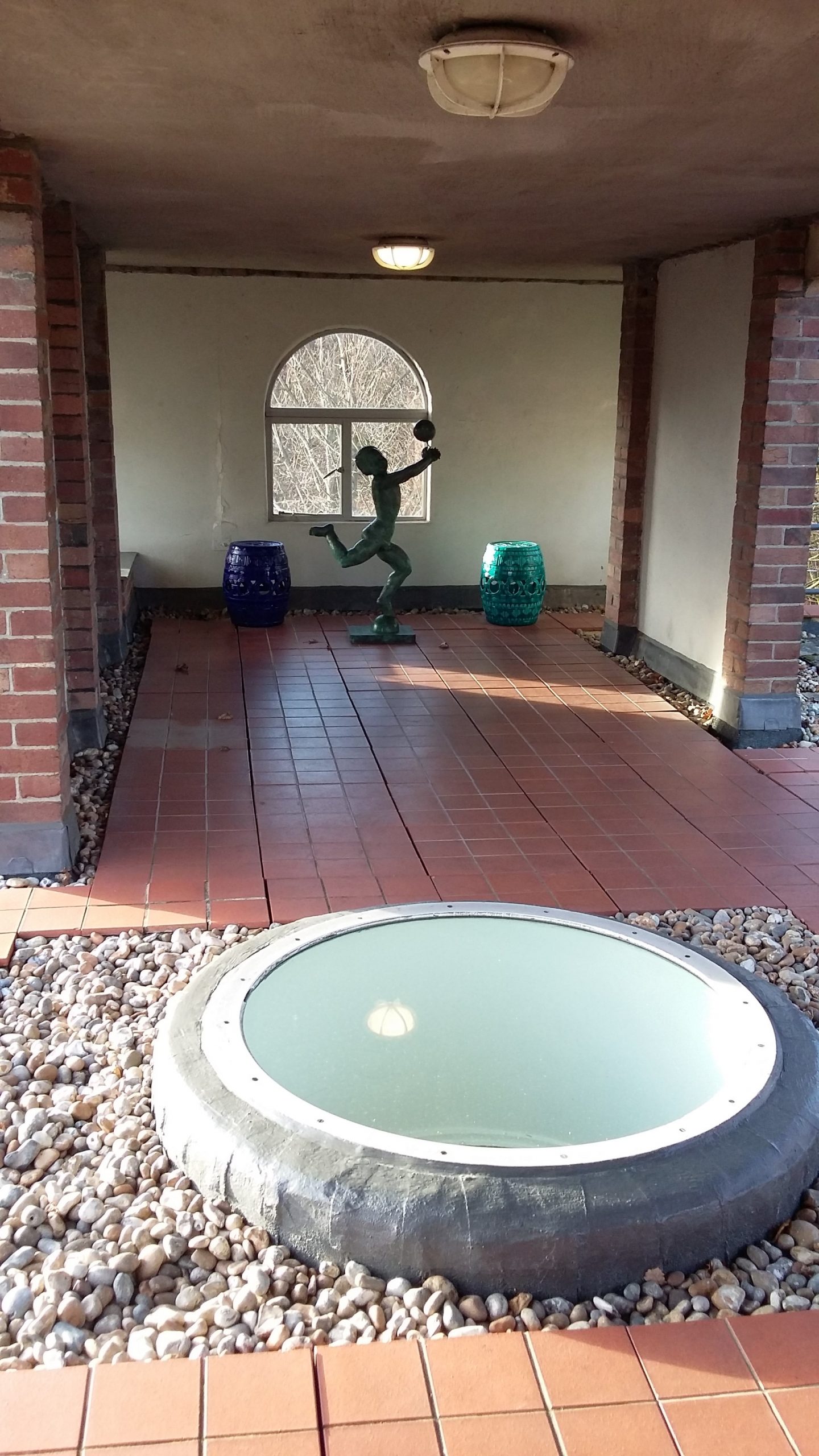
A more homely side to the house can be seen in the top floor apartment, though even here the decor is extremely stylish. There is also a roof terrace.
Inside the apartmentInside the apartmentRoof terrace
Even if, like me, you have no prior knowledge of Gordine and Hare, the museum is well worth a visit. The entry price is very reasonable and it is free with a National Art Pass. There is also a lovely café on the ground floor.
The auction house Spink held an exhibition entitled 200 Years of Polar Exploration recently, featuring artefacts that have never been on display before, including photographs, equipment, medals and other memorabilia, from the expeditions of Scott and Shackleton, to 21st century explorations led by figures such as Sir Ranulph Fiennes and the late Henry Worsley.
The exhibition was staged in aid of The Endeavour Fund, which aims to help wounded, injured and sick service personnel and veterans use outdoor challenges and sport as part of their recovery and rehabilitation. This was the charity promoted by Worsley, who took part in several Antarctic expeditions before tragically dying of peritonitis during his 2016 attempt to make the world’s first unaided Antarctic crossing. One of the items on display was his pair of skis, decorated before their use by his children – a moving and poignant sight.
Other items included medals, and photographs from the Heroic Age and later. As always, I loved the opportunity to explore artefacts re;ated to Antarctic exploration and its history.
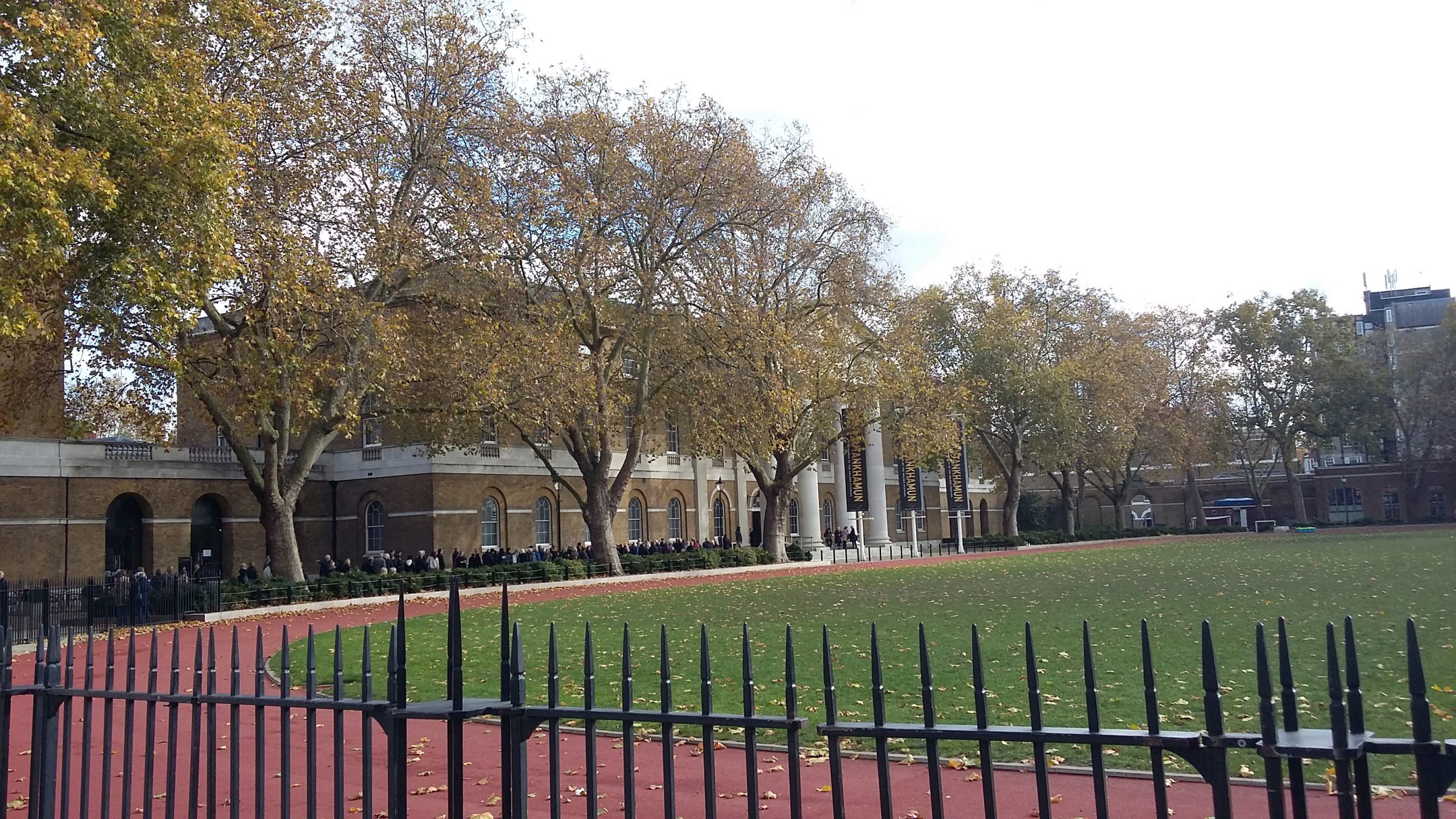
I feel very lucky to have got tickets for Tutankhamun: Treasures of the Golden Pharaoh at the Saatchi Gallery in London. I went to the exhibition on a day off in November, with my mam and a friend, who’d come down to London for the purpose.
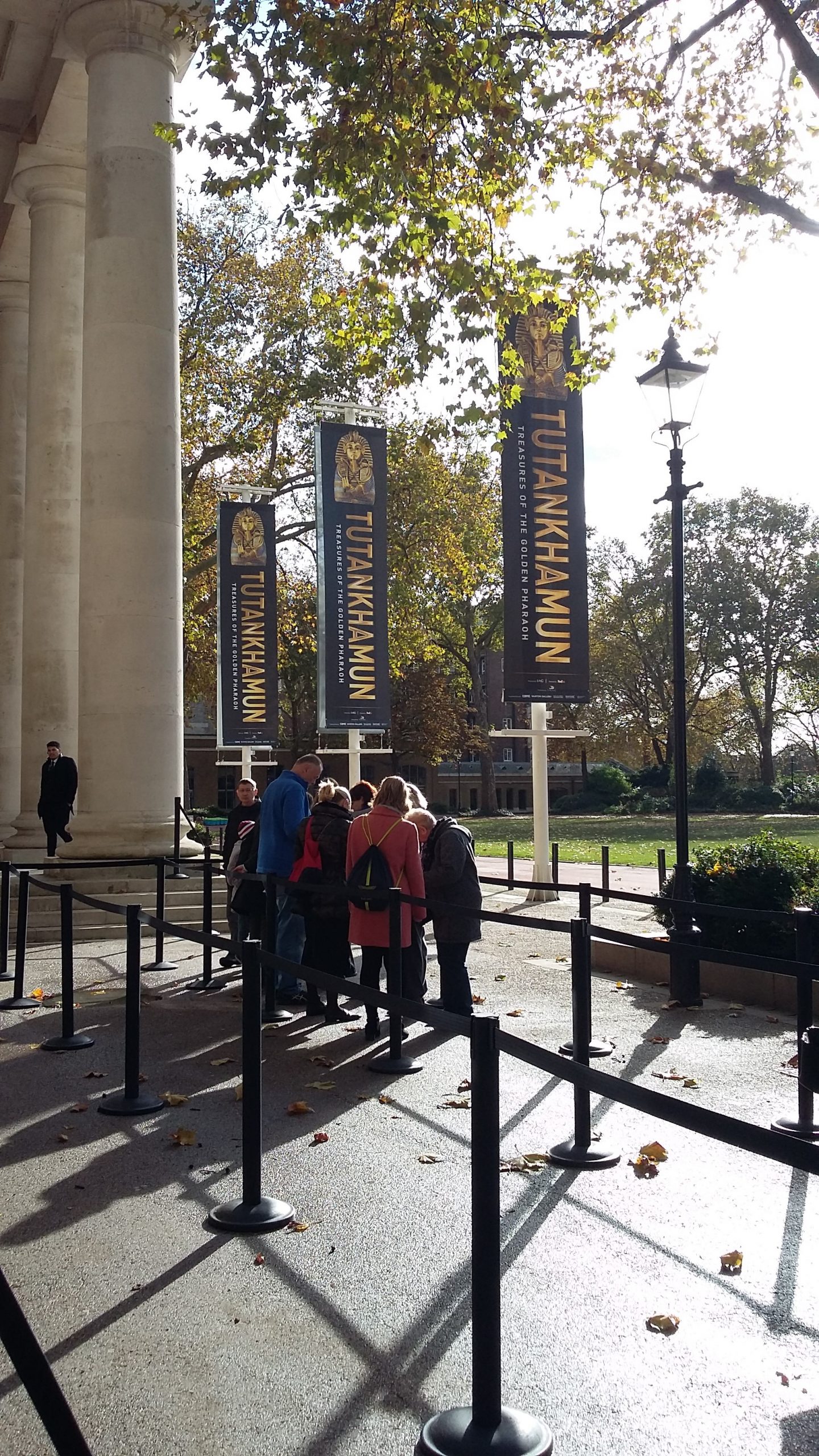
Saatchi GalleryWaiting to go in
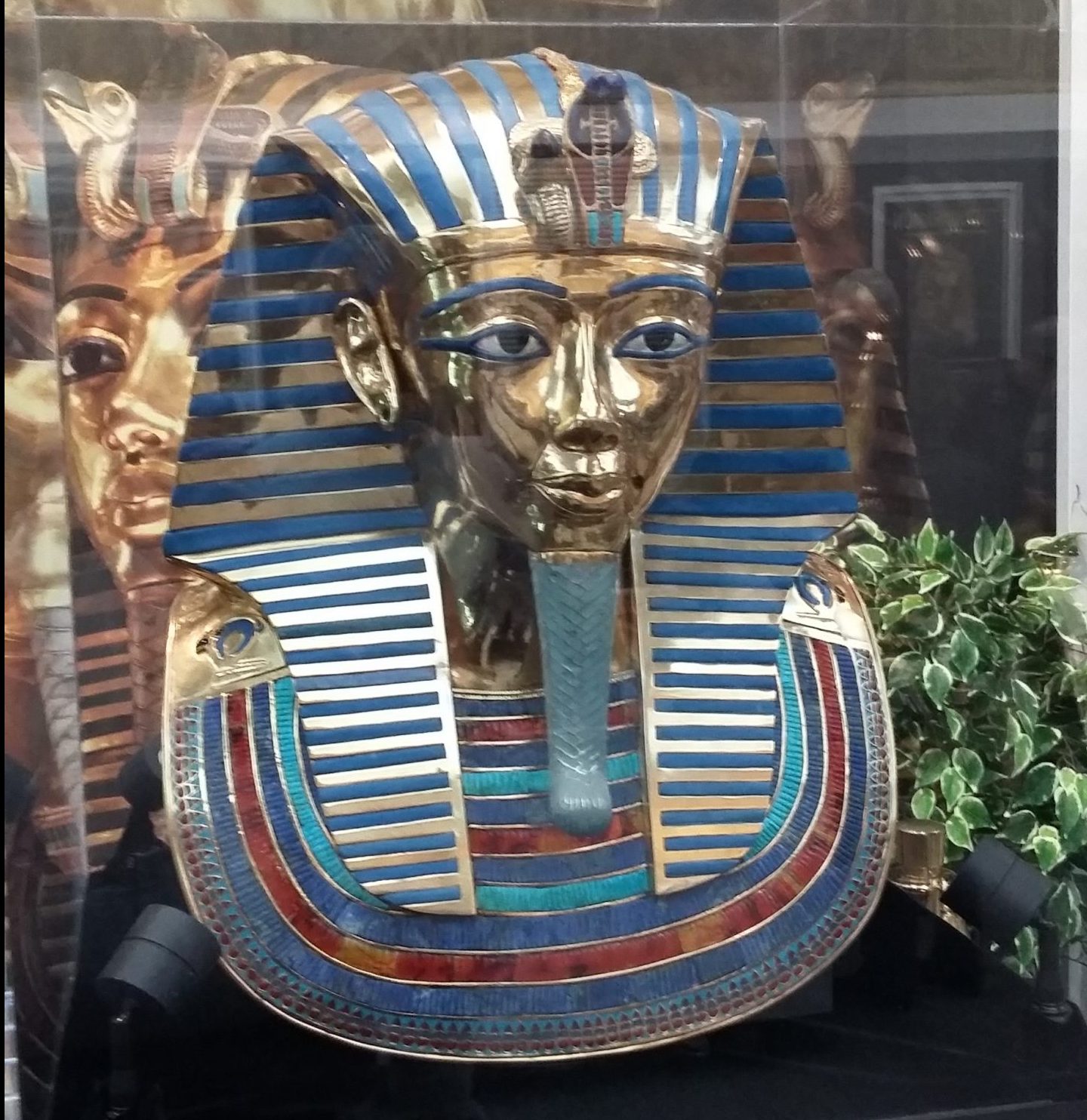
The queue outside the Saatchi Gallery was massive, and it was obvious that the exhibition was going to be popular. It commemorates the 100th anniversary of the discovery of Tutankhamun’s tomb, and marks the last time these artefacts will tour before being permanently housed in a purpose-built museum in Giza. Although the exhibition does not include Tutankhamun’s famous mask (which is available to view in replica at the end of the exhibition), it includes a vast array of treasures, many of which have travelled out of Egypt for the first time. London is the third stop on the exhibition’s world tour.
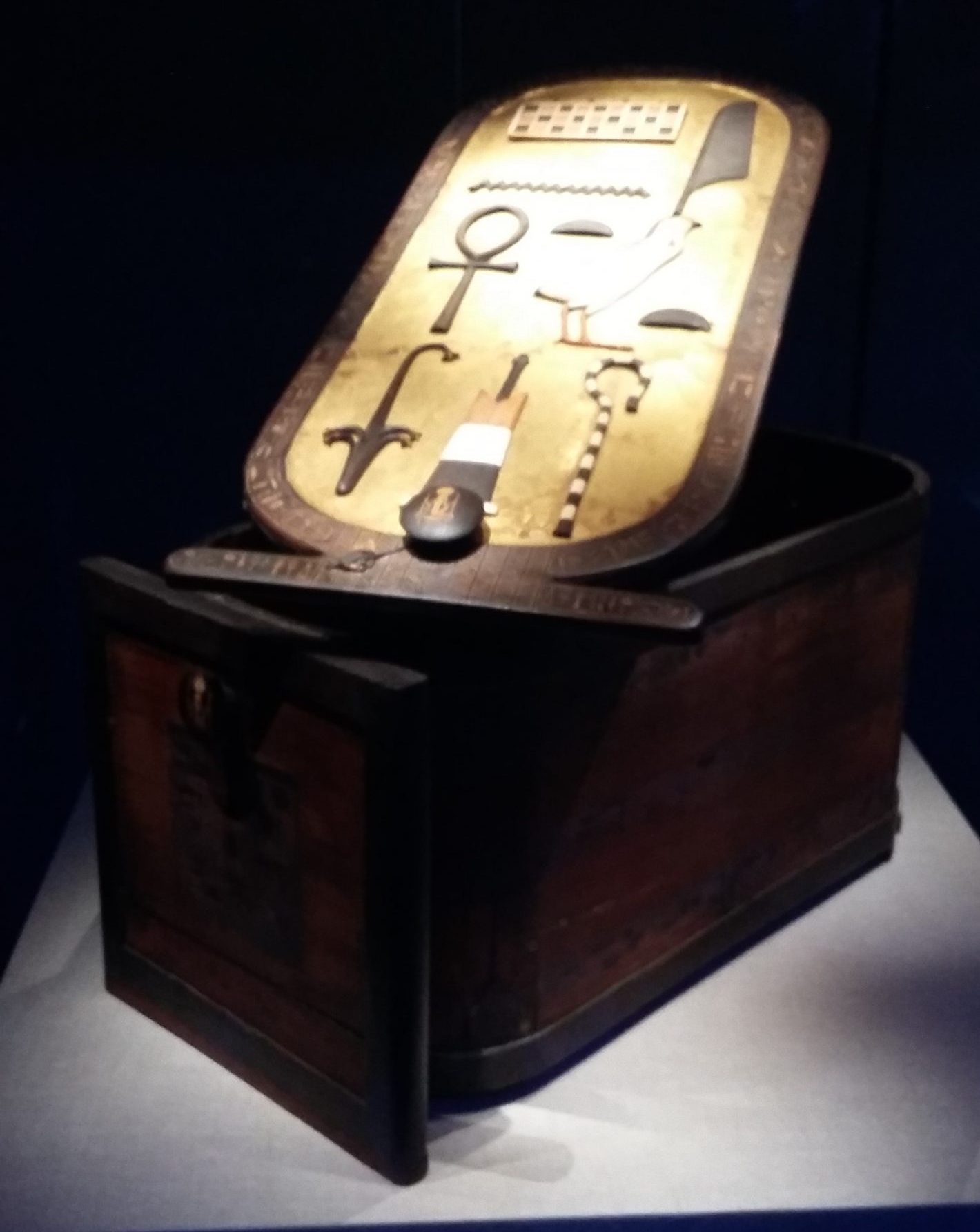
Cartouche box
The treasures take up the whole of the Saatchi Gallery; great thought and care have been taken in arranging a one-way route allowing visitors to navigate the site with ease. The space was crowded, but I can’t see how it could have been made less so to accommodate everyone wanting to see the exhibition. Though I had to wait a little time to view a few of the exhibits, I managed to see everything I wanted without feeling rushed or overwhelmed.
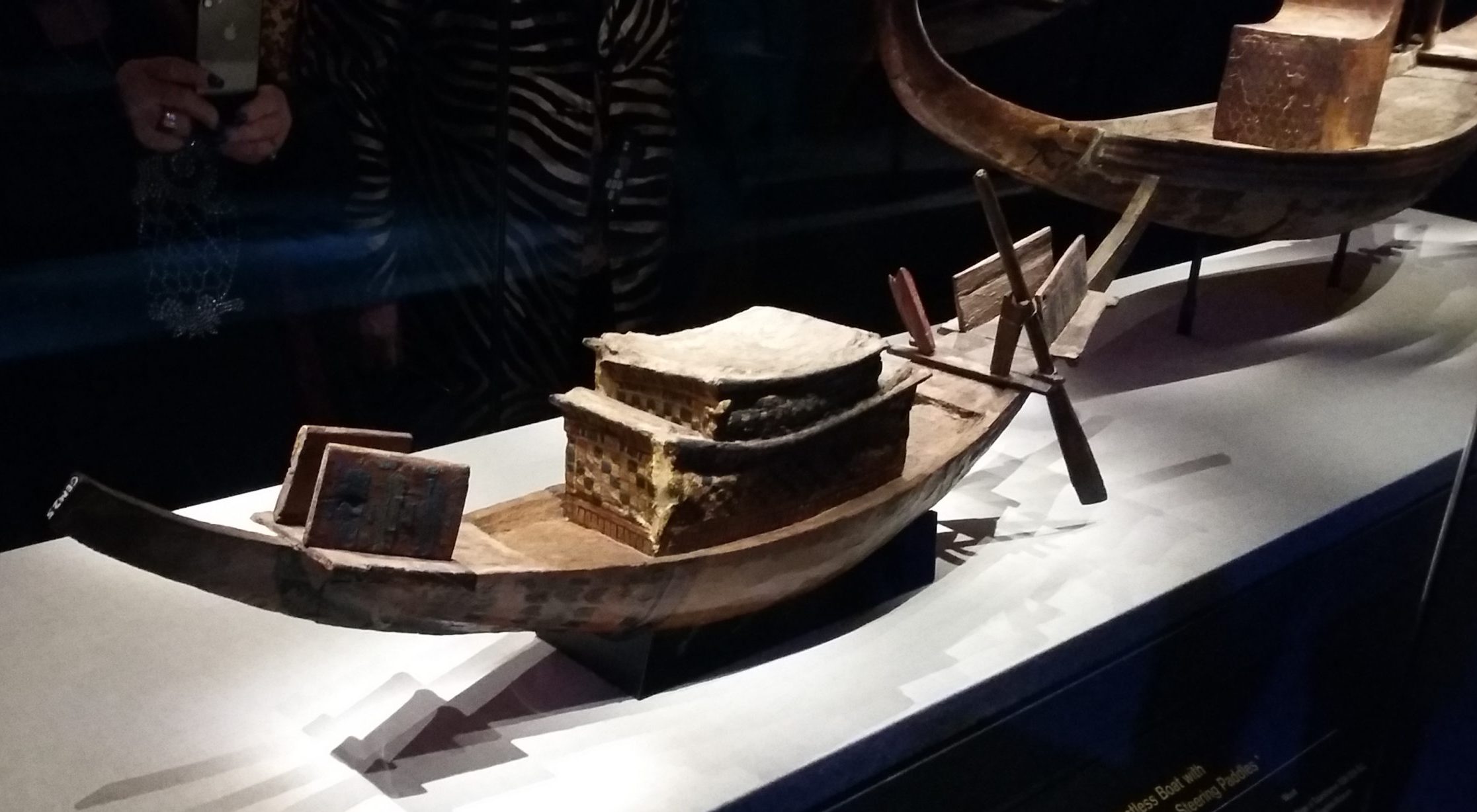
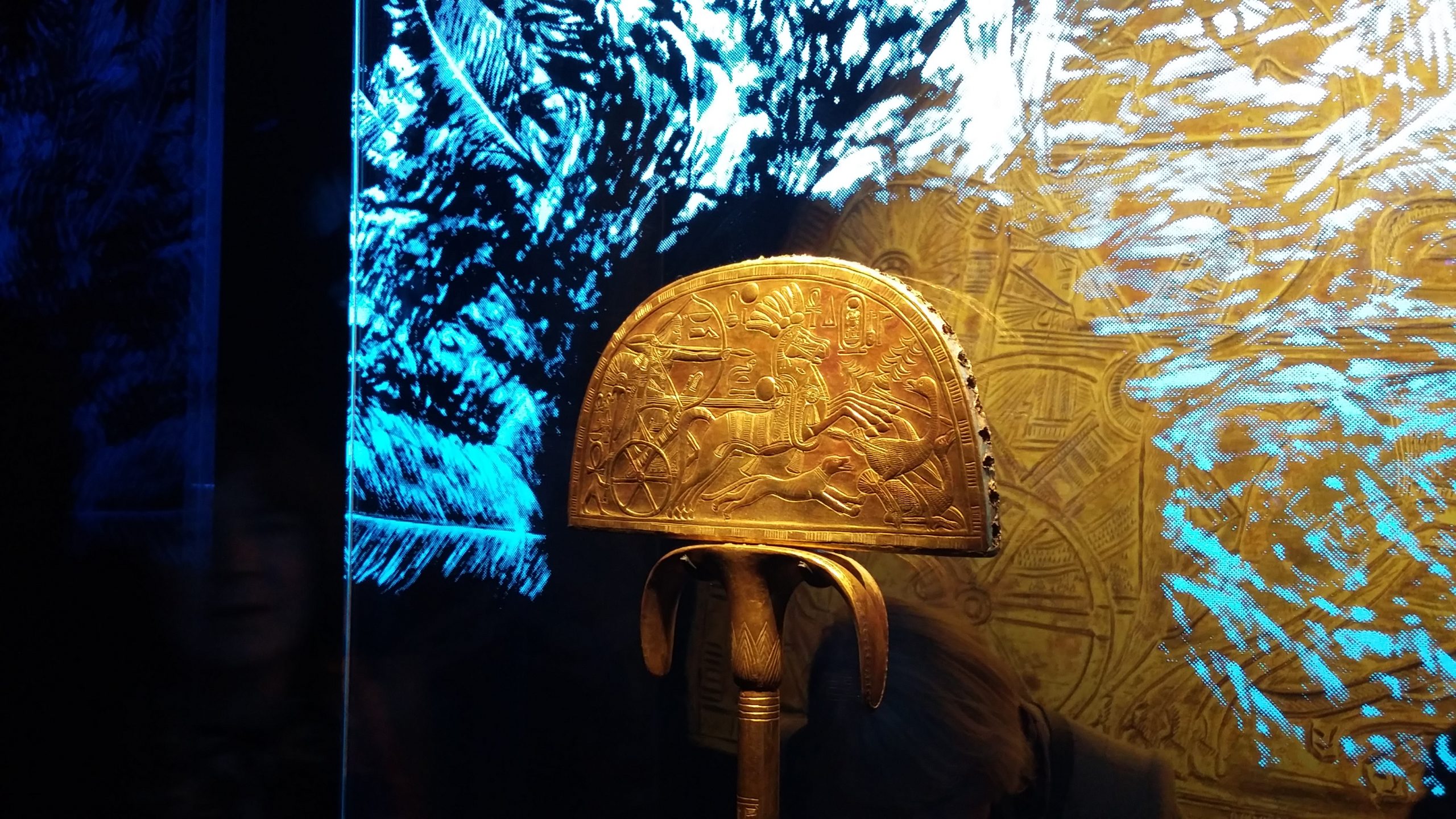
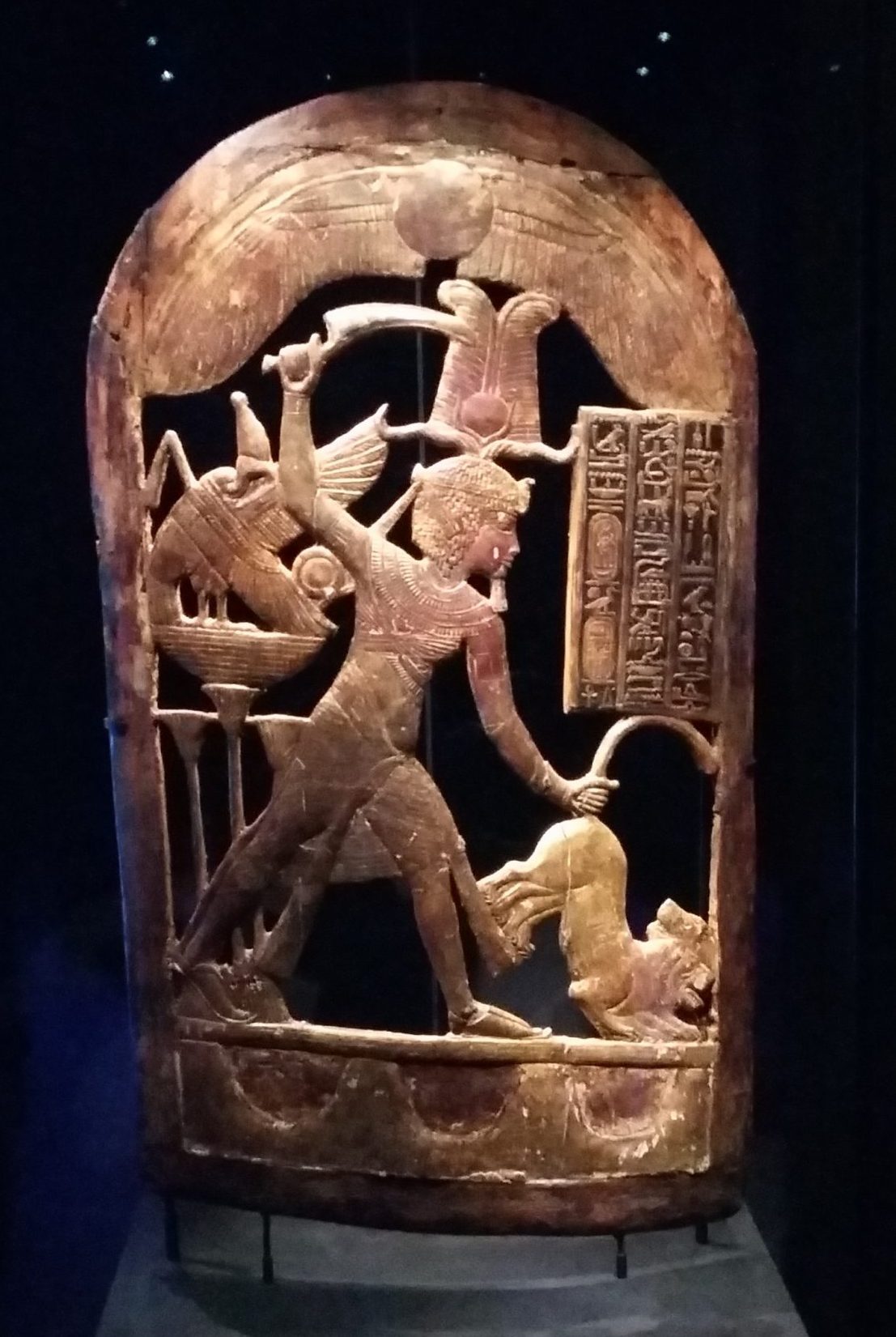
Wooden model of a boatFanShield
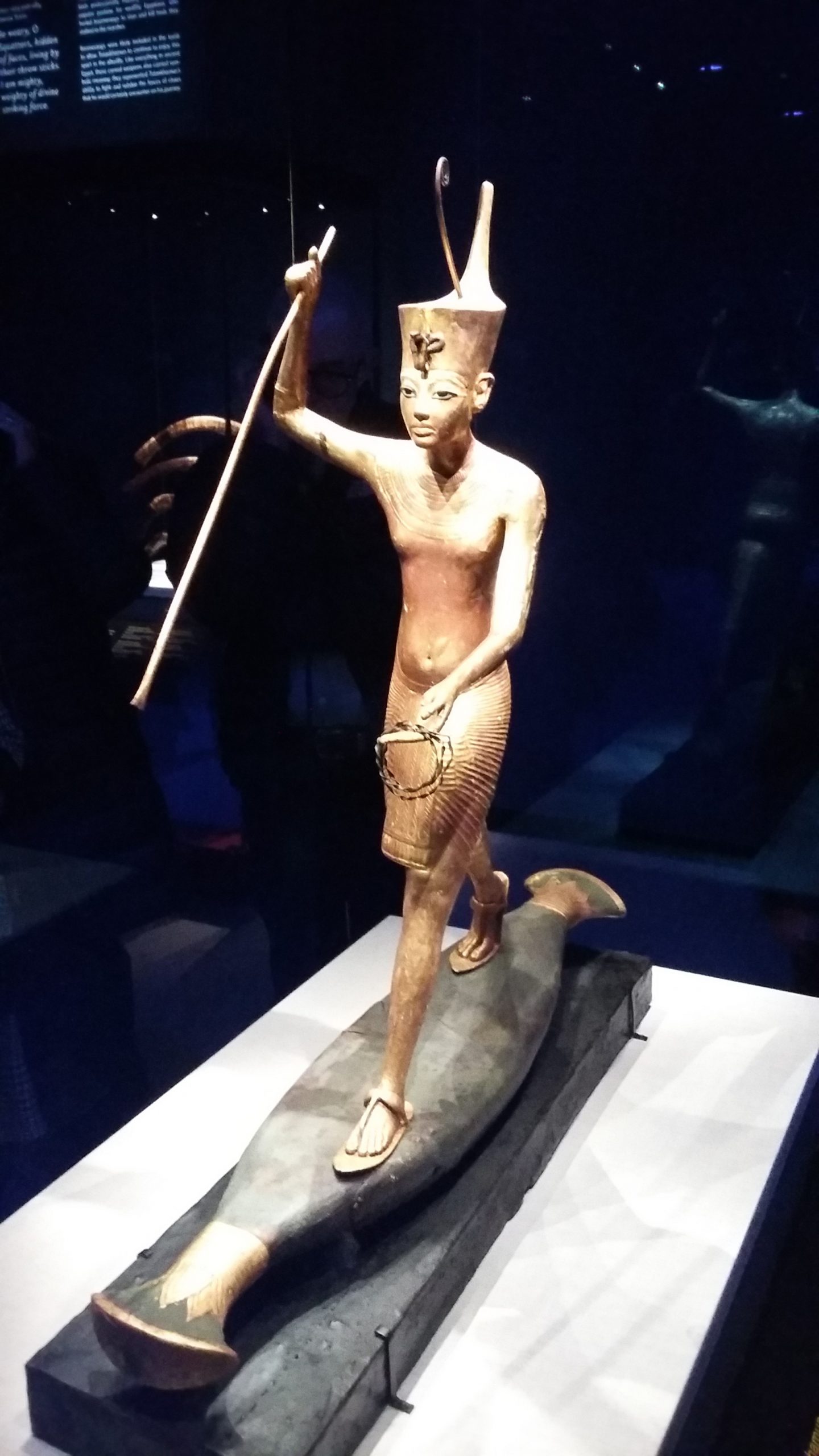
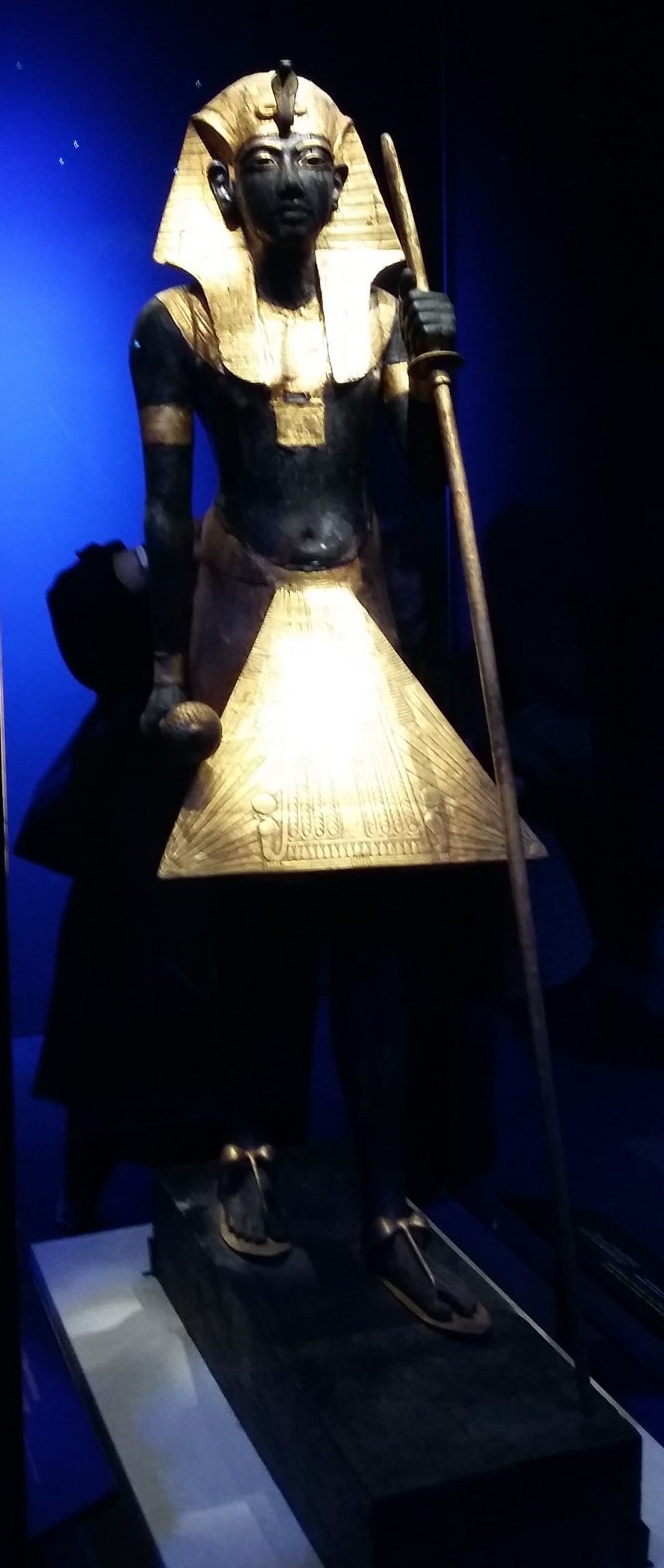
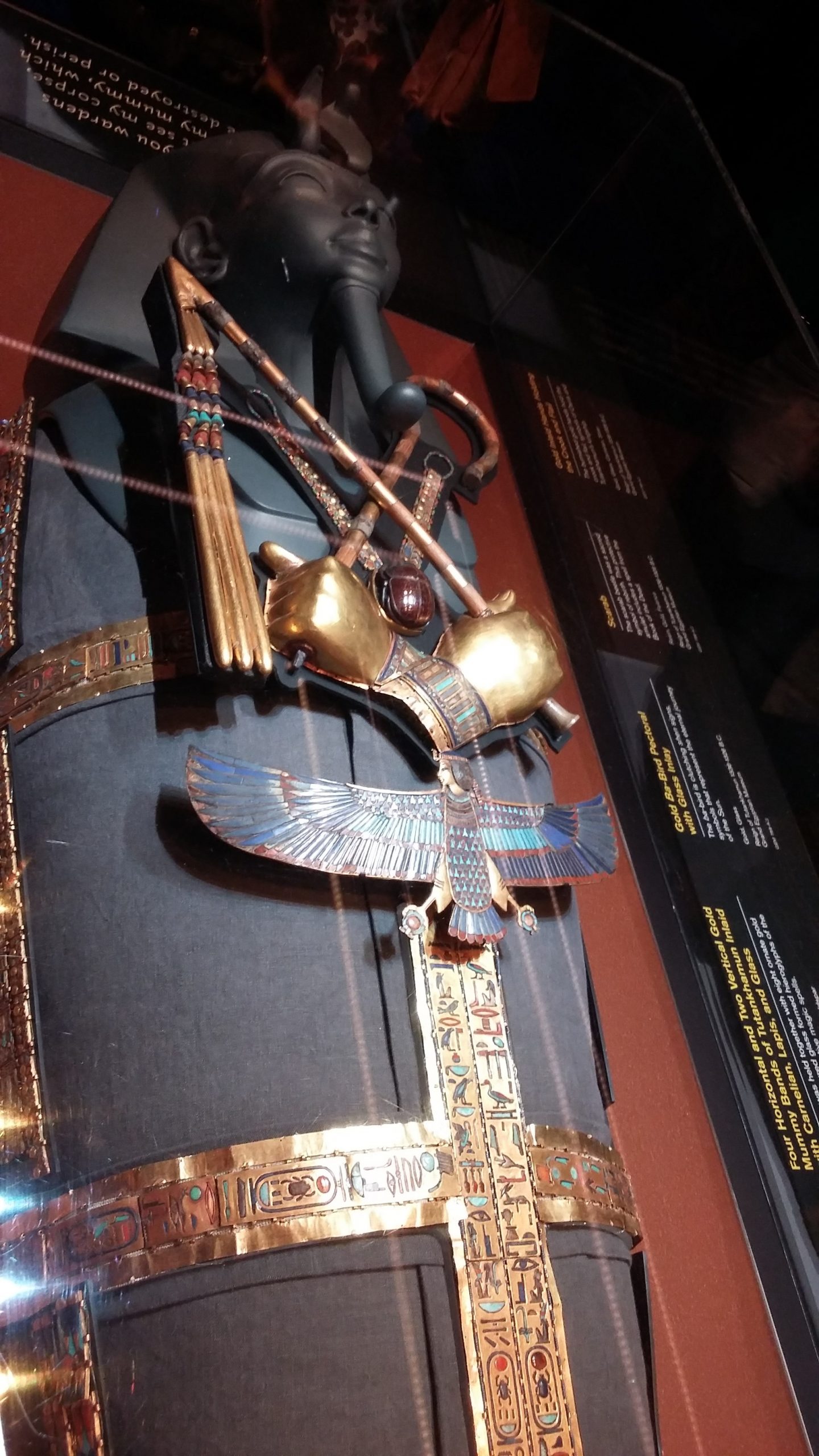
The exhibition is structured in a way that corresponds to how the boy-king’s tomb was laid out. You move through outer chambers before finally arriving at the sarcophagus. The artefacts, many of which were made in a hurry by artisans after Tutankhamun’s early death as a teenager, reflect everything a pharaoh would need in the afterlife, including statues, shields, fans, boxes embossed with hieroglyphs, shining and often encrusted with gems. However, there are also the more mundane items, such as simple chairs, a bed and even foodstuffs. It really struck me what good condition these items are in, considering they are over three thousand years old. I’m sure the centuries spent locked inside a dry, dark tomb would have helped, but still, it’s pretty impressive. Keeping in mind their age, the workmanship and the detail on these artefacts is simply astounding.
Statues
In addition there is an examination that led up to Howard Carter’s discovery of the tomb in 1922, including the acknowledgement that a young boy acting as a water carrier for the archaeological party, Sheikh Hussein Abd el-Rassul, helped to discover the tomb by uncovering the top step. Finally, the exhibition looks at Tutankhamun in popular culture, including songs, films, and the Egyptian influence on 1920s fashions.
Sarcophagus
Tutankhamun: Treasures of the Golden Pharaoh is an expensive exhibition, but I honestly feel it is worth the money. We spent a good half day there, and there was much to admire and to learn about.