Museum of Childhood

2016_0409MoC01

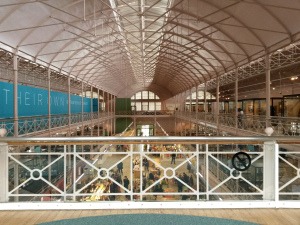
While I was at the Museum of Childhood to see the exhibition about Bagpuss and The Clangers, I took the opportunity to look around the museum as a whole. Though it is based in Bethnal Green, it is part of west London’s Victoria & Albert Museum: the building was opened as the Bethnal Green Museum in 1872 and in 1922, then-Head Curator Arthur Sabin decided to try and make it more child-friendly. The move was a popular one, and following this the Museum re-opened in 1974 as the Museum of Childhood. A refurbishment occurred in 2005-06 and the Museum continues to thrive.

The Museum is neither just for children nor solely for adults, but manages to successfully cater to both groups. Fun and educational events take place regularly for children, and adults can also get in on the act – for instance, there is a nostalgic children’s’ TV quiz taking place on the 21st of April. The Museum examines the history of childhood, which is interesting for people of all ages: adults can reminisce about their own childhoods, children can learn about how young people of the past occupied their time, and everyone can develop a greater understanding of the history of childhood as a concept.

The section devoted to the history of childhood was particularly interesting to me: it looked at how babies and young children were cared for from the sixteenth century onwards, with examples of clothing, cots and feeding equipment as well as toys. There was also a section on clothes, which showed how children went from wearing miniature versions of adult outfits to their own specially designed fashions.

There were special sections devoted to kinetic and electronic toys, and there were some cases devoted to particular themes, such as magic, with a 1950s magic set being displayed alongside Harry Potter merchandise from recent years. I enjoyed seeing some of the toys I used to play with myself, including Sylvanian Families and the original PlayStation. I have to admit I do feel rather old knowing that toys I played with as a child are now in a museum!

The Museum is currently showing a temporary exhibition called On Their Own: Britain’s Child Migrants. This is definitely aimed at adults rather than children as it explores the sensitive and distressing topic of the children who were sent to various British colonies from 1869-1970. These children were sent away with the promise of a better life, but for many this did not materialise, and several never saw their families again.

The Museum of Childhood is definitely worth a visit. It’s fascinating, and it’s free: though be warned, you may come out with a desire to relive your childhood.
2016_0409MoC03

FACTS

Address: Cambridge Heath Road, London, E2 9PA

Website: vam.ac.uk/moc

Opening Hours: 10-5.45 daily

Prices: Free
Clangers, Bagpuss & Co. – Museum of Childhood

2016_0409MoC04

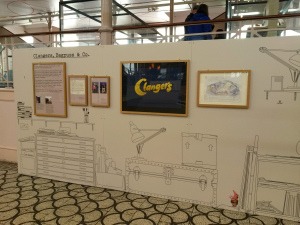
I loved Bagpuss and The Clangers as a child, so I was excited when I found out that there was going to be a free exhibition about Oliver Postgate and Peter Firmin’s work with Smallfilms at the Museum of Childhood, exploring the creation of these shows as well as others including Noggin the Nog and Ivor the Engine.

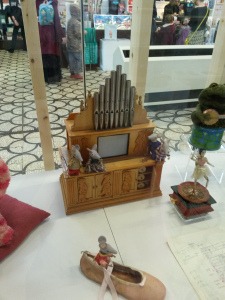
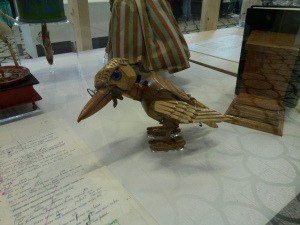
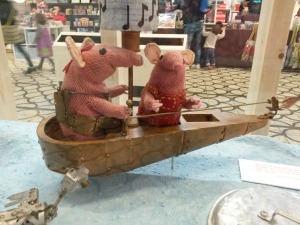
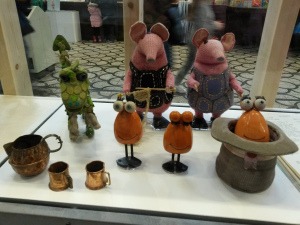
2016_0409MoC05 2016_0409MoC06 2016_0409MoC07

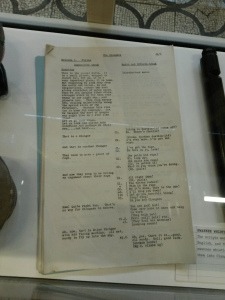
Clangers, Bagpuss & Co is small, but extremely worthwhile for fans, with original puppets, filming equipment and other documents on display. I particularly enjoyed seeing a script from The Clangers, which confirmed what I have always suspected: that the high-pitched squeaks of the characters are reflections of actual speech.

2016_0409MoC09 2016_0409MoC13 2016_0409MoC14

The exhibition runs until 9 October, so there is plenty of time to see it.

The Alice Look – Museum of Childhood

2015_1031AliceLook01
The Alice Look

I’d been meaning to visit the Museum of Childhood’s exhibition to commemorate the 150th anniversary of Alice in Wonderland, The Alice Look, since it opened on 2nd May, and I finally got round to going on its last weekend. To be honest, it was more of a display than an exhibition, consisting of five or six display cases, but in fairness, like the main museum, it was free to visit. I did find it interesting.

2015_1031AliceLook02
Modern, Victorian-style “Alice” dress, made from fabric printed with the book’s text

The exhibition is divided into four categories, looking at Alice’s beginnings, her role as a follower of fashion, the inspiration her image has had on successive generations, and global Alice. I was interested to note that Lewis Carroll, who created the original illustrations in his handwritten manuscript of Alice’s Adventures Under Ground (the early version of Alice’s Adventures in Wonderland), purposely gave his Alice long blonde hair to differentiate her from the real-life Alice Liddell, his inspiration, who had black bobbed hair. The early coloured images of Alice showed her wearing a yellow Victorian-style frock, and she didn’t have a hairband and stockings until the release of the sequel, Alice Through the Looking Glass. Surprisingly, it wasn’t until the 1951 Disney movie that she was given a blue dress, the colour now most associated with her. It was interesting to look at the illustrations from early 20th century editions of Alice: they largely matched the fashions of the time, with Twenties editions, for instance, showing Alice wearing a drop-waist dress.

2015_1031AliceLook03
Japanese “Lolita” style Alice costume

I enjoyed seeing how Alice’s look has inspired popular culture around the world: particularly interesting to me were a Japanese “Lolita” style Alice costume and a Swahili Alice in a kanga dress. I also remembered Gwen Stefani’s video for “What You Waiting For” which was strongly inspired by Alice. I’m glad I made the effort to go, even though the exhibition was small.