Australia – Royal Academy of Arts

Not knowing anything about the art of Australia, I headed to the exhibition at the Royal Academy of Arts after work one Friday night with something approaching apprehension. I had no idea what to expect, but I was impressed. The exhibition showcases more than 200 years of Australian art from 1800 to the present, mostly concerned with land and landscape and displayed in broadly chronological order. Both indigenous and non-indigenous art is explored, giving rise to a varied and thought-provoking exhibition.

Indigenous Painting

Before Australia was ‘discovered’ by Dutch explorers in 1606, indigenous peoples had lived there for over 50,000 years. Aboriginal art is closely related to the land, in both substance and subject matter. It is graven on rock, painted on the body and carved into the ground, but as these works would be rather difficult to transport overseas, the art displayed in this exhibition is limited to that created on sheets of canvas or bark. I was surprised at how much these works appealed to me: they were very abstract and in some ways reminded me of modern art, but they were also heavily rooted in Aboriginal mythology (which differs from place to place and from group to group), including the concept of the ‘Dreaming’, a philosophy relating this world to the spiritual one.

Early Colonial Art (1800-50)

The first British settlers arrived in Australia in 1788. Initially they found life very difficult, as the land around Botany Bay and Sydney Harbour, where they lived, could not support crops. Over time they grew more accustomed to the landscape and begun to capture it in paint, often using watercolour. Artists of the period included John Lewin, the country’s first free-settler professional artist, and John Glover, who arrived in Australia in later life but quickly grew to appreciate this new land.

Late Colonial Art (1850-80)

Fuelled by the gold rush of 1851, Australia, particularly Victoria and its capital Melbourne, grew in population. Among those who arrived in the country were a number of artists from all over the world, many of whom were influenced by the German Romantic tradition as opposed to the British watercolour tradition. These included Eugene von Guérard, whose 1859 painting ‘Bushfire’ was one of the highlights of the exhibition for me.  In fact, the art of this period was my favourite of the whole exhibition: the colours, and the way the artists captured the unique quality of Australian light and landscape, were absolutely stunning.

Australian Impressionism

Like the rest of the world, Impressionism took hold in Australia. During the late 1880s, several artists, including Tom Roberts and Frederick McCubbin, worked at outdoor painting camps and sought to capture a sense of harmony between man and nature in their work. A more pessimistic view took hold, however, when the market collapsed at the beginning of the 1890s.

Federation Landscapes (1900-20)

Landscapes continued to be popular during this period, though owing to the growth in urban areas, many artists began to reflect this in their work.

Early Modernism (1918-40)

This era doesn’t appeal to me as much as some of the others, so I spent less time in this section. Strong colours and new forms were the order of the day. I did like the varied images of the construction of the Sydney Harbour Bridge, which encompassed different angles and styles.

Late Modernism (1940-50)

I found this more interesting than the early modernism section. I particularly liked Sidney Nolan’s iconic images of Ned Kelly, showing the famous outlaw against a backdrop of Australian landscape.

Bark Painting

Painting on eucalyptus bark is the core art form of Arnhem Land and the surrounding areas. Inspired by the rock art traditions of the area, these beautiful paintings express a strong relationship with the Australian landscape and evoke Aboriginal myth and legend. As an aside, several of the pictures here reminded me of the terrifying Bunyip from Dot And the Kangaroo.

[youtube=http://www.youtube.com/watch?v=WtrYO-Mog60&w=640&h=390]

Desert Painting

In 1971 in Papunya, in the Western Desert, a non-Aboriginal art teacher invited members of the Aboriginal community to paint murals on the school walls. Subsequently, they continued to paint on board and canvas, expressing aspects of their Dreamings and of their history and culture.

Early Contemporary Art (1960-80)

The broad-ranging art of this period was inspired both by internationalism, as art exhibitions moved between countries, and a growing sense of Australian nationalism, during which artists explored connections to their environment.

Series and Politics (1970s-present)

Irreverent and political art characterised this period. I was strangely absorbed by the motorbike video, showing the artist with arms outstretched moving along in a vast Australian landscape. Other works examined race and violence.

Contemporary (1990s-2000s)

Many of these works, such as Bill Henson’s photographs, look at the unique quality of Australian light – something I thought was apparent as far back as the 1800s, as several of the earlier works emphasise it.

The Past, Present and Future (1989-2013)

Some of the works in this final section were the most unusual of the entire exhibition. I particularly liked Rosemary Laing’s upside-down house, emphasising that Australia is ‘down under’. An Elysian City by Danie Mellor evokes classical buildings with a Romantic sense of decay.

I really was impressed with this exhibition, it was vast in scope and ambition and contained a huge range of massively varied works. It runs until 8 December at the Royal Academy and I wholeheartedly recommend it.

Merton Abbey Mills

On the same day I went to Epping, I found the time to go south of the river and take a quick look around Merton Abbey Mills. This is a shopping and restaurant complex near Colliers Wood Station, sited near the William Morris Printworks.

Heritage plaque
Plaque marking the site of the William Morris Printworks

The buildings, most of which are original factories and mills, are sited near the river in a lovely location. There are shops and market stalls, as well as a tiny theatre (the Colour House Theatre), a stage for performers, and restaurants.

Merton Abbey Mills
Merton Abbey Mills

In one of the buildings there is a brief museum about the history of the mills, with some interesting exhibits.

Water wheel
Water wheel
The Merton Rat
The Merton Rat

I would like to come back here in the future – I think it would be a lovely place to relax over a meal.

Epping Ongar Heritage Railway

The other weekend I decided to complete my exploration of the Central Line by visiting the final station on my list, Epping. Epping is right at the end of the line at the eastern side, in fact it is actually in Essex. It wasn’t always the end of the line though, in fact the Central Line used to terminate at Ongar. You can still see the tracks extending out from Epping station, although they have partly been taken up.

Epping Station
Looking east from Epping Station

The line from Ongar to almost Epping Station still exists, though, and in recent months a heritage railway has been introduced on the line. This runs between North Weald and Ongar, with another branch extending from North Weald to the end of the remaining track near Epping. The eventual plan is to join up the track again at Epping, and build another station near the existing Epping station to accommodate the heritage railway. In the meantime, a heritage bus service – including both red central London buses and the green ones that were used in the outlying districts – shuttles passengers between Epping and North Weald stations, and are included in the price of your ticket (which is valid all day). The railway itself uses both steam and diesel trains, and I was able to ride on both during my day out.

Routemaster bus
Heritage bus at Epping
North Weald Station
North Weald Station
On the platform at North Weald
A train at Ongar Station
Plaque at Ongar Station
Steam train pulling in to Ongar Station
Epping Forest
The end of the line towards Epping – the line reaches into the forest
Heritage bus
Heritage bus, returning to Epping

The Epping Ongar Heritage Railway is a fun day out for the whole family: I saw lots of children who seemed to be enjoying themselves, as well as adults who just wanted an escape from busy modern life. The towns of North Weald and Ongar are sweet, too (but don’t go on a Sunday like I did – nothing is open). I look forward to seeing how it develops in the future, particularly when the awaited extension to Epping is complete.

In Fine Style: The Art of Tudor and Stuart Fashion – The Queen’s Gallery

The exhibition In Fine Style: The Art of Tudor and Stuart Fashion ran until Sunday at the Queen’s Gallery, Buckingham Palace. I managed to catch it on Saturday, just before it closed.

QueenThe exhibition focused on the sixteenth and seventeenth centuries and mostly looked at monarchs and courtiers, exploring how their costumes displayed social status and other aspects of their culture and personality. At the time, royalty and the elite were trendsetters, and their clothing often influenced fashionable style.

Queen

While the majority of the exhibition was made up of paintings, many by important figures such as Hans Holbein the Younger and Peter Lely, some items of clothing were also on display, including gloves, a doublet and a lace collar. There were also some beautiful pieces of jewellery.

Maggie’s Culture Crawl 2013

I had such a good time on Maggie’s Culture Crawl a couple of weeks ago. Originally known as the London Night Hike, the crawl is a sponsored 15-mile night-time walk around London, with all proceeds going to Maggie’s Centres. These are located in hospital grounds across the country and are designed as places where those affected by cancer can rest, talk and get support – both sufferers themselves and their friends and family. It’s a fantastic cause, although I have to admit it was the walk itself that got me interested – the charity part was a bonus!

I’d received my T-shirt in the post beforehand, with instructions to ‘charge up’ the glow-in-the-dark pattern under a light beforehand. On the night itself, I headed to Victoria Embankment Gardens to register and warm up. There were bottles of water and snacks available, talks from various people and even a little warm up session with music!

Victoria Embankment Gardens
Getting ready for the warm up

We set off at eight o’clock, heading across the river to the first stop which was the London Eye. As part of the walk we were permitted to have a go. I’d not been on it since I was sixteen, and that was during the day, so I thought it would be rather exciting to go on at night I was not disappointed.

London Eye
London Eye
View from the London Eye
Houses of Parliament

After this bit of fun, it was time to walk to the next stop which was the Foreign and Commonwealth Office. Being in here felt like a huge privilege and the building was certainly beautiful. I also enjoyed the tea tasting, courtesy of Fortnum & Mason!

Foreign and Commonwealth Office

The next stop, which was quite a way away, was the Roca London Gallery in Chelsea (near Imperial Wharf Overground station). I was rather bewildered by the inclusion of this stop as it seemed to specialise in toilets (well, bathrooms)! Still, it was decorated pretty well and the dancers performing for our entertainment were really talented.

Roca London Gallery
Roca London Gallery
Inside the Gallery
Inside the Gallery

Maggie’s West London Centre in the grounds of Charing Cross Hospital was another stop. I enjoyed the opportunity to relax in a deckchair, nibble on a cupcake and take a look around the centre, which seems like a really warm, inviting place. Following this, the Royal Geographical Society building near the Royal Albert Hall was another stop – as well as a tea room, this stop had, rather bizarrely, a silent disco! Some people were actually dancing – personally I was glad of the opportunity to have a rest!

Royal Geographical Society
Inside the RGS
Inside the RGS
Silent disco
Silent disco

After this, there was an incredibly long stretch of walking. The route took us past Hyde Park Corner and parallel to Oxford Street (it was around 2 am at this point and seeing all the drunk people stumbling out of the clubs was an eye-opener). I was exhausted by this point (I’d totally underestimated how far 15 miles was) but I soldiered on and was hugely pleased to reach the next stop – Bart’s Hospital, the oldest hospital in London and site for a forthcoming Maggie’s Centre.

Bart
Bart’s Hospital

Bart

Bart

Bart

There wasn’t much of the route to go by this point – I struggled on past the Royal Exchange:

The Royal Exchange
The Royal Exchange

…until I could finally see the end in sight!

30 St Mary Axe - a.k.a.
30 St Mary Axe – a.k.a. ‘The Gherkin’

I was sooo happy when I finally reached the finish. Food chain Leon had kindly provided breakfast, but alas, the veggie option was yogurt – not so great when the meat-eaters got a bacon sandwich. Oh well, I suppose you can’t complain about free food!

At the finish
At the finish

Inside the Gherkin (official name: 30 St Mary Axe) I signed in and was proud to receive my medal. I saw several participants heading home at this point (it was around 4 am after all), but I decided to make the most of the opportunity I had and head up to the top of the building.

The top of the Gerkhin

The space set aside for us, right at the top, was oddly calming. Lights were kept low, and cushions had been spread across the floor for us to collapse on to (several people were already asleep). I put my name down for a free massage, and settled down to wait.

Inside the Gerkhin
Inside the Gerkhin

Inside the Gerkhin

A big advantage of hanging around up here was that I got brilliant views over London, and was able to watch the sun rise.

Looking south towards the Shard
Tower Bridge
Tower Bridge
Looking west towards St Paul
Looking west towards St Paul’s
The sun rising
The sun rising

After my massage, it was late enough for the tube to have reopened, so I left – not before admiring these guys:

Dinosaurs!
Dinosaurs!
Dinosaurs!
Raarr!
The Gerkhin in all its glory

My sponsorship page is still open, so if you fancy donating, I would be really grateful!

Geffrye Museum

Geffrye Museum

After intending to do so for several months, I finally got round to making a visit to the Geffrye Museum in east London. The museum focuses on the history of the home during the past four centuries, exploring how homes have changed and how these changes reflect and are reflected in the way people live.

Open 10-5 every day except Monday (it’s open Bank Holidays though), the museum is free to visit and easy to reach:  it’s fifteen minutes away from Old Street tube station, and a couple of minutes from Hoxton Overground station. The building itself is a set of almshouses built in 1714 by the Ironmongers’ Company, owing to a bequest from twice Company master and former Lord Mayor of London, Sir Robert Geffrye. Now Grade 1 listed, the building has been a museum since 1914, after it was sold off by the Ironmongers’ Company who wanted to relocate the almshouses out of Hoxton, which had become one of the most run-down and unhealthy parts of London.

Geffrye Museum
Geffrye Museum
Sir Robert Geffrye
Sir Robert Geffrye

One of the almshouses, No. 14, has been restored and is open to the public (for a small fee) on selected Saturdays and weekdays. Sadly it was not open on the day I visited, so I will have to make a return trip in order to see it. The museum’s past is also evident in the almshouse chapel, which you come across around halfway through your visit.

Chapel
Former almshouse chapel

On entering the museum, you witness a microcosm of its theme: a selection of chairs arranged in a semicircle, each from a different era. Looking at them, you can see how styles have changed in four hundred years.

Chairs in a row
Chairs from the last four centuries

Most of the museum is made up of period rooms, each of which is made up to look like a typical family room from a particular period. The rooms are arranged in chronological order, and provide fascinating insight into how people lived during those times.

Period room
Hall, 1630
Period room
Parlour, 1695
Period room
Parlour, 1745
Period room
Parlour, 1790
Period room
Drawing room, 1830
Period room
Drawing room, 1870
Period room
Drawing room, 1890

I really enjoyed looking at the development of the rooms and how they changed over time. One important factor in this change was that in the beginning, many middle-class people worked from home, perhaps running their business from the lower floor or front room of their house and living in other rooms. Later, people began to go out to work, and homes were used only for leisure purposes.

Later on, there is a section of the museum devoted to the twentieth century. Another arrangement of chairs greeted me at the start.

Chairs in a row
Chairs from the last century

These rooms represented shorter spaces of time than the older ones: each portrayed only a decade or so. Perhaps this reflects the more rapid changes in design during the twentieth century.

Period room
Drawing room, 1910
Period room
Living room, 1935
Period room
Living room, 1965
Period room
Apartment, 1998

The last bit of the museum was a small exhibition about the people who live and work in Hoxton, a nice complement to the rest of the exhibitions.

I liked the Geffrye: it is a lovely place and there’s a lot to see considering that it’s free. Definitely worth a visit.

FACTS

Address: 136 Kingsland Road, London, E2 8EA

Website: geffrye-museum.org.uk

Opening Hours: Tues-Sun (& Bank Holidays) 10am-5pm

Prices: Free

Mexico: A Revolution in Art, 1910-1940 – Royal Academy of Arts

The other week I went to the Royal Academy to catch the exhibition Mexico: A Revolution in Art, 1910-1940 just before it closed. I’m glad I did – I didn’t know much about Mexico in the early 20th century (or Mexico at any other time, come to that), but I found it really interesting.

Revolution and regime change in Mexico inspired artists of all kinds who produced varied work including paintings, photographs, leaflets and woodcuts. Some of my favourite images were those inspired by the Day of the Dead, with grinning skulls and bright colours. I also liked the early 20th century pictures showing the revolution in action.

José Chávez Morado, ‘Carnaval en Huejotzingo’ (Carnival in Huejotzingo), 1939

Some of the images made a particularly strong impact: the photographers did not shy away from portraying the dark side of the revolution, with explicit shots of the dead and injured. While disturbing, these images really brought home the reality of the situation for the revolutionaries, and contrasted with the other images emphasising the positive side of Mexico.

Metroland

The end is in sight for my visit-every-Underground-station project – after Saturday’s excursion I only have fifteen stations to do. Fifteen! I can hardly believe it.

So what did I do on my Saturday excursion? I did something I’ve been meaning to do for a while – I headed to the end of the Metropolitan Line, one of the oldest parts of the network, to check out the stations there. These were built before the Green Belt around London was constructed, hence why they are so far out compared to the rest of the stations (Zone 9 no less!). The villages here are actually in Buckinghamshire, and you can hardly believe you’ve just got off the tube, so different is the entire area to busy central London.

First of all, Chalfont & Latimer station (the junction from which you branch off to either Chesham or Amersham) seems to be a housing estate with a main road running past. It was very quiet: this attractive-looking tree and bench seemed the most noteworthy landmark in the place.

Just outside Chalfont & Latimer station

I visited Chesham first. I really liked Chesham – it had a really old villagey feel and I could see the hills on one side. There was a market on when I was there, too.

Chesham
Chesham town centre

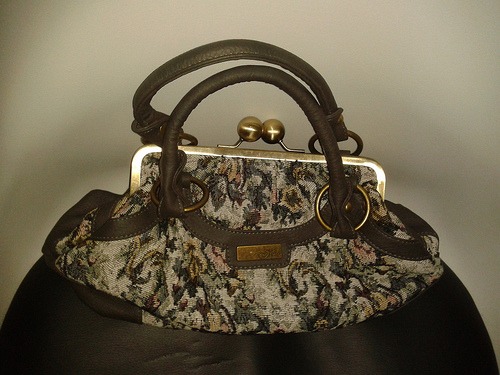
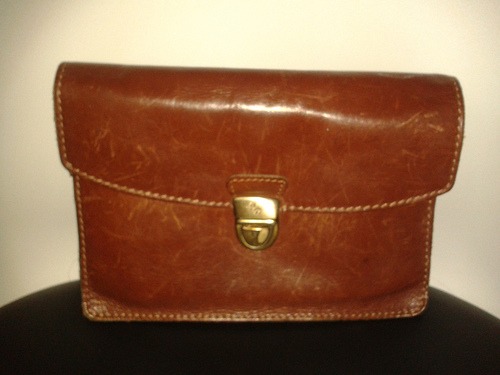
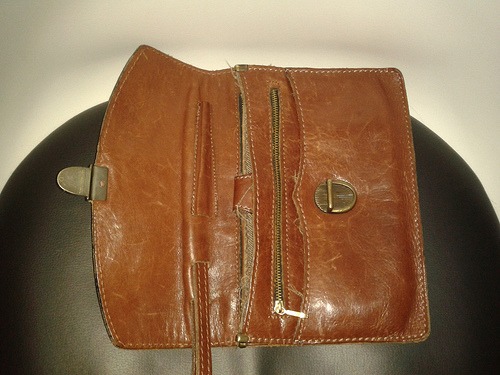
I didn’t like Amersham quite so much, as it wasn’t as pretty – I suspect Old Amersham is the ‘pretty’ village, but I didn’t have time to go there. What I did like – in both Chesham and Amersham – was the number of charity shops. I love a good old charity shop rummage: on this occasion I came back with two bags, one from each town. I love them both, especially the leather one, which is basically Proper Vintage.

Tapestry bag
Leather bag
Leather bag

William Booth College: Home of the Salvation Army

The Tower
The weekend just gone saw Open House London 2013. I didn’t really get involved with it, partly because I spent Friday night completing the Maggie’s Culture Crawl (a night-time charity walk around London) and didn’t get to bed until 9 am. This didn’t leave me with much time or inclination to stand in queues to enter buildings for hours. However, when I went to Denmark Hill station (in pursuit of my London Underground project) I saw that the Salvation Army’s William Booth College was right across the street and open to visitors. I thought, since I was there, I might as well pop in, though my only knowledge of the Salvation Army comes from two rather dubious sources: one, the ‘Sally Army’ weapon employed by the little wriggly soldiers in the computer game Worms, and two, Harold Bishop in Neighbours.

William Booth College

The College was founded in order to train cadets, both men and women, for service as officers. Built as a memorial to, and named after, the founder of the SA (statues of him and his wife Catherine are present outside), it was designed by Sir Giles Gilbert Scott, the architect of Liverpool Cathedral, opening in 1929.

Inside the College

I attended a short talk on the history of the Salvation Army, and then there was an opportunity to climb the tower, but since I’d just done a 15-mile walk and subsequently had only two hours’ sleep, I decided not to take this.

Byron and politics: ‘born for opposition’ – King’s College London

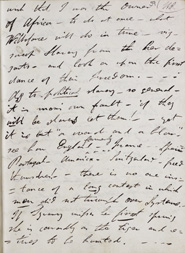
Manuscript of Byron’s ‘Detached Thoughts’, number 84, NLS Ms.43352

I managed to catch the King’s College exhibition about Byron just in time – it closes on Wednesday. The exhibition is displayed in the beautiful Weston Room, part of the Maughan Library, and was curated by the Foyle Special Collections Library of King’s College London and the John Murray Archive of the National Library of Scotland, for the 39th International Byron Conference in July (there’s an International Byron Conference! How awesome!).

I wanted to see the exhibition for two main reasons. One: it is full of manuscripts and rare books, which are always interesting. Two: it’s Byron! I have a bit of an obsession with the man, so there was no way I was going to miss this.

‘Byron and politics’ takes a slightly different look at the “mad, bad and dangerous to know” poet’s life, focusing on his political life and bringing together manuscripts, letters, printed editions and several of Byron’s personal possessions. The exhibition explores the contradictions in the poet’s thought and life: he hated the ruling Tory party but also disliked their opponents the Whigs; he was an aristocrat with a seat in the House of Lords, yet he spoke up for the poor and needy, notably in his Parliamentary speech in which he championed the cause of the Nottinghamshire Luddites; he was in love with the idea of democracy yet refused to admit the poor he knew to be capable of taking part in it. Byron greatly admired Napoleon and was overwhelmingly disappointed when he chose exile over  a ‘noble death’. He himself met his end in Missolonghi, Greece, fighting for the cause of Greek independence.

For someone whose reputation is of a wild, wicked, immoral and frivolous poet, Byron’s deep engagement with the political issues of the day are something of a revelation. This aspect of his life shows, perhaps, a deeper side to his character and a more serious one. He also seems to have had a strong sympathetic understanding of the less fortunate, though ultimately he refused to side with any one party or way of thinking, preferring to form his own views. I took a copy of the exhibition guide, so that I can revisit this aspect of Byron’s life in the future.