Just a quick note on an event I went to at North Finchley Library – a talk by Swedish author Arne Dahl (real name Jan Arnald). I love a bit of Nordic noir and I’ve enjoyed several of Dahl’s books as well as the TV series they are based on.
Dahl spoke a bit about his most popular series, the Intercrime books, as well as his upcoming work. At the end there was a question and answer session, which I didn’t contribute to (I never do, to be honest). It was definitely worth the trek to North London after work, though.
This month’s brand is yet another based Down Under. Kaiju Candy is the brainchild of Donna Mizzi and her husband Christian. Donna used to run Heidi and Gretel (I have a couple of H&G designs). Her new venture is bright, colourful and fun. Kaiju Candy say:
“We are inspired by Japanese Kaiju monsters, kitschy horror movies, carnival freaks and the strange.
We also love all things Aussie and like to create kooky versions of some of our fave local furry and feathered friends.”
Kaiju Candy
The store itself doesn’t offer international shipping, but various stockists are available, including Lottie & Lu who are based in the UK.
I own the Audrey II brooch from Heidi and Gretel; this Mean Green Mother brooch is completely different but equally awesome.
Mean Green Mother Brooch
This terrifying clown brooch is absolutely incredible, and you can get matching balloons too.
Clown and Red Balloon Brooch
This crab brooch is really sweet, despite the name.
On the Sunday of the Open House London weekend, I headed south again to visit Garrick’s Temple to Shakespeare, created by David Garrick for his hero William Shakespeare. Born in Hereford and raised in Lichfield, Garrick moved to London and became the most well-known and acclaimed actor of the age. In 1754 he purchased Hampton House, now Garrick’s Villa, overlooking the Thames at Hampton.
Garrick’s Villa
His riverside garden was laid out by Lancelot ‘Capability’ Brown, and this octagonal Palladian temple was built in 1756. The temple has a dome and eight Ionic columns, making it similar in style to the temple at Chiswick House.
Bust of Garrick
From the temple, Garrick gave money and cakes to poor children every year on May Day. He also used it for entertaining friends such as Dr Johnson, as well as for writing and storing relics to Shakespeare. Eventually he had a tunnel constructed to enable him to reach the temple from his house.
Inside the temple
In 1758 Garrick commissioned a life-size marble statue of Shakespeare from the eminent Huguenot sculptor, Louis François Roubiliac *Garrick may have posed for this himself). The original version had ‘veins’ across the face, a characteristic of the marble; Garrick insisted the head was replaced. The original statue is now in the British Library; this version was given to the Trust by the British Museum.
Shakespeare sculpture
The temple eventually fell into disrepair until the late 20th century when the local council and several charities raised funds to restore the building and lay out the gardens again. It is now managed by the Garrick’s Temple to Shakespeare Trust, and contains copies of paintings from major galleries plus original 18th century prints and engravings about Garrick. It’s open on Sunday afternoons throughout the summer months and occasionally you can attend concerts here, too.
Every year as September approaches I look forward to Open House London, when normally closed buildings open their doors to the public for free. This year I spent my Saturday down at The National Archives at Kew, somewhere I’d never yet visited.
History
The National Archives are the official archive and publisher for the UK government and they also care for over 1,000 years of national documents. They are experts and leaders in the information and records management and archive fields, and focus on ensuring the future of physical and digital records.
The National Archives was created in 2003 by combining the Public Record Office and the Historical Manuscripts Commission. The building itself was built in 1977 as an additional home for the public records then held at Chancery Lane. The site used to be a World War I hospital, and it was later used by several government departments.
My visit
There were a number of activities and talks taking place all day. I went on a Repository Tour, which was a fascinating journey through the document shelves behind the scenes. We saw the carts zooming past the shelves, on their way to pick up books ordered by readers, and saw the lift system that sends requested books down to the reading room. Extra-valuable items can only be viewed in a specially-constructed strongroom, where you’re only allowed out by a member of staff. I also joined a Collection Care Studio tour, which was a fascinating chance to explore the ways in which the NA look after the objects in their collection. These included the protection of fragile or unusual objects with 3D printing technology, iron gall ink and the Naval Knights of Windsor, conservation as part of the digitisation process, care of highly used documents, caring for Terence Cuneo’s war paintings, packing items for loans and collections, wax seals, x-rays and the hunt for arsenic wallpaper samples, and the emergency plan.
Afterwards I attended a couple of talks: The Public Record Office, Kew: Its place in British Architecture of the 1970s and The Changing Face of Kew. I also wandered around the public areas of the building and saw a couple of screenings of films from the archives including excerpts from Blue Peter. There were a few displays of documents about the building of the PRO at Kew and the 40th anniversary of the National Archives at Kew.
Finally I popped into the Keeper’s Gallery, which has a permanent exhibition about the history of the Archives and its most popular holdings, including the Domesday Book. It proved an interesting way to round off my day.
With the onset of September it was time once again for the national Heritage Open Days, which take place each year up and down the country. This year I happened to be at home, but being too lazy to get myself to Newcastle or Durham to check out what was on offer, I ended up only attending one event. This was a historic walk around Hetton-le-Hole, where several members of my family live, grew up and are otherwise associated with.
1872 school house
We met at Hetton Centre, a fairly recent building that happens to be on the site of the old Hetton Hall. The exact date of the Hall’s construction is uncertain but it was built in the classical style. It had become dilapidated by the end of the nineteenth century and was demolished in 1923. We headed to the centre of Hetton, passing the old school house (opened in 1872), before stopping off at the point where the first moving locomotives ran, taking coal from Lyons Colliery to the River Wear.
Signpost towards the Wear
The street is still named Railway Street, and just beyond there are still sleepers from the Hetton Railway. The line was surveyed by George Stephenson in 1822 and was supervised by his brother Robert. Our guide took us to nearby Fairy Street, and explained that it was so-called because of the large hillock here nicknamed the Fairy Cradle, which supposedly dated from the Iron Age.
Fairy Street
We stopped off at the Primitive Methodist Chapel. Primitive Methodism reached Hetton in 1823 and this chapel was opened in 1858. I’ve been here plenty of times over the years for weddings and funerals, but this was the first time I had the chance to look around and take things in from a historical point of view. The church was built entirely by the miners. Interestingly, there used to be a public house attached to the church – not owned by it, just next door – somewhat ironic as Methodists are teetotal!
Primitive Methodist ChapelInside the Chapel
Heading beyond down the road we ended up in a part of town I’d never seen before, and a beautiful though rather run-down building, the former Pavilion Theatre and Cinema, built by Ralph Barton in 1909. The first manager was Linden Travers, father of the actor Bill Travers.
Pavilion Theatre and Cinema
We then stopped at the site of the former Anglican church, now sadly reduced to rubble. A nearby house (Laburnum House) has a blue plaque with details about Nicholas Wood, friend and colleague of George Stephenson, co-founder of the Institute of Mining, and partner in the Hetton Coal Company from 1844, whose grave is in the nearby churchyard.
Site of Anglican ChurchNicholas Wood’s blue plaqueNicholas Wood’s grave
Crossing the road, we passed the Wesleyan Chapel in Front Street (built in 1824) then ventured towards the oldest part of town, taking in Hetton House, one of the oldest houses in the town, dating from approximately the 1720s and bought by the Lyon family (the Earls of Strathmore) in 1746. The house has two extensions, one dating from the 19th century and one from the 20th. It was most recently used as council offices and closed in 2010. Nearby is the former Standard Theatre, built in 1874. It was converted to a bus garage in 1916.
Wesleyan ChapelHetton House
The tour ended in style as we stopped at the 18th-century Old Smithy which has recently opened up for occasional open days once again. I really enjoyed the tour and I learned a lot.
My week mainly consisted of naps, to be honest. However, during my week at home I also did the following:
Read books
I read War and Peace and the whole of the Enid Blyton ‘Adventure’ series. A bit of a contrast there. W&P was the Maude’s translation in a cute little three-volume edition by Collector’s Library. The Blyton series is the one starring Kiki the parrot, who was always one of my favourite characters, and inspired me with the desire to own a pet parrot (as well as somewhat unrealistic expectations of what parrots are actually capable of).
I also reread a book I discovered a few years ago, The Haunting of Hill House by Shirley Jackson, which is wonderful.
The Haunting of Hill House
Dieted
Thanks to my mam, who was on a health kick. In fairness it wasn’t too bad, and we discovered one recipe for macaroni cheese made from Primula Light cheese and mustard, which was amazing. I also ate much more fruit than I usually do, and enough miniature chocolate bars to form several whole ones.
Attended pub quizzes
Two, to be precise. One was my dad’s quiz, which we won, no thanks to me. My dad’s quizzes are HARD. The other was at a pub near to where my parents live. My mam and I went with one of her friends from the estate and said friend’s mother, who was eighty-nine, had never been to a pub quiz before, and was very excited about it. We did fairly well on this one, and I don’t think the three bottles of wine we consumed had too much of a negative effect.
Popped down to Seaham
My mam and I drove down to Seaham to go for a walk and check out the shops. The highlight was undoubtedly a trip to Lickety Split. They do GINGER NUT ICE CREAM.
Seaham harbour
Visited some new bars in Newcastle
Newcastle has really changed since I was last there. I went for a friend’s birthday and we started off in The Alchemist which does amazing cocktails.
Me at The Alchemist
Between us we had one that looked like a miniature bubble bath, one that resembled a science experiment and one that looked like water but which tasted of different things as you drank it. We then moved on to The Botanist which is simply gorgeous.
The Botanist, Newcastle
Celebrated Heritage Open Days
With a tour around Hetton-le-Hole, on which more in my next blog post…
This month’s brand is another Aussie-based maker, whose gorgeous designs are available on Etsy:
Winnifreds Daughter
I really wish postage to the UK from Australia wasn’t so high, or else I’d buy more beauties like these! These gorgeous brooches (and there are some earrings too) are designed by Jessica Davis.
I’ve always wanted to be one of those people who fill pages and pages of journals with intelligent drawings and pretty pictures. However, I am hampered in this desire by the unmistakable fact that I simply cannot draw. My people have never progressed beyond stick men and my animals all look like the children’s drawings IKEA turned into soft toys a few years ago. My brother got all the artistic talent in my family.
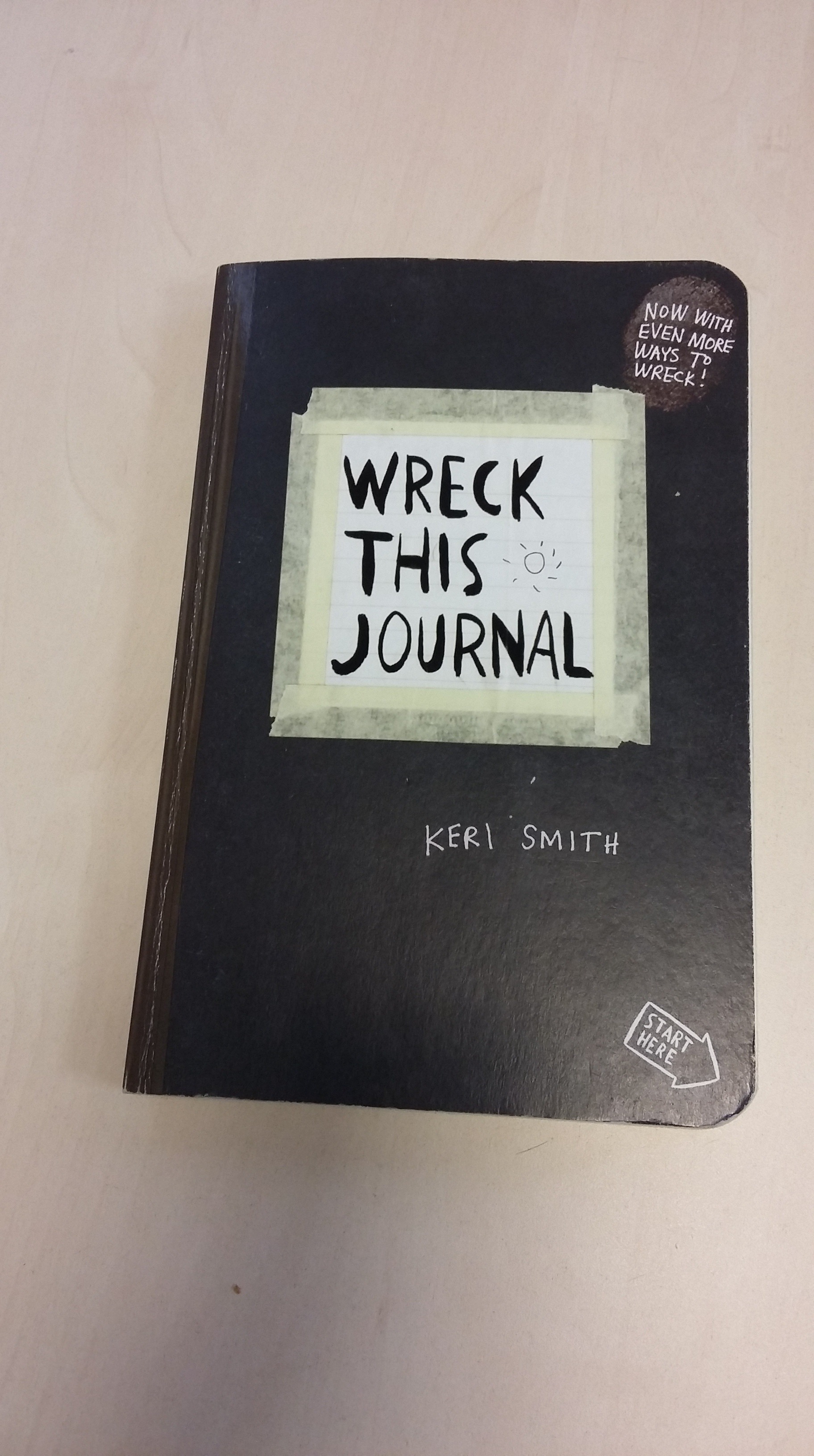
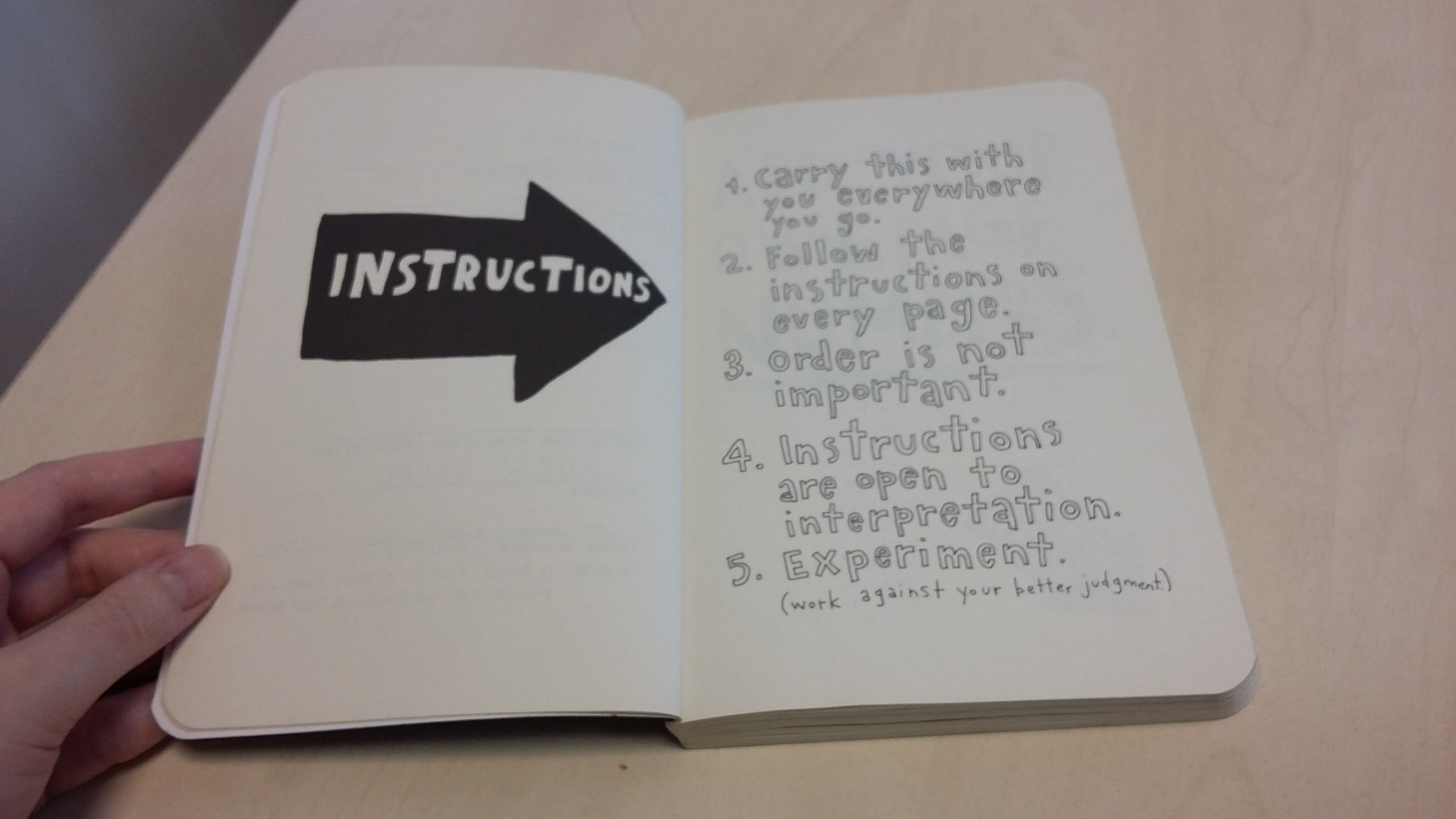
Anyway, I decided to give Keri Smith’s Wreck This Journal a go. Smith is an author, illustrator and artist who created this ‘alternative journal’ to help people “engage with the creative process”. It’s full of suggestions that invite you to mess up or destroy the journal in various ways: tearing out pages, immersing it in water, rolling it down a hill. As someone who won’t even bend the spines of her books, the thought of all this made me shudder: but perhaps it would be liberating?
Short answer: no. Some of the prompts were ones I rather enjoyed. Generally these were the ones involving less destruction and more colour: painting a page with nail varnish or lipstick or some such.
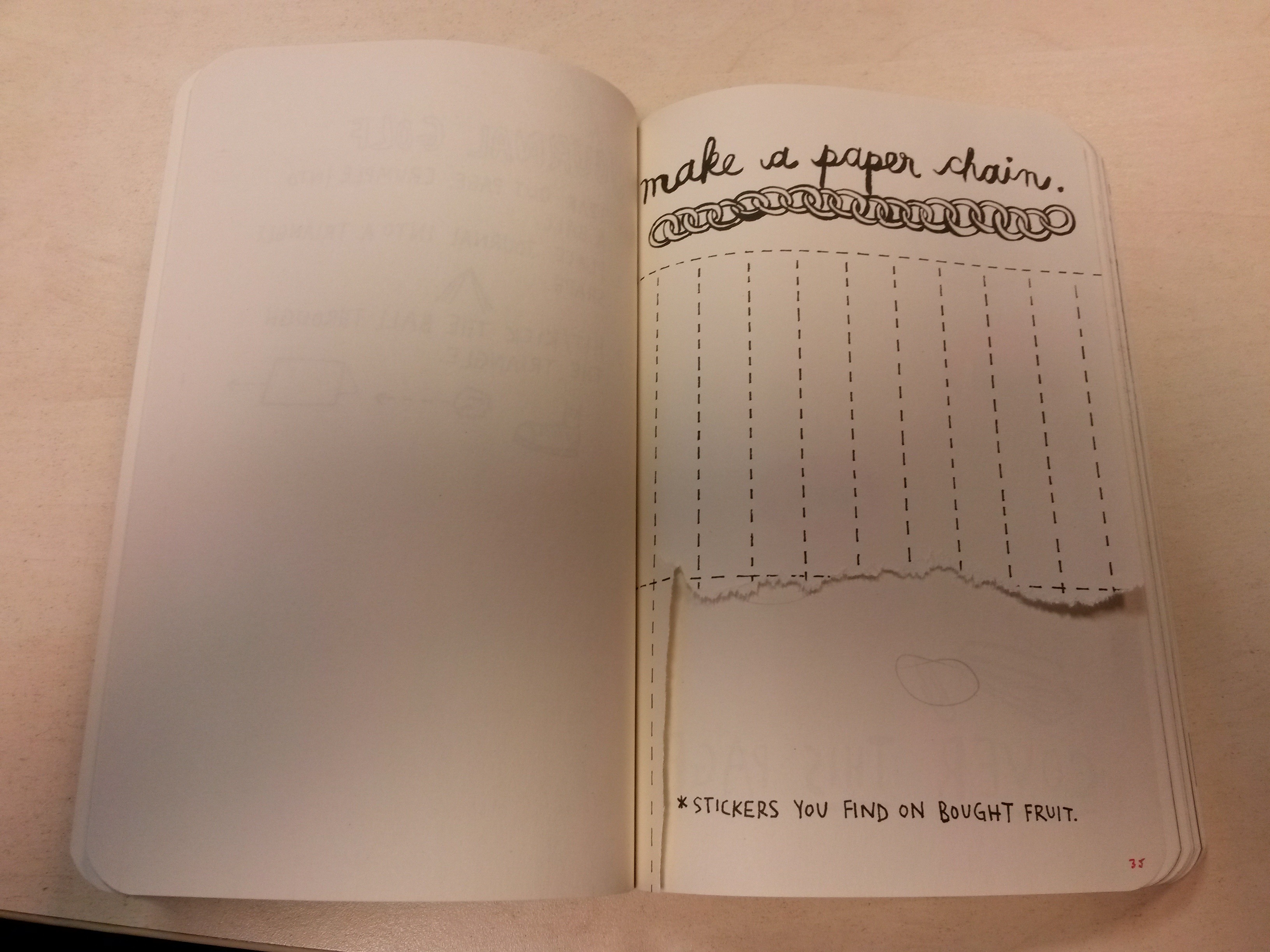
Some of the prompts require you to tear pages out of the book. It seemed a bit wasteful to me, but I duly complied.
I cringed when requested to mark a page with dirt, especially when said dirt had to come from a dusty car. Standing on a pavement next to a random car, looking carefully to make sure no one was around before surreptitiously rubbing my book on the side, was possibly my most embarrassing moment of the project.
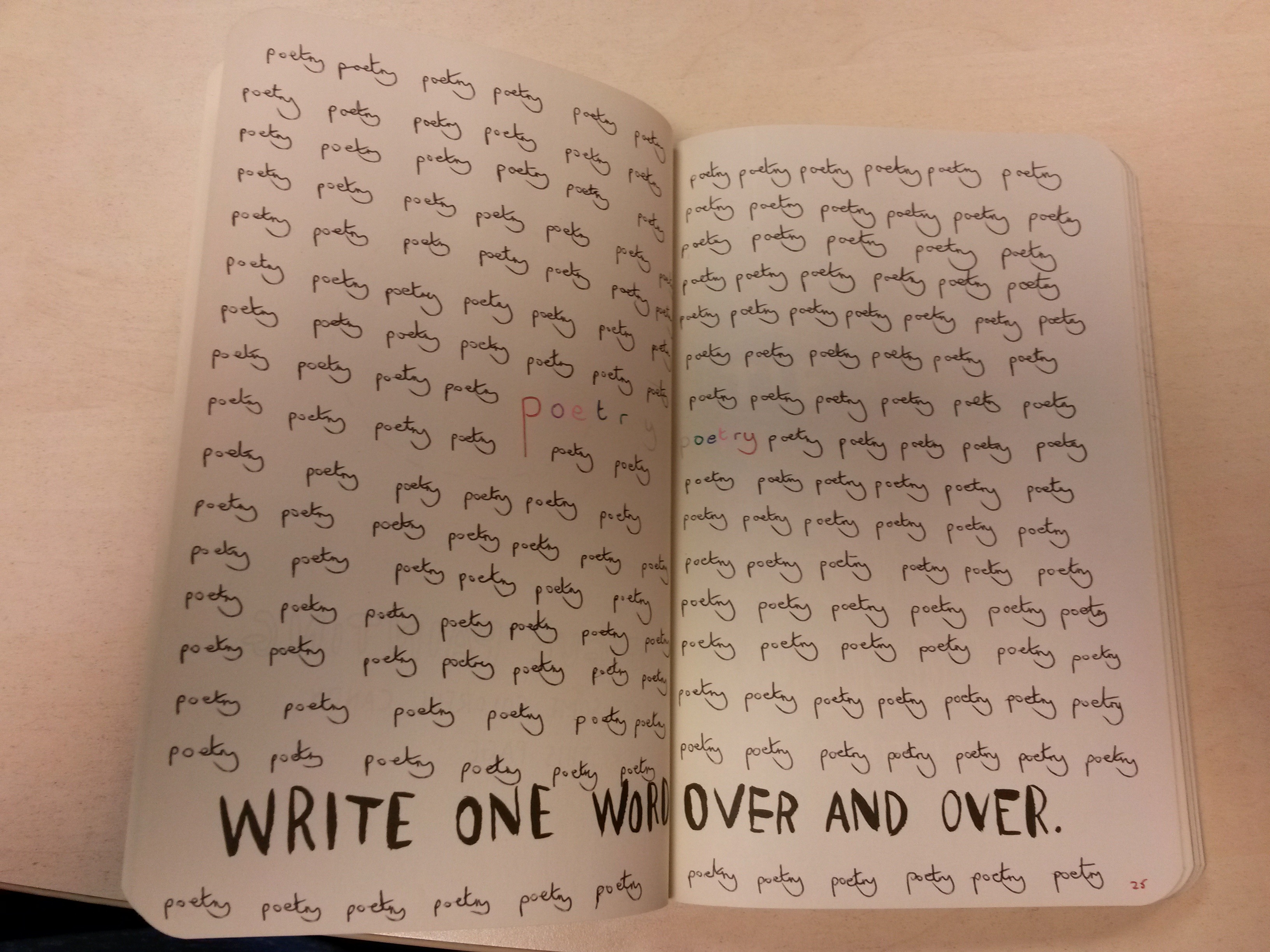
My very favourite was the one that asks you to fill a page with one word written over and over. I found this quite enjoyable, suggesting my heart really does belong to writing.
Well, I’ve completed the book, and I’m not too sure what to do with it now. It’s far too messy to put it in a drawer with my old diaries. I’ll probably just chuck it out, to be honest.
What have I learned from wrecking my journal? Mainly it’s reinforced that destruction really isn’t for me. I’m not an artist and I don’t want to be. Give me words any day.
If you think this book sounds brilliant, you’re probably right: lots of people love it. If not, you might be like me, and that’s also okay. Honest.
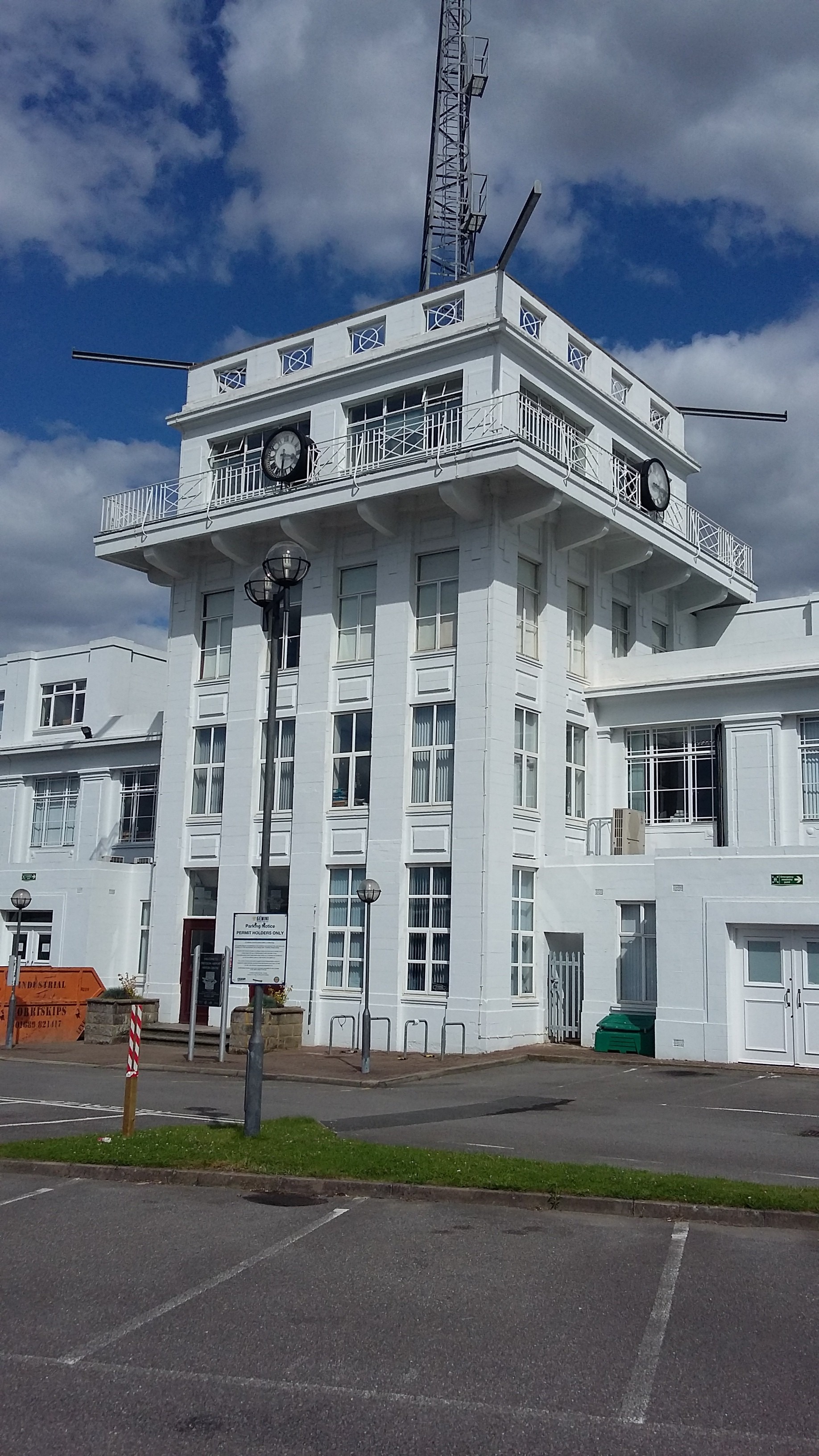
When you think of airports in London, you probably think of Heathrow or Gatwick, but before these airports, there was… Croydon. Based in South London, it was the main airport for London before it was replaced by Northolt Aerodrome, London Heathrow Airport and Gatwick Airport. Croydon Airport was Britain’s first major international airport, coming into being during World War I and closing in 1959.
Croydon Airport
The Historic Croydon Airport Trust, also known as the Croydon Airport Society, was founded in 1978 and became a registered charity in 1983. It aims to conserve the history and heritage of London Croydon Airport for the community. The Croydon Airport Visitor Centre is a ‘micro museum’ run by the charity, and is open to the public once a month. I headed down one Sunday to find out more.
Model of the airport (plane is not to scale…)
History
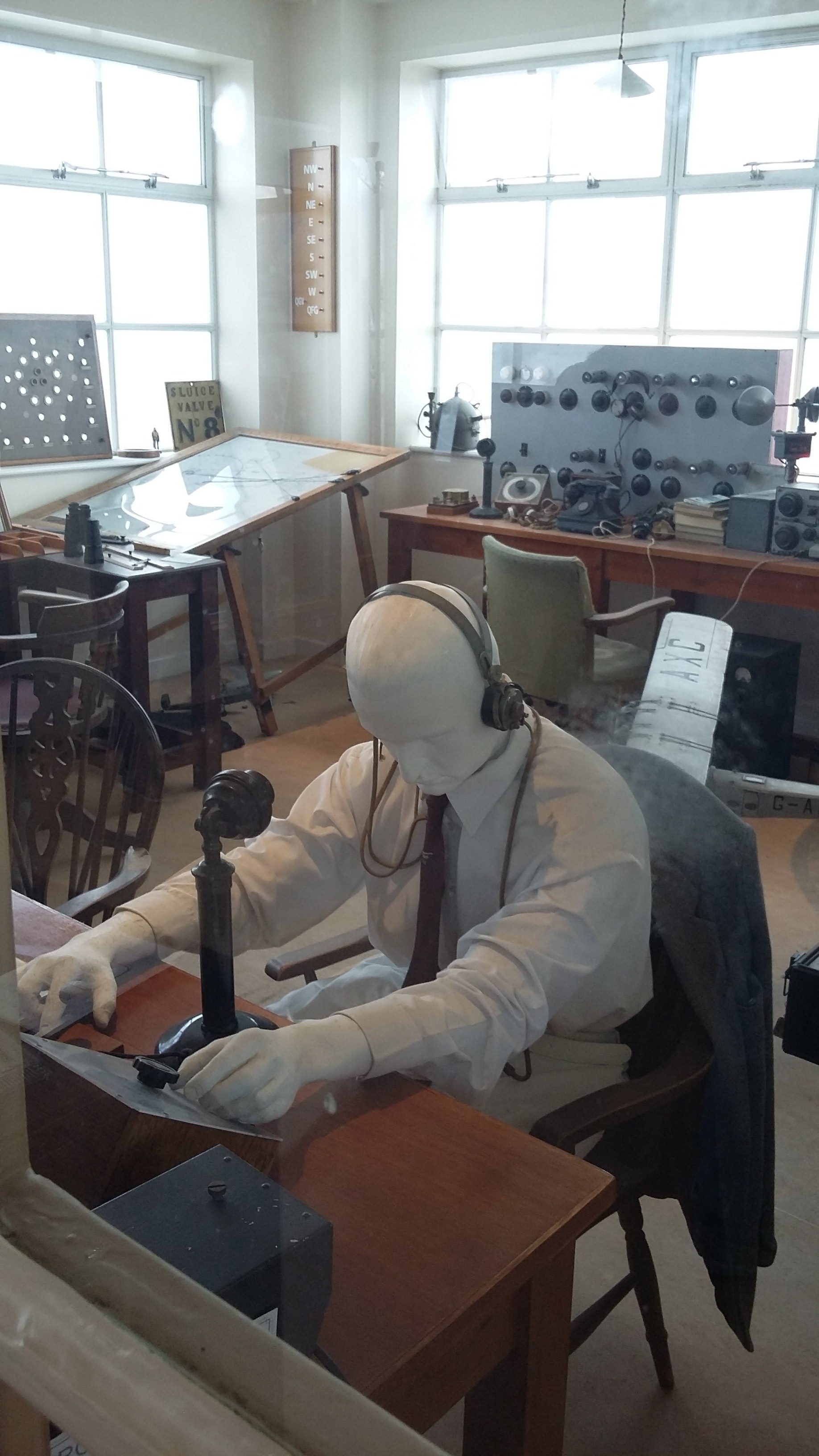
London Croydon Airport was once Britain’s major and only international gateway airport. It played a significant part in early twentieth century British history and helping to shape global air travel. The airport was the birthplace of Air Traffic Control – the control tower here was the world’s first. It also played an important part as the site of many world record-breaking flights, including those undertaken by Amy Johnson. The international distress call ‘Mayday’ was coined here.
Inside the airport
Airport House, as the terminal building and control tower are now known, are Grade 2* listed.
Control tower
My Visit
I joined a tour pretty much as soon as I arrived. My guide was very informative and took us around the building, showing us where visitors used to arrive and depart, taking us to the control tower at the back before heading up the stairs to view the displays. He regaled us with interesting historical info that complemented the exhibition.
In the control tower
There are some flight simulator games at the top of the control tower to keep kids happy, but the whole site should be interesting for adults. There are some original aeroplane seats which seemed much more comfortable and luxurious than the ones we get nowadays, and displays about the history of the site. It made me think of Agatha Christie for some reason, and made me feel nostalgic for the good old days when you could turn up at the airport with a bag and hop on a plane without all the queuing and security checks we have to go through now.
A visit to Croydon Airport is definitely worth it. Keep an eye on the website for details of open days.
*I visited Iceland in 2011 and wrote about it on the website Ciao. I’ve decided to edit and publish a version of my holiday diary here*
Reykjavik, seen from the Hallgrimskirkja
I recently went on holiday to Iceland, staying in the capital city, Reykjavik. Reykjavik is the northernmost capital in the world, and is also the smallest capital city in Europe, but then Iceland itself doesn’t have the largest population either. Greater Reykjavik has a population of just over 200,000 people, which is two thirds of the population of the country as a whole. A small island to the north west of Britain, it does tend to get overlooked when concentrating on mainland Europe, but from what I’d heard it seemed like an interesting place to visit, and after seeing signs all over the Tube advertising the place, I took it as a sign that I needed to book a trip!
My Icelandair plane
I booked my trip with Icelandair and the flight from Heathrow Airport took around three hours. During my time in Iceland I went on the Golden Circle tour, bathed in the Blue Lagoon and explored Reykjavik.
***Practicalities***
The flight from London to Reykjavik takes around three hours. Planes land at Keflavik Airport and you need to catch the Flybus or take a taxi (a more expensive option) to get into Reykjavik. The currency is the krona, which went down in value considerably in 2008 after the financial crisis, so Iceland is no longer quite as expensive for the visitor as it was. It’s best to exchange your money there as you’ll get a better exchange rate (I exchanged mine at the airport) and currency can be difficult to obtain back home. British nationals do not need a visa to enter. Iceland is a member of the Schengen Agreement: nationals of countries that have implemented the agreement do not need a visa either. Iceland is not a member of the EU, and you can therefore purchase duty-free products and get tax relief on many purchases there.
Tap water is perfectly safe to drink in Iceland. Medical facilities are good and available to UK citizens with an EHIC (European Health Insurance Card). The climate is milder than you might expect for somewhere so far north – it was around 4 degrees Celsius when I was there at the beginning of April, though the weather can be changeable, and it’s unwise to go off exploring unless you know what you’re doing.
***A potted history of Iceland***
Did you know modern day written Icelandic is close enough to Old Norse for Icelanders to be able to read the language of the old sagas? Or that 80% of Icelanders are descended from Scandinavian and British men but Irish women (since Viking raiders headed to Ireland to kidnap prospective wives before sailing off to Iceland)? These were just two of the interesting facts I learned on my trip to Reykjavik.
The first settlers are largely agreed to have landed in Iceland in the ninth century and claimed land in order to farm. A Parliament, the Althing, was held (in what is now Thingvellir National Park) annually to decide the policies of the Icelandic Commonwealth, until Iceland was brought under the rule of Denmark and Norway in the 13th century. Centuries of poverty followed, with Iceland being hit by the Black Death on two separate occasions. Christianity had been introduced during the medieval period, but during the sixteenth century the nation converted to Lutheranism and the last Catholic bishops were beheaded. During the nineteenth century, a growing independence movement inspired by romantic and nationalist ideals eventually helped to bring about a referendum in 1944 in which Icelanders voted to become a republic.
(This is an extremely short and greatly simplified version of Icelandic history!)
Looking out towards the harbour
***A little about Icelandic geography***
Iceland’s geography is so unusual and rich that I thought it worth mentioning. Iceland is on the mid-Atlantic ridge, where the North American and Eurasian tectonic plates are slowly moving apart at the rate of about 2 and a half centimetres per year. In fact if you visit the Thingvellir National Park (the Golden Circle tour comes here) you can see the edge of the North American plate which looks like a cliff looking over the plain below. This situation explains why Iceland is prone to so many volcanoes (including the infamous eruption last year, from which you can buy bottles of ash in several places in Reykjavik!), which helps enormously when trying to date archaeological excavations. In addition it explains why you get geysers and hot springs as well as the geothermally heated Blue Lagoon and other similar pools, heated by the flow of magma beneath the earth’s surface.
***Reykjavik***
Although Reykjavik is Iceland’s capital city, it has the feel of a seaside town, with old buildings, a harbour, and brightly-coloured metal panelled houses. I stayed near the historic centre in the Leifur Eriksson Hotel, which was small but clean and comfortable. My hotel was right next to the Hallgrimskirkja, a unique modern church with a tall spire. It’s possible to go up to the top of the church tower to get a good look around the city – one advantage of it being new is that there is a lift instead of the winding spiral staircase you normally get! An advantage of staying here was that it was impossible for me to get lost in Reykjavik – anywhere I went, I could see the church spire at the top of the hill so all I had to do was follow it!
The Hallgrimskirkja at night
It was simple and easy to walk around the city and I found that I got my bearings very quickly – impressive considering that my sense of direction is less than wonderful. I found it to be a very quiet, sparsely populated place on the whole – very different to the bustling atmosphere of London. Down by the sea it could get quite windy. Further in, the old buildings were unusual and very Scandinavian. I seemed to see lots of fairy lights in windows wherever I went – perhaps to compensate for the long winter nights, although at the time of my visit daylight hours were longer than those in Britain.
Statue of Leifur Eriksson
I knew that the crime rate in Iceland was very low, and I felt completely safe and at ease during my time there. However there were a few times when I was walking around in the evening and it was getting dark, there were few people around, and the wind was whistling through the buildings that I actually felt quite spooked. The atmosphere at these times was rather eerie and I can’t really blame the Icelandic people for being superstitious!
Below I discuss the different places I visited in the capital. I haven’t normally given prices as they are subject to change, but I thought costs in general were reasonable.
-Reykjavik Welcome Card-
This card is available to buy from the Tourist Information Office for 24, 48 or 72 hours and gives free entry to several museums, as well as free travel on central buses and access to the city’s thermal pools. I got the 24 hour card which got me free entry to the National History Museum, the Culture House, Reykjavik 871 ±2 Settlement Exhibition and the Reykjavík Maritime Museum which worked out as excellent value for me.
Central Reykjavik
-National Museum of Iceland-
This museum was hard to find as it was slightly out of the city along a main road and looked nothing like a museum. It had the appearance of a factory or out-of-town office block and I only knew it was the right place because a. the map told me so, and b. there was a small sign in front of it with ‘Museum of Iceland’ on. I had to walk to the end to find the entrance and to my relief it looked much more like a museum on the inside.
The museum tells the story of Iceland in chronological order over two floors, beginning with the first inhabitants right up to the modern day. I found the exhibits were well-chosen and the accompanying text informative and interesting. There was an excellent balance between giving plenty of information and not boring with too much.
-National Art Gallery of Iceland-
This museum was very small and there were only three or four rooms. Most of the exhibits were modern paintings and sculpture. Modern art isn’t my favourite thing in the world, but there were a couple of works that caught my eye.
-Reykjavik 871 ±2-
This exhibition was possibly my favourite, being an underground room in the centre of which are the remains of a Viking longhouse, dated to the year 871, plus or minus two years (hence the exhibition’s name). The house itself would be very interesting to see, being very well preserved, however the creators of the exhibit have not relied on this, instead creating a fascinating interactive exhibit on the surrounding walls, providing information on how Vikings lived and the history of the Icelandic people. There is also an interactive table with a plan of the house: you can click on different sections to find out about different areas, with text in Icelandic, English and even runic script. I found all of this incredibly interesting and spent about an hour there – not bad for what is effectively one room!
Inside Reykjavik 871 ±2
-Reykjavik Art Museum-
This museum was pretty much full of modern art. I wouldn’t recommend going to this unless you’re a huge fan of the stuff. There were some interesting collages on the first floor using images from American popular culture, but that’s about it.
-Maritime Museum-
This museum was right on the harbour with a large boat just in front. It was over two floors and there wasn’t a great deal to see, but it was reasonably interesting, particularly the model of the inside of the fishing boat.
Reykjavik Maritime Museum
-Culture House-
The Culture House is the former National Library of Iceland, and now houses manuscripts of the Icelandic sagas. As a librarian and a bit of a rare books geek, I loved looking at these! They are incredibly important works of literature and it was awesome to be able to see the original manuscripts.
***Food and Drink***
Iceland is famed for two main kinds of food: fish and lamb. I didn’t try the latter, but as a pescatarian made the most of the former. Vegetarians should have no trouble finding suitable food as there are plenty of Italian restaurants serving vegetable pizzas. I also noticed a surprising number of Thai restaurants. I think there are several Thai immigrants in Iceland and I imagine the food of the two cultures blends well together as both use lots of seafood.
For lunch, I tended to have a coffee and a pastry: there are a number of coffee shops in Reykjavik, but no global chains – no Starbucks or even McDonalds! On the Golden Circle tour there was a café at the geyser area serving sandwiches, salads and fast food such as burgers and chips. There is a wide choice of food in Reykjavik so there is sure to be something for everyone. Meals can be slightly more expensive than in the UK but not overly so, particularly at the more informal places.
***Nightlife***
A lot of people go to Iceland for the nightlife as Reykjavik is famed for being a party city. I didn’t see much evidence of this on my visit – perhaps because Icelanders tend to drink at home owing to the high cost of alcohol in bars and clubs before heading out at around midnight (by which time I was tucked up in bed!). I could see plenty of bars as I walked around the city, though the quiet atmosphere that was generally present was a far cry from, say, Newcastle on a Friday night. As a female travelling alone, I wouldn’t have been comfortable going clubbing by myself but I did have a quiet drink in a bar every so often.
Central Reykjavik
***Golden Circle Tour***
The Golden Circle Tour is a famous tour in Iceland, reported to be the most popular tour taken by visitors to the country. This is perhaps due to the fact that the landmarks you see on the tour are all in close proximity to one another, and they can all be visited on a day trip from Reykjavik. In addition the sights you see are incredibly impressive!
Several companies run the Golden Circle tour and it can be booked in several ways both before you go to Iceland and after you arrive. I booked mine online at icelandair.co.uk as part of a package including my flights and hotel. As part of the tour I was picked up and dropped off from my hotel so the whole procedure was very easy.
The three main sights you will see on the tour are the waterfall Gullfoss, the geyser area and the Thingvellir National Park. However, aside from this main itinerary each tour will differ slightly with the places visited.
My tour started off at a town, Hveragerði, known as the greenhouse village as geothermal energy is used to grow vegetables, fruit and flowers in greenhouses. This was billed as a toilet/coffee stop but I immediately recognised it as the obligatory gift shop visit you get on pretty much all organised tours anywhere abroad. To be fair to the organisers, this was the only gift shop stop of the day (I’ve been on tours that included more) and the prices there were no more expensive than anywhere else – I was happy to stock up on a couple of gifts there.
The second stop was a church at Skalholt, the site where the last Catholic bishop was beheaded after the adoption of Lutheran Christianity in the sixteenth century. The church itself is comparatively new but does hold a first edition of the Bible in Icelandic – in the Catholic Church the Bible must be in Latin so the translation of this work into the vernacular so that ordinary people had the chance to understand it was significant. The views here are pretty impressive I must say, and you can still see the outline of older buildings in the ground.
Church at Skalholt
Finally, we moved on to the three chief sights of the tour. The first place we stopped at was Gullfoss. Gullfoss (the name means golden falls) is a fall on the Hvita River. In the 20th century there was some speculation that the waterfall might be used to generate electricity, but this was strongly opposed by Sigridur Tomasdottir, the daughter of one of the owners. Today, the waterfall remains preserved in its natural state.The bus pulled up in a car park which also contained several other buses – clearly the place is popular. It was a cold and windy day, but dying to see the waterfall, everyone on the bus tumbled out and headed down to the viewing area. Gullfoss is an impressive two-tier waterfall, which isn’t something I’d ever seen before. The water rushes over one tier and turns at an angle before tumbling down another and rushing down a gully. As you approach it you can’t see the river – it looks like the waterfall is simply rushing into the earth.
Gullfoss
This view was suitably awe-inspiring but I had an urge to get closer. I could see that there were several people standing on a stretch of rock right next to the waterfall so I headed back, down some wooden steps and along a rocky path right up to the waterfall. Luckily I was wearing my Dr Martens which enabled me to keep my footing despite the ice which was still on the path. I was able to climb onto the rock right beside the waterfall and it was amazing to see the power of the waterfall close up.
I really liked Gullfoss as it was really impressive and different. It’s not supposed to be as good as Dettifoss, the most powerful waterfall in Europe (in north east Iceland), but this one is much easier to reach from Reykjavik! Anyone can go to see the waterfall but if you’re going to go close up you really need to be wearing suitable footwear and have no mobility problems. I did see several children by the waterfall, supervised closely by adults.
Our next stop on the tour was the geyser area. The bus pulled up at around lunchtime and we were given almost two hours to explore the area, visit the exhibition and have lunch. The weather was absolutely freezing, but I couldn’t pass up the chance to see a geyser in action!
The geyser ‘Strokkur’
The spring named Geysir (the name comes from an Old Norse verb geysa, meaning “to gush”) actually gave its name to geysers in general. Geysers are generally found near volcanic areas, and are formed when water near the surface of the ground works its way down and contacts hot rocks warmed by magma. The resultant pressure causes the water to intermittently erupt from the surface vent. Several geysers are found in this particular area in Iceland, but many are now extinct and others, including Geysir itself, erupt very rarely and unpredictably. However, one, Strokkur (Icelandic for “churn”), erupts reliably and often and this is the one most tourists now flock to see.
Like all the other tourists from the bus, I crossed the road to the geysers. The air was rather misty and there was a distinct smell of sulphur in the air. I wandered over to Strokkur, the most active geyser, and waited like everyone else with an expectant air. Strokkur reliably erupts every eight or so minutes and it was rather funny standing around waiting with all the other tourists with cameras glued to the spot. Eventually, with a gurgle, it erupted quite spectacularly and there were several gasps! I waited around to watch the eruption a couple of times and it was pretty impressive and like nothing I’d ever seen before. Just before it erupts it starts to bubble so you have about half a second to prepare yourself before the explosion!
Afterwards I took the time to look at some of the other geysers and pools. Geysir itself doesn’t erupt much these days. There is a pair of pools a little further up, one is bright blue owing to the mineral content and one is incredibly warm – I stood downwind and felt like I was next to a radiator, a relief in the freezing weather! You are advised not to go past the ropes as you run the risk of being burned.
I crossed the road to the building housing the exhibition. The exhibition room was dark and had some videos of volcanic eruptions and more information on the history and science of the hot springs. It doesn’t take very long to look round.
The final stop on the tour was the Thingvellir (or Þingvellir) National Park. The park has a long and distinguished history: the Icelandic Parliament was established there in AD 930, remaining there until 1789. The National Park was founded in 1930 to protect the remains of this site and also the natural aspects of the area. The Parliament helped to forge a common cultural heritage and national identity among Icelanders. The Althing (assembly) was held here, at which people could make speeches and present cases which were judged by the laws of the time. Thousands of people would flock here, setting up temporary houses and selling goods, watching entertainment and drinking ale.
The park is also significant for geographical reasons. It lies on the boundary between the North American and Eurasian tectonic plates, which are drifting apart at the rate of 2.5 cm a year. The North American plate in particular is especially impressive, towering over the flagpole on the Althing site.
As we drove towards our stop the driver pointed out the edge of the Eurasian plate. Over the years the plates have moved apart leaving a kind of low plain in between. Our coach stopped next to the North American plate which looms like a cliff over the plain.
Thingvellir National Park
As a group we walked for a couple of minutes up towards the North American plate, crossing a bridge and walking slightly uphill in the process. There were a couple of wooden platforms where you could stop and take photos. We stopped just beneath the plate at the point where the Althing used to be held. On the ground it was still possible to see the outlines of some of the huts built to house people attending the parliament. Our guide also pointed out the bridge at which women and criminals were drowned!
While anyone who wished could go back to the bus, most of us chose to walk up to the top of the plate and meet the coach which was going to drive round. This involved walking up a gully next to the plate. At this point a snowstorm came on and I felt as though I was in The Lord of the Rings!
At the top, the views were very impressive. We could see the sea to our right and the plain spread out in front of us. It was strange to think we had crossed over a divide in the Earth’s crust. After looking around for a while we all got back on the bus and were driven back to Reykjavik, arriving at around five. Everyone was dropped off at or near their respective hotels.
If you hired a car in Iceland it would be possible to drive to all of these landmarks and visit them yourself without the restrictions of the tour group. However, this would mean you had to find your own way around and you’d need to be a confident driver. For most people, booking onto a tour would be the easiest and most convenient way to see these major attractions.
Personally, I found the Golden Circle Tour to be one of the highlights of my trip and I’m extremely glad I decided to take it. Gullfoss was really impressive, watching Strokkur erupt was a unique experience, and visiting the Thingvellir National Park was unforgettable and significant. I thoroughly enjoyed the day and I saw, and learnt, a great deal.
***Blue Lagoon***
The Blue Lagoon is a famous, geothermally heated pool and it’s one of the most popular places to visit. I booked an excursion so my payment included return coach travel and the entry fee. It was incredibly surreal to be bathing outside in water as warm as your average bath, while sunlight almost blinded me and the wind whipped the skin off my face!
Blue Lagoon
Overall I loved my trip to Reykjavik and I’m really glad I went. There was so much to see and do and it was nothing like I’d ever seen before. I do recommend it as a destination. It’s unusual enough to be different, enjoyable and sound impressive when people ask you what you did on your last holiday, but it’s also a safe and comfortable place to be with effectively no language barrier. Definitely worth considering as a holiday destination.