The History and Treasures of Guildhall Library

2015_0929GuildhallLibrary

I’m a librarian by profession, and of the many things I like to do in London, one of the chief ones is to explore all the different libraries in the city. The Guildhall Library is a public reference library – though books cannot be borrowed, the collection is open to all – specialising in the history of London. It has a printed books collection of over 200,000 titles dating as far back as the fifteenth century, and also has items such as pamphlets, periodicals, trade directories, maps and poll books. The History and Treasures of Guildhall Library is a talk and tour that takes place every month or so. It is free and can be booked by individuals: you do not have to be part of a group. The Library is located at Aldermanbury in the City of London; the nearest tube station is St Paul’s. It is next to the Guildhall complex, but the Library itself was built in the 1970s.

We were given an introduction to the Library by one of the librarians. The first Guildhall Library was founded in 1425: this is recorded in John Stow’s Survey of London (1598). Known as the “Common Library” at Guildhall, its collections were mainly theological. Sadly, the Duke of Somerset stole borrowed the Library’s collections for his own house by the Thames during the sixteenth century. In the 1820s, the City of London Corporation decided to found another library: in 1828 there were around 1700 volumes, all concerning London, and the library was deemed very successful. By 1873, the “Old Library”, in the Guildhall complex, had 60,000 volumes. Sadly, 25,000 volumes were destroyed in only one night during the 1940 Blitz.

After the war, it was decided that another library should be built. The new building was opened on 21 October 1974. Today, the Guildhall Library focuses on the history of London, with a special collection relating to food and drink as well as three archive collections: the archives of London livery companies, the Stock Exchange archives, and the Lloyds Marine Collection. Below this library is the City Business Library, a valuable resource for anyone running a business.

We were shown some of the items from the collection, a fascinating and motley bunch. One volume, a Bible originally belonging to the Worshipful Company of Tilers and Bricklayers, was part of the original Library and ended up in the Duke of Somerset’s collection before finding its way back to the Guildhall. A third folio of Shakespeare’s works contains many plays no longer attributed to him. Nineteenth-century pictures of medieval floats from the Lord Mayor’s Pageant are fascinating, and a book with its original chain attached reminds us that books were so valuable hundreds of years ago that they had to be chained up to prevent theft.

Other items included a first example of a stocks and shares book, published in a coffee house; a collection of botanical illustrations; and, on a macabre note, a catalogue of the sale of items from Newgate. When the prison was closed in the early 1900s, the doors, fixtures and fittings were auctioned off: who knows where they have ended up?

We were then taken on a tour of the Library, observing the quiet reading room with easily-reachable reference works, freely browsable by readers. The books concern such wide-ranging subjects as gin, Jack the Ripper, and theatre. Other items can be requested from the basement, and are usually delivered within 15 minutes. We were able to tour the basement, complete with rolling stacks, and examine the riches stored within, including a collection of 21st century bound manuscripts, lavishly decorated, and editions of the Illustrated London News. The Food & Drink Collection, which is of national importance, contains some gems including Dinners for Beginners, Vegetables for the Epicurean, and Eat, Drink and be Wary.

The Guildhall Library is a fantastic resource and is well worth a visit. If I ever want to do some research about London, I know where to go.

FACTS

Address: Aldermanbury, London, EC2V 7HH

Website: cityoflondon.gov.uk/things-to-do/guildhall-library

Opening Hours: 9.30am-5pm Mon-Sat

Prices: Free (except for some special events – this one is free though)

Ealing Half Marathon

2015_0927EalingHalf01
Waiting for the race to start

This is a post I never thought I’d write. At the end of this month I ran the Ealing Half Marathon.

Well, “ran” is probably too strong a word, to be honest. I ran some of it and walked the rest. I finished it in 3 hours and 12 minutes, which to any real marathon runner is probably a ridiculous time, but hey, I’m proud. Particularly as the course was incredibly hilly – I had always thought that Ealing was flat, but nope – and the weather was unusually warm. After slathering myself in SPF50 all summer, I went out without suncream at the end of September and got a bit sunburnt. Bah. I don’t handle heat well at the best of times, and certainly not while exercising – I could feel my face going red, and most of the water I got went straight over my head, literally, rather than down my neck. Kudos to the guy who was watering people down with his garden hose.

It was lovely to see so many local people out, cheering us on, offering us drinks and snacks, and altogether providing a great deal of much-needed support. The course itself was well laid-out and varied enough to be interesting. One thing I would change – the last mile or so was hugely frustrating, as the course winds through Lammas Park: you can see the finish line but it takes a long time to reach it. Ideally I would like this to change, so that you are not taunted by the end that is in sight until you are almost there.

I hoped that I wouldn’t be last, and I wasn’t, which is all I cared about: that, and getting my medal. I was sure that no one would believe I had actually completed the race unless I obtained one. I was very happy to reach the end and have my medal around my neck.

Would I run another half marathon? Yes, I think so. I will have to get back into training, but I would like to beat my original time. One of my friends would like to do the Great North Run, so we’ll see.

2015_0927EalingHalf02
Happy to have finished

Daniel Maclise: The Waterloo Cartoon – Royal Academy of Arts

When I visited the Royal Academy in order to see the Joseph Cornell exhibition, I also popped into Burlington House’s Weston Rooms to see the smaller exhibition entitled Daniel Maclise: The Waterloo Cartoon. This exhibition, which runs until 3 January, marks the 200th anniversary of the Battle of Waterloo and is free with a ticket to one of the other major exhibitions at the RA.

The cartoon was made by Daniel Maclise, an Irish painter and illustrator, in 1858-59 in preparation for a commission at the Houses of Parliament (the finished wall art is still there), The Meeting of Wellington and Blücher After the Battle of Waterloo. The cartoon, which has recently undergone conservation treatment, is one of the largest surviving cartoons in the UK and shows the meeting of the two generals after their victory over Napoleon. Accompanied by staff and soldiers, the work showcases the intensive research Maclise undertook during his preparation, which included eyewitness accounts of the battle. The result is not always 100% accurate but is fairly close nevertheless. The size of the drawing makes an impact, as does the representation of soldiers in all states, including severely injured. The work seems to be trying to evoke an awareness of the heroism of the soldiers involved in the battle, even as it celebrates victory.

Alongside the cartoon, there are a selection of French and Italian prints representing the battle as viewed from the “other side”. Including satirical prints of British soldiers and less flattering images of the generals, they provide an interesting contrast. The exhibition is certainly worth popping into if you’re visiting the RA for Joseph Cornell or Ai Weiwei

Joseph Cornell: Wanderlust – Royal Academy of Arts

The Joseph Cornell: Wanderlust exhibition at the Royal Academy of Arts explores the life’s work of a New York-based eccentric who rarely left his home state but travelled widely in his mind. In later life, once his art had brought him success, he was offered the chance to visit Europe but declined, on the basis that he would lose the state of yearning that had helped him to produce the thoughtful, delicate works that he put together in the basement of the house he shared with his mother and brother.

The exhibition encompasses the works he created over a decades-long career. He collected photos, archives and other bits and bobs and used them to make collages and boxes, many built around particular themes. Tiny drawings and maps, place names, cutout pictures, and delicate pieces of wood and fabric are all used in his works. Some of my favourites included the box of parrots and the case in which a picture of a Victorian girl floats into the air, attached to an unseen balloon by tiny strings. The works have the air of cabinets of curiosities; they reflect Cornell’s wide interests (space, travel, history, stories of all kinds) and each one is unique.

This art is unlike any I’ve seen before, and I’m glad I made the effort to go and see the exhibition before it closed.

City of London Cemetery & Crematorium Heritage and History Tour

20150920LondonCemetery01

As part of Open House London 2015, I paid a visit to the City of London Cemetery and Crematorium for a Heritage and History Tour. After having visited so many cemeteries this year, I thought I might as well go for one more. I turned up on Sunday morning in time for the tour, having travelled right across London: despite the name, the Cemetery is actually located in the east, near Epping Forest. Manor Park is the nearest station.

20150920LondonCemetery03
Cemetery gates

The Cemetery was opened in 1856, as a burial place for residents of the City of London, who prior to this had been buried within their own parishes. The overcrowding issue which led to the establishment of the “Magnificent Seven” also led to the formation of this cemetery, laid out by William Haywood on land purchased from the second Duke of Wellington. The Cemetery is nearly at capacity for burials, although former plots are re-used (sensitively, and only in particular circumstances). The remains from over 30 London parish church yards were also relocated here. Today, the City of London Cemetery and Crematorium is a Grade I listed landscape, open for burial to anyone regardless of religious belief or connection to the City. There are two crematoriums, one built at the beginning of the 20th century and one constructed in 1971. There are Grade II listed chapels and catacombs, a Garden of Rest, and memorial gardens.

20150920LondonCemetery32
Into the Cemetery

Our tour began with a look at some of the documents from the Cemetery’s 150-year history, including fascinating burial and cremation registers. We were then taken on a long, thorough and fascinating tour of the site. Several notable personalities are buried in the Cemetery, including Catherine Eddowes and Mary Ann Nichols (victims of Jack the Ripper), Dame Anna Neagle, and Edith Thompson (one of the last women to be hanged in the UK). However, what I was fascinated by the most was simply the heritage of the place, the mix of time periods and the story behind the burials here.

20150920LondonCemetery07
Hindu shrine
20150920LondonCemetery10
Graves lined up
20150920LondonCemetery11
Victoria Cross holder
20150920LondonCemetery12
Burial site of a London parish church
20150920LondonCemetery16
Dame Anna Neagle
20150920LondonCemetery18
A racing driver, killed in an accident, and his family
20150920LondonCemetery19
Burial place of French Huguenots
20150920LondonCemetery20
Old Crematorium
20150920LondonCemetery21
Inside the Old Crematorium
20150920LondonCemetery22
Memorial plaque for Bobby Moore
20150920LondonCemetery23
Rose Garden
20150920LondonCemetery24
Memorial plaque for Mary Ann Nichols, buried in a paupers’ grave
20150920LondonCemetery25
Plaque for John Joseph Sims, holder of a Victoria Cross
20150920LondonCemetery26
Beautiful grave of a piano-loving lady
20150920LondonCemetery27
Catacombs
20150920LondonCemetery28
Inside the Dissenters’ Chapel
20150920LondonCemetery29
Inside the Dissenters’ Chapel
20150920LondonCemetery31
The Dissenters’ Chapel
20150920LondonCemetery36
The Anglican Chapel
20150920LondonCemetery37
Inside the Anglican Chapel
20150920LondonCemetery38
Beautiful tomb carved of solid marble
20150920LondonCemetery39
The New Crematorium

After being taken round the Cemetery, we were offered the chance to go “behind the scenes” at the Crematorium, and find out what happens when someone is cremated. While this part of the tour was entirely optional, every single person on it opted to go ahead. We were taken through the process by which bodies are cremated, the measures taken to ensure that individuals are correctly identified, how remains are turned into ashes and – most fascinatingly – the bits and pieces left over once the ashes are retrieved. These include things like metal hip and knee replacements, jewellery and anything else that is not combustible. I was hugely impressed by how hard the staff work to make sure everything runs smoothly.

My visit to the City of London Cemetery and Crematorium was one of the most fascinating and enlightening tours I have ever done. I enjoyed the tour of the Cemetery but I feel particularly privileged to have had the tour of the Crematorium, which really helped to demystify the cremation process. Death can be a taboo subject, but I honestly feel it’s important to be prepared and understand how burial and cremation work. Even without a tour, this is a lovely place to visit for a quiet walk.

FACTS

Address: Aldersbrook Road, Manor Park, London, E12 5DQ
Founded: 1856
Size: 200 acres
Still in operation?: Yes
Official website: cityoflondon.gov.uk/things-to-do/green-spaces/cemetery-and-crematorium
Owners: City of London
Tours: Tours take place at selected weekends throughout the year.

2015 Reading Challenge – A book with bad reviews

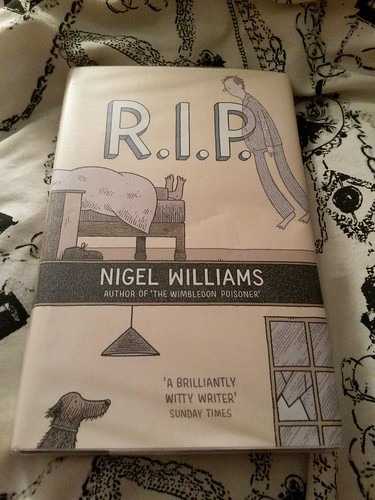
20150921_230537I wasn’t sure what to choose for this one, but then I came across an online review of R.I.P. by Nigel Williams. Who wouldn’t be tempted to read a book described as “a crime novel so incompetent it might have been written by a child”? However, I rather enjoyed this – a cosy, funny crime novel with a twist – it’s narrated by the murder victim.

London Fire Brigade Museum

201509_19LFBMuseum09
The museum

I visited the London Fire Brigade Museum during the Open House London weekend, as I knew that it would be closed afterwards in preparation for a move to the museum’s original home on the Albert Embankment. This could take between three and five years, so I was determined to see it while I still had the chance.

201509_19LFBMuseum07
A former fire bell

The site was originally part of the estate of the Bishop of Winchester. It became a workhouse and a hat factory before becoming the HQ of the Metropolitan Fire Brigade, as well as the residence of Captain Eyre Massey Shaw, the first Chief Officer. The museum looks at the history of the London Fire Brigade, from the early fires of London (including the Great Fire of 1666) through to modern-day firefighting.

201509_19LFBMuseum10
Victorian firefighter’s room

The earliest fire brigades were established in response to the Great Fire, and were tied to different insurance companies. Firemarks were attached to buildings to signify which company they were insured with. In case of fire, several brigades would attend, but if it was not one of “their” buildings they would leave it to burn! The first proper “fire engine”, which could expel a jet of water, was patented by Richard Newsham in 1721. It was tough to operate, so bystanders would be bribed with “beer tokens” for offering their help. The Royal Society for the Protection of Life from Fire (RSPLF) was formed in 1828; this provided escape ladders to help people get out of burning buildings.

201509_19LFBMuseum14
Lamp-post

In 1833, the London Fire Engine Establishment (LFEE) was formed when ten independent fire insurance companies united. James Braidwood, from Edinburgh, was Superintendent for 28 years, until his death in the Tooley Street Fire. This fire, which occurred in 1861, was the most serious to happen in the capital since the Great Fire. Afterwards, the insurance companies contacted the Government arguing that the fire safety of London should become a public authority. The Metropolitan Fire Brigade Act was passed in 1865: as a result, the Metropolitan Fire Brigade commenced from 1 January 1866.

The previously-mentioned Captain Sir Eyre Massey Shaw, the first Chief Officer of the MFB, established a rank system, a new uniform, several new fire stations and advanced technology, including steam fire engines pulled by horses. The existing system continued until the Second World War, when the Auxiliary Fire Service (AFS) formed, and women were permitted to become firefighters for the first time. Fire stations were set up all over London, and firefighters battled the fires that resulted from bombing raids.

201509_19LFBMuseum15
Firefighters pass the time waiting for a call-out

After the war, the area that the London Fire Brigade was responsible for grew to encompass the Greater London Council, the 999 emergency number was introduced, and there was a greater focus on fire prevention. Modern-day firefighting involves the use of breathing apparatus boards, lines to follow when tackling a fire, and the HAZCHEM code which warns of hazardous substances. The King’s Cross Underground fire of 1987 led to stricter regulations on the Underground in particular.

201509_19LFBMuseum17
Badges from fire services the world over

The museum displays period rooms shown as they would have been during Captain Shaw’s time at the house, as well as a chronological history of fire in London. I found it fascinating and the other visitors seemed to enjoy it too, especially the small children running around wearing fire helmets. Outside, there is a “parade ground” where the early firefighters would drill, and nearby there is an Appliance Bay which is home to early examples of fire engines. I’m no vehicle enthusiast, but these were good fun to look at.

201509_19LFBMuseum02
Horse-drawn fire engine
201509_19LFBMuseum04
Early fire engine
201509_19LFBMuseum06
Early fire engine

It’s a shame the museum is closing as it’s a high quality and interesting day out. Hopefully the new museum, when it eventually opens, will be just as impressive.

FACTS

Address: 94a Southwark Bridge Road, London, SE1 0EG

Website: london-fire.gov.uk/london-fire-brigade-museum

Opening Hours: Now closed, pending the move to Albert Embankment

Prices: Free

2015 Reading Challenge – A book more than 100 years old

20150816_225003

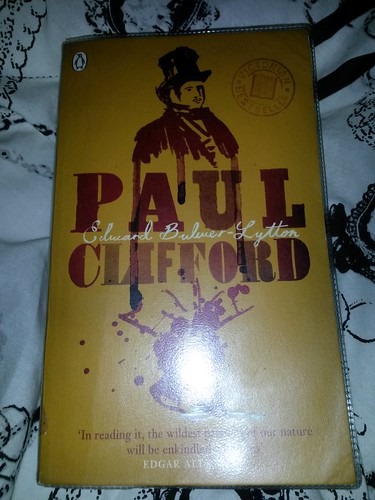
Paul Clifford by Edward Bulwer-Lytton. first published in 1830, is the story that begins with the famous line “It was a dark and stormy night”. To be fair, I think it’s rather a good beginning, though the book itself is a bit long-winded.

St Bride Unveiled – St Bride Foundation

The St Bride Foundation was established in 1891 as the social and educational hub of printing and publishing on Fleet Street. These days it contains a library of artefacts and books, much of it relating to the history of print and graphic design. This exhibition in the Layton Gallery, St Bride Unveiled, showcases highlights from the collection which have not been seen together before.

201509_15Bridewell02The collection is extremely varied, containing fragments from an edition of the Book of the Dead, a Kelmscott Bible, and a road sign among other things.

201509_15Bridewell01The exhibition is free to visit and runs until the 25th of September. The Bridewell building, where the Foundation is based, is also home to a bar, a theatre and a library, as well as various other events.

Stephens House and Gardens

2015_0913StephensHouse13

It’s September, so that means it’s time for Heritage Open Days – the weekend where lots of museums and galleries across the country open their doors, some for the only time each year, to visitors. The programme excludes London – the London Open House event is the following weekend – so I scanned the map for something to visit near me. I was surprised to find Stephens House and Gardens on the list, as it is located in Finchley, near Finchley Central Underground station – last time I looked Finchley was a London borough, but I was happy enough to have the chance to visit this weekend. It wasn’t a place I had ever heard of, so I was intrigued.

2015_0913StephensHouse03
Entrance to The Bothy

Stephens House was the home of “Inky” Stephens, a manufacturer of ink and stationery products who lived in Finchley and owned and developed Avenue House – now Stephens House – from 1874 to 1918. He bequeathed it to the people of Finchley “for the use and enjoyment of the public”, and though the council didn’t seem to know what to do with it for a long time, they eventually decided to work on opening the house and gardens to the public. The house is now Grade II listed: it is an events venue, office space for various small businesses, and the home of the Stephens Museum. It is open to the public once a month on Open Sundays, while the vast and beautiful gardens are open all year round during daylight hours.

2015_0913StephensHouse04
The Bothy

I entered at the bottom of the garden, coming across the Bothy before anything else. This is a quaint building with lots of character and a beautiful garden. I was lucky to see it because the gardens are normally open only on Fridays.

2015_0913StephensHouse07
Spike Milligan

Next I made my way up to the house, passing the statue of Spike Milligan on a park bench (Milligan lived in Finchley and was an active member of the local community) nearby. The house is a beautiful Victorian creation; what was once the front is now the back, and the “back” has been converted to the front of the house – it’s easy to see why. There is currently an exhibition in the basement, Avenue House at War, which looks at the history of the house during the two world wars: in World War I it was a hospital and during World War II it was the headquarters of the Finchley ARP. An escape tunnel is visible in the basement: this was put in place in case of the house being bombed.

2015_0913StephensHouse14
The back of the house – now the front
2015_0913StephensHouse08
Way in to the Stephens Museum

I had a look at the Stephens Museum, home of the Stephens Collection which was established by the Finchley Society. Located in the conservatory, it examines the life of Dr Henry Stephens FRCS (1796-1864), the inventor of the blue-black writing fluid that made his name, and his son Henry “Inky” Stephens, MP for Hornsey and Finchley, who bequeathed the house to the public. It also looks at the development of the Stephens Ink Company and the history of Avenue House, as well as the wider context of the story of writing from ancient times. The Company was first registered in 1832 and was a household name for 150 years; it was used by people all over the world, and was even taken to Antarctica by Captain Robert Scott.

2015_0913StephensHouse15
Promotional sign

I joined a guided tour, which took us round the side of the house, the basement and even upstairs, where we got to go up the tower (now an artists’ studio) and look out over the grounds.

2015_0913StephensHouse20
Fireplace in the tower
2015_0913StephensHouse24
Looking down from the tower

Stephens House and Gardens is a lovely place to visit and if you happen to be in Finchley I would certainly recommend popping in.

FACTS

Address: 17 East End Road, Finchley, London, N3 3QE

Website: stephenshouseandgardens.com

Opening Hours: Gardens – daylight hours; Bothy Garden – 10am-1pm on Fridays subject to weather; Avenue House – monthly open Sundays; Stephens Museum – 2pm-4.30pm Tues, Wed and Thurs as well as occasional Sundays

Prices: Free