Time Travelling Operating Theatre – Science Museum

Described as an “immersive live theatre performance”, I was immediately attracted to an event at the Science Museum called Time Travelling Operating Theatre, which purported to offer insight into what operating theatres were like in 1884, 1984 and 2014. I do love immersive theatre, and despite my inherent squeamishness I have an interest in the history of science and medicine, so I really wanted to attend this free event.

The event was organised by Imperial College Centre for Engagement and Simulation Science. When I got there I began to wonder if it was in fact aimed at medical professionals and students – attendees had to fill in a questionnaire and from the conversation around me I gathered that many other people there had a vested interest in the subject matter. Having said that, I later discovered that there were plenty “ordinary” members of the public present, though the “immersive theatre” aspect was not what I expected. Nevertheless, I did find it incredibly interesting and worthwhile.

We watched three surgical re-enactments, each using genuine medical professionals along with authentic sets and costumes. The Victorian-era operation, set in 1884, was perhaps the most interesting to me, as it’s a time I am especially interested in. During this period, internal operations were in their infancy, owing to the relatively recent introduction of anaesthetics; administering pain relief was still a far from exact science and the anaesthetist, usually an assistant rather than a specialist, would have to keep careful watch on the patient to establish how much to give. Anaesthetics were given via a cloth placed over the patient’s mouth. Operations would usually take place in the patient’s house; the set was an ornate room lined with bookcases, and to modern eyes looked both oddly homely and appallingly unhygienic. After visiting the Old Operating Theatre Museum near London Bridge a few weeks ago, this fitted in nicely, exploring the post-anaesthetic stage of surgical history.

By 1984 things had moved on considerably, and operations took place in hospital, with surgeons gowned and equipment sterilised. The kind of operation we were watching – the removal of a gall bladder – was still performed via open surgery, which involved one large incision. However, conditions were much more hygienic and this sort of operation was relatively straightforward with a high success rate.

Interestingly, the professionals performing this re-enactment were those responsible for advances in keyhole surgery, the technique demonstrated in the 2014 scenario. Keyhole surgery is much less invasive and means a much faster recovery time. Here, computer screens helped the surgeon complete the operation via much smaller incisions, using long instruments which did not require first-hand viewing of the area to be operated on. Masks were no longer worn, most instruments were single-use, and robes were blue instead of green (they don’t look so bad when covered in blood, apparently). The patient’s vital signs were monitored via a computer, and the job of the anaesthetist was much more specialised, measuring the correct dose of drug for each patient. I was surprised by how noisy this particular room was, with chatter from the professionals present, music, and mobile phones all in evidence.

One of the interesting aspects which came out of watching all three re-enactments was the roles of the various medical personnel involved. In the Victorian era, the roles were distinctly hierarchical with the nurse and assistant following the orders of the head surgeon. There were still elements of this by 1984, but by 2014 the structure was much more democratic, and the atmosphere of the operating room much more relaxed. Music was allowed, talking was more common, and staff kept in touch with the outer world via modern technology such as mobile phones.

Surprisingly, although, as I have mentioned, I am incredibly squeamish, I didn’t have any problems observing any of the surgeries, even though they were very realistic. Perhaps I was just interested, or perhaps the scenarios were so clean and “ordered” that I found it hard to relate them to the things that normally make me feel queasy.

After observing all three scenarios, there was a discussion with clinicians, historians, medical ethicists and policy-makers that included attendees at the event. It examined surgical ethics – such as the element of patient choice – and I found it really enlightening. To date, I’ve been lucky enough not to need surgery in my life (unless having several teeth taken out of my tiny mouth via general anaesthetic as a pre-teen counts…) but after attending this event I feel much better-informed, and if I were to need surgery in the future I think I would be much less apprehensive about it.

This event wasn’t really what I was expecting, but I still felt that I got a great deal from it. I would recommend it to anyone with any interest in the history and future of surgery, whether you have professional medical knowledge or are a lay person with no relevant experience at all.

Pub Crawl and Culture in St Albans

2015_0905StAlbans01
The Clock Tower

I spent another day in St Albans at the weekend in order to spend time with some friends. We alternated visits to pubs with various cultural activities. I was excited to finally get the chance to go up the Clock Tower.

2015_0905StAlbans02
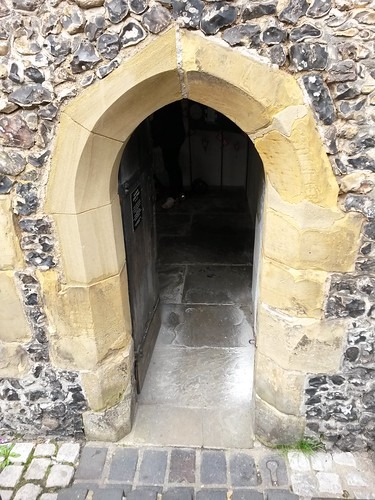
Going in…

This is located on the High Street of St Albans. It was built between 1403 and 1412, the only medieval town belfry in England. It is designated a Scheduled Ancient Monument. It’s possible to go up the tower at weekends during the summer months, at a cost of £1 for adults (children go free). The climb is very steep and rather tough, so if you’re unfit you may wish to reconsider!

2015_0905StAlbans04
The clock machinery
2015_0905StAlbans05
Inside the tower

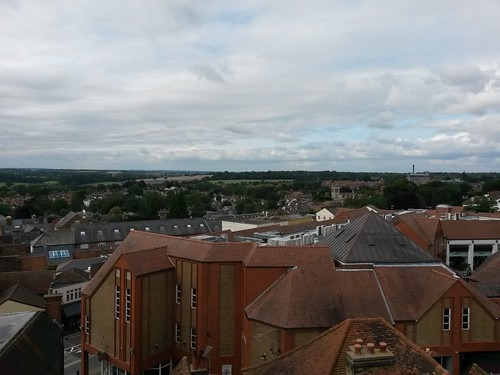
We were exhausted by the time we got to the top of the tower, but it was worth it because the views were amazing.

2015_0905StAlbans07
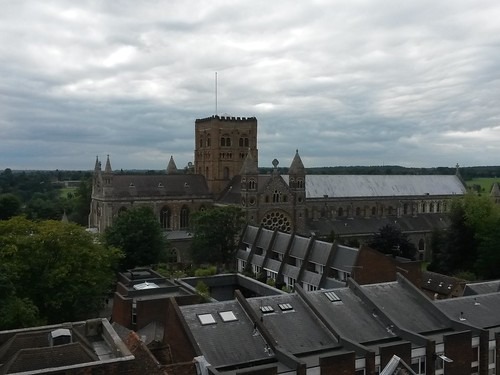
Cathedral of St Albans
2015_0905StAlbans09
Looking out over St Albans
2015_0905StAlbans13
A formidable-looking gargoyle

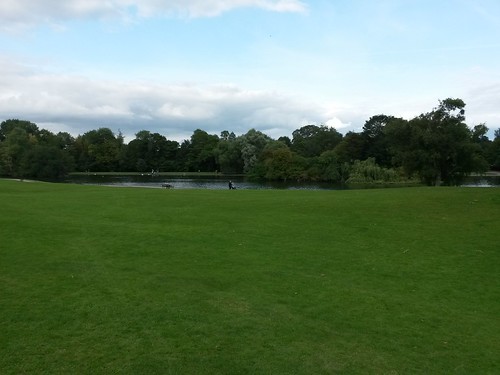
Later we visited the Roman remains in the park, before finishing off in a number of pubs.

2015_0905StAlbans17
In the park

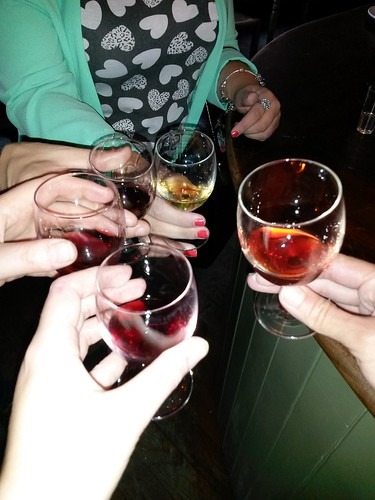
Cheers!

2015_0905StAlbans19

2015 Reading Challenge – A book based on or turned into a TV show

20150906_213637

The Shape of Water by Andrea Camilleri is the first in a series of very popular Italian novels that have become the TV hit Inspector Montalbano. I love the TV shows and based on this novel, they are enjoyably true to the books.

Magna Carta: Law, Liberty, Legacy – British Library

Even if you’re not a history lover like me, you’d be hard pressed to have missed the publicity surrounding the 800th anniversary of Magna Carta this year. The British Library, naturally enough, have installed an exhibition celebrating this document and its impact on the world, entitled Magna Carta: Law, Liberty, Legacy.

The exhibition explores how the Magna Carta came about, the context in which it was designed, and its immediate impact, as well as looking at the ways in which it has inspired campaigners throughout the centuries and impacted on political events. Linked to this, it examines how it has been exploited and perceived by the media and by people in general.

The treaty came about after King John, who had lost much territory in Northern France, imposed huge taxes on his wealthy subjects. The barons, angry, forced him into a negotiation, resulting in the “Carta de Ronemede”. Though much of it is now obsolete – one clause, for instance, covered fishing in the Thames – it still had a significant impact, as the exhibition shows. In addition, clauses 39 and 40 – guaranteeing the right to a fair and speedy trial – are still in force today.

The exhibition was very busy when I visited, but that was probably my own fault as I chose to go at the weekend.  I did find that it was incredibly interesting and much more thorough than I had imagined. Partly this was because of the quality of the artefacts on display: two of the four original Magna Carta documents from 1215, plus Jefferson’s handwritten copy of the Declaration of Independence and an original copy of the US Bill of Rights, which both owe a debt to the Magna Carta. Statues, paintings and an assortment of manuscripts also added to the exhibition.

British judge Lord Bingham wrote that: “The significance of Magna Carta lay not only in what it actually said, but in what later generations claimed and believed it has said.” This exhibition brilliantly demonstrates this.

Christie’s Lates: Out of the Ordinary

2015_0901Christies01

To celebrate the 40th anniversary of Christie’s in South Kensington, the auction house is holding a series of regular late-night openings. These are free events designed for interested viewers to come along, view some of their items and listen to specialist talks about the collection. I attended one such event called Out of the Ordinary, exploring some of the more unusual items they have up for sale. Unusual, they certainly were.

2015_0901Christies02
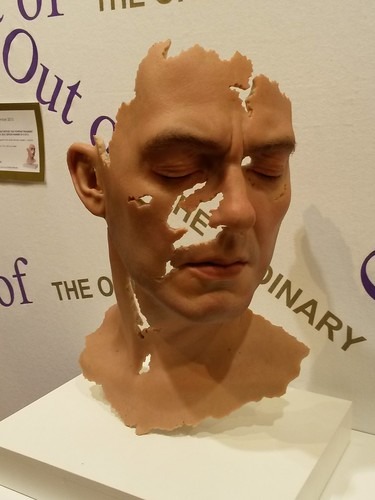
Creepy mask/model
2015_0901Christies05
Crown from a then 15-year-old Kate Moss’s first ever modelling shoot
2015_0901Christies08
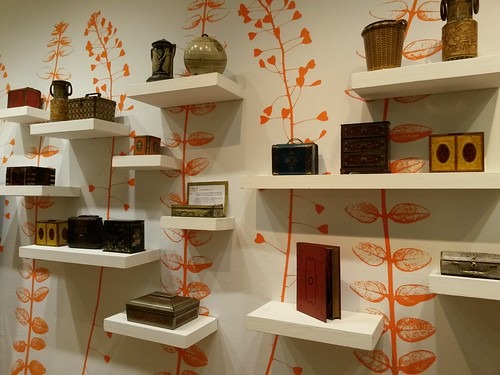
Unusual biscuit tins
2015_0901Christies14
Vintage Louis Vuitton travelling case
2015_0901Christies25
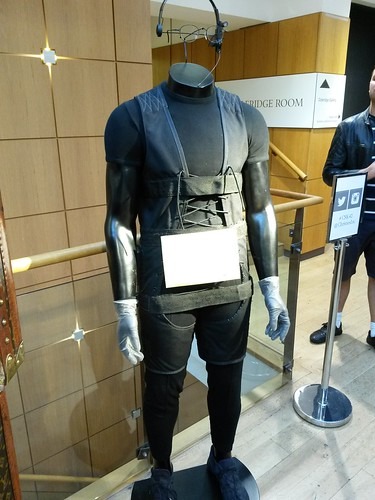
Tom Cruise’s suit from Mission Impossible
2015_0901Christies16
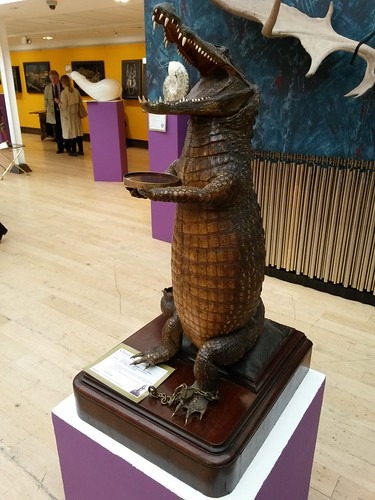
Crocodile ornament
2015_0901Christies21
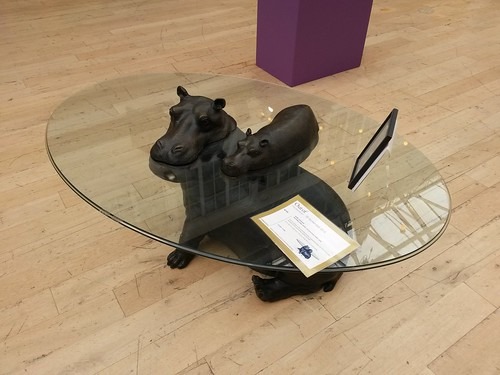
Hippo coffee table
2015_0901Christies23
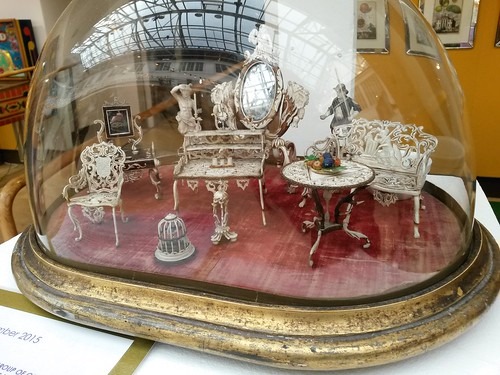
Miniature ivory furniture
2015_0901Christies24
Roger Bannister’s four-minute-mile shoes

Bannister’s shoes eventually fetched 220k when they went to auction. All of the items here were available for sale: not being a millionaire, I was unable to bid (though I was rather tempted by the hippo coffee table) but it was still fun to be able to see this unusual collection of objects.

Carsten Höller: Decision – Hayward Gallery

2015_0831CarstenHoller01

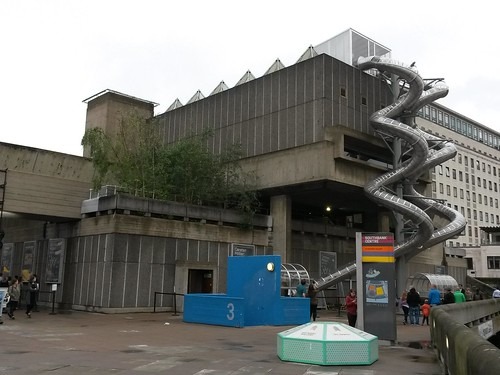
Carsten Höller: Decision is this summer’s blockbuster at the Hayward Gallery, an experimental and interactive exhibition with slides – slides! – coming out of the gallery’s roof. Intrigued, I booked a ticket for the Bank Holiday weekend.

The show is structured around the theme of “decisions”, allowing the participant the chance to choose for themselves how they will approach a particular work, and experience mind-altering sensations.

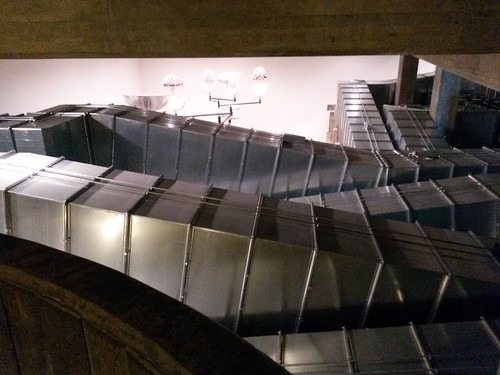
The first work, Decision Corridors, apparently had different entrances but I didn’t notice, being too concerned with getting inside. It was formed of numerous tunnels, pitch-dark inside with only occasional pinpricks of light to show the way. The photo I took later on shows just how winding these corridors are. Walking through them, with no way of seeing where I was going, was incredibly surreal.

2015_0831CarstenHoller07
Decision Corridors, seen from above

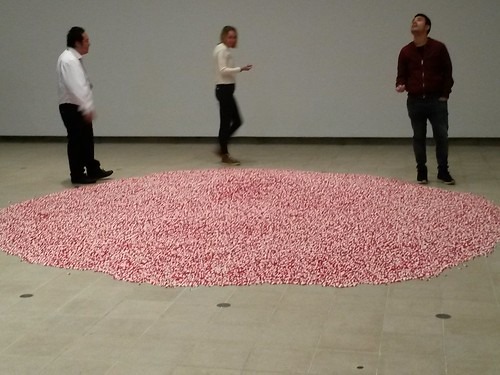
Later works included Half Clock, “the most complicated clock in existence”, and the Pill Clock, which drops a single red and white capsule onto the gallery floor every three seconds. As you can imagine, a considerable pile has sprung up by now. You are offered the chance to swallow your pill and I did so, Alice-in-Wonderland style, not really expecting anything to happen (it didn’t).

2015_0831CarstenHoller03
Pill Clock

Another work, Flying Mushrooms, incorporated models of Amanita muscaria (fly agaric mushrooms) which are red and white hallucinogenic mushrooms, famous in folklore. Here, the models have been halved and placed back together the wrong way round, and you have to push the sculpture around to move it.

2015_0831CarstenHoller02
Flying Mushrooms

The Forests was a dual-screen video with a 3D headseat and earphones, with which you could experience a snow-covered forest at night. It was surprisingly calming. In the same room were Two Roaming Beds (Grey), which sounded brilliant: “These robotic twin beds roam the lower floor of the exhibition like a pair of restless, insomniac twins.” However, hiring them for the night costs £500, so I think I’ll give them a miss.

2015_0831CarstenHoller04
Two Roaming Beds

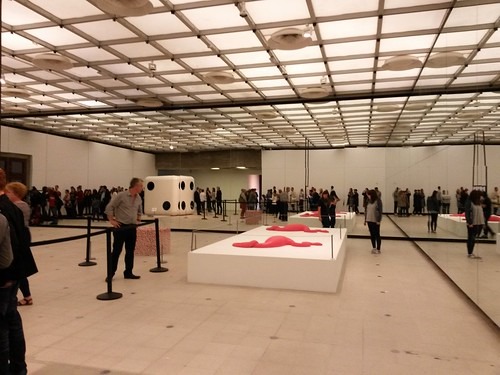
Upstairs, The Pinocchio Effect was something I didn’t look at but as it seemed to involve two people at a time, and Two Flying Machines looked like the most fun exhibition but as the queue was an hour and a half long, I didn’t bother. The Half Mirror Room and giant dice (or die) was disorientating.

2015_0831CarstenHoller06
Half Mirror Room

The Upside Down Goggles in the same room were bizarre to say the least. Without a friend to hold on to I felt odd walking around.

The final part of the exhibition – and the highlight for me – were the Isomeric Slides, “a sculpture you can travel inside and a device for experiencing a condition somewhere between delight and madness” according to Höller. Whatever the theory, it was a lot of fun to slide down to the bottom of the gallery.

I had a great time here, although I was disappointed at the number of exhibits where it seemed to be expected that you had someone else with you – what about us solo exhibition-goers? Nevertheless, it was good fun.


Coral Reefs: Secret Cities of the Sea – Natural History Museum

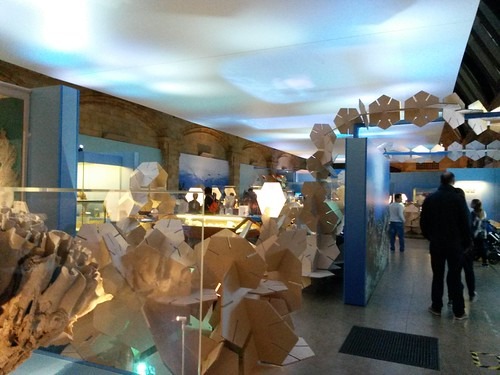
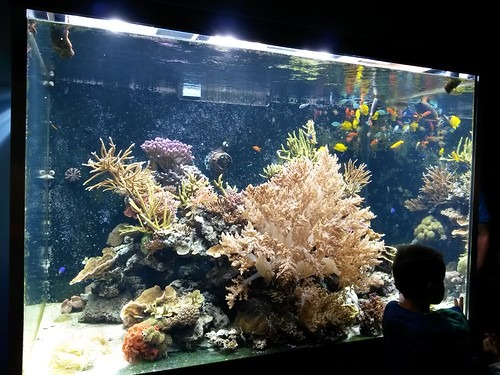
2015_0831CoralReefs03
Overview of the exhibition space

Recently I visited the exhibition Coral Reefs: Secret Cities of the Sea at the Natural History Museum. The exhibition aims to explore the world of coral reefs, the variety of life that exists within them, their history and the threats they are under today.

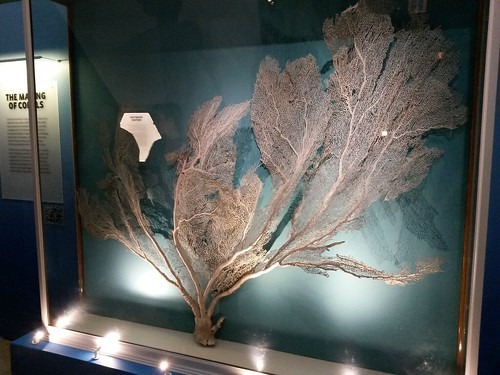
2015_0831CoralReefs02
Coral specimen

The exhibition was interesting and informative, particularly when examining Charles Darwin’s theories of how coral reefs form, something I hadn’t previously been aware of.

2015_0831CoralReefs04
Terrifyingly large fish

Unfortunately, the exhibition wasn’t as rich and colourful as I had hoped. Obviously the NHM can’t very well transplant the entire Great Barrier Reef to London, but most of the specimens on display are dead and subsequently rather grey and dull to look at.

2015_0831CoralReefs05
Living coral

It’s only at the end of the exhibition that we get to see a tank of living coral – a mesmerising spectacle. This exhibition was always going to be a difficult one to pull off, and while it was worthwhile, it wasn’t as fascinating as I’d hoped.

Revelations: Experiments in Photography – Science Museum

Revelations: Experiments in Photography is an exhibition at the Science Museum which looks at photography with a science theme over the last two centuries. Scientific photography influenced art, but was also valuable in its own right, as it was able to capture images and phenomena invisible to the naked eye.

My favourite work was Ori Gersht’s Blow Up (2007), which captured a still life in the act of exploding, a magnificent and beautiful work. However, the one with the best title was undoubtedly Chickens, scared by a torpedo (c. 1878), a picture by the photography of movement pioneer Eadweard Muybridge. Early images by photographers such as William Henry Fox Talbot were shown, alongside works by modern artists such as Harold Edgerton and Hiroshi Sugimoto; I particularly liked the former’s dynamic Bullet Through Lemon (c. 1955). However, overall I preferred the older photographs, and was sorry to see that most of the pictures in the exhibition were comparatively modern. Admittedly this is a personal preference, and the exhibition is certainly worth seeing if you have an interest in the subject matter.

2015 Reading Challenge – A book at the bottom of your to-read list

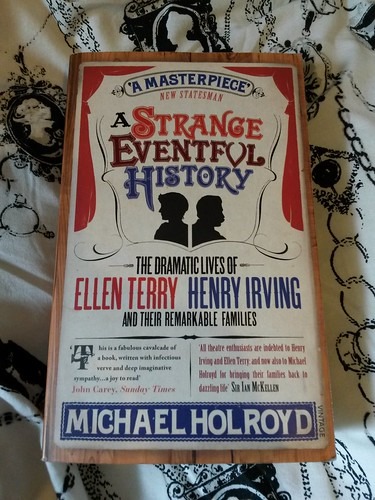
20150830_122126A Strange Eventful History: The Dramatic Lives of Ellen Terry, Henry Irving and Their Remarkable Families by Michael Holroyd was only at the bottom of my to-read list because of its size. I’m glad I read it though – it’s a fascinating insight into the Terry-Irving partnership as well as their individual lives and their families. Definitely recommended for all theatre lovers.