Rebel Badge Club: Christmas Challenge

In the same vein as the Halloween Challenge, the Christmas Challenge has been designed so that you complete 8 out of the 16 clauses available. I love Christmas so this was another challenge I’ve thoroughly enjoyed!

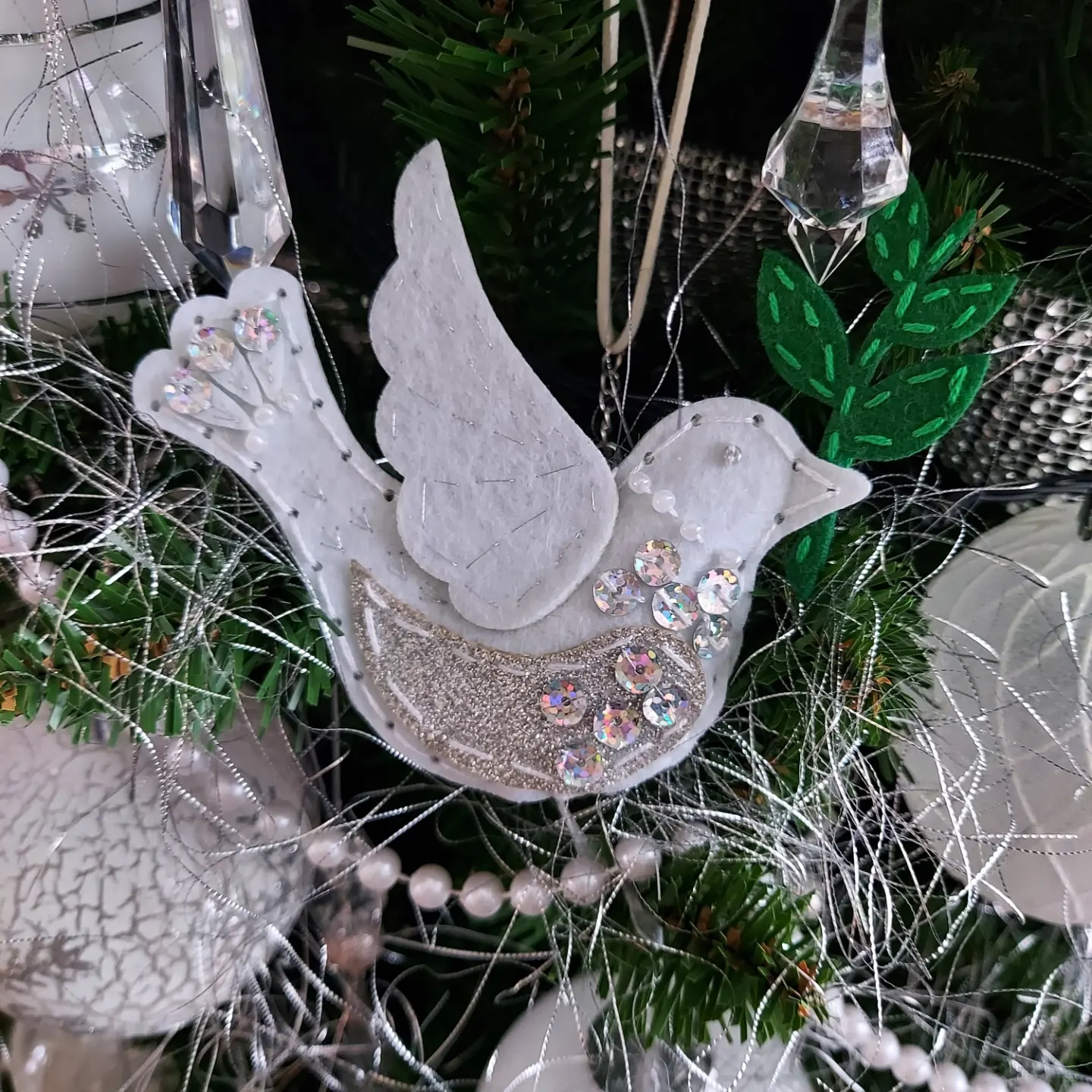
Make a festive ornament

I got a kit from eBay and made this lovely dove.

Dove felted Christmas ornament

Take part in a reverse advent calendar

I signed up to the Injustice Advent Calendar from Transform Trade, which I found out about via the RBC Facebook page, and have been following the prompts each day.

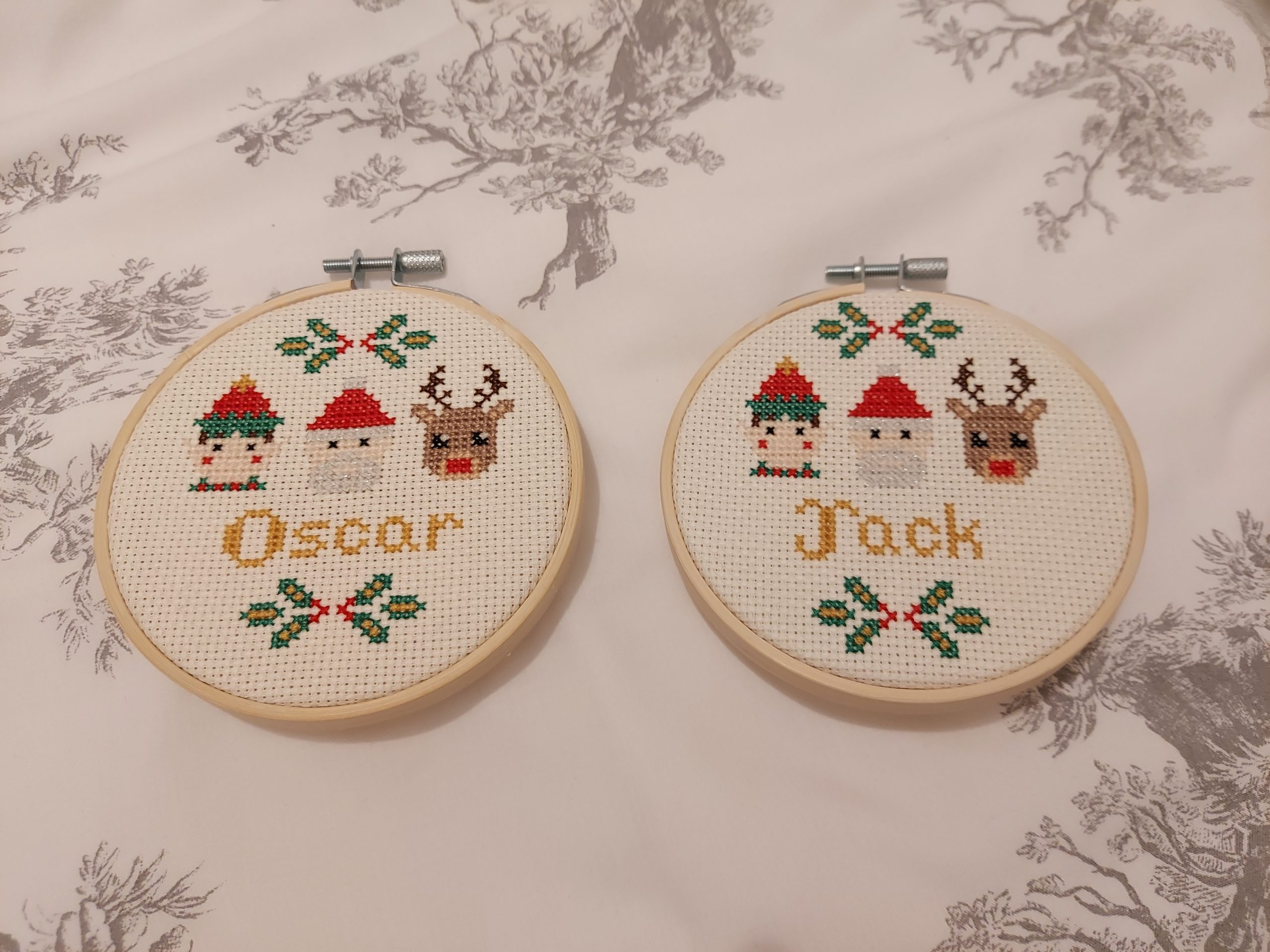
Handmake at least one present

I made cross stitched gifts for my cousins’ little boys.

Cross stitch designs

Learn about the different celebrations which take place in December around the world

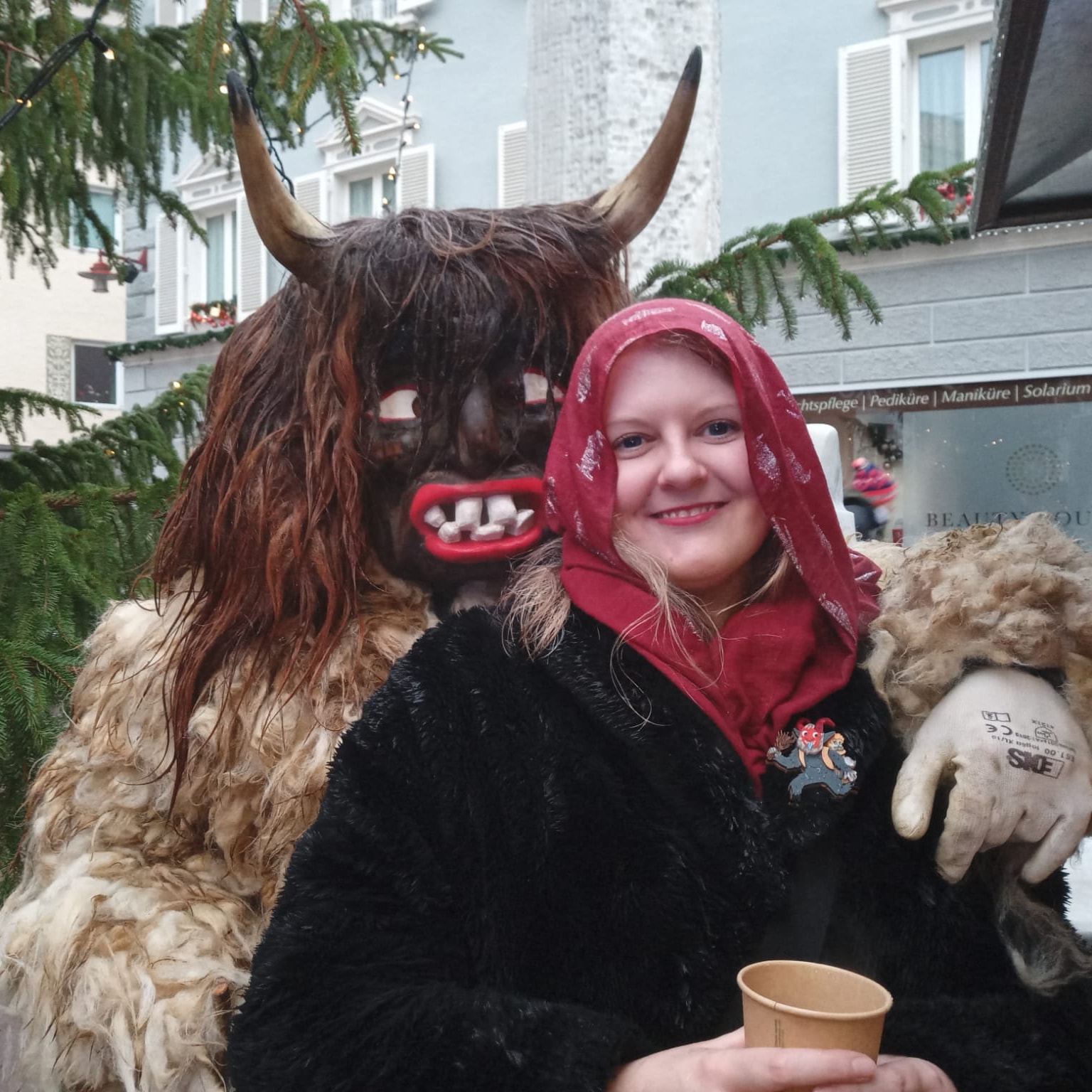
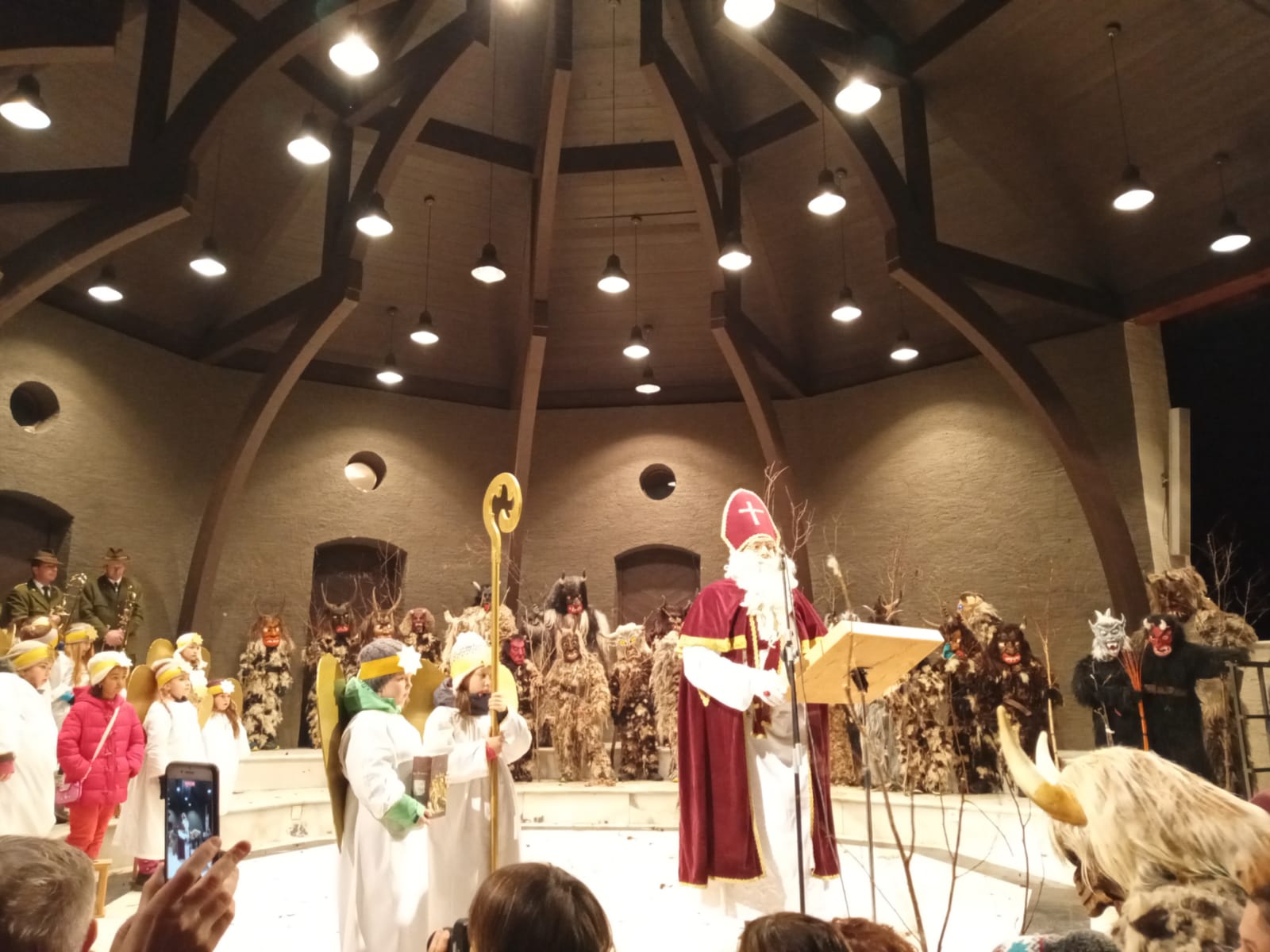
I’ve learned a lot about this in the past, but this year I took my learning to the next level and actually attended some Krampusnacht celebrations in South Tyrol – I had an amazing time!

I’m the one on the right.

Take part in “Whamageddon”

I lasted quite a while this year as I managed to avoid the song entirely while I was abroad! Sadly, the day after I came back (8 December) I was stewarding the panto at my local theatre and “Last Christmas” was part of the pre-show playlist.

Watch at least three Christmas movies

I’ve been trying to work my way through alternative Christmas movies: this year I watched Christmas Holiday (1944), Whoever Slew Auntie Roo? (1971) and Deathcember (2019), which are all very different but enjoyable films.

Take part in a festive event

While I was on holiday I went to a Christmas lights event in Innsbruck – the theme was a local marmot travelling around the world, so there were giraffes, penguins, polar bears, an underwater scene and waltzers – plus lots more.

Visit a Christmas market

I visited a Christmas market in Innsbruck and another when I got home – I met up with some friends in Kingston.

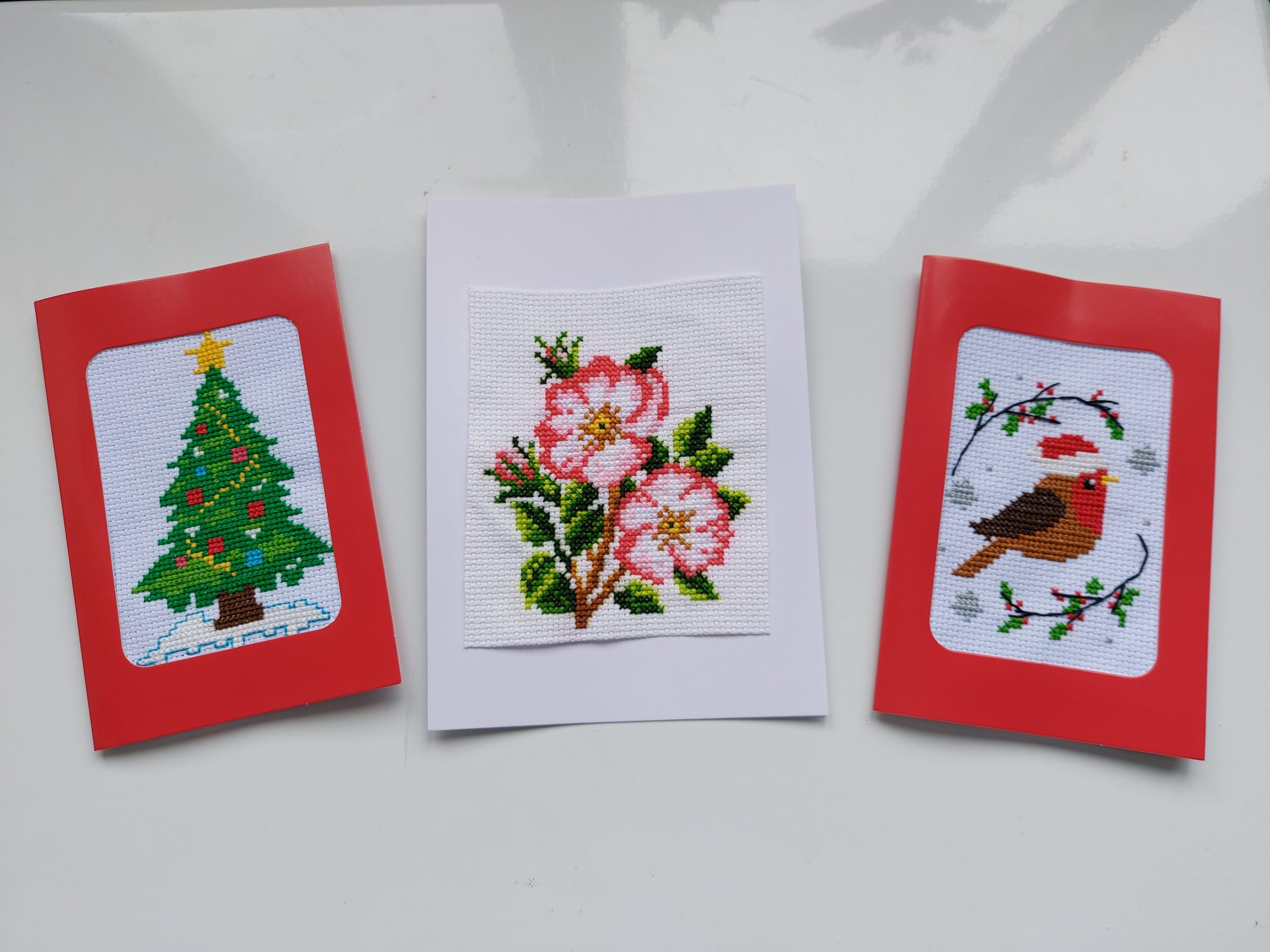
Make your own festive cards

I cross stitched some cards for my housemates – there are three of them which was a manageable number!

Evening With the Stars – Royal Observatory Greenwich

View of Greenwich at night, covered in snow

Just before Christmas, two friends and I attended an ‘Evening with the Stars’ at the Royal Observatory in Greenwich.

We started off in the Planetarium with a live show all about the stars, the most common constellations, and how they seem to move in line with the seasons.

We then moved out to the Observatory and got to look through the Great Equatorial Telescope, 130 years old, to see Jupiter and Mars.

After that, we went outside and were able to look up at the sky and identify some of the more modern constellations. Luckily it was a clear night, and we were able to see quite a lot.

Rebel Badge Club: Fitness

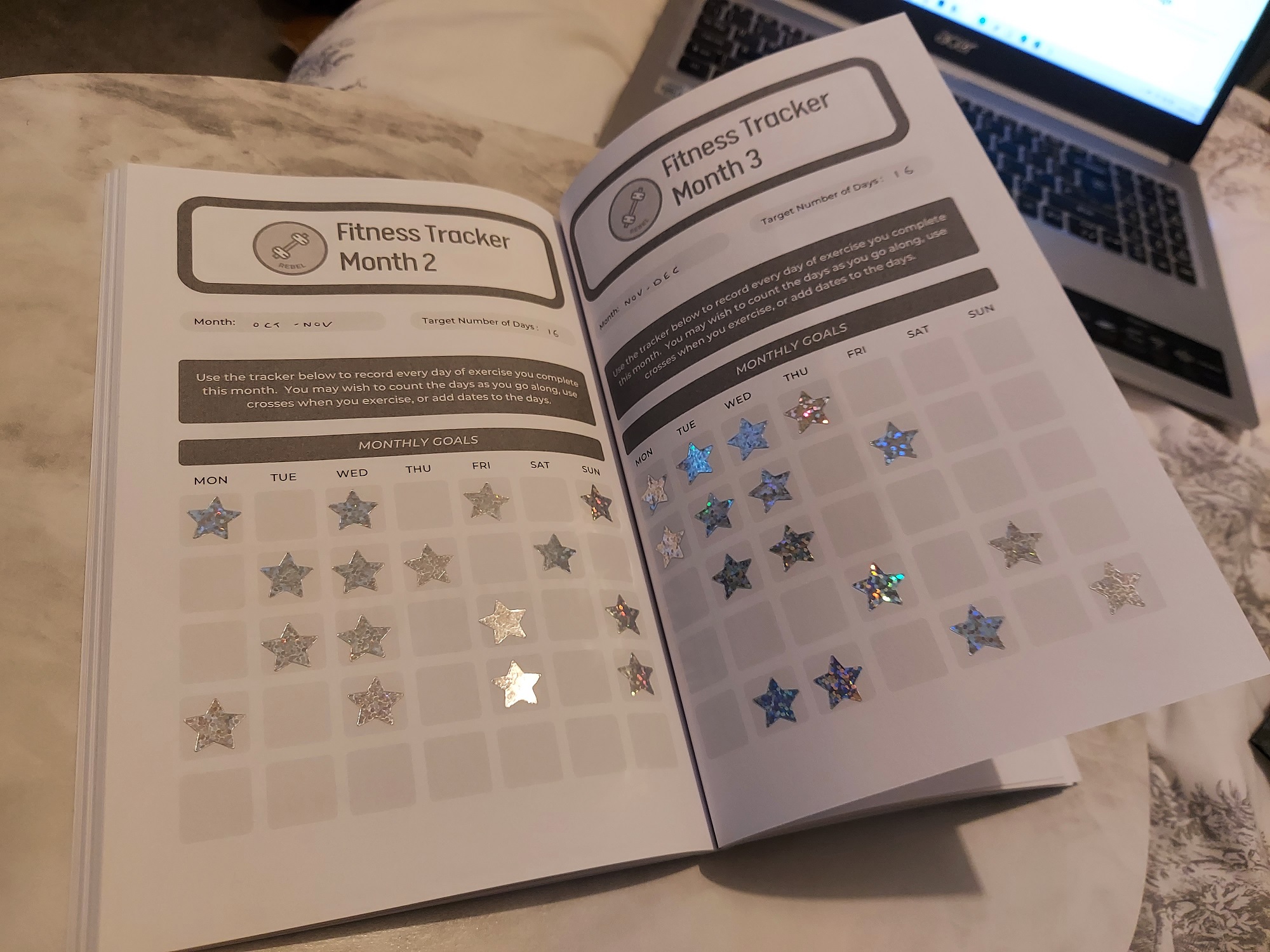
Journal pages showing stars
Marking my progress in my RBC journal

I decided to work on the Fitness badge over the autumn, to make sure I got some exercise in before Christmas. To achieve this badge, you need to work out a certain number of times per week, for twelve weeks. I chose to work out four times a week, and used an exercise plan I already owned for this. The plan covered the whole twelve weeks, but there were only three workouts per week for the first four weeks, so I chose extra forms of exercise to make up my quota: hiking, white water rafting, and yoga.

I did end up taking 13 weeks to complete this challenge, as I was on holiday abroad for one week – but I was pretty active during that week, doing a lot of walking, so I’m happy with my progress while working towards this badge.

Date completed: 18 December 2022

Rebel Badge Club: Stargazer

I was looking forward to the Stargazer badge. I’ve always had an interest in the night sky and astronomy in general and was happy to have an excuse to indulge it.

Over a period of two months, regularly observe the night sky, at least twice a week. Keep a logbook of the constellations, moon, and any planets you see.

I completed this clause over October and November. Some nights, there was too much cloud to see anything, and I also had trouble finding a dark enough spot to observe the sky properly. Over the course of these two months, however, I did learn to spot Mars and Jupiter, as well as constellations like Cygnus, Scorpio and Pegasus. I also used the SkyView app on my phone and found it really handy.

Research any major astronomical events happening in the next few months.

  • 8 October: Mercury at greatest elongation west
  • 8/9 October: Draconid Meteor Shower
  • 25 October: Partial solar eclipse
  • 7/8 November: Total Lunar Eclipse
  • 17/18 November: Leonid Meteor Shower
  • 8 December: Mars at opposition
  • 13/14 December: Gemenid Meteor Shower
  • 21 December: Mercury at greatest elongation east
  • 22/23 December: Ursid Meteor Shower

Learn about the planets – their relative size and positions. Build a model of the Solar system.

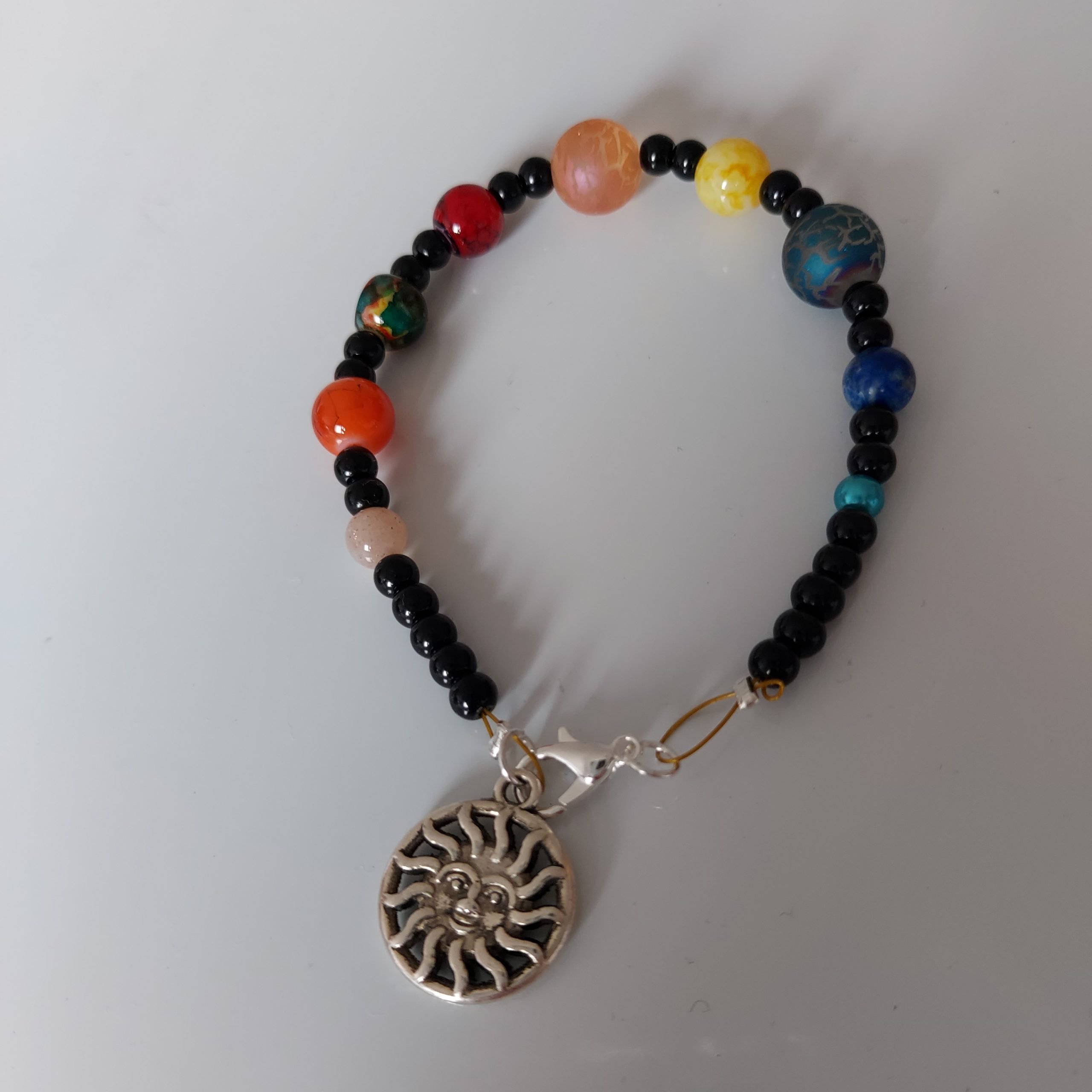
I read The Planets by Brian Cox, and for my model I chose to make a bracelet (kit is available on eBay and Etsy). I don’t have a lot of space for a big model, and I love jewellery anyway, so this seemed like the perfect choice.

Solar system bracelet

Learn about the phases of the Moon, and the effect it has on the Earth.

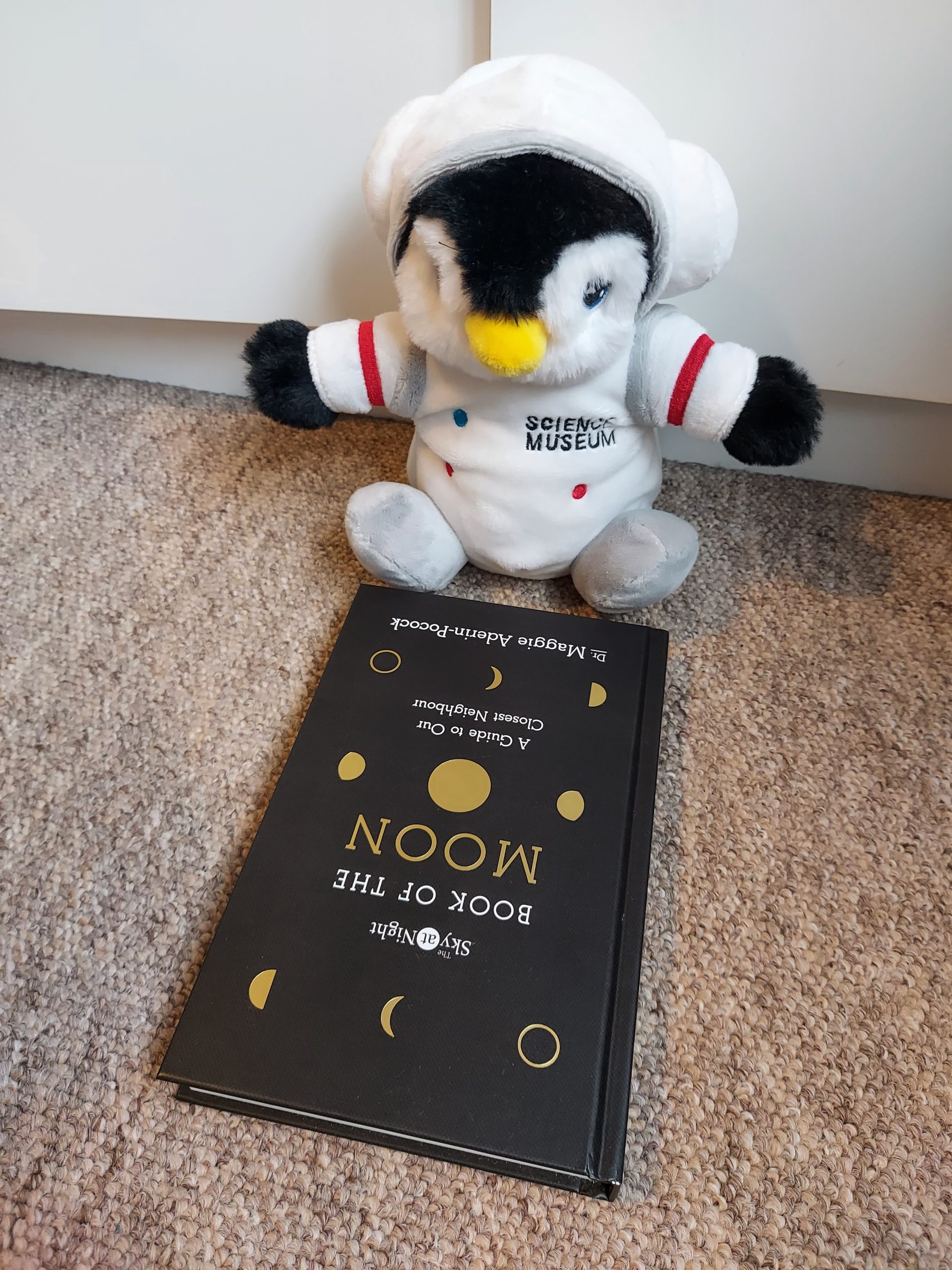
I read The Book of the Moon by Maggie Aderin-Pocock, which was very interesting. Astronaut Penguin helped.

Toy penguin dressed as an astronaut, looking at a book about the moon

Draw at least 10 constellations.

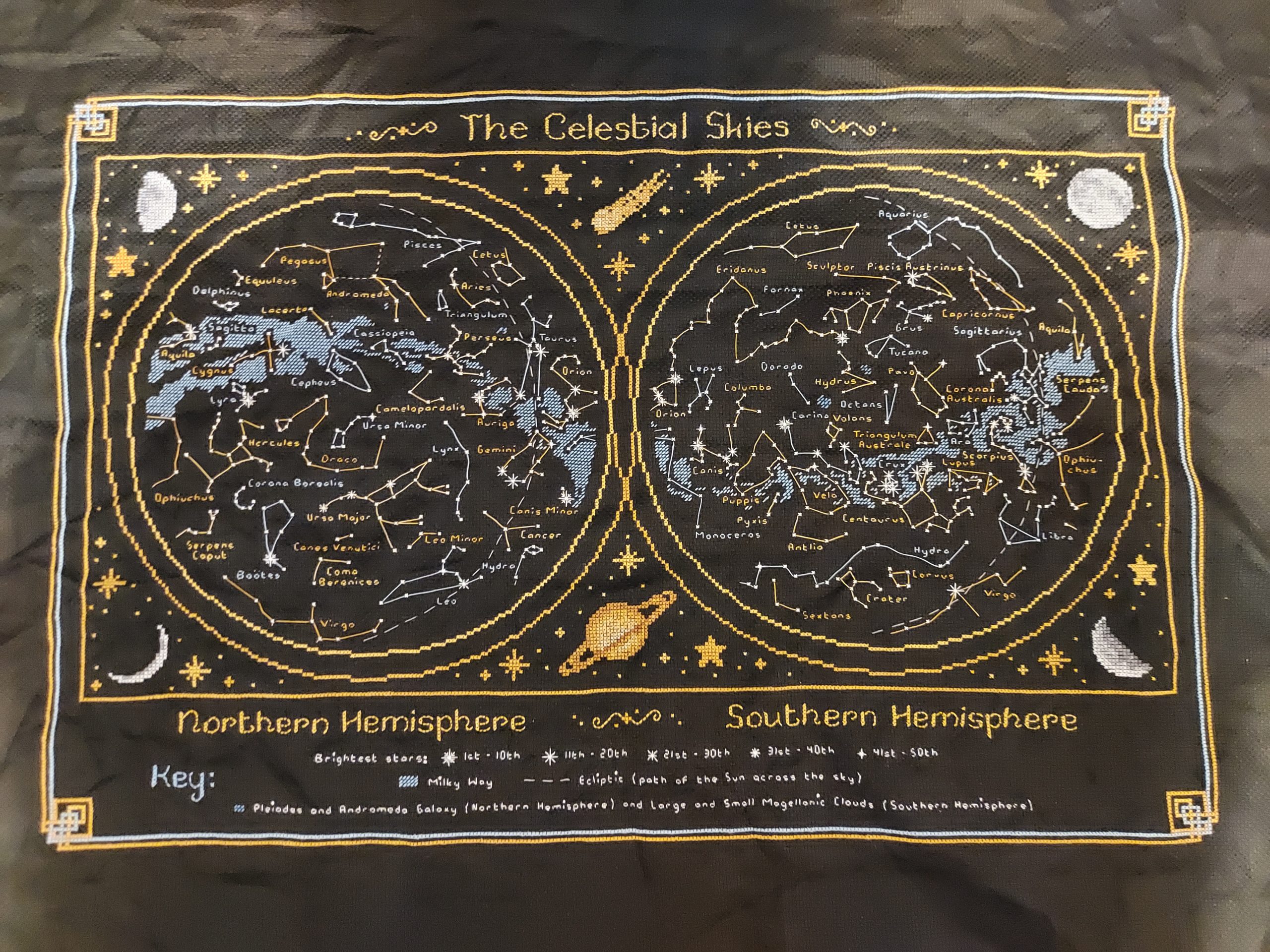
Rather than drawing constellations, I decided to stitch them, as part of my big ‘Celestial Skies’ cross stitch project.

Cross stitch pattern of the skies

Research the history of space exploration and write a timeline of major occurrences from the 1950s onwards.

I had fun writing my timeline.

Understand how to work out compass directions from the night sky.

I found a very interesting website that really helped with this.

Visit a planetarium, observatory or science centre.

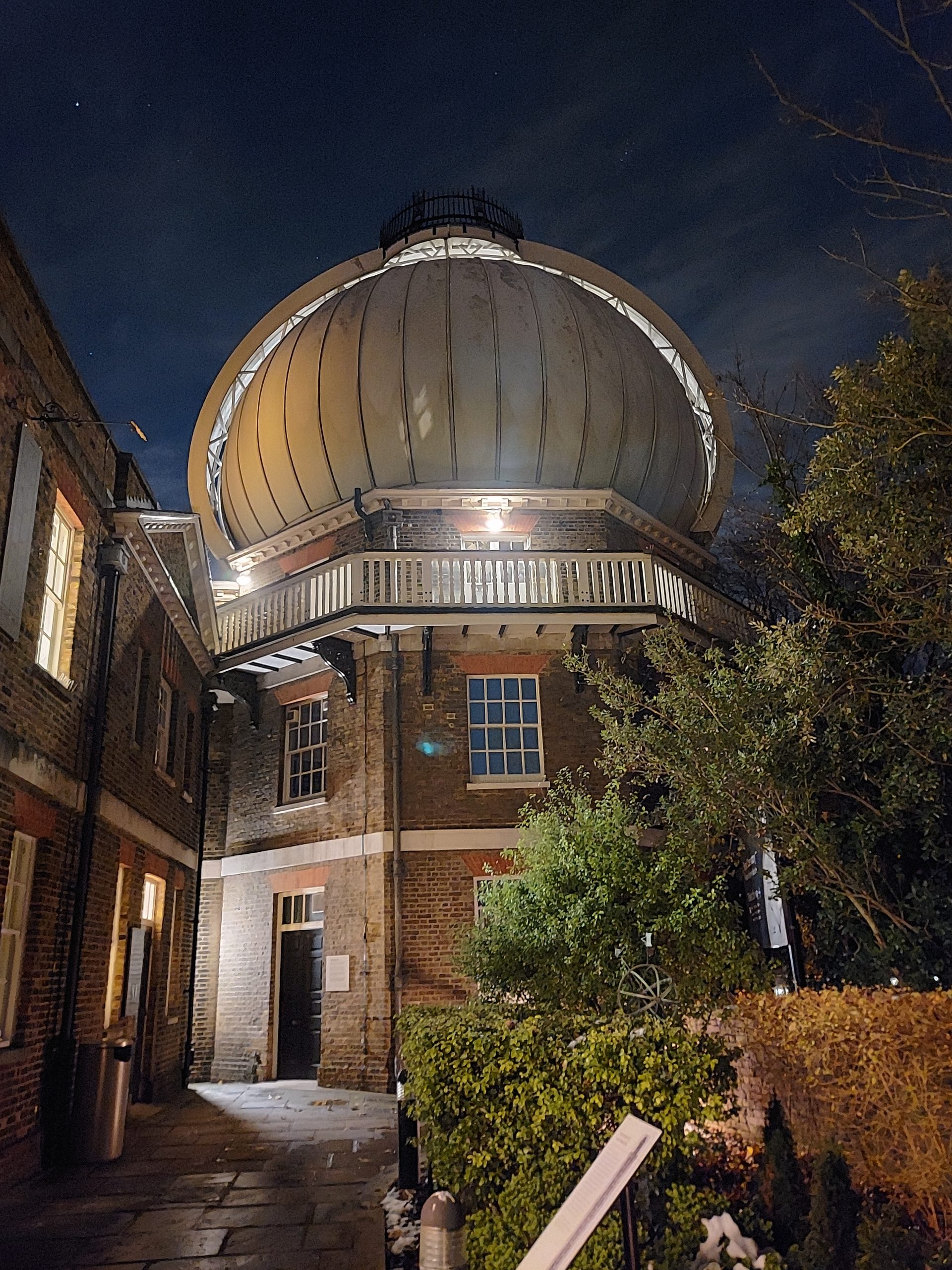
I visited Greenwich Observatory for their ‘Evening with the Stars’. We were treated to a Planetarium show and a look through the Equatorial Telescope through which we were able to see the rings on Jupiter. We also got to look through some smaller telescopes in the garden and view Mars, as well as several constellations.

Royal Observatory
The Equatorial Telescope at the Royal Observatory, Greenwich

Date completed: 17 December 2022

South Tirol & Krampusnacht Celebrations

So, the whole reason I went to Innsbruck in the first place was that I was going to stay with my friend Karin and experience Krampusnacht for real. I was SO excited about this! I heard of Krampus a few years ago and I’ve read a few books about this fascinating figure of folklore.

Day 1

I took the train from Innsbruck to Bozen/Bolzano, the chief city of the South Tirol region. It was a smooth and surprisingly cheap ride through beautiful scenery. We stopped at the Austria-Italy border, and I expected to have to show my passport or something, but I didn’t at all.

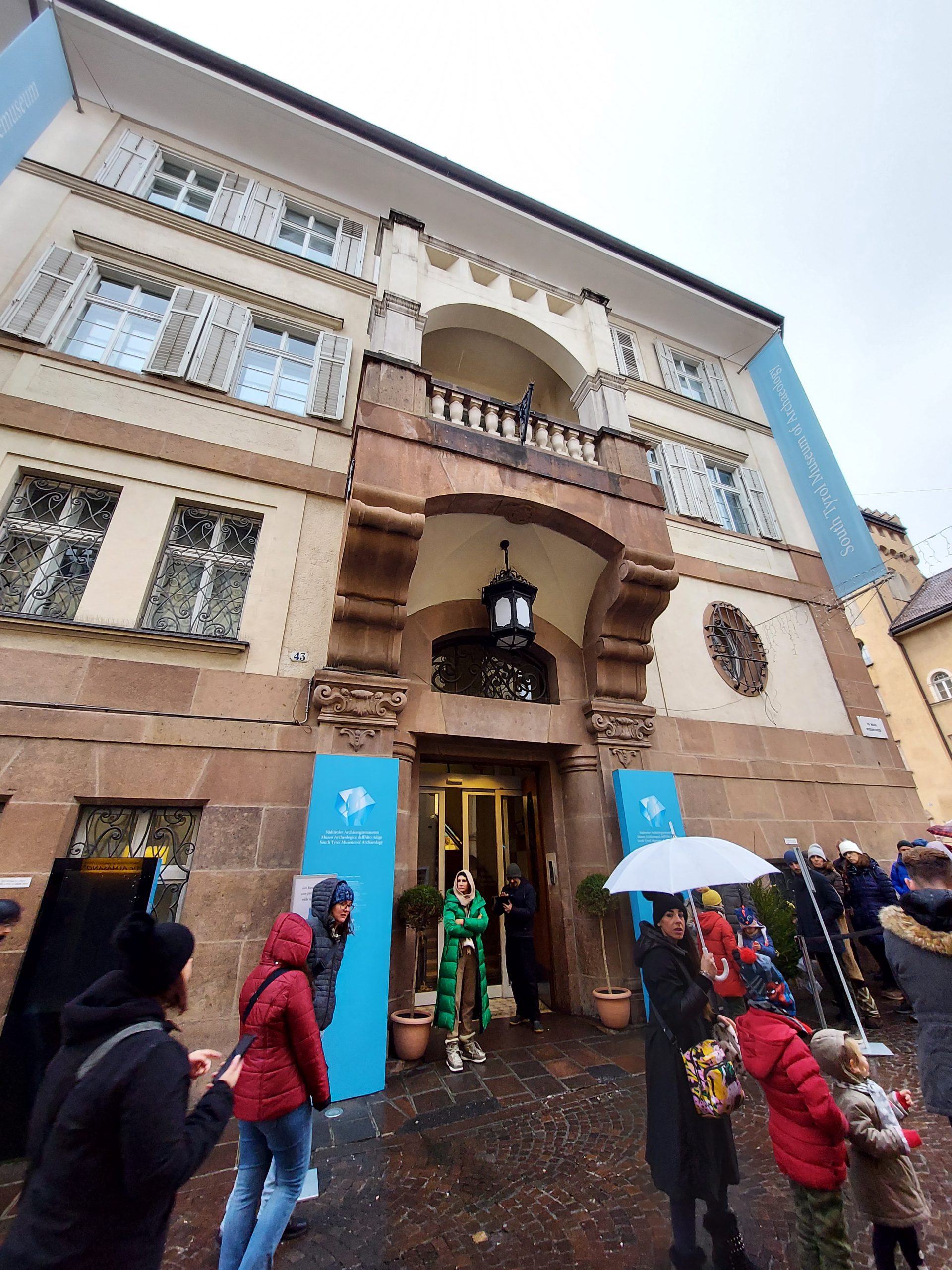
I met Karin, her sister and cousin at the station and we visited the South Tirol Museum of Archaeology, home to Ötzi the Iceman.

Vegetable pizza and beer
A real German-Italian fusion meal

We had pizza and beer in a nearby restaurant and then took the bus and the train to Kastelbell/Castelbello, in time for the Krampus parade and show.

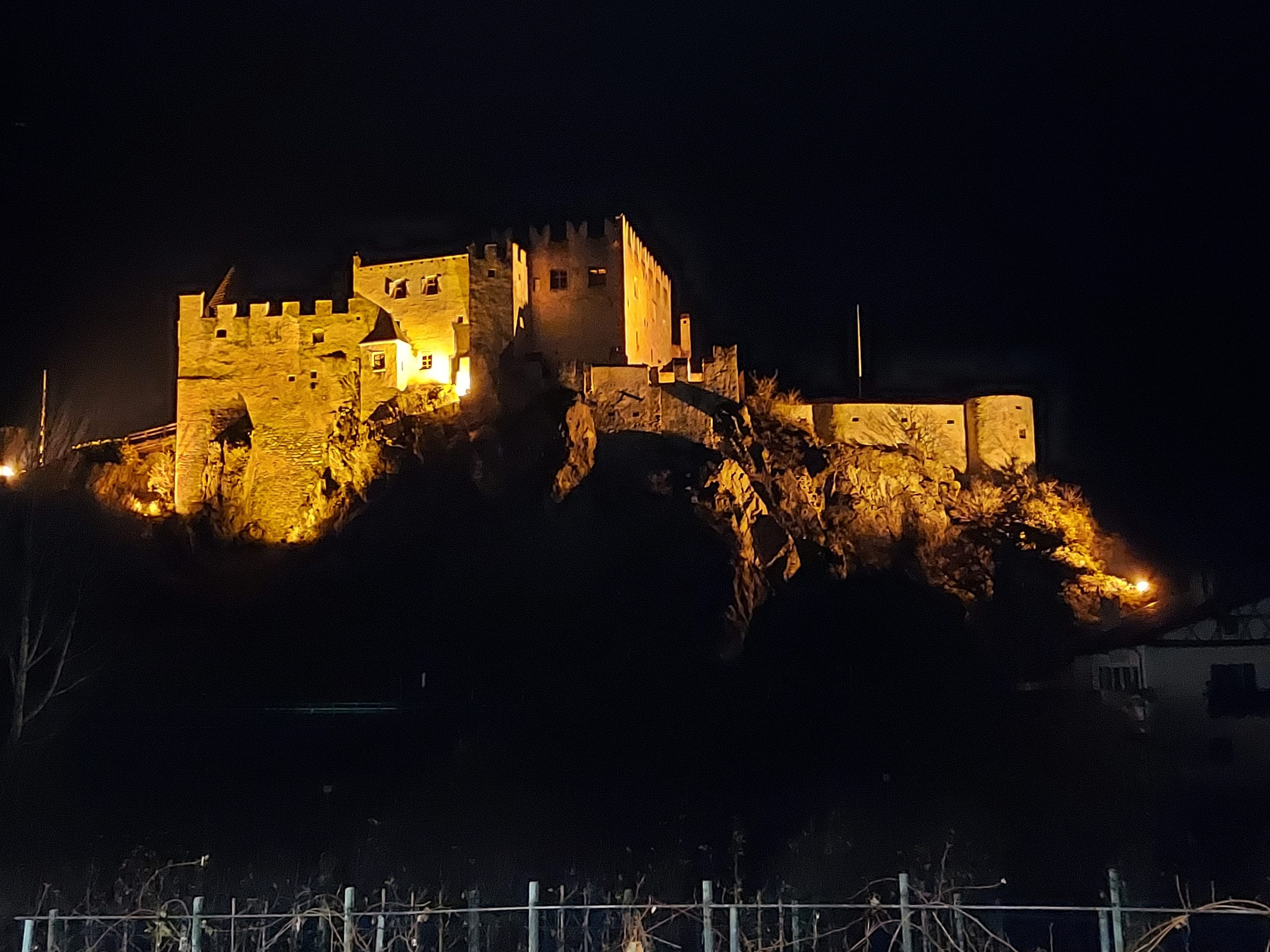
The castle at Kastelbell/Castelbello
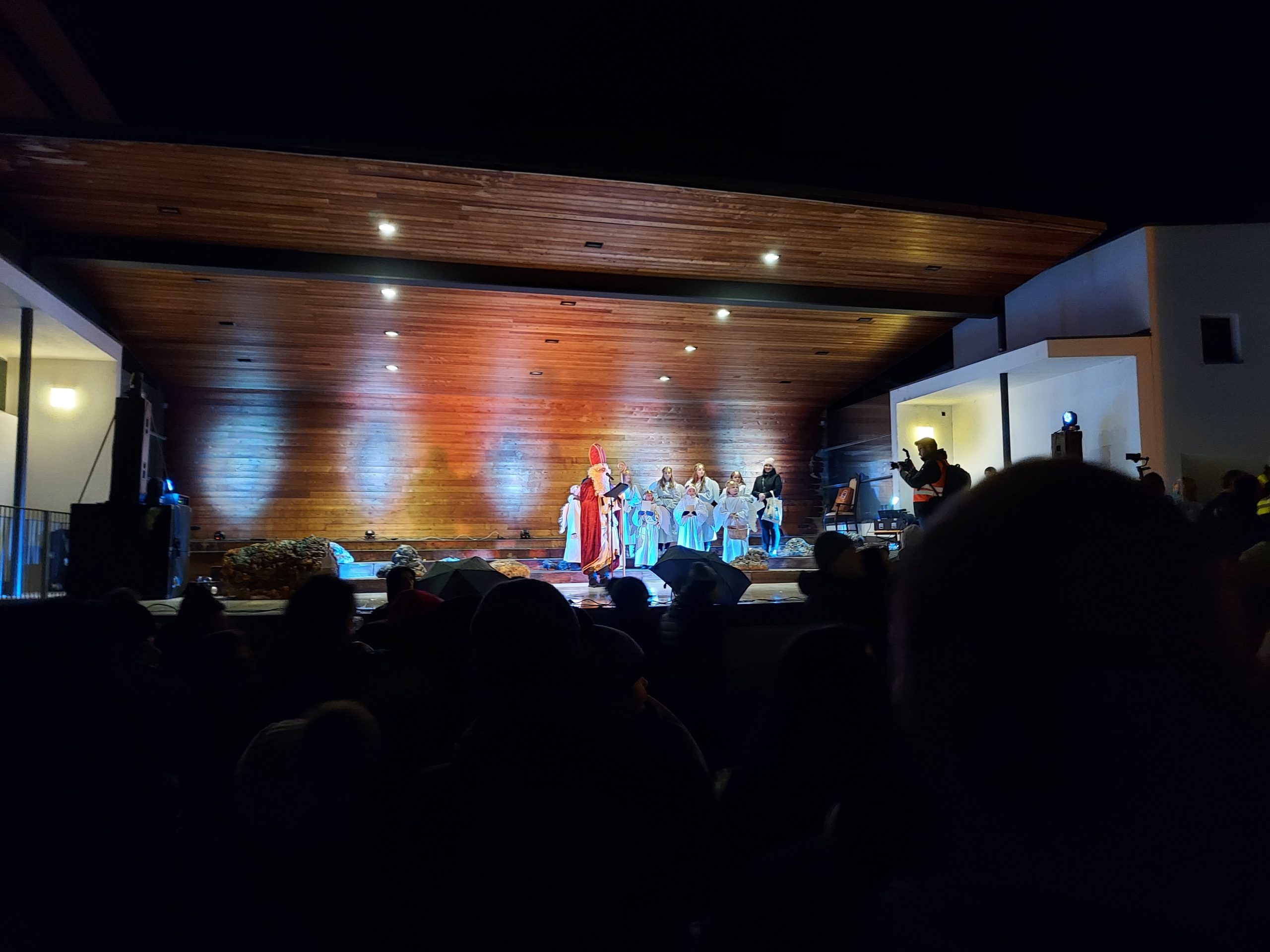
Saint Nicholas on stage at the Krampus event in Kastelbell/Castelbello

Finally we took the train to Goldrain/Coldrano, where Karin’s family lives.

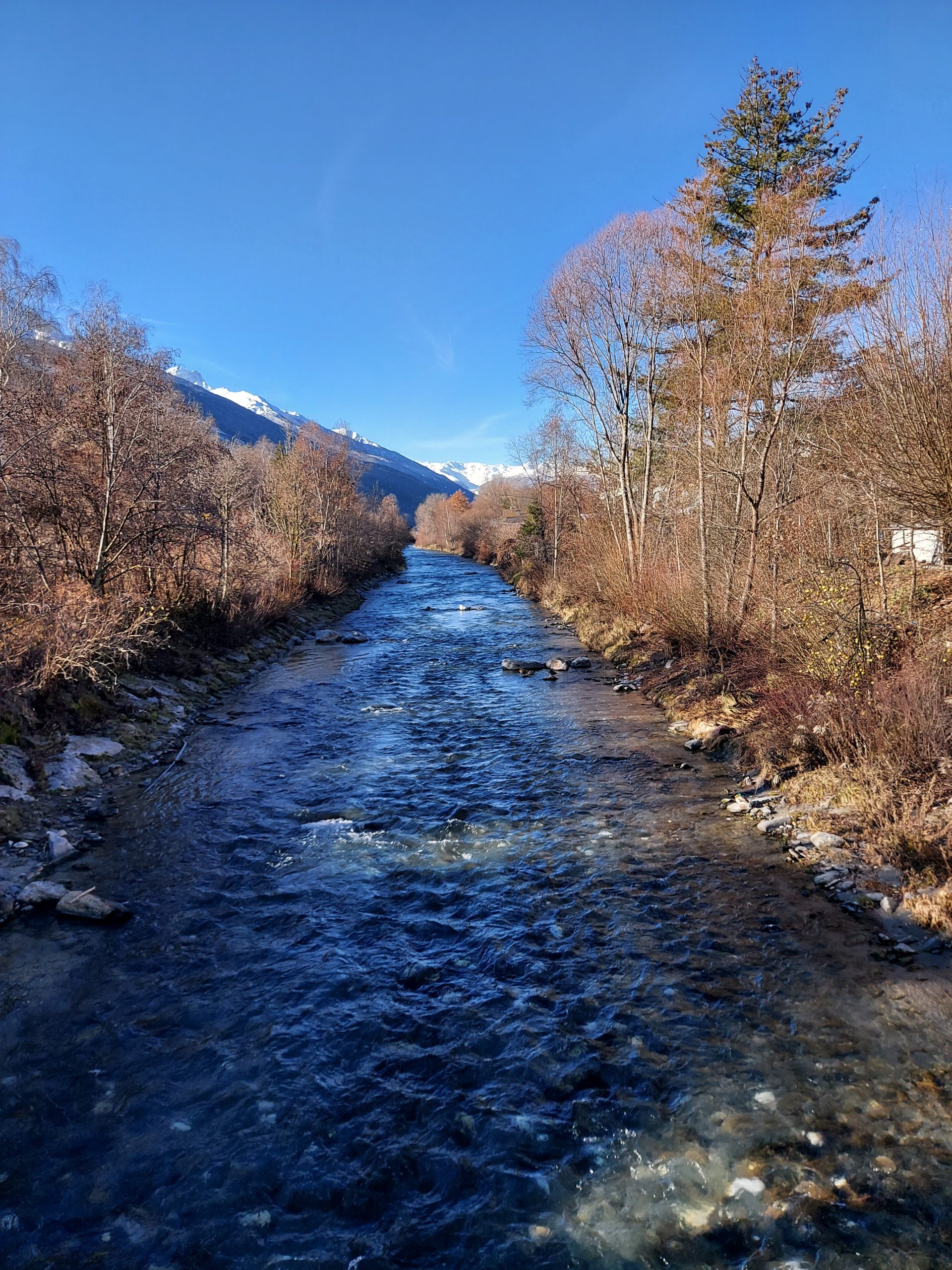
The river in Goldrain/Coldrano

Day 2

December 5th is officially Krampusnacht, also known as the eve of St. Nicholas. Karin’s mam kindly gave us all a red bag of sweets and other goodies (this is tradition, apparently). She then gave us a lift to Schlanders/Silandro for another Krampus parade. This one was supposed to have 100 Krampuses and there certainly were a lot of them. We had an amazing day.

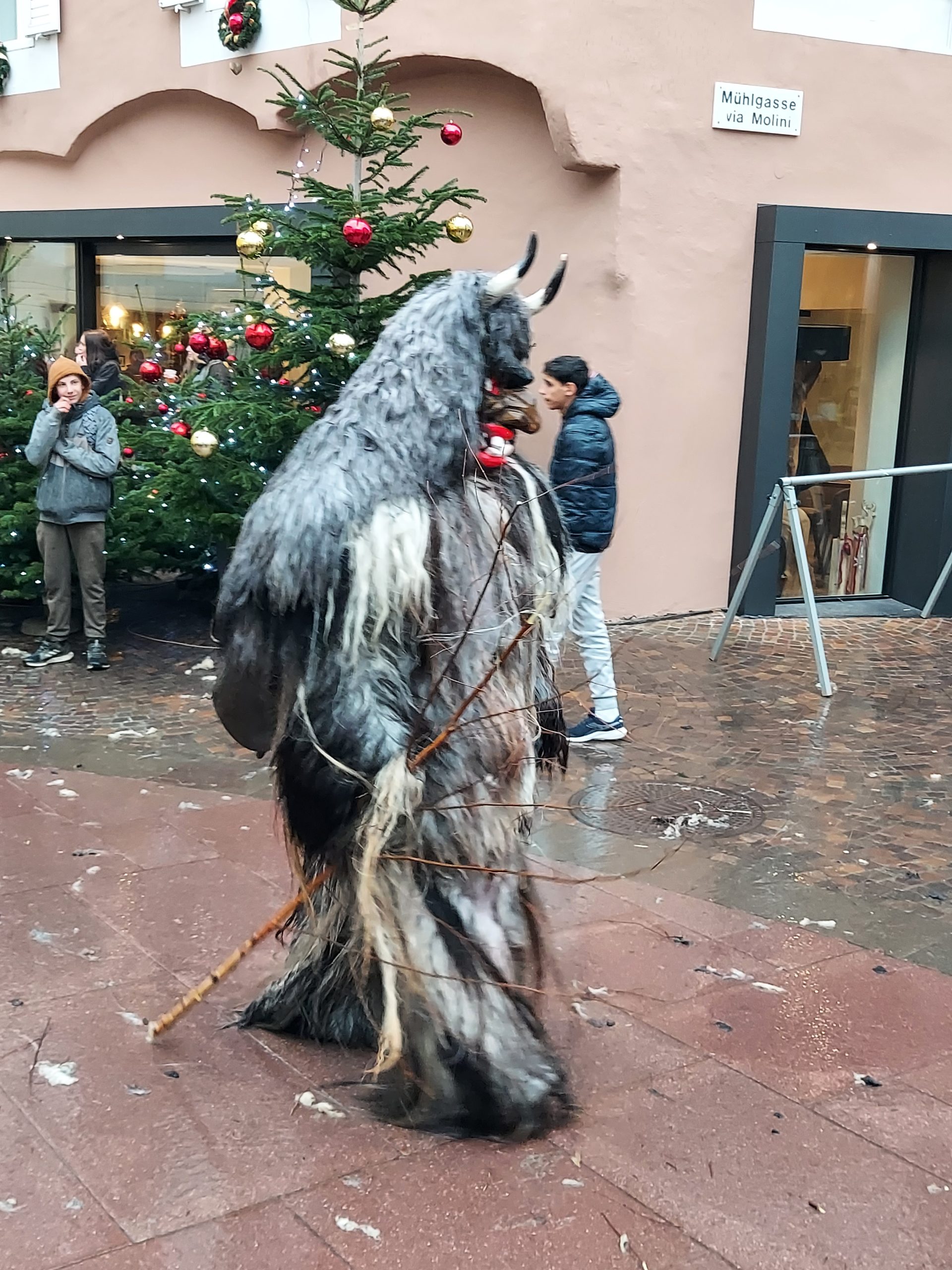
A Krampus
Me (on the right) and a Krampus
Saint Nicholas on stage surrounded by Krampuses

Day 3

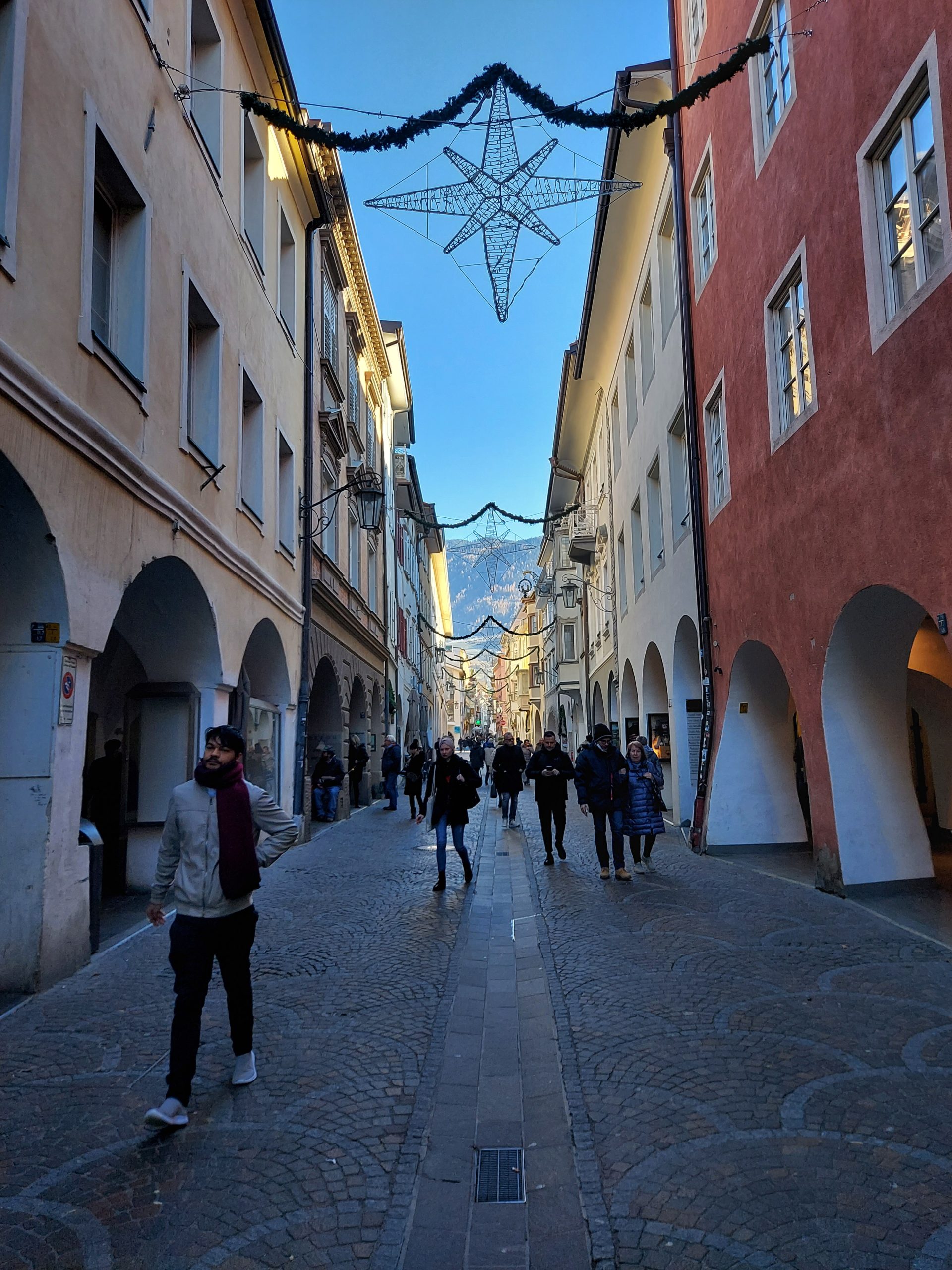
The next day, we started on our journey back to Innsbruck, stopping at the town of Meran/Merano on the way. More pizza and drinks were consumed.

Meran/Merano
The river in Meran/Merano

Back in Innsbruck, we checked into our hotel ready to get up early and head to the airport the next morning.

South Tyrol Museum of Archeology

The South Tyrol Archaeological Museum

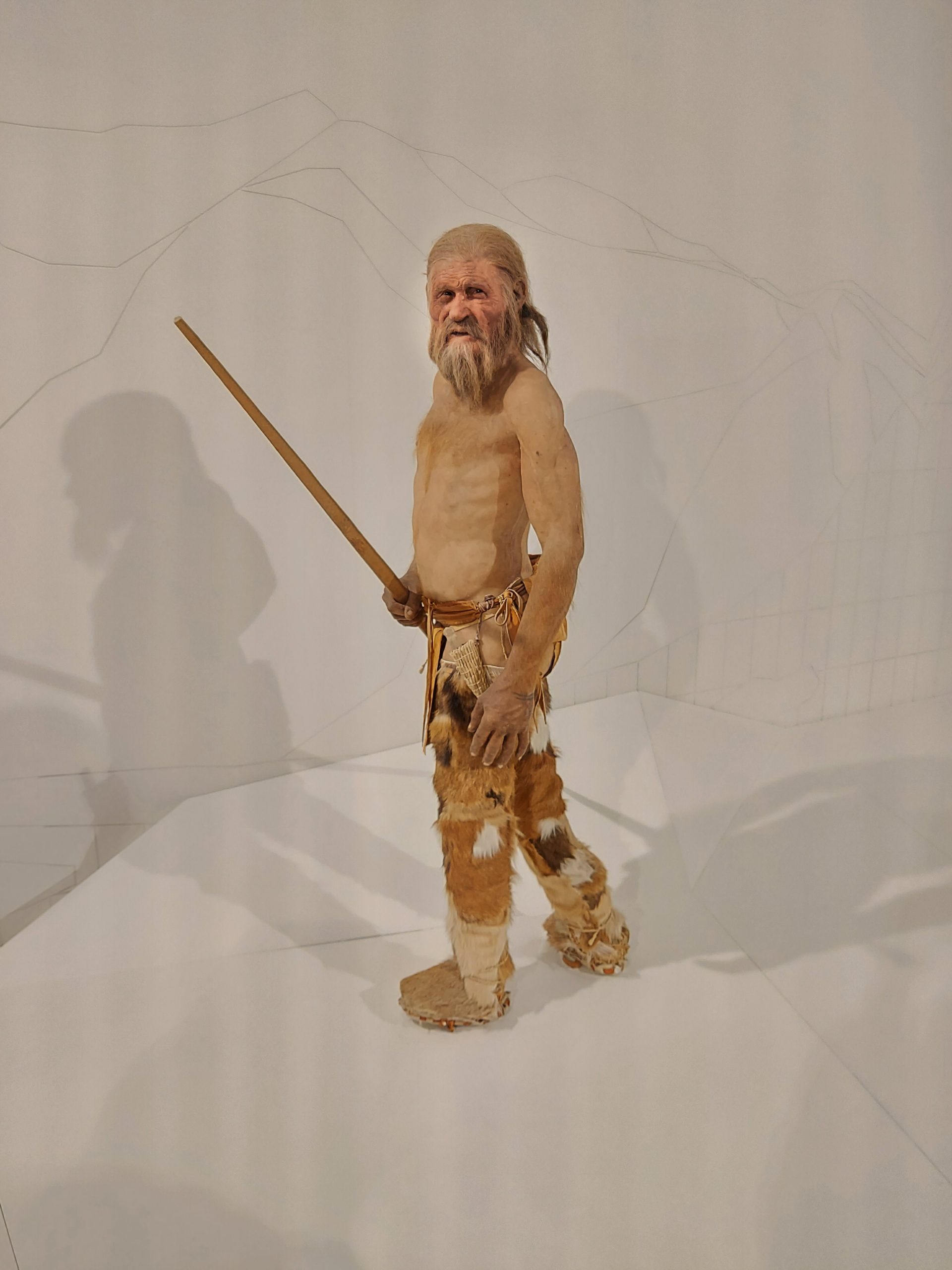
One of the highlights of my trip was a visit to the South Tyrol Museum of Archaeology, home of Ötzi the Iceman, a famous mummy of a man who lived between 3350 and 3105 BC. Discovered in September 1991 in the Ötztal Alps at the border between Austria and Italy, he is Europe’s oldest known natural human mummy.

The museum opened in 1998 in the 1887 building that originally housed the first branch of the Austro-Hungarian Bank in Bolzano/Bozen. It focuses on Ötzi’s story: the ground and first floor look at his discovery and how this played out, while the first floor also covers the Iceman’s body, clothing and equipment that had lain in ice for 5,300 years. It was fascinating to read about and watch interviews from those who discovered the body, and learn about how it was at first assumed to be much more recent. It was only after careful analysis that it was determined that Ötzi was a product of the late Stone Age and was over five thousand years old. It is possible to view Ötzi’s body, which is cared for to ensure constant preservation; you can even see the tattoos on his skin, which seem to bring him to life even more. Items he wore or carried with him, such as clothing and hunting implements, are also on display: they have been incredibly well preserved.

Ötzi the Iceman

The second floor looks at Ötzi’s wider environment, including any diseases he might have been exposed to, and how he may have looked during his life. It is revealed that Ötzi was murdered, though we will never know the motivation for this most ancient of crimes. The third floor is a peaceful area to rest, reflect and research.

This museum is a must-visit for anyone remotely interested in prehistory. I loved it and I’m so glad I got the chance to visit.

FACTS

Address: Museumstraße/Via Museo 43, Bozen/Bolzano, South Tyrol (Italy)

Website: iceman.it/en/

Opening Hours: Tues-Sun 10am-6pm (also open Mondays in July, August, September and December)

Price: Adult €13, concession €10, children under 6 free

Innsbruck

Coloured houses alongside the bank of the river Inn

I’ve wanted to go to Innsbruck for years, ever since I read the Chalet School books as a child. I finally got my chance this December: I planned to celebrate Krampusnacht with a friend (on which more later) and spent a few days in Innsbruck beforehand.

Day 1

I flew from Gatwick early in the morning with my friend Karin. The flight was only a couple of hours. The first thing we did after arriving in Innsbruck and taking the bus to the city centre was to eat lunch in a bakery. An elderly lady who looked just like Queen Elizabeth II heard us speaking in English and came over to talk to us. She said that she cried when the Queen died.

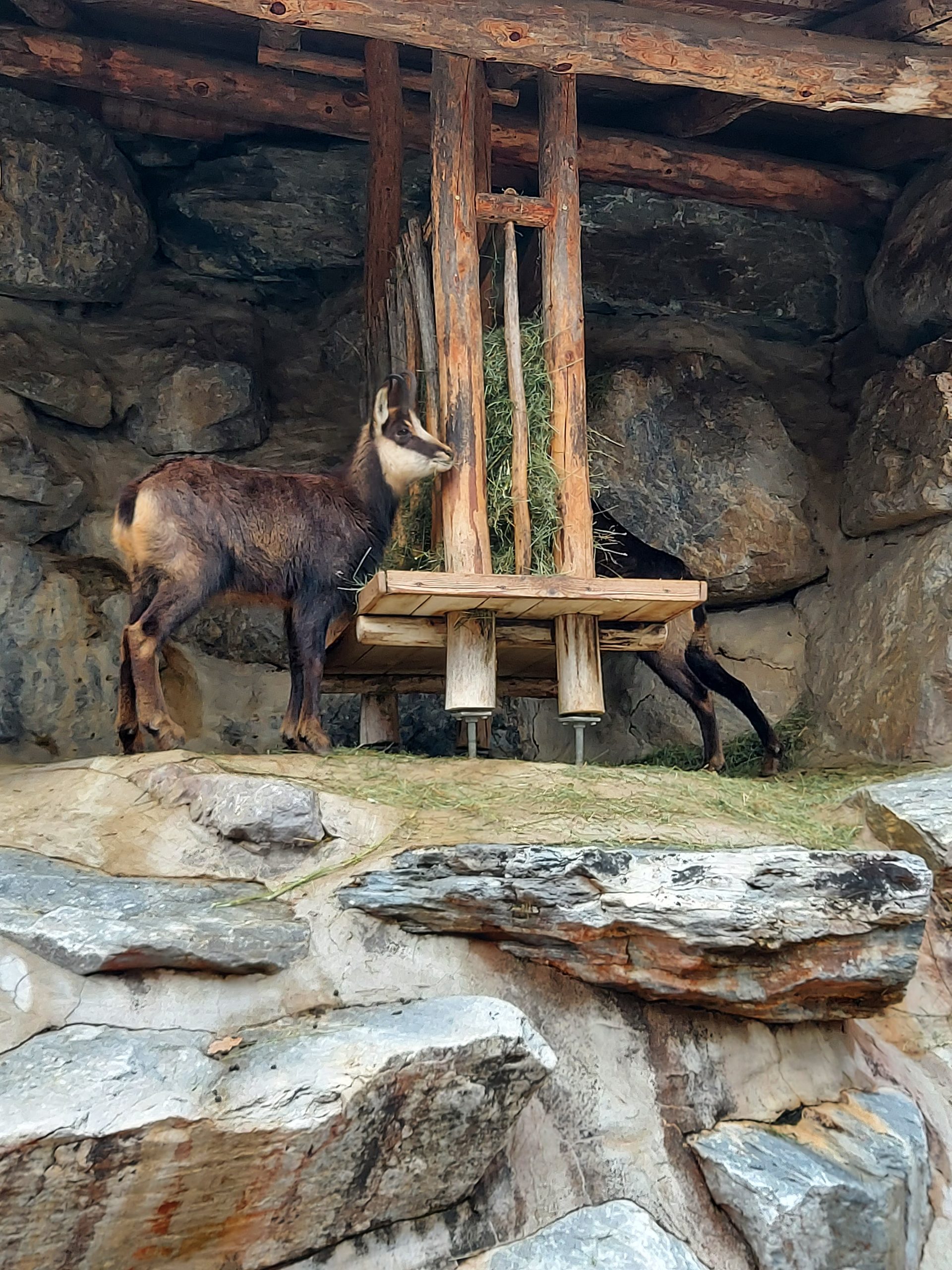
Alpine ibex

After buying an Innsbruck Card, we visited the Alpenzoo which had loads of cute native Austrian animals including otters, alpine ibex, snow hares, golden eagles and even a brown bear. After this we went for a drink in the Christmas market – we had several glasses of gluhwein. Karin headed home after that and I went to my hotel – I was staying at Quartier 99, which was basic but comfortable.

Me at the Christmas market

Day 2

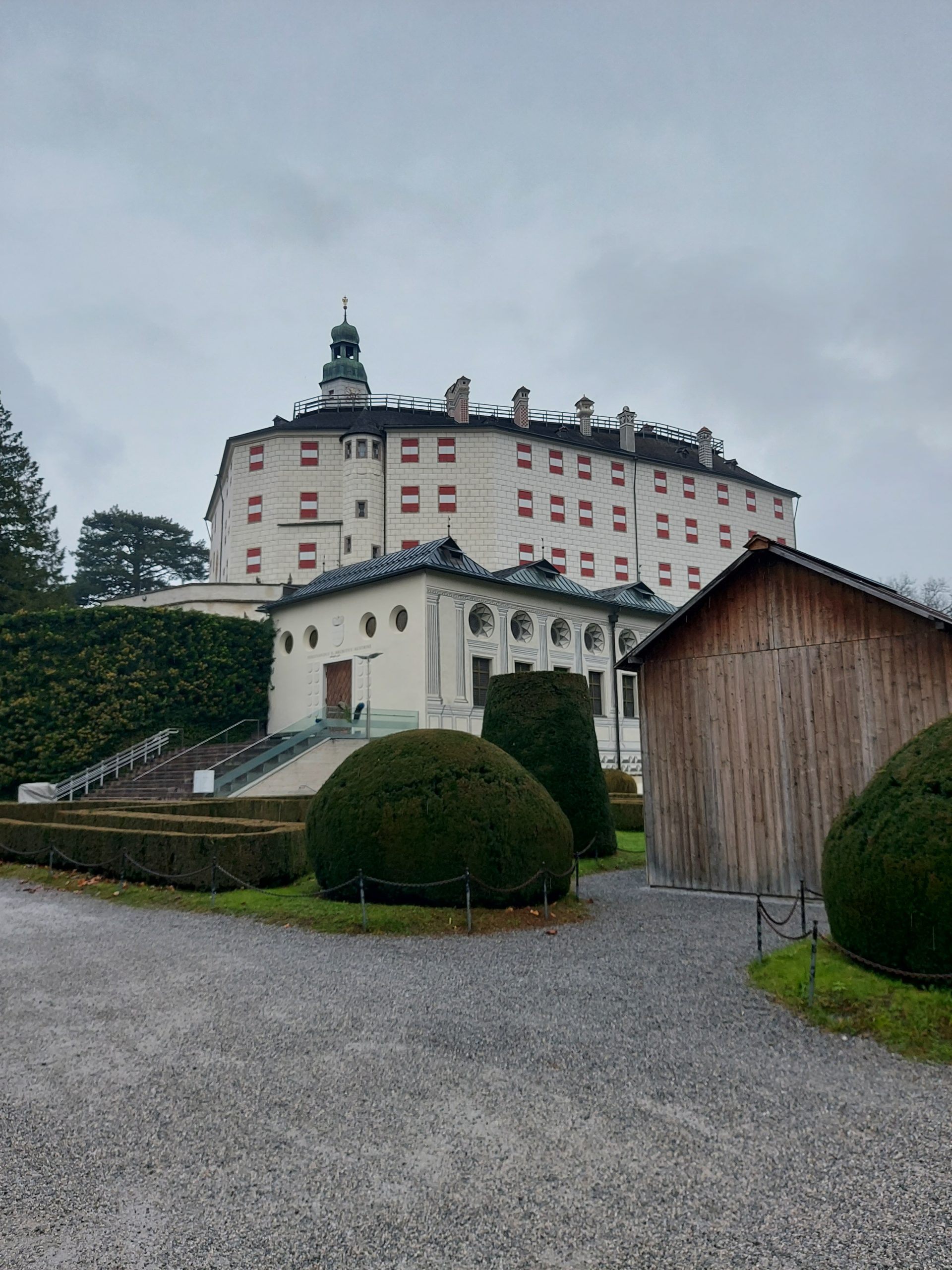
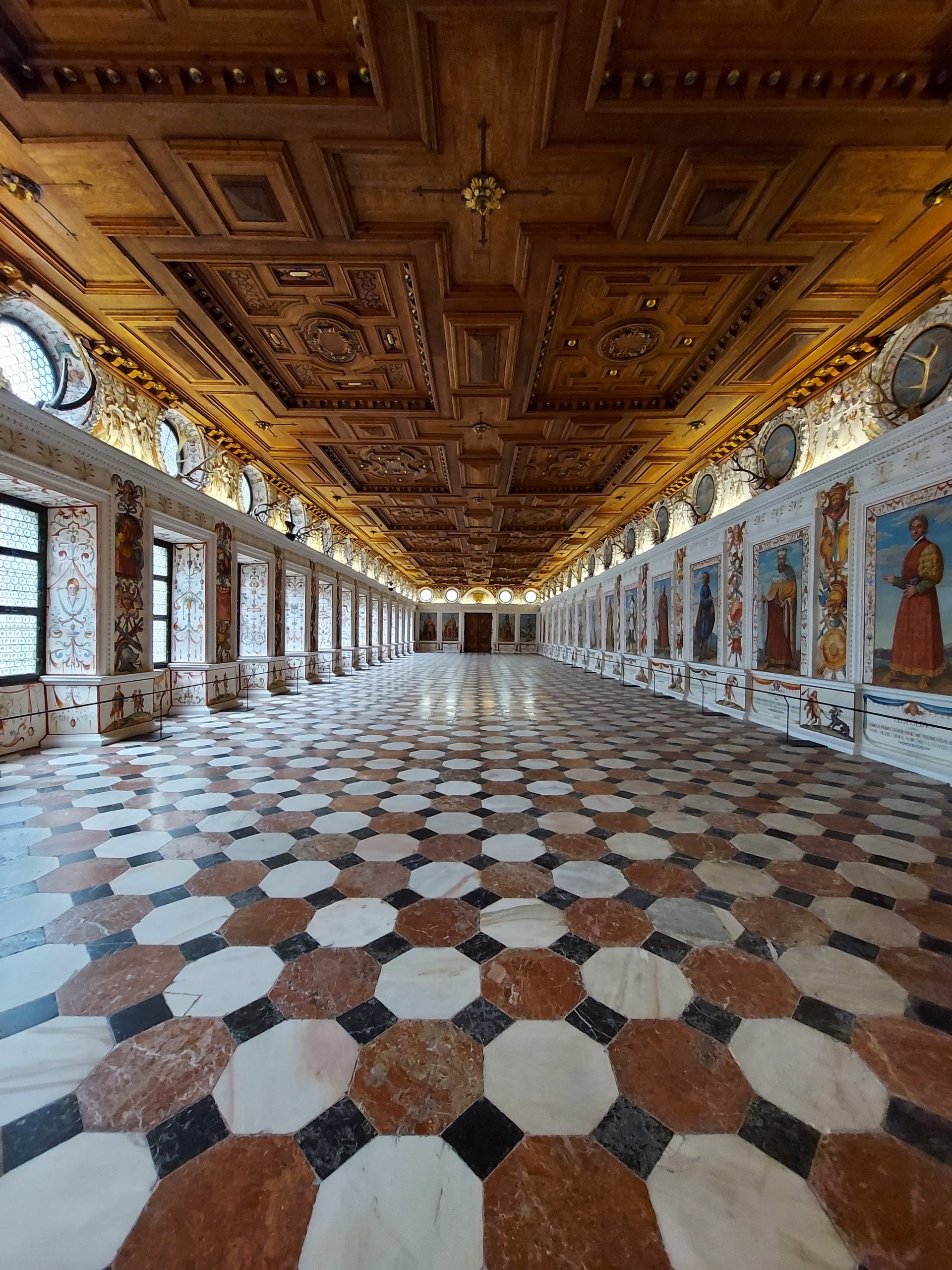
Today I took the tour bus and visited Ambras Castle, which describes itself as the “first museum in the world”. Archduke Ferdinand II of Tyrol turned this medieval fortress into a Renaissance castle as a gift for his wife, Philippine Welser; he displayed his collections in a purpose-built museum on-site, including art, armour and other artefacts. The bathing chambers used by Philippine are elaborate and pretty impressive for the time, and the Spanish Hall is magnificent.

Ambras Castle
Spanish Hall

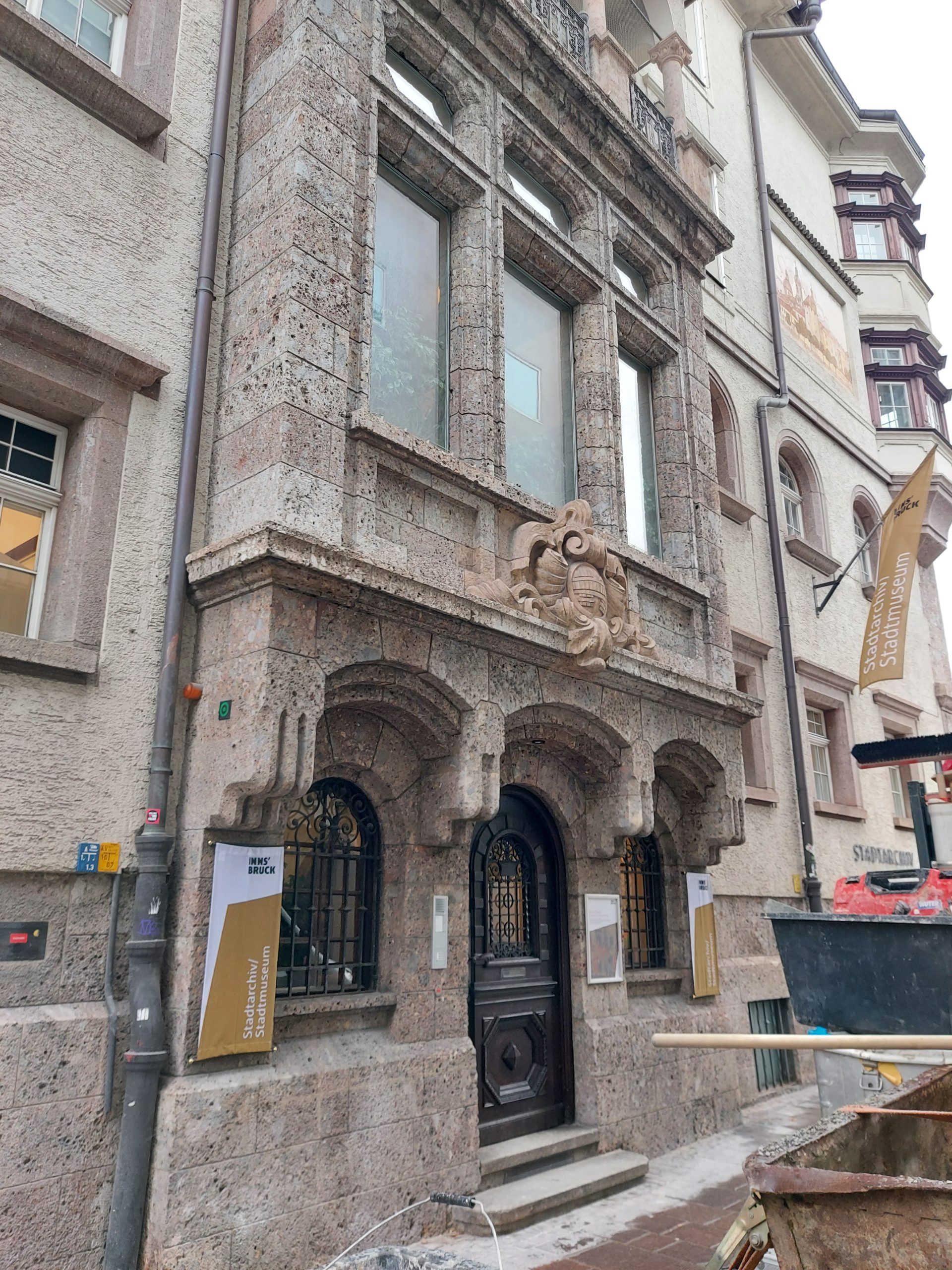
After getting back to Innsbruck I had a wander round the old town. I popped into the Golden Roof Museum which was all about the famous Golden Roof and its history. I also visited the City Archives and City Museum, which had some interesting displays, but all the text was in German.

The Golden Roof
A painting of the Golden Roof in the sixteenth century
City Archives and City Museum

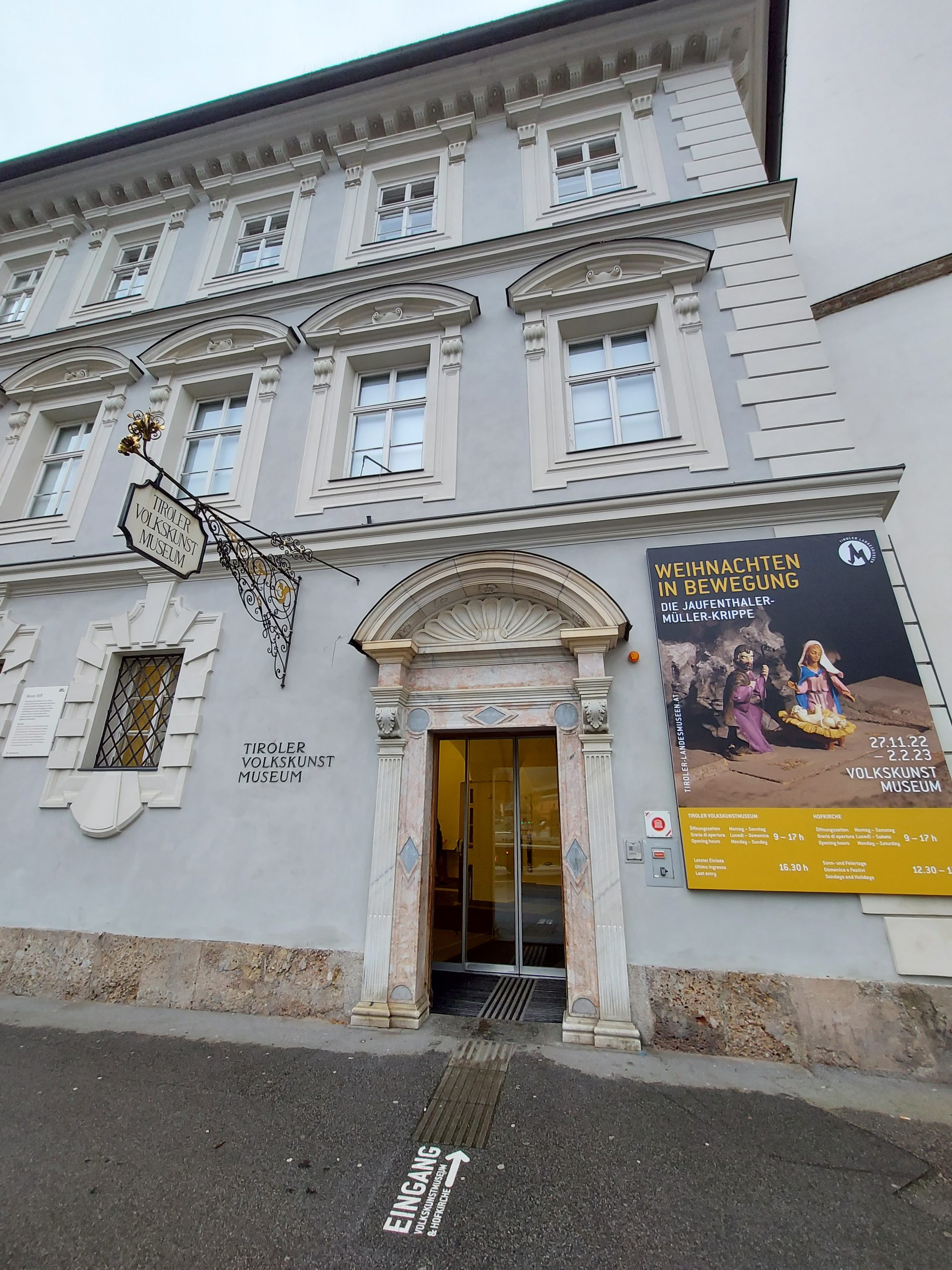
I then visited the Tyrolean Folk Art Museum and the Hofkirche. The museum was full of fascinating artefacts, consisting of examples of folk art, furniture, interiors and decorations from ordinary people in Tyrol.

The Folk Museum
A traditional Tyrolean interior

The latter houses the tomb of Emperor Maximilian I and is suitably dramatic, with a cenotaph flanked by 28 statues of his ancestors and role models. On Maximilian’s death in 1519, not all of the statues had been completed, and in any case he stipulated in his will that his body should buried in the chapel of his castle in Wiener Neustadt. However, his grandson Ferdinand I later constructed the Hofkirche, cenotaph and adjoining monastery (now the aforementioned folk art museum), while his son Archduke Ferdinand II completed the tomb and added the Silver Chapel to house his own tomb and that of his wife.

Inside the Hofkirche

Lastly, I took the bus to Swarovski Crystal Worlds which was a magical experience both indoors and out.

Swarovski Crystal Worlds

Day 3

On my final full day in Innsbruck, I took the cable car (‘Nordkettenbahnen’) up to the Top of Innsbruck. There were three cable cars in total and three different levels you could get out at to admire the view. The first two were great, with incredible views of Innsbruck and the surrounding mountains, but the highest one was freezing and windy – plus there was snow – so I didn’t fancy being up there for very long!

View over Innsbruck

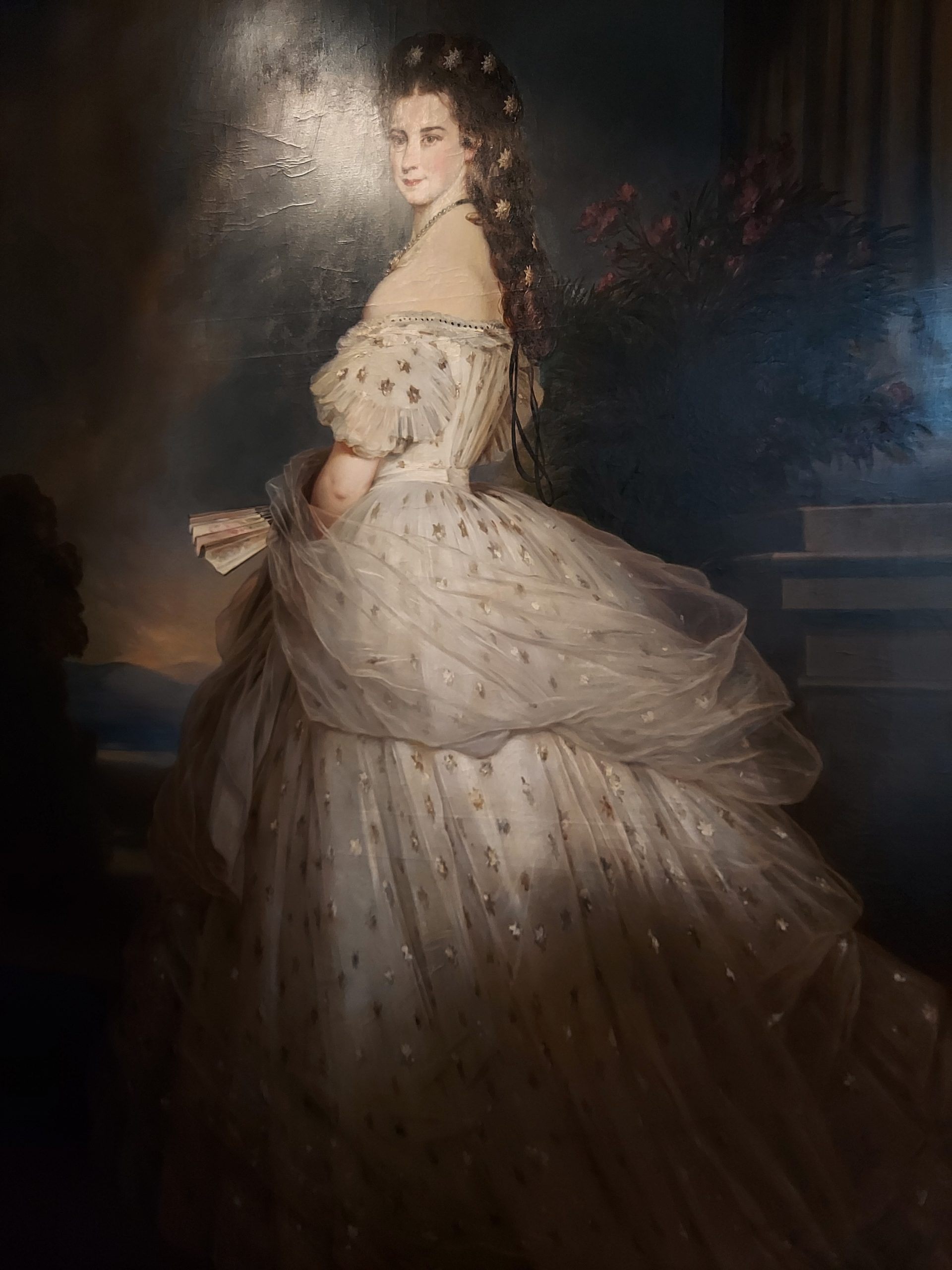
Once back in Innsbruck, I visited the Hofburg, including the exhibition about Maximilian I. The Imperial Apartments as they appear today was largely dictated by Empress Maria Theresa, who converted the south-facing state rooms into a memorial after her husband’s death. The Inner Apartment was refurbished for Empress Elisabeth, aka Sisi, who lived there in the nineteenth century: her portrait is the most striking of the family portraits displayed in the gallery, showing her in a beautiful dress with stars in her hair.

Hofburg
Portrait of Empress Elisabeth ('Cici')

I then went up the City Tower or ‘Stadtturm’ which offered great views of the city. The tower dates from the fifteenth century and used to house a prison.

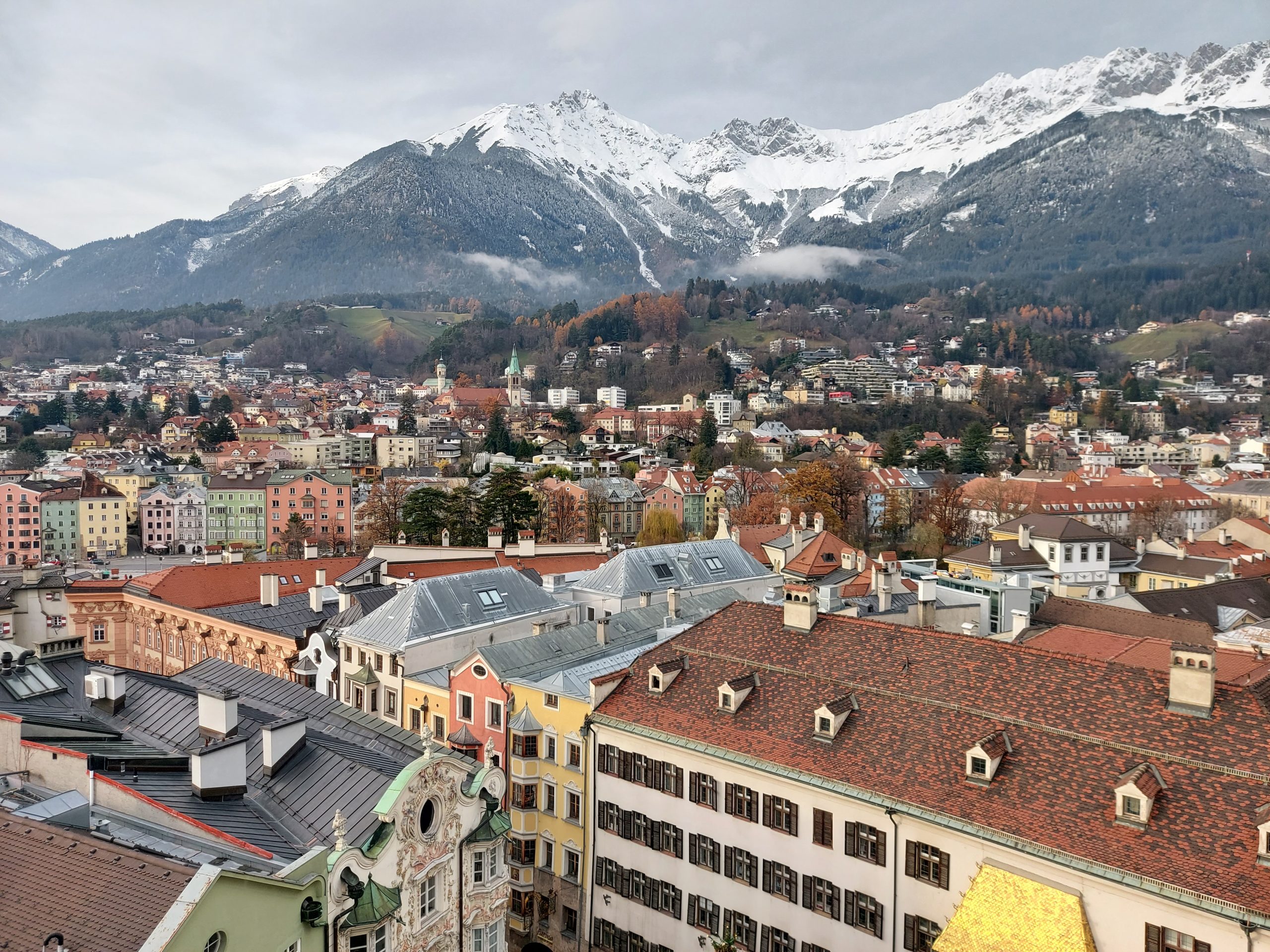
View of the Old Town from the City Tower
View of Innsbruck from the City Tower

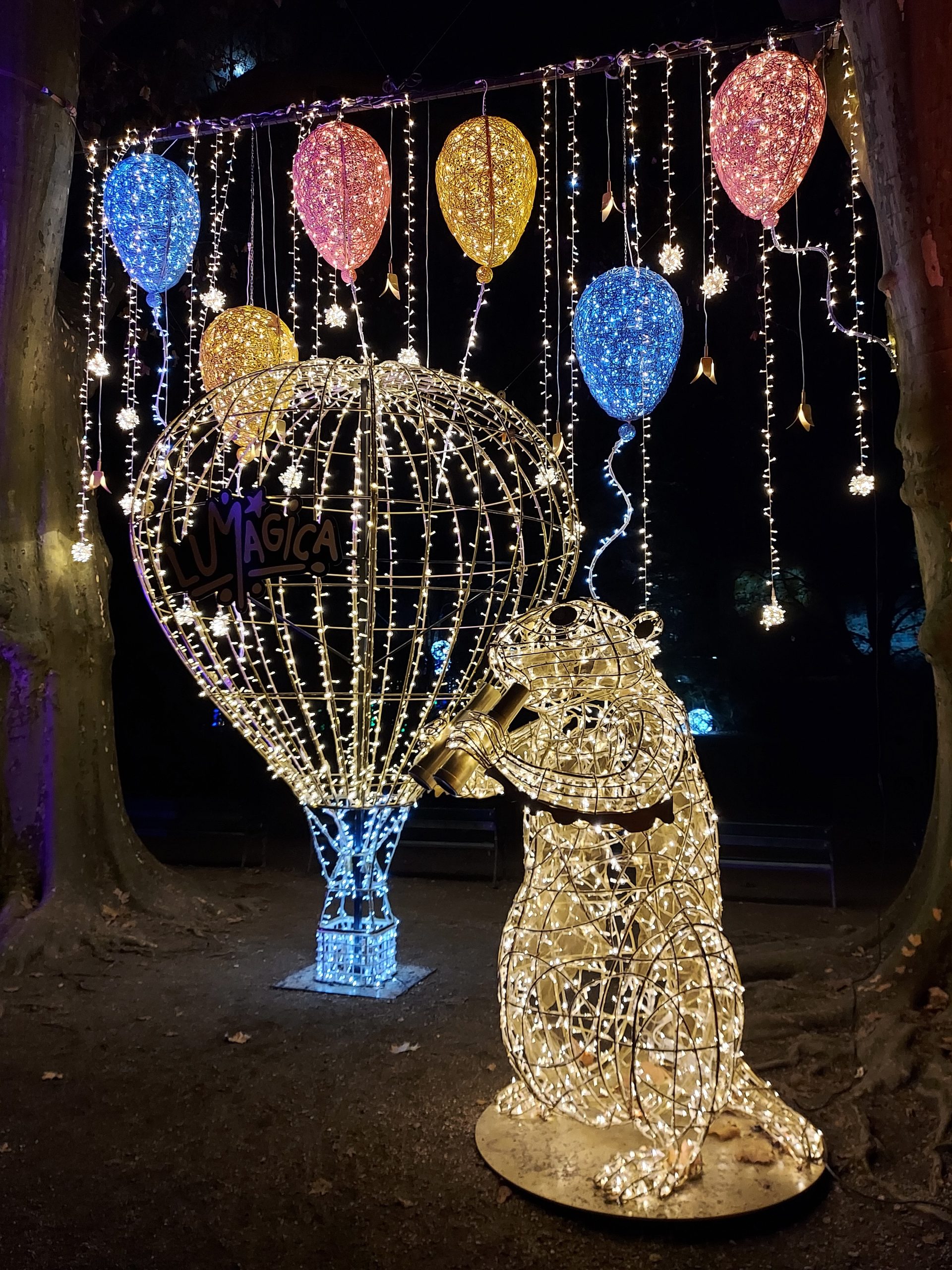
Finally, in the evening I went to Lumagica, a festive light trail around the park featuring animals from all the different continents.

A light sculpture showing an Alpine marmot alongside a hot air balloon

The next day, I was up and out fairly early to catch the train to Bozen/Bolzano for the next part of my adventure.

Rebel Badge Club: Linguist

I’ve had my eye on the Linguist badge for a while. When I was a teenager I hated languages and they were my least favourite subjects at school. As I got older my hatred started to wane and I started to see the potential in language learning. Not to mention that I don’t want to be one of those Brits who can’t speak any language other than English.
Choose a foreign language to improve over the next 3 months.

I’ve been studying Russian on and off since I was eighteen; I’ve probably fulfilled all the clauses of this badge at one time or another. However, I wanted to challenge myself for this badge, so I decided to study German – I do have a GCSE in this language, but haven’t touched it since then (20 years ago!). I have a friend from South Tyrol (the German-speaking part of North Italy) and it would be nice to be able to speak to her in her own language.

Dedicate at least 2 hours a week to practising your chosen language.

I found this fairly straightforward, usually studying for one hour on two separate days within the week.

Download an app to help with your learning.

I tried the apps Babbel and Memrise but I wasn’t keen and ended up sticking with Duolingo, the app I’ve been using to study Russian. I love Duolingo and find it really easy to use.

Have a conversation with a native speaker.

I visited Innsbruck and South Tyrol at the beginning of December and was able to have several, albeit basic, conversations with native speakers. Though I’ve still got a long way to go, I feel quite proud of this!

Choose a book, magazine or article which you will read by the end of the three months. Translate a section of it into English.

As a child I had (probably still have, somewhere) a copy of Shock-Headed Peter by Heinrich Hoffmann, the original German title of which is Der Struwwelpeter. The text is available online, so I thought I would have a go at translating one of the poems in it, a rather satisfying albeit brutal moral tale in which a cruel boy is given a taste of his own medicine by a clever dog. I had to use Google Translate quite a lot, but I understood more than I had expected.

Cook a dish from a country where your chosen language is spoken.

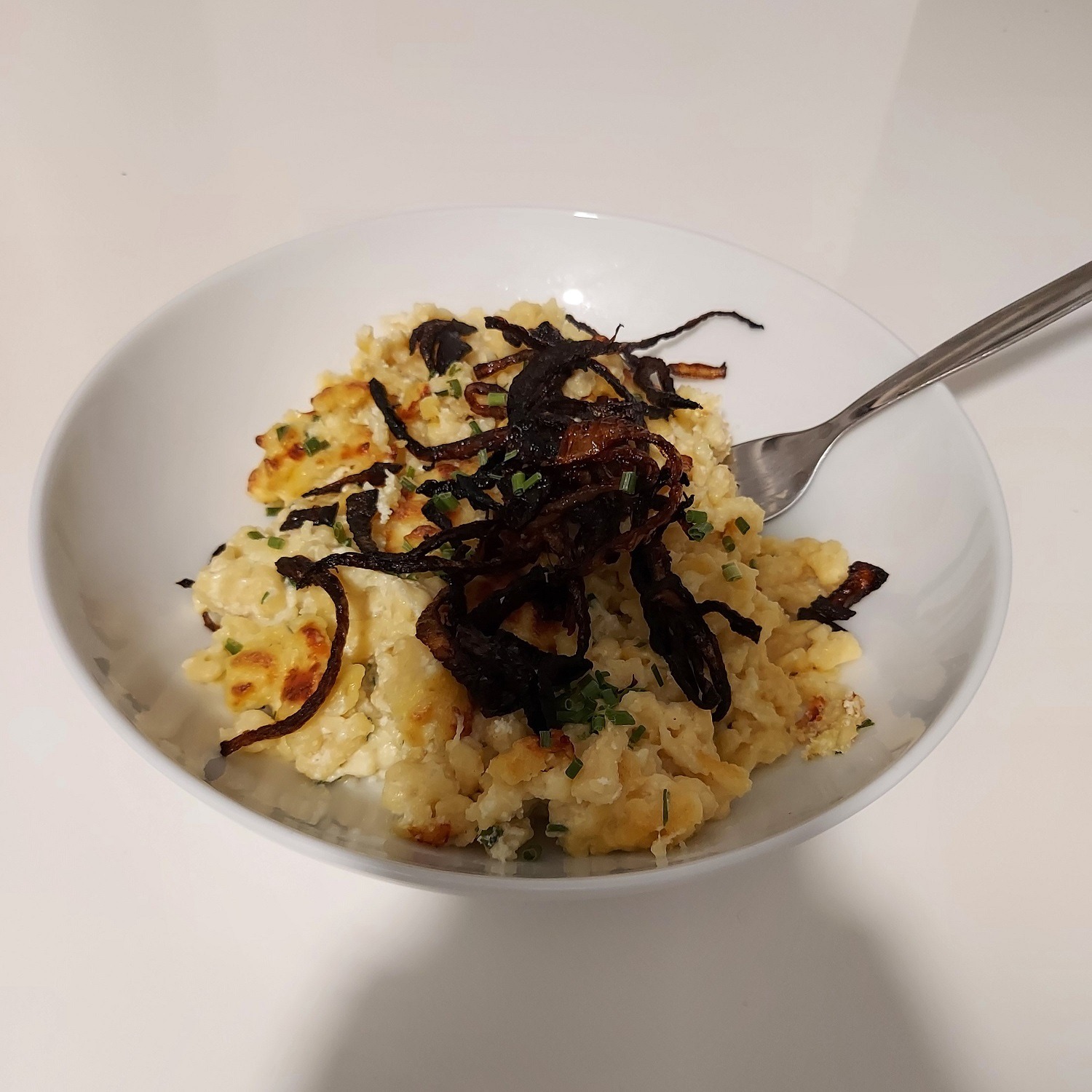
I’m vegetarian, and a lot of German cuisine is meat-heavy, so this clause was tricky. However, I found a dish called spaetzle, or spätzle, which are German egg noodles often served as a side dish. I made Käsespätzle (käse = cheese) using a recipe from Plated Cravings. It’s not something I’d eat every day, as it is full of butter and cheese and isn’t the healthiest meal, but I enjoyed it and it’s perfect comfort food after a day outside in the cold.

My spaetzle

Watch a film or TV show in your chosen language.

I watched a German-language film called Goodnight, Mommy (2015) which was creepy but hugely enjoyable. Because the main characters are children, the speech was a bit simpler than it might have been, so it was easier to follow, although I definitely needed the subtitles!

Date completed: 7 December 2022

Museum of London

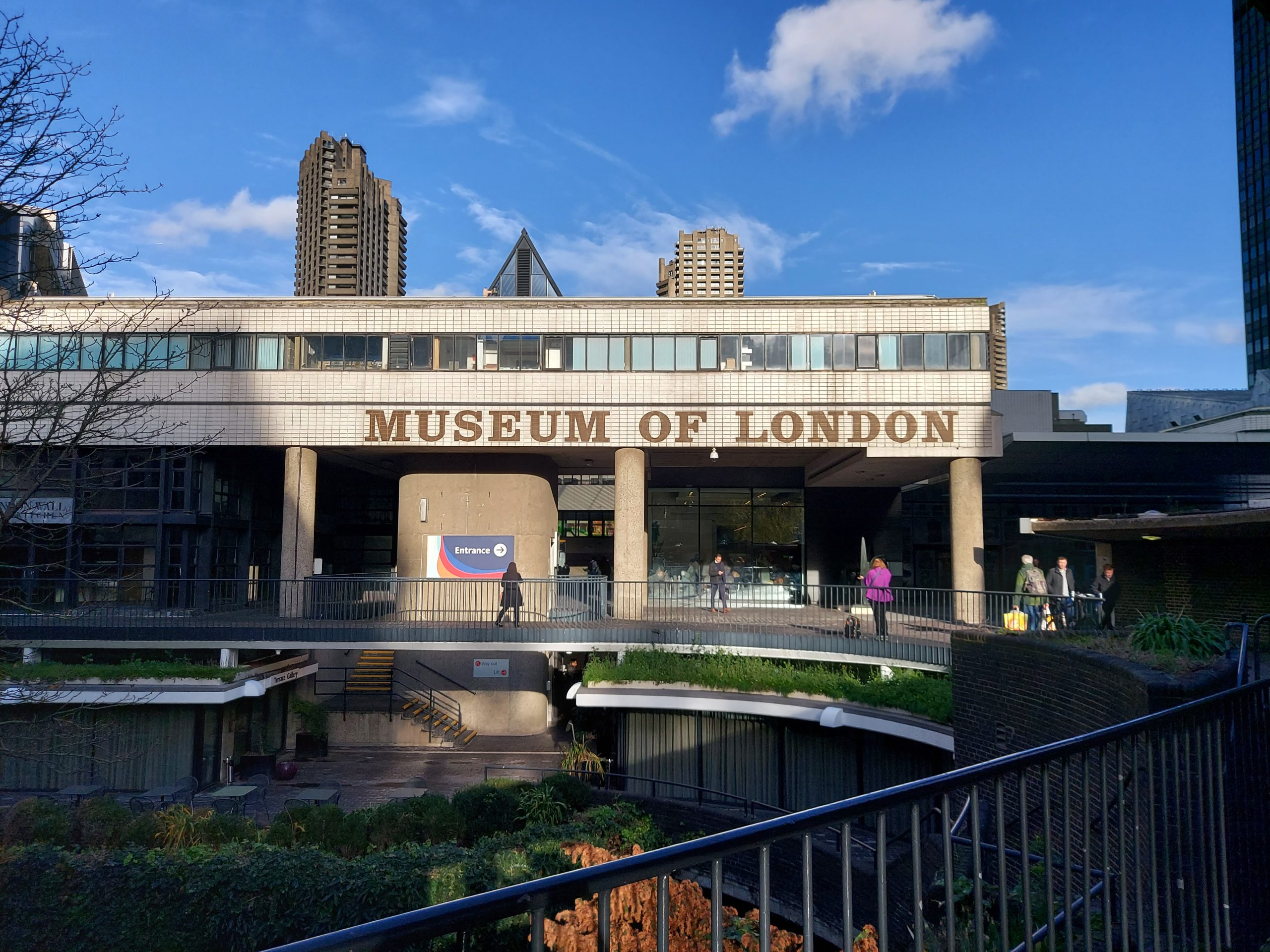
The front of the Museum of London

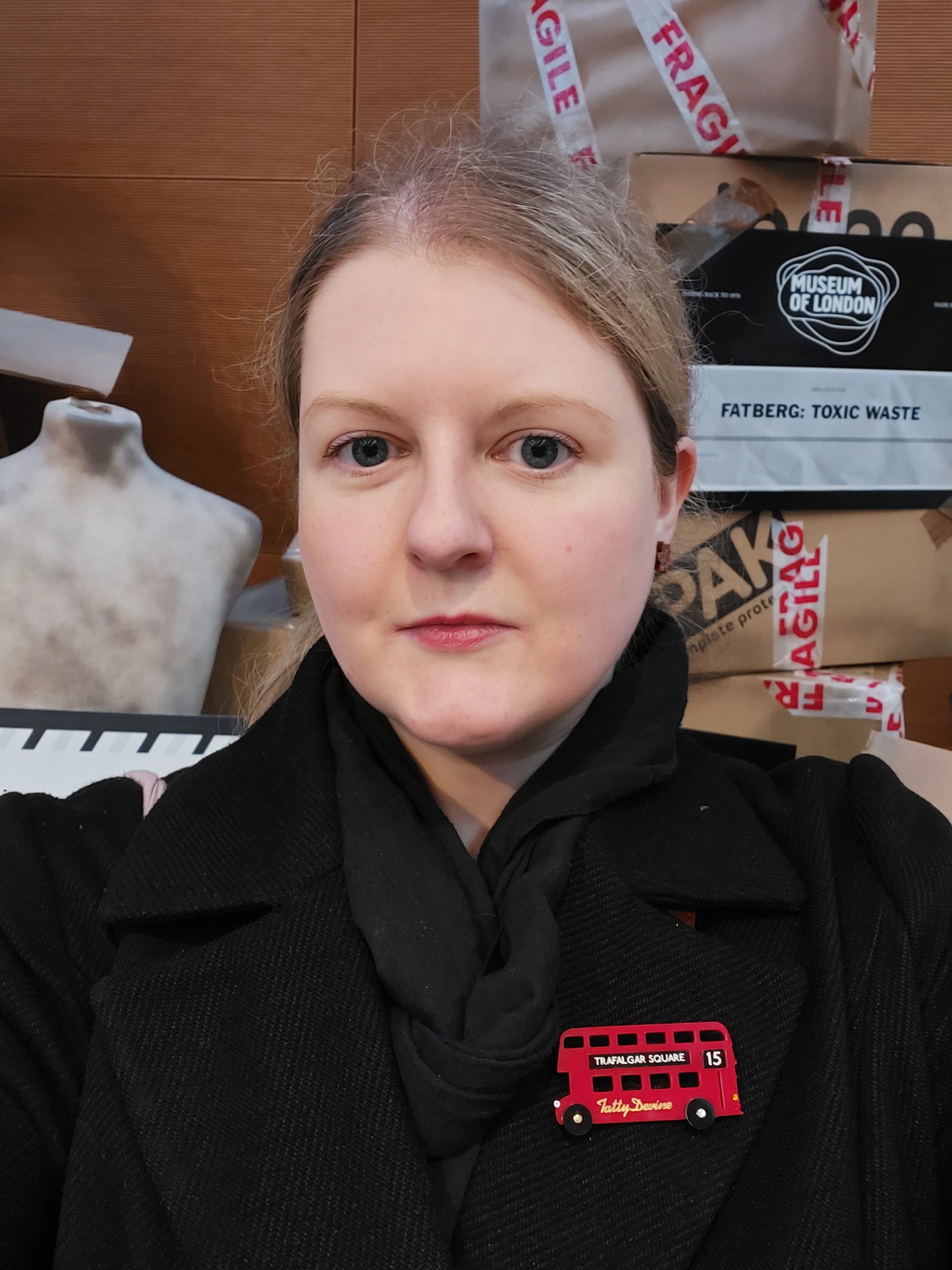
I’ve been to the Museum of London several times over the years, but as it’s about to close before moving to a new site in Smithfield market in a few years, I wanted to go again one last time. The museum is preparing for closure by offering the chance to take a selfie in front of a pile of packing boxes, an opportunity which I took!

Selfie at the Museum of London

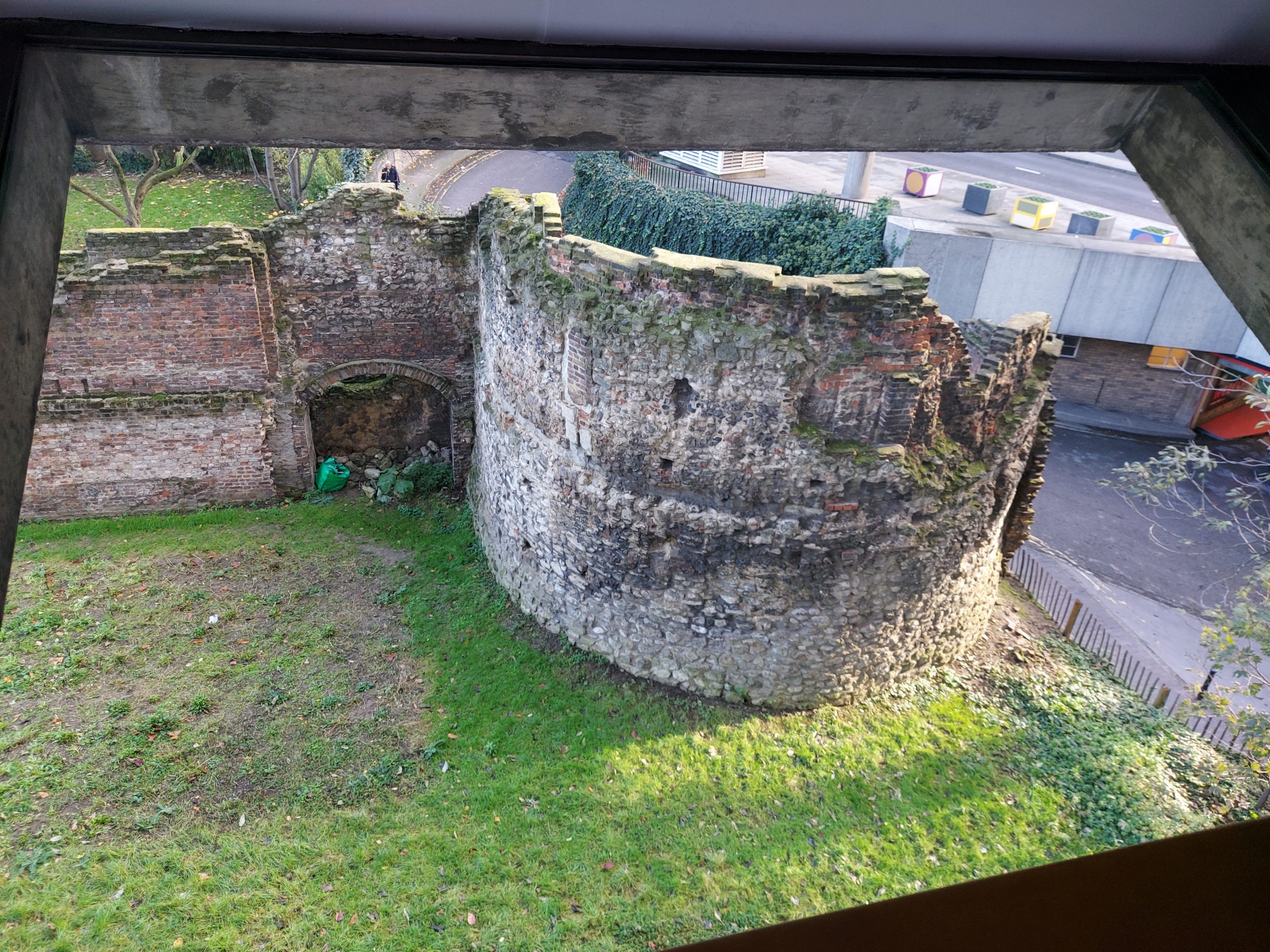
The museum begins with a prehistoric gallery, ‘London Before London’, telling the story of a time when lions, tigers and hippopotami lived on the land we now call London. It then moves on to ‘Roman London’, exploring the first major significant period of London’s history, with some incredible statues and pieces of jewellery that have been dug up over the years. At this point, you can also look out of the window and see a part of the original Roman wall.

View of London Wall from the Museum of London

The ‘Medieval’ gallery explores the Black Death and the Great Fire of London, two events which helped to shape the history of the city. The audiovisual displays are a little bit dated now but still enjoyable. ‘Georgian London’ takes us into the Vauxhall Pleasure Gardens and also displays the door of Newgate Prison, while ‘Victorian London’ is explored through a warren of shops. The Blitz is given a prominent position in the museum as we move into the twentieth century, while we can also learn about poverty, women’s suffrage and workers’ movements. Postwar is represented by various artefacts including a Mary Quant dress, while a cauldron from the 2012 Olympics is one of the most significant objects on display representing the 21st century.

It will be interesting to see how the new museum presents the rich and diverse history of London. I’m looking forward to finding out, although I’m sorry to see this one go.

Goldsmiths’ Hall Open Day

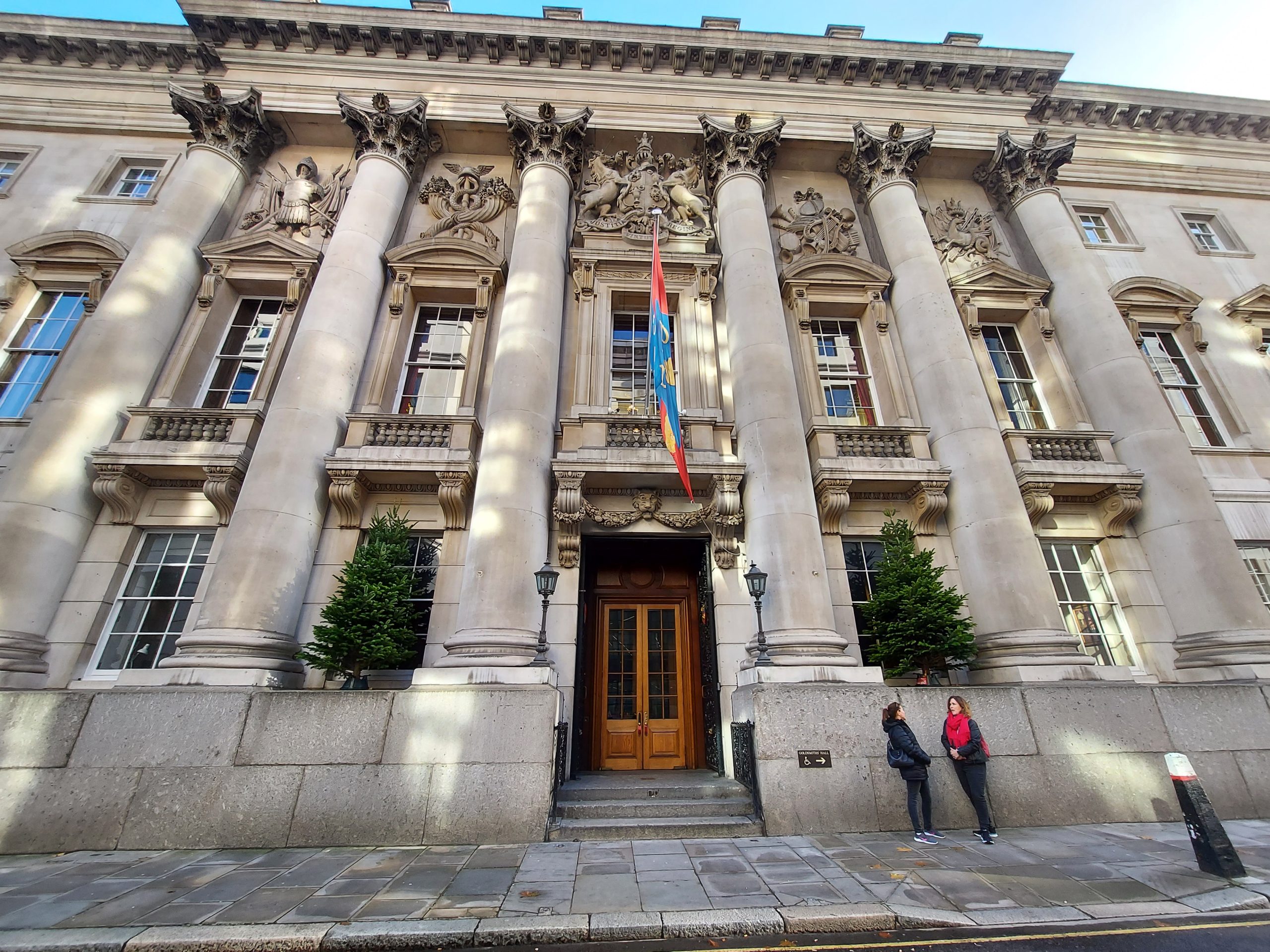
The front of Goldsmiths' Hall

Well before the pandemic, I signed up for a tour of Goldsmiths’ Hall, due to take place in 2020. Well, we all know how that turned out. Many date rearranges later, the tour finally took place in late November 2022.

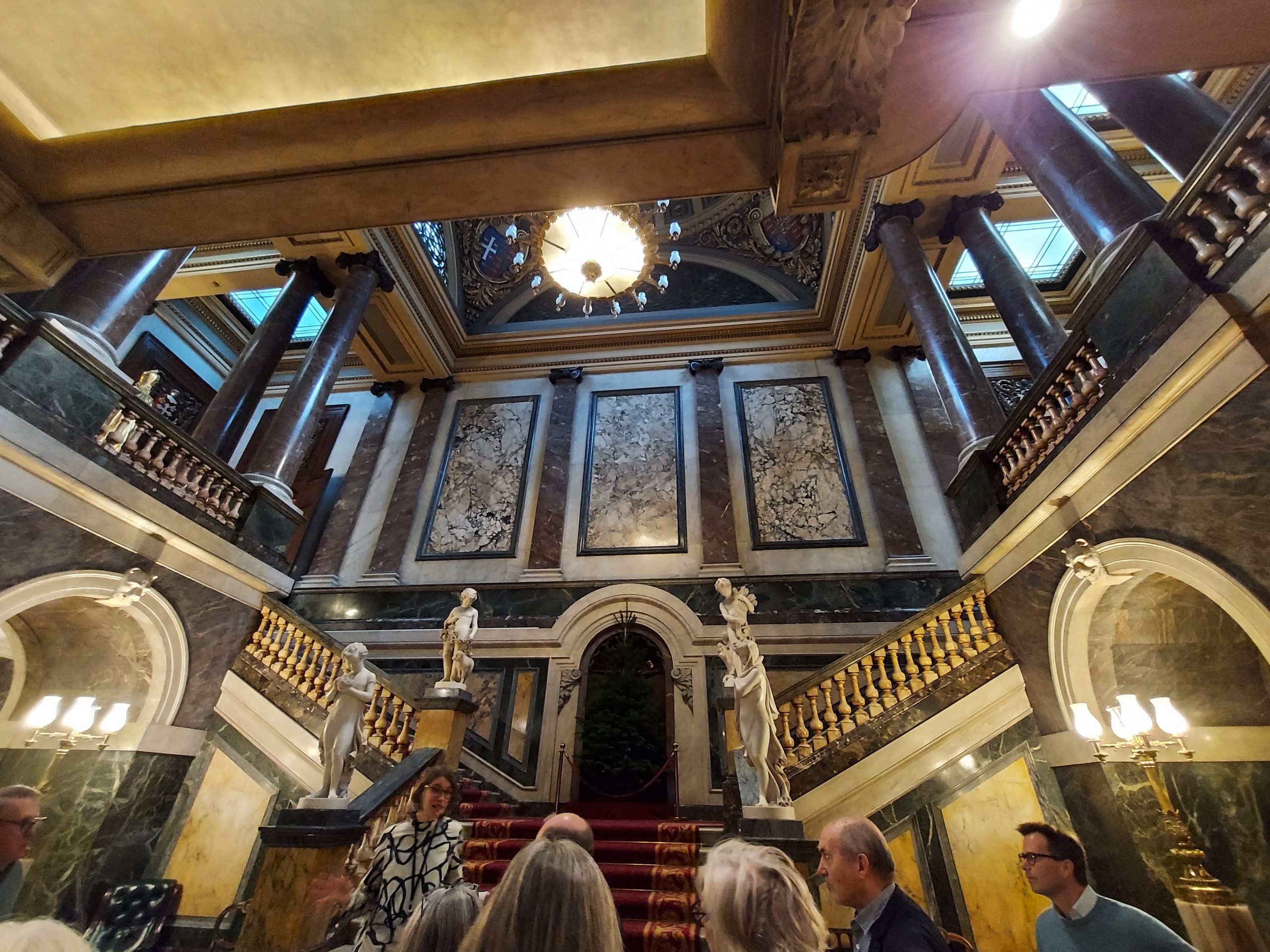
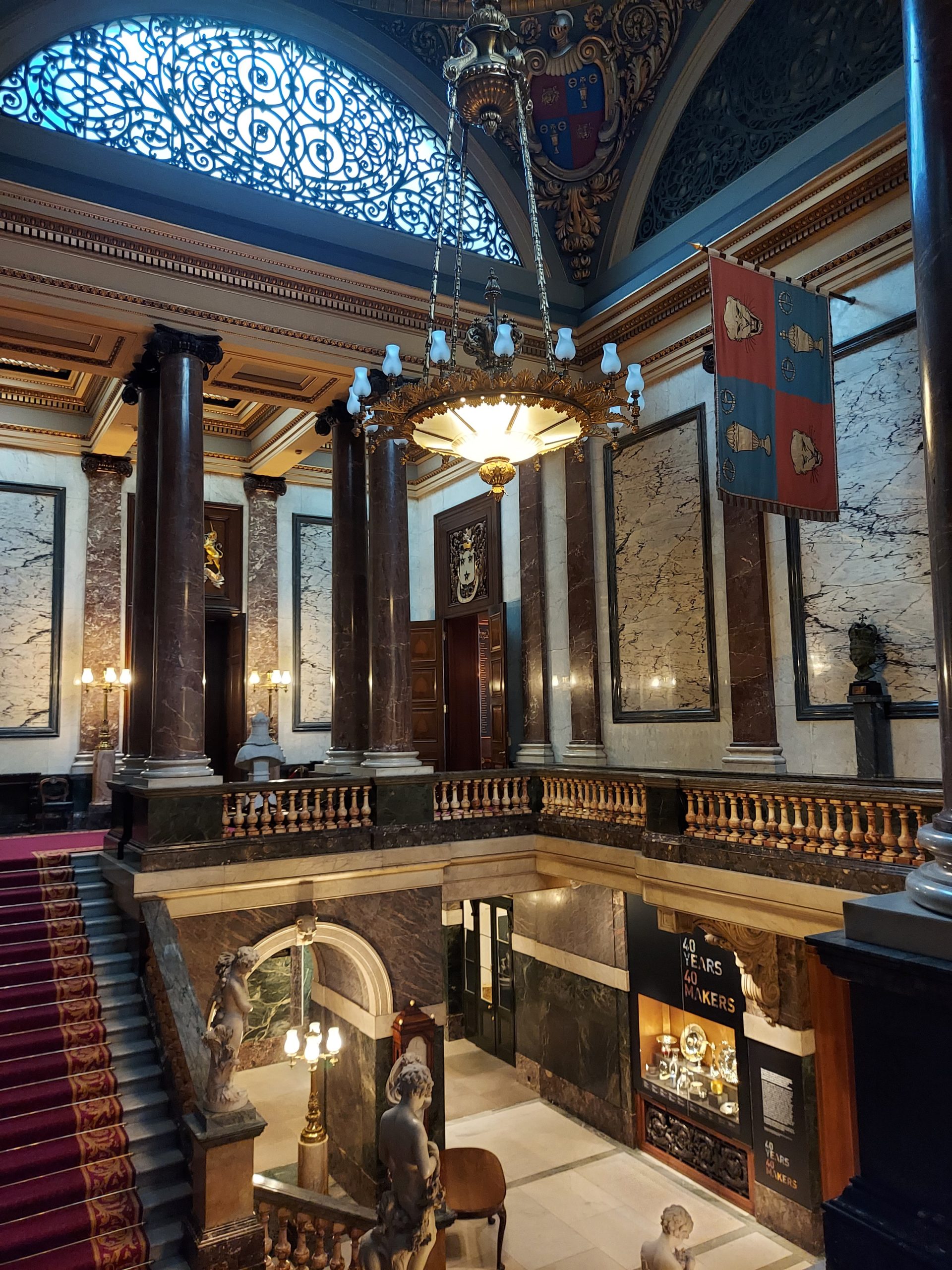
The main staircase of Goldsmiths' Hall

The Worshipful Company of Goldsmiths, also known as the Goldsmiths’ Company, is one of the Twelve Great Livery Companies of the City of London. It received its first royal charter in 1327. Despite the name, a ‘goldsmith’ traditionally works in both gold and silver, and today, platinum and palladium too.

The main staircase of Goldsmiths' Hall

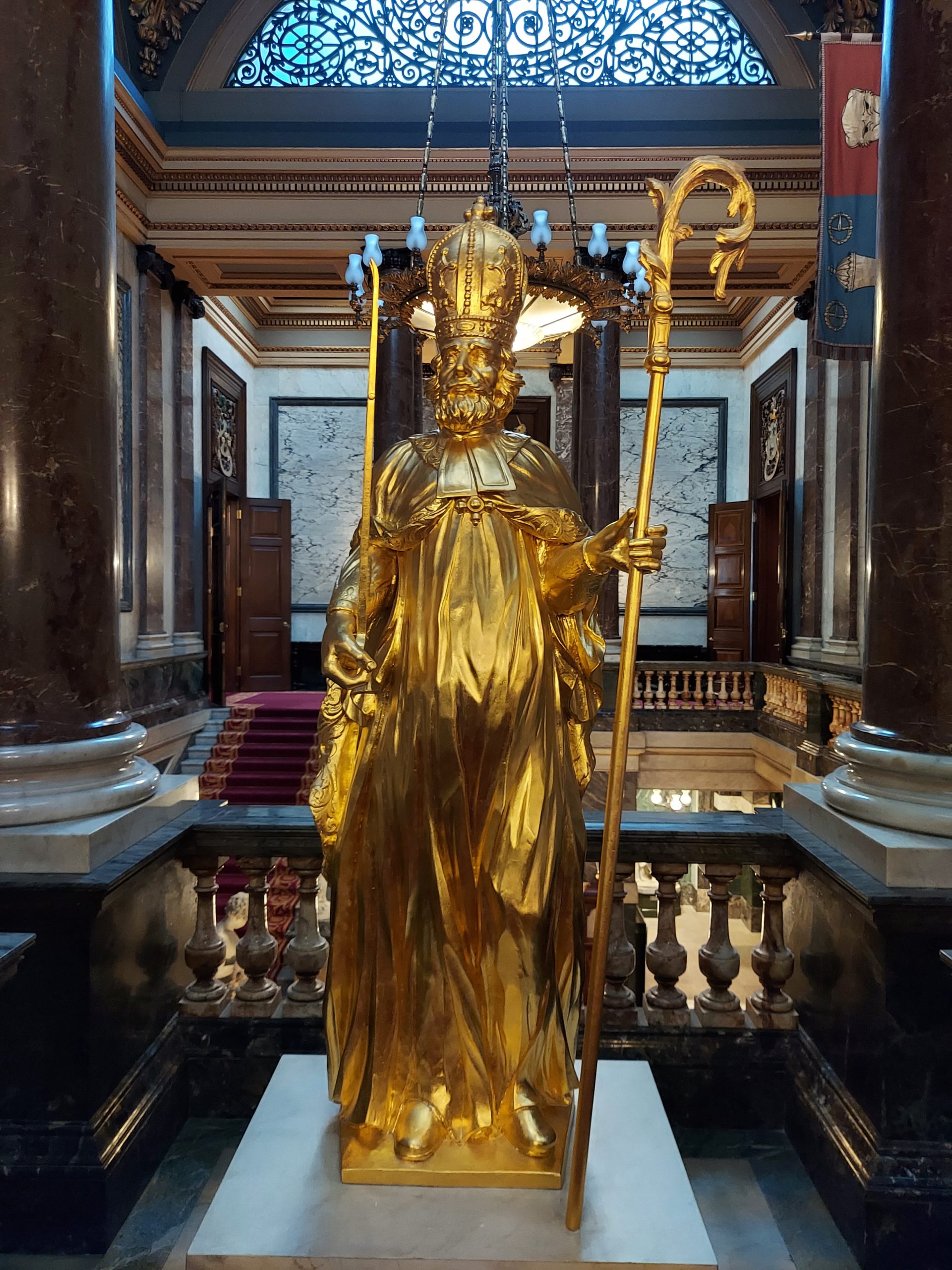
Legal recognition of the company began in 1300 when King Edward I passed a statute requiring gold and silver to be of a defined standard. This was the beginning of hallmarking: the metal was tested and marked with the leopard’s head, supposedly taken from the royal arms. With the bestowing of the royal charter in 1327, the company was formally acknowledged as a craft guild, with the patron saint of St. Dunstan.

Gold-plated statue of St. Dunstan, patron saint of the Company

In 1339, 19 goldsmiths bought the current site (albeit smaller than it is now) for use as a headquarters. During the medieval period, the Company would meet at least three times a year to discuss business. In the late fifteenth century, the first assay office was established at Goldsmiths’ Hall, ensuring that quality goods were marked as such. The hall was rebuilt in the 1630s, but gutted by the Great Fire of London in 1666, and restored in 1669. In 1829 that building was demolished, replaced by one designed by Philip Hardwick, the Company’s surveyor, which still stands today.

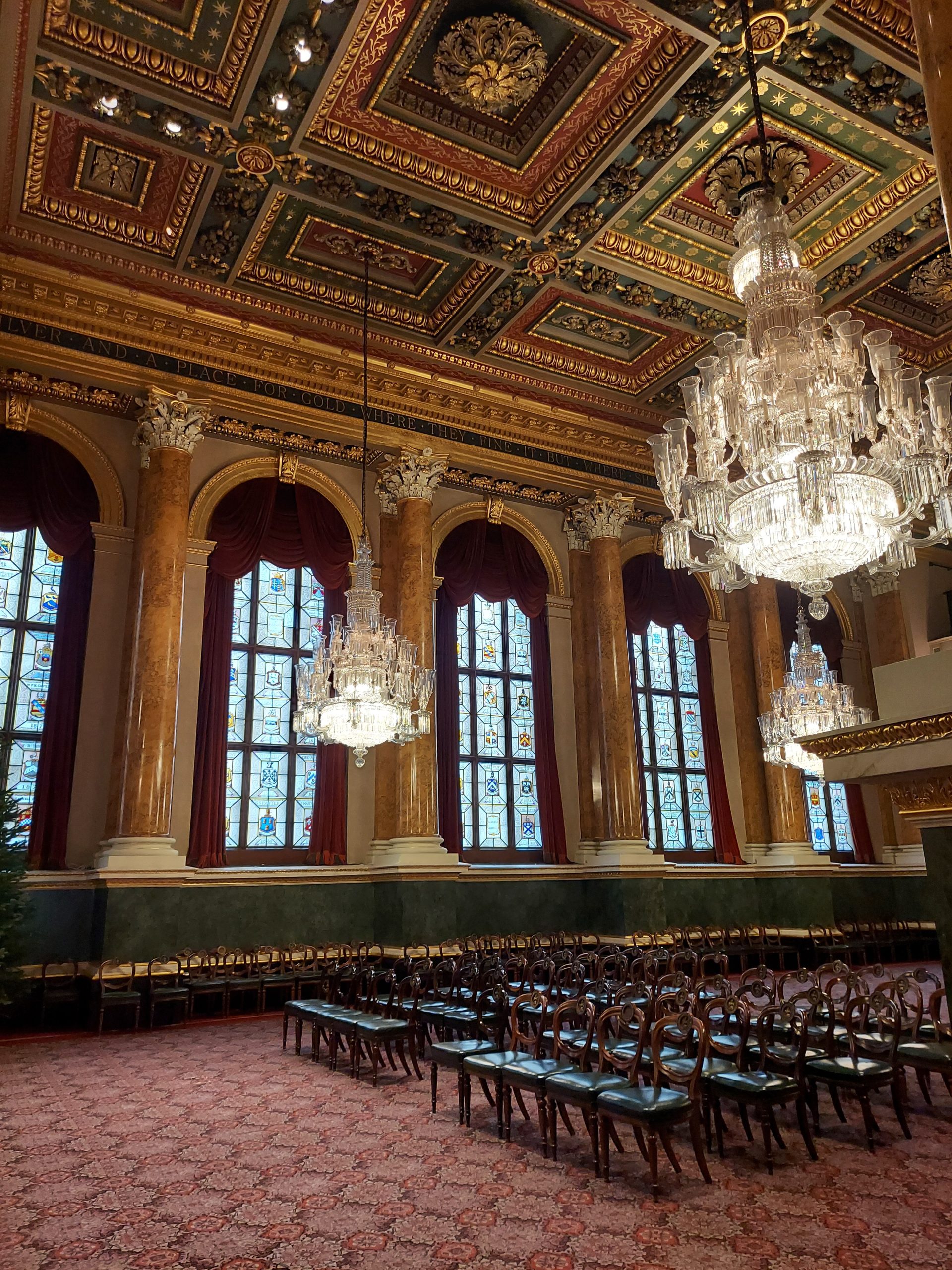
Inside Goldsmiths Hall

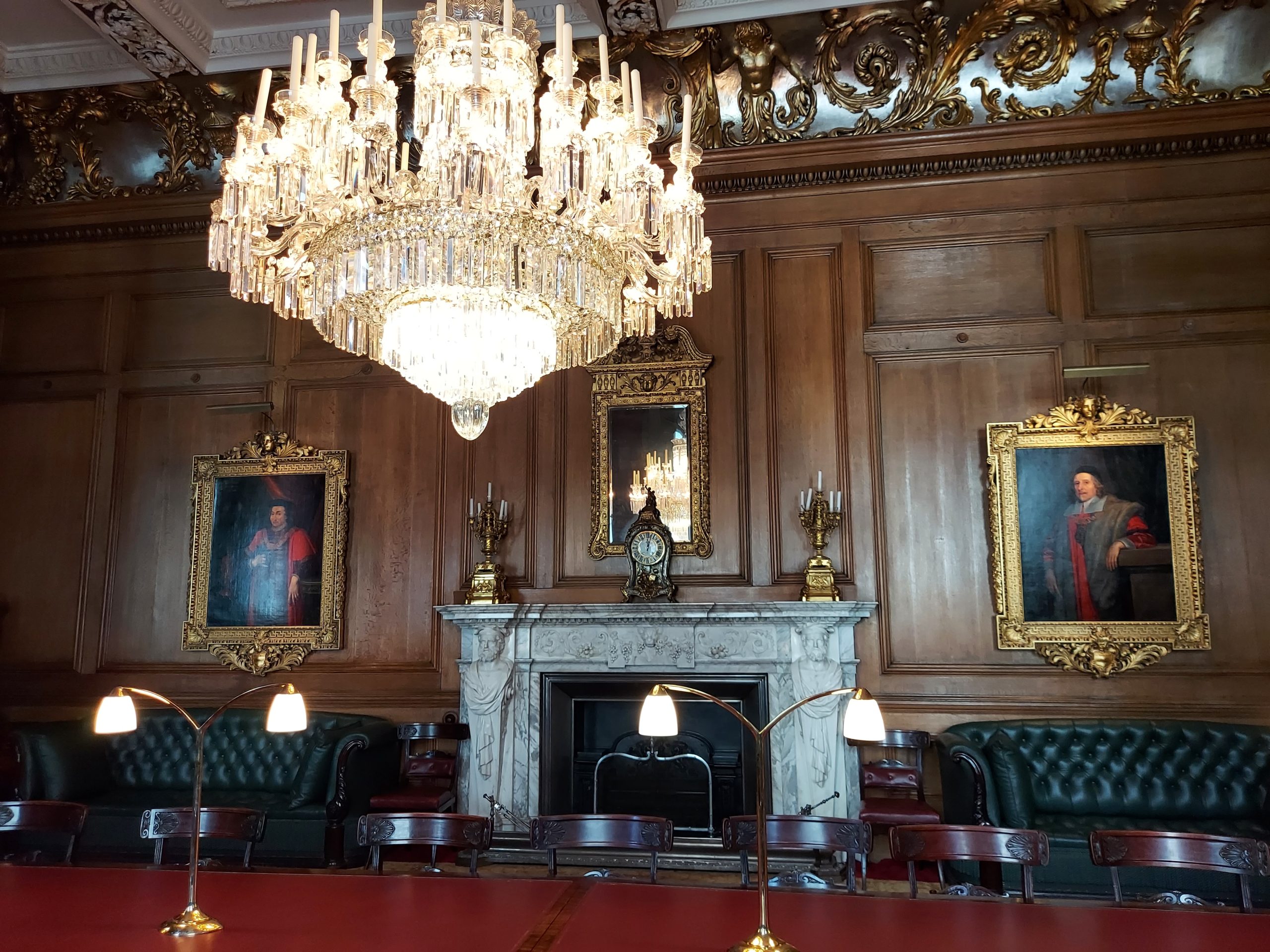
Our tour took us from the main staircase into some of the chief rooms used by the Company. We sat in the main hall while our guide told us about the history of the Company and of assaying and hallmarking. It was interesting to learn about the history of the building – including how the ceiling became stained from the pipe smoke of the Victorian-era members!

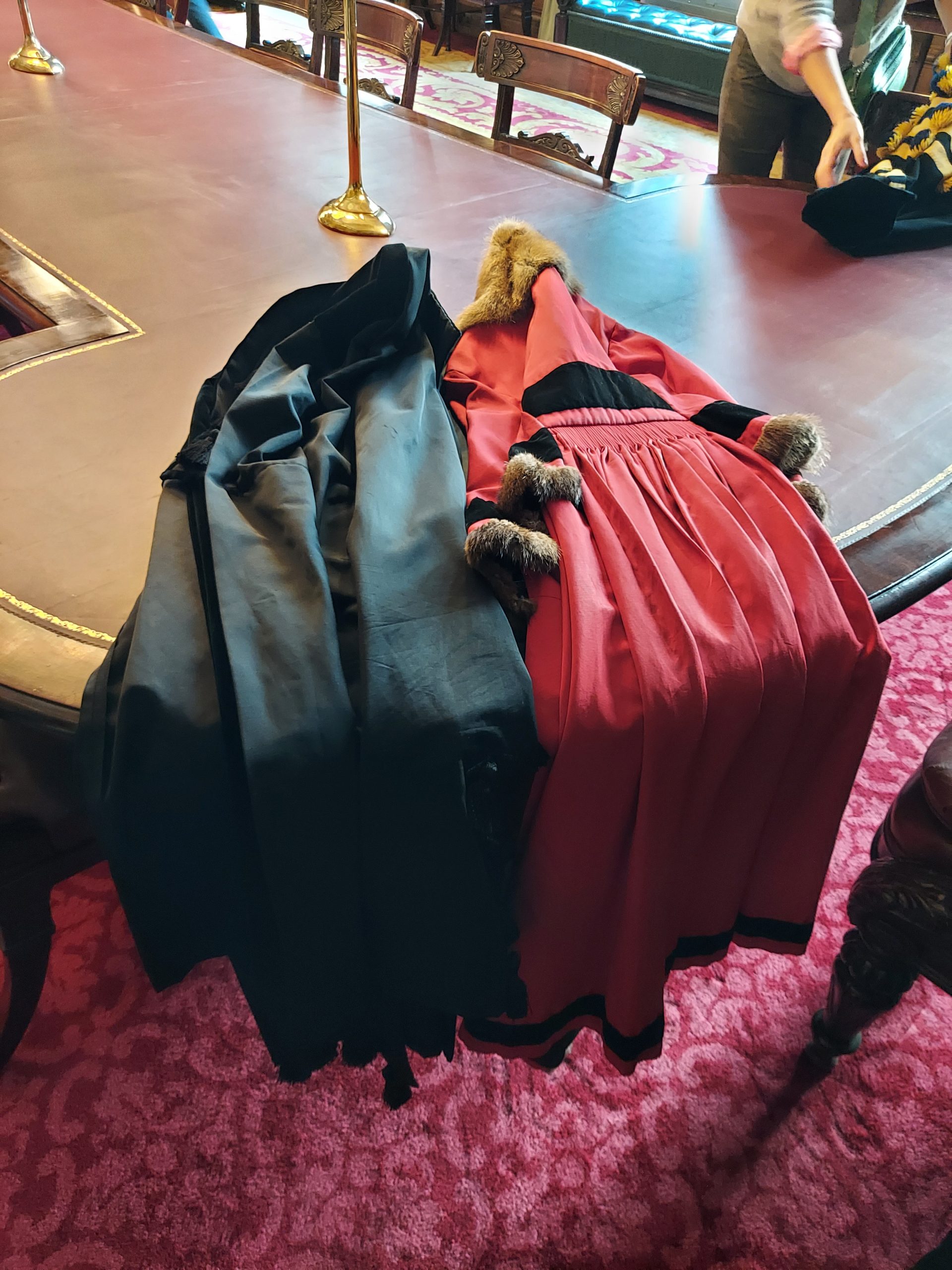
Official robes

The tour was worth the wait and I would definitely recommend signing up for one if you can. Tours run throughout the year, although they do book up in advance.

A wood-panelled meeting room

The Goldsmiths’ Company
Foster Lane
London
EC2V 6BN