Ada Lovelace is having a bit of a moment right now. The daughter of Romantic poet Lord Byron, she was brought up by her mother Annabella Milbanke to focus firmly on science and mathematics. However, it would be a combination of mathematical ability and the ability to make profound imaginative leaps that would ensure her place in scientific history.
This small free exhibition at the Science Museum marks the bicentenary of Lovelace’s birth. It contains portraits, letters and notes as well as some of the calculating machines that she worked with. The exhibition demonstrates how her collaboration with Charles Babbage (who called her “The Enchantress of Numbers”), creator of the Difference Engine and Analytical Engine, led her to explore the potential of these machines, suggesting that in the future they would be able to manipulate symbols, not just numbers. Her work, which anticipated modern computing a century before Alan Turing’s work at Bletchley Park, has led her to be labelled the first computer programmer.
I admit that the science of these machines goes right over my head, but I am definitely an admirer of Lovelace and her incredible achievements, particularly in an age when women were hardly ever able to study scientific subjects. She definitely deserves to be better known, and hopefully this exhibition will go some way to ensuring this.
This free exhibition looks at the lives of black people during the Georgian period (1714-1830). I have to admit that although I love history, and have a history degree, I don’t really have any knowledge or understanding of the lives of black people in Britain. The exhibition shows that people of African origin, who had lived in Britain for centuries, were growing in number and were starting to establish a distinct presence in society.
The exhibition looks at the lives of black people who lived in Britain under different circumstances: some were enslaved and worked as servants, others were free and were either born in Britain or chose to settle here. A few even had private incomes, and became the first black bourgeois. In many ways their circumstances mirrored those of white Britons, with members of all social classes carving out lives for themselves, although black people had to contend with racism and oppression in addition to any other problems they might face. The picture is much more complex than my limited knowledge had previously led me to understand.
Evidence for these lives comes from various documentation, including pictures, letters and other writings. Phillis Wheatley is one individual whose life is explored in the exhibition: sold as a servant in Boston aged seven, she was recognised as having particular intelligence and given an education; she subsequently became the first African-American woman to publish poetry, and was treated as a celebrity when she first visited London in 1773. Ignatius Sancho was a writer and composer, the first known black Briton to vote in an election, while Tom ‘The Moor’ Molineaux was a famous sportsman. Evidence for the existence of “ordinary” black people is found in census records, on gravestones, even in art: the inclusion of a black man in one of Hogarth’s pictures suggests that the presence of black people on London’s streets was a normal occurrence.
This is an important exhibition for anyone wanting to understand the lives of black people in Britain during the Georgian period, and anyone interested in social history as a whole.
It’s that time of the month again – where does the time go? For my second “jewellery brand of the month” post, I’m going to write about:
CHEAP FRILLS
Cheap Frills is a jewellery brand run by Georgia in Brighton, which “celebrates all that glitters”. I can’t remember where I originally came across Cheap Frills, but I was very pleased to find the brand, falling in love with so many pieces from the website. While I love distinctive acrylic jewellery, I also love silver jewellery, pretty rings and vintage style pieces, and Cheap Frills is full of these, with new products coming out all the time.
My most recent purchase was this incredible gold-tone necklace celebrating Henry VIII and his six wives. As a history lover, this really appealed to me.
Henry VIII Tudor Statement Necklace
I also have this matching Tudor ring, featuring Elizabeth I.
Queen Elizabeth I Cameo Ring
If history isn’t your thing, perhaps this Addams Family necklace will appeal:
The Addams Family Charm Necklace
Cheap Frills has a beautiful range of sterling silver rings, many of which are adjustable so that they fit any size. The Luna ring was a Christmas present.
Luna Sterling Silver Ring
The Sunstone Ring is so cheery and sunny. There’s a matching Moonstone Ring too.
Sterling Silver Sunstone Ring
The range of sterling silver earrings has grown recently: I’ve got my eye on these black heart studs, which also come in red, yellow and purple.
Sterling Silver Black Heart Earrings
This teeny pig necklace is so adorable. Other animals are available too.
Little Pig Necklace
The brand releases seasonal products at appropriate times of year, including Halloween and Christmas. This adorable little necklace was released as part of the Valentine’s Day range.
Love Letter Necklace
I’ve always had brilliant customer service from Cheap Frills. The products arrive in boxes or bags with the Cheap Frills wax stamp and it’s always exciting to get a parcel from them!
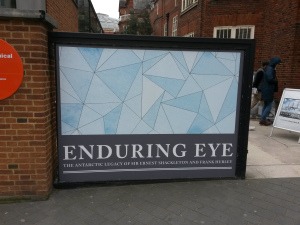
I only found out about this exhibition a couple of weeks ago, after reading an article in Londonist. Luckily I was in time to visit, though as it was the final weekend the display was pretty crowded. I braved the hordes anyway, as I am a bit obsessed by Antarctica and the Imperial Trans-Antarctic Expedition, which this exhibition commemorates, is one of the most important and memorable expeditions in history. Enduring Eye: The Antarctic Legacy of Sir Ernest Shackleton and Frank Hurley marks the 100th anniversary of the conclusion of the expedition: it did not achieve its stated aims, but it is deservedly admired nevertheless.
The Royal Geographical Society has a collection of original glass plate and celluloid negatives created by Frank Hurley, the official photographer and cinematographer on the expedition. This collection has been ditigised as part of the centenary celebrations, and much of it is presented here.
The Imperial Trans-Antarctic Expedition was established by Ernest Shackleton, who aimed to be the first to cross Antarctica. On the ship Endurance, which left Britain on 1 August 1914, he and his crew headed south. After stops in Buenos Aires and South Georgia, the ship made it to the Weddell Sea, where it was trapped in the pack ice.
Despite the best efforts of the entire crew, and after several months of entrapment, the Endurance was eventually crushed by the ice and destroyed. What followed was one of the greatest feats in the history of Antarctic exploration. I’ve read a great deal about the expedition, I’ve seen more than one exhibition about it, but I never tire of hearing more. The crew sailed in the lifeboats to Elephant Island, from where Shackleton, Worsley and four others departed in one of the lifeboats, the James Caird, to fetch help. In a hugely impressive feat of navigation, they safely reached South Georgia, only to be faced with a further trek over mountains and glaciers to reach the whaling station on the other side.
A rescue ship finally arrived at Elephant Island on 30 August. Every single one of the men from the Endurance survived (the men on the other ship, the Aurora, which had the job of laying supplies for the expected trans-Antarctic party on the other side of the continent, did not fare so well, losing three of the ten men left on the ice over the winter). Some of the artefacts from the expedition survived, and are on display here, including the Union flag presented to Shackleton by King George V, a knife carved from a tent peg by ship’s carpenter Harry McNish, and sketches and notes made by Reginald James, one of the men marooned on Elephant Island.
The exhibition covers the history of the exhibition from the first departure of the Endurance, following everyday life on board the ship as the crew get used to their routine. As the ship became trapped in the pack ice, photographer Frank Hurley took the opportunity to take detailed shots of the ship and of the region, by all accounts completely dedicated to getting the perfect shot, even willing to risk his own life by climbing up to the top of the ship’s rigging to take pictures from up high. Hurley was able to develop the photographs despite the incredibly cold temperatures and less than perfect conditions, so it is extremely impressive that his pictures are as wonderful as they are. In particular, I love his shots of the ship Endurance, trapped in the ice; the famous night-time shot with the ship looming out of the dark, the rigging glowing in a ghostly manner, is a masterpiece by any standards.
When the decision was made to abandon ship, Hurley had to leave behind many of his beloved negatives, selecting only the best to take with him to Elephant Island. On the way he managed to take more photographs, capturing the dramatic journey as well as life on the island as the crew waited for Shackleton’s return.
Hurley’s pictures helped to popularise the expedition both immediately after it took place and well into the future. These pictures are magnificent: even a century later they still have incredible power. The achievements of Shackleton, leading the expedition, and Hurley, capturing it on film, are still awe inspiring today.
Statue of Shackleton on the side of the RGS building
I love Liberty prints, so I was obviously going to find the time to visit the Fashion & Textile Museum‘s most recent exhibition, Liberty in Fashion. The exhibition marks 140 years since the company was founded by Arthur Lasenby Liberty, originally a warehouse supplying goods from the Far East which grew to become one of the most distinctive British companies in history, and which is still going strong today.
Arthur Liberty aimed to create new fashion, and his work became so distinctive that softly draping silk was known in France as soie Liberty and the entire Art Nouveau movement was known in Italy as Stile Liberty. He ensured distinction and high quality by establishing Liberty “Art Colours” and producing fabric in Great Britain. His original “Arthur Liberty’s Oriental Bazaar” sold imported silks from the Far East, as well as other items such as fans, china and enamel wares. It later branched out to source fabrics from other locations, and began to establish original collections, including garments such as dressing gowns and wraps, inspired by the kimono. Liberty’s original business was established on Regent Street: it wasn’t until 1925 that the now-famous Tudor Building was opened.
Liberty influenced, and was influenced by, the Aesthetic movement which aimed to free women from restrictive corsets and promote a more romantic, flowing way of dressing. The name “Liberty” seems particularly apt for this kind of style! The company also focused on reviving traditional skills including smocking (common on the clothes of agricultural labourers in the eighteenth and nineteenth centuries), which allowed for free-flowing, comfortable and stylish garments.
As the twentieth century developed, Liberty began to produce delicate floral prints which even today are seen as the hallmark of the brand. Prints on a darker background during the 1920s gave way to softer, more romantic, lighter prints in the 1930s. The Art Nouveau revival in the 1950s allowed Liberty to innovate, establishing the Liberty Design Studio, as well as reviving their original designs.
In the 1960s, Liberty fabrics provided the basis for many original designs by fresh new designers including Mary Quant and Marion Donaldson. By the 1970s, a new nostalgia had surfaced, and Liberty prints, which suited the period perfectly, were common in clothes of the period, including the archetypal maxi dresses.
From the 1990s onwards, Liberty began to collaborate with other brands, with fascinating results. Today, Vivienne Westwood, Anna Sui and Dr Marten are just some of the brands whose collaborations have proved popular.
As a lover of the Liberty aesthetic I thoroughly enjoyed this exhibition, and as a history fan I enjoyed learning about the company’s past. This is an excellent exhibition for anyone interested in how Liberty evolved.
On 19 February, 2011, I moved to London. I came down with one massive suitcase (my brother drove down later with the rest of my stuff) and that evening I was straight out to a gig with my friends: it was Mr Scruff at Koko in Camden. Perhaps appropriately, given my later obsession, Koko is located inside an old theatre; it was also on that night, standing outside on the balcony and looking towards Mornington Crescent Underground station, that I decided it might be fun to visit all the tube stations in London.
When I was little I didn’t really have any plans for my future, with one exception: I knew I wanted to move to London. I knew this from the time of my first visit, when I was about nine, and I was overwhelmed (in a good way) by the people and the activity and the history. So if I never achieve anything else in my life, I’ve achieved one of my childhood dreams, and at least I can look back and think that my nine year old self would be proud.
I love history and I love chocolate, so deciding to attend The Lost World of the Georgian Chocolate House was a no-brainer. This talk, which took place at Guildhall Library, was delivered by Dr Matthew Green, whose book London: A Travel Guide Through Time was released before Christmas and whose company, Unreal City Audio, organises immersive historical tours around London.
The talk covered the beginnings of chocolate’s popularity in the Western world: Spanish explorer Hernan Cortes found hot, spicy chocolate being drunk by South Americans and the popularity of the drink extended to Baroque Spain, and later Italy. Cosimo de Medici, an Italian nobleman, was possibly the first chocoholic, and the drink retained its aristocratic connotations as it travelled first to France, then to England. Chocolate at this time contained several unfamiliar ingredients: in South America it was often mixed with blood, but luckily this practice did not survive the journey across the ocean. In Europe, it often contained musk or ambergris; sometimes even gold.
Chocolate houses in London were heavily influenced by coffee houses and tobacco houses – in fact the first chocolate was sold in coffee houses. The first chocolate house in London was established either in Vine Court, Holborn, in 1652 (as evidenced in a contemporary tract, Chocolate, or An Indian Drinke) or on Bishopsgate Street in June 1657 (as advertised in the Publick Advertiser).
The popularity of chocolate in London is largely tied up with the St James area. St James’s Square was laid out by Henry Jermyn, and several chocolate houses were located there or nearby: Cocoa Tree, Ozinda’s and White’s. Chocolate houses became associated with gambling, with aristocrats losing fortunes in games of Hazard. Hogarth’s Rake’s Progess contains a scene in a chocolate house, showing the artist’s disapproval of such dissolute practices. There is an account of a man who collapsed in the street outside of White’s chocolate house: he was taken inside, but instead of seeking medical help, the chocolate drinkers began to place bets on whether he was dead or alive. Betting on all sorts of outcomes was common in chocolate houses: this period sees the beginnings of life insurance, as people would bet on how long they – and others – had left to live. Chocolate houses were largely the preserve of men: women would send their children into the houses to seek out their husbands and tell them to come home, but this backfired on at least one occasion, when a small child ran into the chocolate house, fell into a vat of chocolate, and drowned.
Like coffee houses, chocolate houses were connected with political activity. Cocoa Tree in particular was known as a Tory stronghold and a Jacobite centre. It was often raided, and even had an underground passage to a Piccadilly tavern to allow members to escape. Ozinda’s was known for its art auctions, but White’s, the most famous chocolate house, was the most notorious. It burned down in 1733, and White’s Club is now on the site. From the middle of the eighteenth century, most chocolate houses did evolve into private members’ clubs. To date, most British prime ministers have been members.
After our talk, we were given a chance to sample some eighteenth-century style chocolate. I’m not sure exactly what ingredients were used (although I’m pretty certain blood wasn’t one of them), but the chocolate was delicious, if not quite sweet enough for my taste, being thick, rich and full of flavour.
The talk was fascinating and I definitely want to go on the Chocolate House Tour, as well as other tours organised by Unreal City Audio!
I began by visiting Masters of the Everyday, which looked at Dutch art of the seventeenth century, mainly focused on everyday life: families, children, music, food. One of the highlights was Vermeer’s ‘A Lady at the Virginal with a Gentleman’, but my personal favourites were the Rembrandts: seemingly simple but demonstrating incredible skill – I almost felt as if the figures in the paintings were going to step out of the frames and speak to me.
High Spirits
The second exhibition, High Spirits, focused on the work of Thomas Rowlandson (1757–1827), the English caricaturist, whose satirical work was popular in his time and remains significant today. His cartoons offer political commentary and observations on contemporary society. I liked this exhibition too: the crisp colours and sharp lines belied the age of the works, and their content was a fascinating and often amusing look into the life of the era.
Both exhibitions close on 14 February, so there’s still time to see them if you want to.
I’ve wanted to go to one of the Prince Charles Cinema‘s famous Labyrinth Masquerade Balls for a while, but it wasn’t until the sad death of David Bowie recently that I was finally prompted to go, along with some friends. The Masquerade Balls are designed for die-hard fans of the film (that’s definitely me): attendees are invited to dress up (although I didn’t do this!), sing along, cheer and generally take part in the action.
On entering the auditorium you are given a little goodie bag: I won’t give away the surprise, but you need to keep it handy as the various things inside it will be used at different points in the film. Once seated, you get to enjoy a bit of pre-show entertainment, including a judging contest for those people who did turn up in costume. And then the film begins!
I usually hate it when people talk, sing or move around in the cinema, but this kind of event is completely different – everyone there knows the film back to front anyway and the emphasis is on enjoying it as a community. I have to admit I did really like this way of enjoying one of my favourite films! Of course, I could have stayed at home and watched it on DVD for free – but then I wouldn’t have got to experience the atmosphere. An entire roomful of people singing “Dance Magic Dance” is not to be missed!
I definitely recommend the Labyrinth Masquerade Ball for any fans of the film. They do run fairly frequently, so check out the cinema’s website.
For a while now I’ve been thinking about writing a monthly blog post, “Jewellery brand of the month”, as I love shiny sparkly pretty things and it would give me an excuse to post loads of amazing pictures. I figured January was a good time to start, so without any more ado, I would like to present my first brand:
BACCURELLI
Baccurelli is a relatively new jewellery brand based in LA, operated by wife and husband team Meli and Hugo. I first became aware of the brand after seeing Instagram posts from several Tatty Devine fans I follow: the two brands are similar in that they both focus on acrylic jewellery, but they have a very different aesthetic. Baccurelli designs, created by Meli, are original, unique and lots of fun.
The name “Baccurelli” comes from the Roman god Bacchus and the famous designer Elsa Schiaparelli. The Baccurelli slogan is “Be your alter ego”, and their longer manifesto emphasises the fun nature of their jewellery:
You are gorgeous exactly as you are. There’s nothing you need to change or be. That’s what Baccurelli is all about. When you wear a Baccurelli piece you feel playful, happy and most of all FEARLESS. We make jewelry and accessories that bring out your alter ego and inspire you to dream big and not take life too seriously.
As I mentioned, the brand has only been around for a couple of years, but they have already built up an impressive array of jewellery. Early pieces include this unusual phone necklace…
Rotary Phone Necklace
…and this amazing flamingo necklace, which is top of my wishlist.
Croquet Anyone? Flamingo Necklace
The Valley of the Dolls collection was brought out last year (I don’t know about anyone else, but when I see “Valley of the Dolls” I immediately start humming the Marina and the Diamonds song from the Electra Heart album) and became a firm favourite among Baccurelli fans. It features real-life and fictional characters who are very different, but have one thing in common – they are all strong women.
Bettie Page BroochFrida Kahlo Brooch
The above are just two examples – other “Dolls” in the collection include Marilyn Monroe and Rosie the Riveter. They are available in both necklace and brooch form. You can also get charm necklaces featuring some of the dolls, which include other beautifully detailed charms, such as this one starring Louise Brooks:
Louise’s 7 Treasures Charm Necklace
The Costume Party collection was launched late last year and it’s probably my favourite. The collection features favourite fictional superstars, including Morticia and Gomez, Superman and Wonder Woman, Glinda and Elphaba, and Jareth the Goblin King. These pieces are available in pairs or singly, as brooches or necklaces.
“Witch Besties” Brooch SetGoblin King Brooch
Baccurelli are still selling on Etsy, but they have recently launched a website, as well as a brand new collection, Silkworms and Satire. I have my eye on a couple of pieces from this collection, especially this brooch:
Victorian Lady “Eff You” Brooch
If you’re interested in finding out more, you can follow them in a variety of ways: