Brompton Cemetery (The “Magnificent Seven” Tour)

2015_0524Brompton49
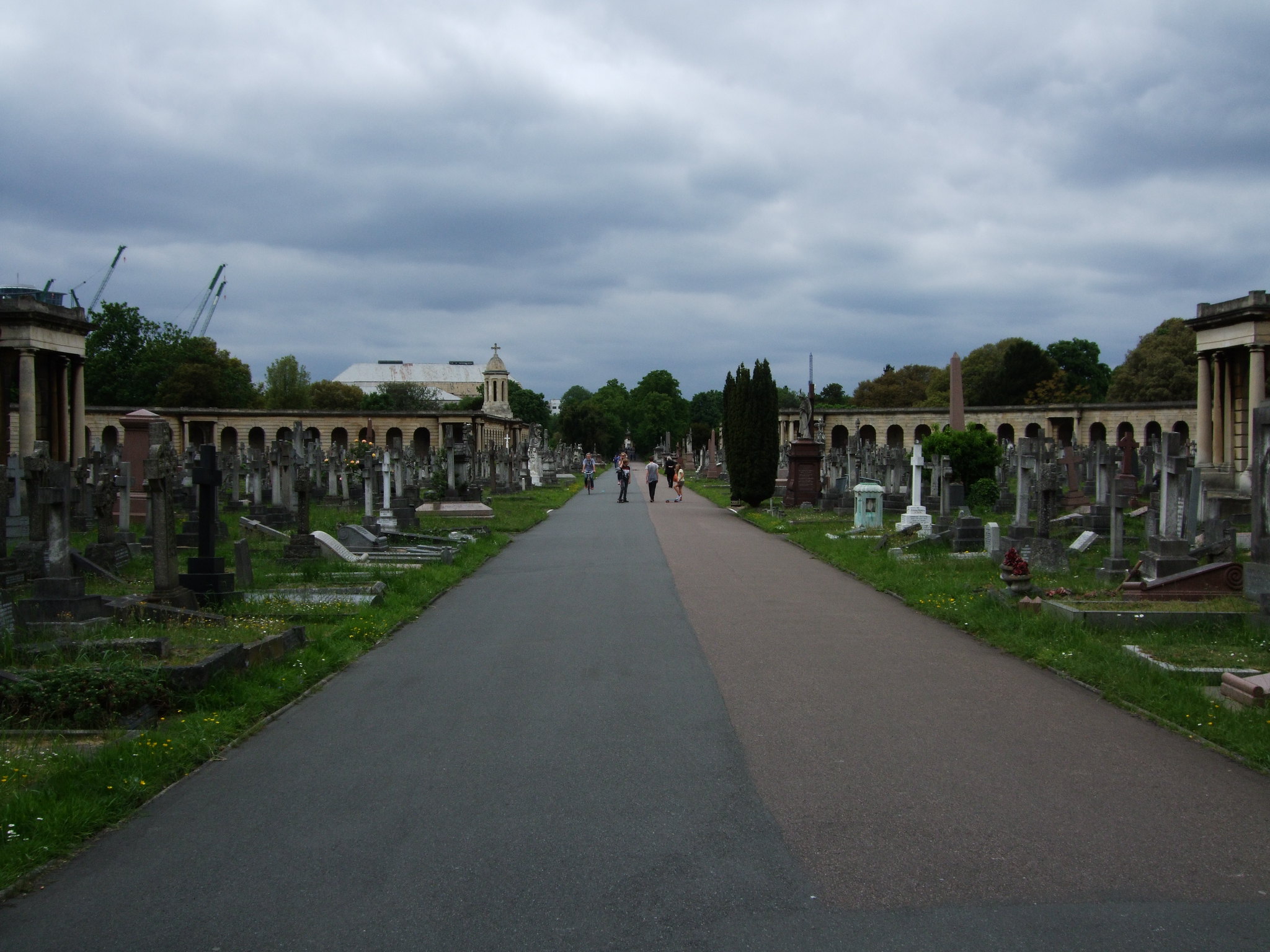
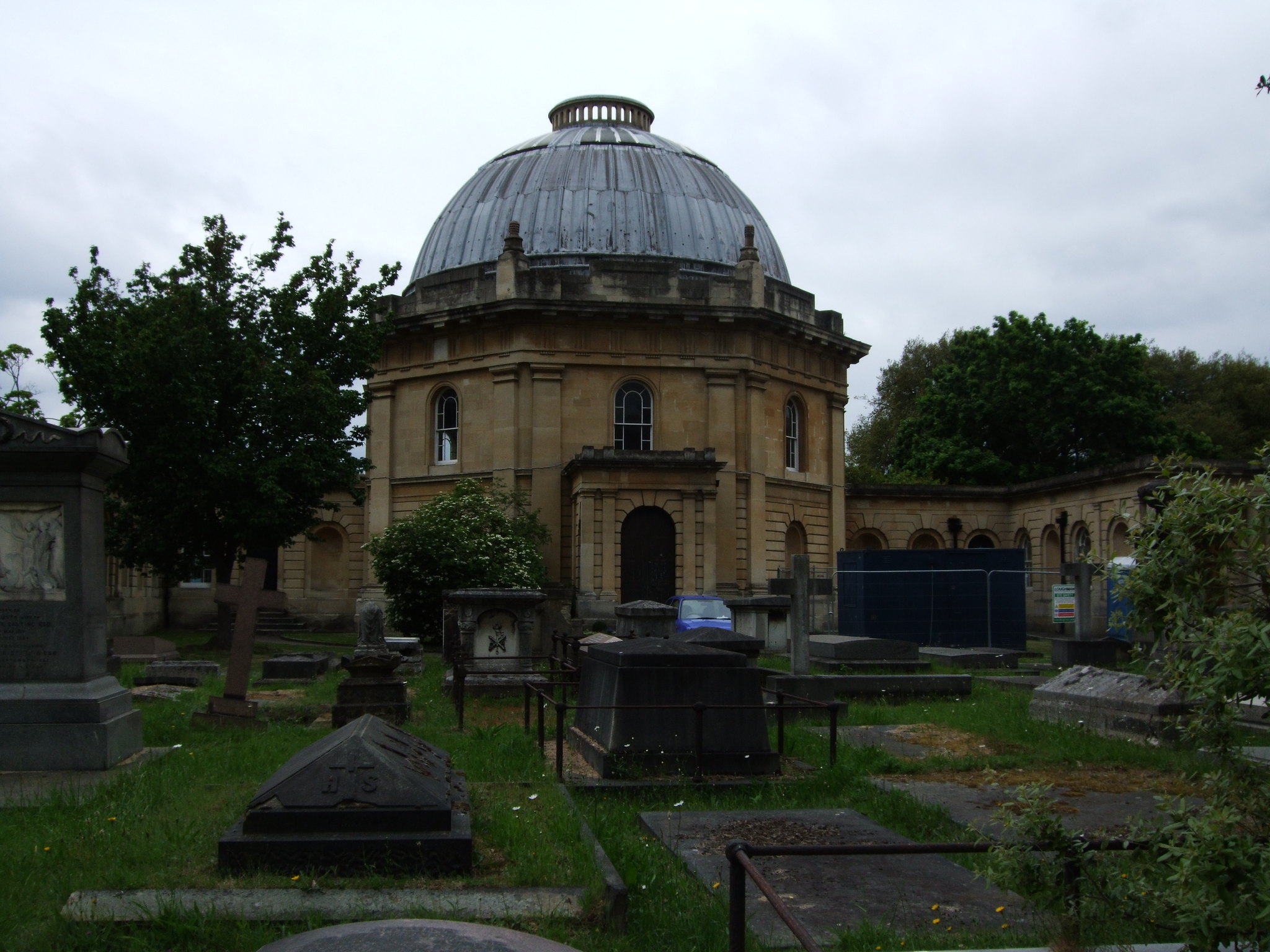
Looking south towards the chapel

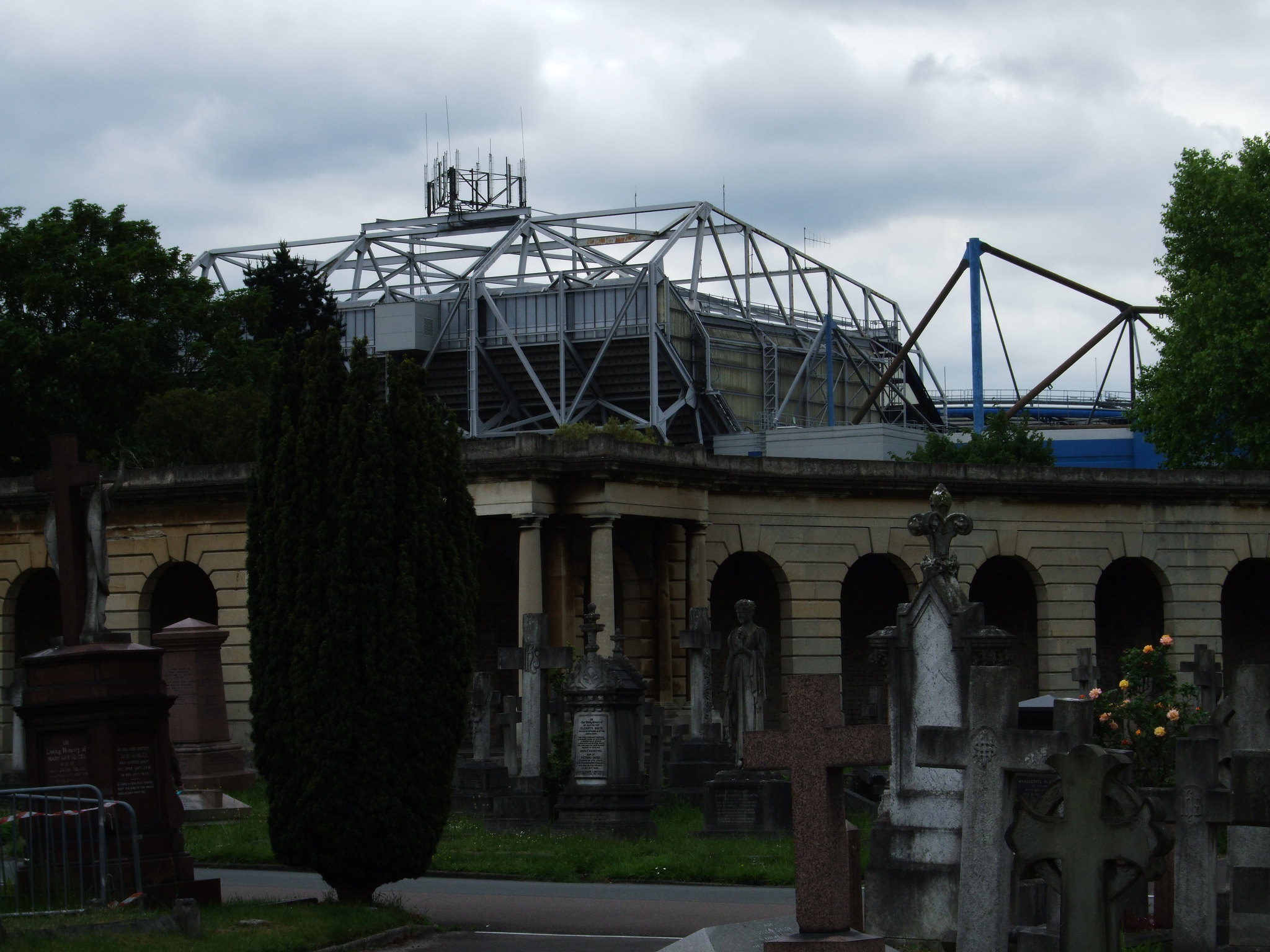
My attempt to visit each one of the Magnificent Seven cemeteries continued with a trip to Brompton Cemetery. This is the most central of the seven and the easiest one for me to reach, located in west London. However, it is also positioned right next to Stamford Bridge, and the day of my trip coincided with a football match between Chelsea and Sunderland – considering I am a Sunderland supporter I should have probably been aware of this, but I was taken by surprise to find hordes of people clad in blue getting off at Fulham Broadway station. Eventually I managed to disentangle myself from them and made my way over to the cemetery. Many supporters clad in football shirts and scarves were wandering through the cemetery, but the rush of people eventually petered out, to be replaced by cheers and roars from the football ground which punctuated the quiet during the tour.
2015_0524Brompton42
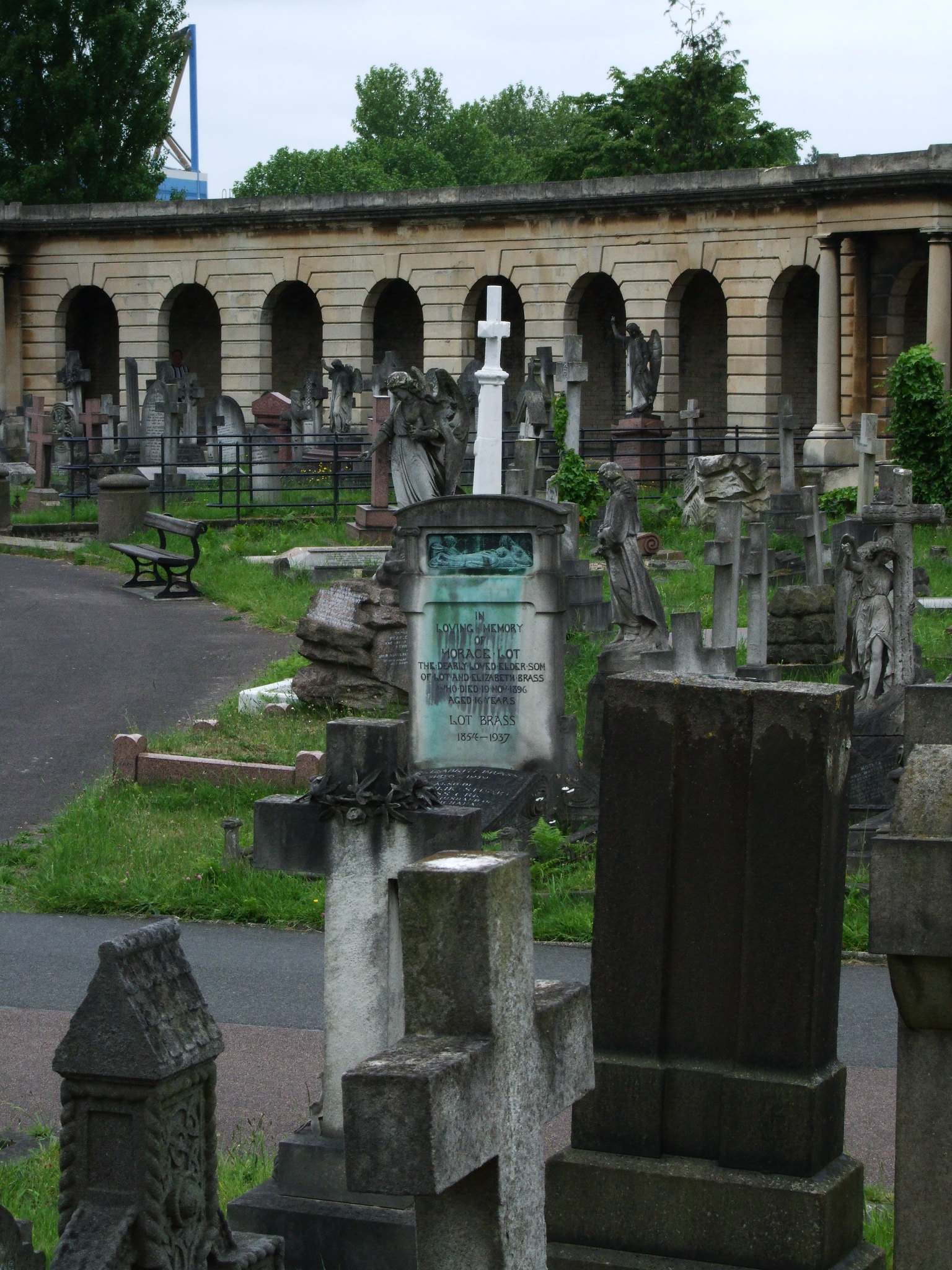
Stamford Bridge stadium, viewed from Brompton Cemetery

Getting There

The cemetery lies between Old Brompton and Fulham Roads, on the western border of the Royal Borough of Kensington and Chelsea. The postal address is Old Brompton Road, London, SW10 9UG and the nearest tube station to the main entrance (the North Gate) is West Brompton, with Earls Court a little further off. However, the tour was scheduled to begin at the South Lodge, so I got off at Fulham Broadway instead.
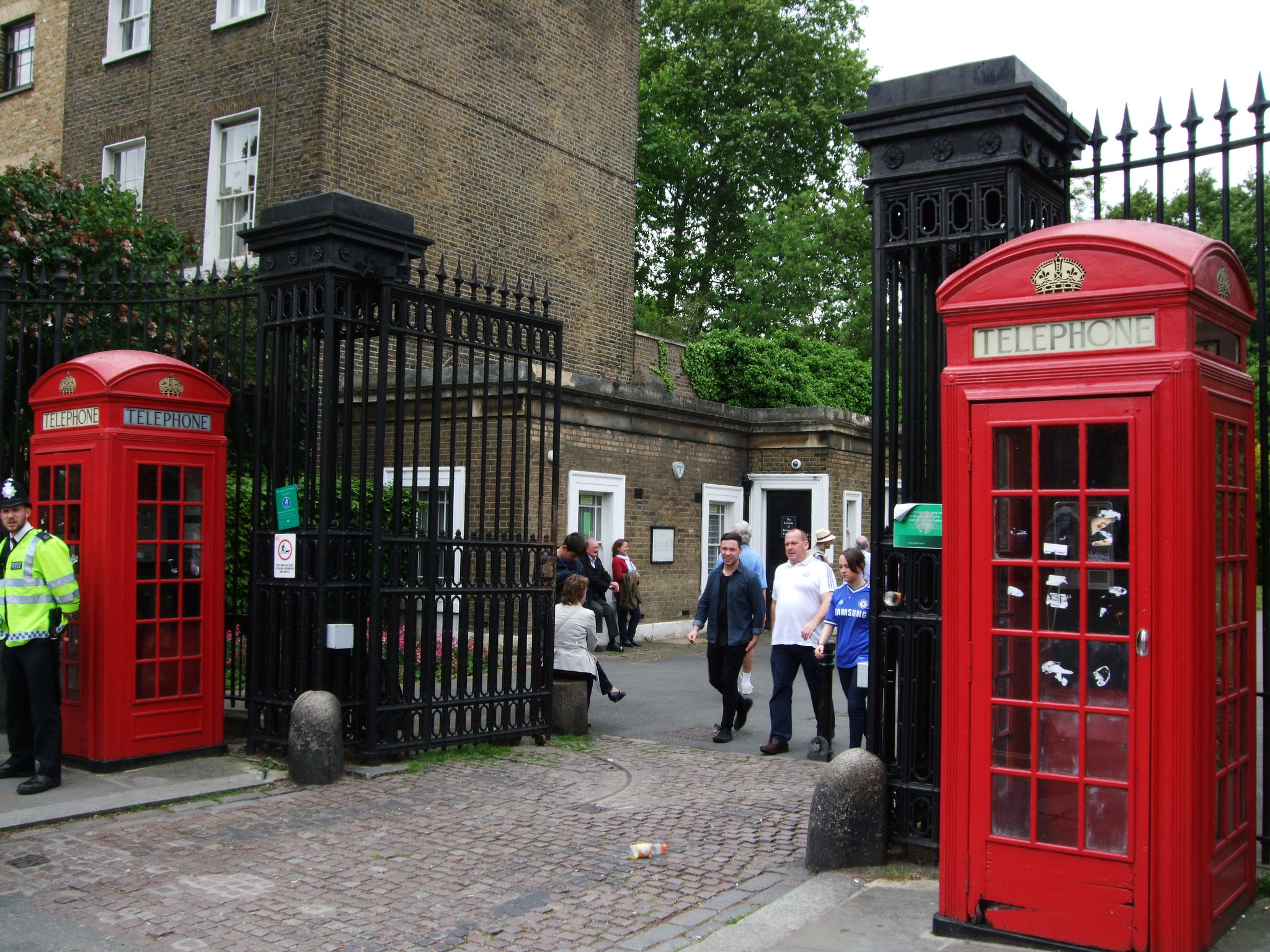
2015_0524Brompton03
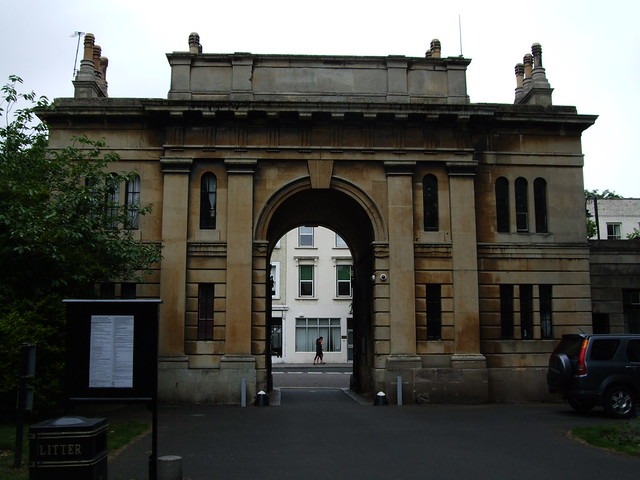
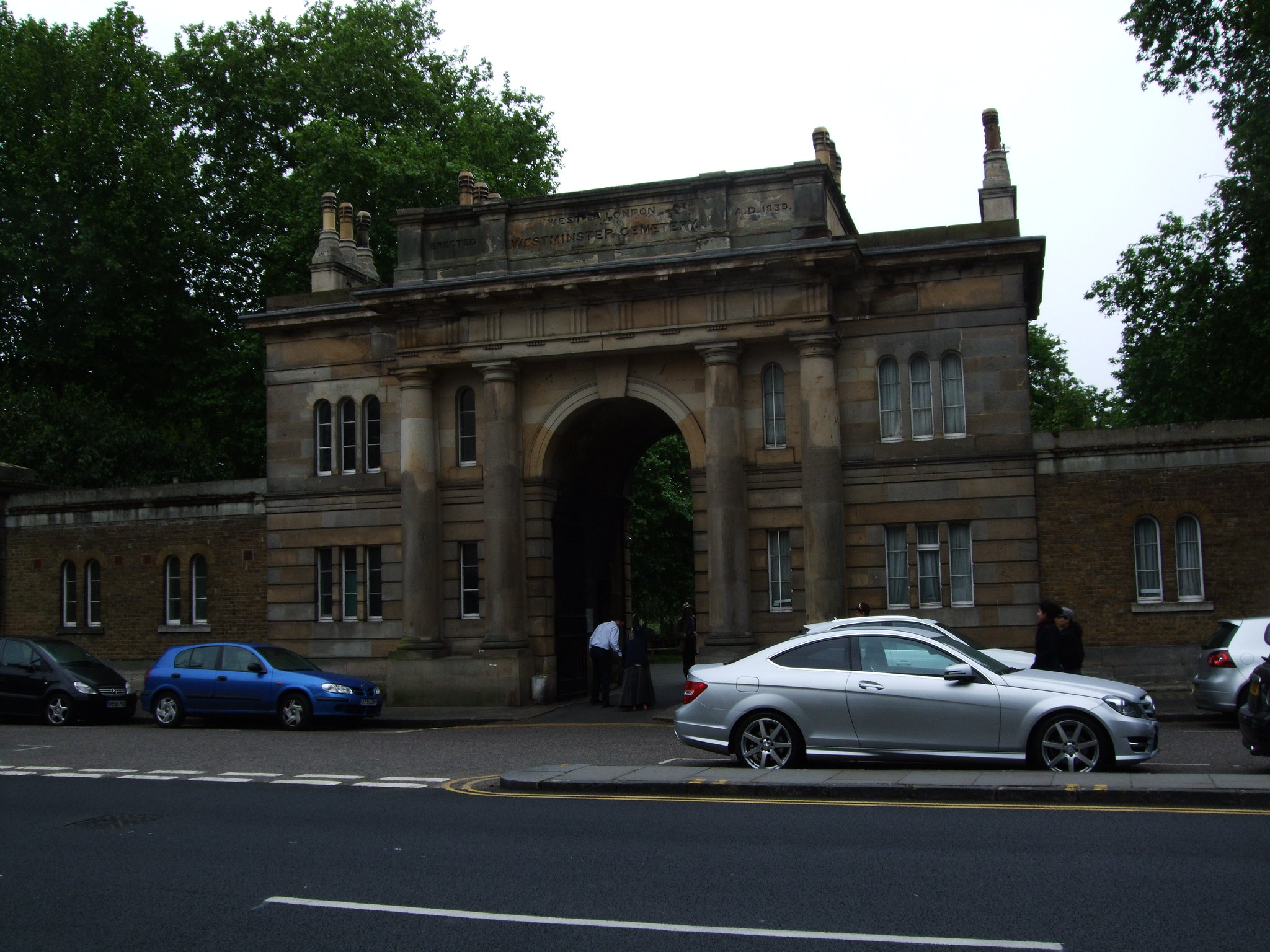
The South Gate

History

Brompton Cemetery, which is Grade I Listed on the English Heritage Register of Historic Parks and Gardens, was originally consecrated by the Bishop of London in June 1840. The cemetery occupies a rectangular site, and comprises 39-acres (16 hectares) which were purchased from Lord Kensington in 1838.
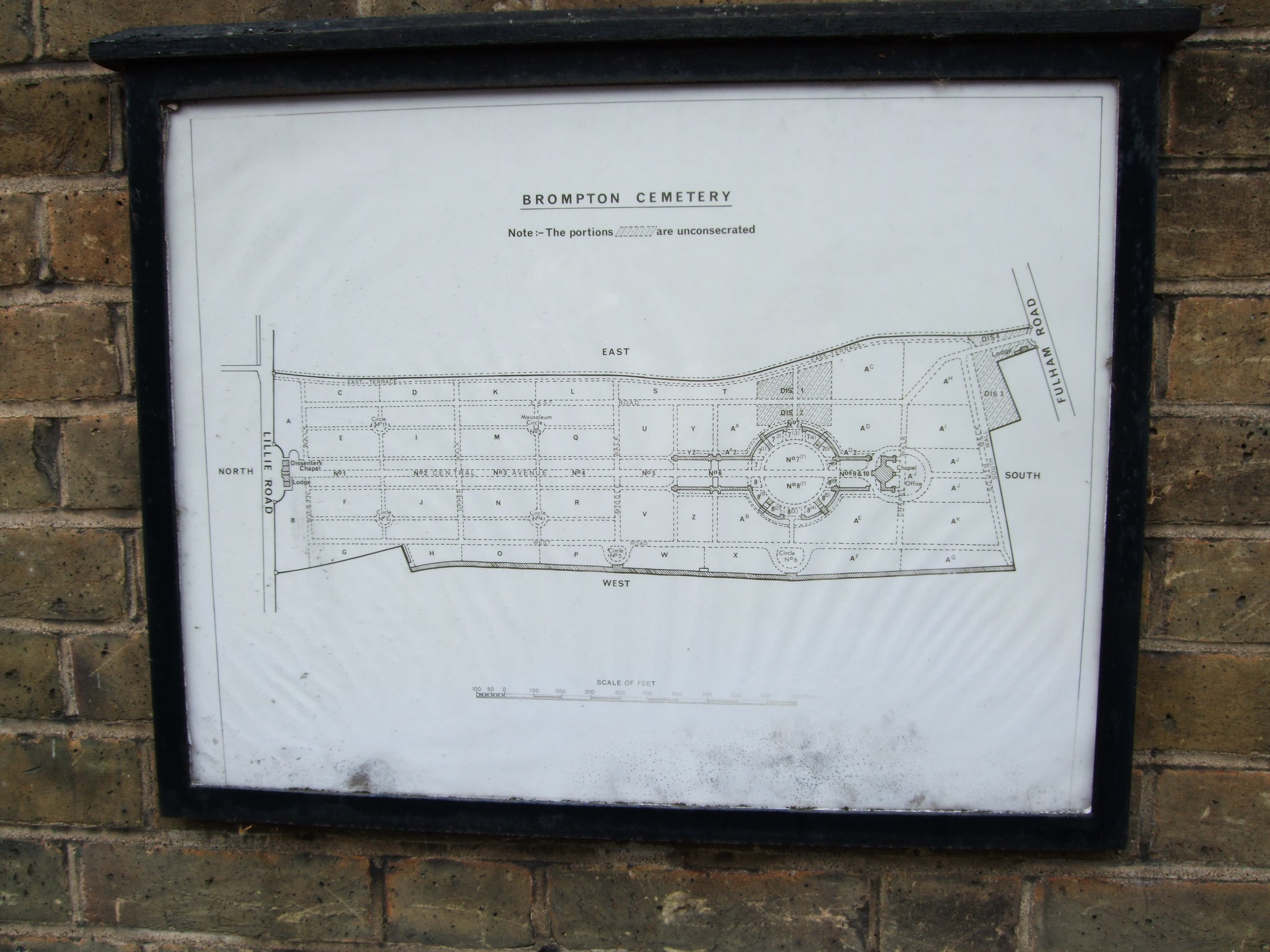
2015_0524Brompton05
Map showing the layout of Brompton Cemetery

The cemetery was founded by the architect, inventor and entrepreneur Stephen Geary (1797-1854), who was also responsible for Highgate and Nunhead cemeteries. However, when the company directors held a competition for the cemetery’s design, the lead judge Sir Jeffry Wyatville (1766–1840), a distinguished architect, chose a design by his assistant Benjamin Baud (c.1807-1875), forcing Geary’s resignation.

Baud’s design incorporates neoclassical elements but is chiefly notable for its resemblance to a cathedral. The central avenue, or “nave”, leads to the domed chapel, or “high altar”, while a circle of arcades with catacombs below is said to have been inspired by the piazza of St. Peter’s in Rome. The North Gatehouse was designed to represent the “great west door”; it suffered bomb damage during World War II and has since been restored.

2015_0524Brompton45
The chapel

The cemetery was purchased under the short-lived Metropolitan Interments Act of 1850, which prohibited burial in overcrowded crypts and urban churchyards, and gave the state the power to purchase commercial cemeteries. It was the first cemetery to be nationalised, and remains Britain’s only crown cemetery, currently in the care of the Royal Parks Agency. Closed to burials between 1952 and 1996, it is now once again a working cemetery, restored, maintained and preserved by The Friends of Brompton Cemetery.

Tour
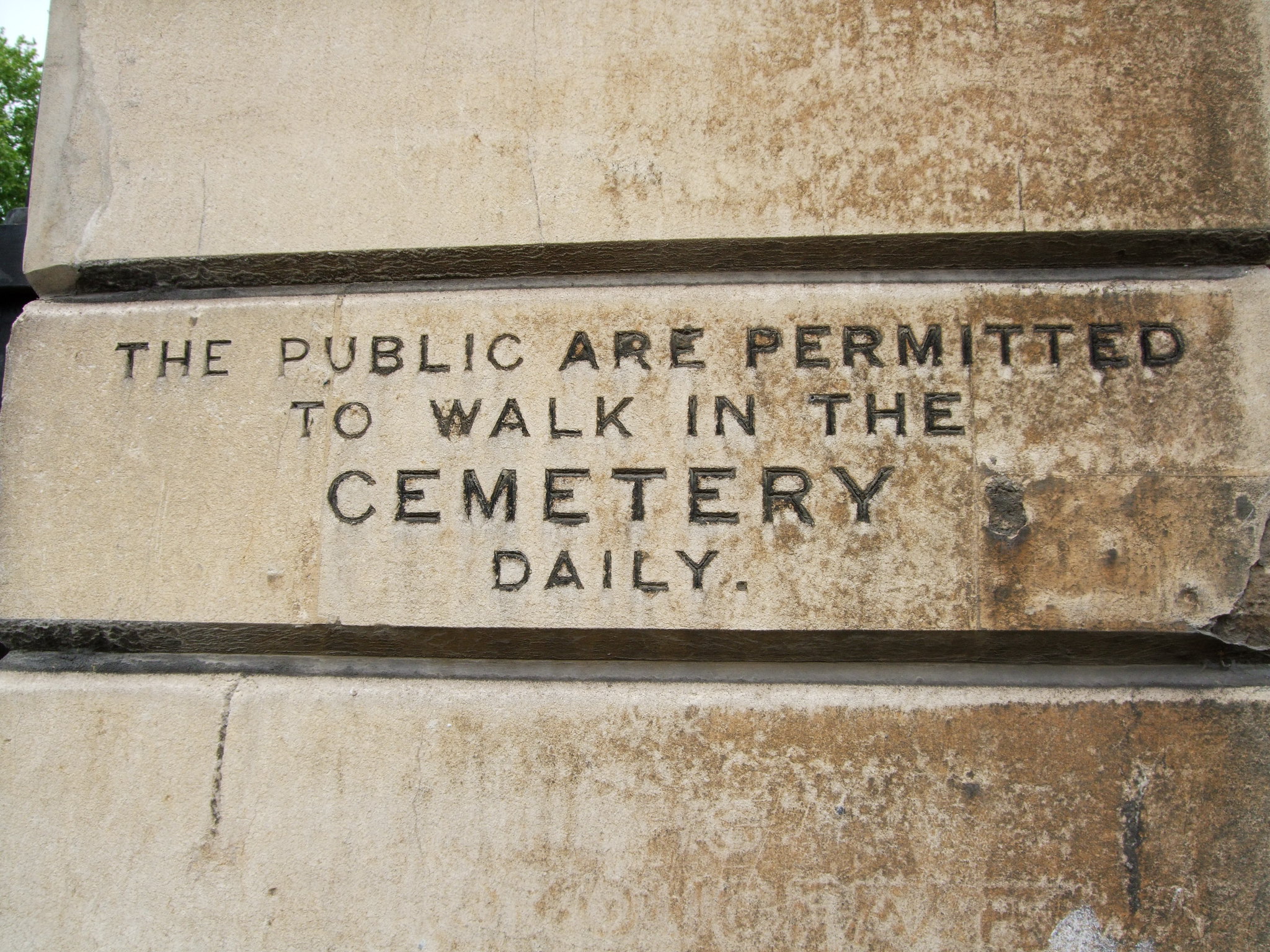
2015_0524Brompton02
Notice at the South Gate

I attended a tour run by the Friends. These take place on Sunday afternoons and I was pleasantly surprised to find quite a crowd waiting at the gate. Our guide was incredibly knowledgeable and I am sure he could have told us much more about the cemetery than he was able to impart during the two hours of the walk.

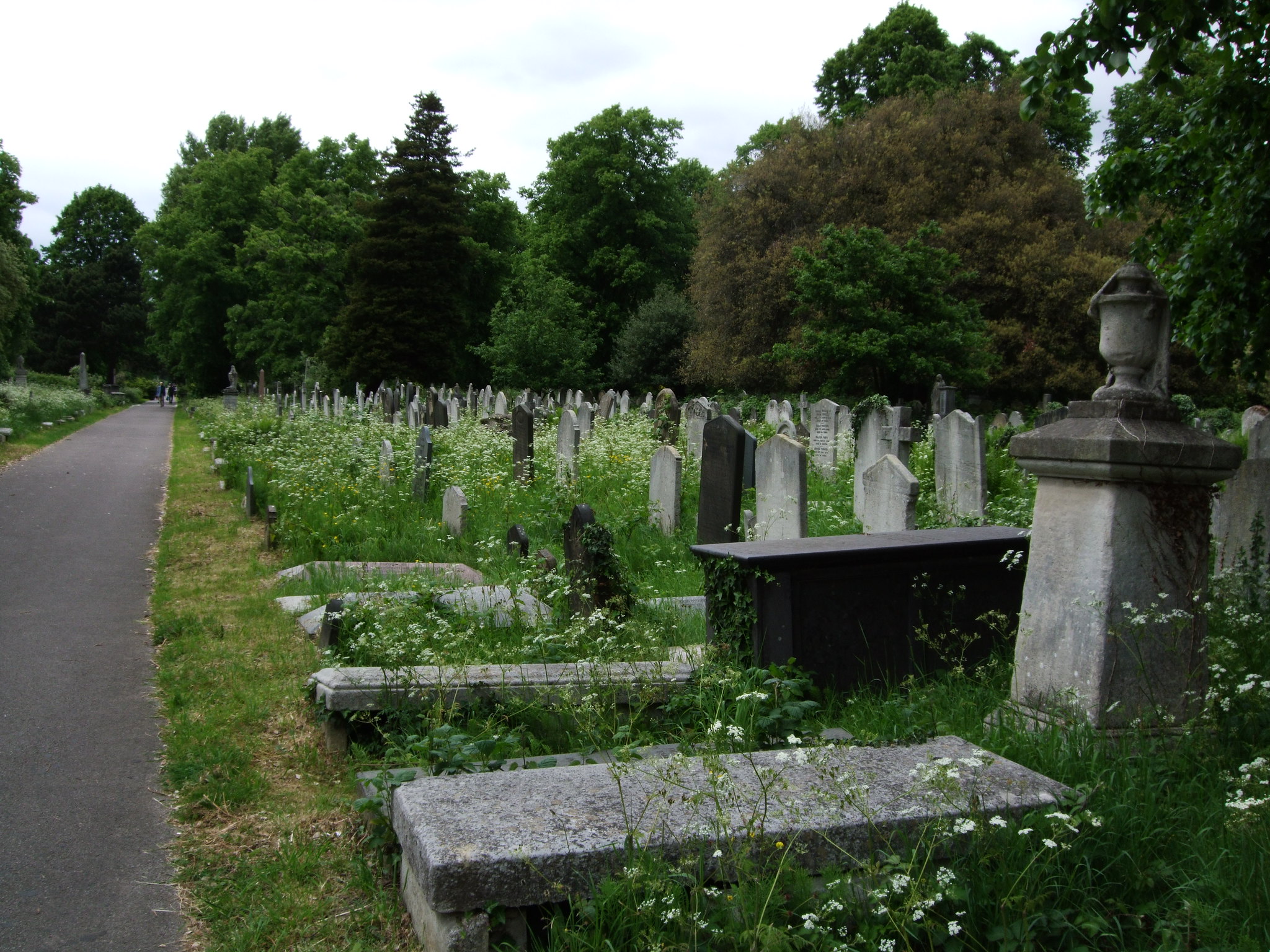
2015_0524Brompton07
Exploring the cemetery

2015_0524Brompton15 2015_0524Brompton16Brompton doesn’t have the number of famous people that the likes of Highgate and Kensal Green possess within their walls, but there are still several notable individuals buried here. George Salting was an art collector who left considerable legacies to the British Museum, the Victoria & Albert and the National Gallery.

2015_0524Brompton21
The grave of George Salting and his parents

Pioneer of the women’s suffrage movement Emmeline Pankhurst is also buried here, though we didn’t get to see her grave.
2015_0524Brompton20
The chapel

We stopped off by the chapel, which was open for us to take a look around. It is possible to buy drinks and snacks here too.
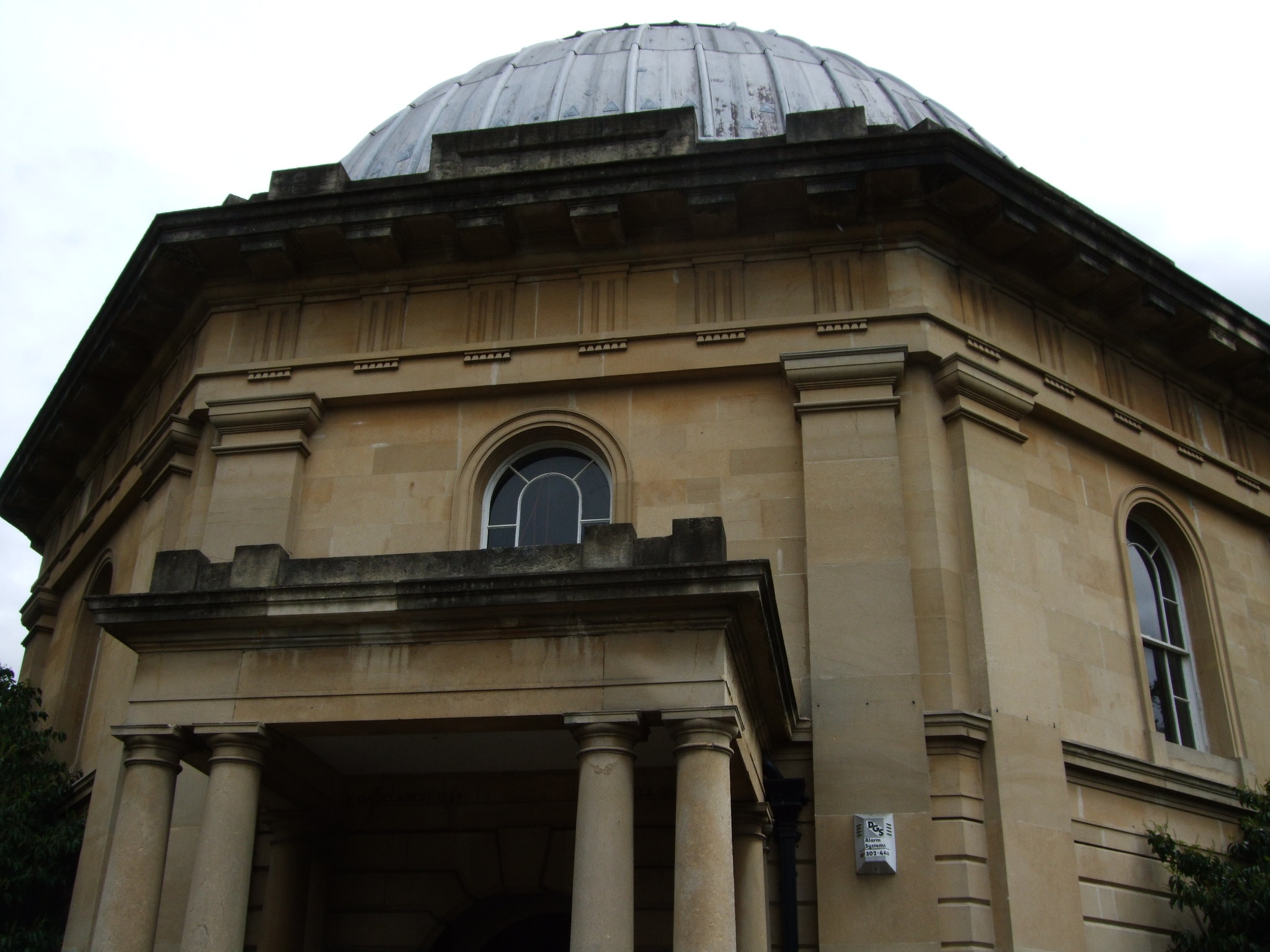
2015_0524Brompton27

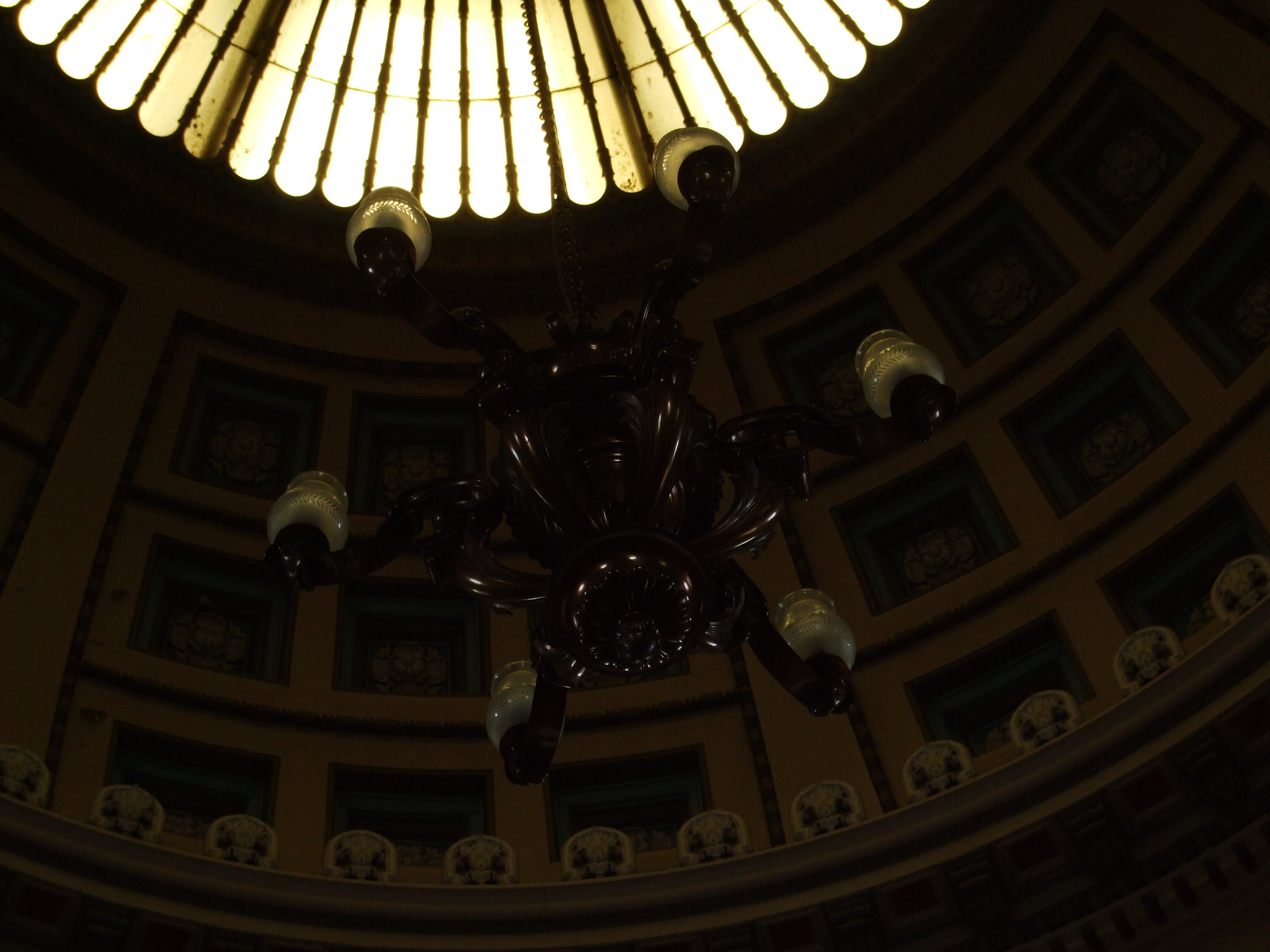
I was advised that the best way to take pictures of the chapel’s ceiling was to lie down, so that’s what I did – on a row of chairs rather than the floor.

2015_0524Brompton28
The chapel ceiling

2015_0524Brompton29

2015_0524Brompton30

2015_0524Brompton32
Looking north from the chapel

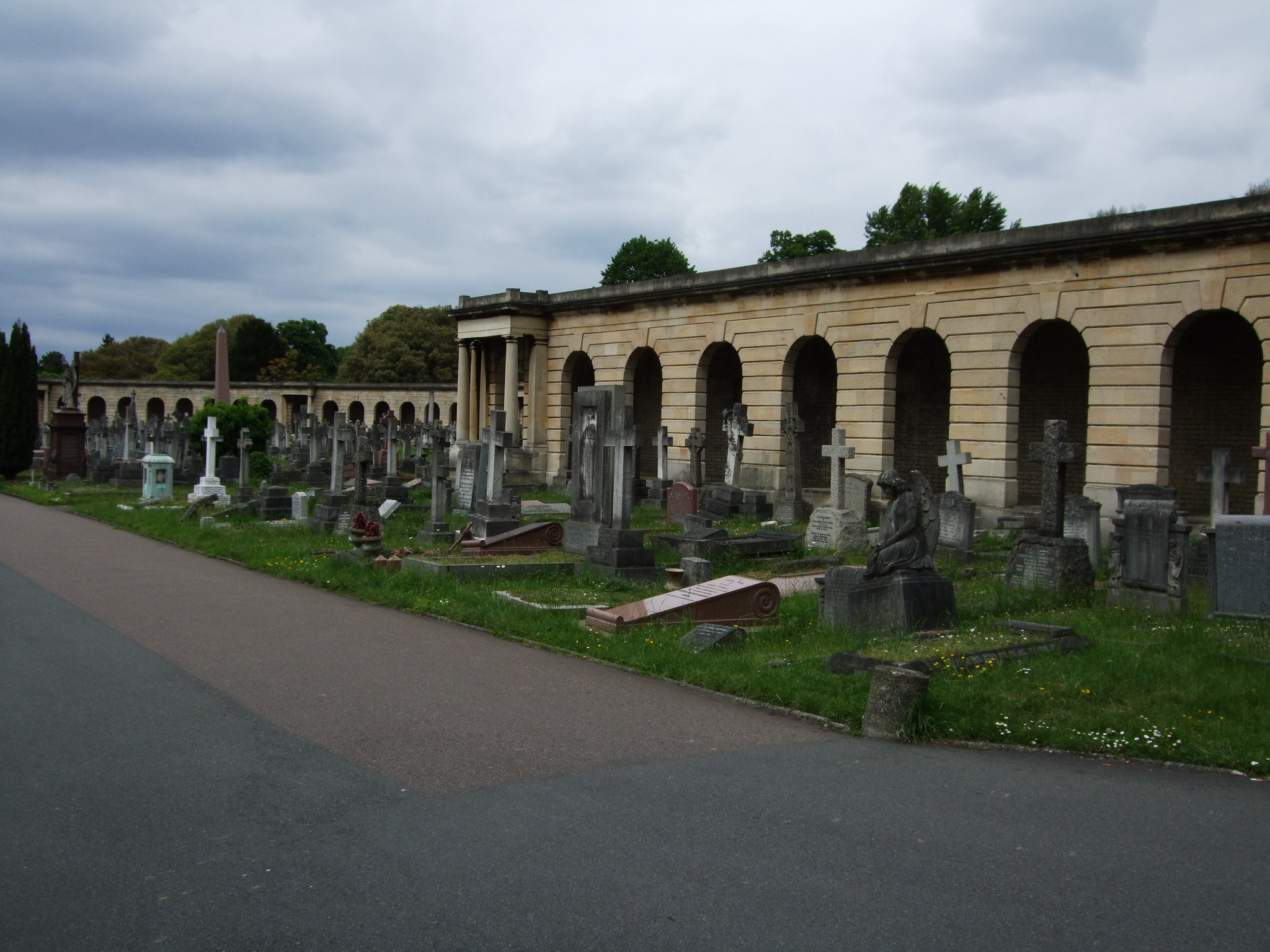
Just beyond the chapel, two arcades flank more sets of gravestones.

2015_0524Brompton31

2015_0524Brompton39

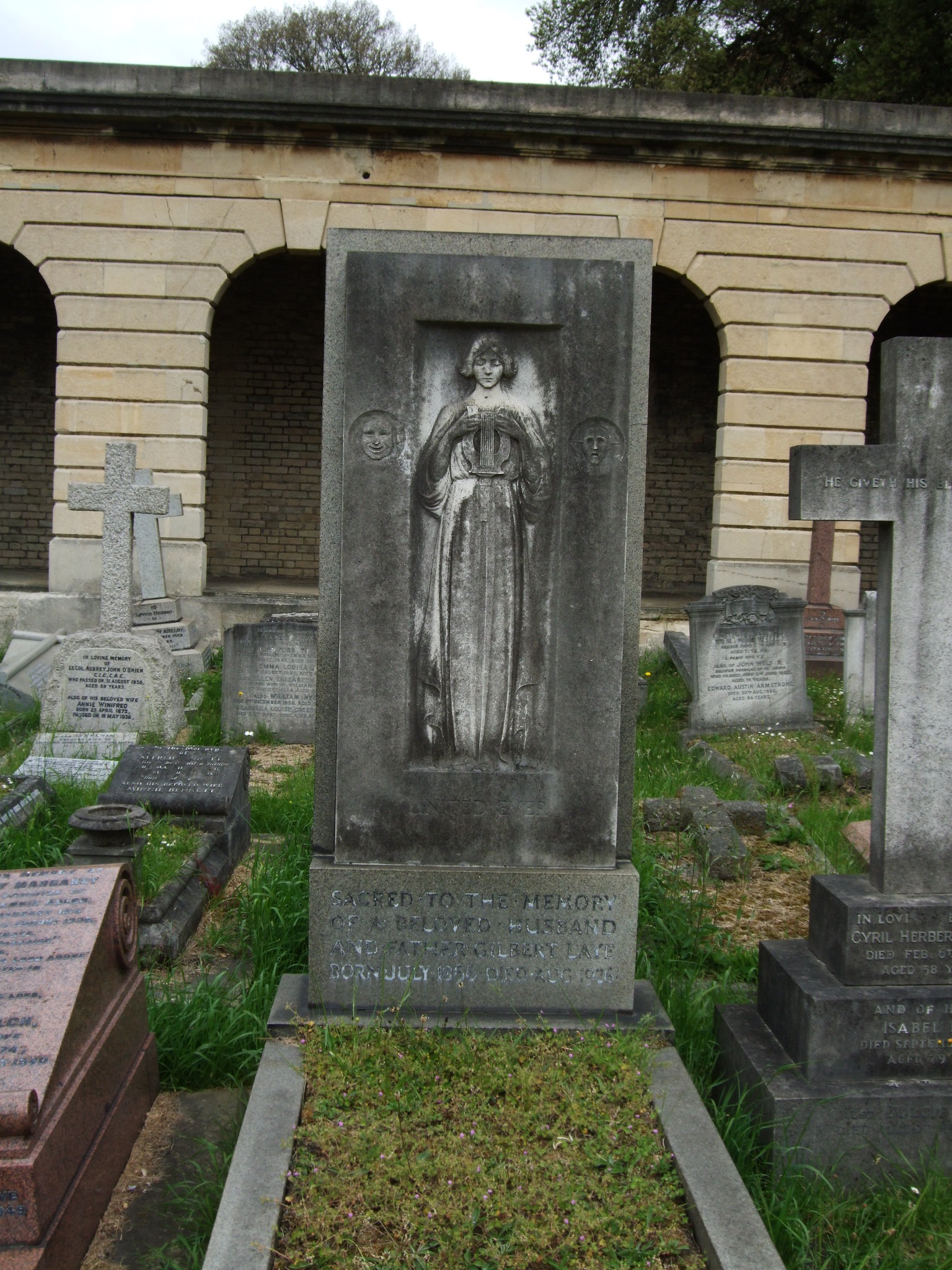
Gilbert Laye was an actor, composer and theatrical manager. I particularly liked his headstone, with the comedy and tragedy masks on either side.
2015_0524Brompton33
Grave of Gilbert Laye

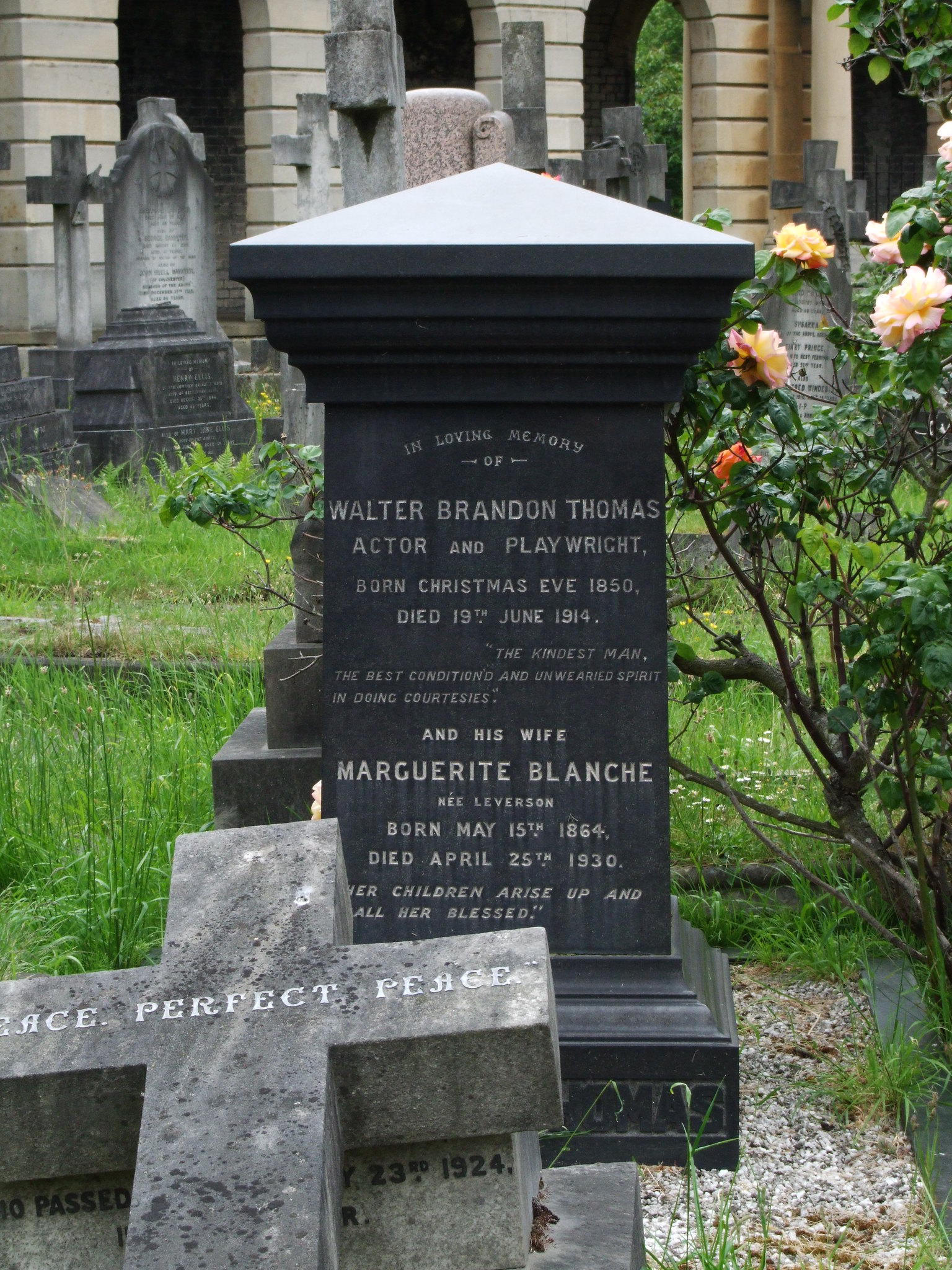
Continuing the theatrical theme, Walter Brandon Thomas was an actor and playwright best known today for his (genuinely funny) farce Charley’s Aunt.
2015_0524Brompton37
Burial place of Walter Brandon Thomas

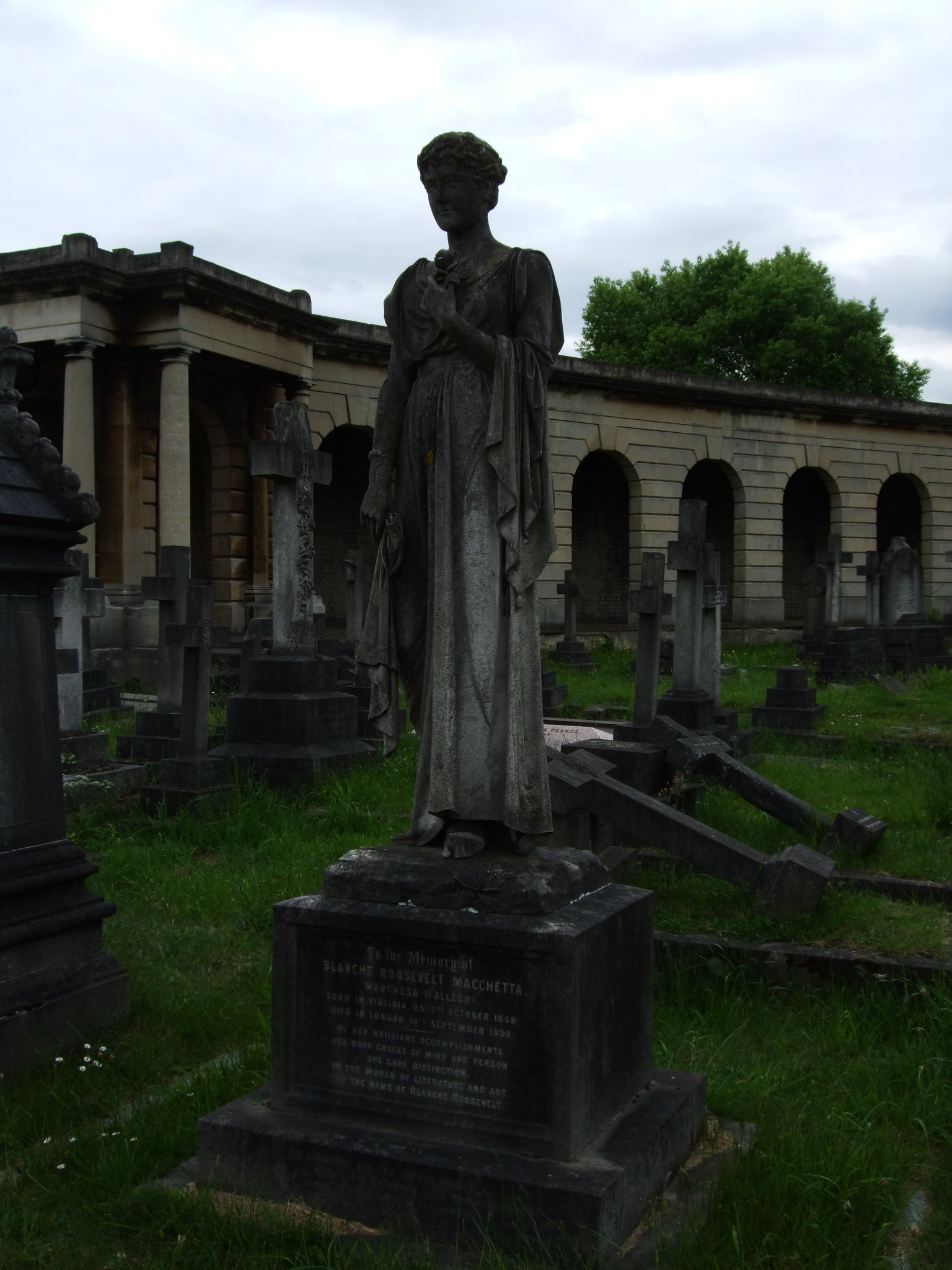
Blanche Roosevelt Macchetta was the first American woman to sing at Covent Garden’s Royal Opera House. After an accident, she died at the age of 45. The statue on her grave is of her.
2015_0524Brompton36
Tomb of Blanche Roosevelt Macchetta

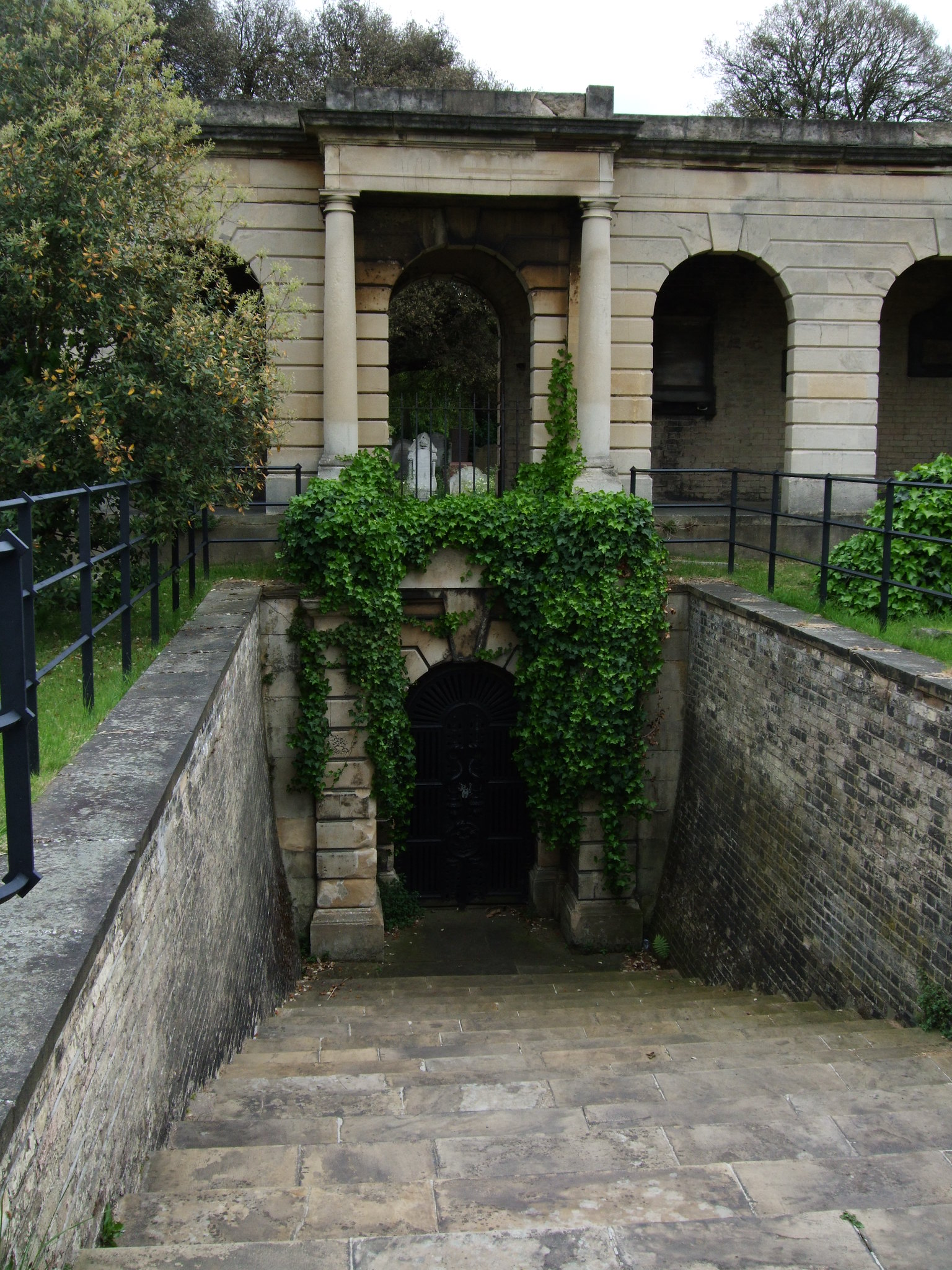
Below the arcades, catacombs are located. We weren’t able to look inside on this occasion but we were able to admire the gates, with their ornate design heavy with symbolism, including the two serpents.
2015_0524Brompton40
Entrance to the catacombs

2015_0524Brompton41

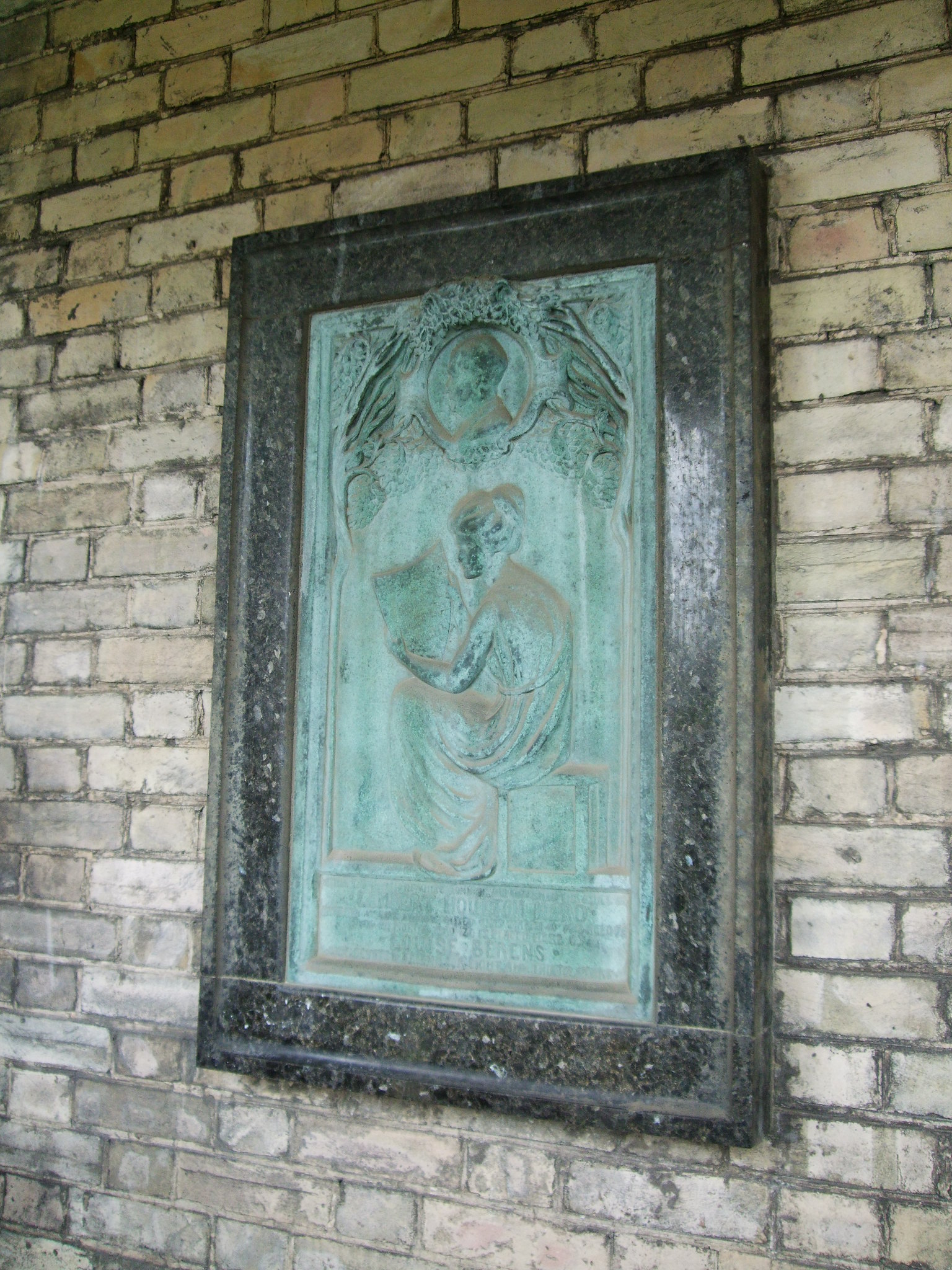
The interesting gravestone with the image of a wolf marks the former burial place of the Native American Sioux chief, Long Wolf, who died of pneumonia while touring with Buffalo Bill’s Wild West Show. In 1997 his remains were returned to his home in South Dakota.

2015_0524Brompton43
Long Wolf’s former burial place
2015_0524Brompton44
Ornate plaque displayed on the wall of the arcade

Queen Victoria had the body of a favourite servant, her courier Joseph Julius Kanné, buried here.

2015_0524Brompton47
Grave of Joseph Julius Kanné

Brompton Cemetery has memorials to the Brigade of Guards and the Chelsea Pensioners, as well as the graves of several Victoria Cross holders. One of these is Reginald Warneford, who was awarded the medal for downing an airship but who sadly died just over a week later during a non-combative flight.

2015_0524Brompton50
Tomb of Reginald Warneford

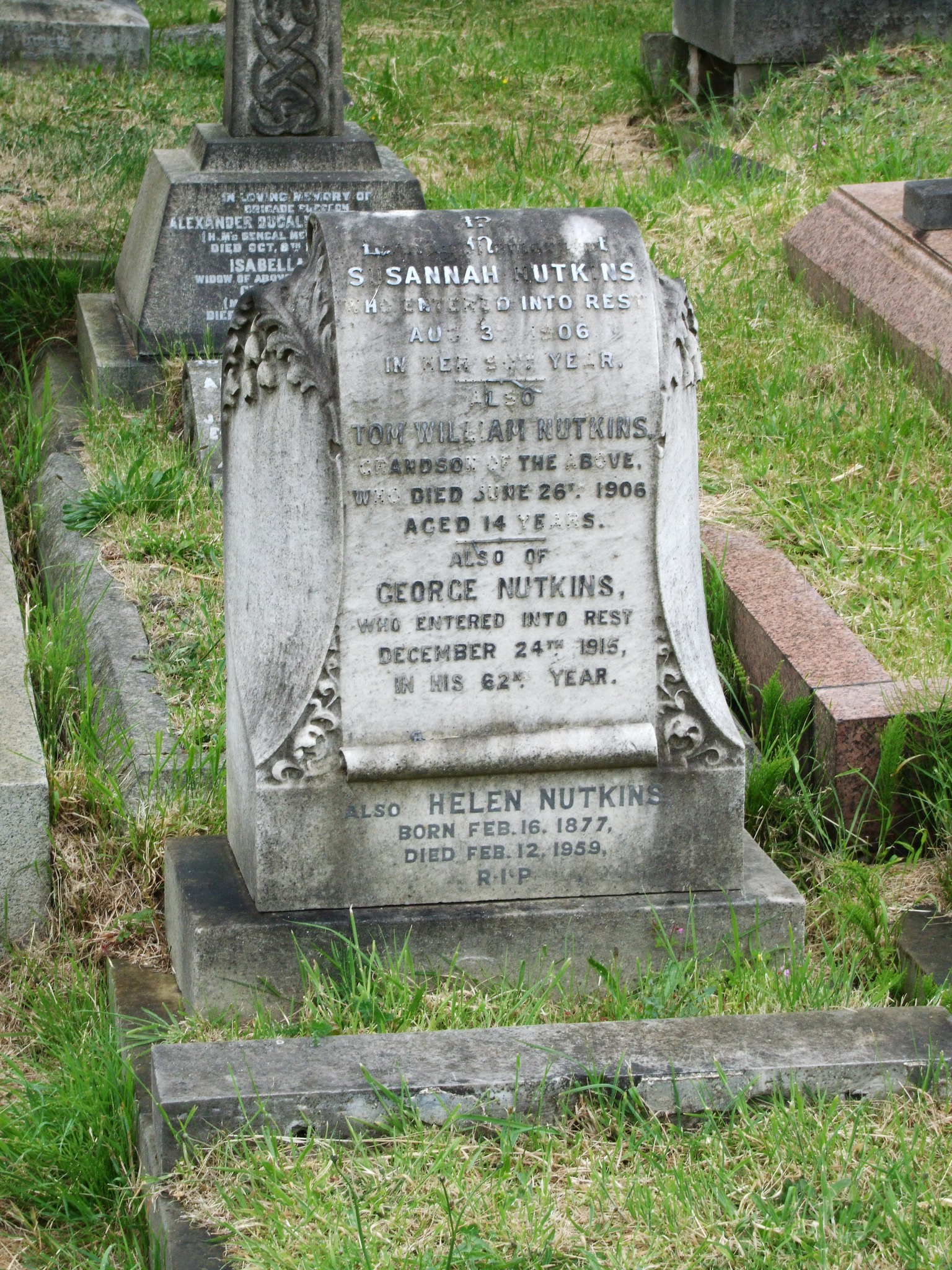
The cemetery has an interesting connection with the author Beatrix Potter, who lived nearby as a child and who is thought to have walked in the cemetery frequently. It has been suggested that the names of several individuals buried here influenced the names of some of her best-loved characters.
2015_0524Brompton51
The Nutkins family – inspiration for Squirrel Nutkins?

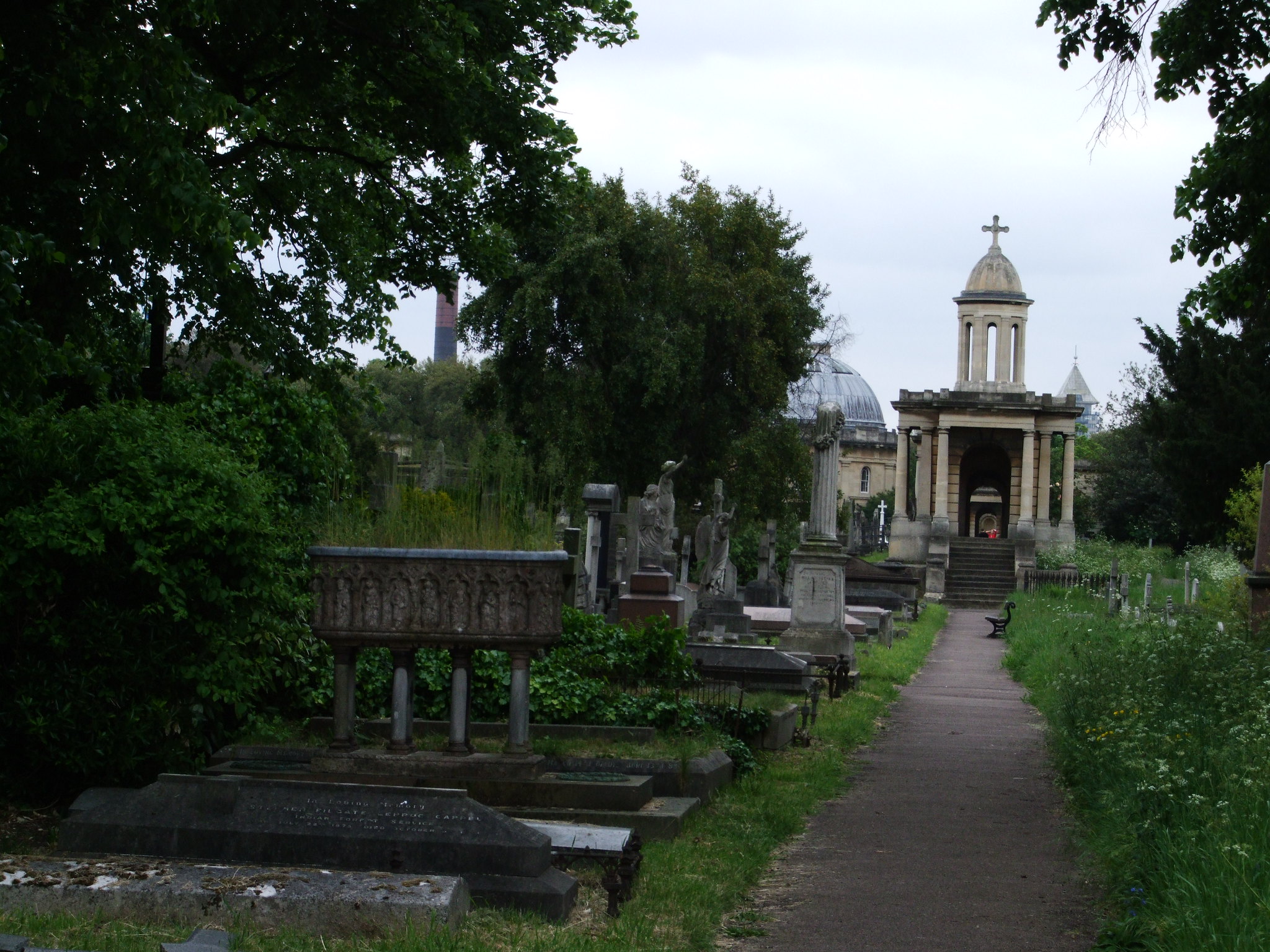
An interesting-looking sarcophagus on “legs” was bought by the painter Valentine Princep as a 13th-century original. Many years after his death, however, it was found to be fake.
2015_0524Brompton58

One of the most impressive monuments in the cemetery is the burial place of Frederick Richards Leyland, an art collector from Liverpool. His tomb was designed by the Pre-Raphaelite Edward Burne-Jones, and is Grade II-listed.

2015_0524Brompton55
Leyland’s beautiful tomb

Richard Tauber was an acclaimed Austrian tenor who settled in Britain after the German annexation of Austria just before the Second World War.

2015_0524Brompton62
Richard Tauber’s grave

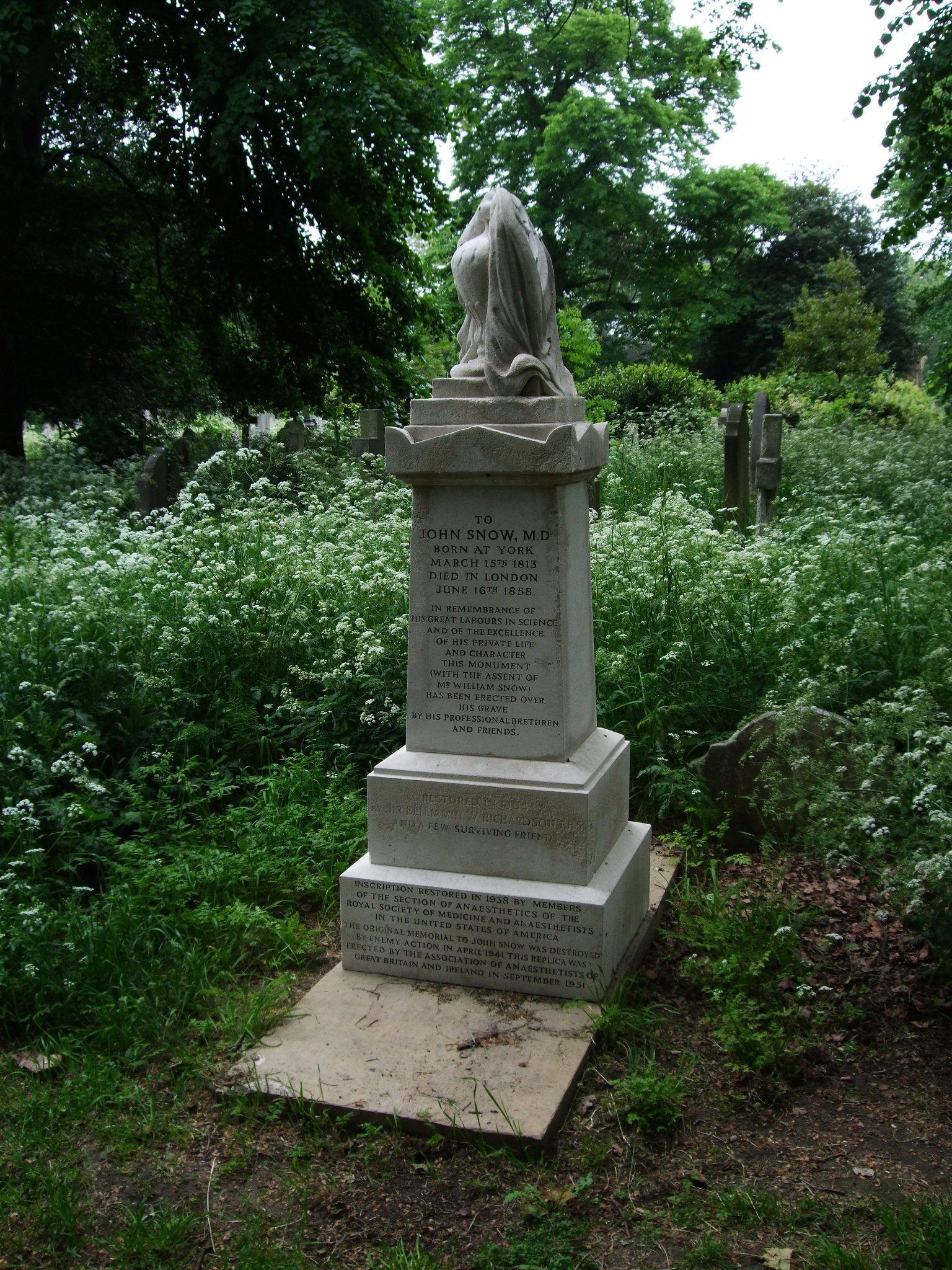
John Snow – not that John Snow, not that one either – was a physician who famously proved that cholera was not, as was commonly supposed, spread in the air but was ingested by mouth: he traced an outbreak of the disease in Soho to a particular pump on Broad Street, showing that the disease was transported via the water. I remember learning about him in history lessons at school, so I was rather excited to see his grave.
2015_0524Brompton63
Grave of John Snow, rebuilt after being destroyed during World War II

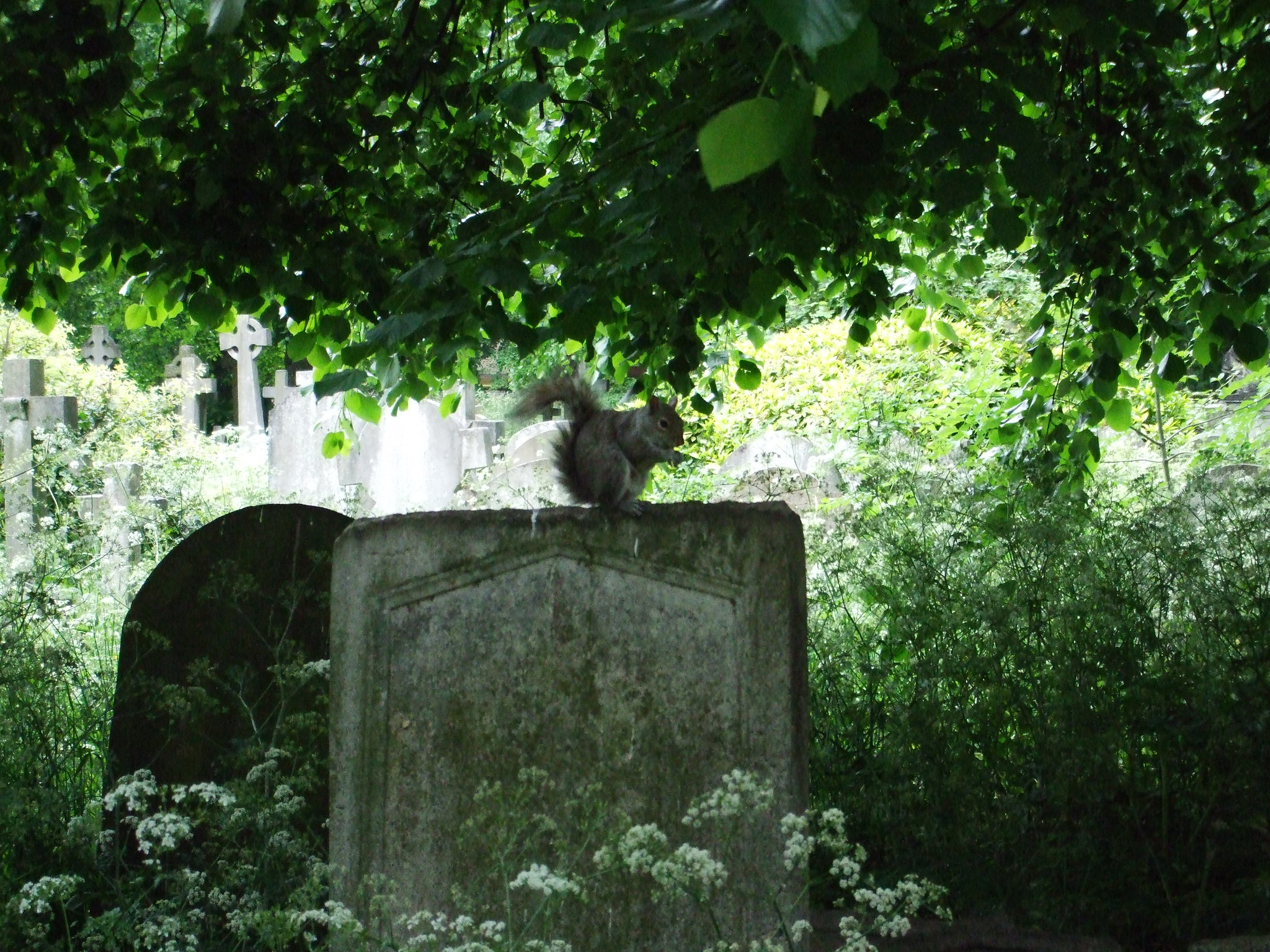
The cemetery is something of a haven for wildlife.
2015_0524Brompton64

2015_0524Brompton65

2015_0524Brompton66

Architecture

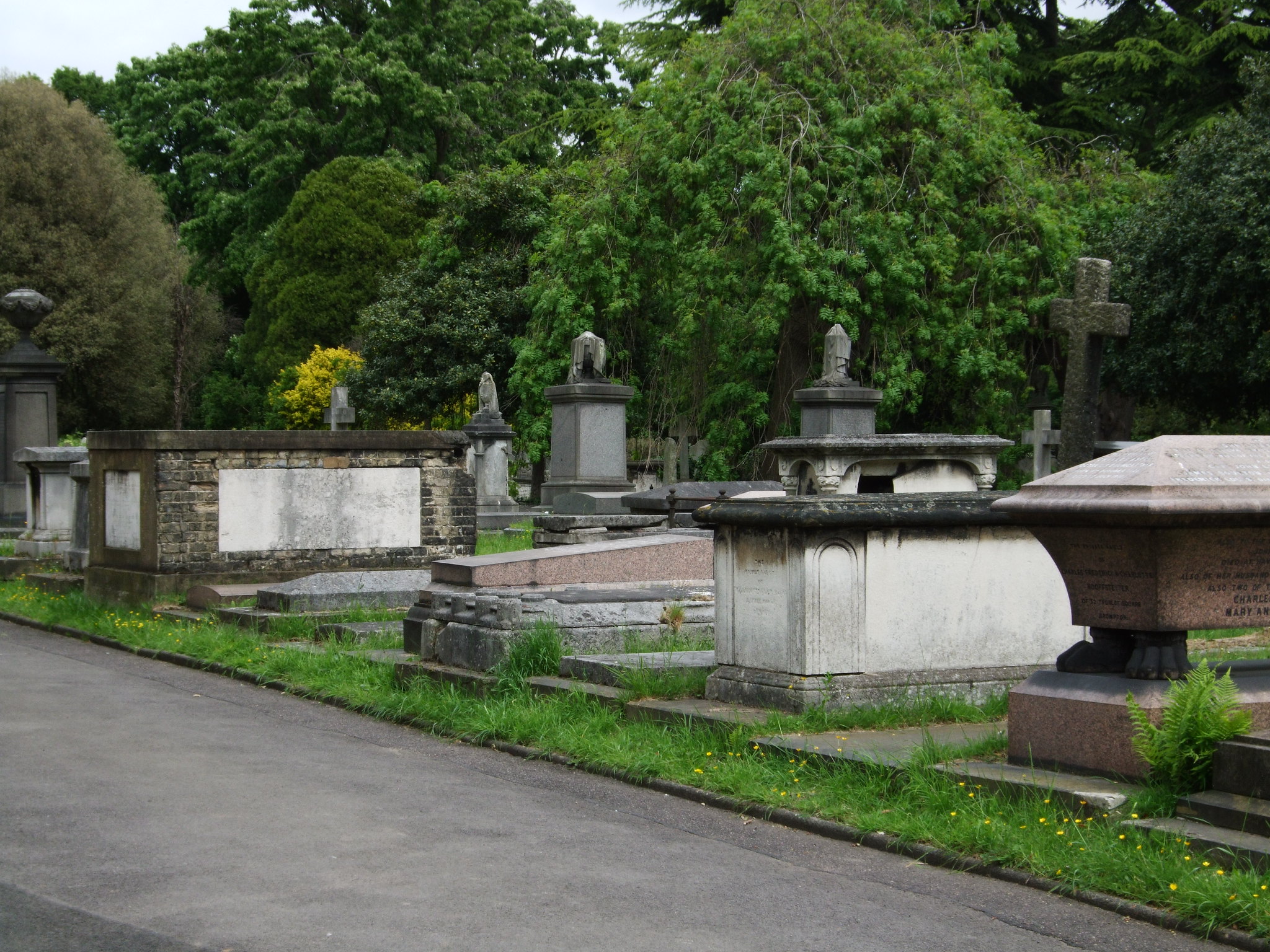
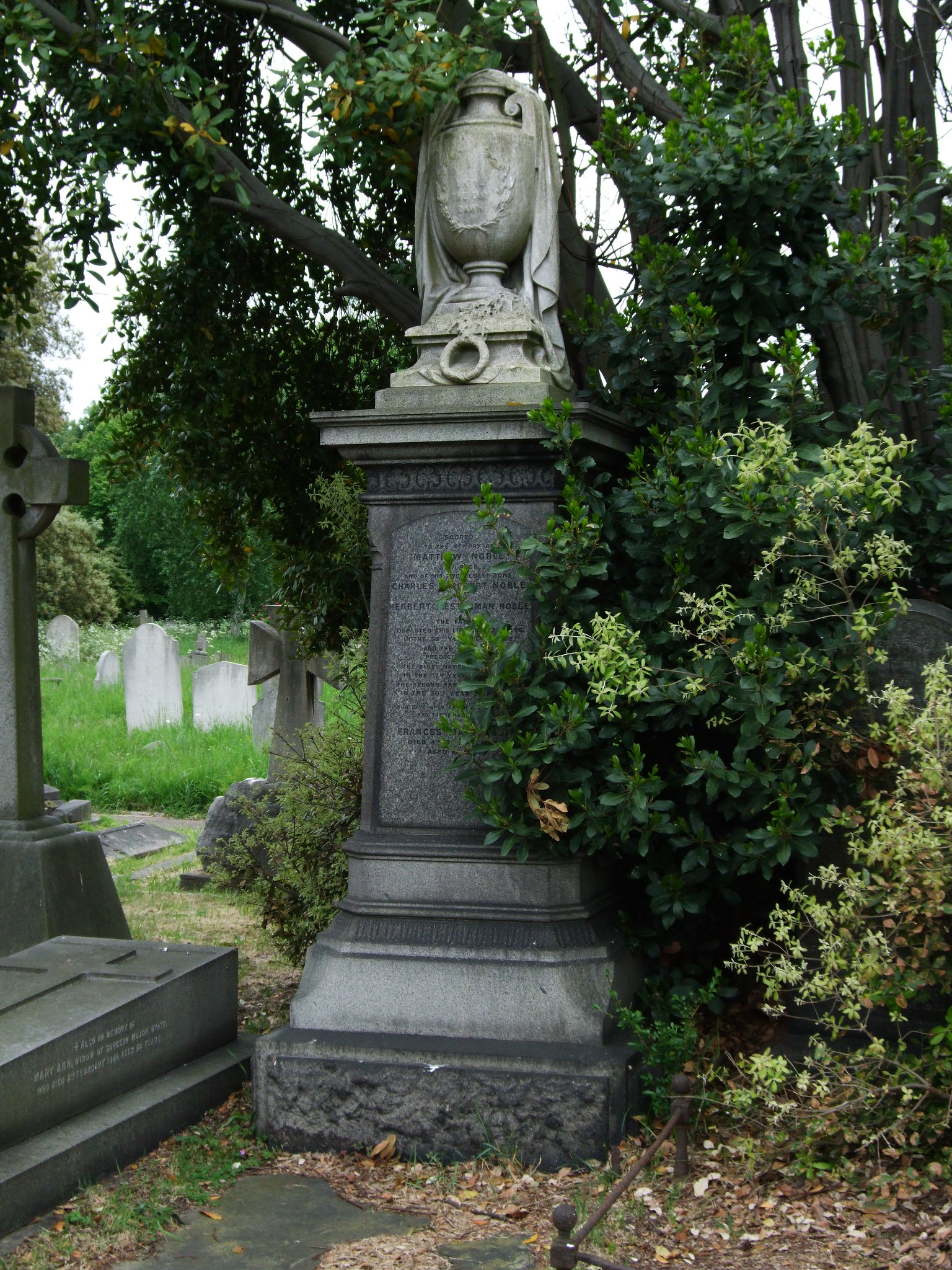
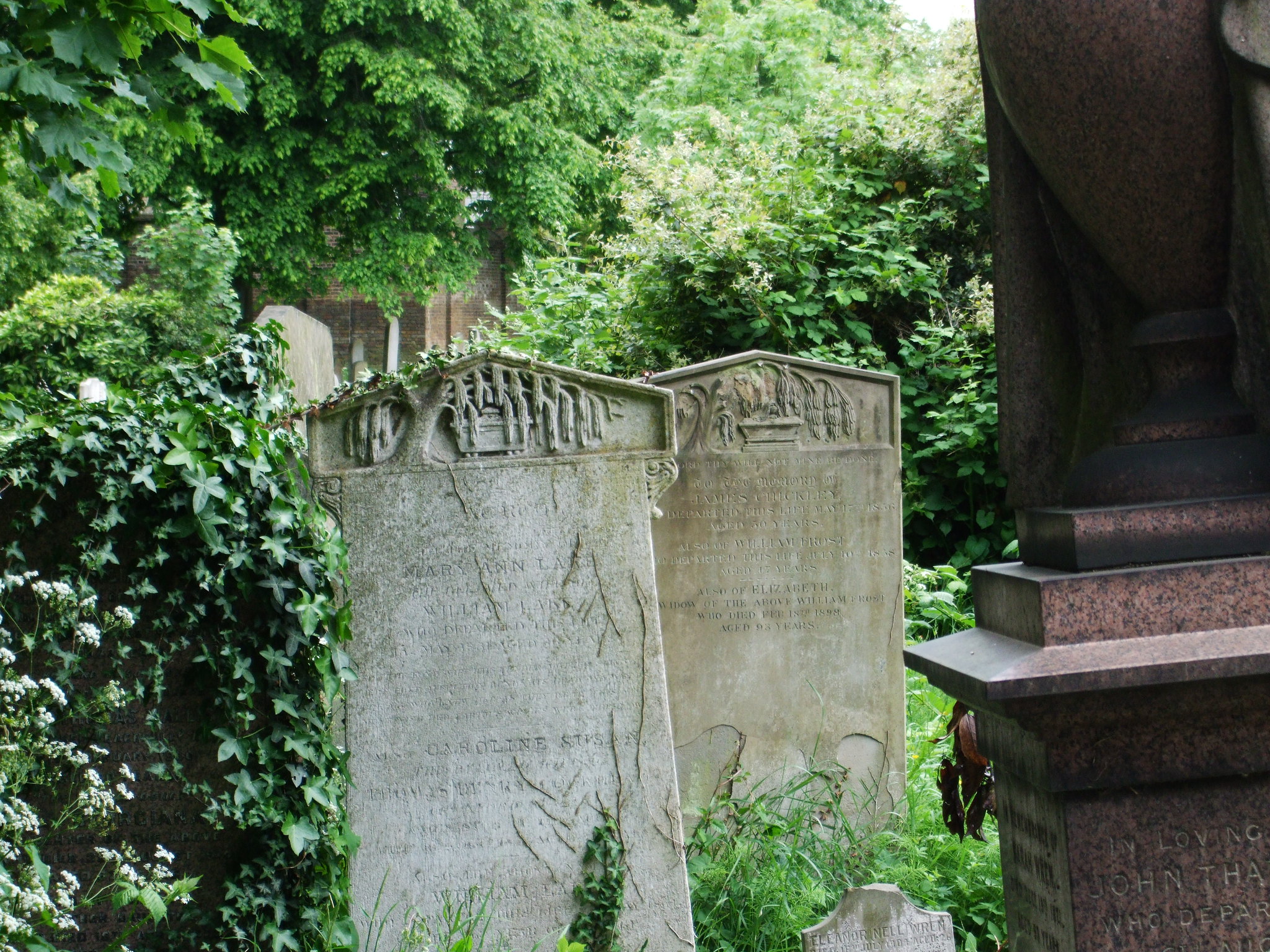
Like the other cemeteries I’ve visited, Brompton Cemetery has some beautiful architecture to admire, including some impressive gravestones as well as the cemetery design as a whole. Familiar symbols of death, such as urns and broken columns, sit alongside ornate Art Nouveau designs.

2015_0524Brompton06
Sadly, these impressive statues have lost their heads
2015_0524Brompton09
Beautiful weeping willows
2015_0524Brompton24
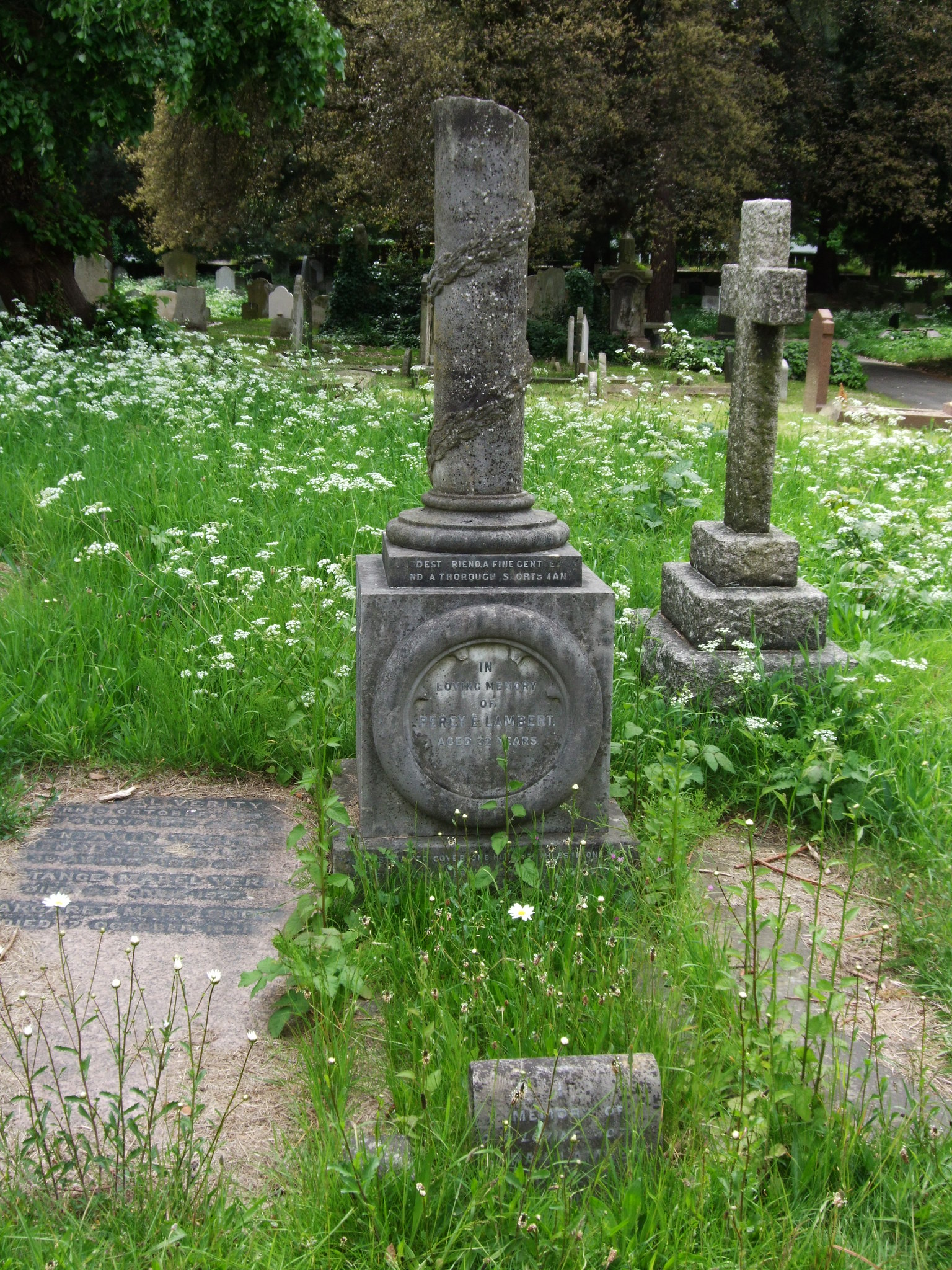
The broken column represents a life cut short

2015_0524Brompton25

2015_0524Brompton26

2015_0524Brompton48
Lovely “Art Nouveau” tomb

2015_0524Brompton52

2015_0524Brompton53
A draped urn, another common symbol

2015_0524Brompton59

2015_0524Brompton61
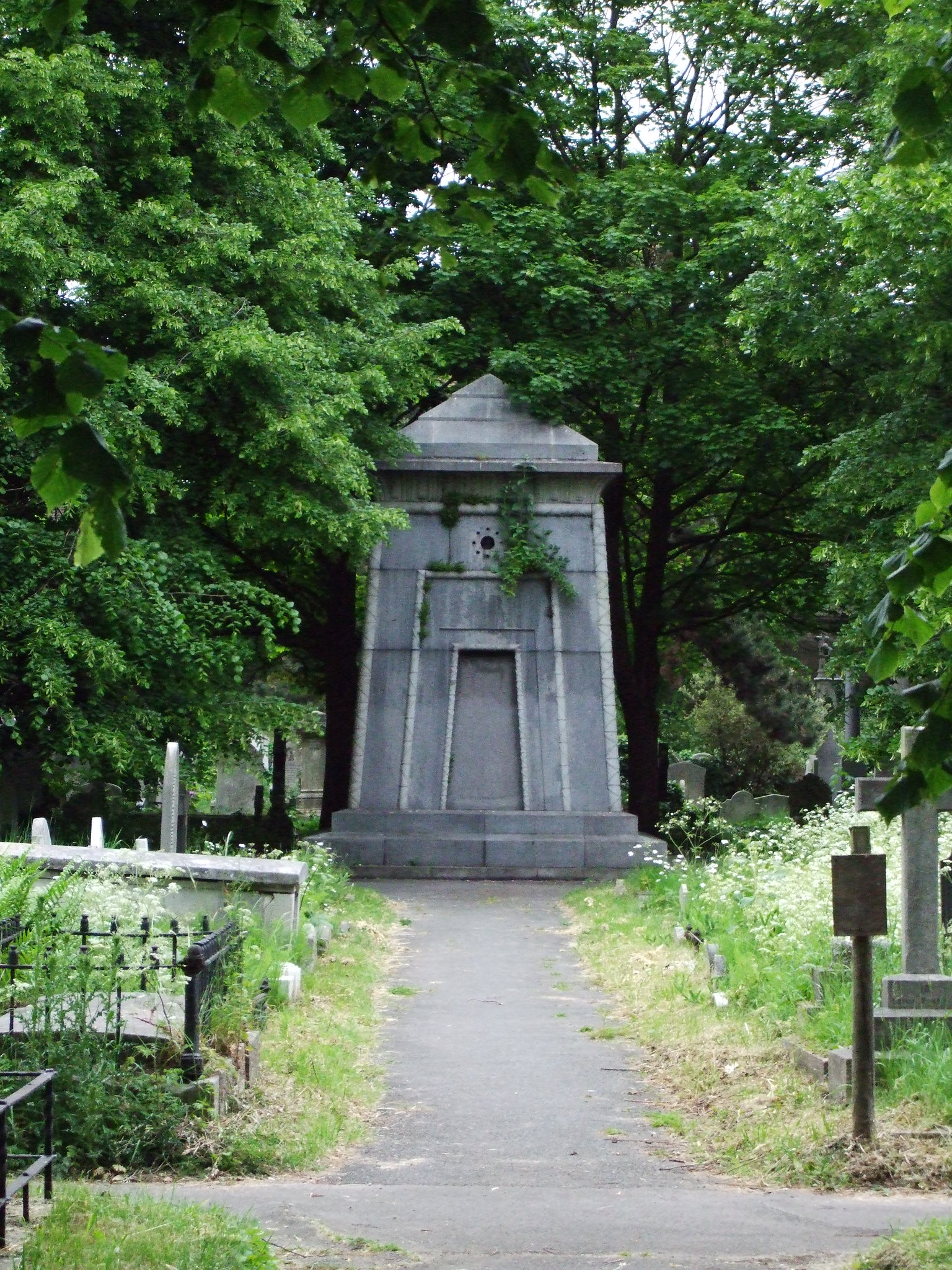
One of the most ornate and magnificent tombs in Brompton Cemetery

2015_0524Brompton67

The central path ran the length of the cemetery, leading towards the North Gate.

2015_0524Brompton54

2015_0524Brompton68
Approaching the North Gate
2015_0524Brompton70
The North Gate, seen from outside the cemetery

Brompton’s central location makes it an ideal place for a leisurely walk. I would definitely recommend a tour, too, so that you can discover more about the cemetery.

Would I go back?

Yes – I wasn’t able to see Emmeline Pankhurst’s grave and because of the rain I wasn’t able to wander about as much as I would have liked. I’d love to have the chance to explore the cemetery at my leisure, and to visit the catacombs, too.

FACTS

Address: Old Brompton Road, London, SW10 9UG
Founded: 1840
Size: 39 acres
Still in operation?: Yes
Official website: https://www.royalparks.org.uk/parks/brompton-cemetery
Owners: Crown Estates, managed by The Royal Parks
Friends group: Friends of Brompton Cemetery (http://brompton-cemetery.org.uk/)
Tours: These cost £6 and take place at 2pm every Sunday from May to August, and on two Sundays a month from September to April. Meet at the South Lodge, at the Fulham Road entrance.

2015 Reading Challenge – A banned book

2015-06-03 23.42.18

I had never read Voltaire’s Candide before, but I had seen the musical version by Leonard Bernstein (“Isn’t it a lovely day / For an auto-da-fé”), so I knew something about the story before I picked it up. The short book satirises the philosophical idea that “all is for the best in the best of all possible worlds”, and was banned many times during its history: in 1762, Candide was listed in the Index Librorum Prohibitorum, the Roman Catholic Church’s list of prohibited books.

2015 Reading Challenge – A book that was originally written in a different language

2015-06-02 23.34.53

I’m a huge fan of the novels of Isabel Allende and her latest, Ripper (originally written in Spanish), is as full of fascinating characters as her other books. However, it is unusual in that it is set in the present day and is also a murder mystery. A great read.

Alexander McQueen: Savage Beauty – V&A

I visited the long-awaited Alexander McQueen: Savage Beauty exhibition at the V&A on Sunday, having luckily booked in advance for a late afternoon slot. The exhibition has sold very well, and in fact weekends have been sold out for a while, so I considered myself lucky to be able to get in.

Despite the popularity of the exhibition, I was impressed with how well it had been organised. I only had to queue for a couple of minutes, getting into the exhibition at the appointed time. The space was not too crowded: sometimes there is a tendency to cram as many people as possible into a space, even when an exhibition has limited entry, but that wasn’t the case here.

The exhibition was well set-up with strong design and themed rooms, reflecting the aesthetic of the clothes, which were displayed thematically and showcased to great effect. For instance, there was a darker mirrored room showing off the Gothic-influenced clothing, and a wood-panelled eighteenth century drawing room to display the Scottish-influenced garments.

I thought the exhibition provided a strong overview of McQueen’s work, with items from his significant collections including Widows of Culloden and Jack the Ripper Stalks His Victims, as well as his final fully-formed collection before his untimely death, Plato’s Atlantis. It explored how he used a variety of influences, including flowers, animals, other cultures and history, and emphasised the importance of tailoring in his garments. Looking at items such as the “bumster” trousers, the tailored suits and the dresses incorporating lace or tartan it’s possible to appreciate the thought and craftsmanship that went into each piece, even it’s something you wouldn’t necessarily wear yourself. Over time I’ve come to look at high fashion more as a form of art than as a representation of clothes you’d actually go out in, and this has led me to appreciate it much more. Alexander McQueen’s work is a particularly strong example of fashion-as-art as the designer used his clothes and catwalk shows to make political and cultural statements.

If you can still get a ticket, this is one exhibition which is a must see if you appreciate good design, whether or not you are into fashion.


Inventing Impressionism – National Gallery

I visited the Inventing Impressionism exhibition at the National Gallery on Sunday. Subtitled Paul Durand-Ruel and the Modern Art Market, the exhibition looks at the role of Parisian art dealer Durand-Ruel in championing and promoting the Impressionist painters. Though Impressionism is now well-respected and loved, this was not always the case – when this new kind of art first began to emerge, most critics and members of the public shunned and mocked it. Monet himself suggested that if it wasn’t for Durand-Ruel, his work and that of his contemporaries would not have flourished.

Filled with works by Renoir, Monet, Manet and Degas, as well as Rodin, Rousseau and Millet, the exhibition is incredibly impressive and it’s hard to imagine how and why contemporary critics rejected the work. Anyone attending the exhibition will surely find themselves feeling extremely grateful to this entrepreneurial art dealer.

2015 Reading Challenge – A book written by someone under 30

2015-05-28 23.21.54

I wasn’t sure how I would go about finding a book written by someone under 30, but then I remembered this one, which I’d heard of a while back. Abigail Gibbs wrote The Dark Heroine while she was still at school, and sometimes it shows, with dodgy grammar and slightly confusing plot points. And yet, considering her age, it’s very accomplished. I don’t make a habit of reading vampire romances, but this one is entertaining and kept me guessing, and the heroine is much more appealing than soppy Bella Swan from Twilight.

Sargent: Portraits of Artists and Friends – National Portrait Gallery

I visited the Sargent: Portraits of Artists and Friends exhibition at the National Portrait Gallery on Friday after work, suddenly realising that it was due to close on the Bank Holiday. I’m very glad I got the chance to see the exhibition, as I love Sargent’s style and his pictures really appeal to me.

John Singer Sargent (1856-1925) was born in Florence to American parents. He showed early promise as an artist and trained with many expatriate artists. He later studied at the École des Beaux-Arts, and his career went from strength to strength; he was acclaimed on both sides of the Atlantic.

The portraits here are largely of artists and other society figures that Sargent knew personally, meaning that they are more varied and generally more informal than his commissioned works. I loved the glorious colours of the paintings and the interesting figures who form their subjects. One of my favourites was a picture of his friend Ramón Subercaseaux, painted in a Venetian gondola in around 1880. Ramon looks directly at the painting as if he is looking into the eyes of his friend. I also loved the paintings of Robert Louis Stevenson, completed a few years later, showing the author in an almost “accidental” pose. Another image I loved, much more formal and staged, was Sargent’s painting of actress Ellen Terry as Lady Macbeth – incredibly impressive.

I could have stayed here for hours; sadly the exhibition has finished but many of Sargent’s works are visible in public galleries, including Carnation, Lily, Lily, Rose (Tate) and his 1913 portrait of the novelist Henry James (National Portrait Gallery).

Ellen Terry as Lady Macbeth, 1889


2015 Reading Challenge – A book you started but never finished

2015-05-24 10.48.00

I read The Bell Jar by Sylvia Plath at secondary school as part of my GCSE coursework. Except I didn’t, not completely – we started the book halfway through and didn’t bother finishing it. This led me to spend over a decade thinking I didn’t like Sylvia Plath. However, when I came to re-read this book (prompted by this challenge) I was blown away by how much I loved it. I don’t think I was mature enough to appreciate it before.

Retro technology

Recently I was at home for a week, and as my parents are moving in a few months I was given the job of sorting out all my stuff. I came across some retro gems that I loved and enjoyed while I was a child and a teenager!

First up, my beloved cassette player/recorder/radio. I got hours of use out of this. Do kids today even know what cassettes are?

2015-05-09 20.23.08
Alba Radio Cassette Recorder

Gender-specific toys are not a new thing, sadly. On the other hand, I still prefer the pink/purple colourway of this Home Alone II-inspired Talkgirl to the original silver/black of the Talkboy.

2015-05-09 20.38.01
Deluxe Talkgirl

How awesome was the Dear Diary? My brother and cousin once spent a whole afternoon trying to guess my password. They failed. HA!

2015-05-09 20.25.17
Dear Diary
2015-05-09 20.25.32
Inside the Dear Diary

Now that there is no analogue TV, this portable model is pretty useless.

2015-05-09 20.24.17
Casio Portable TV

Ordinary film cameras always confused me so this APS camera from Kodak was brilliant. Sadly it was soon superseded by digital photography, but I used this for a good few years.

2015-05-09 20.26.08
Kodak Advantix F600 Camera

Ah, the portable CD player. When you spent hours trying to work out which one album you wanted to listen to, then had to carry this bulky thing around.

2015-05-09 20.32.51
Goodmans Portable CD Player

Before I got a laptop I used to take this to sixth form and write all my essays on it. It came in very handy.

2015-05-09 20.26.41
Sharp Electronic Organiser
2015-05-09 20.26.51
Inside the Sharp Electronic Organiser

How cute is this Minidisc player? I think Minidiscs would have really taken off if the iPod hadn’t come out shortly afterwards.

2015-05-09 20.31.09
Panasonic Minidisc Player
2015-05-09 20.34.32
My collection of minidiscs

My first ever mp3 player, and my first foray into digital technology. This lasted me a good few years.

2015-05-09 20.24.51
Creative mp3 Player

I could probably start a museum with this lot, honestly…

2015 Reading Challenge – A book with a number in the title

2015-05-14 23.10.02

I became aware of Station Eleven by Emily St. John Mandel when I saw King Lear in Guildford and online commenters were comparing Brian Blessed’s on-stage collapse to the beginning of this novel, in which an actor playing Lear dies on stage. Thankfully life did not imitate art, and Blessed survived to continue the show – but my interest in the book was sparked. It’s a gripping and unusual tale of a post-apocalyptic world.