Building the Picture: Architecture in Italian Renaissance Painting – National Gallery

This short exhibition at the National Gallery explores the role of architecture in the painting of the Italian Renaissance, with focus on the 14th, 15th and 16th centuries. The result of a research partnership between the National Gallery and the University of York, Building the Picture: Architecture in Italian Renaissance Painting aims to show how architecture was inherently bound up with the work of many artists. The rooms of the exhibition are themselves laid out and divided by arches and columns, as if to illustrate the point.

The exhibition emphasises the multidisciplinary nature of art during the Renaissance: for instance, Michelangelo was a sculptor before designing buildings. Many paintings took architecture as a starting point. Most paintings were designed for specific spaces, such as Domenico Venziano’s “The Virgin & Child Enthroned” of 1435-43, which was designed to fit into a niche in Florence’s Carnesecchi Tabernacle.

Architecture was particularly present in annunciation scenes, in which it was common to divide Mary from Gabriel and any others present by use of walls. An example of this is Duccio’s “The Annunciation” of 1311, in which the two appear to belong in their own “frames” within the picture. This division was intended to mark Mary out as special.

Another kind of picture is “Saint Jerome in His Study”, a work from around 1510 by Vincenzo Catena. The architecture here is welcoming and open, as if inviting the viewer to step into the picture. Perhaps this represents Saint Jerome’s work of making the Bible accessible through translation.

Another series of works explores paintings that evoke the concept of Solomon’s temple in Jerusalem, such as Sebastiano del Piombo’s “The Judgement of Solomon”. Other images of the 5th century Saint Zenobius, Bishop and patron saint of Florence, invoke the architecture of the city to help locate his miracles in real places. Finally, a selection of Nativity paintings set in ruins showed how the setting symbolised the ruin of the old order.

This short but free exhibition is certainly worth a look if you are in central London with a bit of free time to spare.

Clarence House

Clarence House (image from Wikipedia)

I visited Clarence House on Sunday, deciding to take advantage of the annual August opening. I was a little late getting to the house, as I managed to get lost on the way, and Google Maps was a bit confusing. I was impressed with the staff though as they made a big effort to ensure that I, and the two other latecomers, were hurried through security and taken to join our tour group. I really didn’t miss much of the tour.

The house was originally built between 1825 and 1827, designed by architect John Nash. The first residents were Prince William Henry, Duke of Clarence (the third son of George III), and his wife Adelaide. When he became King George IV he remained in the house rather than remove to Buckingham Palace. Other royal residents followed, including, for a brief time, the current Queen, when she was Princess Elizabeth, and recently married to the Duke of Edinburgh. On her ascension to the throne, the house became the home of Queen Elizabeth the Queen Mother, who lived here (accompanied for some time by Princess Margaret) until her death in 2002. Today, the house is the “official” London residence of the Prince of Wales, the Duchess of Cornwall and Prince Harry.

The house is beautifully decorated and I was particularly impressed by the art collection, most of which was acquired by the Queen Mother. Artists represented include Augustus John, Walter Sickert and Graham Sutherland. One picture I especially liked showed George Bernard Shaw with his eyes closed – he didn’t like it but the Queen Mother decided to buy it anyway! I was also excited to see a piano that was actually played by Noël Coward.

We were told stories about the house and the rooms, such as the annual Christmas party for sick children in which soldiers place Christmas decorations on top of the tree with their swords. I think I would quite like to see that! We didn’t get to see the entire house, only the ground floor, including the “horse corridor” – so called because of the pictures of horses lining the walls.

Clarence House is definitely worth a visit if you are interested in history and/or art. It’s now closed for the year, but as far as I know should be open next August as usual.

FACTS

Address: St James’s Palace, St. James’s, London, SW1A 1BA

Website: royalcollection.org.uk/visit/clarence-house

Opening Hours: Guided tours in August

Prices: Adult £10, 5-17/disabled £6; under-5s free

Blooming Marvellous – artsdepot

2014_0817BloomingMarvellous07

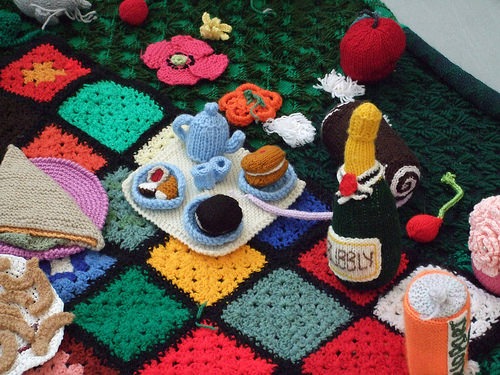
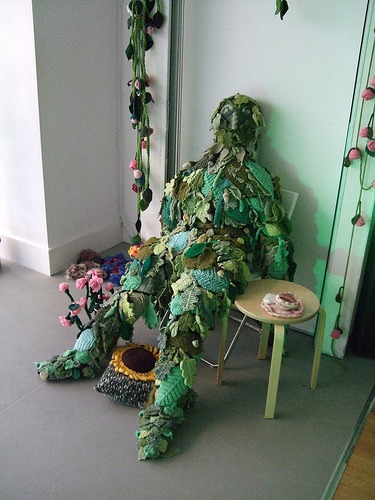
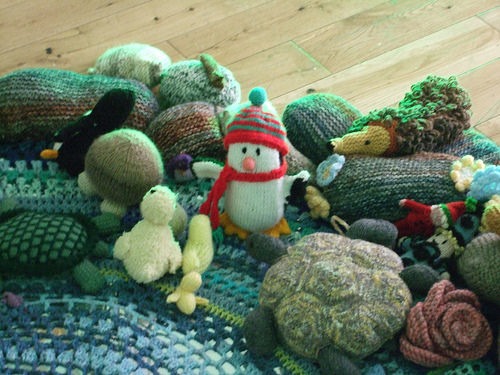
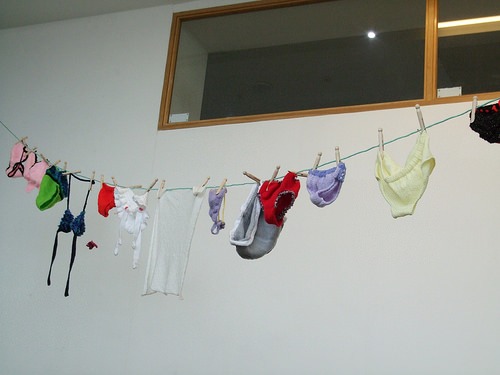
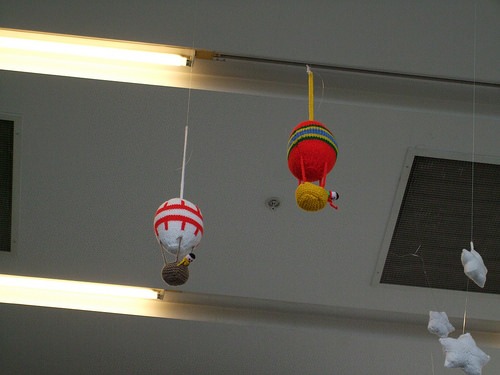
Currently on show in artsdepot‘s Apthorp Gallery is an incredible exhibition, Blooming Marvellous. Created in 2011 by over 2,500 individuals (the youngest was 2 and the oldest 99), mainly in Dorset, the exhibition is a life-sized garden in which everything has been knitted.

2014_0817BloomingMarvellous09

2014_0817BloomingMarvellous11
Champagne anyone?

I can’t knit myself – my nana tried to teach me when I was a child, but it went horribly wrong and I haven’t tried it since – but I can certainly appreciate the talent, effort and imagination that went into this amazing project. I highly recommend you pay it a visit, whether you are a knitter yourself or not – there are so many different things to see!

2014_0817BloomingMarvellous01
Look, it’s a duck!

2014_0817BloomingMarvellous03

2014_0817BloomingMarvellous04
Penguin!

2014_0817BloomingMarvellous05

2014_0817BloomingMarvellous06

2014_0817BloomingMarvellous22

2014_0817BloomingMarvellous21
This little mole was apparently made by a vicar from Sunderland

2014_0817BloomingMarvellous17

2014_0817BloomingMarvellous18

artsdepot is an arts centre in North Finchley that hosts theatre, dance, exhibitions, classes and other events. The Apthorp Gallery hosts changing exhibitions and the Theatre and Studio are home to a variety of shows for all ages. This thriving arts hub is certainly worth a visit – there’s something for everyone.

FACTS

Address: 5 Nether St, London, N12 0GA

Website: artsdepot.co.uk

Opening Hours: Open every day; times vary

Prices: Exhibitions are free; theatre and events prices vary

Mammoths: Ice Age Giants – Natural History Museum

2014_0817Mammoths06
Columbian Mammoth

The second exhibition I saw at the Natural History Museum was Mammoths: Ice Age Giants. I thought it complimented the “Britain” exhibition really well, being about some of the creatures who were around when early humans were.
In the exhibition I learned where mammoths stand on the evolutionary tree: they aren’t ancestors of elephants, as I used to think, but an entirely different branch, like mastodons. Woolly mammoths are the most famous kind, but this is because woolly mammoths lived in cold areas and were therefore more likely to be preserved after death.

Some of the mammoths were absolutely huge – the Columbian mammoth in particular! In contrast, the pygmy mammoth, though still pretty large compared to other animals, was much smaller than other mammoths. This is because pygmy mammoths lived on islands, and a smaller size was advantageous in clambering about the island and coping with smaller amounts of food.

The highlight of the exhibition was “Lyuba”, a baby mammoth discovered in Russia in 2007. This is the first time she has been seen outside Russia. Lyuba died when she was only one month old, probably from asphyxiation after falling into mud. Her body has remained wonderfully preserved for 42,000 years: she has lost most of her fur, her tail is missing and her trunk has shrunk but otherwise she looks fantastic for her age!

This exhibition closes on 7 September, and I definitely recommend trying to catch it before it goes.

Britain: One Million Years of the Human Story – Natural History Museum

At the weekend I went to see a couple of exhibitions at the Natural History Museum. The first was Britain: One Million Years of the Human Story, inspired by the Ancient Human Occupation of Britain (AHOB) project, a three-phase study investigating humans from Palaeolithic and Mesolithic northern Europe.
The exhibition told a chronological story from the earliest evidence of human presence in the British Isles, through to the first appearance of Homo sapiens in Britain. I found it fascinating to learn about the presence of early humans. Among the items on display were a skull from the earliest known Neanderthal in Britain, bones from the animals that lived during that time, and tools and other evidence of human habitation. Over the last million years, humans have been present in Britain on and off, depending on weather and other conditions. Other amazing creatures have been here too, including mammoths, rhinos and lions.

Evidence of human presence has been found mainly in the south: the north and Scotland experienced longer and more severe freezes, meaning that evidence could have been destroyed. Finds have been discovered at places such as Kent’s Cavern in Devon and Happisburgh in Norfolk.

I was interested to learn that when Homo sapiens superseded Neanderthals, the latter’s genes were not wiped out entirely. Apparently most humans (except for those most closely descended to the original Homo sapiens who came out of Africa) have some Neanderthal genes. Two purpose-built models show how the species differed.

2014_0817Britain01
Neanderthal man
2014_0817Britain02
Homo sapiens

At the end of the exhibition, there was a video with six celebrities talking about the results of their own DNA analysis. It was interesting to see the huge range and scope of their DNA origins, from Scandinavian and Asian to Native American. I wonder what mine would say?

Frogmore House

2014_0816FrogmoreHouse08
Frogmore House

Frogmore House, the royal residence next to Windsor Castle, is only open (apart from group visits) for one weekend in the year. I visited on the Saturday, having prebooked my ticket, although in the end I hadn’t really needed to as although there were plenty of people in the house, it certainly wasn’t crowded.

2014_0816FrogmoreHouse05
The gardens
2014_0816FrogmoreHouse02
Chapel

I hadn’t realised what a long walk it would be from Windsor to the house – more than once I found myself looking longingly at the little buggy transporting people with more reason to avoid walking than I. Still, it was a nice day, if a little too hot for me, and the gardens were beautiful, well worth a wander through. On the way I passed a small chapel as well as the mausoleum in which Queen Victoria and her husband Prince Albert are buried. Unfortunately it is not possible to visit the mausoleum, as it is in need of repair and currently deemed unsafe for visitors.

2014_0816FrogmoreHouse04
Mausoleum
2014_0816FrogmoreHouse07
Gothic Ruin, used by Queen Victoria

The house itself had a homely feel (as far as a stately home like this can be called “homely”), and I was impressed with the various collections of knick-knacks on display. One room was entirely given over to black lacquer boxes, another contained relics from the Royal Yacht, Britannia. The house was originally built in the late seventeenth century, and was bought by George III a century later for the use of his wife Queen Charlotte. Other notable residents include the Duchess of Kent (mother of Queen Victoria) and the future King George V and Queen Mary, the latter of whom turned the house into a kind of museum.

2014_0816FrogmoreHouse09
The house

Frogmore House is definitely worth a visit, if you can get there when it is open. Several people were picknicking in the grounds and looked as if they were having a lovely time. It would be possible to visit both Windsor Castle and Frogmore House on the same day, if you were organised and started early!

Windsor Castle Part II: Conquer the Tower and the Great Kitchens

As I probably mentioned when I last wrote about Windsor Castle, you can get your ticket stamped so that you can return as many times as you like within the next year. I took advantage of this on Saturday when I returned to Windsor to visit Frogmore House (on which more later).

2014_0816WindsorCastle01
The Round Tower viewed from the ground

My reason for returning was to experience two tours that are only available during August and September. These are Conquer the Tower, which allows you to climb to the top of the famous Round Tower, and The Great Kitchen, which allows you to see inside the oldest working kitchen in the UK (and possibly the world). These tours cost extra, but I didn’t mind this too much as I was able to get into the castle itself for free.

Conquer the Tower

I had to be inside the Engine Court for both tours. For the Tower tour there was a covered space beside the entrance where lockers were stored: we had to put our bags in here. We weren’t allowed to take any pictures inside the building or in certain directions when we were outdoors, as you are not allowed to take photos of the Queen’s apartments. However, there was plenty to photograph even with these restrictions.

2014_0816WindsorCastle23
View of the river with Eton College Chapel in the background.

Our guide was brilliant, knowledgeable and friendly. He pointed out the narrowing staircase, allowing for better defence of the Tower, and the cannon poking out of the wall above us. There are 200 steps up to the top of the tour, but luckily we were able to break our journey partway through. There is a slope around the mid-level of the Tower, which was designed so that soldiers could drop boulders from the top and have them bounce off at an angle and land on any unfortunate enemies trying to besiege the Castle!

2014_0816WindsorCastle07
The Moat Garden

The view from the top of the Tower was great. We could see over the town of Windsor itself, as well as the Long Walk in Windsor Great Park (down which I would walk later to visit Frogmore House).

2014_0816WindsorCastle16
The Long Walk

In the other direction we could see as far as the Shard in London, although we couldn’t quite see Wembley Stadium which is sometimes visible on a clear day.

2014_0816WindsorCastle17
Windsor Town Centre

By a happy coincidence, our tour was timed to coincide with the Changing of the Guard, which we were able to observe from up above. The band also obliged us by playing, not a hymn or patriotic anthem, but Don’t Stop Me Now by Queen!

2014_0816WindsorCastle18
Changing of the Guard

I really enjoyed the tour – but it was a little chilly up there, so I wasn’t sorry to descend. On the way down, our guide told us that a twelve-year-old boy was buried under the staircase – he had died of the plague many centuries ago.

2014_0816WindsorCastle14
The Union flag means that the Queen is away – the Royal Standard is flown when she is in residence

The Great Kitchen

The meeting point for the Great Kitchen tour was on the other side of the courtyard. We were taken through the exit from the State Apartments, past the lines of people getting their tickets stamped, and through a slightly hidden door. We were shown the undercroft (sadly, our tour guides told us that they didn’t have access to the impressive wine cellar!), one of the oldest parts of the castle which was only properly discovered after the fire in 1992 (previously it had been converted into offices).

The kitchen itself is huge, with a high ceiling and lots of space. I loved the contrast between ancient and modern: the kitchen space is incredibly old, and there are still some old cooking ranges present, but the worktops are stainless steel and the lowered lighting is designed so that chefs have an excellent light to work by. The ceiling is cleverly designed: it looks very old, but it in fact conceals air vents. There were photos on display showing some of the impressive creations concocted by the chefs, who are responsible for cooking for State banquets. Sadly I couldn’t take any photos of the kitchen, but it’s pretty impressive. Lastly we visited the pastry kitchen, where desserts are created.

If you are visiting Windsor Castle during August or September, I strongly recommend including one or both of these tours in your visit – the Tower tour in particular.

2014_0816WindsorCastle28
View of Windsor Castle from the Long Walk

The Old Palace Exhibition – Somerset House

2014_0813TheOldPalace01

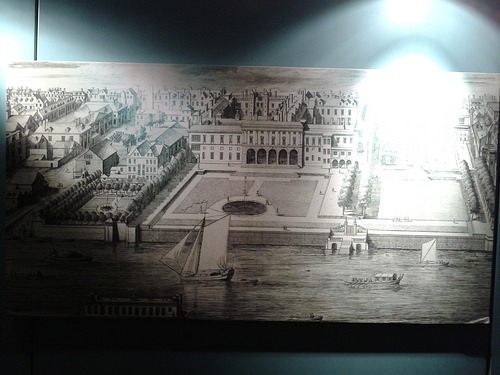
After visiting the tattoo art exhibition at Somerset House I found my way downstairs into a “hidden” exhibition about the old Somerset House palace. This was built during the Tudor period, originally for Protector Somerset, but he died before it was completed.

The palace being next to the Thames, it was ideally placed for river-based entertainment. During the seventeenth century, a floating coffee house called “The Folly” was often moored outside. Visitors travelling along the river would often stop and visit: Samuel Pepys, the famous diarist, himself visited in 1668.

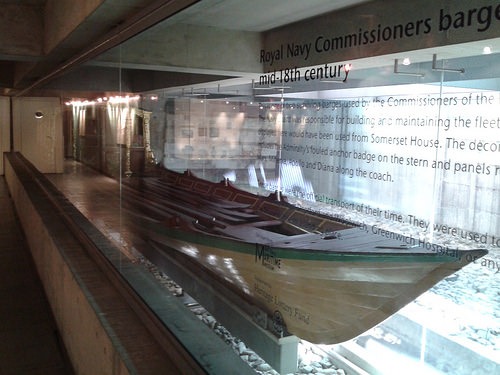
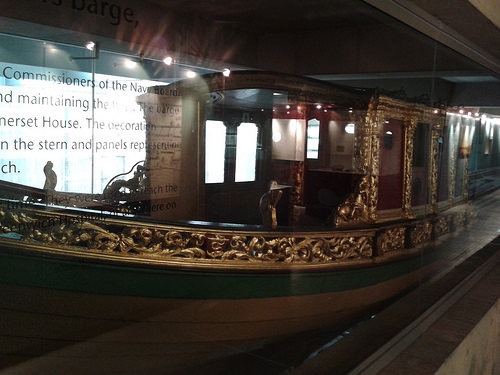
On display are several items from the history of Somerset House, dug up by archaeologists over the years. There is also a barge, used by the Commissioners of the Royal Navy, which would have patrolled the river during the 17th century.

2014_0813TheOldPalace02

2014_0813TheOldPalace03

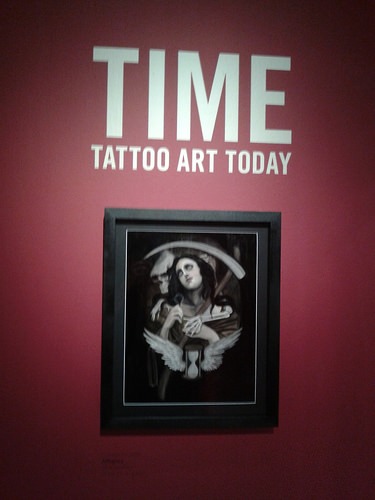
Time: Tattoo Art Today – Embankment Galleries, Somerset House

2014_0813Time01

Somerset House is currently hosting an exhibition on tattoo art. I don’t have any tattoos myself, but I can appreciate the incredible artistry that goes into them.

2014_0813Time05

2014_0813Time08

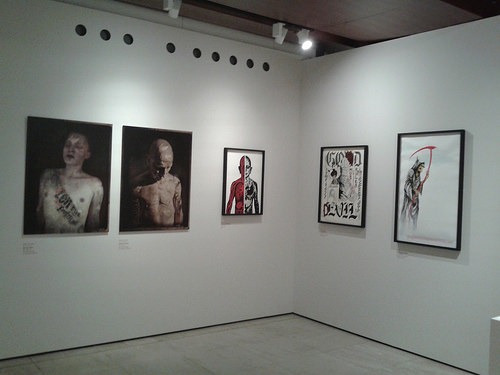
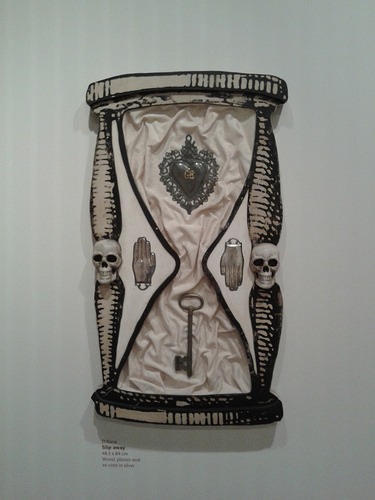
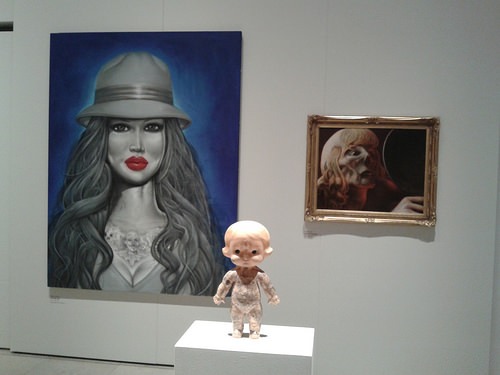
Time: Tattoo Art Today presents artworks from 70 of the world’s most influential tattoo artists, including Ed Hardy, Horiyoshi III, Paul Booth and Rose Hardy. The artists were commissioned to create new works on the theme of time. The result is a varied collection of artworks made with a range of different materials and methods including watercolour, sculpture, oil painting and painting on silk.

2014_0813Time03

2014_0813Time07

There were some incredible pictures, wonderfully detailed. I still don’t think I want a tattoo myself, but I can’t help but admire the quality of the artists’ work.

2014_0813Time06
Rose Hardy, Rouge

Time: Tattoo Art Today is on in the Embankment Galleries, Somerset House, until 5 October. Entry is free.


Joan Fontcuberta: Stranger than Fiction – Science Museum

On Sunday morning I went to South Kensington, hoping to go and see some exhibitions at the Natural History Museum, but there was a huge queue outside so I went to an exhibition in the Science Museum instead. The exhibition in question was Stranger than Fiction, created by the photographer and artist Joan Fontcuberta.

Fontcuberta subverts traditional ideas of photography as a medium of truth by crafting elaborate fictions that challenge our concept of reality versus fiction. I found the exhibition absolutely fascinating. It features six documentary narratives, each of which use photographs alongside journalism, diaries, museum displays and articles to develop the story.

The Fauna series looks at the lost archive of the mysterious Professor Peter Ameisenhaufen, who documented a large number of highly unusual creatures. The level of detail, imagination and level of detail that went into this work made it one of my favourites.

Herbarium looks at rare and unusual plant species, and there were several drawings of weird and wonderful flora. Orogenesis is made up of computer-generated geographical landscapes inspired by works of art, while Constellations consists of incredible images of starry skies.

Another of my favourites was Sirens, which purports to illustrate the discovery of mermaid fossils. The images were so realistic that I could almost believe they weren’t fiction. I also liked Karelia, which looks at Fontcuberta’s “exposure” of the fake miracles supposedly performed by monks in this monastery in Finland. This work was funnier than the others – the idea of performing a “weeping blood” miracle and hiring oneself out as a mourner at a funeral made me chuckle!

This exhibition was pretty unusual – “stranger than fiction”, you might say. Definitely worth a visit.