Revolution: Russian Art 1917-1932 – Royal Academy of Arts

2017_0329Revolution01

My longstanding interest in Russia meant that the Revolution: Russian Art 1917-1932 exhibition at the Royal Academy of Arts was right up my street. The exhibition covered the period between 1917 and 1932, when Russia was settling into life post-revolution and artists were first excited by the opportunities the new world presented, then dismayed at the restrictions imposed by Stalin.

During this first fifteen years, artists enjoyed considerable freedom, and revelled in the new possibilities that the new regime offered. However, in 1932 Stalin decreed that Socialist Realism was the only acceptable style for the Soviet Union, ending this burst of creativity.

The exhibition features work by many acclaimed artists, including Kandinsky, Malevich, Chagall and Rodchenko. Interestingly it also features film clips of life in Russia, from both films and documentaries about the Soviet regime.

One of the most powerful things about the exhibition had nothing at all to do with art. In the last room, there was a video booth showing photographs of people who had been arrested and sent to gulags by Stalin and his cronies. The faces staring out of the screen are still haunting me.

How do we look? Exploring the scientific gaze at the Crick – Francis Crick Institute

2017_0329Crick02

On a day off from work I visited the recently opened Francis Crick Institute, located next to St Pancras station, to see the first public exhibition, How do we look? Exploring the scientific gaze at the Crick. The Institute is the largest biomedical library in Europe, and the exhibition looked at some of the images created by research scientists at the Crick in order to help solve scientific problems.

The images had aesthetic value in themselves, being, on a shallow level, fascinating and beautiful. The actual science I must confess is a bit beyond me, but I thought the exhibition did a good job of making the theory behind the images as accessible as possible. If nothing else, it certainly served to increase my respect for the cutting-edge scientific research being undertaken here.

Bond in Motion – London Film Museum

2017_0329BondInMotion01

It might sound weird but I am a really big James Bond fan. When I was younger I watched all the films and I still go to the cinema every time a new one gets released. I’m certainly not immune to the franchise’s flaws, but it doesn’t stop me enjoying a bit of escapism.

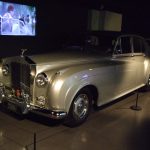
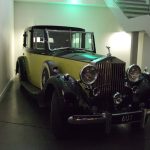
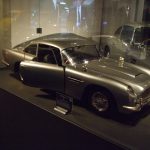
The London Film Museum – not a place I’d ever been aware of, although it’s been in its present location in Covent Garden since 2012 – is currently dedicated to a Bond in Motion exhibition, showcasing many of the vehicles from the James Bond films. It’s been on for a while, but I’m glad I waited until now to go, as it now has a selection of vehicles from the latest film, Spectre. To be honest, the exhibition shows no sign of leaving, and it wouldn’t surprise me if it eventually contained vehicles from whichever Bond film comes next.

2017_0329BondInMotion03
Little Nellie

As you enter the exhibition you can see Little Nellie, the helicopter from You Only Live Twice, hanging from the ceiling. A small exhibition space on the mezzanine contains diagrams and other memorabilia, but its when you take the lift down to the basement that the exhibition proper really begins.

There are many, many vehicles on display: mostly, but not exclusively, cars. They span the whole half-century of Bond films. Some have damage that was caused by stunts used in filming.

2017_0329BondInMotion12
Crocodile sub from Octopussy

Information panels explain the statistics relating to each vehicle: I confess I didn’t pay much attention to these. Of more interest were the short film clips demonstrating each car in action.

At the end of the exhibition there is a cafe and a small gift shop. You exit into Covent Garden, right beside the London Transport Museum. The cafe is open to all: it might be a good refreshment option if you’re passing through the area and all the cafes are really crowded.

Obviously, Bond in Motion is going to appeal more to those who love cars. I’m not one of those people, but it was nice to experience a bit of escapism and relive some of the fun moments from the Bond films. The exhibition is pretty pricey, but look out for offers: I got mine through Living Social.

FACTS

Address: 45 Wellington Street, Covent Garden, London, WC2E 7BN

Website: londonfilmmuseum.com

Opening Hours: Daily 10am-6pm (except certain closure days advertised on website), open until 7pm on Saturdays

Prices: Adults £14.50, concessions £9.50; under 5s free

Adventures in Moominland – Southbank Centre

The Adventures in Moominland exhibition at the Southbank Centre, introduced as part of the Nordic Matters festival, has been so popular that it has been extended by several months (it’s now on until 20 August), but when my friends and I booked our tickets we didn’t know that, and all the adults-only slots had sold out. As it turned out, though, our group consisted of only adults in any case.

The Moomins certainly transcend age. I wasn’t a particular fan as a child, but I’ve been reading the books recently, and the combination of gentle humour and wry observation have made me into a fan.

The exhibition, which begins at the Southbank’s Spirit Level, is really more of an immersive tour into the world that Tove Jansson created in her Moomin stories, featuring various environments from her works and the inspirations for them, arranged in a roughly chronological order. You get to see original Moomin pictures from Jansson’s archive, and hear narration by Sandi Toksvig. Our guide was incredibly enthusiastic, taking us deep into the world of Moominvalley, a place one of us quite wanted to leave.

Whether you’re a young or an old Moomin fan, check out this exhibition. It’s an unforgettable experience.

Tunnel: The Archaeology of Crossrail – Museum of London Docklands

When my mam came to visit me in London, I decided to take her to visit the Tunnel: The Archaeology of Crossrail exhibition at the Museum of London Docklands. The Crossrail tunnel, due to open in 2018, is the largest engineering project in Europe and its construction has provided archaeologists with a unique opportunity to excavate a huge stretch of London, encompassing thousands of years of the capital’s history. Curator Jackie Kelly has described it as the “biggest piece of London archaeology ever” in terms of the project’s sheer scale. The initial results of the excavation are being presented in Tunnel.

The objects on display in the exhibition range from reindeer bones gnawed by wolves 68,000 years ago to flakes chipped from a flint axe 8,000 years ago, from victims of the Black Death to Victorian chamber pots and Crosse & Blackwell marmalade and pickle jars. One skeleton is particularly poignant as it is of a Roman woman whose skull was buried between her legs. A large pot, full of cremated human bones, dropped out of the roof of one of the tunnels, but was luckily caught by a member of the tunnelling team.
Another fascinating item is a leather shoe dating from the fifteenth or sixteenth century.

My favourite items from the exhibition came right at the beginning and right at the end. As you enter the exhibition, you see a statue of St Barbara, patron saint of artillery, explosives and mining. She was originally installed at the entrance to the tunnel and workers liked to touch her as they ventured underground at the start of a shift. I like her because my mam’s name is Barbara. I like to think that my dad married her because on some subconscious level he knew about St Barbara and felt that my mam would be good luck (he comes from a mining family). I’m sure this is a load of rubbish really, but its a nice story!

The second thing I loved was the book of photographs at the end of the exhibition, showing the corner of Charing Cross Road, Oxford Street and Tottenham Court Road before the Crossrail work began. I work near this area and so I’m really interested in it, but I don’t remember what it was like before the work began. These pictures display the old streets in all their glory, along with the famous music venue the Astoria which I don’t remember at all but which I can’t help regretting the loss of.

The exhibition, which is thoughtfully put together, is free to enter and runs until 3 September 2017 at the Museum of London Docklands.

Intrigue: James Ensor by Luc Tuymans – Royal Academy of Arts

Royal Academy

What attracted me to Intrigue: James Ensor by Luc Tymans was the promotional picture of one of James Ensor’s paintings: a pair of skeletons fighting over a fish, pulling it apart in a kind of grotesque tug of war. Ensor, who lived his whole life in Ostend, Belgium, specialised in this kind of bizarre picture. This exhibition at the Royal Academy of Arts has been curated by artist Luc Tymans.

Perhaps surprisingly, the pictures were largely painted in the late nineteenth and very early twentieth centuries, because their macabre imagery seems from a later time. There is a proliferation of skeletons: fighting over fish, huddling by a heater to keep warm, inspecting chinoserie. Ensor painted himself as a skeleton on more than one occasion. If I hadn’t known better I would have thought that the artist was from Mexico, there were so many skeletons.

So many pictures seem to show a fallen barrier between this world and the next, with subjects including angels and masked revellers, and many have a black sense of humour. I especially liked the bad doctors and the dangerous chefs, with horrific but blackly comic imagery.

A self-portrait of the artist shows him wearing a traditionally feminine bonnet and a perfectly calm expression. Ensor was obviously someone who didn’t care what people thought of him and was happy to go his own way, in life as well as art.

James Ensor, 'Skeletons Fighting Over a Pickled Herring'
James Ensor, ‘Skeletons Fighting Over a Pickled Herring’, Musees Royaux des Beaux Arts de Belgique

Bridge Engineering – Institution of Civil Engineers

Institution of Civil Engineers
Bridge Engineering

I heard about this exhibition at the Institution of Civil Engineers on the Ladies who Bus blog, but didn’t think I would get a chance to visit myself until next year. However, I happened to attend a work event at ICE (cool acronym by the way) and was able to visit the exhibition at lunchtime.

Exhibits
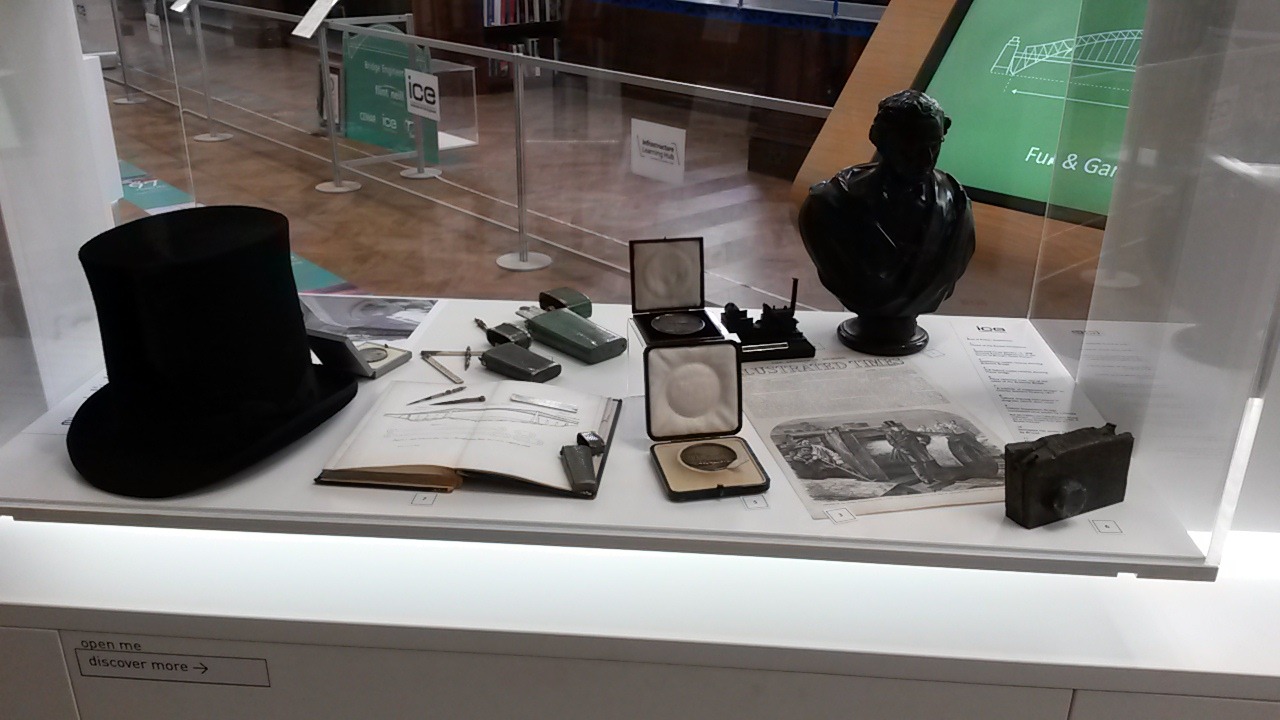
Part of the exhibition

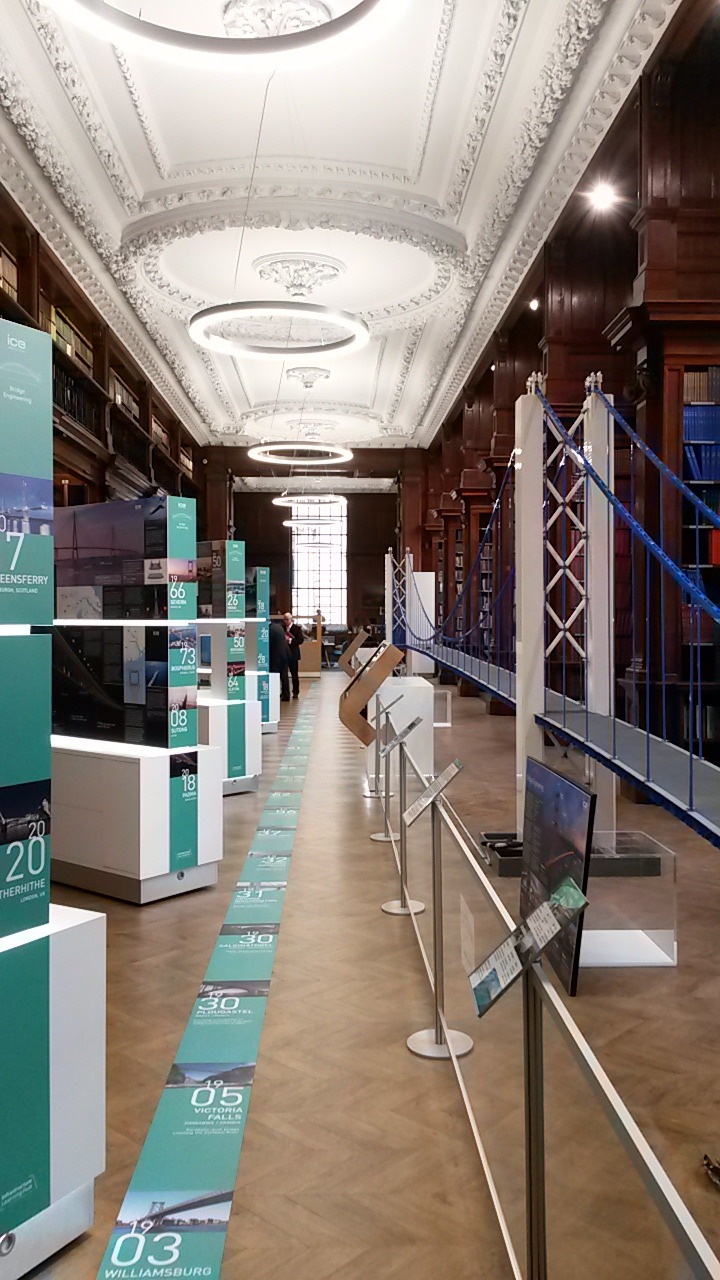
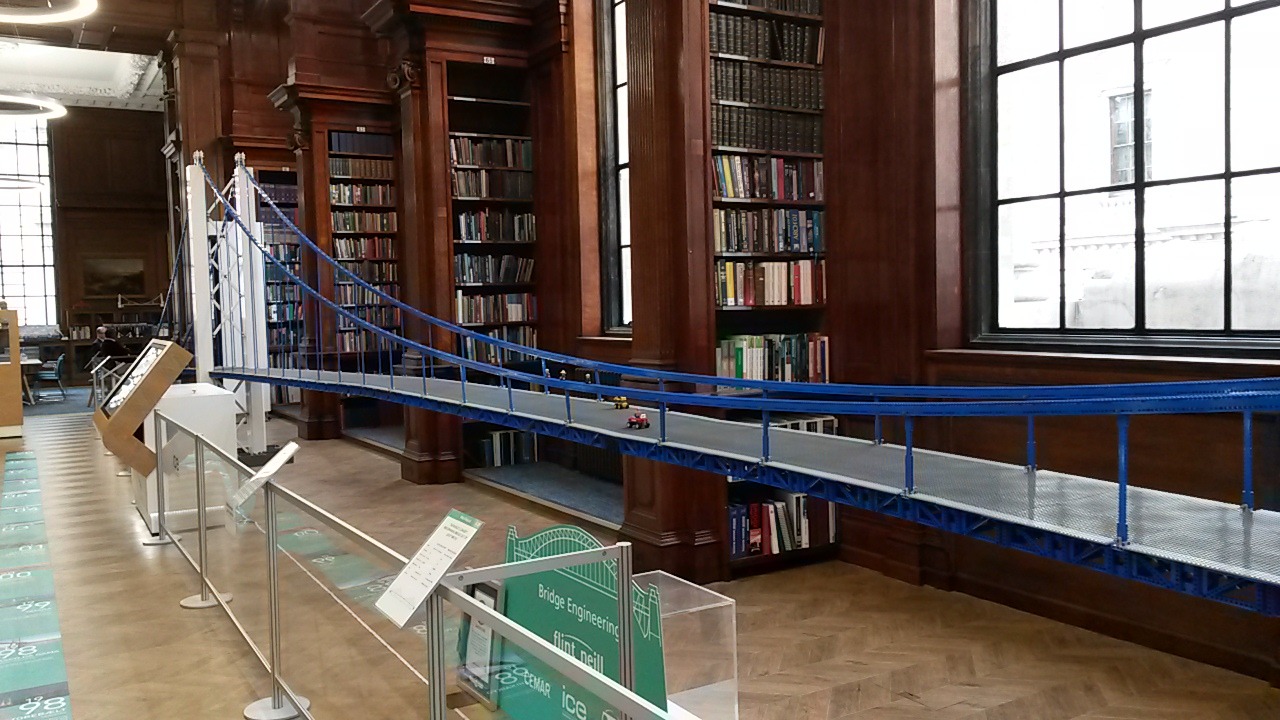
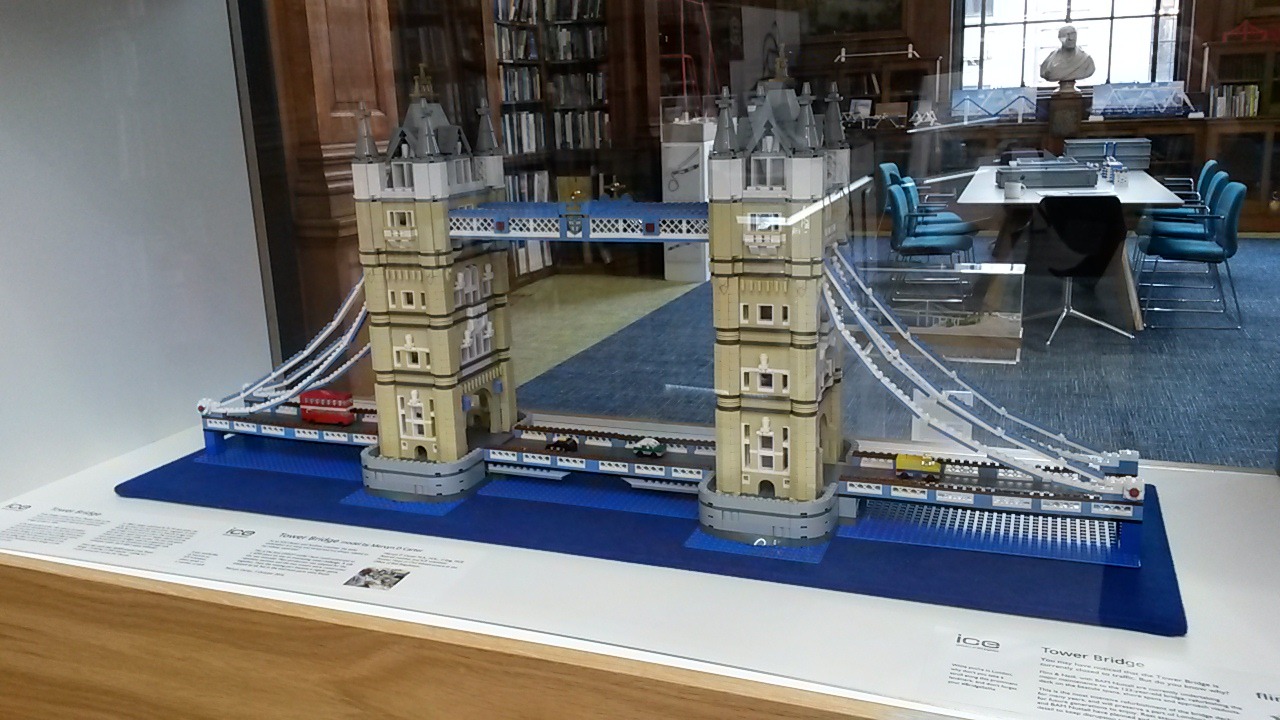
Bridge Engineering is located in the library, and when you enter your eye is immediately drawn to the huge Lego bridge in the middle which runs down the centre of the library. This is the world’s longest Lego bridge (it’s been recognised by the Guinness Book of Records) and it’s a very impressive sight: at 31 metres, it is almost as long as three London buses.

Lego suspension bridge
Award-winning Lego suspension bridge

On the floor, a timeline of significant bridges, their locations and dates follows the exhibition round the room and is very informative. Displays focus on a handful of very special bridges and their engineers, from the last couple of centuries all around the world, including the Clifton Suspension Bridge, the Menai Strait Bridge, and the future Rotherhithe Thames pedestrian bridge.

Lego Tower Bridge
Lego Tower Bridge

The exhibition runs until April next year and admission is free. It is open Monday to Friday 10am to 5pm, but if you can’t make it, you can still explore the exhibition in 3D on the ICE website.

The Play’s The Thing – Royal Shakespeare Company, Stratford upon Avon

I’m a frequent visitor to the Royal Shakespeare Company, and I was excited to learn about their new exhibition, The Play’s The Thing. This new permanent exhibition covers “100 years of theatre-making in Stratford-upon-Avon.”

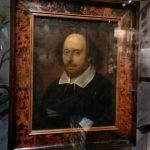
For a short time the exhibition contains the famous Chandos portrait of Shakespeare, on loan from the National Portrait Gallery. The space also displays a First Folio, dating from 1623.

The exhibition is full of costumes and props from the RSC’s history, which I loved looking at, although it made me think of all the productions I’ve missed over the years. For a more hands-on experience, you can also explore the ‘Director’s Desk’, try on virtual costumes (and some actual hats) and learn more about the history of theatre-making in the Company.

2016_1208PlaysTheThing18
Trying on a hat

I had lots of fun in the exhibition. Tickets are £8.50 for adults, £5 for 16-25-year-olds, and £4.25 for children and disabled people. You can convert your ticket into an annual pass so if you visit the RSC often, you can go back again and again.

The Gulch: An Amateur Symposium – Barbican

The Gulch

At the end of November I attended an afternoon of talks at the Barbican taking Bedwyr Williams’ exhibition in The Curve, The Gulch, as a starting point. Held in the Fountain Room, I thought the talks sounded quite interesting and I’m always up for learning new things.

The first talk, on taxidermy, was delivered by Errol Fuller, whose topic was inspired by the presence of a taxidermied goat in the exhibition. He suggested that taxidermy is one example of the smudging of boundaries between life and death. During the Victorian era, taxidermy was used to strong effect in science – for instance, Darwin’s finches which demonstrated the differences between species – but it was also fashionable to use it as decoration in the home. Creatures were often posed and arranged as though in performance: playing cricket, making music.

Taxidermy has been out of fashion for many years, but recently it has started to increase in popularity, with a growing interest in natural history and the ethical sourcing of dead animals to use. Courses are particularly popular among young women aged 15-30, while taxidermied animals have begun to appear in artworks, such as the suspended horse in the Guggenheim.

The golden age of taxidermy spanned from the nineteenth century up to the outbreak of World War One. Every town had its own taxidermist, and nowadays many are famous according to their name and town, such as Hancock of Newcastle. George Ashmead, who created a case of 300 hummingbirds, had business premises in Grosvenor Square, while Roland Ward, famed for his lion biting a bison, had premises in Piccadilly. Between the 1930s and the 1970s many good examples of taxidermy were destroyed, even by curators, as they were out of fashion and seen as valueless.

What was nineteenth-century taxidermy about? Two aspects were particularly popular. One was anthropomorphic taxidermy, primarily for amusement, such as tableaux of fencing mice. Another was the use of animals now extinct, such as the passenger pigeon, native to North America and once the commonest bird on earth. Another example is the Great Auk, of which around 65 examples remain stuffed in museums. Hooiers from New Zealand are the only birds in which the males and females have different beaks, but they became extinct in 1907. The heath hen was common when stuffed in 1880 but has since become extinct: it was stuffed to look dead, and Fuller ends his talk by suggesting that it has now become conceptual art deeper and more profound than actual conceptual art.

The second talk, on magic, was given by Jon Armstrong. He started off with a card trick involving members of the audience, and pointed out that a deck of cards has multiple meanings, with cards relating to the days of the year, the seasons, and more. He discussed the practice of magic as performance art, citing the Davenports, late nineteenth century magicians who had a black box theatre, and the magician Kirby who wrote as far back as 1972 on the relationship between magic and theatre. He discussed The Conjurer by Hieronymus Bosch, a work which portrayed magic as an ancient art, and the theatrical tricks that could be seen as magic, such as flying machinery and the ancient mystery plays that had a “hellmouth” on the stage.


At this point there was a break in proceedings, and I took the chance to go and check out the exhibition, The Gulch. This immersive exhibition in The Curve started with a moonlit beach, on which a sole shoe rested beside a camp fire. It then moved into a small gallery space with a couple of displays, including a chair with a winding road drawn on the back. Next I entered a “backstage area” of boxes, drums and beanbags, that could be before or after a performance.

A boardroom, with a long table and a large screen, followed, with a video of a self-confessed depressed hypnotist followed by a taxidermied goat in a bare room with a microphone. The exhibition ended with a curved stretch of race track on which another shoe could be seen.

I have no idea what any of it meant, but I liked it – I got the sense of someone having just left, an empty space that had been in use until a few seconds ago. I felt as though I was stepping into a story each time I moved into a new space.


The third talk was delivered by Dr. Georgina Guy, who compared aspects of the exhibition to other art exhibitions and installations, relating theatre, exhibition and curation to one another as they are displayed and performed. Unfortunately a lot of her talk went right over my head – as an academic I don’t think I was the right audience for what she was trying to say.

The final talk was possibly my favourite: Christopher Green spoke about the science and showbiz of hypnosis. He read about Victorian hypnotists in the British Library and investigated the relationship between hypnosis, theatre and healing, and how many “serious” hypnotists who want to help people end up using the tricks of “stage” hypnotists. I was particularly interested to learn about the famous female hypnotist, Anne de Montford, the daughter of a millworker, though there were plenty of other fascinating characters, including Henry Blythe the stage hypnotist, who hypnotised his daughter to pass her driving test – and she failed. Green was an incredibly engaging speaker and really sparked my interest in a topic I’d never paid any prior attention to. Overall, a fascinating afternoon.

Sunken Cities: Egypt’s Lost Worlds – British Museum

2016_1125bm

On one of my days off I headed to the British Museum to see their exhibition, Sunken Cities: Egypt’s Lost Worlds. The exhibition was about the lost cities of Thonis-Heracleion and Canopus, which lay at the mouth of the Nile. Thonis-Heracleion in particular was an incredibly important commercial centre for trade with the Mediterranean world.

The exhibition contained many fascinating exhibits revealing the link between Egyptian and Greek culture and architecture. I particularly liked the fascinating videos showing divers recovering statues and other treasures from the sea.