Martin Creed: What’s the point of it? – Hayward Gallery

I nearly didn’t go to see Martin Creed: What’s the point of it? at the Hayward Gallery on the South Bank. I’d heard some ‘interesting’ things about it and I wasn’t sure if it was the kind of thing I’d enjoy. However, the exhibition proved so popular that it was extended for a week, and I went to see it on Thursday evening, after work and before I went to the theatre. I definitely advocate going to see exhibitions during late-night weekday opening – the exhibition was really quiet, and the balloon room – which can have queues lasting up to an hour – was nearly empty.

Creed’s work belongs to the category I normally term as ‘crap modern art’, and I found myself asking the question posed in the exhibition’s title – “What’s the point of it?” – rather a lot as I walked around. Which begs the question, why did I go and see it? Curiosity, I suppose.

Creed names his works by numbers and in fairness to him his work is incredibly varied. On the one hand, among the exhibits are a piece of Blu-Tack stuck to a wall, a crumpled piece of paper, and a number of wall protrusions. More interesting to me was the large ‘Mothers’ sign that whirls around your head as you enter the exhibition: the idea behind this is that when you are little, your mother seems big and scary, as does this sign. Creed’s love of order is evident in the Lego bricks piled one on top of the other in size order, and the chairs and boxes piled up in similar ways.

The exhibition even reaches outside, with a couple of works on display on the terraces. One of these is a car which randomly bursts into life, its doors shooting open and its radio blaring, although I was more concerned with how on earth they got the car up there in the first place. On another terrace there was a film of a penis going up and down (the woman standing next to me remarked “I’ve seen better”).

The ‘balloon room’, aka Work No. 200, Half the air in a given space, was the best. The room was filled with balloons taking up half the air, resulting in a really fun room where you wade through tons of balloons with static lifting up your hair. I had so much fun here I thought it was worth the admission price alone.

There were paintings and pictures too, as well as sculptures and installations. The pictures using highlighters appealed to my precise nature, and I really liked the prints made using broccoli! The final work, though, left me completely bewildered. The infamous “sick film” shows people walking in front of the camera, vomiting and walking away, except in one case where a woman walks up, squats down and takes a shit instead. You can also buy this film in the gift shop – I am honestly baffled as to why anyone would want to watch someone defecating or being sick, or if they did, why they would pay £15 for a DVD rather than just popping down to their local high street on a Friday night. Oh well.

Though I remain sceptical of many of the exhibits, I do feel that the exhibition as a whole proved more than the sum of its parts, with interesting things to say about order, space, ambiguity and not taking the art world too seriously. It was more thought-provoking than I had expected and on balance, I don’t regret going to see it – even if I can’t get the image of someone being sick out of my head…
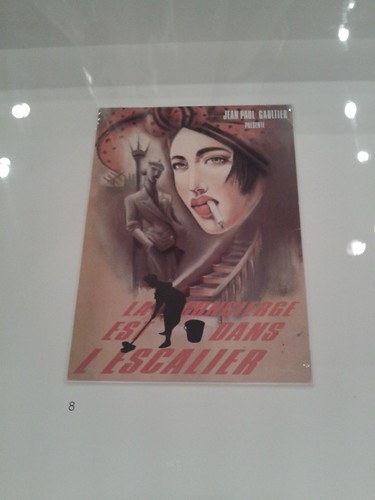
Jean Paul Gaultier: Be My Guest – Fashion Space Gallery

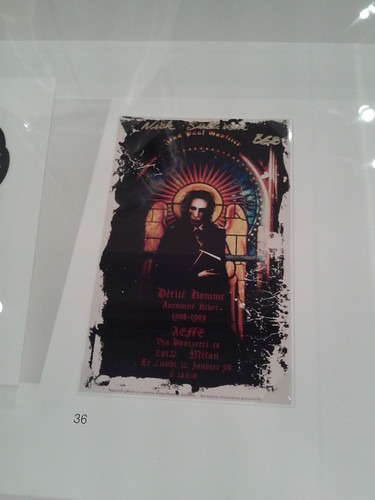
After visiting, and loving, the Jean Paul Gaultier exhibition at the Barbican, I decided to visit the satellite exhibition, Jean Paul Gaultier: Be My Guest, which is being held in the London College of Fashion‘s Fashion Space Gallery until the end of May. The Gallery is near Oxford Street and I popped in one weekday lunchtime (the exhibition is open every day except Sunday).

This small but interesting exhibition showcases Gaultier’s graphic design work, which dates from the early 1980s to the present day. It includes invitations to his shows as well as advertising campaigns.The exhibition really complements the Barbican’s exhibition and further shows how Gaultier’s unique style developed over the years.2014_0428BeMyGuest05 2014_0428BeMyGuest06 2014_0428BeMyGuest07 2014_0428BeMyGuest08 2014_0428BeMyGuest09

National Army Museum

I like visiting random museums in London, and last weekend I went to the National Army Museum. My visit that day was prompted by hearing that the museum is due to close on Wednesday 30 April for two years for refurbishment and redevelopment. Personally I think it’s a bit strange to close the museum in the year of the 100th anniversary of the start of World War I, when interest will surely increase, but I suppose they have a reason for it. The museum is located near Sloane Square station in west London (well, not too near – I still chose to get a bus). It’s free to enter, and there’s a café and gift shop as well as a children’s area. From the outside it does look well-maintained and inviting – for a museum that’s due to close for refurbishment imminently, I thought it looked pretty good.

The content of any museum is what matters, of course, as well as how the information is presented. I was very impressed with this, more so than I had expected. The museum looks at the history of the British Army from its beginnings as Cromwell’s New Model Army during the English Civil War, through the Napoleonic Wars and Wellington’s victory at Waterloo, to the Crimean War and conflict in Africa and the Indian subcontinent. Naturally it examines both World Wars as well as more recent conflicts including the Korean War.

I thought the museum was well laid out, interesting and was pitched at an appropriate level for both adults and children to get something out of it. I actually witnessed an adorable exchange as I entered the exhibition: there were two little boys with their dad (who must have been ex-army) and one of the boys, pointing at a case of seventeenth-century muskets, said, “Was yours like that Daddy?” So cute! Whether you are for it or against it, war has been hugely important in history and this museum covers key conflicts involving the British Army superbly. It’s a fascinating place to visit and I am sure I will return once redevelopment is complete.

FACTS

Address: Royal Hospital Road, Chelsea, London, SW3 4HT Website: nam.ac.uk Prices: Free

Middle Temple Hall

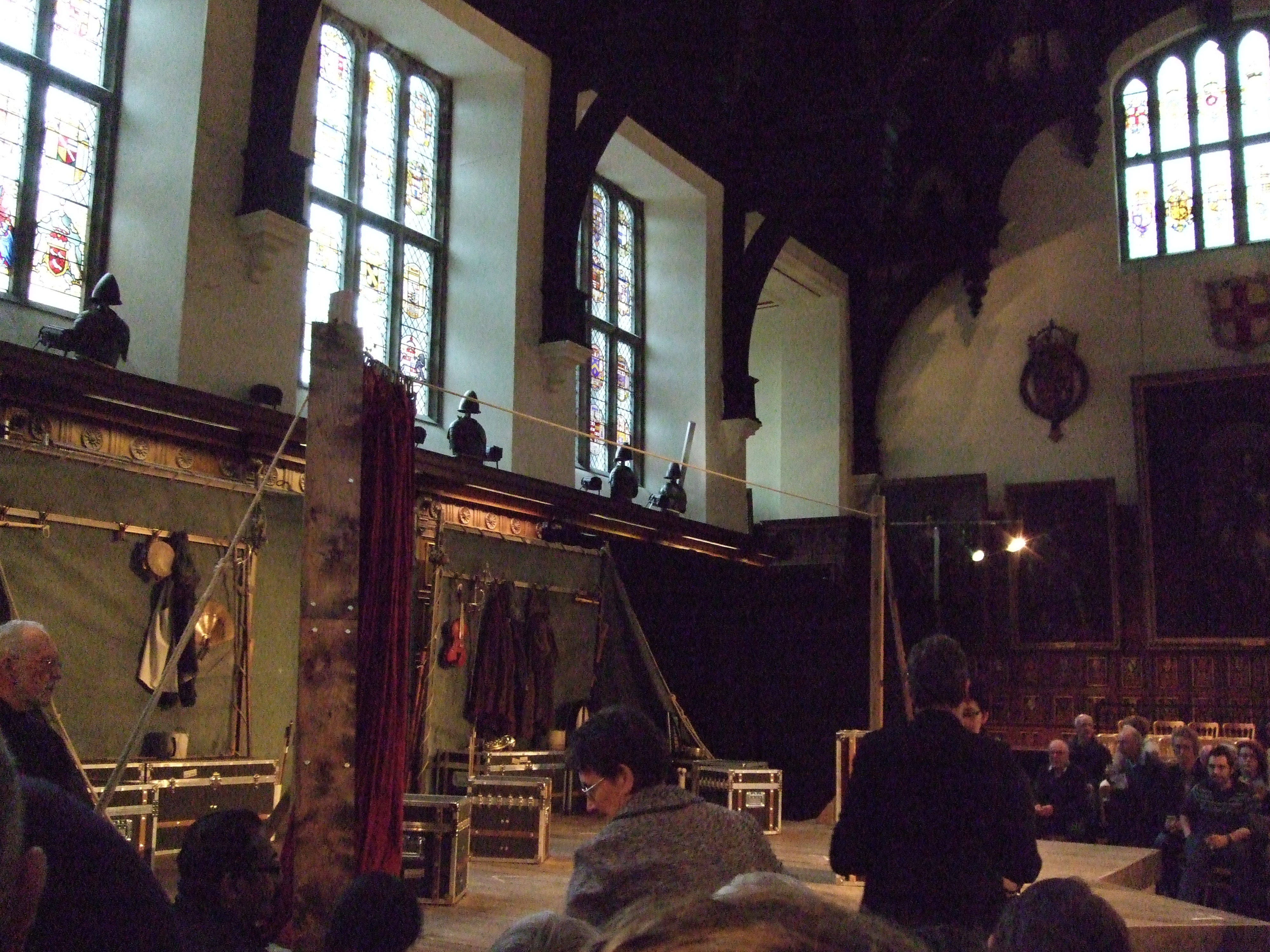
Shakespeare’s Globe are planning a huge undertaking – to take a production of Hamlet to every country in the world between now and 2016. ‘World Hamlet‘, as it is known, officially kicked off at the Globe this week, opening the new season on Shakespeare’s birthday, April 23rd. However, a few preview performances took place over the Easter weekend at Middle Temple Hall, and I attended one of these.

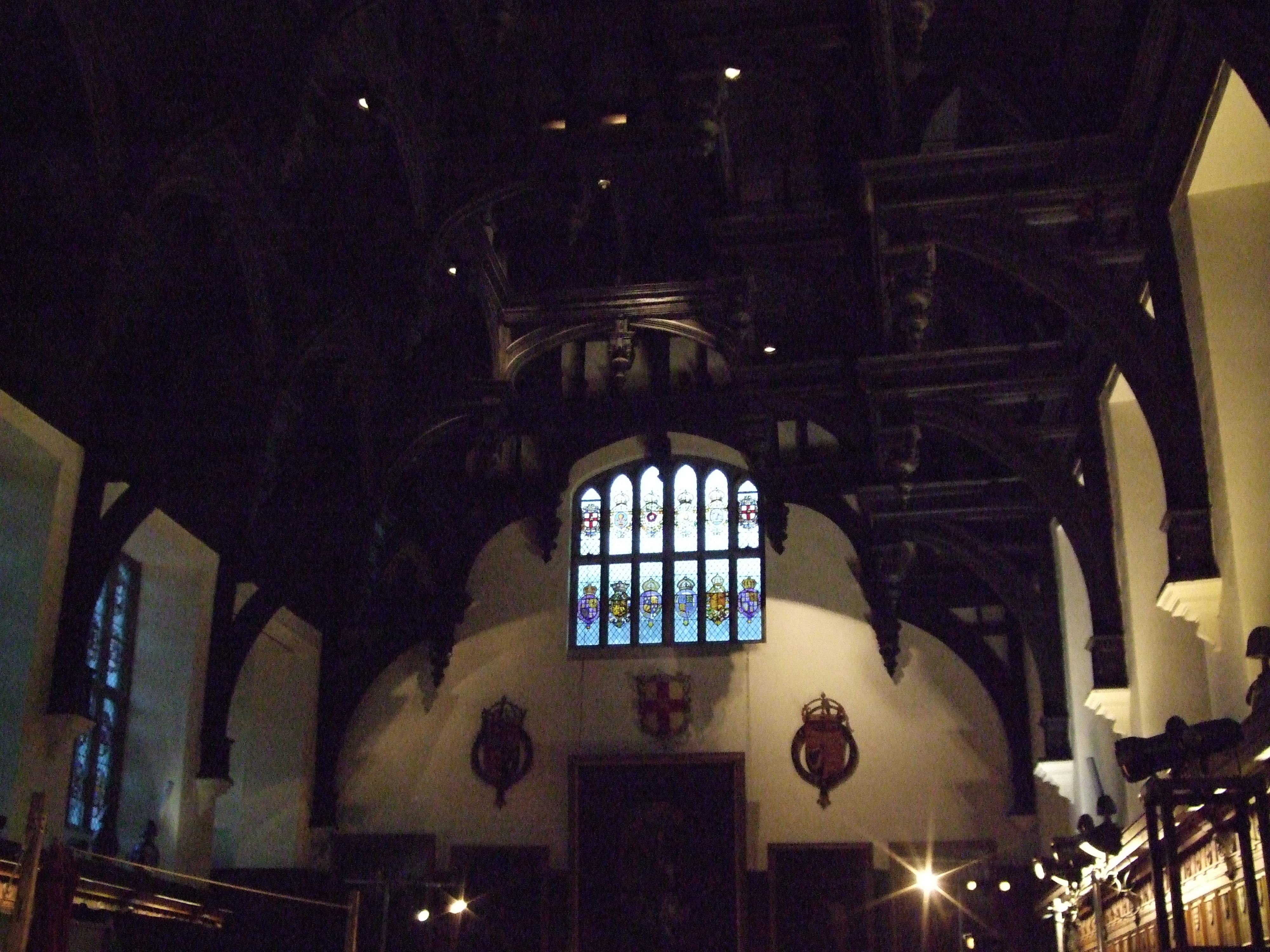
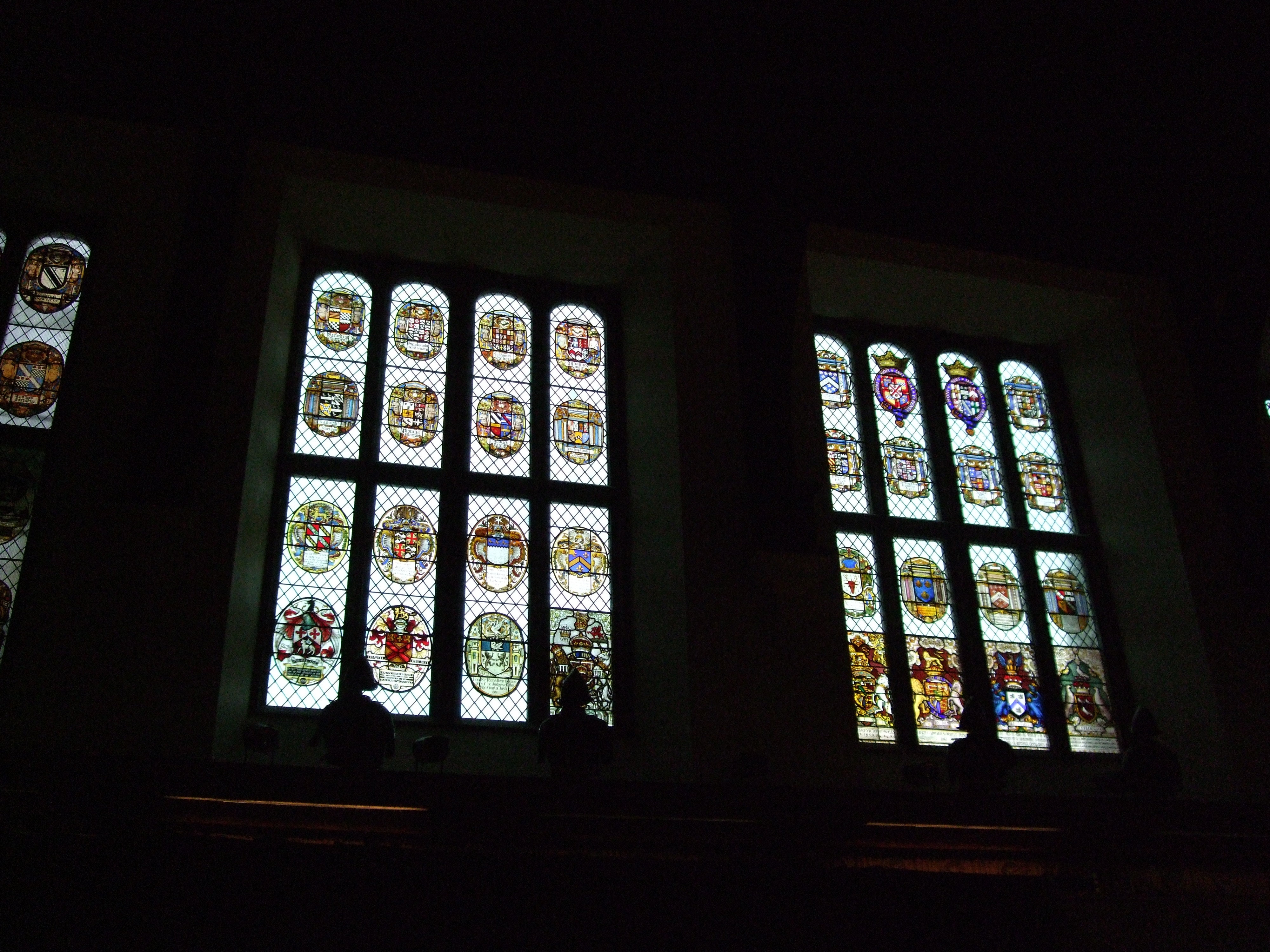
The Hall dates back to the sixteenth century and it is a wonderful place to experience theatre. A highly appropriate place for Shakespeare, in any case, since he actually did have his plays performed here: a plaque marks the location of the first performance of Twelfth Night in 1602. The space itself is beautiful: rich and ornate.

2014_0420MiddleTempleHall02

2014_0420MiddleTempleHall09

2014_0420MiddleTempleHall05

2014_0420MiddleTempleHall08

2014_0420MiddleTempleHall03

Turner and the Sea – National Maritime Museum

As a fan of the artist J.M.W. Turner, I went to visit the exhibition of his work at the National Maritime Museum, Turner and the Sea. I didn’t get time to look around the museum itself as I had to get back into central London, but I did manage to get a good look at the exhibition.

Turner is well known for his paintings of the sea and this exhibition beautifully showcases his best works – including The Fighting Temeraire, recently voted the nation’s greatest painting in a BBC poll – as well as some lesser-known works and sketches. There are also a number of works by other artists who inspired or were inspired by Turner.

William Kent: Designing Georgian Britain – V&A

William Kent: Designing Georgian Britain was another exhibition at the V&A which I attended on Saturday. The Georgians are in vogue at the moment, possibly because 2014 marks the 300th anniversary of Georgian rule in Britain.

William Kent was the most prominent architect and designer in early Georgian Britain. He was responsible for, for example, Chiswick House in London and Holkham Hall in Norfolk. The exhibition was an interesting look at the range and style of his work and is well worth a visit.

The Glamour of Italian Fashion 1945-2014 – V&A

One of the V&A‘s latest exhibitions is The Glamour of Italian Fashion 1945-2014. It is a look at the history of Italian fashion from the end of the Second World War to the present day. Over time Italian fashion has increased in popularity; the country already had a strong heritage of making clothes and leather goods, and individuals and organisations were able to capitalise on this, with help from postwar funds from the USA, to establish and enhance the growth of the fashion industry.

My favourite part was the stunning array of gorgeous ball dresses at the beginning, but I found it interesting to learn how fashions evolved and how dressmaking techniques were managed.

United Visual Artists: Momentum – The Curve, Barbican

After the Jean Paul Gaultier exhibition at the Barbican I had a little time to spare and decided to pop in to Momentum. This exhibition is taking place in the Curve until 1 June and consists of “a carefully choreographed sequence of light, sound and movement, which responds to the unique space of the Curve.”

The environment was created after a lot of research and uses sophisticated technology. I can’t say that I was amazed by it, but I enjoyed the atmosphere, and the lights were rather hypnotic.

The Fashion World of Jean Paul Gaultier – Barbican Art Gallery

The Barbican‘s latest exhibition, The Fashion World of Jean Paul Gaultier, opened recently and I went along for a visit. I only knew of Gaultier from his famous corsets, but there is so much more to his work, which I loved. There were some amazing outfits on display, and what impressed me was that most of them were wearable – a bit dramatic and OTT, maybe, but you could wear them on a night out without worrying about whether you can actually move or see.

The exhibition started off quite gently with a display of Gallic-themed striped clothes and a selection of stunning dresses from one of Gaultier’s ranges, and moved on to look at the influence of British as well as Parisian culture and the rise of the punk movement. His corsets were looked at in detail as were several of the celebrities, including Madonna, Kylie and Lily Cole, who have worn his clothes.

I liked how Gaultier has played with traditional concepts of femininity and masculinity throughout his career, putting men in skirts and women in men’s tailored suits. His outfits do work really well; it’s hard to tell with mannequins but they seem like they would really flatter whoever was wearing them.

The mannequins rather freaked me out: their faces move and some of them talk! I found them rather creepy to be quite honest.

The exhibition runs until 25 August and if you have even the slightest interest in clothes or fashion then do go.

2014_0417Gaultier01
Entrance to the exhibition
2014_0417Gaultier09
Stunning dresses
2014_0417Gaultier07
My favourite outfit
2014_0417Gaultier06
Mermaid
2014_0417Gaultier13
British Punk influence
2014_0417Gaultier18
Gorgeous lace dress
2014_0417Gaultier33
Amazing movie reel-inspired dress
2014_0417Gaultier25
Corset
2014_0417Gaultier28
Jean Paul Gaultier’s ACTUAL teddy bear wearing the first ever pointy bra!
2014_0417Gaultier39
Not a real leopard. I hope.

Estorick Collection of Modern Italian Art

2014_0406Estorick01
Estorick Collection of Modern Italian Art

Located near Highbury and Islington Station, north London, the Estorick Collection of Modern Italian Art is home to a wide variety of 20th century Italian artworks. It opened in 1998 with a permanent collection formerly belonging to Eric Estorick (1913-93), an American sociologist and writer. There is also a rolling programme of temporary exhibitions. The space is open Wednesday to Sunday, and it costs £5 to enter (£3.50 for concessions and £2.50 for National Art Pass holders).

The building is quite small so it didn’t take me long to look around. To be honest the permanent collection didn’t grab me as much as I’d hoped, but I found a few pictures that I liked.

2014_0406Estorick10
Estorick permanent collection
2014_0406Estorick13
Estorick permanent collection

The temporary exhibition when I visited was Giorgio de Chirico: Myth and Mystery. The artist is best known for his paintings, but here his sculptures are on display. I must admit I’d never heard of him, but I did like his modern, occasionally creepy sculptures.

2014_0406Estorick04
Giorgio de Chirico sculpture
2014_0406Estorick03
Giorgio de Chirico sculpture

The Estorick should appeal to those interested in modern and/or Italian art. I don’t know if I’ll be rushing back (unless there’s an exhibition I particularly want to see) but that’s just my personal taste. The place itself is very pleasant and worth a visit if you think it’s something you might enjoy.

FACTS

Address: 39a Canonbury Square, London, N1 2AN

Website: estorickcollection.com

Opening Hours: Wed-Sat 11am-6pm, Sun 12pm-5pm

Prices: Adult £5, Concession £3.50