Ragged School Museum

2014_0601RaggedSchoolMuseum01
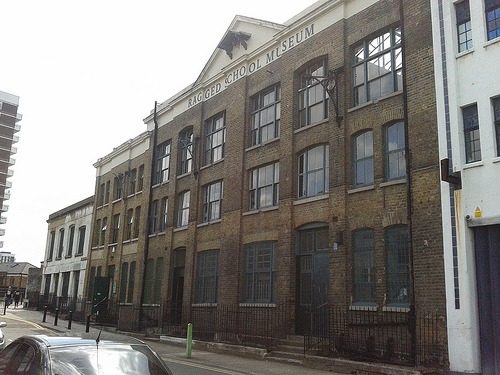
Ragged School Museum

One sunny Sunday I headed to London’s East End to have a look around the Ragged School Museum. It is open on the first Sunday afternoon of every month for anyone to visit, and for school groups at varying points during the week. The building, and those adjoining, was once the largest free or ‘ragged’ school in London, and was founded by Thomas Barnardo, now famous for the children’s charity that bears his name.

2014_0601RaggedSchoolMuseum02
Victorian schoolroom

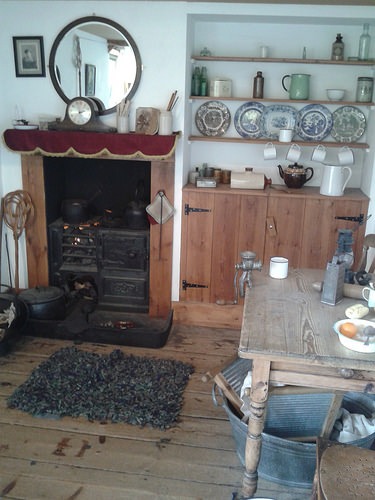
It is possible to have a ‘lesson’ in the school’s Victorian classroom, but I left that to the kids, and looked over the rest of the museum instead. It has a very interesting display on East End history, as well as information about the school and Barnardo himself. There is also a Victorian kitchen at the top of the building.

2014_0601RaggedSchoolMuseum03
Victorian kitchen

This interesting little museum is definitely worth a visit. It would be ideal with children, but there is enough to see for adults, too.

FACTS

Address: 46-50 Copperfield Rd, London, E3 4RR

Website: raggedschoolmuseum.org.uk

Opening Hours: Wed-Thurs 10am-5pm; 2pm-5pm first Sunday of each month

Prices: Free

Matisse: The Cut-Outs – Tate Modern

2014_0601Matisse

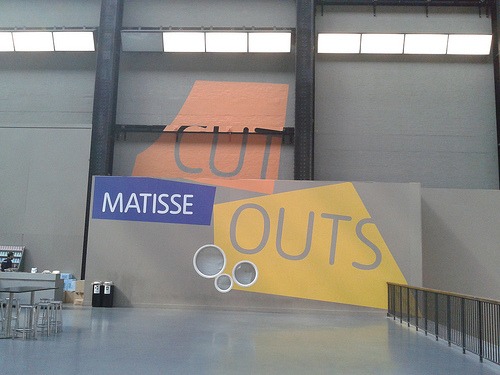
I got up early on Sunday to visit the Matisse: The Cut-Outs exhibition at Tate Modern. I’d booked my ticket in advance for the earliest possible time, hoping for a less crowded experience, but unfortunately it was still pretty busy. A worthwhile experience, though.

As the title suggests, the exhibition covers Matisse’s cut-outs, which he began to create towards the end of his life as ill health meant that he became unable to work and paint in his usual way. I think there’s something really inspiring about an artist driven to create by any means possible, overcoming obstacles to continue making work, and the cut-outs aren’t the childish simple pictures I’d wondered they might be. The images are deceptively simple and show how Matisse used colour and shapes in a creative and original way. My favourite pictures were the famous snail and the carnival images, especially the horse.

Boring IV Conference – Conway Hall

2014_0531BoringConference

On Saturday I attended the Boring Conference, held at Conway Hall near Holborn. This was the fourth such conference, although the previous ones had been numbered 1 to 3 while this one has been given the appellation IV – a move to Roman numerals (as was explained to us at the beginning of the conference by founder James Ward). The conference aims to celebrate the mundane and the everyday, finding fascination in supposedly dull and boring things.

James Ward (@iamjamesward) gave the first presentation of the day, looking at highlights from the 1990s Saturday night ITV show You Bet!. I had never heard of this show, but I have clearly been missing out. Participants attempted bizarre challenges which included identifying cast members of The Bill by only their ears or noses, and balancing an egg between an engine and a carriage. One particularly bizarre stunt showed a couple of boys identifying their friends by looking at their belly buttons.

Continuing the media theme, Martin White (@martylog) spoke about film titles translated into German. These hilariously literal interpretations of English language humour included such gems as “A Magical Nanny in a Further Adventure” (Nanny McPhee and the Big Bang), “Unbelievable adventures in a crazy aeroplane” (Airplane!), “The City Neurotic” (Annie Hall) and, perhaps best of all, “The Annoying Man” (The Cable Guy).

Valerie Jamieson (@valeriejamieson), former particle physicist and current features editor at New Scientist, talked about ‘boringology’, or the “science of boring”. She spoke about the science of watching grass grow and seeing paint dry, as well as the accuracy of the phrase “as dull as ditchwater”. Her talk proved very interesting: we learned that grass grows from the root up, that ditchwater is actually full of life, and that most of the action in drying paint happens during the first twenty minutes.

Next up was the Wolverhampton-based dentist Toby Dignum (@dignut), speaking on the subject of calendars. He talked about how the ancients measured the calendar, how Caesar introduced leap years, and how Pope Gregory rejigged the calendar again in 1582, ‘resetting’ it after centuries in which the few minutes left over each year gradually added up moving the calendar out of its original place. I’ve always been slightly confused about the Julian and Gregorian calendars, so it was good to finally have this cleared up. Another fascinating fact I learned was that the Best Before date on a packet of crisps is always a Saturday.

Another of my favourite talks came from Ali Coote (@alisouthsea), based in Southsea, who shared her memories of working in an ice cream van. The trials and tribulations of the job proved very interesting, and I enjoyed her clear enthusiasm about ice cream, including the right way to make a 99!

Martin Zaltz Austwick (@martinaustwick), a lecturer at UCL, spoke on the unusual topic of eggs. Eggs are very versatile and the science behind them is really quite exciting. Martin mentioned the #eggchat topic he started on Twitter, to encompass facts about eggs and recipes involving them, and the resulting Twitterstorm involving angry vegans!

Before lunch, there was time for one more presentation, this time from George Egg (@georgeegg) – an interesting egg-theme seemed to be developing – who gave a talk on the meals you can make using the equipment provided in hotel bedrooms. From toasting pitta bread in the trouser press, to boiling pasta in the kettle and frying eggs on irons, there is little limit to what you can make. I am not sure how thrilled hotel staff would be, though, to go into a room and find an eggy iron!

After lunch (super-cheap salads from Waitrose… score) it was time for the afternoon presentations. The PM session kicked off in fine style with Rhodri Marsden (@rhodri) demonstrating the similarities between 198 of the world’s national anthems. The crucial fact I took away is that many, many of them have the same three chords at the end.

Next, Francesco Tacchini (@RuffNuff), Julinka Ebhardt and William Yates-Johnson from the Royal College of Art showed us their Space Relay project: “a hovering object that explores and manipulates transitional public spaces with particular acoustic properties”. To be honest I wasn’t all that excited about this at first, but I actually really enjoyed the presentation: it was interesting to see the public’s reaction to the sphere, and the different references it suggested, including The Prisoner.

As a librarian, I was looking forward to Andrew Male’s (@AndrewMaleMojo) session on Eric Clapton’s bookshelf; the actual talk was very different to what I had expected, yet very entertaining in its own way. Male developed a bizarre obsession with Clapton’s bookshelf after seeing it in a number of documentaries. He identified the books that Clapton had and tried to work out what they said about Clapton himself, in a very funny talk.

Ben Target (@bentarget), with French accent and a packet of cream crackers, delivered a presentation supposedly about his family while continually stuffing crackers into his mouth. To be honest I didn’t really ‘get’ this one. It wasn’t particularly funny or interesting – I know this is the ‘boring’ conference but I don’t think this kind of ‘boring’ is the kind that was meant!

Emerald Paston (@emeraldpaston), an assistant producer, talked about a list she made as a child, ambitiously consisting of “every boy’s and every girl’s name ever”. In total her list encompassed 523 girls’ names and 572 boys’ names – an impressive count! What I liked about this list was what it revealed about the psyche of a child/young teenager: the names ranged from Noddy and names taken from Harry Potter to the names of Greek gods.

Another of my favourite presentations came from John Grindrod (@Grindrod), author of Concretopia: A Journey Around the Rebuilding of Postwar Britain, who revealed “the secret modernist agenda hidden in Ladybird books”. This was very funny and some of the images shown were brilliant: “a cross between Swallows and Amazons and North By Northwest”, as he said. Ladybird books included pictures of high-rise flats and prefab schools, as well as airports, roads, and a disturbing number of nuclear power stations.

Marc Isaacs could not make it to the conference so his award-winning documentary was shown instead. Lift, made in 2001, was filmed in the elevator of a tower block in the East End of London. It captured the lives of those who live in the tower block, and was by turns funny, touching and illuminating.

A discussion of inkjet printers from the 1990s followed, facilitated by Mark Dean Quinn (@markdeanquinn). He had a seriously impressive knowledge of these printers and got into conversation with another printer enthusiast in the front row.

Nathaniel Metcalfe (@natmetcalfe) talked about being a fan of the actor Deep Roy. His was a touching talk describing how he maintained a fan site for the actor for years, until his popularity shot up after he starred in Charlie and the Chocolate Factory.

The penultimate presentation was delivered by Helen Zaltzman (@helenzaltzman), who gave a very funny talk on the sociological lessons which can be learned from cookbooks of the 1950s and 60s. This was hilarious and I couldn’t help thinking that it was no wonder everyone was thin in the 50s – the food was too disgusting to eat!

Finally, and perhaps most impressively, Vincent Connare (@VincentConnare), an American typographer, spoke to us about his most famous creation, Comic Sans. Comic Sans is the font we all love to hate, but Connare’s talk on how it came about was very interesting, and I was intrigued to learn that it was inspired by the Watchmen comic.

I really enjoyed the day: despite the name, it was a really interesting conference. I learned a lot and if I can, I would like to go back next year, to Boring 5, or V…
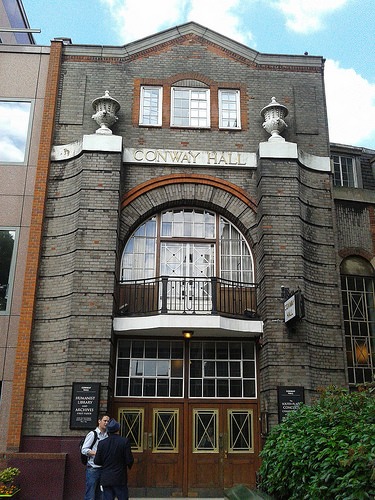
2014_0531ConwayHall

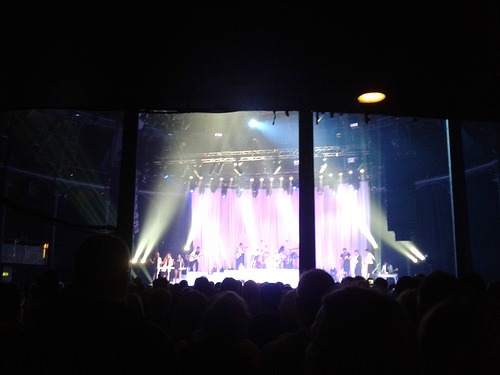
Paloma Faith at the Roundhouse

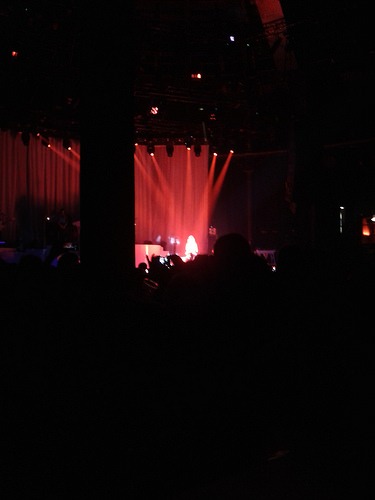
I went to see Paloma Faith at the Roundhouse in Chalk Farm on Tuesday. The last time I saw her was at Glastonbury 2010 when I am sure she was high – she kept giggling madly and acting all spaced-out. Maybe that’s just her though? Anyway, she definitely seemed more with-it on Tuesday, performing tracks from all three of her albums, particularly her most recent record, ‘A Perfect Contradiction’.

2014_0527PalomaFaith01

I loved her first album and really like her most recent one, which is more grown-up and soulful. I think my favourite track is ‘Can’t Rely On You’ which is really catchy (that’s the extent of my ability to analyse music I’m afraid). I was pleasantly surprised by the songs she performed from her second album: I was really disappointed with that one but I thought the songs sounded better live, and encouraged me to go back to the album and listen again.

2014_0527PalomaFaith02

The venue itself was great: I’ve been to the Roundhouse to see Shakespeare but this was the first time I’d attended a gig there. The space worked really well and was a perfect size. A good night indeed!

Thames Tunnel Tour

It’s not very often that you get to explore the Thames Tunnel, otherwise known as the Brunel Tunnel. So when I found out that TfL were running tours through the tunnel between Rotherhithe and Wapping, I booked my ticket pronto. I was due to take the trip on the Sunday, which turned out to be the nicest day, weather-wise, of the entire bank holiday weekend, so it’s just as well I dislike the sun. I actually preferred the cool, dark atmosphere of the tunnel.

2014_0525ThamesTunnel01
Plaque just inside Rotherhithe station commemorating the tunnel

The tours began at Rotherhithe station. We put on plastic gloves – apparently you get rodents down there, not to mention an interesting variety of diseases, though luckily I didn’t see any rats during my trip. We then descended into the station, heading towards the northbound platform.

2014_0525ThamesTunnel02
On the platform at Rotherhithe, looking into the tunnel

The tunnel is used nowadays by London Overground trains, so these had to be stopped for the weekend. It was incredibly exciting to climb onto the track and make our way on foot between the rails. Our tour involved walking through the tunnel to Wapping station, then coming back the other way. During the tour we had an interesting and knowledgeable guide who told us various fascinating facts.

2014_0525ThamesTunnel05
Inside the former grand entrance hall at the mouth of the tunnel

The tunnel was begun in 1825 by Marc Brunel, father of Isambard Kingdom Brunel who also helped with the construction. Said to be the first of its kind anywhere in the world, it was a hugely ambitious undertaking, as the first tunnel ever constructed under a major river. Construction used Thomas Cochrane and Marc Brunel’s tunnelling shield technology, and the tunnel took eighteen years to build, with several workers dying during its construction: during one flood, in which six people died, Isambard himself nearly met his end, being pulled unconscious from the water just in time.

2014_0525ThamesTunnel06
One of the arches between the two tunnels

Intended for use by horses and carriages, the tunnel was actually used by foot passengers from the start. From the beginning, shopkeepers set up stalls in the archways between the two sides of the tunnel, selling assorted goods including tunnel souvenirs. Unfortunately, the tunnel also became a favourite haunt of pickpockets, thieves and “ladies of the night”.

2014_0525ThamesTunnel07
Looking ahead into the tunnel

In 1865 the tunnel was purchased by the East London Railway Company for use by the new steam trains. The first few tunnel arches at the Rotherhithe end still bear the legacy of this railway, blackened by years of smoke (the rest of the tunnel was sprayed with concrete during the 20th century to strengthen it and ensure it was still suitable for use). In the space now occupied by Rotherhithe Station, there used to be a grand entrance hall, where a banquet was held on the tunnel’s opening; nowadays, the trains pass through the area frequently.

2014_0525ThamesTunnel08
Contrast between the area of the tunnel reinforced with concrete, and the original soot-blackened tunnel

The tunnel slopes gently downwards until it gets to the centre, then rises up again from that point. It’s easy enough to tell when you get to the middle; it’s an eerie feeling to be standing underneath the Thames right in the centre, in a tunnel that was built nearly two hundred years ago.

2014_0525ThamesTunnel10
Looking into the tunnel

In some ways it was a relief to reach the other side. At Wapping station we climbed up onto a platform like the one at Rotherhithe before descending again to begin the return journey.

2014_0525ThamesTunnel13
Arriving at Wapping station
2014_0525ThamesTunnel16
Looking back into the tunnel at Wapping
2014_0525ThamesTunnel17
View into the tunnel from Wapping

We headed back along the other side of the tunnel, which although it was built for foot passengers, proved perfect for trains in future years; firstly steam trains, then the modern Overground service. I am sure Brunel would be proud if he knew that the tunnel he built with such difficulty back in 1825 would still be in use nearly two centuries later.

2014_0525ThamesTunnel25
Arriving back at Rotherhithe station
2014_0525ThamesTunnel27
The end of the tour: back at Rotherhithe

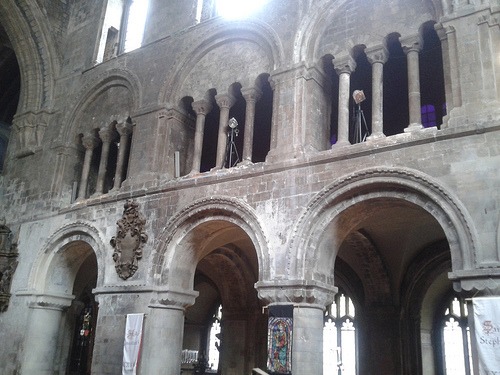
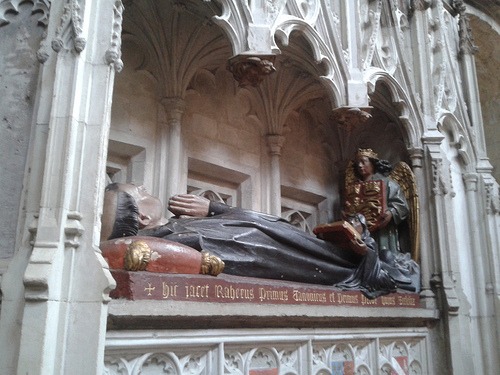
Saint Bartholomew the Great

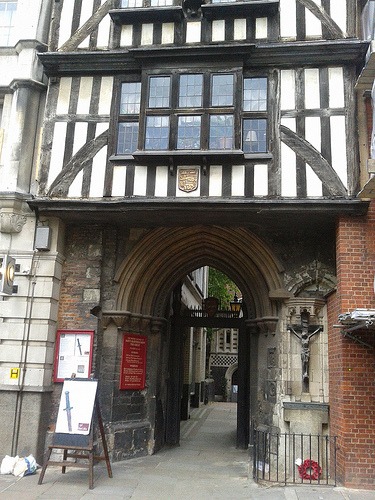
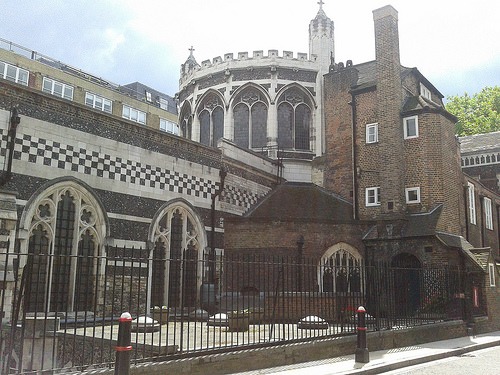
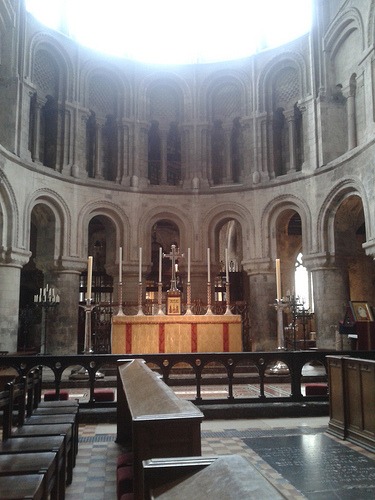
Saint Bartholomew the Great is one of London’s oldest churches. It was founded as an Augustinian Priory in 1123 and has been in continuous use since 1143. It is an Anglican/Episcopal Church in that part of London known as the City, and I visited on Saturday to see a performance of T.S. Eliot’s play Murder in the Cathedral, about the murder of Thomas Becket.

The church is beautiful and has featured in films and TV shows such as Shakespeare in Love and The Hollow Crown.

2014_0524StBarts01

2014_0524StBarts02

2014_0524StBarts03

2014_0524StBarts04

2014_0524StBarts05

2014_0524StBarts06

2014_0524StBarts07

2014_0524StBarts08

Saskia Olde Wolbers: ‘Yes, these Eyes are the Windows’

2014_0521VanGoghHouse

“Yes, these eyes are windows, and this body of mine is the house”
Herman Melville, Moby Dick

87 Hackford Road in south London is rather a special address – for a few short months between 1873 and 1874 it was the home of famous Dutch painter Vincent Van Gogh. A blue plaque marks out the building, which is currently home to an installation by Saskia Olde Wolbers, ‘Yes, these Eyes are the Windows‘.

Saved from demolition when a postman discovered the house’s famous former resident in the 1970s, the house has gone from strength to strength; it is currently empty – has been since 2012 – and Wolbers has taken the opportunity to create a fascinating experience, drawing on the history of the building.

Entry is timed: you ring the doorbell when the people in front of you have left the building, and when the time is right you enter and begin to explore, guided by the lights, haunted by the voices that surround you, telling stories of the house and the people who lived there. The house is in a shabby state, with peeling wallpaper, holes in the ceiling, and bits of furniture lying about. Lights, photographs and old newspapers emphasise the history behind the building. It’s an eerie experience, and one which will stay with me for a while.

South London Gallery

2014_0518SouthLondonGallery
The South London Gallery

On Sunday I popped into the South London Gallery in Peckham for the first time. I’d heard about an exhibition called Welcome to Iraq, and thought it sounded interesting.

The exhibition was originally shown as part of the National Pavilion of Iraq in the 55th Venice Biennale in 2013. Eleven artists, most of whom work and live in Iraq, were chosen to display their contemporary work. There were some very funny political cartoons, interesting sculptures, and two intriguing rooms upstairs full of furniture made out of cardboard.

The best thing about the exhibition was the homemade, relaxed feel, with comfy chairs and tables laden with books to do with Iraq. There were also refreshments available in the form of Iraqi tea and biscuits – free, but with a donation appreciated (which I was happy to make – the tea and biccies were delicious!).

The Gallery shows a rolling programme of temporary exhibitions, specialising in contemporary art. It is free to enter and has a café and a bookshop. It is open every day, and stays open until 9pm on Wednesdays – a good excuse to pop down after work.

FACTS

Address: 65-67 Peckham Road, London, SE5 8UH

Website: southlondongallery.org

Opening Hours: Tues-Sun 11am-6pm (9pm on Wednesdays)

Prices: Free

Ruin Lust – Tate Britain

Last weekend marked the final weekend of the Ruin Lust exhibition at Tate Britain, so I decided to pop along. I am glad I did – it was fascinating, looking at the obsession with ruins that has plagued and surrounded artists for hundreds of years. There was an interesting mix of modern and older artists.

I love ruins myself, and when I think of obsession with ruins I tend to think of the Romantic love of crumbling abbeys, as evidenced in, for example, Wordsworth’s ‘Tintern Abbey’. There is a Turner watercolour of that selfsame abbey in the exhibition, as well as moonlit views of other ruins, which I thought were beautiful. I also loved John Martin’s ‘The Destruction of Pompeii and Herculaneum’ of 1822, which I had seen before, but which has lost none of its impact. Gustave Doré’s engraving ‘The New Zealander’ of 1872 shows an imaginary ruined London.

However, I also liked some of the more modern works, particularly Laura Oldfield Ford’s images of postwar council housing, both outside and inside, covered with graffiti-like marks. The exhibition seemed very quiet, which was a shame – I think it deserved to have been seen more widely.

Bailey’s Stardust – National Portrait Gallery

The National Portrait Gallery is currently exhibiting work by photographer David Bailey, and I headed down after work last Friday to check it out. Stardust brings together work from his entire career, which has lasted for several decades.

Bailey is famous for his celebrity portraits, and there are plenty of those here, including images of Kate Moss, Johnny Depp, Mick Jagger and more. Most are black and white pictures, taken against a plain white background. Interestingly, I thought, this style of photography makes the images look timeless. Only the ages of the recognisable subjects, and occasionally the clothes they were wearing, gave any indication that they were not taken recently.

Celebrities are not Bailey’s only subjects, however. He has taken photos in East Africa, Papua New Guinea and Australia among other places. Many of these photos are portraits against plain backgrounds, some in black and white. There is a democracy to his images, I think, in that by taking photos of celebrities and of indigenous peoples Bailey is showing how they are all the same.

Overall, an interesting exhibition – worth a visit before it closes on 1 June.