Bow Street Police Museum

Entrance to the Bow Street Police Museum

On Saturday I paid my first visit to the Bow Street Police Museum, a new museum in Covent Garden. I visited in order to attend a talk, arranged for Heritage Open Days, called Performing Justice: How satire created London’s first police force. The fascinating talk explored how writer Henry Fielding, famous for his satirical plays hugely popular on the London stage, applied his keen mind to the role of Magistrate and ended up founding the Bow Street Runners, sometimes called the first police force. Fielding was fiercely critical of the corrupt court system and endeavoured to stamp out bribery and a good deal of brutality when he was in charge. True, he didn’t challenge capital punishment, which was a feature of the period: but he had sympathy for many criminals and understood how circumstances conspired to leave many feeling they had no choice but to turn to crime.

Gallery from the Magistrates' CourtGallery from the Magistrates’ Court

Trials were held at Bow Street Magistrates’ Court, which took place in the building next door: notable figures to be tried here include Oscar Wilde. The museum itself shows how the site developed over the years to become an early police station, with police cells built next to the court and used to house prisoners until the 1990s. Many of the original cells can be visited and they hold objects from the Metropolitan Police Heritage Service and videos featuring former Met officers, stationed in this building, telling their stories.
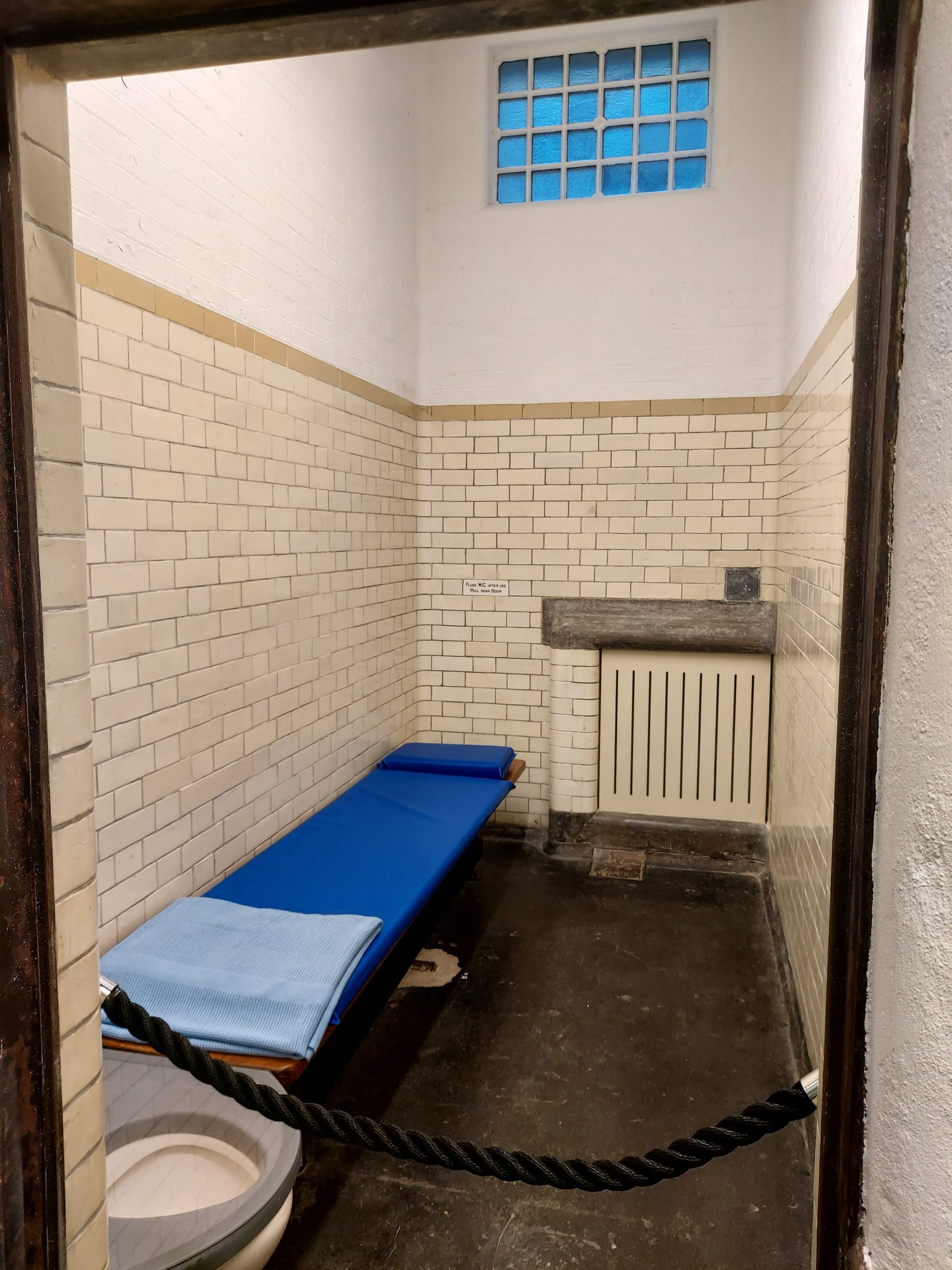
A police cell

The museum is fascinating and an essential resource to explore the history of policing in London, which is linked to the social history of the city and of Covent Garden. The museum also runs regular talks, and occasional walks and special events.

FACTS

Address: 28 Bow Street, London, WC2E 7AW

Website: bowstreetpolicemuseum.org.uk

Opening Hours: Fri-Sun 11am-4:30pm

Price: Adult £6, concession £4.50, under 12 free
Fitzrovia Chapel – Open House London

Chapel

I normally do my Open House London visits at the weekend, but if a venue is open late during the week I might try and visit it after work, and that’s what I did with Fitzrovia Chapel.

The chapel is located in the pedestrianised Pearson Square, which is off Mortimer Street on the site of the old Middlesex Hospital. I walked there from my office in Bloomsbury; the nearest Tube stations are Goodge Street, Warren Street and Oxford Circus.

Ante-chapel

The chapel was originally built for staff and patients of the Middlesex Hospital (demolished in 2006). It was designed by John Loughborough Pearson (1817-1897), a leading Victorian architect, and was funded by donations and fundraising. Work began in 1891, but the chapel was not fully completed for almost forty years, as it was ensured that no money should be spent on the chapel that had been raised for patient care. After the death of the elder Pearson, his son, Frank Loughborough Pearson, completed the work.

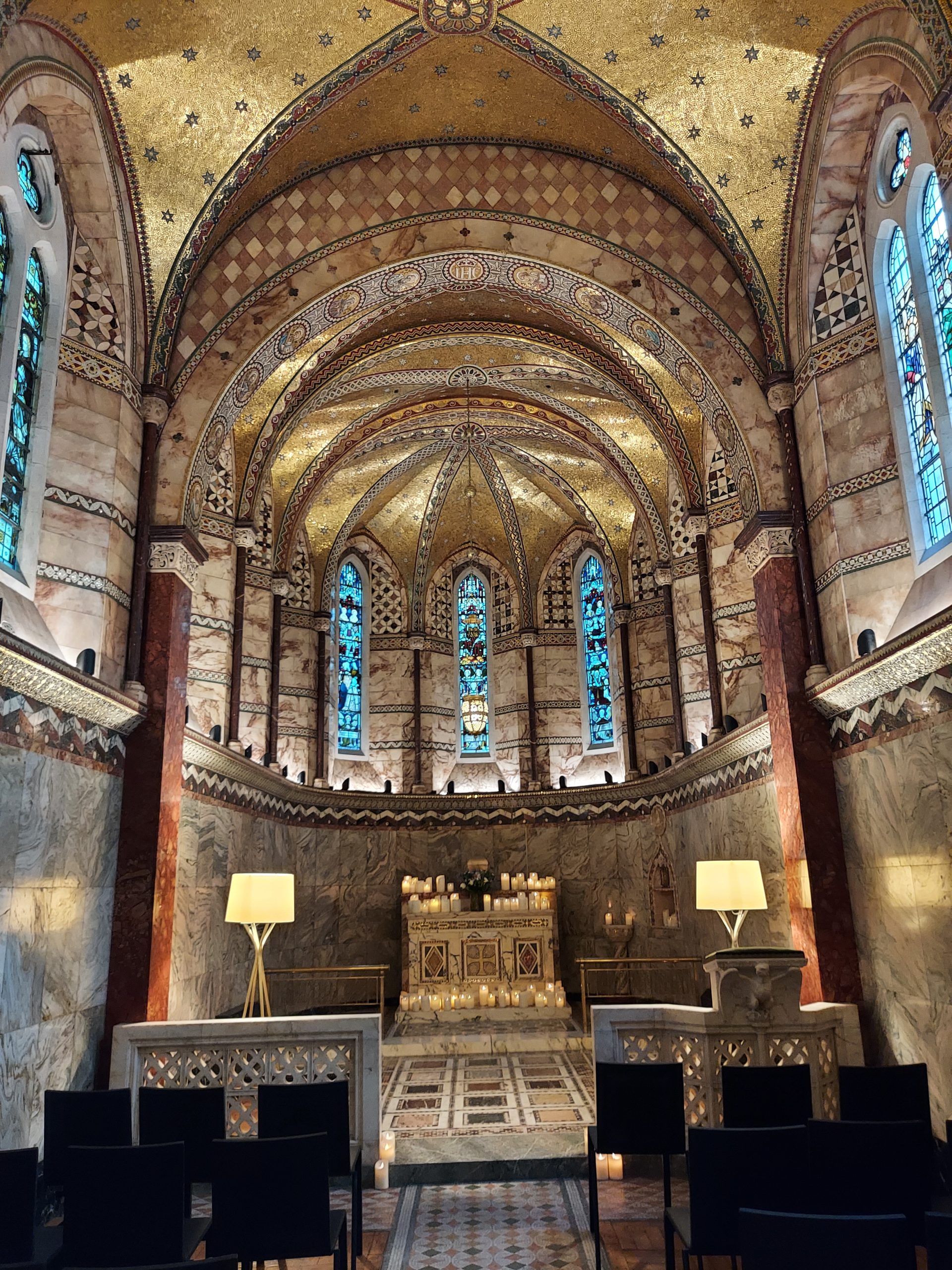
Iniside Fitzrovia Chapel

The first ever service was held in the completed structure on Christmas Day in 1891, and it was formally opened in 1892 by the Bishop of London. The chapel was never fully consecrated, as it has hosted services by chaplains and other faith leaders. It is now Grade II* listed and holds regular open days for the public, as well as concerts, exhibitions and other cultural events.

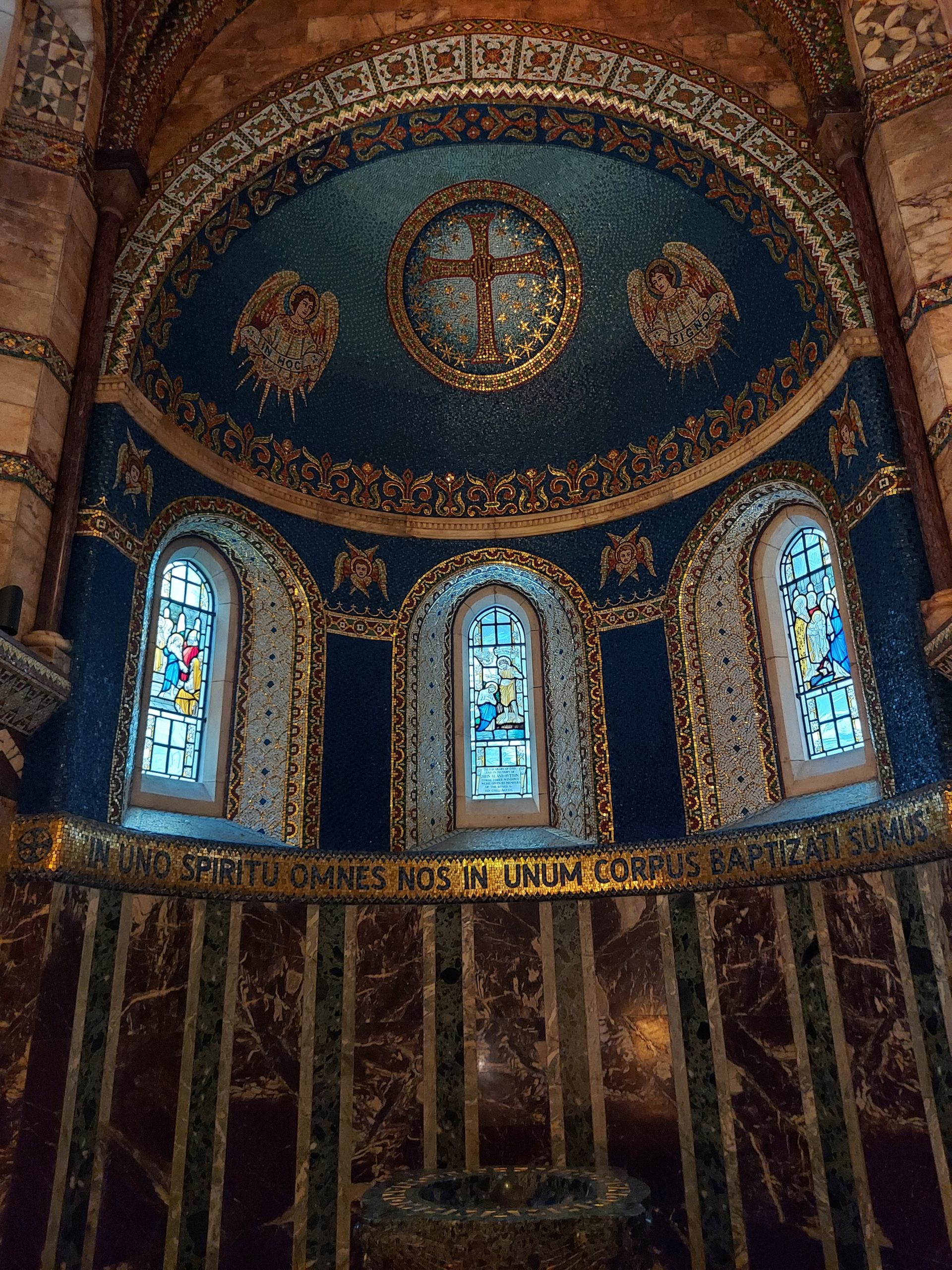
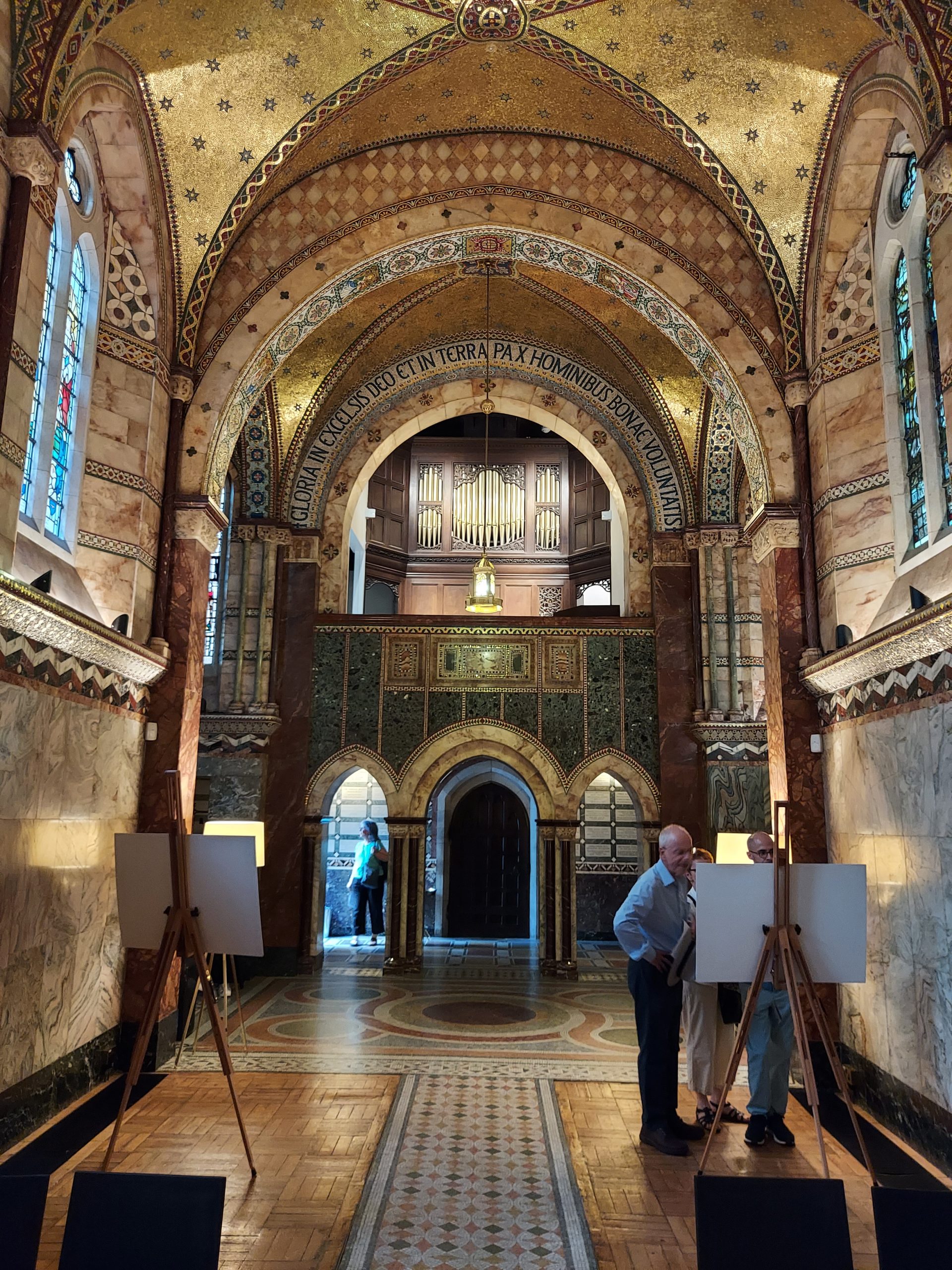
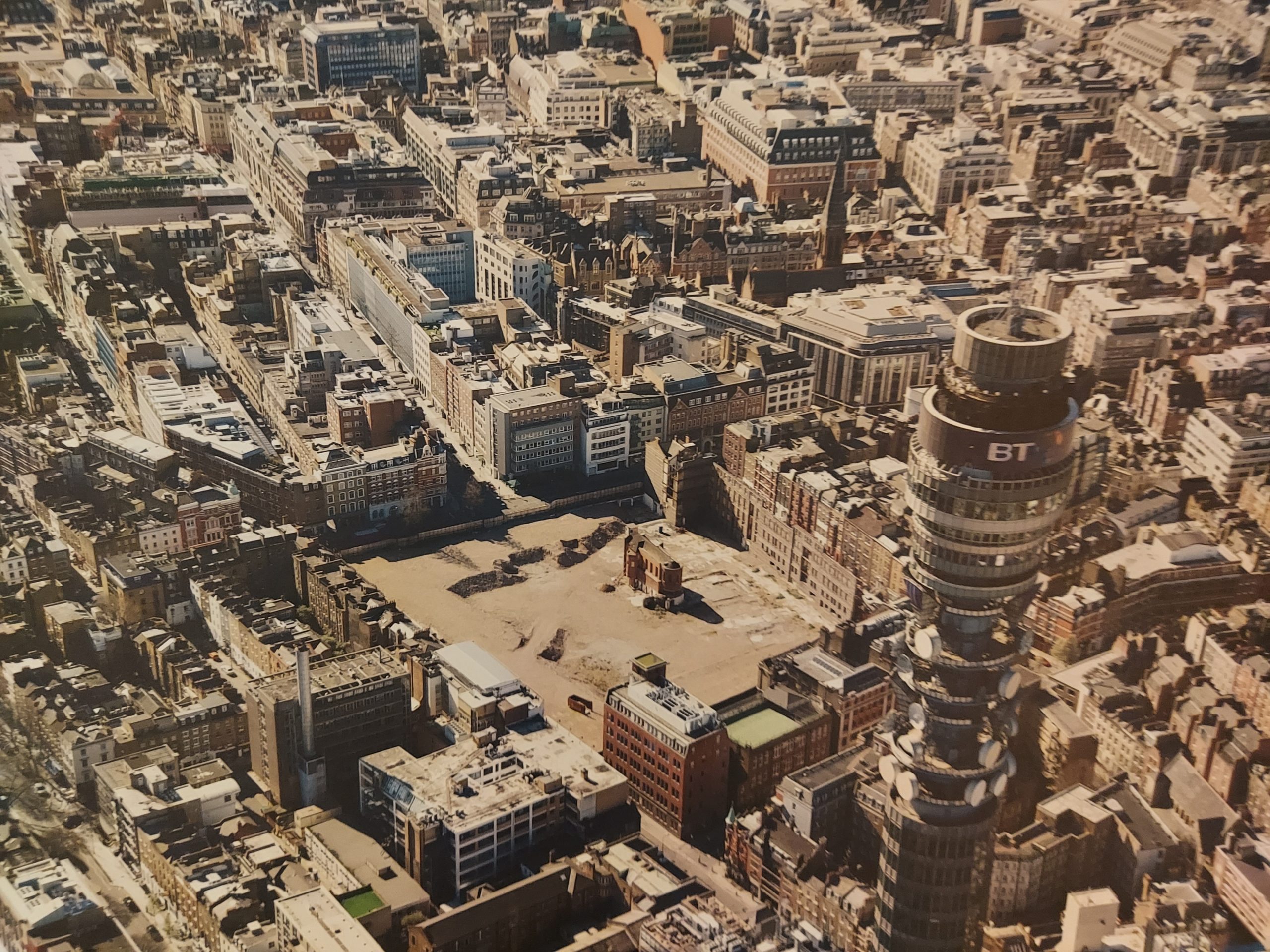
I found the chapel beautiful – I am so glad it was not demolished along with the rest of the hospital. Some photographs are on display showing the chapel in the middle of an empty building site, before work on the surrounding area was completed. It is a peaceful oasis in the middle of London, and beautifully decorated. The chancel over the altar is covered in golden mosaics and stars, while golden mosaics cover the entire ceiling. The ante-chapel contains tablets of white marble featuring inscriptions to hospital figures from all professions. The ceiling vaults contain roundels depicting the apostles.

Photograph of Fitzrovia Chapel after the hospital had been demolished around it

The Rossettis: Radical Romantics – Tate Britain

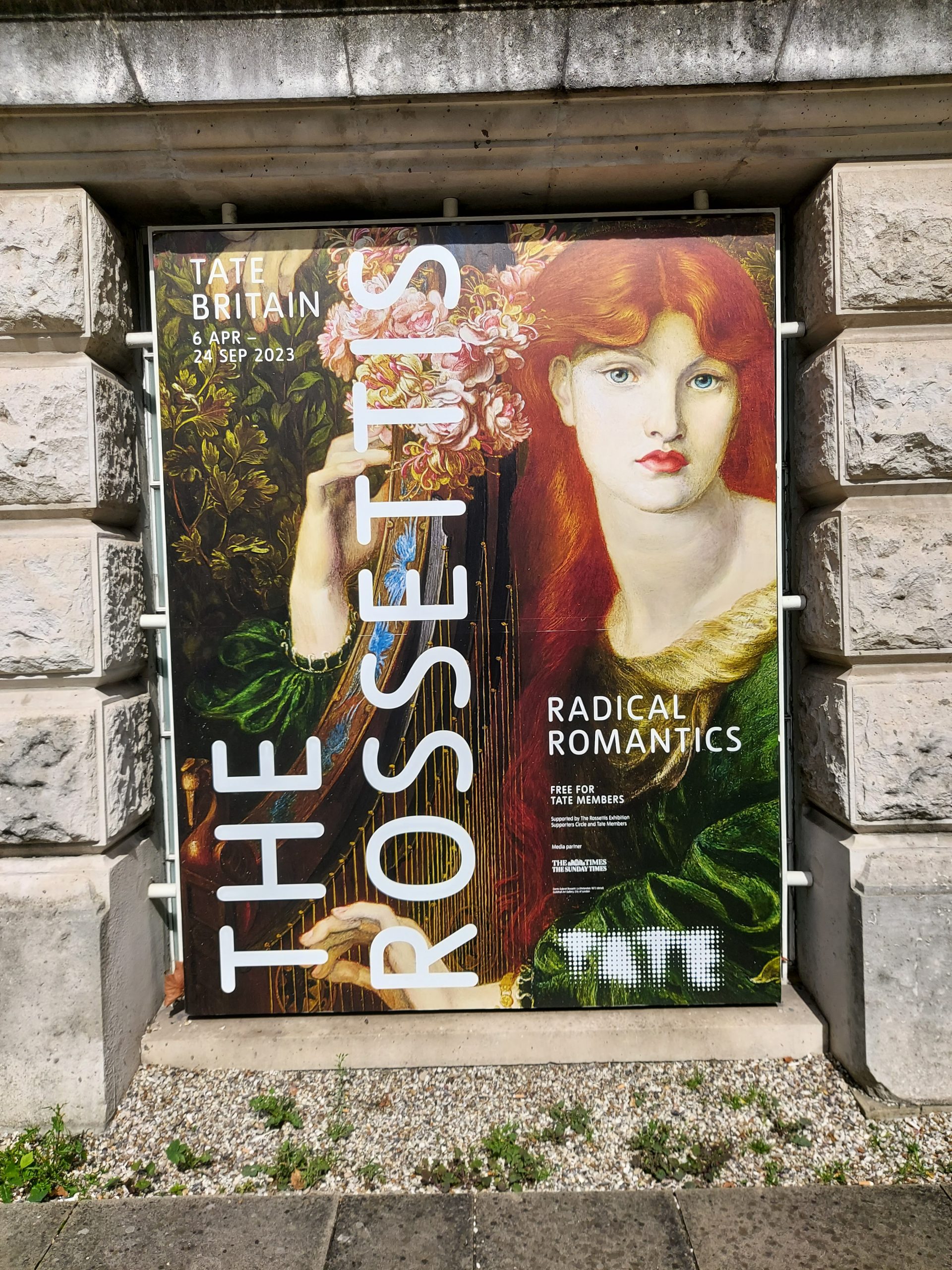
Poster for The Rossettis exhibition

I’m very interested in the Pre-Raphaelites, so was excited to see the exhibition The Rossettis: Radical Romantics at Tate Britain. It focused on brother and sister Dante Gabriel Rossetti (painter) and Christina Rossetti (poet), and, for the purposes of this exhibition, Gabriel’s wife Elizabeth (painter), born and better known to us as Elizabeth Siddal.

The exhibition explored how the family’s background – their parents were scholars of Italian heritage, and their four children, Maria (writer), Gabriel (who later adopted the name Dante), Christina, and William (writer and co-founder of the Pre-Raphaelite Brotherhood) had unconventional lives and shared anti-establishment views. Their father, Gabriele, was a revolutionary who had to flee Italy, and passed on many of his ideas to his children.

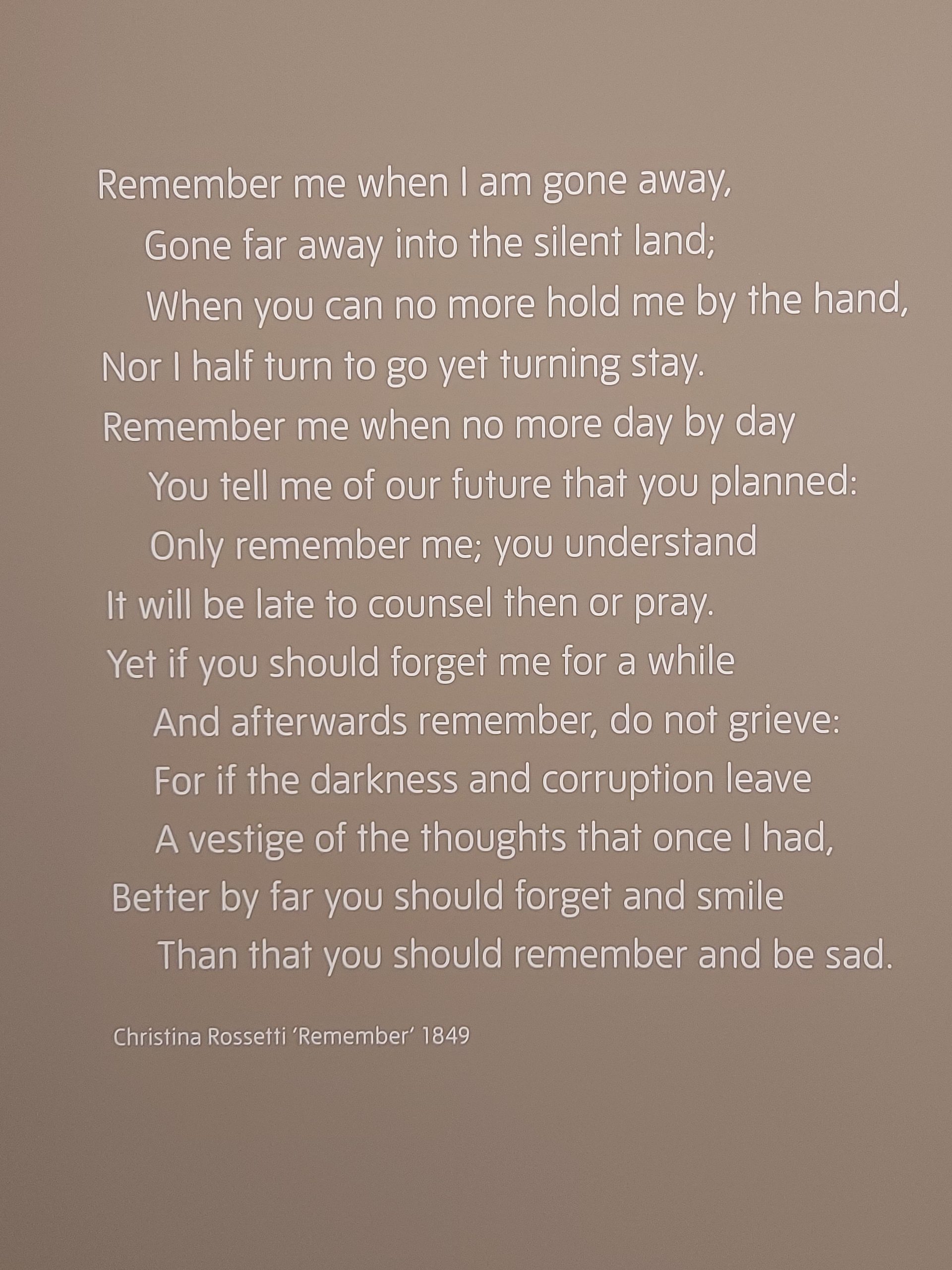
Poem by Christina Rossetti‘Remember’ by Christina Rossetti

Both Gabriel and Christina published poems at an early age. Today, Christina is the better known poet: her verse was inspired by poetry, love and religion, and is often passionate and full of life. Gabriel’s admiration for less conventional artists led him to co-found the Pre-Raphaelite Brotherhood with his own brother William and several other artists; his own work was inspired by the likes of Dante and William Blake.

Painting by Dante Gabriel RossettiLady Lilith by Dante Gabriel Rossetti
The inclusion of Elizabeth Siddal’s work here is interesting. I’m very glad her work is becoming better known and she is no longer seen as ‘just’ Dante Gabriel Rossetti’s muse. However I would be more interested to see how her background and experiences shaped her own work, rather than lump her in with the Rossetti family who had a very different upbringing. The exhibition, it must be said, does make a good case for her inclusion, showing how her work and Gabriel’s inspired one another, and the similarities between her poetry and Christina’s in terms of exploring women outside of the conventions of the time.

I really liked how the exhibition tried to dive in to the lives of the working class models that often featured in Gabriel’s paintings, as well as confronting the problematic portrayal of different cultures in his later works. Ultimately, the exhibition did a very good job in highlighting the Rossettis’ impact on art, literature and culture.

Rebel Badge Club: Camper

When I first bought my Rebel Badge Book, I thought there would be no way I’d ever be able to manage the Camper badge. Then Rebel Summer Camp was announced, and I hoped that I would be able to complete the badge there. Luckily all went to plan, and I did!

Spend at least 3 consecutive nights under canvas

The camp lasted from the Friday to the Monday, with exactly three nights’ camping – perfect!

Pitch and strike the tent

I managed to pitch and strike my brand new tent, albeit with help (but who can actually manage to put a tent up on their own?). I’m pretty sure I could manage it alone if I had to – once we’d worked out where everything went, it was pretty straightforward.

My red tent

Keep your belongings safe and dry

My tent proved to be brilliant – it was double-skinned and didn’t let any rain in at all. I kept my shoes and beers in the little front porch bit and they stayed dry too.

Design the menu for the trip

I brought my own breakfasts and evening meals for the trip – all simple options in tins or packets that didn’t require refrigeration or special storage. I chose to buy my lunches on-site, mainly to save time in the middle of the day.

Kit out your camp kitchen

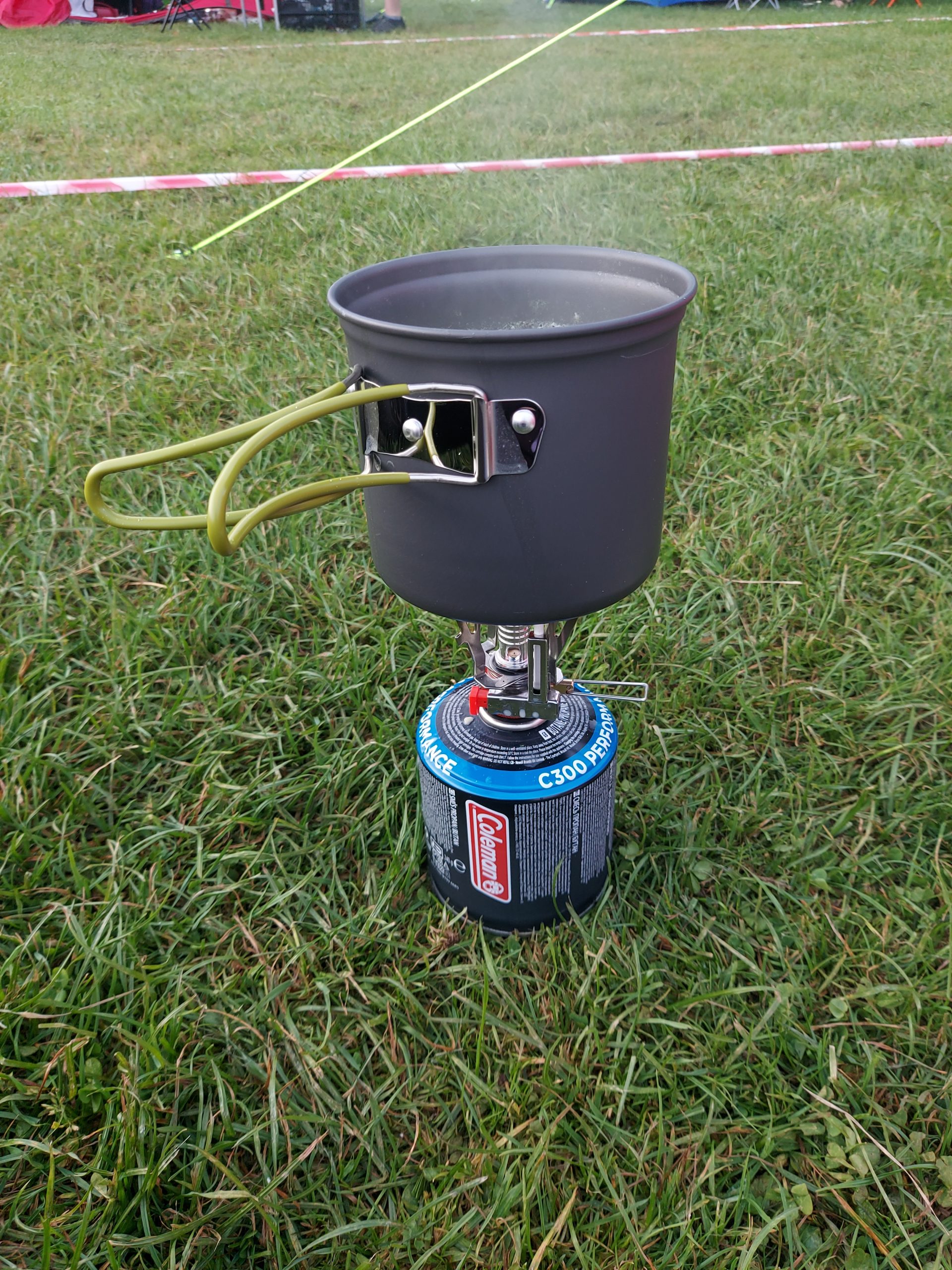
I bought a little camping stove which came with a large pan, a small pan, cutlery and a washing up sponge. I brought some washing up liquid with me and purchased a gas canister for the stove.

Cook at least 4 meals outdoors

I cooked my 3 breakfasts and 3 evening meals outdoors on my new little camping stove. I went for the easy option and chose beans & veggie sausages in a tin for my first breakfast, porridge in a pot for the others, and pasta in sauce for my evening meals.

My camping stove

Leave minimal trace

I’m happy to say that when my tent was packed up, there was nothing to show I’d been there other than a patch of slightly lighter grass. I produced minimal non-recyclable waste (probably less than I do in everyday life).

Know how to treat camp injuries

I learned these skills as part of my First Aid course in June 2023. Luckily I didn’t need to use them!

Prepare a first aid kit for your trip

I bought a first aid kit from St John’s Ambulance and ensured I took all my medications with me. I looked up the location of the nearest A+E before I got to Bromsgrove.

Take part in 3 outdoor activities during camp

I took part in loads of different outdoor activities during Rebel Camp – definitely more than 3!

Date completed: 28 August 2023

Rebel Badge Club: Adventurer

After Rebel Camp I am proud to say that I have managed to complete the Adventurer badge! This is a badge I was a bit nervous about, but in the end I thoroughly enjoyed it.

The badge required the completion of five different adventurous activities from a list. I completed the following:

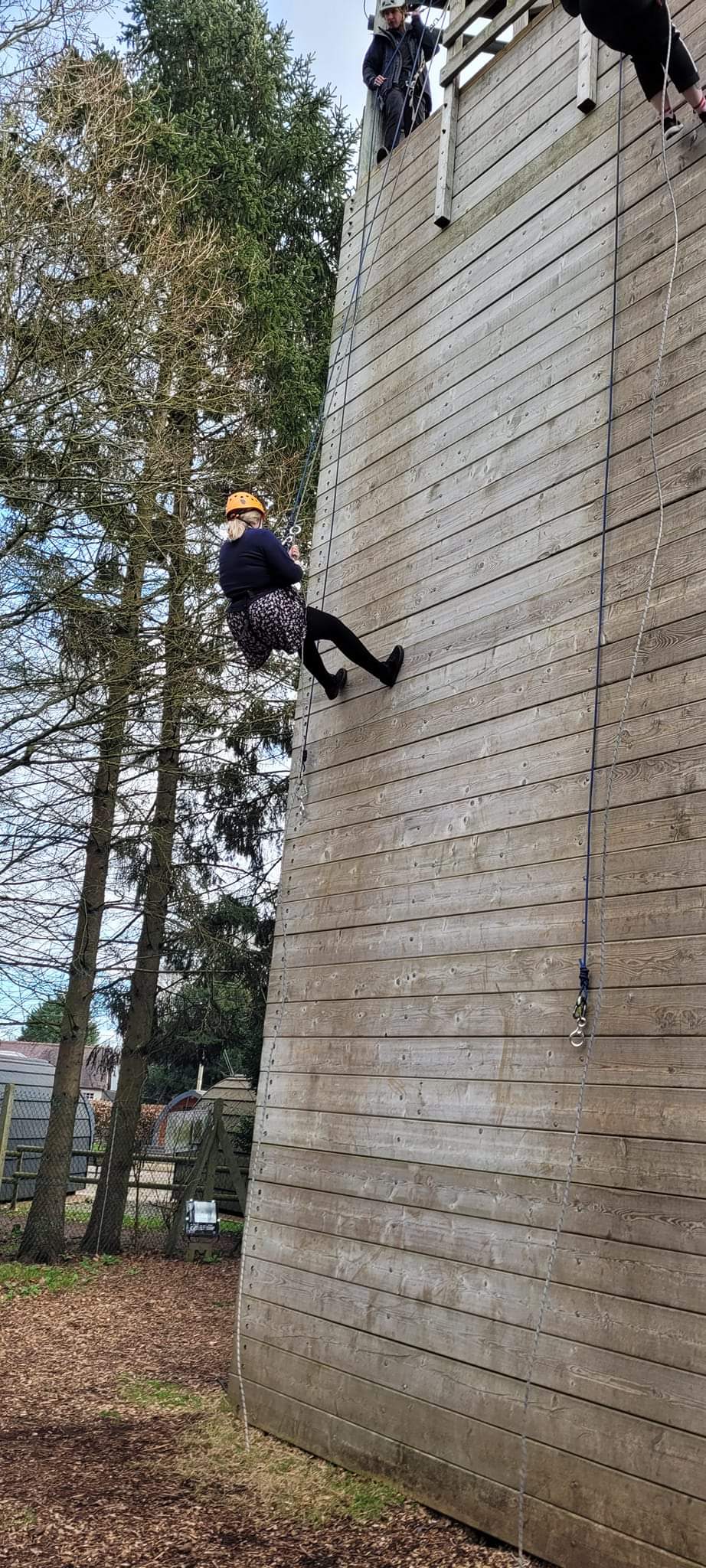
Abseiling: back in February, I attended the Big Rebel Meet Up at Bromsgrove. We were based at Blackwell Adventure and I got to take part in abseiling. I thoroughly enjoyed this, despite that initial panic when leaning back over the edge!

Me abseiling

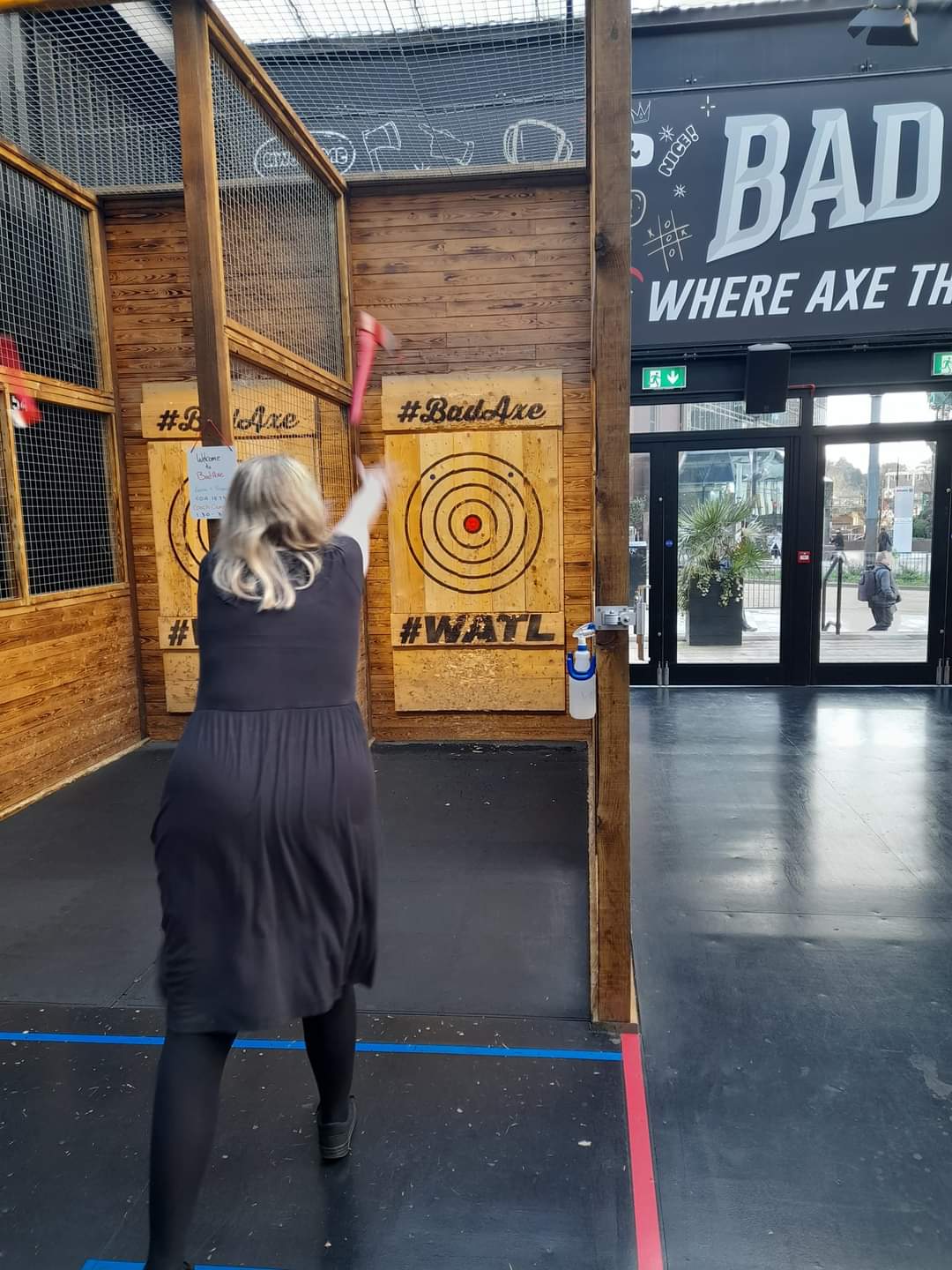
Axe throwing: I attended a meet up of the London Rebels at Bad Axe Throwing in Croydon, and we had a go at axe throwing. I wasn’t as bad as I had expected and even hit a bullseye on one occasion!

Me throwing an axe

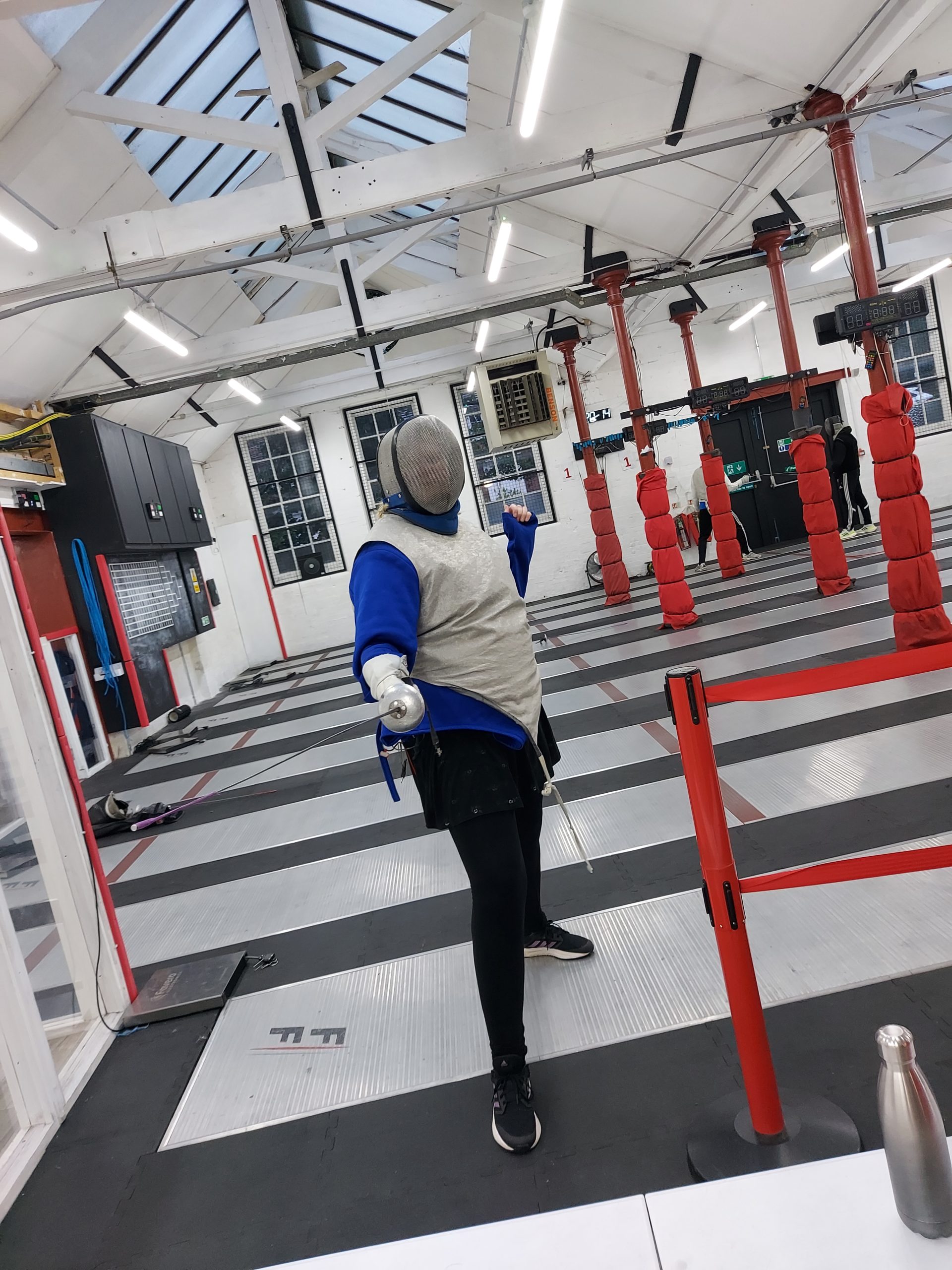
Fencing: I signed up for a free taster session at Fighting Fit Fencing in Barnet. This was great fun although I think the safety equipment you have to wear would put me off doing it again. I could feel the sweat dripping down my face (it was a particularly warm day) but couldn’t do anything about it owing to the mask.

Me in fencing costume

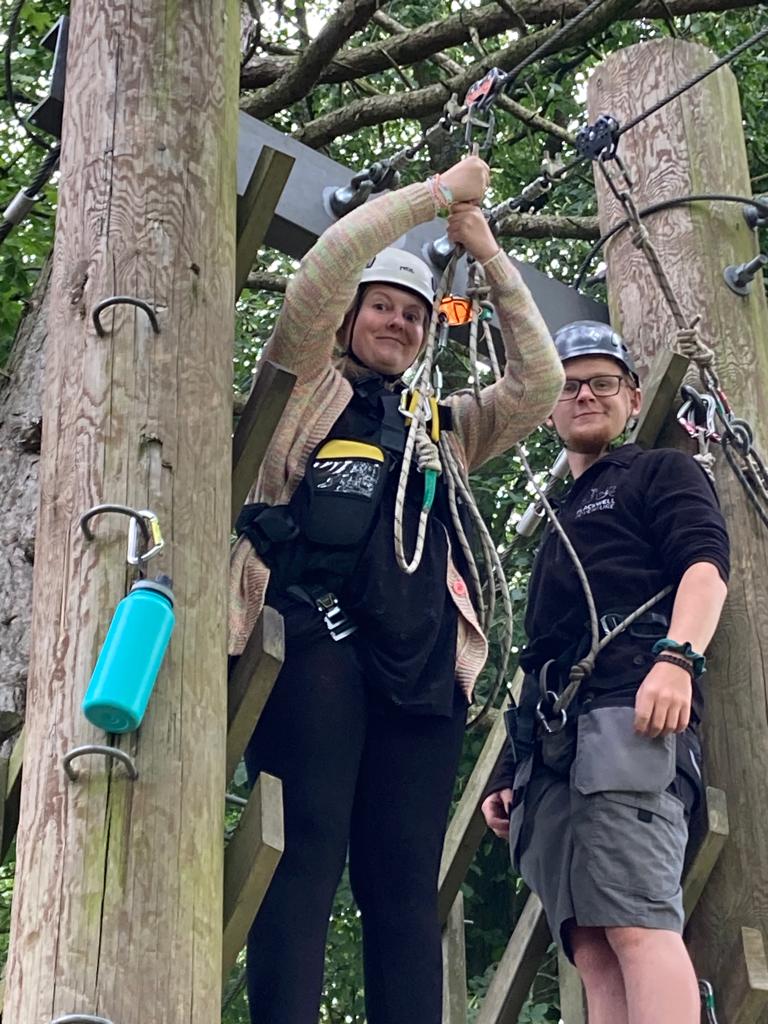
Ziplining: back at Blackwell Adventure for Rebel Summer Camp, I got to try out the giant zip line which was amazing. Possibly my favourite of the adventurous activities I enjoyed over the weekend!

Me waiting to start the zipline

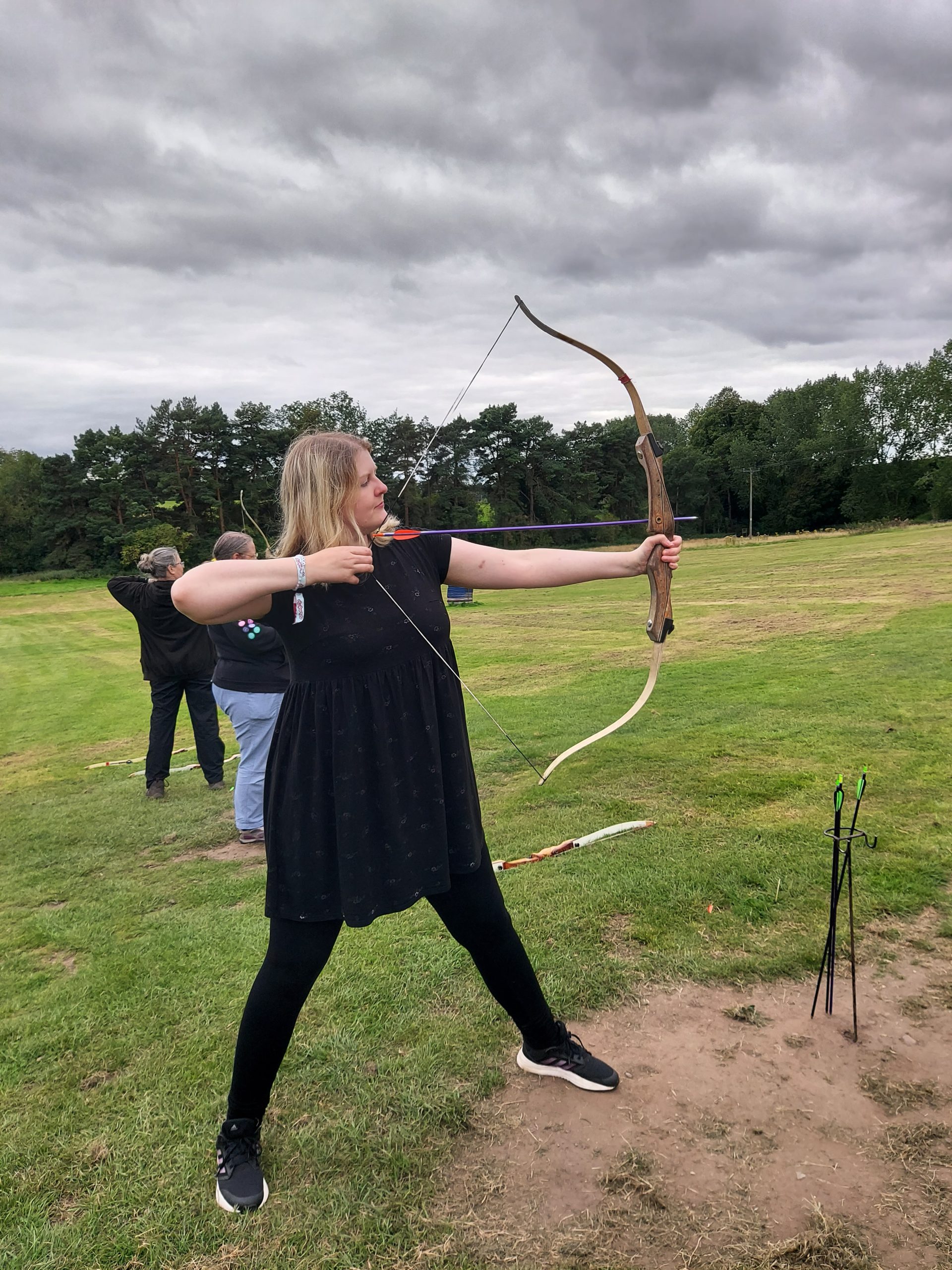
Archery: this wasn’t on my Blackwell schedule but I got to join another patrol for the last session of Camp, seeing as they had spaces. I found archery pretty difficult (it requires a lot of arm strength that I don’t really have) but I enjoyed it, and definitely improved over the session – I actually managed to get a bullseye once, and also popped two of the balloons!

Me with a bow and arrow

In general I have definitely become more adventurous since joining Rebel Badge Club – I did loads of adventurous activities during Rebel Camp but most of them don’t could towards this badge as they aren’t on the official list of activities. I also took part in rock climbing and tree climbing, which are on the list, but I don’t feel that I can really claim them because I was so rubbish – I have little strength in my arms (and not that much in my legs apparently!) so couldn’t get far at all!

There are still activities on the list that I would like to try, such as zorbing and indoor skydiving, so I hope I get a chance to try these in the future.

Date completed: 28 August 2023