Bushcraft Foundations Course

Our camp setup

Last Sunday I attended a Bushcraft Foundations Course, run by Pippin & Gile, in South London. This was very out of character for me – naturally it was a Rebel activity! I registered for the course in order to complete my Survivor badge, and thought that at least it would be something different.

Getting there was tricky as it involved a tube, a train, a bus and then a walk down a rather muddy bridleway. Still, I got there on time (and incidentally, got a lift to the railway station on the way back from two very kind fellow course participants). Luckily, despite a large amount of rain the day before, our day remained dry.

We walked to the woods via some fields and our leader, Lizzy, told us about different trees and plants we encountered on the way, pointing out helpful facts as we went. We also stopped to take a look at some badger tracks and deer markings, which I would never have noticed on my own.

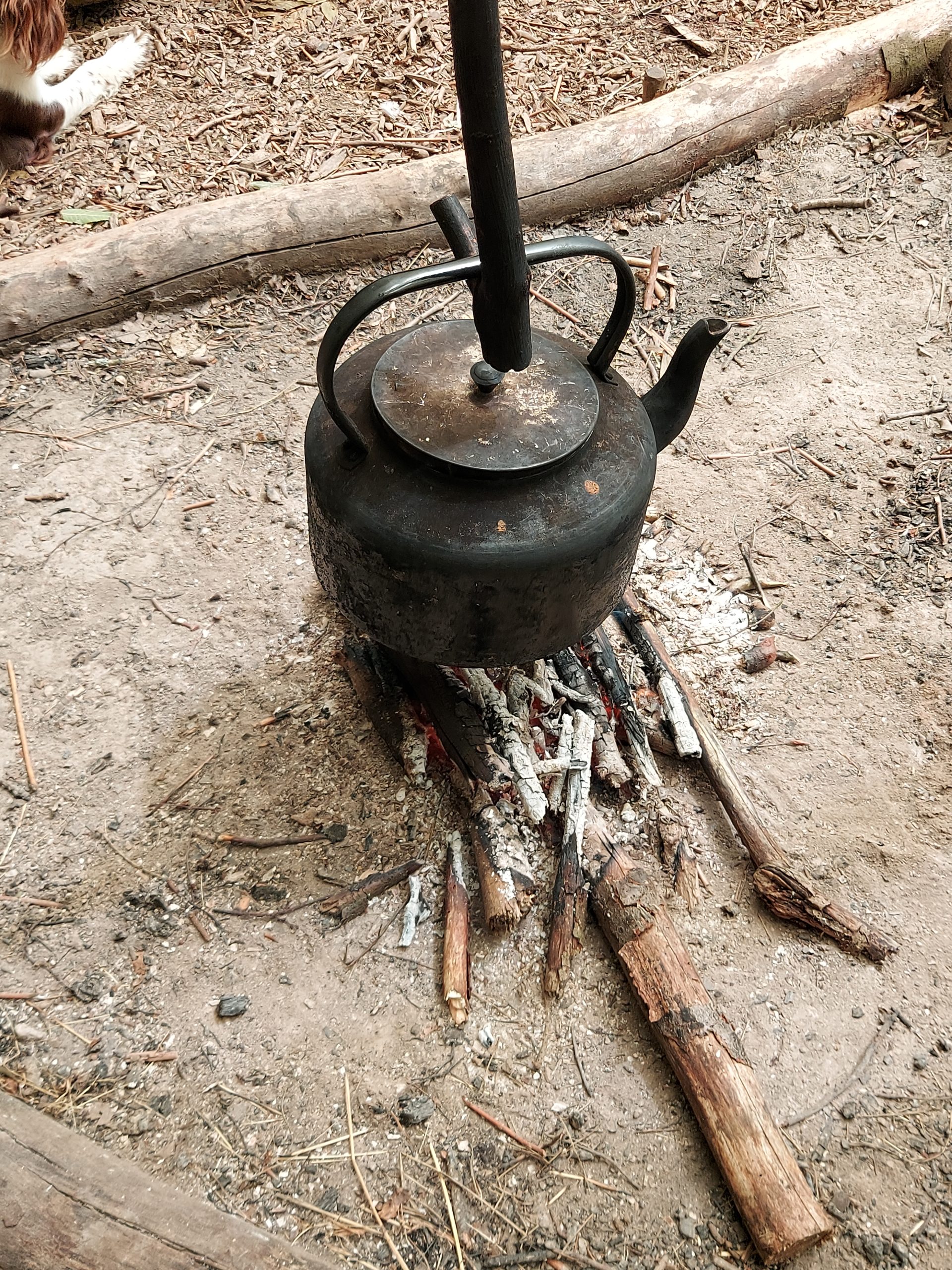
The kettle boiling on the fire

We arrived into the woods, the fire was lit with a fire steel tool and the kettle set on to boil. I resolved to get a fire steel tool for myself straight away! Lizzy explained the best way to make a fire, including how to reach dry wood if the weather is wet, how to arrange twigs on the fire, and how to maintain it.

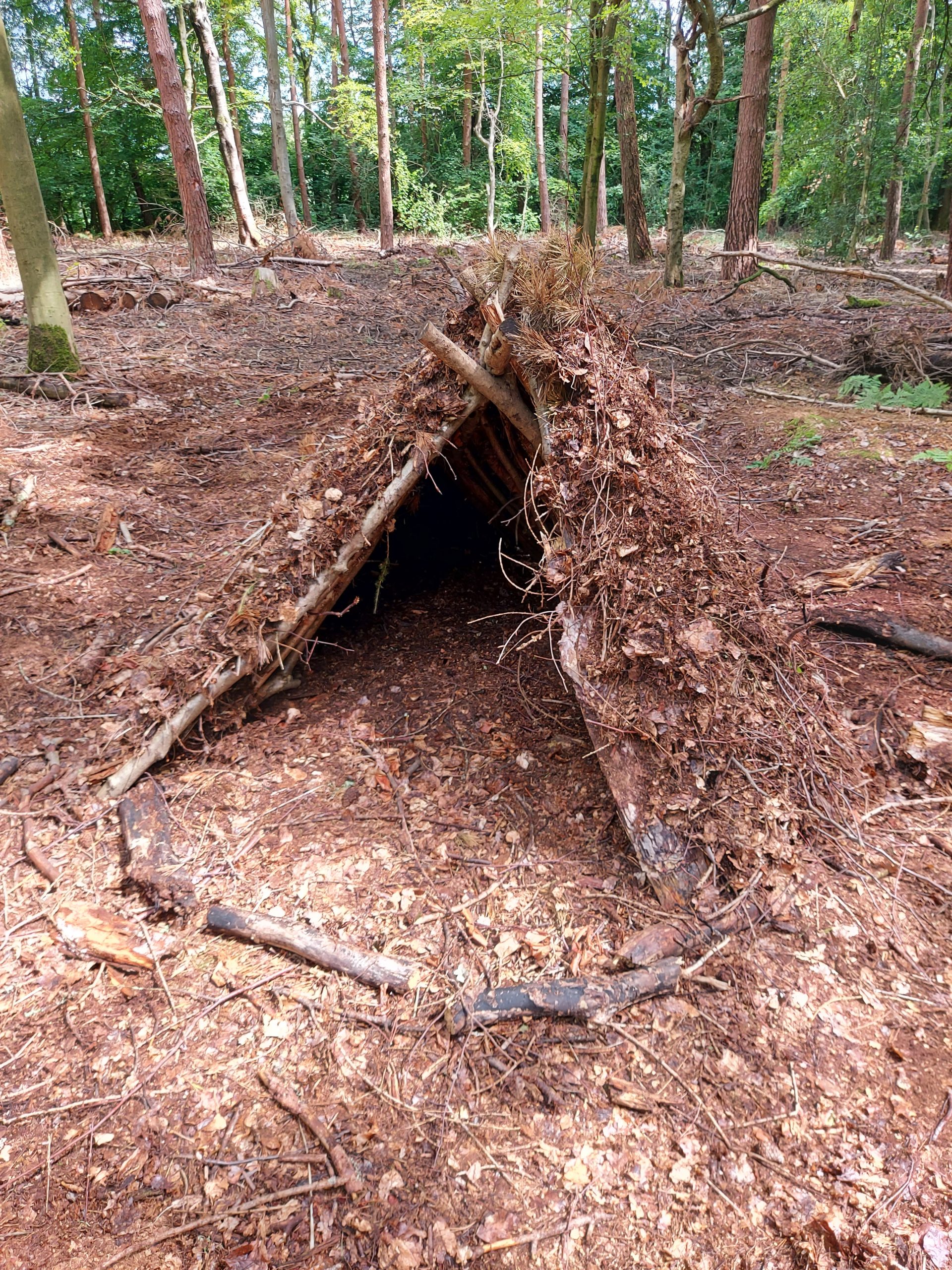
A wooden shelter

In a survival situation, the rule of three is important. Assuming you are able to breathe and are not submerged in water, the next most important thing is shelter. So we headed into an area of the woods and got to work. Our group of eight split into teams of two and I think we four made a pretty good job of our shelter. Of course, in a real situation it would take much longer to build as we would be unlikely to have cut wood ready and waiting. We’d also need a shelter for each of us, not just one!

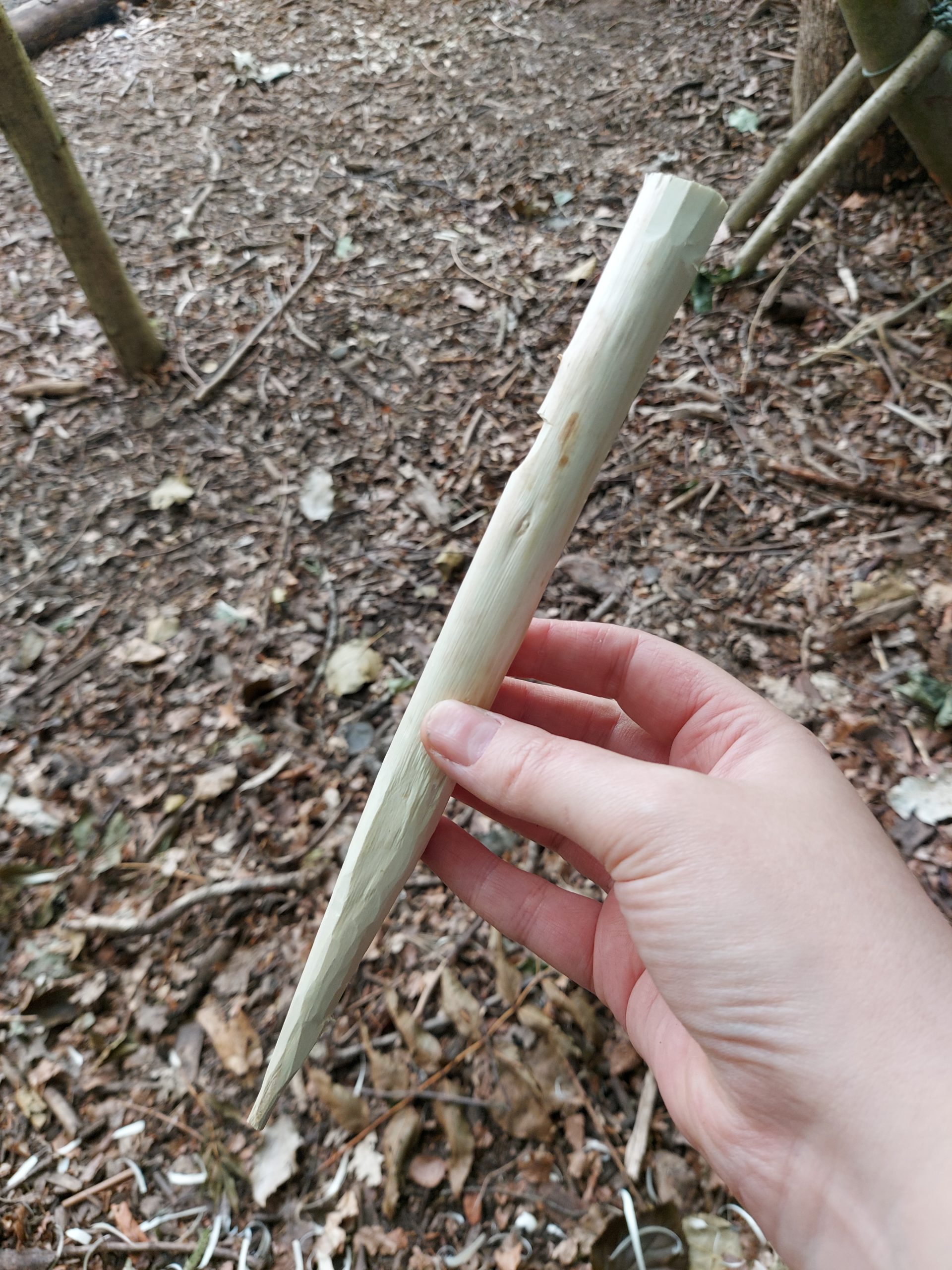
My tent peg

We ate lunch, had another cup of tea and discussed how to navigate without a compass, both during the day and at night. We then got to try wood whittling, creating a tent peg out of a hazel stick. I was quite proud of my peg!

Finally we had a go at creating fire using friction and the bow drill method. I didn’t manage to create fire but I definitely got smoke – if we’d had more time I’m sure I would have managed it.

The day was great fun and I learned a lot – very happy I tried something a bit different.

Thomas Hardy’s Dorchester

A grey gravestone
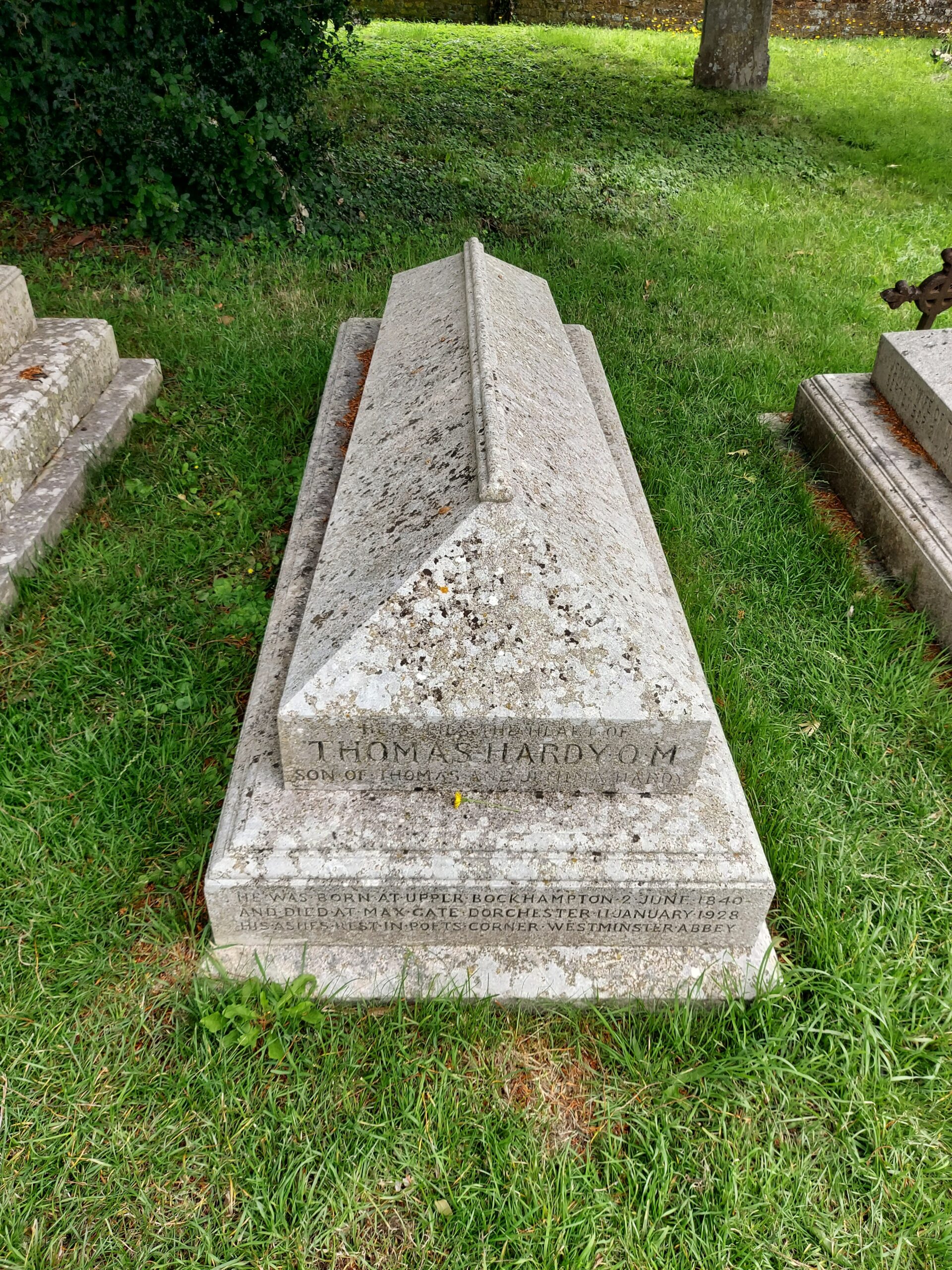
Thomas Hardy’s grave in Stinsford churchyard

As I mentioned in my last blog post, I only became a fan of Thomas Hardy after I visited Dorchester as a child with my family. I always knew I wanted to visit again and go to all the Hardy-related sights, but never got round to doing that until my recent camping trip.

One day of my holiday was dedicated to Hardy. Hardy’s Cottage, his childhood home, was a short walk from my campsite so I headed there in the morning. I’d pre-booked a guided tour and our guide was lovely and really enthusiastic about Hardy.

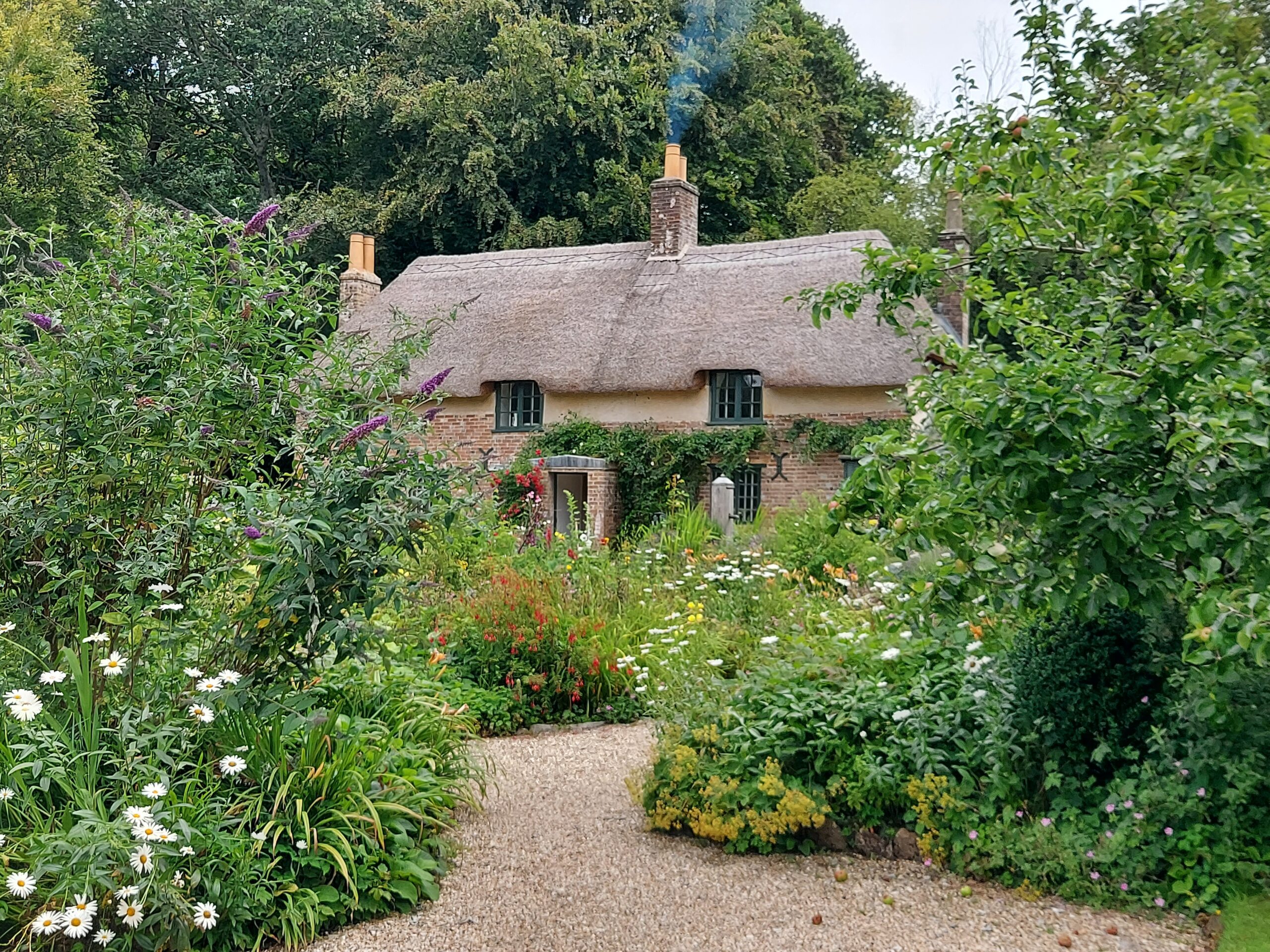
A thatched cottage
Hardy’s Cottage

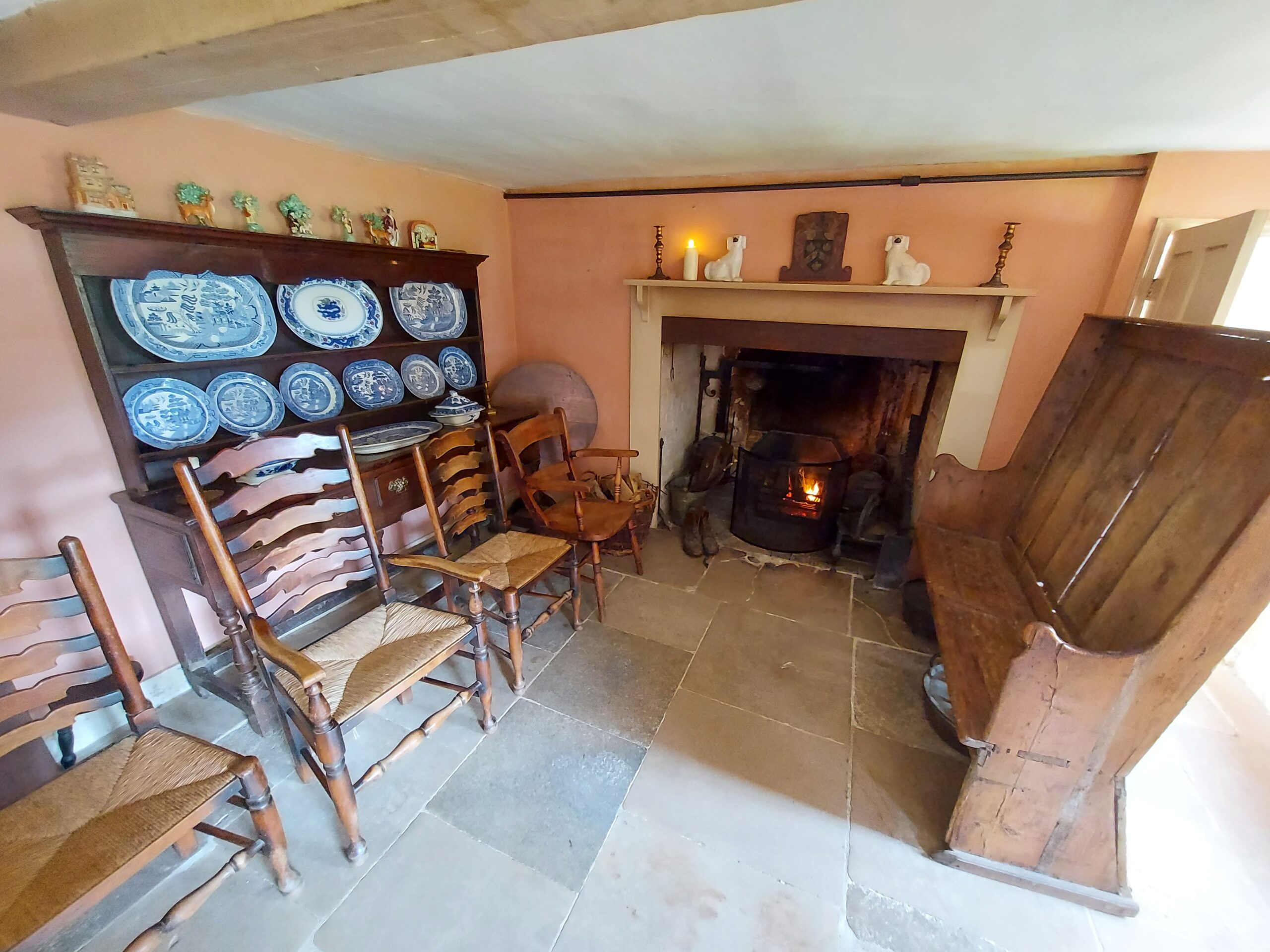
The cottage, built by Hardy’s great-grandfather, is beautiful, with a thatched roof, open hearths and stone floors, and colourful flowers in the front garden. Hardy was born here in 1840 and wrote several early short stories, poems and novels here, including Far from the Madding Crowd. Our guide argued that Hardy was happiest in this cottage and it’s easy to appreciate this. You can imagine how the family pushed back the furniture in the downstairs area to create space for dancing, or sat next to the warm hearth, a den of cosiness in colder weather.

A low-ceilinged cottage kitchen
Inside the cottage

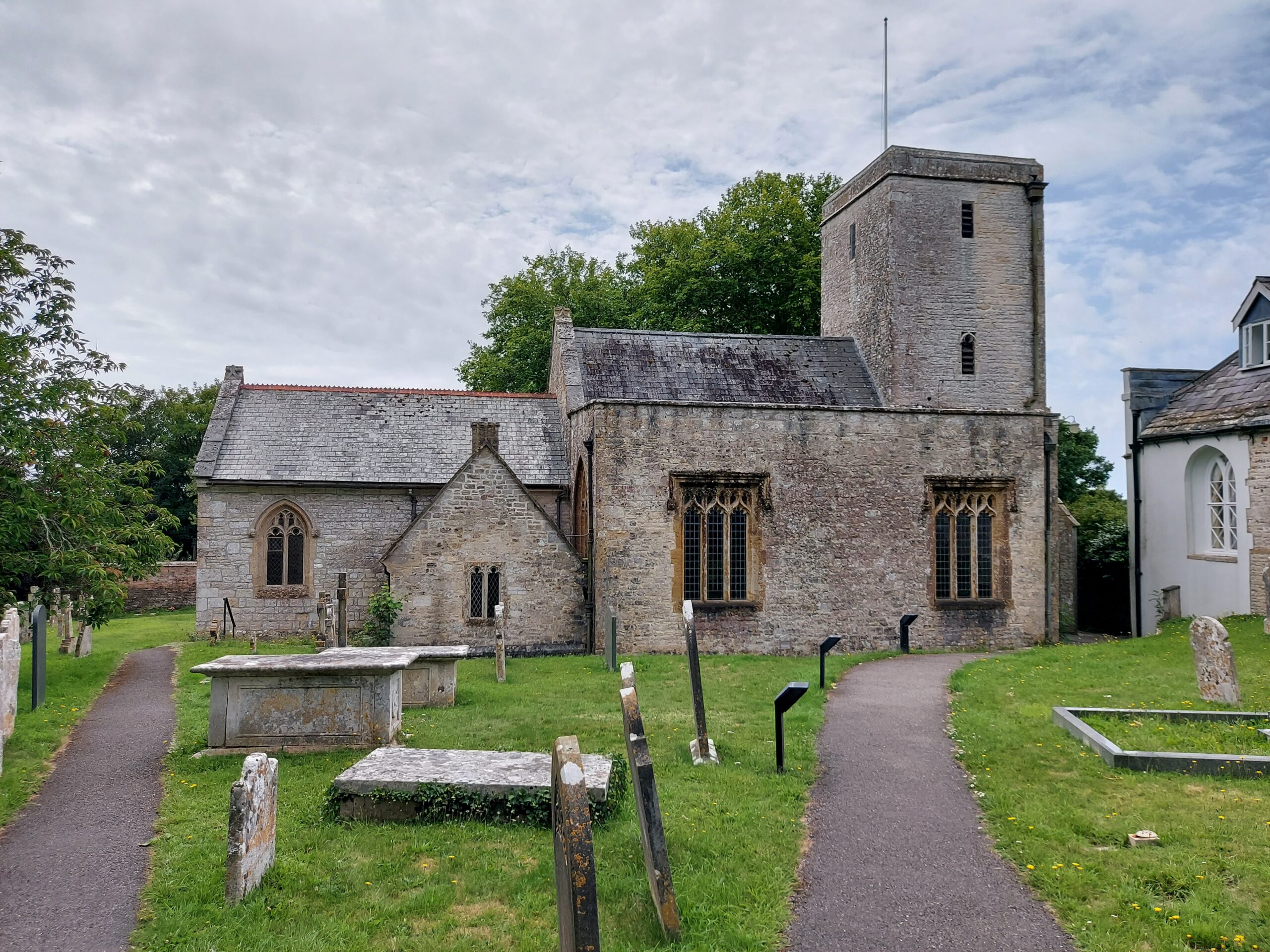
I then walked down to the Hardy’s Birthplace Visitor Centre and had a little rest, before walking to Stinsford via the scenic route – this involved crossing the little stream Angel carries Tess over in Tess of the D’Urbervilles. St Michael’s Church in Stinsford is the ‘Mellstock Church’ featured in Under the Greenwood Tree, and is where Thomas Hardy’s heart is buried (the rest of him is in Westminster Abbey). His two wives are buried with his heart, and several of his family members are also buried nearby. Hardy was baptised here and grew up attending this church. Grade I listed, it is a beautiful historic church, built in medieval times albeit with further adaptations and changes over the centuries.

An ancient church
St Michael’s Church, Stinsford

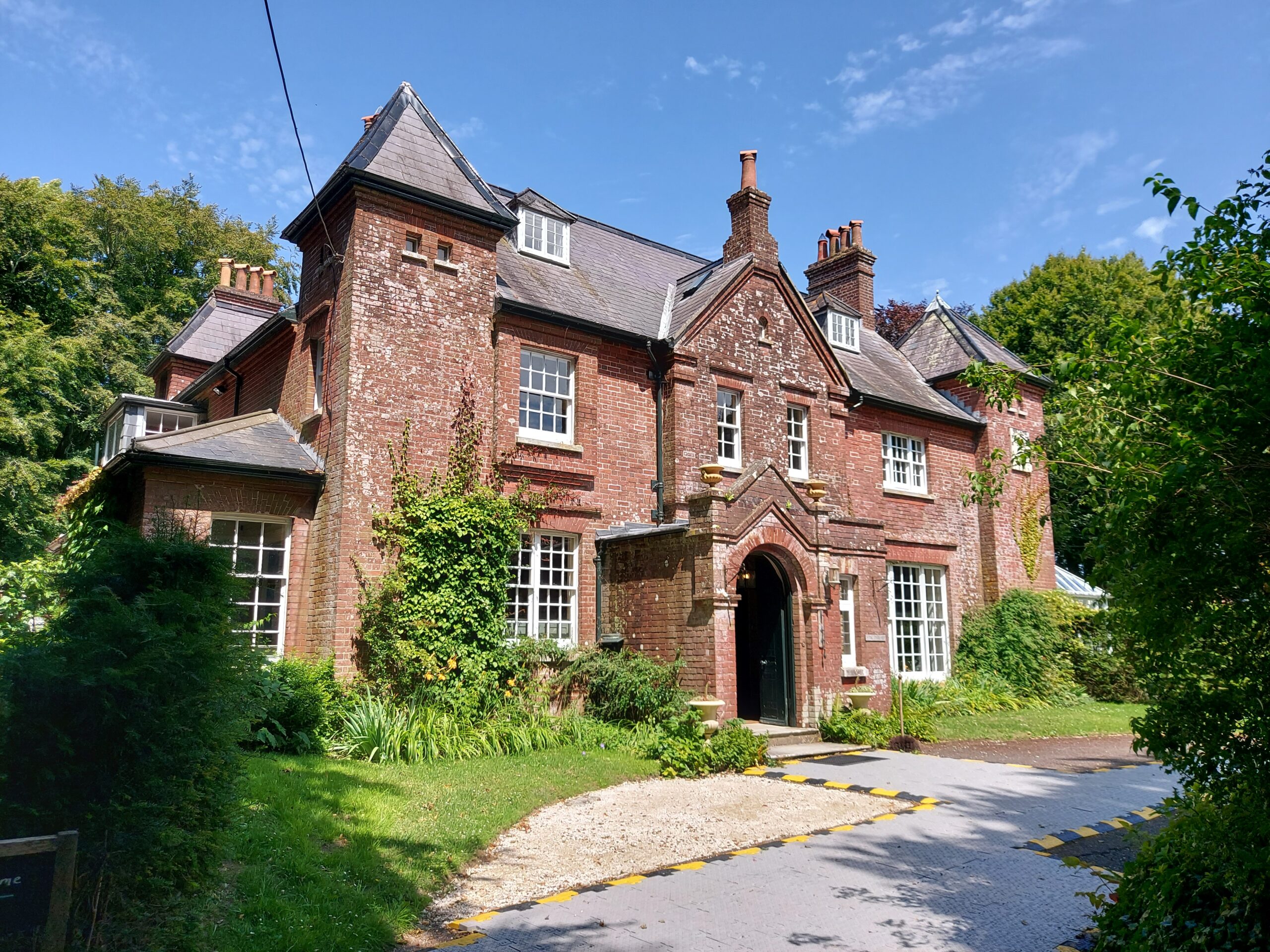
At this point, one of the couples from the earlier tour arrived, and kindly offered me a lift to Max Gate. Hardy, a trained architect, designed this house (built by his father and brother) in 1885, naming it after a local tollgate keeper called Henry Mack. It reflects his desire to be seen as part of society and his role as a successful writer. Here, Hardy wrote his most famous novels, Tess of the D’Urbervilles and Jude the Obscure, as well as a large amount of poetry. He lived here until his death in 1928.

A red brick Victorian house
Max Gate

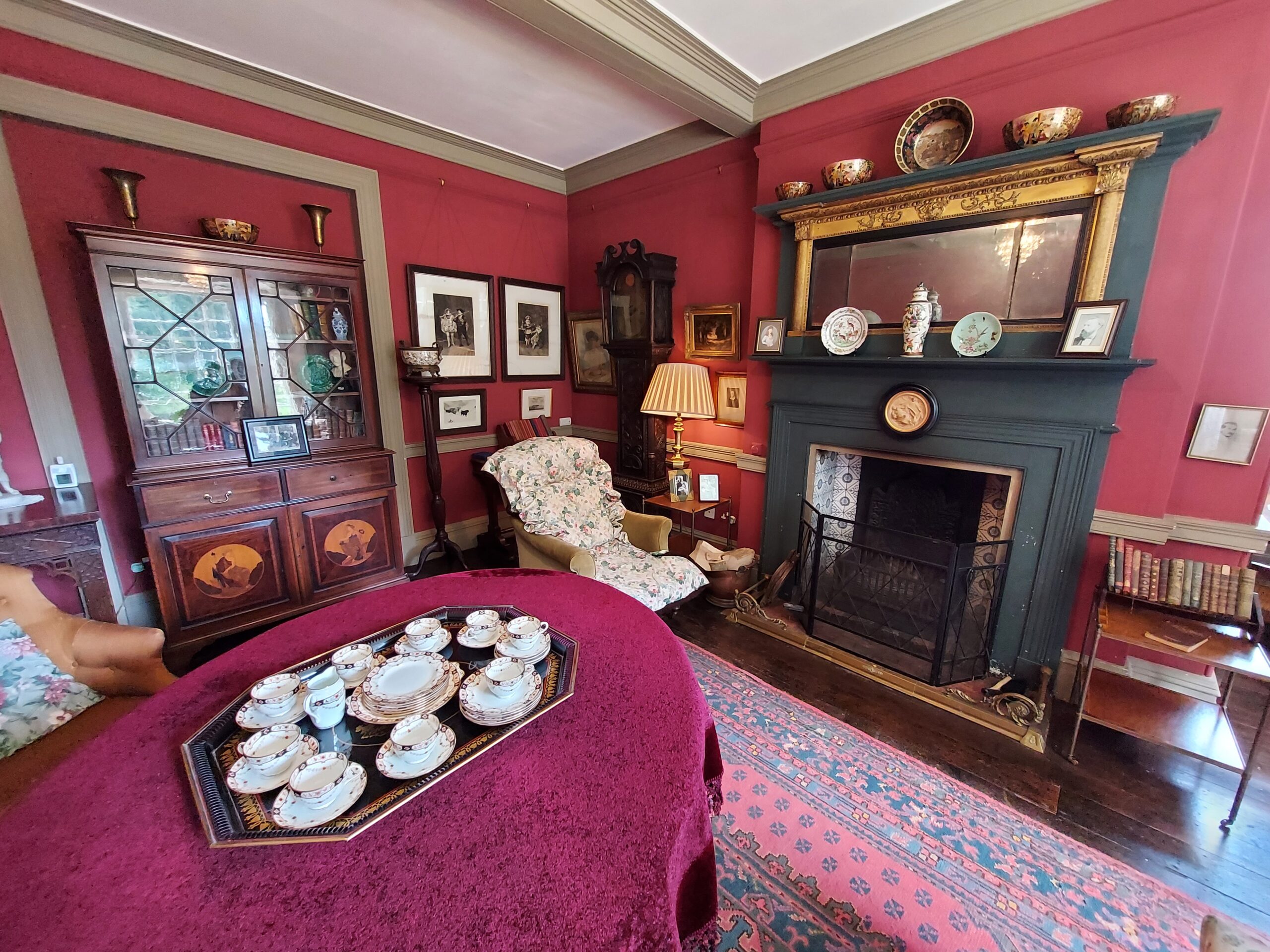
Much of the house’s furniture is sadly not original, as many of Hardy’s possessions were dispersed before the National Trust acquired it. However, rooms have been re-furnished to reflect how they looked in Hardy’s time (his study is now in the Dorset Museum). In this house, his relationship with his wife Emma deteriorated; she eventually came to live more or less separately from him, in some attic rooms which I found incredibly appealing but may have been less so to her, given the circumstances. After her death, and despite his second marriage to Florence, Hardy felt increasingly guilty about his behaviour to Emma, and wrote passionate love poems in her memory.

A Victorian parlour with red walls
Inside Max Gate

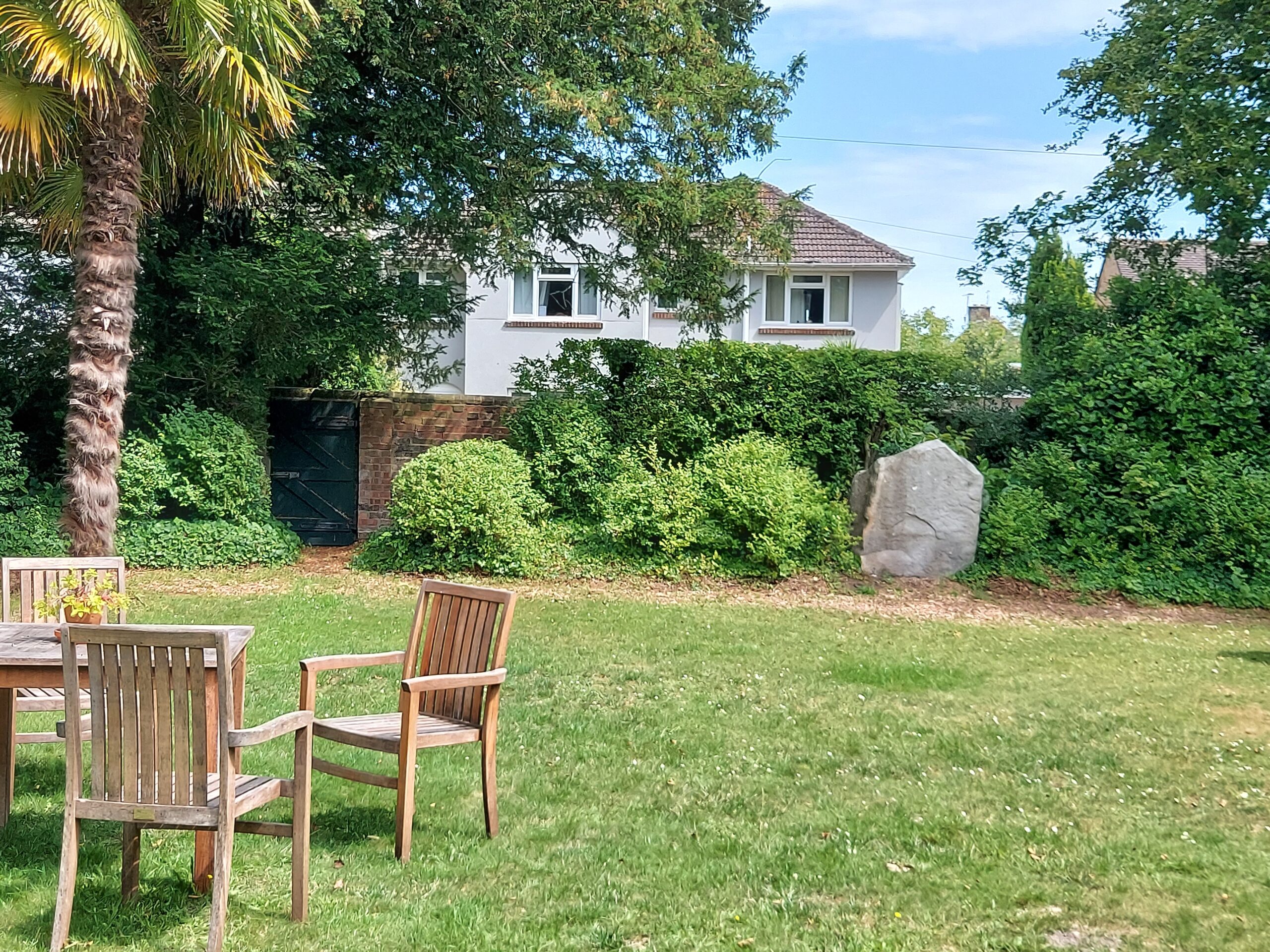
The garden remains much as it was originally designed, with high walls and trees to protect Hardy’s privacy. He apparently used to dart out of the side gate if a visitor arrived whom he did not want to meet. There is a small graveyard in which some of his beloved pets were buried, including his dog. When the house was under construction, Roman relics were found on the land, not to mention half of the Neolithic interrupted ditch enclosure known as Flagstones. This was discovered in the 1980s, many decades after the discovery of one single sarsen stone, which Hardy called ‘the Druid Stone’ and had erected at the edge of his lawn.

A garden with an ancient stone
Hardy’s ‘Druid Stone’

My visit to these three locations was the fulfilment of a long-held ambition to see these places so key to Hardy. I enjoyed every part of my holiday in Dorset, but this was my favourite.

Glamping in Dorset

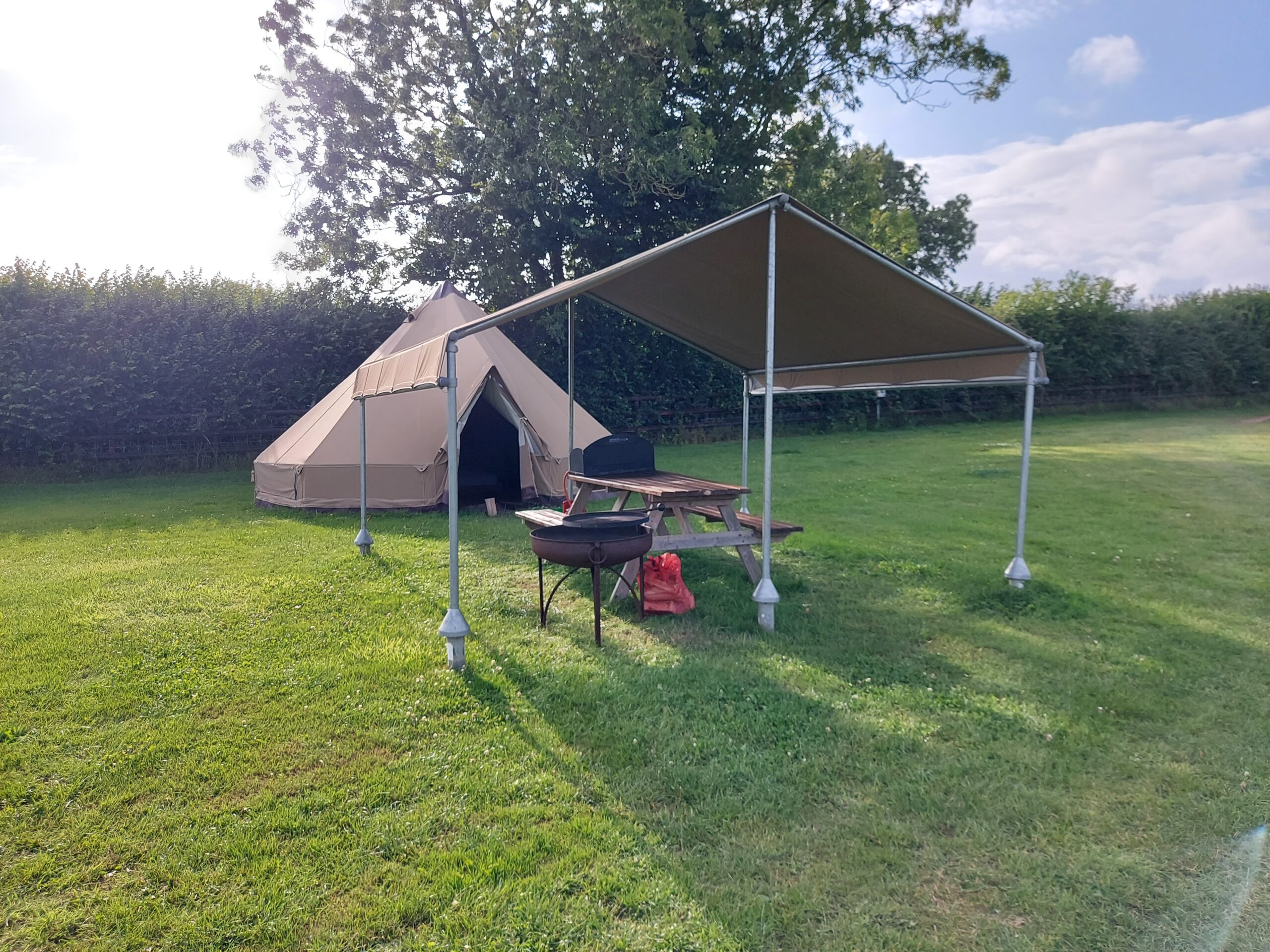
A bell tent with a canopy, picnic table and fire pit in front of it

As part of my Glamper badge, I had to experience a stay of at least 2 nights in a pre-erected tent. For my Silver Maverick, I also had to camp out for at least three nights. I decided to combine the two and stay for three nights at Thorncombe Farm near Dorchester. I stayed in a lovely bell tent with a double bed, fridge, camping stove and fire pit. The campsite also had friendly sheep and goats in the next field!
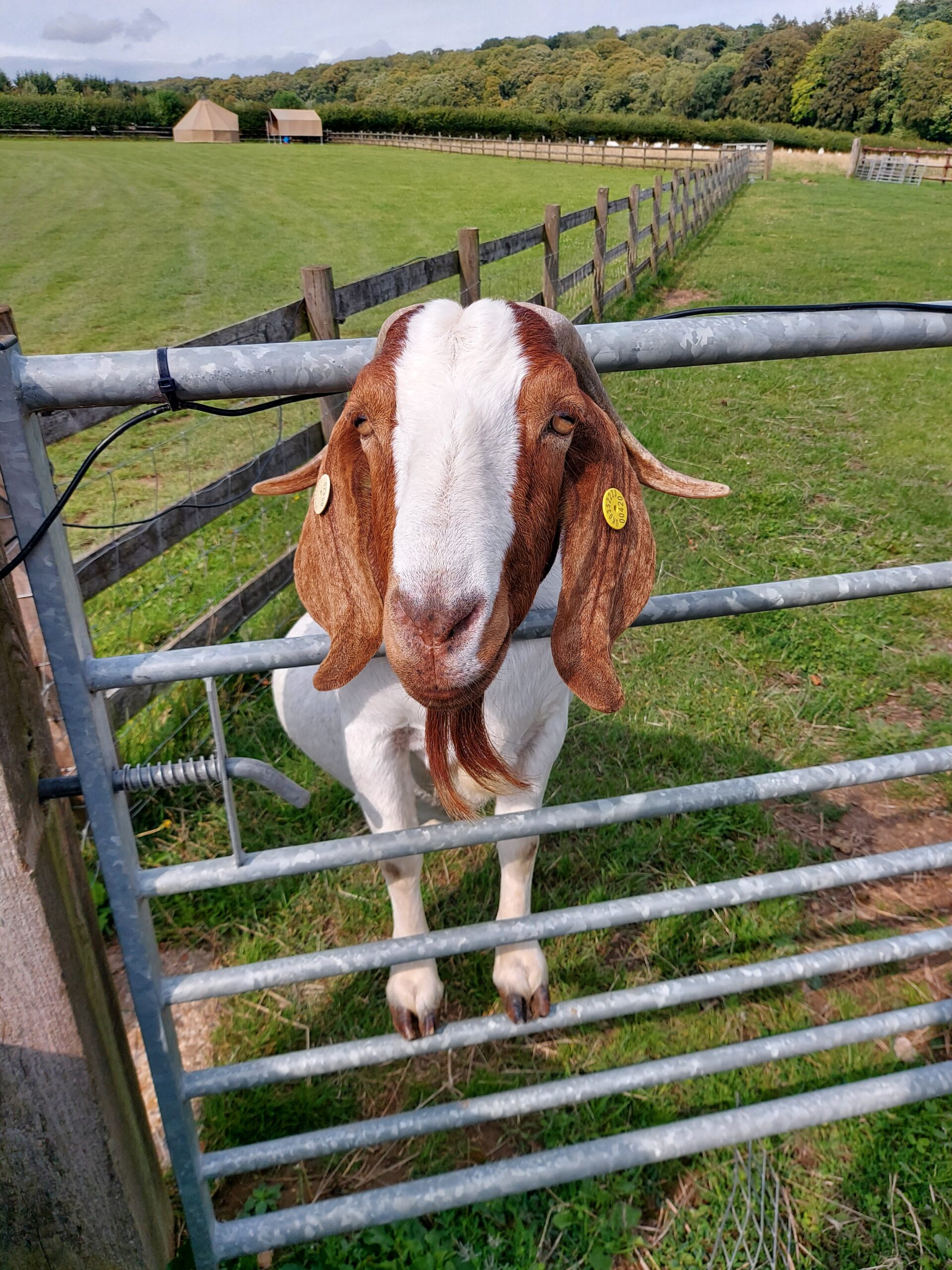
A goat

The last time I visited Dorchester I was a child, and since then I’ve become a fan of Thomas Hardy. I decided I wanted to spend one day focusing on Hardy-related sights (which I will write about in a separate post) and focus on Rebel stuff the rest of the time.

I bought a new rucksack for the occasion, which had a detachable smaller backpack for day trips. I love it but it definitely made me look a bit like a turtle!

My train was from Waterloo to Dorchester South. From there it was a short walk through the town and a half an hour or so stroll from there to the campsite. It’s not easy to find a campsite that you don’t need a car to reach!
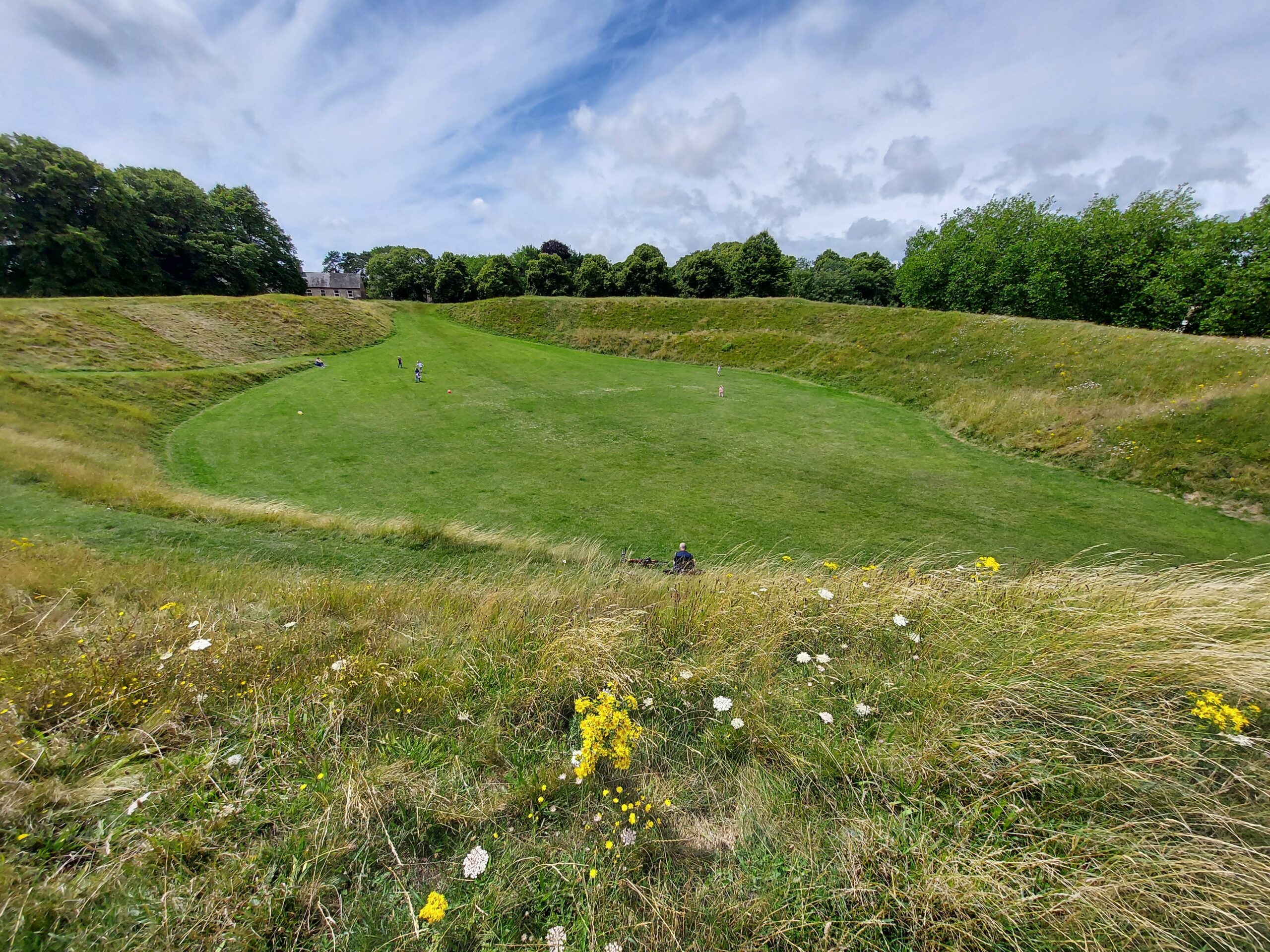
Maumbury Rings

As soon as I got there I went exploring and came across Maumbury Rings Roman amphitheatre, which was also a neolithic henge and, during the English Civil War, a fort. After that, I walked down to Maiden Castle, which is an Iron Age hill fort. It was a fascinating place to be, and full of friendly sheep. It was a bit creepy at first as there was no one else around, but then I found the more popular part and there were loads of fellow walkers.
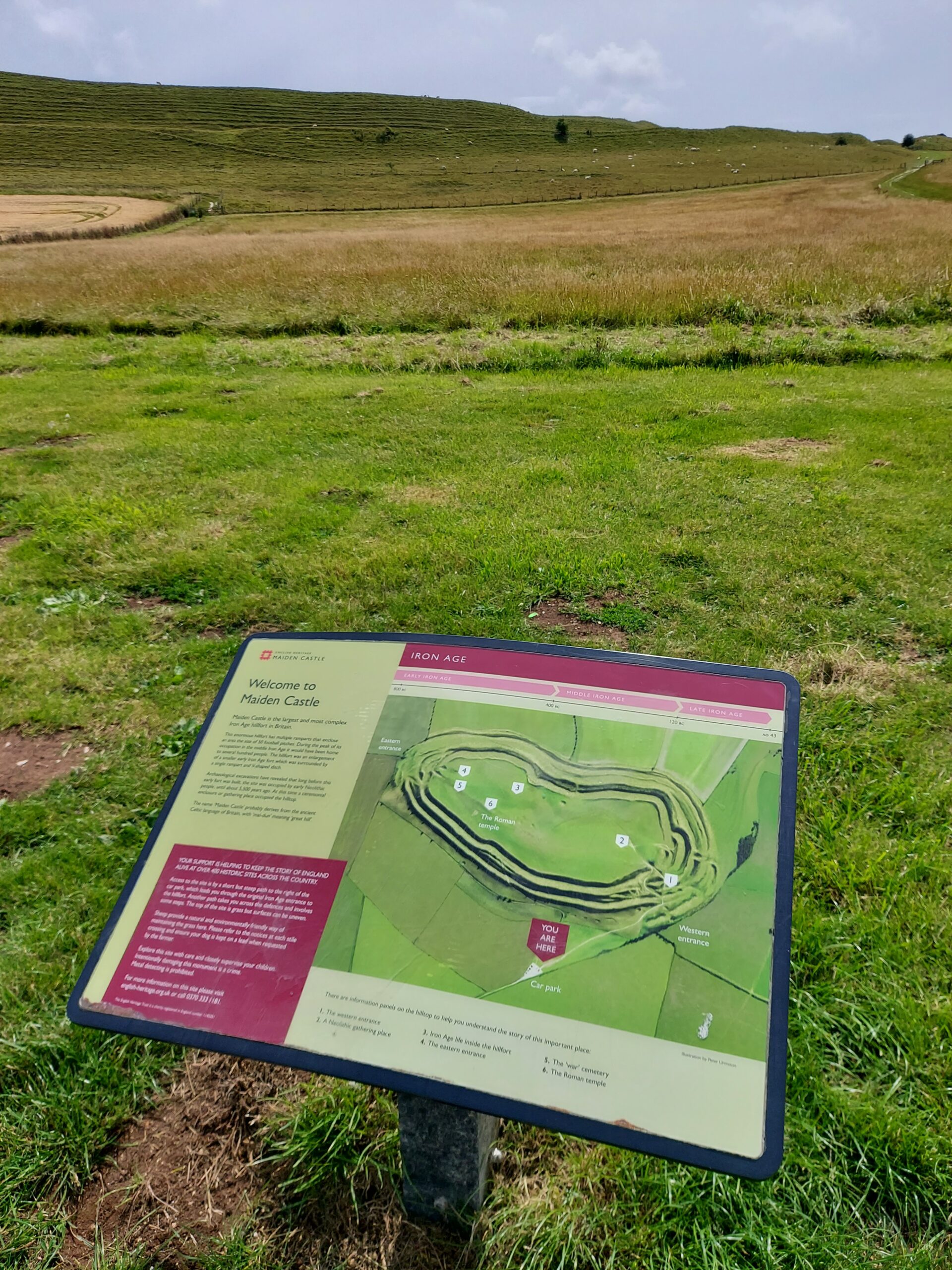
Maiden Castle

That first night, I cooked a stew on the camping stove (saving the rest for another night) and enjoyed the quiet and the outdoor experience. I also took part in a virtual meet up with other Rebels, and showed them the goats!
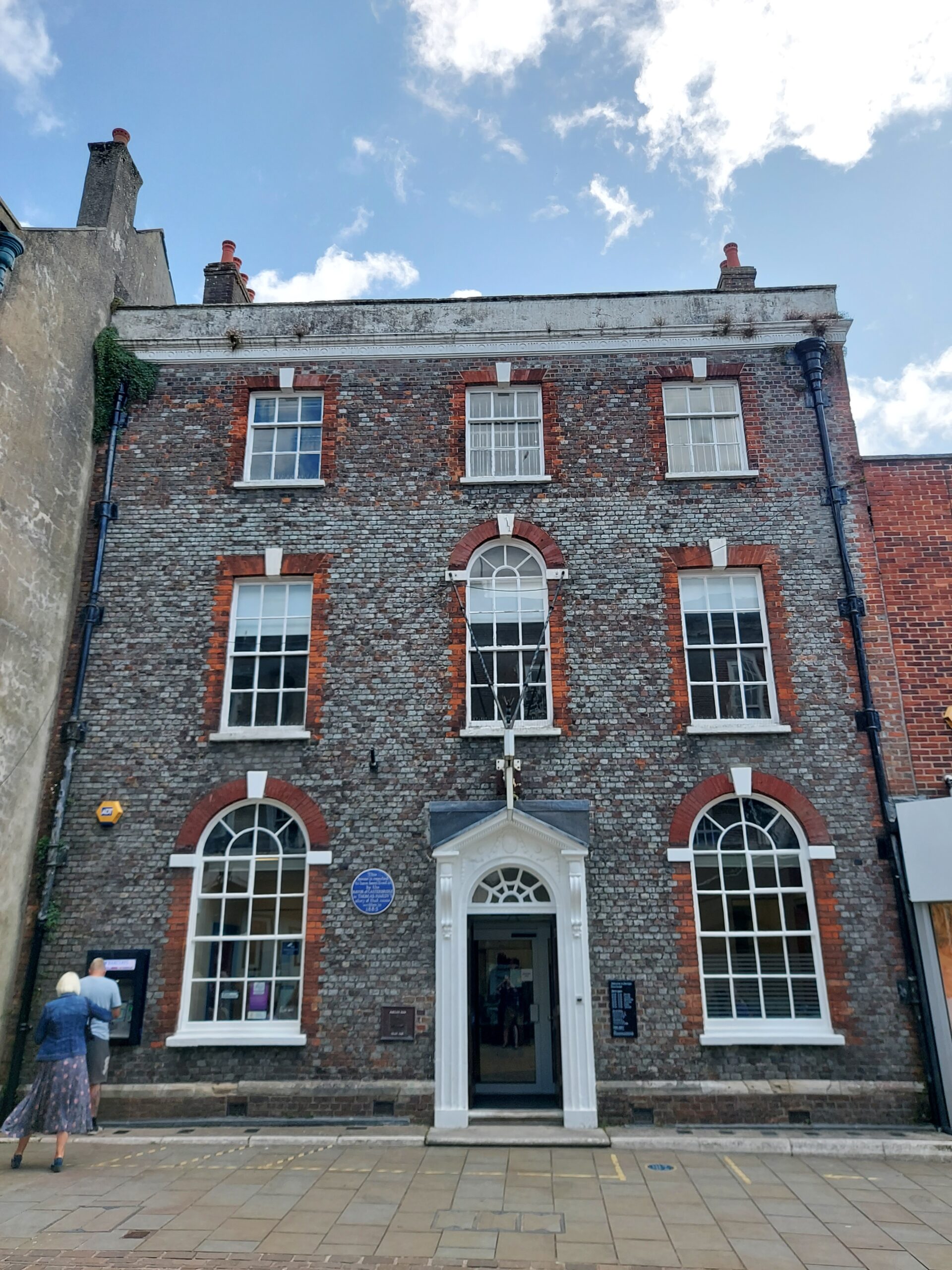
The next day also happened to be my birthday. I had a wander through Dorchester and found the house reputed to have been lived in by Henchard in The Mayor of Casterbridge. I was going to visit the Teddy Bear Museum, which I visited as a child, but the entry fee was pretty steep so I didn’t bother. I did visit Dorset Museum, which I was really impressed with. There was a beautiful Victorian Hall with a genuine Roman mosaic floor, and all the exhibits were well laid out.

The section on ‘Hardy’s Dorset’ was my favourite, featuring a recreation of Hardy’s study including his desk and personal belongings from his house, Max Gate. Items belonging to him, including his scarf, the pens with which he wrote his most famous novels, the original manuscript of The Woodlanders and his perpetual calendar – kept to the date on which he met his first wife Emma – are all displayed.
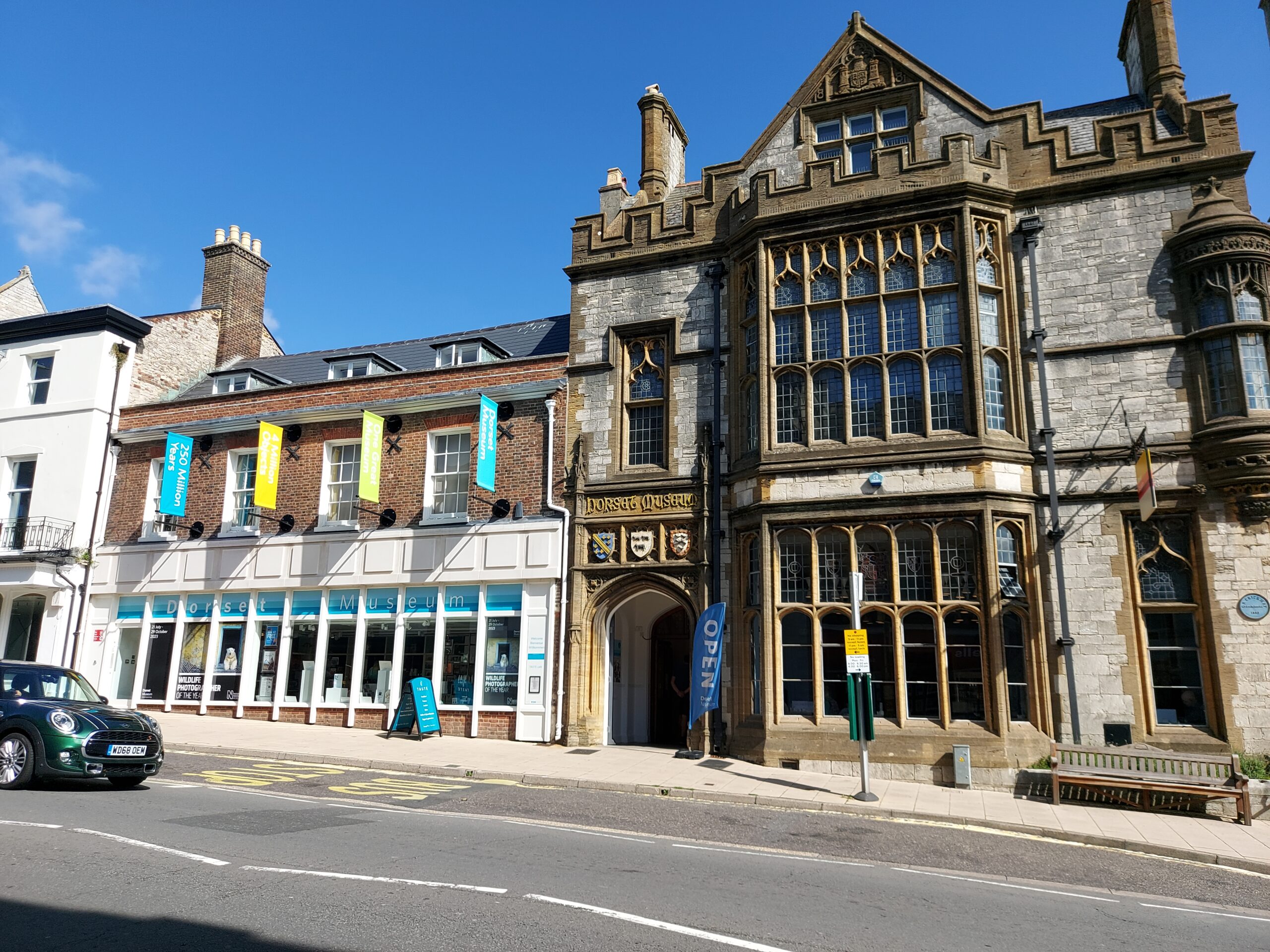
Dorset Museum

I also enjoyed ‘Natural Dorset’, which looks at fossil finds on the Jurassic Coast including the Weymouth Bay Pliosaur skull. This section also features microfossils and the stories of how people have used and explored the county’s natural landscape, as well as a look at its wildlife.

‘Artists’ Dorset’ features work by the sculptor Elisabeth Frink alongside portraits by Thomas Gainsborough and George Romney. There is a section on the creative community in Chaldon Herring, including novelist Sylvia Townsend Warner and her partner, the poet Valentine Ackland. ‘People’s Dorset’ includes archaeological finds from the Bronze Age and from Maiden Castle, as well as Roman Dorchester. It also features items from agricultural workers as well as wealthier inhabitants of the county, ending with stories from 20th century Dorset.

I got the bus to Weymouth from outside the museum. I had a quick stroll on the seafront, which was pleasant, then caught the bus to the Isle of Portland. I stopped to look for fossils on the beach, but didn’t manage to find any!
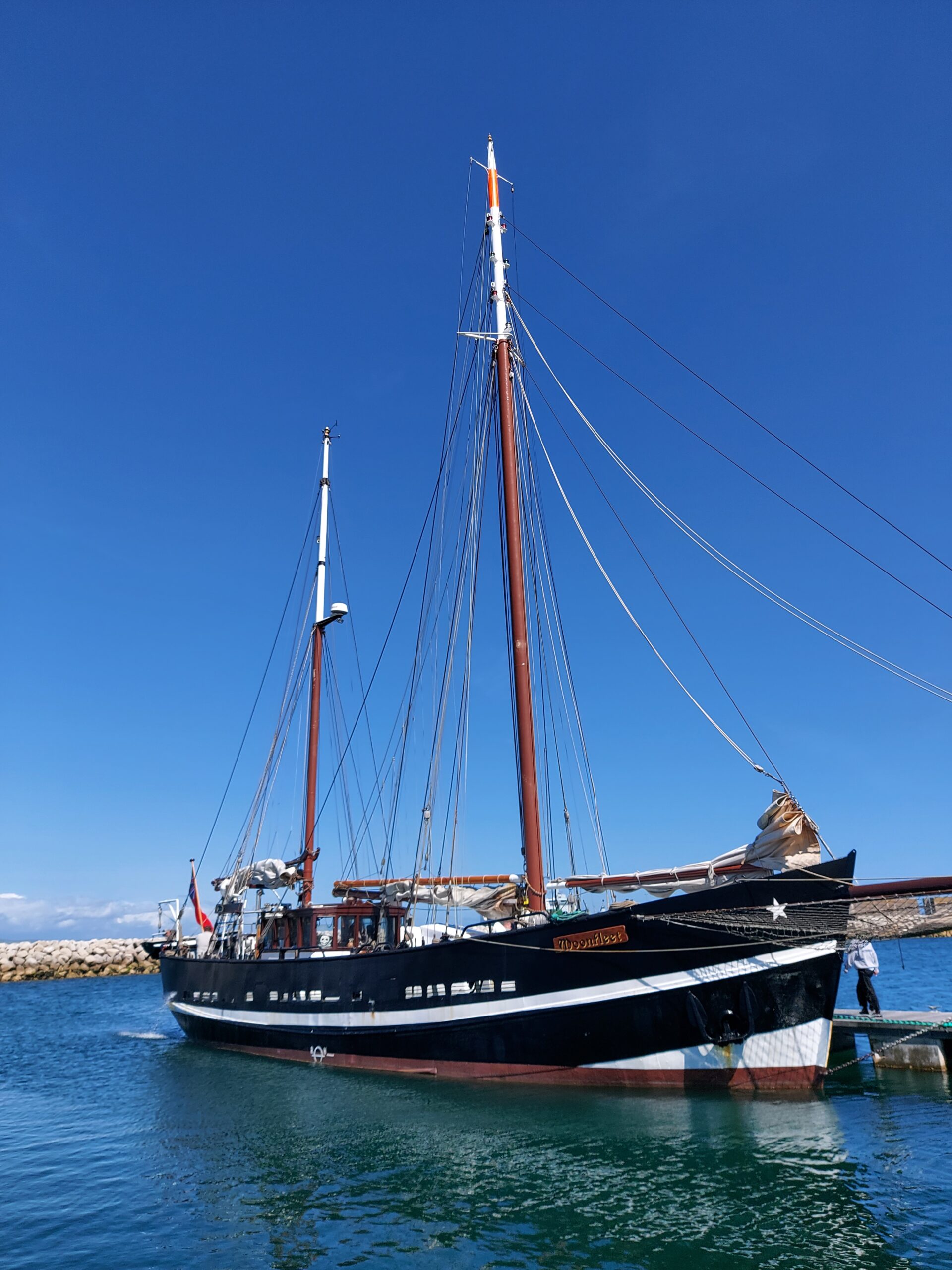
A sailing ship

I then went sailing in Weymouth Harbour with Moonfleet Sailing. I got to help with the sails and learn a little about how sailing ships work. I spoke to a pleasant couple from the Netherlands who had experienced pretty much every kind of weather possible during their short visit to the UK! We also saw dolphins, although I didn’t manage to catch more than a quick glimpse at them.

That evening, I had a go at making a camp fire, and cooked my tea – veggie burgers, broccoli and pre-cooked fries – on it. This was reasonably successful, but the s’mores I tried to make afterwards were not. Blackened and charred, they were inedible.

The next day was my Thomas Hardy day, and the day following I was due to go home. Before I left I followed the river to the north of the town and then visited the Roman Town House – a beautifully preserved example of Roman architecture, and the only fully exposed Roman Town House in the country.
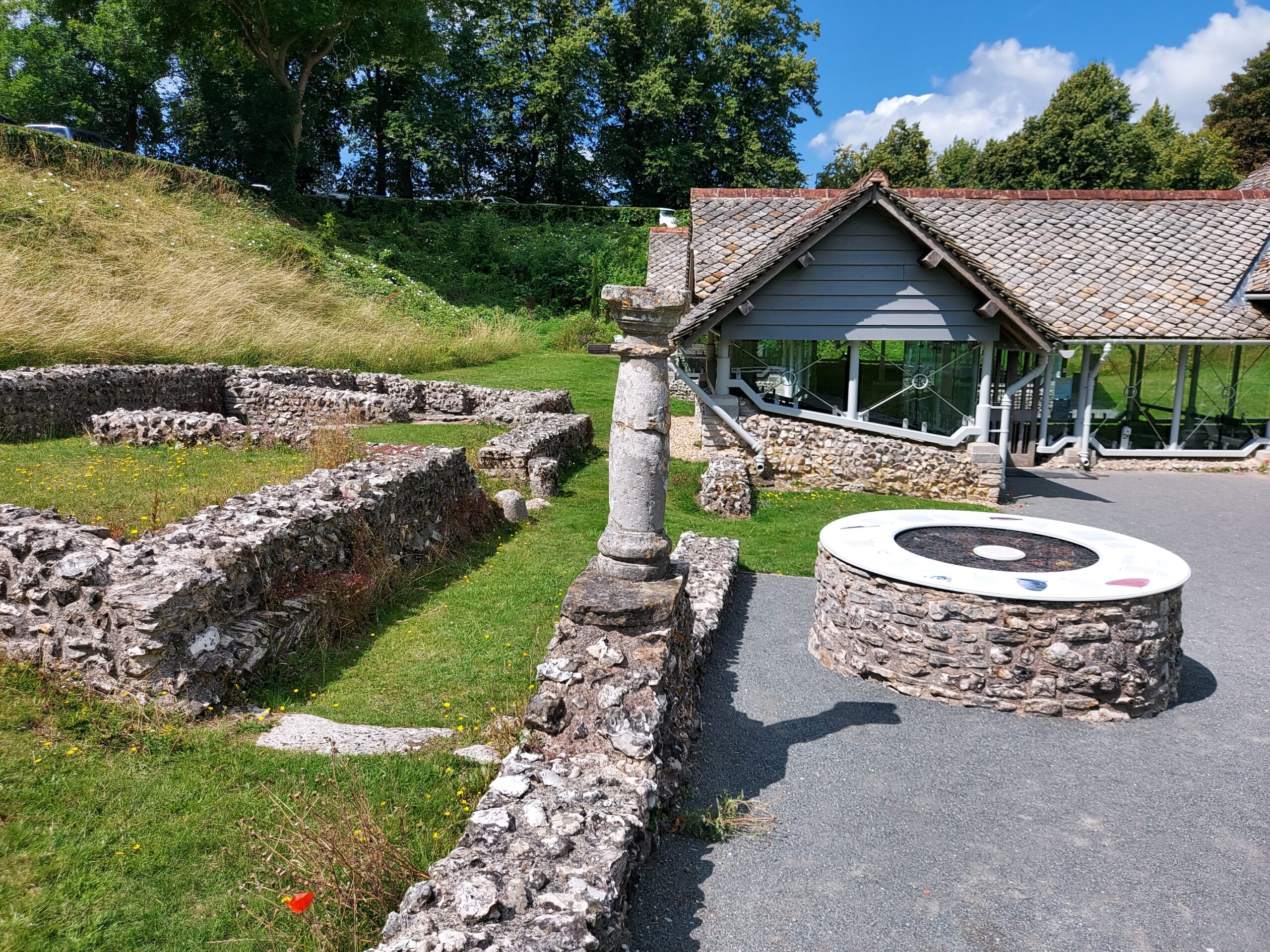
Roman Town House

Nunhead Cemetery: Crypt & Chapel Tour

I visited Nunhead Cemetery several years ago, as part of my ‘Magnificent Seven’ tour, and recently went back while I was completing the Green Chain walk. This reminded me that I never did visit the crypt, and after checking the Friends of Nunhead Cemetery website I found out that Crypt & Chapel tours ran on certain dates. I therefore resolved to pop down and attend one.

Nunhead Chapel from the outside

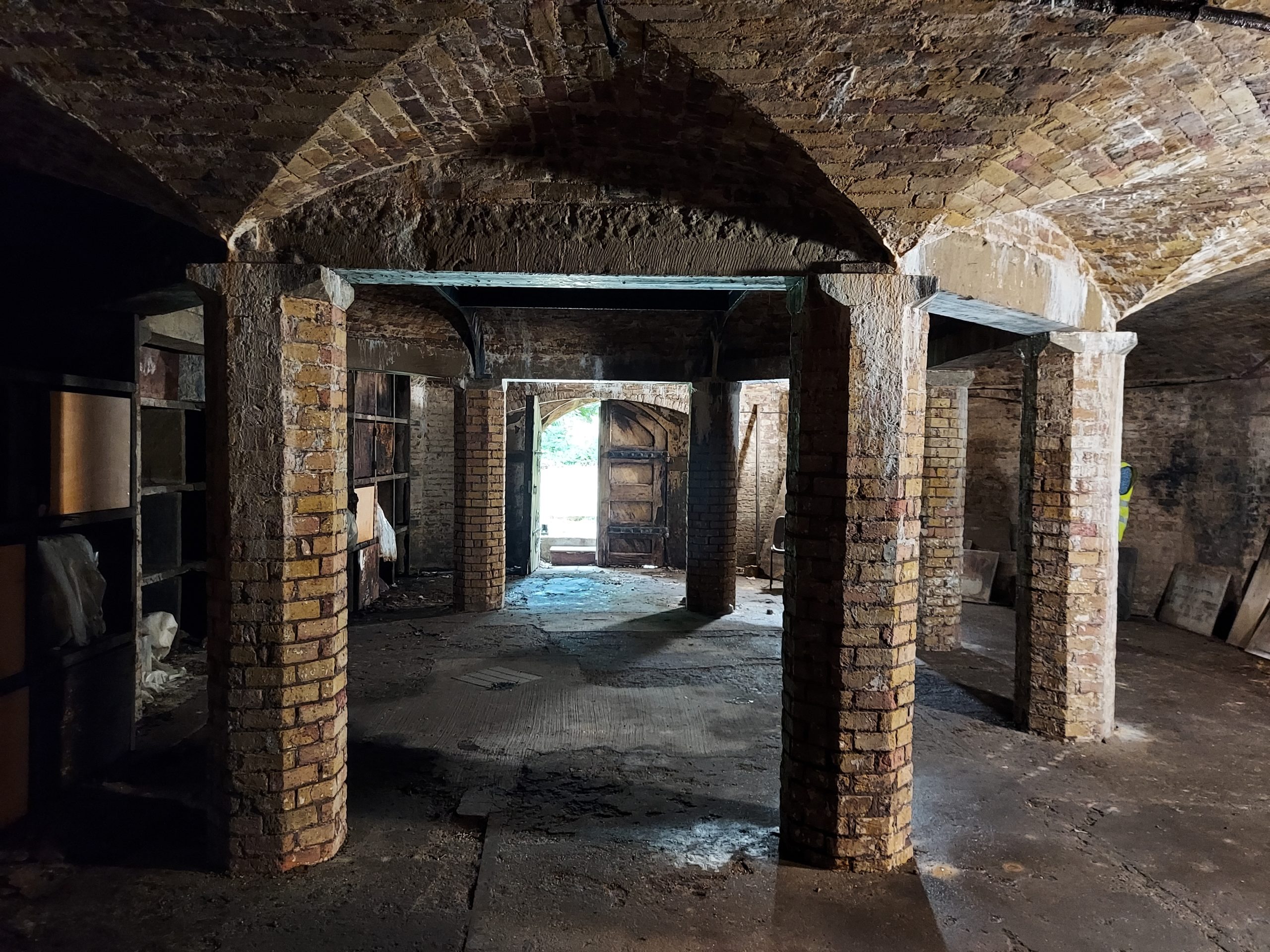
The crypt is located beneath the chapel. At one time it was considered the most prestigious place to be buried, and the most expensive. Those buried here had their own space with a metal plaque to identify them. Mourners could come down to the crypt (there is evidence of heating pipes and a space for a gas lamp) to view their loved one’s final resting place; there are two spaces either side of the main area which could have been used as waiting areas. The architecture is simple but impressive, and I imagine this could once have been quite a grand space.

Nunhead Crypt

Sadly, when the cemetery went out of business, the chapel burnt down due to arson and the crypt was vulnerable to the elements. It was also broken into, and thieves opened and ransacked the coffins in search of valuables, dispersing the bodies around the crypt in the process. Some years ago, there was an attempt to put the pieces back together, and the remains are now in some sort of order, but it’s no longer possible to identify which body belongs to which named individual, which seems sad. The spaces for the coffins are covered with basic wood plaques, and the atmosphere as a whole is rather damp and dingy. Personally I feel that those who chose burial in the cemetery itself, with an elaborate headstone, made the better choice – even the weathered and damaged monuments have a kind of grandeur about them.

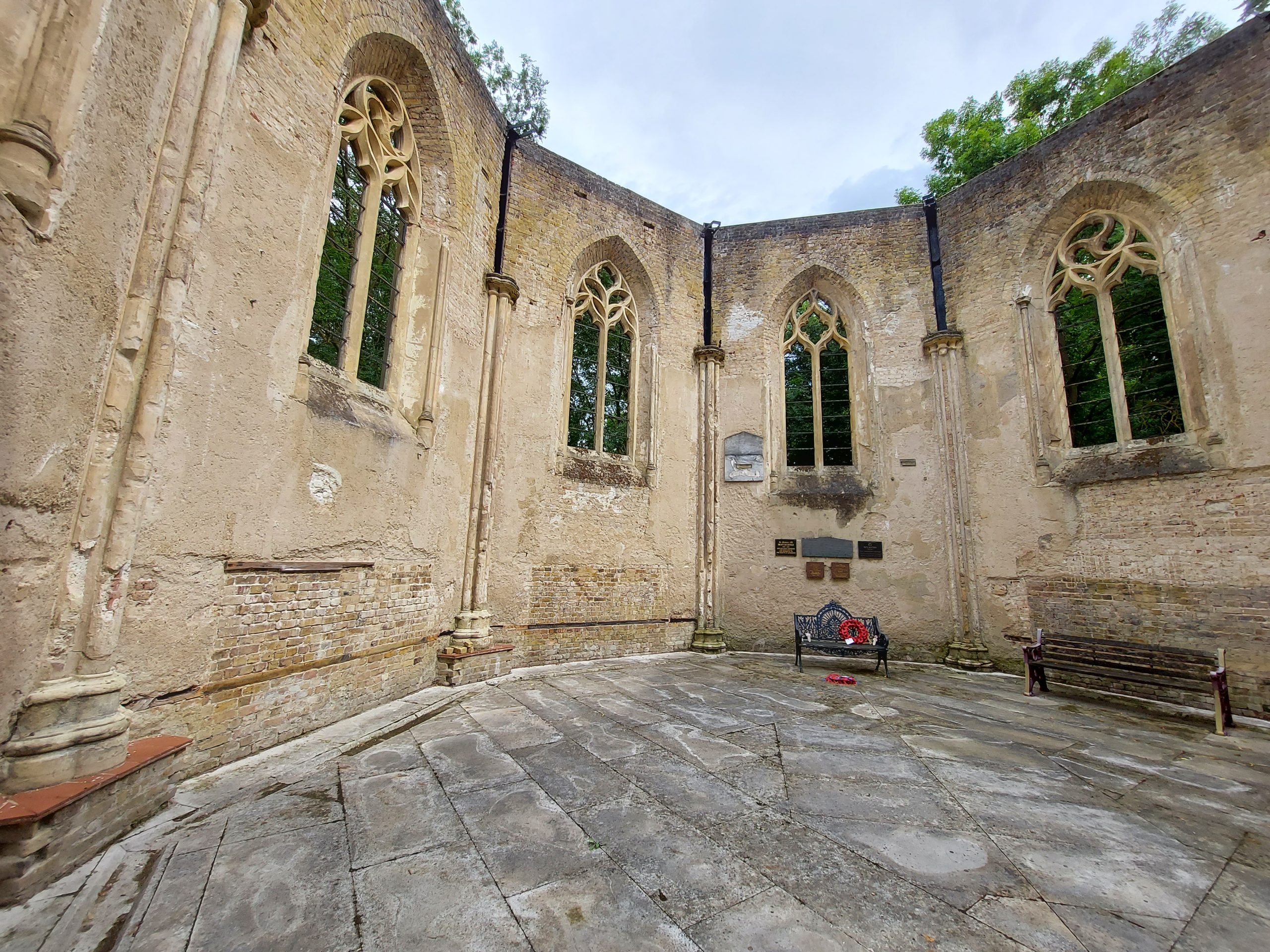
The ruined Anglican chapel, on the other hand, has a rather pleasant feel about it. The arson attack which made it into a shell is undoubtedly a shame, but the chapel is now open to the air, and is rather nice. You can still see the marks on the wall where the pews used to stand. Some of the wall decorations are rather fragile, but overall the chapel seems to be standing up pretty well.

The interior of Nunhead Chapel

Rebel Badge Club: Walker

I decided to work on the Walker badge during April, May and June. I signed up to The Conqueror LOTR challenges at the beginning of the year and thought it would be a good way of getting my steps in.

At the beginning of April, I was staying with my parents, and began going for walks at lunchtime. I also went on holiday to Rome and did a LOT of walking.

The Roman Forum
The Roman Forum

During May, I carried on going for lunchtime walks and also completed the Jubilee Greenway walk, a 60km route around London.

In June, I kept up my lunchtime or evening walks (as it was starting to get warmer) and also completed the Green Chain walks, totalling 82km, around south east London.

I’m pleased to report I smashed my distance targets each month! I also got to see new parts of London, relax and enjoy nature.

Date completed: 30 June 2023

Rebel Badge Club: My Story

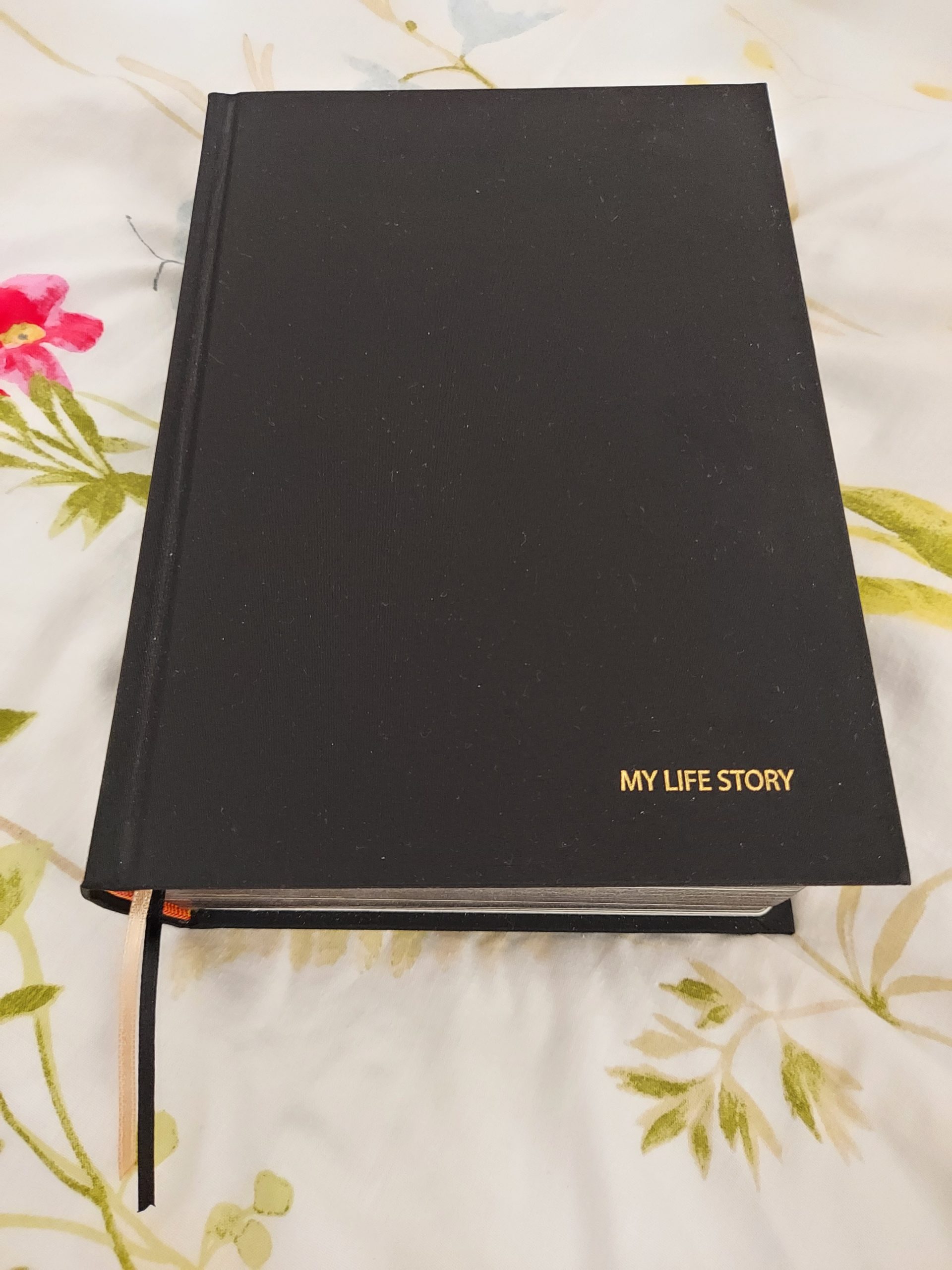
a black hardback journal with 'MY LIFE STORY' printed on the front

As part of the ‘Life Less Ordinary’ quarterly challenge, I had to complete the My Story badge. This gave me a chance to complete the ‘My Life Story’ book I bought several years ago and which has been languishing in my drawer ever since.

I’m so glad I’ve finally got around to filling this in: I will make sure I keep it up to date as time goes on.

Date completed: 30 June 2023

Rebel Badge Club: Go Wild! (Quarterly badge 3, 2023)

The third quarterly challenge for 2023 is Go Wild! The exclamation mark in the name promises a very exciting challenge and I confess I’ve been looking forward to this for some time. I used to be a definite indoor person, but RBC is changing that.

To complete this badge, I need to do the following:

  • Complete either Stargazer or Nature Lover: I did Stargazer last year so I’m going to work on Nature Lover.
  • Complete two other Wild badges that challenge me: I’ve chosen Survivor and Camper.

I will link to my posts on the above badges once I’ve completed them.

I also have to write a list of 10 adventures I’d like to have, and/or adventurous activities I’d like to try, and achieve one over the next three months. My list is here:

  1. Open water swimming
  2. Ziplining
  3. Archery
  4. Indoor skydiving
  5. Camping
  6. Sailing
  7. See the Northern Lights
  8. Cook on a campfire
  9. Visit an ancient archaeological site
  10. See penguins in their natural habitat

Over the three months I managed to achieve 1, 2, 3, 5, 6, 8 and 9, which I’m really proud of! Hopefully I will be able to try indoor skydiving this year or next year, and at some point in my life I definitely want to see the Northern Lights and penguins in their natural habitat.

Finally, I have to do a different outdoor activity each week over the 12 weeks I’m doing this badge.

The activities I achieved were the following:

  • Open water swimming at Kenwood Ladies’ Pond
  • A tour of Nunhead Cemetery
  • Exploring an Iron Age hillfort in Dorset
  • Sailing near Weymouth
  • A botanical tile workshop featuring foraged foliage
  • A bushcraft experience day in south London
  • A visit to a nature reserve in north London
  • A scavenger hunt
  • Mini golf in Wandsworth Park
  • Rebel Summer Camp
  • A protest against Thames Water at Ham Lands
  • A nature walk in Kensington Gardens

Rebel Badge Club: Rebel Health Check 2023

The Rebel Health Check badge was so popular last year that it’s returned this year – bigger and better! Once again there are a number of clauses to choose from. In the past year I’ve kept up with screenings and checks, had an eye test, and registered with a new dentist (thanks to my old one retiring), so for the badge I’ve chosen the following clauses:

Water

I rarely drink enough water, although this is really important especially in the summer. Thanks to the Good Habits badge I try to drink a small bottle of water each morning, and I’ve decided to try and drink at least three small bottles of water a day for this badge.

Exercise

I am doing the Walker badge at the moment anyway, so I decided to recommit to reaching my target distance of 150km this month. I also want to complete the Green Chain walk around South East London.

Sleep

I find it tricky to get to sleep early enough – my mind won’t stop racing and I feel like I’ve got so much to do. I’ve tried to get ready for bed at roughly the same time each night and read a book (not on my phone) to help me feel tired.

First Aid Kit

All my existing medicines are in date, but I bought myself a new first aid kit. It fits in with other badges too and will come in handy when I go to camp!

Green and white first aid kit

Mental Wellbeing

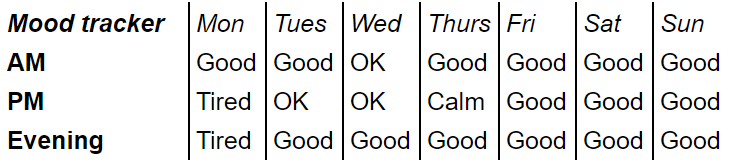
For the first full week of June, I kept a mood tracker.

I’m sure my couple of days off work plus Rebel Fest helped to contribute to my good mood! I definitely feel happier when I’m being productive or when I am learning new things. On Thursday I went for a long walk as part of my Walker badge and I’m pretty sure that has contributed too. I need to keep this in mind to maintain my mental health in the future.

Balanced Diet

I tracked my food for a week and it wasn’t great – way too many crisps and biscuits. I made an effort to improve my diet the following week, eating more fruits and vegetables and less chocolate. This is something I definitely need to keep an eye on!

Stonehenge

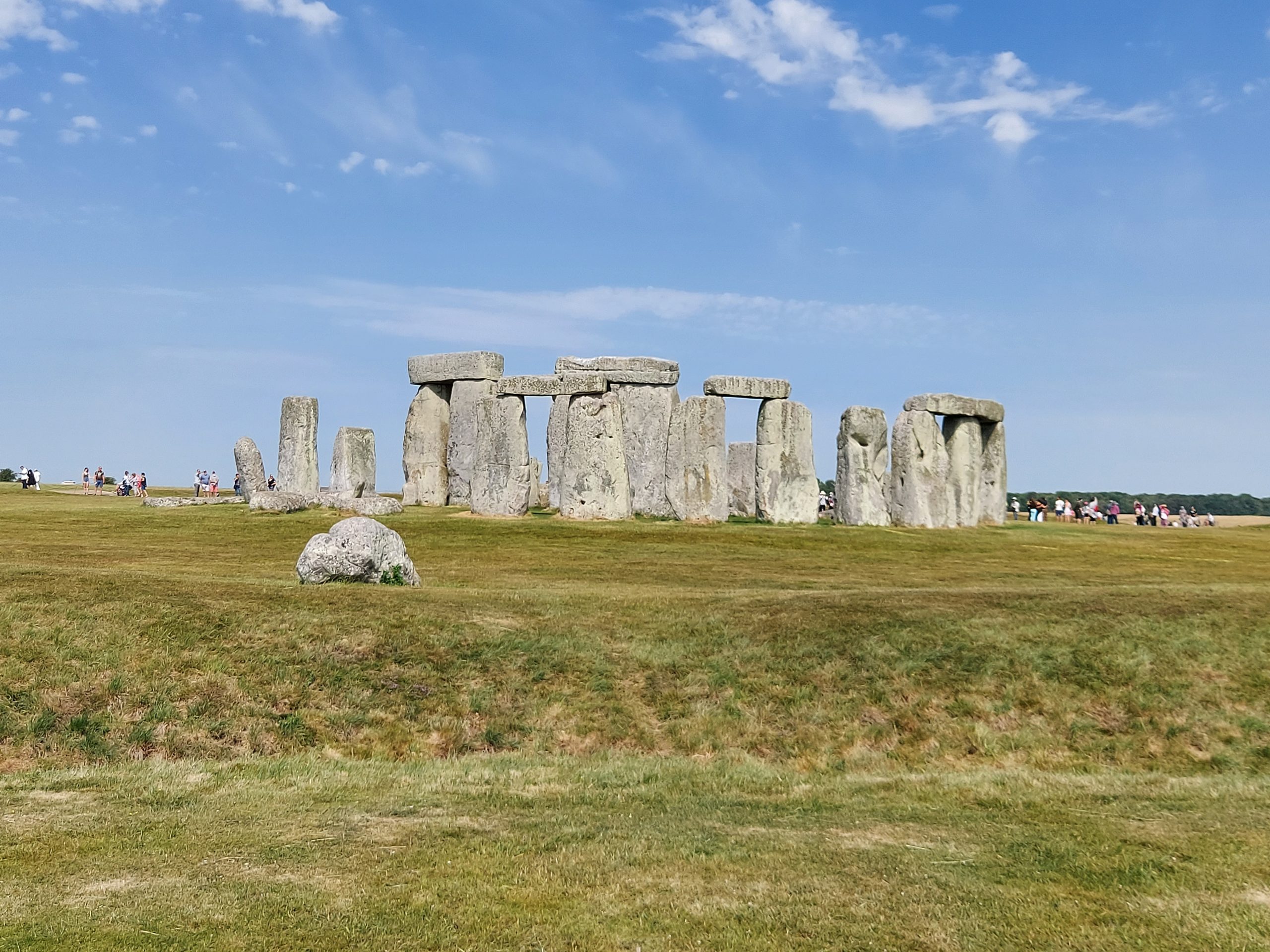
Stonehenge has been on my list of places to visit for years, and I finally got around to visiting this year. I found out that you can sign up for coach trips that take you from central London there and back, so I chose one and arrived bright and early on a Sunday morning.

Stonehenge

The early start proved worth it when we arrived at the site and there weren’t too many people around (as opposed to the huge numbers who had arrived by the time we left). The first thing I did was to hop on the shuttle bus that takes you from the visitor centre up to the Stones. In other circumstances I might have walked, but we only had a limited time at the site, and I wanted to make the most of it.

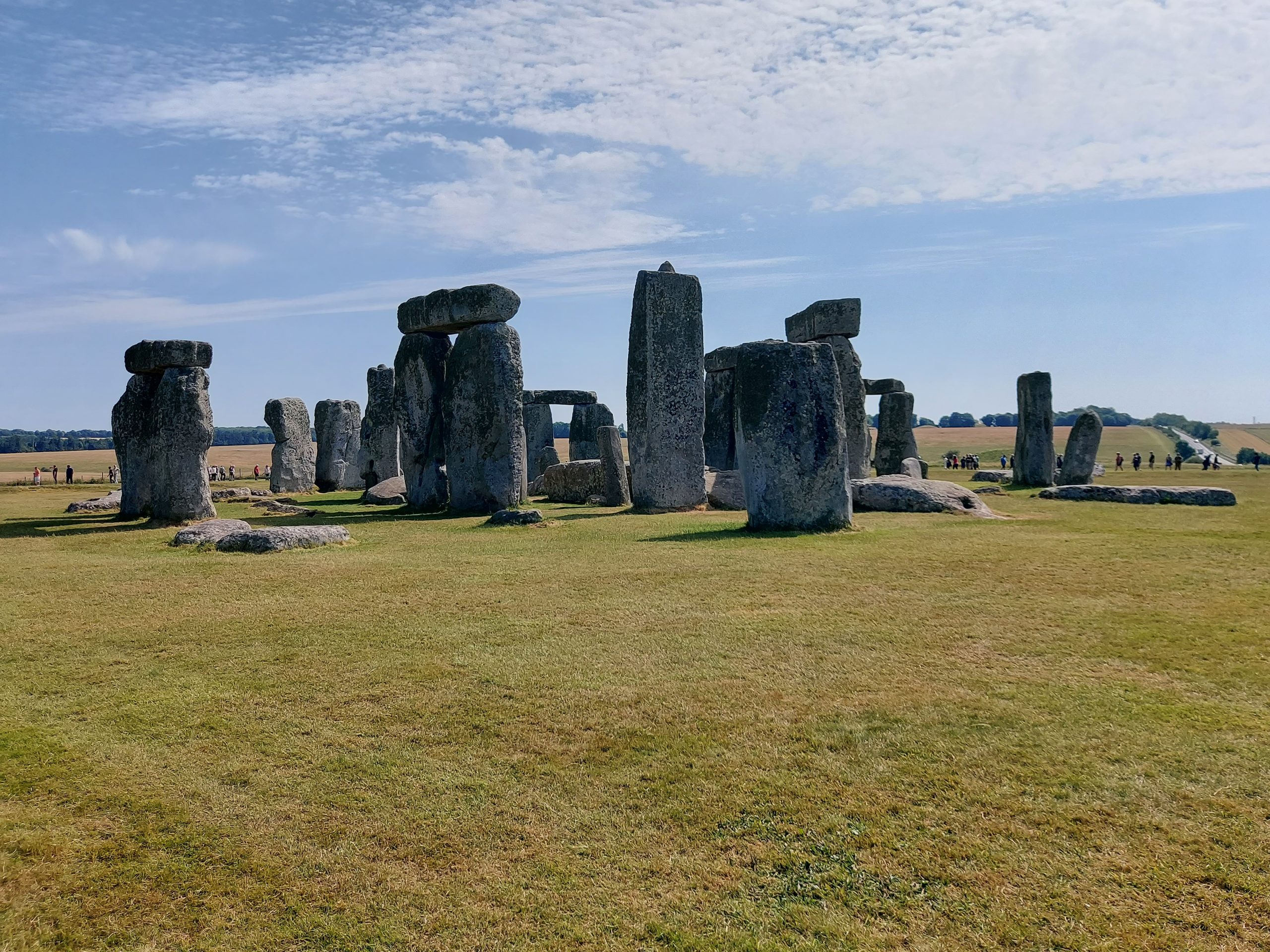
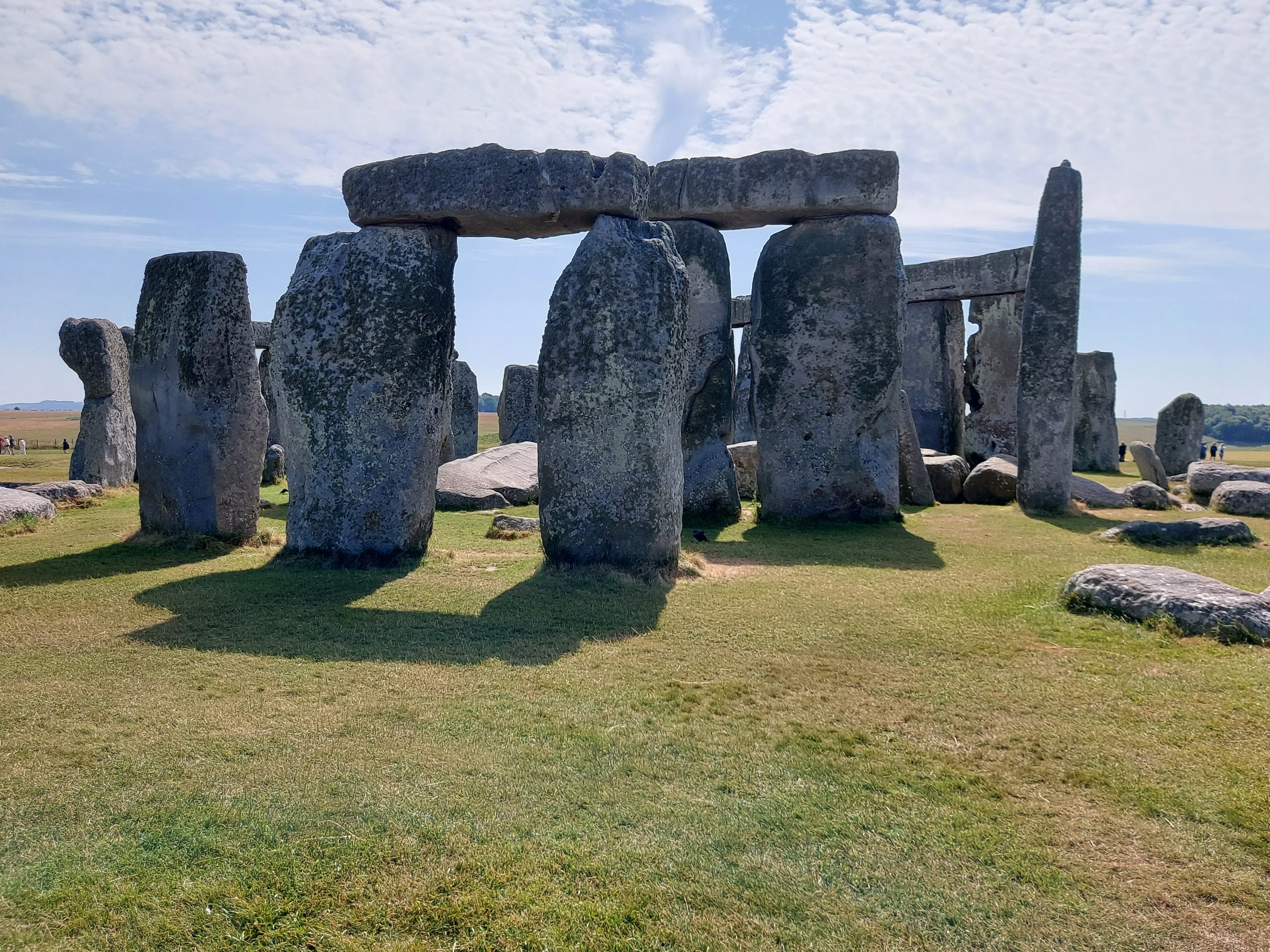
I genuinely found Stonehenge really impressive. There is something magical about a stone circle, in place for millennia on the Salisbury plain. I took my time walking around the site, taking it all in and observing the position of the stones – many have collapsed or been moved since they were originally in place, but it’s still possible to identify the layout as it corresponds to sunrise and sunset during the Solstice.

Stonehenge

I then caught the bus back down to the visitor centre and spent some time looking around the small Neolithic village that has been built outside. I then headed indoors and explored the exhibition, which looks at the life of Stonehenge over the years and how it might have been used, as well as showcasing some of the finds from the site. My favourite theory is that which suggests Stonehenge was a place for the dead, while nearby Woodhenge was a site for the living.

A temporary exhibition, Circles of Stone: Stonehenge and Prehistoric Japan, was fascinating and compared and contrasted stone circles of prehistoric Japan with Stonehenge, built around the same time.

I spent some time looking around the gift shop, but didn’t have time to visit the cafe. I’d brought my own lunch with me, however, so this was no problem.

Overall I’m so glad I got to tick this place off my list – it’s a must-visit.

Stonehenge

FACTS

Address: Near Amesbury, Wiltshire, SP4 7DE

Website: english-heritage.org.uk/visit/places/stonehenge

Opening Hours: Daily 9:30-5

Price: Adult £23, concession £20, child £14

Rebel Badge Club – Mixologist

For the ‘Life Less Ordinary’ quarterly challenge, I had to complete a badge chosen by someone else. I asked my family in our WhatsApp group chat, and after a worrying moment when I thought my brother might select Advanced Adulting, my dad suggested Mixologist. So that’s what I did!

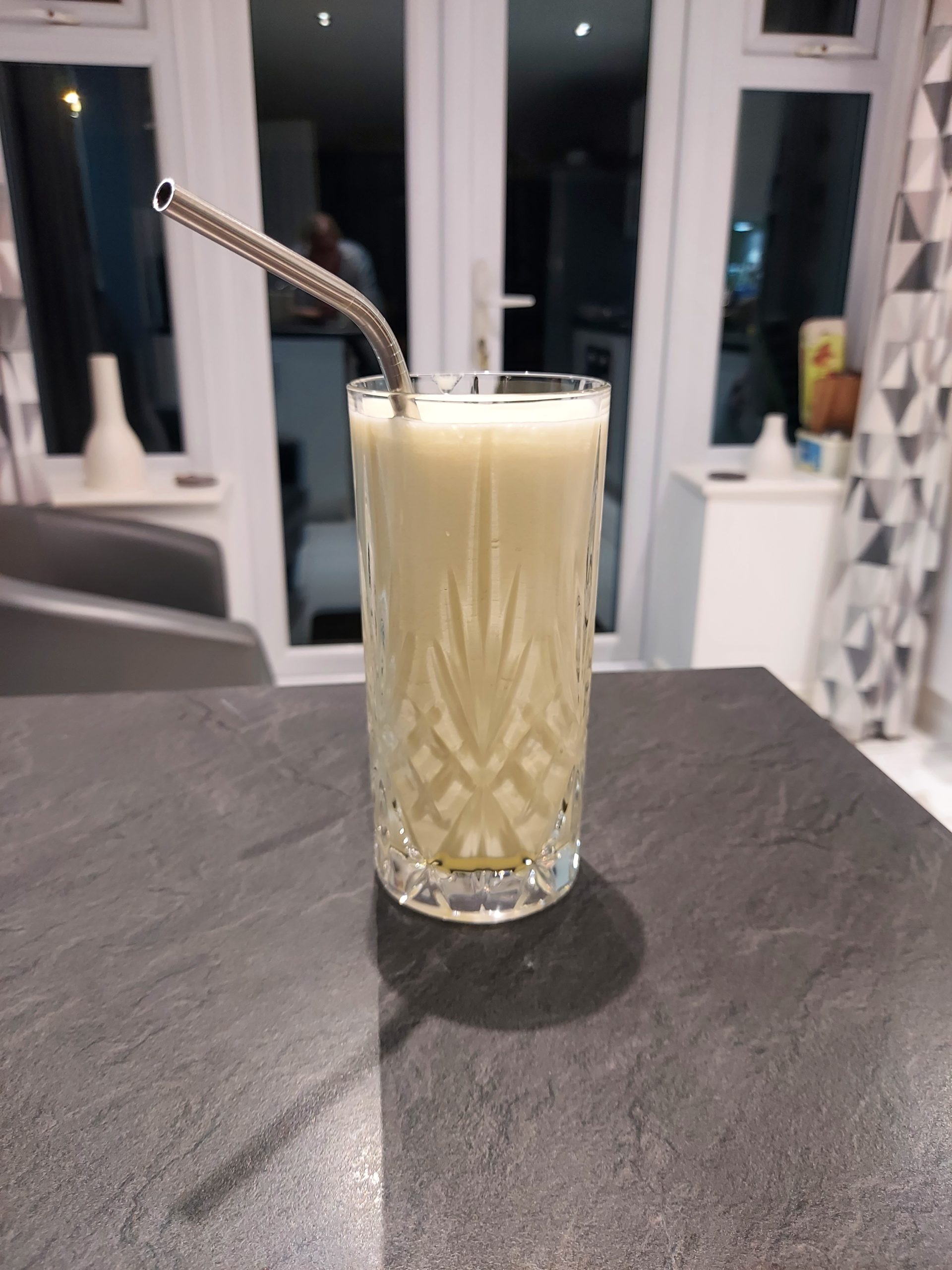
For this badge, I had to make at least six cocktails and learn about their histories. My family did benefit from this badge as I made them piña coladas and mojitos when I was at home!

Piña Colada

The piña colada originated in Puerto Rico. It is made with white rum, coconut cream or milk, and pineapple juice. The name literally means “strained pineapple”.

The earliest known story suggests that a Puerto Rican pirate, Roberto Cofresi, invented the drink for his crew in the nineteenth century. Other sources suggest that either bartender Ramón “Monchito” Marrero or bartender Don Ramon Portas Mingot created the drink in the mid-20th century.
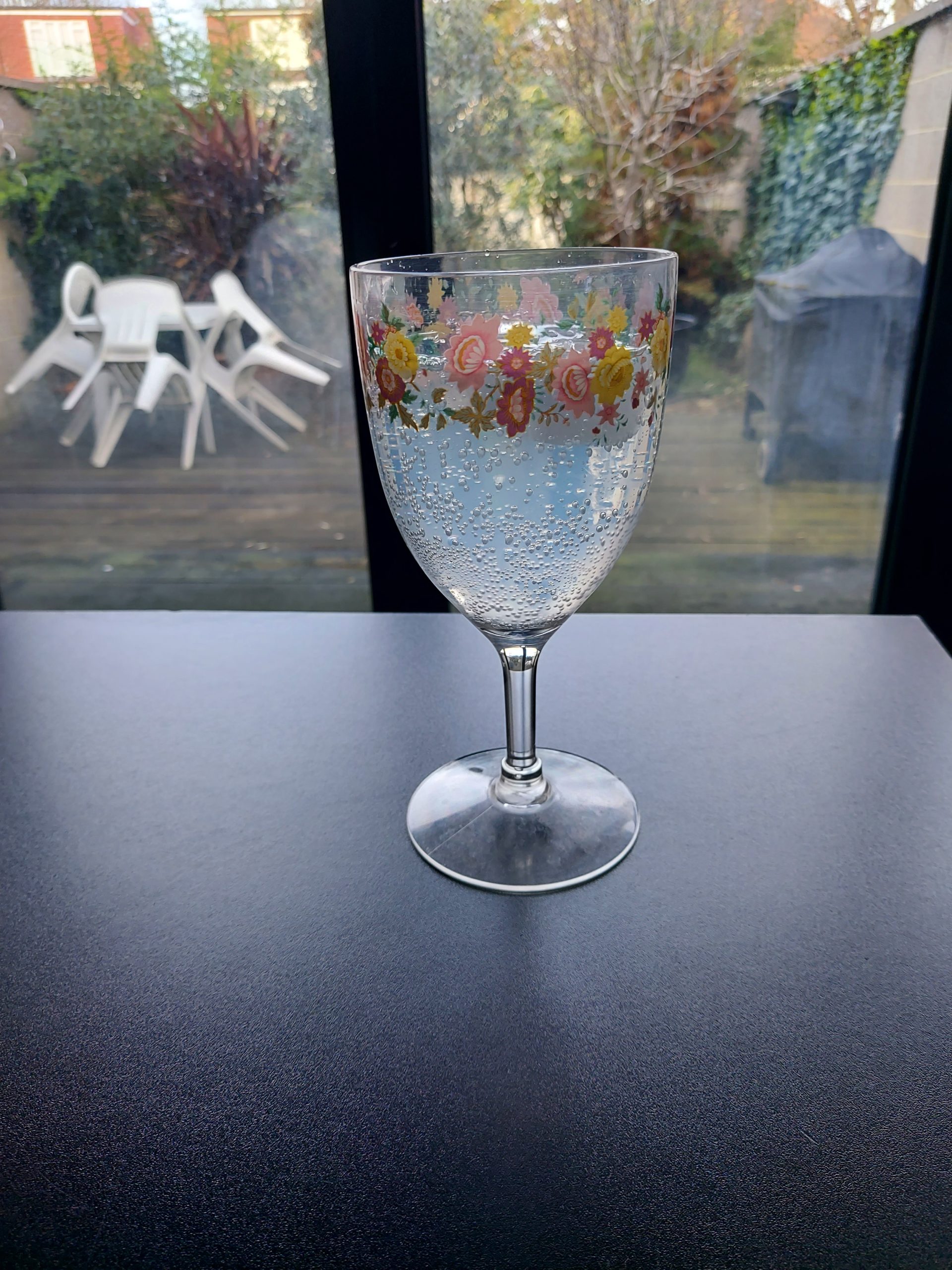
Mojito

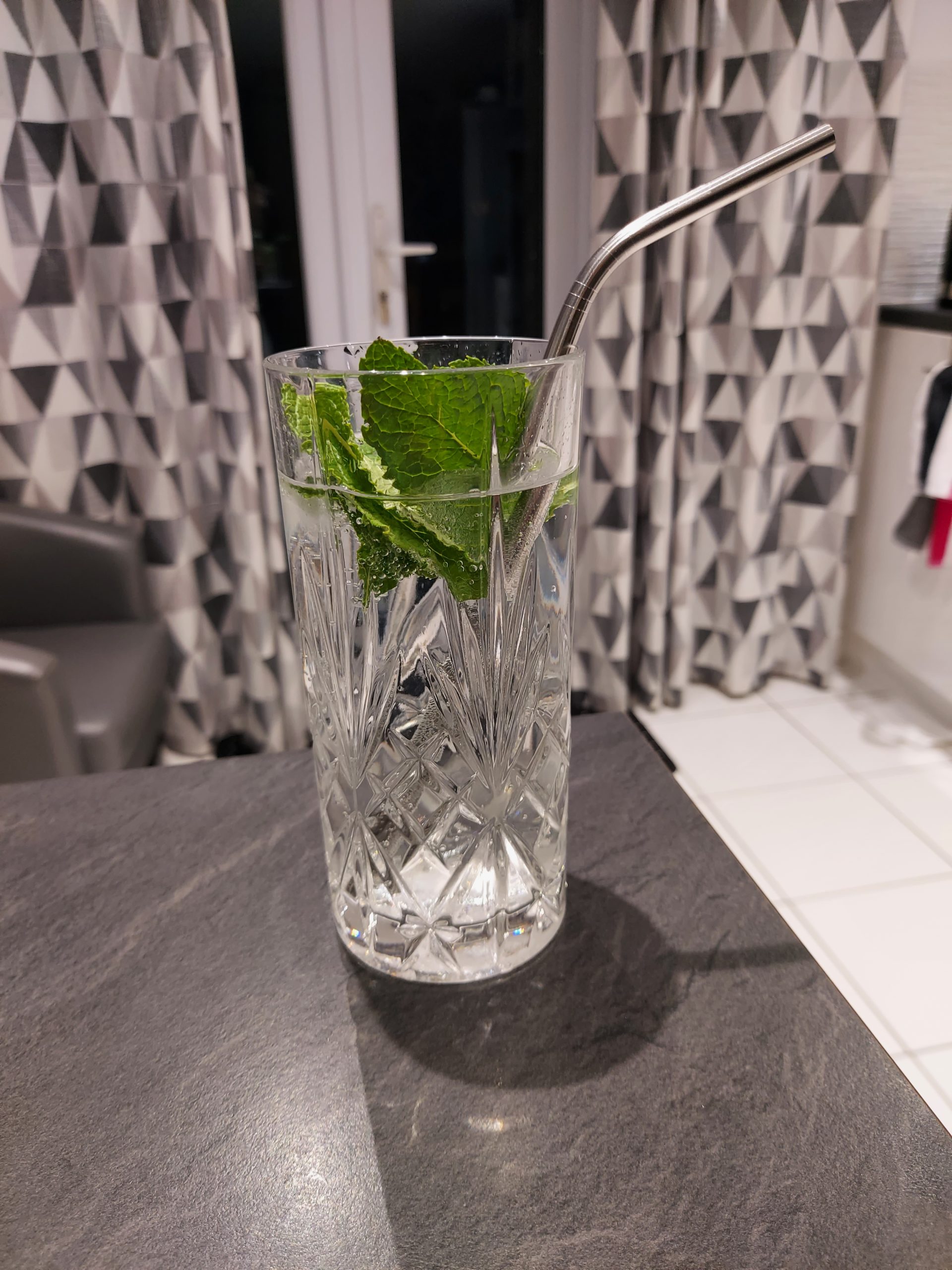
The Mojito comes from Havana, Cuba and consists of white rum, sugar, lime juice, soda water and mint.

One theory suggests that it began as a medicine (lime juice alone was effective against scurvy and dysentery), while another is that it was invented by Sir Francis Drake, albeit with brandy rather than rum.

Espresso Martini

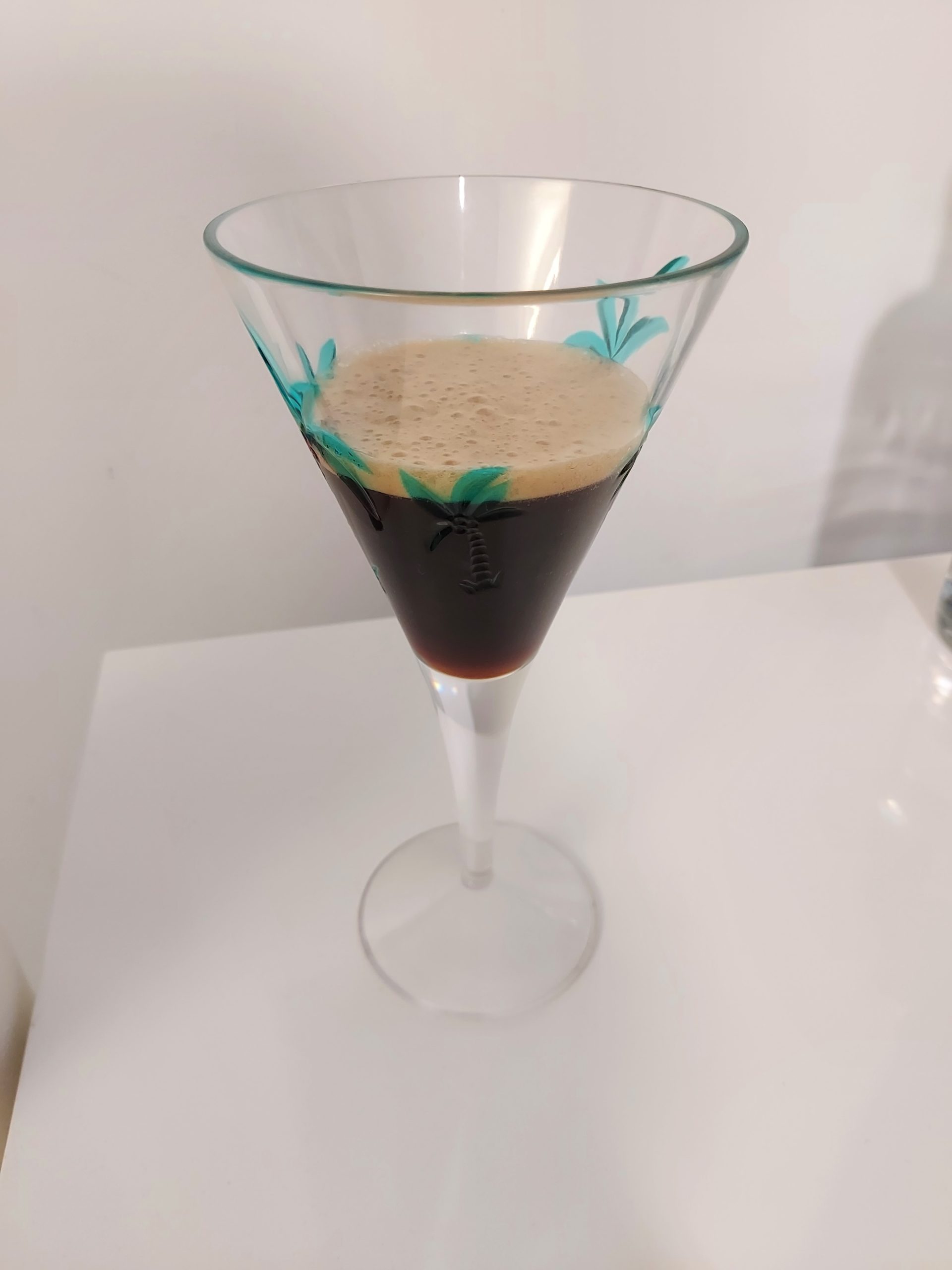
The Espresso Martini is not a true martini, as it contains neither gin nor vermouth, but it is usually served in a martini glass. The drink consists of espresso, coffee liqueur (such as Kahlúa), and vodka.

One origin theory is that it was created by Dick Bradsell at Fred’s Club in the 1980s. He worked next to the coffee machine, and vodka was very popular at the time, hence the drink was born.

Bloody Mary

A Bloody Mary is a cocktail consisting of vodka, tomato juice, and various spices and flavourings such as Worcestershire sauce and tabasco. It is commonly drunk as a breakfast cocktail and is often served at brunches.

One origin story has the cocktail created by French bartender Fernand Petiot in the famous New York Bar in Paris (later known as Harry’s New York Bar), as far back as 1921. Other claims give credit to the 21 Club in New York. The name is often associated with Mary I of England, but some believe it came from Hollywood star Mary Pickford, or a waitress named Mary who worked at a Chicago bar called the Bucket of Blood.

White Russian

A White Russian consists of vodka, coffee liqueur (such as Kahlúa), and cream. The name comes from the fact that it is made with vodka, and that cream has been added (as opposed to a Black Russian which omits the cream).

The Black Russian cocktail first appeared in 1949, supposedly created by Gustave Tops, a Belgian barman, at the Hotel Metropole in Brussels. The White Russian variant emerged at around the same time. The 1998 film The Big Lebowski popularised the White Russian, a drink which had been long out of fashion, once again.

Gin Fizz

The Gin Fizz is a cocktail made with gin, sugar syrup, lemon juice, ice, and sparkling water. Some recipes also include an egg white.

The cocktail originated in New Orleans, Louisiana, and was originally known as a ‘New Orleans Fizz’. It was invented by Henry C. Ramos at his bar, the Imperial Cabinet Saloon, in 1888.

Date completed: 25 June 2023