What attracted me to Intrigue: James Ensor by Luc Tymans was the promotional picture of one of James Ensor’s paintings: a pair of skeletons fighting over a fish, pulling it apart in a kind of grotesque tug of war. Ensor, who lived his whole life in Ostend, Belgium, specialised in this kind of bizarre picture. This exhibition at the Royal Academy of Arts has been curated by artist Luc Tymans.
Perhaps surprisingly, the pictures were largely painted in the late nineteenth and very early twentieth centuries, because their macabre imagery seems from a later time. There is a proliferation of skeletons: fighting over fish, huddling by a heater to keep warm, inspecting chinoserie. Ensor painted himself as a skeleton on more than one occasion. If I hadn’t known better I would have thought that the artist was from Mexico, there were so many skeletons.
So many pictures seem to show a fallen barrier between this world and the next, with subjects including angels and masked revellers, and many have a black sense of humour. I especially liked the bad doctors and the dangerous chefs, with horrific but blackly comic imagery.
A self-portrait of the artist shows him wearing a traditionally feminine bonnet and a perfectly calm expression. Ensor was obviously someone who didn’t care what people thought of him and was happy to go his own way, in life as well as art.
James Ensor, ‘Skeletons Fighting Over a Pickled Herring’, Musees Royaux des Beaux Arts de Belgique
Who knew Ealing had a dolls house museum? Not me, even though I’ve lived in the area for approaching six years. I found out about it via a blog post and decided to pop over this Saturday.
Located on Haven Green, just across from Ealing Broadway station, the museum is well signposted – you can’t miss the building with the bright yellow sign outside. Entry is £1 and while the museum is contained within just one room, a great deal is packed into it.
Immediately on the right as you enter are four dolls houses decorated for the seasons. If only it was possible to decorate real houses like that! This side also had examples of older and modern dolls, and I even spied a doll version of Jim from the Royle Family.
The most interesting bits for me were the dolls from different countries. I can’t pretend to be able to identify them all and I do wish there had been more detailed labels. I particularly liked the Japanese dolls that came with their own story from traditional folklore.
At the back I found more assorted dolls (maybe the Doll Museum would be be a more appropriate name than the Dolls House Museum). There were some china dolls very similar to ones I had as a child. I had one in particular called Georgina that I loved. She had long ringlets and a pink satin dress. I don’t know what happened to her. I suspect my parents threw her out, along with my other china doll with plaits and a floral dress – my mam always did find them a bit creepy (I don’t know why I didn’t, to be honest).
At the other side of the room were selections of doll house miniatures, which I loved. I just love really tiny things.The picture frames especially were adorable. To finish off there were some ornaments and other doll house miniatures, while in the centre of the room there was another doll house to admire.
This museum is pretty interesting if you like that sort of thing. It’s small, and I don’t know if it would be worth making a special visit to Ealing for, but if you’re in the area it’s certainly worth half an hour of your time.
On a cold crisp day in December, I headed down to Richmond for a day out. I wanted to take a walk in the fresh riverside air, but mostly I wanted to visit the Old Town Hall. The building is home to two gallery spaces: the Museum of Richmond and the Riverside Gallery.
Richmond Old Town Hall
I started off on the ground floor, where I visited the current exhibition in the small Riverside Gallery. Virginia Woolf and the Hogarth Press was presented in conjunction with the Richmond Literature Festival, celebrating a century since Virginia and Leonard Woolf began publishing in Richmond.
They established the Hogarth Press, named after their house, in 1917, in order to self-publish and allow writers and artists to showcase their work in small print runs. It was fascinating, and there were some beautiful examples of the books published.
I then headed upstairs to the museum, which was opened in 1988. It followed a plan similar to that of most local museums, following the history of the area from earliest times to the present day. Interestingly, the area has only been known as Richmond since the building of Richmond Palace by Henry VII in the early sixteenth century. It used to be part of the area known as Shene. The museum is pretty small but it has some interesting artefacts.
Inspired by what I found out, when I went for my walk later I made a point of looking for the remnants of Richmond Palace. Most of them are on private property, but I spotted a few things of interest.
FACTS
Address: Old Town Hall, Whittaker Avenue, Richmond, TW9 1TP
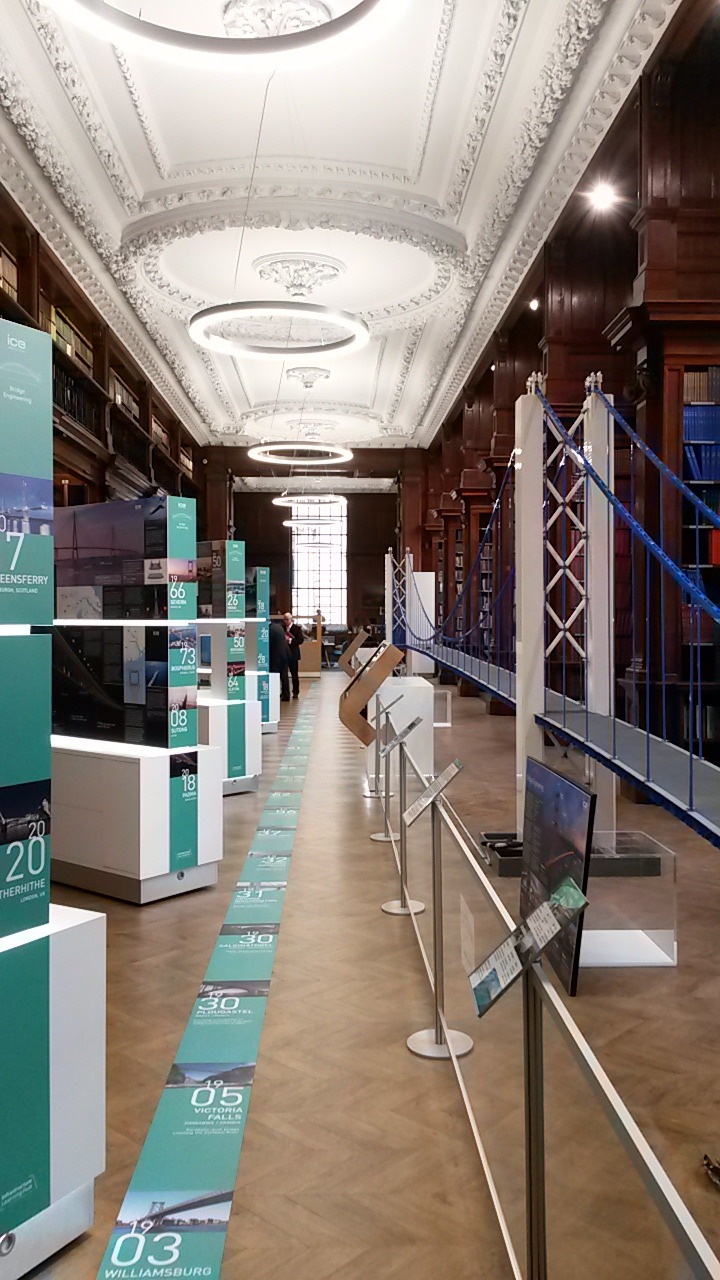
I heard about this exhibition at the Institution of Civil Engineers on the Ladies who Bus blog, but didn’t think I would get a chance to visit myself until next year. However, I happened to attend a work event at ICE (cool acronym by the way) and was able to visit the exhibition at lunchtime.
Part of the exhibition
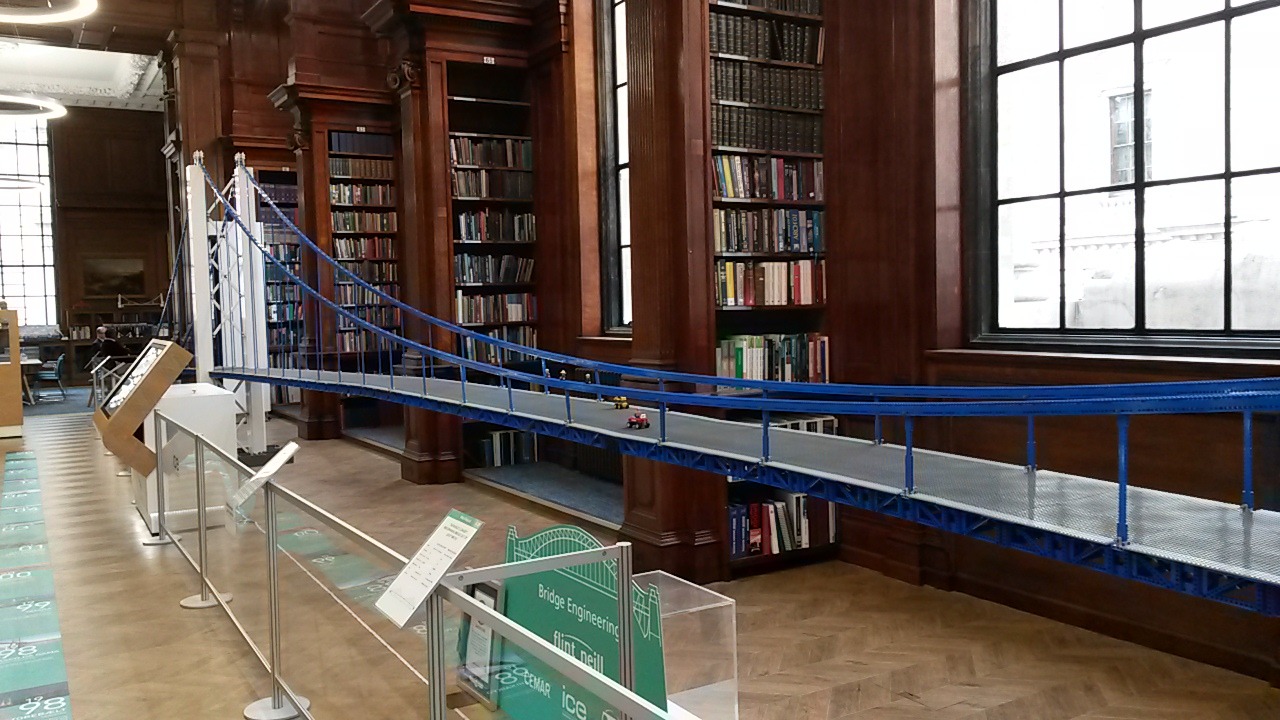
Bridge Engineering is located in the library, and when you enter your eye is immediately drawn to the huge Lego bridge in the middle which runs down the centre of the library. This is the world’s longest Lego bridge (it’s been recognised by the Guinness Book of Records) and it’s a very impressive sight: at 31 metres, it is almost as long as three London buses.
Award-winning Lego suspension bridge
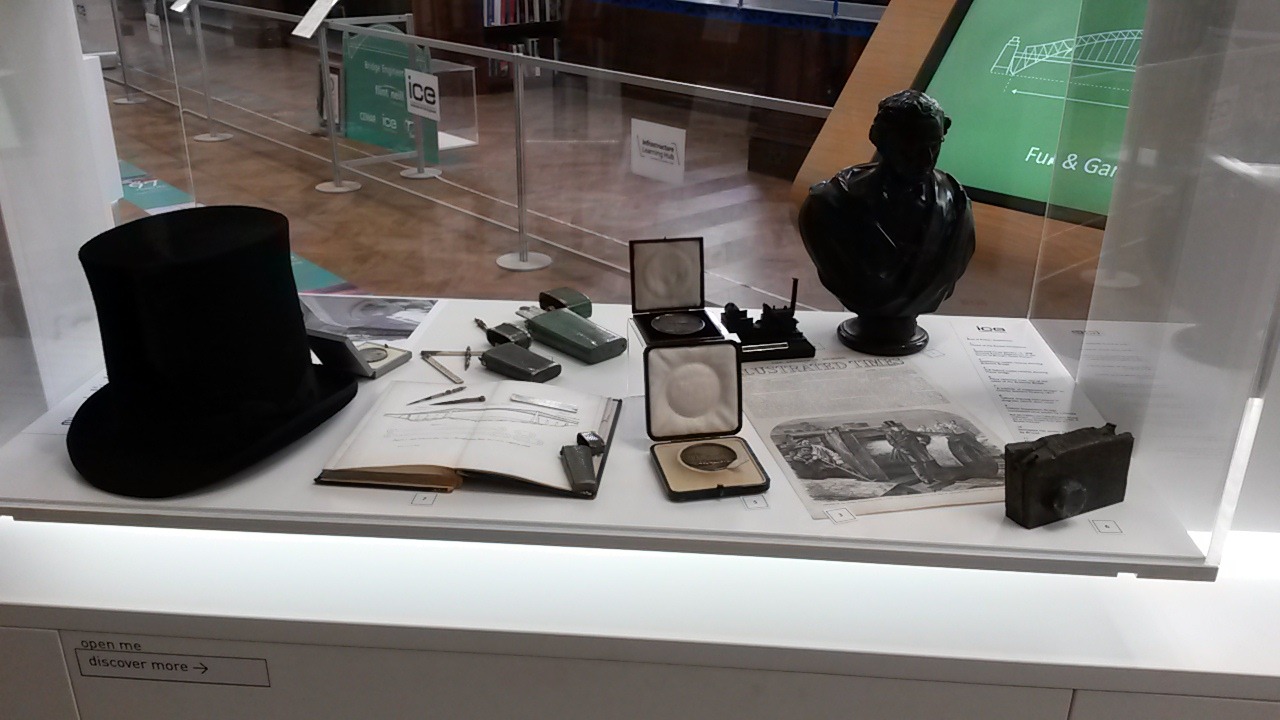
On the floor, a timeline of significant bridges, their locations and dates follows the exhibition round the room and is very informative. Displays focus on a handful of very special bridges and their engineers, from the last couple of centuries all around the world, including the Clifton Suspension Bridge, the Menai Strait Bridge, and the future Rotherhithe Thames pedestrian bridge.
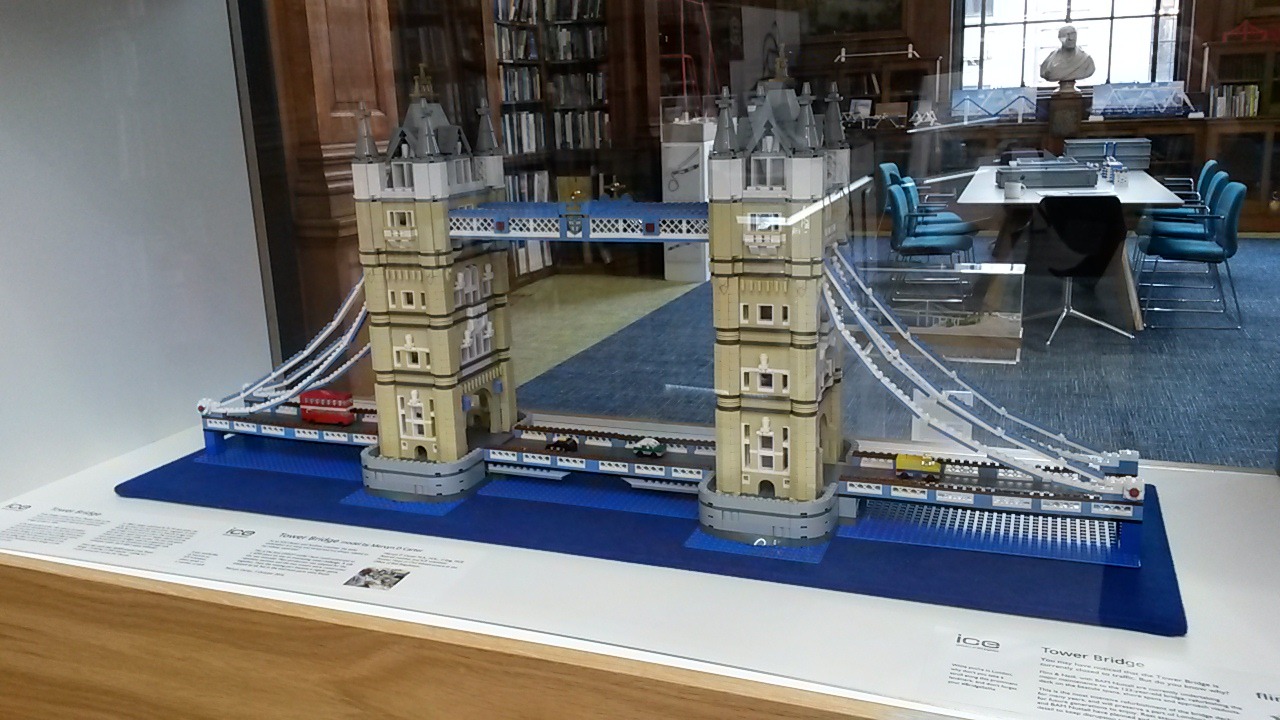
Lego Tower Bridge
The exhibition runs until April next year and admission is free. It is open Monday to Friday 10am to 5pm, but if you can’t make it, you can still explore the exhibition in 3D on the ICE website.
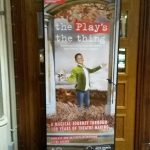
I’m a frequent visitor to the Royal Shakespeare Company, and I was excited to learn about their new exhibition, The Play’s The Thing. This new permanent exhibition covers “100 years of theatre-making in Stratford-upon-Avon.”
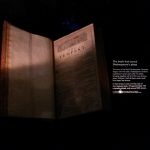
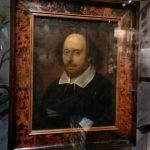
For a short time the exhibition contains the famous Chandos portrait of Shakespeare, on loan from the National Portrait Gallery. The space also displays a First Folio, dating from 1623.
The exhibition is full of costumes and props from the RSC’s history, which I loved looking at, although it made me think of all the productions I’ve missed over the years. For a more hands-on experience, you can also explore the ‘Director’s Desk’, try on virtual costumes (and some actual hats) and learn more about the history of theatre-making in the Company.
Trying on a hat
I had lots of fun in the exhibition. Tickets are £8.50 for adults, £5 for 16-25-year-olds, and £4.25 for children and disabled people. You can convert your ticket into an annual pass so if you visit the RSC often, you can go back again and again.
Perhaps Barts Pathology Museum isn’t the best place for someone as squeamish as me to go. That said, the historical nature of the collections was enough of a draw for me. Originally opened in 1879, the museum consists of pathological specimens illustrating the incredible range of diseases that flesh is heir to. Following years of neglect, it’s only recently that the museum has received a grant to renovate the collection; it is used by students at St Bartholomew’s Hospital during the day so is currently only open for special events, such as talks: keep an eye on the website for details of future events. These events take place out of hours, as students at the hospital use the museum as a teaching aid during the day.
The building housing the museum is not particularly impressive, but the museum itself certainly is. Bones, organs and body parts, in various stages of decay, line the walls, with labels and information leaflets explaining what condition affected them. Most specimens come from the nineteenth century, as do the beautifully detailed drawings of individuals, and sometimes their body parts, that are dotted about the room. The most memorable, for me, was a picture of a sixteen-year-old girl with congenital syphilis.
I must admit that I felt a bit squeamish looking at many of the specimens, the organs more so than the bones. My favourite part, with which I was completely fascinated, was the section containing objects that have been removed from inside bodies. These included numerous needles and other foreign objects, such as a WW2 shell repeatedly inserted by one man in order to sort out his piles. My favourite story involved a six-inch electric torch, “removed from the rectum of an eccentric and uncouth-looking man, aged 68, who stated that he had been assaulted by two drunken Irishmen who had pushed some object into his rectum.”
Getting to the museum can be tricky as it’s not easy to find. Enter the grounds of Barts Hospital. Ignore the signs warning you that this is a private area, and only staff are allowed: so long as you’re here for an event, you’re fine. Follow the signs to the Robin Brook Centre and take the lift to the third floor.
FACTS
Address: 3rd Floor, Robin Brook Centre, West Smithfield, London, EC1A 7BE
On one of my days off I headed to the British Museum to see their exhibition, Sunken Cities: Egypt’s Lost Worlds. The exhibition was about the lost cities of Thonis-Heracleion and Canopus, which lay at the mouth of the Nile. Thonis-Heracleion in particular was an incredibly important commercial centre for trade with the Mediterranean world.
The exhibition contained many fascinating exhibits revealing the link between Egyptian and Greek culture and architecture. I particularly liked the fascinating videos showing divers recovering statues and other treasures from the sea.
Maps and the 20th Century is the latest exhibition at the British Library, exploring the 20th century via the medium of maps. Maps were widely used before this period, of course, but it wasn’t until the last century that map use became more or less universal.
The exhibition covers themes such as war, peace, movement and the market. The war section was one of the most memorable, being full of the kind of propaganda maps that were so common in school textbooks, featuring images like Hitler as a spider spreading his spindly legs over Europe. My personal favourite maps were the original Underground map sketch by Harry Beck, the map of Antarctica, and the map of the shopping centre of Sunderland, my home city.
The exhibition runs until the first of March next year, and it’s well worth seeing for any map fans out there.
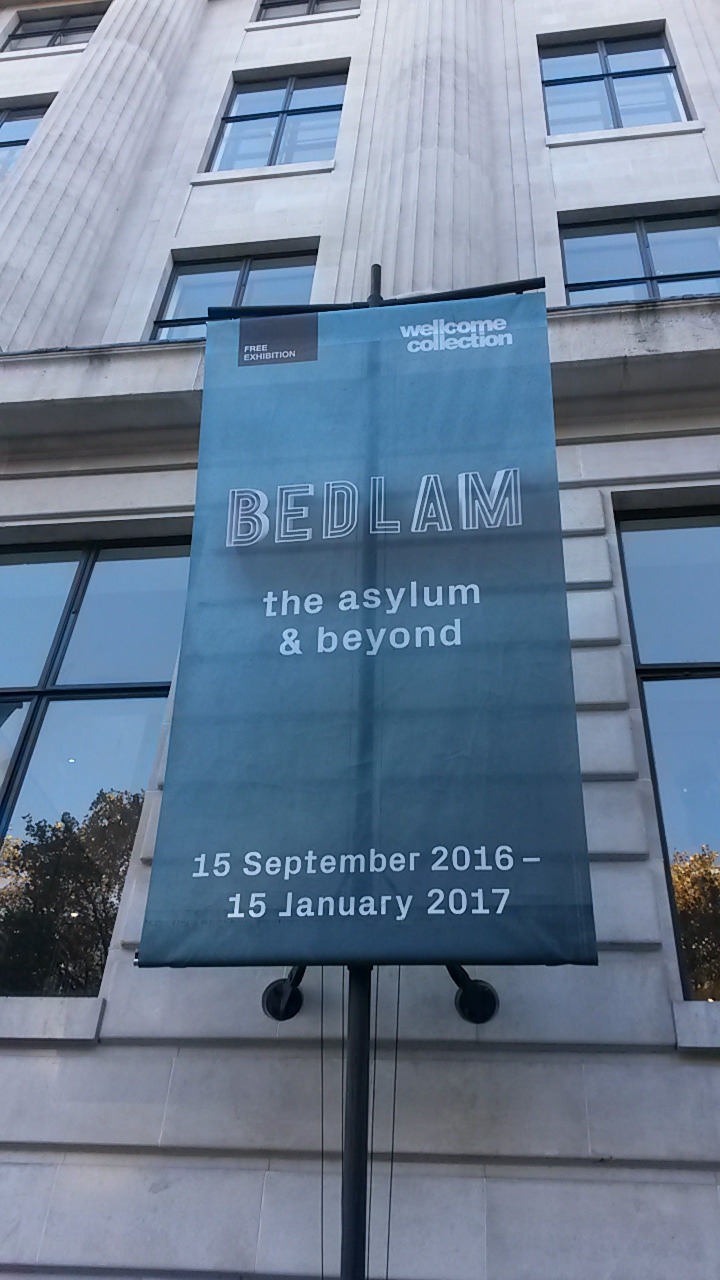
The Wellcome Collection near Euston has some pretty good exhibitions, and the most recent is no exception. Bedlam: The Asylum and Beyond looks at the idea of the asylum, what it represented and what it became, and asks if the idea could be reclaimed.
An asylum was originally a space, usually religious, where an individual could seek refuge or sanctuary. Modern mental asylums emerged from this concept. As the word ‘Bedlam’ became synonymous with ‘asylum’, it seems appropriate to focus on the original Bedlam, the Bethlem Royal Hospital in London, which was founded in the thirteenth century and still exists today.
The exhibition looks at the history of asylums, with drawings, photographs and autobiographical accounts from Bedlam in particular but also from asylums in Europe, as well as the Retreat in York which pioneered more “humane” treatment of the insane. It also contains artworks, videos and films about asylums and insanity, many made by more modern commentators.
The exhibition ends with a representation of an “ideal” modern asylum and invites the viewer to comment on what they think makes a good asylum. It leaves you with a lot to think about.
The Natural History Museum is one of London’s famous museums, located, like so many of the others, in South Kensington. I rarely go, simply because it’s so popular: the queue to get in is always massive and full of kids. I had a day off work at a time when I knew the schools would be back, and decided to use it to enjoy the museum, but it was still pretty crowded. Oh well.
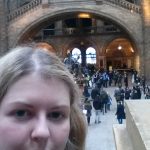
Trying to get a picture with Dippy and Albert (my Tatty Devine dino)
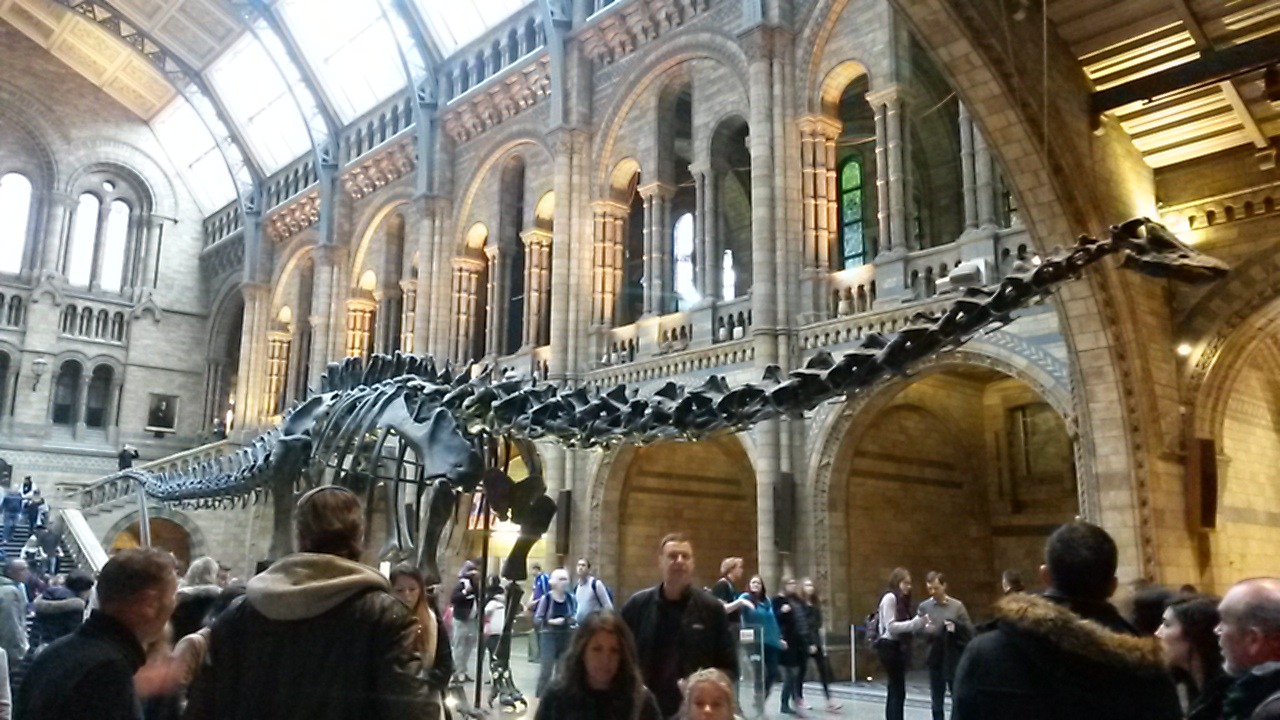
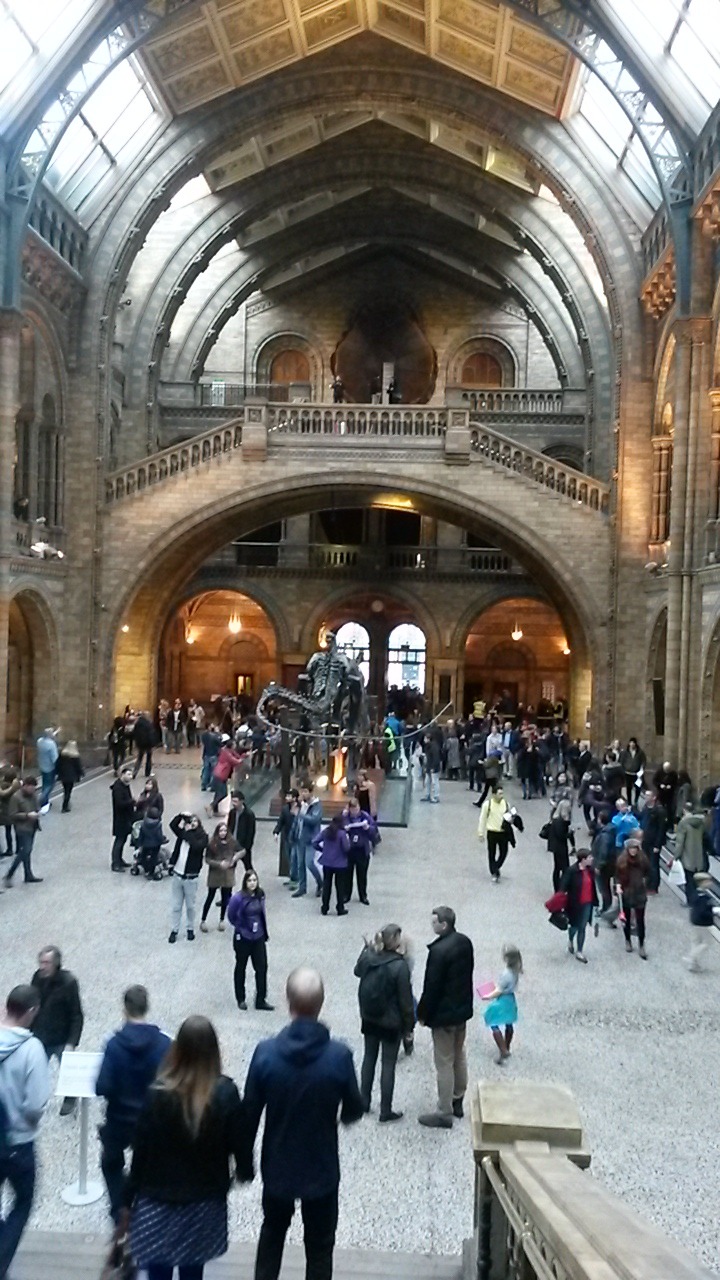
Undaunted, I headed in anyway. I was greeted by Dippy the Dino: due to be removed at the end of 2016, I was glad to see him for the last time. The hall is possibly the most beautiful part of the museum, decorated with carvings of many different animals, flanked with arches, and ending in an imposing staircase.
History
The origins of the collection lie in the specimens of the Ulster doctor Sir Hans Sloane, who allowed the British Government to purchase the collection in the mid-eighteenth century. The collection was initially housed in Montagu House, Bloomsbury, in 1756, the home of the British Museum. Over the years, much of the Sloane collection disappeared, many specimens having been sold to the Royal College of Surgeons.
The palaeontologist Richard Owen was appointed Superintendent of the natural history departments of the British Museum in 1856. Seeing that these departments needed more space, he arranged for land in South Kensington to be purchased. The civil engineer Captain Francis Fowke won a 1864 competition to design the new museum, but he died shortly afterwards and the job was taken on by Alfred Waterhouse, who revised the plans considerably. Work began in 1873, the building was completed in 1880, and the museum opened the following year.
The museum still remained, legally, part of the British Museum, using the name British Museum (Natural History). A petition to the Chancellor of the Exchequer was made in 1866 requesting independence, but it wasn’t until 1963 and the passing of the British Museum Act that this was granted, and the museum retained the original name until 1992 (though it was informally rebranded as the Natural History Museum four years earlier).
Today, the museum is free to enter (except for special events and exhibitions) and is a thriving destination for Londoners and tourists alike. It has a special appeal for children, but there is plenty of interest for adults too.
The museum is divided into zones, which helps with navigation. There are plenty of maps around the place to help you find your way.
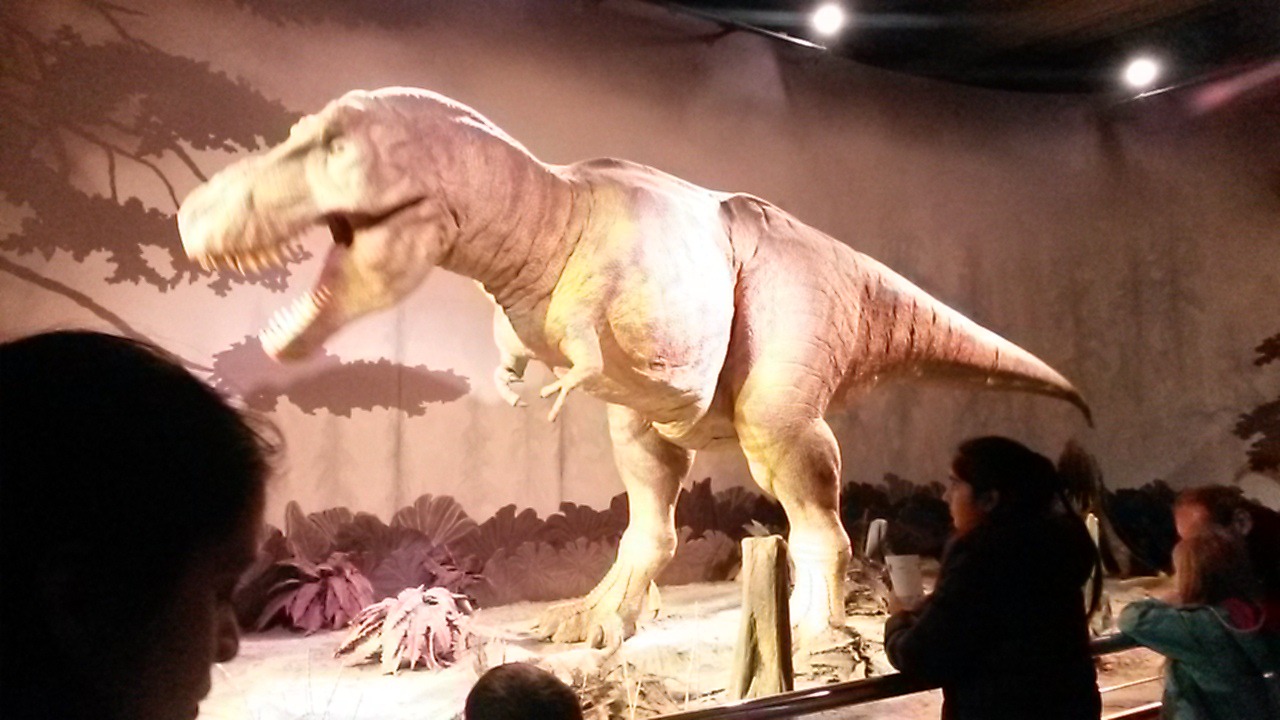
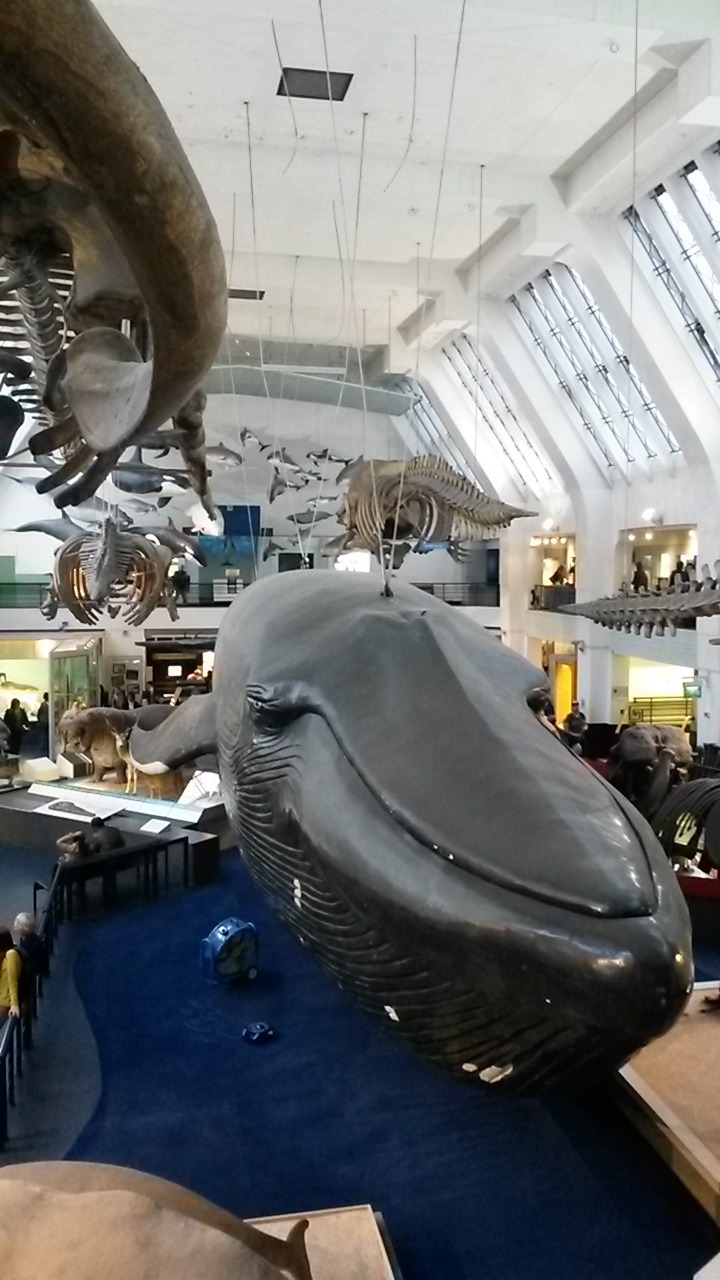
Blue Zone The highlight of the Blue Zone is the Dinosaurs Gallery – the most popular gallery in the museum – which has plenty of interest including the first fossil ever found from a Tyrannosaurus Rex, an Iguanodon, the skull of a plant-eating Triceratops, and more. This zone also contains skeletons, models and stuffed animals, encompassing the natural world including fish, amphibians, mammals and reptiles. Many of the stuffed animals look rather old and tired now, but this is understandable considering the museum no longer wants to kill and stuff animals for display. I thought the section on human biology also looked a bit dated, but it was certainly very informative.
Green Zone
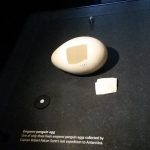
This zone rather randomly brings together fossils, minerals, birds and “creepy crawlies”. My favourites were the dodo (now sadly extinct) and the giant plesiosaur skeleton on the wall. I’m not a huge fan of insects and other crawling things, but I have a particular love for leaf-cutter ants and can happily spend ages watching them march along bearing their huge leaf fragments triumphantly. This zone also includes the Treasures Gallery, containing an exciting assortment of special and unique items including an emperor penguin egg collected during Robert Falcon Scott’s Antarctic expedition, and Guy the gorilla.
Red Zone
This zone encompasses the former Geological Museum of the British Geological Survey, which became part of the museum in 1986. The impressive Earth Hall features an exciting entrance that takes visitors up an escalator and through a giant model of the earth. This zone looks at the history of human evolution, rocks and gems, and natural phenomena such as earthquakes and volcanoes. I particularly liked the earthquake simulator.
Orange Zone
This zone contains the peaceful Wildlife Garden and the Darwin Centre, in which you can attend live shows and talks with scientists, although I didn’t attend any during my visit.
The museum has frequent special exhibitions, including the annual Wildlife Photographer of the Year exhibition and the summer staple Sensational Butterflies. There is also a branch of the museum at Tring in Hertfordshire. Other special events include monthly lates and popular sleepovers (“Dino Snores”), with separate events for both children and adults. This is on my bucket list!
The Natural History Museum is a hugely impressive and educational free museum. Some of it is looking a bit dated and tired now, but that’s understandable given its sheer size and the number of visitors it sees through its doors. In 2017 a project will revitalise the Hintze Hall, former home of Dippy the Dino, and the Treasures Gallery; maybe after that’s done they’ll get on to the rest of it. It’s still a valuable resource, and superb special exhibitions keep me going back.