Undressed: A Brief History of Underwear – V&A

The V&A‘s latest long-running exhibition is Undressed: A Brief History of Underwear. As the name suggests, it follows the evolution of underwear design from the eighteenth century onwards. It features examples of underwear worn by both men and women, examining how underwear influenced, and was influenced by, ideas of gender, sex and morality, and how it affected outerwear.

I was interested to see the older underwear in particular, such as the examples of nineteenth-century corsets and their earlier counterparts ‘stays’, as well as early bras. The more modern cutting-edge styles were fascinating too. The exhibition runs until 12 March, costing £12, and is well worth seeing.

St Pancras Chambers – Open House London

St Pancras Chambers
St Pancras Chambers

My next Open House London tour was of St Pancras Chambers – the building above St Pancras Station. The station, originally constructed in 1868, was refurbished between 2001 and 2007, the threat of demolition narrowly averted thanks to the efforts of a passionate group of people including the poet John Betjeman.

Station entrance (former goods entrance)

At the time of original construction, the East Midlands Railway wanted to surpass the recently built King’s Cross Station, so commissioned George Gilbert Scott to create the beautiful, opulent Gothic Revival style building. The money ran out partway through construction, leaving no money for the planned extra storey or for the statues supposed to be dotted around the building – the empty niches are still visible.

Wyvern
Wyvern

On the tour we saw some fascinating details: the theme of the wyvern (a mythical creature) runs through all of the architecture, and the materials used in the building come from the various towns and cities served by the East Midlands Railway, such as Sheffield steel and stone from Nottingham.

Former station entrance (now hotel entrance)

The original entrances to the station still exist but are now more commonly used as the entrances to the apartments and hotel. The Hansom Hall is the current name for the hotel lounge, as it was originally where travellers were dropped off outside the ticket hall.

'Spice Girls' staircase
‘Spice Girls’ staircase

We then got to go inside the building. The most exciting part for me, I must admit, was seeing the very staircase that featured in the Spice Girls’ video for “Wannabe”.

Stairwell
Stairwell

We got to go all the way up to the top floor: this part of the building has been converted into flats. You can see from the staircase that originally, the more prestigious rooms were on the lower floors: the design becomes less ornate as you go up the building. Nowadays, of course, the best flats are at the top, where it’s still possible to see the former servants’ quarters above your head (the original floor has been removed. My tour was given by the man who actually lives in one of the apartments – the one with the bell tower – so we got to look in there too – a fascinating experience.

In the corridor
In the corridor
Former servants' quarters
Former servants’ quarters
Inside the bell tower

55 Broadway – Open House London

55 Broadway
55 Broadway

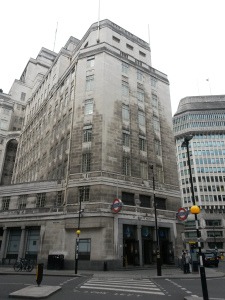
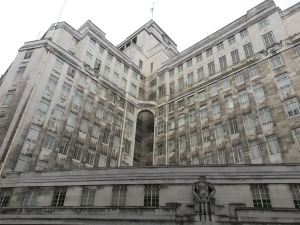
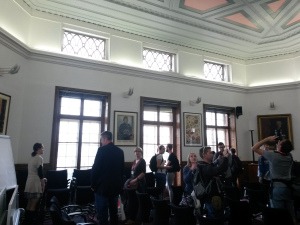
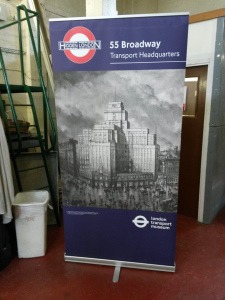
I always make a habit of visiting some interesting buildings when Open House London comes around. This year I was lucky enough to visit 55 Broadway, the former headquarters of London Underground, near St James. The Underground Group was formed from a group including the Tube railways, London General Bus company, tram operators and electrical supply companies, and in 1927 when they decided they wanted their new headquarters to reflect its bold vision of the future, they hired architects Adams, Holden and Pearson for the job.

55 Broadway
55 Broadway

It was a challenging job from the start. With its irregular shape and depth (St James’s Park station sitting just 7.3 metres below the site) Adams, Holden and Pearson’s job was a difficult one. They managed to get around it, however, by incorporating the cruciform layout into their design.

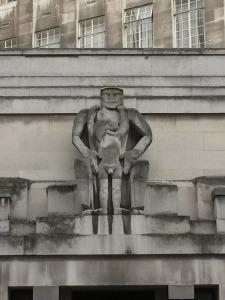
Epstein's controversial sculpture
Epstein’s controversial sculpture

Charles Holden, later known for his work on the Northern and Piccadilly Line extensions, used Portland stone and added bronze features to the building. Carvings by Eric Gill, Henry Moore and Jacob Epstein (who’s “Night and Day” caused controversy) adorn the outside of the building, which is now Grade 1 listed.

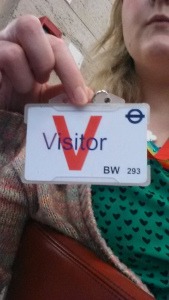
Visitor pass
Visitor pass

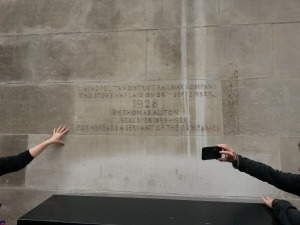
We started off outside, where we were introduced to the history of the building and got to see the original foundation stone.

Foundation stone
Foundation stone

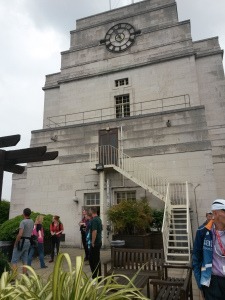
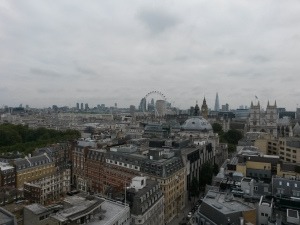
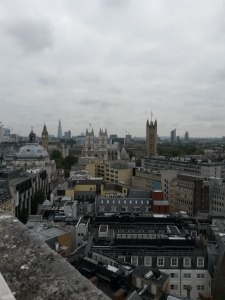
The tour took us up several floors, including the seventh floor with its original management rooms, outside to see the roof gardens, and right up to the flagpole.

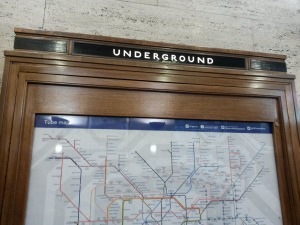
Map in the foyer
Map in the foyer
Lord Ashfield plaque
Roundel design in the building
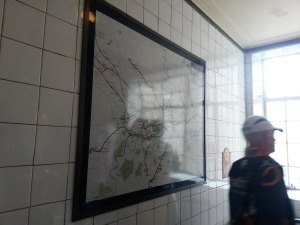
Early tube map
Early tube map
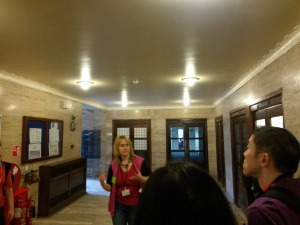
Inside the building
Inside the building
Management rooms
Management rooms
Management rooms
Management rooms
In the garden
In the garden
View from the roof
View from the roof
View from the roof
View from the roof
55 Broadway
55 Broadway

Georgiana Houghton: Spirit Drawings – Courtauld Gallery

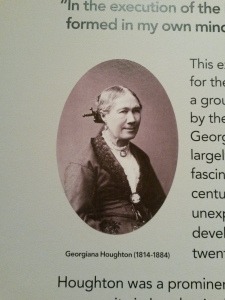
The most recent exhibition at the Courtauld Gallery was Georgiana Houghton: Spirit Drawings. Georgiana Houghton (1814-1884) was a Spiritualist medium who, in the 1860s and 70s, produced a series of abstract watercolours. She claimed that her hand had been guided by various spirits and angelic beings, including some Renaissance artists such as Titian. The abstract works are highly unusual, but have not been shown in the UK for nearly 50 years. Many are held by Monash University Museum of Art in Melbourne, Australia, with whom the exhibition is organised in collaboration.

Georgiana Houghton
Georgiana Houghton

Houghton’s works are watercolours, bold and complex, technically accomplished and surely unlike anything else produced in the Victorian art world. Perhaps a nineteenth century audience just wasn’t ready, for the 1871 exhibition she held in Bond Street was a commercial failure and nearly bankrupted her.

Catalogues from Houghton's first exhibition
Catalogues from Houghton’s first exhibition

I’m no art expert, but I loved these works: whether Houghton’s hand was guided or they were produced by her own consciousness, they are extraordinary.

2016_0911spiritdrawings12 2016_0911spiritdrawings10 2016_0911spiritdrawings08 2016_0911spiritdrawings05

Sicily: Culture and Conquest – British Museum (Google Cultural Institute)

I was all set to go to the Sicily: Culture and Conquest exhibition at the British Museum, but I was too late. I tried to buy a ticket but it was sold out.

I was gutted, but then I found an online version of the exhibition on Google Arts & Culture. Of course, it’s not the same as the real thing, but it’s better than nothing.

The exhibition was about 4,000 years of Sicily’s history, an island that has been shaped by Phoenican, Greek, Roman, Byzantine, Arab and Norman invaders and settlers. Prosperous and diverse, culture and art flourished.

Through the website I was able to read about the history of Sicily and look at some of the amazing artefacts that were visible in the exhibition. I would recommend that anyone unable to visit an exhibition for real check the Google site out – it’s a wonderful resource.

Shakespeare in Ten Acts – British Library

2016 marks the 400th anniversary of Shakespeare’s death, and a number of significant events are taking place all over London to mark the occasion. The British Library‘s most recent exhibition, Shakespeare in Ten Acts, tells the story of the playwright via ten significant events.

2016_0816bl01

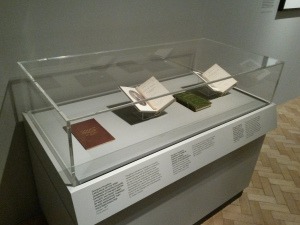
The 1590s was a transformative decade for Shakespeare. He was established as an actor and playwright by the age of 28 or so. The exhibition displays a copy of the First Folio, put together by John Heminges and Henry Condell, without which around eighteen plays, including The Tempest and Macbeth, might have been lost. It is displayed alongside the famous portrait by Martin Droeshout; though it was made from an engraving made after Shakespeare’s death, Ben Jonson said it was a good likeness.

A number of other books are also displayed, including Greene’s Groatsworth of Wit (1592) that referred to Shakespeare as an “upstart crow”: Robert Greene may have been angry he was so successful without having gone to university.

Shakespeare’s first known published work Venus and Adonis (1593) is on display here, as is a volume by Francis Meres. Wit’s Treasury, which praised Shakespeare. We also see a fragment of The Booke of Sir Thomas Moore from the early 1600s, part of the only surviving play script to contain Shakespeare’s handwriting. From here, the exhibition is divided into sections according to the event they cover.

1. A hit, a very palpable hit
The first Hamlet at the Globe, about 1600
Based on the Norse folk tale Amleth, Hamlet (the first quarto of which, different from and much shorter than the longer First Folio version, was published in 1603) marked a step up from previous tragedies. The title character was played by the acclaimed actor Richard Burbage. This section of the exhibition contains a map of London by Visscher, a modern-day poster about the play (“Everybody Dies”), and a human skull owned by Sarah Bernhardt, given to her by Victor Hugo and used by her in performance. There are recordings of nine Hamlets from John Gielgud and Kenneth Branagh to Herbert Beerbohm Tree and David Tennant, and a portrait of Richard Tarleton, Elizabeth I’s clown, the possible model for Yorick. We see a portrait of Richard Burbage (and his 1619 epitaph), and views of Elsinore and Kronborg castle, as well as a letter about the burning of the Globe in 1613.

2. Into something rich and strange
The Tempest at Blackfriars Playhouse, about 1610-11
The Tempest was written within few years of the King’s Men taking over the indoor theatre at Blackfriars. From 1609 onwards they played at Blackfriars in winter and the Globe in summer. Shakespeare wrote plays making full use of this intimate space, including masque, spectacle and candlelight. Documents on display include some relating to the sale of rooms at Blackfriars in 1596, and objections from locals feeling that the plays would attract undesirable persons (unlikely, as the prices were much steeper than at the Globe). We see a lute, like those used in the indoor playhouse, and the rewritten version of The Tempest by William Davenant in 1667 to make the most of the spectacle. There is a prompt book from Charles Kean’s elaborate 1857 production, and props from Derek Jarman’s 1979 film, as well as filmed scenes from The Enchanted Island by the Met Opera from 2011, and an Ariel costume from 2016.

3. The wide world
Possibly the first Hamlet outside Europe, 1607.
The first Hamlet is widely believed to have been performed on an East India Company ship off Sierra Leone in 1607, although only a fragment of the diary of Captain Keeling, who wrote it down, survives. A model of a similar style warship, complete with levels, hatch and a rear exit, is on display.

Many of Shakespeare’s plays toured to Europe in the seventeenth century, particularly Germany, and often featured clowns. Not everyone was a fan. Voltaire in his The Ruin of the English Stage in 1733 said that Hamlet was “the fruit of the imagination of a drunken savage”. Tolstoy wasn’t a fan either, but Goethe was, and David Garrick helped to establish an English theatre in Kolkata (formerly Calcutta). The displays include excerpts from the puppet show Der Bestrafte Brudermord by Hidden Room Theatre 2015 based on a German version of Hamlet, and photos from a Soviet production of Macbeth, as well as the first Chinese translation of Shakespeare, a version of Tales from Shakespeare in 1903. The plays had different titles: The Two Gentlemen of Verona was known as Proteus Sells Out His Close Friend for Lust (not a bad description, I reckon). There were also references to West Side Story and Raj Kapoor’s Bollywood film Bobby.

4. Do you not know I am a woman?
A woman acts Shakespeare for the first time, 1660
When Shakespeare was first writing his plays, women were not allowed on stage, and all of the female roles were played by men. This changed after the Restoration when Charles II took the throne and issued a patent legitimising female actors. Edward Kynaston was one of the last men to gain reknown playing female roles from the 1660s; Thomas Killigrew’s theatre patent of 1662 established the rights of 1660 and confirmed “women’s parts… may be played by women”.

Women, even royals such as Anne of Denmark, traditionally appeared in court masques but the first woman to appear in a Shakespeare play – probably Anne Marshall – played Desdemona in Othello in 1660. Different female actors, such as Elizabeth Barry, Jane Lessingham, Elizabeth Younge, Sarah Siddons (one of the first women to play Hamlet) and Ellen Terry were able to develop their careers. This part of the exhibition also includes Vivien Leigh’s Lady Macbeth costume.

5. ‘Tis mad idolatry
A Shakespeare forgery at Drury Lane, 1796
In 1795 law clerk William Henry Ireland ‘discovered’ a number of Shakespeare manuscripts, including Vortigern, later performed at Drury Lane and ridiculed. These forgeries (displayed in their 1796 editions) were one aspect of the industry that began to grow up around Shakespeare. In 1769 David Garrick established the Shakespeare jubilee celebrations in Stratford, which were sadly rained off. This section includes souvenir medals, examples of Shakespeare’s signature (including the Blackfriars Gatehouse mortgage deed from 1613), a poster for the 1998 film Shakespeare In Love and a copy of the play Shakes Versus Shav by George Bernard Shaw, which includes the first mention of the term “bardolatry”.

6. Haply, for I am black
The first Black actor to play Othello in Britain, 1825
At first, white actors such as Edmund Kean (who played the character as a light-skinned North African) used burnt cork to darken their faces to play Othello. The first black actor to play Othello in Britain was Ira Aldridge, an American actor who successfully toured the UK and Europe, using white makeup in order to play “white” characters. Laurence Olivier played Othello in 1964, and I was shocked to discover he refused to allow African-American actor Paul Robeson to come over to play him. Nowadays, of course, non-white actors routinely perform in Shakespeare and it’s hard to imagine this not being the case; this section of the exhibition was a sobering reminder that this state of affairs is actually quite recent.

7. He is return’d
Shakespeare’s King Lear restored to the stage, 1838
Nahum Tate’s 1681 version of King Lear turned it into a romance with a happy ending. William Charles Macready finally performed as Lear in Covent Garden 1838 using the original ending. The original Lear play existed as King Leir, and the story appears in Hollinshed’s Chronicles. This section of the exhibition includes pictures from Akira Kurosawa’s Ran, a Japanese version of the story, and information about A Thousand Acres, the film of Jane Smiley’s 1991 novel based on the tale.

8. The revolution of the times
Peter Brook’s A Midsummer Night’s Dream, 1970
A Midsummer Night’s Dream is a play often encumbered by dramatic scenery: as an example, Oliver Messel’s design for the 1937 production is on display, as is the headdress worn by Vivien Leigh as Titania. In contrast, Peter Brook’s 1970 production set the action in an abstract white box designed by Sally Jacobs, and there are lots of photographs and designs from the production and tour to look at.

9. The wheel is come full circle
Shakespeare’s Globe’s Twelfth Night, 2002
This production, starring Mark Rylance (who has contributed costumes to the exhibition), recreated the music, costume and cosmetics of Shakespeare’s time with an all male cast. This part of the exhibition focuses on the desire to return to original practices that began with William Pole in the nineteenth century and came full circle with the reconstruction of the Globe that began in the 1990s.

10. Look here, upon this picture
The Wooster Group Hamlet, 2013
The final part of the exhibition focuses on the Wooster Group production of Hamlet, which made use of the 1964 Broadway production starring Richard Burton which was shown live from the theatre – the first time a Broadway show had been filmed for a cinema audience. It also contains clips of the Laurence Olivier Henry V of 1943.

2016_0816bl02

This is a fascinating, thorough exhibition, full of exciting artefacts and interesting information. Ideal for any Shakespeare or theatre fan.

The Cartoon Museum

2016_0721CartoonMuseum01

I visited the Cartoon Museum one lunchtime to check out their temporary exhibition, The Great British Graphic Novel. Running from 20 April to 24 July, the exhibition examined the development of the graphic novel in the UK over the last few decades, while also looking back to the beginning of graphic storytelling, which dates from the eighteenth century. For instance, Hogarth’s A Harlot’s Progress, a series of illustrations demonstrating the downfall of a young woman in sinful London, was created in 1732.

In the nineteenth century, magazines such as Punch and Ally Sloper’s Half-Holiday became the forerunners of graphic novels, telling stories via panels. In the twentieth century, many graphic tales appeared in newspapers and several were serialised before being combined in book form. Some of the graphic novels examined in the exhibition included Watchmen, Gemma Bovery and From Hell.

2016_0721CartoonMuseum02

I’ve heard graphic novels labelled as “inferior” to standard novels, but this has always struck me as ridiculous. For one thing, I don’t think they can be directly compared to written novels: they are a different medium. For another, I love reading but I actually find reading graphic novels much more difficult than reading written novels: my instinct is to just read the words, but graphic novels need to be read taking into account the illustrations and the text. I can’t imagine the skill needed to be able to create a good graphic novel.

Previously, I’ve only read a very few graphic novels: Alice in Sunderland by Bryan Talbot, Maus by Art Spiegelman, and I’ve got Neil Gaiman’s Sandman at home although I haven’t begun it yet. The exhibition gave me lots of ideas about what I might like to read next.

2016_0721CartoonMuseum03

The Cartoon Museum itself was formed in 1988 when a group of cartoonists, collectors and lovers of the art form came together as The Cartoon Art Trust with the aim of founding a museum dedicated to collecting, exhibiting, promoting and preserving the best of British cartoon art. The current central London home was opened in 2006.

In 1988 a group of cartoonists, collectors and lovers of the art form came together as The Cartoon Art Trust with the aim of founding a museum dedicated to collecting, exhibiting, promoting and preserving the best of British cartoon art. After a decade of exhibiting in smaller venues, in February 2006 the Cartoon Museum opened to the public at its current home in central London, very near the British Museum. As well as regular temporary exhibitions, the museum has a range of permanent displays encompassing the history of British cartoons and comics. There is work by James Gillray and Thomas Rowlandson, who are supposed to have founded the British cartoon tradition, and art by Victorian cartoonists including George Cruikshank, George Du Maurier and John Tenniel. Twentieth-century cartoonists such as William Heath Robinson and H.M. Bateman are also present in the permanent collection, while the upstairs gallery has cartoons by artists such as David Law (Dennis the Menace, Beryl the Peril), Leo Baxendale (Bash St. Kids, Minnie the Minx), Posy Simmonds and Sarah MacIntyre.

The Cartoon Museum is well worth a visit: it’s very close to the British Museum, so you could pop in after visiting the more famous attraction.
FACTS

Address: 35 Little Russell Street, London, WC1A 2HH

Website: cartoonmuseum.org

Opening Hours: 10.30-5.30 Tues-Sun

Prices: Adult £7, concession £5, student £3; under 18 and Art Fund free

Shakespeare: Metamorphosis – Senate House Library

2016_0718Metamorphosis01
Senate House Library

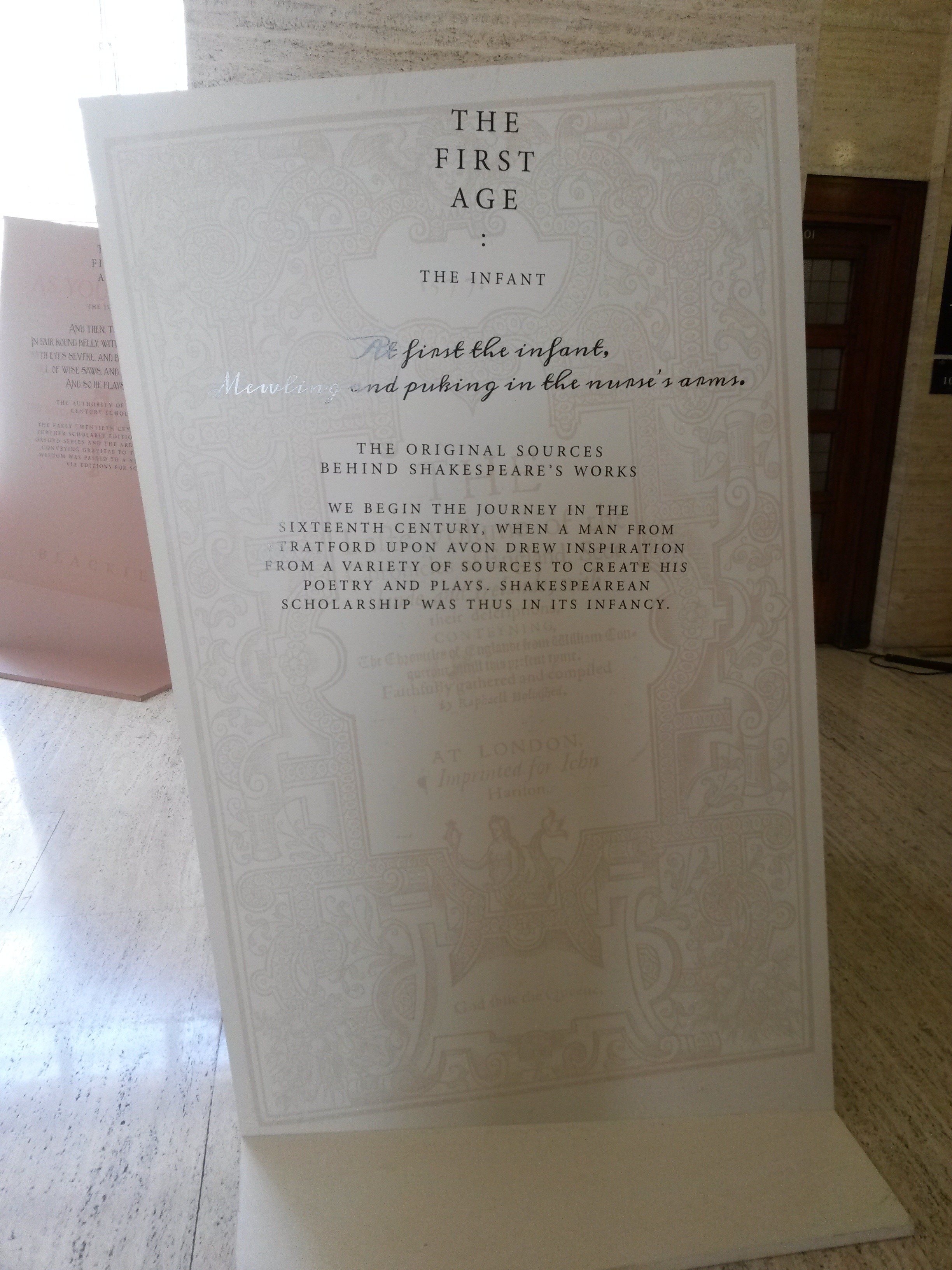
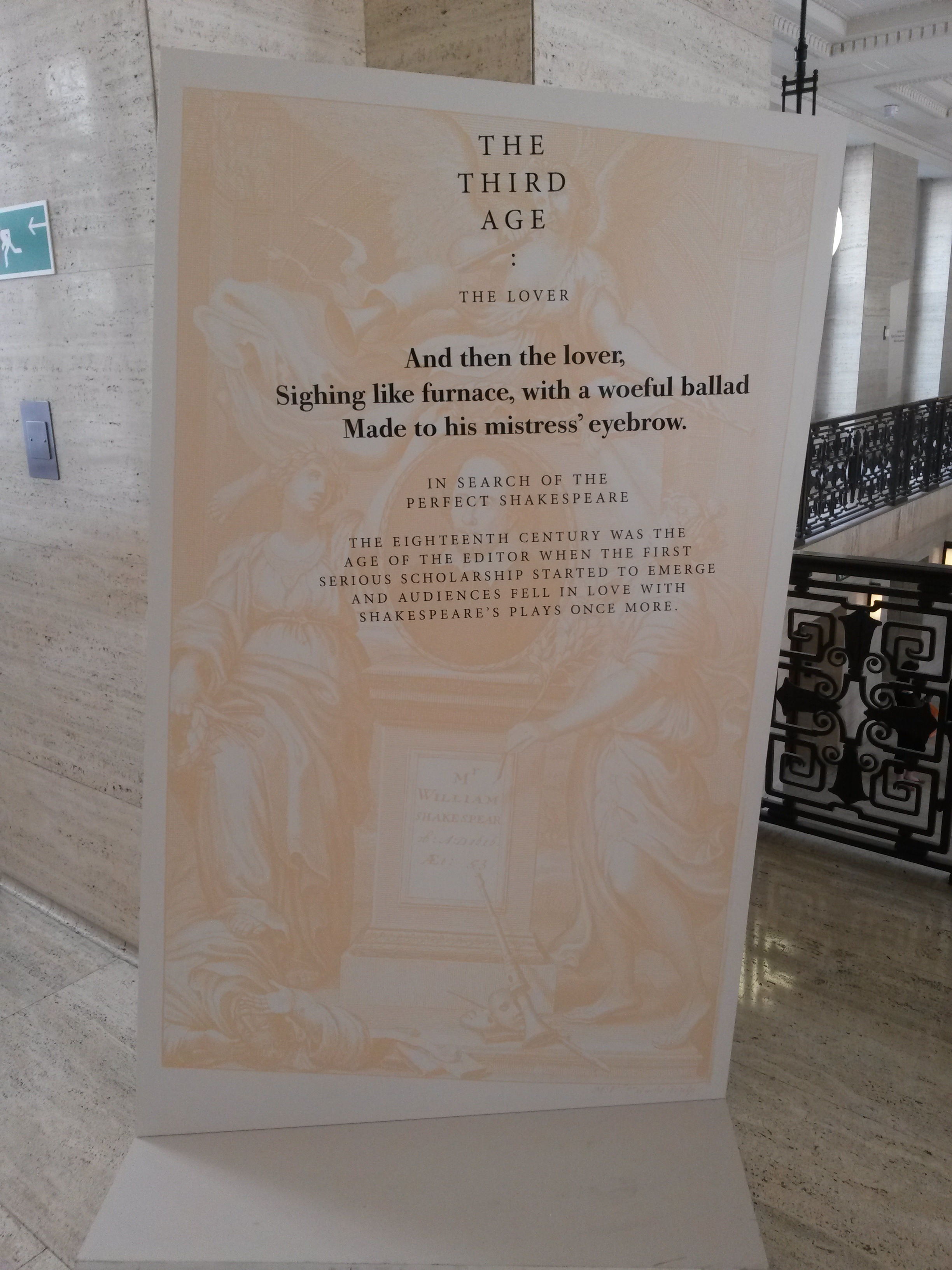
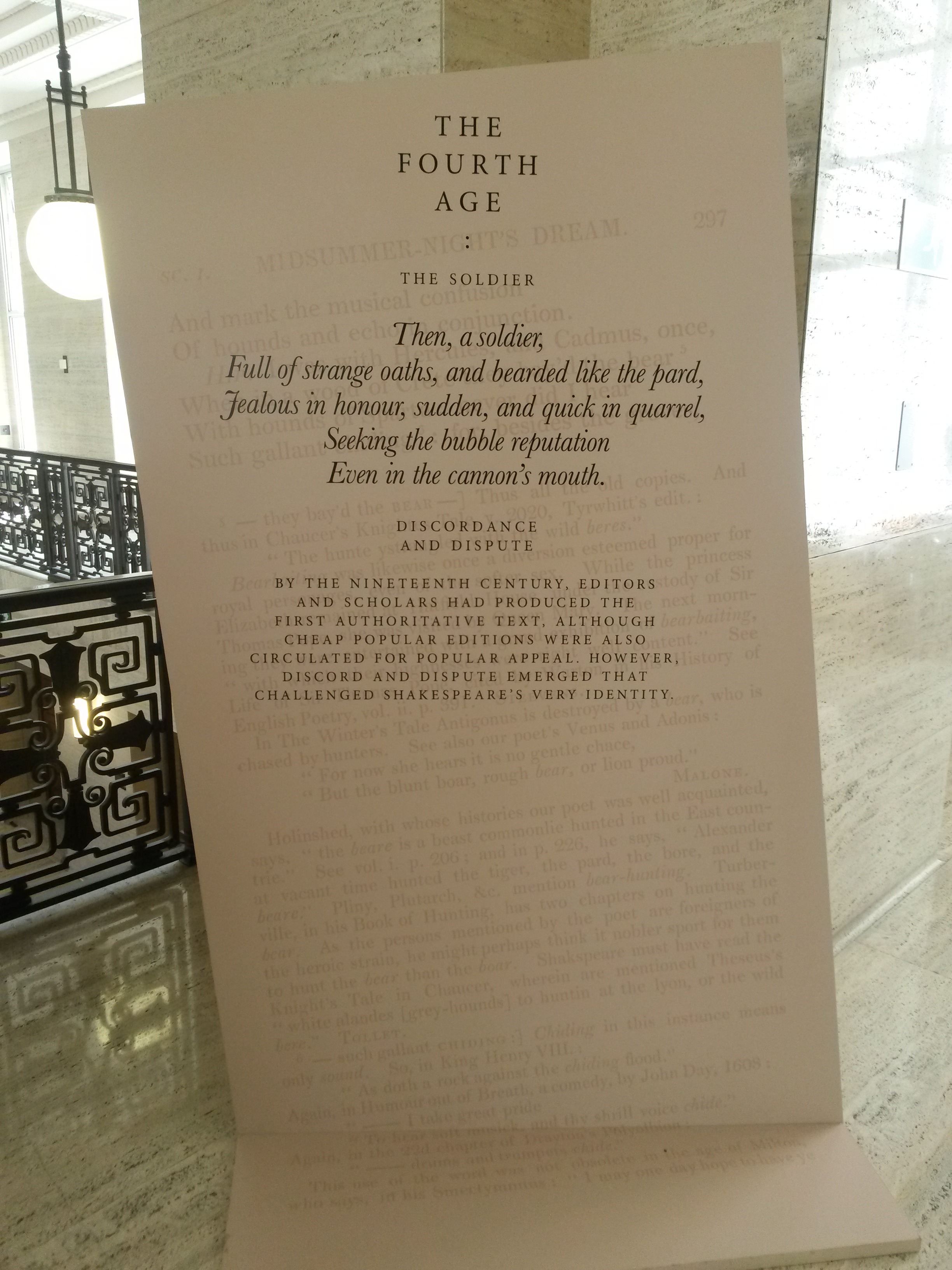
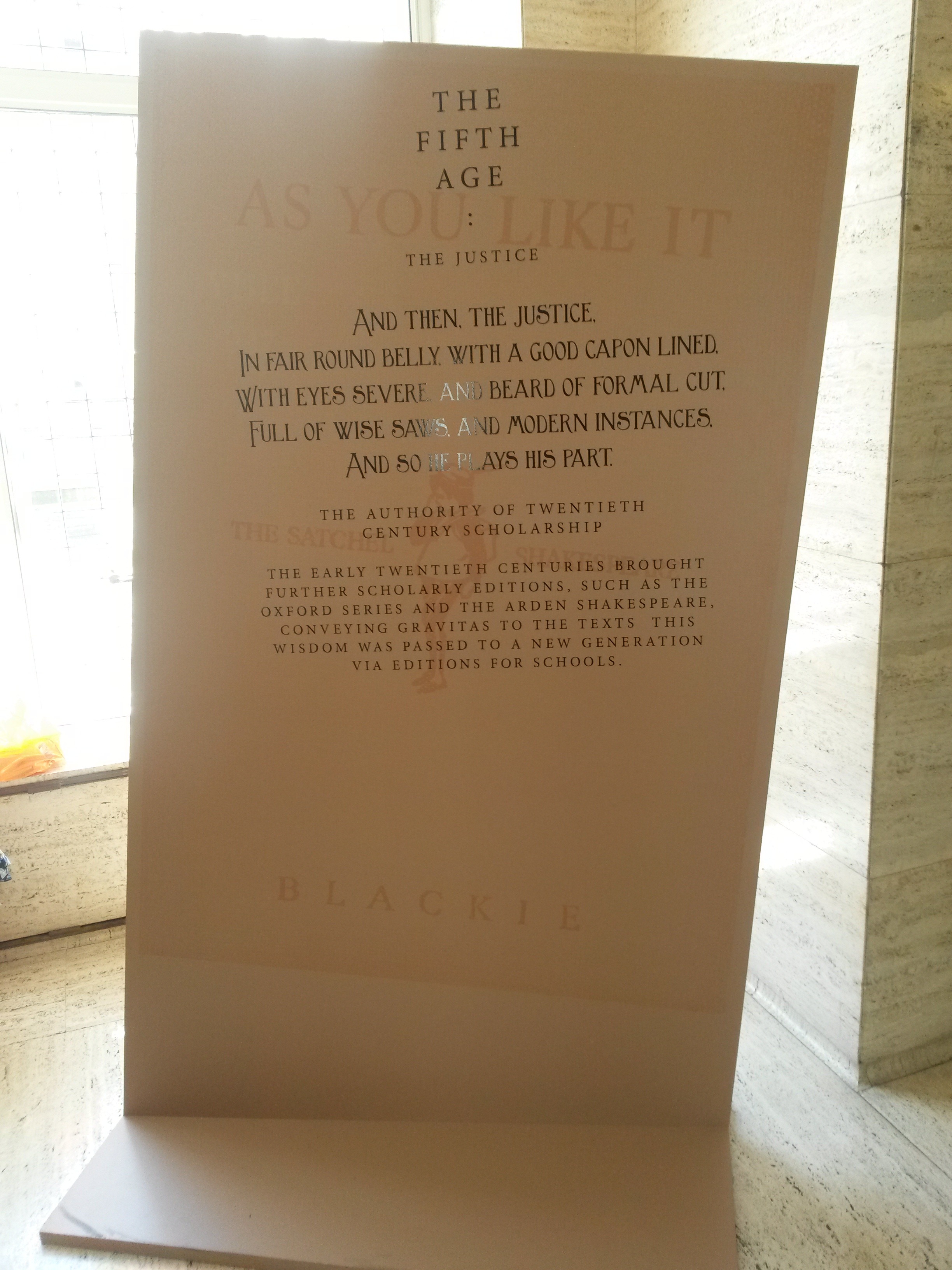
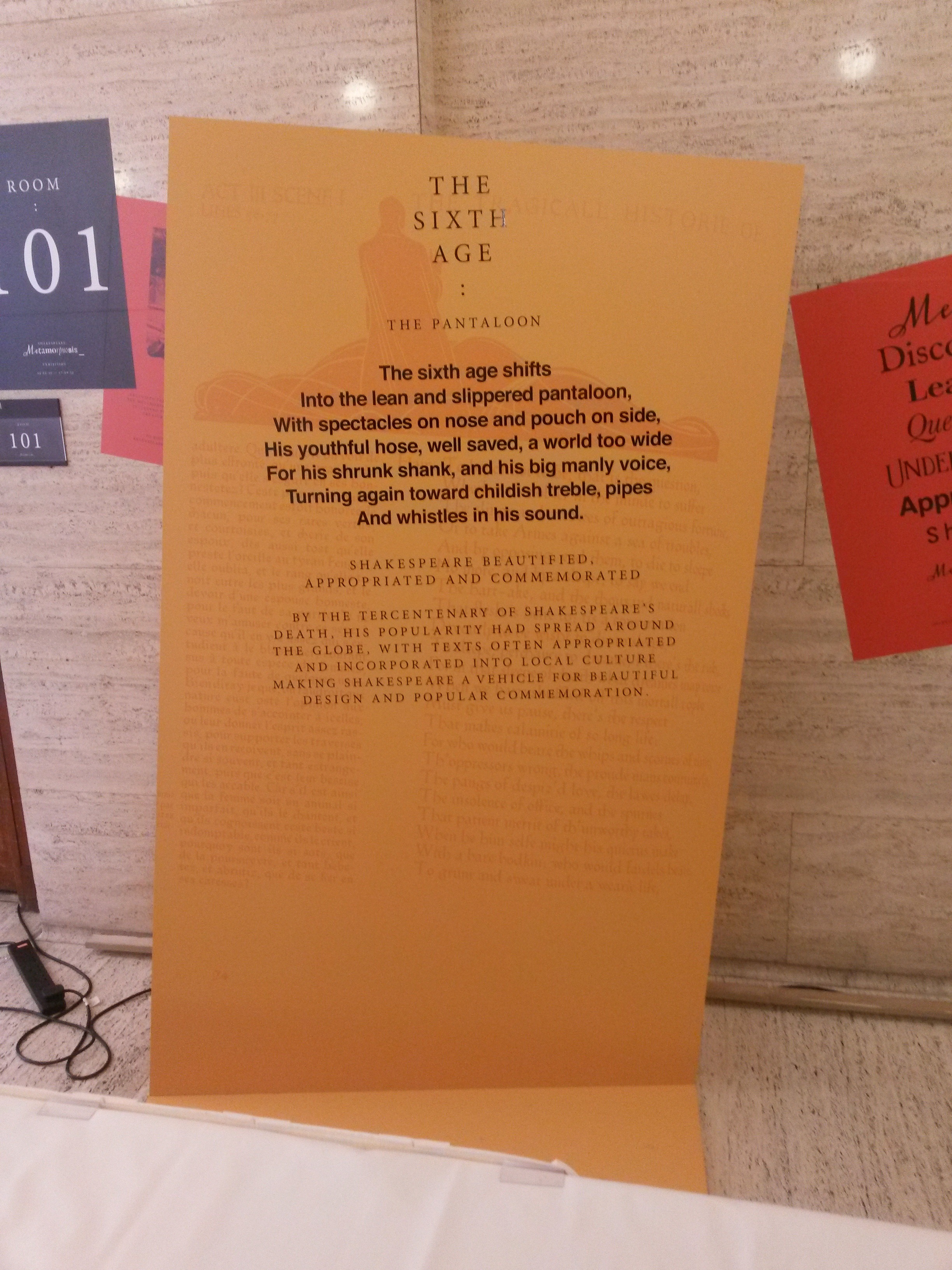
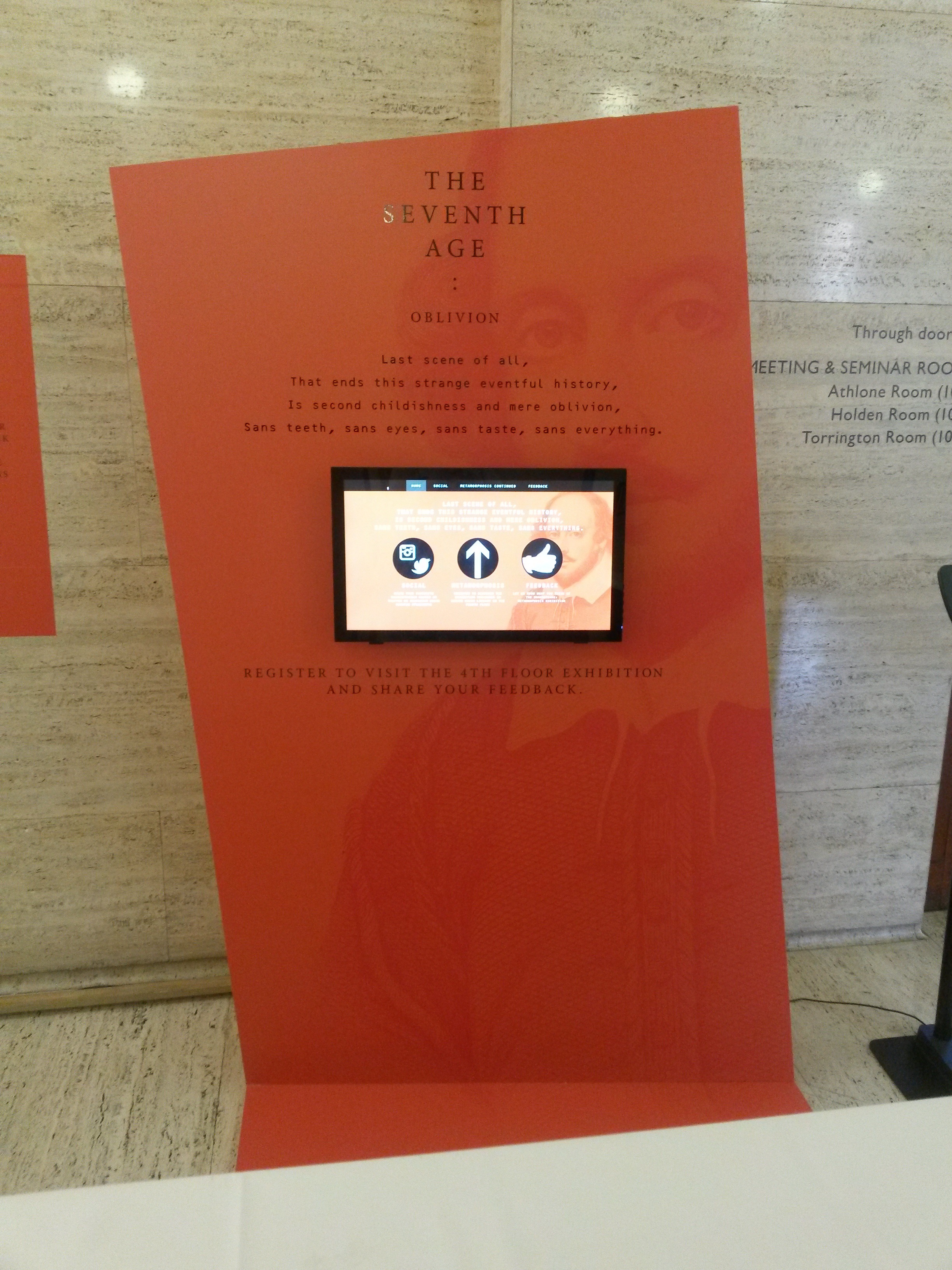
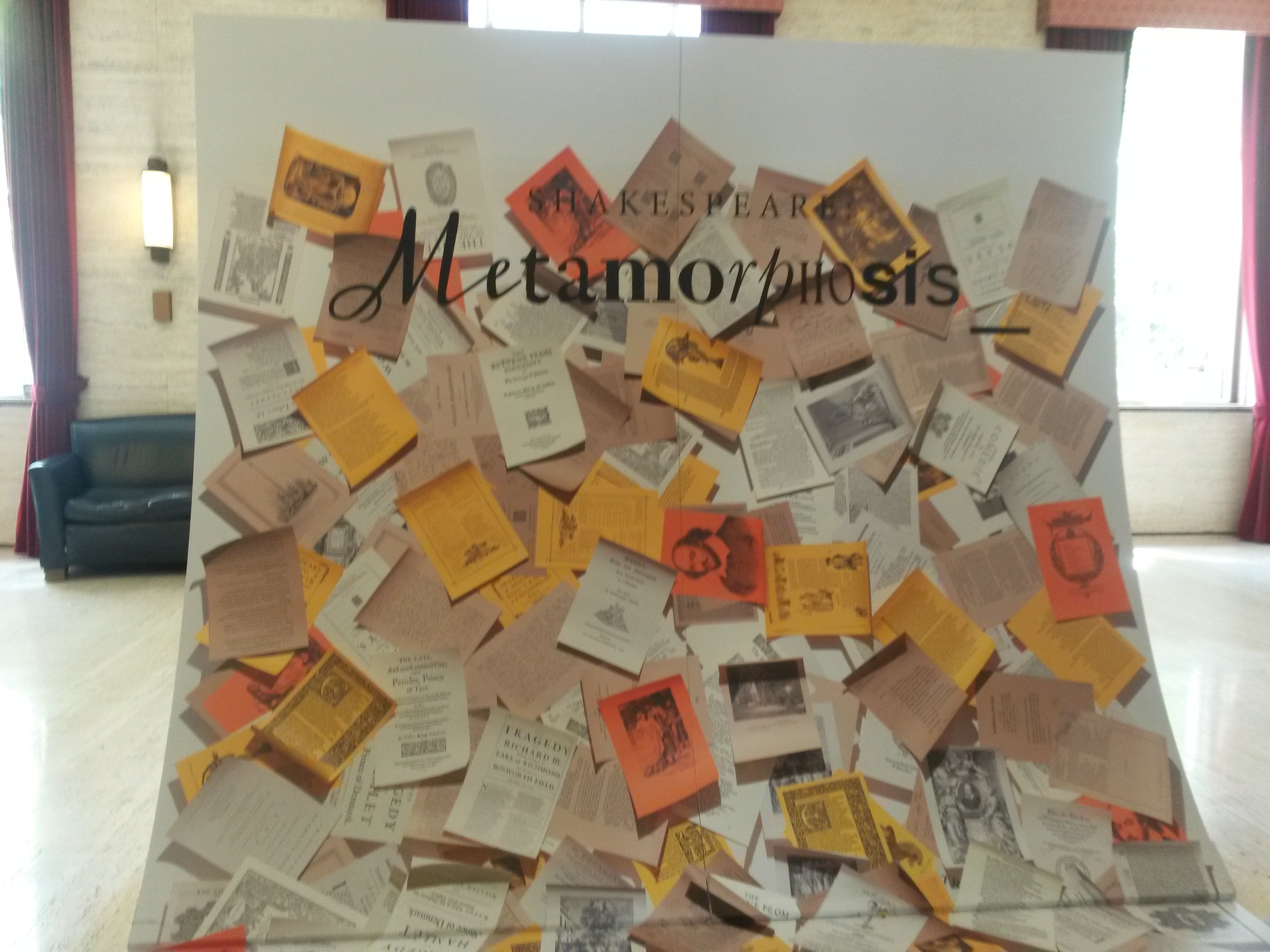
On my day off I headed to Senate House Library for their contribution to the Shakespeare 400th anniversary celebrations: Shakespeare: Metamorphosis, an exhibition which uses the famous “Seven Ages” speech from As You Like It to explore how Shakespearean scholarship has changed over the years. As a librarian, Shakespeare-lover and bibliophile I was very happy to see that the exhibition consisted of several rare and beautiful volumes.
2016_0718Metamorphosis03

2016_0718Metamorphosis05

2016_0718Metamorphosis06

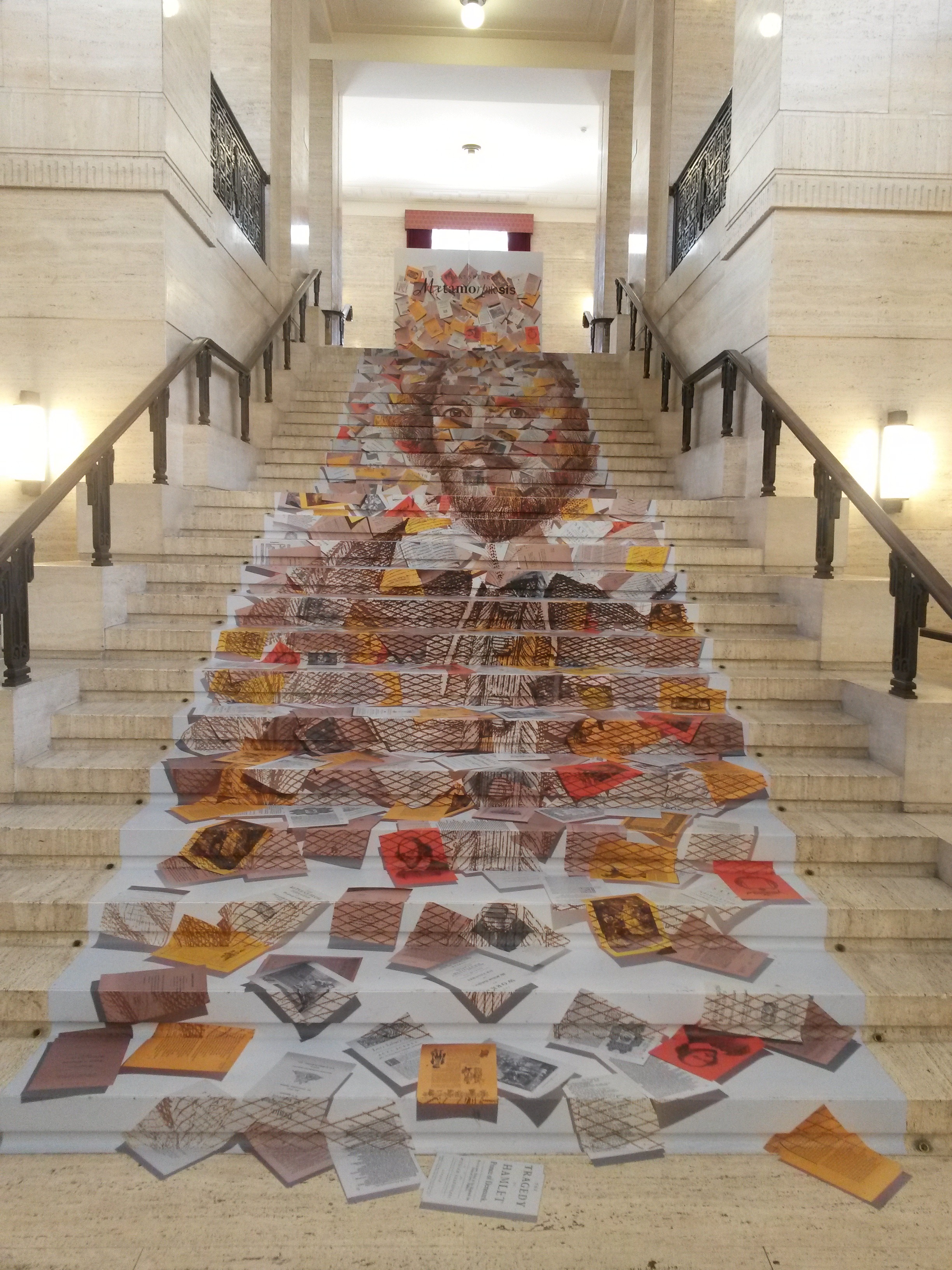
The entrance to Senate House Library has been transformed for the occasion, with a Shakespeare design adorning the steps. Before you even reach the exhibition, there are posters all around, each exploring a different aspect of the history of Shakespearean scholarship.

2016_0718Metamorphosis07 2016_0718Metamorphosis08 2016_0718Metamorphosis09 2016_0718Metamorphosis10 2016_0718Metamorphosis11 2016_0718Metamorphosis12 2016_0718Metamorphosis13

Once you get up to the exhibition, there are some fascinating works to see. Gallery One, ‘The Infant’, explores the influences on Shakespeare and features Holinshed’s Chronicles and the works of Chaucer. Gallery Two, ‘The Schoolboy’, features early quarto editions of some of the plays, including Othello. Other galleries explore the history of Shakespearean scholarship and performance, including the adaptations performed by actors such as David Garrick. In the search to create an authoritative text various sources were used and there were conflicts between scholars. The twentieth century was especially good for academic Shakespeare studies: the first Oxford Complete Works was produced in 1891 by William James Craig, a forerunner of the modern Oxford Shakespeare series edited by Stanley Wells and Gary Taylor from 1986.

2016_0718Metamorphosis14

The final gallery, ‘The Superstar’, looks at Shakespeare in the digital world and invites exhibition attendees to make their own contribution, sharing on Instagram or Twitter.

2016_0718Metamorphosis15

Shakespeare: Metamorphosis runs until mid-September, but if you can’t get to London, or want to explore the topic further, you can view an online version. The University of London’s Shakespeare microsite will remain up for the foreseeable future, a valuable resource for fans and students of the Bard.

2016_0718Metamorphosis17

Fox Talbot: Dawn of the Photograph – Science Museum

2016_0710FoxTalbot

I visited the exhibition Fox Talbot: Dawn of the Photograph, held at the Science Museum. Often called the “father of the photograph”, William Henry Fox Talbot pioneered the negative-positive process, a technique that formed the basis of photography around the world for over 150 years. The exhibition contains many photographs taken by him, as well as by those whom he inspired. Many of Talbot’s photos feature his home, Lacock Abbey, in Wiltshire. Though the subjects are often mundane: a door, a tree, a broom leaning against the wall – they are exciting because they are among the first photographic representations of such things.

The exhibition did take a fairly scientific slant (unsurprisingly, it’s the Science Museum after all), which went over my head at times. However, there were snippets of fascinating information, too. In France, another photographic pioneer, Hippolyte Bayard, was so annoyed that his contemporary Louis Daguerre seemed to be getting all the credit that he created a photograph of himself as a drowned man with a suicide note on the back. Pretty dramatic. Ultimately, it was the pictures that were the fascinating things for me.

The exhibition runs until 11 September, so there’s still time to catch it.

Spiceworld: The Exhibition – Watford Colosseum

2016_0709Spiceworld01

It’s not often I visit Watford, but when I found out that the Watford Colosseum was going to be hosting an exhibition on the Spice Girls during the summer, I knew I had to go. I was a huge fan of the group during my childhood – Wannabe was the first single I ever bought. I managed to drag some of my friends to the exhibition, too!

The exhibition was held upstairs in the building, with plenty of signs to direct the way. It was smaller than I had expected, but there was plenty of stuff crammed in. Among the items on display were signed posters and discs, magazines, costumes and merchandise, including a full set of dolls.

The collection is owned by Liz West, who holds a Guinness World Record for the largest collection of Spice Girl memorabilia in the world. Spiceworld: The Exhibition was previously on display at Ripley’s Believe It or Not! in London, but the only way to see it was by buying a ticket to Ripley’s: it’s free to view in Watford.

2016_0709Spiceworld02 2016_0709Spiceworld03 2016_0709Spiceworld04 2016_0709Spiceworld05 2016_0709Spiceworld06 2016_0709Spiceworld10 2016_0709Spiceworld13