Saskia Olde Wolbers: ‘Yes, these Eyes are the Windows’

2014_0521VanGoghHouse

“Yes, these eyes are windows, and this body of mine is the house”
Herman Melville, Moby Dick

87 Hackford Road in south London is rather a special address – for a few short months between 1873 and 1874 it was the home of famous Dutch painter Vincent Van Gogh. A blue plaque marks out the building, which is currently home to an installation by Saskia Olde Wolbers, ‘Yes, these Eyes are the Windows‘.

Saved from demolition when a postman discovered the house’s famous former resident in the 1970s, the house has gone from strength to strength; it is currently empty – has been since 2012 – and Wolbers has taken the opportunity to create a fascinating experience, drawing on the history of the building.

Entry is timed: you ring the doorbell when the people in front of you have left the building, and when the time is right you enter and begin to explore, guided by the lights, haunted by the voices that surround you, telling stories of the house and the people who lived there. The house is in a shabby state, with peeling wallpaper, holes in the ceiling, and bits of furniture lying about. Lights, photographs and old newspapers emphasise the history behind the building. It’s an eerie experience, and one which will stay with me for a while.

Shakespeare in Print – Guildhall Library

I popped out in my lunch hour on Wednesday to visit the Shakespeare in Print exhibition at the Guildhall Library. This looks at the history of printing William Shakespeare’s plays, from late sixteenth century quartos to seventeenth century folios, the reworked versions of the eighteenth century and the rediscovery and popularity of the originals in the nineteenth. I wanted to go on a Wednesday as this was the only day of the week on which the Library’s original First Folio is displayed – a facsimile is on view at all other times. This First Folio was acquired around 1760 by William Petty Fitzmaurice, 2nd Earl of Shelburne, and purchased for the London Institution in 1806; it was transferred to the Guildhall Library in 1912. It is supposed to be one of the five finest copies in existence.

The First Folio dates from 1623; it contains almost all of Shakespeare’s plays. One exception is Pericles, which was only added to the Second Folio. In addition, several early copies of the First Folio do not contain Troilus and Cressida. The First Folio was the result of Shakespeare’s followers and admirers gathering together several years after his death to combine, edit and publish his plays. This is part of the reason Shakespeare’s works are so well known today: it was uncommon for plays to be printed in the sixteenth century, as it could damage the original company’s profits if another company got hold of a written text and started performing it. Shakespeare himself probably did not authorise any such publication in his lifetime. It’s just as well the First Folio was published, as it is the earliest printed version of around half of Shakespeare’s plays, including Macbeth, Julius Caesar and Antony and Cleopatra. Without the First Folio, these plays may have been lost.

The First Folio was followed by the Second, Third and Fourth Folios as Shakespeare remained popular. As plays became accepted as serious literature, other works were published during this time, and the exhibition holds some examples of these, including The Knight of the Burning Pestle by Francis Beaumont (recently performed at the Globe’s Sam Wanamaker Playhouse) and the works of Benjamin Johnson.

During the eighteenth century, Shakespeare was often adapted heavily to suit the tastes of the time. For instance, Macbeth was performed with songs (I would love to see this) and as a ‘travestie’ version – a spoof in two acts (I would also love to see this). During the Victorian era, Shakespeare began to take on the iconic status he still has today and theatre-makers began to go back to the original texts and study Shakespeare more seriously. ‘Variorum’ editions of the works – editions including all known variants of a text, including notes – began to be produced, and gift books, such as the ‘Library Shakespeare’ on display, were common.

The exhibition didn’t just contain books: there was also a dress worn by Juliet Rylance in the Globe’s 2005 production of  The Winter’s Tale, which was made by the Original Practices Clothing Archive. Overall, this was a small but fascinating free exhibition and I’m glad I made the effort to go, even though it meant a bit of a rush during lunch!

South London Gallery

2014_0518SouthLondonGallery
The South London Gallery

On Sunday I popped into the South London Gallery in Peckham for the first time. I’d heard about an exhibition called Welcome to Iraq, and thought it sounded interesting.

The exhibition was originally shown as part of the National Pavilion of Iraq in the 55th Venice Biennale in 2013. Eleven artists, most of whom work and live in Iraq, were chosen to display their contemporary work. There were some very funny political cartoons, interesting sculptures, and two intriguing rooms upstairs full of furniture made out of cardboard.

The best thing about the exhibition was the homemade, relaxed feel, with comfy chairs and tables laden with books to do with Iraq. There were also refreshments available in the form of Iraqi tea and biscuits – free, but with a donation appreciated (which I was happy to make – the tea and biccies were delicious!).

The Gallery shows a rolling programme of temporary exhibitions, specialising in contemporary art. It is free to enter and has a café and a bookshop. It is open every day, and stays open until 9pm on Wednesdays – a good excuse to pop down after work.

FACTS

Address: 65-67 Peckham Road, London, SE5 8UH

Website: southlondongallery.org

Opening Hours: Tues-Sun 11am-6pm (9pm on Wednesdays)

Prices: Free

Ruin Lust – Tate Britain

Last weekend marked the final weekend of the Ruin Lust exhibition at Tate Britain, so I decided to pop along. I am glad I did – it was fascinating, looking at the obsession with ruins that has plagued and surrounded artists for hundreds of years. There was an interesting mix of modern and older artists.

I love ruins myself, and when I think of obsession with ruins I tend to think of the Romantic love of crumbling abbeys, as evidenced in, for example, Wordsworth’s ‘Tintern Abbey’. There is a Turner watercolour of that selfsame abbey in the exhibition, as well as moonlit views of other ruins, which I thought were beautiful. I also loved John Martin’s ‘The Destruction of Pompeii and Herculaneum’ of 1822, which I had seen before, but which has lost none of its impact. Gustave Doré’s engraving ‘The New Zealander’ of 1872 shows an imaginary ruined London.

However, I also liked some of the more modern works, particularly Laura Oldfield Ford’s images of postwar council housing, both outside and inside, covered with graffiti-like marks. The exhibition seemed very quiet, which was a shame – I think it deserved to have been seen more widely.

Bailey’s Stardust – National Portrait Gallery

The National Portrait Gallery is currently exhibiting work by photographer David Bailey, and I headed down after work last Friday to check it out. Stardust brings together work from his entire career, which has lasted for several decades.

Bailey is famous for his celebrity portraits, and there are plenty of those here, including images of Kate Moss, Johnny Depp, Mick Jagger and more. Most are black and white pictures, taken against a plain white background. Interestingly, I thought, this style of photography makes the images look timeless. Only the ages of the recognisable subjects, and occasionally the clothes they were wearing, gave any indication that they were not taken recently.

Celebrities are not Bailey’s only subjects, however. He has taken photos in East Africa, Papua New Guinea and Australia among other places. Many of these photos are portraits against plain backgrounds, some in black and white. There is a democracy to his images, I think, in that by taking photos of celebrities and of indigenous peoples Bailey is showing how they are all the same.

Overall, an interesting exhibition – worth a visit before it closes on 1 June.

Martin Creed: What’s the point of it? – Hayward Gallery

I nearly didn’t go to see Martin Creed: What’s the point of it? at the Hayward Gallery on the South Bank. I’d heard some ‘interesting’ things about it and I wasn’t sure if it was the kind of thing I’d enjoy. However, the exhibition proved so popular that it was extended for a week, and I went to see it on Thursday evening, after work and before I went to the theatre. I definitely advocate going to see exhibitions during late-night weekday opening – the exhibition was really quiet, and the balloon room – which can have queues lasting up to an hour – was nearly empty.

Creed’s work belongs to the category I normally term as ‘crap modern art’, and I found myself asking the question posed in the exhibition’s title – “What’s the point of it?” – rather a lot as I walked around. Which begs the question, why did I go and see it? Curiosity, I suppose.

Creed names his works by numbers and in fairness to him his work is incredibly varied. On the one hand, among the exhibits are a piece of Blu-Tack stuck to a wall, a crumpled piece of paper, and a number of wall protrusions. More interesting to me was the large ‘Mothers’ sign that whirls around your head as you enter the exhibition: the idea behind this is that when you are little, your mother seems big and scary, as does this sign. Creed’s love of order is evident in the Lego bricks piled one on top of the other in size order, and the chairs and boxes piled up in similar ways.

The exhibition even reaches outside, with a couple of works on display on the terraces. One of these is a car which randomly bursts into life, its doors shooting open and its radio blaring, although I was more concerned with how on earth they got the car up there in the first place. On another terrace there was a film of a penis going up and down (the woman standing next to me remarked “I’ve seen better”).

The ‘balloon room’, aka Work No. 200, Half the air in a given space, was the best. The room was filled with balloons taking up half the air, resulting in a really fun room where you wade through tons of balloons with static lifting up your hair. I had so much fun here I thought it was worth the admission price alone.

There were paintings and pictures too, as well as sculptures and installations. The pictures using highlighters appealed to my precise nature, and I really liked the prints made using broccoli! The final work, though, left me completely bewildered. The infamous “sick film” shows people walking in front of the camera, vomiting and walking away, except in one case where a woman walks up, squats down and takes a shit instead. You can also buy this film in the gift shop – I am honestly baffled as to why anyone would want to watch someone defecating or being sick, or if they did, why they would pay £15 for a DVD rather than just popping down to their local high street on a Friday night. Oh well.

Though I remain sceptical of many of the exhibits, I do feel that the exhibition as a whole proved more than the sum of its parts, with interesting things to say about order, space, ambiguity and not taking the art world too seriously. It was more thought-provoking than I had expected and on balance, I don’t regret going to see it – even if I can’t get the image of someone being sick out of my head…

Jean Paul Gaultier: Be My Guest – Fashion Space Gallery

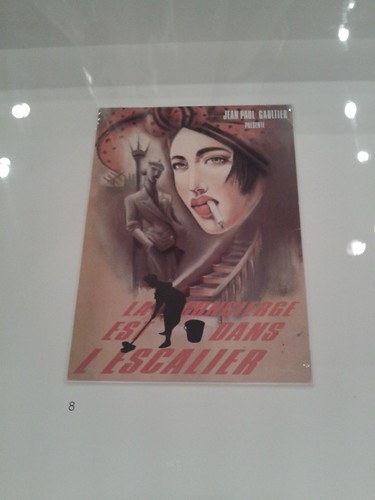
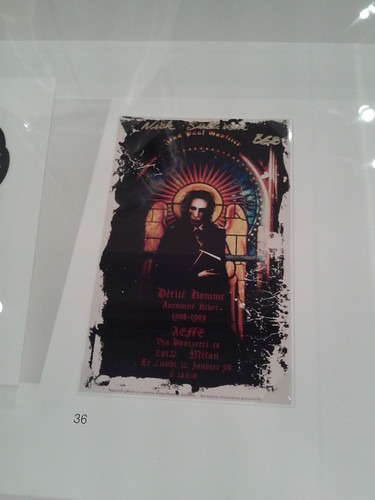
After visiting, and loving, the Jean Paul Gaultier exhibition at the Barbican, I decided to visit the satellite exhibition, Jean Paul Gaultier: Be My Guest, which is being held in the London College of Fashion‘s Fashion Space Gallery until the end of May. The Gallery is near Oxford Street and I popped in one weekday lunchtime (the exhibition is open every day except Sunday).

This small but interesting exhibition showcases Gaultier’s graphic design work, which dates from the early 1980s to the present day. It includes invitations to his shows as well as advertising campaigns.The exhibition really complements the Barbican’s exhibition and further shows how Gaultier’s unique style developed over the years.2014_0428BeMyGuest05 2014_0428BeMyGuest06 2014_0428BeMyGuest07 2014_0428BeMyGuest08 2014_0428BeMyGuest09

National Army Museum

I like visiting random museums in London, and last weekend I went to the National Army Museum. My visit that day was prompted by hearing that the museum is due to close on Wednesday 30 April for two years for refurbishment and redevelopment. Personally I think it’s a bit strange to close the museum in the year of the 100th anniversary of the start of World War I, when interest will surely increase, but I suppose they have a reason for it. The museum is located near Sloane Square station in west London (well, not too near – I still chose to get a bus). It’s free to enter, and there’s a café and gift shop as well as a children’s area. From the outside it does look well-maintained and inviting – for a museum that’s due to close for refurbishment imminently, I thought it looked pretty good.

The content of any museum is what matters, of course, as well as how the information is presented. I was very impressed with this, more so than I had expected. The museum looks at the history of the British Army from its beginnings as Cromwell’s New Model Army during the English Civil War, through the Napoleonic Wars and Wellington’s victory at Waterloo, to the Crimean War and conflict in Africa and the Indian subcontinent. Naturally it examines both World Wars as well as more recent conflicts including the Korean War.

I thought the museum was well laid out, interesting and was pitched at an appropriate level for both adults and children to get something out of it. I actually witnessed an adorable exchange as I entered the exhibition: there were two little boys with their dad (who must have been ex-army) and one of the boys, pointing at a case of seventeenth-century muskets, said, “Was yours like that Daddy?” So cute! Whether you are for it or against it, war has been hugely important in history and this museum covers key conflicts involving the British Army superbly. It’s a fascinating place to visit and I am sure I will return once redevelopment is complete.

FACTS

Address: Royal Hospital Road, Chelsea, London, SW3 4HT Website: nam.ac.uk Prices: Free

Middle Temple Hall

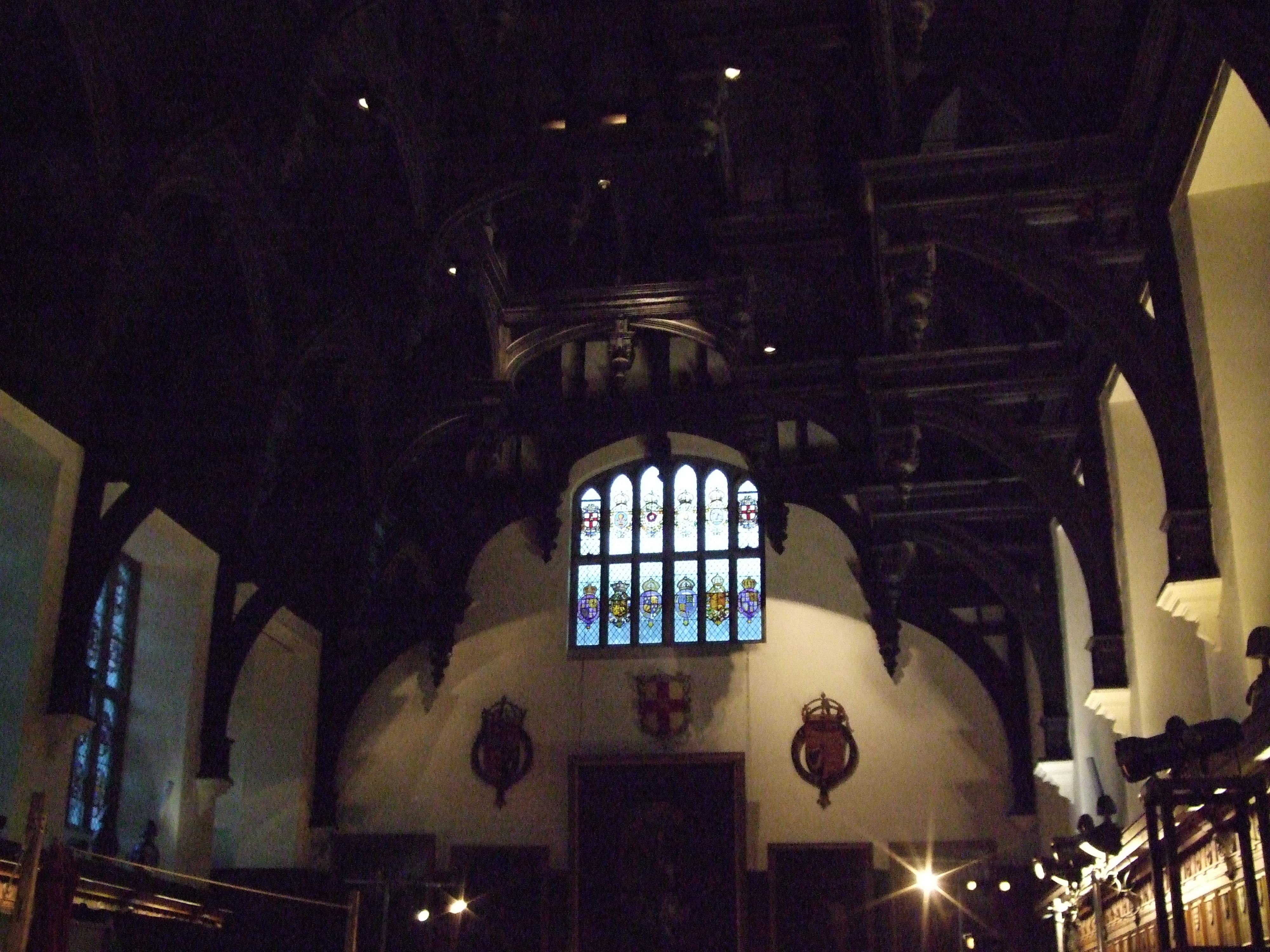
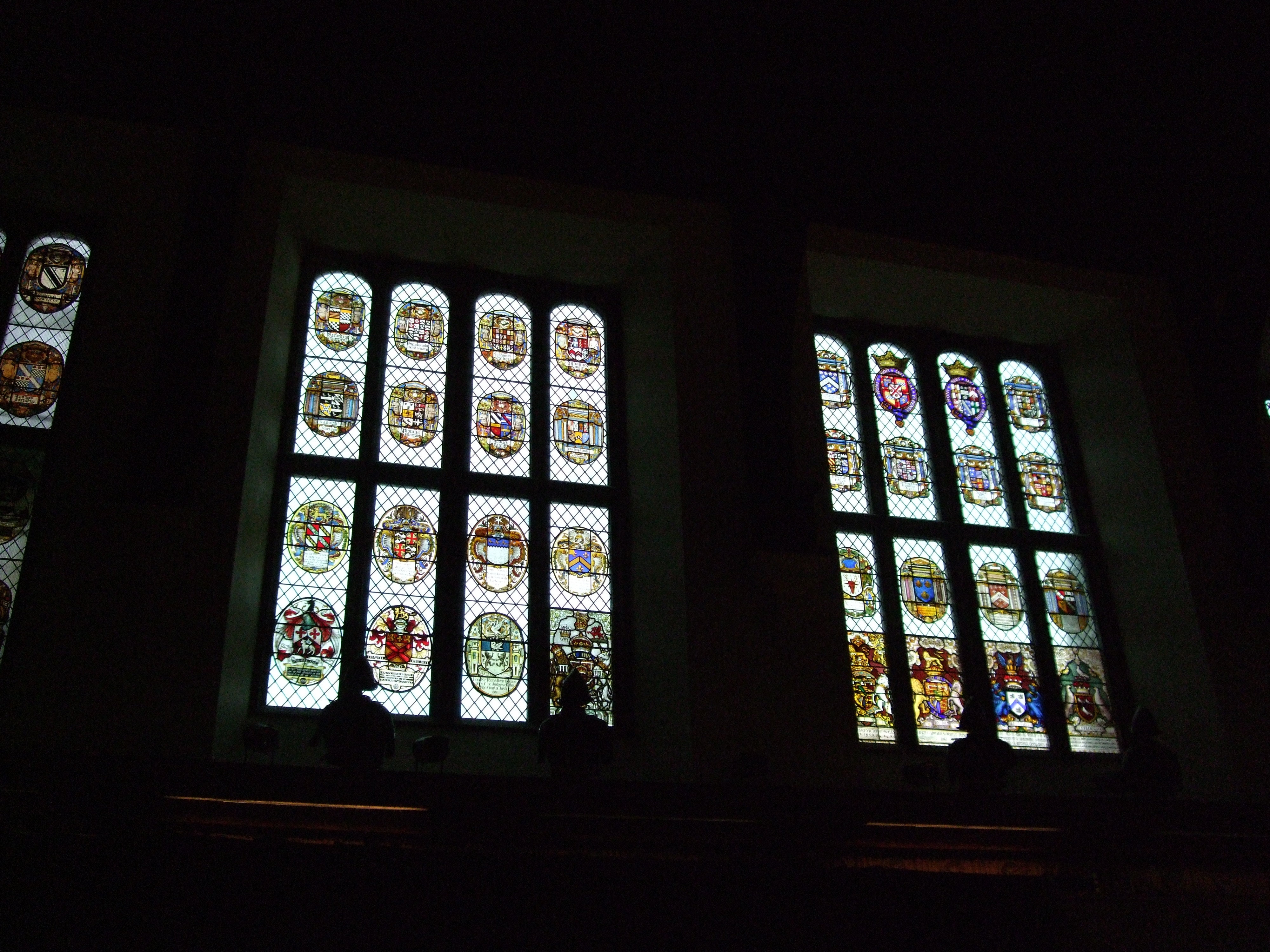
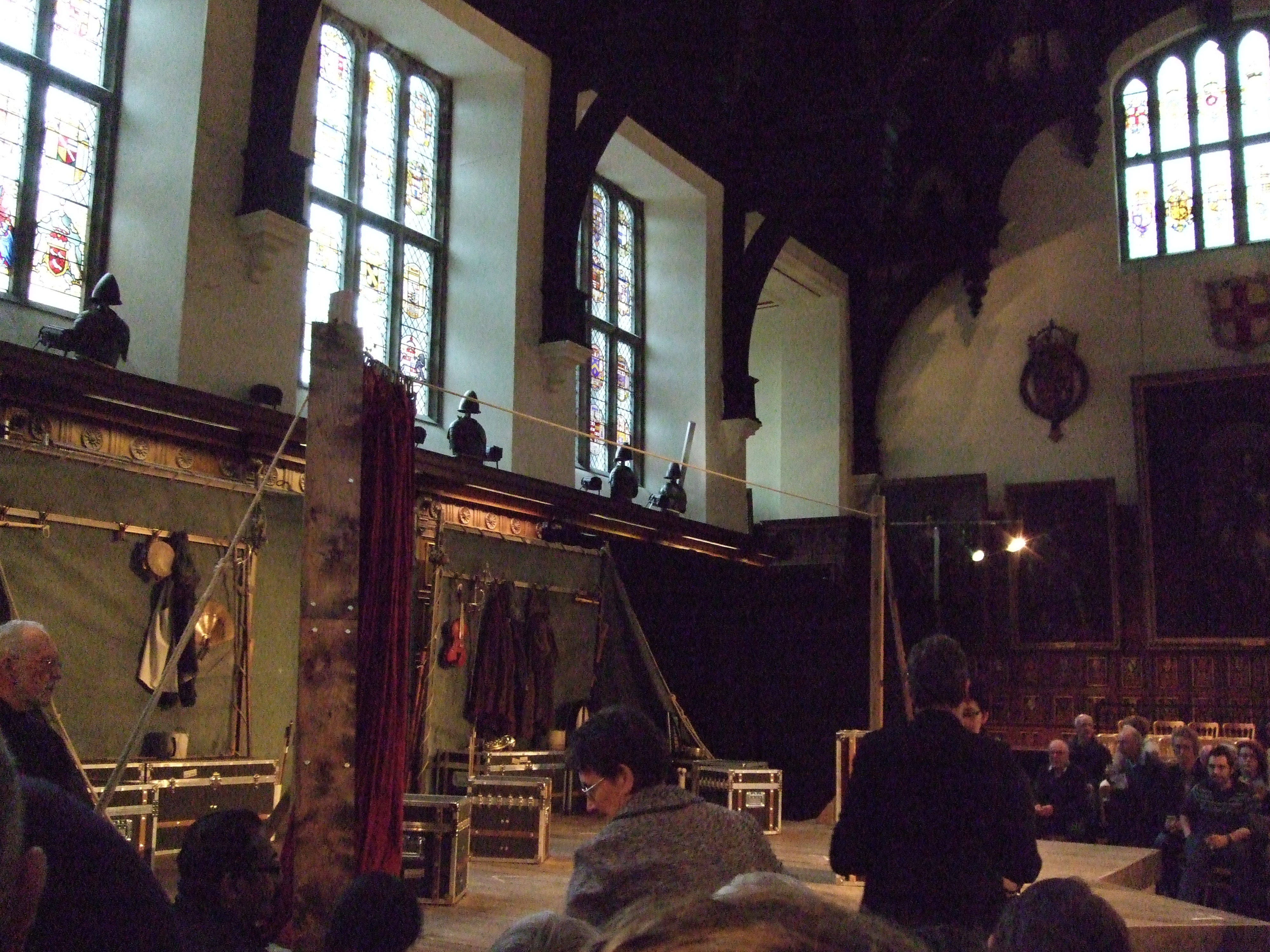
Shakespeare’s Globe are planning a huge undertaking – to take a production of Hamlet to every country in the world between now and 2016. ‘World Hamlet‘, as it is known, officially kicked off at the Globe this week, opening the new season on Shakespeare’s birthday, April 23rd. However, a few preview performances took place over the Easter weekend at Middle Temple Hall, and I attended one of these.

The Hall dates back to the sixteenth century and it is a wonderful place to experience theatre. A highly appropriate place for Shakespeare, in any case, since he actually did have his plays performed here: a plaque marks the location of the first performance of Twelfth Night in 1602. The space itself is beautiful: rich and ornate.

2014_0420MiddleTempleHall02

2014_0420MiddleTempleHall09

2014_0420MiddleTempleHall05

2014_0420MiddleTempleHall08

2014_0420MiddleTempleHall03

Turner and the Sea – National Maritime Museum

As a fan of the artist J.M.W. Turner, I went to visit the exhibition of his work at the National Maritime Museum, Turner and the Sea. I didn’t get time to look around the museum itself as I had to get back into central London, but I did manage to get a good look at the exhibition.

Turner is well known for his paintings of the sea and this exhibition beautifully showcases his best works – including The Fighting Temeraire, recently voted the nation’s greatest painting in a BBC poll – as well as some lesser-known works and sketches. There are also a number of works by other artists who inspired or were inspired by Turner.