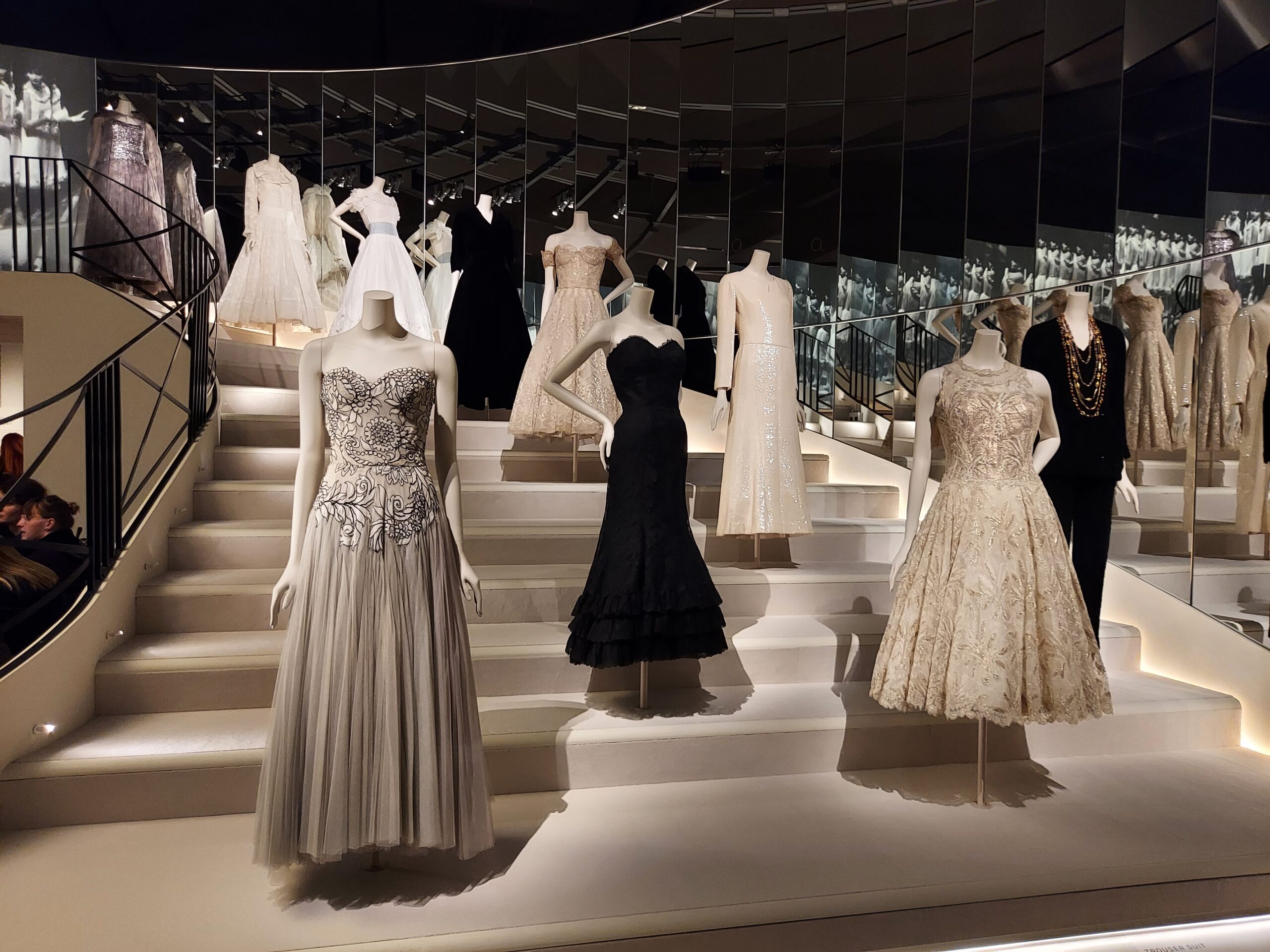
Gabrielle Chanel. Fashion Manifesto – V&A

Selection of dresses on mannequins arranged going up a staircase
Some of Chanel’s evening dresses

The exhibition Gabrielle Chanel. Fashion Manifesto was actually sold out, but then the V&A released more tickets for Friday evenings, and I managed to get one. I was very glad to get the chance to see this exhibition, the first in the UK dedicated to Gabrielle ‘Coco’ Chanel. Featuring over 200 looks, it explored the establishment of the House of CHANEL and the evolution of her unique style of design, which continues to influence how women dress today. Curated by Oriole Cullen, it is expanded from a show first created at the Palais Galliera in Paris in 2020.

Cream silk blouse
An early Chanel silk blouse

I have to admit I am not the biggest fan of the Chanel style. I prefer designers like Dior, with a Fifties-style silhouette and wider use of colour. However, I can appreciate the deceptive simplicity of her designs and the craftsmanship behind her looks, as well as the influence she has undoubtedly had on fashion through the ages.

There are lots of beautiful outfits in the exhibition, some arranged chronologically, others thematically. Black dresses make up one key group; suits another, including one pink set belonging to Lauren Bacall. I did enjoy looking at them, and tracing the evolution of Chanel’s style throughout the decades, taking on elements from outside but still remaining definitively Chanel.

Selection of Chanel bags
Some examples of Chanel bags

It’s certainly impressive how a poor, illegitimate woman born in 1883 was able to rise to the heights that she did. Placed in a convent aged eleven after the death of her mother, she was taught to sew by the nuns and worked as a seamstress alongside her aunt after leaving school. With the help of a textile heir, Étienne Balsan, she moved to Royallieu, northern France, and sold hats to his friends. In 1910, an English lover, Arthur ‘Boy’ Capel, enabled her to open the first Chanel boutique in Paris. In 1918 she established her couture house in the city, and her empire grew from there.
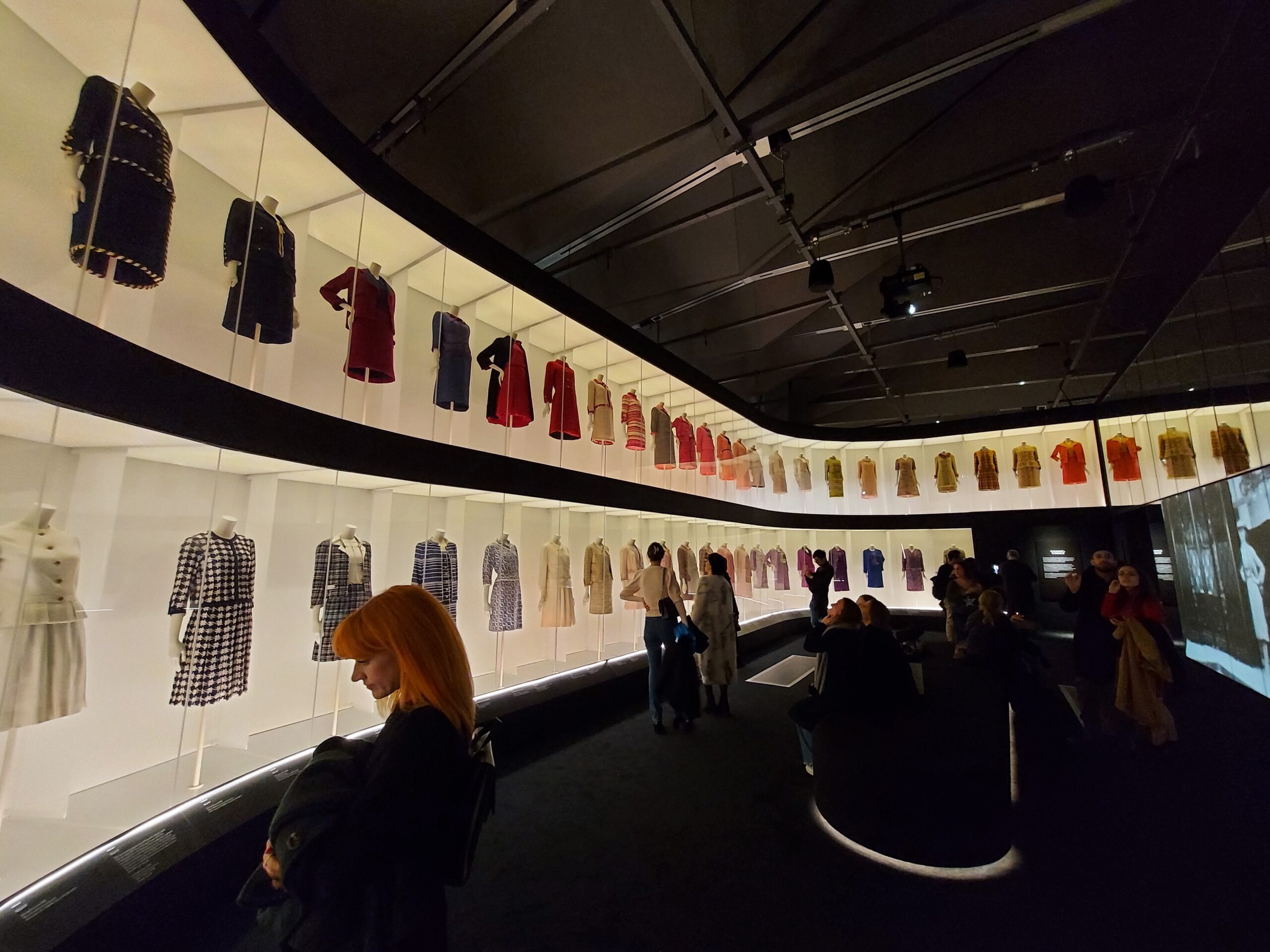
Rows of Chanel suits
Some of Chanel’s famous suits

Some rooms focus on her cosmetic and perfume creations – Chanel No. 5 is still one of the more popular scents worn by women today. Other elements explore her relationship with Britain: she had romances with several British figures, including the Duke of Westminster, and knew Winston Churchill, who painted a picture of her. I was interested to learn about her connection to British manufacturing: one item on display is a red evening gown in silk velvet, made for Chanel by the Manchester Velvet Company in 1932. The designer established a company, British Chanel Ltd., in the 30s to allow for her designs to be manufactured in British fabrics including Nottingham lace and Northern Irish linens.
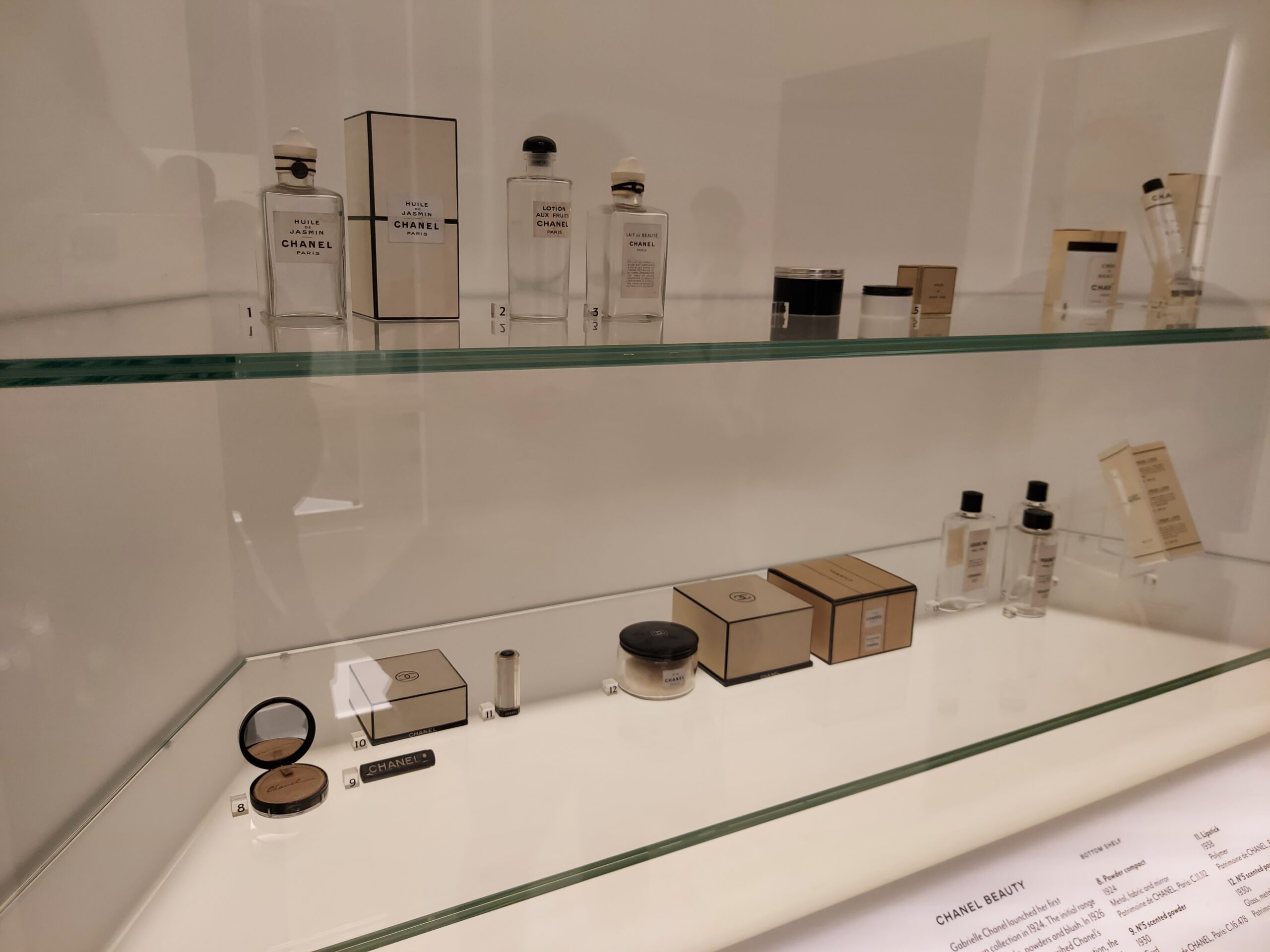
Selection of Chanel cosmetics and perfumes
A selection of Chanel perfumes and cosmetics

There have been suggestions over the years that Chanel was a supporter of the Nazis. She certainly took up with a German spy, Hans Günther von Dincklage, during the occupation of Paris. In 1941 the Nazis recorded her as a trusted source, but recent research suggests she was also an occasional agent for the French resistance. My instinct, to be honest, is that she did whatever she could to survive and thrive regardless of which ‘side’ she was helping – but I honestly don’t know enough about it to comment seriously.

I did enjoy the exhibition, which was fascinating and very thorough, and I’m really glad I got the chance to see it.
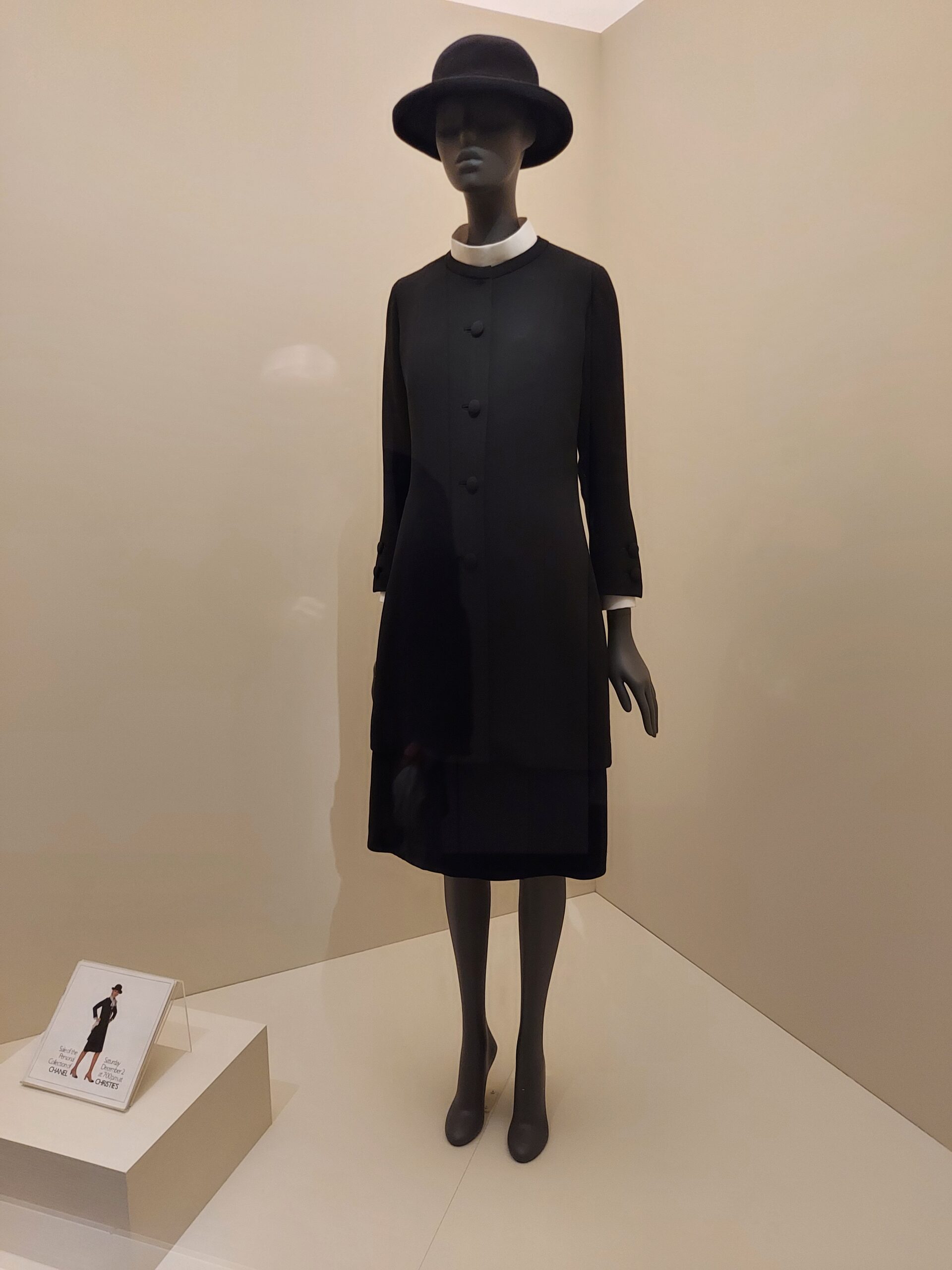
Black skirt suit with hat
Chanel’s own black suit and hat

DIVA – V&A

I visited the DIVA exhibition at the V&A, all about the history of the ‘diva’ figure throughout history. Taken from the Italian term for goddess, the term was popularised in the nineteenth century as composers wrote outsize roles for female sopranos.

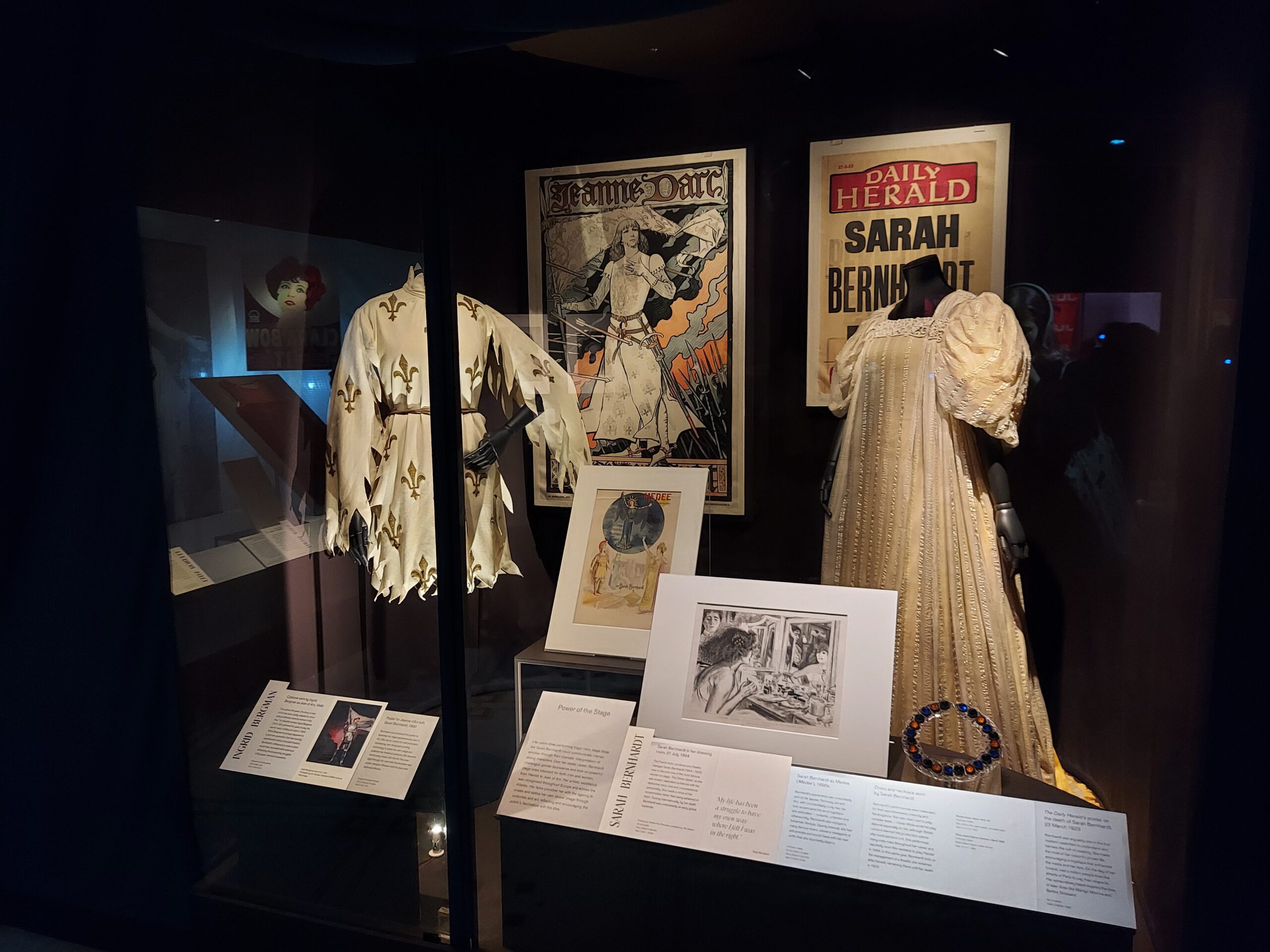
The exhibition begins with an exploration of the earliest divas, from the actresses Ellen Terry and Sarah Bernhardt to the singers Jenny Lind and Adelina Patti. As time moves on, the term is applied to movie stars, such as Clara Bow, Mae West and Elizabeth Taylor.

Sarah Bernhardt artefacts in the exhibition
Items relating to Sarah Bernhardt

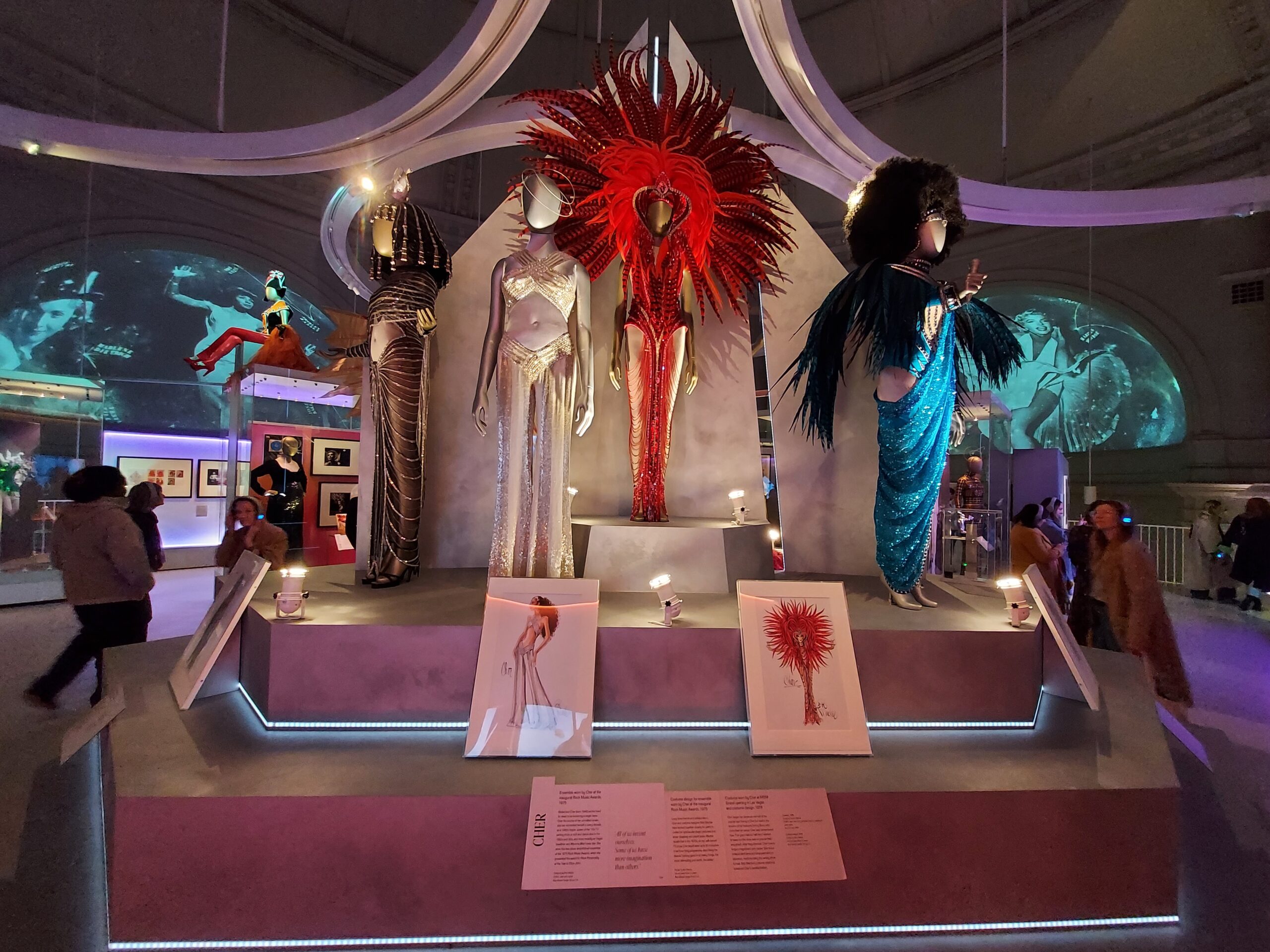
The term is often loaded with negative connotations: “divas” are frequently seen as difficult, demanding and rude. The exhibition tries to show the positives of the designation, emphasising their artistry and the sense of control they seek in their work. Upstairs, the second half of the exhibition looks at modern-day divas, with costumes from the likes of Tina Turner, Cher, Lady Gaga, and even Elton John (the term is no longer exclusively female).

Costumes of modern-day divas
Some costumes worn by modern-day divas

Titanosaur: Life as the Biggest Dinosaur – Natural History Museum

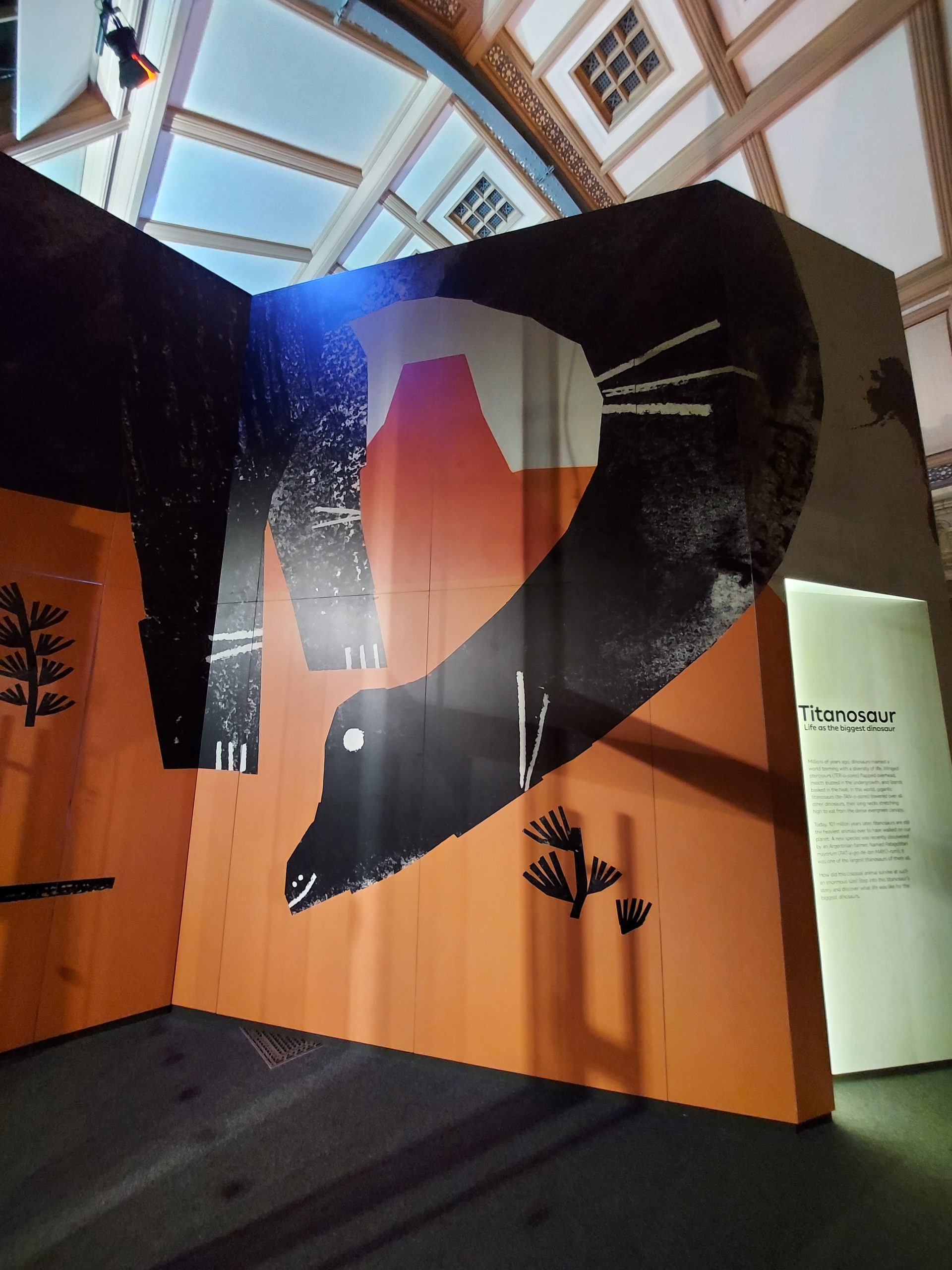
Entrance to the Titanosaur exhibition

I had some days off work to use up before Christmas and decided to pay a visit to the new Natural History Museum exhibition, Titanosaur: Life as the Biggest Dinosaur. Who doesn’t love dinosaurs, right? The exhibition had lots aimed at children, including an interactive game where you had to try and keep baby titanosaurs alive, but even as an adult it was hugely informative and fun.

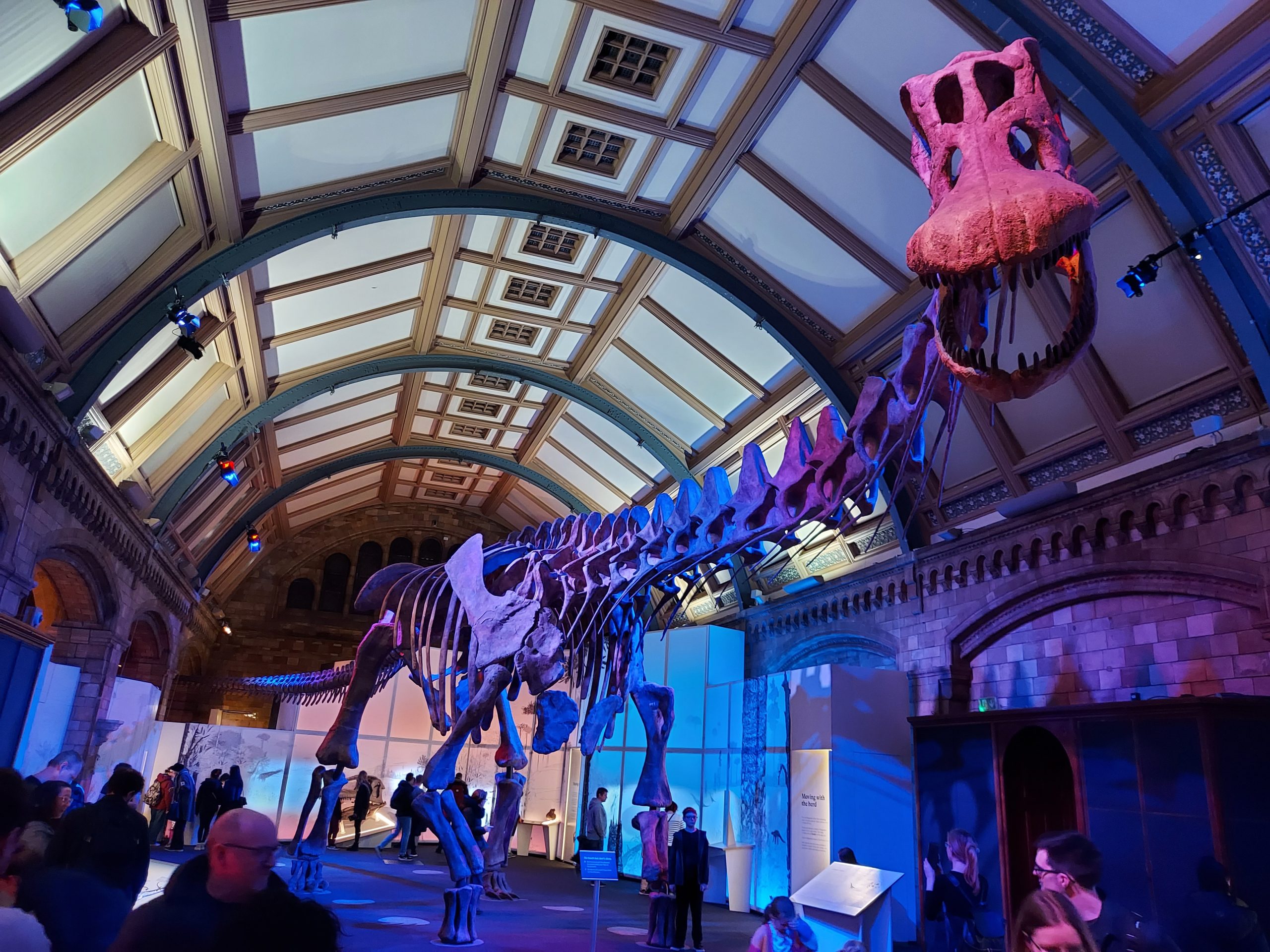
The exhibition is all about the huge titanosaur Patagotitan mayorum. It was first discovered in 2010 when an Argentinian farmer spotted a large bone sticking out of the ground. Scientists descended on Patagonia, aiming to discover more, and as they dug nearby they found more bones from other titanosaurs: hundreds were found over a period of two years, from at least six individuals. By piecing these bones together, scientists have been able to recreate one nearly complete skeleton.

Thigh bone of the Titanosaur

Scientists have examined these bones to learn more about the titanosaur, and have modelled their skulls based on Sarmientosaurus, a close relative. Their peg-shaped teeth show that they bit leaves and swallowed them whole: usually conifer, horsetail and tree ferns. They had lots of space for jaw muscles, suggesting a strong grip. Their eyes and nostrils were placed far back to prevent twigs poking them as they explored trees for food.

A whole section of the exhibition explores the childhood of the titanosaur. Only one in one hundred babies survived to adulthood, as parents would lay eggs and then just leave them. The babies were tiny versions of adults from the very start, and only took two months to grow ten times their hatchling weight. Scientists can look at their bones to see how they grew: one ring equals one year of growth.

The exhibition also looks at how the titanosaur coped with being so huge, and why it might have grown so big in the first place. Patagotitan absorbed oxygen when it breathed in AND when it breathed out, helping it to function. It had light bones, with air sacs to make them even lighter, and wide hips for support, with a long tail for balance. They may have been able to keep warm by trapping heat in their body, generated by their guts and muscles. Their long legs also enabled them to walk huge distances in search of food. Their large size made it harder for them to get eaten.

With their rapid growth, long neck, sturdy legs and efficient lungs, they are the heaviest animals to ever walk the earth. The skeleton on display at the end of the exhibition makes you realise just how massive they were. I thoroughly enjoyed this fascinating exhibition.

Model of the Titanosaur skeleton

Fantasy: Realms of Imagination – British Library

On Saturday morning I attended the exhibition Fantasy: Realms of Imagination at the British Library. I went along with a couple of friends and thoroughly enjoyed myself.

Fantasy isn’t my favourite genre, however the exhibition left me with a long reading list and a new appreciation for its history. The exhibition began with an exploration of fairy and folk tales, the foundation of modern fantasy. These began as oral folklore and over the years have been written down over and over, adapted to the needs of contemporary audiences, and constantly reinvented. Many are dark, especially the original versions, unsanitised for children.

The next section looks at epics and quests, another ancient form of literature. Some of the best known works are the Epic of Gilgamesh and Homer’s Iliad and Odyssey. Another section, on the weird and uncanny, follows, which was probably my favourite since it is most closely linked with horror. The final section looks at portals and worlds, which are particularly popular in the modern age. Some fantastical worlds, such as Wonderland, are reached via a portal; others are entirely separate from our own.

The overarching themes of the exhibition are the timelessness of fantasy storytelling and the ways in which it has been updated and reinvented to ensure its relevance to each generation. It’s a thorough, comprehensive exhibition with plenty of treasures on display, including a glorious fantasy map, the manuscript of Susanna Clarke’s Piranesi, and a room inspired by American series Twin Peaks. It’s definitely worth seeing, and you will come out with a new appreciation of the genre.

Treasures of Gold and Silver Wire – Guildhall Art Gallery

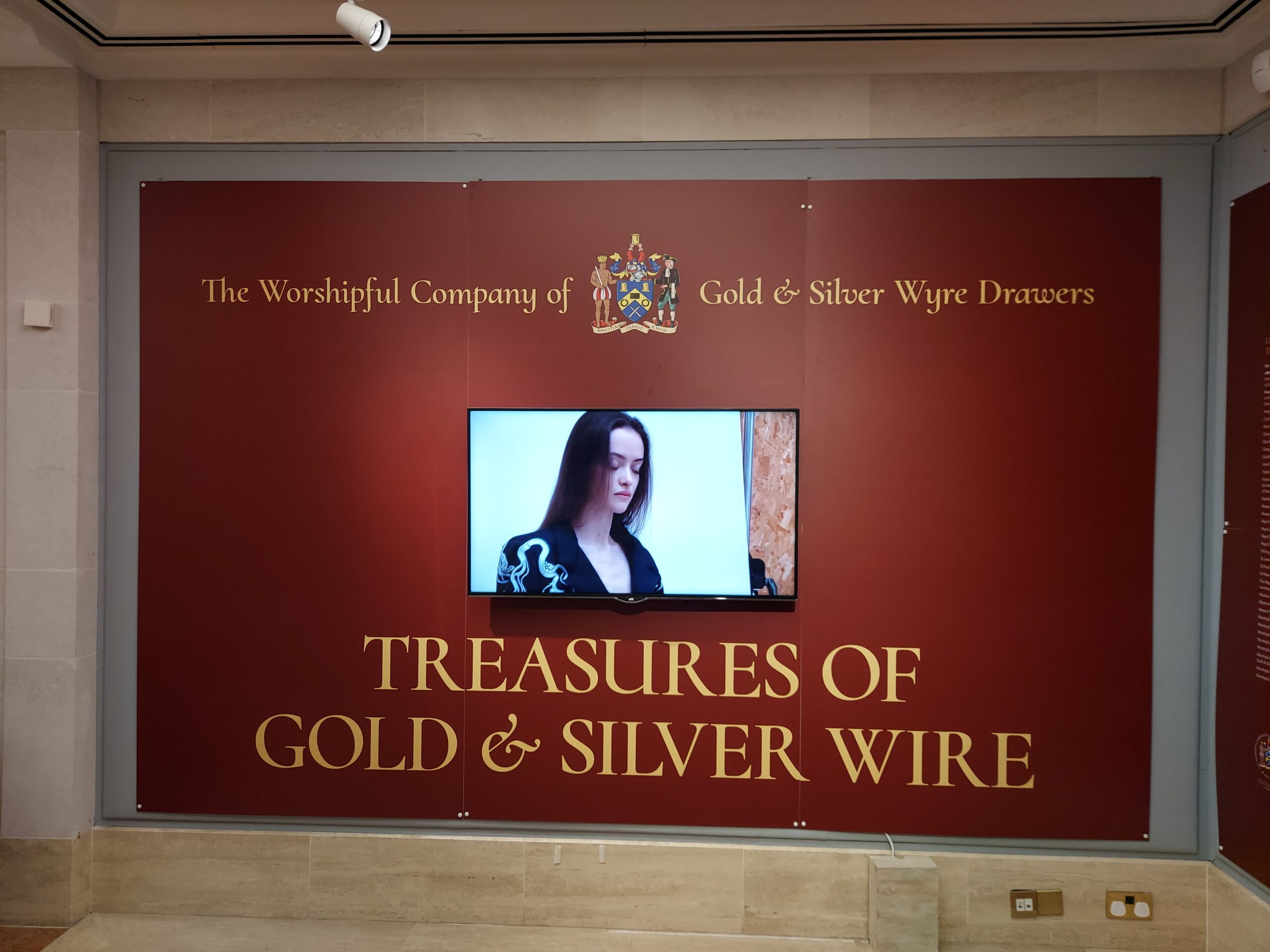
The entrance to the exhibition

In recent years I’ve got really into embroidery and other needlecrafts, so I was excited to visit the exhibition Treasures of Gold and Silver Wire at Guildhall Art Gallery. The exhibition, curated by Dr. Karen Watts, Curator Emeritus at the Royal Armouries, marks the 400th anniversary of the Worshipful Company of Gold and Silver Wyre Drawers, and features over 200 beautiful items made of gold and silver wire, some historical and others more recent, from a variety of different contexts.

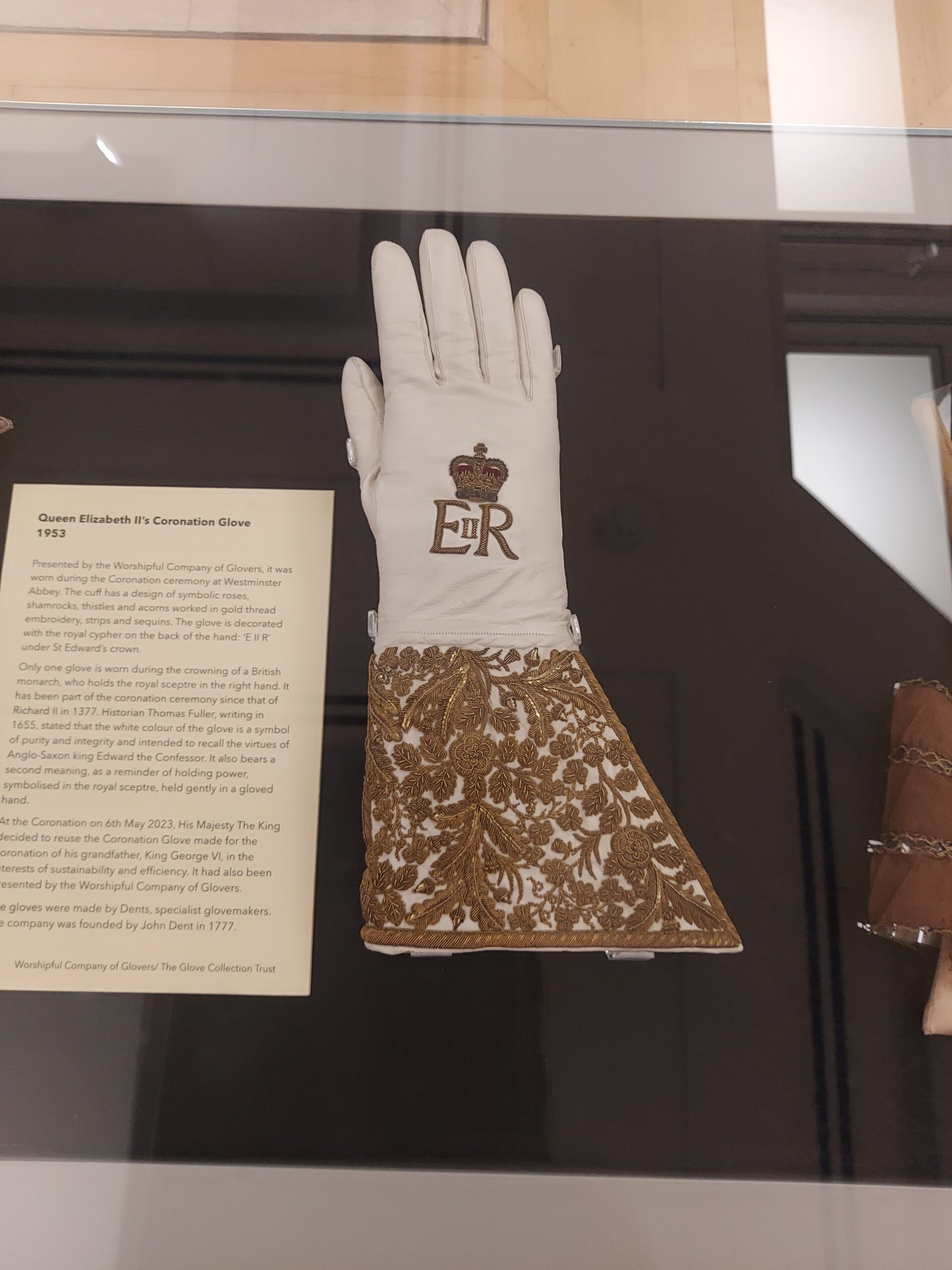
Many items in the exhibition are royal: garments worn by both Queen Elizabeth I and Queen Elizabeth II include the 16th century Bacton Altar Cloth, her only surviving dress, and a glove worn by the late Queen at her Coronation in 1953. The coronation dress worn by Queen Mary in 1911, adorned with gold and silver silk thread, is also featured.

A white glove embroidered with gold including the emblem of Queen Elizabeth II
Queen Elizabeth II’s Coronation glove

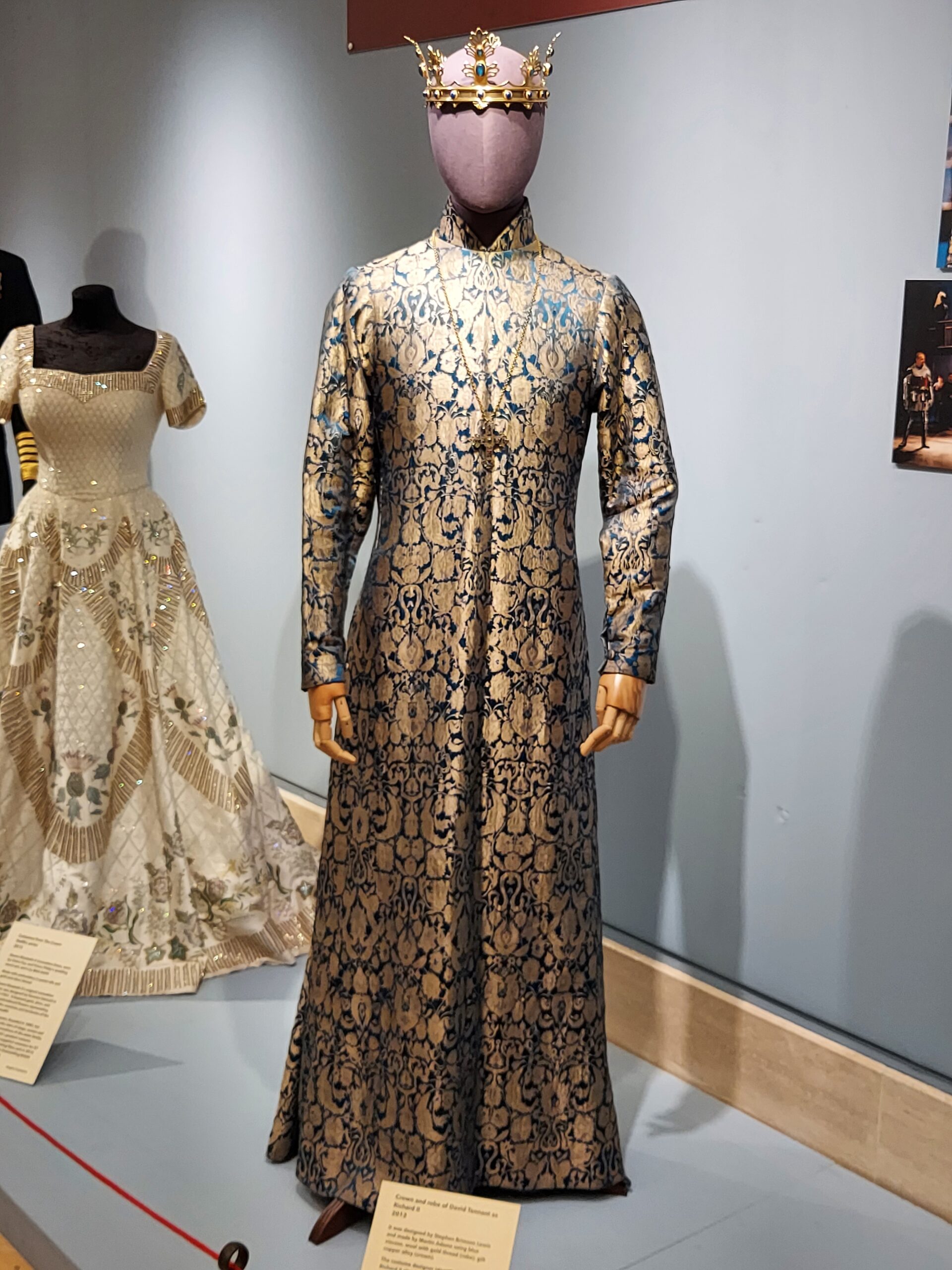
My favourite pieces in the exhibition came from theatre, such as a robe and crown worn by David Tennant in the title role of Richard II in the RSC’s production, as well as a crown and robe worn by Dame Helen Mirren in the RSC’s production of Antony and Cleopatra. Costumes worn by actors in the television series The Crown are also on display.

David Tennant's costume for Richard II
David Tennant’s costume for Richard II

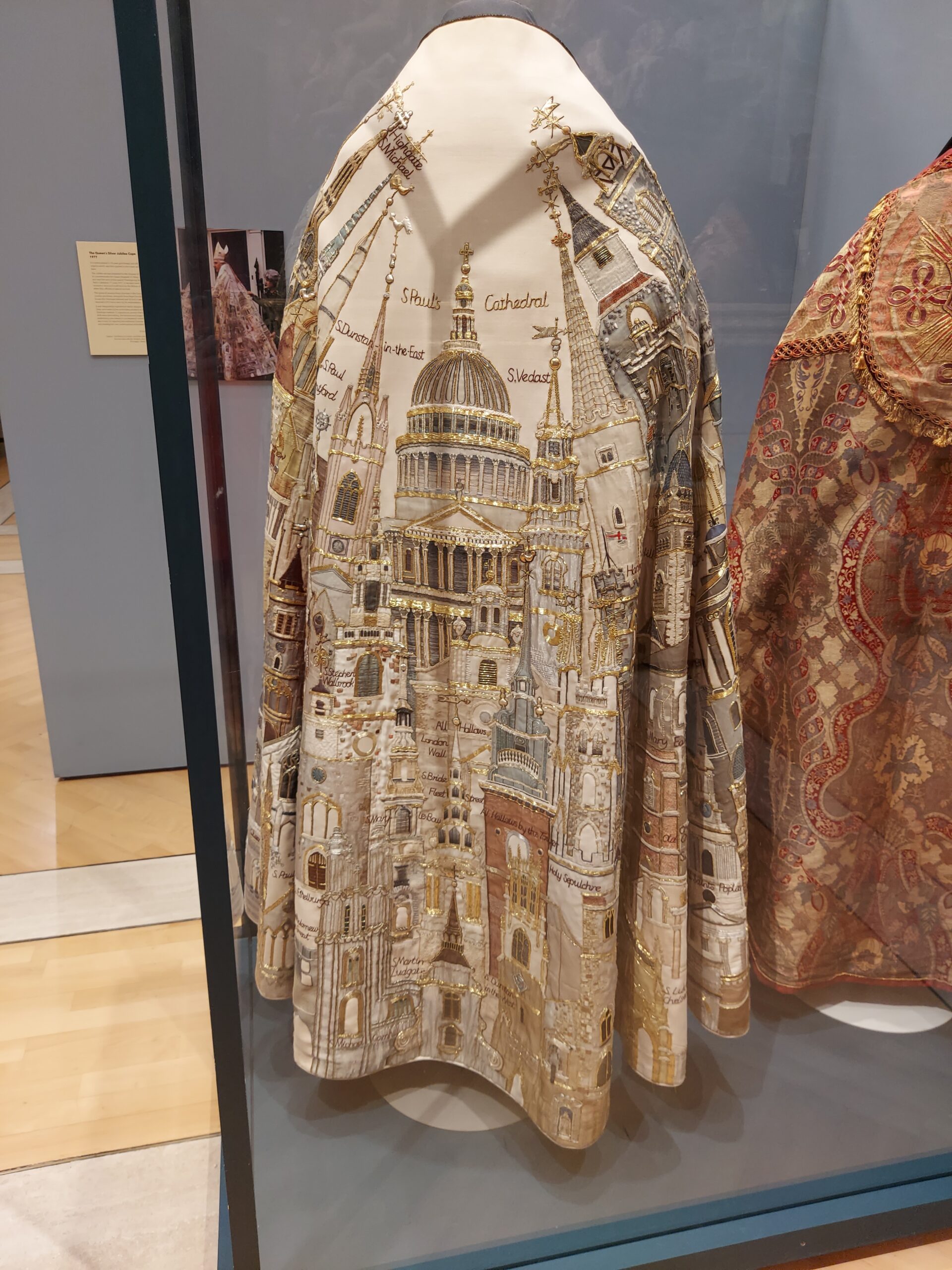
Menswear features strongly in the exhibition. A court suit worn by novelist Charles Dickens is shown, as is the Bishop of London’s Silver Jubilee Cope from 1977, and gold-braided dress uniforms from the British Army, Royal Navy, and Royal Air Force. A beautifully-embroidered hearse cloth from 1515 is one of the oldest pieces in the exhibition, and a piece of Oliver Cromwell’s dressing gown is also on display.

A cope embroidered with various London spires
The Bishop of London’s Silver Jubilee cope

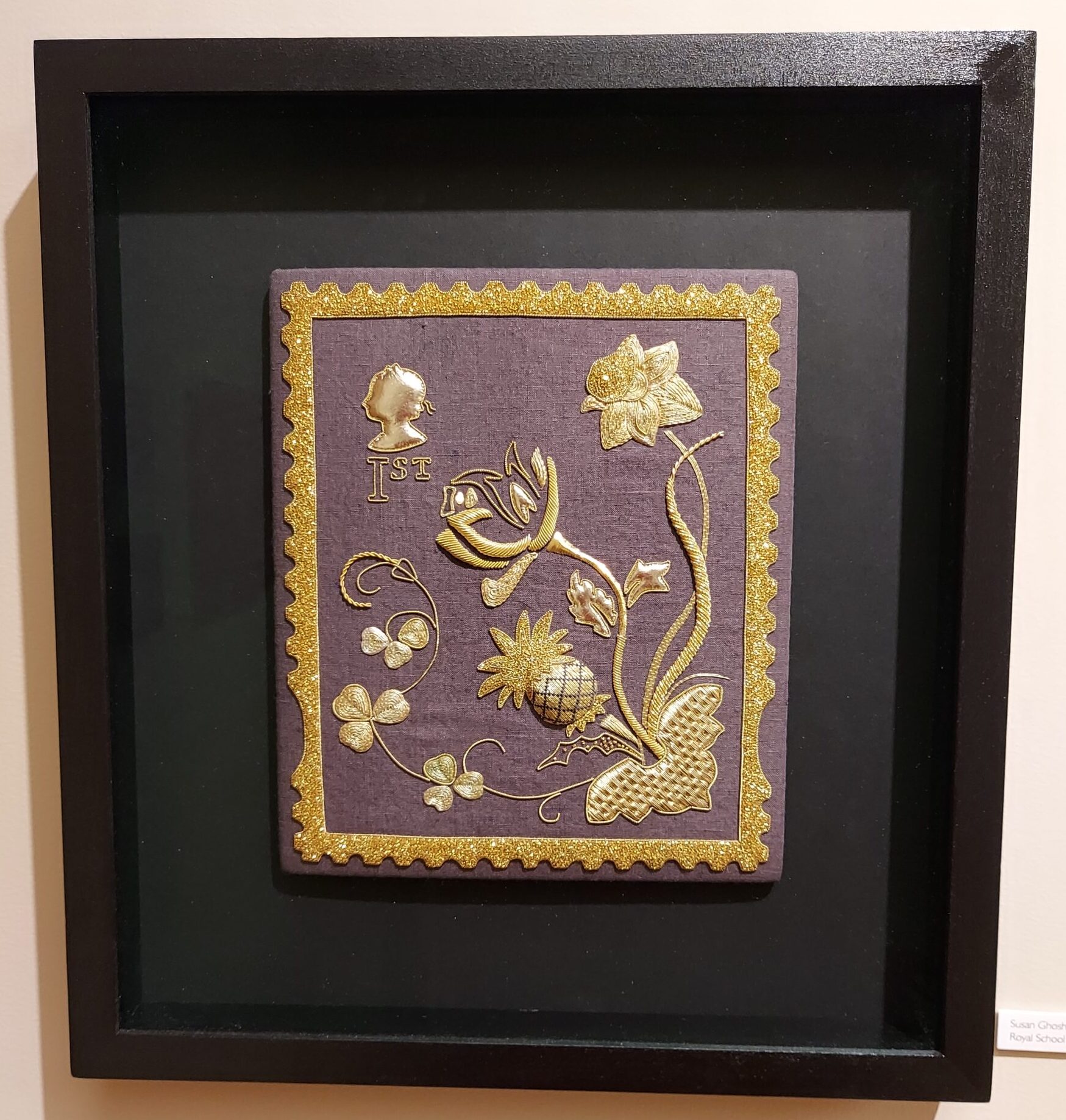
The exhibition ends with some beautiful examples of modern-day embroidery and jewellery using gold and silver wire. These gave me serious envy and inspired me to get working on more embroidery myself!

A stamp design embroidered in gold on purple
A modern stamp design

Crown to Couture – Kensington Palace

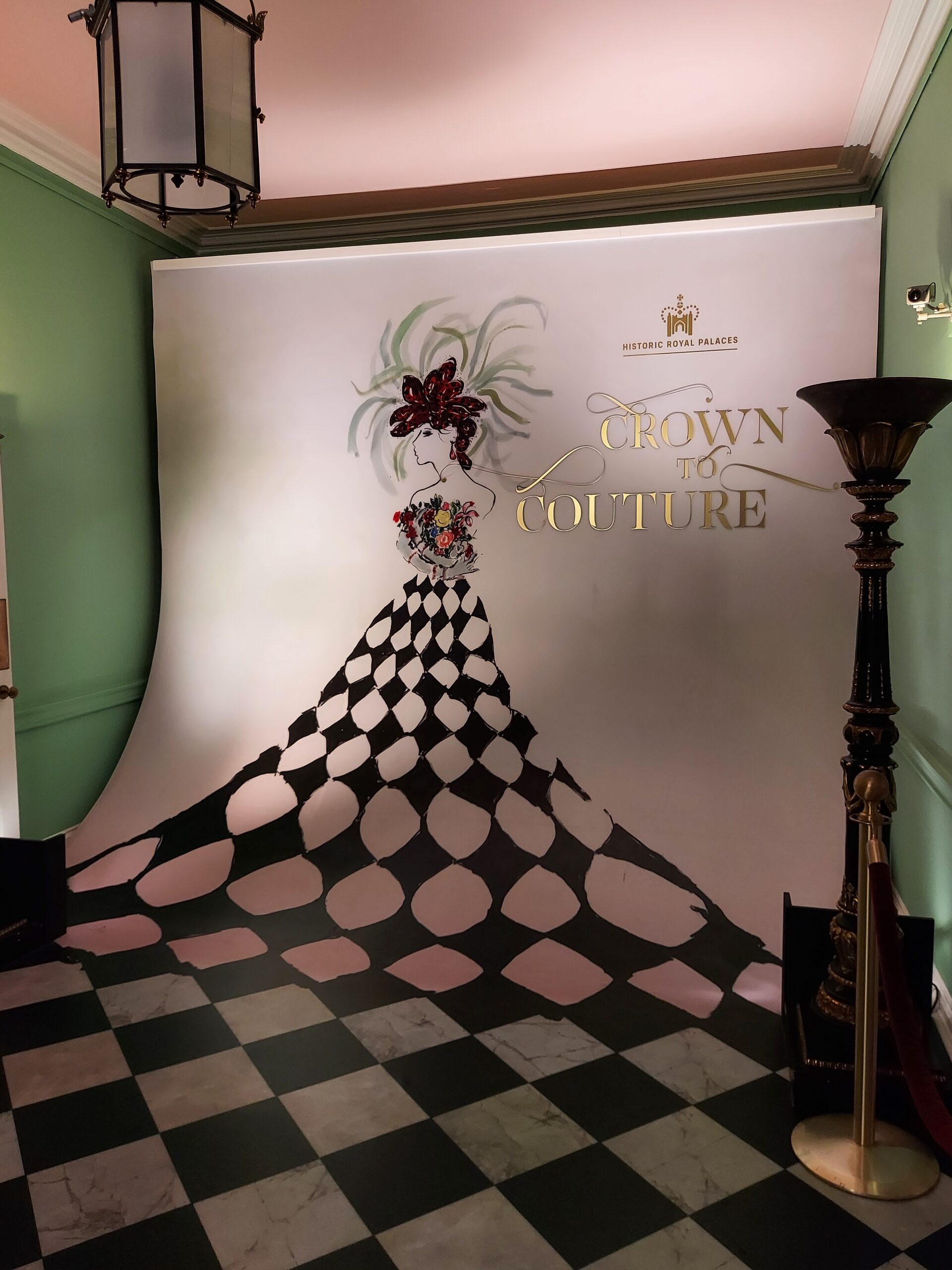
entrance to the Crown to Couture exhibition

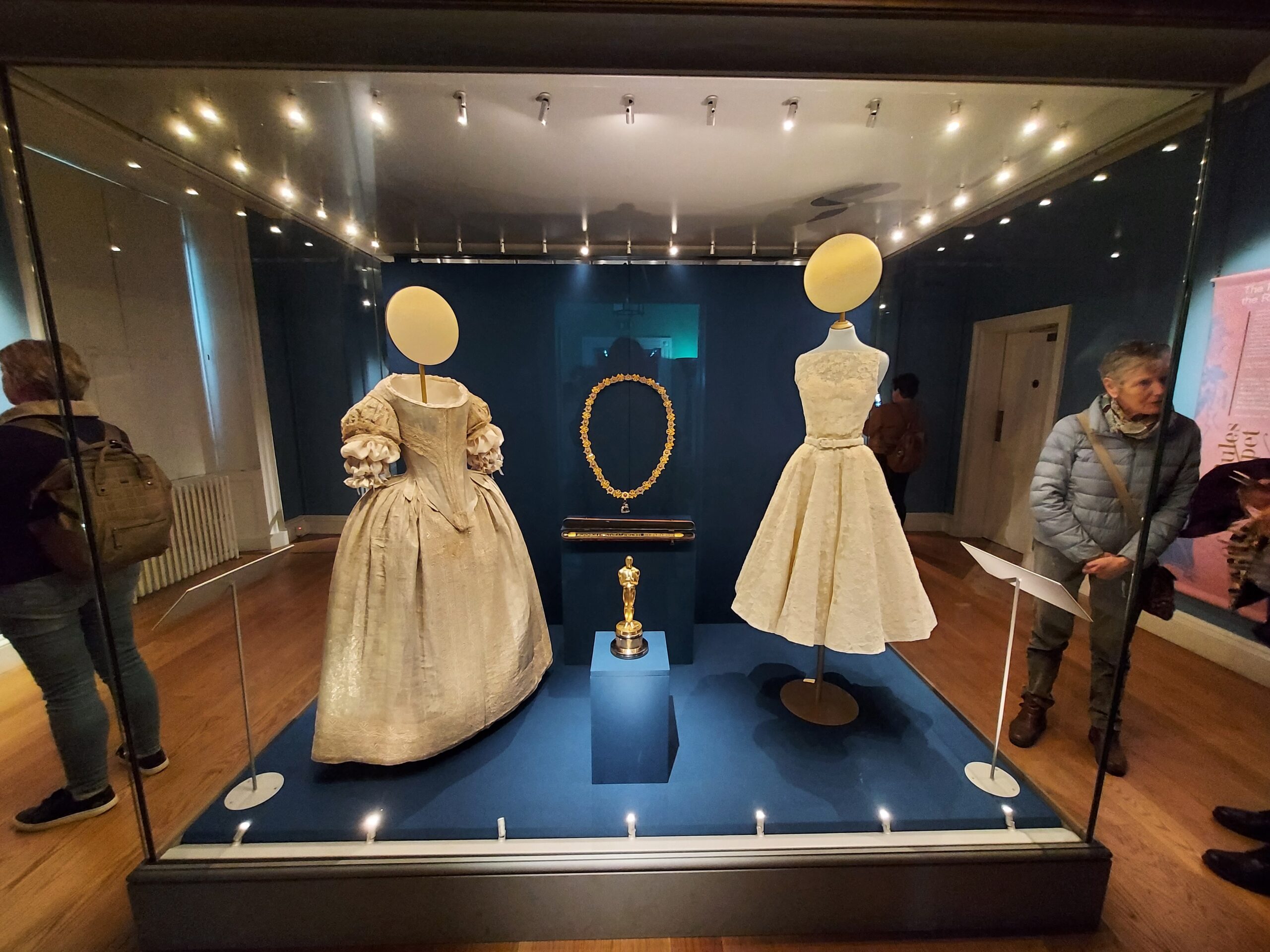
I attended the Crown to Couture exhibition at Kensington Palace one sunny Sunday in October. With 200 artefacts placed around the State Apartments, this is the largest exhibition ever held by Kensington Palace. It compares and contrasts eighteenth-century court fashions, then the height of style and glamour, with Hollywood designer outfits from the 1950s to the modern day.

While the eras are different in many ways, they have a lot in common. Both featured outlandish outfits worn to get the wearer noticed – either by the king, or by the media. As a rule, they are completely impractical – see the ridiculously wide ‘mantua’ dresses of the 1700s, or Katy Perry’s ‘chandelier’ dress – but they were also often beautiful, and sometimes made statements in other respects, such as Billy Porter’s outfits chosen to protest against gender and racial norms.

This rich, fascinating exhibition is well worth a visit. It is excellently put together and has some jaw-dropping costumes on display.

An eighteenth-century court dress and a 1950s Hollywood dress

Spirit of Invention – The National Archives

I visited the Spirit of Invention exhibition at The National Archives, partly to get inspiration for my RBC Inventor badge, but also because I was interested in seeing the wacky Victorian inventions on display, alongside intriguing modern creations.

Board for the Spirit of Invention exhibition

Innovation was rife during the nineteenth century, thanks to a combination of industrialisation, economic prosperity and societal change. In 1843, the Utility Designs Act made the process of protecting an idea much simpler and cheaper, so ordinary people were keener to get involved with inventing.

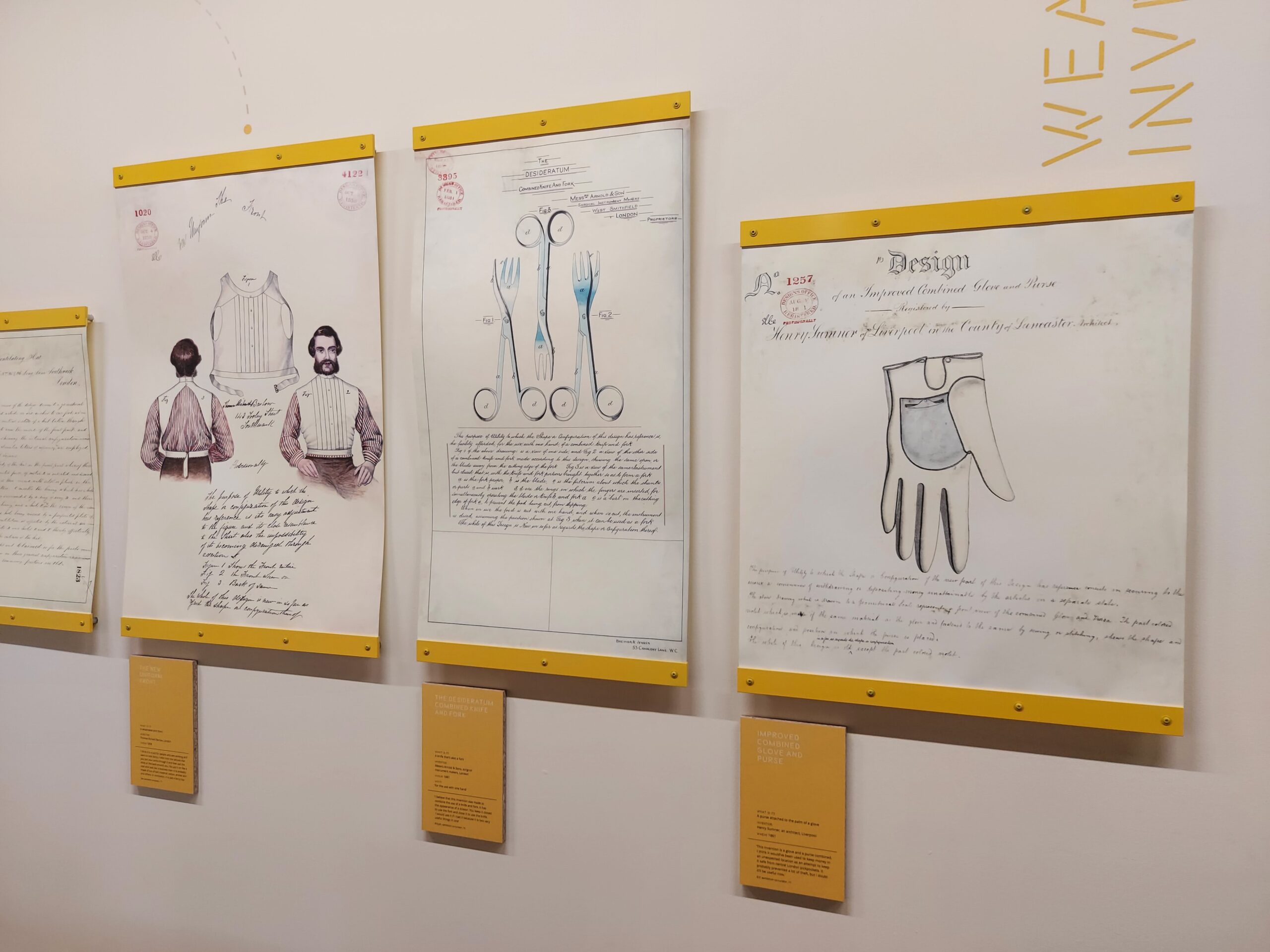
One of the most interesting and potentially useful inventions was the combined knife & fork by Messrs Arnold & Son. By making it easier to eat a meal with only one hand, it helped those with certain disabilities. John Mechi and Charles Bazin created the United Service Travelling Case, which even now looks handy for taking on holiday.

Some Victorian design ideas

The modern inventions explored in the exhibition are no less intriguing. For example, the Soul Cap is a swimming cap designed to accommodate particularly thick and full hair. It is designed for those with afro hair, ensuring that Black people can also protect their hair while in the pool. The ‘Hero Arm’ is a prosthetic arm with transferable covers, so wearers can use an arm designed to look like Iron Man or other superheroes.

The exhibition was great fun and gave me plenty ofinspiration for the badge!

St Augustine’s Tower – Open House London

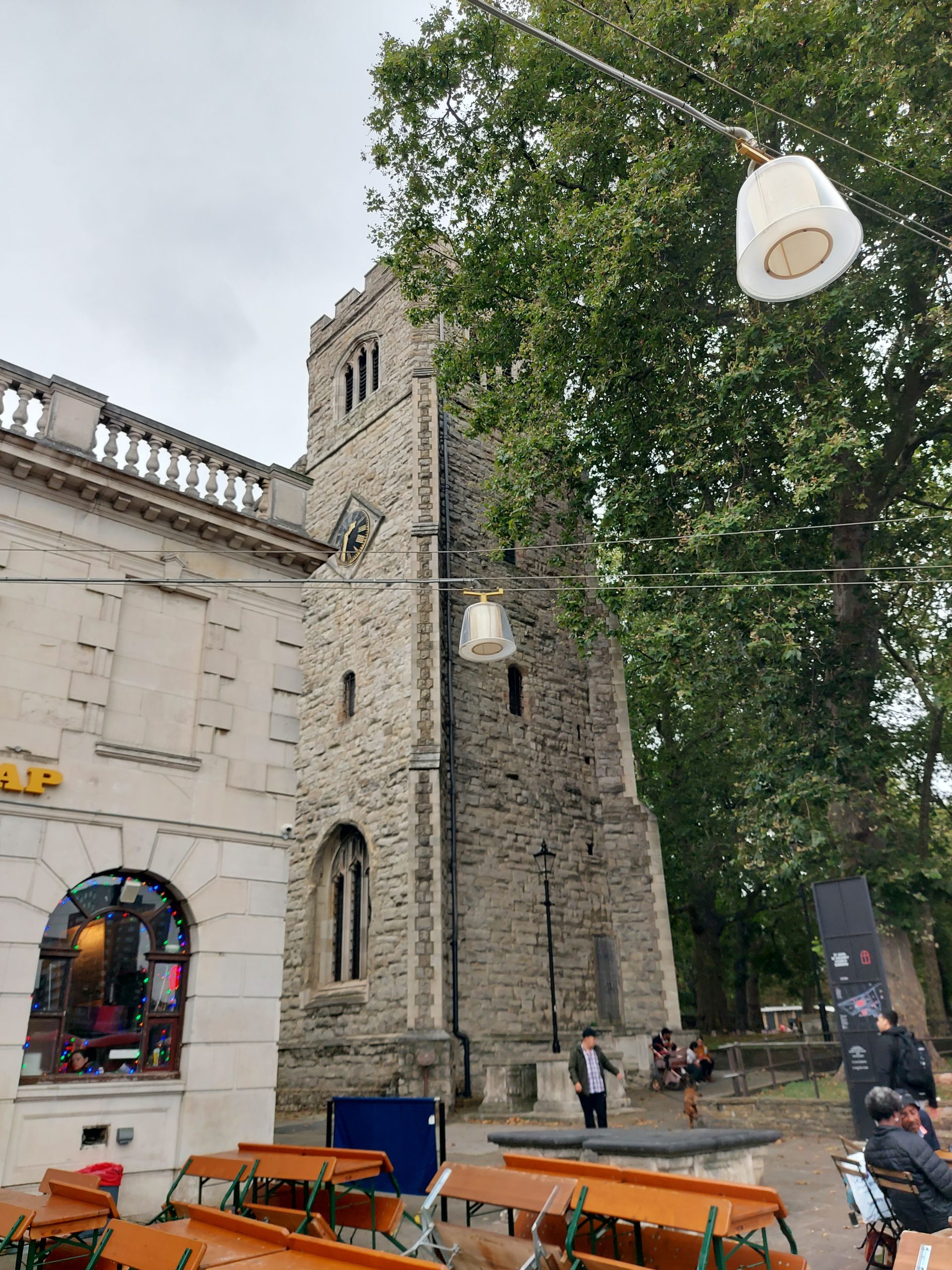
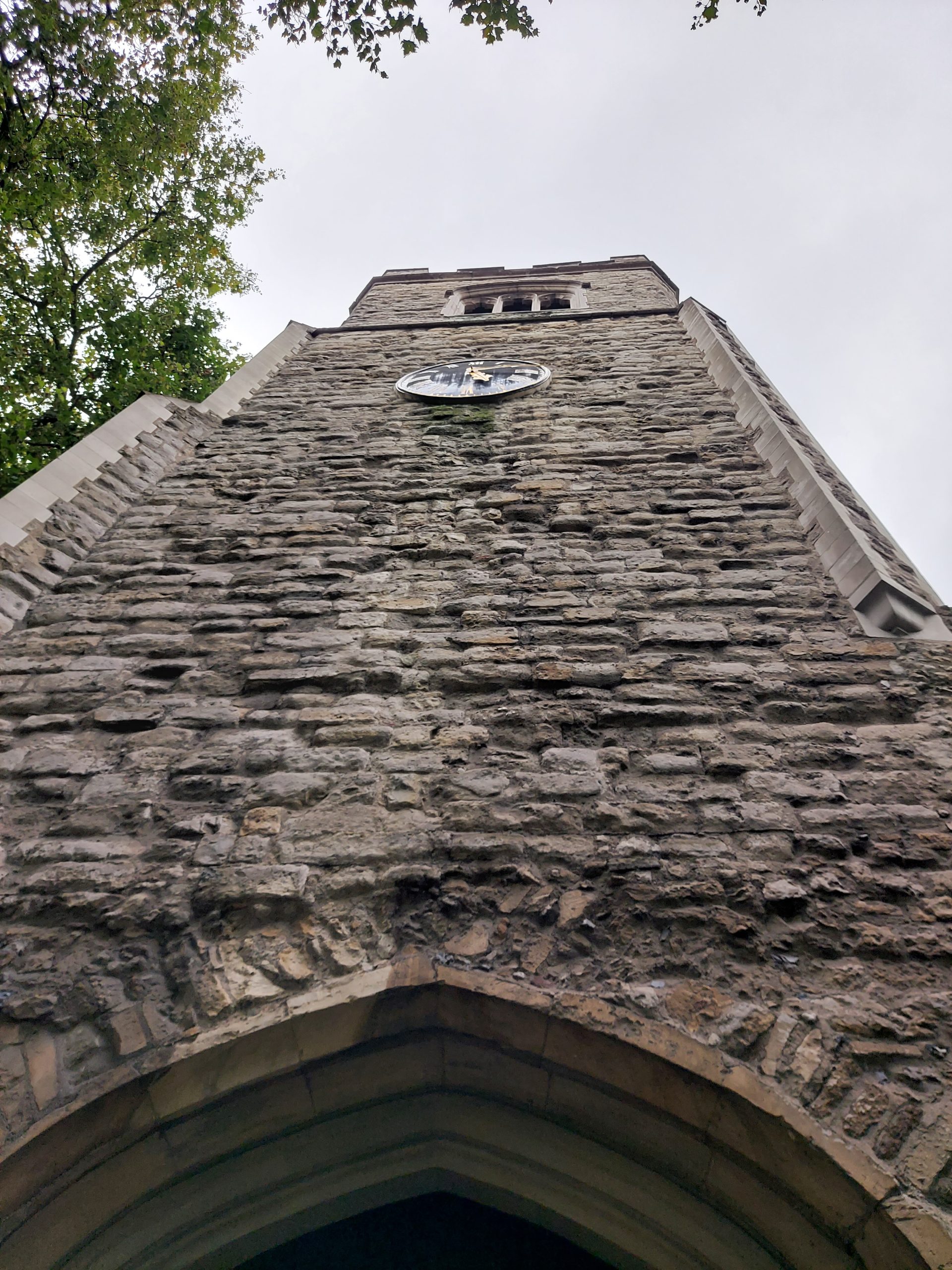
St Augustine's Tower

As part of my Advanced Community Service badge for Rebel Badge Club, I had to take part in three one-off volunteering projects. One of the projects I chose was helping out at an Open House London event, as I have attended many of these as a visitor over the years.

I ended up helping out at St Augustine’s Tower. Grade I listed, this is the oldest building in Hackney, and stands in the centre of the original village. It is what remains of the Church of St Augustine, built at the end of the thirteenth century and later renamed to St John.

A close up of the tower

Despite extensions and additions, the church was deemed too small for the growing congregation in Hackney, and a new church was commissioned and designed by James Spiller, completed in 1797. Built without a steeple, one was eventually added in 1814, but it was not strong enough to bear the weight of the bells, so these remained with the original tower. This ensured that the tower was saved when the rest of the church was demolished. Even after the bells were finally moved in 1854, the tower was left standing, partly because pulling it down seemed more trouble than it was worth.

Hackney Council bought the tower in 1929 to save it from being demolished. Hackney Historic Buildings Trust has owned it since 1990, and has raised money to undertake repairs and open it to the public more often.

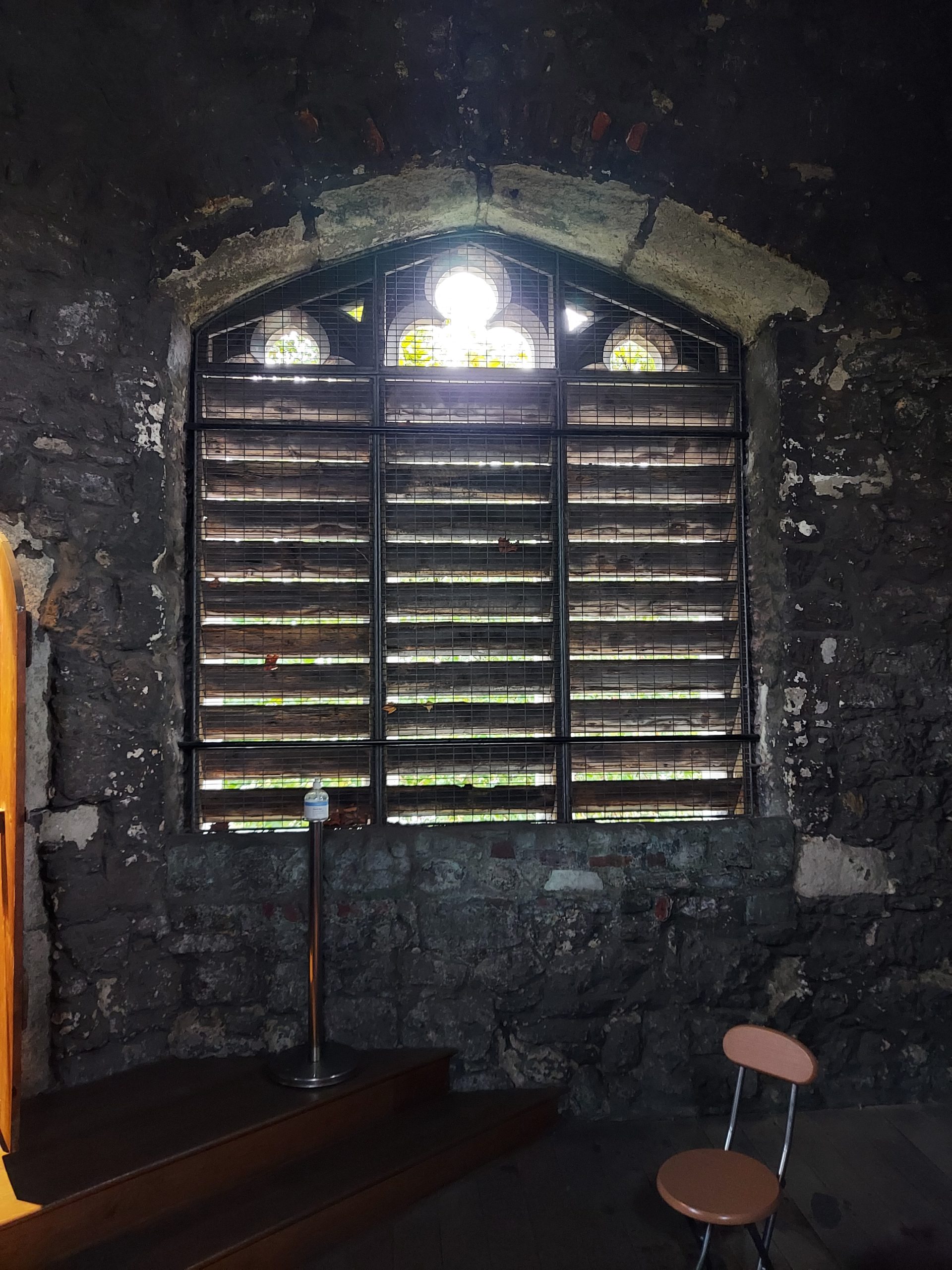
Inside the tower

Owing to the weather, I wasn’t able to climb up to the top of the tower and look at the view. However, I got to see the rest of the tower during my volunteering session. The ground floor contains information and displays about the history of the tower. The floor above contains displays about the history of Hackey as a whole. Higher up, you can see the original clock workings dating from the sixteenth or seventeenth century.

I definitely want to return to St Augustine’s Tower in the future to climb up to the roof. This little gem is well worth visiting.

FACTS

Address: Hackney, London, E8 1HT

Website: staugustinestower.org

Opening Hours: 2-4:30pm the last Sunday of the month (except December)

Price: Free

Thames River Police Museum – Open House London

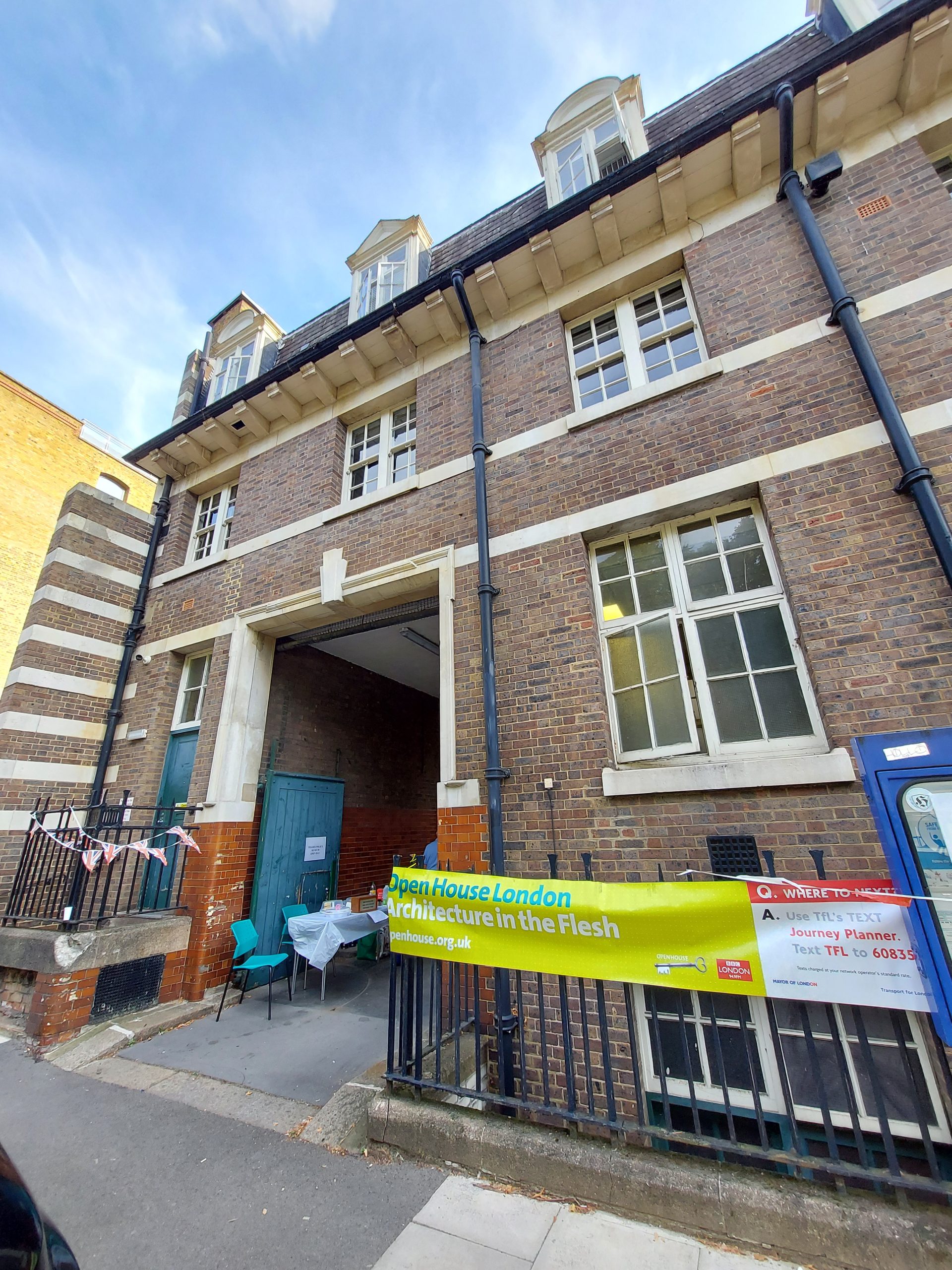
Thames River Police Museum

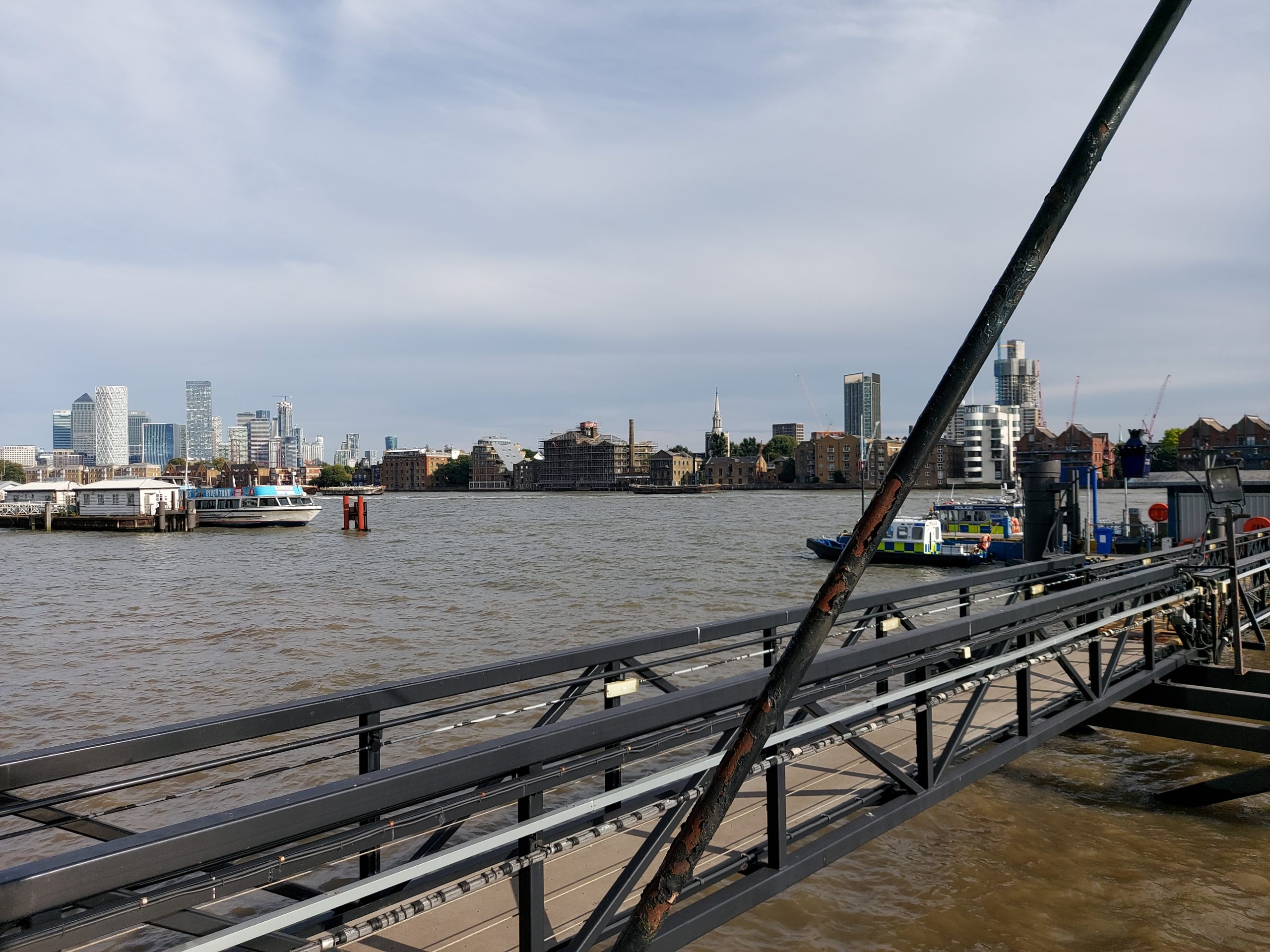
As part of Open House London, I decided to visit the Thames River Police Museum, as I was going to be in the area and thought it sounded interesting. The museum is located in Wapping, and is only open on a handful of days per year, as it is situated within a working police station (the Metropolitan Police’s Marine Police Unit). Whatever your opinion of the Met or views on the police in general, the museum is a fascinating place to visit, crammed full of history, and exploring the Thames River Police from 1798 to the present day.

The River Police were one of the first uniformed forces in the world. Though it was a government body, it was funded by the shipping companies, who were losing lots of money to thieves who regularly pilfered their stock. The force proved very successful, saving over £122,000 in the first six months of its operation, not to mention several lives.

View of the Thames from the back of the museum

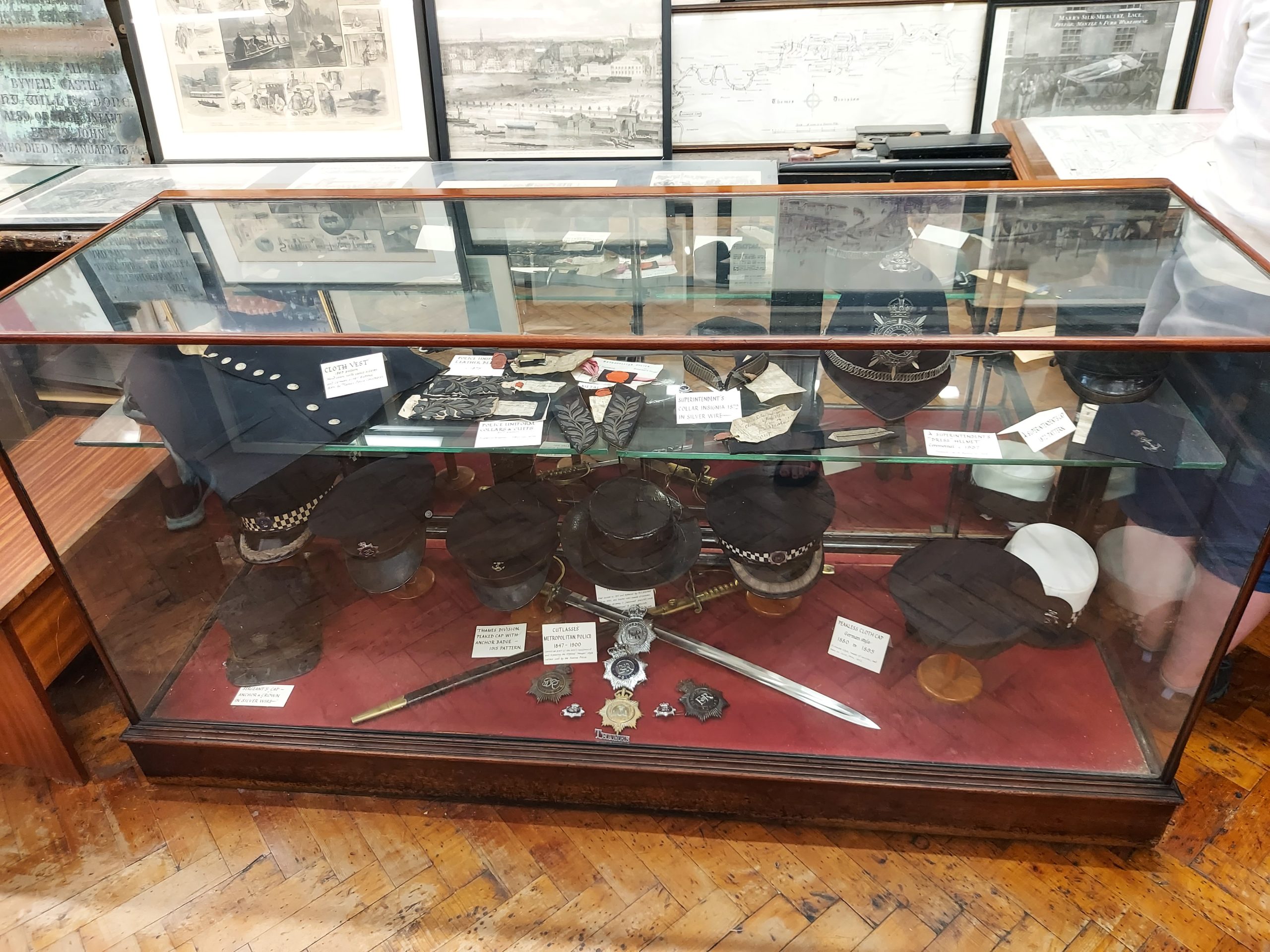
Like many small museums, this one contains many artefacts and it would take a very long time to go through all of them. Some of the most interesting items are old uniforms and equipment worn and used by police officers of the past. Photographs and documents tell the stories behind the force. One of their jobs is the recovery of dead bodies from the river: I certainly don’t envy them this work.

Some of the most poignant items relate to the Princess Alice Disaster of 1878, in which almost 650 individuals died after the paddle steamer sank while returning from a trip to the seaside. The museum contains the boat’s original flag.

This little museum is definitely worth a visit, so keep an eye out for its opening days – or head down during the next Open House London weekend.

Hats and equipment used by members of the Thames River Police

FACTS

Address: 98 Wapping High Street, London, E1W 2NE

Website: thamespolicemuseum.org.uk

Opening Hours: By advance appointment and on special dates

Price: Free

Royal Pharmaceutical Society Museum – Open House London

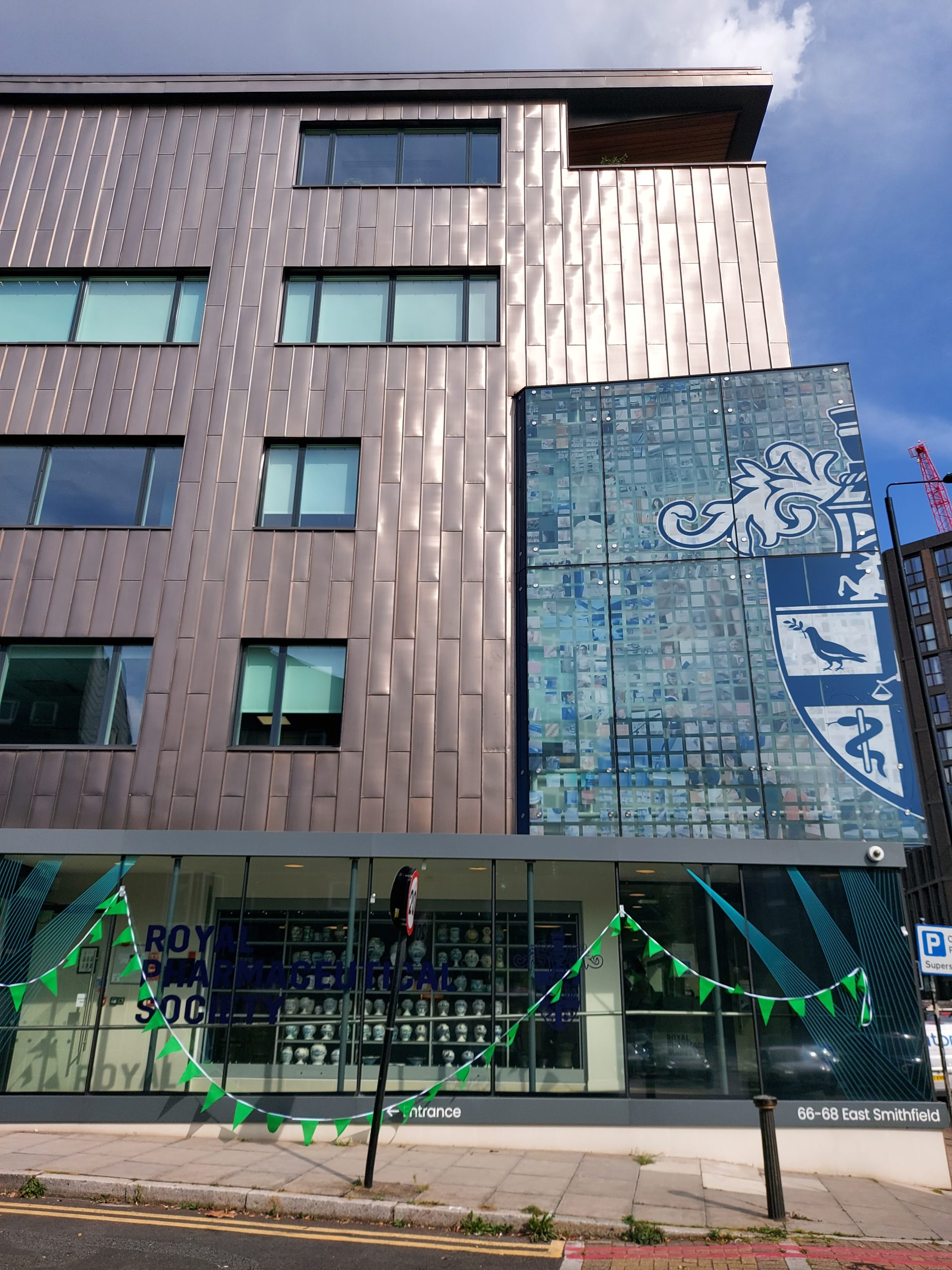
The Royal Pharmaceutical Society

As part of my Open House London explorations I paid a visit to the Royal Pharmaceutical Society Museum and Library. Not far from Tower Hill, it was a bit off the beaten track compared to the places I usually visit, but it was definitely worth it.

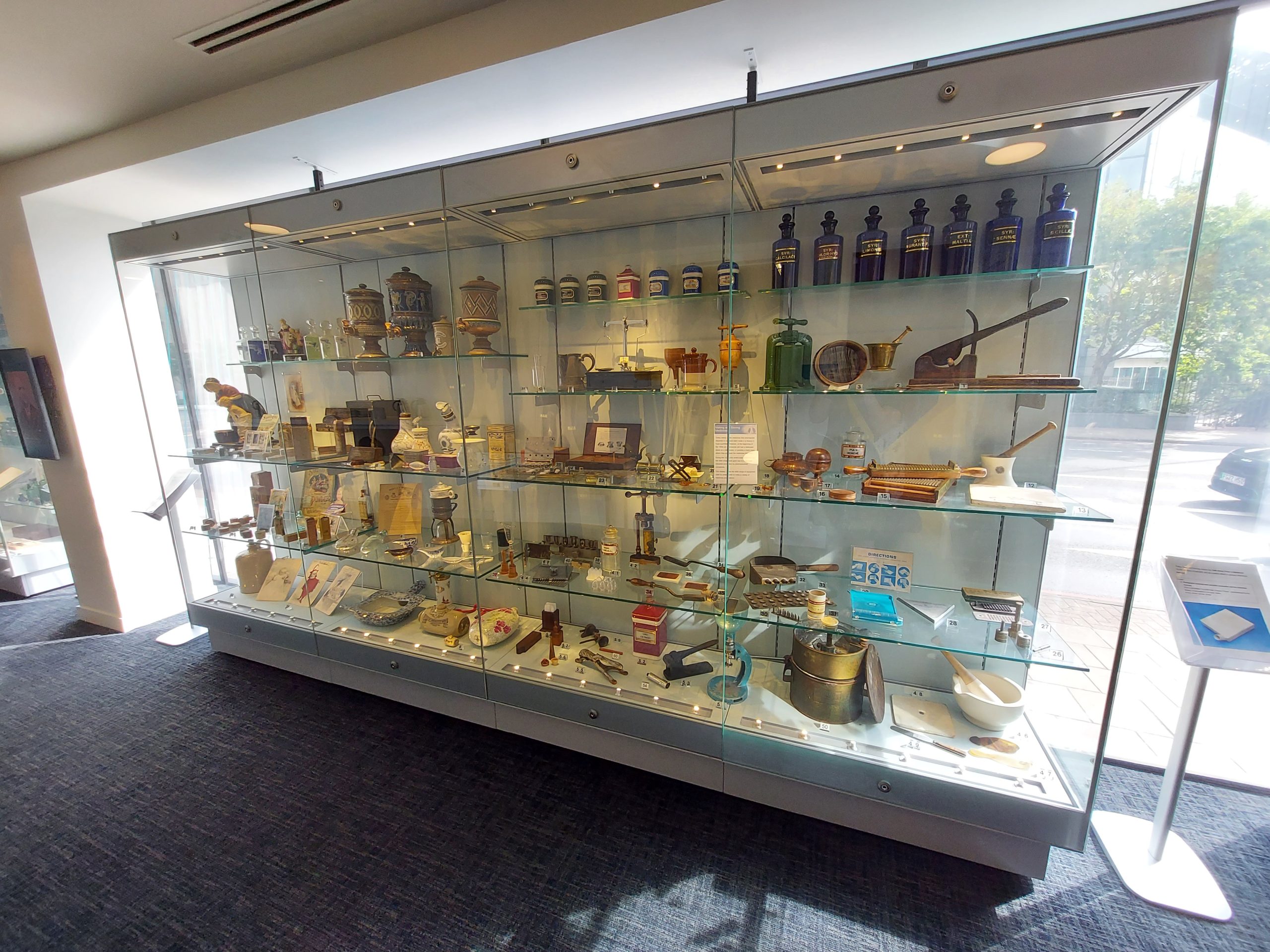
Items on display at the RPS

The building itself is new, having been designed in 2015, but the RPS’s museum was originally founded in 1842. It was meant to be a study resource for students of the newly formed School of Pharmacy. In 1937, it was decided to establish a historical collection, and librarian Agnes Lothian played a key role in purchasing relevant artefacts. In the 1950s, some of the collections were deemed less relevant and transferred away, while in 1976 the Society’s move to new premises in Lambeth prompted the decision to display items from the collections throughout the building. Since 2015 the collections have been housed in the Society’s new headquarters, mostly on the ground floor. The collections, which cover the history of pharmacy in Britain from the fourteenth century to the present day, including traditional dispensing equipment and storage containers, oil paintings and photographs, branded medicines, mortars, and drug jars – not forgetting early printed books, including herbals and early pharmacopoeias, housed in the library.

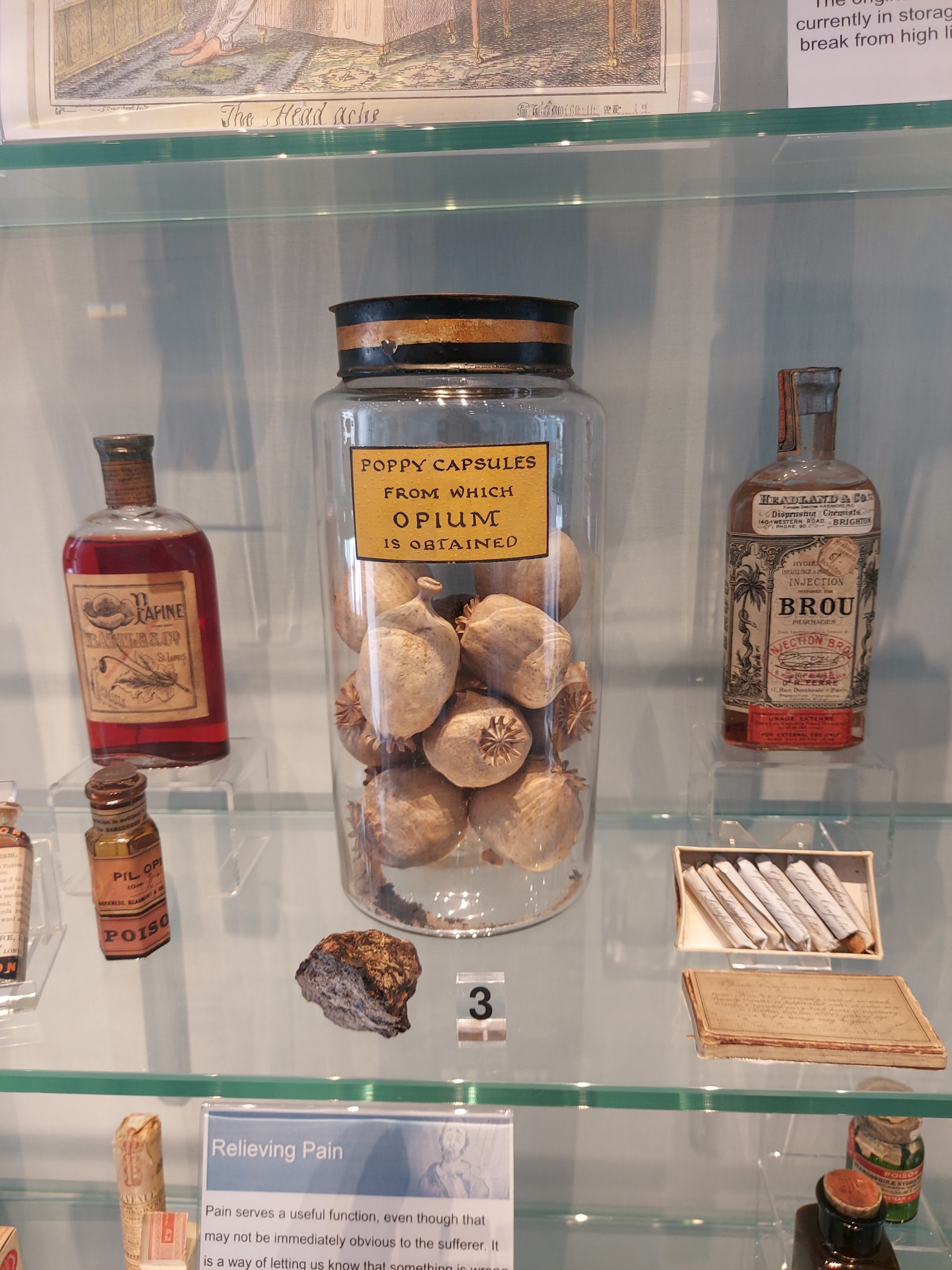
I enjoyed a free guided tour before checking out the collections for myself. There were some fascinating artefacts on display, including a polar bear-shaped container for bear grease, supposedly meant to stop hair loss, and drugs once widely prescribed including morphine and cocaine. Definitely a worthwhile place to visit if you’re in the area.

Opium poppy capsules

FACTS

Address: 66 East Smithfield, London, E1W 1AW

Website: rpharms.com/about-us/museum

Opening Hours: Mon-Fri 9am-5pm (closed on Bank Holidays)

Price: Free